|
🌀
••••••
|
/wɪrd/
adjective
(wird)
••••••
|
-
••••••
|
seltsam
seltsam
••••••
|
-
••••••
|
-
••••••
|
-
••••••
|
-
••••••
|
suggesting something supernatural or very strange; unusual
|
The movie had a weird ending that nobody expected.
••••••
|
Der Film hatte ein seltsames Ende, das niemand erwartet hatte.
Der Film hatte ein seltsames Ende, das niemand erwartet hatte.
••••••
|
••••••
|
to make someone feel uncomfortable or strange
|
jemanden aus der Fassung bringen
jemanden aus der fassung bringen
••••••
|
strange, odd, bizarre, unusual, peculiar
|
••••••
|
weird feeling, weird dream, weird noise, weird behavior
|
Weird bedeutet seltsam, wie in einem seltsamen Film-Ende.
••••••
|
|
👋
••••••
|
/ˈwelkəm/
verb
(willkommen)
••••••
|
••••••
|
willkommen heißen
willkommen heißen
••••••
|
willkommen
••••••
|
willkommen
••••••
|
willkommen
••••••
|
willkommend
••••••
|
to greet someone in a friendly way; to receive gladly
|
They welcome new students warmly.
Sie haben die neuen Studenten herzlich willkommen geheißen.
••••••
|
Sie haben die neuen Studenten herzlich willkommen geheißen.
Sie haben die neuen Studenten herzlich willkommen geheißen.
••••••
|
-
••••••
|
-
••••••
|
-
••••••
|
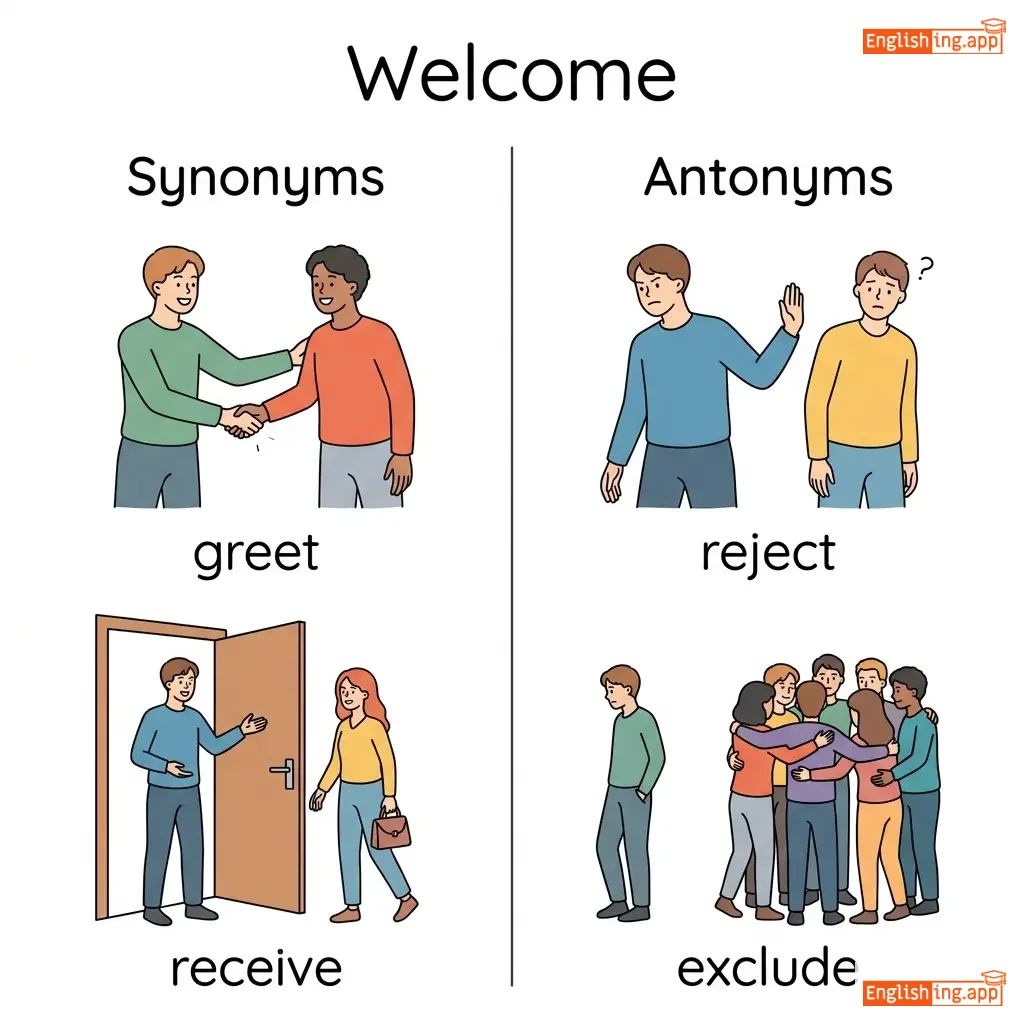
greet, receive, embrace, admit
|
reject, shun, dismiss, exclude
|
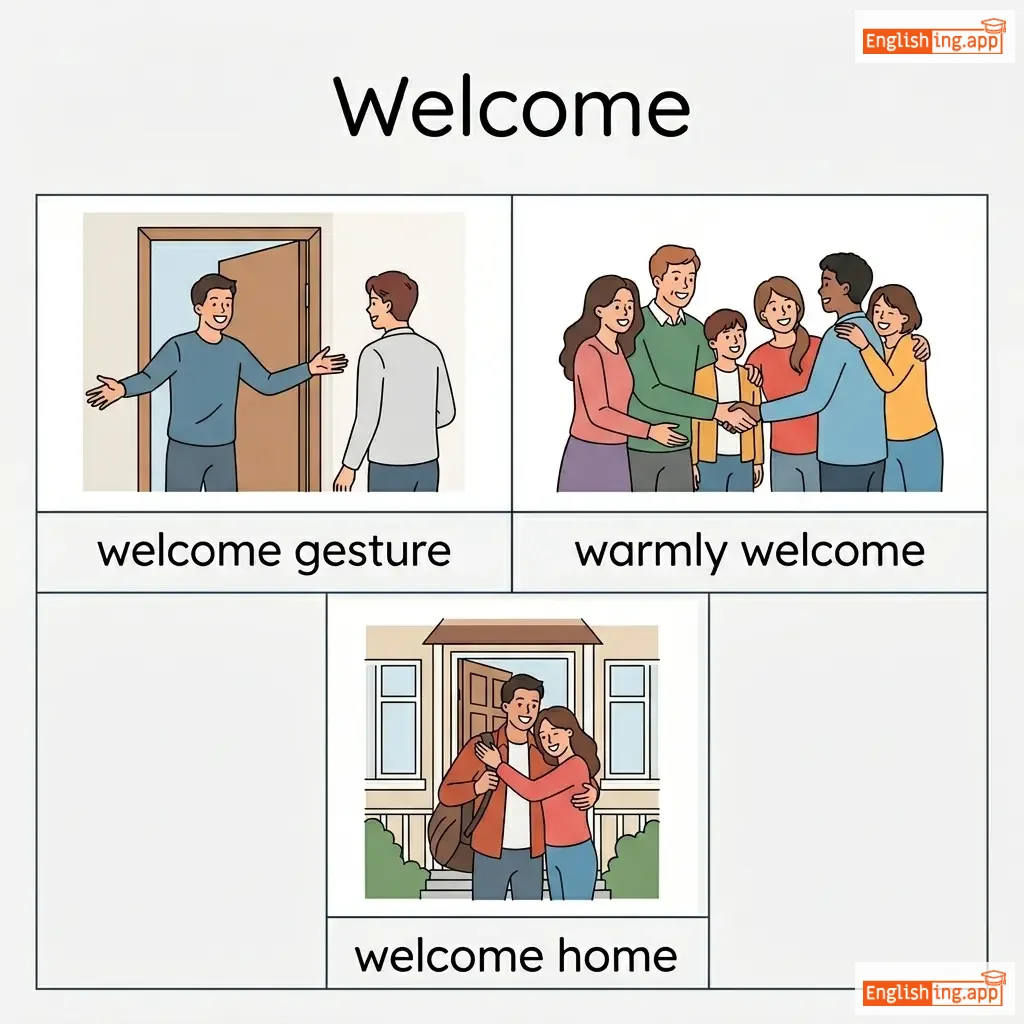
warmly welcome, welcome guests, welcome changes, welcome opportunity, welcome visitors
|
Willkommen heißen bedeutet immer ein warmes Lächeln
••••••
|
|
🤝
••••••
|
/ˈwel.feər/
noun
(welfare)
••••••
|
-
••••••
|
Wohlergehen; Wohlstand; Gesundheit
Wohlergehen; Wohlstand; Gesundheit
••••••
|
-
••••••
|
-
••••••
|
-
••••••
|
-
••••••
|
the health, happiness, and fortunes of a person or group; care and support
|
The government is responsible for the welfare of its citizens.
••••••
|
Die Regierung ist für das Wohlergehen ihrer Bürger verantwortlich.
Die Regierung ist fur das Wohlergehen ihrer Burger verantwortlich.
••••••
|
-
••••••
|
-
••••••
|
-
••••••
|
well-being, benefit, good, prosperity
|
harm, disadvantage, detriment
|
social welfare, welfare state, welfare system
|
Wohlergehen = Wohl (well) + ergehen (being)
••••••
|
|
🕳️
••••••
|
/wel/
noun
(wel)
••••••
|
-
••••••
|
Brunnen; Wohlergehen;
brunnen; wohlergehen
••••••
|
-
••••••
|
-
••••••
|
-
••••••
|
-
••••••
|
a deep hole in the ground from which water is obtained
|
The villagers get water from the old well in the center of town.
Die Dorfbewohner holen Wasser aus dem alten Brunnen im Zentrum des Dorfes.
••••••
|
Die Dorfbewohner holen Wasser aus dem alten Brunnen im Zentrum des Dorfes.
Die Dorfbewohner holen Wasser aus dem alten Brunnen im Zentrum des Dorfes.
••••••
|
-
••••••
|
-
••••••
|
-
••••••
|
••••••
|
••••••
|
water well, oil well, deep well
|
Brunnen liefert Wasser, Wohlergehen für alle im Dorf.
••••••
|
|
😊
••••••
|
/ˈwel.biː.ɪŋ/
noun
(ˈwɛlˌbiɪŋ)
••••••
|
••••••
|
Wohlbefinden
Wohlbefinden
••••••
|
-
••••••
|
-
••••••
|
-
••••••
|
-
••••••
|
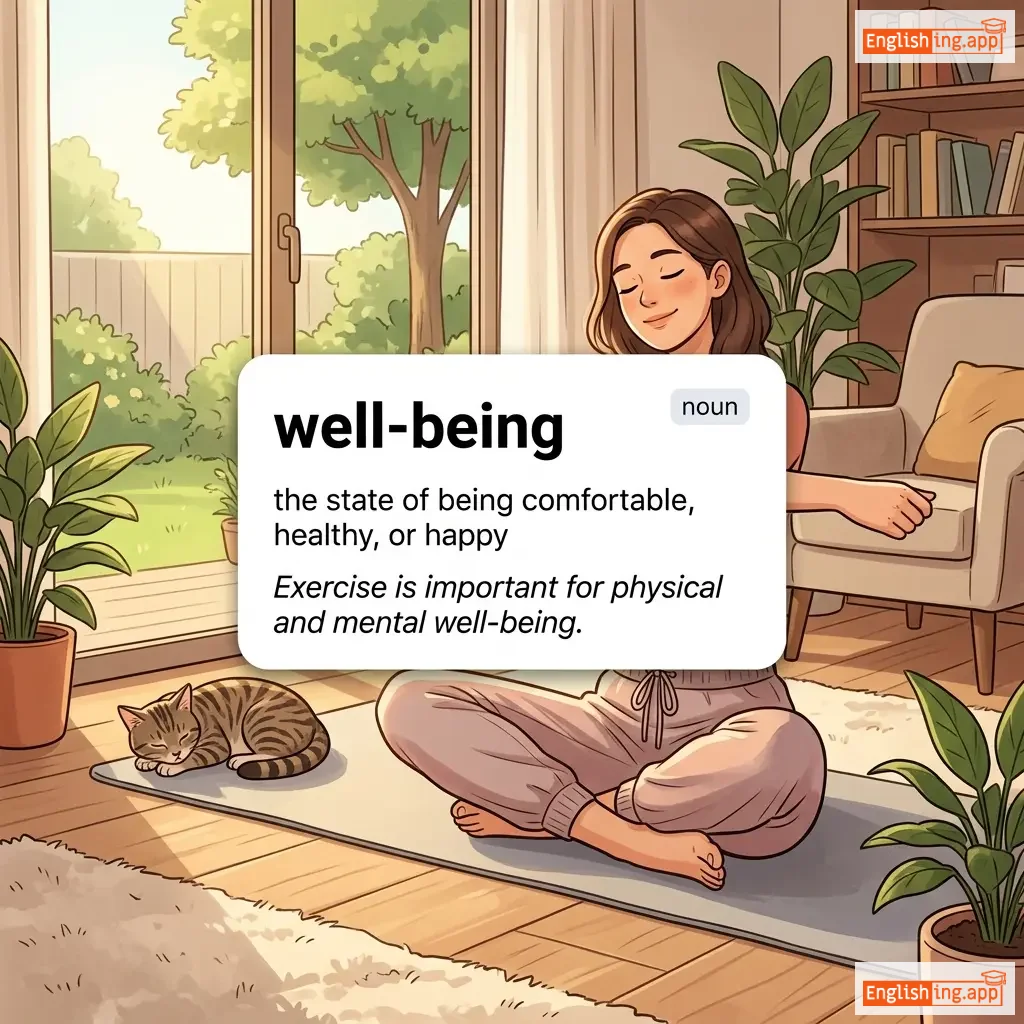
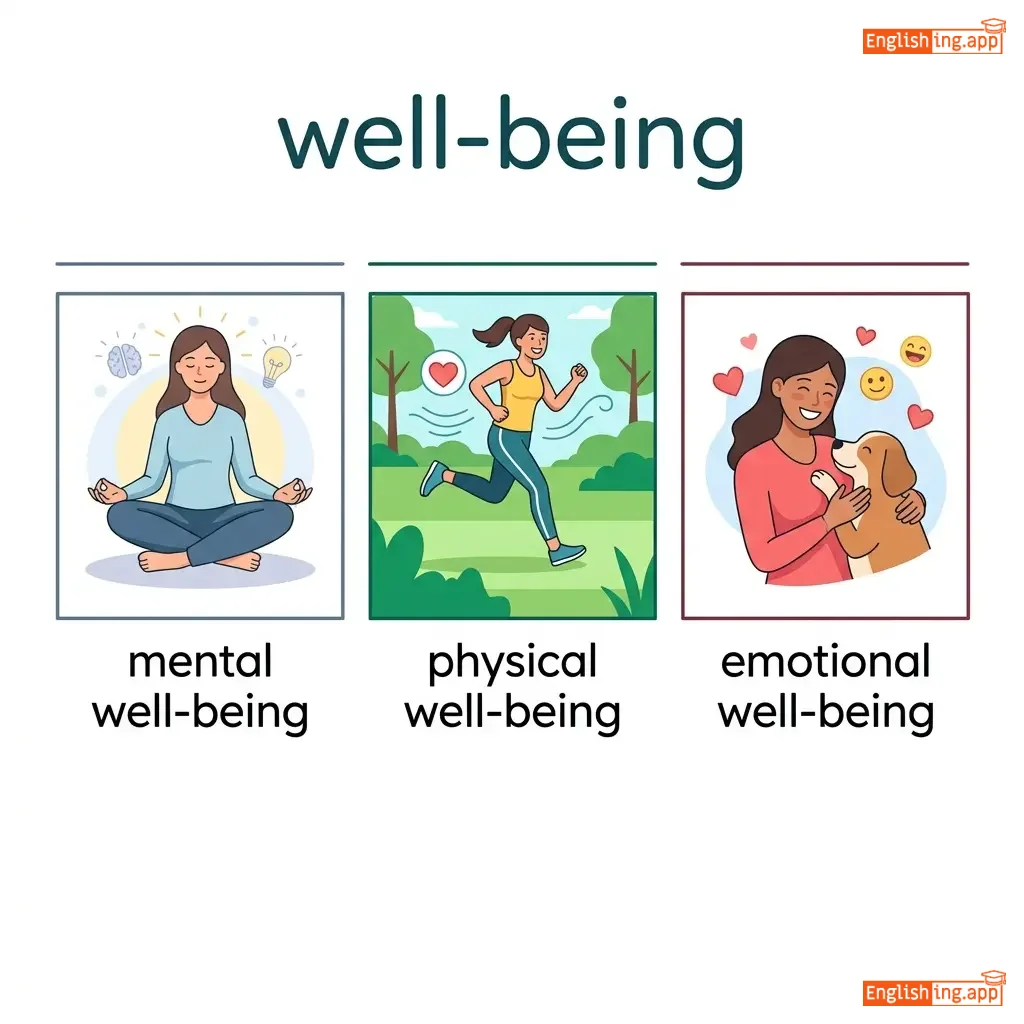
the state of being comfortable, healthy, or happy
|
Regular exercise contributes to physical and mental well-being.
••••••
|
Regelmäßige Bewegung trägt zum physischen und mentalen Wohlbefinden bei.
Regelmaessige Bewegung traegt zum physischen und mentalen Wohlbefinden bei.
••••••
|
-
••••••
|
-
••••••
|
-
••••••
|
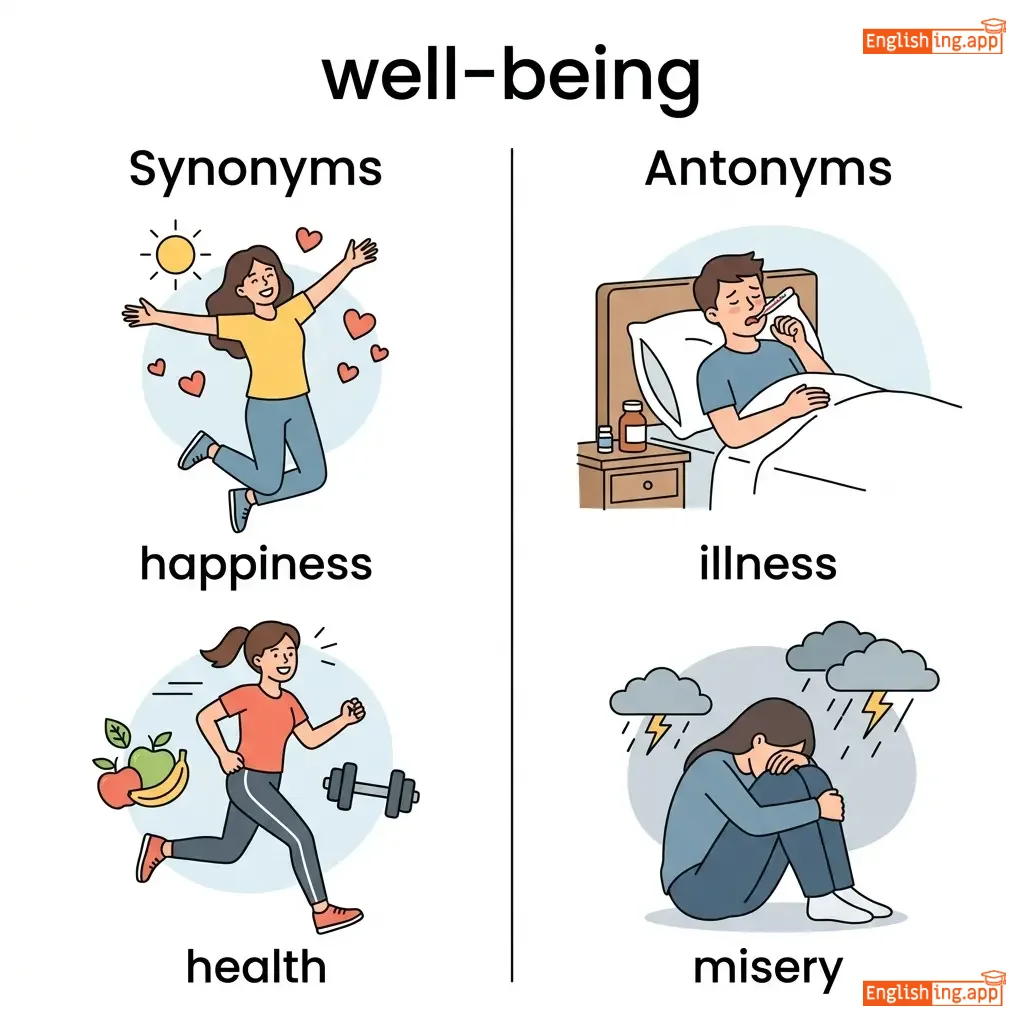
welfare, health, happiness, comfort
|
suffering, distress, misery
|
physical well-being, mental well-being, emotional well-being
|
Wohlbefinden in German combines 'wohl' (well) and 'befinden' (being), just like 'well-being' in English.
••••••
|
|
🌟
••••••
|
/ˌwelˈnoʊn/
adjective
(wɛl-nəʊn)
••••••
|
-
••••••
|
bekannt
bekannt
••••••
|
-
••••••
|
-
••••••
|
-
••••••
|
-
••••••
|
known by many people; famous or recognized
|
He is a well-known actor in his country.
••••••
|
Er ist ein bekannter Schauspieler in seinem Land.
Er ist ein bekannter Schauspieler in seinem Land.
••••••
|
-
••••••
|
-
••••••
|
-
••••••
|
famous, renowned, popular, prominent, recognized
|
unknown, obscure, unfamiliar
|
well-known fact, well-known person, well-known brand, well-known story
|
Well-known bedeutet 'bekannt' — jeder kennt ihn!
••••••
|
|
🌅
••••••
|
/wɛst/
noun
(wɛst)
••••••
|
-
••••••
|
Westen
Westen
••••••
|
-
••••••
|
-
••••••
|
-
••••••
|
-
••••••
|
the direction to the left of the north and to the right of the south, typically associated with the sunset
|
The sun sets in the west.
••••••
|
Die Sonne geht im Westen unter.
Die Sonne geht im Westen unter.
••••••
|
-
••••••
|
-
••••••
|
-
••••••
|
••••••
|
••••••
|
west coast, west side, go west, western civilization
|
Die Sonne geht im Westen unter - The sun sets in the west.
••••••
|
|
🌎
••••••
|
/ˈwɛstərn/
adjective
(wɛstɚn)
••••••
|
-
••••••
|
westlich
westlich
••••••
|
-
••••••
|
-
••••••
|
-
••••••
|
-
••••••
|
relating to or characteristic of the West, especially Europe and the Americas
|
She loves western music and culture.
••••••
|
Sie liebt westliche Musik und Kultur.
Sie liebt westliche Musik und Kultur.
••••••
|
-
••••••
|
-
••••••
|
-
••••••
|
••••••
|
••••••
|
western culture, western philosophy, western world
|
Westliche Kultur kommt aus dem Westen - Western culture comes from the West.
••••••
|
|
💧
••••••
|
/wet/
adjective
(wɛt)
••••••
|
-
••••••
|
nass; durchnässt;
nass; durchnasst;
••••••
|
-
••••••
|
-
••••••
|
-
••••••
|
-
••••••
|
covered or saturated with water or another liquid; not dry
|
My clothes are still wet from the rain.
Meine Kleidung ist immer noch nass vom Regen.
••••••
|
Meine Kleidung ist immer noch nass vom Regen.
Meine Kleidung ist immer noch nass vom Regen.
••••••
|
-
••••••
|
-
••••••
|
-
••••••
|
damp, moist, soaked, drenched
|
dry, arid, parched, dehydrated
|
wet clothes, wet weather, get wet
|
Der Regen macht alles nass.
••••••
|
|
❓
••••••
|
/wɒt/
pronoun
(wɒt)
••••••
|
-
••••••
|
was
was
••••••
|
-
••••••
|
-
••••••
|
-
••••••
|
-
••••••
|
used to ask for information about something
|
••••••
|
Wie heißt du?
Wie heißt du?
••••••
|
-
••••••
|
-
••••••
|
-
••••••
|
••••••
|
-
••••••
|
what time, what happened, what are you doing
|
was (was) wird verwendet, um Fragen zu stellen - 'What' wird verwendet, um zu fragen.
••••••
|
|
🤷♂️
••••••
|
/wɒtˈɛvər/
pronoun
(watever)
••••••
|
-
••••••
|
was auch immer
vas auk imer
••••••
|
-
••••••
|
-
••••••
|
-
••••••
|
-
••••••
|
used to refer to anything or everything that is of the type mentioned
|
You can choose whatever you like.
••••••
|
Du kannst wählen, was immer du willst.
Du kannst wählen, was immer du willst.
••••••
|
-
••••••
|
-
••••••
|
-
••••••
|
••••••
|
-
••••••
|
whatever you want, whatever happens
|
was auch immer - Whatever you want, you can have.
••••••
|
|
🌾
••••••
|
/wiːt/
noun
(wheat)
••••••
|
-
••••••
|
Weizen
Weizen
••••••
|
-
••••••
|
-
••••••
|
-
••••••
|
-
••••••
|
a cereal plant whose grain is used to make flour for bread and other foods
|
Farmers harvested the wheat in early summer.
••••••
|
Die Bauern ernteten den Weizen zu Beginn des Sommers.
Die Bauern ernteten den Weizen zu Beginn des Sommers.
••••••
|
separate the wheat from the chaff
••••••
|
to separate valuable things or people from those that are not
|
das Weizen vom Spreu trennen
das Weizen vom Spreu trennen
••••••
|
grain, cereal, barley, oat, corn
|
••••••
|
wheat flour, wheat bread, wheat field, wheat grain, wheat harvest
|
Wheat bedeutet Weizen 🌾 — Weizen wird für Brot verwendet, also denke an Essen.
••••••
|
|
🚗
••••••
|
/wiːl/
noun
(wiːl)
••••••
|
-
••••••
|
Rad
rad
••••••
|
-
••••••
|
-
••••••
|
-
••••••
|
-
••••••
|
a circular object that revolves on an axle and is used to move or carry things
|
The wheel of the car broke down on the way.
••••••
|
Das Rad des Autos ist auf dem Weg kaputt gegangen.
Das Rad des Autos ist auf dem Weg kaputt gegangen.
••••••
|
-
••••••
|
-
••••••
|
-
••••••
|
••••••
|
••••••
|
steering wheel, bicycle wheel, car wheel, turn the wheel
|
Das Rad dreht sich und bewegt das Auto (Das Rad dreht sich und bewegt das Auto)
••••••
|
|
⏰
••••••
|
/wɛn/
adverb
(wɛn)
••••••
|
-
••••••
|
wann
wann
••••••
|
-
••••••
|
-
••••••
|
-
••••••
|
-
••••••
|
••••••
|
Do you know when the train leaves?
••••••
|
Weißt du, wann der Zug abfährt?
Weißt du, wann der Zug abfährt?
••••••
|
-
••••••
|
-
••••••
|
-
••••••
|
••••••
|
••••••
|
when will, when did, when does, when do
|
Wann von 'wann' (Wann von 'wann')
••••••
|
|
🕐
••••••
|
/wenˈevər/
adverb
(Whenever)
••••••
|
-
••••••
|
wann immer
wann immer
••••••
|
-
••••••
|
-
••••••
|
-
••••••
|
-
••••••
|
at any time that; every time that; no matter when
|
Call me whenever you need help.
Ruf mich an, wann immer du Hilfe brauchst.
••••••
|
Ruf mich an, wann immer du Hilfe brauchst.
Ruf mich an wann immer du Hilfe brauchst
••••••
|
-
••••••
|
-
••••••
|
-
••••••
|
anytime, every time, no matter when
|
••••••
|
whenever possible, whenever necessary, whenever you want
|
Wann immer = when ever; imagine a clock with a german flag saying wann immer du Hilfe brauchst - I am there
••••••
|
|
📍
••••••
|
/weər/
adverb
(Where)
••••••
|
-
••••••
|
Wo
Wo
••••••
|
-
••••••
|
-
••••••
|
-
••••••
|
-
••••••
|
In or to what place or position; used to inquire about location
|
Where did you put my keys?
Wo hast du meine Schlüssel hingelegt?
••••••
|
Wo hast du meine Schlüssel hingelegt?
Wo hast du meine Schluessel hingelegt
••••••
|
-
••••••
|
-
••••••
|
-
••••••
|
••••••
|
••••••
|
where are you, where to go, where from
|
Where = Wo: zwei Buchstaben zeigen dir den Ort
••••••
|
|
⚖️
••••••
|
/wɛərˈæz/
conjunction
(wɛʁɛz)
••••••
|
-
••••••
|
während
während
••••••
|
-
••••••
|
-
••••••
|
-
••••••
|
-
••••••
|
used to introduce a contrast or comparison between two facts
|
She prefers tea, whereas he likes coffee.
••••••
|
Sie bevorzugt Tee, während er Kaffee mag.
Sie bevorzugt Tee, während er Kaffee mag.
••••••
|
-
••••••
|
-
••••••
|
-
••••••
|
while, although, but, though
|
••••••
|
whereas clause, whereas statement, tea whereas coffee
|
Tea vs coffee Vergleich - deutsch während
••••••
|
|
🔗
••••••
|
/wɛərˈbaɪ/
adverb
(wɛʁbaɪ)
••••••
|
-
••••••
|
wodurch
wodurch
••••••
|
-
••••••
|
-
••••••
|
-
••••••
|
-
••••••
|
by which; because of which
|
The company agreed to a contract whereby it would pay the penalty.
••••••
|
Das Unternehmen stimmte einem Vertrag zu, wodurch es die Strafe zahlen würde.
Das Unternehmen stimmte einem Vertrag zu, wodurch es die Strafe zahlen würde.
••••••
|
-
••••••
|
-
••••••
|
-
••••••
|
through which, by means of which, in which
|
-
••••••
|
whereby agreement, whereby clause
|
Whereby sounds like 'wɛʁbaɪ', which can be remembered as 'wodurch' meaning by which.
••••••
|
|
🤔
••••••
|
/ˈwɛðər/
conjunction
(wɛðər)
••••••
|
-
••••••
|
ob
ob
••••••
|
-
••••••
|
-
••••••
|
-
••••••
|
-
••••••
|
used to express a doubt or choice between alternatives
|
I don’t know whether I should go.
Ich weiß nicht, ob ich gehen soll.
••••••
|
Ich weiß nicht, ob ich gehen soll.
Ich weiß nicht, ob ich gehen soll.
••••••
|
-
••••••
|
-
••••••
|
-
••••••
|
••••••
|
••••••
|
whether or not, whether to go, whether he will
|
ob (ob) fragt, ob du eine Wahl treffen musst
••••••
|
|
❓
••••••
|
/wɪtʃ/
pronoun
(wɪtʃ)
••••••
|
-
••••••
|
welcher
welcher
••••••
|
-
••••••
|
-
••••••
|
-
••••••
|
-
••••••
|
used to ask about one or more items from a defined set
|
Which one do you prefer, the red or the blue?
••••••
|
Welchen bevorzugst du, den roten oder den blauen?
Welchen bevorzugst du, den roten oder den blauen?
••••••
|
-
••••••
|
-
••••••
|
-
••••••
|
••••••
|
••••••
|
which one, which way, which time
|
Which in German is 'welcher', helping you pick!
••••••
|
|
⏳
••••••
|
/waɪl/
conjunction
(wail)
••••••
|
-
••••••
|
während
waehrend
••••••
|
-
••••••
|
-
••••••
|
-
••••••
|
-
••••••
|
during the time that something is happening
|
She was reading while waiting for the bus.
Sie las, während sie auf den Bus wartete.
••••••
|
Sie las, während sie auf den Bus wartete.
Sie las, waehrend sie auf den Bus wartete.
••••••
|
-
••••••
|
-
••••••
|
-
••••••
|
••••••
|
••••••
|
while waiting, while studying, while traveling
|
Während du wartest, denke an 'während' auf Deutsch!
••••••
|
|
🥄
••••••
|
/wɪp/
verb
(wɪp)
••••••
|
-
••••••
|
peitschen
peitschen
••••••
|
wɪpt
••••••
|
wɪpt
••••••
|
wɪps
••••••
|
wɪpɪŋ
••••••
|
to strike or beat with a flexible instrument such as a rope or cord
|
The trainer whipped the horse to make it run faster.
Der Trainer peitschte das Pferd, um es schneller rennen zu lassen.
••••••
|
Der Trainer peitschte das Pferd, um es schneller rennen zu lassen.
Der Trainer peitschte das Pferd, um es schneller rennen zu lassen.
••••••
|
whip up
••••••
|
to quickly prepare or create something
|
schnell zubereiten
schnell zubereiten
••••••
|
lash, beat, strike, thrash, flog
|
••••••
|
whip cream, whip the horse, whip up enthusiasm, political whip
|
Whip bedeutet peitschen — Peitschen für ein schnelleres Pferd!
••••••
|
|
🤫
••••••
|
/ˈwɪspər/
verb
(wisper)
••••••
|
••••••
|
flüstern
fluestern
••••••
|
wisperd
••••••
|
wisperd
••••••
|
wispers
••••••
|
wispering
••••••
|
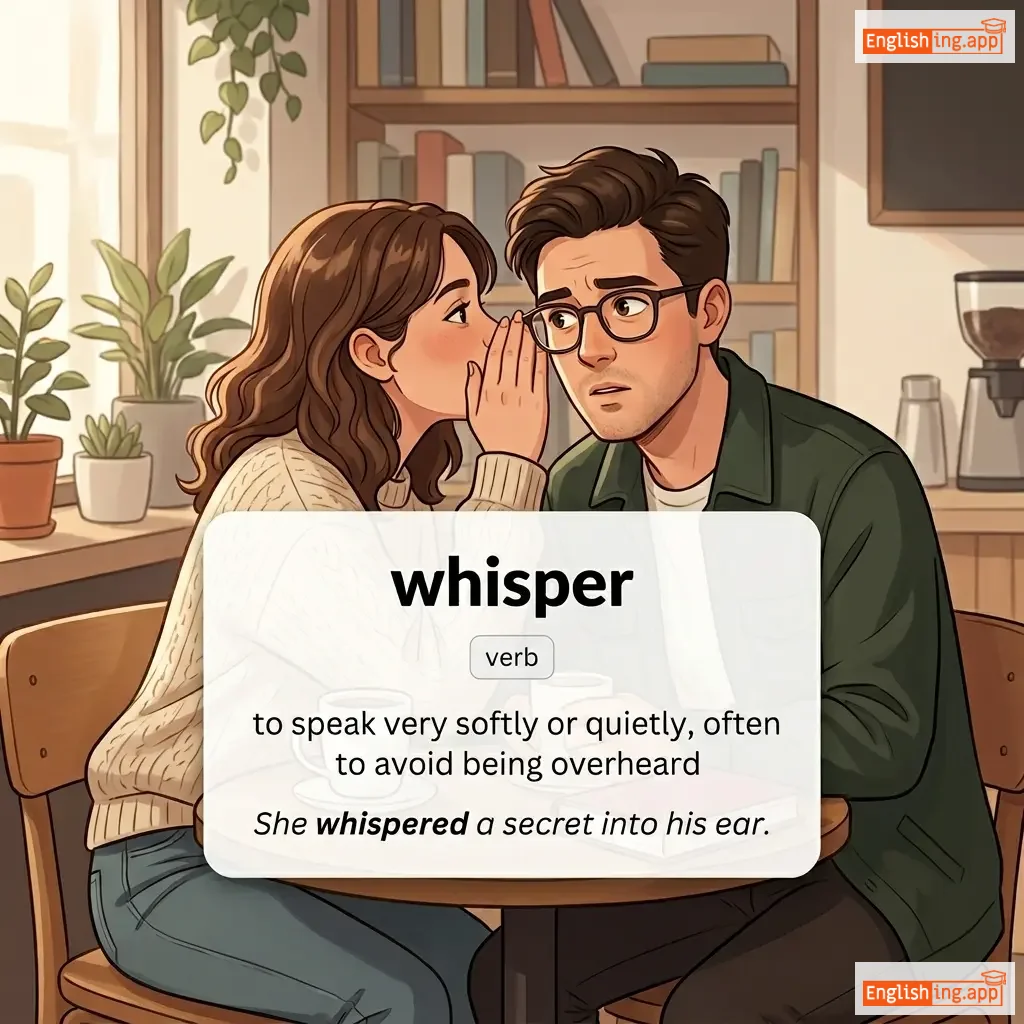
to speak very softly using one's breath without vocal cords
|
She whispered a secret in my ear.
Sie flüsterte ein Geheimnis in mein Ohr.
••••••
|
Sie flüsterte ein Geheimnis in mein Ohr.
Sie flüsterte ein Geheimnis in mein Ohr.
••••••
|
-
••••••
|
-
••••••
|
-
••••••
|
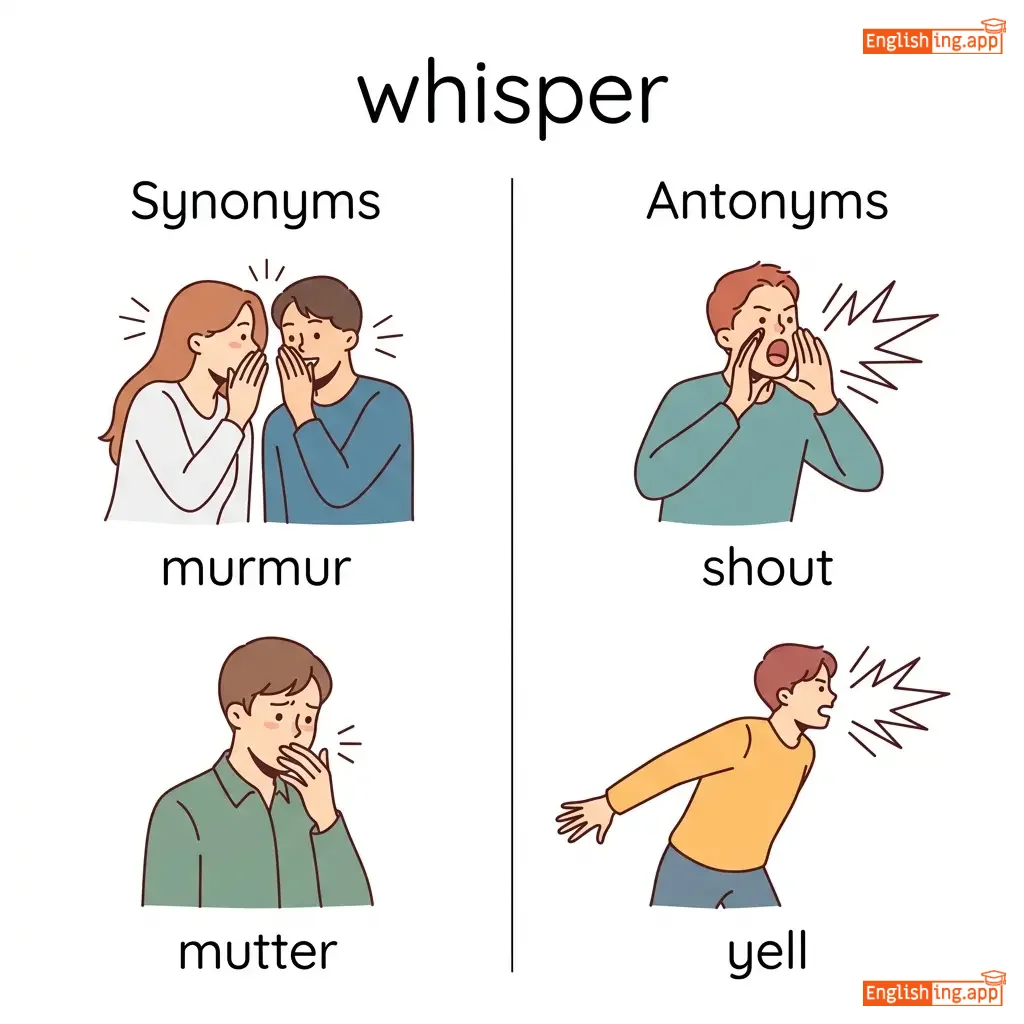
murmur, mumble, breathe, hiss
|
shout, yell, scream, roar
|
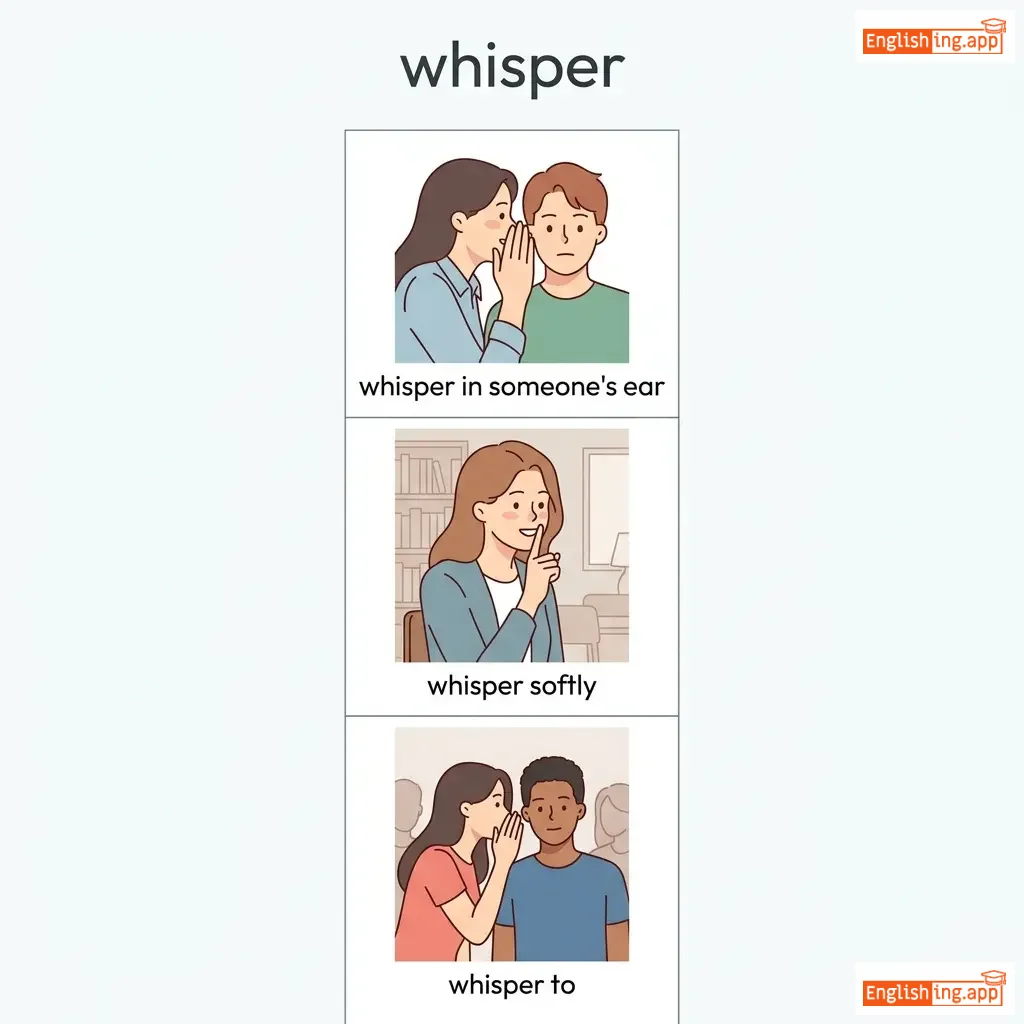
whisper secrets, whisper softly, whisper words, whisper quietly, whisper sweet, whisper prayers
|
Deutsch: 'flüstern' bedeutet das gleiche wie das englische 'whisper'.
••••••
|
|
🎵
••••••
|
/ˈwɪsəl/
verb
(wistle)
••••••
|
••••••
|
pfeifen
pfeifen
••••••
|
wiste-lt
••••••
|
wiste-lt
••••••
|
wistles
••••••
|
wistle-ing
••••••
|
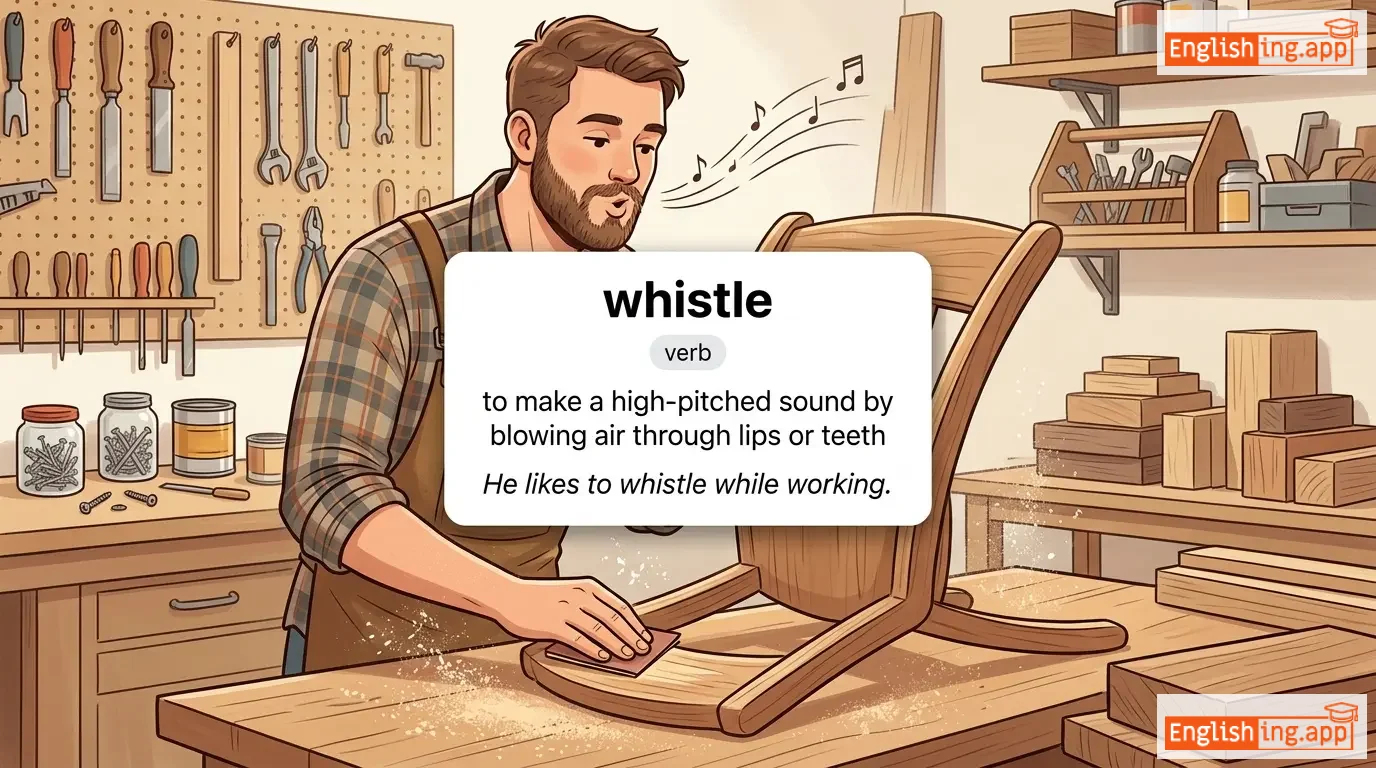
to make a high-pitched sound by blowing air through lips or teeth
|
He likes to whistle while working.
Er pfeift gern, während er arbeitet.
••••••
|
Er pfeift gern, während er arbeitet.
Er pfeift gern, während er arbeitet.
••••••
|
-
••••••
|
-
••••••
|
-
••••••
|
••••••
|
••••••
|
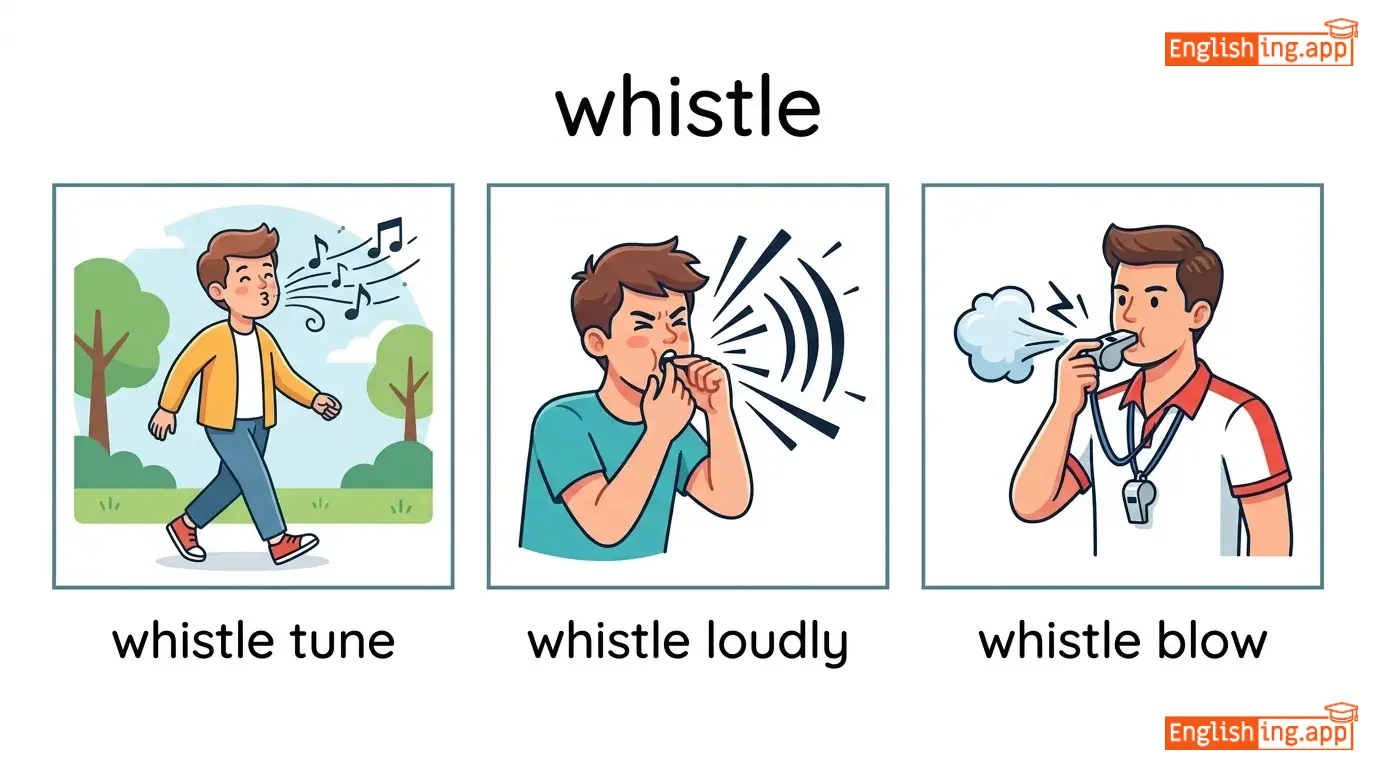
whistle tune, whistle loudly, whistle blow, train whistle
|
Pfeifen - Der hohe Ton erinnert an das Pfeifen.
••••••
|
|
⚪
••••••
|
/waɪt/
adjective
(waɪt)
••••••
|
-
••••••
|
weiß; rein
weiss; rein
••••••
|
-
••••••
|
-
••••••
|
-
••••••
|
-
••••••
|
of the color of snow or milk; pale; pure
|
She wore a beautiful white dress to the wedding.
Sie trug ein schönes weißes Kleid zur Hochzeit.
••••••
|
Sie trug ein schönes weißes Kleid zur Hochzeit.
Sie trug ein schönes weißes Kleid zur Hochzeit.
••••••
|
-
••••••
|
-
••••••
|
-
••••••
|
pale, colorless, snow-white, ivory
|
••••••
|
white paper, white shirt, white house
|
In German, 'weiß' means 'white', just like snow!
••••••
|
|
🤔
••••••
|
/huː/
pronoun
(wer)
••••••
|
-
••••••
|
wer
ver
••••••
|
-
••••••
|
-
••••••
|
-
••••••
|
-
••••••
|
used to ask about a person or people
|
Who is coming to the party tonight?
••••••
|
Wer kommt heute Abend zur Party?
Wer kommt heute Abend zur Party?
••••••
|
-
••••••
|
-
••••••
|
-
••••••
|
••••••
|
••••••
|
who is, who are, who knows
|
Ask 'wer' in German to know who!
••••••
|
|
🙋♂️
••••••
|
/huːˈɛvər/
pronoun
(huːˈɛvər)
••••••
|
-
••••••
|
wer auch immer
ver auk immer
••••••
|
-
••••••
|
-
••••••
|
-
••••••
|
-
••••••
|
any person who; no matter who
|
Whoever wants to join the trip must register today.
••••••
|
Wer auch immer an der Reise teilnehmen möchte, muss sich heute anmelden.
Ver auk immer an der Reise teilnehmen mochte, muss sich heute anmelden.
••••••
|
-
••••••
|
-
••••••
|
-
••••••
|
anyone, anybody, whosoever
|
••••••
|
whoever comes, whoever wants, whoever said, whoever did
|
Who + ever = wer auch immer — whoever means jede Person
••••••
|
|
🔵
••••••
|
/hoʊl/
adjective
(houl)
••••••
|
-
••••••
|
ganz
ganz
••••••
|
-
••••••
|
-
••••••
|
-
••••••
|
-
••••••
|
complete; entire; all of something
|
He ate the whole pizza by himself.
He aß die houl pizza by himself.
••••••
|
Er aß die ganze Pizza ganz allein.
er ass die ganze pizza ganz allein
••••••
|
-
••••••
|
-
••••••
|
-
••••••
|
complete, entire, total, full
|
partial, incomplete, broken, fragmented
|
whole story, whole family, whole day
|
Ganz = whole — 'ganz Pizza' = ganze Pizza
••••••
|
|
💯
••••••
|
/ˈhoʊli/
adverb
(holli)
••••••
|
-
••••••
|
vollständig; völlig
vollständig; völlig
••••••
|
-
••••••
|
-
••••••
|
-
••••••
|
-
••••••
|
Entirely; completely; to the full extent
|
I am wholly committed to this project.
••••••
|
Ich bin vollständig in dieses Projekt investiert.
Ich bin vollstandig in dieses Projekt investiert.
••••••
|
-
••••••
|
-
••••••
|
-
••••••
|
completely, entirely, totally, fully
|
partially, partly, incompletely
|
wholly owned, wholly responsible, wholly different
|
Völlig, wie wenn du dich ganz in etwas hineinsetzt
••••••
|
|
👤
••••••
|
/huːm/
pronoun
(hum)
••••••
|
-
••••••
|
wem
wem
••••••
|
-
••••••
|
-
••••••
|
-
••••••
|
-
••••••
|
used to refer to the person or people that something is done to
|
The man whom I met yesterday is my friend.
••••••
|
Der Mann, dem ich gestern begegnet bin, ist mein Freund.
Der Mann, dem ich gestern begegnet bin, ist mein Freund.
••••••
|
-
••••••
|
-
••••••
|
-
••••••
|
••••••
|
••••••
|
whom I met, whom I saw, to whom it may concern
|
Whom sounds like 'Wem' - 'Wem' as in the person you met.
••••••
|
|
📱
••••••
|
/huːz/
pronoun
(huːz)
••••••
|
-
••••••
|
wessen
wessen
••••••
|
-
••••••
|
-
••••••
|
-
••••••
|
-
••••••
|
used to ask or talk about the person or thing that owns something
|
The girl whose phone was stolen is my cousin.
••••••
|
Das Mädchen, dessen Telefon gestohlen wurde, ist meine Cousine.
Das Mädchen, dessen Telefon gestohlen wurde, ist meine Cousine.
••••••
|
-
••••••
|
-
••••••
|
-
••••••
|
who's, that person’s, of whom
|
••••••
|
whose phone, whose book, whose idea
|
Whose phone is this? – 'Whose' connects to 'Wessen Telefon'.
••••••
|
|
❓
••••••
|
/waɪ/
adverb
(wai)
••••••
|
-
••••••
|
warum
varum
••••••
|
-
••••••
|
-
••••••
|
-
••••••
|
-
••••••
|
For what reason or purpose; used to ask about the cause of something
|
••••••
|
Warum bist du heute zu spät?
varum bist du hoyte tsu spät?
••••••
|
-
••••••
|
-
••••••
|
-
••••••
|
••••••
|
••••••
|
why not, that's why, reason why
|
No
••••••
|
|
↔️
••••••
|
/waɪd/
adjective
(waid)
••••••
|
-
••••••
|
breit; weit
breit; weit
••••••
|
-
••••••
|
-
••••••
|
-
••••••
|
-
••••••
|
having a great distance from one side to the other; broad
|
The river is very wide at this point.
••••••
|
Der Fluss ist an dieser Stelle sehr breit.
Der Fluss ist an dieser Stelle sehr breit.
••••••
|
-
••••••
|
-
••••••
|
-
••••••
|
broad, extensive, spacious, vast
|
••••••
|
wide range, wide variety, wide open, wide awake
|
Breit Fluss, weit Raum.
••••••
|
|
🌍
••••••
|
/ˈwaɪdli/
adverb
(weidli)
••••••
|
-
••••••
|
weit verbreitet
weit verbreitet
••••••
|
-
••••••
|
-
••••••
|
-
••••••
|
-
••••••
|
to a great extent or degree
|
The news of his promotion spread widely across the company.
••••••
|
Die Nachricht von seiner Beförderung verbreitete sich weit in der Firma.
Die Nachricht von seiner Beförderung verbreitete sich weit in der Firma.
••••••
|
-
••••••
|
-
••••••
|
-
••••••
|
extensively, broadly, widely, far
|
••••••
|
widely known, widely accepted, widely spread
|
Wide world 🌍 means a wide spread across everywhere!
••••••
|
|
↔️
••••••
|
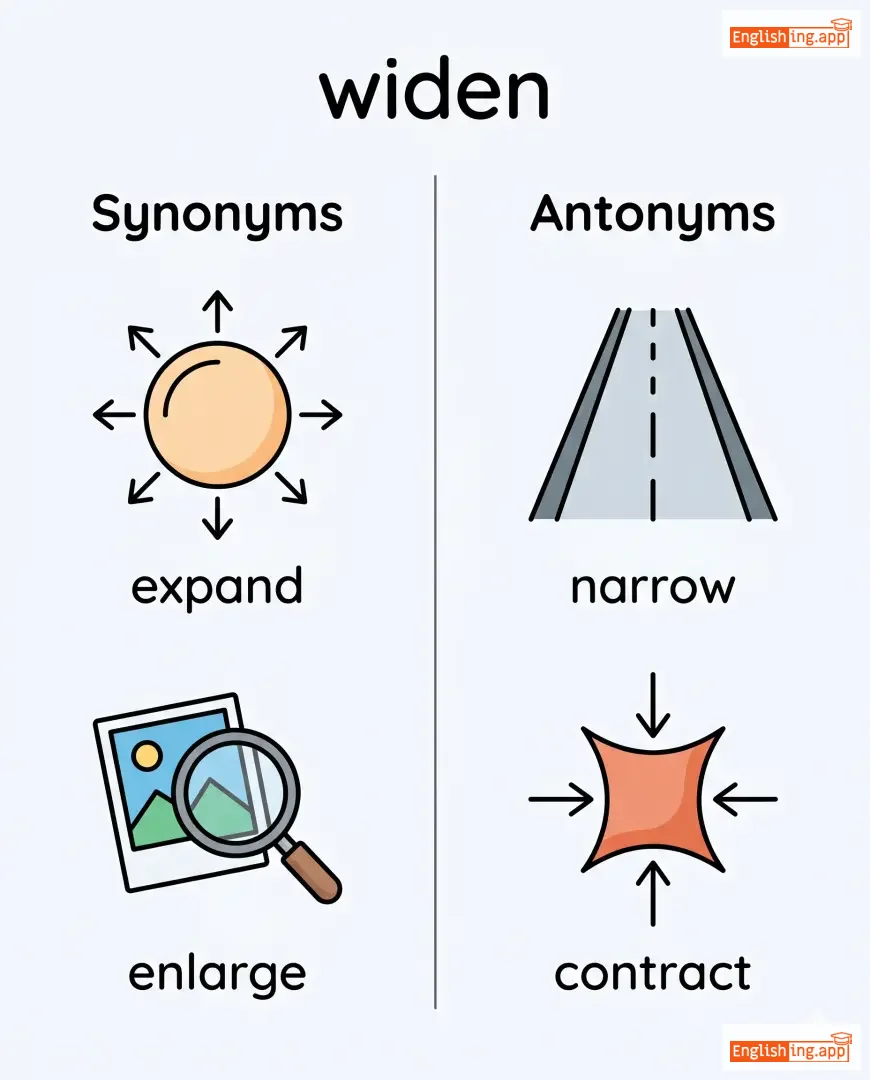
/ˈwaɪdən/
verb
(widen)
••••••
|
••••••
|
verbreitern
verbreitern
••••••
|
widened
••••••
|
widened
••••••
|
widens
••••••
|
widening
••••••
|
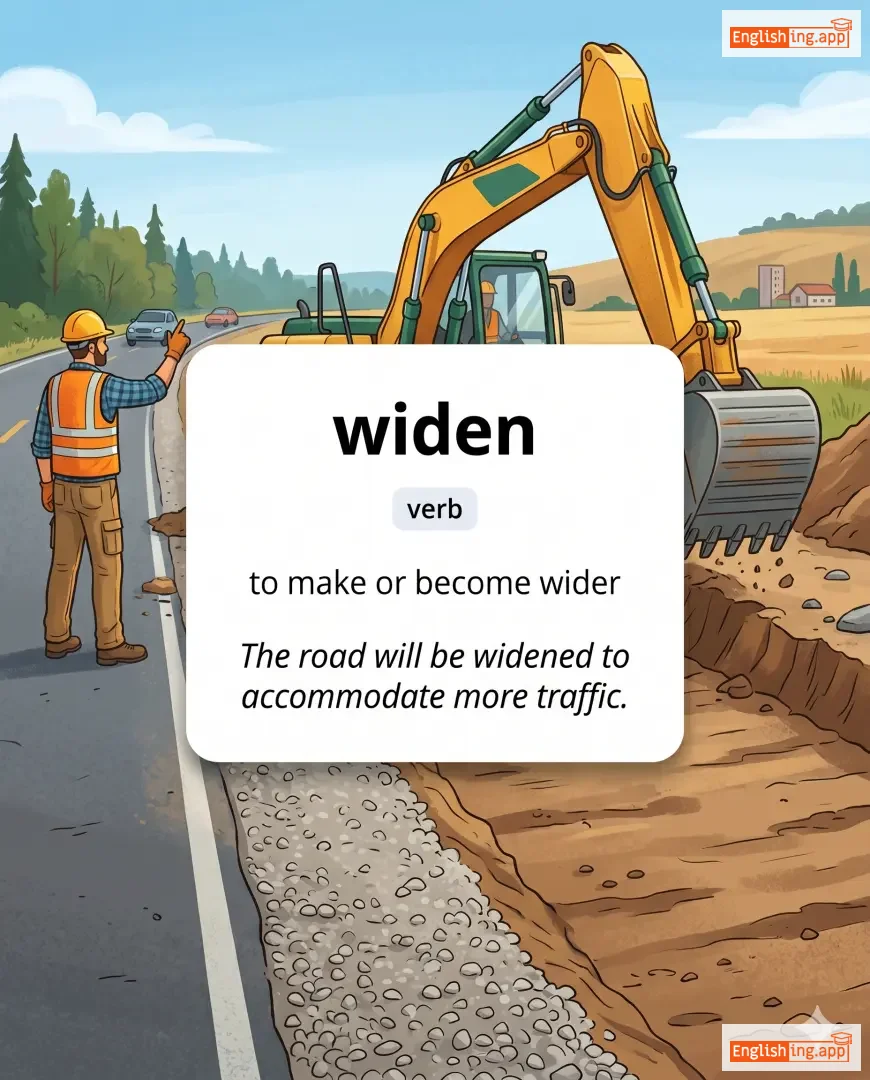
to make or become wider or broader
|
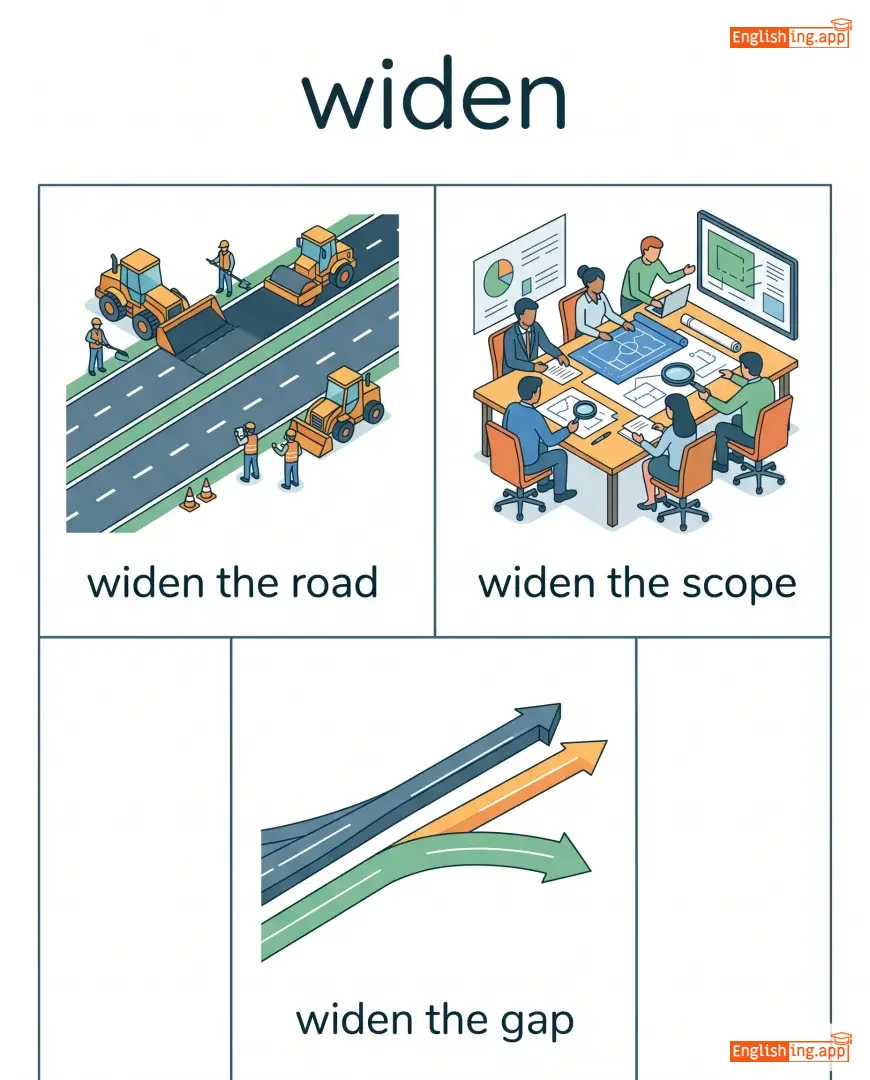
They plan to widen the road next year.
Sie planen, die Straße im nächsten Jahr zu verbreitern.
••••••
|
Sie planen, die Straße im nächsten Jahr zu verbreitern.
Sie planen, die Straße im nächsten Jahr zu verbreitern.
••••••
|
-
••••••
|
-
••••••
|
-
••••••
|
broaden, expand, extend, enlarge
|
narrow, reduce, contract, shrink
|
widen road, widen gap, widen range, gradually widen
|
Verbreitern, wie eine Straße, die breiter wird.
••••••
|
|
🌍
••••••
|
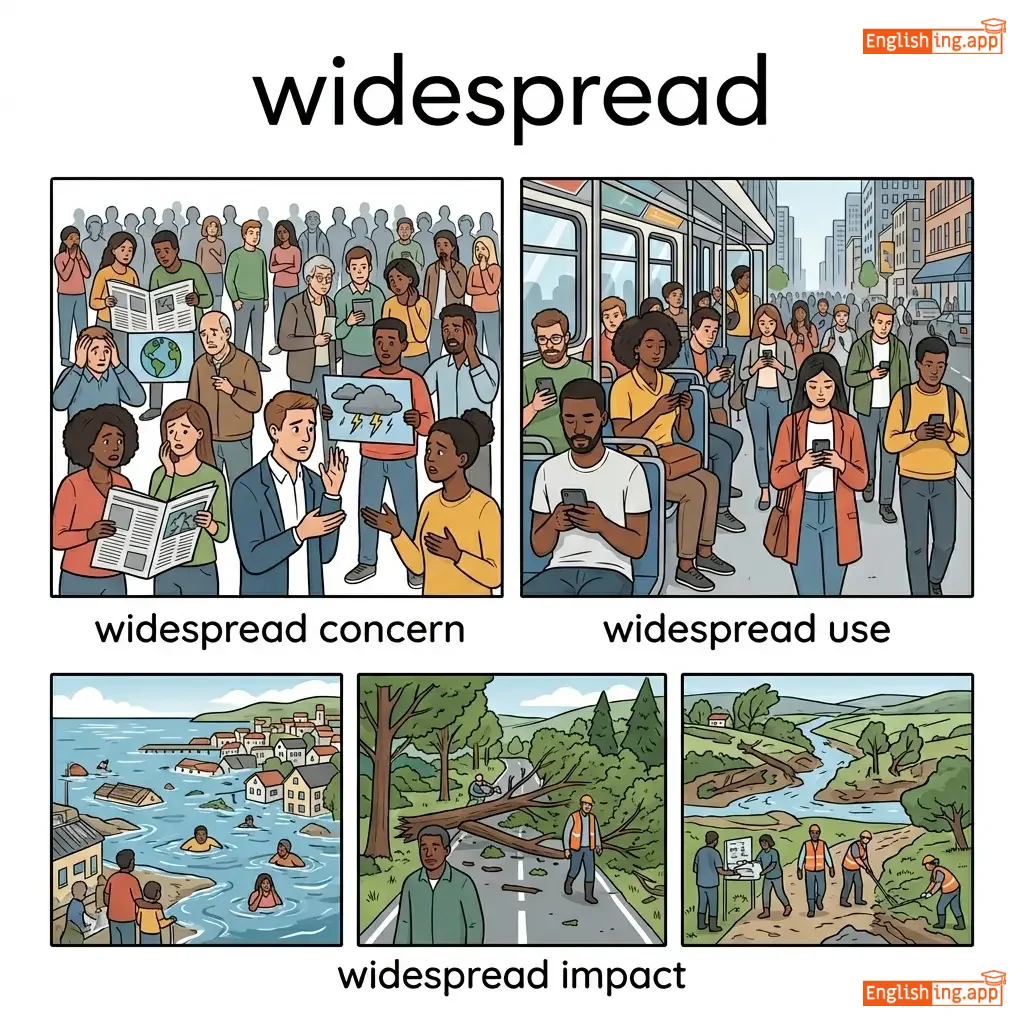
/ˈwaɪd.sprɛd/
adjective
(waidspred)
••••••
|
••••••
|
weit verbreitet
weit verbreitet
••••••
|
-
••••••
|
-
••••••
|
-
••••••
|
-
••••••
|
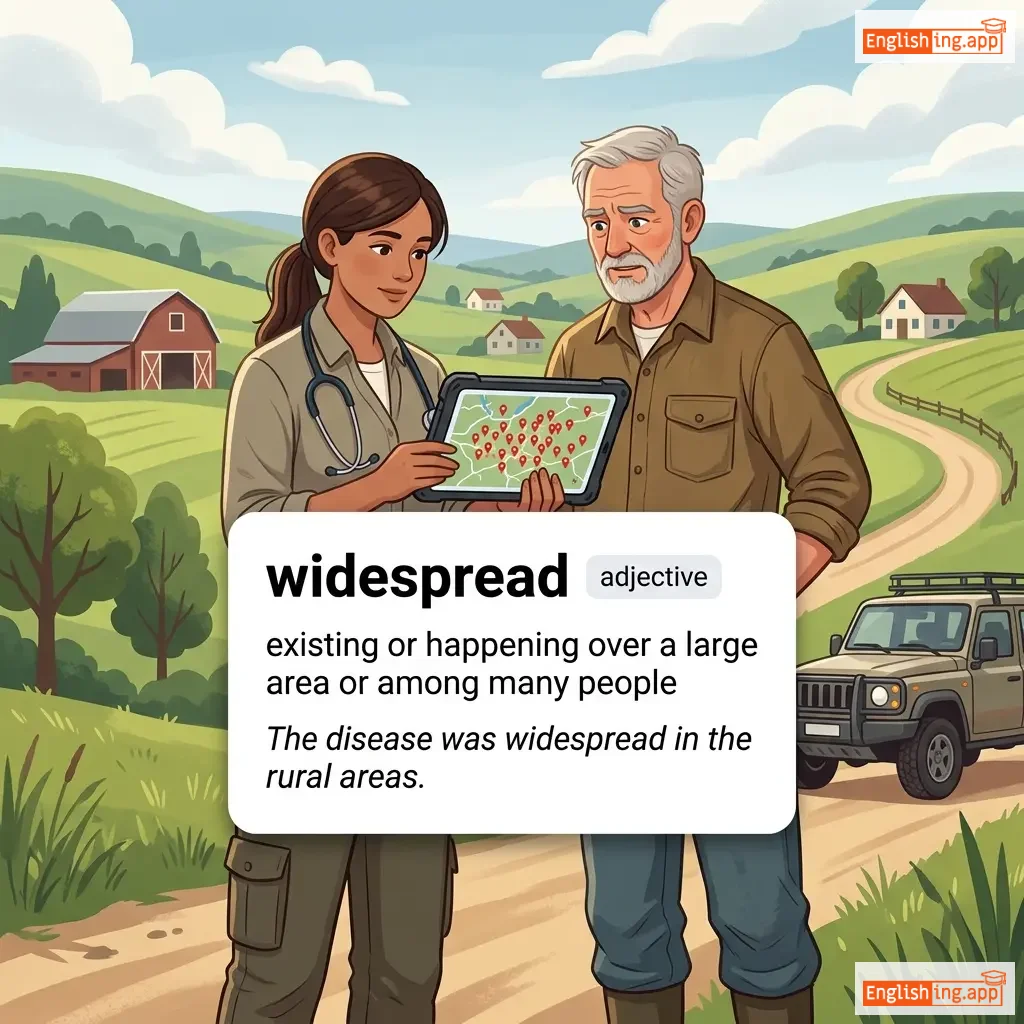
existing or happening in many places or among many people
|
There is widespread support for the new policy.
••••••
|
Es gibt weit verbreitete Unterstützung für die neue Politik.
Es gibt weit verbreitete Unterstützung für die neue Politik.
••••••
|
-
••••••
|
-
••••••
|
-
••••••
|
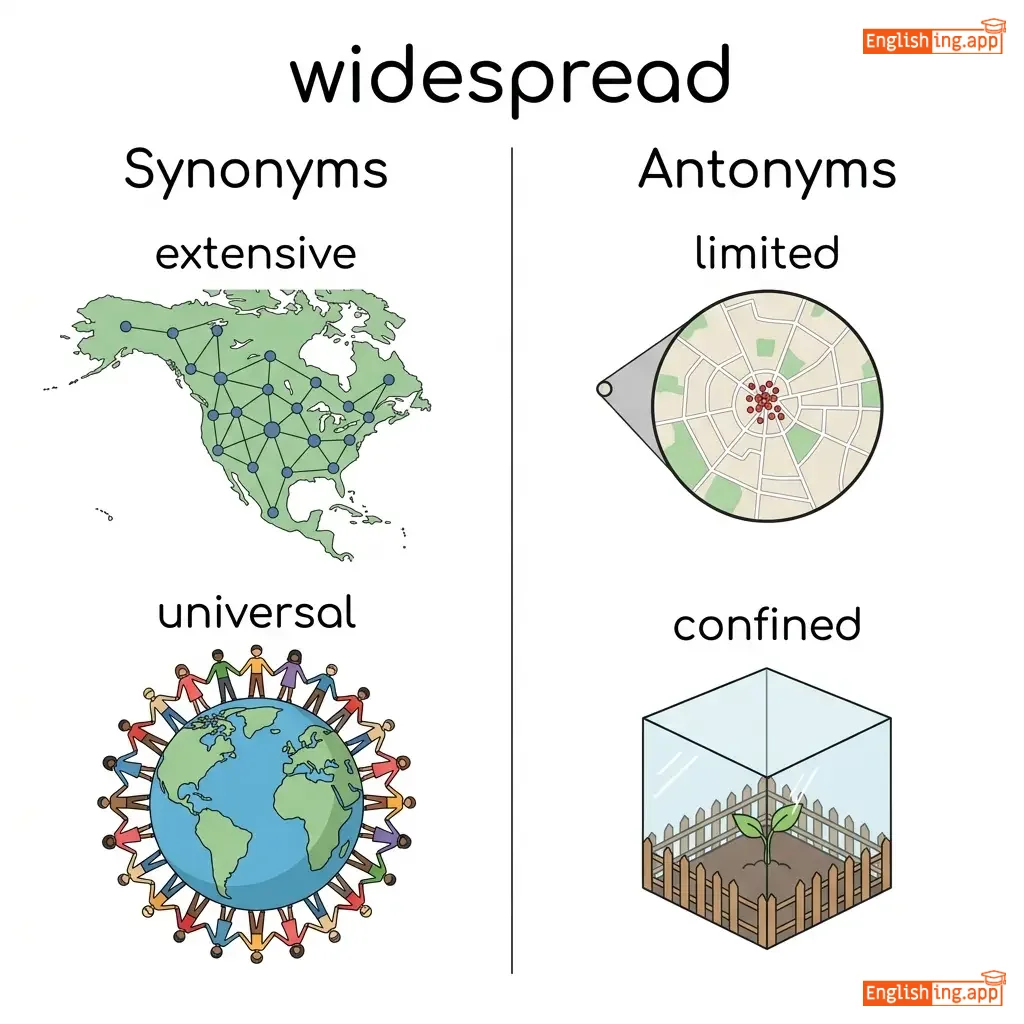
extensive, prevalent, universal, common
|
limited, localized, restricted, rare
|
widespread support, widespread use, widespread damage, widespread belief
|
German 'weit verbreitet' sounds like 'widespread'.
••••••
|
|
🖤
••••••
|
/ˈwɪdəʊ/
noun
(wido)
••••••
|
-
••••••
|
Witwe
Witwe
••••••
|
-
••••••
|
-
••••••
|
-
••••••
|
-
••••••
|
a woman whose husband has died and who has not married again
|
She became a widow at a very young age.
Sie wurde in sehr jungen Jahren Witwe.
••••••
|
Sie wurde in sehr jungen Jahren Witwe.
Sie wurde in sehr jungen Jahren Witwe.
••••••
|
Graswitwe
••••••
|
a woman whose husband is temporarily away
|
Graswitwe
Graswitwe
••••••
|
bereaved woman, lone woman, wife left behind
|
••••••
|
young widow, war widow, become a widow, widow pension
|
Witwe bedeutet Witwe — 'We do' gesagt aber jetzt 'Er ist gegangen' 😢
••••••
|
|
↔️
••••••
|
/wɪdθ/
noun
(wɪdθ)
••••••
|
-
••••••
|
Breite; Ausdehnung
breite; ausdehnung
••••••
|
-
••••••
|
-
••••••
|
-
••••••
|
-
••••••
|
the measurement or extent of something from side to side; breadth
|
The width of the river is about 50 meters.
Die Breite des Flusses beträgt etwa 50 Meter.
••••••
|
Die Breite des Flusses beträgt etwa 50 Meter.
Die Breite des Flusses betraegt etwa 50 Meter.
••••••
|
-
••••••
|
-
••••••
|
-
••••••
|
••••••
|
length, height, narrowness
|
full width, average width, total width
|
Stellen Sie sich den Fluss vor, um sich an 'width' zu erinnern.
••••••
|
|
👩❤️👨
••••••
|
/waɪf/
noun
(waif)
••••••
|
-
••••••
|
Ehefrau
Ehefrau
••••••
|
-
••••••
|
-
••••••
|
-
••••••
|
-
••••••
|
a woman who is married to someone
|
She is the wife of the famous author.
••••••
|
Sie ist die Ehefrau des berühmten Autors.
Sie ist die Ehefrau des berühmten Autors.
••••••
|
-
••••••
|
-
••••••
|
-
••••••
|
spouse, partner, better half
|
••••••
|
wife and husband, loving wife, devoted wife
|
‘Ehefrau’ means wife in German! Simple to remember.
••••••
|
|
🌿
••••••
|
/waɪld/
adjective
(waild)
••••••
|
-
••••••
|
wild
wild
••••••
|
-
••••••
|
-
••••••
|
-
••••••
|
-
••••••
|
living or growing in the natural environment; uncontrolled or untamed
|
The children ran wild in the park.
••••••
|
Die Kinder rannten wild im Park.
Die Kinder rannten wild im Park.
••••••
|
••••••
|
to behave without restraint or control
|
wild laufen
wild laufen
••••••
|
untamed, feral, uncontrolled, savage, free
|
tame, domestic, controlled
|
wild animal, wild nature, wild guess, wild behavior
|
Wild bedeutet wild – Tiere laufen frei und unkontrolliert im Wald.
••••••
|
|
🦌
••••••
|
/ˈwaɪldˌlaɪf/
noun
(waildlaif)
••••••
|
-
••••••
|
Wildtierwelt
Wildtierwelt
••••••
|
-
••••••
|
-
••••••
|
-
••••••
|
-
••••••
|
animals, birds, and plants living in their natural environment
|
The park is home to a wide variety of wildlife.
••••••
|
Der Park ist Heimat einer großen Vielfalt an Wildtieren.
Der Park ist Heimat einer großen Vielfalt an Wildtieren.
••••••
|
••••••
|
the protection of wild animals and their habitats
|
Wildtierschutz
Wildtierschutz
••••••
|
fauna, animals, creatures, nature, biosphere
|
••••••
|
wildlife sanctuary, wildlife photographer, protect wildlife, wildlife reserve
|
Wild life ist die Wildtierwelt im natürlichen Lebensraum 🌲
••••••
|
|
✍️
••••••
|
/wɪl/
noun, verb
(wɪl)
••••••
|
-
••••••
|
Wille
wille
••••••
|
-
••••••
|
-
••••••
|
wɪlz
••••••
|
wɪlɪŋ
••••••
|
expressing future tense or intention; a legal document
|
She will attend the meeting tomorrow.
Sie wird morgen an dem Treffen teilnehmen.
••••••
|
Sie wird morgen an dem Treffen teilnehmen.
Sie wird morgen an dem Treffen teilnehmen.
••••••
|
Wille zur Macht
••••••
|
the drive to assert one's own will over others
|
Wille zur Macht
Wille zur Macht
••••••
|
intend, shall, want, determination
|
••••••
|
last will, will and testament, strong will
|
Wille zur Macht, Wille zur Zukunft ✍️
••••••
|
|
🙋♂️
••••••
|
/ˈwɪl.ɪŋ/
adjective
(wɪlɪŋ)
••••••
|
-
••••••
|
bereit; willens
bereit; willens
••••••
|
-
••••••
|
-
••••••
|
-
••••••
|
-
••••••
|
ready, eager, or prepared to do something
|
She is willing to help with the project.
••••••
|
Sie ist bereit, mit dem Projekt zu helfen.
Sie ist bereit, mit dem Projekt zu helfen.
••••••
|
-
••••••
|
-
••••••
|
-
••••••
|
ready, eager, prepared, inclined
|
unwilling, reluctant, hesitant, resistant
|
willing to help, willing participant, willing cooperation, willing spirit
|
bereit = willing, willens = eager
••••••
|
|
😊
••••••
|
/ˈwɪl.ɪŋ.li/
adverb
(willingli)
••••••
|
-
••••••
|
freiwillig
freiwillig
••••••
|
-
••••••
|
-
••••••
|
-
••••••
|
-
••••••
|
in a willing manner; voluntarily; with free will
|
She willingly helped her neighbors during the emergency.
••••••
|
Sie half freiwillig ihren Nachbarn während des Notfalls.
sie half freiwillig ihren nachbarn während des notfalls
••••••
|
-
••••••
|
-
••••••
|
-
••••••
|
voluntarily, eagerly, gladly, readily, freely
|
reluctantly, unwillingly, forcibly, involuntarily
|
willingly accept, willingly participate, willingly cooperate, willingly volunteer
|
Freiwillig ist wie 'ich mache es gerne', ohne Zwang.
••••••
|
|
💪
••••••
|
/ˈwɪlɪŋnəs/
noun
(willingness)
••••••
|
-
••••••
|
Bereitschaft
Bereitschaft
••••••
|
-
••••••
|
-
••••••
|
-
••••••
|
-
••••••
|
the quality of being prepared or ready to do something
|
Her willingness to help others made her very popular.
••••••
|
Ihre Bereitschaft, anderen zu helfen, machte sie sehr beliebt.
Ihre Bereitschaft, anderen zu helfen, machte sie sehr beliebt.
••••••
|
-
••••••
|
-
••••••
|
-
••••••
|
readiness, eagerness, enthusiasm, consent, agreement
|
reluctance, unwillingness
|
show willingness, express willingness, willingness to cooperate, willingness to learn
|
Willingness bedeutet Bereitschaft, und Bereitschaft bedeutet, etwas zu tun!
••••••
|
|
🏆
••••••
|
/wɪn/
verb
(wɪn)
••••••
|
••••••
|
gewinnen
gewinnen
••••••
|
wɒn
••••••
|
wɒn
••••••
|
wɪnz
••••••
|
wɪnɪŋ
••••••
|
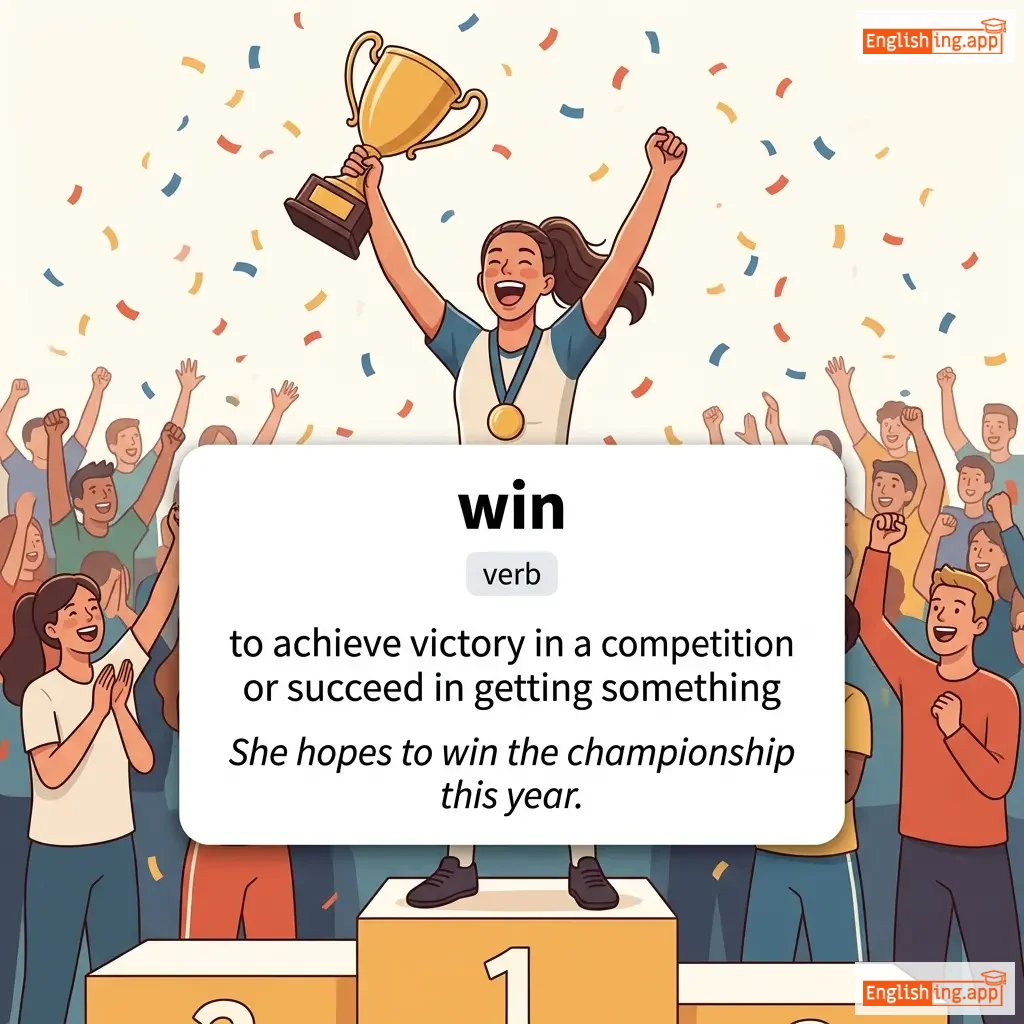
to achieve victory in a competition or succeed in getting something
|
She hopes to win the championship this year.
sie hofft, in diesem Jahr die Meisterschaft zu gewinnen.
••••••
|
sie hofft, in diesem Jahr die Meisterschaft zu gewinnen.
Sie hofft, in diesem Jahr die Meisterschaft zu gewinnen.
••••••
|
überzeugen
••••••
|
to persuade or gain support
|
jemanden für sich gewinnen
jemanden für sich gewinnen
••••••
|
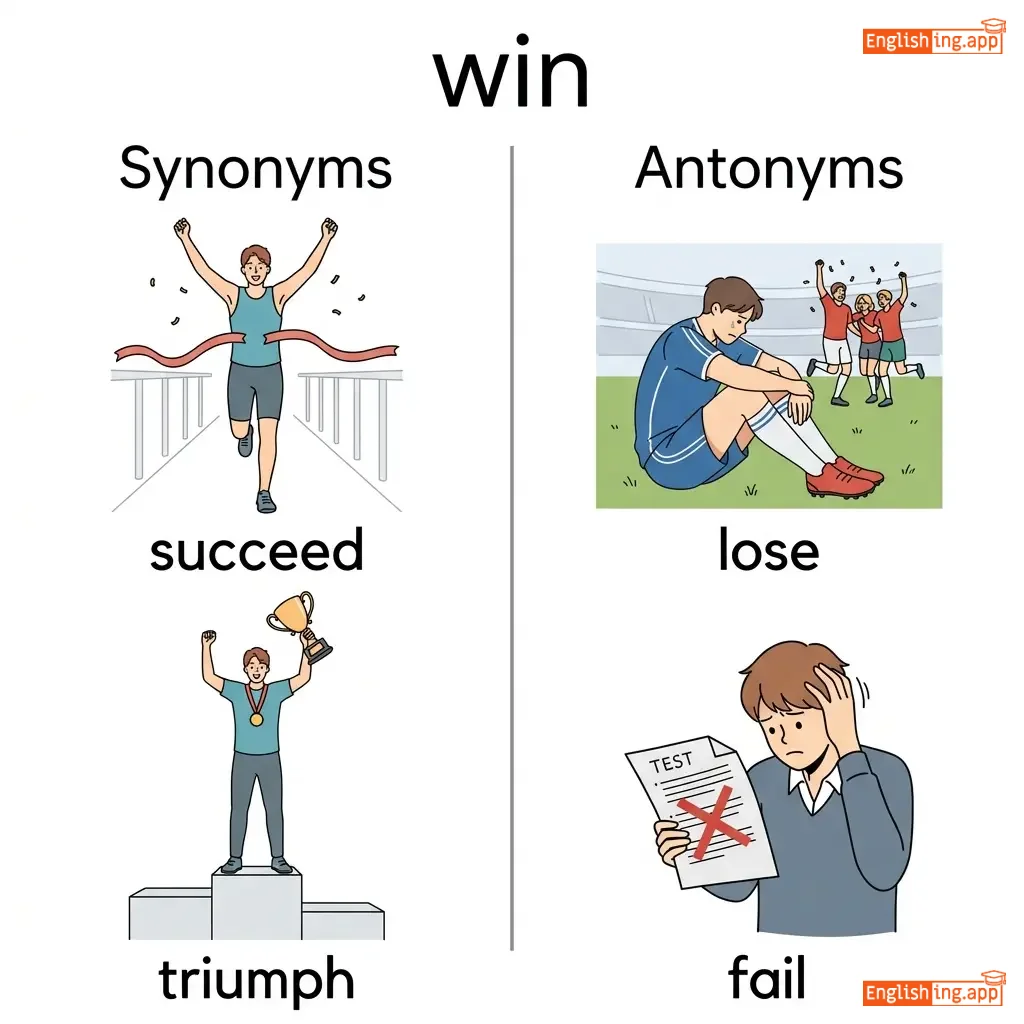
succeed, triumph, prevail, conquer
|
••••••
|
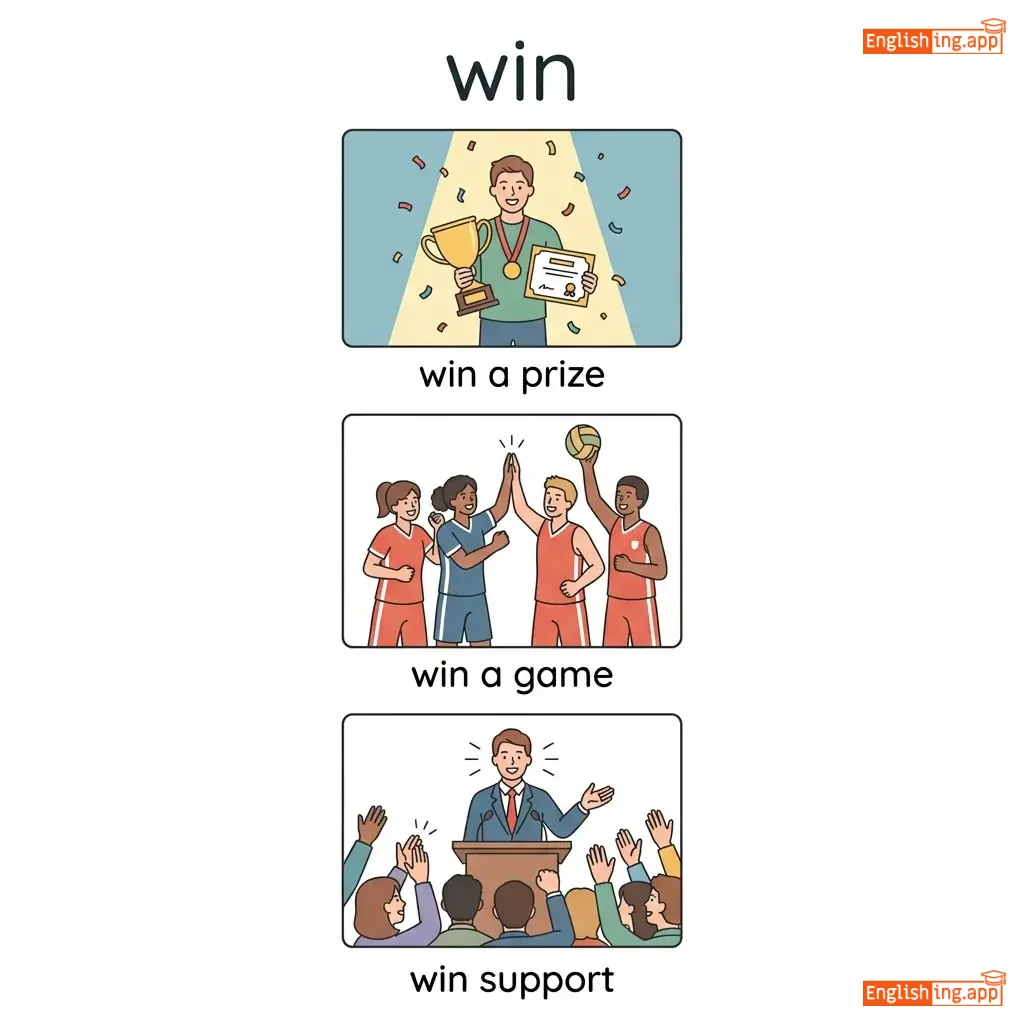
win a prize, win a game, win support, win the championship
|
Gewinnen ist der Traum eines jeden Sportlers, wie im Fußball, wenn du den Ball ins Tor schießt.
••••••
|
|
🌬️
••••••
|
/wɪnd/
noun
(vɪnd)
••••••
|
-
••••••
|
wind
wind
••••••
|
-
••••••
|
-
••••••
|
-
••••••
|
-
••••••
|
the natural movement of air, especially in the form of a current of air blowing from a particular direction
|
The wind blew the leaves off the trees.
der wind blies die blätter von den bäumen.
••••••
|
Der Wind blies die Blätter von den Bäumen.
Der Wind blies die Blätter von den Bäumen.
••••••
|
-
••••••
|
-
••••••
|
-
••••••
|
breeze, gust, gale, draft
|
••••••
|
strong wind, wind speed, wind direction, cold wind
|
Wind - wie eine kühle Brise an einem heißen Tag
••••••
|
|
🪟
••••••
|
/ˈwɪn.doʊ/
noun
(vindo)
••••••
|
-
••••••
|
Fenster
fenster
••••••
|
-
••••••
|
-
••••••
|
-
••••••
|
-
••••••
|
an opening in a wall fitted with glass to let in light and air
|
Please open the window for fresh air.
bitte öffnen Sie das Fenster für frische Luft.
••••••
|
bitte öffnen Sie das Fenster für frische Luft.
bitte oeffnen sie das fenster fuer frische luft
••••••
|
-
••••••
|
-
••••••
|
-
••••••
|
••••••
|
••••••
|
window frame, window sill, bay window, window blinds
|
Fenster = fresh air 'fen' = window opening!
••••••
|
|
🍷
••••••
|
/waɪn/
noun
(wajn)
••••••
|
-
••••••
|
Wein
Wein
••••••
|
-
••••••
|
-
••••••
|
-
••••••
|
-
••••••
|
an alcoholic drink made from fermented grapes or other fruits
|
They served a glass of red wine at the dinner.
Sie haben ein Glas Rotwein zum Abendessen serviert.
••••••
|
Sie haben ein Glas Rotwein zum Abendessen serviert.
Sie haben ein Glas Rotwein zum Abendessen serviert.
••••••
|
-
••••••
|
-
••••••
|
-
••••••
|
vino, beverage, drink, alcohol
|
••••••
|
red wine, white wine, glass of wine, bottle of wine
|
Wine pairs with dinner—imagine a glass of red wine with a fancy meal!
••••••
|
|
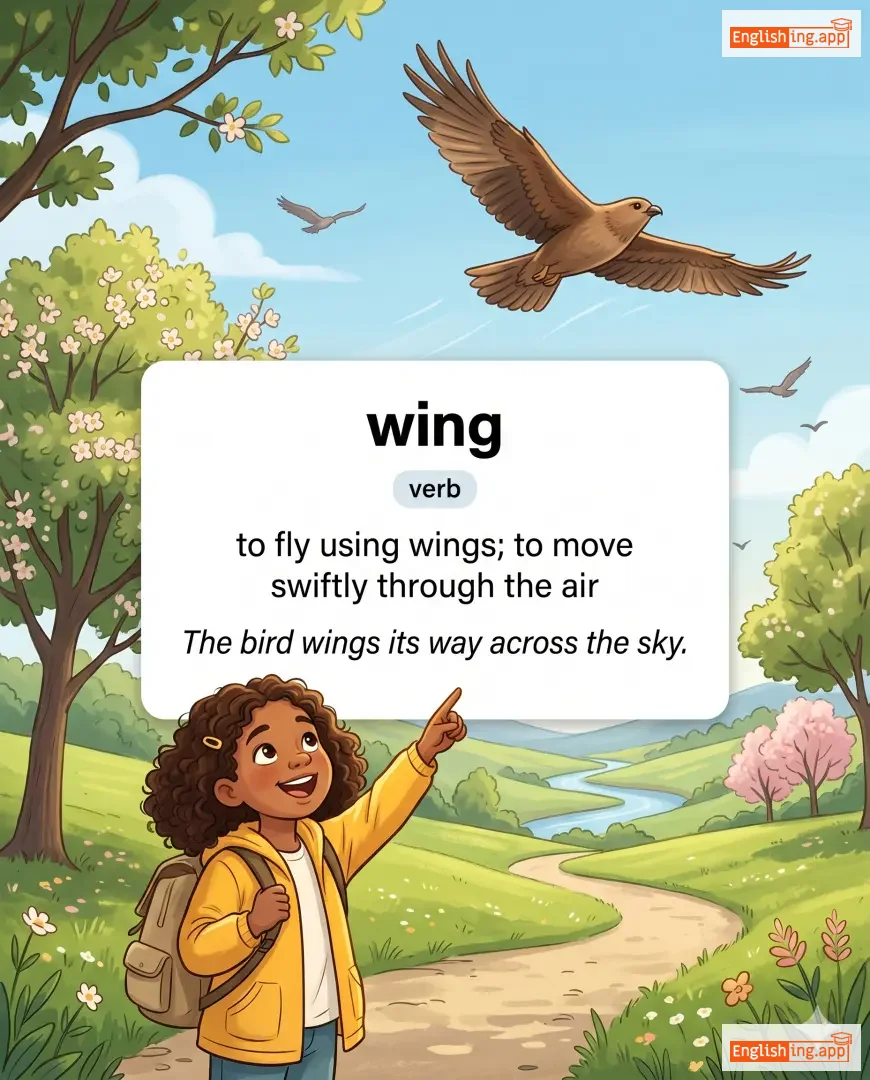
🪶
••••••
|
/wɪŋ/
verb
(wing)
••••••
|
••••••
|
mit Flügeln fliegen
mit Flügeln fliegen
••••••
|
winged
••••••
|
winged
••••••
|
wings
••••••
|
winging
••••••
|
to fly using wings; to move swiftly through the air
|
The bird wings its way across the sky.
Der Vogel fliegt über den Himmel.
••••••
|
Der Vogel fliegt seinen Weg über den Himmel.
Der Vogel fliegt seinen Weg über den Himmel.
••••••
|
-
••••••
|
-
••••••
|
-
••••••
|
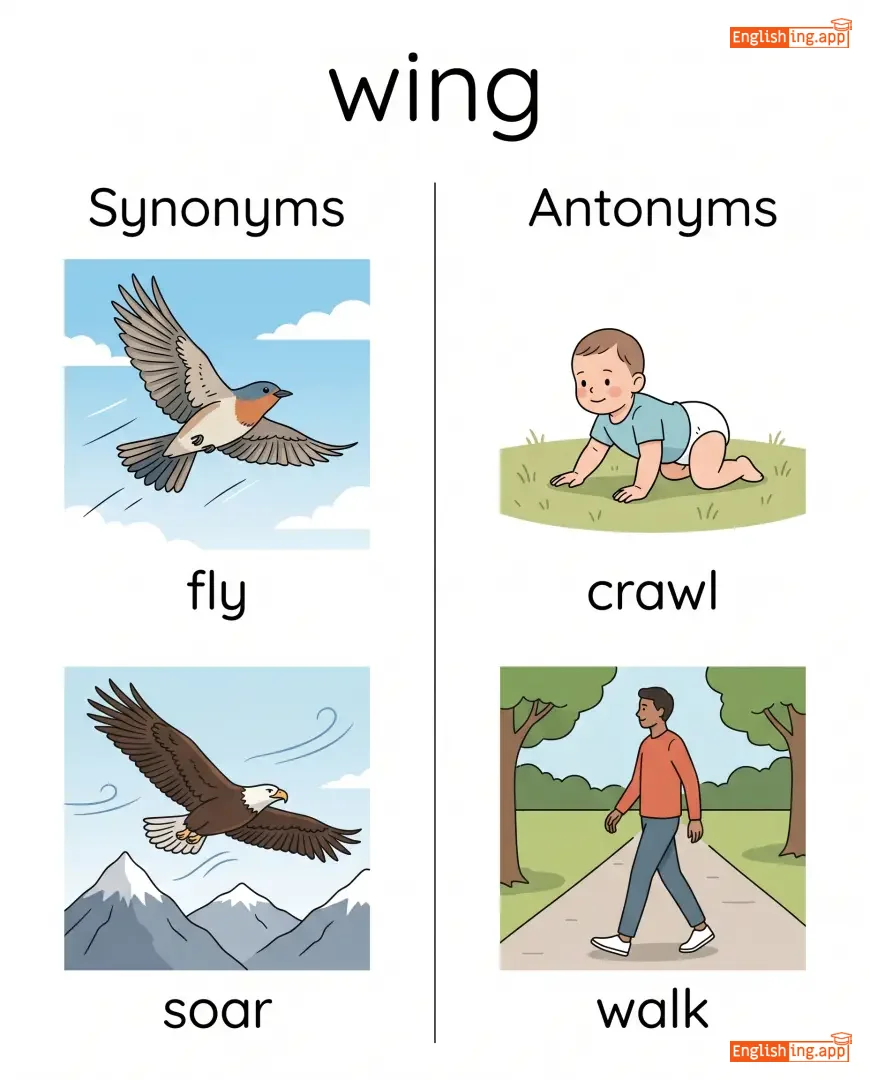
fly, soar, glide, flutter
|
crawl, walk, ground, land
|
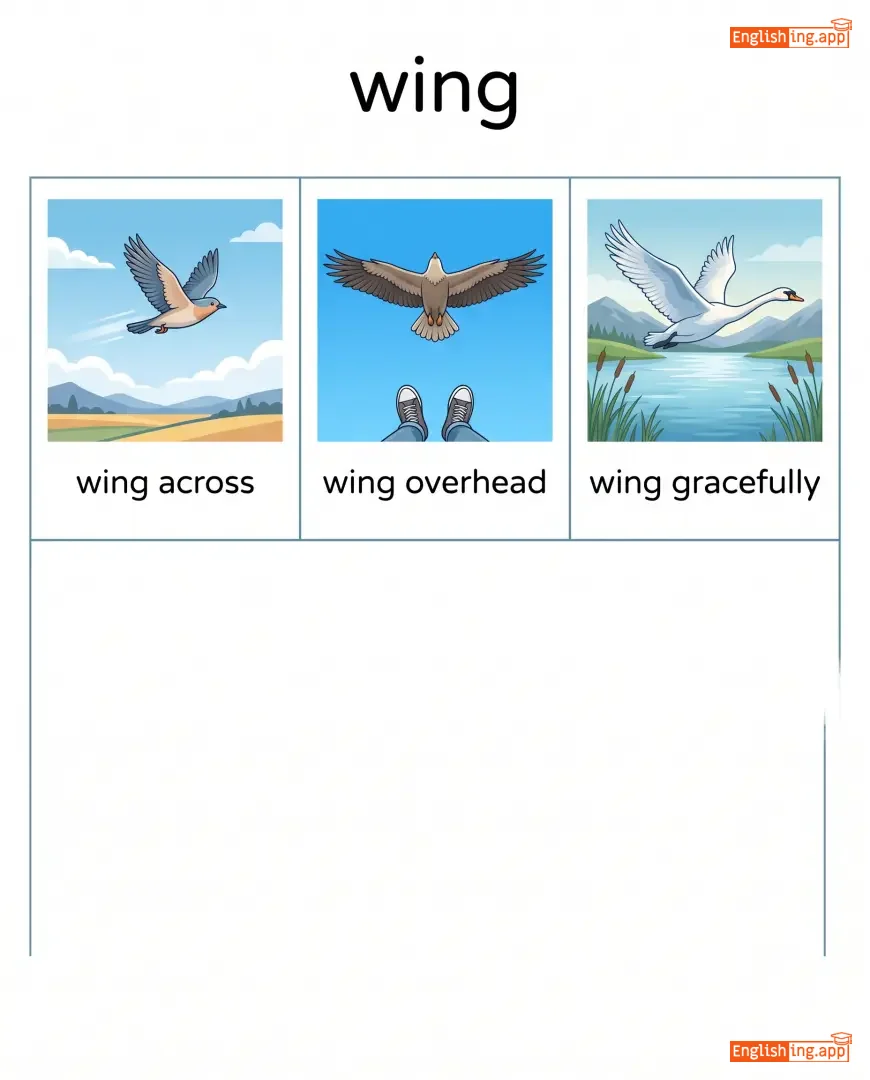
wing across, wing overhead, wing gracefully, wing swiftly
|
Flügel an, flieg los! (mit Flügeln fliegen)
••••••
|