Получите неограниченный доступ ко всем словам с подпиской Pro
Обновить до ProПолучите неограниченный доступ ко всем предложениям с подпиской Pro
Обновить до Pro|
Эмодзи
|
Слово | Images | Перевод | Прошедшее | Причастие прошедшего времени | Третье лицо единственного числа | Герундий | Значение | Пример предложения | Перевод примера предложения | Пример выражения | Значение примера выражения | Перевод примера выражения | Синонимы | Антонимы | Коллокации | Мнемоника |
|---|---|---|---|---|---|---|---|---|---|---|---|---|---|---|---|---|---|
|
🌀
••••••
|
/wɪrd/
adjective
(уирд)
••••••
|
- •••••• |
странный
strannyy
••••••
|
- •••••• | - •••••• | - •••••• | - •••••• |
suggesting something supernatural or very strange; unusual
••••••
|
The movie had a weird ending that nobody expected. |
Фильм имел странный конец, которого никто не ожидал.
Film imel stranny konets, kotorogo nikto ne ozhidal.
••••••
|
weird out |
to make someone feel uncomfortable or strange
••••••
|
вывести из равновесия
vyvesti iz ravnovesiya
••••••
|
strange, odd, bizarre, unusual, peculiar
••••••
|
normal, ordinary, usual
••••••
|
weird feeling, weird dream, weird noise, weird behavior
••••••
|
Weird означает странный, как странный поворот сюжета в фильме.
••••••
|
|
👋
••••••
|
/ˈwelkəm/
verb
(добро пожаловать)
••••••
|

|
приветствовать
privetstvovat
••••••
|
welcomed
приветствовал
••••••
|
welcomed
приветствовал
••••••
|
welcomes
приветствует
••••••
|
welcoming
приветствуя
••••••
|
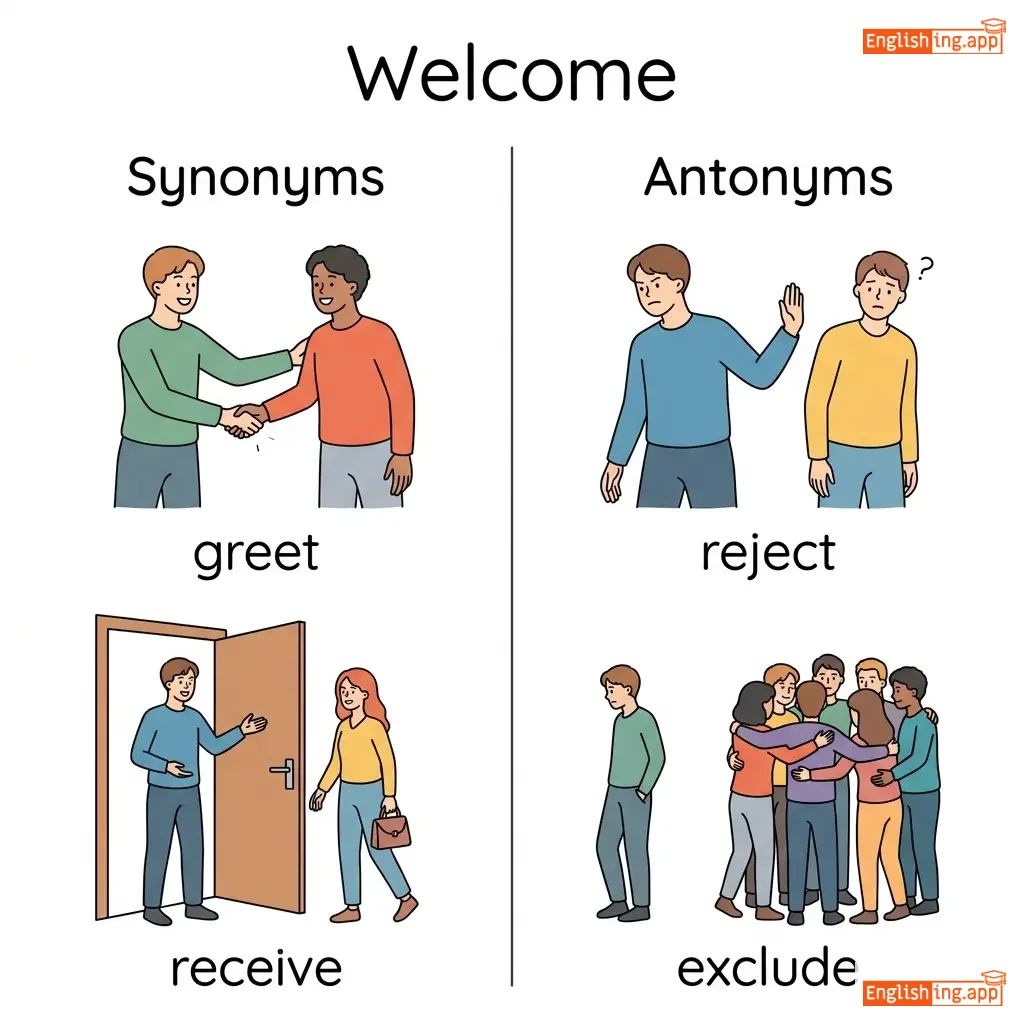
to greet someone in a friendly way; to receive gladly
••••••
|
They welcome new students warmly.
Они тепло приветствовали новых студентов.
••••••
|
Они тепло приветствовали новых студентов.
Oni teplo privetstvovali novykh studentov.
••••••
|
- •••••• | - •••••• | - •••••• |
greet, receive, embrace, admit
••••••
|
reject, shun, dismiss, exclude
••••••
|
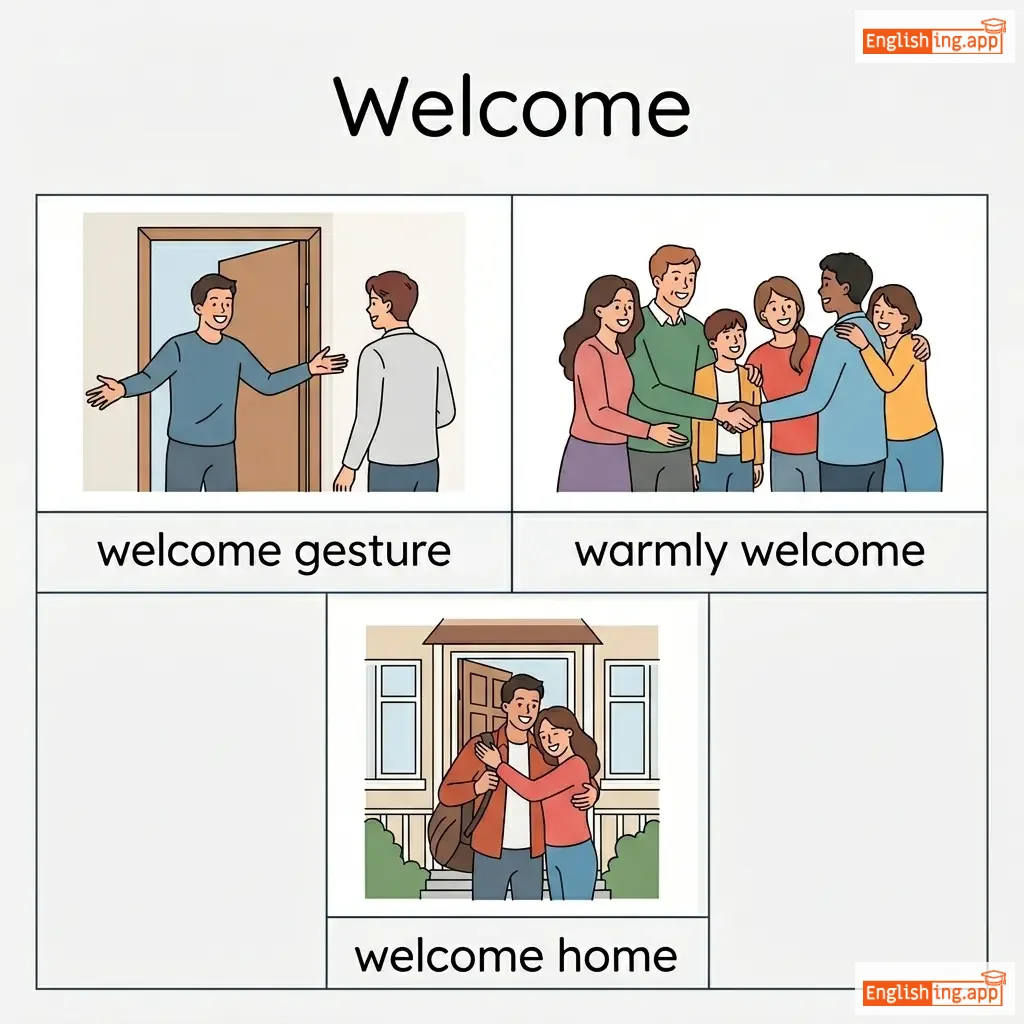
warmly welcome, welcome guests, welcome changes, welcome opportunity, welcome visitors
••••••
|
Приветствовать новых студентов всегда с открытым сердцем
••••••
|
|
🤝
••••••
|
/ˈwel.feər/
noun
(вельфер)
••••••
|
- •••••• |
благосостояние; благополучие; здоровье
blagosostoyanie; blagoslovie; zdorov'e
••••••
|
- •••••• | - •••••• | - •••••• | - •••••• |
the health, happiness, and fortunes of a person or group; care and support
••••••
|
The government is responsible for the welfare of its citizens. |
Правительство несет ответственность за благосостояние своих граждан.
Pravitel'stvo neset otvetstvennost' za blagosostoyanie svoikh grazhdan.
••••••
|
- •••••• | - •••••• | - •••••• |
well-being, benefit, good, prosperity
••••••
|
harm, disadvantage, detriment
••••••
|
social welfare, welfare state, welfare system
••••••
|
Вельфер = Вельф (welfare) + эра (era)
••••••
|
|
🕳️
••••••
|
/wel/
noun
(wel)
••••••
|
- •••••• |
колодец; благосостояние;
kolodets; blagostoyanie
••••••
|
- •••••• | - •••••• | - •••••• | - •••••• |
a deep hole in the ground from which water is obtained
••••••
|
The villagers get water from the old well in the center of town.
Жители деревни получают воду из старого колодца в центре деревни.
••••••
|
Жители деревни получают воду из старого колодца в центре деревни.
Zhiteli derevni poluchayut vodu iz starogo kolodtsa v tsentre derevni.
••••••
|
- •••••• | - •••••• | - •••••• |
water hole, spring, bore
••••••
|
hill, mound, elevation
••••••
|
water well, oil well, deep well
••••••
|
Колодец - источник воды и благосостояния для всей деревни.
••••••
|
|
😊
••••••
|
/ˈwel.biː.ɪŋ/
noun
(вɛлˈбинг)
••••••
|

|
благополучие
blagopoluchie
••••••
|
- •••••• | - •••••• | - •••••• | - •••••• |
the state of being comfortable, healthy, or happy
••••••
|
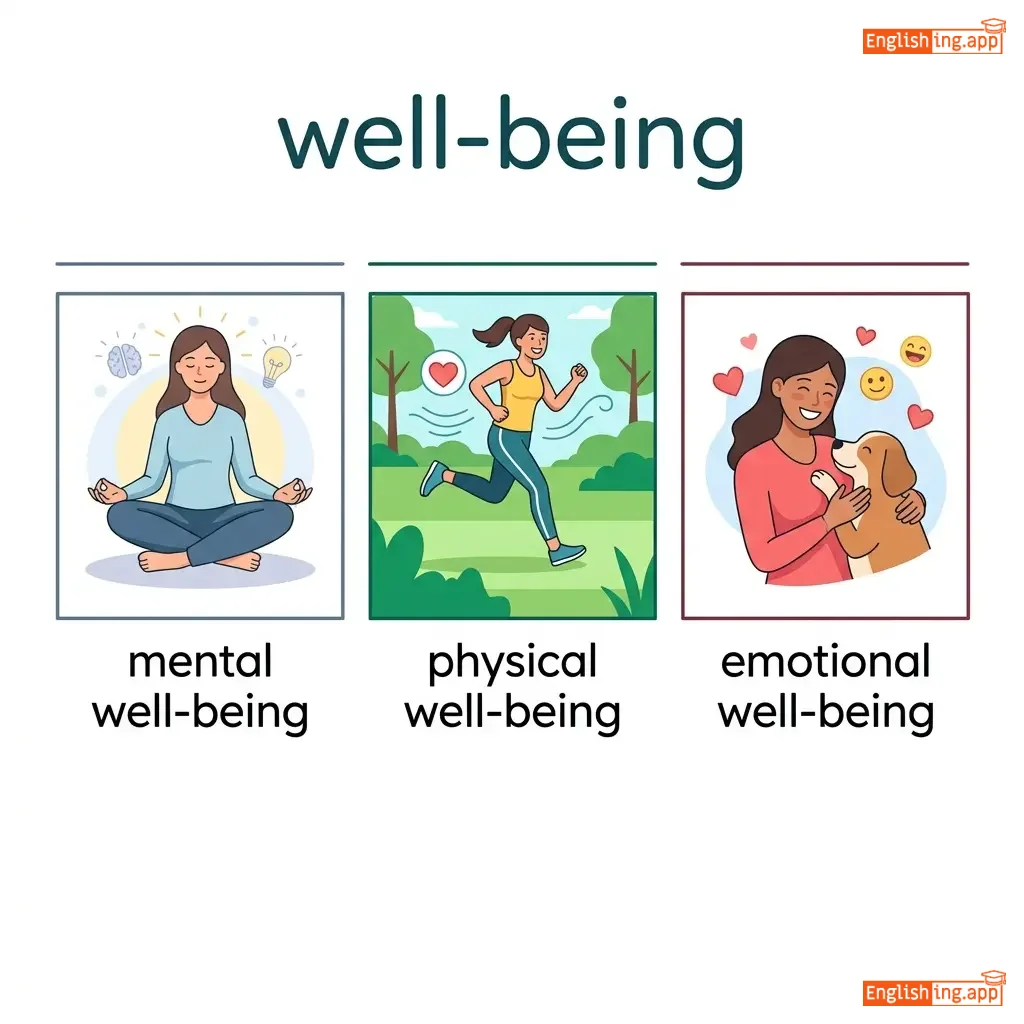
Regular exercise contributes to physical and mental well-being. |
Регулярные упражнения способствуют физическому и психическому благополучию.
Regulyarnye uprazhneniya sposobyvayut fizicheskomu i psikhicheskomu blagopoluchiyu.
••••••
|
- •••••• | - •••••• | - •••••• |
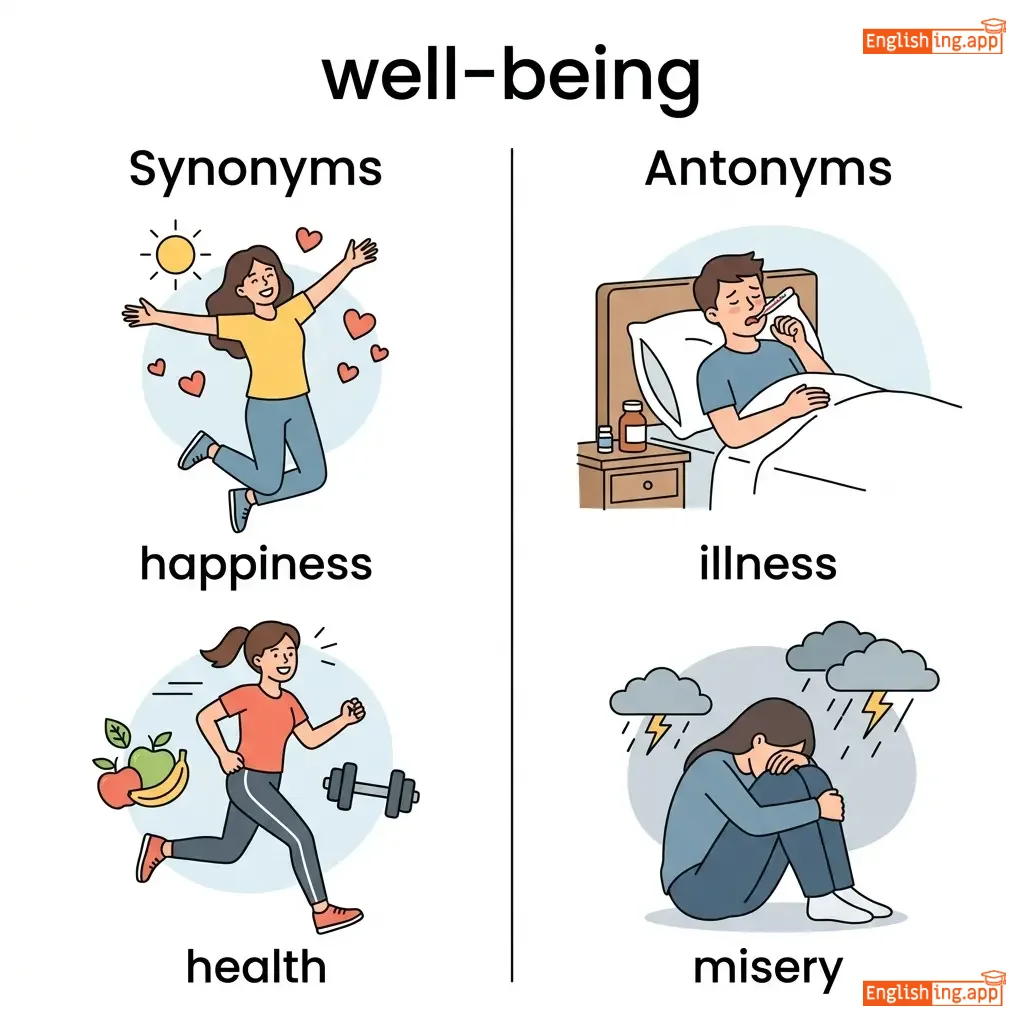
welfare, health, happiness, comfort
••••••
|
suffering, distress, misery
••••••
|
physical well-being, mental well-being, emotional well-being
••••••
|
Blagopoluchie means well-being in Russian, combining 'blago' (good) and 'poluchie' (condition).
••••••
|
|
🌟
••••••
|
/ˌwelˈnoʊn/
adjective
(вэл-ноун)
••••••
|
- •••••• |
известный
izvestny
••••••
|
- •••••• | - •••••• | - •••••• | - •••••• |
known by many people; famous or recognized
••••••
|
He is a well-known actor in his country. |
Он известный актёр в своей стране.
On izvestnyy akter v svoey strane.
••••••
|
- •••••• | - •••••• | - •••••• |
famous, renowned, popular, prominent, recognized
••••••
|
unknown, obscure, unfamiliar
••••••
|
well-known fact, well-known person, well-known brand, well-known story
••••••
|
Well-known означает 'известный' — все его знают!
••••••
|
|
🌅
••••••
|
/wɛst/
noun
(вɛст)
••••••
|
- •••••• |
запад
zapad
••••••
|
- •••••• | - •••••• | - •••••• | - •••••• |
the direction to the left of the north and to the right of the south, typically associated with the sunset
••••••
|
The sun sets in the west. |
Солнце заходит на западе.
Solntse zakhodit na zapade.
••••••
|
- •••••• | - •••••• | - •••••• |
sunset, occident
••••••
|
east, orient
••••••
|
west coast, west side, go west, western civilization
••••••
|
Солнце заходит на западе - The sun sets in the west.
••••••
|
|
🌎
••••••
|
/ˈwɛstərn/
adjective
(вɛстɛрн)
••••••
|
- •••••• |
западный
zapadny
••••••
|
- •••••• | - •••••• | - •••••• | - •••••• |
relating to or characteristic of the West, especially Europe and the Americas
••••••
|
She loves western music and culture. |
Она любит западную музыку и культуру.
Ona lyubit zapadnuyu muzyku i kul'turu.
••••••
|
- •••••• | - •••••• | - •••••• |
occidental, westernized
••••••
|
eastern, oriental
••••••
|
western culture, western philosophy, western world
••••••
|
Западная культура происходит с Запада - Western culture comes from the West.
••••••
|
|
💧
••••••
|
/wet/
adjective
(wɛt)
••••••
|
- •••••• |
мокрый; сырое;
mokryy; syroye;
••••••
|
- •••••• | - •••••• | - •••••• | - •••••• |
covered or saturated with water or another liquid; not dry
••••••
|
My clothes are still wet from the rain.
Моя одежда все еще мокрая от дождя.
••••••
|
Моя одежда все еще мокрая от дождя.
Moya odezhda vse eshcho mokraya ot dozhdya.
••••••
|
- •••••• | - •••••• | - •••••• |
damp, moist, soaked, drenched
••••••
|
dry, arid, parched, dehydrated
••••••
|
wet clothes, wet weather, get wet
••••••
|
После дождя все мокрое.
••••••
|
|
❓
••••••
|
/wɒt/
pronoun
(wɒt)
••••••
|
- •••••• |
что
chto
••••••
|
- •••••• | - •••••• | - •••••• | - •••••• |
used to ask for information about something
••••••
|
What is your name? |
Как тебя зовут?
Kak tebya zovut?
••••••
|
- •••••• | - •••••• | - •••••• |
which, that
••••••
|
- •••••• |
what time, what happened, what are you doing
••••••
|
что (chto) используется для вопросов - 'What' используется для запроса.
••••••
|
|
🤷♂️
••••••
|
/wɒtˈɛvər/
pronoun
(ватевер)
••••••
|
- •••••• |
что угодно
chto ugodno
••••••
|
- •••••• | - •••••• | - •••••• | - •••••• |
used to refer to anything or everything that is of the type mentioned
••••••
|
You can choose whatever you like. |
Ты можешь выбрать что угодно.
Ty mozhesh' vybrat' chto ugodno.
••••••
|
- •••••• | - •••••• | - •••••• |
anything, everything
••••••
|
- •••••• |
whatever you want, whatever happens
••••••
|
что угодно (chto ugodno) ты можешь выбрать - Whatever you want, you can have.
••••••
|
|
🌾
••••••
|
/wiːt/
noun
(wheat)
••••••
|
- •••••• |
пшеница
pshenitsa
••••••
|
- •••••• | - •••••• | - •••••• | - •••••• |
a cereal plant whose grain is used to make flour for bread and other foods
••••••
|
Farmers harvested the wheat in early summer. |
Фермеры убрали пшеницу в начале лета.
Fermery ubrali pshenitsu v nachale leta.
••••••
|
separate the wheat from the chaff |
to separate valuable things or people from those that are not
••••••
|
отделить пшеницу от плевел
otdelit' pshenitsu ot plevyel
••••••
|
grain, cereal, barley, oat, corn
••••••
|
chaff, waste
••••••
|
wheat flour, wheat bread, wheat field, wheat grain, wheat harvest
••••••
|
Wheat означает пшеница 🌾 — из пшеницы делают хлеб, поэтому думай о еде.
••••••
|
|
🚗
••••••
|
/wiːl/
noun
(вил)
••••••
|
- •••••• |
колесо
koleso
••••••
|
- •••••• | - •••••• | - •••••• | - •••••• |
a circular object that revolves on an axle and is used to move or carry things
••••••
|
The wheel of the car broke down on the way. |
Колесо машины сломалось по дороге.
Koleso mashiny slomalos' po doroge.
••••••
|
- •••••• | - •••••• | - •••••• |
disk, circle, rotor, rim
••••••
|
none
••••••
|
steering wheel, bicycle wheel, car wheel, turn the wheel
••••••
|
Колесо вращается и двигает машину (Koleso vrashchayetsya i dvizhlet mashinu)
••••••
|
|
⏰
••••••
|
/wɛn/
adverb
(wɛn)
••••••
|
- •••••• |
когда
kogda
••••••
|
- •••••• | - •••••• | - •••••• | - •••••• |
at what time
••••••
|
Do you know when the train leaves? |
Ты знаешь, когда уходит поезд?
Ty znayesh, kogda ukhodit poezd?
••••••
|
- •••••• | - •••••• | - •••••• |
at what time, whenever
••••••
|
never, always
••••••
|
when will, when did, when does, when do
••••••
|
Когда становится 'когда' (Kogda stanut 'kogda')
••••••
|
|
🕐
••••••
|
/wenˈevər/
adverb
(Уэневер)
••••••
|
- •••••• |
когда угодно
kogda ugodno
••••••
|
- •••••• | - •••••• | - •••••• | - •••••• |
at any time that; every time that; no matter when
••••••
|
Call me whenever you need help.
Звони мне, когда понадобится помощь.
••••••
|
Звони мне, когда понадобится помощь.
Zvoni mne, kogda ponadobitsya pomoshch.
••••••
|
- •••••• | - •••••• | - •••••• |
anytime, every time, no matter when
••••••
|
never, at no time
••••••
|
whenever possible, whenever necessary, whenever you want
••••••
|
Уэневер звучит как when ever — когда угодно, просто скажи когда и ever!
••••••
|
|
📍
••••••
|
/weər/
adverb
(Уэр)
••••••
|
- •••••• |
где
wer
••••••
|
- •••••• | - •••••• | - •••••• | - •••••• |
In or to what place or position; used to inquire about location
••••••
|
Where did you put my keys?
Где вы положили мои ключи?
••••••
|
Где вы положили мои ключи?
Gde vy polozhili moi klyuchi?
••••••
|
- •••••• | - •••••• | - •••••• |
whereabouts, whither
••••••
|
here, there
••••••
|
where are you, where to go, where from
••••••
|
Where = Где on the map: imagine a marker that says Where and a Russian sign Где pointing to the same place
••••••
|
|
⚖️
••••••
|
/wɛərˈæz/
conjunction
(вэрэз)
••••••
|
- •••••• |
тогда как
togda kak
••••••
|
- •••••• | - •••••• | - •••••• | - •••••• |
used to introduce a contrast or comparison between two facts
••••••
|
She prefers tea, whereas he likes coffee. |
Она предпочитает чай, тогда как он любит кофе.
Ona predpochitayet chay, togda kak on lyubit kofe.
••••••
|
- •••••• | - •••••• | - •••••• |
while, although, but, though
••••••
|
similarly, likewise
••••••
|
whereas clause, whereas statement, tea whereas coffee
••••••
|
Tea vs coffee сравнение - русский тогда как
••••••
|
|
🔗
••••••
|
/wɛərˈbaɪ/
adverb
(вэрбай)
••••••
|
- •••••• |
посредством которого
posredstvom kotorogo
••••••
|
- •••••• | - •••••• | - •••••• | - •••••• |
by which; because of which
••••••
|
The company agreed to a contract whereby it would pay the penalty. |
Компания согласилась на контракт, посредством которого она выплатит штраф.
Kompaniya soglasilas' na kontrakt, posredstvom kotorogo ona vyplatit shtraf.
••••••
|
- •••••• | - •••••• | - •••••• |
through which, by means of which, in which
••••••
|
- •••••• |
whereby agreement, whereby clause
••••••
|
Whereby sounds like 'вэрбай', which can be remembered as 'посредством которого' meaning by which.
••••••
|
|
🤔
••••••
|
/ˈwɛðər/
conjunction
(вɛðər)
••••••
|
- •••••• |
ли
li
••••••
|
- •••••• | - •••••• | - •••••• | - •••••• |
used to express a doubt or choice between alternatives
••••••
|
I don’t know whether I should go.
Я не знаю, должен ли я идти.
••••••
|
Я не знаю, должен ли я идти.
Ya ne znayu, dolzhen li ya idti.
••••••
|
- •••••• | - •••••• | - •••••• |
if, either
••••••
|
none
••••••
|
whether or not, whether to go, whether he will
••••••
|
ли (li) сомневаешься, выбери ли ты путь
••••••
|
|
❓
••••••
|
/wɪtʃ/
pronoun
(wɪtʃ)
••••••
|
- •••••• |
который
kotoryi
••••••
|
- •••••• | - •••••• | - •••••• | - •••••• |
used to ask about one or more items from a defined set
••••••
|
Which one do you prefer, the red or the blue? |
Какой ты предпочитаешь, красный или синий?
Kakoy ty predpochitayesh', krasnyy ili siniy?
••••••
|
- •••••• | - •••••• | - •••••• |
what, that, who
••••••
|
none
••••••
|
which one, which way, which time
••••••
|
Which in Russian is 'kotoryi', to help you decide!
••••••
|
|
⏳
••••••
|
/waɪl/
conjunction
(wail)
••••••
|
- •••••• |
пока
poka
••••••
|
- •••••• | - •••••• | - •••••• | - •••••• |
during the time that something is happening
••••••
|
She was reading while waiting for the bus.
Она читала, пока ждала автобус.
••••••
|
Она читала, пока ждала автобус.
Ona chitala, poka zhdala avtobus.
••••••
|
- •••••• | - •••••• | - •••••• |
as, when, during
••••••
|
none
••••••
|
while waiting, while studying, while traveling
••••••
|
Пока ты ждешь, думай о 'пока' на русском!
••••••
|
|
🥄
••••••
|
/wɪp/
verb
(вип)
••••••
|
- •••••• |
хлестать
khlyestat
••••••
|
whipped
випт
••••••
|
whipped
випт
••••••
|
whips
випс
••••••
|
whipping
виппинг
••••••
|
to strike or beat with a flexible instrument such as a rope or cord
••••••
|
The trainer whipped the horse to make it run faster.
Тренер хлестал лошадь, чтобы заставить ее бегать быстрее.
••••••
|
Тренер хлестал лошадь, чтобы заставить ее бегать быстрее.
Trener khlestal loshad', chtoby zastavit' yey begat' bystree.
••••••
|
whip up
whip up
••••••
|
to quickly prepare or create something
••••••
|
быстро готовить
bystro gotovit'
••••••
|
lash, beat, strike, thrash, flog
••••••
|
caress, soothe
••••••
|
whip cream, whip the horse, whip up enthusiasm, political whip
••••••
|
Whip означает хлестать — Хлестай для быстрого бега лошади!
••••••
|
|
🤫
••••••
|
/ˈwɪspər/
verb
(wisper)
••••••
|
|
шептать
sheptat
••••••
|
whispered
wisperd
••••••
|
whispered
wisperd
••••••
|
whispers
wispers
••••••
|
whispering
wispering
••••••
|
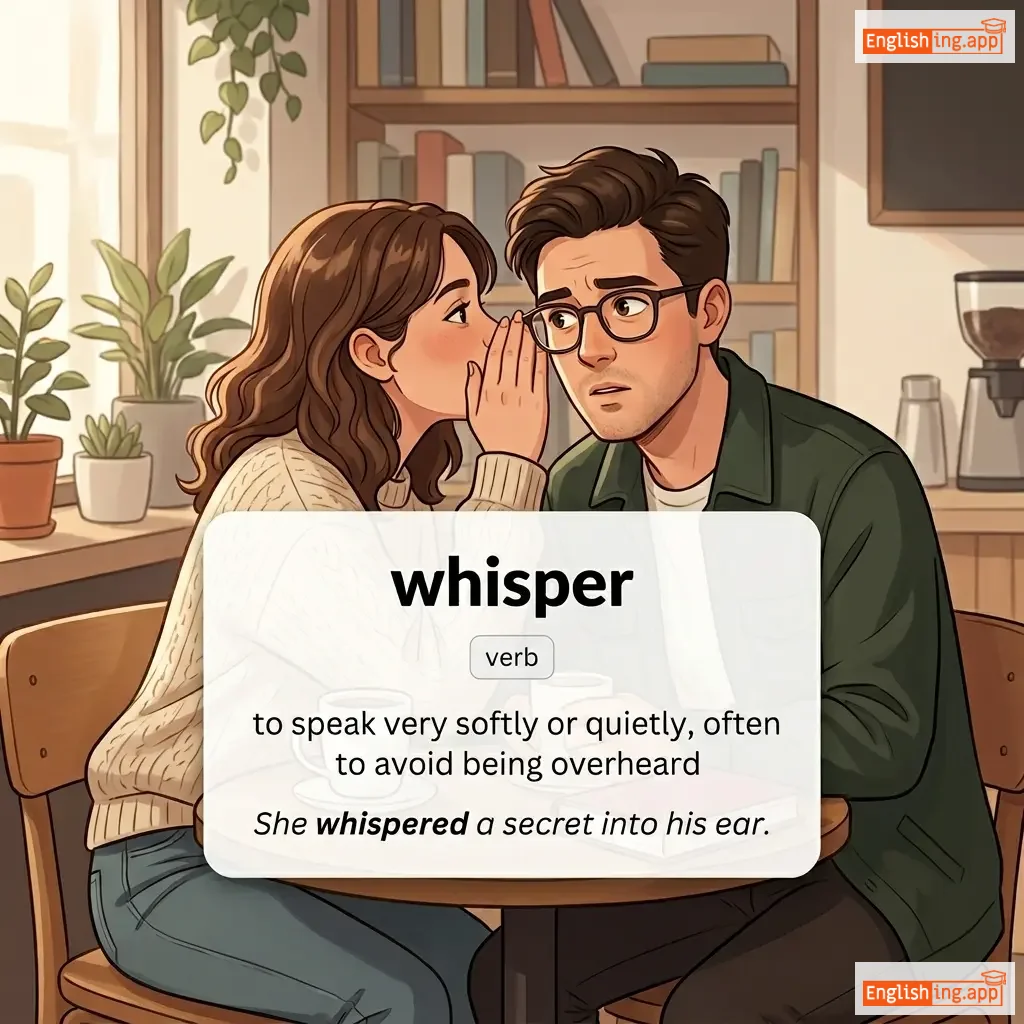
to speak very softly using one's breath without vocal cords
••••••
|
She whispered a secret in my ear.
Она прошептала секрет мне на ухо.
••••••
|
Она прошептала секрет мне на ухо.
Ona prosheptala sekret mne na ukho.
••••••
|
- •••••• | - •••••• | - •••••• |
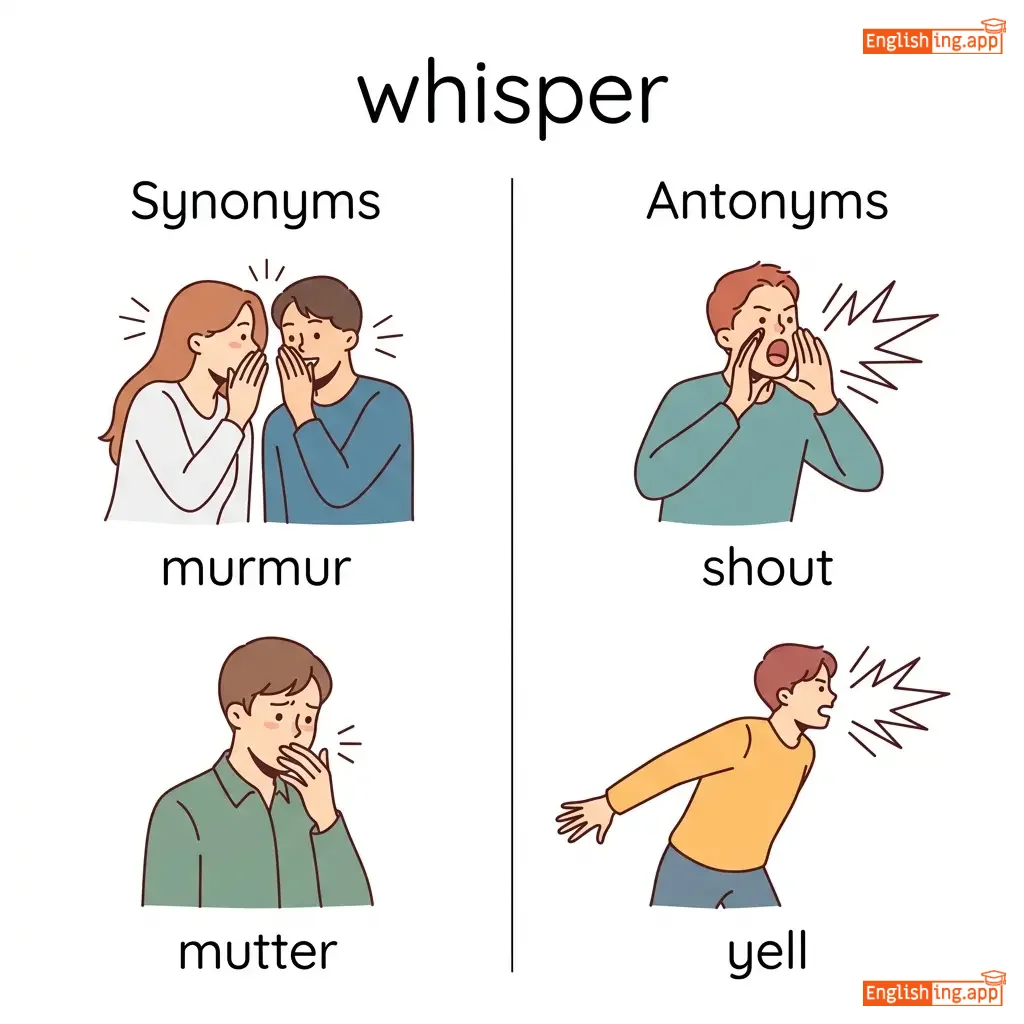
murmur, mumble, breathe, hiss
••••••
|
shout, yell, scream, roar
••••••
|
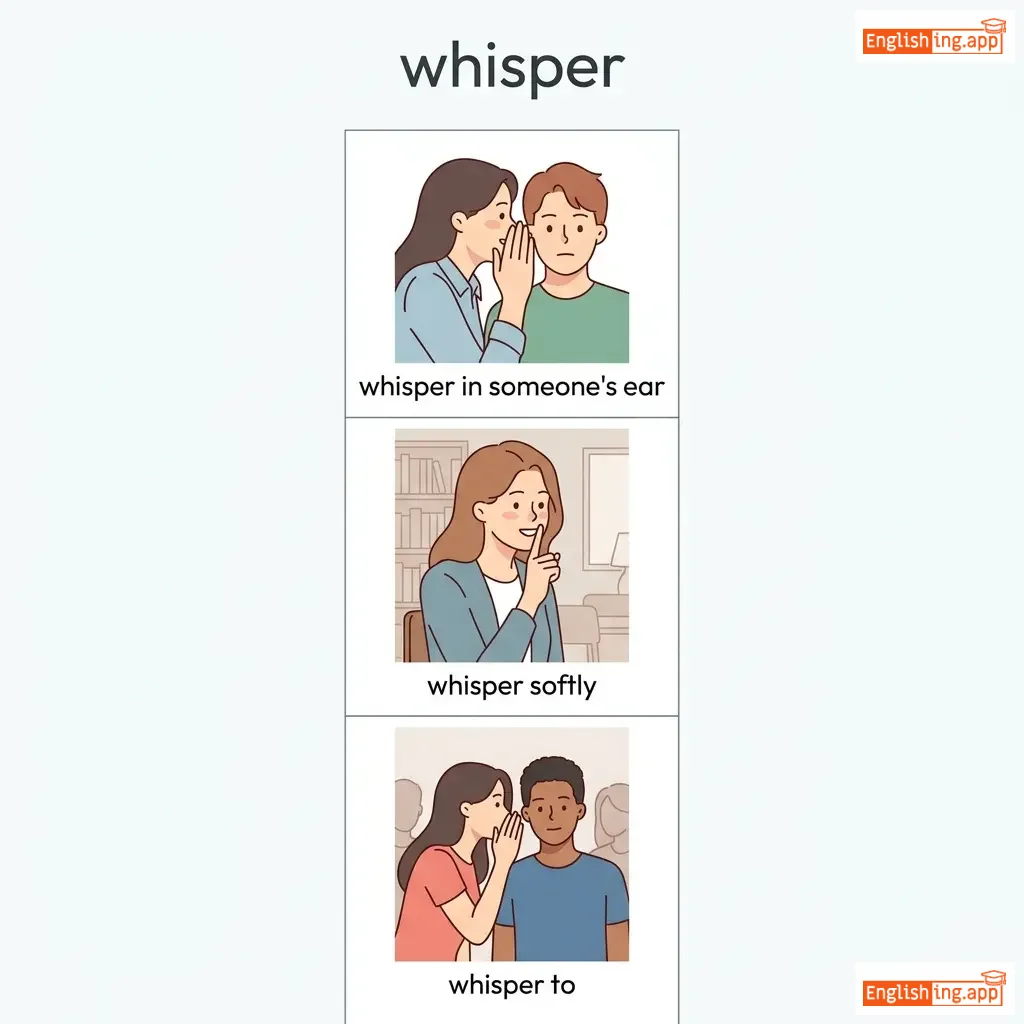
whisper secrets, whisper softly, whisper words, whisper quietly, whisper sweet, whisper prayers
••••••
|
В русском языке 'шептать' означает то же самое, что и 'whisper'.
••••••
|
|
🎵
••••••
|
/ˈwɪsəl/
verb
(вистл)
••••••
|
|
свистеть
svistet
••••••
|
whistled
вистлд
••••••
|
whistled
вистлд
••••••
|
whistles
вистлс
••••••
|
whistling
вистлинг
••••••
|
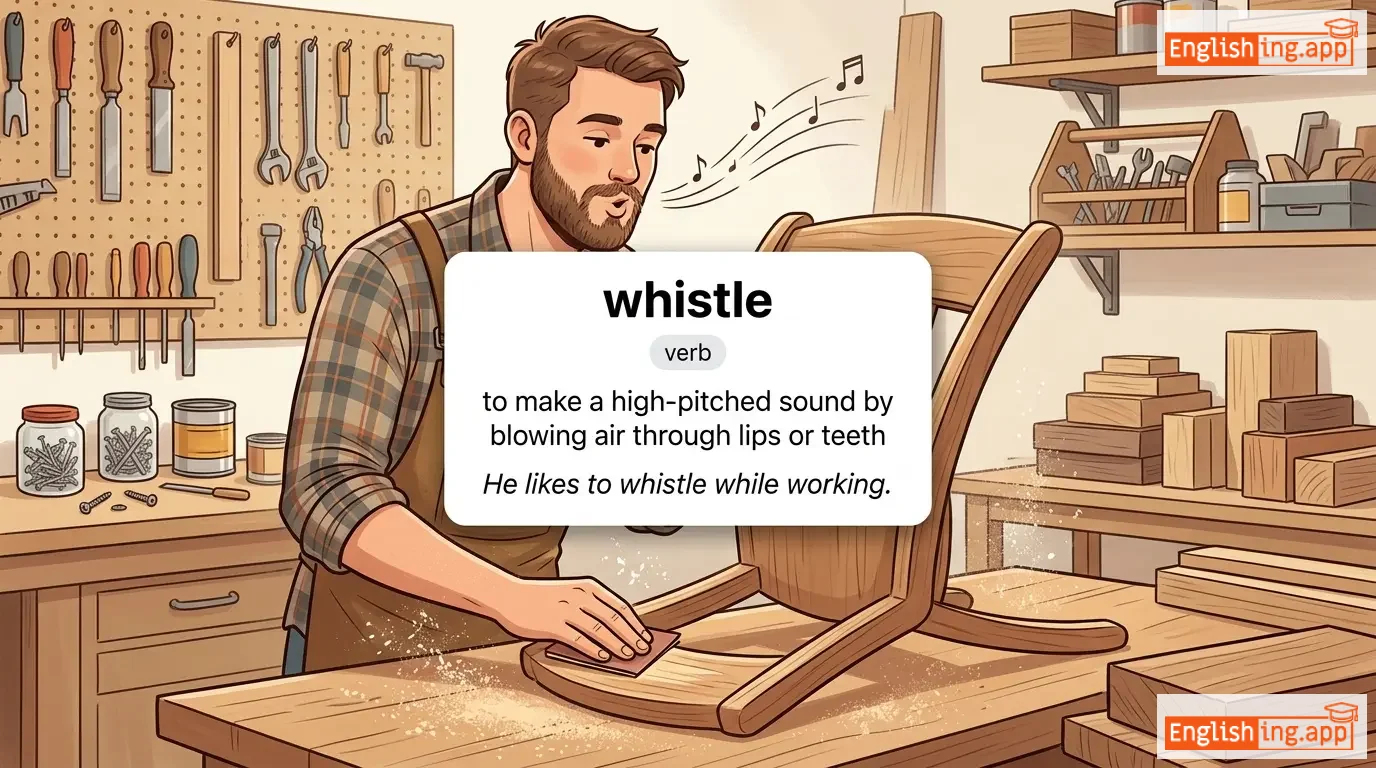
to make a high-pitched sound by blowing air through lips or teeth
••••••
|
He likes to whistle while working.
Ему нравится свистеть, работая.
••••••
|
Ему нравится свистеть, работая.
Emu nravitsya svistet', rabotaya.
••••••
|
- •••••• | - •••••• | - •••••• |
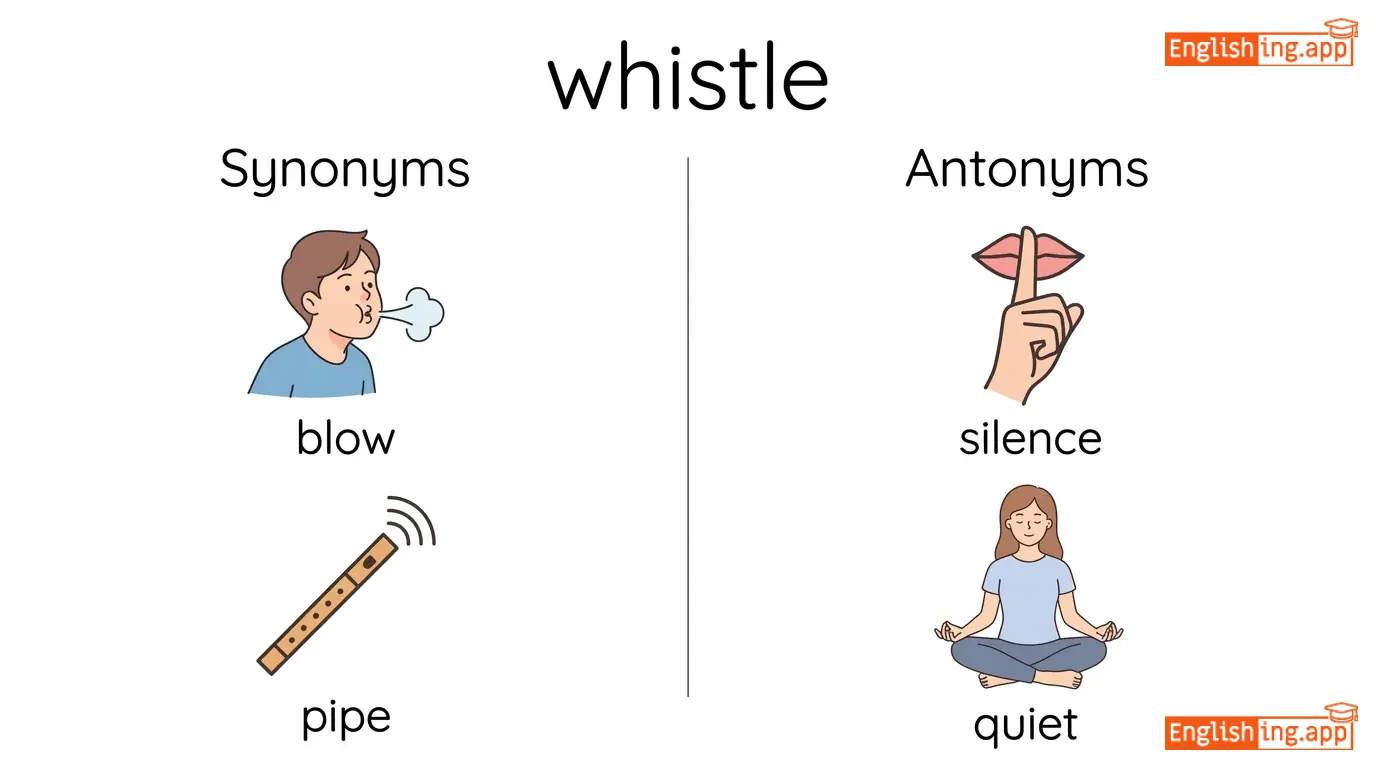
blow, pipe, toot, sound
••••••
|
silence, quiet, mute
••••••
|
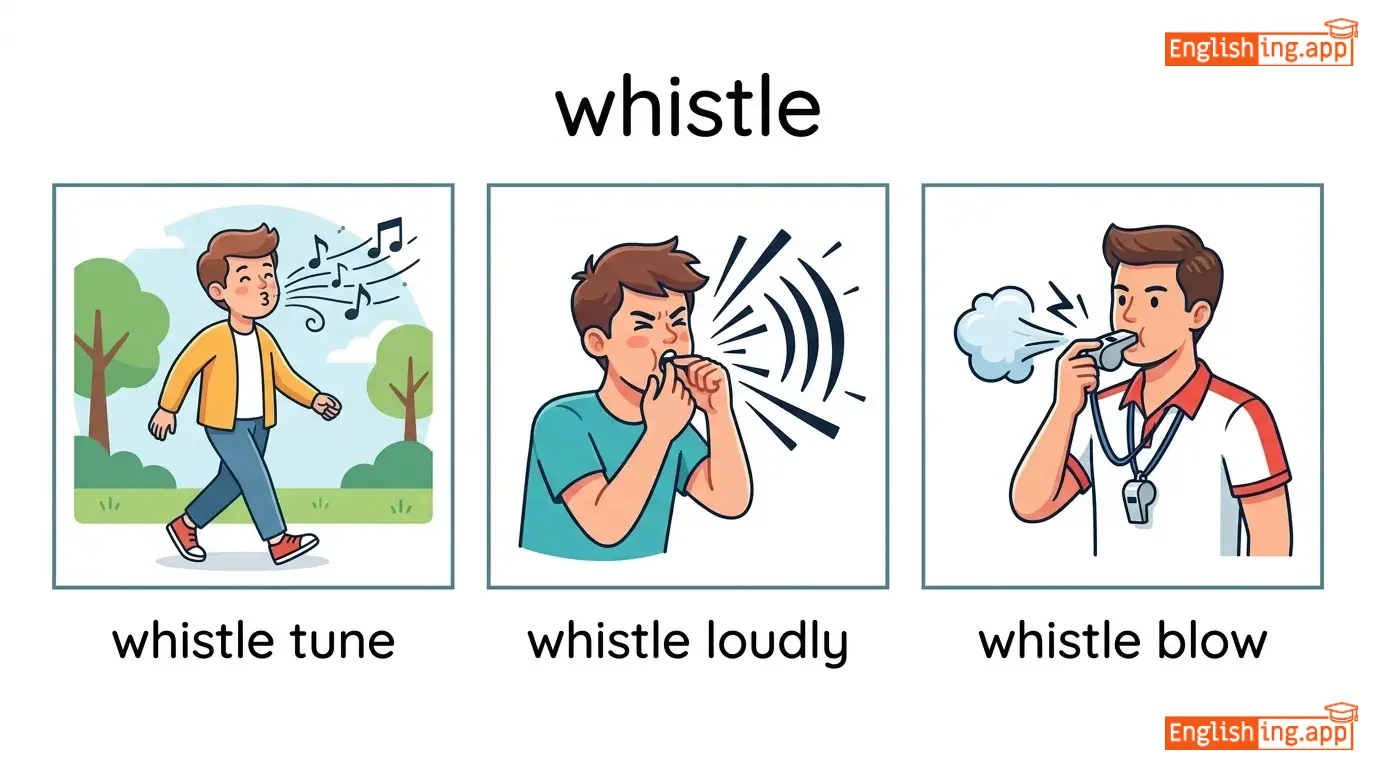
whistle tune, whistle loudly, whistle blow, train whistle
••••••
|
Свистеть - Свист звучит как быстрый звук.
••••••
|
|
⚪
••••••
|
/waɪt/
adjective
(вайт)
••••••
|
- •••••• |
белый; чистый
belyy; chisty
••••••
|
- •••••• | - •••••• | - •••••• | - •••••• |
of the color of snow or milk; pale; pure
••••••
|
She wore a beautiful white dress to the wedding.
Она надела красивое белое платье на свадьбу.
••••••
|
Она надела красивое белое платье на свадьбу.
Ona nadela krasivoye belyoye plat'ye na svad'bu.
••••••
|
- •••••• | - •••••• | - •••••• |
pale, colorless, snow-white, ivory
••••••
|
black, dark, colored
••••••
|
white paper, white shirt, white house
••••••
|
In Russian, 'белый' means 'white', like the color of milk!
••••••
|
|
🤔
••••••
|
/huː/
pronoun
(кто)
••••••
|
- •••••• |
кто
kto
••••••
|
- •••••• | - •••••• | - •••••• | - •••••• |
used to ask about a person or people
••••••
|
Who is coming to the party tonight? |
Кто приходит на вечеринку сегодня вечером?
Kto prikhodit na vecherinku segodnya vecherom?
••••••
|
- •••••• | - •••••• | - •••••• |
whoever, which person
••••••
|
none
••••••
|
who is, who are, who knows
••••••
|
In Russian, just say 'kto' to ask 'who'!
••••••
|
|
🙋♂️
••••••
|
/huːˈɛvər/
pronoun
(хуːˈɛвэр)
••••••
|
- •••••• |
кто угодно
kto ugodno
••••••
|
- •••••• | - •••••• | - •••••• | - •••••• |
any person who; no matter who
••••••
|
Whoever wants to join the trip must register today. |
Кто угодно, кто захочет присоединиться к поездке, должен зарегистрироваться сегодня.
Kto ugodno, kto zakhochet prisoyedinitsya k poyezdke, dolzhen zaregistrirovatsya segodnya.
••••••
|
- •••••• | - •••••• | - •••••• |
anyone, anybody, whosoever
••••••
|
none, nobody
••••••
|
whoever comes, whoever wants, whoever said, whoever did
••••••
|
Who + ever = кто угодно — whoever means любой человек
••••••
|
|
🔵
••••••
|
/hoʊl/
adjective
(хоул)
••••••
|
- •••••• |
целый
tselyy
••••••
|
- •••••• | - •••••• | - •••••• | - •••••• |
complete; entire; all of something
••••••
|
He ate the whole pizza by himself.
Хи ет зэ хоул пицца бай химсэлф.
••••••
|
Он съел всю пиццу сам.
on syel vsyu pitsu sam
••••••
|
- •••••• | - •••••• | - •••••• |
complete, entire, total, full
••••••
|
partial, incomplete, broken, fragmented
••••••
|
whole story, whole family, whole day
••••••
|
Целый (tselyy) = whole — представь: tselyy pitstsa
••••••
|
|
💯
••••••
|
/ˈhoʊli/
adverb
(kholli)
••••••
|
- •••••• |
полностью; совершенно
polnost'yu; sovershenno
••••••
|
- •••••• | - •••••• | - •••••• | - •••••• |
Entirely; completely; to the full extent
••••••
|
I am wholly committed to this project. |
Я полностью вовлечен в этот проект.
Ya polnost'yu vovlechen v etot proyekt.
••••••
|
- •••••• | - •••••• | - •••••• |
completely, entirely, totally, fully
••••••
|
partially, partly, incompletely
••••••
|
wholly owned, wholly responsible, wholly different
••••••
|
Полностью вовлечен, как в посвящении делу
••••••
|
|
👤
••••••
|
/huːm/
pronoun
(хум)
••••••
|
- •••••• |
которому
kotorymu
••••••
|
- •••••• | - •••••• | - •••••• | - •••••• |
used to refer to the person or people that something is done to
••••••
|
The man whom I met yesterday is my friend. |
Человек, которого я встретил вчера, мой друг.
Chelovek, kotorogo ya vstretel vchera, moy drug.
••••••
|
- •••••• | - •••••• | - •••••• |
who, that, the person
••••••
|
none
••••••
|
whom I met, whom I saw, to whom it may concern
••••••
|
Whom sounds like 'Kotoromu' - 'Kotoromu' as in the person you met.
••••••
|
|
📱
••••••
|
/huːz/
pronoun
(ху́з)
••••••
|
- •••••• |
чей
chey
••••••
|
- •••••• | - •••••• | - •••••• | - •••••• |
used to ask or talk about the person or thing that owns something
••••••
|
The girl whose phone was stolen is my cousin. |
Девочка, чей телефон был украден, моя кузина.
Devochka, chey telefon byl ukraden, moya kuzina.
••••••
|
- •••••• | - •••••• | - •••••• |
who's, that person’s, of whom
••••••
|
none
••••••
|
whose phone, whose book, whose idea
••••••
|
Whose phone is this? – 'Whose' connects to 'Chey telefon'.
••••••
|
|
❓
••••••
|
/waɪ/
adverb
(vay)
••••••
|
- •••••• |
почему
pochemu
••••••
|
- •••••• | - •••••• | - •••••• | - •••••• |
For what reason or purpose; used to ask about the cause of something
••••••
|
Why are you late today? |
Почему ты опоздал сегодня?
pochemu ty opozdal segodnya?
••••••
|
- •••••• | - •••••• | - •••••• |
wherefore, how come
••••••
|
because, therefore
••••••
|
why not, that's why, reason why
••••••
|
No •••••• |
|
↔️
••••••
|
/waɪd/
adjective
(вайд)
••••••
|
- •••••• |
широкий; обширный
shirokiy; obshirniy
••••••
|
- •••••• | - •••••• | - •••••• | - •••••• |
having a great distance from one side to the other; broad
••••••
|
The river is very wide at this point. |
Река очень широкая в этом месте.
Reka ochen' shirokaya v etom meste.
••••••
|
- •••••• | - •••••• | - •••••• |
broad, extensive, spacious, vast
••••••
|
narrow, thin, restricted
••••••
|
wide range, wide variety, wide open, wide awake
••••••
|
Shirokiy reka, obshirnyy prostornyy.
••••••
|
|
🌍
••••••
|
/ˈwaɪdli/
adverb
(vaydli)
••••••
|
- •••••• |
широко
shiroko
••••••
|
- •••••• | - •••••• | - •••••• | - •••••• |
to a great extent or degree
••••••
|
The news of his promotion spread widely across the company. |
Новости о его повышении широко распространились по компании.
Novosti o ego povyshenii shiroko rasprostranilis' po kompanii.
••••••
|
- •••••• | - •••••• | - •••••• |
extensively, broadly, widely, far
••••••
|
narrowly, limitedly
••••••
|
widely known, widely accepted, widely spread
••••••
|
Wide world 🌍 means a wide spread across everywhere!
••••••
|
|
↔️
••••••
|
/ˈwaɪdən/
verb
(widen)
••••••
|
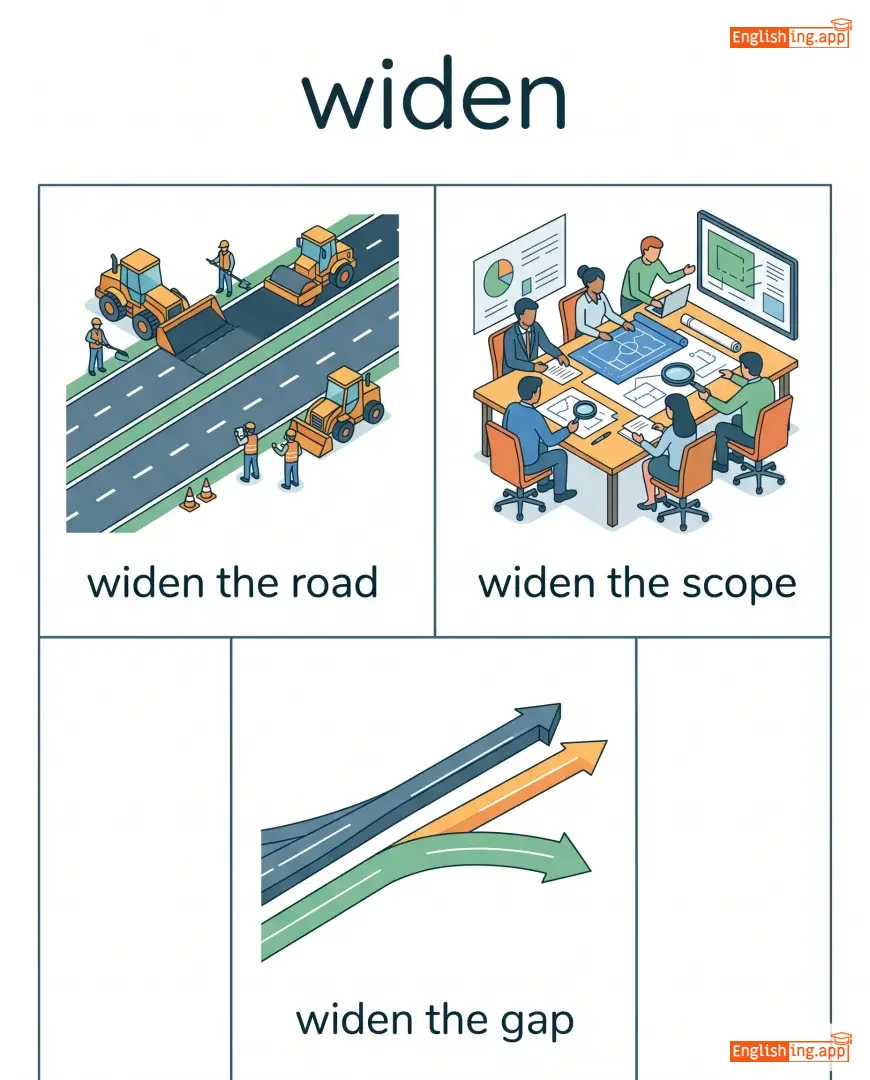
|
расширять
rasshiryat'
••••••
|
widened
widened
••••••
|
widened
widened
••••••
|
widens
widens
••••••
|
widening
widening
••••••
|
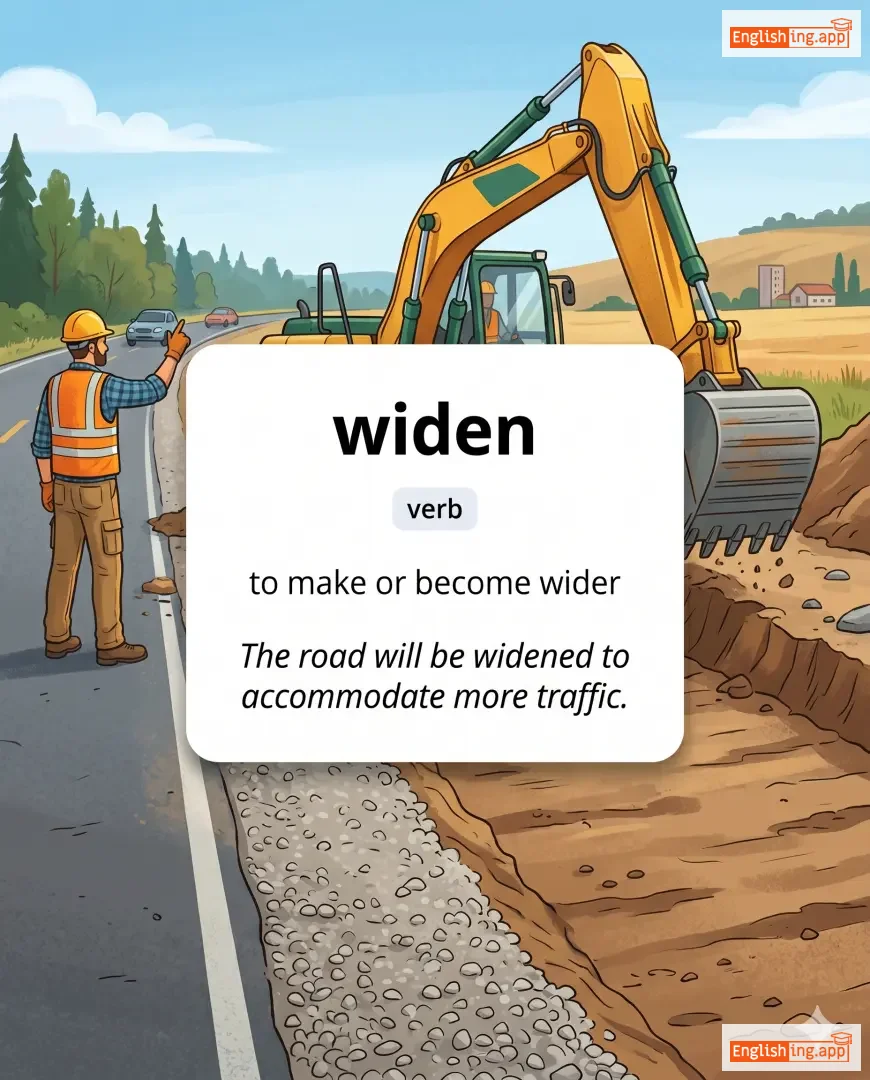
to make or become wider or broader
••••••
|
They plan to widen the road next year.
Они планируют расширить дорогу в следующем году.
••••••
|
Они планируют расширить дорогу в следующем году.
Oni planiroyut rasshirit' dorogu v sleduyushchem godu.
••••••
|
- •••••• | - •••••• | - •••••• |
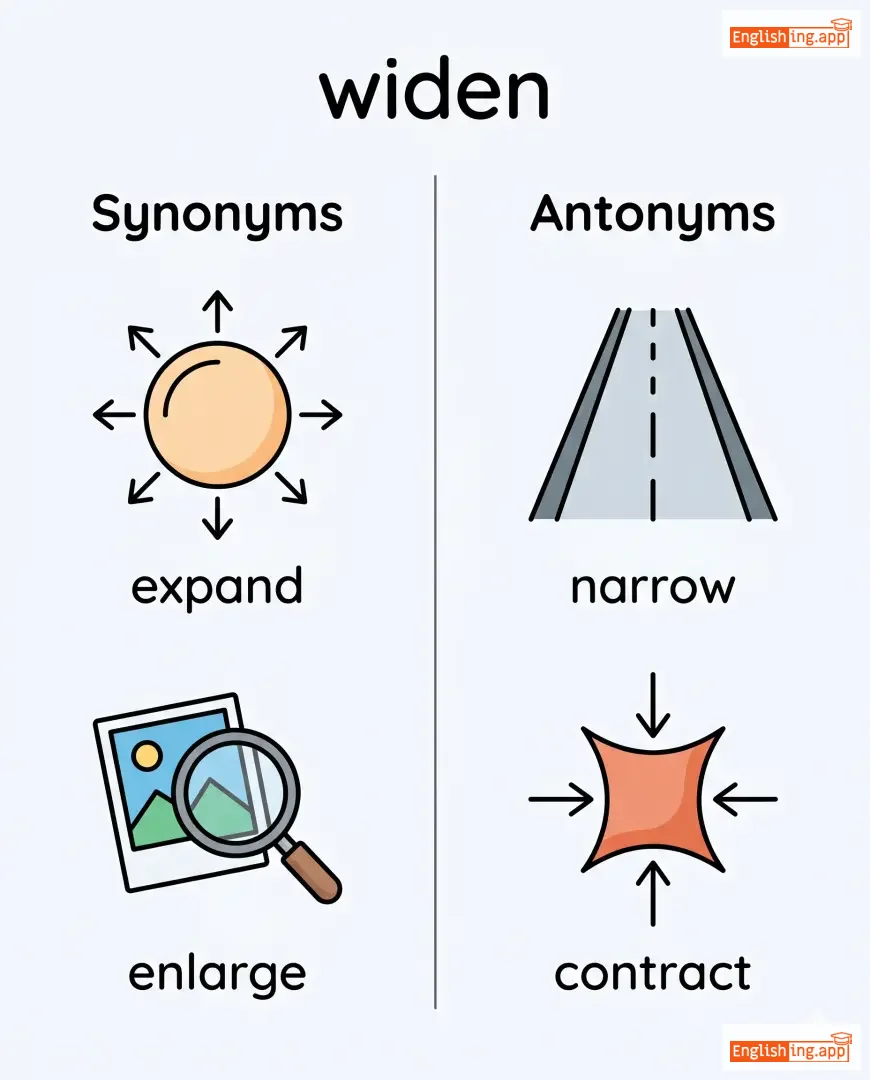
broaden, expand, extend, enlarge
••••••
|
narrow, reduce, contract, shrink
••••••
|
widen road, widen gap, widen range, gradually widen
••••••
|
Расширять, как делать что-то шире, например, дорогу.
••••••
|
|
🌍
••••••
|
/ˈwaɪd.sprɛd/
adjective
(waydspred)
••••••
|
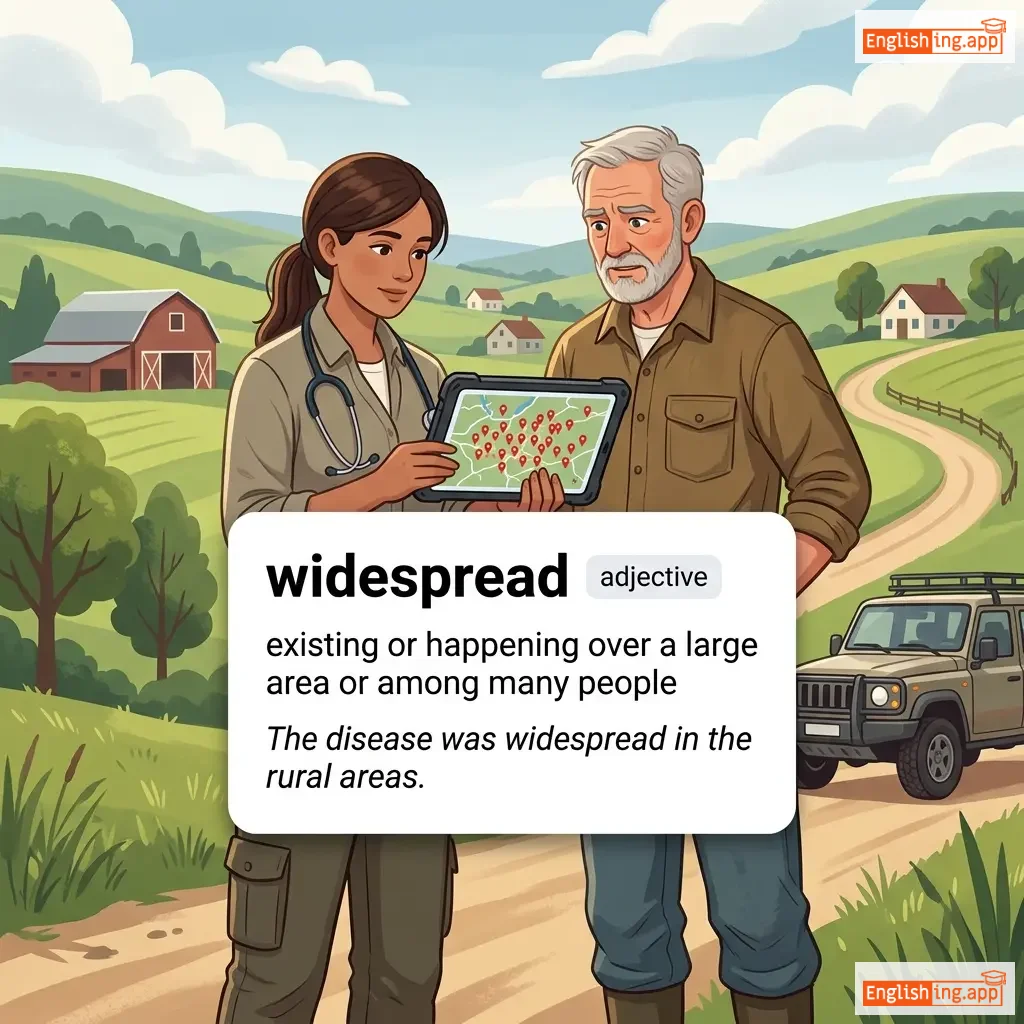
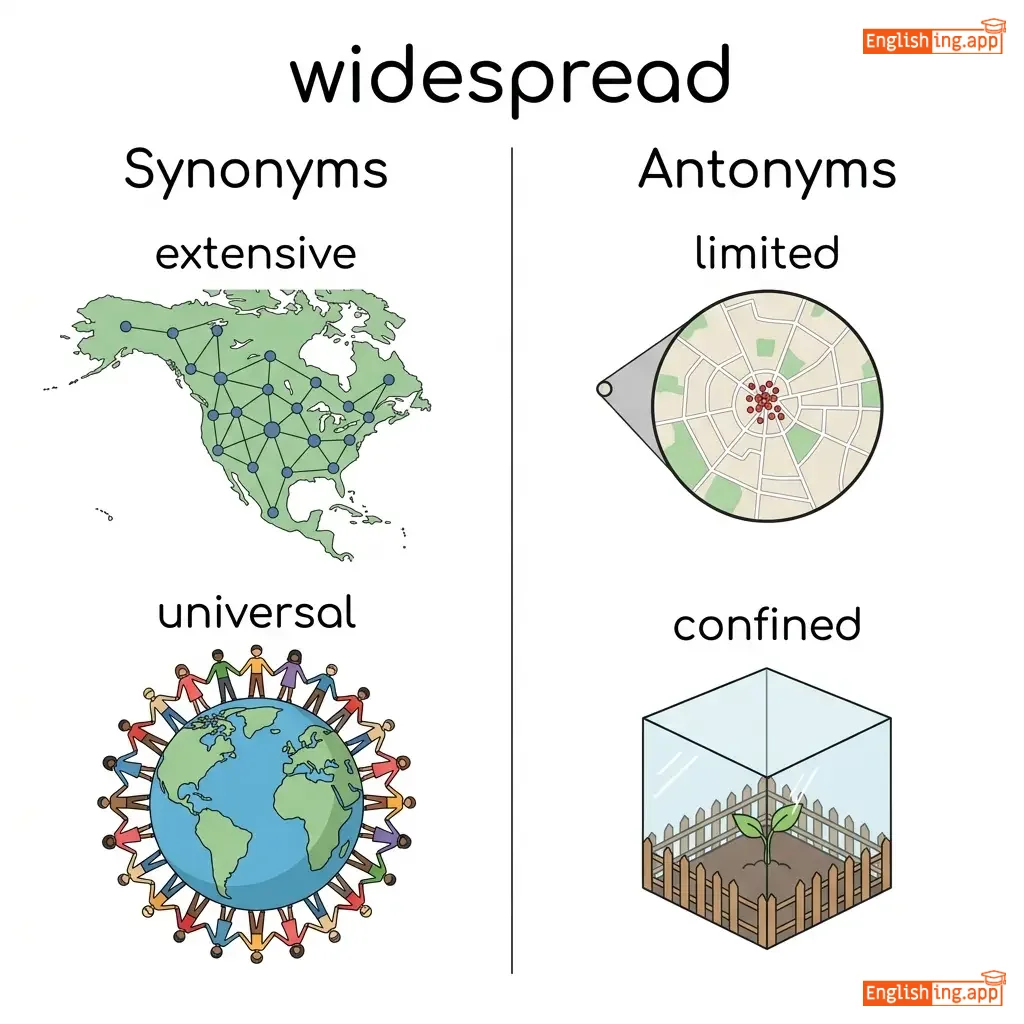
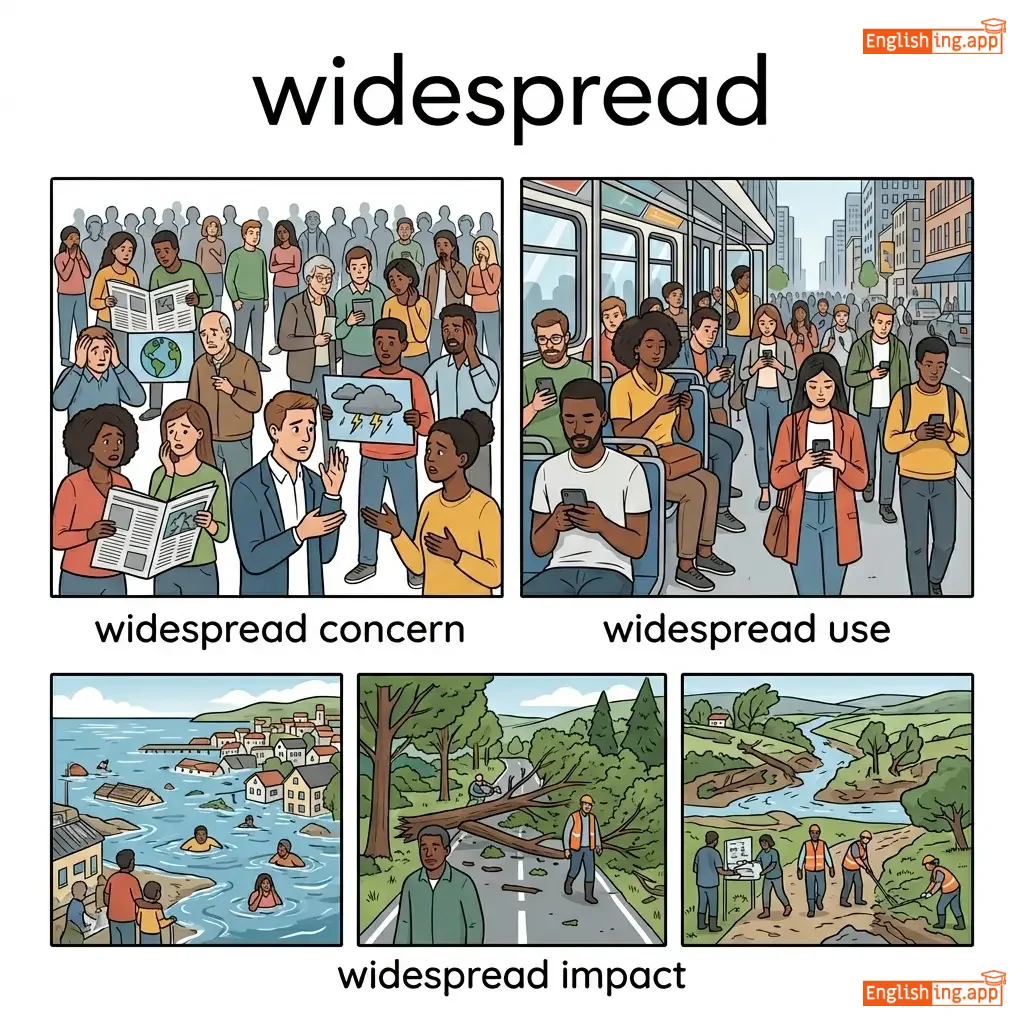
|
широко распространенный
shiroko rasprostranenny
••••••
|
- •••••• | - •••••• | - •••••• | - •••••• |
existing or happening in many places or among many people
••••••
|
There is widespread support for the new policy. |
Существует широкая поддержка новой политики.
Sushchestvuyet shirokaya podderzhka novoy politiki.
••••••
|
- •••••• | - •••••• | - •••••• |
extensive, prevalent, universal, common
••••••
|
limited, localized, restricted, rare
••••••
|
widespread support, widespread use, widespread damage, widespread belief
••••••
|
Russian 'широко распространенный' means 'widespread'.
••••••
|
|
🖤
••••••
|
/ˈwɪdəʊ/
noun
(видоу)
••••••
|
- •••••• |
вдова
vdova
••••••
|
- •••••• | - •••••• | - •••••• | - •••••• |
a woman whose husband has died and who has not married again
••••••
|
She became a widow at a very young age.
Она стала вдовой в очень молодом возрасте.
••••••
|
Она стала вдовой в очень молодом возрасте.
Ona stala vdovoy v ochen' molodom vozraste.
••••••
|
grass widow
травяная вдова
••••••
|
a woman whose husband is temporarily away
••••••
|
травяная вдова
travyanaya vdova
••••••
|
bereaved woman, lone woman, wife left behind
••••••
|
wife, bride
••••••
|
young widow, war widow, become a widow, widow pension
••••••
|
Вдова означает вдова — 'We do' говорилось, но теперь 'Он ушел' 😢
••••••
|
|
↔️
••••••
|
/wɪdθ/
noun
(wɪdθ)
••••••
|
- •••••• |
ширина; протяженность
shirina; protiazhennost
••••••
|
- •••••• | - •••••• | - •••••• | - •••••• |
the measurement or extent of something from side to side; breadth
••••••
|
The width of the river is about 50 meters.
Ширина реки составляет около 50 метров.
••••••
|
Ширина реки составляет около 50 метров.
Shirina reki sostavlyaet okolo 50 metrov.
••••••
|
- •••••• | - •••••• | - •••••• |
breadth, span, extent
••••••
|
length, height, narrowness
••••••
|
full width, average width, total width
••••••
|
Представьте себе реку, чтобы запомнить значение слова 'width'.
••••••
|
|
👩❤️👨
••••••
|
/waɪf/
noun
(вайф)
••••••
|
- •••••• |
жена
zhena
••••••
|
- •••••• | - •••••• | - •••••• | - •••••• |
a woman who is married to someone
••••••
|
She is the wife of the famous author. |
Она жена знаменитого автора.
Ona zhena znamenitogo avtora.
••••••
|
- •••••• | - •••••• | - •••••• |
spouse, partner, better half
••••••
|
husband
••••••
|
wife and husband, loving wife, devoted wife
••••••
|
‘Zhena’ means wife in Russian! Easy to recall.
••••••
|
|
🌿
••••••
|
/waɪld/
adjective
(waild)
••••••
|
- •••••• |
дикой
dikoy
••••••
|
- •••••• | - •••••• | - •••••• | - •••••• |
living or growing in the natural environment; uncontrolled or untamed
••••••
|
The children ran wild in the park. |
Дети бегали дико в парке.
Deti begali diko v parke.
••••••
|
run wild |
to behave without restraint or control
••••••
|
бегать дико
begat' diko
••••••
|
untamed, feral, uncontrolled, savage, free
••••••
|
tame, domestic, controlled
••••••
|
wild animal, wild nature, wild guess, wild behavior
••••••
|
Wild означает дикий – дикие животные бегают по лесу.
••••••
|
|
🦌
••••••
|
/ˈwaɪldˌlaɪf/
noun
(vaildlajf)
••••••
|
- •••••• |
дикая природа
dikaya priroda
••••••
|
- •••••• | - •••••• | - •••••• | - •••••• |
animals, birds, and plants living in their natural environment
••••••
|
The park is home to a wide variety of wildlife. |
Парк является домом для большого разнообразия дикой природы.
Park yavyayetsya domom dlya bol'shogo raznoobraziya dikoy prirody.
••••••
|
wildlife conservation |
the protection of wild animals and their habitats
••••••
|
защита дикой природы
zashchita dikoy prirody
••••••
|
fauna, animals, creatures, nature, biosphere
••••••
|
domestic animals, pets
••••••
|
wildlife sanctuary, wildlife photographer, protect wildlife, wildlife reserve
••••••
|
Wild life - это дикая природа в своем естественном окружении 🦓
••••••
|
|
✍️
••••••
|
/wɪl/
noun, verb
(вил)
••••••
|
- •••••• |
воля
volya
••••••
|
- •••••• | - •••••• |
wills
вилс
••••••
|
willing
вилинг
••••••
|
expressing future tense or intention; a legal document
••••••
|
She will attend the meeting tomorrow.
Она будет присутствовать на встрече завтра.
••••••
|
Она будет присутствовать на встрече завтра.
Ona budet prisutstvovat na vstreche zavtra.
••••••
|
Will to power
Воля к власти
••••••
|
the drive to assert one's own will over others
••••••
|
Воля к власти
Volya k vlasti
••••••
|
intend, shall, want, determination
••••••
|
won't, unwilling
••••••
|
last will, will and testament, strong will
••••••
|
Воля к власти, воля к будущему ✍️
••••••
|
|
🙋♂️
••••••
|
/ˈwɪl.ɪŋ/
adjective
(вɪлɪнг)
••••••
|
- •••••• |
готов; желающий
gotov; zhelayushchiy
••••••
|
- •••••• | - •••••• | - •••••• | - •••••• |
ready, eager, or prepared to do something
••••••
|
She is willing to help with the project. |
Она готова помочь с проектом.
Ona gotova pomoch' s proyektom.
••••••
|
- •••••• | - •••••• | - •••••• |
ready, eager, prepared, inclined
••••••
|
unwilling, reluctant, hesitant, resistant
••••••
|
willing to help, willing participant, willing cooperation, willing spirit
••••••
|
готов = willing, желающий = eager
••••••
|
|
😊
••••••
|
/ˈwɪl.ɪŋ.li/
adverb
(willingli)
••••••
|
- •••••• |
добровольно
dobrovol'no
••••••
|
- •••••• | - •••••• | - •••••• | - •••••• |
in a willing manner; voluntarily; with free will
••••••
|
She willingly helped her neighbors during the emergency. |
Она добровольно помогла своим соседям во время чрезвычайной ситуации.
ona dobrovol'no pomogla svoim sosedyam vo vremya chrezvychaynoy situatsii
••••••
|
- •••••• | - •••••• | - •••••• |
voluntarily, eagerly, gladly, readily, freely
••••••
|
reluctantly, unwillingly, forcibly, involuntarily
••••••
|
willingly accept, willingly participate, willingly cooperate, willingly volunteer
••••••
|
Добровольно — это как 'я помогу, потому что сам хочу'.
••••••
|
|
💪
••••••
|
/ˈwɪlɪŋnəs/
noun
(вилингнес)
••••••
|
- •••••• |
готовность
gotovnost
••••••
|
- •••••• | - •••••• | - •••••• | - •••••• |
the quality of being prepared or ready to do something
••••••
|
Her willingness to help others made her very popular. |
Ее готовность помогать другим сделала ее очень популярной.
Eyo gotovnost' pomogat' drugym sdelala eyo ochen' popularnoy.
••••••
|
- •••••• | - •••••• | - •••••• |
readiness, eagerness, enthusiasm, consent, agreement
••••••
|
reluctance, unwillingness
••••••
|
show willingness, express willingness, willingness to cooperate, willingness to learn
••••••
|
Willingness означает готовность, и готовность означает желание помогать!
••••••
|
|
🏆
••••••
|
/wɪn/
verb
(вɪн)
••••••
|
|
выиграть
vyigrat'
••••••
|
won
вɒн
••••••
|
won
вɒн
••••••
|
wins
вɪнз
••••••
|
winning
вɪнɪнг
••••••
|
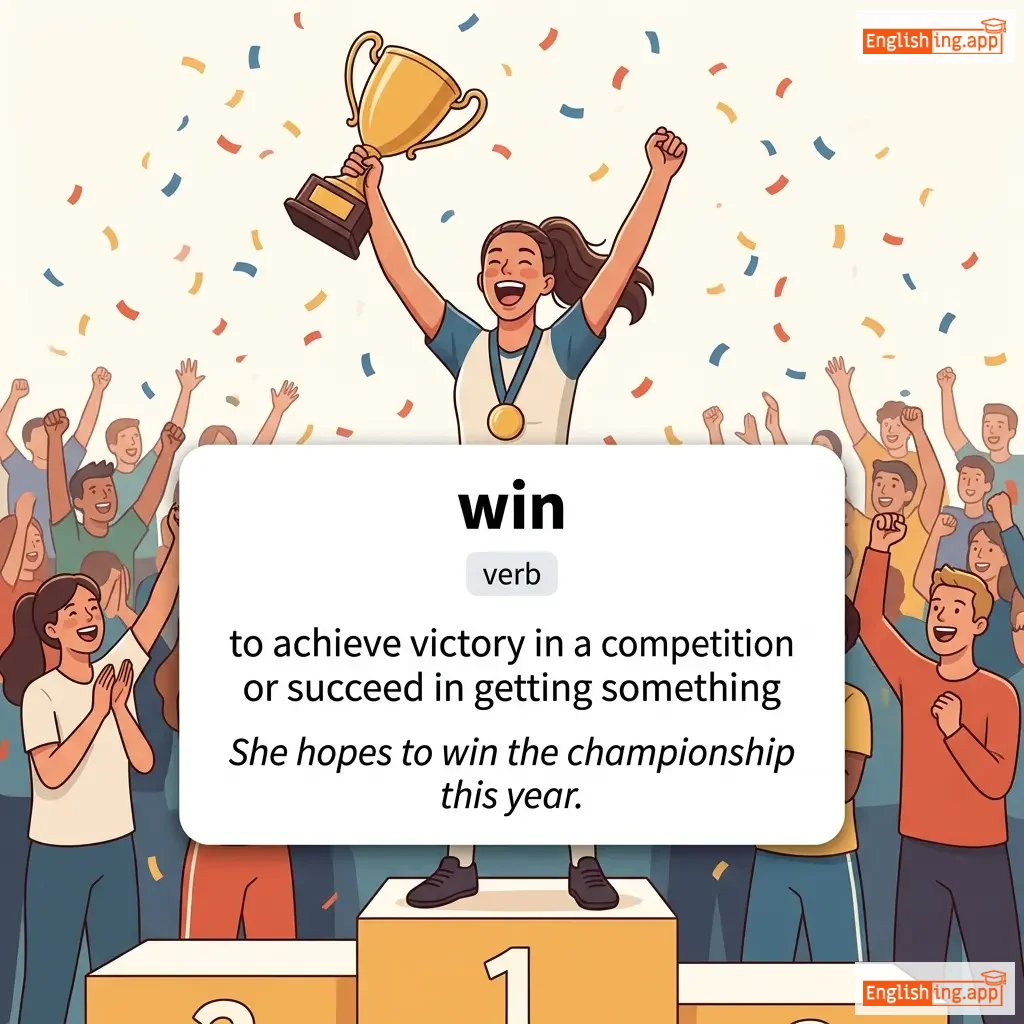
to achieve victory in a competition or succeed in getting something
••••••
|
She hopes to win the championship this year.
она надеется выиграть чемпионат в этом году.
••••••
|
она надеется выиграть чемпионат в этом году.
Ona nadeyetsya vyigrat' chempionat v etom godu.
••••••
|
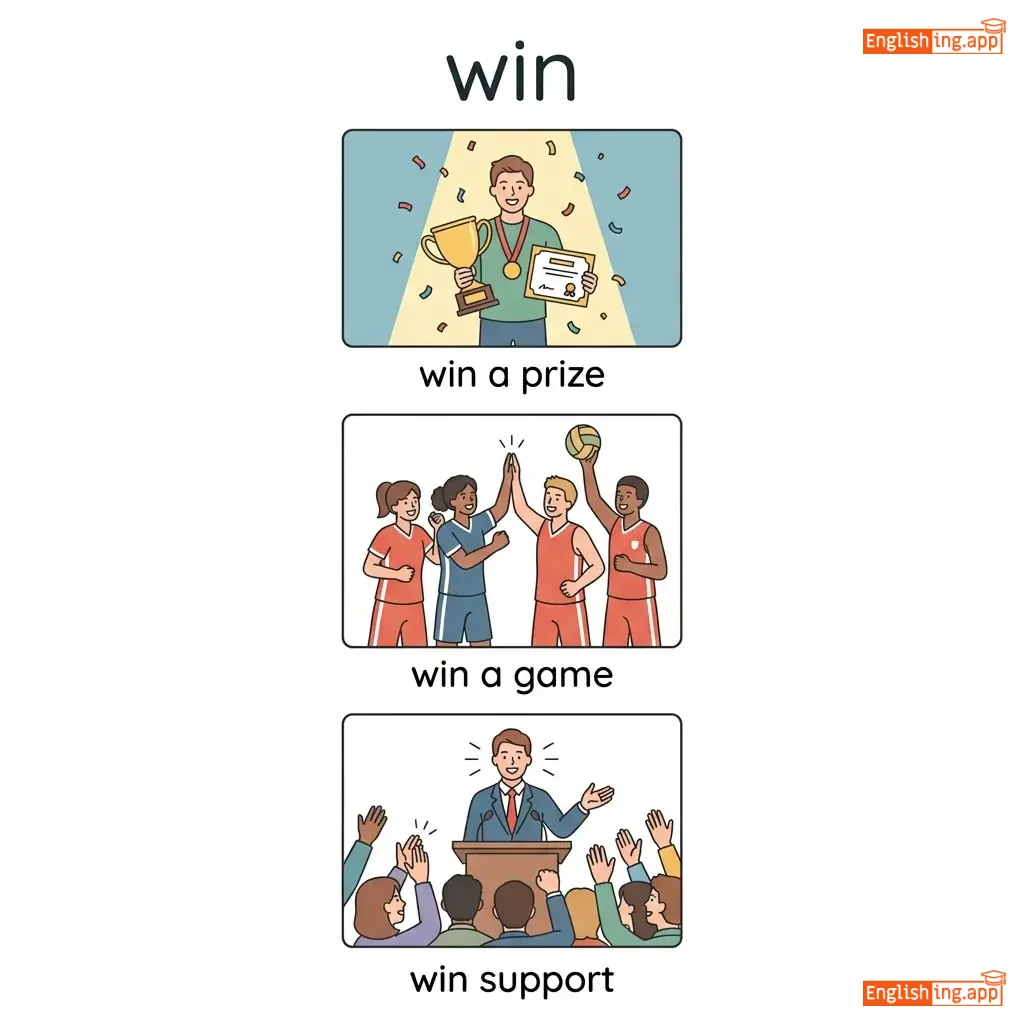
win over
завоевать поддержку
••••••
|
to persuade or gain support
••••••
|
завоевать поддержку
zavoevat' podderzhku
••••••
|
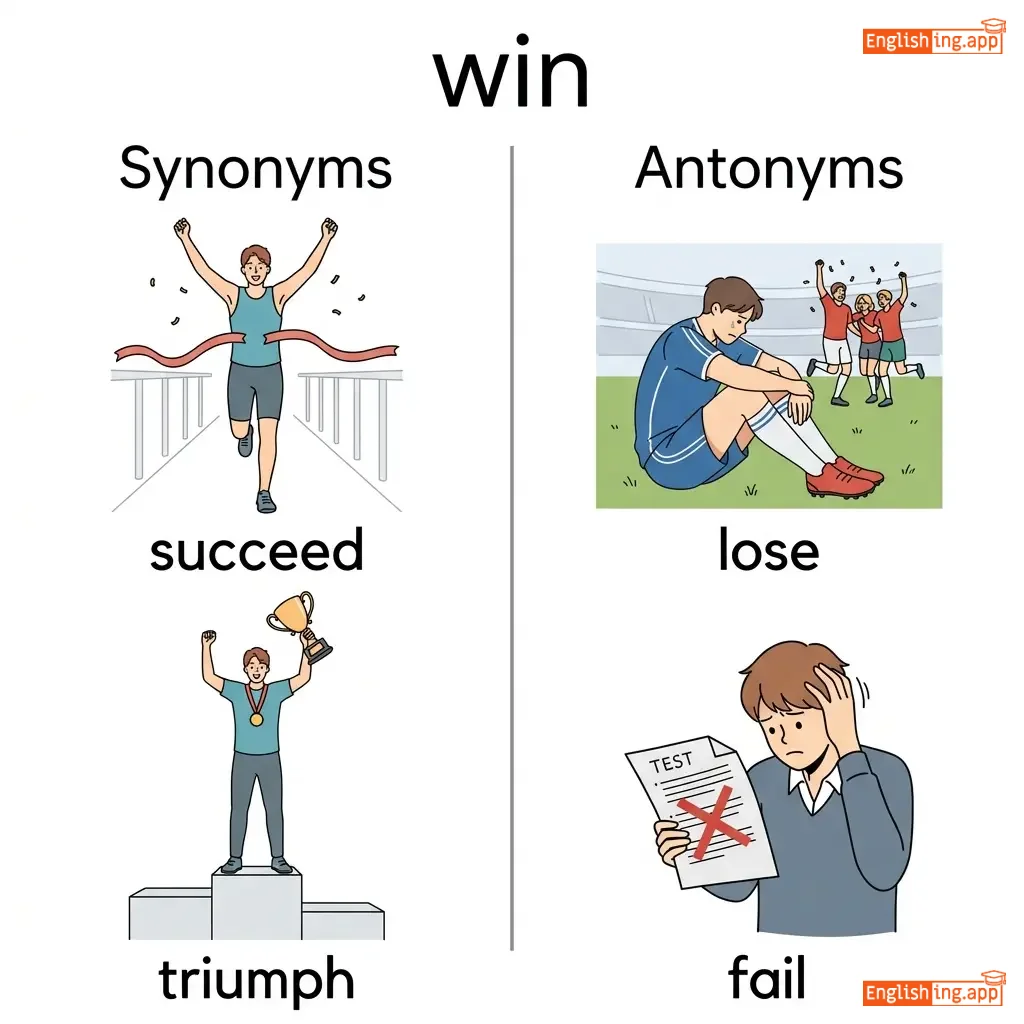
succeed, triumph, prevail, conquer
••••••
|
lose, fail, surrender
••••••
|
win a prize, win a game, win support, win the championship
••••••
|
Выиграть значит победить, как в футболе, когда ты забиваешь гол.
••••••
|
|
🌬️
••••••
|
/wɪnd/
noun
(вɪнд)
••••••
|
- •••••• |
ветер
veter
••••••
|
- •••••• | - •••••• | - •••••• | - •••••• |
the natural movement of air, especially in the form of a current of air blowing from a particular direction
••••••
|
The wind blew the leaves off the trees.
ветер сдул листья с деревьев.
••••••
|
Ветер сдул листья с деревьев.
Veter sdul list'ya s derev'yev.
••••••
|
- •••••• | - •••••• | - •••••• |
breeze, gust, gale, draft
••••••
|
calm, stillness
••••••
|
strong wind, wind speed, wind direction, cold wind
••••••
|
Ветер - как ветер, который качает деревья.
••••••
|
|
🪟
••••••
|
/ˈwɪn.doʊ/
noun
(vindo)
••••••
|
- •••••• |
окно
okno
••••••
|
- •••••• | - •••••• | - •••••• | - •••••• |
an opening in a wall fitted with glass to let in light and air
••••••
|
Please open the window for fresh air.
пожалуйста, откройте окно для свежего воздуха.
••••••
|
пожалуйста, откройте окно для свежего воздуха.
pozhaluysta, otkroyte okno dlya svezhego vozdukha
••••••
|
- •••••• | - •••••• | - •••••• |
casement, pane, opening
••••••
|
wall, barrier
••••••
|
window frame, window sill, bay window, window blinds
••••••
|
Okno = air flows through open window, think 'o' for opening!
••••••
|
|
🍷
••••••
|
/waɪn/
noun
(vajn)
••••••
|
- •••••• |
вино
vino
••••••
|
- •••••• | - •••••• | - •••••• | - •••••• |
an alcoholic drink made from fermented grapes or other fruits
••••••
|
They served a glass of red wine at the dinner.
Они подали бокал красного вина на ужин.
••••••
|
Они подали бокал красного вина на ужин.
Oni podali bokal krasnogo vina na uzhin.
••••••
|
- •••••• | - •••••• | - •••••• |
vino, beverage, drink, alcohol
••••••
|
water, juice
••••••
|
red wine, white wine, glass of wine, bottle of wine
••••••
|
Wine pairs with dinner—imagine a glass of red wine with a fancy meal!
••••••
|
|
🪶
••••••
|
/wɪŋ/
verb
(винг)
••••••
|
|
летать с крыльями
letat' s krylyami
••••••
|
winged
вингед
••••••
|
winged
вингед
••••••
|
wings
вингс
••••••
|
winging
вингинг
••••••
|
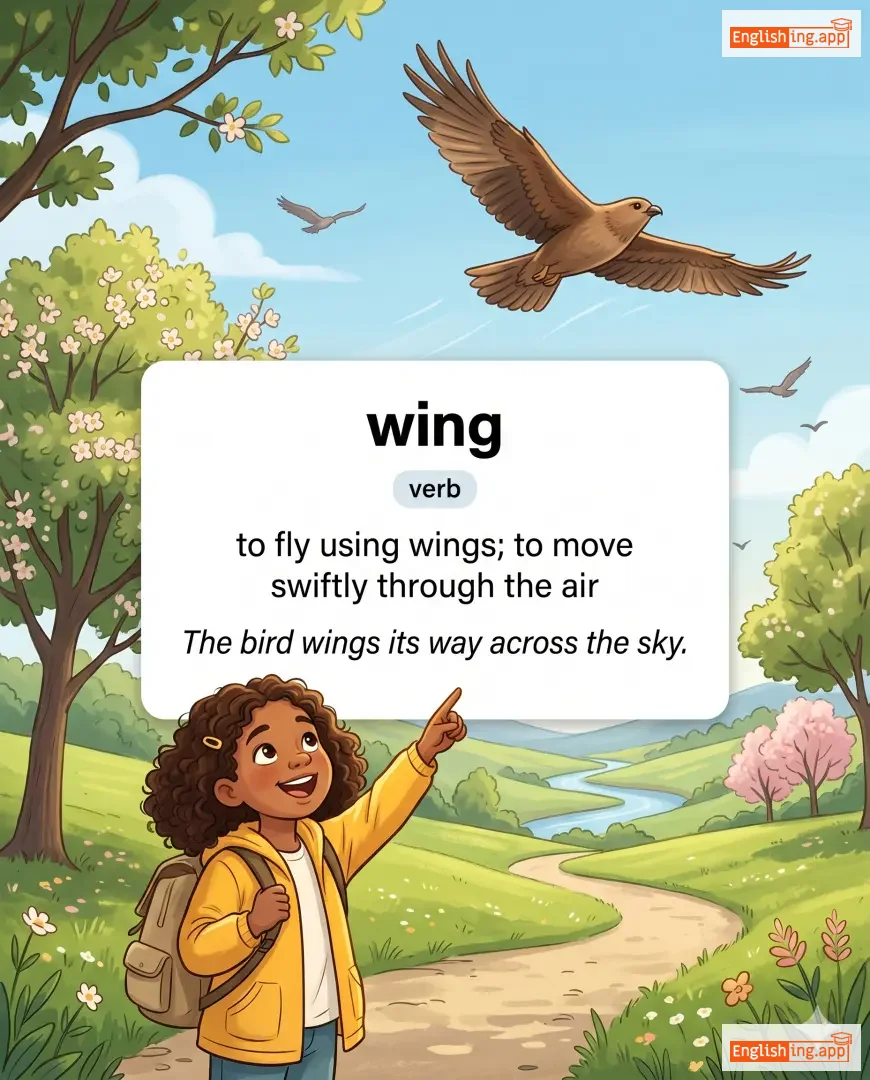
to fly using wings; to move swiftly through the air
••••••
|
The bird wings its way across the sky.
Птица летит через небо.
••••••
|
Птица летит через небо.
Ptitsa letit cherez nebo.
••••••
|
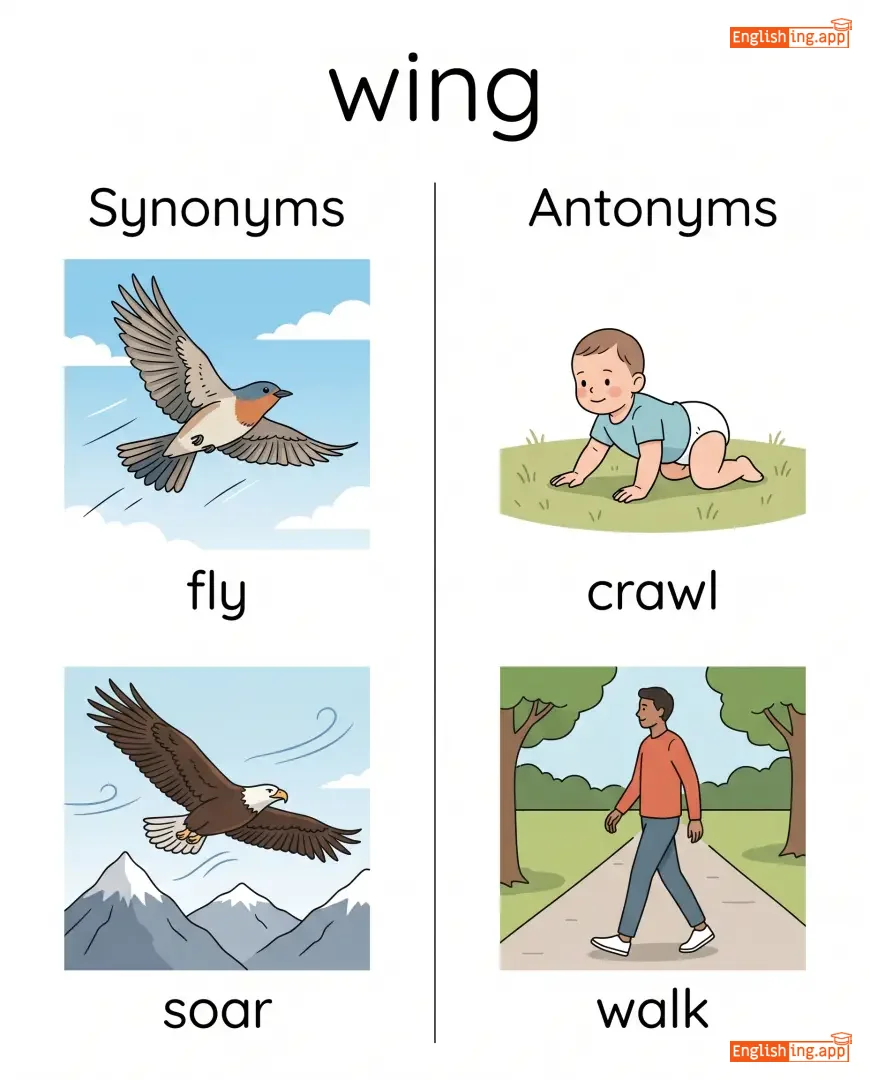
- •••••• | - •••••• | - •••••• |
fly, soar, glide, flutter
••••••
|
crawl, walk, ground, land
••••••
|
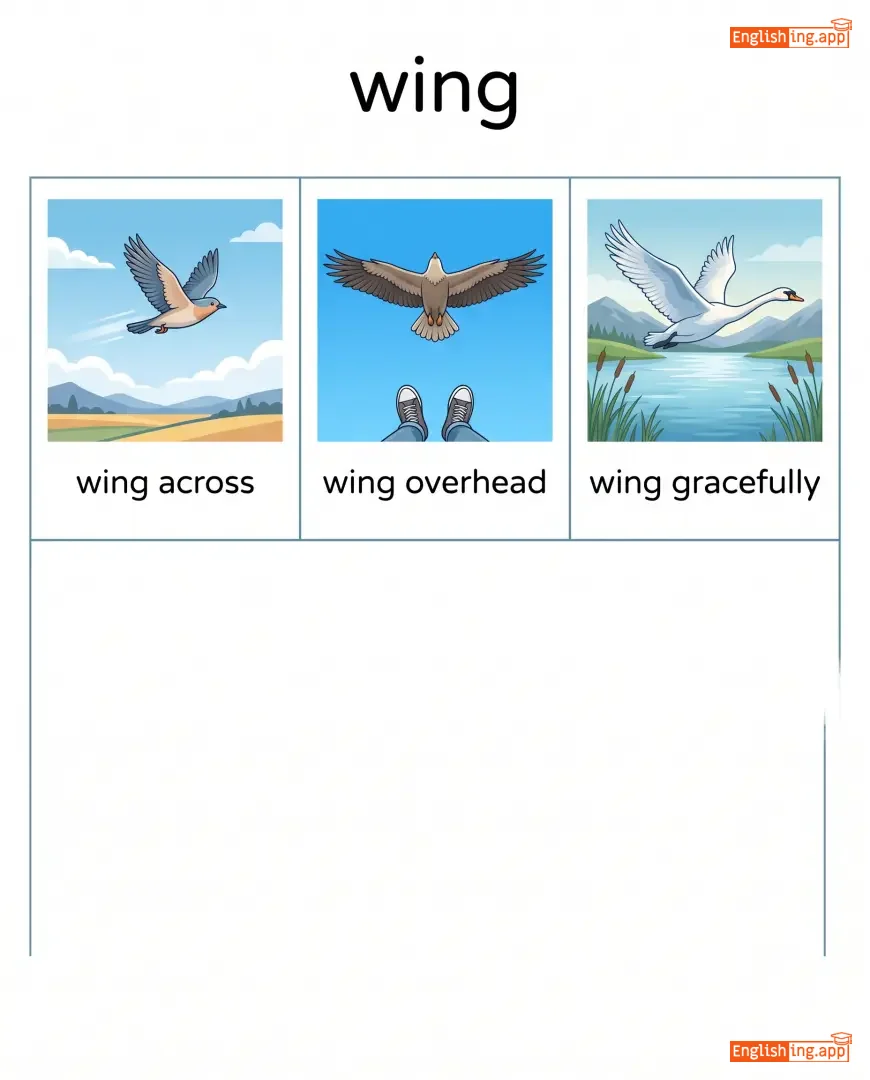
wing across, wing overhead, wing gracefully, wing swiftly
••••••
|
Крылья расправь и лети (летать с крыльями)
••••••
|

