|
🌀
••••••
|
/wɪrd/
adjective
(वर्ड)
••••••
|
-
••••••
|
अजीब
ajeeb
••••••
|
-
••••••
|
-
••••••
|
-
••••••
|
-
••••••
|
suggesting something supernatural or very strange; unusual
|
The movie had a weird ending that nobody expected.
••••••
|
फिल्म का एक अजीब अंत था जिसे किसी ने भी उम्मीद नहीं की थी।
Film ka ek ajeeb ant tha jise kisi ne bhi ummid nahi ki thi.
••••••
|
••••••
|
to make someone feel uncomfortable or strange
|
चिंतित करना
chintit karna
••••••
|
strange, odd, bizarre, unusual, peculiar
|
••••••
|
weird feeling, weird dream, weird noise, weird behavior
|
Weird का मतलब अजीब है, जब कुछ अजीब हो तो सब चौंक जाते हैं।
••••••
|
|
👋
••••••
|
/ˈwelkəm/
verb
(स्वागत)
••••••
|
••••••
|
स्वागत करना
swāgat karnā
••••••
|
स्वागत किया
••••••
|
स्वागत किया
••••••
|
स्वागत करता है
••••••
|
स्वागत कर रहे
••••••
|
to greet someone in a friendly way; to receive gladly
|
They welcome new students warmly.
उन्होंने नए छात्रों का गर्मजोशी से स्वागत किया।
••••••
|
Unhone naye chātroṅ kā garmjoshi se swāgat kiyā.
Unhone naye chātroṅ kā garmjoshi se swāgat kiyā
••••••
|
-
••••••
|
-
••••••
|
-
••••••
|
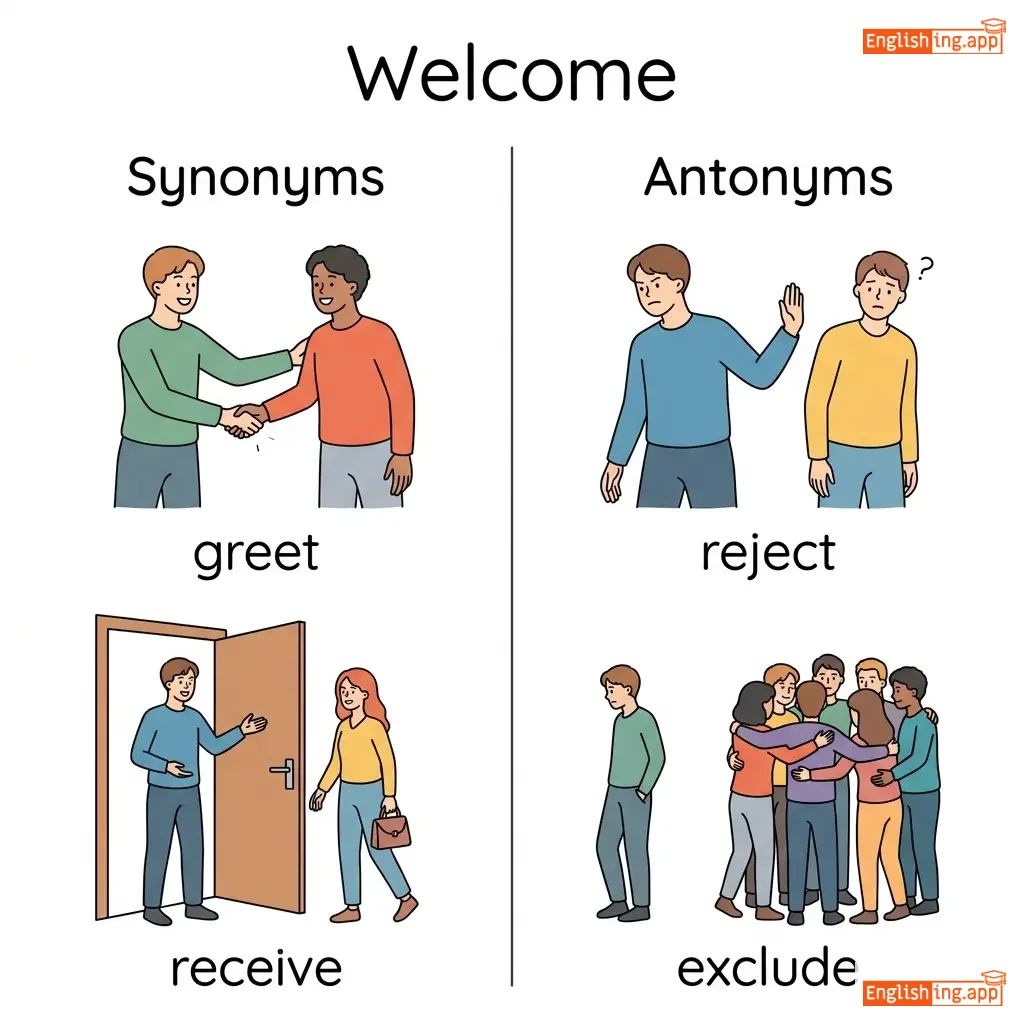
greet, receive, embrace, admit
|
reject, shun, dismiss, exclude
|
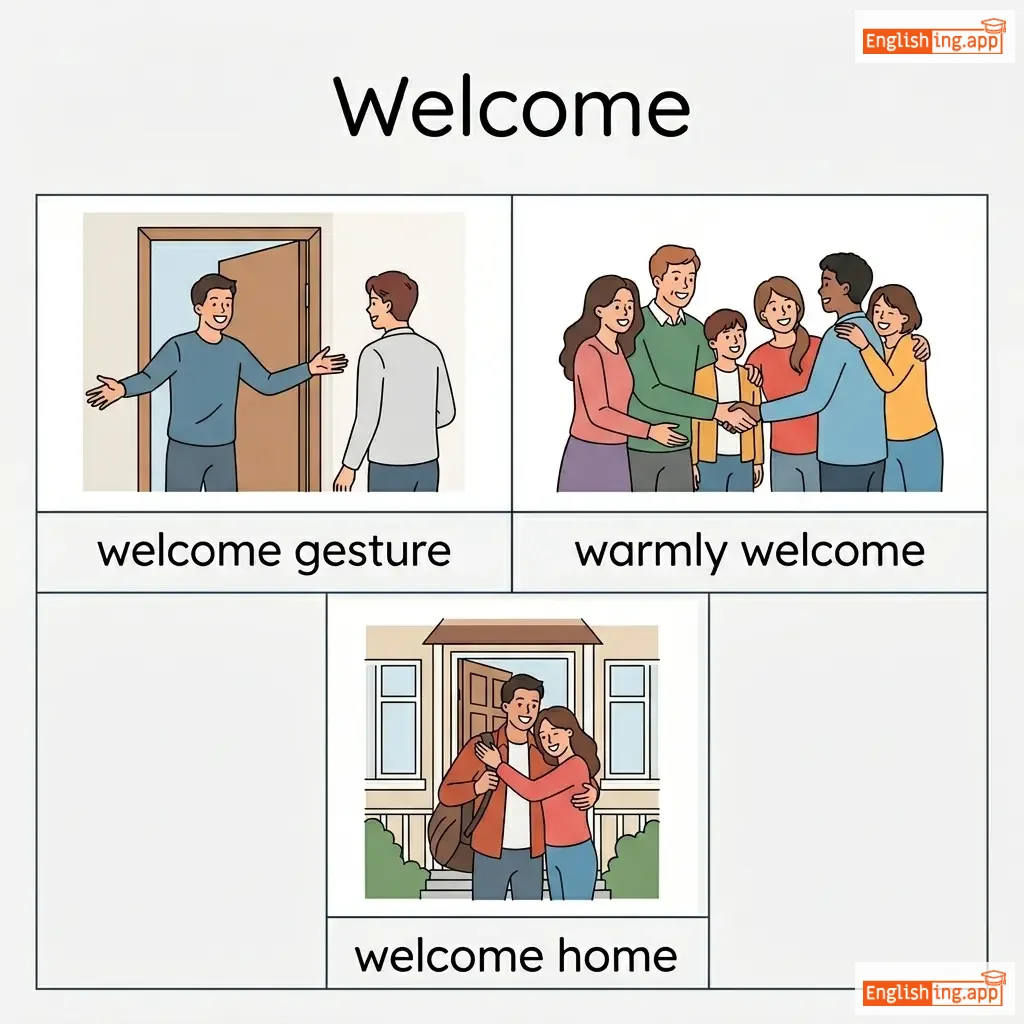
warmly welcome, welcome guests, welcome changes, welcome opportunity, welcome visitors
|
Swāgat karte samay, hamesha khush rahen
••••••
|
|
🤝
••••••
|
/ˈwel.feər/
noun
(वेलफेयर)
••••••
|
-
••••••
|
कल्याण; भलाई; सुख-समृद्धि
kalyan; bhalai; sukh-samriddhi
••••••
|
-
••••••
|
-
••••••
|
-
••••••
|
-
••••••
|
the health, happiness, and fortunes of a person or group; care and support
|
The government is responsible for the welfare of its citizens.
••••••
|
सरकार अपने नागरिकों की भलाई के लिए जिम्मेदार है।
Sarkar apne nagrikon ki bhalai ke liye jimmedar hai.
••••••
|
-
••••••
|
-
••••••
|
-
••••••
|
well-being, benefit, good, prosperity
|
harm, disadvantage, detriment
|
social welfare, welfare state, welfare system
|
Welfare के साथ 'कल्याण' याद रखें
••••••
|
|
🕳️
••••••
|
/wel/
noun
(वेल)
••••••
|
-
••••••
|
कूप; भलाई;
koop; bhalaai
••••••
|
-
••••••
|
-
••••••
|
-
••••••
|
-
••••••
|
a deep hole in the ground from which water is obtained
|
The villagers get water from the old well in the center of town.
द ग्रामीण लोग शहर के केंद्र में पुराने कुएं से पानी लेते हैं।
••••••
|
ग्रामवासी शहर के केंद्र में पुराने कूप से पानी लेते हैं।
Gramaavaasee shaher ke kendr mein puraane koop se paani lete hain.
••••••
|
-
••••••
|
-
••••••
|
-
••••••
|
••••••
|
••••••
|
water well, oil well, deep well
|
वेल को कुएं के रूप में याद रखें, जो पानी देता है।
••••••
|
|
😊
••••••
|
/ˈwel.biː.ɪŋ/
noun
(वेल-बिंग)
••••••
|
••••••
|
कल्याण
kalyan
••••••
|
-
••••••
|
-
••••••
|
-
••••••
|
-
••••••
|
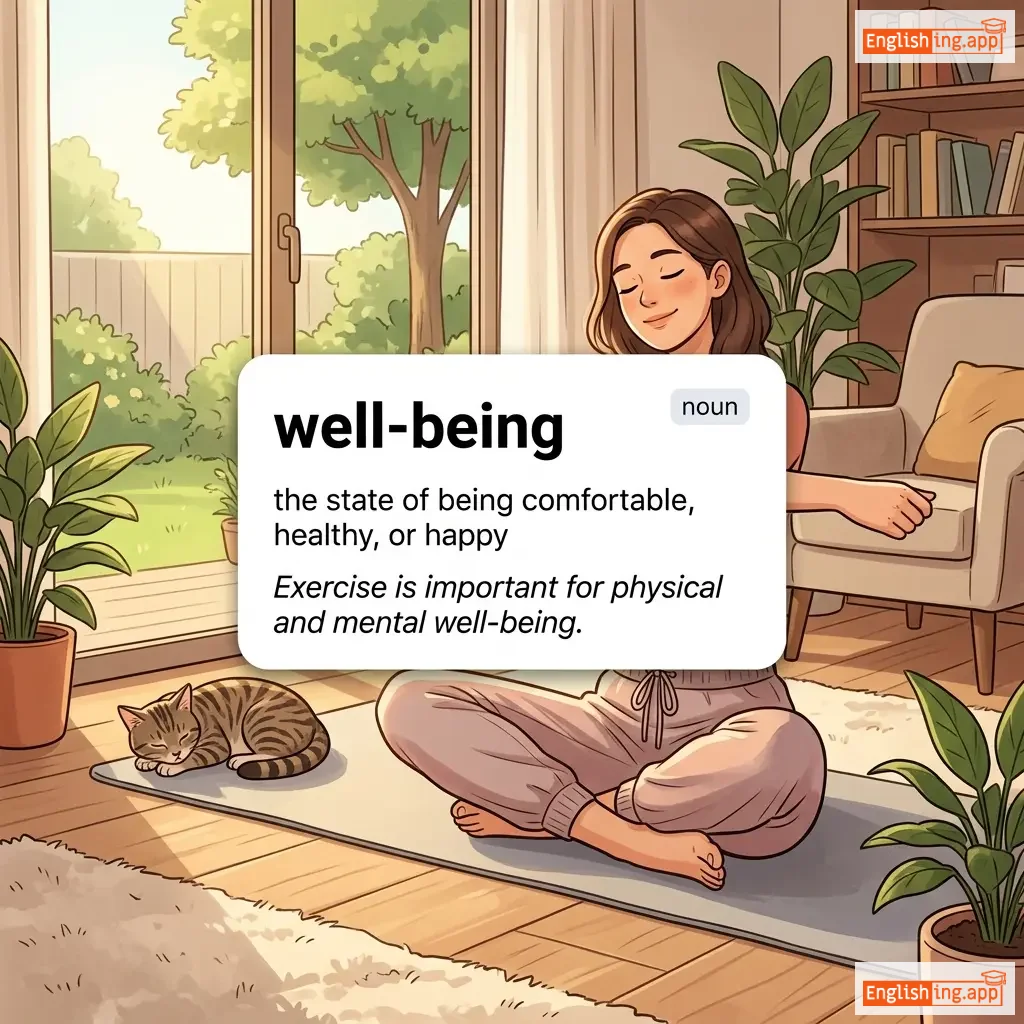
the state of being comfortable, healthy, or happy
|
Regular exercise contributes to physical and mental well-being.
••••••
|
नियमित व्यायाम शारीरिक और मानसिक कल्याण में योगदान करता है।
Niyamit vyaayam shaareerik aur maansik kalyan mein yogdan karta hai.
••••••
|
-
••••••
|
-
••••••
|
-
••••••
|
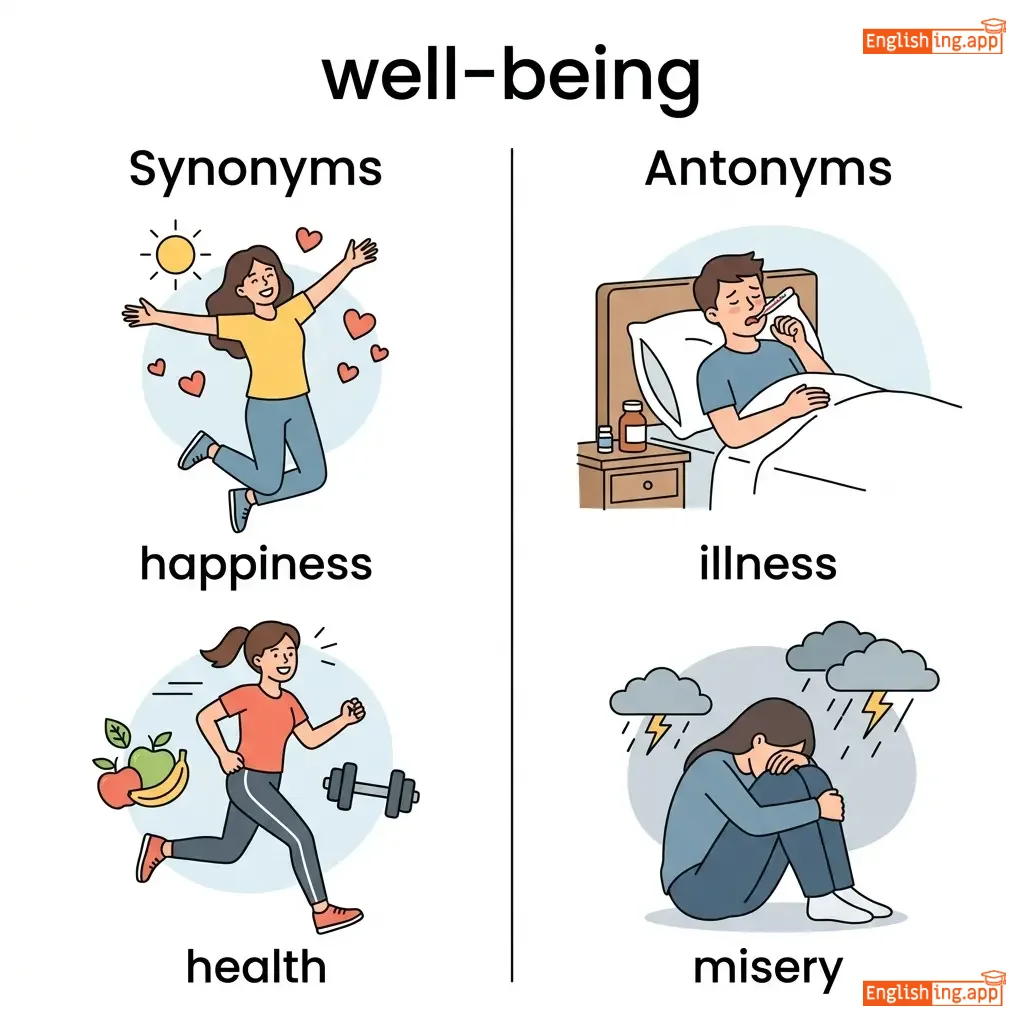
welfare, health, happiness, comfort
|
suffering, distress, misery
|
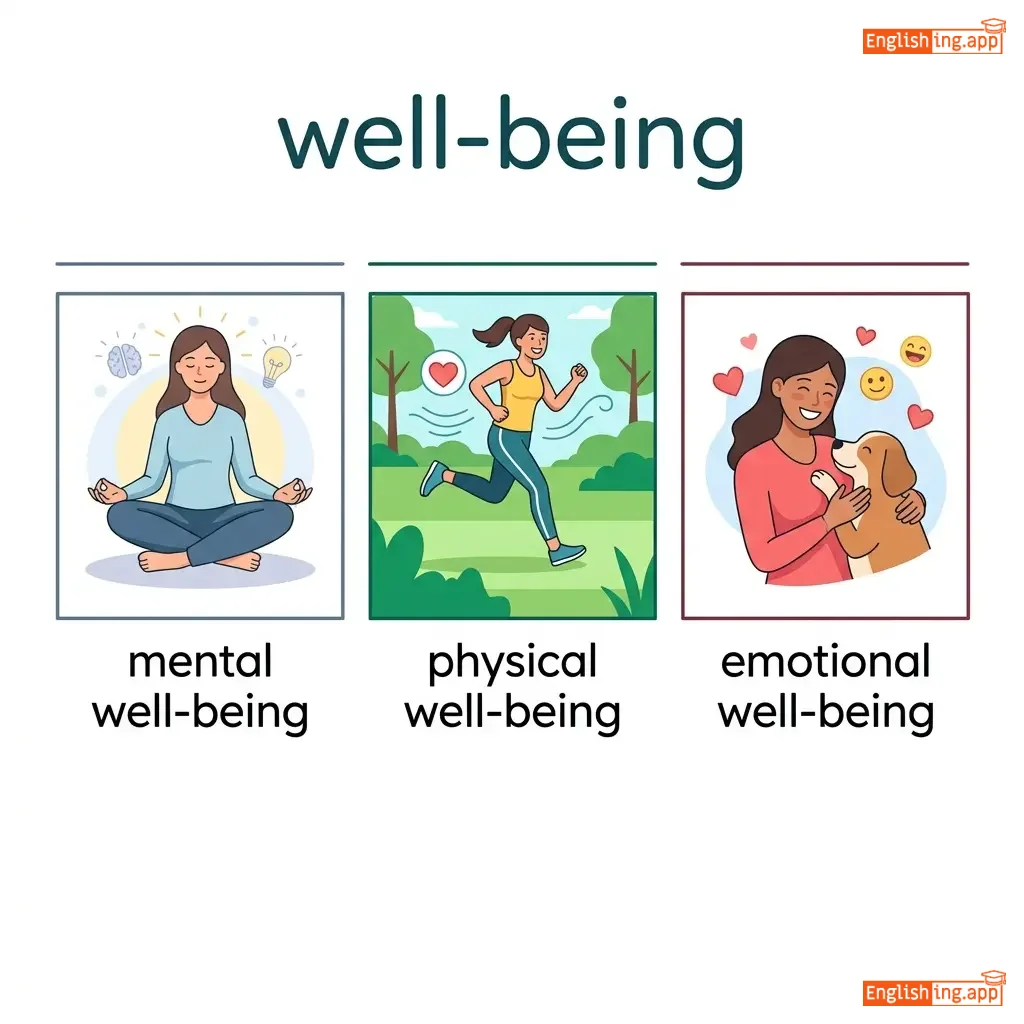
physical well-being, mental well-being, emotional well-being
|
Kalyaan (kalyan) means wellness in Hindi, just like 'well-being' in English.
••••••
|
|
🌟
••••••
|
/ˌwelˈnoʊn/
adjective
(वेल-नोन)
••••••
|
-
••••••
|
प्रसिद्ध
prasiddh
••••••
|
-
••••••
|
-
••••••
|
-
••••••
|
-
••••••
|
known by many people; famous or recognized
|
He is a well-known actor in his country.
••••••
|
वह अपने देश में एक प्रसिद्ध अभिनेता है।
Woh apne desh mein ek prasiddh abhineta hai.
••••••
|
-
••••••
|
-
••••••
|
-
••••••
|
famous, renowned, popular, prominent, recognized
|
unknown, obscure, unfamiliar
|
well-known fact, well-known person, well-known brand, well-known story
|
Well-known का मतलब है 'पहचाना हुआ' — सब लोग जानते हैं!
••••••
|
|
🌅
••••••
|
/wɛst/
noun
(वेस्ट)
••••••
|
-
••••••
|
पश्चिम
pashchim
••••••
|
-
••••••
|
-
••••••
|
-
••••••
|
-
••••••
|
the direction to the left of the north and to the right of the south, typically associated with the sunset
|
The sun sets in the west.
••••••
|
सूरज पश्चिम में अस्त होता है।
Suraj pashchim mein ast hota hai.
••••••
|
-
••••••
|
-
••••••
|
-
••••••
|
••••••
|
••••••
|
west coast, west side, go west, western civilization
|
पश्चिम (pashchim) में सूरज (suraj) अस्त होता है - The sun sets in the west.
••••••
|
|
🌎
••••••
|
/ˈwɛstərn/
adjective
(वेस्टर्न)
••••••
|
-
••••••
|
पश्चिमी
pashchimi
••••••
|
-
••••••
|
-
••••••
|
-
••••••
|
-
••••••
|
relating to or characteristic of the West, especially Europe and the Americas
|
She loves western music and culture.
••••••
|
उसे पश्चिमी संगीत और संस्कृति बहुत पसंद है।
Use pashchimi sangeet aur sanskriti bahut pasand hai.
••••••
|
-
••••••
|
-
••••••
|
-
••••••
|
••••••
|
••••••
|
western culture, western philosophy, western world
|
पश्चिमी संस्कृति पश्चिम में पाई जाती है - Western culture is found in the West.
••••••
|
|
💧
••••••
|
/wet/
adjective
(वेट)
••••••
|
-
••••••
|
गीला; सिक्त;
geela; sikta;
••••••
|
-
••••••
|
-
••••••
|
-
••••••
|
-
••••••
|
covered or saturated with water or another liquid; not dry
|
My clothes are still wet from the rain.
मेरे कपड़े बारिश से अभी भी गीले हैं।
••••••
|
मेरे कपड़े बारिश से अभी भी गीले हैं।
mere kapde baarish se abhi bhi geele hain.
••••••
|
-
••••••
|
-
••••••
|
-
••••••
|
damp, moist, soaked, drenched
|
dry, arid, parched, dehydrated
|
wet clothes, wet weather, get wet
|
हवा में बर्फ गीली हो जाती है। (hawa mein baraf geeli ho jaati hai)
••••••
|
|
❓
••••••
|
/wɒt/
pronoun
(वॉट)
••••••
|
-
••••••
|
क्या
kya
••••••
|
-
••••••
|
-
••••••
|
-
••••••
|
-
••••••
|
used to ask for information about something
|
••••••
|
तुम्हारा नाम क्या है?
Tumhara naam kya hai?
••••••
|
-
••••••
|
-
••••••
|
-
••••••
|
••••••
|
-
••••••
|
what time, what happened, what are you doing
|
क्या (kya) सवाल पूछने के लिए - 'What' का उपयोग सवाल पूछने के लिए किया जाता है।
••••••
|
|
🤷♂️
••••••
|
/wɒtˈɛvər/
pronoun
(व्हाटएवर)
••••••
|
-
••••••
|
जो कुछ भी
jo kuch bhi
••••••
|
-
••••••
|
-
••••••
|
-
••••••
|
-
••••••
|
used to refer to anything or everything that is of the type mentioned
|
You can choose whatever you like.
••••••
|
आप जो चाहें चुन सकते हैं।
Aap jo chahen chun sakte hain.
••••••
|
-
••••••
|
-
••••••
|
-
••••••
|
••••••
|
-
••••••
|
whatever you want, whatever happens
|
जो कुछ भी (jo kuch bhi) आप चाहें - Whatever you want, you can have.
••••••
|
|
🌾
••••••
|
/wiːt/
noun
(व्हीट)
••••••
|
-
••••••
|
गेंहू
genhoo
••••••
|
-
••••••
|
-
••••••
|
-
••••••
|
-
••••••
|
a cereal plant whose grain is used to make flour for bread and other foods
|
Farmers harvested the wheat in early summer.
••••••
|
किसानों ने गर्मी की शुरुआत में गेंहू की फसल काटी।
Kisano ne garmi ki shuruat mein genhoo ki fasal kaati.
••••••
|
separate the wheat from the chaff
••••••
|
to separate valuable things or people from those that are not
|
अच्छे और बुरे को अलग करना
achhe aur bure ko alag karna
••••••
|
grain, cereal, barley, oat, corn
|
••••••
|
wheat flour, wheat bread, wheat field, wheat grain, wheat harvest
|
Wheat मतलब गेंहू 🌾 — गेंहू से रोटी बनती है, इसलिए खाने की चीजें याद रखो!
••••••
|
|
🚗
••••••
|
/wiːl/
noun
(व्हील)
••••••
|
-
••••••
|
पहिया
pahiya
••••••
|
-
••••••
|
-
••••••
|
-
••••••
|
-
••••••
|
a circular object that revolves on an axle and is used to move or carry things
|
The wheel of the car broke down on the way.
••••••
|
कार का पहिया रास्ते में टूट गया था।
Car ka pahiya raste mein toot gaya tha.
••••••
|
-
••••••
|
-
••••••
|
-
••••••
|
••••••
|
••••••
|
steering wheel, bicycle wheel, car wheel, turn the wheel
|
पहिया घुमाकर गाड़ी चलती है (Pahiya ghoomakar gaadi chalti hai)
••••••
|
|
⏰
••••••
|
/wɛn/
adverb
(व्हेन)
••••••
|
-
••••••
|
कब
kab
••••••
|
-
••••••
|
-
••••••
|
-
••••••
|
-
••••••
|
••••••
|
Do you know when the train leaves?
••••••
|
क्या तुम जानते हो कब ट्रेन छूटेगी?
Kya tum jaante ho kab train chootegi?
••••••
|
-
••••••
|
-
••••••
|
-
••••••
|
••••••
|
••••••
|
when will, when did, when does, when do
|
व्हेन से 'कब' याद रखो (When se 'kab' yaad rakho)
••••••
|
|
🕐
••••••
|
/wenˈevər/
adverb
(व्हेनएवर)
••••••
|
-
••••••
|
जब भी
jab bhi
••••••
|
-
••••••
|
-
••••••
|
-
••••••
|
-
••••••
|
at any time that; every time that; no matter when
|
Call me whenever you need help.
जब भी तुम्हें मदद की ज़रूरत हो, मुझे कॉल करो.
••••••
|
जब भी तुम्हें मदद की ज़रूरत हो, मुझे कॉल करो.
jab bhi tumhen madad ki zaroorat ho, mujhe kaul karo.
••••••
|
-
••••••
|
-
••••••
|
-
••••••
|
anytime, every time, no matter when
|
••••••
|
whenever possible, whenever necessary, whenever you want
|
Whenever = Jab bhi; imagine a clock saying Jab and a bee buzzing bhi to remind you of anytime
••••••
|
|
📍
••••••
|
/weər/
adverb
(व्हेयर)
••••••
|
-
••••••
|
कहाँ
kahaan
••••••
|
-
••••••
|
-
••••••
|
-
••••••
|
-
••••••
|
In or to what place or position; used to inquire about location
|
Where did you put my keys?
तुमने मेरी चाबियाँ कहाँ रखीं?
••••••
|
तुमने मेरी चाबियाँ कहाँ रखीं?
tumne meri chaabiyaan kahaan rakheen
••••••
|
-
••••••
|
-
••••••
|
-
••••••
|
••••••
|
••••••
|
where are you, where to go, where from
|
Where kahaan ki chabi ki raah, imagine a neon sign KAHAN near a chaabi (key) to remember 'Where' means 'kahaan'
••••••
|
|
⚖️
••••••
|
/wɛərˈæz/
conjunction
(व्हेयरएज़)
••••••
|
-
••••••
|
जबकि
jabki
••••••
|
-
••••••
|
-
••••••
|
-
••••••
|
-
••••••
|
used to introduce a contrast or comparison between two facts
|
She prefers tea, whereas he likes coffee.
••••••
|
वह चाय पसंद करती है, जबकि वह कॉफी पसंद करता है।
Wah chai pasand karti hai, jabki wah coffee pasand karta hai.
••••••
|
-
••••••
|
-
••••••
|
-
••••••
|
while, although, but, though
|
••••••
|
whereas clause, whereas statement, tea whereas coffee
|
Tea vs coffee तुलना - हिंदी में जबकि
••••••
|
|
🔗
••••••
|
/wɛərˈbaɪ/
adverb
(वेरबाई)
••••••
|
-
••••••
|
जिससे
jisse
••••••
|
-
••••••
|
-
••••••
|
-
••••••
|
-
••••••
|
by which; because of which
|
The company agreed to a contract whereby it would pay the penalty.
••••••
|
कंपनी ने एक समझौते पर हस्ताक्षर किए जिसमें वह जुर्माना अदा करेगी।
Kampani ne ek samjhaute par hastakshar kiye jismein vah jurmana ada karegi.
••••••
|
-
••••••
|
-
••••••
|
-
••••••
|
through which, by means of which, in which
|
-
••••••
|
whereby agreement, whereby clause
|
Whereby sounds like 'वेरबाई', which can be remembered as 'जिससे' meaning by which.
••••••
|
|
🤔
••••••
|
/ˈwɛðər/
conjunction
(वेथर)
••••••
|
-
••••••
|
क्या
kya
••••••
|
-
••••••
|
-
••••••
|
-
••••••
|
-
••••••
|
used to express a doubt or choice between alternatives
|
I don’t know whether I should go.
मैं नहीं जानता कि मुझे जाना चाहिए या नहीं।
••••••
|
मुझे नहीं पता कि मुझे जाना चाहिए या नहीं।
Mujhe nahi pata ki mujhe jana chahiye ya nahi.
••••••
|
-
••••••
|
-
••••••
|
-
••••••
|
••••••
|
••••••
|
whether or not, whether to go, whether he will
|
क्या (kya) किसी निर्णय पर पहुंचने के लिए एक सवाल है
••••••
|
|
❓
••••••
|
/wɪtʃ/
pronoun
(विच)
••••••
|
-
••••••
|
कौन सा
kaun sa
••••••
|
-
••••••
|
-
••••••
|
-
••••••
|
-
••••••
|
used to ask about one or more items from a defined set
|
Which one do you prefer, the red or the blue?
••••••
|
आपको कौन सा पसंद है, लाल या नीला?
Aapko kaun sa pasand hai, laal ya neela?
••••••
|
-
••••••
|
-
••••••
|
-
••••••
|
••••••
|
••••••
|
which one, which way, which time
|
Which helps you choose, 'Kaun' means 'which' in Hindi!
••••••
|
|
⏳
••••••
|
/waɪl/
conjunction
(व्हाइल)
••••••
|
-
••••••
|
जब तक
jab tak
••••••
|
-
••••••
|
-
••••••
|
-
••••••
|
-
••••••
|
during the time that something is happening
|
She was reading while waiting for the bus.
वह बस का इंतजार करते हुए पढ़ाई कर रही थी।
••••••
|
वह बस का इंतजार करते हुए पढ़ाई कर रही थी।
Wah bas ka intezaar karte hue padhai kar rahi thi.
••••••
|
-
••••••
|
-
••••••
|
-
••••••
|
••••••
|
••••••
|
while waiting, while studying, while traveling
|
While you wait, think about 'jab tak' in Hindi!
••••••
|
|
🥄
••••••
|
/wɪp/
verb
(ह्विप)
••••••
|
-
••••••
|
चाबुक मारना
chaabuk maarna
••••••
|
ह्विप्ड
••••••
|
ह्विप्ड
••••••
|
ह्विप्स
••••••
|
ह्विपिंग
••••••
|
to strike or beat with a flexible instrument such as a rope or cord
|
The trainer whipped the horse to make it run faster.
कोच ने घोड़े को तेज दौड़ने के लिए ह्विप किया।
••••••
|
कोच ने घोड़े को तेज दौड़ने के लिए ह्विप किया।
Koch ne ghode ko tej daudne ke liye hwip kiya.
••••••
|
ह्विप अप
••••••
|
to quickly prepare or create something
|
जल्दी तैयार करना
jaldi tayaar karna
••••••
|
lash, beat, strike, thrash, flog
|
••••••
|
whip cream, whip the horse, whip up enthusiasm, political whip
|
Whip मतलब चाबुक मारना — Whip से घोड़ा दौड़ने में ‘फिप’ करता है!
••••••
|
|
🤫
••••••
|
/ˈwɪspər/
verb
(ह्विस्पर)
••••••
|
••••••
|
फुसफुसाना
phusphusana
••••••
|
ह्विस्पर्ड
••••••
|
ह्विस्पर्ड
••••••
|
ह्विस्पर्स
••••••
|
ह्विस्परिंग
••••••
|
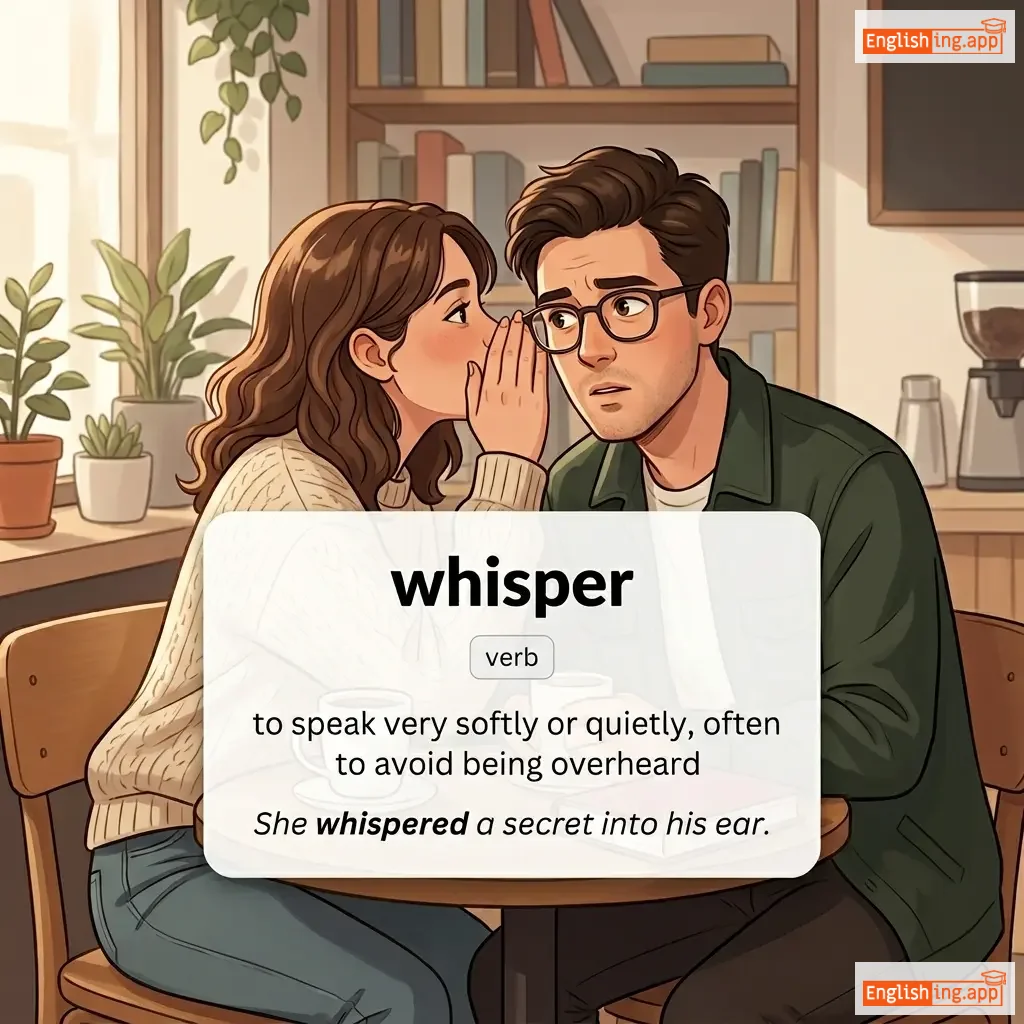
to speak very softly using one's breath without vocal cords
|
She whispered a secret in my ear.
वह मेरे कान में एक रहस्य फुसफुसाकर बोली।
••••••
|
वह मेरे कान में एक रहस्य फुसफुसाकर बोली।
Woh mere kaan mein ek rahasya phusphusakar boli.
••••••
|
-
••••••
|
-
••••••
|
-
••••••
|
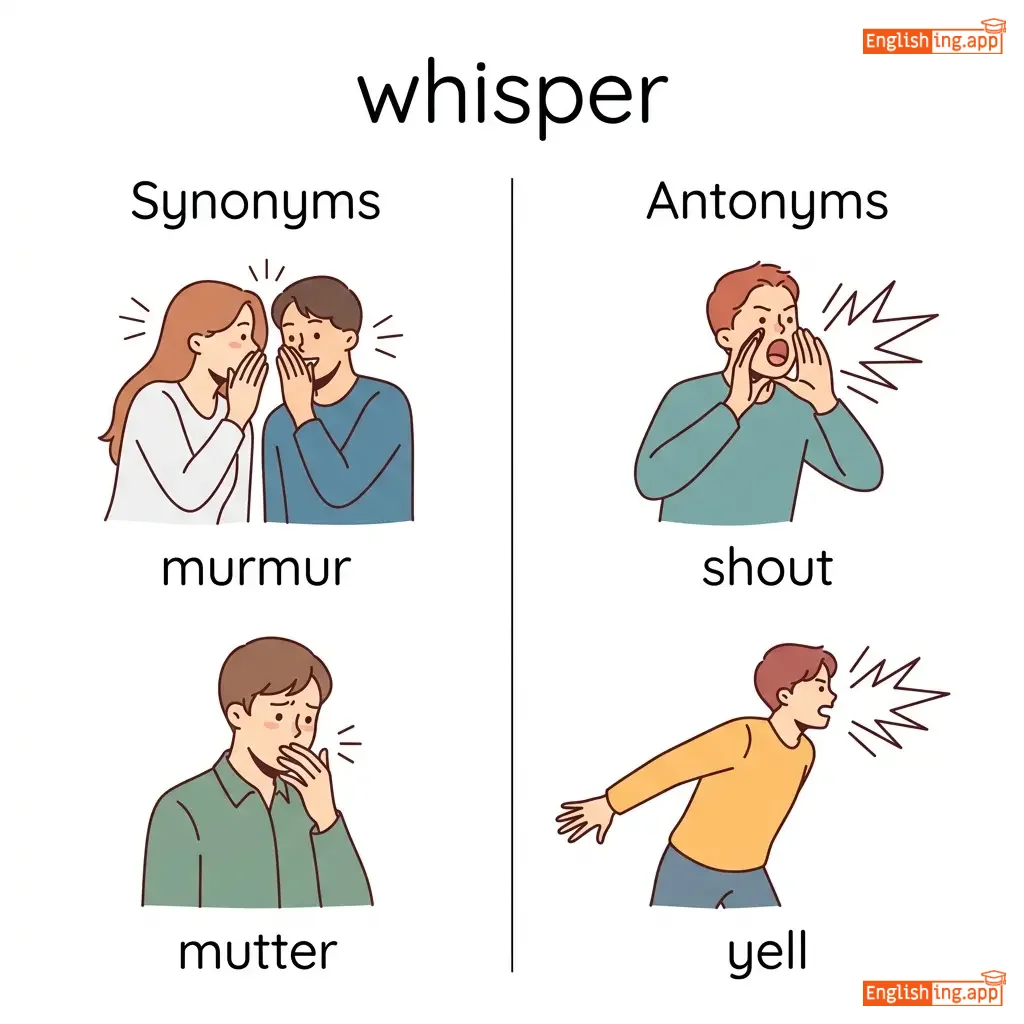
murmur, mumble, breathe, hiss
|
shout, yell, scream, roar
|
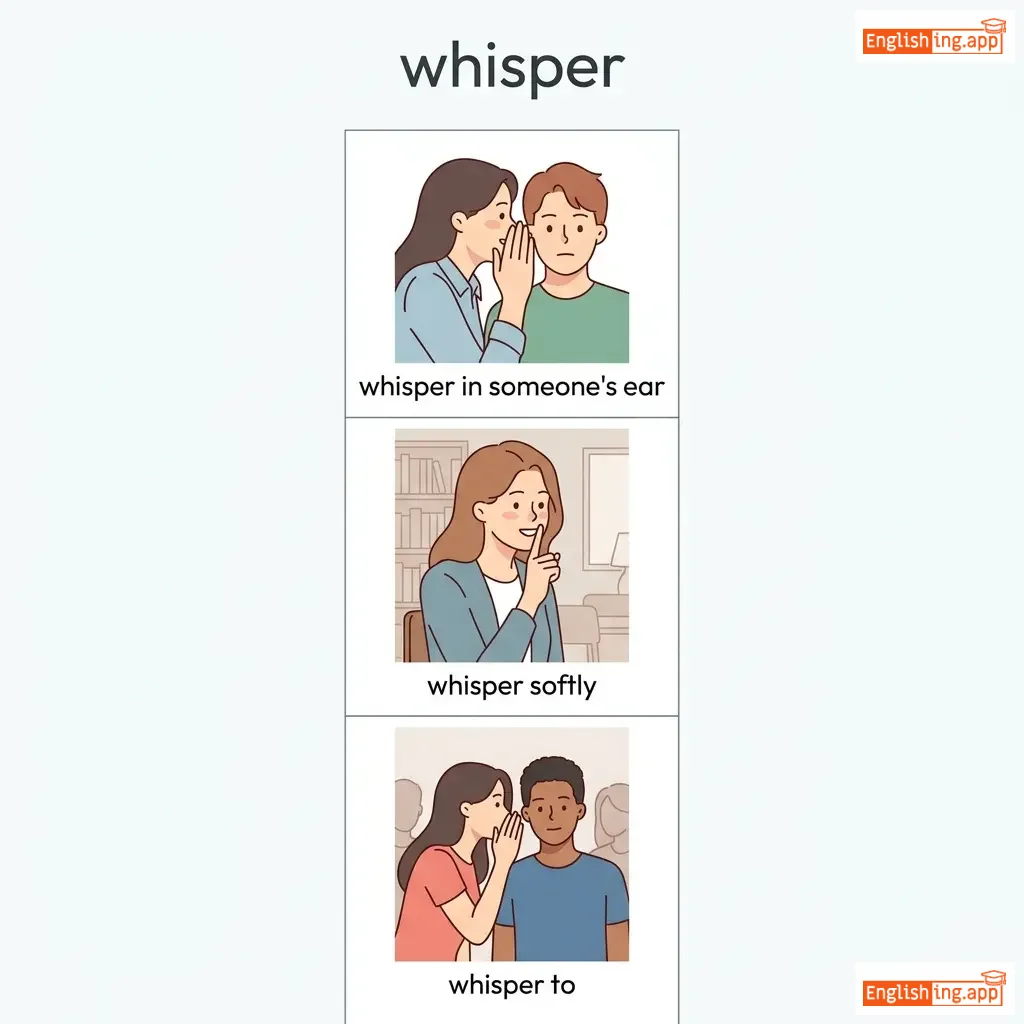
whisper secrets, whisper softly, whisper words, whisper quietly, whisper sweet, whisper prayers
|
Hindi में 'फुसफुसाना' है जो इंग्लिश 'whisper' से मिलता-जुलता है।
••••••
|
|
🎵
••••••
|
/ˈwɪsəl/
verb
(व्हिसल)
••••••
|
••••••
|
सीटी बजाना
seeti bajana
••••••
|
व्हिसल्ड
••••••
|
व्हिसल्ड
••••••
|
व्हिसल्स
••••••
|
व्हिसलिंग
••••••
|
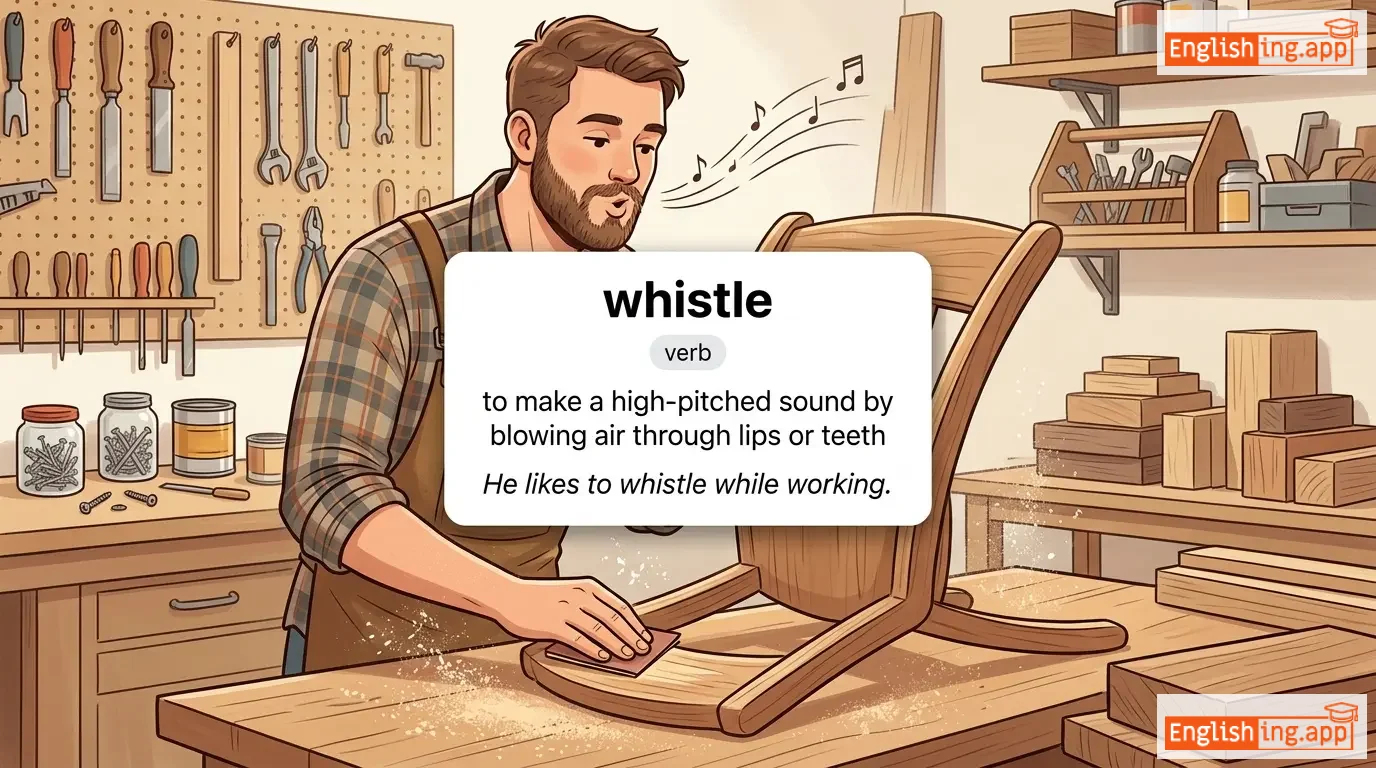
to make a high-pitched sound by blowing air through lips or teeth
|
He likes to whistle while working.
वह काम करते समय सीटी बजाना पसंद करता है।
••••••
|
वह काम करते समय सीटी बजाना पसंद करता है।
vah kaam karte samay seeti bajana pasand karta hai
••••••
|
-
••••••
|
-
••••••
|
-
••••••
|
••••••
|
••••••
|
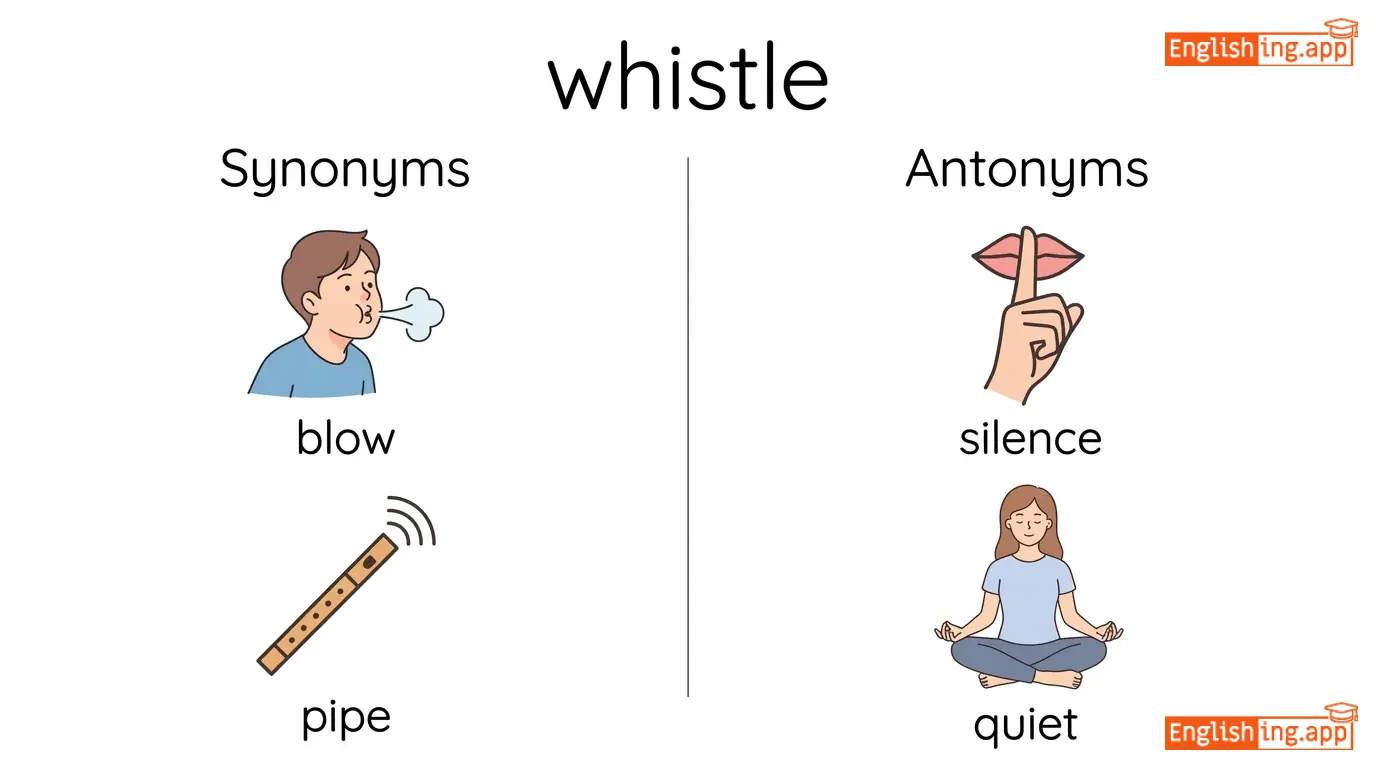
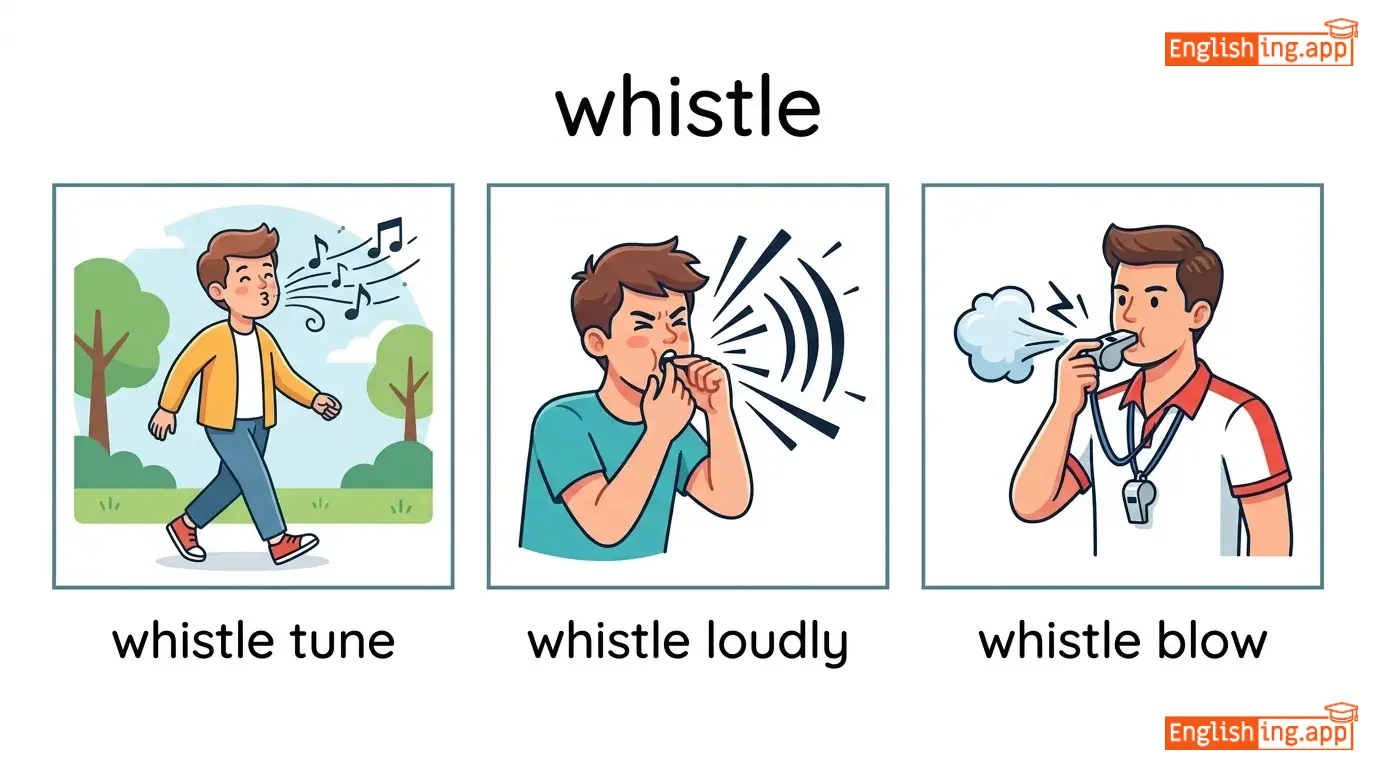
whistle tune, whistle loudly, whistle blow, train whistle
|
सीटी बजाना - सीटी का मतलब 'होंठ से ध्वनि निकालना'
••••••
|
|
⚪
••••••
|
/waɪt/
adjective
(व्हाइट)
••••••
|
-
••••••
|
सफेद; शुद्ध;
safed; shuddh;
••••••
|
-
••••••
|
-
••••••
|
-
••••••
|
-
••••••
|
of the color of snow or milk; pale; pure
|
She wore a beautiful white dress to the wedding.
उसने शादी में एक सुंदर सफेद ड्रेस पहनी।
••••••
|
उसने शादी में एक सुंदर सफेद ड्रेस पहनी।
usne shaadi mein ek sundar safed dress pehni.
••••••
|
-
••••••
|
-
••••••
|
-
••••••
|
pale, colorless, snow-white, ivory
|
••••••
|
white paper, white shirt, white house
|
In Hindi, 'safed' means 'white' and 'shuddh' means 'pure', just like snow and milk!
••••••
|
|
🤔
••••••
|
/huː/
pronoun
(हु)
••••••
|
-
••••••
|
कौन
kaun
••••••
|
-
••••••
|
-
••••••
|
-
••••••
|
-
••••••
|
used to ask about a person or people
|
Who is coming to the party tonight?
••••••
|
आज रात पार्टी में कौन आ रहा है?
Aaj raat party mein kaun aa raha hai?
••••••
|
-
••••••
|
-
••••••
|
-
••••••
|
••••••
|
••••••
|
who is, who are, who knows
|
To ask 'who', just use 'kaun' in Hindi!
••••••
|
|
🙋♂️
••••••
|
/huːˈɛvər/
pronoun
(हूएवर)
••••••
|
-
••••••
|
जो कोई भी
jo koi bhi
••••••
|
-
••••••
|
-
••••••
|
-
••••••
|
-
••••••
|
any person who; no matter who
|
Whoever wants to join the trip must register today.
••••••
|
जो भी यात्रा में शामिल होना चाहता है, उसे आज ही पंजीकरण करना होगा।
Jo bhi yatra mein shamil hona chahta hai, use aaj hi panjikaran karna hoga.
••••••
|
-
••••••
|
-
••••••
|
-
••••••
|
anyone, anybody, whosoever
|
••••••
|
whoever comes, whoever wants, whoever said, whoever did
|
Who + ever = जो कोई भी — whoever means कोई भी व्यक्ति
••••••
|
|
🔵
••••••
|
/hoʊl/
adjective
(होल)
••••••
|
-
••••••
|
पूरा
poora
••••••
|
-
••••••
|
-
••••••
|
-
••••••
|
-
••••••
|
complete; entire; all of something
|
He ate the whole pizza by himself.
हि एट द होल पिज़्ज़ा बाय हिमसेल्फ।
••••••
|
उसने पूरा पिज़्ज़ा अकेले ही खा लिया।
usne poora pizza akele hi kha liya
••••••
|
-
••••••
|
-
••••••
|
-
••••••
|
complete, entire, total, full
|
partial, incomplete, broken, fragmented
|
whole story, whole family, whole day
|
Poora (पूरा) = whole — याद रखें: उसने पूरा पीज़ा खाया → poora pizza
••••••
|
|
💯
••••••
|
/ˈhoʊli/
adverb
(होली)
••••••
|
-
••••••
|
पूरी तरह से; पूरी तरह से
poori tarah se
••••••
|
-
••••••
|
-
••••••
|
-
••••••
|
-
••••••
|
Entirely; completely; to the full extent
|
I am wholly committed to this project.
••••••
|
मैं इस परियोजना में पूरी तरह से प्रतिबद्ध हूं।
main is pariyojna mein poori tarah se pratibaddh hoon.
••••••
|
-
••••••
|
-
••••••
|
-
••••••
|
completely, entirely, totally, fully
|
partially, partly, incompletely
|
wholly owned, wholly responsible, wholly different
|
पूरी तरह से, जैसे 'पक्का' का इंग्लिश में मतलब
••••••
|
|
👤
••••••
|
/huːm/
pronoun
(हूम)
••••••
|
-
••••••
|
जिसे
jise
••••••
|
-
••••••
|
-
••••••
|
-
••••••
|
-
••••••
|
used to refer to the person or people that something is done to
|
The man whom I met yesterday is my friend.
••••••
|
वह आदमी जिसे मैंने कल मिला था, वह मेरा दोस्त है।
Wah aadmi jise maine kal mila tha, wah mera dost hai.
••••••
|
-
••••••
|
-
••••••
|
-
••••••
|
••••••
|
••••••
|
whom I met, whom I saw, to whom it may concern
|
Whom sounds like 'Whom-er jise' - 'Whom-er' as in the person you met.
••••••
|
|
📱
••••••
|
/huːz/
pronoun
(हूज़)
••••••
|
-
••••••
|
जिसका
jiska
••••••
|
-
••••••
|
-
••••••
|
-
••••••
|
-
••••••
|
used to ask or talk about the person or thing that owns something
|
The girl whose phone was stolen is my cousin.
••••••
|
वह लड़की जिसका फोन चोरी हो गया था मेरी कजिन है।
Wah ladki jiska phone chori ho gaya tha meri cajin hai.
••••••
|
-
••••••
|
-
••••••
|
-
••••••
|
who's, that person’s, of whom
|
••••••
|
whose phone, whose book, whose idea
|
Whose phone is this? – 'Whose' connects to 'Jiska phone'.
••••••
|
|
❓
••••••
|
/waɪ/
adverb
(हाई)
••••••
|
-
••••••
|
क्यों
kyon
••••••
|
-
••••••
|
-
••••••
|
-
••••••
|
-
••••••
|
For what reason or purpose; used to ask about the cause of something
|
••••••
|
तुम आज क्यों लेट हो?
tum aaj kyon let ho?
••••••
|
-
••••••
|
-
••••••
|
-
••••••
|
••••••
|
••••••
|
why not, that's why, reason why
|
No
••••••
|
|
↔️
••••••
|
/waɪd/
adjective
(वाइड)
••••••
|
-
••••••
|
विस्तृत; चौड़ा
vistret; chaudha
••••••
|
-
••••••
|
-
••••••
|
-
••••••
|
-
••••••
|
having a great distance from one side to the other; broad
|
The river is very wide at this point.
••••••
|
इस बिंदु पर नदी बहुत विस्तृत है।
is bindu par nadi bahut vistret hai.
••••••
|
-
••••••
|
-
••••••
|
-
••••••
|
broad, extensive, spacious, vast
|
••••••
|
wide range, wide variety, wide open, wide awake
|
Vistret river chauda, wide ka yaad dilata hai.
••••••
|
|
🌍
••••••
|
/ˈwaɪdli/
adverb
(वाइडली)
••••••
|
-
••••••
|
व्यापक रूप से
vyapak roop se
••••••
|
-
••••••
|
-
••••••
|
-
••••••
|
-
••••••
|
to a great extent or degree
|
The news of his promotion spread widely across the company.
••••••
|
उसकी पदोन्नति की खबर कंपनी में व्यापक रूप से फैल गई।
uski padonnati ki khabar company mein vyapak roop se phail gayi.
••••••
|
-
••••••
|
-
••••••
|
-
••••••
|
extensively, broadly, widely, far
|
••••••
|
widely known, widely accepted, widely spread
|
Wide world 🌍 means a wide spread across everywhere!
••••••
|
|
↔️
••••••
|
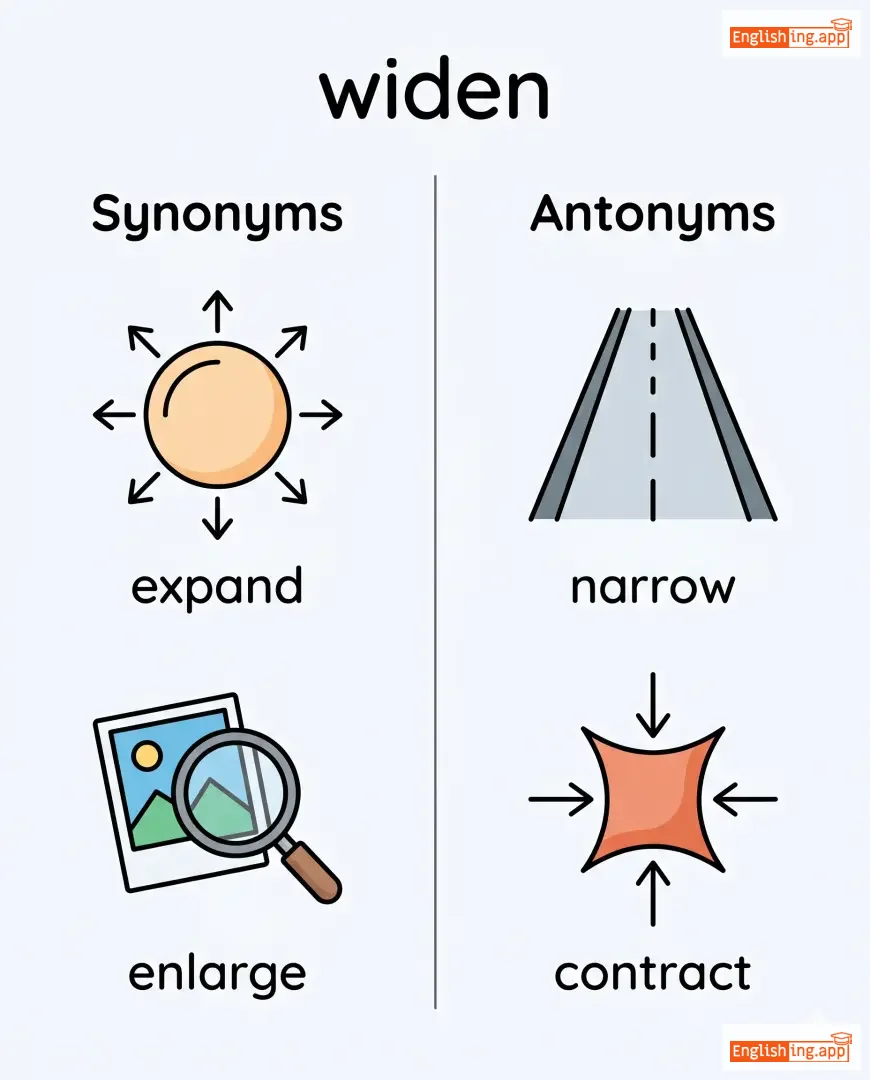
/ˈwaɪdən/
verb
(वाइडन)
••••••
|
••••••
|
चौड़ा करना
chauda karna
••••••
|
वाइडेंड
••••••
|
वाइडेंड
••••••
|
वाइडेंस
••••••
|
वाइडनिंग
••••••
|
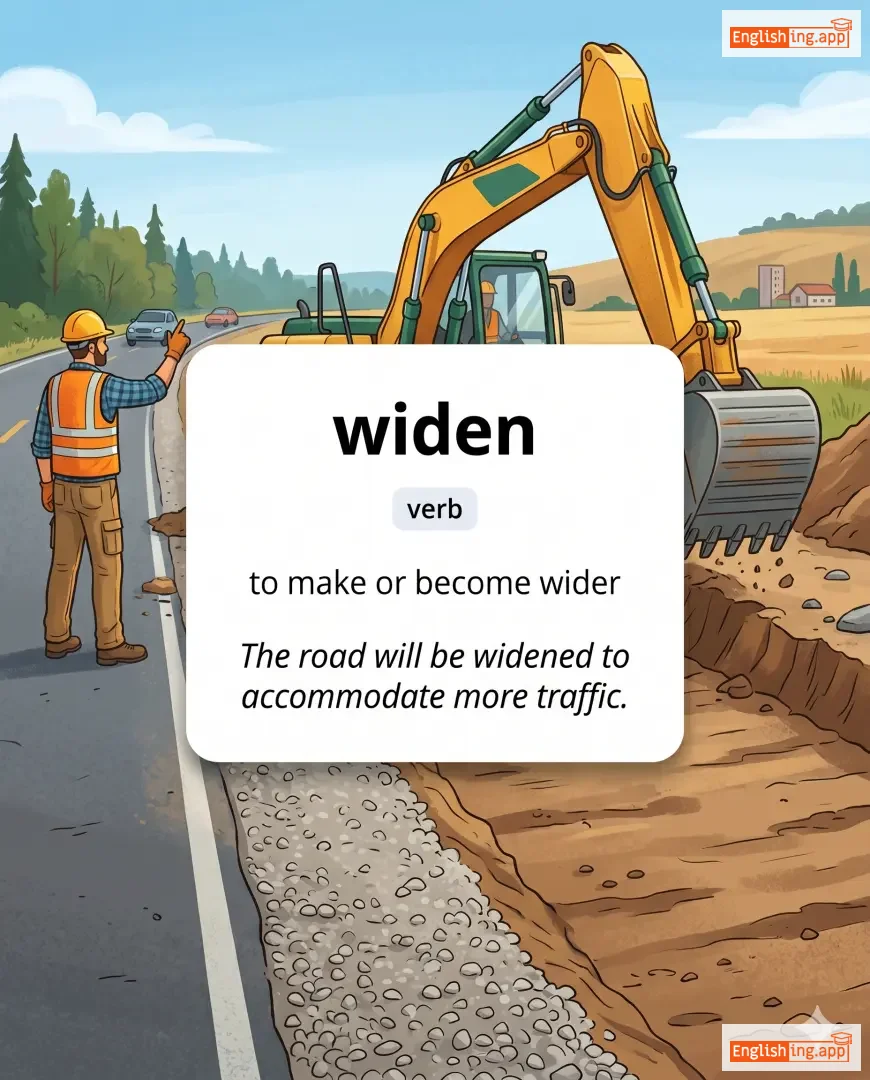
to make or become wider or broader
|
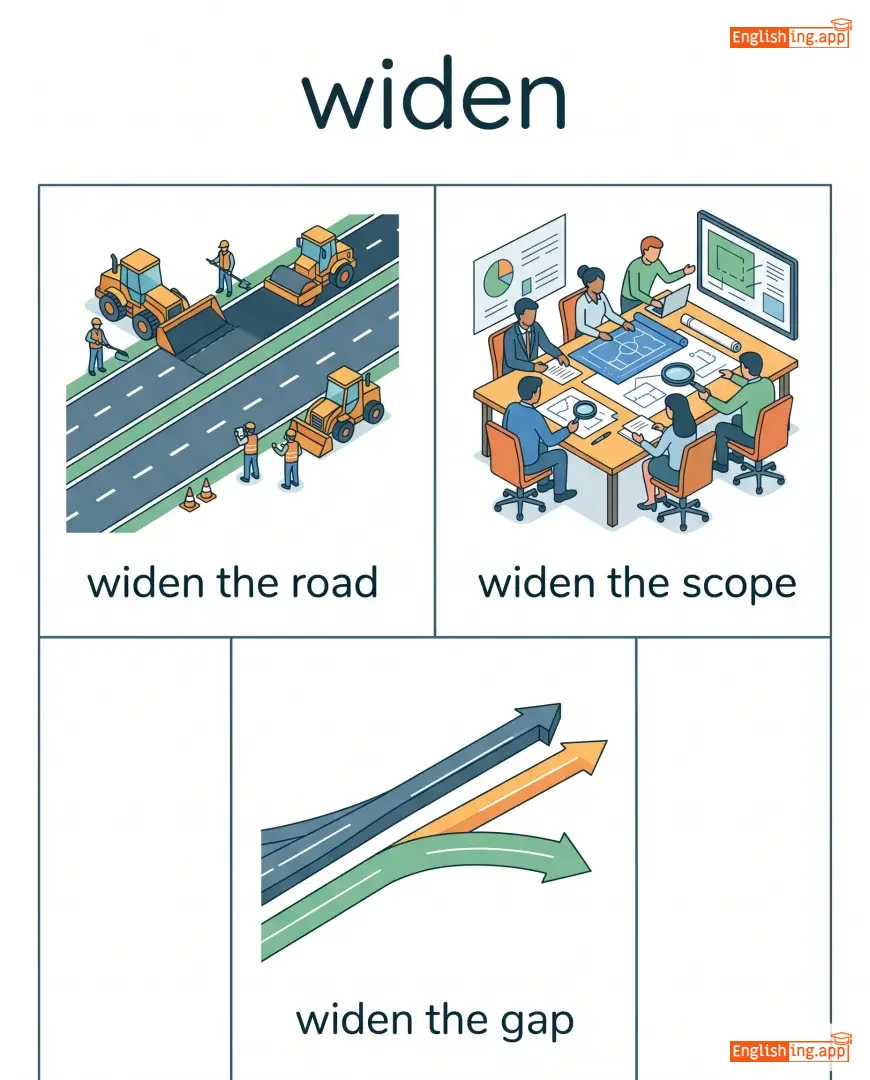
They plan to widen the road next year.
वे अगले साल सड़क को चौड़ा करने की योजना बना रहे हैं।
••••••
|
वे अगले साल सड़क को चौड़ा करने की योजना बना रहे हैं।
Ve agle saal sadak ko chaudha karne ki yojna bana rahe hain.
••••••
|
-
••••••
|
-
••••••
|
-
••••••
|
broaden, expand, extend, enlarge
|
narrow, reduce, contract, shrink
|
widen road, widen gap, widen range, gradually widen
|
वाइडन का मतलब है किसी चीज़ को चौड़ा करना।
••••••
|
|
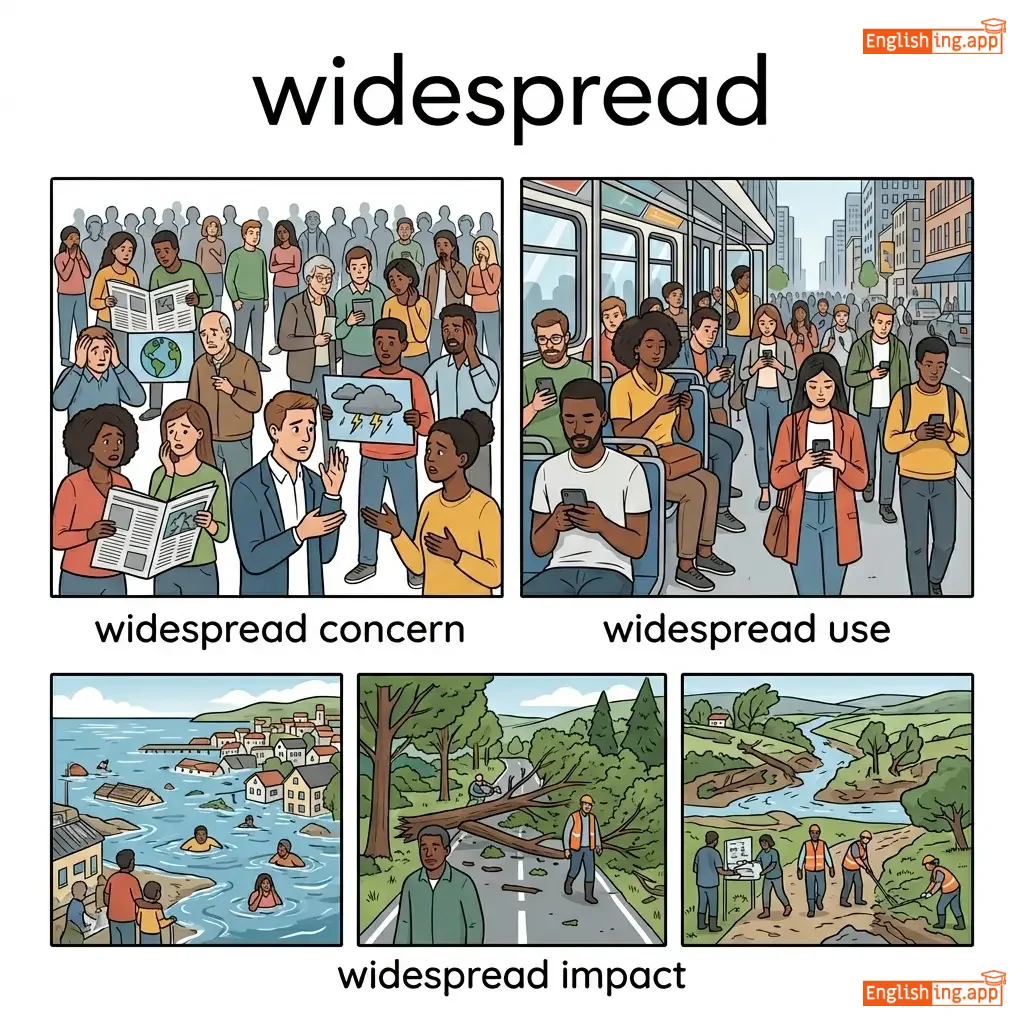
🌍
••••••
|
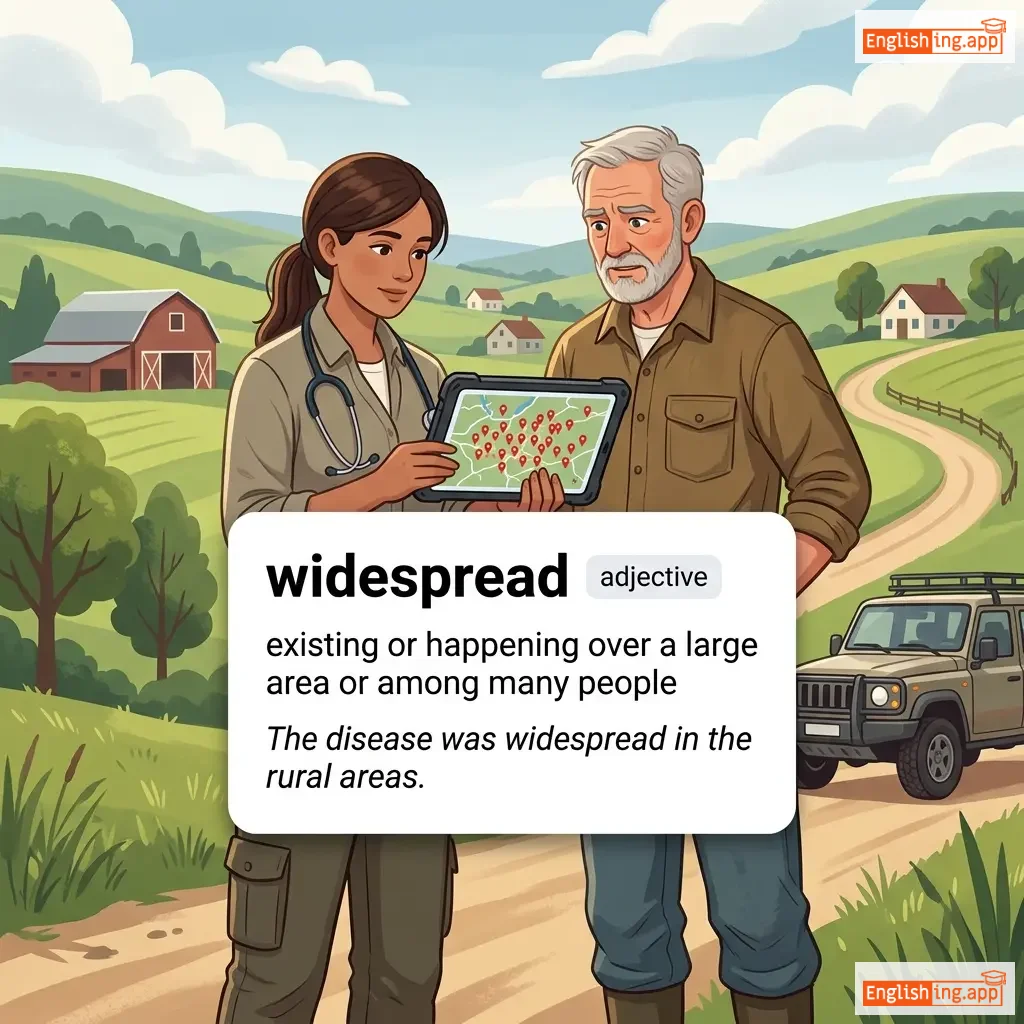
/ˈwaɪd.sprɛd/
adjective
(वाइडस्प्रेड)
••••••
|
••••••
|
व्यापक
vyapak
••••••
|
-
••••••
|
-
••••••
|
-
••••••
|
-
••••••
|
existing or happening in many places or among many people
|
There is widespread support for the new policy.
••••••
|
नई नीति के लिए व्यापक समर्थन है।
nai niti ke liye vyapak samarthan hai.
••••••
|
-
••••••
|
-
••••••
|
-
••••••
|
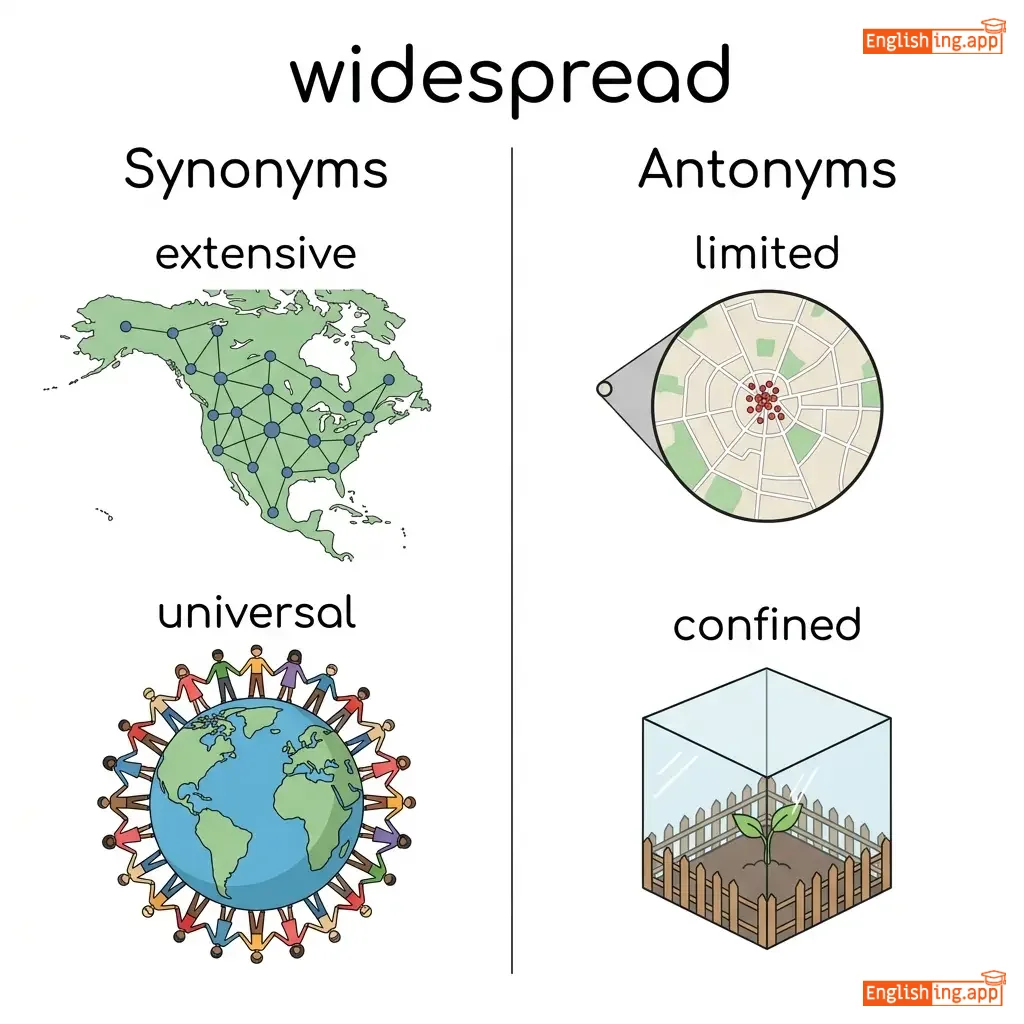
extensive, prevalent, universal, common
|
limited, localized, restricted, rare
|
widespread support, widespread use, widespread damage, widespread belief
|
Hindi 'व्यापक' sounds like English 'widespread'.
••••••
|
|
🖤
••••••
|
/ˈwɪdəʊ/
noun
(विधवा)
••••••
|
-
••••••
|
विधवा
vidhwa
••••••
|
-
••••••
|
-
••••••
|
-
••••••
|
-
••••••
|
a woman whose husband has died and who has not married again
|
She became a widow at a very young age.
वह बहुत छोटी उम्र में विधवा हो गई।
••••••
|
वह बहुत छोटी उम्र में विधवा हो गई।
Woh bahut chhoti umr mein vidhwa ho gayi.
••••••
|
घास विधवा
••••••
|
a woman whose husband is temporarily away
|
घास विधवा
Ghaas vidhwa
••••••
|
bereaved woman, lone woman, wife left behind
|
••••••
|
young widow, war widow, become a widow, widow pension
|
Widow मतलब विधवा — 'We do' बोला था लेकिन अब ‘He’s gone’ 😢
••••••
|
|
↔️
••••••
|
/wɪdθ/
noun
(विध्थ)
••••••
|
-
••••••
|
चौड़ाई; विस्तार
chaudai; vistaar
••••••
|
-
••••••
|
-
••••••
|
-
••••••
|
-
••••••
|
the measurement or extent of something from side to side; breadth
|
The width of the river is about 50 meters.
द रिवर की विध्थ लगभग ५० मीटर है।
••••••
|
नदी की चौड़ाई लगभग ५० मीटर है।
nadi ki chaudai lagbhag pachaas meter hai.
••••••
|
-
••••••
|
-
••••••
|
-
••••••
|
••••••
|
length, height, narrowness
|
full width, average width, total width
|
Width ka matlab hai 'chaudai' jise hum river ke example se samajh sakte hain.
••••••
|
|
👩❤️👨
••••••
|
/waɪf/
noun
(वाइफ)
••••••
|
-
••••••
|
पत्नी
patnī
••••••
|
-
••••••
|
-
••••••
|
-
••••••
|
-
••••••
|
a woman who is married to someone
|
She is the wife of the famous author.
••••••
|
वह प्रसिद्ध लेखक की पत्नी है।
vah prasiddh lekhak kī patnī hai。
••••••
|
-
••••••
|
-
••••••
|
-
••••••
|
spouse, partner, better half
|
••••••
|
wife and husband, loving wife, devoted wife
|
Wife means ‘wife’! Remembering it is simple.
••••••
|
|
🌿
••••••
|
/waɪld/
adjective
(वाइल्ड)
••••••
|
-
••••••
|
जंगली
jangli
••••••
|
-
••••••
|
-
••••••
|
-
••••••
|
-
••••••
|
living or growing in the natural environment; uncontrolled or untamed
|
The children ran wild in the park.
••••••
|
बच्चे पार्क में जंगली दौड़ रहे थे।
Bacche park mein jangli daud rahe the.
••••••
|
••••••
|
to behave without restraint or control
|
जंगली होना
jangli hona
••••••
|
untamed, feral, uncontrolled, savage, free
|
tame, domestic, controlled
|
wild animal, wild nature, wild guess, wild behavior
|
Wild यानी जंगली – जंगल में बेतहाशा दौड़ते जानवर
••••••
|
|
🦌
••••••
|
/ˈwaɪldˌlaɪf/
noun
(वाइल्डलाइफ)
••••••
|
-
••••••
|
वन्यजीव
vanyajeev
••••••
|
-
••••••
|
-
••••••
|
-
••••••
|
-
••••••
|
animals, birds, and plants living in their natural environment
|
The park is home to a wide variety of wildlife.
••••••
|
उद्यान में वन्यजीवों की एक विस्तृत विविधता है।
Udyan mein vanyajeevon ki ek vistarit vidhata hai.
••••••
|
••••••
|
the protection of wild animals and their habitats
|
वन्यजीव संरक्षण
vanyajeev sanrakshan
••••••
|
fauna, animals, creatures, nature, biosphere
|
••••••
|
wildlife sanctuary, wildlife photographer, protect wildlife, wildlife reserve
|
Wild life का मतलब जंगल का life — यानी वन्यजीव जो जंगल में रहते हैं 🐯
••••••
|
|
✍️
••••••
|
/wɪl/
noun, verb
(विल)
••••••
|
-
••••••
|
इच्छा
ichchha
••••••
|
-
••••••
|
-
••••••
|
विल्स
••••••
|
विलिंग
••••••
|
expressing future tense or intention; a legal document
|
She will attend the meeting tomorrow.
वह कल बैठक में उपस्थित होगी।
••••••
|
वह कल बैठक में उपस्थित होगी।
vah kal baithak mein upasthit hogi.
••••••
|
शक्ति की इच्छा
••••••
|
the drive to assert one's own will over others
|
शक्ति की इच्छा
shakti ki ichcha
••••••
|
intend, shall, want, determination
|
••••••
|
last will, will and testament, strong will
|
Will to power, will to future ✍️
••••••
|
|
🙋♂️
••••••
|
/ˈwɪl.ɪŋ/
adjective
(विलिंग)
••••••
|
-
••••••
|
इच्छुक; तैयार;
ichchhuk; tayaar
••••••
|
-
••••••
|
-
••••••
|
-
••••••
|
-
••••••
|
ready, eager, or prepared to do something
|
She is willing to help with the project.
••••••
|
वह परियोजना में मदद करने के लिए इच्छुक है।
vah pariyojana mein madad karne ke liye ichchhuk hai.
••••••
|
-
••••••
|
-
••••••
|
-
••••••
|
ready, eager, prepared, inclined
|
unwilling, reluctant, hesitant, resistant
|
willing to help, willing participant, willing cooperation, willing spirit
|
इच्छुक = willing, तैयार = ready
••••••
|
|
😊
••••••
|
/ˈwɪl.ɪŋ.li/
adverb
(विलिंग्ली)
••••••
|
-
••••••
|
इच्छा से; स्वेच्छा से
ichchha se; swechchha se
••••••
|
-
••••••
|
-
••••••
|
-
••••••
|
-
••••••
|
in a willing manner; voluntarily; with free will
|
She willingly helped her neighbors during the emergency.
••••••
|
उसने आपातकाल के दौरान स्वेच्छा से अपने पड़ोसियों की मदद की।
usne aapatkal ke dauran swechchha se apne padosiyon ki madad ki
••••••
|
-
••••••
|
-
••••••
|
-
••••••
|
voluntarily, eagerly, gladly, readily, freely
|
reluctantly, unwillingly, forcibly, involuntarily
|
willingly accept, willingly participate, willingly cooperate, willingly volunteer
|
इच्छा से मदद करना आसान होता है, जैसे 'मैं अपनी इच्छा से मदद करता हूँ'।
••••••
|
|
💪
••••••
|
/ˈwɪlɪŋnəs/
noun
(विलिंगनेस)
••••••
|
-
••••••
|
इच्छा
ichchha
••••••
|
-
••••••
|
-
••••••
|
-
••••••
|
-
••••••
|
the quality of being prepared or ready to do something
|
Her willingness to help others made her very popular.
••••••
|
दूसरों की मदद करने की उसकी इच्छा ने उसे बहुत लोकप्रिय बना दिया।
Doosron ki madad karne ki uski ichchha ne use bahut lokpriya bana diya.
••••••
|
-
••••••
|
-
••••••
|
-
••••••
|
readiness, eagerness, enthusiasm, consent, agreement
|
reluctance, unwillingness
|
show willingness, express willingness, willingness to cooperate, willingness to learn
|
Willingness मतलब इच्छाशक्ति, और willingness मतलब अपनी इच्छाओं को दिखाना!
••••••
|
|
🏆
••••••
|
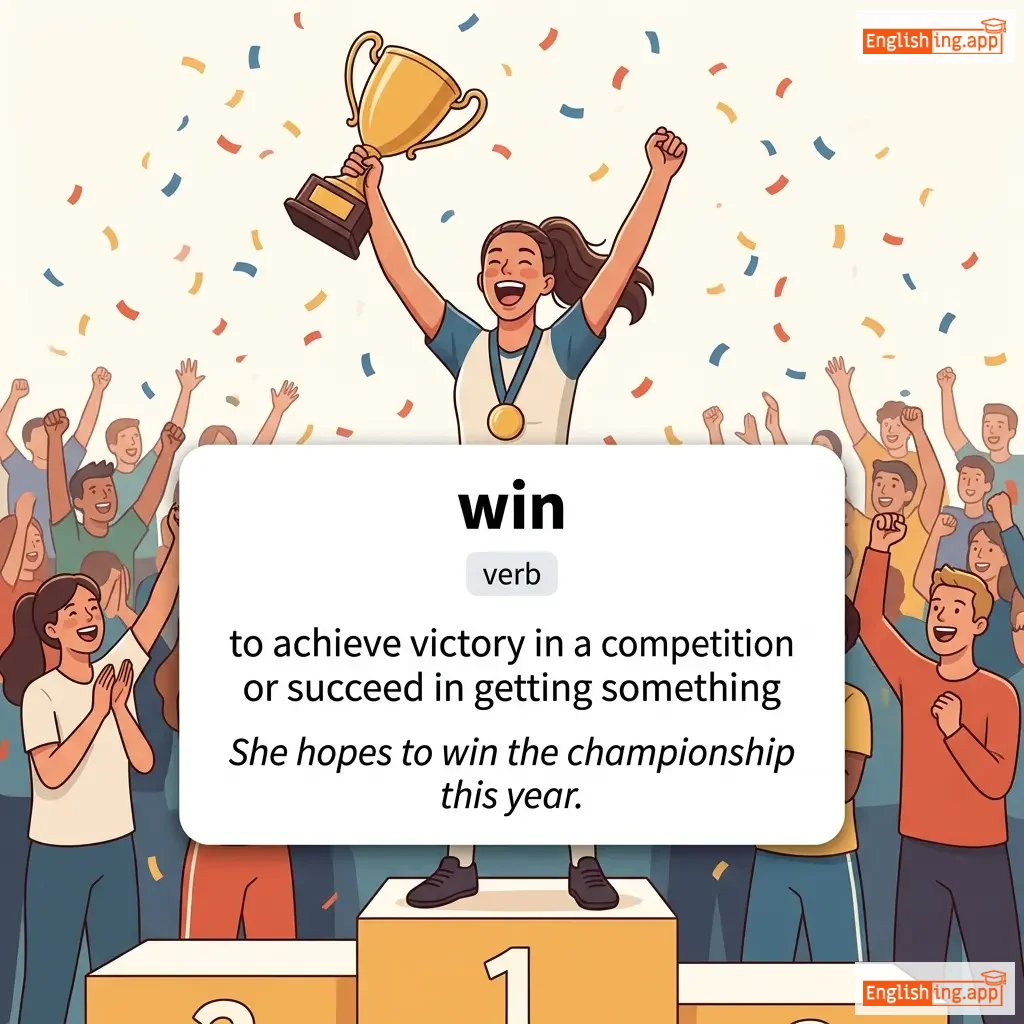
/wɪn/
verb
(विन)
••••••
|
••••••
|
जीतना
jeetna
••••••
|
वॉन
••••••
|
वॉन
••••••
|
विन्स
••••••
|
विनिंग
••••••
|
to achieve victory in a competition or succeed in getting something
|
She hopes to win the championship this year.
वह इस साल चैंपियनशिप जीतने की उम्मीद करती है।
••••••
|
वह इस साल चैंपियनशिप जीतने की उम्मीद करती है।
Vah is saal championship jeetne ki ummid karti hai.
••••••
|
विन ओवर
••••••
|
to persuade or gain support
|
समर्थन प्राप्त करना
samarthan prapt karna
••••••
|
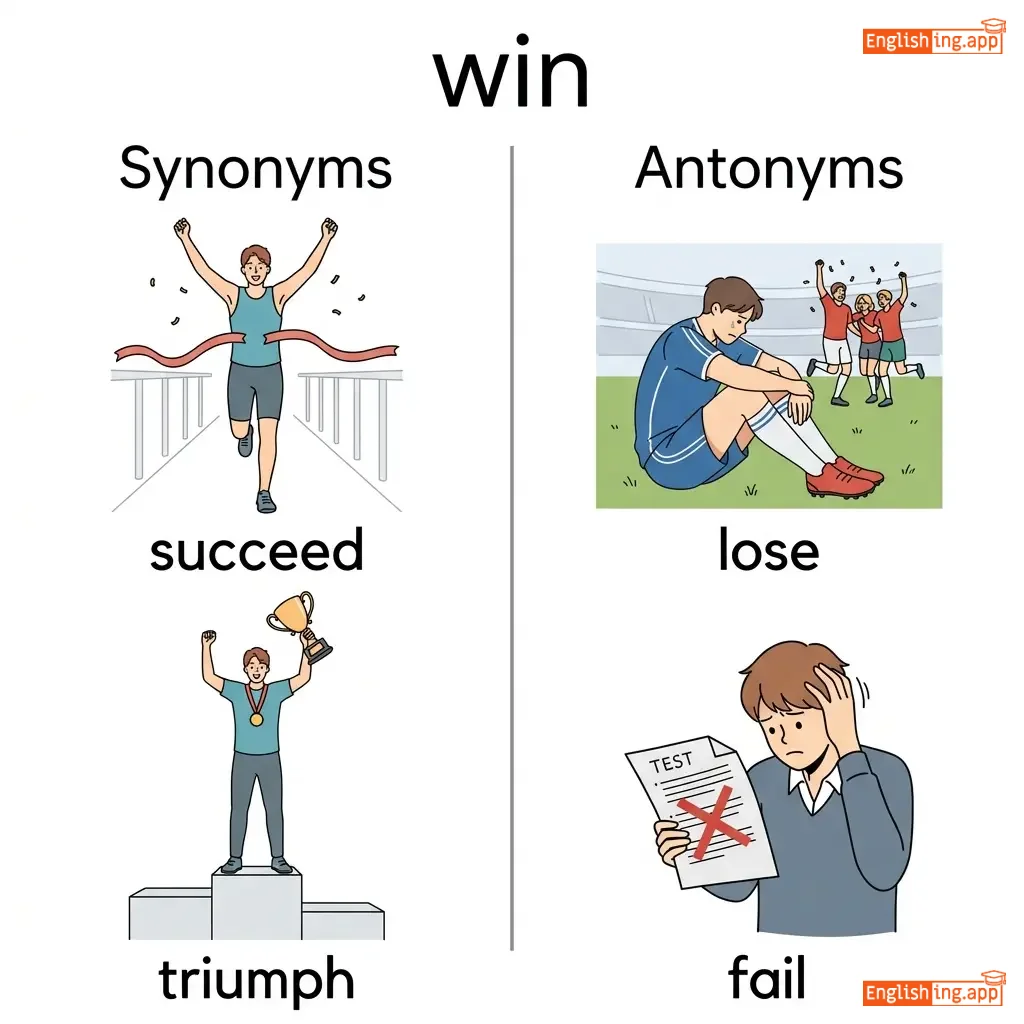
succeed, triumph, prevail, conquer
|
••••••
|
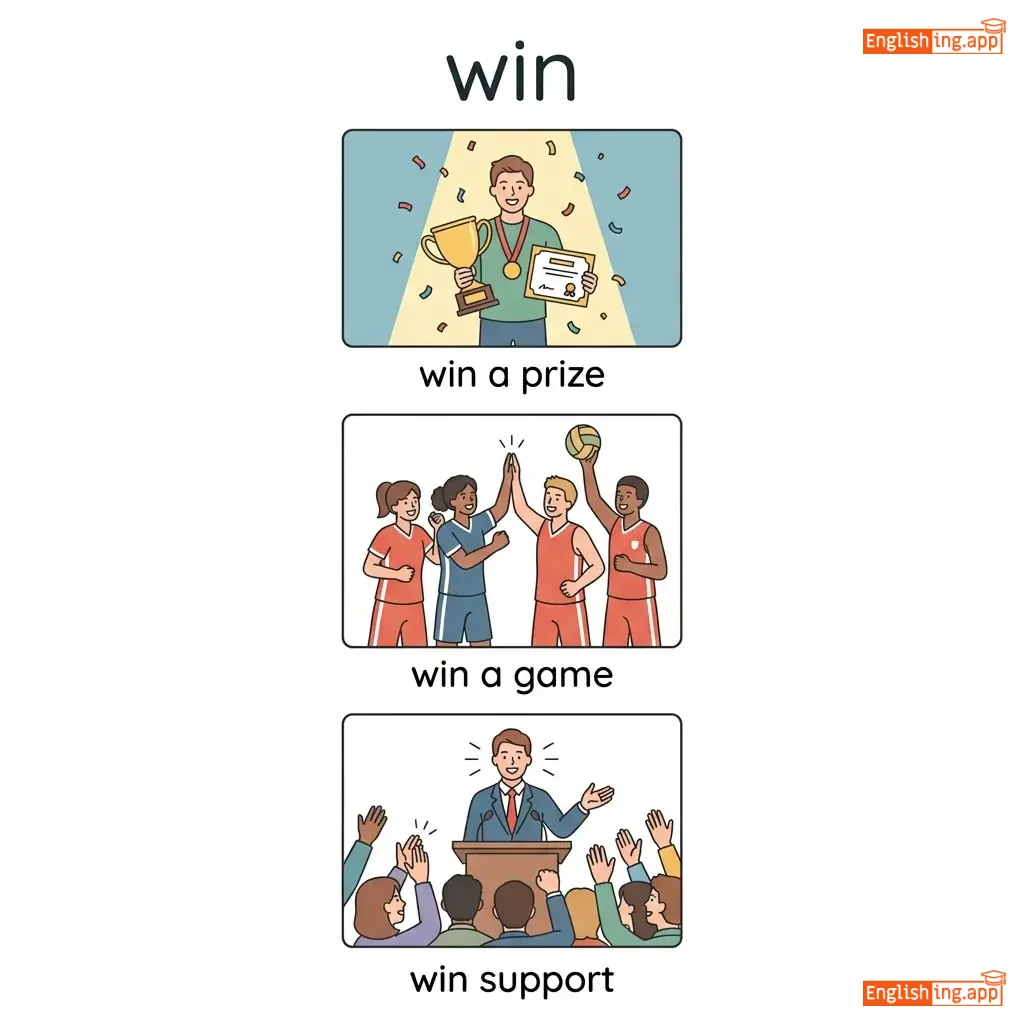
win a prize, win a game, win support, win the championship
|
Win मतलब जीतना – क्रिकेट में जीतने से खुशी मिलती है
••••••
|
|
🌬️
••••••
|
/wɪnd/
noun
(विंड)
••••••
|
-
••••••
|
हवा
hawa
••••••
|
-
••••••
|
-
••••••
|
-
••••••
|
-
••••••
|
the natural movement of air, especially in the form of a current of air blowing from a particular direction
|
The wind blew the leaves off the trees.
द विंड ब्लू द लीव्स ऑफ द ट्रीज़।
••••••
|
हवा ने पेड़ों से पत्तियां उड़ा दीं।
Hawa ne pedon se patte uda diye.
••••••
|
-
••••••
|
-
••••••
|
-
••••••
|
breeze, gust, gale, draft
|
••••••
|
strong wind, wind speed, wind direction, cold wind
|
हवा जैसे सर्दी में चलने वाली ठंडी हवा।
••••••
|
|
🪟
••••••
|
/ˈwɪn.doʊ/
noun
(विंडो)
••••••
|
-
••••••
|
खिड़की
khidki
••••••
|
-
••••••
|
-
••••••
|
-
••••••
|
-
••••••
|
an opening in a wall fitted with glass to let in light and air
|
Please open the window for fresh air.
कृपया ताजे हवा के लिए खिड़की खोलें।
••••••
|
कृपया ताजे हवा के लिए खिड़की खोलें।
kripya taje hawa ke liye khidki kholen
••••••
|
-
••••••
|
-
••••••
|
-
••••••
|
••••••
|
••••••
|
window frame, window sill, bay window, window blinds
|
Remember, 'खिड़की' (khidki) is like 'hidden key' to fresh air!
••••••
|
|
🍷
••••••
|
/waɪn/
noun
(वाइन)
••••••
|
-
••••••
|
शराब
sharab
••••••
|
-
••••••
|
-
••••••
|
-
••••••
|
-
••••••
|
an alcoholic drink made from fermented grapes or other fruits
|
They served a glass of red wine at the dinner.
उन्होंने डिनर में एक गिलास रेड वाइन सर्व किया।
••••••
|
उन्होंने डिनर में एक गिलास रेड वाइन सर्व किया।
Unhone dinner mein ek gilas red wine serve kiya.
••••••
|
-
••••••
|
-
••••••
|
-
••••••
|
vino, beverage, drink, alcohol
|
••••••
|
red wine, white wine, glass of wine, bottle of wine
|
Wine pairs with dinner—सोचें एक गिलास रेड वाइन और एक शानदार भोजन!
••••••
|
|
🪶
••••••
|
/wɪŋ/
verb
(विंग)
••••••
|
••••••
|
पंखों से उड़ना
pankhon se udna
••••••
|
विंग्ड
••••••
|
विंग्ड
••••••
|
विंग्स
••••••
|
विंगिंग
••••••
|
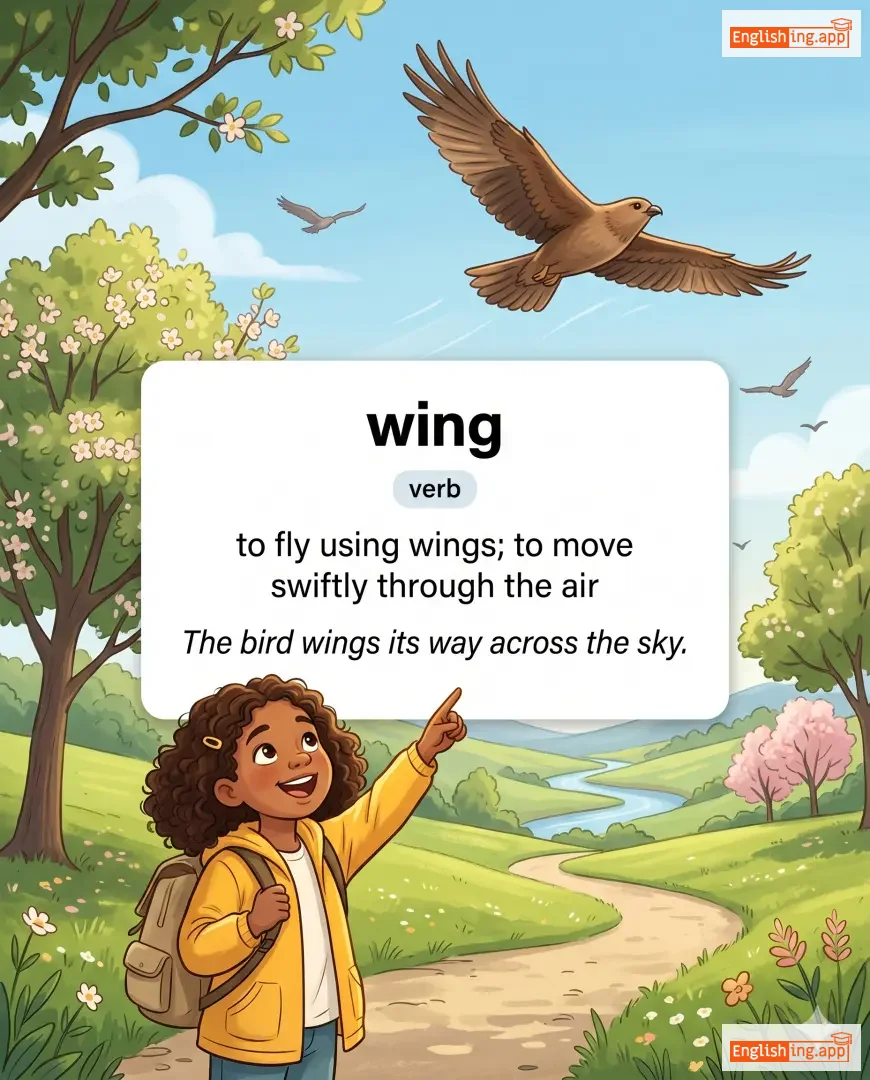
to fly using wings; to move swiftly through the air
|
The bird wings its way across the sky.
द बर्ड विंग्स इट्स वे अक्रॉस द स्काई।
••••••
|
पक्षी आकाश में अपनी दिशा में उड़ता है।
Pakshi aakash mein apni disha mein udta hai
••••••
|
-
••••••
|
-
••••••
|
-
••••••
|
fly, soar, glide, flutter
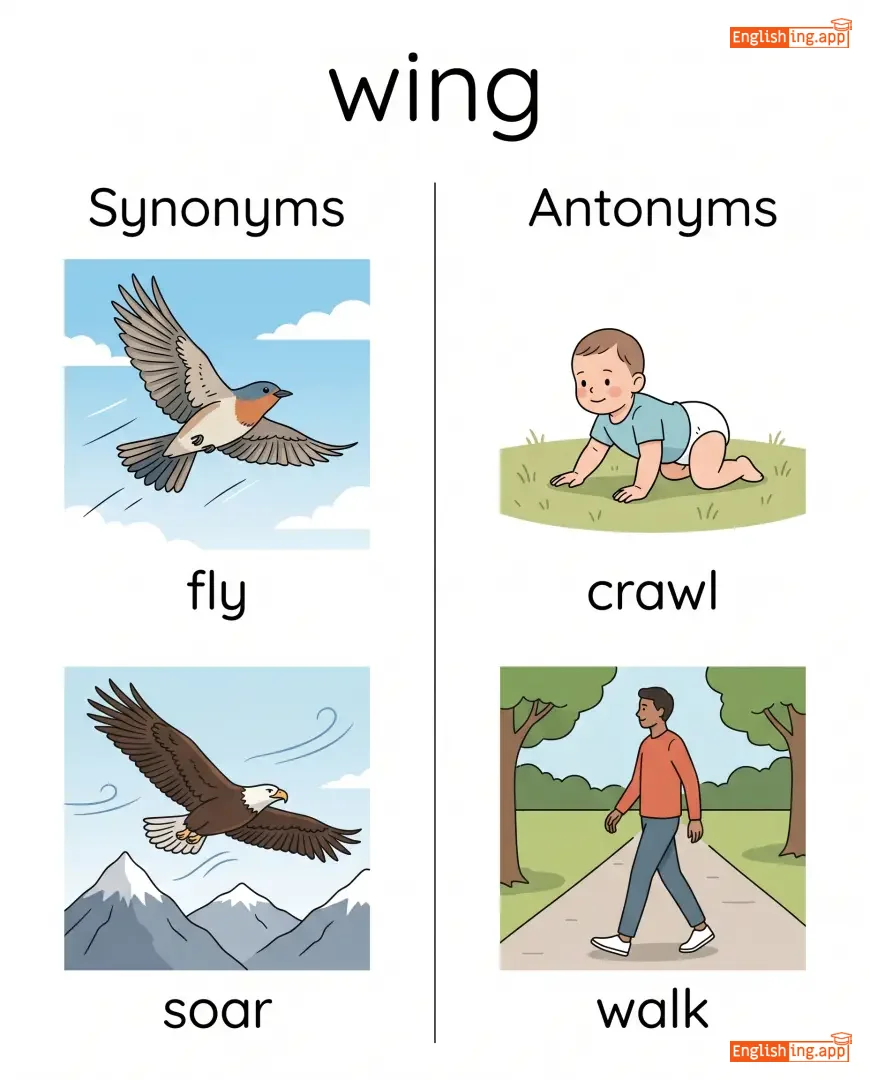
|
crawl, walk, ground, land
|
wing across, wing overhead, wing gracefully, wing swiftly
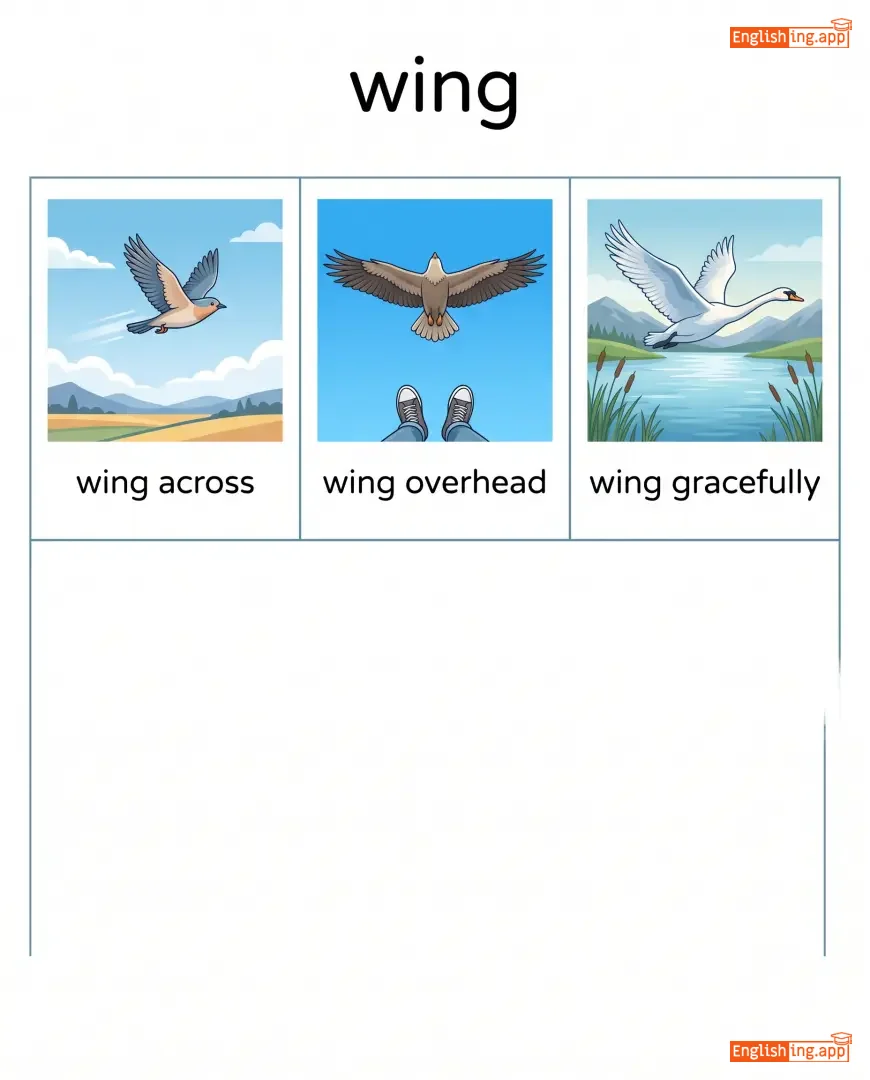
|
विंग = पंखों से उड़ना (wing se pankhon se udna)
••••••
|