वोकैबुलरीज

इंग्लिश वोकैबुलरी डिस्कवर, लर्न और मास्टर करें

adjective
/ˈrɛtʃɪd/
दीन-हीन (deen-heen)

in a very unhappy, miserable, or poor condition

"They lived in a wretched hut with no clean water."

"वे एक दीन-हीन झोपड़ी में रहते थे जहाँ साफ पानी नहीं था।" (ve ek deen-heen jhopdi mein rehte the jahan saaf pani nahi tha.)
adjective
/ˈwʌrisəm/
चिन्ताजनक; परेशान करने वाला (chintajanak; pareshaan karne waala)

causing anxiety or concern; troubling

"The student's declining grades were worrisome to his parents."

"छात्र के घटते हुए अंक उसके माता-पिता के लिए चिन्ताजनक थे।" (chhatra ke ghatte hue ank uske maata-pita ke liye chintajanak the.)
interjection
/jɛə/
हाँ (haan)

used to express agreement or affirmation

"Yeah, I’ll go to the store with you."

"हाँ, मैं आपके साथ स्टोर जाऊँगा।" (Haan, main aapke saath store jaunga.)
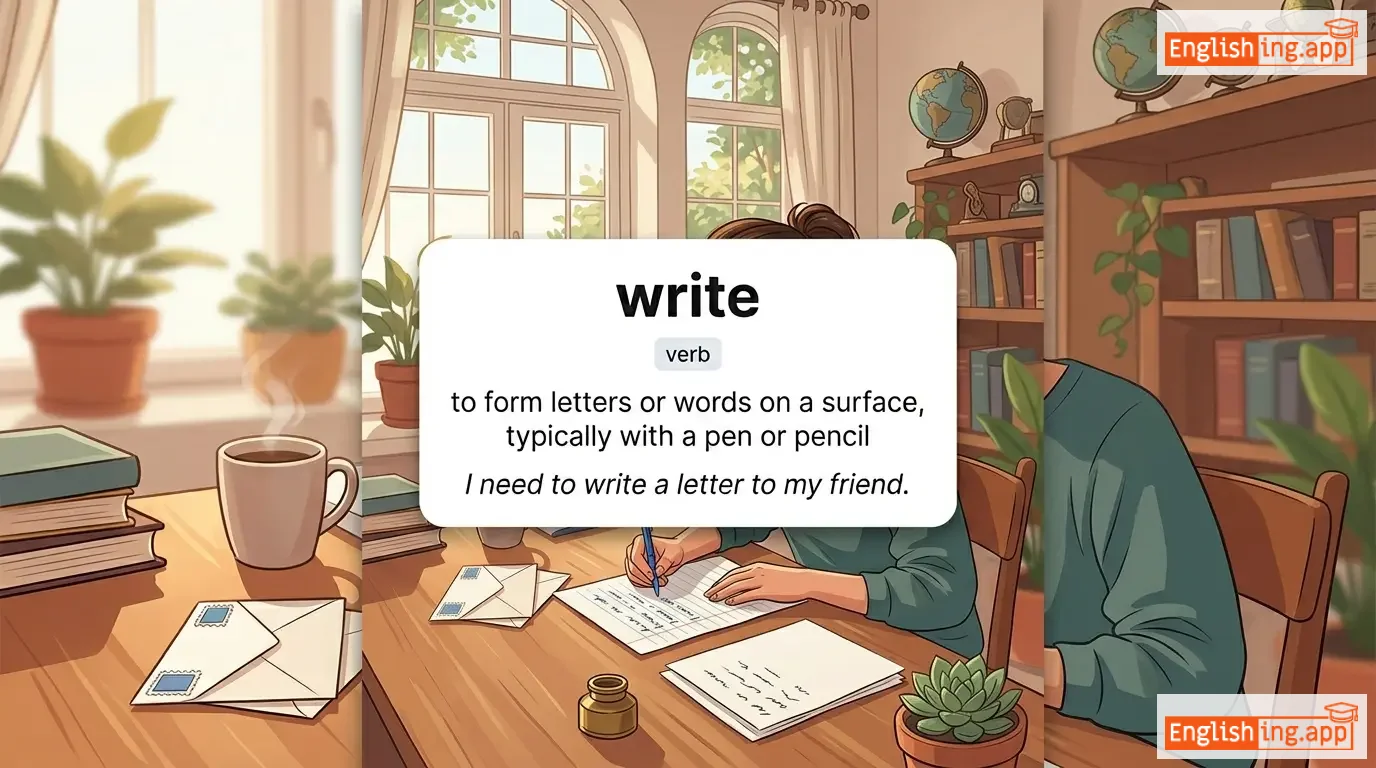
write definition card — visual illustration of the meaning
verb
/raɪt/
खुशी (khushi)

to form letters or words on a surface, typically with a pen or pencil

"I need to write a letter to my friend."

"उसे पुरस्कार मिलने पर अपनी खुशी नहीं छिपा सकी।" (Use puraskaar milne par apni khushi nahi chhupa sakee.)
noun/verb
/ˈraɪ.tɪŋ/
खुशी (khushi)

The activity of putting words on paper or composing text; the written form of communication.

"She spends hours every day on her creative writing."

"जब उसे पुरस्कार मिला तो वह अपनी खुशी छुपा नहीं पाई।" (Jab use puraskar mila to wah apni khushi chhupa nahi paayi.)
adjective
/ˈwʊd biː/
इच्छाशक्ति वाला; संभावित; (ichchhashakti wala; sambhavit;)

prospective; intending to be; aspiring

"The would-be actor practiced his lines every day."

"संभावित अभिनेता ने हर दिन अपनी लाइनों का अभ्यास किया।" (sambhavit abhineta ne har din apni lainon ka abhyas kiya.)
verb
/rɛntʃ/
मरोड़ कर खींचना (marod kar kheenchna)

to pull or twist suddenly and violently

"He wrenched the door open in anger."

"उसने गुस्से में दरवाजा मरोड़ कर खोला।" (Usne gusse mein darwaza marod kar khola.)
noun
/rɛtʃ/
दीन-हीन व्यक्ति (deen-heen vyakti)

an unfortunate or miserable person; a despicable or contemptible person

"The poor wretch was left out in the cold with no shelter."

"ग़रीब दीन-हीन व्यक्ति को ठंड में बिना आश्रय के बाहर छोड़ दिया गया था।" (Gareeb deen-heen vyakti ko thand mein bina aashray ke baahar chhod diya gaya tha.)
noun
/rɪst/

the joint connecting the hand with the forearm

"He wore a smartwatch on his left wrist."

noun
/rek/
विनाश; तबाही; (vinash; tabahi;)

the destruction or disabling of a ship or vehicle; something that has been badly damaged or destroyed

"The car wreck blocked the highway for hours."

"कार की दुर्घटना ने हाईवे को घंटों के लिए बंद कर दिया था।" (kar ki durghatna ne highway ko ghanton ke liye band kar diya tha.)
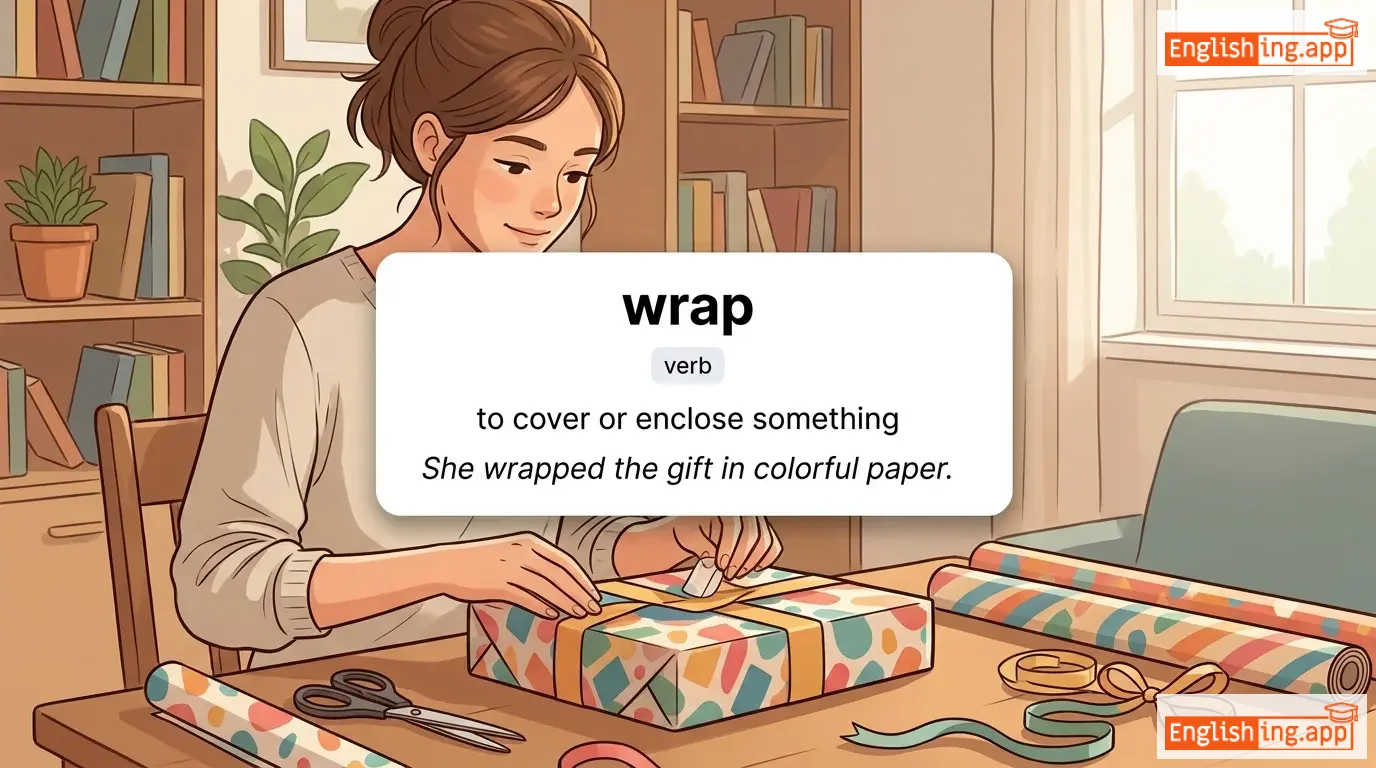
wrap definition card — visual illustration of the meaning
verb
/ræp/
लपेटना (lapetna)

to cover or enclose something

"She wrapped the gift in colorful paper."

"उसने उपहार को रंगीन कागज में लपेटा।" (Usne uphaar ko rangeen kaagaz mein lapeta.)
noun
/ˈræp.ər/
लपेटनेवाला (lapetnewala)

a loose garment worn around the body; covering material

"She put on a warm wrapper before going outside."

"वह बाहर जाने से पहले एक गर्म लपेटनेवाला पहनती है।" (vah baahar jaane se pehle ek garm lapetnewala pehanti hai。)
noun
/jɑːrd/
यार्ड (yard)

a unit of linear measure equal to three feet or 0.9144 meters

"The garden is 50 yards long."

"बग़ीचा ५० यार्ड लंबा है।" (Bagicha 50 yard lamba hai.)
adjective
/rɒŋ/
गलत (galat)

not correct or true; mistaken

"It is wrong to cheat on a test."

"परीक्षा में धोखा देना गलत है।" (Pariksha mein dhokha dena galat hai.)
adjective
/wɜːrθ/
मूल्यवान (mulyavaan)

having a particular value, especially in terms of money

"The car is worth a lot of money."

"कार बहुत पैसों के लायक है।" (Car bahut paison ke laayak hai.)
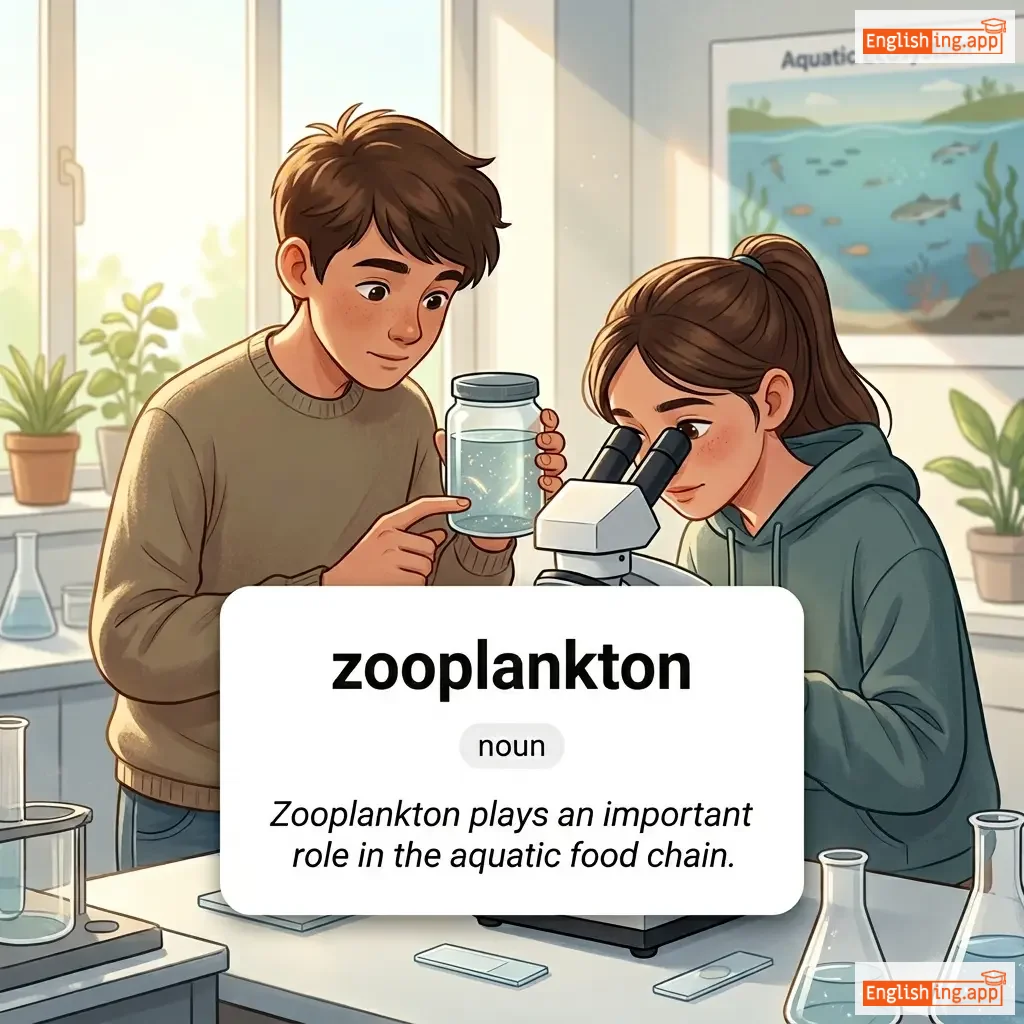
zooplankton definition card — visual illustration of the meaning
noun
/ˈzuːəʊˌplæŋktən/
ज़ूओप्लांकटन (zooplankton)

Microscopic aquatic animals that drift in water bodies and form an essential part of the aquatic food chain, serving as food for fish and other marine organisms.

"Zooplankton plays an important role in the aquatic food chain."

"ज़ूओप्लांकटन जलजीवों के खाद्य श्रृंखला में महत्वपूर्ण भूमिका निभाता है।" (Zooplankton jaljeevon ke khadya shrinkhla mein mahatvapurn bhoomika nibhaata hai.)
adjective, verb (past participle of wear)
/wɔːrn/
क्षतिग्रस्त (kshatigrist)

damaged, weakened, or deteriorated from use or age

"His shoes were old and worn."

"उसके जूते पुराने और क्षतिग्रस्त थे।" (Uske joote purane aur kshatigrist the.)
adjective
/ˈrɪtən/
लिखित (likhit)

expressed in writing rather than spoken; composed or recorded in written form

"The agreement must be in written form to be valid."

"समझौता वैध होने के लिए लिखित रूप में होना चाहिए।" (Samjhauta vaidh hone ke liye likhit roop mein hona chahiye.)
interjection
/waʊ/
विस्मय व्यक्त करने वाला शब्द (vismay vyakt karne wala shabd)

used to express great surprise, admiration, or pleasure

"Wow, that performance was amazing!"

"वाउ, वह प्रदर्शन शानदार था!" (Wow, vah pradarshan shandar tha!)
adjective
/ˌrɒŋˈhɛd.ɪd/
गलत सोच वाला (galat soch wala)

Having or showing bad judgment or stubbornly holding to wrong ideas.

"The policy was considered wrongheaded and harmful."

"नीति को गलत सोच वाला और हानिकारक माना गया था।" (Neeti ko galat soch wala aur haanikarak maana gaya tha.)
verb
/ˈræŋɡl̩/
झगड़ा करना (jhagda karna)

to argue or dispute noisily or angrily

"The two neighbors wrangled over the property line for hours."

"दोनों पड़ोसी घंटों तक संपत्ति की सीमा पर झगड़ा करते रहे।" (Donon padosi ghanton tak sampatti ki seema par jhagda karte rahe.)
adjective
/ˈwɜːrθləs/
निर्वल; निरर्थक; बेकार; (nirval; nirarthak; bekaar;)

having no value; useless

"The old computer became worthless after the new software updates."

"नए सॉफ़्टवेयर अपडेट के बाद पुराना कंप्यूटर निरर्थक हो गया।" (naye software update ke baad purana computer nirarthak ho gaya.)
noun
/jɑːrn/
धागा (dhaga)

spun thread used for knitting, weaving, or sewing; a long or rambling story

"She bought colorful yarn for knitting a sweater."

"उसने स्वेटर बुनने के लिए रंगीन धागा खरीदी।" (usne sweter bunne ke liye rangeen dhaga khareedi)
noun, verb
/ˈɛksˌreɪ/
एक्स-रे (eks-re)

a form of electromagnetic radiation used to see inside objects or the human body; to examine or scan using X-rays

"The doctor ordered an X-ray to check for a broken bone."

"डॉक्टर ने हड्डी की जाँच के लिए एक्स-रे कराया।" (daktar ne haddi ki jaanch ke liye eks-re karaya)
adverb
/ˈrɒŋli/
गलत तरीके से (galat tarike se)

in an incorrect or mistaken way; unfairly or unjustly

"He was wrongly accused of the crime."

"उसे अपराध के लिए गलत तरीके से दोषी ठहराया गया।" (use aparadh ke liye galat tarike se doshi thahraya gaya)
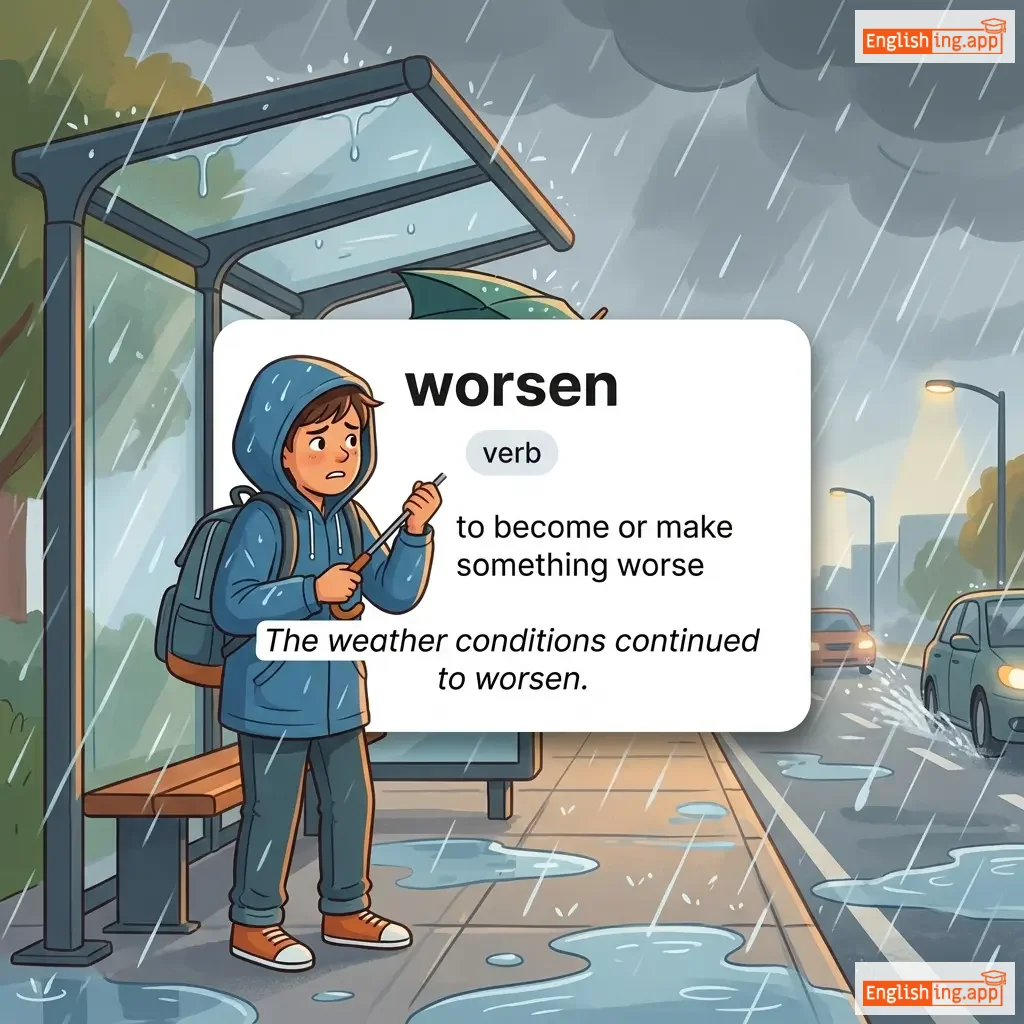
worsen definition card — visual illustration of the meaning
verb
/ˈwɜːrsən/
और अधिक बुरा होना (aur adhik bura hona)

to become or make something worse

"The weather conditions continued to worsen."

"मौसम की परिस्थितियाँ और अधिक बुरी होती जा रही थीं।" (Mausam ki paristhitiyan aur adhik buri hoti ja rahi thin.)
noun
/ˌzɛnəˈfoʊbiə/
विदेशी phobia (videshi phobia)

fear or hatred of foreigners, people from different cultures, or strangers

"Xenophobia can lead to discrimination and social division."

"ज़ेनोफ़ोबिया भेदभाव और सामाजिक विभाजन का कारण बन सकता है।" (Zeno-phobia bhedbhav aur samajik vibhaajan ka kaaran ban sakta hai.)
verb
/ˈwɜːʃɪp/
पूजा (pooja)

To show reverence and adoration for a deity or sacred being.

"They gathered at the temple to worship together."

"वे मंदिर में एक साथ पूजा करने के लिए इकट्ठा हुए।" (ve mandir mein ek saath pooja karne ke liye ikattha hue.)
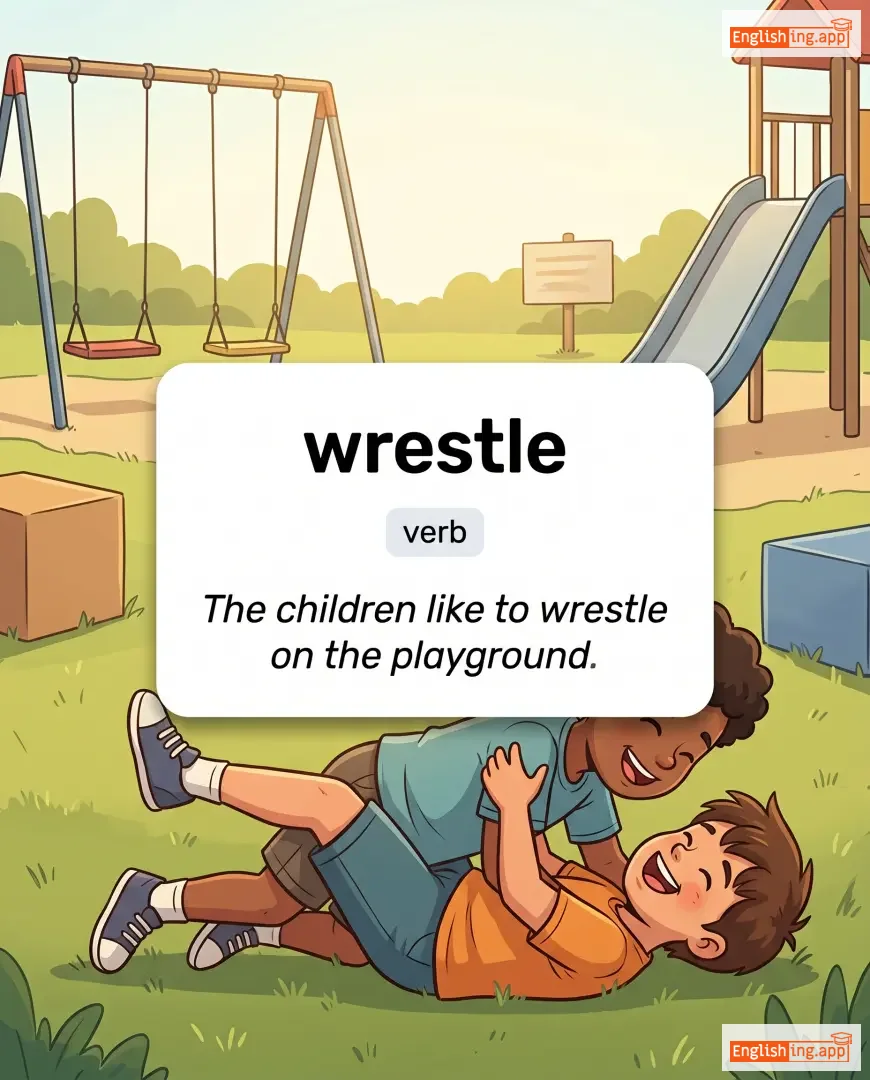
wrestle definition card — visual illustration of the meaning
verb
/ˈresəl/
कुश्ती करना (kushti karna)

to fight by grappling and trying to throw down an opponent; to struggle with a problem

"The children like to wrestle on the playground."

"बच्चे खेल के मैदान पर कुश्ती करना पसंद करते हैं।" (Bacche khel ke maidan par kushti karna pasand karte hain)
noun
/ˈræŋɡlər/
पशुपालनकर्ता (pashupalankarta)

a person who argues noisily; or someone who takes care of livestock on a ranch

"The cowboy worked as a wrangler on the ranch."

"काउबॉय रैंच पर एक रैंगलर के रूप में काम करता था।" (Cowboy ranch par ek wrangler ke roop mein kaam karta tha.)
noun
/reɪθ/
भूत (bhoot)

A ghost or ghostlike image of someone, especially seen shortly before or after their death.

"A wraith appeared in the fog near the old castle."

"एक भूत पुराने किले के पास कोहरे में दिखाई दिया।" (Ek bhoot purane kile ke paas kohre mein dikhai diya.)
noun/verb
/wuːnd/
खुशी (khushi)

an injury to the body or to harm someone

"He received a deep wound on his arm."

"वह जब पुरस्कार प्राप्त किया तो वह अपनी खुशी को छिपा नहीं सकी।" (Wah jab puraskaar prapt kiya to wah apni khushi ko chhupa nahin saki.)
noun
/ˈrɛtʃɪdnəs/
दीन-हीनता (deen-heenta)

a state of misery, unhappiness, or poor condition

"The novel depicts the wretchedness of war victims."

"उपन्यास युद्ध पीड़ितों की दीन-हीनता को दर्शाता है।" (Upanyaas yudh peediton ki deen-heenta ko darshata hai.)
noun
/rɪt/
रिट (rit)

A formal written order issued by a court.

"The judge issued a writ of habeas corpus."

"न्यायाधीश ने हैबियस कॉर्पस रिट जारी किया।" (Nyayadhish ne habeas corpus rit jari kiya.)
verb
/ˈwʌri/
चिंता करना (chinta karna)

to feel anxious or concerned about something

"Don’t worry, everything will be okay."

"चिंता मत करो, सब कुछ ठीक हो जाएगा।" (Chinta mat karo, sab kuch theek ho jayega.)
verb
/riːk/
नुकसान पहुंचाना (nuksan pahuchana)

to cause or inflict something, especially damage or harm

"The storm wreaked havoc on the coastal villages."

"तूफान ने तटीय गांवों में भारी नुकसान पहुंचाया।" (Toofan ne tatiya gaonon mein bhari nuksan pahuchaya.)
noun
/jɔːn/
बोरियत (boreeyat)

an involuntary opening of the mouth and inhalation of air due to tiredness or boredom

"She couldn't suppress a yawn during the boring lecture."

"उबाऊ लेक्चर के दौरान वह एक यॉंन को रोक नहीं पाई।" (ubaau lecture ke dauran vah ek yawn ko rok nahin pai.)
verb
/raɪð/
परेशानी में मचलना (pareshani mein machalna)

To twist or squirm in pain or discomfort.

"He writhed in pain after twisting his ankle."

"जब उसने अपना एंकल मरोड़ा, तो वह दर्द में मचल रहा था।" (Jab usne apna ankle moroda, to wah dard mein machal raha tha.)
noun
/ˈzaɪləfoʊn/
ज़ाइलोफोन (zailophon)

a percussion instrument consisting of wooden bars that are struck with mallets to produce musical tones

"The children enjoyed playing the colorful xylophone in music class."

"बच्चों ने संगीत कक्षा में रंग-बिरंगे ज़ाइलोफोन बजाने का आनंद लिया।" (Bacchon ne sangeet kaksha me rang-birange zailophon bajane ka anand liya.)
adjective
/ˈwɜːði/
योग्य (yogya)

having value or merit; deserving respect or attention

"She is worthy of praise for her dedication."

"वह अपनी समर्पण के लिए प्रशंसा के योग्य है।" (Vah apni samarpan ke liye prashansa ke yogya hai.)
noun
/ræθ/
क्रोध (krodh)

extreme anger or rage

"The king's wrath terrified the villagers."

"राजा का क्रोध गाँववालों को डराता था।" (Raja ka krodh gaonwalon ko darata tha.)
noun/verb
/ˈrɪŋ.kəl/
कुंआ (kunwa)

A small line or fold in the skin or fabric; to form small folds or lines.

"The old shirt had many wrinkles."

"पुरानी शर्ट में कई तहें थीं।" (Purani shirt mein kai tain thi.)
verb
/rɛst/
जबर्दस्ती कुछ छीनना (jabardasti kuch cheenna)

to forcibly pull something from a person's grasp; to seize with effort or struggle

"The police had to wrest the weapon from the suspect's hand."

"पुलिस को संदिग्ध से हथियार जबरदस्ती छीनना पड़ा।" (Police ko sandigdh se hathiyar jabardasti cheenna pada.)
adjective
/ˈwɜːrid/
चिंतित (chintit)

feeling anxious or concerned about something

"She was worried about the upcoming exam."

"वह आगामी परीक्षा के बारे में चिंतित थी।" (Vah aagami pariksha ke baare mein chintit thi.)
verb
/wʊd/
चाहेगा (chahega)

used to indicate a future possibility or action in the past

"He said he would help me tomorrow."

"उसने कहा कि वह मुझे कल मदद करेगा।" (Usne kaha ki vah mujhe kal madad karega.)
adjective
/ˈwɜːrθˌwaɪl/
मूल्यवान (mulyavaan)

worth the time, effort, or money spent; valuable

"Volunteering at the shelter was a worthwhile experience."

"शेल्टर में स्वयंसेवी काम करना एक मूल्यवान अनुभव था।" (Shelter mein swayamsevi kaam karna ek mulyavaan anubhav tha.)
noun
/ˈzɛnəˌfoʊb/
विदेशी डरने वाला व्यक्ति (videshi darne wala vyakti)

a person who dislikes or fears people from other countries or cultures

"The politician was criticized as a xenophobe due to his anti-immigrant policies."

"राजनीतिज्ञ को अपनी प्रवासी-विरोधी नीतियों के कारण जेनोफोब के रूप में आलोचना की गई।" (Rajneetijñ ko apni pravasi-virodhi neetiyon ke kaaran jenofoob ke roop mein alochna ki gayi.)
verb
/rɪŋ/
खुशी (khushi)

to squeeze and twist something to force liquid out; to extract with effort

"She had to wring the towel after washing it."

"उसे पुरस्कार मिलने पर अपनी खुशी छुपाई नहीं जा सकी।" (Use puraskaar milne par apni khushi chhupayi nahi ja saki.)
adjective
/ˌzɛnəˈfoʊbɪk/
विदेशीphobic (videshi phobic)

having or showing a dislike or fear of people from other countries

"The leader’s xenophobic comments sparked outrage across the country."

"नेता के जेनोफोबिक टिप्पणी ने पूरे देश में आक्रोश पैदा किया।" (Neta ke xenophobic tipanni ne poore desh mein aakrosh paida kiya.)
adjective
/raɪ/
विकृत, व्यंग्यात्मक (vikrit, vyangyatmak)

twisted or distorted in expression; showing dry, mocking humor

"He gave a wry smile after hearing the sarcastic remark."

"उसने व्यंग्यात्मक टिप्पणी सुनने के बाद एक व्राई मुस्कान दी।" (Usne vyangyatmak tippani sunne ke baad ek wry muskaan di.)