वोकैबुलरीज

इंग्लिश वोकैबुलरी डिस्कवर, लर्न और मास्टर करें

verb
/ˈwɪtl/
काट-छाँट करना (kaat-chhaant karna)

to carve or shape something by cutting off small pieces; to gradually reduce

"He spent the afternoon whittling a piece of wood into a toy."

"उसने दोपहर का समय एक लकड़ी के टुकड़े को खिलौने में बदलने के लिए काट-छाँट करते हुए बिताया।" (Usne dopahar ka samay ek lakdi ke tukde ko khilone mein badalne ke liye kaat-chhaant karte hue bitaya.)
noun
/ˈwɒrənti/
वारंटी (waranti)

A written guarantee given by a manufacturer or seller promising to repair or replace a product if necessary within a specified period.

"The laptop comes with a two-year warranty."

"लैपटॉप दो साल की वारंटी के साथ आता है।" (Laptop do saal ki waranti ke saath aata hai.)
adjective
/hoʊl/
पूर्ण (purn)

all of something; complete or entire

"He ate the whole cake by himself."

"उसने पूरा केक अकेले खा लिया।" (Usne pura kek akele kha liya.)
adjective
/ˌhoʊlˈhɑːrtɪd/
पूरी दिल से (puri dil se)

showing complete sincerity and commitment; fully enthusiastic

"She gave her wholehearted support to the project."

"उसने परियोजना को अपनी पूरी दिल से समर्थन दिया।" (Usne pariyojna ko apni puri dil se samarthan diya.)
verb
/wɔːrp/
विकृत होना (vikrit hona)

To twist or bend out of shape, often due to heat or moisture.

"The wooden door warped in the summer heat."

"लकड़ी का दरवाजा गर्मी में विकृत हो गया।" (Lakdi ka darwaza garmi mein vikrit ho gaya.)
adjective
/waɪz/
बुद्धिमान (buddhiman)

having or showing experience, knowledge, and good judgment

"It was wise of him to save money for the future."

"भविष्य के लिए पैसे बचाना उसका बुद्धिमानी था।" (Bhavishya ke liye paise bachana uska buddhimani tha.)
noun
/ˈwɒrən/
खरगोश के बिलों का नेटवर्क (warren)

A network of interconnected rabbit burrows; also used metaphorically for a densely populated building or district.

"The old part of the city is a warren of narrow streets."

"शहर का पुराना हिस्सा संकरी गलियों का एक जटिल नेटवर्क है।" (Shahar ka purana hissa sankari galiyon ka ek jatil network hai.)
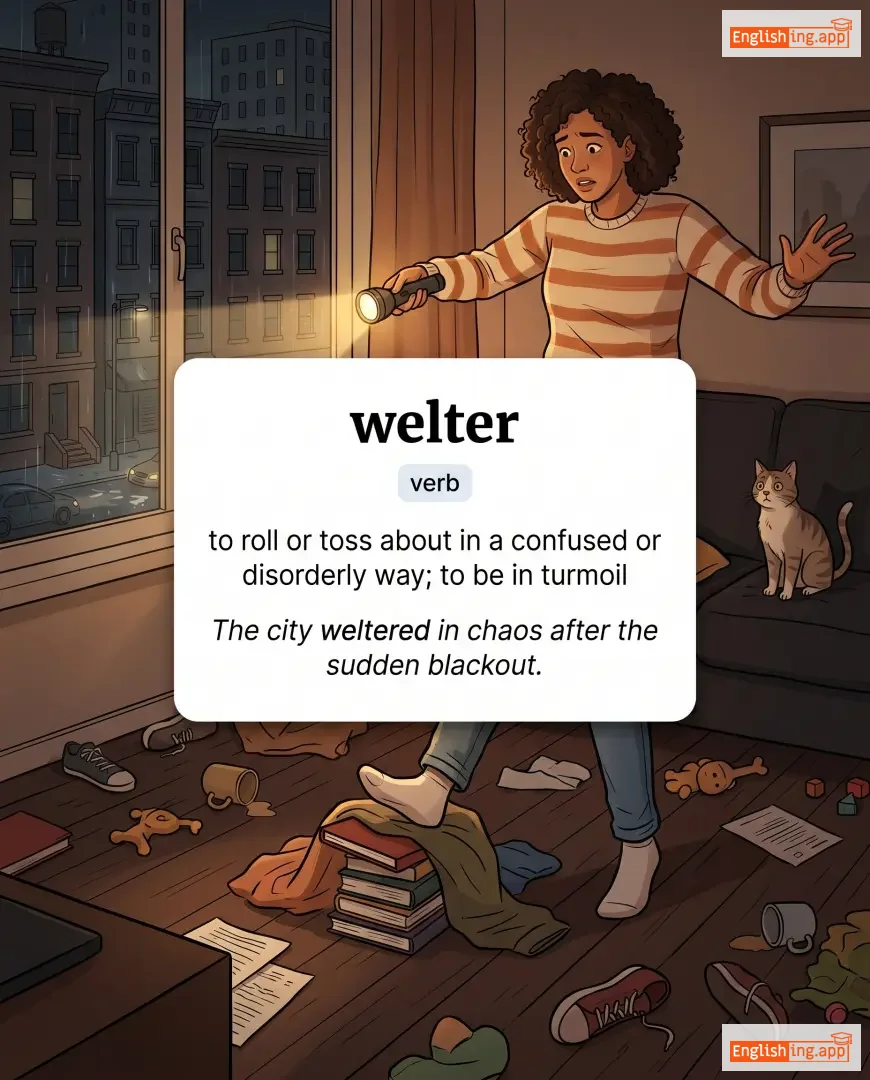
welter definition card — visual illustration of the meaning
verb
/ˈwɛltər/
अराजकता में लुड़कना (arajakta mein ludakna)

to roll or toss about in a confused or disorderly way; to be in turmoil

"The city weltered in chaos after the sudden blackout."

"शहर अचानक ब्लैकआउट के बाद अराजकता में डूब गया था।" (Shehar achanak blackout ke baad arajakta mein doob gaya tha.)
noun
/ˈwiːltʃeər/
व्हीलचेयर (wheelchair)

a chair with wheels, used by people who cannot walk easily or at all

"The hospital provided a wheelchair for the injured patient."

"अस्पताल ने घायल रोगी के लिए एक व्हीलचेयर प्रदान की।" (aspataal ne ghaayal rogi ke liye ek wheelchair pradan ki.)
noun
/ˈwɪtʃ.krɑːft/
जादूई कला (jadui kala)

the practice of magical skills, spells, and abilities

"In old times, many people believed in witchcraft."

"पुरानी समय में, बहुत से लोग जादूई कला में विश्वास करते थे।" (purani samay mein, bahut se log jadoo kala mein vishwas karte the.)
adjective
/ˌwel bɪˈheɪvd/
शिष्ट; सभ्य; (shisht; sabhya)

conducting oneself in a proper and polite manner; showing good manners

"The children were well-behaved during the ceremony."

"समारोह के दौरान बच्चे शिष्ट थे।" (samaroh ke dauran bachche shisht the.)
adverb
/wɛərˈbaɪ/
जिससे (jisse)

by which; because of which

"The company agreed to a contract whereby it would pay the penalty."

"कंपनी ने एक समझौते पर हस्ताक्षर किए जिसमें वह जुर्माना अदा करेगी।" (Kampani ne ek samjhaute par hastakshar kiye jismein vah jurmana ada karegi.)
noun
/ˈwɪntər/
सर्दी (sardi)

the coldest season of the year, typically from December to February in the Northern Hemisphere

"Winter in the north can be very harsh with heavy snowfall."

"उत्तर में सर्दी बहुत कठोर हो सकती है, भारी हिमपात के साथ।" (Uttar mein sardi bahut kathor ho sakti hai, bhari himpaat ke saath.)
noun
/ˈwɛlˌduːər/
अच्छे काम करने वाला (achhe kaam karne wala)

A person who does good deeds; a benefactor.

"The community praised the well-doer for his charity."

"समुदाय ने उसकी चैरिटी के लिए अच्छे काम करने वाले की सराहना की।" (Samudaay ne uski charity ke liye achhe kaam karne wale ki sarahna ki.)
adverb, noun
/ˈwɛə.wɪð/
साधन (saadhan)

With which; the means or resources needed for something.

"He lacked the money wherewith to buy a new house."

"उसके पास नया घर खरीदने के लिए पैसे नहीं थे।" (Uske paas naya ghar kharidne ke liye paise nahi the.)
adjective
/ˌwelˈnoʊn/
प्रसिद्ध (prasiddh)

known by many people; famous or recognized

"He is a well-known actor in his country."

"वह अपने देश में एक प्रसिद्ध अभिनेता है।" (Woh apne desh mein ek prasiddh abhineta hai.)
noun
/wɪm/
अचानक ख्याल (achanak khyaal)

a sudden or unpredictable idea, desire, or decision

"She bought the dress on a whim."

"उसने अचानक ख्याल में वह ड्रेस खरीदी।" (Usne achanak khyaal mein vah dress khareedi.)
adverb
/waɪ/
क्यों (kyon)

used to ask or talk about the reason for something

"Why did you leave so early?"

"तुम्हें इतनी जल्दी क्यों जाना पड़ा?" (Tumhein itni jaldi kyon jana pada?)
noun
/weɪl/
तिमिंग (timing)

a very large marine mammal that lives in the ocean

"We saw a huge whale swimming near the boat."

"हमने नाव के पास एक विशाल व्हेल को तैरते हुए देखा।" (hamne naav ke paas ek vishal vhel ko tairte hue dekha.)
conjunction
/wɛərˈæz/
जबकि (jabki)

used to introduce a contrast or comparison between two facts

"She prefers tea, whereas he likes coffee."

"वह चाय पसंद करती है, जबकि वह कॉफी पसंद करता है।" (Wah chai pasand karti hai, jabki wah coffee pasand karta hai.)
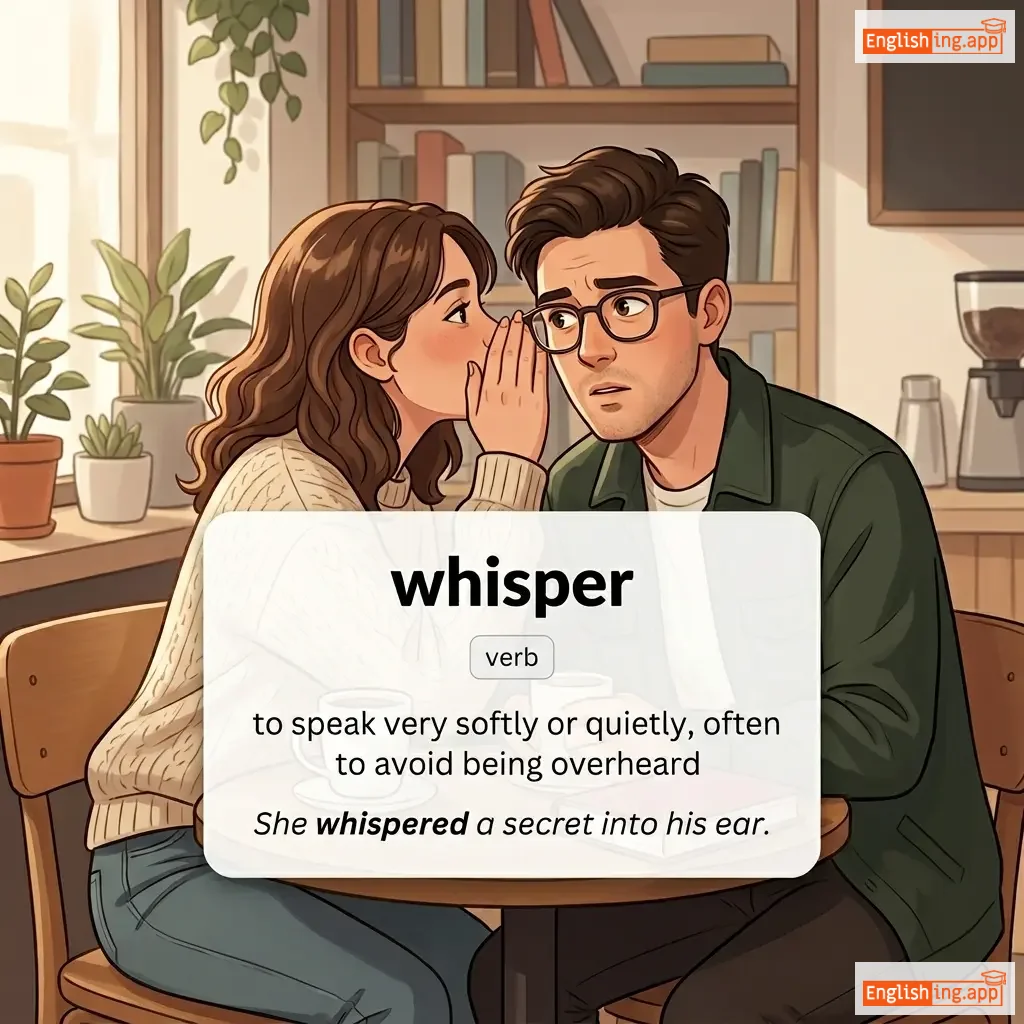
whisper definition card — visual illustration of the meaning
verb
/ˈwɪspər/
फुसफुसाना (phusphusana)

to speak very softly or quietly, often to avoid being overheard

"She whispered a secret into his ear."

"उसने उसके कान में एक राज़ फुसफुसाया।" (Usne uske kaan mein ek raaz phusphusaya.)
verb
/wɛt/
तेज़ करना/उत्तेजित करना (tez karna/uttejit karna)

To sharpen the blade of a tool or to stimulate interest or appetite.

"The smell of food whetted my appetite."

"खाने की खुशबू ने मेरी भूख बढ़ा दी।" (Khaane ki khushboo ne meri bhookh badha di.)
adverb
/ˈhoʊlli/
पूरी तरह से (poori tarah se)

completely; entirely

"She is wholly devoted to her family."

"वह अपने परिवार के प्रति पूरी तरह से समर्पित है।" (Wah apne parivar ke prati poori tarah se samarpit hai.)
pronoun
/wɪtʃ/
कौन सा (kaun sa)

used to ask about one or more items from a defined set

"Which one do you prefer, the red or the blue?"

"आपको कौन सा पसंद है, लाल या नीला?" (Aapko kaun sa pasand hai, laal ya neela?)
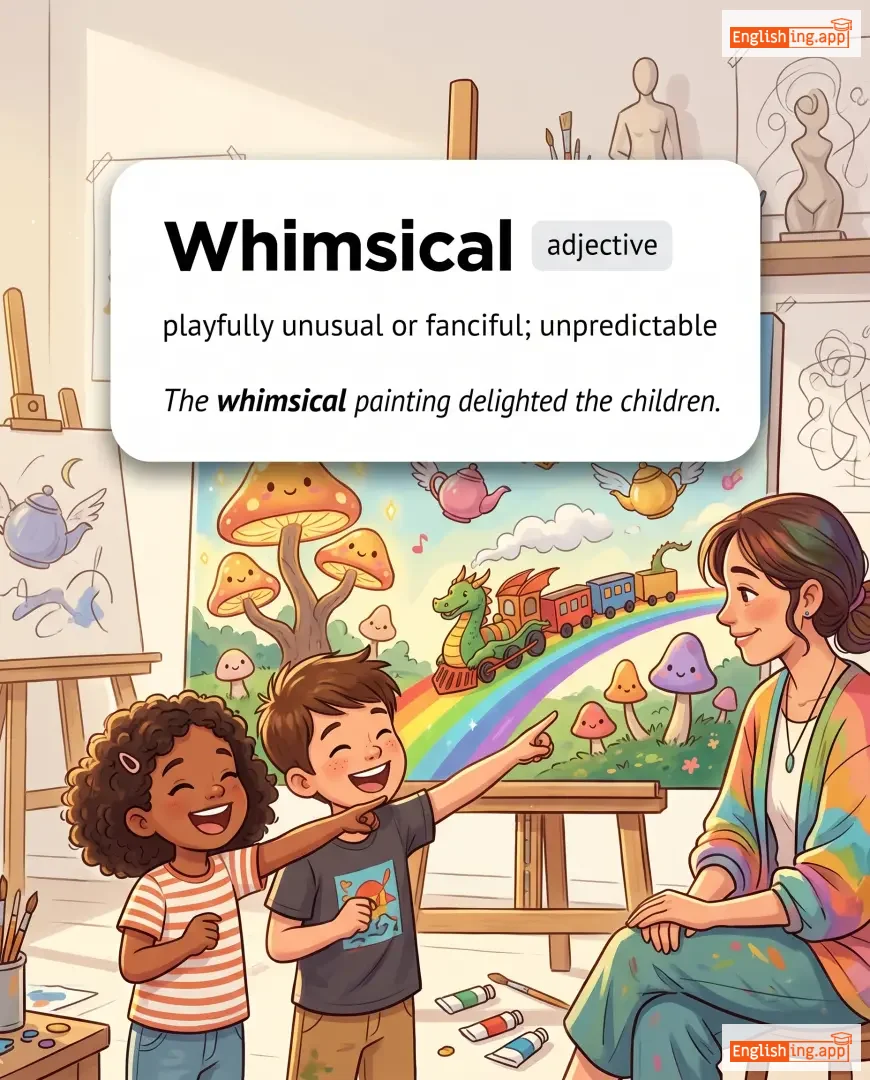
Whimsical definition card — visual illustration of the meaning
adjective
/ˈwɪmzɪkəl/
कल्पनाशील (kalpanasheel)

playfully unusual or fanciful; unpredictable

"The whimsical painting delighted the children."

"कल्पनाशील चित्र ने बच्चों को प्रसन्न कर दिया।" (Kalpanasheel chitra ne bachon ko prasann kar diya.)
adverb
/ˌwɛr.əˈpɒn/
तत्क्षण बाद (tatkshan baad)

Immediately after which; as a result of which.

"He confessed his mistake, whereupon she forgave him."

"उसने अपनी गलती कबूल की, तत्क्षण बाद उसने उसे माफ कर दिया।" (Usne apni galti kabool ki, tatkshan baad usne use maaf kar diya.)
noun
/ˈwɒʃ.ɪŋ məˌʃiːn/
वॉशिंग मशीन (voshin mashin)

a machine for washing clothes and other textiles

"The washing machine broke down and needs repair."

"वॉशिंग मशीन खराब हो गई है और मरम्मत की ज़रूरत है." (voshin mashin kharaab ho gayi hai aur marammat ki zaroorat hai)
adjective
/ˈwɔːrˌlaɪk/
युद्धप्रिय (yuddhpriya)

Having an aggressive or militant nature; inclined to fight or engage in war.

"The tribe was known for its warlike traditions."

"जनजाति अपनी युद्धप्रिय परंपराओं के लिए जानी जाती थी।" (Janjati apni yuddhpriya paramparao ke liye jani jati thi.)
noun
/ˈwɔː.tər pɒt/
पानी का बर्तन (pani ka bartan)

a container used for storing or carrying water

"The water pot in the kitchen was filled with fresh drinking water."

"रसोई में पानी का बर्तन ताजे पीने के पानी से भरा हुआ था।" (rasoi mein pani ka bartan taje peene ke pani se bhara hua tha.)
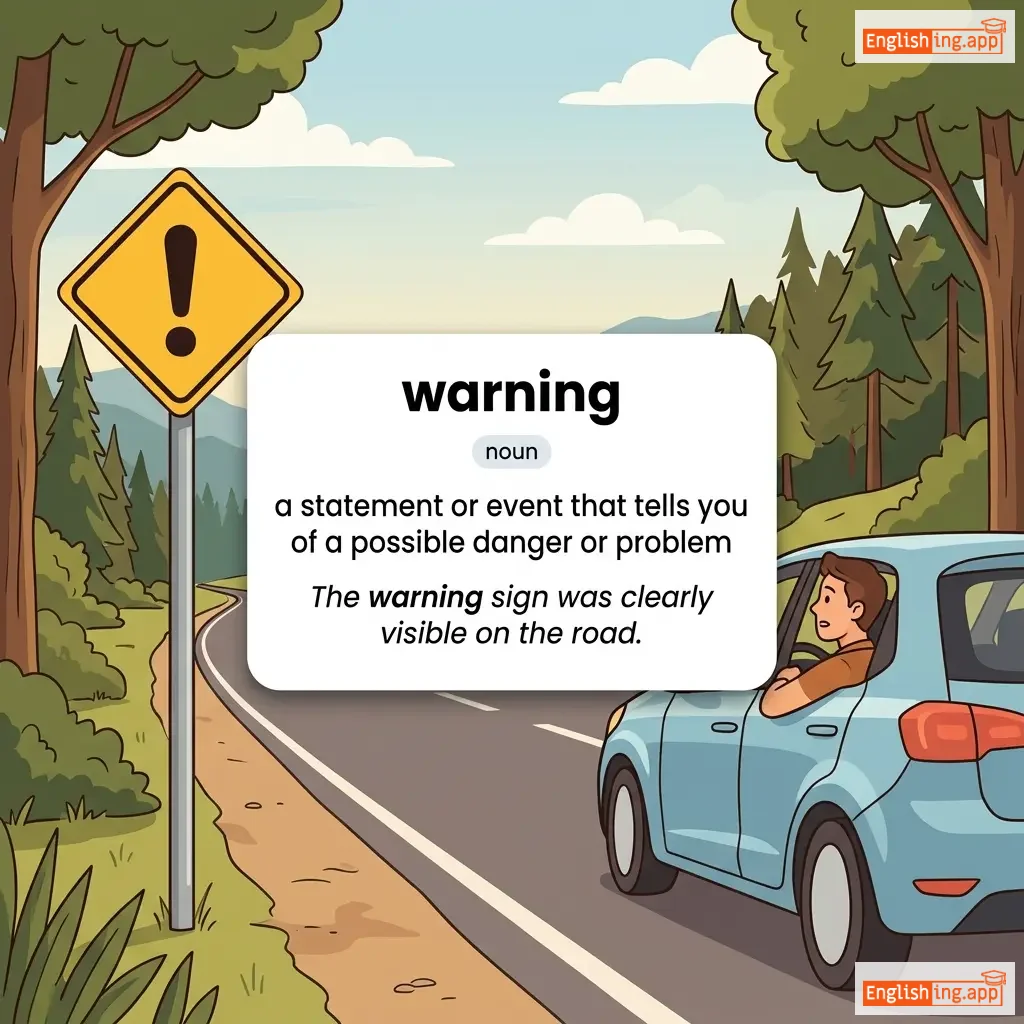
warning definition card — visual illustration of the meaning
noun
/ˈwɔːrnɪŋ/
चेतावनी (chetavni)

a statement or event that tells you of a possible danger or problem

"The warning sign was clearly visible on the road."

"सड़क पर चेतावनी का चिन्ह स्पष्ट रूप से दिखाई दे रहा था।" (Sadak par chetavni ka chinha spashth roop se dikhai de raha tha.)
noun
/ˈwɔːtərfɔːl/
जलप्रपात (jalaprapaat)

a cascade of water falling from a height, formed when a river or stream flows over a precipice or steep incline

"The magnificent waterfall attracts thousands of tourists every year."

"यह शानदार जलप्रपात हर साल हजारों पर्यटकों को आकर्षित करता है।" (yah shandar jalaprapat har saal hazaaron paryatan ko aakarshit karta hai.)
noun
/wæks ˈkændəl/
मोमबत्ती (mombatti)

a cylinder of wax with a wick through it that burns to give light

"We lit a wax candle during the power outage."

"हमने पावर आउटेज के दौरान एक मोमबत्ती जलायी" (hamne power outage ke dauran ek mombatti jalayi)
noun
/wɛlt/
उभार (ubhaar)

A raised mark on the skin, usually from a blow or allergic reaction.

"He had a red welt on his arm after the bee sting."

"मधुमक्खी के डंक के बाद उसके हाथ पर एक लाल उभार था।" (Madhumakkhi ke dank ke baad uske haath par ek lal ubhaar tha.)
adjective
/ˈwɛstərn/
पश्चिमी (pashchimi)

relating to or characteristic of the West, especially Europe and the Americas

"She loves western music and culture."

"उसे पश्चिमी संगीत और संस्कृति बहुत पसंद है।" (Use pashchimi sangeet aur sanskriti bahut pasand hai.)
adjective
/ˈwiːk niːd/
डरपोक (darpok)

Lacking determination or courage; easily frightened or yielding.

"The leader was criticized for being weak-kneed in the face of opposition."

"नेता को विरोध का सामना करने में डरपोक होने के लिए आलोचना की गई।" (Neta ko virodh ka samna karne mein darpok hone ke liye alochana ki gayi.)
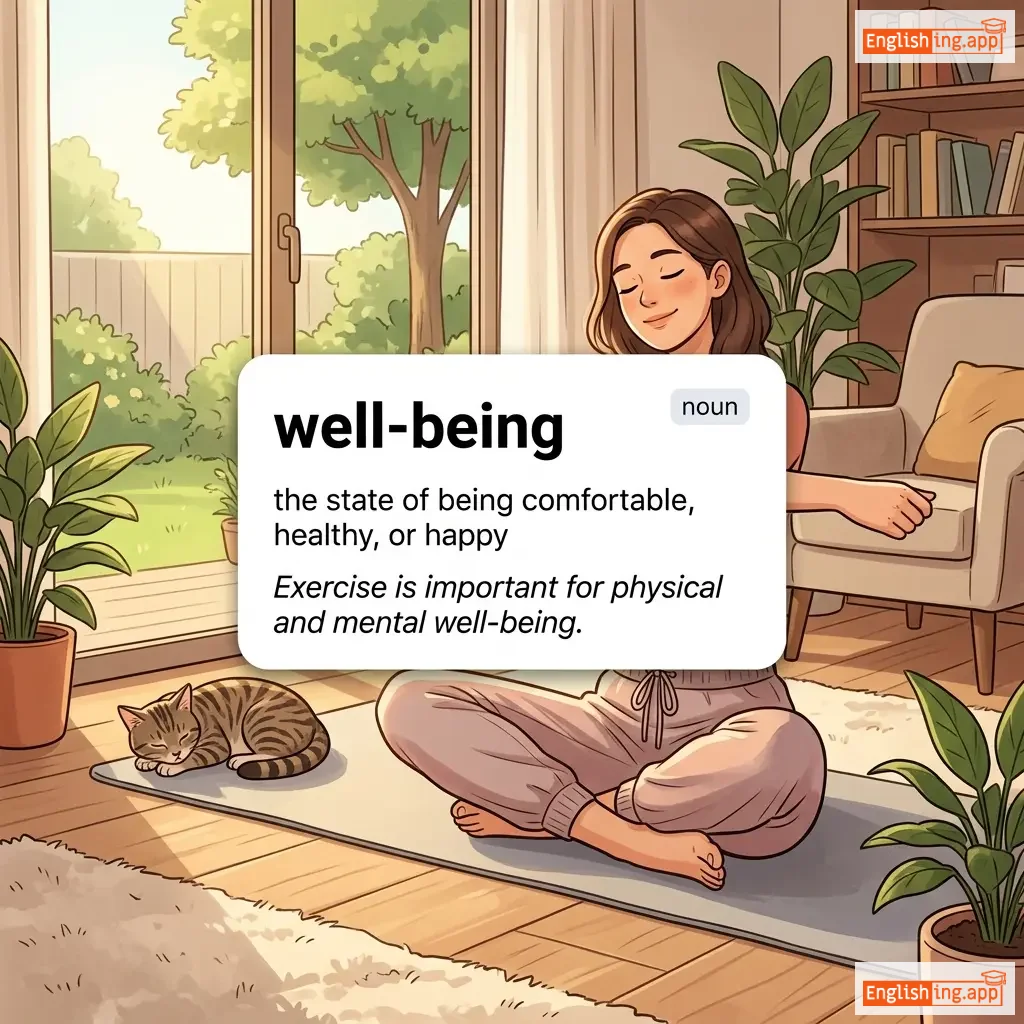
well-being definition card — visual illustration of the meaning
noun
/ˌwelˈbiːɪŋ/
कल्याण (kalyan)

the state of being comfortable, healthy, or happy

"Exercise is important for physical and mental well-being."

"व्यायाम शारीरिक और मानसिक कल्याण के लिए महत्वपूर्ण है।" (Vyayam sharirik aur mansik kalyan ke liye mahatvapurn hai.)
adjective
/ˈwɪndi/
तेज़ हवा वाला (tez hawa wala)

characterized by strong wind; also, using too many words and saying little

"It was so windy that the umbrellas flipped inside out."

"इतनी तेज़ हवा थी कि छतरियाँ उलट गईं।" (itni tez hawa thi ki chatriyan ulat gain.)
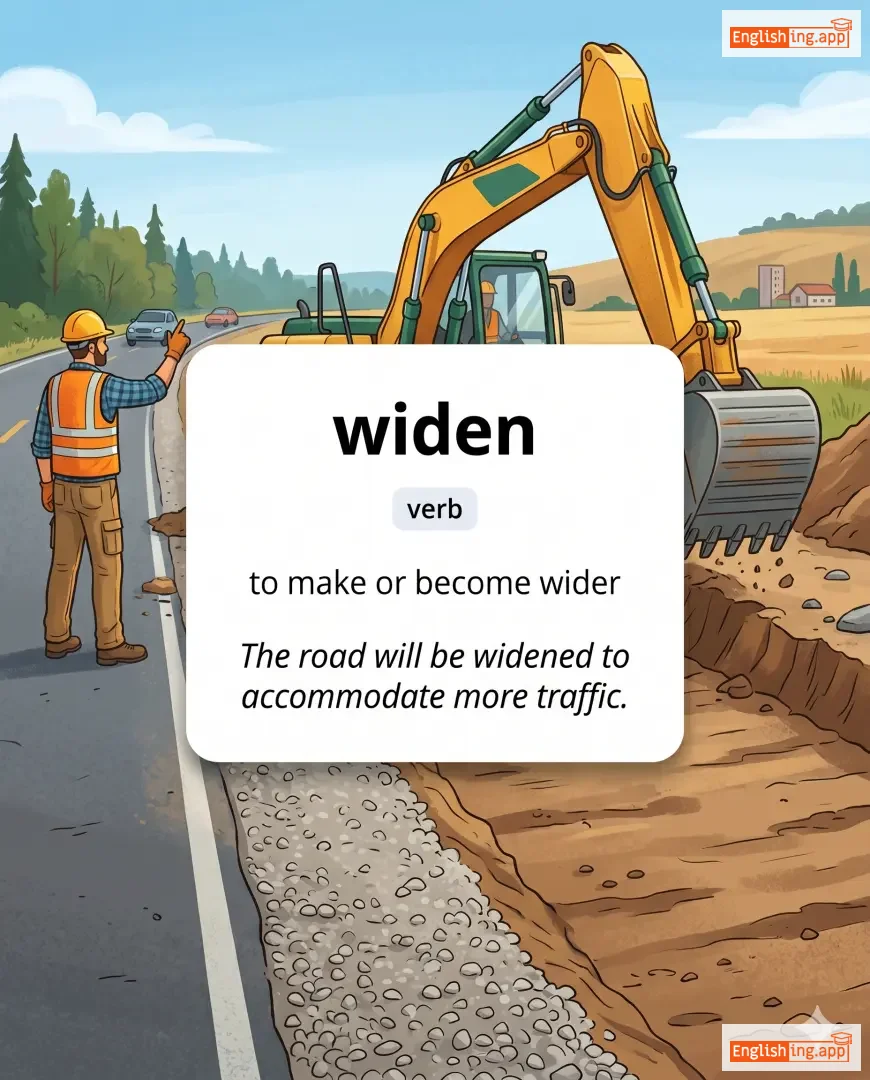
widen definition card — visual illustration of the meaning
verb
/ˈwaɪdən/
विस्तृत करना (vistrit karna)

to make or become wider

"The road will be widened to accommodate more traffic."

"सड़क को अधिक ट्रैफिक के लिए विस्तृत किया जाएगा।" (Sadak ko adhik traffic ke liye vistrit kiya jayega.)
conjunction
/waɪl/
जब तक (jab tak)

during the time that something is happening

"She was reading while waiting for the bus."

"वह बस का इंतजार करते हुए पढ़ाई कर रही थी।" (Wah bas ka intezaar karte hue padhai kar rahi thi.)
pronoun
/huːˈɛvər/
जो कोई भी (jo koi bhi)

any person who; no matter who

"Whoever wants to join the trip must register today."

"जो भी यात्रा में शामिल होना चाहता है, उसे आज ही पंजीकरण करना होगा।" (Jo bhi yatra mein shamil hona chahta hai, use aaj hi panjikaran karna hoga.)
adjective
/ˈwɪlɪŋ/
इच्छुक (ichchhuk)

ready, inclined, or eager to do something

"She was willing to help with the project."

"वह परियोजना में मदद करने के लिए इच्छुक थी।" (vah pariyojna mein madad karne ke liye ichchhuk thi.)
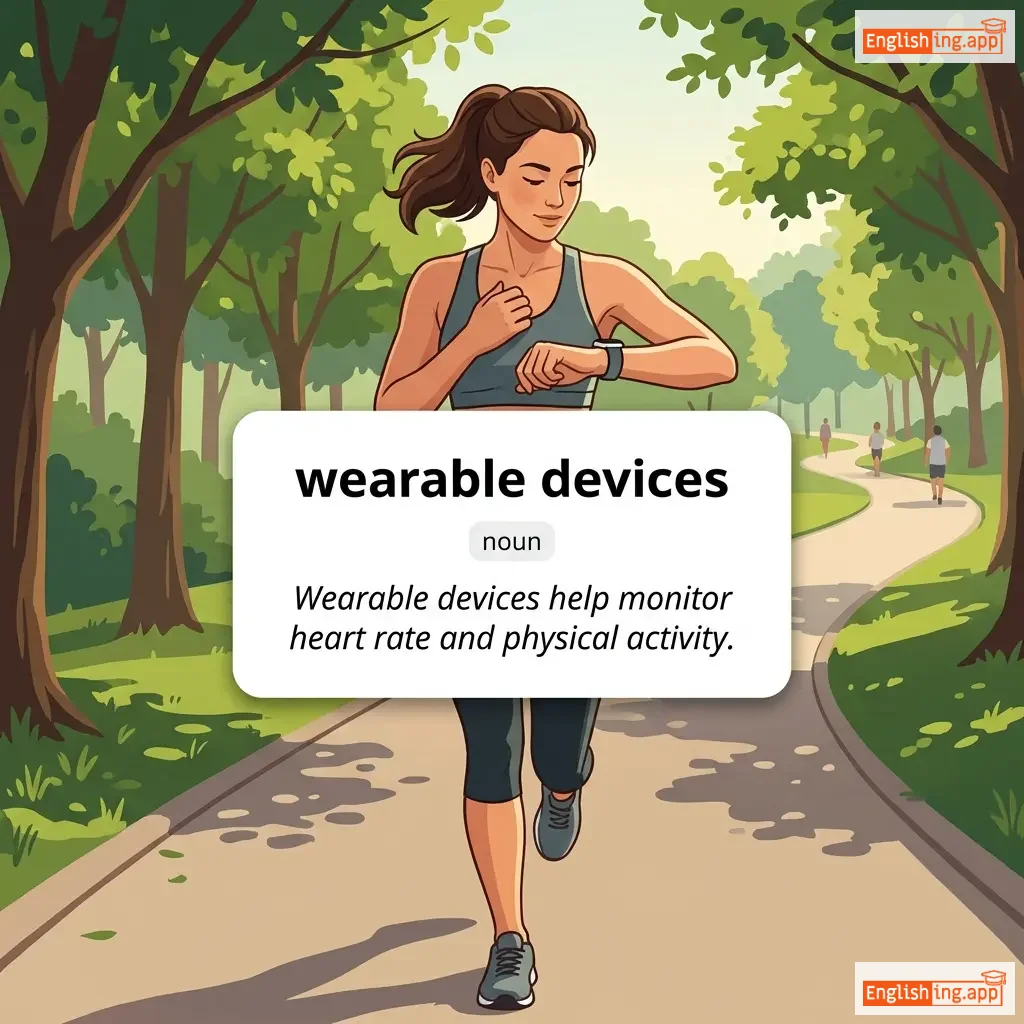
wearable devices definition card — visual illustration of the meaning
noun
ˈweə.rə.bəl dɪˈvaɪ.sɪz
पहनने योग्य उपकरण (pehane yogya upkaran)

Electronic devices that can be worn on the body, typically incorporating smart technology for monitoring health or providing information.

"Wearable devices help monitor heart rate and physical activity."

"वियरएबल डिवाइसेस दिल की धड़कन और शारीरिक गतिविधियों की निगरानी में मदद करते हैं।" (Wearable devices dil ki dhadkan aur sharirik gatividhiyon ki nigrani mein madad karte hain.)
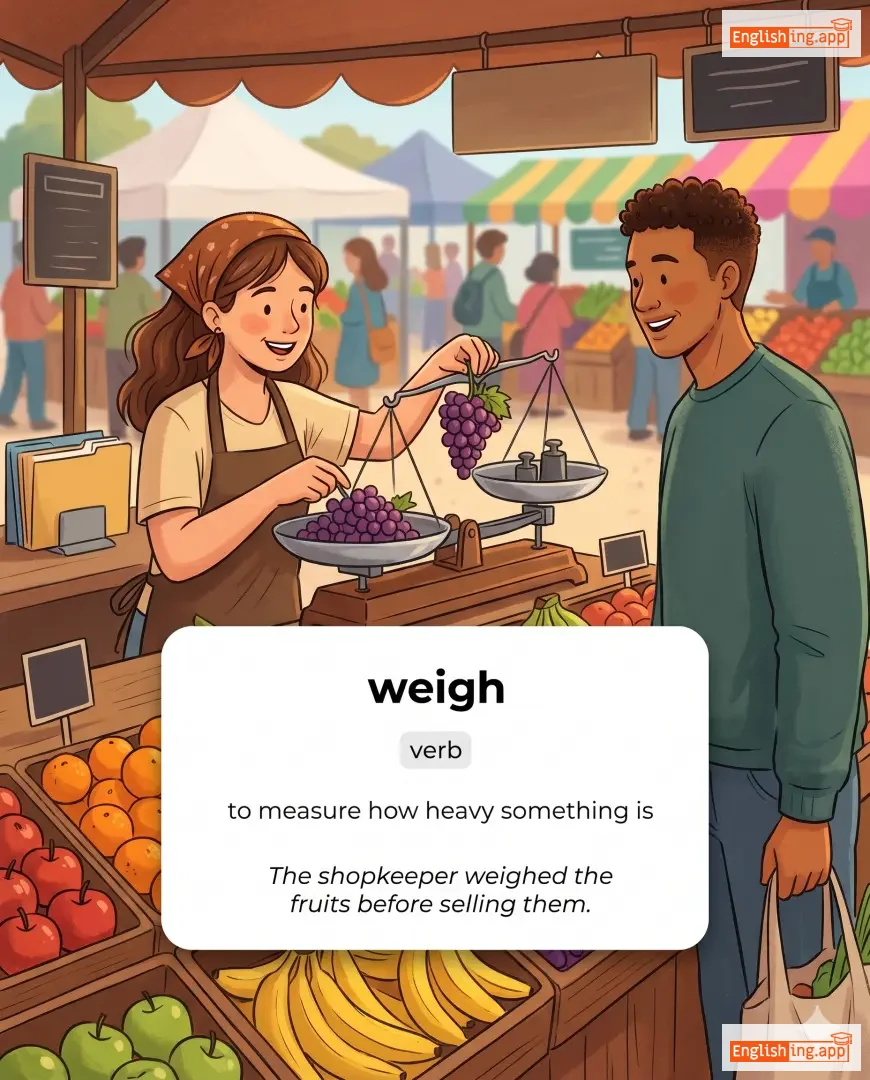
weigh definition card — visual illustration of the meaning
verb
/weɪ/
तौलना (taulna)

to measure how heavy something is

"The shopkeeper weighed the fruits before selling them."

"दुकानदार ने फल बेचने से पहले तौल लिया।" (Dukandaar ne phal bechne se pehle taul liya.)
verb
/wɪp/
चाबुक मारना (chaabuk maarna)

to strike or beat with a flexible instrument such as a rope or cord

"The trainer whipped the horse to make it run faster."

"कोच ने घोड़े को तेज दौड़ने के लिए ह्विप किया।" (Koch ne ghode ko tej daudne ke liye hwip kiya.)
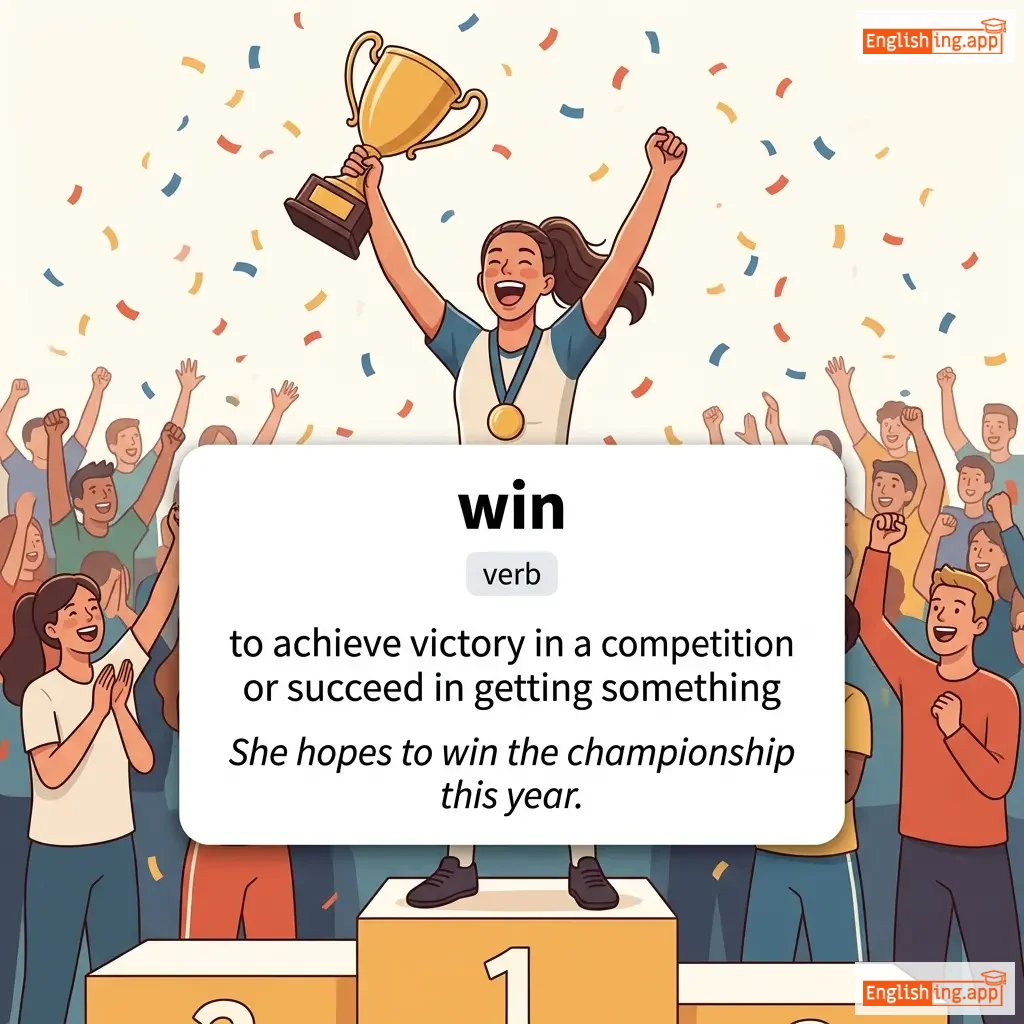
win definition card — visual illustration of the meaning
verb
/wɪn/
जीतना (jeetna)

to achieve victory in a competition or succeed in getting something

"She hopes to win the championship this year."

"वह इस साल चैंपियनशिप जीतने की उम्मीद करती है।" (Vah is saal championship jeetne ki ummid karti hai.)
noun/verb
/ˈwɒrənt/
वॉरंट (warrant)

As a noun: An official authorization or order. As a verb: To justify or make something necessary.

"The judge issued a warrant for his arrest."

"जज ने उसके गिरफ्तार करने के लिए एक वारंट जारी किया।" (Judge ne uske giraftaar karne ke liye ek warrant jaari kiya.)
noun
/ˈwɔː.tər ˈtʃes.nʌt/
जल चेस्टनट (jal chestnut)

aquatic plant with edible white crisp tubers

"Water chestnuts add a nice crunch to stir-fry dishes."

"जल चेस्टनट्स सटिर-फ्राई व्यंजनों में अच्छा क्रंच डालते हैं।" (jal chestnuts stir-fry vyanjano mein accha crunch daalte hain)
whitelisting definition card — visual illustration of the meaning
noun
/ˈwaɪt.lɪst.ɪŋ/
सुरक्षित और विश्वसनीय उपयोगकर्ताओं, सॉफ़्टवेयर या आईपी पतों की पहचान करना (surakshit aur vishwasniya upayogkartao, software ya IP paton ki pehchaan karna)

Identifying specific users, software, or IP addresses as safe and trusted

"Only verified applications are allowed through whitelisting."

"केवल सत्यापित आवेदन ही व्हाइटलिस्टिंग के माध्यम से अनुमति प्राप्त करते हैं।" (Keval satyapit aavedan hi whitelisting ke madhyam se anumati prapt karte hain.)
noun
/ˈwɪndbæɡ/
बातूनी आदमी (batooni aadmi)

a person who talks too much, especially in a boring or boastful way

"Everyone avoided the windbag at the party because he never let anyone else speak."

"पार्टी में सबने उस बातूनी आदमी से बचने की कोशिश की, क्योंकि वह कभी भी किसी और को बोलने का मौका नहीं देता था।" (party mein sabne us batooni aadmi se bachne ki koshish ki, kyonki wah kabhi bhi kisi aur ko bolne ka mauka nahi deta tha.)
verb
/ˈwɪɡəl/
हिलना, झूलना (hilna, jhoolna)

To move or cause to move with small rapid movements from side to side.

"The baby wiggled happily in her mother's arms."

"बेबी अपनी माँ की बाहों में खुशी-खुशी हिल रही थी।" (Baby apni maa ki baahon mein khushi-khushi hil rahi thi.)