वोकैबुलरीज

इंग्लिश वोकैबुलरी डिस्कवर, लर्न और मास्टर करें

adjective
/wiːk/
कमज़ोर (kamzor)

lacking physical strength or energy

"She felt weak after the long run."

"लंबी दौड़ के बाद वह कमज़ोर महसूस कर रही थी।" (Lambi daud ke baad vah kamzor mehsoos kar rahi thi.)
conjunction
/wɛərˈæz/
जबकि (jabki)

used to introduce a contrast or comparison between two facts

"She prefers tea, whereas he likes coffee."

"वह चाय पसंद करती है, जबकि वह कॉफी पसंद करता है।" (Wah chai pasand karti hai, jabki wah coffee pasand karta hai.)
adverb
/wɛnˈɛvər/
जब भी (jab bhi)

at any time, or whenever it happens

"You can call me whenever you want."

"तुम मुझे जब भी चाहो कॉल कर सकते हो।" (Tum mujhe jab bhi chaho kol kar sakte ho.)
adverb
/ˈwɪmzɪkli/
चंचल ढंग से (vhimsikali)

In a playful, fanciful, or capricious manner; with sudden changes of mind

"She decorated her room whimsically with colorful balloons."

"उसने अपने कमरे को रंग-बिरंगे गुब्बारों के साथ चंचल ढंग से सजाया।" (Usne apne kamre ko rang-birange gubbaron ke saath chanchal dhang se sajaaya.)
adverb
/wɛərˈbaɪ/
जिससे (jisse)

by which; because of which

"The company agreed to a contract whereby it would pay the penalty."

"कंपनी ने एक समझौते पर हस्ताक्षर किए जिसमें वह जुर्माना अदा करेगी।" (Kampani ne ek samjhaute par hastakshar kiye jismein vah jurmana ada karegi.)
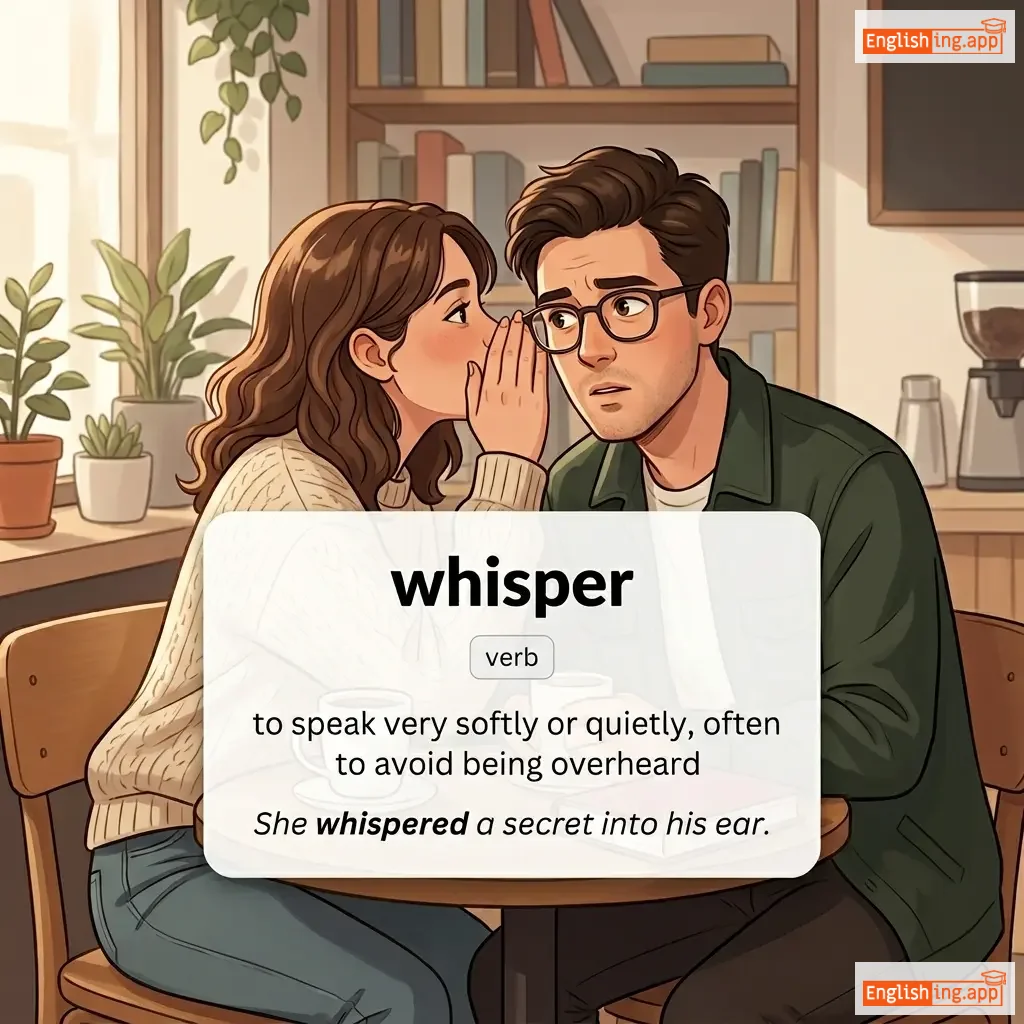
whisper definition card — visual illustration of the meaning
verb
/ˈwɪspər/
फुसफुसाना (phusphusana)

to speak very softly or quietly, often to avoid being overheard

"She whispered a secret into his ear."

"उसने उसके कान में एक राज़ फुसफुसाया।" (Usne uske kaan mein ek raaz phusphusaya.)
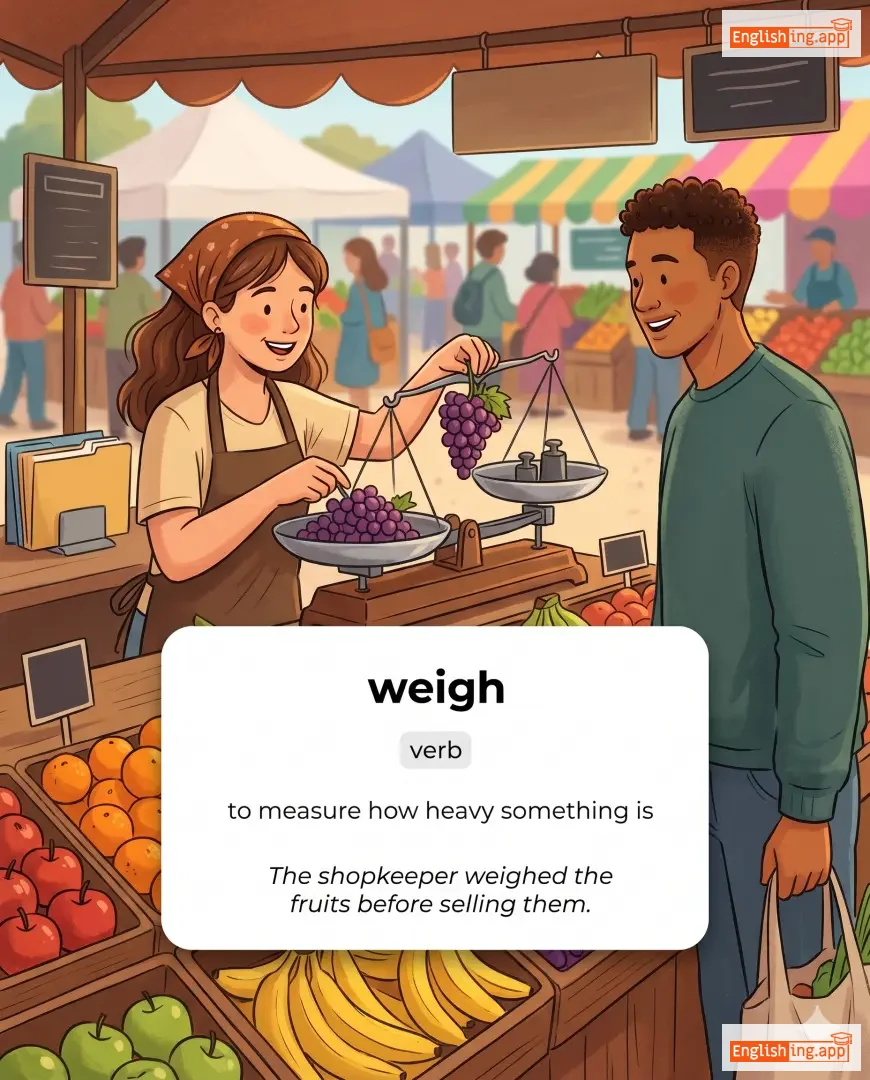
weigh definition card — visual illustration of the meaning
verb
/weɪ/
तौलना (taulna)

to measure how heavy something is

"The shopkeeper weighed the fruits before selling them."

"दुकानदार ने फल बेचने से पहले तौल लिया।" (Dukandaar ne phal bechne se pehle taul liya.)
noun
/ˈwɒrən/
खरगोश के बिलों का नेटवर्क (warren)

A network of interconnected rabbit burrows; also used metaphorically for a densely populated building or district.

"The old part of the city is a warren of narrow streets."

"शहर का पुराना हिस्सा संकरी गलियों का एक जटिल नेटवर्क है।" (Shahar ka purana hissa sankari galiyon ka ek jatil network hai.)
noun
/weɪt/
वजन (vajan)

a measure of how heavy something is

"The weight of the package was 10 kilograms."

"पैकेज का वजन 10 किलोग्राम था।" (Paikej ka vajan 10 kilogram tha.)
noun
/wiːk/
सप्ताह (saptah)

a period of seven days

"I will finish the project by the end of the week."

"मैं परियोजना को सप्ताह के अंत तक समाप्त कर लूंगा।" (Main pariyojna ko saptah ke ant tak samaapt kar loonga.)
adverb
/wɛr/
कहाँ (kahan)

in or at what place or position

"Where do you live?"

"तुम कहाँ रहते हो?" (Tum kahan rehte ho?)
verb
/wɛt/
तेज़ करना/उत्तेजित करना (tez karna/uttejit karna)

To sharpen the blade of a tool or to stimulate interest or appetite.

"The smell of food whetted my appetite."

"खाने की खुशबू ने मेरी भूख बढ़ा दी।" (Khaane ki khushboo ne meri bhookh badha di.)
noun, verb
/wɪf/
हल्की खुशबू (halki khushboo)

A brief, faint smell or puff of air; to get a quick smell of something.

"I caught a whiff of perfume as she passed by."

"मैंने जब वह पास से गुजर रही थी, तो एक हल्की खुशबू महसूस की।" (Maine jab vah paas se guzar rahi thi, to ek halki khushboo mehsoos ki.)
noun
/ˈwɒʃ.ɪŋ məˌʃiːn/
वॉशिंग मशीन (voshin mashin)

a machine for washing clothes and other textiles

"The washing machine broke down and needs repair."

"वॉशिंग मशीन खराब हो गई है और मरम्मत की ज़रूरत है." (voshin mashin kharaab ho gayi hai aur marammat ki zaroorat hai)
pronoun
/wɪtʃ/
कौन सा (kaun sa)

used to ask about one or more items from a defined set

"Which one do you prefer, the red or the blue?"

"आपको कौन सा पसंद है, लाल या नीला?" (Aapko kaun sa pasand hai, laal ya neela?)
noun
/ˈwɑː.ʃər mæn/
धोबी (dhobi)

a person whose job is to wash clothes and linens for others

"The washer man collected dirty clothes from every household in the village."

"वॉशर मैन ने गाँव के हर घर से गंदे कपड़े इकट्ठा किए।" (washer main ne gaon ke har ghar se gande kapde ikattha kiye)
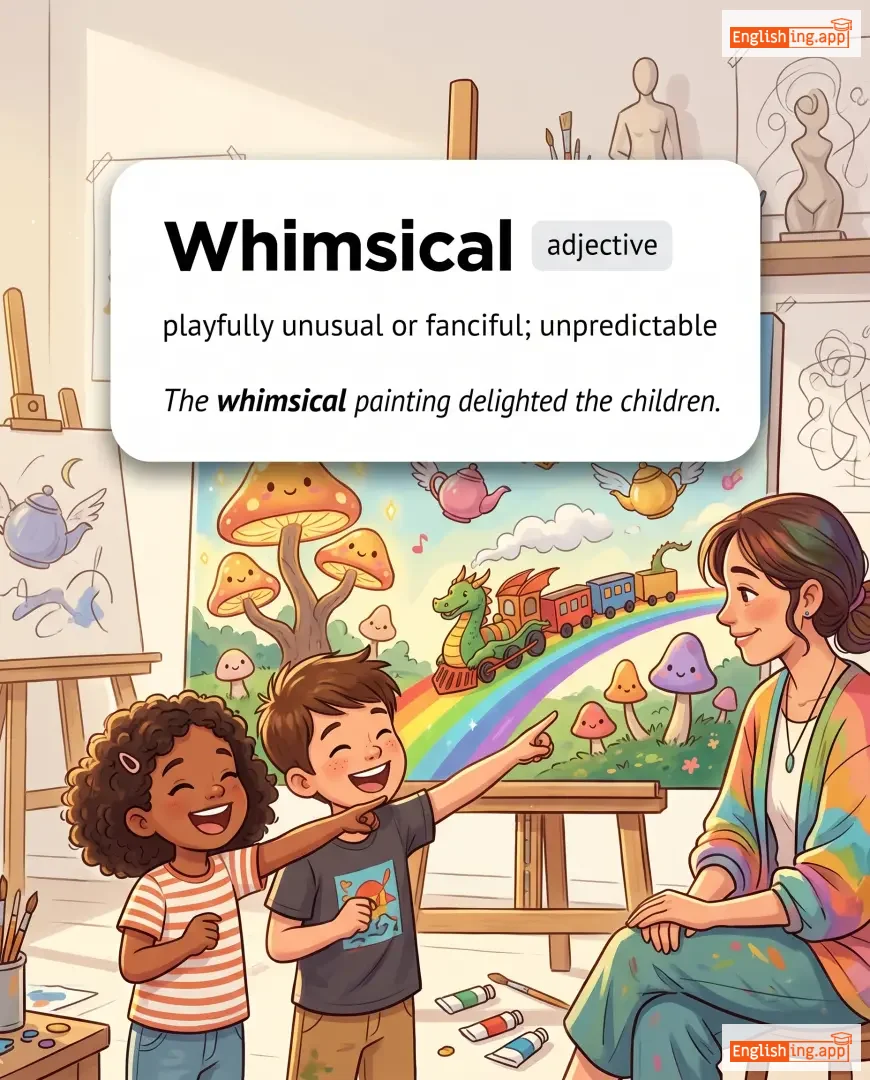
Whimsical definition card — visual illustration of the meaning
adjective
/ˈwɪmzɪkəl/
कल्पनाशील (kalpanasheel)

playfully unusual or fanciful; unpredictable

"The whimsical painting delighted the children."

"कल्पनाशील चित्र ने बच्चों को प्रसन्न कर दिया।" (Kalpanasheel chitra ne bachon ko prasann kar diya.)
noun
/ˈwɒtʃ.mən/
गेटकीपर (getkeeper)

a person employed to guard or watch over a building or area, especially at night

"The watchman patrols the factory every hour to ensure security."

"गेटकीपर फैक्ट्री की सुरक्षा सुनिश्चित करने के लिए हर घंटे गश्त करता है।" (gatekeeper factory ki suraksha nishchit karne ke liye har ghante gasht karta hai.)
noun
/wɔːmθ/
गर्माहट (garmāhat)

the quality or state of being warm in temperature or feeling

"She felt the warmth of the sun on her face."

"उसे सूरज की गर्मी अपने चेहरे पर महसूस हुई।" (Use sooraj ki garmī apne chehre par mehsoos hui.)
noun
/ˈweɪvlət/
छोटी लहर (chhoti lehr)

a small wave or ripple on the surface of water or another medium

"The pond was disturbed only by the tiny wavelets caused by the breeze."

"तालाब केवल हवा से उत्पन्न छोटे लहरों के कारण हिल गया था।" (Talab keval hawa se utpann chhote lehron ke karan hil gaya tha.)
noun
/weɪ/
रास्ता / तरीका (rasta / tarika)

a path, direction, or method of doing something

"He found a new way to solve the problem."

"उसने समस्या को हल करने का एक नया तरीका ढूंढा।" (Usne samasya ko hal karne ka ek naya tarika dhoonda.)
adverb
/wɛrˈɛv.ər/
जहाँ भी (jahan bhi)

In or to any place.

"You can find good people wherever you go."

"आप अच्छे लोग जहाँ भी जाते हैं, वहाँ मिल सकते हैं।" (Aap achhe log jahan bhi jaate hain, wahan mil sakte hain.)
adjective
/ˈwɛlθi/
अमीर (ameer)

having a great deal of money, resources, or assets

"He became wealthy after investing in real estate."

"वह रियल एस्टेट में निवेश करने के बाद अमीर हो गया।" (Vah real estate mein nivesh karne ke baad ameer ho gaya.)
noun
/ˈwɪntər/
सर्दी (sardi)

the coldest season of the year, typically from December to February in the Northern Hemisphere

"Winter in the north can be very harsh with heavy snowfall."

"उत्तर में सर्दी बहुत कठोर हो सकती है, भारी हिमपात के साथ।" (Uttar mein sardi bahut kathor ho sakti hai, bhari himpaat ke saath.)
noun
/wiːl/
सुख (sukh)

A raised mark on the skin left after a blow; or general well-being and prosperity.

"The charity worked for the common weal of the community."

"जब उसे पुरस्कार मिला, तो वह अपनी खुशी छिपा नहीं सकी।" (Jab use puraskar mila, to vah apni khushi chhupa nahi saki.)
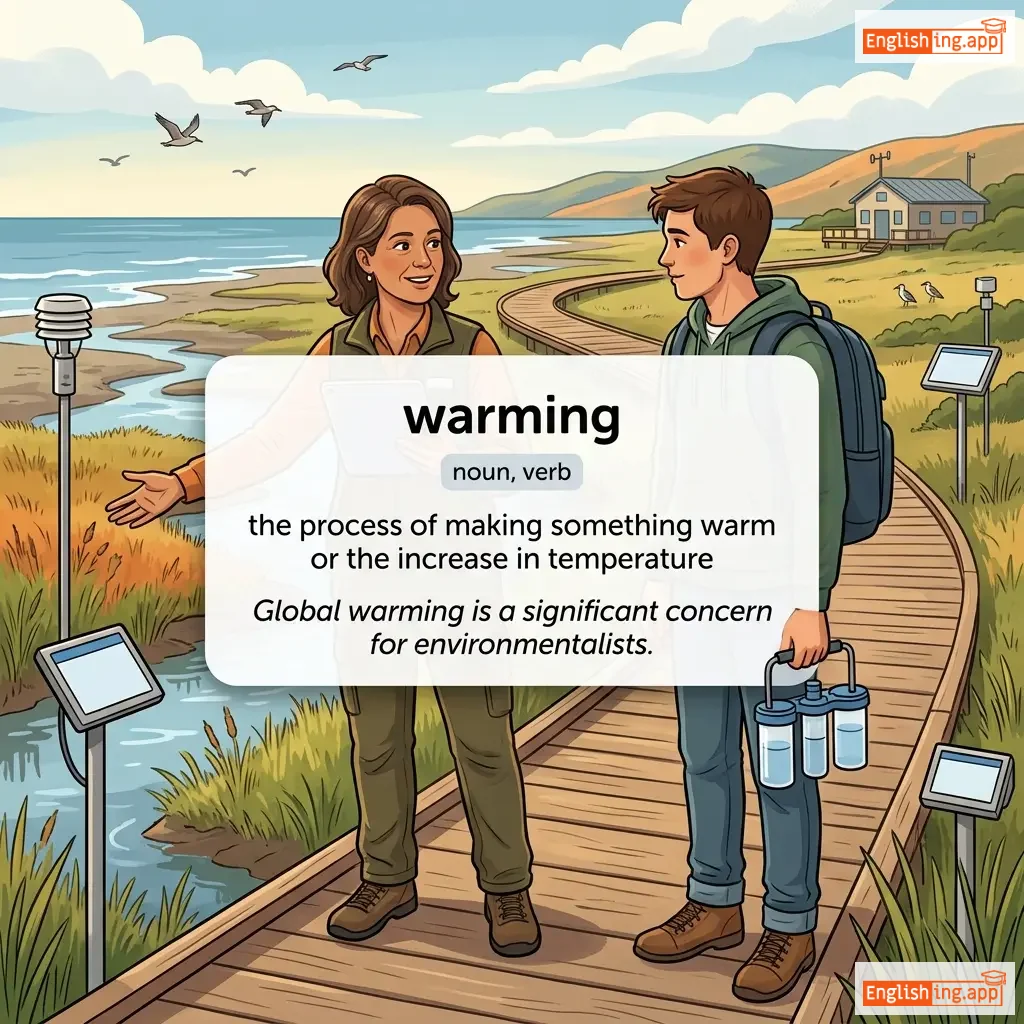
warming definition card — visual illustration of the meaning
noun, verb
/ˈwɔːmɪŋ/
तापमान वृद्धि (taapmaan vruddhi)

the process of making something warm or the increase in temperature

"Global warming is a significant concern for environmentalists."

"ग्लोबल वॉर्मिंग पर्यावरणविदों के लिए एक महत्वपूर्ण चिंता है।" (Global warming paryavaranvidon ke liye ek mahatvapurn chinta hai.)
conjunction
/waɪl/
जब तक (jab tak)

during the time that something is happening

"She was reading while waiting for the bus."

"वह बस का इंतजार करते हुए पढ़ाई कर रही थी।" (Wah bas ka intezaar karte hue padhai kar rahi thi.)
workload definition card — visual illustration of the meaning
noun
ˈwɜːrkˌləʊd
कार्यभार (kaaryabhaar)

The amount of work to be done by someone or something.

"His workload has increased dramatically in the past month."

"उसके वर्कलोड में पिछले महीने में नाटकीय रूप से वृद्धि हुई है।" (Uske workload mein pichhle mahine mein naatakiy roop se vruddhi hui hai.)
adjective
/ˈwɪəri/
थका हुआ (thaka hua)

feeling or showing extreme tiredness, especially as a result of exertion or lack of sleep

"After the long journey, she felt weary and wanted to rest."

"लंबी यात्रा के बाद, उसे थका हुआ महसूस हुआ और वह आराम करना चाहती थी।" (Lambi yatra ke baad, use thaka hua mehsoos hua aur wah aaram karna chahti thi.)
warranted definition card — visual illustration of the meaning
adjective/verb
/ˈwɒrəntɪd/
उचित (uchit)

Justified or authorized under the circumstances.

"Her anger was warranted after the unfair treatment."

"उसका गुस्सा उसके अनुचित व्यवहार के बाद उचित था।" (Uska gussa uske anuchit vyavhaar ke baad uchit tha.)
verb
/wɪp/
चाबुक मारना (chaabuk maarna)

to strike or beat with a flexible instrument such as a rope or cord

"The trainer whipped the horse to make it run faster."

"कोच ने घोड़े को तेज दौड़ने के लिए ह्विप किया।" (Koch ne ghode ko tej daudne ke liye hwip kiya.)
verb
/wæks/
क्रमशः बढ़ना (kramashah badhna)

to increase gradually in size, number, strength, or intensity

"The moon will wax until it becomes full."

"चाँद पूर्ण होने तक बढ़ेगा।" (Chaand poorn hone tak badhega.)
preposition
/wɪð/
के साथ (ke saath)

indicating the person or thing that is accompanying or involved with someone or something else

"She went to the market with her friend."

"वह अपने दोस्त के साथ बाजार गई थी।" (Vah apne dost ke saath bazar gayi thi.)
adjective
/ˌwɛl tə ˈduː/
धनवान (dhanwan)

Prosperous, wealthy, or financially comfortable.

"They belong to a well-to-do family in the city."

"वे शहर में एक धनवान परिवार से हैं।" (Ve shehar mein ek dhanwan parivaar se hain.)
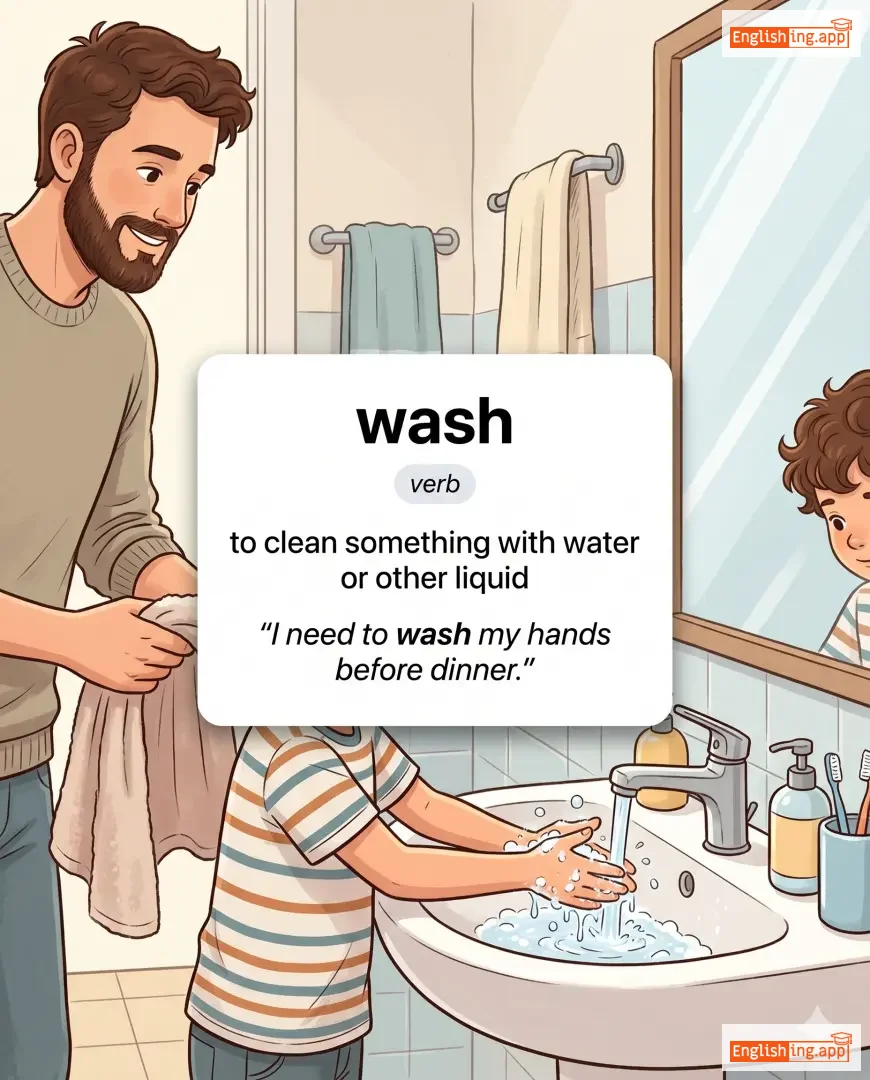
wash definition card — visual illustration of the meaning
verb
/wɒʃ/
धोना (dhona)

to clean something with water or other liquid

"I need to wash my hands before dinner."

"मुझे डिनर से पहले अपने हाथ धोने की आवश्यकता है।" (Mujhe dinner se pehle apne haath dhone ki avashyakta hai.)
adjective
/ˈwaɪəri/
पतला, मजबूत, और मजबूत मांसपेशियों वाला (patla, majboot, aur majboot maanspeshiyon wala)

Lean, tough, and strong, often with sinewy muscles.

"The wiry athlete moved with remarkable speed and agility."

"वह वायरी एथलीट असाधारण गति और चुस्ती से चलता था।" (vah waayri athlete asaadharan gati aur chusti se chalta tha.)
noun
/ˈwɪmzi/
विचित्रता (vichitrita)

playful or fanciful behavior or humor

"Her stories were full of whimsy and imagination."

"उसकी कहानियाँ विचित्रता और कल्पना से भरी हुई थीं।" (Uski kahaniyan vichitrita aur kalpna se bhari hui thi.)
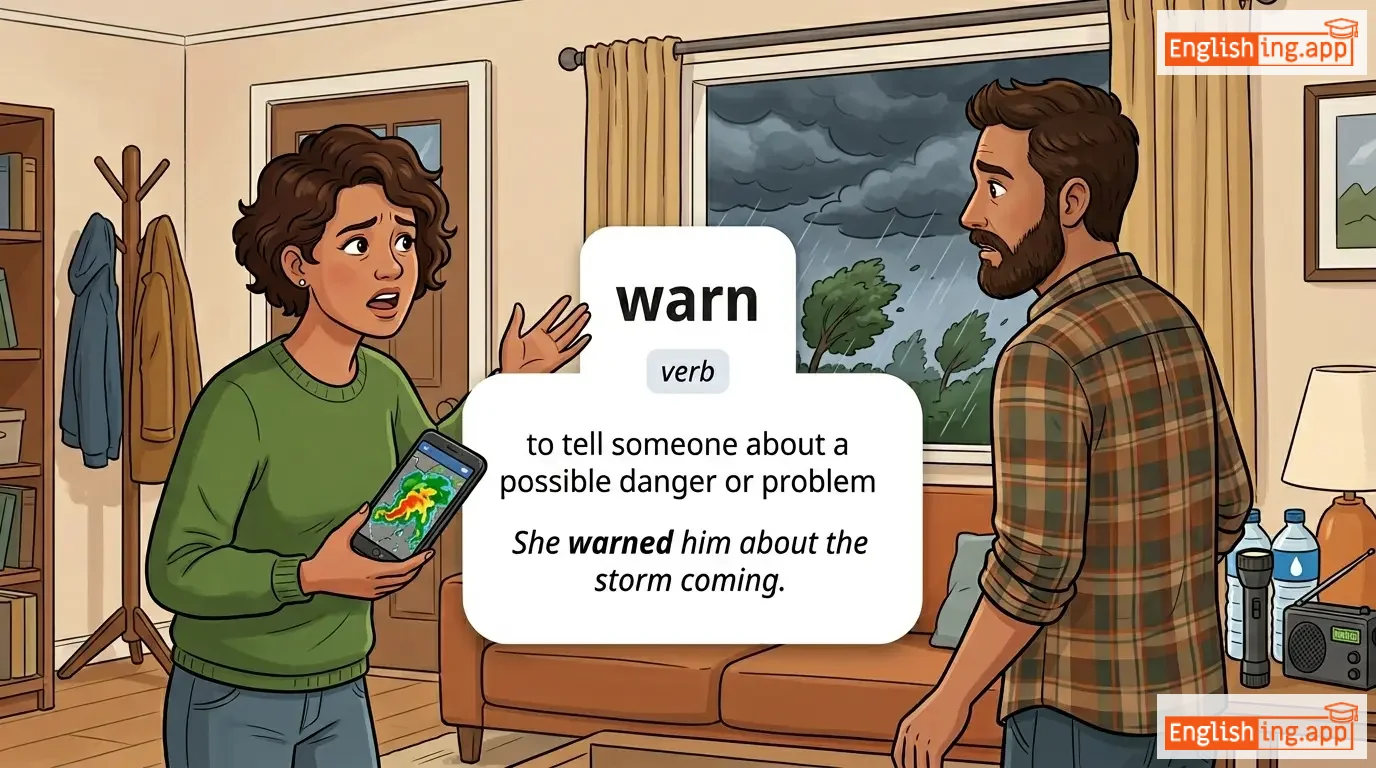
warn definition card — visual illustration of the meaning
verb
/wɔːrn/
चेतावनी देना (chetavani dena)

to tell someone about a possible danger or problem

"She warned him about the storm coming."

"उसने उसे आ रही तूफान के बारे में चेतावनी दी।" (Usne use aa rahi toofan ke baare mein chetavani di.)
adverb
/wɛl/
अच्छा (achchha)

in a good or satisfactory way

"She did well in her exams."

"उसने अपनी परीक्षा में अच्छा किया।" (Usne apni pariksha mein achha kiya.)
adjective
/ˌwɛlˈbrɛd/
सभ्य (sabhy)

Having or showing good manners; properly raised.

"She is a well-bred young lady with excellent manners."

"वह एक सभ्य और अच्छे संस्कारों वाली युवती है।" (Vah ek sabhy aur acche sanskaron wali yuvti hai.)
adjective
/ˈwɪt.i/
चतुर; मजेदार (chatur; mazedar)

having or showing quick intelligence; amusing in a clever way

"Her witty response to the critic's question impressed the entire audience."

"उसकी चतुर प्रतिक्रिया ने आलोचक के सवाल का पूरी ऑडियंस पर प्रभाव डाला।" (uski chatur pratikriya ne alochak ke sawal ka puri audience par prabhav dala)
adjective
/ˌhoʊlˈhɑːrtɪd/
पूरी दिल से (puri dil se)

showing complete sincerity and commitment; fully enthusiastic

"She gave her wholehearted support to the project."

"उसने परियोजना को अपनी पूरी दिल से समर्थन दिया।" (Usne pariyojna ko apni puri dil se samarthan diya.)
noun
/ˈwɒrənti/
वारंटी (waranti)

A written guarantee given by a manufacturer or seller promising to repair or replace a product if necessary within a specified period.

"The laptop comes with a two-year warranty."

"लैपटॉप दो साल की वारंटी के साथ आता है।" (Laptop do saal ki waranti ke saath aata hai.)
noun
/ˈwel.wɪʃ.ər/
कल्याणकामी (kalyankami)

a person who desires happiness or success for another

"Many well-wishers came to congratulate her on her graduation."

"कई कल्याणकामी उसे उसकी स्नातक होने पर बधाई देने आए।" (Kai kalyankami use uski snatak hone par badhai dene aaye.)
preposition
/wɪðˈaʊt/
बिना (bina)

in the absence of, or not having something

"He left without saying goodbye."

"वह बिना अलविदा कहे चला गया।" (Wah bina alvida kahe chala gaya.)
adjective
/waɪld/
जंगली (jangli)

living or growing in the natural environment; uncontrolled or untamed

"The children ran wild in the park."

"बच्चे पार्क में जंगली दौड़ रहे थे।" (Bacche park mein jangli daud rahe the.)
noun
/wɒsp/
तितली (titli)

a flying insect with a yellow and black striped body and a painful sting

"The wasp stung me when I disturbed its nest."

"वह मुझे डंक मारने के बाद उड़ गया जब मैंने उसका घोंसला disturbed किया।" (Woh mujhe dank maarne ke baad ud gaya jab maine uska ghosla disturbed kiya.)
noun
/ˈwɛnzdeɪ/
बुधवार (budhvar)

the fourth day of the week, following Tuesday and preceding Thursday

"The meeting has been scheduled for Wednesday afternoon."

"बैठक बुधवार दोपहर के लिए तय की गई है।" (baithak budhvar dopahar ke liye tay ki gai hai)
pronoun
/wɒtˈɛvər/
जो कुछ भी (jo kuch bhi)

used to refer to anything or everything that is of the type mentioned

"You can choose whatever you like."

"आप जो चाहें चुन सकते हैं।" (Aap jo chahen chun sakte hain.)
adjective
/ˈhoʊlsəm/
स्वस्थ (swasth)

promoting health or well-being; morally good and beneficial

"The retreat offered wholesome food and peaceful surroundings."

"रिट्रीट ने स्वस्थ भोजन और शांतिपूर्ण वातावरण प्रदान किया।" (Retreat ne swasth bhojan aur shaantipoorn vatavaran pradan kiya.)