词汇表

英语词汇词典 | 单词含义、定义和示例

adjective
/wiːk/
虚弱 (xuruo)

lacking physical strength or energy

"She felt weak after the long run."

"她在长跑后感到虚弱。" (Ta zai changpao hou gandu xuruo.)
conjunction
/wɛərˈæz/
然而 (rán'ér)

used to introduce a contrast or comparison between two facts

"She prefers tea, whereas he likes coffee."

"她喜欢喝茶,而他喜欢喝咖啡。" (Tā xǐhuān hē chá, ér tā xǐhuān hē kāfēi.)
adverb
/wɛnˈɛvər/
随时 (suíshí)

at any time, or whenever it happens

"You can call me whenever you want."

"你可以随时给我打电话。" (Nǐ kěyǐ suíshí gěi wǒ dǎ diànhuà.)
adverb
/ˈwɪmzɪkli/
任性地,异想天开地 (whimsikeli)

In a playful, fanciful, or capricious manner; with sudden changes of mind

"She decorated her room whimsically with colorful balloons."

"她用五彩缤纷的气球任性地装饰了她的房间。" (ta yong wu cai bin fen de qi qiu ren xing de zhuang shi le ta de fang jian)
adverb
/wɛərˈbaɪ/
通过 (tongguo)

by which; because of which

"The company agreed to a contract whereby it would pay the penalty."
"公司同意了一份合同,通过它将支付罚款。" (Gongsi tongyi le yifen hetong, tongguo ta jiang zhifu faqian.)
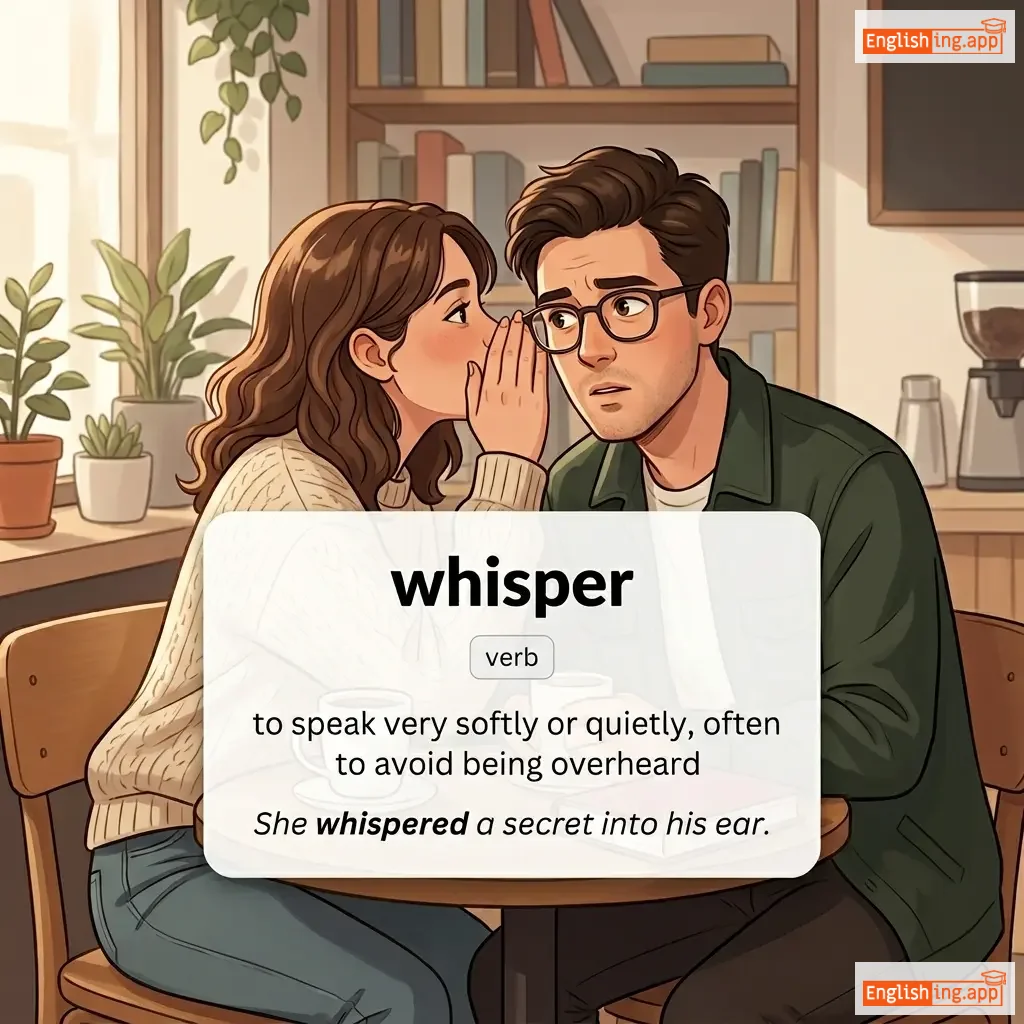
whisper definition card — visual illustration of the meaning
verb
/ˈwɪspər/
低声说 (dī shēng shuō)

to speak very softly or quietly, often to avoid being overheard

"She whispered a secret into his ear."
"她低声对他耳语了一个秘密。" (Tā dī shēng duì tā ěr yǔ le yīgè mìmì.)
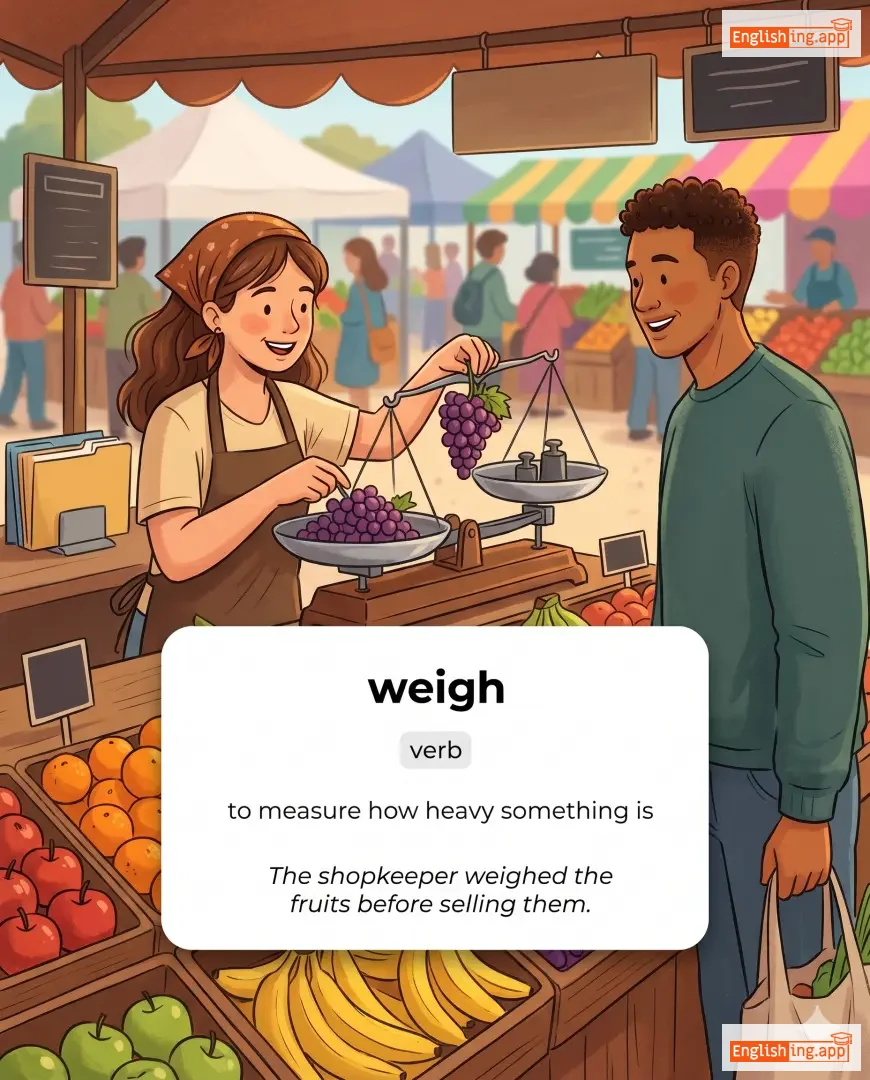
weigh definition card — visual illustration of the meaning
verb
/weɪ/
称重 (chēngzhòng)

to measure how heavy something is

"The shopkeeper weighed the fruits before selling them."

"店主在卖水果前称重。" (Diànzhǔ zài mài shuǐguǒ qián chēngzhòng.)
noun
/ˈwɒrən/
兔子洞的网络 (warren)

A network of interconnected rabbit burrows; also used metaphorically for a densely populated building or district.

"The old part of the city is a warren of narrow streets."

"这座城市的老部分是一个狭窄街道的网络。" (Zhè zuò chéngshì de lǎo bùfen shì yīgè xiázhǎi jiēdào de wǎngluò.)
noun
/weɪt/
重量 (zhòng liàng)

a measure of how heavy something is

"The weight of the package was 10 kilograms."

"包裹的重量是10公斤。" (Bāoguǒ de zhòng liàng shì 10 gōngjīn.)
noun
/wiːk/
星期 (xīngqī)

a period of seven days

"I will finish the project by the end of the week."

"我将在本周末之前完成项目。" (Wǒ jiāng zài běn zhōumò zhīqián wánchéng xiàngmù.)
adverb
/wɛr/
哪里 (nǎ lǐ)

in or at what place or position

"Where do you live?"

"你住在哪里?" (Nǐ zhù zài nǎ lǐ?)
🍴

whet

verb
/wɛt/

To sharpen the blade of a tool or to stimulate interest or appetite.

"The smell of food whetted my appetite."

👃

whiff

noun, verb
/wɪf/

A brief, faint smell or puff of air; to get a quick smell of something.

"I caught a whiff of perfume as she passed by."

noun
/ˈwɒʃ.ɪŋ məˌʃiːn/
洗衣机 (wa shing ma sheen)

a machine for washing clothes and other textiles

"The washing machine broke down and needs repair."

"洗衣机坏了,需要修理。" (The washing machine broke down and needs repair.)
pronoun
/wɪtʃ/
哪个 (nǎ ge)

used to ask about one or more items from a defined set

"Which one do you prefer, the red or the blue?"

"你更喜欢哪个,红色还是蓝色?" (Nǐ gèng xǐ huān nǎ ge, hóng sè hái shì lán sè?)
noun
/ˈwɑː.ʃər mæn/
洗衣工 (xǐyī gōng)

a person whose job is to wash clothes and linens for others

"The washer man collected dirty clothes from every household in the village."
"洗衣工从村庄的每个家庭收集脏衣服。" (xǐ yī gōng cóng cūn zhuāng de měi gè jiā tíng shōu jí zāng yī fú)
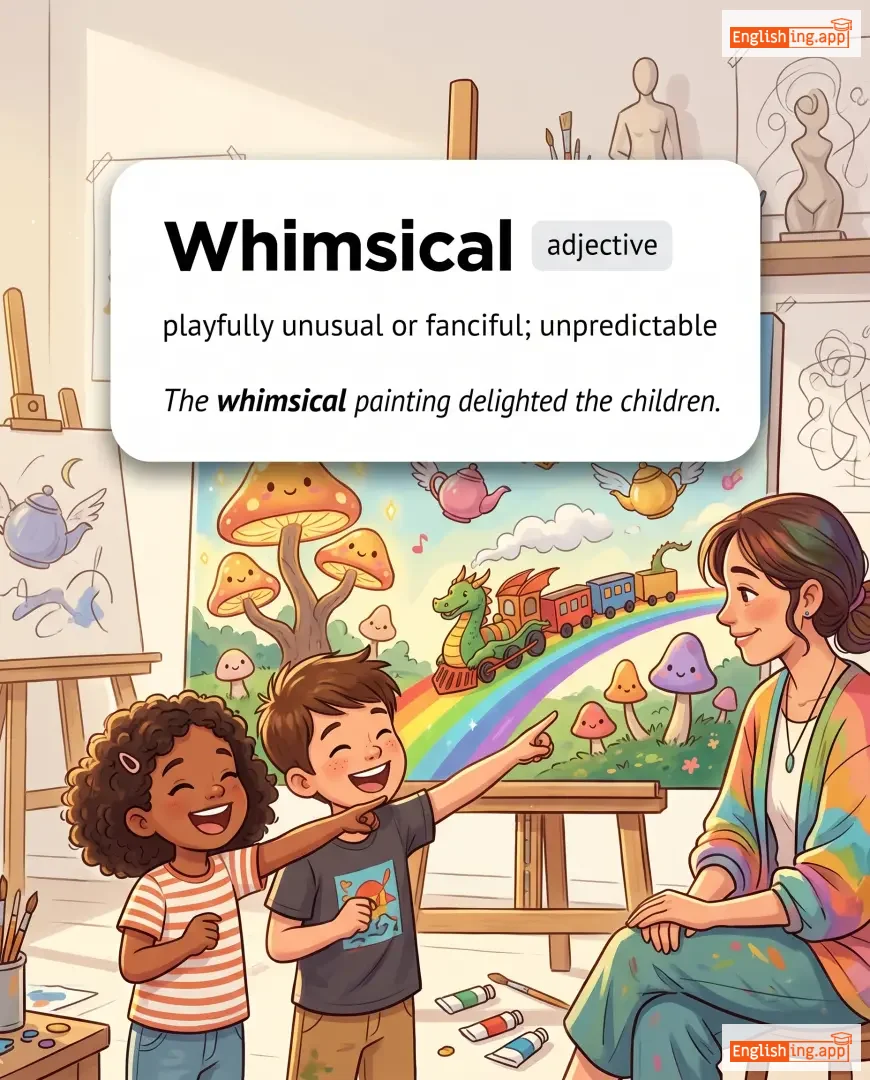
Whimsical definition card — visual illustration of the meaning
adjective
/ˈwɪmzɪkəl/
异想天开 (yìxiǎngtiānkāi)

playfully unusual or fanciful; unpredictable

"The whimsical painting delighted the children."

"这幅异想天开的画让孩子们感到高兴。" (Zhè fú yìxiǎngtiānkāi de huà ràng háizimen gǎndào gāoxìng.)
noun
/ˈwɒtʃ.mən/
看守人 (kànshǒu rén)

a person employed to guard or watch over a building or area, especially at night

"The watchman patrols the factory every hour to ensure security."

"看守人每小时巡逻工厂,确保安全。" (Kànshǒu rén měi xiǎoshí xúnluó gōngchǎng, quèbǎo ānquán.)
noun
/wɔːmθ/
温暖 (wēnnuǎn)

the quality or state of being warm in temperature or feeling

"She felt the warmth of the sun on her face."

"她感受到了阳光照在脸上的温暖。" (Tā gǎnshòu dào le yángguāng zhào zài liǎn shàng de wēnnuǎn.)
noun
/ˈweɪvlət/
小波 (xiao bo)

a small wave or ripple on the surface of water or another medium

"The pond was disturbed only by the tiny wavelets caused by the breeze."

"池塘只有微风引起的小波动才会扰动。" (Chítáng zhǐyǒu wēifēng yǐnqǐ de xiǎo bōdòng cái huì rǎodòng.)
🛣️

Way (wēi)

noun
/weɪ/
道路 / 方法 (dàolù / fāngfǎ)

a path, direction, or method of doing something

"He found a new way to solve the problem."

"他找到了一个解决问题的新方法。" (Tā zhǎodào le yī gè jiějué wèntí de xīn fāngfǎ.)
adverb
/wɛrˈɛv.ər/
无论哪里 (wúlùn nǎlǐ)

In or to any place.

"You can find good people wherever you go."

"无论你走到哪里,你都能找到好人。" (Wúlùn nǐ zǒu dào nǎlǐ, nǐ dōu néng zhǎodào hǎo rén.)
adjective
/ˈwɛlθi/
富有 (fùyǒu)

having a great deal of money, resources, or assets

"He became wealthy after investing in real estate."

"他在房地产投资后变得富有。" (Tā zài fángdìchǎn tóuzī hòu biàn dé fùyǒu.)
noun
/ˈwɪntər/
冬天 (dongtian)

the coldest season of the year, typically from December to February in the Northern Hemisphere

"Winter in the north can be very harsh with heavy snowfall."
"北方的冬天可能非常严酷,伴随着大量降雪。" (Beifang de dongtian keneng feichang yanku, bansuizhe daliang jiangxue.)
noun
/wiːl/
幸福 (xìngfú)

A raised mark on the skin left after a blow; or general well-being and prosperity.

"The charity worked for the common weal of the community."

"当她获得奖项时,她无法掩饰自己的幸福。" (Dāng tā huò dé jiǎngxiàng shí, tā wúfǎ yǎnshì zìjǐ de xìngfú.)
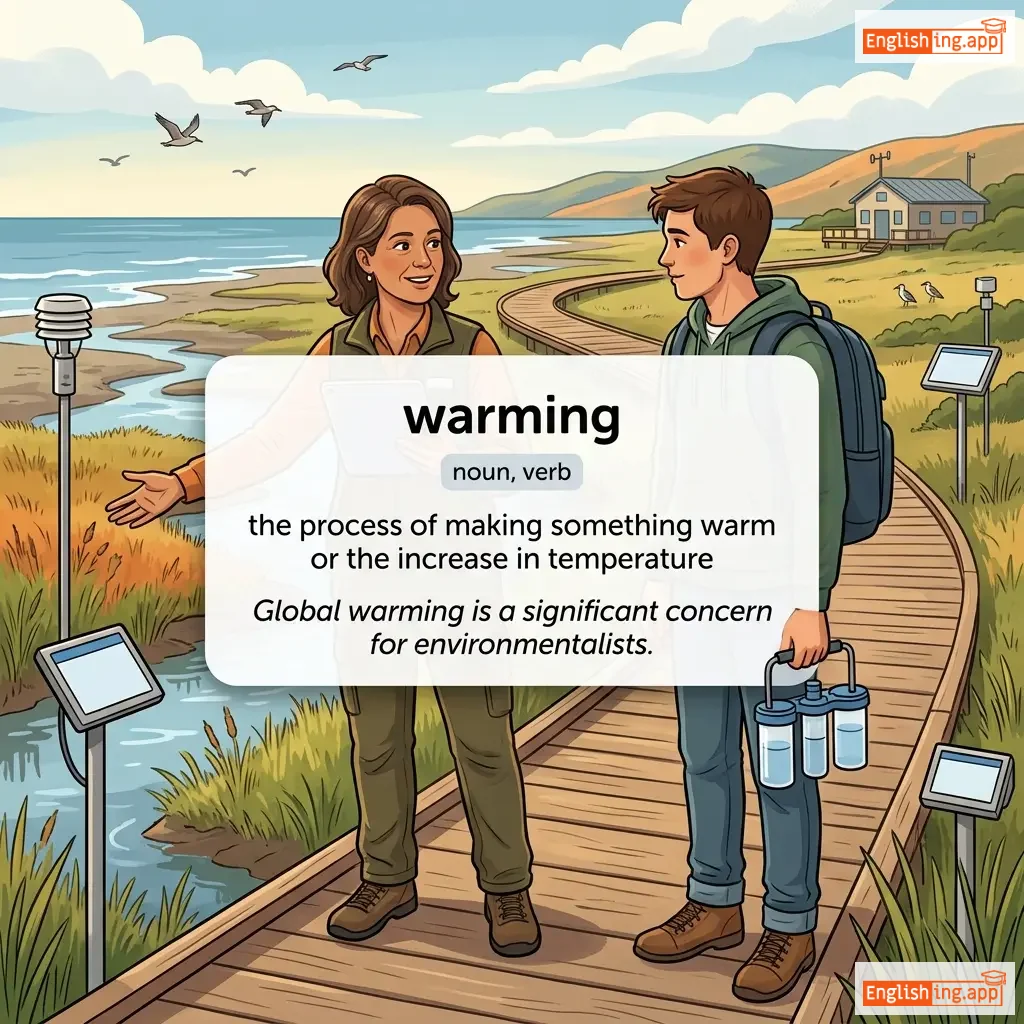
warming definition card — visual illustration of the meaning
noun, verb
/ˈwɔːmɪŋ/
温度升高 (wendu shenggao)

the process of making something warm or the increase in temperature

"Global warming is a significant concern for environmentalists."

"全球变暖是环境学者关心的重要问题。" (Quanqiu bian nuan shi huanjing xue zhe guanxin de zhongyao wenti.)
conjunction
/waɪl/
当...的时候 (dāng ... de shíhòu)

during the time that something is happening

"She was reading while waiting for the bus."

"她在等公交车时正在读书。" (Tā zài děng gōngjiāo chē shí zhèngzài dúshū.)
workload definition card — visual illustration of the meaning
noun
ˈwɜːrkˌləʊd
工作量 (gongzuoliang)

The amount of work to be done by someone or something.

"His workload has increased dramatically in the past month."

"他的工作量在上个月急剧增加。" (Tā de gōngzuò liàng zài shàng gè yuè jíjù zēngjiā.)
adjective
/ˈwɪəri/
疲倦 (pí juàn)

feeling or showing extreme tiredness, especially as a result of exertion or lack of sleep

"After the long journey, she felt weary and wanted to rest."

"长途旅行后,她感到疲惫,想休息。" (Chángtú lǚxíng hòu, tā gǎndào píbèi, xiǎng xiūxí.)
warranted definition card — visual illustration of the meaning
adjective/verb
/ˈwɒrəntɪd/
有理由的 (you liyi de)

Justified or authorized under the circumstances.

"Her anger was warranted after the unfair treatment."

"她的愤怒在不公平的待遇之后是有理由的。" (Ta de fen nu zai bu gongping de daiyu zhi hou shi you liyi de.)
verb
/wɪp/
鞭打 (biāndǎ)

to strike or beat with a flexible instrument such as a rope or cord

"The trainer whipped the horse to make it run faster."

"教练用鞭子抽打马匹,使其跑得更快。" (Jiàoliàn yòng biāndǎ chōudǎ mǎpǐ, shǐ qí pǎo dé gèng kuài.)
🌕

Wax

verb
/wæks/

to increase gradually in size, number, strength, or intensity

"The moon will wax until it becomes full."

preposition
/wɪð/
(yu)

indicating the person or thing that is accompanying or involved with someone or something else

"She went to the market with her friend."

"她和朋友一起去了市场。" (Tā hé péngyǒu yīqǐ qùle shìchǎng.)
adjective
/ˌwɛl tə ˈduː/
富裕 (fùyù)

Prosperous, wealthy, or financially comfortable.

"They belong to a well-to-do family in the city."
"他们来自城市中的富裕家庭。" (Tāmen láizì chéngshì zhōng de fùyù jiātíng.)
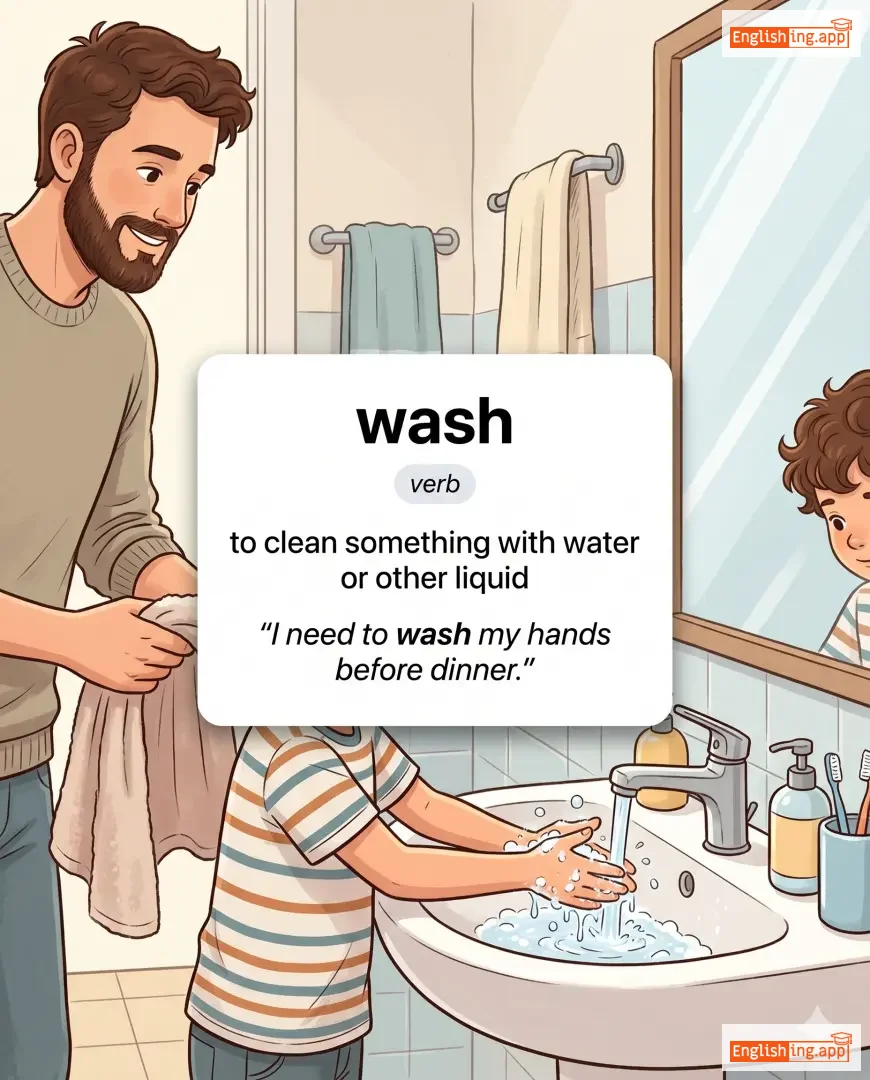
wash definition card — visual illustration of the meaning
verb
/wɒʃ/
(xi)

to clean something with water or other liquid

"I need to wash my hands before dinner."

"我需要在晚餐前洗手。" (Wo xuyao zai wancan qian xishou.)
adjective
/ˈwaɪəri/
瘦弱而强壮 (shòu ruò ér qiáng zhuàng)

Lean, tough, and strong, often with sinewy muscles.

"The wiry athlete moved with remarkable speed and agility."

"那个瘦弱的运动员以惊人的速度和敏捷性移动。" (Nàgè shòu ruò de yùn dòng yuán yǐ jīng rén de sù dù hé mǐn jié xìng yí dòng.)
noun
/ˈwɪmzi/
异想天开 (yì xiǎng tiānkāi)

playful or fanciful behavior or humor

"Her stories were full of whimsy and imagination."

"她的故事充满了异想天开和想象力。" (Tā de gùshì chōngmǎnle yìxiǎng tiānkāi hé xiǎngxiànglì.)
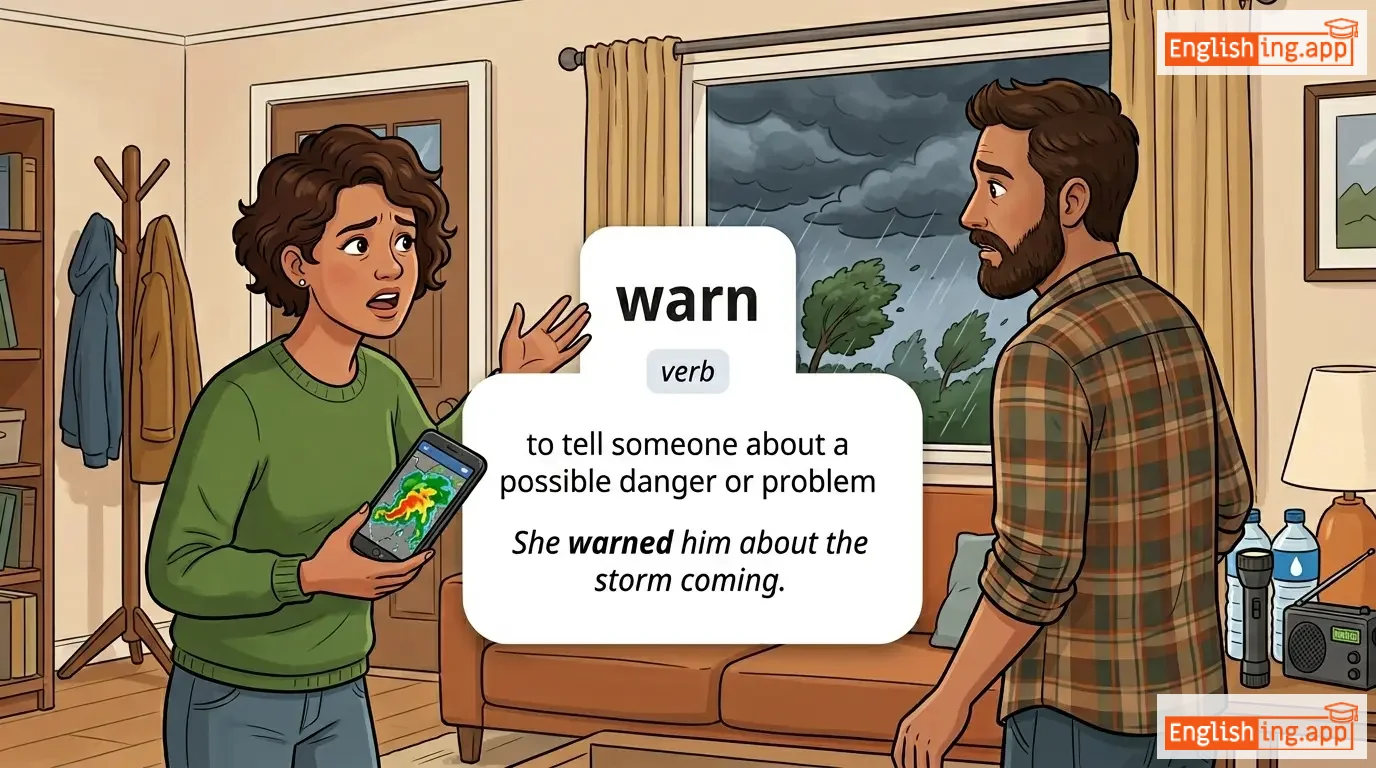
warn definition card — visual illustration of the meaning
verb
/wɔːrn/
警告 (jinggao)

to tell someone about a possible danger or problem

"She warned him about the storm coming."

"她警告他即将来临的暴风雨。" (Ta jinggao ta jijiang lailin de baofengyu.)
adverb
/wɛl/
(hǎo)

in a good or satisfactory way

"She did well in her exams."

"她在考试中做得很好。" (Tā zài kǎoshì zhōng zuò de hěn hǎo.)
adjective
/ˌwɛlˈbrɛd/
有教养的 (yǒu jiàoyǎng de)

Having or showing good manners; properly raised.

"She is a well-bred young lady with excellent manners."

"她是一个有教养的年轻女士,举止优雅。" (Tā shì yīgè yǒu jiàoyǎng de niánqīng nǚshì, jǔzhǐ yōuyǎ.)
adjective
/ˈwɪt.i/
机智的; 有趣的 (jīzhì de; yǒuqù de)

having or showing quick intelligence; amusing in a clever way

"Her witty response to the critic's question impressed the entire audience."

"她机智的回答让批评者的问题给整个观众留下了深刻的印象。" (Tā jīzhì de huídá ràng pīpíng zhě de wèntí gěi zhěnggè guānzhòng liúxiàle shēnkè de yìnxiàng.)
adjective
/ˌhoʊlˈhɑːrtɪd/
全心全意 (quan xin quan yi)

showing complete sincerity and commitment; fully enthusiastic

"She gave her wholehearted support to the project."

"她全心全意地支持这个项目。" (Ta quan xin quan yi de zhi chi zhe ge xiang mu.)
noun
/ˈwɒrənti/
保修期 (baoxiūqī)

A written guarantee given by a manufacturer or seller promising to repair or replace a product if necessary within a specified period.

"The laptop comes with a two-year warranty."

"这台笔记本电脑附带两年的保修期。" (Zhè tái bǐjìběn diànnǎo fùdài liǎng nián de bǎoxiūqī.)
noun
/ˈwel.wɪʃ.ər/
祝愿者 (zhù yuàn zhě)

a person who desires happiness or success for another

"Many well-wishers came to congratulate her on her graduation."

"许多祝愿者来祝贺她毕业。" (Xǔduō zhùyuàn zhě lái zhùhè tā bìyè.)
preposition
/wɪðˈaʊt/
没有 (méiyǒu)

in the absence of, or not having something

"He left without saying goodbye."

"他离开时没有说再见。" (Tā líkāi shí méiyǒu shuō zàijiàn.)
adjective
/waɪld/
野生 (yesheng)

living or growing in the natural environment; uncontrolled or untamed

"The children ran wild in the park."

"孩子们在公园里肆意奔跑。" (Haizimen zai gongyuan li siyi benpao.)
noun
/wɒsp/
黄蜂 (huangfeng)

a flying insect with a yellow and black striped body and a painful sting

"The wasp stung me when I disturbed its nest."

"当我打扰它的巢时,黄蜂刺伤了我。" (Dāng wǒ dǎrǎo tā de cháo shí, huángfēng cìshāng le wǒ.)
noun
/ˈwɛnzdeɪ/
星期三 (xingqisan)

the fourth day of the week, following Tuesday and preceding Thursday

"The meeting has been scheduled for Wednesday afternoon."

"会议安排在星期三下午。" (huiyi anpai zai xingqisan xiawu)
🤷‍♂️

whatever (watever)

pronoun
/wɒtˈɛvər/
任何事情 (renhe shiqing)

used to refer to anything or everything that is of the type mentioned

"You can choose whatever you like."

"你可以选择任何你想要的。" (Ni keyi xuanze renhe ni xiangyao de.)
adjective
/ˈhoʊlsəm/
健康的 (jiànkāng de)

promoting health or well-being; morally good and beneficial

"The retreat offered wholesome food and peaceful surroundings."

"度假胜地提供了健康的食物和宁静的环境。" (Dùjià shèngdì tígōngle jiànkāng de shíwù hé níngjìng de huánjìng.)