词汇表

英语词汇词典 | 单词含义、定义和示例

noun
/jɑːrd/
(mǎ)

a unit of linear measure equal to three feet or 0.9144 meters

"The garden is 50 yards long."

"花园长50码。" (Huāyuán cháng 50 mǎ.)
noun
/jɑːrn/
纱线 (shaxian)

spun thread used for knitting, weaving, or sewing; a long or rambling story

"She bought colorful yarn for knitting a sweater."

"她买了彩色的纱线来编织一件毛衣。" (Ta mǎi le cǎisè de shāxiàn lái biānzhī yī jiàn máoyī.)
noun
/jɔːn/
哈欠 (haqian)

an involuntary opening of the mouth and inhalation of air due to tiredness or boredom

"She couldn't suppress a yawn during the boring lecture."

"她在无聊的讲座中无法抑制哈欠。" (Ta zai wuliao de jiangzuo zhong wufa yizhi haqian.)
interjection
/jɛə/
是的 (shi de)

used to express agreement or affirmation

"Yeah, I’ll go to the store with you."

"是的,我会和你一起去商店。" (Shi de, wo hui he ni yiqi qu shangdian.)
noun
/jɪə/
(nian)

a period of 365 or 366 days, divided into 12 months

"This year, we are planning a trip to the mountains."

"今年,我们计划去山里旅游。" (Jin nian, wo men ji hua qu shan li lv you.)
noun
/ˈjɪərlɪŋ/
一岁动物,尤其是马 (yi sui dongwu, youqi shi ma)

an animal that is one year old, especially a horse

"The farmer sold the yearling at the livestock market."
"农民在牲畜市场卖掉了那只伊尔林。" (Nongmin zai shengchu shichang maichu le na zhi yilin.)
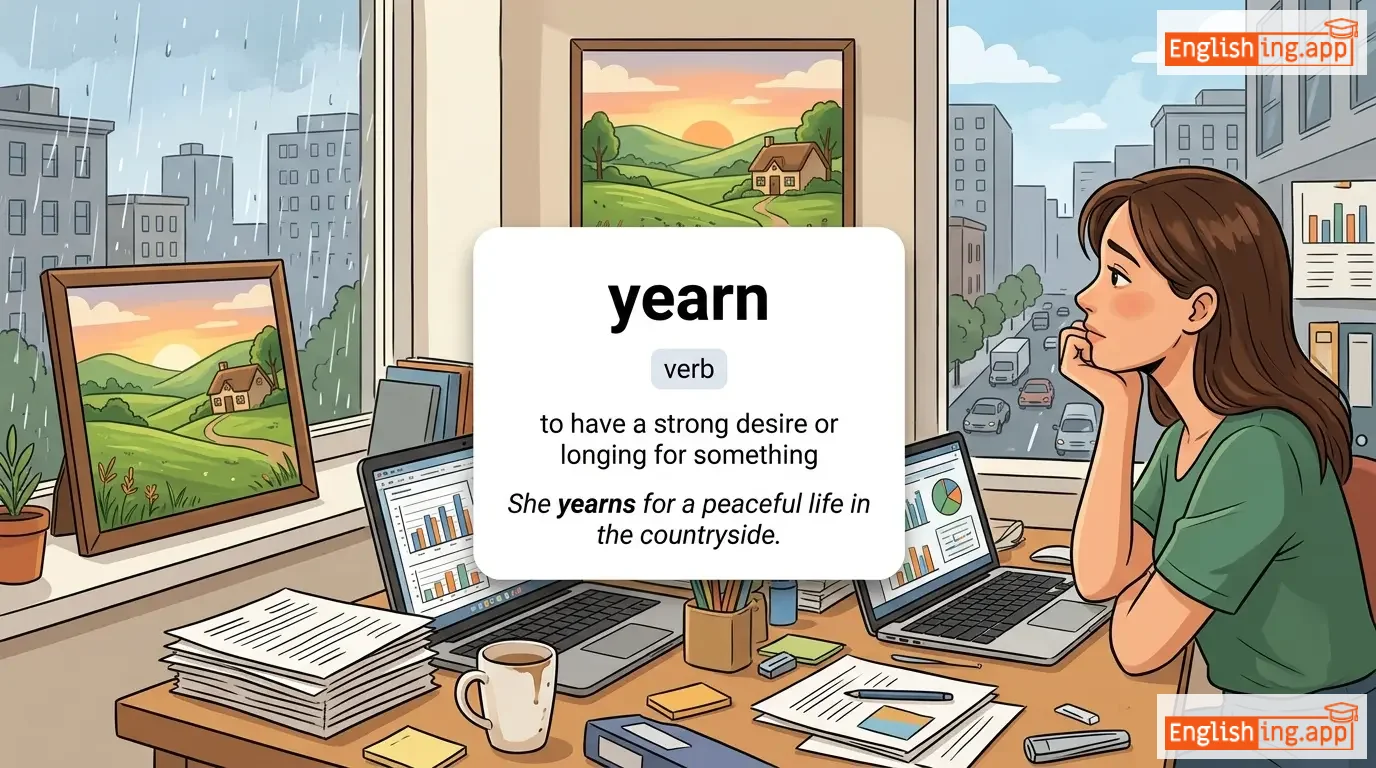
yearn definition card — visual illustration of the meaning
verb
/jɜːn/
渴望 (kěwàng)

to have a strong desire or longing for something

"She yearns for a peaceful life in the countryside."

"她渴望在乡村过上平静的生活。" (Tā kěwàng zài xiāngcūn guò shàng píngjìng de shēnghuó.)
noun
/jiːst/
酵母 (jiaomu)

microorganisms used in baking and brewing to cause fermentation

"Add yeast to the flour to make the bread rise."
"把酵母加到面粉中,让面包发起来。" (Ba jiao mu jia dao mian fen zhong, rang mian bao fa qi lai.)
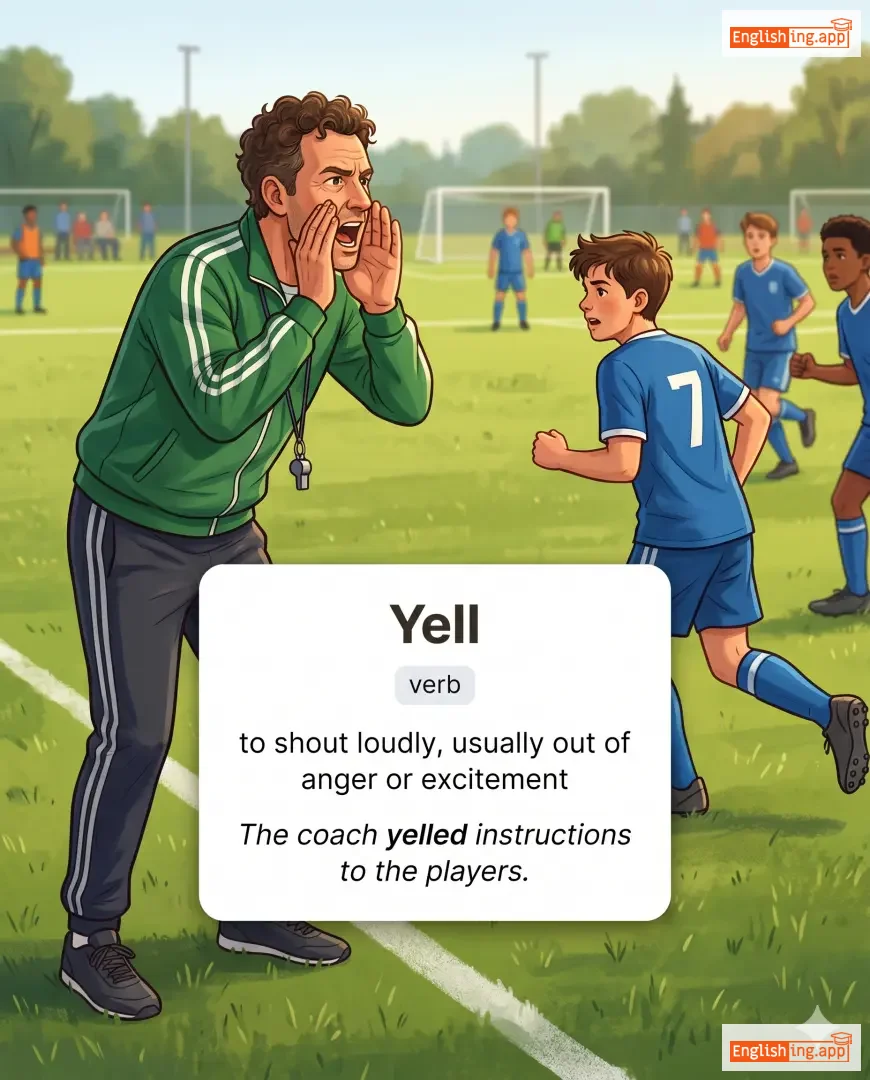
Yell definition card — visual illustration of the meaning
verb
/jɛl/
大声喊叫 (dàshēng hǎnjiào)

to shout loudly, usually out of anger or excitement

"The coach yelled instructions to the players."

"教练对球员大声喊叫着指令。" (Jiàoliàn duì qiúyuán dàshēng hǎnjiào zhe zhǐlìng.)
adjective
/ˈjɛləʊ/
黄色 (huángsè)

a color like that of ripe lemons or the sun

"The yellow flowers brightened up the whole garden."

"黄色的花朵照亮了整个花园。" (huángsè de huāduǒ zhàoliàngle zhěnggè huāyuán.)
noun
/ˈjeloʊ oʊliˈændər/
黄色夹竹桃 (huángsè jiā zhútáo)

a tropical flowering shrub with bright yellow flowers; also known as lucky nut

"The yellow oleander blooms throughout the year in warm climates."

"黄色夹竹桃在温暖的气候中一年四季开花。" (huángsè jiā zhútáo zài wēnnuǎn de qìhòu zhōng yī nián sì jì kāihuā.)
noun
/jɛn/
渴望 (kewang)

A deep, strong desire or craving.

"She felt a strong yen to travel the world."

"她感到强烈的渴望去环游世界。" (ta gandao qianglie de kewang qu huanyou shijie.)
noun
/ˈjoʊmən/
农民 / 忠诚的员工 (nóngmín / zhōngchéng de yuángōng)

A farmer who cultivates his own land; also used to describe someone performing loyal, useful service.

"He did yeoman service in completing the project on time."

"他在按时完成项目时做了忠诚的工作。" (Tā zài ànshí wánchéng xiàngmù shí zuòle zhōngchéng de gōngzuò.)
adverb
/jɛs/
(shi)

used to express affirmation, agreement, or consent

"Yes, I will be there at 5 o'clock."

"是的,我会在五点到那里。" (Shi de, wo hui zai wu dian dao nali.)
noun
/ˈjɛstərdeɪ/
昨天 (zuótiān)

the day before today

"Yesterday, we went to the park."
"昨天我们去了公园。" (Zuótiān wǒmen qùle gōngyuán.)
adverb
/jɛt/
(hái)

up until the present time, or a point in the past

"I haven’t finished my homework yet."

"我还没有完成我的家庭作业。" (Wǒ hái méiyǒu wánchéng wǒ de jiātíng zuòyè.)
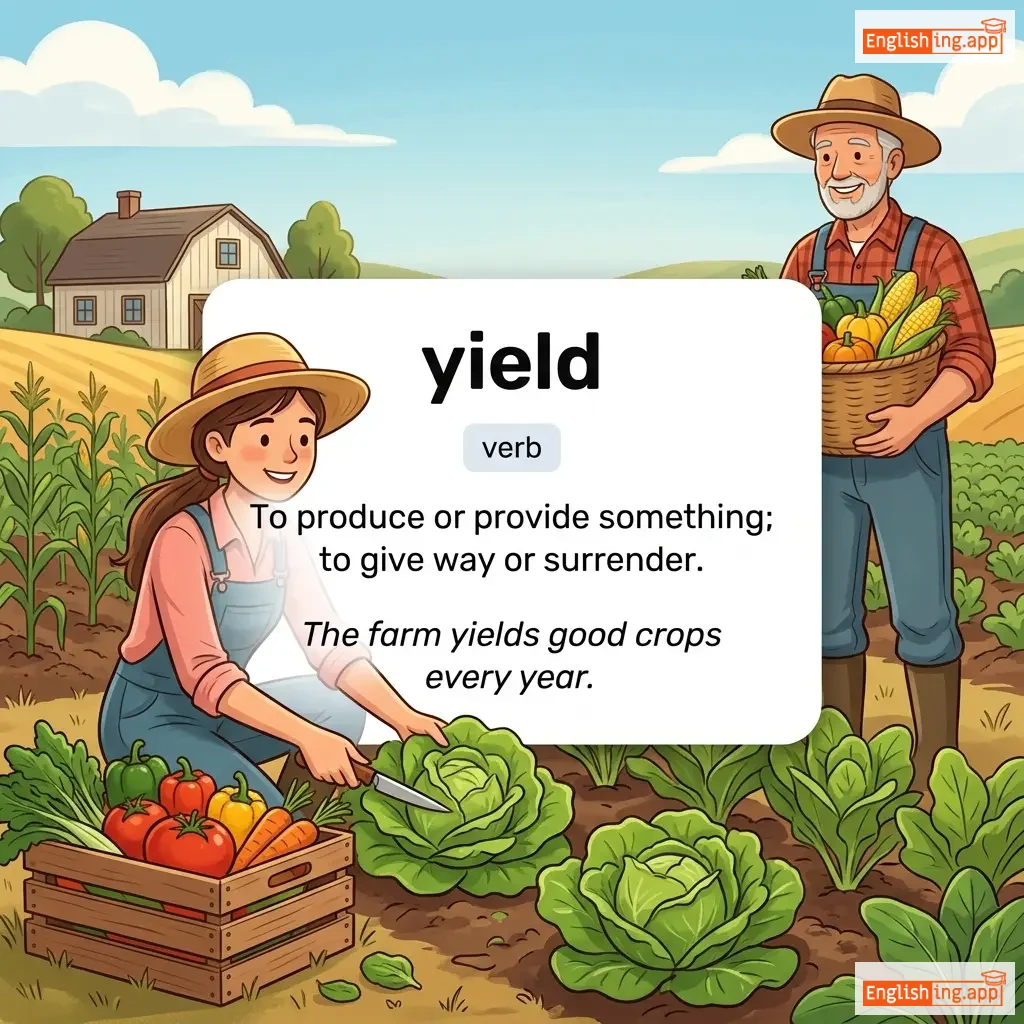
yield definition card — visual illustration of the meaning
verb
/jiːld/
产生 / 屈服 (chǎnshēng / qūfú)

To produce or provide something; to give way or surrender.

"The farm yields good crops every year."
"农场每年都产出好收成。" (Nóngchǎng měi nián dōu chǎnchū hǎo shōuchéng.)
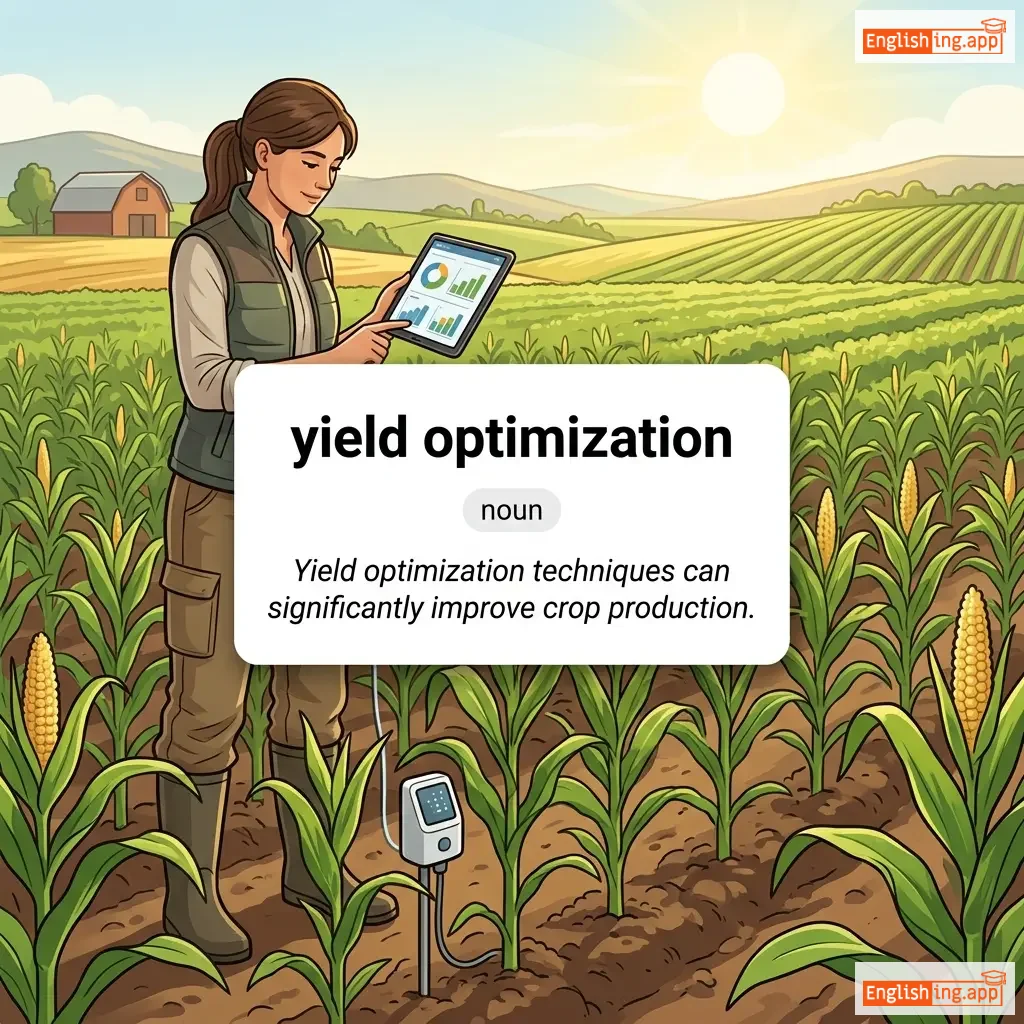
yield optimization definition card — visual illustration of the meaning
noun
/jiːld ˌɒptɪmaɪˈzeɪʃən/
产量优化 (chǎnliàng yōuhuà)

The process of maximizing the productivity or efficiency of crop production through various agricultural techniques and practices.

"Yield optimization techniques can significantly improve crop production."
"产量优化技术可以显著提高作物生产。" (Chǎnliàng yōuhuà jìshù kěyǐ xiǎnzhù tígāo zuòwù shēngchǎn.)
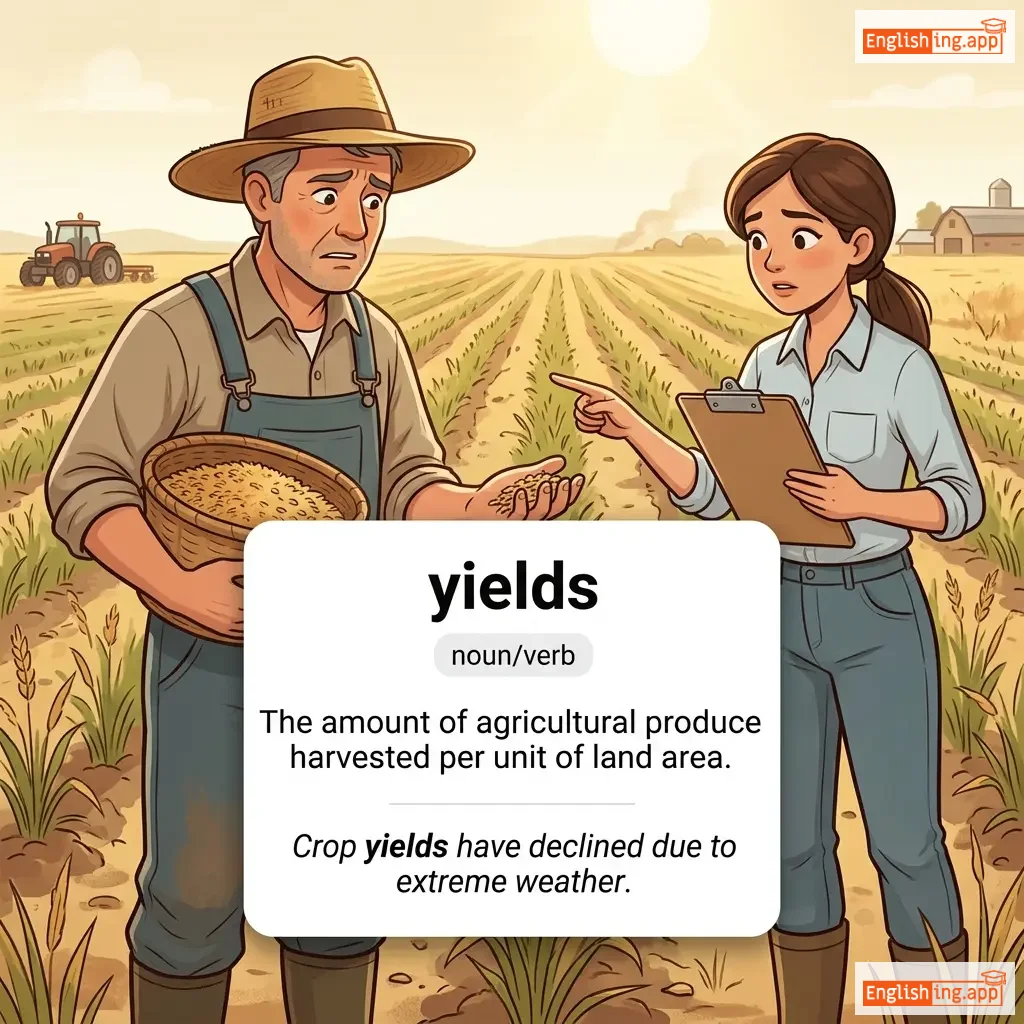
yields definition card — visual illustration of the meaning
noun/verb
jiːldz
产量 (chǎn liàng)

The amount of agricultural produce harvested per unit of land area.

"Crop yields have declined due to extreme weather."

"农作物的产量因极端天气而下降。" (Nóngzuòwù de chǎnliàng yīn jíduān tiānqì ér xiàjiàng.)
noun
/joʊk/
(è)

A wooden crosspiece fastened over the necks of animals; symbolically, a burden or oppression.

"The oxen were bound together by a heavy yoke."

"牛被一根沉重的轭绑在一起。" (Niú bèi yī gēn chénzhòng de è bǎng zài yīqǐ.)
noun
/ˈjoʊkəl/
乡巴佬 (xiangbaolao)

An uneducated and unsophisticated person from the countryside; a bumpkin.

"The city folks laughed at the yokel's simple ways."

"城市人嘲笑乡巴佬的简单方式。" (Chéngshì rén cháoxiào xiāng bā lǎo de jiǎndān fāngshì.)
noun
/joʊk/
蛋黄 (dàn huáng)

the yellow part of an egg

"The chef separated the egg yolk from the white."

"厨师将蛋黄从蛋白中分开。" (chú shī jiāng dàn huáng cóng dàn bái zhōng fēn kāi.)
noun
/jɔːr/
过去 (guoqu)

Time long past; bygone days.

"Legends of yore still inspire people today."

"过去的传说至今仍然激励着人们。" (Guoqu de chuanshuo zhiji rengran jili zhe renmen.)
pronoun
/juː/
(ni)

used to refer to the person or people being spoken to

"You are doing a great job!"

"你做得很好!" (Nǐ zuò de hěn hǎo!)
🧑‍🦱

Young (年轻)

adjective
/jʌŋ/
年轻 (niánqīng)

having lived or existed for a short time

"The young boy loves to play football."

"年轻的男孩喜欢踢足球。" (Niánqīng de nánhái xǐhuān tī zúqiú.)
noun
/jʌŋ fɪʃ/
幼鱼 (you yu)

juvenile or small fish; fish that has not reached maturity

"Young fish need protection from predators."

"幼鱼需要防止被掠食者攻击。" (you yu xu yao fang zhi bei lue shi zhe gong ji)
noun
/ˈjʌŋstər/
年轻人 (niánqīngrén)

a young person or child, especially a teenager or adolescent

"The park was full of youngsters playing football."

"公园里充满了踢足球的年轻人。" (Gōngyuán lǐ chōngmǎnle tī zúqiú de niánqīngrén.)
pronoun
/jɔːr/
你的 (nǐ de)

used to indicate possession or association

"Your book is on the table."

"你的书在桌子上。" (Nǐ de shū zài zhuōzi shàng.)
pronoun
/jɔːrz/
你的 (nǐ de)

belonging to or associated with the person or people that the speaker is addressing

"This pen is yours."

"这支钢笔是你的。" (Zhè zhī gāng bǐ shì nǐ de.)
pronoun
/jɔːrˈsɛlf/
自己 (zìjǐ)

used to refer to the person being addressed, often for emphasis or reflection

"You should look after yourself."

"你应该照顾自己。" (Nǐ yīnggāi zhàogù zìjǐ.)
noun
/juːθ/
青年 (qīngnián)

the period of life when a person is young, often associated with energy and vitality

"The youth are the future of the country."

"青年是国家的未来。" (Qīngnián shì guójiā de wèilái.)
adjective
/ˈjuːθfəl/
年轻的; 充满活力和新鲜感 (niánqīng de; chōngmǎn huólì hé xīnxiān gǎn)

having the qualities of youth; energetic and fresh

"Her youthful energy impressed everyone at work."

"她的青春活力给工作上的每个人留下了深刻印象。" (tā de qīngchūn huólì gěi gōngzuò shàng de měi gè rén liúxiàle shēnkè yìnxiàng.)