词汇表

英语词汇词典 | 单词含义、定义和示例

noun
/ˈɡæd.flaɪ/
讨厌的人 (tǎo yàn de rén)

A person who annoys or criticizes others to stimulate change or provoke action.

"The journalist was a gadfly, constantly questioning the government's policies."

"这位记者是一个讨厌的人,常常质疑政府的政策。" (Zhè wèi jìzhě shì yīgè tǎo yàn de rén, chángcháng zhìyí zhèngfǔ de zhèngcè.)
noun
/ˈɡædʒ.ɪt/
小工具 (xiao gongju)

A small mechanical or electronic device with a particular function, often novel or useful.

"He loves buying the latest kitchen gadgets."

"他喜欢购买最新的厨房小工具。" (Ta xihuan goumai zui xin de chufang xiao gongju.)
noun
/ɡæf/
错误 (cuo wu)

A social blunder or mistake; also a hook or device used in fishing or theater.

"He made a major gaff during the meeting by forgetting the client's name."

"他在会议中犯了一个大错误,忘记了客户的名字。" (Ta zai huiyi zhong fanle yige da cuowu, wangjile kehu de mingzi.)
noun
/ɡæf/
失误 (shiwu)

An unintentional act or remark causing embarrassment; a blunder.

"The politician's gaffe quickly spread on social media."

"政治家的失误迅速在社交媒体上传播。" (Zhengzhi jia de shiwu xunsu zai shejiao meiti shang chuanbo.)
noun
/ˈɡeɪəti/
欢欣 (huānxīn)

The state of being cheerful, lively, or full of fun.

"The festival was full of music, laughter, and gaiety."

"这个节日充满了音乐、笑声和欢欣。" (Zhège jiérì chōngmǎnle yīnyuè, xiàoshēng hé huānxīn.)
adverb
/ˈɡeɪli/
快乐地 (kuàilè de)

In a cheerful or lively way.

"Children ran gaily through the garden."

"孩子们快乐地在花园里奔跑。" (Háizimen kuàilè de zài huāyuán lǐ bēnpǎo.)
gain definition card — visual illustration of the meaning
verb
/ɡeɪn/
获得 (huoqu)

to obtain or achieve something, often an advantage or benefit

"She gained valuable experience from her internship."
"她从实习中获得了宝贵的经验。" (Ta cong shixi zhong huode le baogui de jingyan.)
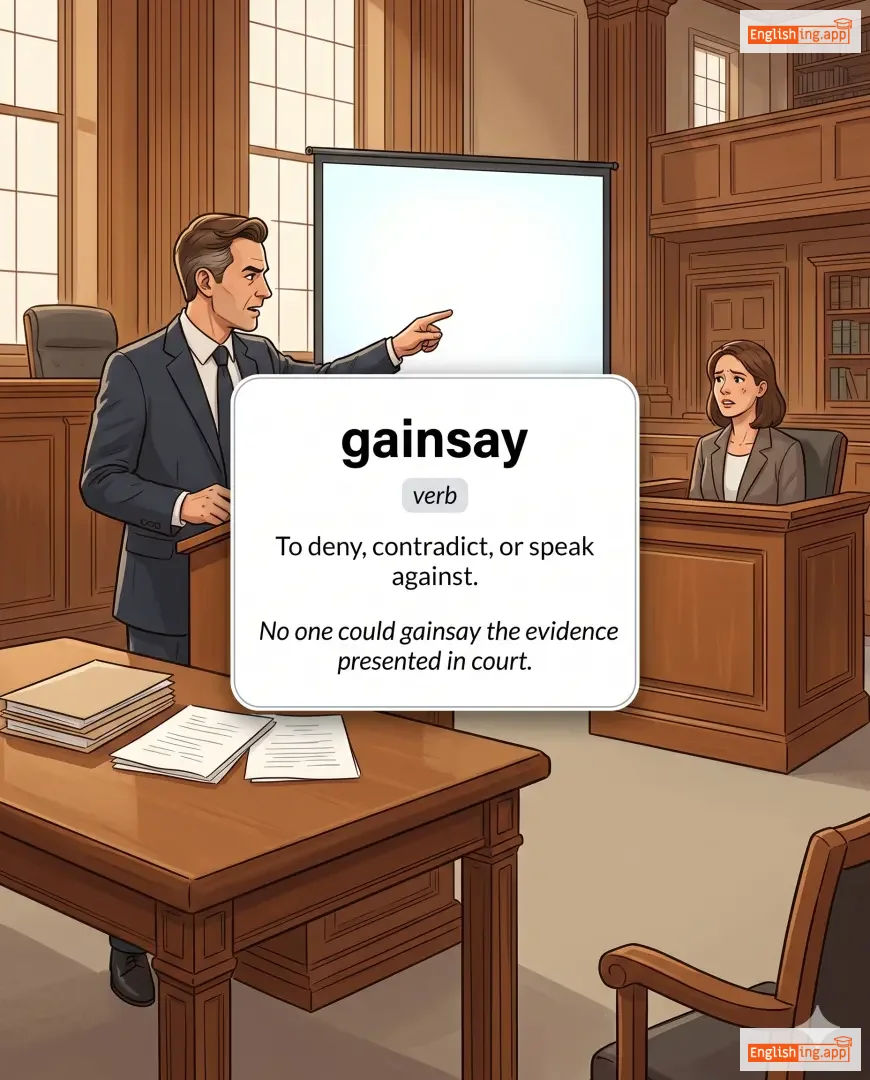
gainsay definition card — visual illustration of the meaning
verb
/ˌɡeɪnˈseɪ/
反驳 (fanbo)

To deny, contradict, or speak against.

"No one could gainsay the evidence presented in court."
"没有人能够反驳法庭上提出的证据。" (Méiyǒu rén nénggòu fǎnbó fǎtíng shàng tíchū de zhèngjù.)
noun
/ɡeɪt/
走路姿势 (zǒulù zīshì)

A person's manner of walking.

"His slow gait showed that he was tired."

"他缓慢的步伐显示他累了。" (Tā huǎnmàn de bùfá xiǎnshì tā lèile.)
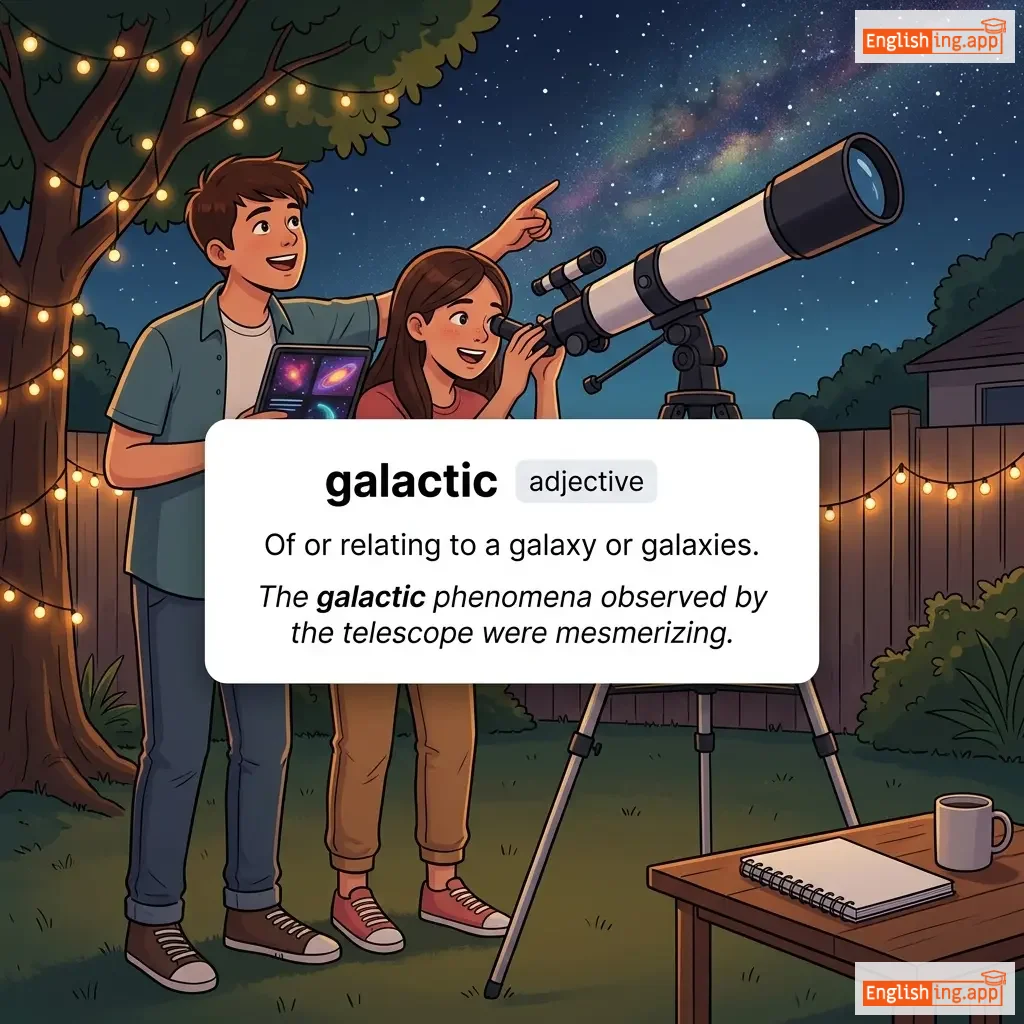
galactic definition card — visual illustration of the meaning
adjective
ɡəˈlæktɪk
与银河有关 (yu yinhe youguan)

Of or relating to a galaxy or galaxies.

"The galactic phenomena observed by the telescope were mesmerizing."
"通过望远镜观察到的银河现象令人着迷。" (Tongguo wangyuanjing guancha dao de yinhe xianxiang lingren zhamí.)
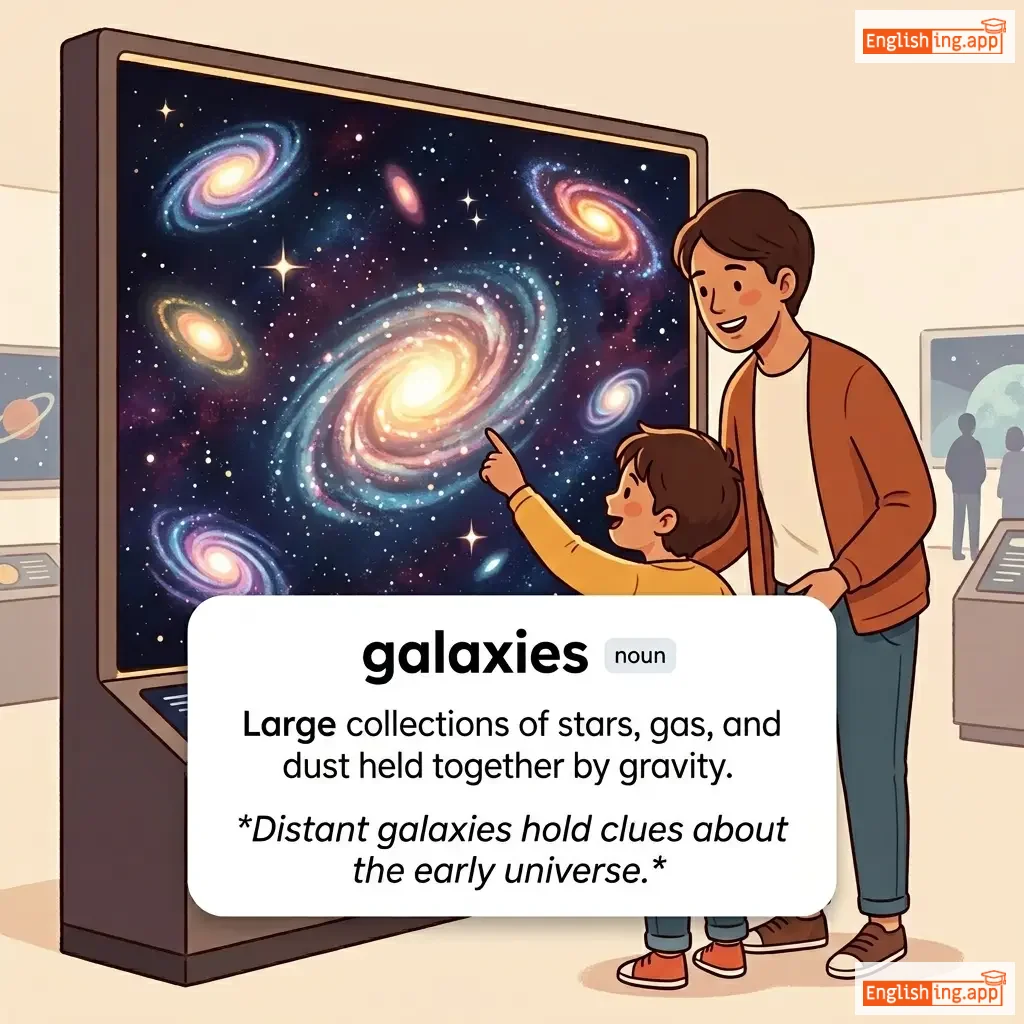
galaxies definition card — visual illustration of the meaning
noun
/ˈɡæl.ək.siːz/
星系 (xingxi)

Large collections of stars, gas, and dust held together by gravity.

"Distant galaxies hold clues about the early universe."

"遥远的星系包含了关于早期宇宙的线索。" (Yaoyuan de xingxi baohan le guanyu zaoqi yuzhou de xiansuo.)
noun
/ˈɡæləksi/
星系 (xingxi)

A massive system of stars, gas, dust, and dark matter bound together by gravity.

"The Milky Way is the galaxy that contains our solar system."

"银河系是包含我们太阳系的星系。" (Yínhéxì shì bāokuò wǒmen tàiyángxì de xīngxì.)
noun
/ɡeɪl/
暴风 (baofeng)

A very strong wind.

"The ship struggled to stay afloat during the gale."

"船只在暴风雨中努力保持漂浮。" (Chuan zhi zai baofengyu zhong nuli baochi piaofu.)
noun, verb
/ɡɔːl/
厚颜无耻,惹恼 (hòu yán wú chǐ, rě nǎo)

Annoyance, boldness, or to irritate.

"She had the gall to question his decision."

"她有胆量质疑他的决定。" (Tā yǒu dǎn liàng zhì yí tā de jué dìng.)
adjective
/ˈɡæl.ənt/
勇敢的, 英雄的 (yǒnggǎn de, yīngxióng de)

Brave, heroic, or chivalrous.

"The gallant firefighter saved the child from the burning building."

"勇敢的消防员从燃烧的建筑物中救出了孩子。" (Yǒnggǎn de xiāofángyuán cóng ránshāo de jiànzhú wù zhōng jiùchūle háizi.)
noun
/ˈɡæliən/
大帆船 (dà fān chuán)

A large sailing ship used mainly by Europeans from the 16th to 18th centuries.

"The Spanish galleon carried treasures across the Atlantic."

"西班牙的大帆船将财宝运过大西洋。" (Xībānyá de dà fān chuán jiāng cáibǎo yùn guò dàxīyáng.)
noun
/ˈɡæləri/
画廊 (huàláng)

A room or building for the display or sale of works of art.

"The gallery showcased modern paintings by local artists."

"画廊展示了当地艺术家的现代画作。" (Huàláng zhǎnshìle dāngdì yìshùjiā de xiàndài huàzuò.)
noun
/ˈɡæli/
船舱厨房 (chuáncāng chúfáng)

A low, flat ship used in ancient times, often with sails and oars; also, a kitchen on a ship or aircraft.

"The galley was filled with the smell of freshly cooked food."

"船舱厨房充满了新鲜烹饪食物的气味。" (Chuáncāng chúfáng chōngmǎnle xīnxiān pēngrèn shíwù de qìwèi.)
noun
/ˈɡælən/
加仑 (jiālún)

a unit of measurement for liquid capacity, equal to 4 quarts or approximately 3.8 liters

"He bought a gallon of milk."

"他买了一加仑牛奶。" (Tā mǎile yī jiālún niúnǎi.)
noun
/ˈɡæloʊz/
绞刑架 (jiaoxingjia)

A structure used for hanging criminals who have been sentenced to death.

"The criminal was led to the gallows at dawn."

"罪犯在黎明时分被带到绞刑架。" (zuìfàn zài límíng shí fēn bèi dài dào jiǎoxíng jià.)
adjective/adverb
/ɡəˈlɔːr/
大量的 (dà liàng de)

In large amounts; abundant or plentiful.

"There were books galore in the old library."

"在老图书馆里有大量的书。" (Zài lǎo túshūguǎn lǐ yǒu dàliàng de shū.)
adjective
/ɡælˈvænɪk/
电 / 强烈 (dian / qianglie)

Relating to electricity produced by chemical action; sudden and dramatic.

"The news had a galvanic effect on the audience."

"新闻对观众产生了电震动效应。" (Xinwen dui guanzhong chanshengle dian zhèndòng xiàoyìng.)
noun
/ˈɡælvəˌnɪzəm/
伽尔瓦尼主义 (jiā'ěrwǎní zhǔyì)

Electricity produced by chemical action, especially in a battery; the therapeutic use of electricity in medicine.

"Galvanism played a key role in early experiments with electricity."

"伽尔瓦尼主义在早期的电学实验中发挥了关键作用。" (Jiā'ěrwǎní zhǔyì zài zǎoqī de diànxué shíyàn zhōng fāhuīle guānjiàn zuòyòng.)
verb
/ˈɡælvənaɪz/

to shock or excite someone into taking action; to coat iron or steel with a protective layer of zinc

"The speech galvanized the crowd into action."

noun
/ˈɡæmbɪt/
开局牺牲 (kāijú xīshēng)

a calculated move or remark intended to gain an advantage, especially in chess or conversation

"His opening gambit in the debate caught everyone by surprise."

"他在辩论中的开局牺牲让所有人都吃惊。" (Tā zài biànlùn zhōng de kāijú xīshēng ràng suǒyǒu rén dōu chījīng.)
gamble definition card — visual illustration of the meaning
verb
/ˈɡæmbəl/
赌博 (dǔbó)

to risk money or resources on an uncertain outcome, often in games of chance

"He decided to gamble all his savings on the risky venture."

"他决定将所有的积蓄赌在那个冒险的项目上。" (Tā juédìng jiāng suǒyǒu de jīxù dǔ zài nàgè màoxiǎn de xiàngmù shàng.)
noun
/ˈɡæm.blər/
赌徒 (dǔtú)

a person who gambles regularly, typically someone who cannot resist the urge to gamble

"The experienced gambler knew when to fold his cards and when to bet big."

"经验丰富的赌徒知道什么时候该放弃牌局,什么时候该下大赌注。" (jīngyàn fēngfù de dǔtú zhīdào shénme shíhòu gāi fàngqì páijú, shénme shíhòu gāi xià dà dǔzhù)
noun
/ˈɡæmblɪŋ/
赌博 (dǔbó)

the activity of betting money or valuables on an outcome, often involving risk

"He got addicted to gambling at the casino."
"他在赌场上成瘾于赌博。" (Ta zai du chang shang cheng yin yu du bo.)
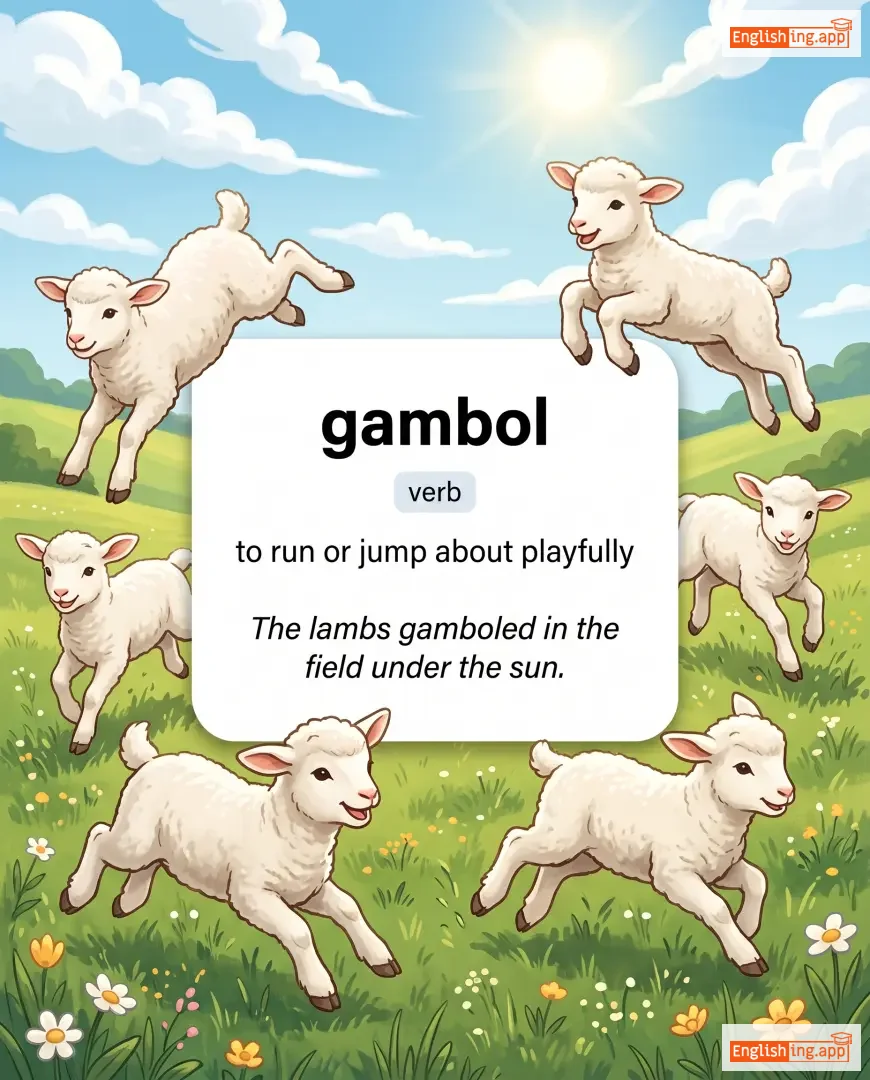
gambol definition card — visual illustration of the meaning
verb
/ˈɡæmbəl/
开心地跳跃 (kaixin de tiaoyue)

to run or jump about playfully

"The lambs gamboled in the field under the sun."

"小羊在阳光下在田野里欢快地跳跃。" (Xiao yang zai yangguang xia zai tianye li huankuai de tiaoyue.)
noun
/ɡeɪm/
游戏 (yóuxì)

An activity or sport played for amusement, competition, or skill.

"They played a football game in the afternoon."

"他们下午踢了场足球比赛。" (Tāmen xiàwǔ tīle chǎng zúqiú bǐsài.)
adverb
/ˈɡeɪmli/
勇敢地 (yǒnggǎn de)

in a brave, spirited, or determined manner

"She gamely accepted the challenge despite the difficulties."

"尽管有困难,她勇敢地接受了挑战。" (Jǐnguǎn yǒu kùnnán, tā yǒnggǎn de jiēshòule tiǎozhàn.)
gameplay definition card — visual illustration of the meaning
noun
ˈɡeɪm.pleɪ
游戏玩法 (youxi wanfa)

The tactical aspects of a game, such as its plot and the way it is played.

"The team's gameplay was innovative."

"该队的游戏玩法具有创新性。" (Gai dui de youxi wanfa juxi chuangxinxing.)
noun
/ˈɡeɪm.stər/
玩家 (wánjiā)

A person who plays games, especially one who plays them skillfully or professionally.

"The old tavern was filled with gamesters competing in cards and dice."

"那个旧酒馆里充满了玩家,他们在玩纸牌和骰子游戏。" (Nàgè jiù jiǔguǎn lǐ chōngmǎn le wánjiā, tāmen zài wán zhǐpái hé shǎizi yóuxì.)
gaming definition card — visual illustration of the meaning
noun
/ˈɡeɪmɪŋ/

the action or practice of playing games, especially video games

"Gaming has become a popular pastime among teenagers."

noun
/ˈɡæm.ət/
完整范围 (wánzhěng fànwéi)

The complete range or scope of something.

"Her emotions ran the gamut from joy to sorrow in just a few minutes."

"她的情绪在几分钟内从快乐转为悲伤。" (Tā de qíngxù zài jǐ fēnzhōng nèi cóng kuàilè zhuǎn wéi bēishāng.)
noun
/ˈɡændər/
雄鹅 (xiong e)

male goose

"The gander protected his family from the approaching dog."

"这只雄鹅保护了他的家人免受靠近的狗的攻击。" (Zhe zhi xiong e baohule tade jiaren mianshou kaojin de gou de gongji.)
noun
/ɡæŋ/
团伙 (tuánhuǒ)

An organized group of people, often involved in crime or violence.

"The gang was arrested by the police last night."

"那个团伙昨晚被警察逮捕了。" (nàge tuánhuǒ zuó wǎn bèi jǐngchá dàibǔ le.)
noun
/ɡænˈdʒɛtɪk liːf fɪʃ/
冈吉斯叶鱼 (Gang ji si ye yu)

a small freshwater fish species found in the Ganges river system, known for its leaf-like appearance

"The Gangetic Leaf Fish is commonly found in the rivers of Bangladesh."

"冈吉斯叶鱼通常在孟加拉国的河流中发现。" (Gang ji si ye yu tong chang zai Meng jia la guo de he liu zhong fa xian)
adjective
/ˈɡæŋ.ɡli/
高瘦且笨拙 (gāo shòu qiě bèn zhuō)

Tall, thin, and awkward in movement or appearance.

"The gangly teenager stumbled while trying to dance."

"那个笨拙的青少年在跳舞时跌倒了。" (Nàgè bèn zhuō de qīngshàonián zài tiàowǔ shí diēdǎo le.)
noun
/ˈɡæŋ.ɡriːn/
坏疽 (huàiju)

The death of body tissue due to lack of blood supply or infection.

"If untreated, the wound may lead to gangrene."
"如果不治疗,伤口可能会导致坏疽。" (Rúguǒ bù zhìliáo, shāngkǒu kěnéng huì dǎozhì huàiju.)
🛳️

gangway

noun
/ˈɡæŋ.weɪ/

A narrow passage or walkway; also an exclamation used to clear the way.

"The sailors lowered the gangway for passengers to board."

noun
/ɡæp/
空隙 / 差距 (kongxi / chaju)

An empty space or break between two objects or parts; a difference or disparity.

"There is a huge gap between the rich and the poor."

"富人和穷人之间存在着巨大的差距。" (Fùrén hé qióngrén zhījiān cúnzài zhe jùdà de chājù.)
gape definition card — visual illustration of the meaning
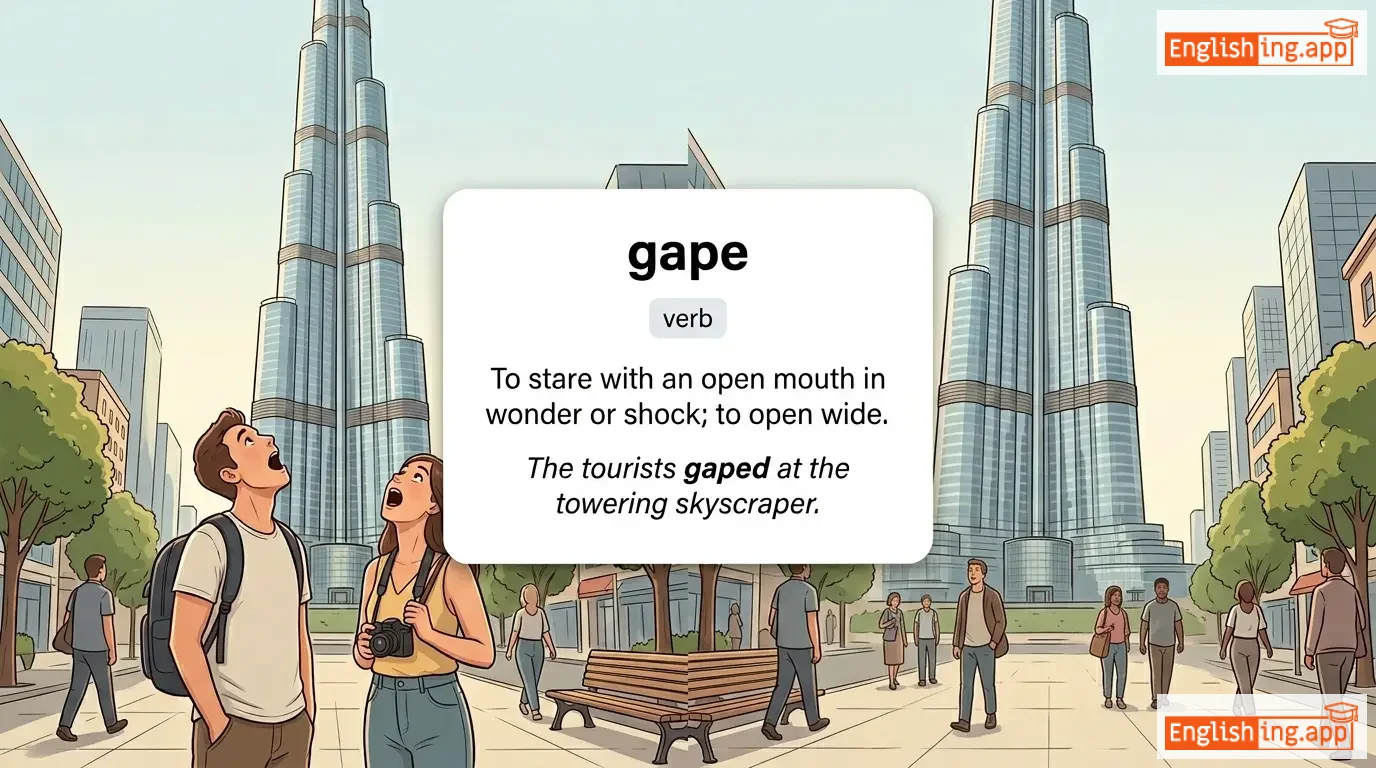
verb
/ɡeɪp/
张大嘴巴看 (zhang da zuiba kan)

To stare with an open mouth in wonder or shock; to open wide.

"The tourists gaped at the towering skyscraper."

"游客们张大嘴巴看着那座高耸的摩天大楼。" (Youkemeng zhang da zuiba kan zhe na zuo gaosong de motian dalou.)
noun
/ɡəˈrɑːʒ/ or /ɡəˈrɑːdʒ/
车库 (chēkù)

A building or space for housing cars or vehicles.

"He parked his car in the garage."

"他把车停在车库里。" (Tā bǎ chē tíng zài chēkù lǐ.)
noun
/ˈɡɑːrbɪdʒ/
垃圾 (laji)

waste material; things that are no longer useful or wanted

"Please take out the garbage before it starts to smell."

"请把垃圾拿出去,免得开始发臭。" (Qǐng bǎ lājī ná chūqù, miǎn de kāishǐ fāchòu.)
verb
/ˈɡɑːrbəl/
扰乱 (yao luan)

To reproduce a message in a confused, distorted, or unclear way.

"The poor phone connection garbled his words."

"差的电话连接使他的话语变得混乱。" (cha de dianhua lianjie shi ta de huayu biande hunluan.)
adjective
/ˈɡɑːrbəld/
混乱的 (hùnluàn de)

Describes speech or text that is distorted or unclear.

"The radio broadcast was full of garbled messages."

"广播中充满了难以理解的信息。" (Guǎngbò zhōng chōngmǎn le nán yǐ lǐjiě de xìnxī.)
noun
/ˈɡɑːrdn/
花园 (huāyuán)

A piece of ground where flowers, vegetables, or plants are grown.

"She grows roses in her garden."

"她在她的花园里种玫瑰。" (Tā zài tā de huāyuán lǐ zhòng méiguī.)
noun
/ˈɡɑːr.dən.ər/
园丁 (yuándīng)

a person who tends and cultivates a garden

"The gardener planted beautiful flowers in the backyard."

"园丁在后院种下了美丽的花朵。" (Yuándīng zài hòuyuàn zhòng xiàle měilì de huāduǒ.)
noun
/ɡɑːrˈdiː.ni.ə/
栀子花 (zhizihua)

a white or yellow fragrant flower with waxy petals

"The gardenia bush produced beautiful white flowers with a lovely scent."

"栀子花丛开出了美丽的白花,散发出迷人的香气。" (zhizihua cong kaichu le meili de baihua sanfa chu miren de xiangqi)