词汇表

英语词汇词典 | 单词含义、定义和示例

noun
/kæb/
出租车 (chūzūchē)

a taxi or car for hire with a driver

"We took a cab to the airport."

"我们坐出租车去了机场。" (Wǒmen zuò chūzūchē qùle jīchǎng.)
🕵️‍♂️

Cabal (卡巴尔)

noun
/kəˈbæl/
阴谋集团 (yinmou jituan)

A secret group or faction engaged in plotting or intrigue.

"A small cabal was working behind the scenes to influence the election."

"一个小的阴谋集团正在幕后工作,试图影响选举。" (Yi ge xiao de yinmou jituan zhengzai muhoushi gongzuo, shitul yingxiang xuanshu.)
noun
/ˈkæbəˌlɪzəm/
卡巴利主义 (kabalizhuyi)

The doctrines, practices, or secretive dealings of a cabal.

"The historian wrote extensively about cabalism in the royal court."

"历史学家在王室宫廷中广泛写作关于卡巴利主义的内容。" (Lishixuejia zai wangshi gongting zhong guangfan xiezuo guanyu kabalizhuyi de neirong.)
noun
/ˈkæb.ɪdʒ/
卷心菜 (juǎn xīncài)

a round vegetable with thick green or purple leaves that can be eaten cooked or raw

"I need to buy some cabbage to make coleslaw for dinner."

"我需要买一些卷心菜来做晚餐的沙拉。" (Wǒ xū yào mǎi yīxiē juǎn xīncài lái zuò wǎn cān de shā lā.)
noun
/ˈkæbɪn/
小屋 (xiao wu)

a small shelter or house, often made of wood in a remote area

"They spent the weekend in a cozy cabin in the mountains."

"他们在山中的一个舒适小屋里度过了周末。" (Tamen zai shan zhong de yige shushi xiao wu li duoguo le zhoumo.)
noun
/ˈkæbənɪt/
内阁 / 橱柜 (nèi gé / chú guì)

A group of senior government ministers; or a cupboard with shelves or drawers.

"The prime minister reshuffled the cabinet last month."

"总理上个月重新调整了内阁。" (Zǒnglǐ shàng gè yuè chóngxīn tiáozhěngle nèi gé.)
cable definition card — visual illustration of the meaning
📡

cable

noun
/ˈkeɪ.bəl/

a thick, strong rope made of metal wires or fibers; a system of wires used for transmitting signals or electricity

"The workers used a steel cable to lift the heavy equipment."

noun
/kæʃ/
缓存 (huancun)

A hidden storage of items or a high-speed memory in computing.

"The hikers found a cache of supplies hidden under the rocks."
"远足者在岩石下发现了一个隐藏的物资存储。" (Yuan zu zhe zai yan shi xia fa xian le yi ge yin cang de wu zi cun chu.)
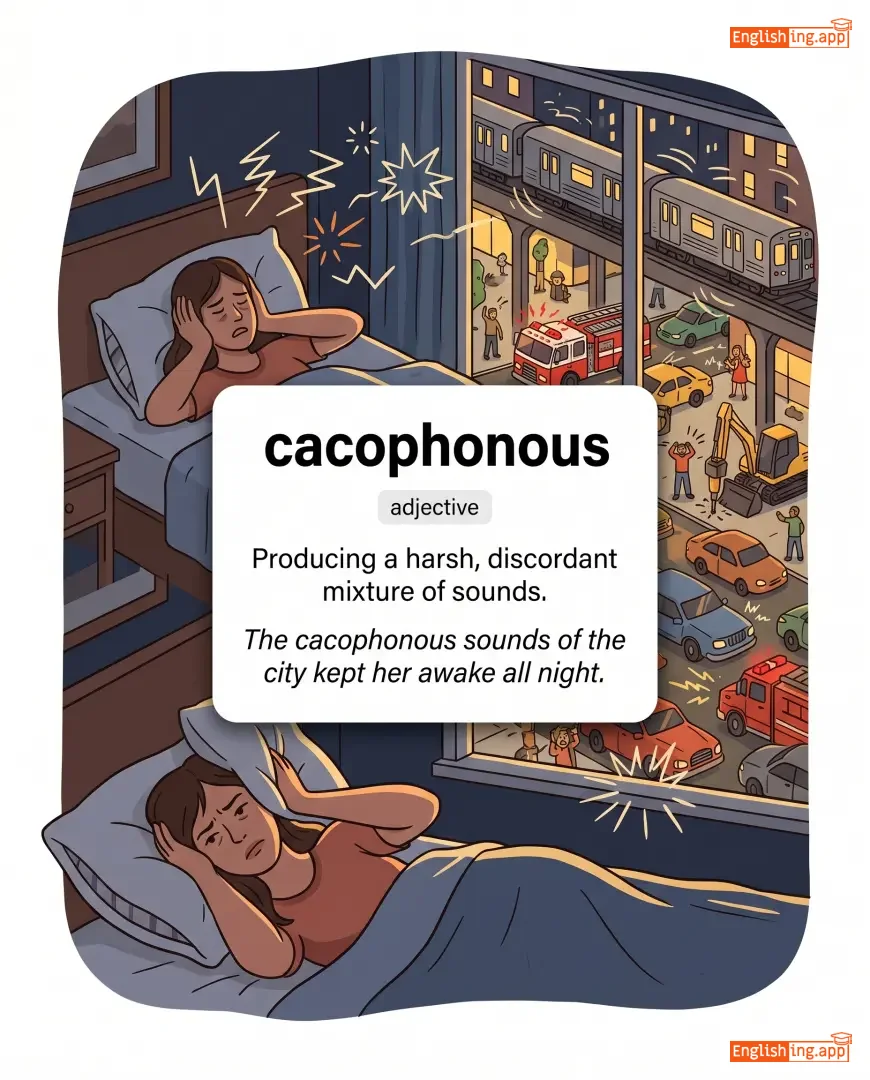
cacophonous definition card — visual illustration of the meaning
adjective
/kəˈkɒfənəs/
刺耳的声音 (cì ěr de shēng yīn)

Producing a harsh, discordant mixture of sounds.

"The cacophonous sounds of the city kept her awake all night."

"城市的刺耳声音让她整晚都无法入睡。" (Chéngshì de cì ěr shēngyīn ràng tā zhěng wǎn dōu wúfǎ rùshuì.)
noun
/kəˈkɒfəni/
刺耳的噪音 (cì ěr de zàoyīn)

A harsh, discordant mixture of sounds.

"The cacophony of horns made it impossible to concentrate."

"喇叭的刺耳声音使人无法集中注意力。" (Lǎbā de cì ěr shēngyīn shǐ rén wúfǎ jízhōng zhùyì lì.)
noun
/kæd/
坏蛋; 粗鲁 (huài dàn, cū lǔ)

a man who behaves dishonorably, especially toward women

"Everyone at the party avoided him because he was known to be a cad."

"派对上的每个人都避开了他,因为他以一个坏蛋著称。" (pài duì shàng de měi gè rén dōu bì kāi le tā, yīn wèi tā yǐ yí gè huài dàn zhù chēng.)
noun
/kəˈdævər/
尸体 (shīti)

A dead human body, especially one used for medical study.

"Medical students dissected the cadaver to learn about human anatomy."

"医学生解剖了尸体以了解人体解剖学。" (Yīxuéshēng jiěpōu le shīti yǐ liǎojiě réntǐ jiěpōu xué.)
adjective
/kəˈdævərəs/
尸体般的 (shītǐ bān de)

Resembling a corpse; very pale, thin, or bony.

"His cadaverous appearance shocked everyone at the party."

"他那尸体般的外貌让聚会中的每个人都感到震惊。" (Tā nà shītǐ bān de wàimào ràng jùhuì zhōng de měi gèrén dōu gǎndào zhènjīng.)
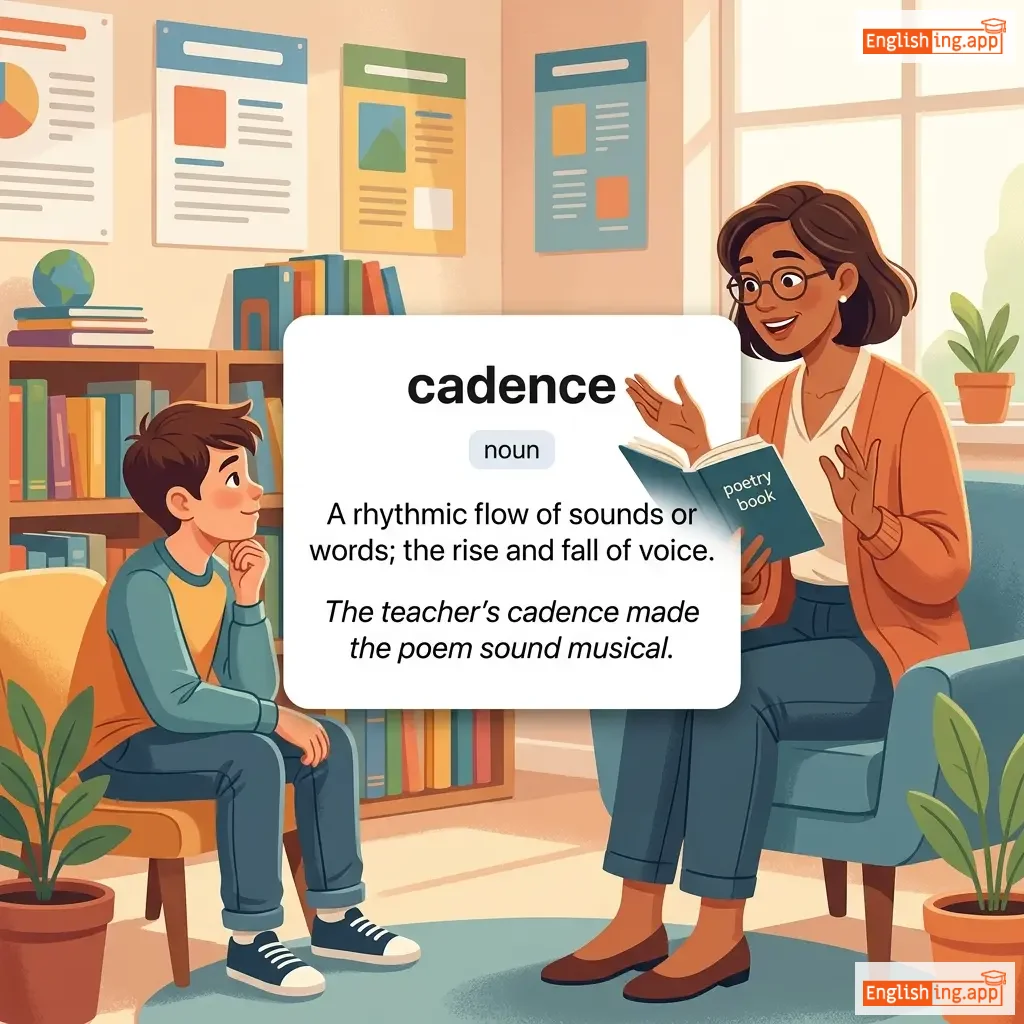
cadence definition card — visual illustration of the meaning
noun
/ˈkeɪdəns/

A rhythmic flow of sounds or words; the rise and fall of voice.

"The teacher's cadence made the poem sound musical."

noun
/kəˈdɛnzə/
精心准备的独奏段落 (jīngxīn zhǔnbèi de dúzòu duànluò)

An elaborate solo passage in a piece of music, usually near the end.

"The pianist performed a brilliant cadenza before the final movement."

"钢琴家在最后一个乐章之前演奏了一段精彩的卡登扎。" (Gāngqín jiā zài zuìhòu yīgè yuèzhāng zhīqián yǎnzòule yī duàn jīngcǎi de kǎdēngzhā.)
noun
/kəˈdɛt/
军校生 (junxiaosheng)

A young trainee in the armed forces, police, or other organization.

"The cadet marched proudly in the parade."

"军校生在游行中自豪地行进。" (Junxiaosheng zai youxing zhong zihao de xingjin.)
cadge definition card — visual illustration of the meaning
verb
/kædʒ/
乞讨 (kaiji)

To beg or obtain something, especially food or money, without paying for it.

"He tried to cadge a free meal from the restaurant."
"他试图从餐厅要一顿免费的饭。" (Tā shìtú cóng cāntīng yào yī dùn miǎnfèi de fàn.)
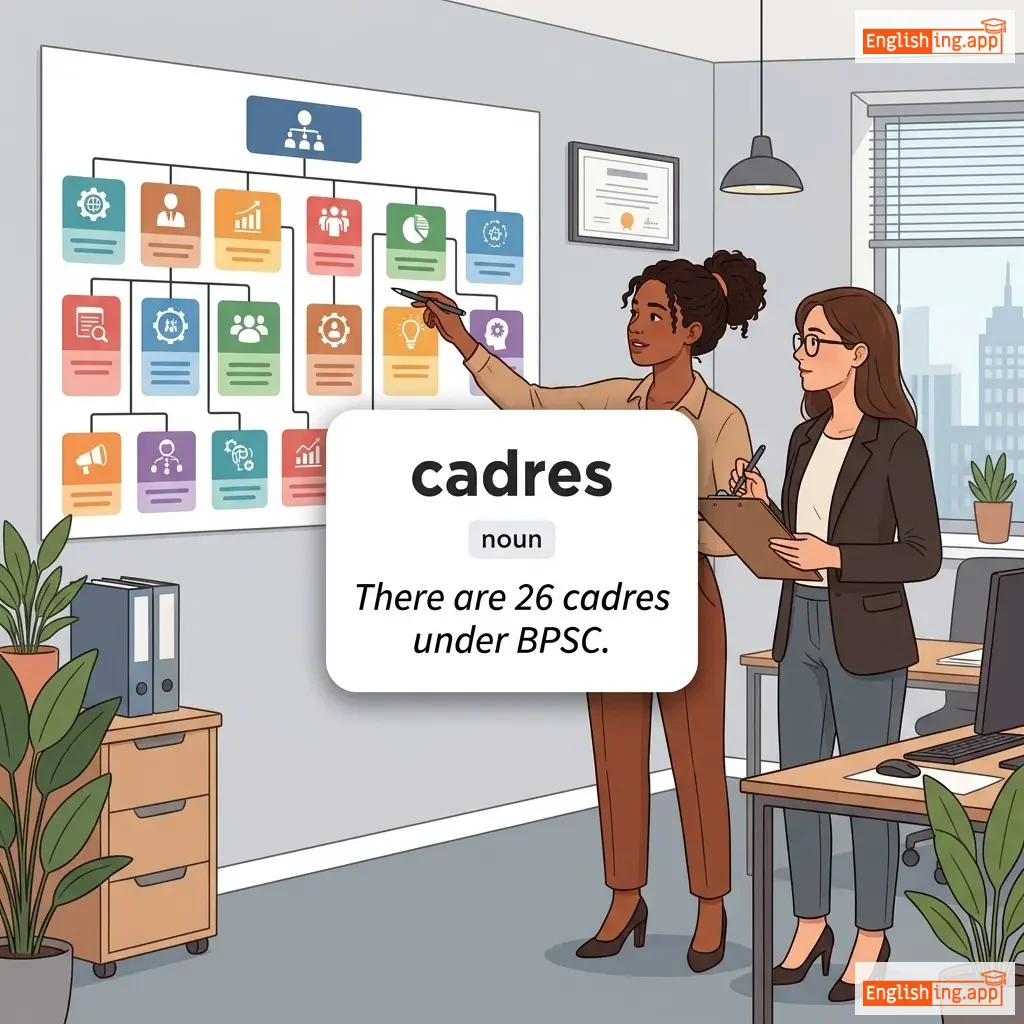
cadres definition card — visual illustration of the meaning
noun
ˈkɑː.dərz
干部 (gànbù)

A small group of people specially trained for a particular purpose or profession; a group of activists in a communist or other political organization.

"There are 26 cadres under BPSC."

"BPSC下有26个干部。" (BPSC xià yǒu 26 gè gànbù.)
noun
/keɪdʒ/
笼子 (longzi)

a structure of bars or wires in which birds or animals are kept

"The bird sang happily inside its cage."

"鸟儿在它的笼子里快乐地歌唱。" (Niǎo er zài tā de lóngzi lǐ kuàilè de gēchàng.)
noun
/ˈkeɪ.tɪf/
懦夫 (nuofu)

A contemptible or cowardly person.

"The knight despised the caitiff who betrayed his comrades."

"骑士鄙视那个背叛同伴的懦夫。" (Qishi bishi nage beipan tongban de nuofu.)
verb
/kəˈdʒoʊl/
哄骗 (hōngpiàn)

To persuade someone to do something by flattery or gentle urging.

"She managed to cajole her friend into joining the trip."

"她成功地说服她的朋友加入这次旅行。" (Tā chénggōng de shuōfú tā de péngyǒu jiārù zhè cì lǚxíng.)
noun
/kəˈdʒoʊləri/
奉承 (fengcheng)

Flattering or coaxing talk intended to persuade someone.

"Through cajolery, he convinced his boss to grant him a raise."

"通过奉承,他说服了老板给他加薪。" (Tōngguò fèngchéng, tā shuōfúle lǎobǎn gěi tā jiāxīn.)
noun
/keɪk/
蛋糕 (dangao)

a sweet baked food made from flour, sugar, and other ingredients

"She baked a chocolate cake for her friend's birthday."

"她为朋友的生日烤了一个巧克力蛋糕。" (Ta wei pengyou de shengri kao le yige qiaokeli dangao.)
noun
/kəˈlæmɪti/
灾难 (zainan)

An event causing great damage, distress, or disaster.

"The earthquake was a calamity that left thousands homeless."
"地震是一场灾难,造成了成千上万的人无家可归。" (Dizhen shi yi chang zainan, zaoceng le chengqian shangwan de ren wujia kegui.)
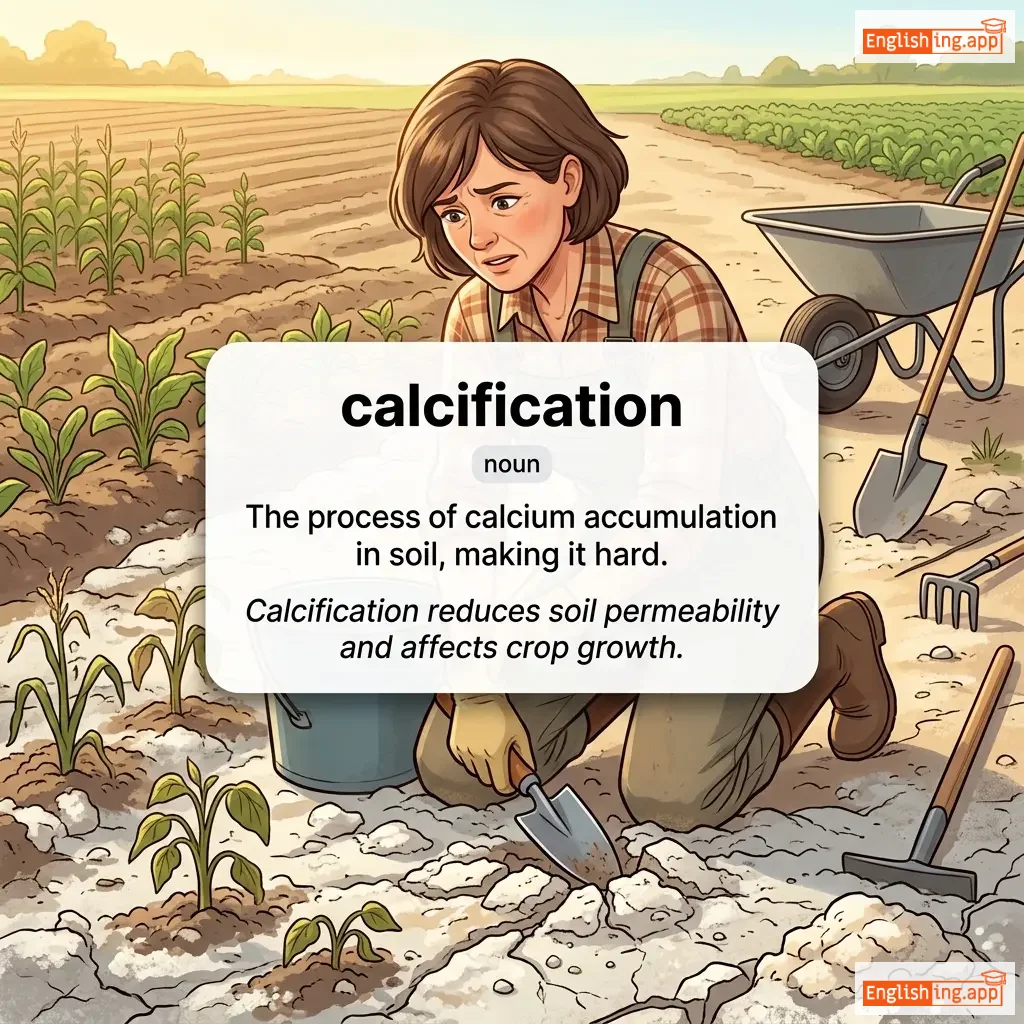
calcification definition card — visual illustration of the meaning
noun
/ˌkæl.sɪ.fɪˈkeɪ.ʃən/
钙化 (gaihua)

The process of calcium accumulation in soil, making it hard.

"Calcification reduces soil permeability and affects crop growth."

"钙化减少了土壤的渗透性,并影响作物的生长。" (Gaihua jiǎnshǎo le tǔrǎng de shèntòuxìng, bìng yǐngxiǎng zuòwù de shēngzhǎng.)
verb
/ˈkælsɪfaɪ/
通过钙盐沉积变硬 (tōngguò gài yán chénjī bìng yìng)

To harden by deposition of calcium salts; to become rigid or inflexible.

"Over time, the tissue began to calcify and lose flexibility."

"随着时间的推移,组织开始钙化并失去柔韧性。" (Suízhe shíjiān de tuīyí, zǔzhī kāishǐ gàihuà bìng shīqù róurènxìng.)
adjective
/ˈkælkjʊləbl/
可计算的 (ke ji suan de)

Capable of being calculated, estimated, or measured.

"The risk involved in the project is calculable."
"项目中的风险是可以计算的。" (Xiàngmù zhōng de fēngxiǎn shì kě jìsuàn de.)
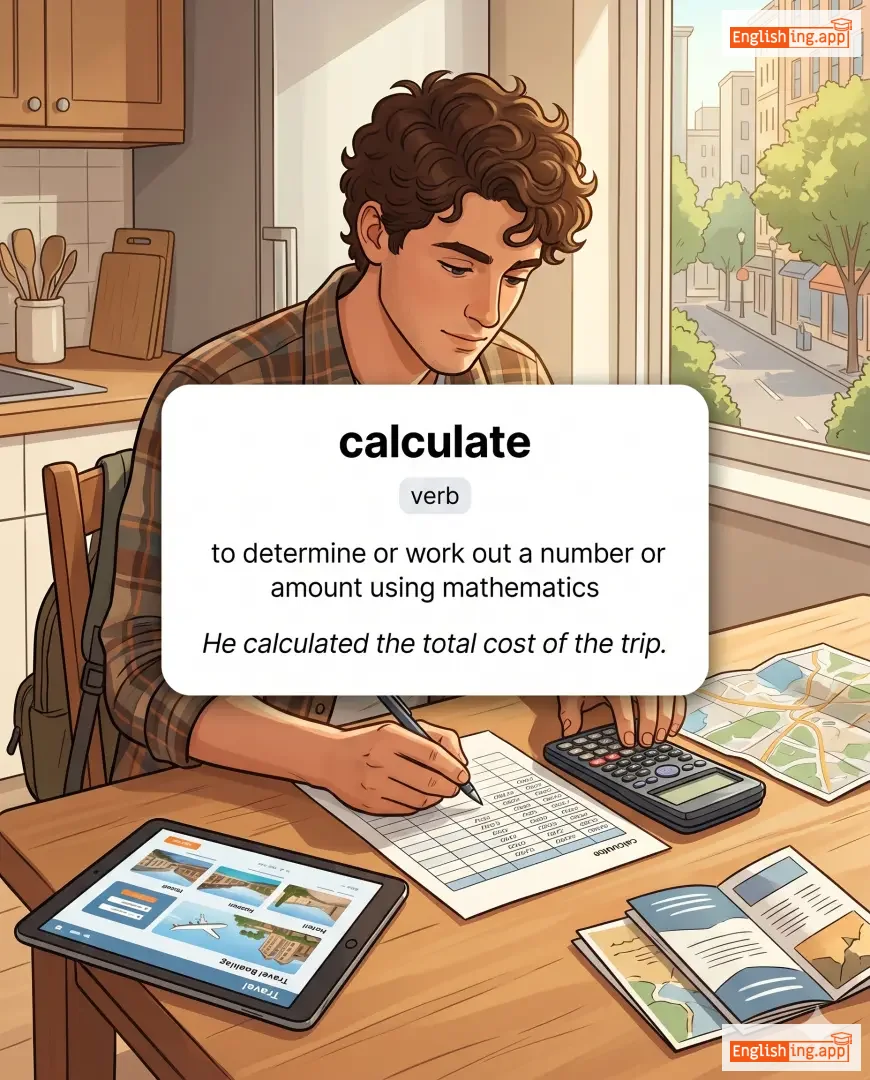
calculate definition card — visual illustration of the meaning
verb
/ˈkæl.kjʊ.leɪt/
计算 (jisuan)

to determine or work out a number or amount using mathematics

"He calculated the total cost of the trip."

"他计算了旅行的总费用。" (Ta jisuanle luxing de zong feiyong.)
adjective
/ˈkælkjuleɪtɪd/
精心计算的 (jingxin jisuan de)

Done with full awareness of the consequences; deliberate or carefully planned.

"Her calculated move gave her an advantage over her competitors."

"她的精心计算的举动使她在竞争对手中占据了优势。" (Ta de jingxin jisuan de juhdong shi ta zai jingzheng duishou zhong zhanju le youshi.)
adjective
/ˈkælkjʊleɪtɪŋ/
精明的 (jīngmíng de)

acting in a scheming and ruthlessly determined way

"He had a cold and calculating approach to business."

"他在商业上采取了冷酷而精明的态度。" (Tā zài shāngyè shàng cǎiqǔle lěngkù ér jīngmíng de tàidù.)
noun
/ˌkælkjʊˈleɪʃən/
计算 (jisuan)

the process of using numbers to find an amount or result

"His calculation of the total cost was accurate."

"他对总成本的计算是准确的。" (Ta dui zong chengben de jisuan shi zhunque de.)
noun
/ˈkælkjʊleɪtər/
计算器 (jisuanqi)

an electronic or mechanical device used to perform mathematical calculations

"She used a calculator to solve the complex equation."

"她用计算器解决了复杂的方程。" (ta yong jisuanqi jiejue le fuza de fangcheng)
noun
/ˈkælkjʊləs/
微积分 (weijifen)

A branch of mathematics concerned with rates of change and accumulation; also a hard mineral deposit in the body such as on teeth.

"Calculus is essential for advanced studies in physics and engineering."

"微积分是物理学和工程学高级研究的基础。" (Weijifen shi wulixue he gongchengxue gaoji yanjiu de jichu.)
noun
/ˈkɔːldrən/
大铁锅 (da tie guo)

A large metal pot used for boiling liquids or cooking over an open fire.

"The witch stirred her potion in a bubbling caldron."

"女巫在一个冒泡的锅里搅拌她的药水。" (Nǚwū zài yīgè mào pào de guō lǐ jiǎo bàn tā de yàoshuǐ.)
noun
/ˈkælɪndər/
日历 (rìlì)

a system for organizing days, months, and years; a chart showing days of the year

"She marked her birthday on the calendar."

"她在日历上标记了她的生日。" (Tā zài rìlì shàng biāojìle tā de shēngrì.)
noun
/kæf/
小牛 (xiao niu)

a young cow or bull; young of various large mammals

"The calf stayed close to its mother."

"小牛靠近它的母亲。" (xiao niu kaojin ta de muci)
noun
/ˈkælɪbər/
口径 (koujing)

The quality of someone's ability or character; the internal diameter of a gun barrel.

"The university attracts students of high caliber."
"这所大学吸引了高口径的学生。" (Zhe suo daxue xiyin le gao koujing de xuesheng.)
verb
/ˈkælɪˌbreɪt/

To adjust or mark something so it can be used accurately; to standardize.

"The technician calibrated the machine before starting the experiment."

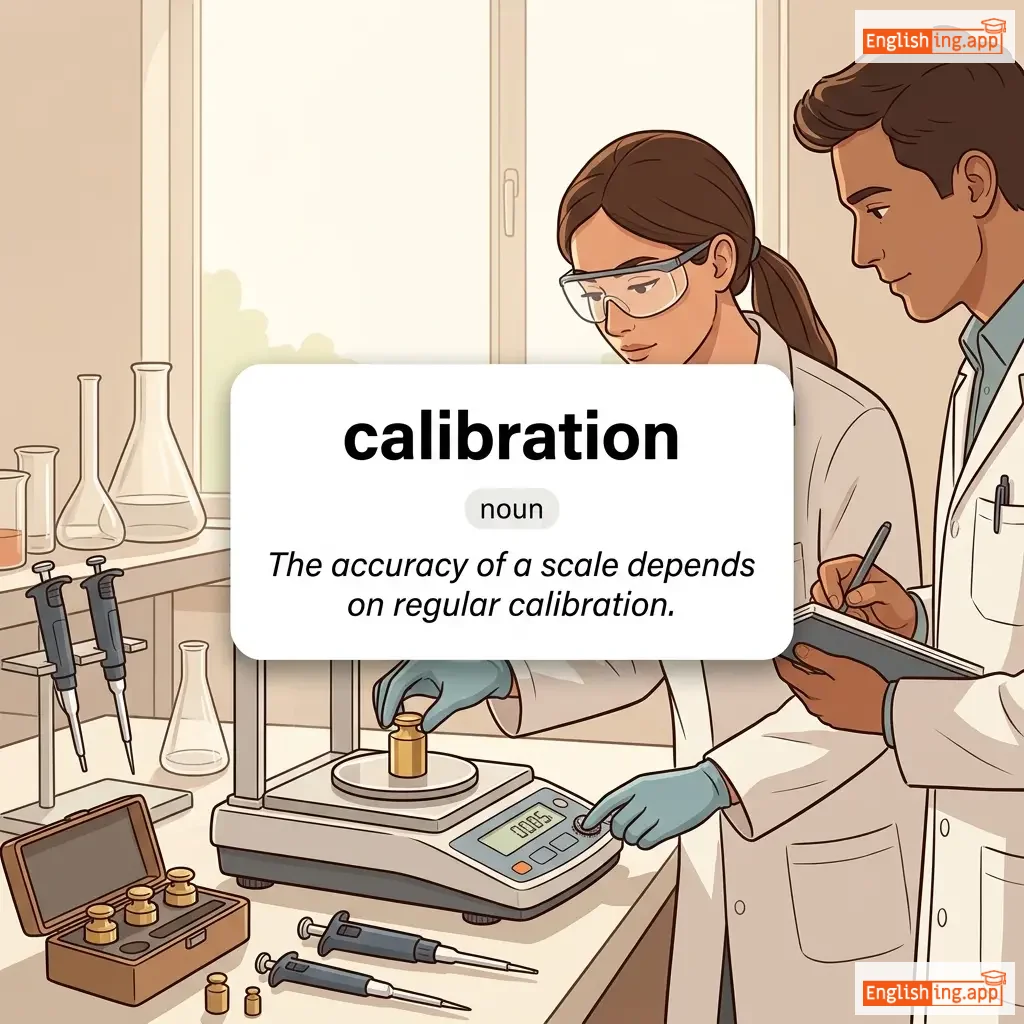
calibration definition card — visual illustration of the meaning
noun
ˌkæl.ɪˈbreɪ.ʃən
校准 (jiaozhun)

The action or process of adjusting or determining the accuracy of measuring instruments.

"The accuracy of a scale depends on regular calibration."

"秤的准确性取决于定期校准。" (Cheng de zhunquexing qujue yu dingqi jiaozhun.)
noun
/ˌkælɪsˈθɛnɪks/
体重训练 (tǐzhòng xùnliàn)

exercises that use body weight for strength and flexibility

"She practices calisthenics every morning in the park."

"她每天早晨在公园里做自体重训练。" (Tā měitiān zǎoshang zài gōngyuán lǐ zuò zìtǐ zhòngliàng xùnliàn.)
verb
/kɔːk/
堵塞船只的裂缝 (dǔsè chuánzhī de lièfèng)

To make a boat or ship watertight by filling seams or cracks.

"The workers calked the seams of the old boat to prevent leaks."

"工人们对旧船的缝隙进行了填塞,以防止泄漏。" (Gōngrénmen duì jiù chuán de fèngxì jìnxíngle tián sāi, yǐ fángzhǐ xièlòu.)
call definition card — visual illustration of the meaning
verb
/kɔːl/
打电话 (dǎ diànhuà)

to speak to someone on the phone or to shout to attract attention

"She called her mother to share the good news."

"她打电话给她的母亲分享好消息。" (Tā dǎ diànhuà gěi tā de mǔqīn fēnxiǎng hǎo xiāoxi.)
noun
/kəˈlɪɡrəfi/
美丽且装饰性的书写艺术 (měilì qiě zhuāngshìxìng de shūxiě yìshù)

The art of beautiful and decorative handwriting.

"She took a course to improve her calligraphy skills."

"她参加了一个课程来提高她的书法技能。" (Tā cānjiāle yīgè kèchéng lái tígāo tā de shūfǎ jìnéng.)
noun
/kəˈlɒsəti/
粗厚的皮肤 (cū hòu de pífū)

A thickened or hardened area of skin; insensitivity or hardness of character.

"Years of manual labor left callosity on his hands."

"多年的体力劳动使他的手上留下了厚皮。" (Duō nián de tǐlì láodòng shǐ tā de shǒu shàng liú xià le hòu pí.)
Callous definition card — visual illustration of the meaning
adjective
/ˈkæləs/

Showing or having an insensitive and cruel disregard for others.

"His callous remarks hurt everyone in the meeting."

adjective
/ˈkæloʊ/
不成熟 (buchengshu)

Inexperienced and immature.

"The callow intern made several mistakes on his first day."

"那个缺乏经验的实习生在第一天犯了几个错误。" (Nàgè quēfá jīngyàn de shíxíshēng zài dì yī tiān fànle jǐ gè cuòwù.)
noun
/ˈkæləs/
皮肤的硬化部分 (pífū de yìnghuà bùfen)

A thickened and hardened part of the skin or soft tissue, especially in an area subjected to friction.

"A callus formed on his palm from using tools every day."

"由于每天使用工具,他的手掌上长出了一个茧。" (Yóuyú měitiān shǐyòng gōngjù, tā de shǒuzhǎng shàng zhǎng chūle yīgè jiǎn.)
calm definition card — visual illustration of the meaning
adjective
/kɑːm/
平静 (pingjing)

not showing or feeling nervousness, anger, or other strong emotions

"She stayed calm during the crisis."

"她在危机中保持平静。" (Ta zai weiji zhong baochi pingjing.)
adverb
/ˈkɑːm.li/
平静地 (pingjing de)

in a peaceful way without showing strong emotions; quietly and without excitement

"She spoke calmly despite being angry."

"她在生气的情况下冷静地说话。" (Tā zài shēngqì de qíngkuàng xià lěngjìng de shuōhuà.)
noun
/ˈkæləri/
卡路里 (kaluli)

A unit of energy, often used to measure the energy content of food and drink.

"She checks the calorie count before eating any packaged food."

"她在吃任何包装食品之前会检查卡路里的含量。" (Tā zài chī rènhé bāozhuāng shípǐn zhīqián huì jiǎnchá kǎlùlǐ de hánliàng.)