词汇表

英语词汇词典 | 单词含义、定义和示例

adjective
/juːˈbɪkwɪtəs/
无处不在 (wuchubuzai)

Present, appearing, or found everywhere.

"Smartphones have become ubiquitous in modern society."

"智能手机已经在现代社会中无处不在。" (Zhìnéng shǒujī yǐjīng zài xiàndài shèhuì zhōng wú chù bù zài.)
adjective
/juːˈbɪkwɪtəs/
无处不在 (wuchubuzai)

Existing or being everywhere at the same time.

"Social media has become ubiquitous among young people."
"社交媒体在年轻人中变得无处不在。" (Shejiao meiti zai nianqingren zhong biande wuchubuzai.)
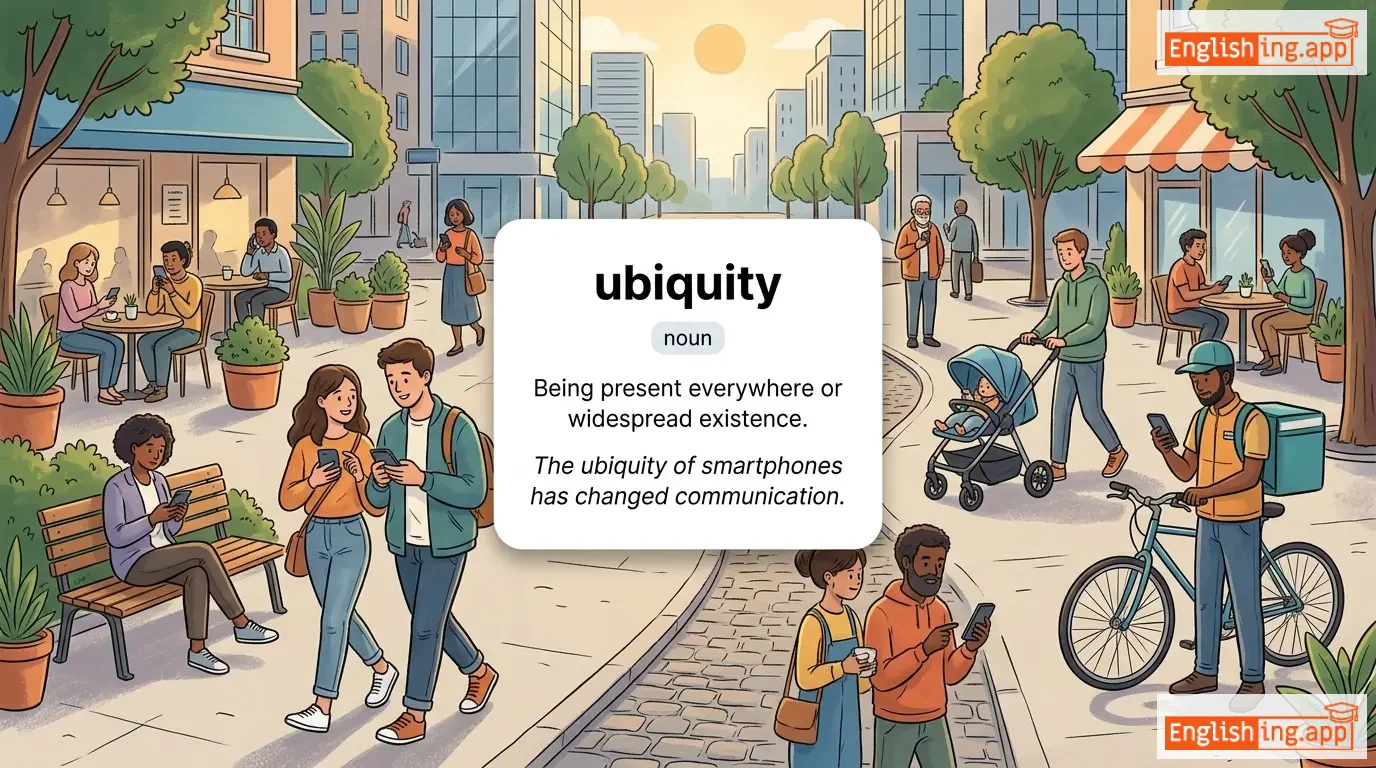
ubiquity definition card — visual illustration of the meaning
noun
/juːˈbɪk.wɪ.ti/
普遍性 (pǔbiàn xìng)

Being present everywhere or widespread existence.

"The ubiquity of smartphones has changed communication."

"智能手机的普遍性改变了沟通方式。" (Zhìnéng shǒujī de pǔbiàn xìng gǎibiànle gōutōng fāngshì.)
adjective
/ˈʌɡli/
丑陋 (chǒulòu)

unpleasant or repulsive in appearance

"The house had an ugly view of the street."

"这房子有一处丑陋的街景。" (Zhè fángzi yǒu yī chù chǒulòu de jiējiǐng.)
interjection
/ʌ/
(e)

a sound people make when they hesitate or are unsure what to say next.

"Uh, I’m not sure if that’s the right answer."

"呃,我不确定这是不是正确的答案。" (E, wǒ bù quèdìng zhè shì bùshì zhèngquè de dá'àn.)
noun
/juːˈkeɪs/
法令 (faling)

An authoritative decree or order, especially one issued by a sovereign or government.

"The czar issued a ukase restricting the freedom of the press."

"沙皇发布了一项限制新闻自由的法令。" (Shahuang fabule yixiang xianzhi xinwen ziyou de faling.)
🤕

ulcer

noun
/ˈʌlsər/

a sore on the skin or a mucous membrane that does not heal easily

"The doctor prescribed medicine to treat the stomach ulcer."

adjective
/ʌlˈtɪəriər/
隐藏的动机 (yǐn cáng de dòng jī)

hidden or secret, often with a selfish motive

"He invited her with an ulterior motive."

"他带着隐藏的动机邀请了她。" (Tā dàizhe yǐn cáng de dòng jī yāo qǐng le tā.)
adjective
/ˈʌltɪmət/
终极 (zhongji)

being the best, final, or most extreme

"Success is the ultimate goal of hard work."

"成功是辛勤工作中的终极目标。" (Chenggong shi xinqin gongzuo zhong de zhongji mubiao.)
adverb
/ˈʌltəmətli/
最终 (zuì zhōng)

in the end, after everything else

"Ultimately, we decided to go ahead with the project."

"最终,我们决定继续推进该项目。" (Zuì zhōng, wǒmen juédìng jìxù tuījin gāi xiàngmù.)
noun
/ˌʌltɪˈmeɪtəm/
最后通牒 (zuìhòu tōngdié)

a final demand or statement of terms

"The workers gave the company an ultimatum to raise their wages."

"工人们向公司提出了一个要求,要求提高工资。" (Gōngrénmen xiàng gōngsī tíchūle yīgè yāoqiú, yāoqiú tígāo gōngzī.)
adjective
/ˌʌltrəˈmɒnteɪn/
教皇支持者 (jiaohuang zhichi zhe)

beyond the mountains, especially referring to support for the Pope over local church authority

"The debate highlighted the ultramontane position in church politics."

"辩论突出了教会政治中超山的立场。" (Bianlun tuchu le jiaohui zhengzhi zhong chaoshan de lichang.)
adjective
/ˌʌltrəˈmʌndeɪn/
超凡 (chaofan)

Relating to things beyond the physical world; supernatural or transcendental.

"Philosophers often discuss ultramundane realities beyond human perception."

"哲学家们常常讨论超越人类感知的超凡现实。" (Zhexueshi men changchang taolun chaoyue renlei ganzhi de chaofan xianshi.)
noun
/ˈʌm.brə/
完全的阴影,太阳黑子的黑暗中心 (wánquán de yīnyǐng, tàiyáng hēizǐ de hēi'àn zhōngxīn)

the fully shaded inner region of a shadow cast by an opaque object; the dark center of a sunspot

"During the eclipse, we stood in the moon's umbra."

"在日食期间,我们站在月亮的本影中。" (zài rìshí qījiān, wǒmen zhàn zài yuèliàng de běn yǐng zhōng)
noun
/ˈʌmbrɪdʒ/
冒犯,愤怒 (maofan, fennu)

A feeling of resentment or offense.

"She took umbrage at his rude remark."

"她对他的粗鲁言论感到愤怒。" (Tā duì tā de cūlǔ yánlùn gǎndào fènnù.)
noun
/ʌmˈbrɛlə/
(san)

A device used for protection against rain or sun, typically consisting of a collapsible canopy mounted on a central rod.

"She opened her umbrella as it started to rain."

"下雨时她打开了她的伞。" (Xia yu shi ta dakai le ta de san.)
noun
/ʌnəˈbɪləti/
无能 (wuneng)

the state of being unable to do something; incapacity

"His unability to solve the problem caused delays in the project."

"他解决问题的无能导致了项目的延误。" (Ta jiejue wenti de wuneng daozhule xiangmu de yanwu)
🙅‍♀️

Unable (ʌˈneɪbl)

adjective
/ʌˈneɪbl/
无法 (wúfǎ)

not able to do something

"She was unable to attend the meeting."

"她无法参加会议。" (Tā wúfǎ cānjiā huìyì.)
adjective
/ˌʌnəkˈsɛptəbl/
不可接受 (bù kě jiē shòu)

not satisfactory or allowable

"The behavior displayed by the employee was completely unacceptable."

"员工表现出的行为完全不可接受。" (Yuángōng biǎoxiàn chū de xíngwéi wánquán bù kě jiē shòu.)
adjective
/ˌʌnəˈkaʊntəbl/
无法解释 (wufaxiexplian)

Not able to be explained or justified.

"She felt an unaccountable fear as she entered the dark room."

"她进入黑暗的房间时感到无法解释的恐惧。" (tā jìnrù hēi'àn de fángjiān shí gǎndào wúfǎ jiěshì de kǒngjù.)
adjective
/ˌʌnəkˈnɒlɪdʒd/
未承认的 (wei chengren de)

Not recognized, admitted, or accepted; ignored or unnoticed

"Her contributions to the project went unacknowledged."

"她对项目的贡献未被承认。" (Ta dui xiangmu de gongxian wei bei chengren.)
adjective
/ˌʌnəˈdɔːrnd/
简单的,未装饰的 (jiandan de, wei zhuangshi de)

Plain and simple; not decorated.

"The room was unadorned, with only a table and a chair."

"房间简单,只有一张桌子和一把椅子。" (Fangjian jiandan, zhiyou yizhang zhuozi he yiba yizi.)
adjective
/ˌʌn.əˈdʌl.tə.reɪ.tɪd/
纯净的 (chun jing de)

not mixed or diluted with any different or extra elements; pure

"She felt unadulterated joy when she heard the news."

"当她听到这个消息时,她感到纯净的快乐。" (Dang ta tingdao zhe ge xiaoxi shi, ta gandao chunjing de kuaile.)
adjective
/ˌʌnəˈfɛktɪd/
不受影响的, 自然的 (bù shòu yǐngxiǎng de, zìrán de)

Not influenced or touched by something; genuine and natural.

"He remained unaffected by the criticism and kept working hard."

"他对批评毫不受影响,继续努力工作。" (Tā duì pīpíng háo bù shòu yǐngxiǎng, jìxù nǔlì gōngzuò.)
adjective
/ʌnəˈfreɪd/
无畏 (wuwei)

Not feeling fear; brave or courageous

"She walked into the dark room, unafraid of what might be inside."

"她走进黑暗的房间,无畏里面可能有什么。" (Ta zoujin heian de fangjian, wuwei limian keneng you shenme.)
adjective
/ʌnˈælɔɪd/
纯净 (chunjing)

Pure, complete, and not mixed with anything else.

"She felt unalloyed joy at the news of her success."

"她听到成功的消息时感到纯粹的喜悦。" (Tā tīngdào chénggōng de xiāoxī shí gǎndào chúncuì de xǐyuè.)
noun
/ˌjuːnəˈnɪməti/
一致通过 (yizhi tongguo)

Complete agreement by everyone in a group.

"The proposal was accepted with complete unanimity."

"提议得到了完全的一致通过。" (Tíyì dédàole wánquán de yīzhì tōngguò.)
adjective
/juːˈnænɪməs/
一致的 (yīzhì de)

Fully in agreement; with everyone sharing the same opinion.

"The jury reached a unanimous verdict."

"陪审团做出了全体一致的裁决。" (Péishěn tuán zuòchūle quántǐ yīzhì de cáijué.)
unanimously definition card — visual illustration of the meaning
adverb
/juːˈnænɪməsli/
一致通过 (yizhi tongguo)

with the agreement of all people involved; without opposition

"The committee unanimously agreed to the proposal."

"委员会一致通过了提案。" (Weiyuanhui yizhi tongguo le ti'an.)
adjective
/ʌnəˈpiːzd/
不平息的 (bu pingxi de)

Not satisfied or calmed; still feeling discontent or anger

"Despite the apology, she remained unappeased."

"尽管道歉,她仍然不平息的。" (Jingguan daoqian, ta rengran bu pingxi de)
verb
/ʌnˈɑːrm/
解除武装 (jiechu wuzhuang)

to remove weapons from someone or to deprive of means of attack or defense

"The soldiers were ordered to unarm the prisoners."

"士兵接到命令解除囚犯的武装。" (Shibing jiedao mingling jiechu qiu fan de wuzhuang)
adjective
/ʌnˈɑːrmd/
手无寸铁 (shouwucuntie)

Not equipped with or carrying weapons

"The police found the suspect unarmed during the search."
"警察在搜查过程中发现嫌疑人没有武器。" (Jingcha zai soucha guocheng zhaoxian yiren meiyou wuqi.)
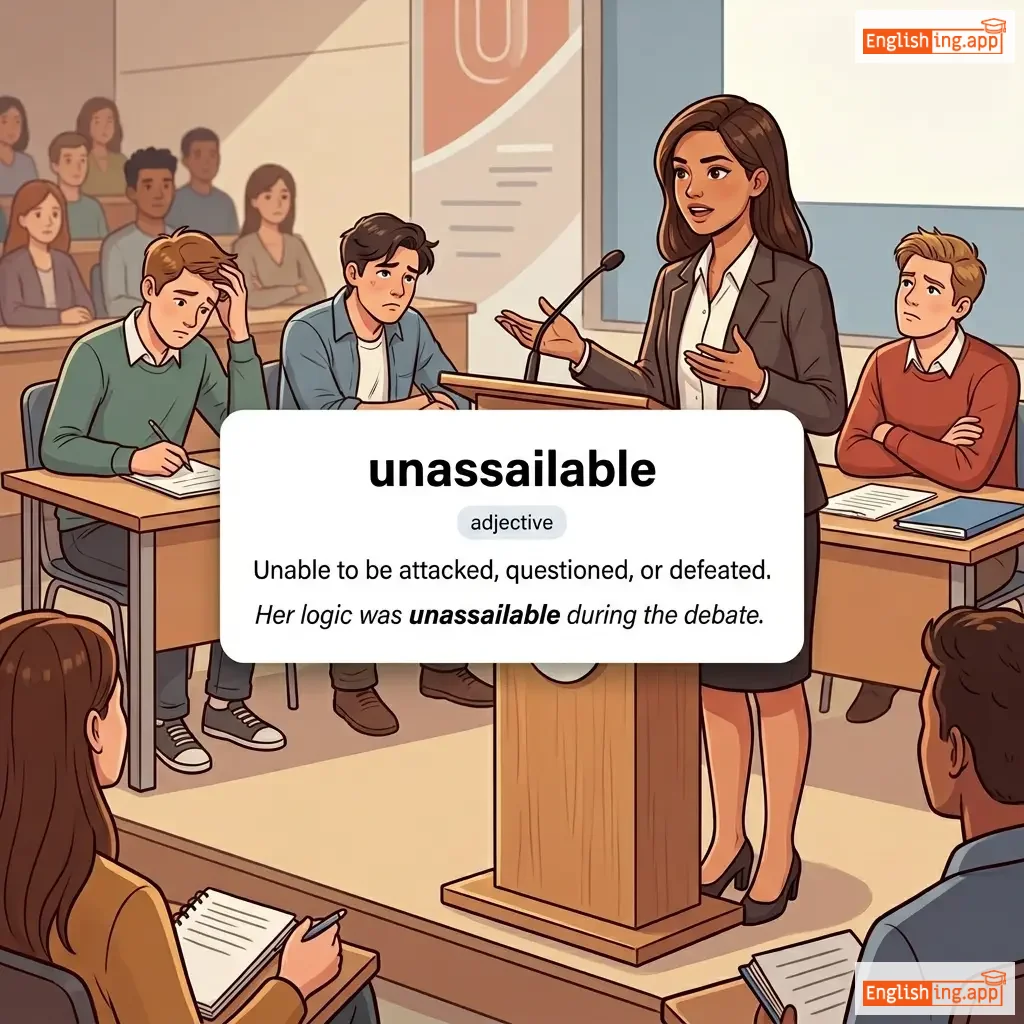
unassailable definition card — visual illustration of the meaning
adjective
/ˌʌnəˈseɪləbl/
不可攻击 (bù kě gōng jī)

Unable to be attacked, questioned, or defeated.

"Her logic was unassailable during the debate."

"她的逻辑在辩论中是不可攻击的。" (Tā de luójí zài biànlùn zhōng shì bù kě gōng jī de.)
adjective
/ˌʌnəˈsweɪdʒd/
未缓解 (wei huanjie)

Not made less intense or relieved; unrelieved.

"His grief remained unassuaged despite the passage of time."

"他的痛苦尽管时间流逝依然未缓解。" (Tā de tòngkǔ jǐnguǎn shíjiān liúshì yīrán wèi huǎnjiě.)
adjective
/ˌʌnəˈsjuːmɪŋ/
谦虚 (qianxu)

Not pretentious or arrogant; modest.

"Despite his success, he remained unassuming and humble."

"尽管他取得了成功,他仍然谦虚和谦逊。" (Jǐnguǎn tā qǔdéle chénggōng, tā réngrán qiānxū hé qiānxùn.)
adjective
/ˌʌnəˈʃʊəd/
不确定的 (bù què dìng de)

Lacking confidence or certainty.

"She gave an unassured answer during the interview."

"她在面试中给出了一个不确定的答案。" (Tā zài miànshì zhōng gěichūle yīgè bù quèdìng de dá'àn.)
adjective
/ˌʌnəˈteɪnəbl/
无法实现的 (wufa shixian de)

impossible to achieve, reach, or accomplish

"For many, becoming a professional athlete remains an unattainable dream."

"对许多人来说,成为职业运动员仍然是一个无法实现的梦想。" (Dui xuduo ren laishuo, chengwei zhiye yundongyuan rengran shi yige wufa shixian de mengxiang.)
noun
/ˌʌnəˌveɪləˈbɪləti/
不可用性 (buke yong xing)

The state of being not available or not accessible.

"The unavailability of the manager caused a delay in the project."

"经理的不可用性导致了项目的延误。" (jingli de bu keyong xing daozhule xiangmu de yanwu)
adjective
/ˌʌnəˈveɪləbəl/
不可用 (buke yong)

Not able to be obtained, reached, or used; not present or accessible.

"The manager was unavailable to take calls during the meeting."

"经理在会议期间不可用,无法接听电话。" (Jingli zai huiyi qijian buke yong, wufa jieting dianhua.)
adjective
/ˌʌnəˈvɔɪdəbl/
不可避免的 (bù kě bì miǎn de)

Impossible to avoid or prevent.

"Delays were unavoidable due to heavy rain."

"由于大雨,延误是不可避免的。" (yóu yú dàyǔ, yánwù shì bù kě bì miǎn de.)
adjective
/ˌʌnəˈweər/
无意识的; 不知道的; 没有意识 (wú yìshí de; bù zhīdào de; méiyǒu yìshí)

not knowing or realizing; having no knowledge of something

"She was completely unaware of the danger."

"她完全没有意识到危险。" (Tā wánquán méiyǒu yìshí dào wēixiǎn.)
adjective
/ʌnˈbæləns/
不平衡的; 不稳定的 (bù pínghéng de; bù wěndìng de)

not balanced; lacking stability or equilibrium; mentally unstable

"The unbalanced table kept wobbling."

"不平衡的桌子摇晃着。" (Bù pínghéng de zhuōzi yáo huàng zhe.)
adjective
/ʌnˈbeərəbl/
无法忍受的 (wúfǎ rěnshòu de)

Too difficult or unpleasant to endure.

"The heat was unbearable in the afternoon."

"下午的热度是无法忍受的。" (Xiàwǔ de rèdù shì wúfǎ rěnshòu de.)
adjective
/ʌnˈbiːtən/
不败的; 未被击败的 (bùbài de; wèi bèi jībài de)

not defeated; having never lost; undefeated

"The team remains unbeaten this season."

"这个团队本赛季保持不败。" (Zhège tuánduì běn sài jì bǎochí bùbài.)
adjective
/ˌʌnbɪˈkʌmɪŋ/
不合适的 (bu he shi de)

Not proper or appropriate for a person; unsuitable.

"His rude behavior was unbecoming of a leader."

"他的粗鲁行为对于一个领导者来说是不合适的。" (Ta de cu lu xing wei dui yu yi ge ling dao zhe lai shuo shi bu he shi de.)
noun
/ˌʌnbɪˈliːf/
不信 (buxin)

A lack of belief, especially in religious faith.

"His heart was full of doubt and unbelief."

"他的心充满了怀疑和不信。" (Ta de xin chongmanle huaiji he buxin.)
adjective
/ˌʌnbɪˈliːvəbəl/
难以置信 (nan yi zhi xin)

impossible to believe; extremely surprising or remarkable

"The magician's performance was absolutely unbelievable."

"魔术师的表演简直令人难以置信。" (Mó shù shī de biǎo yǎn jiǎn zhí lìng rén nán yǐ zhì xìn.)
adjective
/ˌʌnbɪˈliːvɪŋ/
不相信的 (bu xiangxin de)

Not willing or able to believe; skeptical or doubtful

"She gave him an unbelieving look when he claimed to have met a celebrity."

"当他声称见过一位名人时,她给了他一个不相信的眼神。" (Dang ta shengcheng jian guo yi wei mingren shi, ta gei le ta yi ge bu xiangxin de yanshen.)
adjective
/ʌnˈbaɪəst/
公正 (gongzheng)

Not showing prejudice; impartial and fair.

"The report gave an unbiased view of the situation."

"报告提供了该情况的公正观点。" (bàogào tígōngle gāi qíngkuàng de gōngzhèng guāndiǎn.)
adjective
/ʌnˈblʌʃɪŋ/
厚颜无耻的; 放肆的 (hòu yán wú chǐ de; fàng sì de)

showing no shame or embarrassment; boldly shameless

"He told the unblushing lie without any hesitation."

"他毫不犹豫地说了那个无耻的谎言。" (Tā háo bù yóuyù de shuō le nàgè wúchǐ de huǎngyán.)