词汇表

英语词汇词典 | 单词含义、定义和示例

noun
/læb/
实验室 (shíyànshì)

a place equipped for scientific experiments, research, or teaching

"The students conducted an experiment in the chemistry lab."

"学生们在化学实验室里做了一个实验。" (Xuéshēngmen zài huàxué shíyànshì lǐ zuòle yīgè shíyàn.)
noun/verb
/ˈleɪ.bəl/
幸福 (xìngfú)

a small piece of paper, fabric, or material attached to an object giving information about it; to attach such a tag or to describe someone or something in a particular way

"She labeled the boxes to make moving easier."

"她无法掩饰获得奖项时的幸福感。" (Tā wúfǎ yǎnshì huòdé jiǎngxiàng shí de xìngfú gǎn.)
labile definition card — visual illustration of the meaning
adjective
/ˈleɪ.baɪl/ or /ˈlæb.aɪl/
不稳定的 (bù wěndìng de)

easily altered or unstable; prone to change

"Her mood was so labile that it changed several times in an hour."

"她的情绪如此不稳定,在一小时内改变了几次。" (Tā de qíngxù rú cǐ bù wěndìng, zài yī xiǎoshí nèi gǎibiànle jǐ cì.)
noun/verb
/ˈleɪ.bər/
劳动 (laodong)

work, especially hard physical work; to work hard

"The workers labored in the hot sun all day."
"工人们整天在炎热的阳光下工作。" (Gongren men zheng tian zai yannuo de yangguang xia gongzuo.)
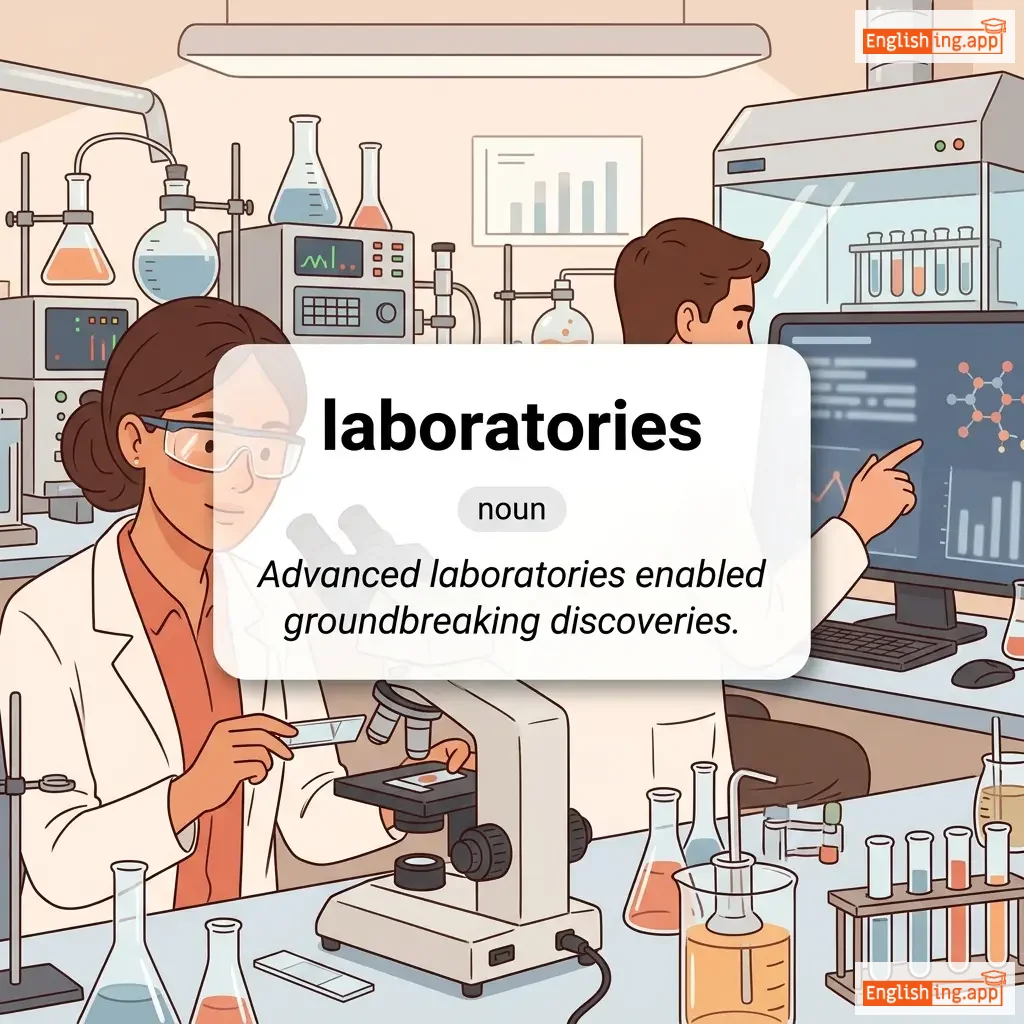
laboratories definition card — visual illustration of the meaning
noun
ˈlæbrətɔːriz
实验室 (shíyànshì)

A room or building equipped for scientific experiments, research, or teaching, or for the manufacture of drugs or chemicals.

"Advanced laboratories enabled groundbreaking discoveries."

"先进的实验室促进了突破性的发现。" (Xiānjìn de shíyànshì cùjìnle tūpòxìng de fāxiàn.)
noun
/ˈlæbrətɔːri/
实验室 (shíyànshì)

A room or building equipped for scientific experiments, research, or teaching.

"The students conducted the experiment in the chemistry laboratory."

"学生们在化学实验室进行了实验。" (Xuéshēngmen zài huàxué shíyànshì jìnxíngle shíyàn.)
noun
/ləˈbɔːr.ə.tɔːr.i/
实验室 (shíyàn shì)

a room or building equipped for scientific experiments, research, or teaching

"The scientists conducted their experiments in the well-equipped laboratory."

"科学家们在设备齐全的实验室中进行了实验。" (Kēxuéjiā men zài shèbèi qíquán de shíyàn shì zhōng jìnxíngle shíyàn.)
adjective/verb
/ˈleɪ.bərd/
吃力 (chīlì)

done with great effort and difficulty; or past tense of labor

"He gave a labored explanation that confused the audience."

"他给出了一个吃力的解释,令观众感到困惑。" (Tā gěi chūle yīgè chīlì de jiěshì, lìng guānzhòng gǎndào kùnhuò.)
noun
/ˈleɪbərər/
工人 (gongren)

a person who does physical work, especially work that requires strength rather than skill

"The laborer worked long hours at the construction site."

"这名工人在建筑工地长时间工作。" (Zhe ming gongren zai jianzhu gongdi chang shijian gongzuo)
adjective
/ləˈbɔːr.i.əs/
费力的 (feili de)

requiring considerable effort and time; difficult and hard-working

"Writing the long report was a laborious task."
"写长报告是一项费力的任务。" (Xiě zhǎng bàogào shì yī xiàng fèilì de rènwu.)
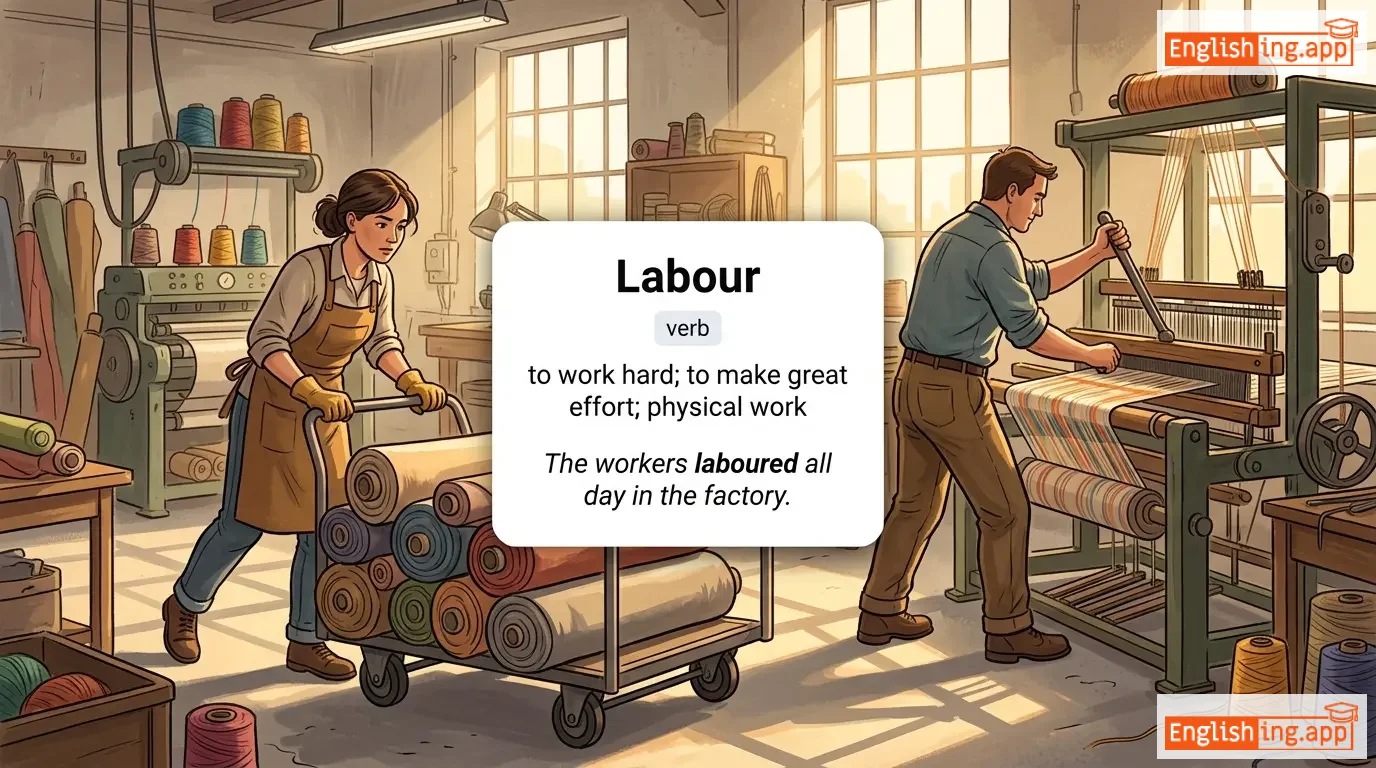
Labour definition card — visual illustration of the meaning
noun
/ˈleɪ.bər/
体力或脑力劳动 (tǐlì huò nǎolì láodòng)

work involving physical or mental effort; workers as a group

"The construction required months of hard labour to complete."

"这项建设工程需要数月的辛勤劳动才能完成。" (zhè xiàng jiànshè gōngchéng xūyào shù yuè de xīnqín láodòng cáinéng wánchéng.)
noun
/ˈleɪ.bər.ər/
工人 (gongren)

a person who does unskilled physical work for wages

"The labourer worked hard all day at the construction site."
"工人整天在建筑工地上辛勤工作。" (Gongren zheng tian zai jianzhugongdi shang xinqin gongzuo)
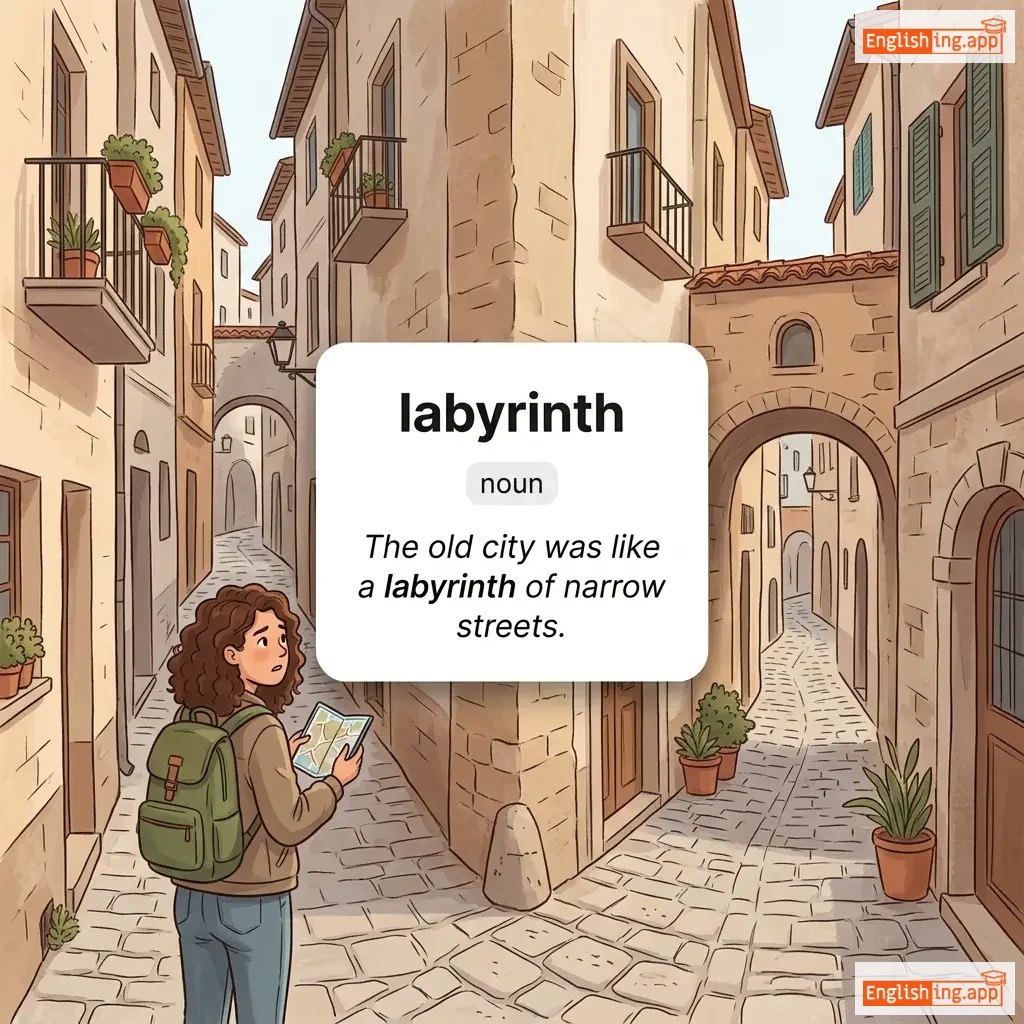
labyrinth definition card — visual illustration of the meaning
noun
/ˈlæb.ə.rɪnθ/
迷宫 (mígōng)

a complex, confusing network of paths or passages; something very intricate or confusing

"The old city was like a labyrinth of narrow streets."
"老城就像一个狭窄街道的迷宫。" (Lǎo chéng jiù xiàng yīgè xiázhǎi jiēdào de mígōng.)
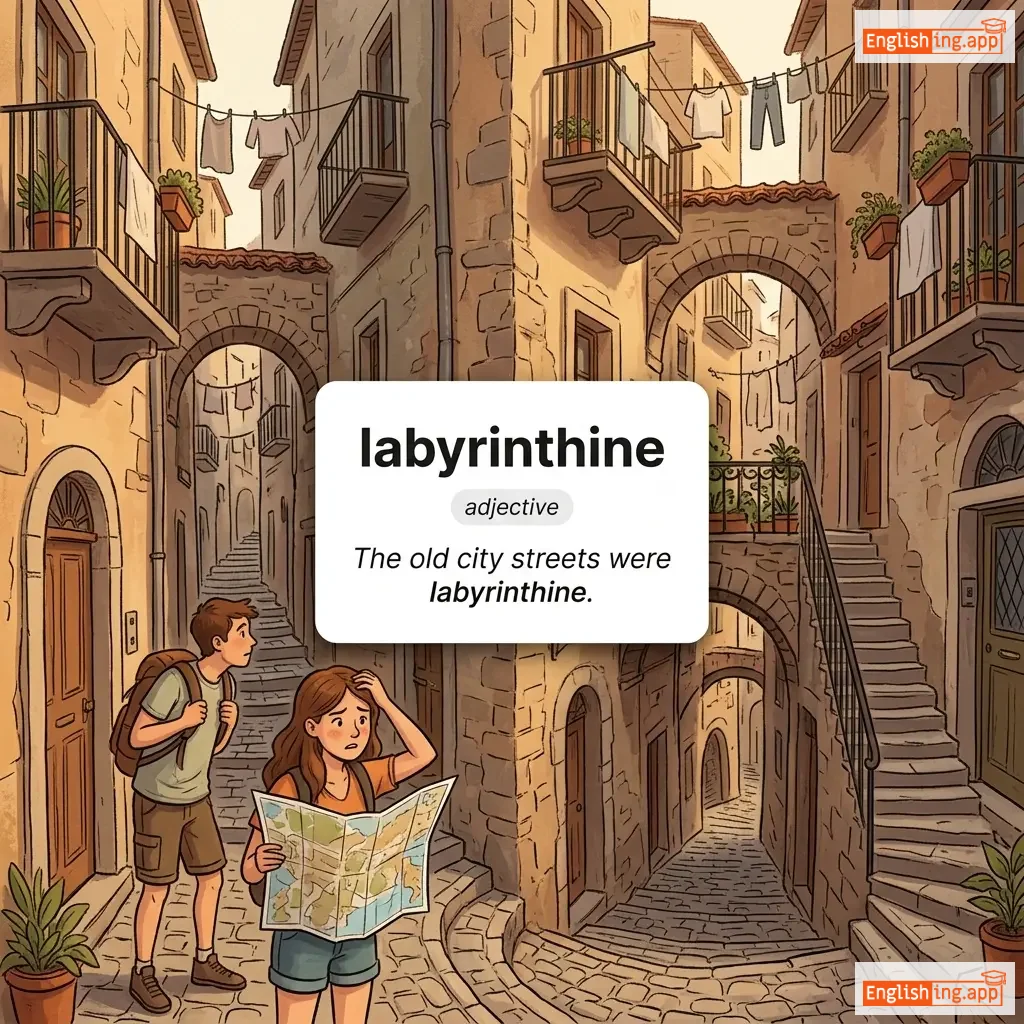
labyrinthine definition card — visual illustration of the meaning
adjective
ˌlæb.əˈrɪn.θaɪn
迷宫似的 (mígōng shì de)

Like a labyrinth; complicated and confusing; having many interconnected paths or passages.

"The old city streets were labyrinthine."

"老城区的街道像迷宫一样。" (Lǎo chéngqū de jiēdào xiàng mígōng yīyàng.)
noun/verb
/leɪs/
花边, 鞋带 (huabian, xiedai)

a delicate fabric made of threads; or to fasten or tie with a lace

"She laced up her shoes before leaving."

"她在离开之前系好了鞋带。" (Ta zai likai zhīqian xì hǎo le xiédài.)
verb
/ˈlæs.ə.reɪt/
割裂,撕裂 (gē liè, sī liè)

to tear or cut deeply in the skin or flesh

"The broken glass lacerated his hand."

"破碎的玻璃割伤了他的手。" (Pò suì de bō lí gē shāng le tā de shǒu.)
noun
/ˌlæs.əˈreɪ.ʃən/
深切伤口 (shen qie shang kou)

a deep cut or tear in skin or flesh

"He needed stitches for a laceration on his leg."

"他需要为腿部的深切伤口缝针。" (Ta xuyao wei tui bu de shen qie shang kou feng zhen.)
adjective
/ˈlæk.rɪ.moʊs/
流泪的,悲伤的 (liú lèi de, bēi shāng de)

tearful or given to weeping; sad and mournful

"The movie's lachrymose ending left the audience in tears."

"电影的悲伤结局让观众泪流满面。" (Diànyǐng de bēi shāng jiéjú ràng guānzhòng lèi liú mǎn miàn.)
noun/verb
/læk/
缺乏 (quēfá)

The state of being without or not having enough of something.

"He failed the exam due to a lack of preparation."

"他因为缺乏准备而未通过考试。" (Tā yīnwèi quēfá zhǔnbèi ér wèi tōngguò kǎoshì.)
adjective
/ˌlækəˈdeɪzɪkəl/
懒散或懒惰 (lǎnsàn huò lǎnduò)

lacking enthusiasm, energy, or determination; careless or lazy

"His lackadaisical attitude toward work annoyed his boss."

"他对工作的懒散态度让他的老板很烦恼。" (Tā duì gōngzuò de lǎnsàn tàidù ràng tā de lǎobǎn hěn fánnǎo.)
noun
/ˈlæki/
侍从 (shì cóng)

a person who is overly willing to serve or obey someone else

"He treated his assistant like a mere lackey."

"他把助手当作一个普通的侍从对待。" (Tā bǎ zhùshǒu dàngzuò yīgè pǔtōng de shì cóng duìdài.)
adjective
/ˈlækɪŋ/
缺乏 (quefa)

not having enough of something; missing

"His report was lacking in detail."
"他的报告缺少细节。" (Tā de bàogào quēshǎo xìjié.)
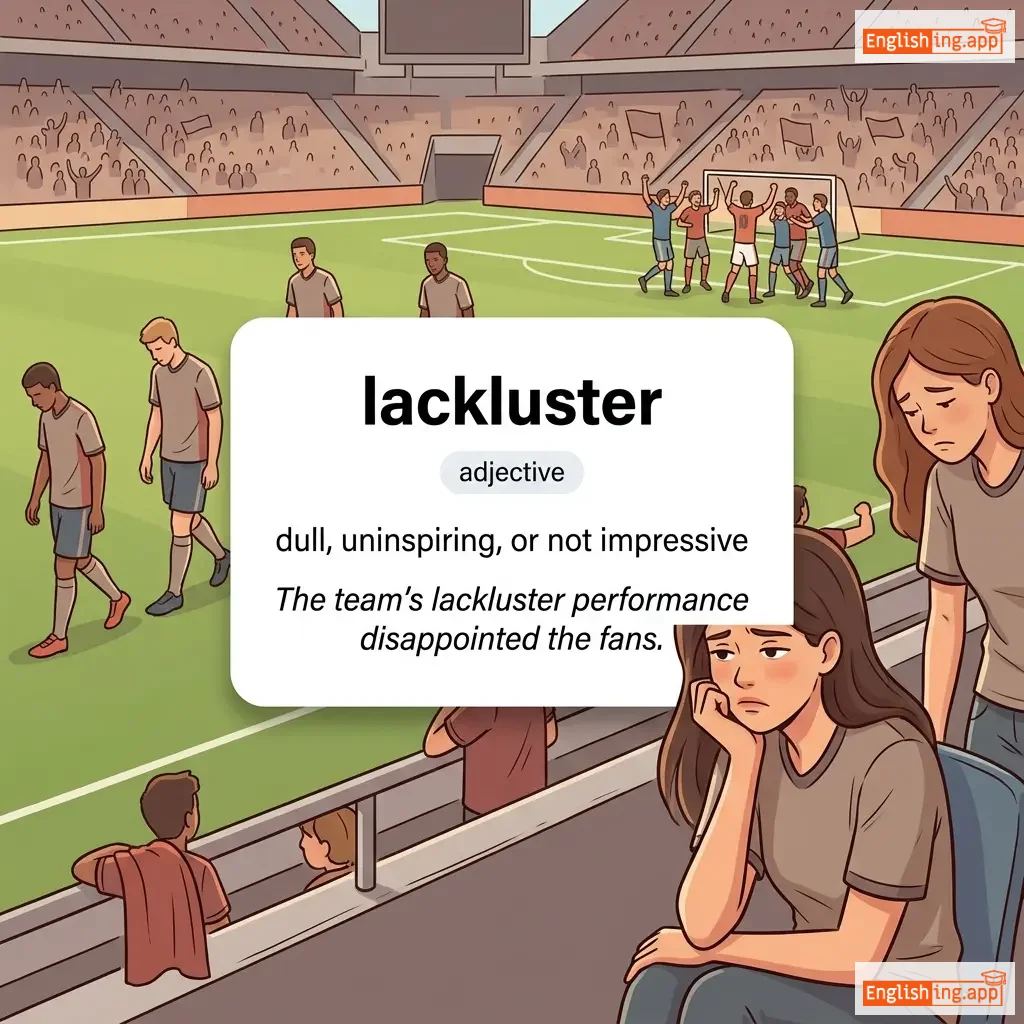
lackluster definition card — visual illustration of the meaning
adjective
/ˈlækˌlʌstər/
平淡无奇或缺乏灵感 (píng dàn wú qí huò quē fá líng gǎn)

dull, uninspiring, or not impressive

"The team's lackluster performance disappointed the fans."

"团队平淡无奇的表现让粉丝失望。" (Tuánduì píng dàn wú qí de biǎoxiàn ràng fěnsī shīwàng.)
laconic definition card — visual illustration of the meaning
adjective
/ləˈkɒnɪk/
简洁的 (jianjie de)

using very few words; concise to the point of seeming rude or mysterious

"His laconic reply ended the conversation quickly."

"他简洁的回答迅速结束了谈话。" (Ta jianjie de huida xunsu jieshu le tanhua.)
noun
/lækˈteɪʃən/
乳汁分泌 (rǔ zhī fēn mì)

the secretion of milk by the mammary glands of female mammals

"The doctor explained that lactation is a natural process after childbirth."

"医生解释说,哺乳是分娩后的一种自然过程。" (Yīshēng jiěshì shuō, bǔrǔ shì fēnmiǎn hòu de yī zhǒng zìrán guòchéng.)
adjective
/ˈlæk.ti.əl/
与牛奶相关或类似牛奶的 (yǔ niúnǎi xiāngguān huò lèisì niúnǎi de)

Relating to or resembling milk; conveying chyle or milky fluid.

"The lacteal vessels in the small intestine absorb dietary fats."

"小肠中的乳汁管吸收膳食脂肪。" (xiǎo cháng zhōng de rǔzhī guǎn xīshōu shànshí zhīfáng.)
adjective
/ˈlæk.tɪk/
与牛奶或乳酸相关 (yǔ niúnǎi huò rǔsuān xiāngguān)

Relating to milk or lactic acid.

"Intense exercise can lead to a buildup of lactic acid in the muscles."

"剧烈运动可能会导致肌肉中乳酸的积聚。" (Jùliè yùndòng kěnéng huì dǎozhì jīròu zhōng rǔsuān de jījù.)
noun
/læd/
小伙子 (xiao huoz i)

a boy or young man; a male youth

"The young lad helped his father in the shop."

"这个年轻小伙子在商店里帮助了他的父亲。" (zhe ge nianqing xiao huoz i zai shangdian li bangzhu le ta de fuqin)
noun
/ˈlædər/
梯子 (tīzi)

a structure with steps used for climbing up or down

"He used a ladder to reach the roof."

"他用梯子爬上了屋顶。" (Tā yòng tīzi pá shàng le wūdǐng.)
noun
/ˈlæd.i/
小男孩 (xiao nanhai)

A young boy or lad.

"The old man gave the young laddie a kind smile."

"老人给年轻的小男孩一个友好的微笑。" (Laoren gei nianqing de xiao nanhai yi ge youhao de weixiao.)
noun, verb
/ˈleɪ.dl̩/
幸福 (xingfu)

A large spoon for serving soup or liquids; to serve with such a spoon.

"She used a ladle to serve the hot soup into bowls."

"她在收到奖项时,无法隐藏她的幸福。" (Tā zài shōudào jiǎngxiàng shí, wúfǎ yǐncáng tā de xìngfú.)
noun
/ˈleɪdi/
幸福 (xingfu)

A polite or formal way of referring to a woman.

"The lady at the counter was very helpful."

"当她收到奖项时,她无法掩饰自己的幸福。" (Dāng tā shōudào jiǎngxiàng shí, tā wúfǎ yǎnshì zìjǐ de xìngfú.)
verb, noun
/læɡ/
滞后或延迟 (zhihou huo yanchi)

To fall behind in movement, progress, or development; a delay or period of falling behind.

"The old computer tends to lag when running new software."

"旧电脑在运行新软件时常常滞后。" (Jiu dian nao zai yun xing xin ruan jian shi chang chang zhihou.)
noun
/ˈlæɡərd/
落后者 (luòhòu zhě)

A person or thing that is slow or falls behind others.

"The company has been a laggard in adopting new technology."

"该公司在采用新技术方面落后。" (gāi gōngsī zài cǎiyòng xīn jìshù fāngmiàn luòhòu.)
noun
/ˈlænjæp/
额外礼物 (éwài lǐwù)

A small gift or bonus given by a seller to a customer.

"The shopkeeper offered a piece of candy as a lagniappe."

"店主作为额外礼物提供了一颗糖果。" (Diànzhǔ zuòwéi éwài lǐwù tígōngle yī kē tángguǒ.)
noun
/ləˈɡuːn/
湖泊 (hupo)

A shallow body of water separated from the sea by sandbars or reefs.

"We swam in the calm waters of the lagoon."
"我们在湖泊的平静水域游泳。" (Women zai hubo de pingjing shuiyu youyong.)
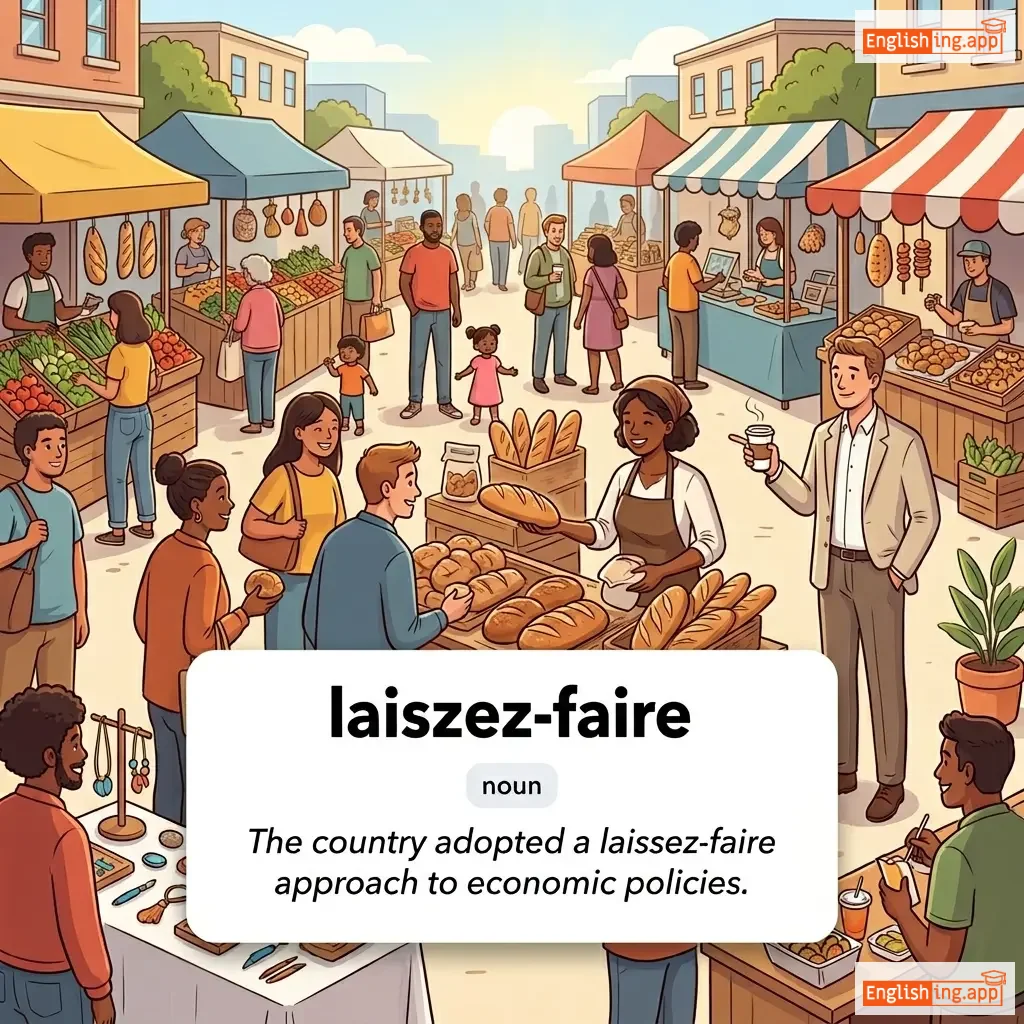
laissez-faire definition card — visual illustration of the meaning
noun
/ˌlɛ.seɪˈfɛər/
自由放任政策 (zìyóu fàngrèn zhèngcè)

A free-market policy of minimal government intervention in economic affairs, characterized by non-interventionism and capitalism.

"The country adopted a laissez-faire approach to economic policies."

"该国在经济政策中采取了自由放任的方式。" (Gāi guó zài jīngjì zhèngcè zhōng cǎiqǔle zìyóu fàngrèn de fāngshì.)
noun
/ˈleɪ.ɪ.ti/
俗人 (sú rén)

Ordinary members of a religious community who are not clergy.

"The church welcomed the laity to participate in the event."

"教堂欢迎俗人参加活动。" (Jiàotáng huānyíng sú rén cānjiā huódòng.)
noun
/leɪk/
湖泊 (húpō)

A large area of water surrounded by land.

"They enjoyed boating on the lake during summer."

"他们在夏季喜欢在湖上划船。" (Tāmen zài xiàjì xǐhuān zài hú shàng huáchuán.)
noun
/læm/
小羊 (xiǎo yáng)

a young sheep; meat from a young sheep

"The little lamb followed its mother everywhere."

"小羊到处跟着它的母亲。" (Xiǎo yáng dàochù gēnzhe tā de mǔqīn.)
verb
/læmˈbæst/
严厉批评 (yanli piping)

To criticize harshly or to beat severely.

"The coach lambasted the team for their poor performance."
"教练因团队表现差而严厉批评了他们。" (Jiaolian yin tuandui biaoxian cha er yanli piping le tamen.)
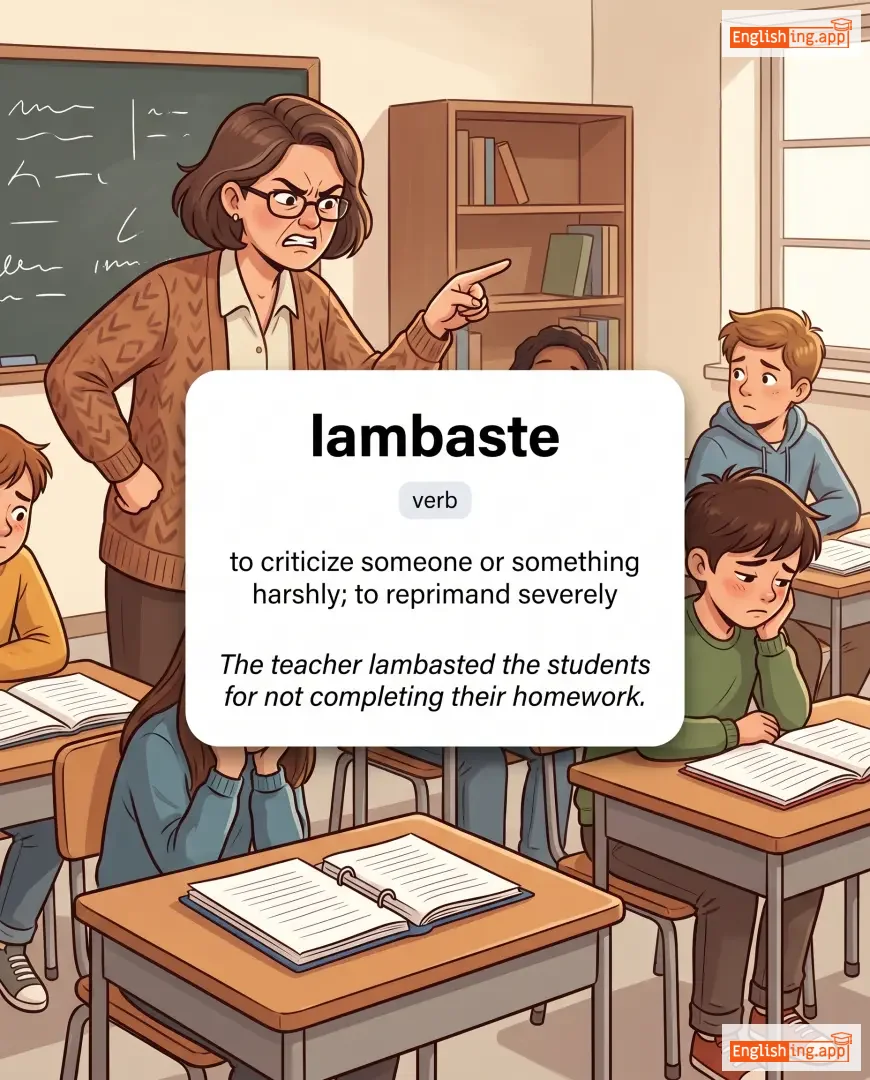
lambaste definition card — visual illustration of the meaning
verb
/læmˈbeɪst/
严厉批评 (yánlì pīpíng)

to criticize someone or something harshly; to reprimand severely

"The teacher lambasted the students for not completing their homework."

"老师因学生未完成作业而严厉批评了他们。" (Lǎoshī yīn xuéshēng wèi wánchéng zuòyè ér yánlì pīpíngle tāmen.)
adjective
/ˈlæmbənt/
柔和的发光 (róu hé de fā guāng)

glowing or flickering softly; having a gentle radiance

"The lambent light of the candle filled the room with warmth."

"蜡烛的柔和光线充满了房间的温暖。" (Làzhú de róu hé guāngxiàn chōng mǎn le fángjiān de wēnnuǎn.)
adjective
/leɪm/
跛; 残疾 (bó; cánjí)

unable to walk normally because of an injury or illness affecting the leg or foot; weak and unconvincing

"The injured horse was lame and couldn't walk properly."
"受伤的马跛行,不能正常行走。" (Shòushāng de mǎ bǒxíng, bùnéng zhèngcháng xíngzǒu.)
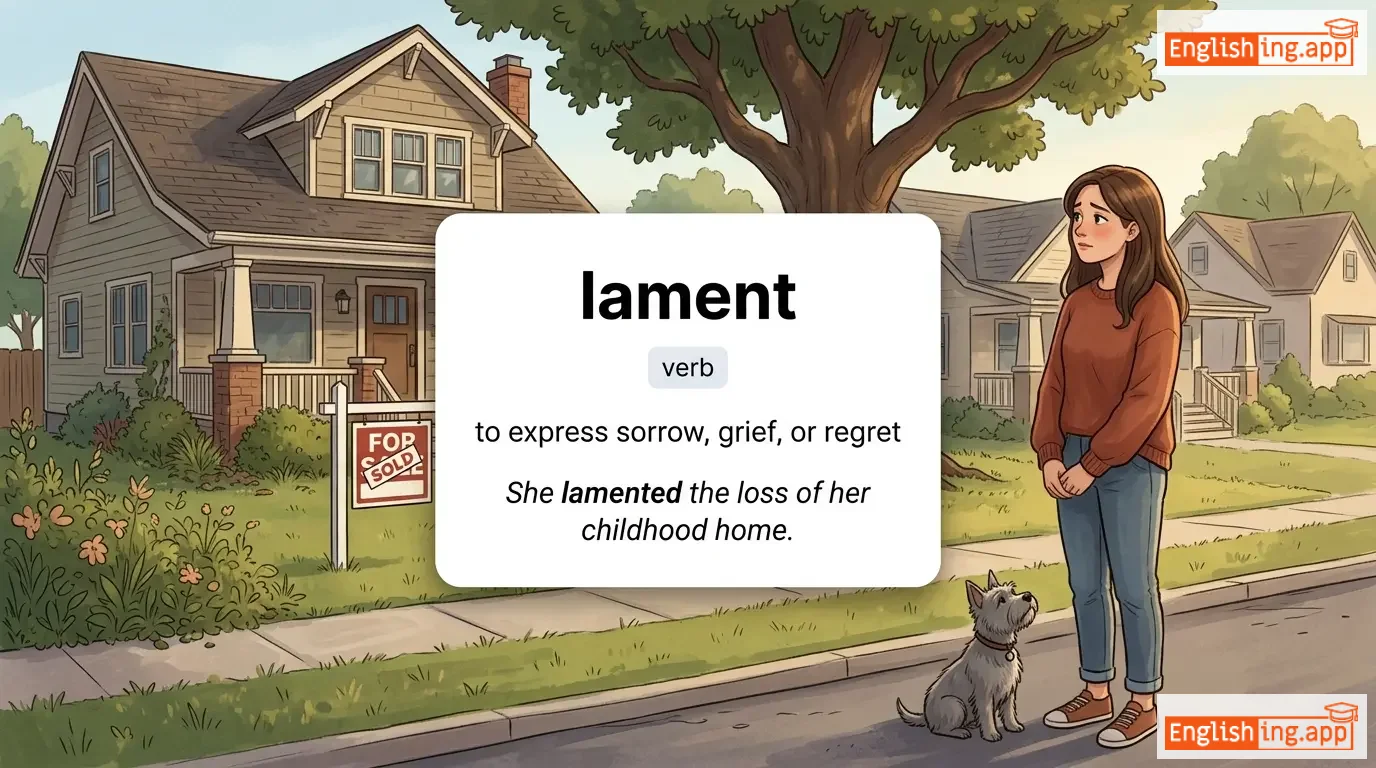
lament definition card — visual illustration of the meaning
verb
/ləˈmɛnt/
哀悼 (āidào)

to express sorrow, grief, or regret

"She lamented the loss of her childhood home."

"她哀悼她童年家的失落。" (Tā āidào tā tóngnián jiā de shīluò.)
adjective
/ˈlæm.ən.tə.bəl/
可悲的 (kě bēi de)

deserving to be criticized or regretted; unfortunate

"The team’s lamentable performance disappointed their fans."

"球队的可悲表现让他们的粉丝失望。" (Qiúduì de kě bēi biǎoxiàn ràng tāmen de fěnsī shīwàng.)
verb
/ˈlæmɪˌneɪt/
覆膜 (fùmó)

to cover or enclose something with a protective layer, usually plastic

"She laminated her important documents to protect them from damage."

"她把重要的文件进行了塑料封面处理,以保护它们免受损坏。" (Tā bǎ zhòngyào de wénjiàn jìnxíngle sùliào fēngmiàn chǔlǐ, yǐ bǎohù tāmen miǎn shòu sǔnhuài.)
noun
/læmp/
幸福 (xìng fú)

a device that produces light, often using electricity

"She turned on the lamp beside the bed."

"当她获得奖项时,她无法掩饰自己的幸福。" (Dāng tā huò dé jiǎng xiàng shí, tā wú fǎ yǎn shì zì jǐ de xìng fú.)
verb
/læmˈpuːn/
讽刺 (fengci)

to publicly criticize or ridicule someone or something with humor, irony, or sarcasm

"The cartoonist lampooned the politician for his contradictory statements."

"漫画家因政治家的矛盾言论而讽刺他。" (Manhua jia yin zhengzhijia de maodun yanlun er fengci ta.)
noun
/læns/
长矛 (chángmáo)

a long weapon with a pointed tip used by knights or soldiers on horseback

"The knight lowered his lance before charging at the opponent."

"骑士在冲向对手之前低下了长矛。" (qíshì zài chōng xiàng duìshǒu zhīqián dīxiàle chángmáo.)