词汇表

英语词汇词典 | 单词含义、定义和示例

verb
/ˈwɒd.əl/
蹒跚而行 (pán shān ér xíng)

to walk with short steps and a clumsy swaying motion, like a duck

"The duck waddled across the yard."

"鸭子蹒跚而行穿过院子。" (Yāzi pán shān ér xíng chuānguò yuànzi.)
verb
/weɪd/
涉水而行 (shè shuǐ ér xíng)

to walk through water or another substance that impedes movement

"The children waded in the shallow river."

"孩子们在浅水河中行走。" (Háizimen zài qiǎnshuǐ hé zhōng xíngzǒu.)
noun/verb
/ˈwɒf.əl/
华夫饼 (食品), 含糊其辞 (huá fū bǐng (shí pǐn), hán hú qí cí)

as noun: a crisp cake with a pattern of deep squares; as verb: to speak or write vaguely without making a clear decision

"He kept waffling instead of making a decision."

"他不断犹豫,而不是做决定。" (Tā bùduàn yóuyù, ér bùshì zuò juédìng.)
verb
/wɑːft/
漂浮在空中 (piaofu zai kongzhong)

to move gently through the air, carried by a breeze

"The smell of fresh bread wafted through the kitchen."

"新鲜面包的香味飘进了厨房。" (Xinxian miànbāo de xiāngwèi piāo jìnle chúfáng.)
verb
/wæɡ/
摇动 (yaodong)

to move or cause to move rapidly from side to side

"The dog wagged its tail happily."

"狗高兴地摇动尾巴。" (Gǒu gāoxìng de yáodòng wěiba.)
💰

Wage

noun/verb
/weɪdʒ/

payment for work or services, usually on a daily or weekly basis; also to engage in or carry on (a war, campaign, or struggle)

"The workers demanded a fair wage for their labor."

adjective
/ˈwæɡ.ɪʃ/
顽皮或淘气 (wánpí huò táoqì)

playfully humorous or mischievous

"His waggish remarks made everyone laugh."

"他的顽皮评论让每个人都笑了。" (Tā de wánpí pínglùn ràng měi gè rén dōu xiàole.)
noun
/ˈwæɡən/
马车 (mǎchē)

a vehicle with four wheels used for carrying loads, often pulled by horses or a motor vehicle used for transporting goods or people

"The farmer loaded hay onto the wagon."

"农民把干草装上了马车。" (nóngmín bǎ gāncǎo zhuāng shàngle mǎchē.)
noun
/weɪf/
流浪儿童 (liúlàng értóng)

a homeless, neglected, or abandoned person, often a child

"The young waif wandered the streets in search of food."

"那个流浪儿童在街头徘徊,寻找食物。" (Nàgè liúlàng értóng zài jiētóu páihuí, xúnzhǎo shíwù.)
noun
/weɪl/
哀号; 叫喊 (wail)

a prolonged cry of pain, grief, or anger; to cry loudly

"The child's wail could be heard throughout the house."

"孩子的哭声在整座房子里都能听到。" (háizi de kūshēng zài zhěngzuò fángzi lǐ dōu néng tīngdào.)
🧍‍♂️

Waist (wéist)

noun
/weɪst/
腰部 (yaobu)

the part of the human body between the ribs and the hips

"He tied a belt around his waist."

"他在腰部系上了一条皮带。" (Ta zai yaobu xishang le yitiaopidai.)
noun
/weɪst tʃeɪn/
腰链 (yao lian)

a decorative chain worn around the waist as jewelry or ornamentation

"The traditional waist chain complemented her ethnic outfit perfectly."

"传统的腰链完美地衬托了她的民族服饰。" (chuántǒng de yāo liàn wánměi de chèntuō le tā de mínzú fúshì.)
noun
/ˈweɪs(t).koʊt/
背心 (bèixīn)

a sleeveless garment worn over a shirt and under a jacket

"He wore a black waistcoat with his suit."
"他穿着一件黑色的背心和他的西装。" (Tā chuānzhuó yī jiàn hēisè de bèixīn hé tā de xīzhuāng.)
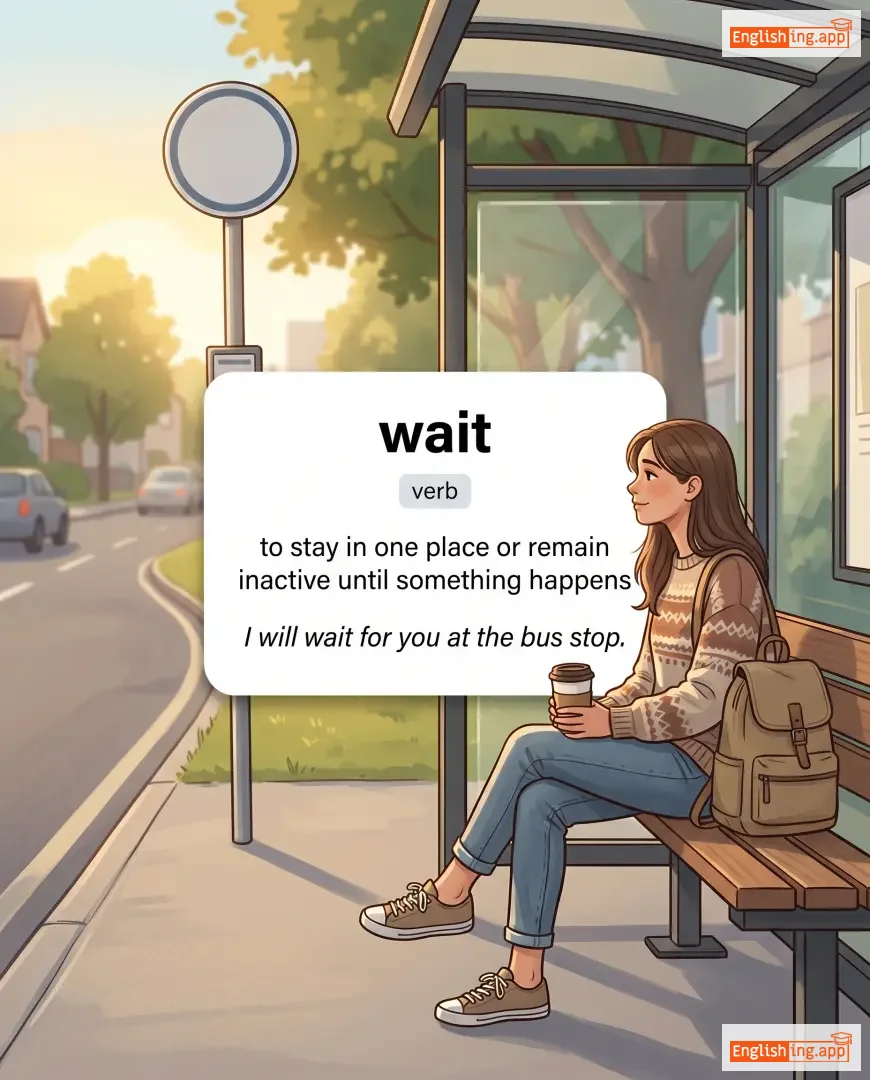
wait definition card — visual illustration of the meaning
verb
/weɪt/
等待 (deng dai)

to stay in one place or remain inactive until something happens

"I will wait for you at the bus stop."

"我会在公交车站等你。" (Wǒ huì zài gōng jiāo chē zhàn děng nǐ.)
noun
/ˈweɪtər/
服务员 (fuwuyuan)

a person whose job is to serve food and drinks to customers in a restaurant or café

"The waiter brought the menu and took our order politely."

"服务员礼貌地拿来菜单并记录了订单。" (fuwuyuan limaode nalai caidan bing jilule dingdan)
noun
/ˈweɪtrəs/
女服务员 (nv fuwuyuan)

a woman who serves food and drinks to customers in a restaurant or café

"The waitress took our order with a friendly smile."

"女服务员微笑着接了我们的点单。" (Nv fuwuyuan weixiao zhe jie le women de diandan)
verb
/weɪv/
幸福 (xingfu)

to refrain from insisting on or enforcing something, especially a right or claim

"She decided to waive her right to a lawyer."
"她在收到奖项时无法掩饰她的幸福感。" (Tā zài shōu dào jiǎngxiàng shí wúfǎ yǎnshì tā de xìngfú gǎn.)
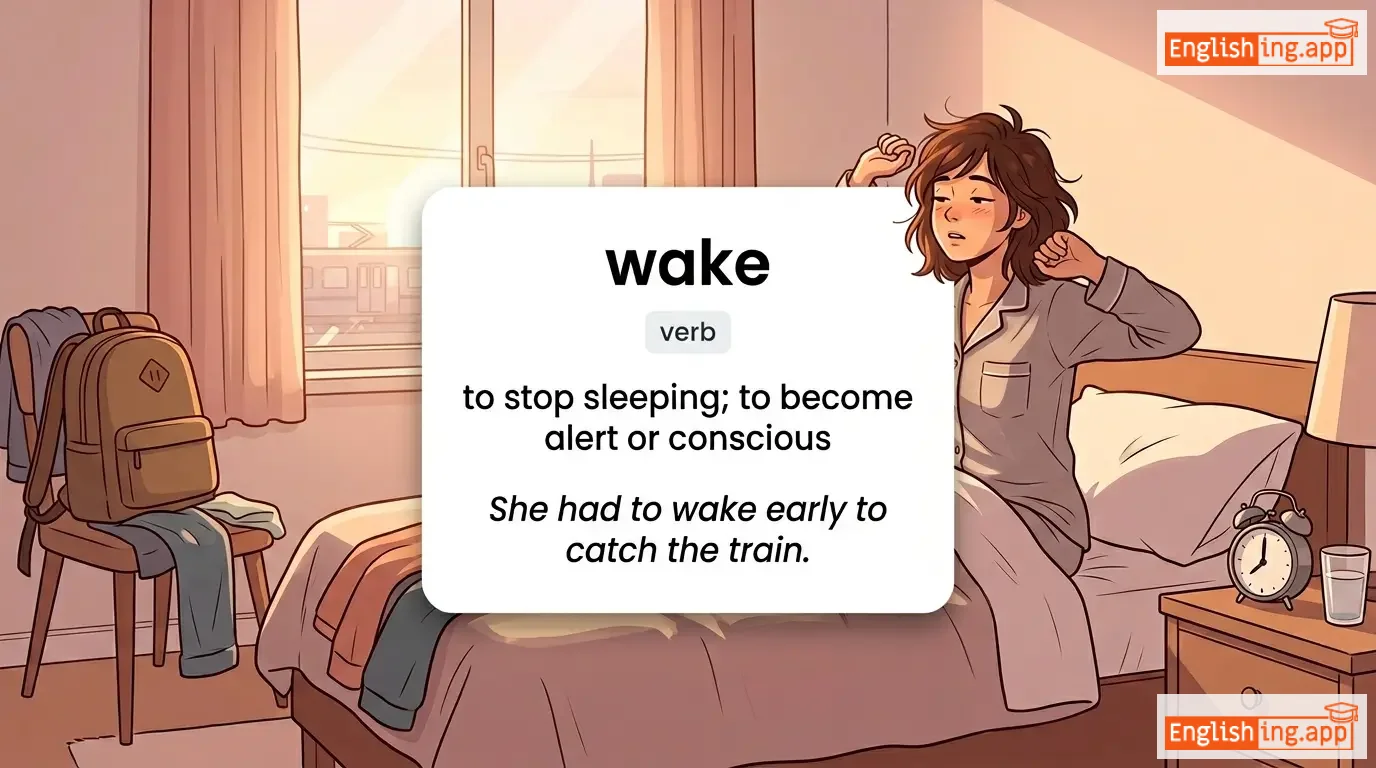
wake definition card — visual illustration of the meaning
verb
/weɪk/
幸福 (xingfu)

to stop sleeping; to become alert or conscious

"She had to wake early to catch the train."

"她在收到奖项时,无法掩饰自己的幸福。" (Tā zài shōu dào jiǎngxiàng shí, wúfǎ yǎnshì zìjǐ de xìngfú.)
adjective
/ˈweɪ.kɪŋ/
醒着的; 有意识的 (xingzhe de; you yishi de)

awake and conscious; relating to the time when one is awake

"She spent her waking hours studying for the exam."
"她在清醒的时光里为考试学习。" (Ta zai qingxing de shiguang li wei kaoshi xuexi.)
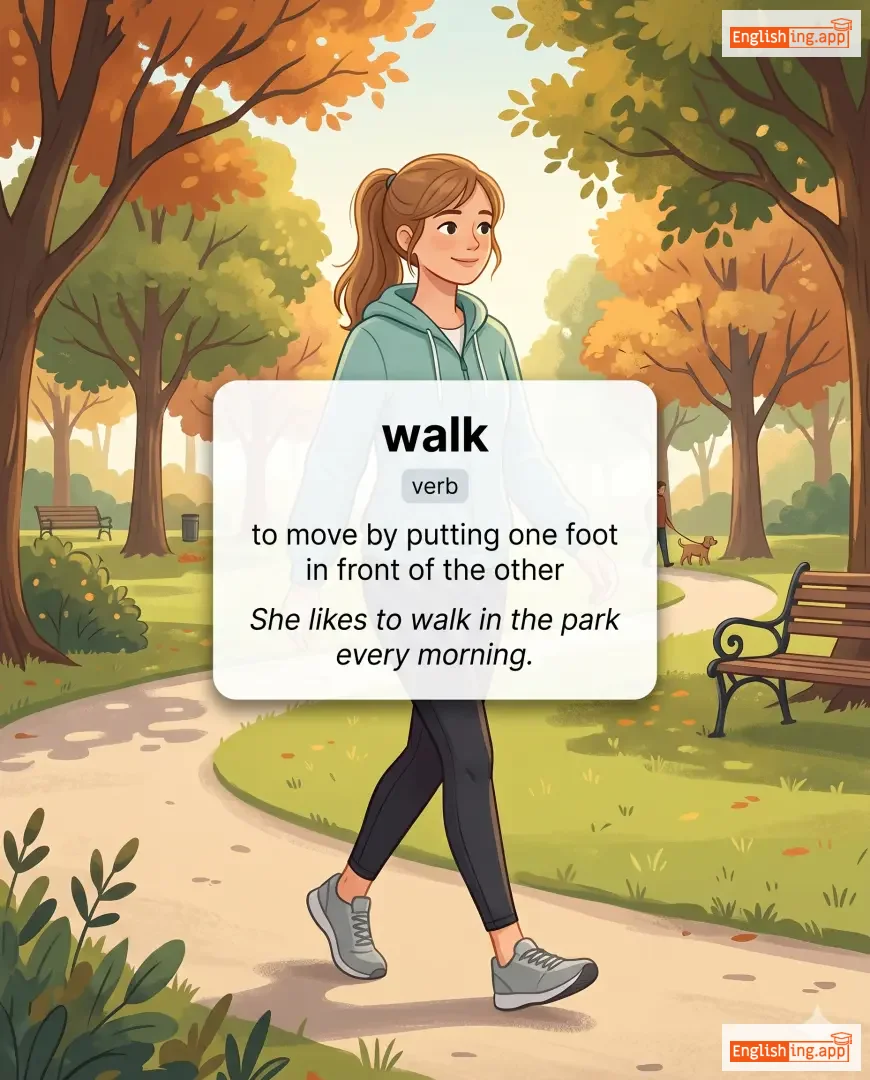
walk definition card — visual illustration of the meaning
verb
/wɔːk/
走路 (zǒulù)

to move by putting one foot in front of the other

"She likes to walk in the park every morning."

"她每天早上喜欢在公园散步。" (Tā měitiān zǎoshang xǐhuān zài gōngyuán sànbù.)
🚶‍♂️

walking (沃金)

noun
/ˈwɔːkɪŋ/
走路 (zǒulù)

the activity of moving on foot at a moderate pace

"Walking every morning is good for your health."

"每天早晨走路对你的健康有益。" (Měitiān zǎo chén zǒulù duì nǐ de jiànkāng yǒuyì.)
noun
/ˈwɔːkɪŋ fɪʃ/
步行鱼 (bùxíng yú)

a fish that can move on land using its fins and breathe air for extended periods

"The walking-fish can travel across dry land to find new water sources."

"步行鱼可以穿越干燥的土地找到新的水源。" (bùxíng yú kěyǐ chuānyuè gānzào de tǔdì zhǎodào xīn de shuǐyuán.)
noun
/wɔːl/
(qiáng)

a vertical structure that encloses or divides an area

"The wall in our living room is painted blue."

"我们客厅的墙壁被涂成了蓝色。" (Wǒmen kètīng de qiángbì bèi tú chéngle lán sè.)
noun
/ˈwɒlɪt/
钱包 (qianbao)

a small folding case for carrying money, credit cards, and identification

"He pulled out his wallet to pay for the coffee."

"他拿出钱包付了咖啡的钱。" (Ta nachu qianbao fu le kafei de qian.)
verb
/ˈwɒloʊ/
打滚, 沉溺 (dǎgǔn, chénnì)

to roll about or indulge oneself in something excessively

"The buffalo likes to wallow in the mud on hot days."

"水牛喜欢在热天在泥巴里打滚。" (Shuǐniú xǐhuān zài rètiān zài níbā lǐ dǎgǔn.)
noun
/ˈwɔːl.nʌt/
核桃 (he tao)

an edible nut with a hard shell and a wrinkled appearance

"I love to eat walnuts with honey for breakfast."

"我喜欢在早餐时吃蜂蜜核桃。" (Wǒ xǐ huān zài zǎo cān shí chī fēng mì hé táo.)
noun
/ˈwɑːmpəm/
贝壳项链 (beike xianglian)

beads made by Native Americans from shells, used as money or decoration

"The tribe traded furs for wampum."
"部落用皮毛换取贝壳项链。" (Buluo yong pimao huan qu beike xianglian.)
adjective
/wɒn/
苍白 (cangbai)

looking pale or sickly; lacking color or vitality

"After the long illness, his face looked wan and tired."

"在长时间的病后,他的脸看起来苍白且疲倦。" (Zai chang shijian de bing hou, tā de liǎn kàn qǐlái cāngbái qiě píjuàn.)
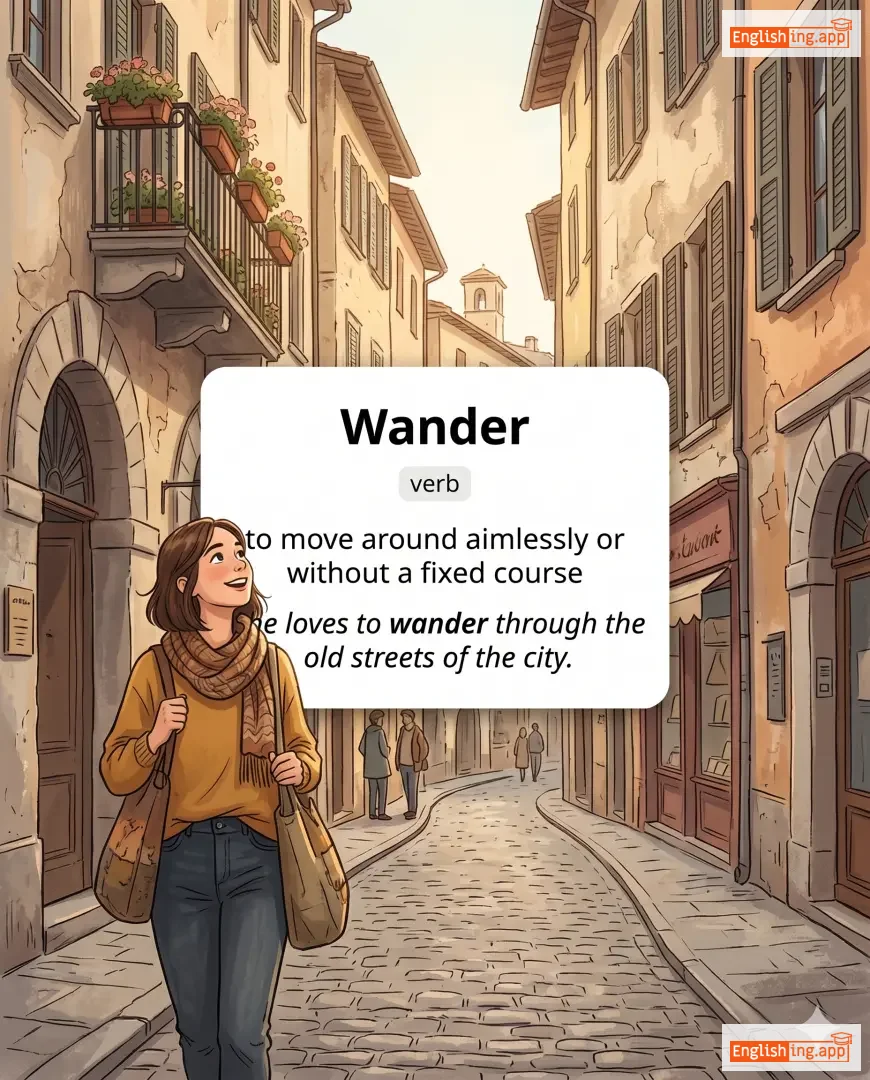
Wander definition card — visual illustration of the meaning
verb
/ˈwɒndər/
徘徊 (páihuái)

to move around aimlessly or without a fixed course

"She loves to wander through the old streets of the city."

"她喜欢在城市的老街上漫步。" (Tā xǐhuān zài chéngshì de lǎo jiē shàng mànbù.)
noun
/ˈwɒndərər/
流浪者; 旅行者,目的地不确定 (liúlàng zhě)

a person who travels aimlessly; someone who roams from place to place

"The wanderer explored different countries without a fixed destination."

"流浪者在没有固定目的地的情况下探索了不同的国家。" (Liúlàng zhě zài méiyǒu gùdìng mùdìdì de qíngkuàng xià tànsuǒle bùtóng de guójiā.)
noun
/ˈwɒndərlʌst/
旅行欲望 (lǚxíng yùwàng)

A strong desire to travel and explore the world.

"Her wanderlust took her to every corner of the globe."

"她的旅行欲望带她走遍了世界的每个角落。" (Tā de lǚxíng yùwàng dài tā zǒubiànle shìjiè de měi gè jiǎoluò.)
verb
/weɪn/
减少 (jiǎnshǎo)

To decrease gradually in power, intensity, or size.

"The moon wanes after the full moon night."

"月亮在满月之夜后开始减退。" (Yuèliàng zài mǎn yuè zhī yè hòu kāishǐ jiǎn tuì.)
verb
/ˈwaŋɡl/
通过巧妙手段获得某物 (tōngguò qiǎomiào shǒuduàn huòqǔ mǒuwù)

To achieve something by clever or sometimes dishonest persuasion or trickery.

"He wangled a free ticket to the concert."

"他通过巧妙手段获得了免费的音乐会票。" (Tā tōngguò qiǎomiào shǒuduàn huòqǔ le miǎnfèi de yīnyuè huì piào.)
Want definition card — visual illustration of the meaning
verb
/wɒnt/
想要 (xiang yao)

To desire to have or do something.

"I want a cup of coffee before the meeting."

"我在会议之前想要一杯咖啡。" (Wo zai huiyi zhiqian xiang yao yi bei kafei.)
adjective
/ˈwɒntɪŋ/
不足 (bùzú)

Lacking or deficient in quality or quantity.

"His explanation was wanting in clarity."

"他的解释缺乏清晰度。" (tā de jiěshì quēfá qīngxīdù.)
adjective
/ˈwɒntən/
无谓的残忍 (wúwèi de cánrěn)

Deliberate and unprovoked; reckless or cruel.

"The soldiers were accused of wanton destruction."

"士兵们被指控无谓的破坏。" (Shìbīngmen bèi zhǐkòng wúwèi de pòhuài.)
noun
/ˈwɒntənnəs/
无缘的残忍 (wúyuán de cánrěn)

The quality of being reckless, cruel, or deliberately malicious.

"His wantonness shocked everyone at the gathering."

"他的无缘残忍震惊了聚会上的每一个人。" (Tā de wúyuán cánrěn zhèngjīngle jùhuì shàng de měi yīgè rén.)
noun
/wɔːr/
战争 (zhanzheng)

a state of conflict between different countries or groups

"The war caused great suffering to the people."

"战争给人民带来了巨大的痛苦。" (Zhanzheng gei renmin dailai le juda de tongku.)
verb
/ˈwɔːbəl/
用颤抖的声音或发出颤音唱歌或吹口哨 (yòng zhàndǒu de shēngyīn huò fāchū zhànyīn chànggē huò chuī kǒushào)

To sing or whistle with a quavering voice or with trills.

"The bird warbled a sweet tune in the morning."

"那只鸟在早上用甜美的旋律歌唱。" (Nà zhī niǎo zài zǎoshang yòng tiánměi de xuánlǜ gēchàng.)
noun
/wɔːrd/
病房 (bing fang)

A separate room in a hospital for patients; also a division of a city or a person under guardianship.

"She was admitted to the children's ward."

"她被接收进了儿童病房。" (Tā bèi jiēshōu jìnle értóng bìngfáng.)
noun
/ˈwɔːdrəʊb/
衣橱 (yīchú)

A large cupboard where clothes are stored; also the collection of clothes someone owns.

"Her wardrobe is full of colorful dresses."

"她的衣橱里充满了五颜六色的裙子。" (Tā de yīchú lǐ chōngmǎn le wǔ yán liù sè de qúnzi.)
noun
/ˈweə(r)haʊs/
仓库 (cangku)

a large building where goods are stored before being sold or distributed

"The company stores all its products in a big warehouse."

"公司将所有产品存储在一个大仓库里。" (Gōngsī jiāng suǒyǒu chǎnpǐn cúnchǔ zài yí gè dà cāngkù lǐ.)
noun
/ˈwɔːfeə/
战争 (zhànzhēng)

engagement in or the activities involved in war

"The country prepared for the possibility of total warfare."

"该国为全面战争的可能性做好了准备。" (Gāi guó wèi quánmiàn zhànzhēng de kěnéng xìng zuò hǎo le zhǔnbèi.)
adjective
/ˈwɔːrˌlaɪk/
好战的 (hao zhan de)

Having an aggressive or militant nature; inclined to fight or engage in war.

"The tribe was known for its warlike traditions."

"这个部落因其好战的传统而闻名。" (Zhège bùluò yīn qí hǎo zhàn de chuántǒng ér wénmíng.)
adjective
/wɔːrm/
温暖 (wēn nuǎn)

having a moderate degree of heat

"The warm sunlight made the room feel cozy."
"温暖的阳光让房间变得舒适。" (Wēnnuǎn de yángguāng ràng fángjiān biàn dé shūshì.)
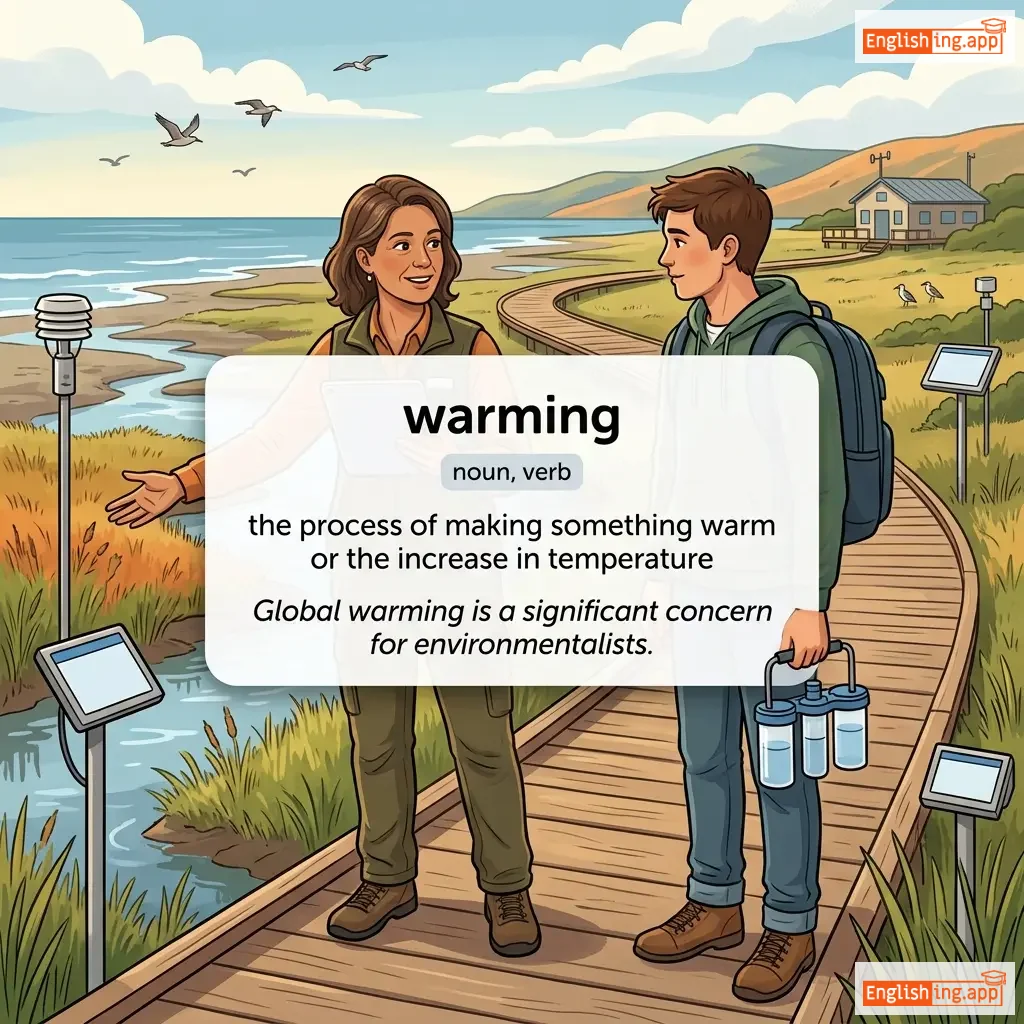
warming definition card — visual illustration of the meaning
noun, verb
/ˈwɔːmɪŋ/
温度升高 (wendu shenggao)

the process of making something warm or the increase in temperature

"Global warming is a significant concern for environmentalists."

"全球变暖是环境学者关心的重要问题。" (Quanqiu bian nuan shi huanjing xue zhe guanxin de zhongyao wenti.)
adverb
/ˈwɔːm.li/
热情地; 亲切地 (rèqíng de; qīnqiè de)

in a warm manner; with warmth; cordially; affectionately

"She welcomed the guests warmly at the door."

"她在门口热情地欢迎客人。" (Tā zài ménkǒu rèqíng de huānyíng kèrén.)
noun
/ˈwɔːrˌmʌŋɡər/
战争煽动者 (zhànzhēng shāndòng zhě)

A person who advocates or promotes war or conflict.

"The leader was criticized as a warmonger by his opponents."

"这位领导人被对手批评为战争煽动者。" (Zhè wèi lǐngdǎo rén bèi duìshǒu pīpíng wéi zhànzhēng shāndòng zhě.)
noun
/wɔːmθ/
温暖 (wēnnuǎn)

the quality or state of being warm in temperature or feeling

"She felt the warmth of the sun on her face."

"她感受到了阳光照在脸上的温暖。" (Tā gǎnshòu dào le yángguāng zhào zài liǎn shàng de wēnnuǎn.)
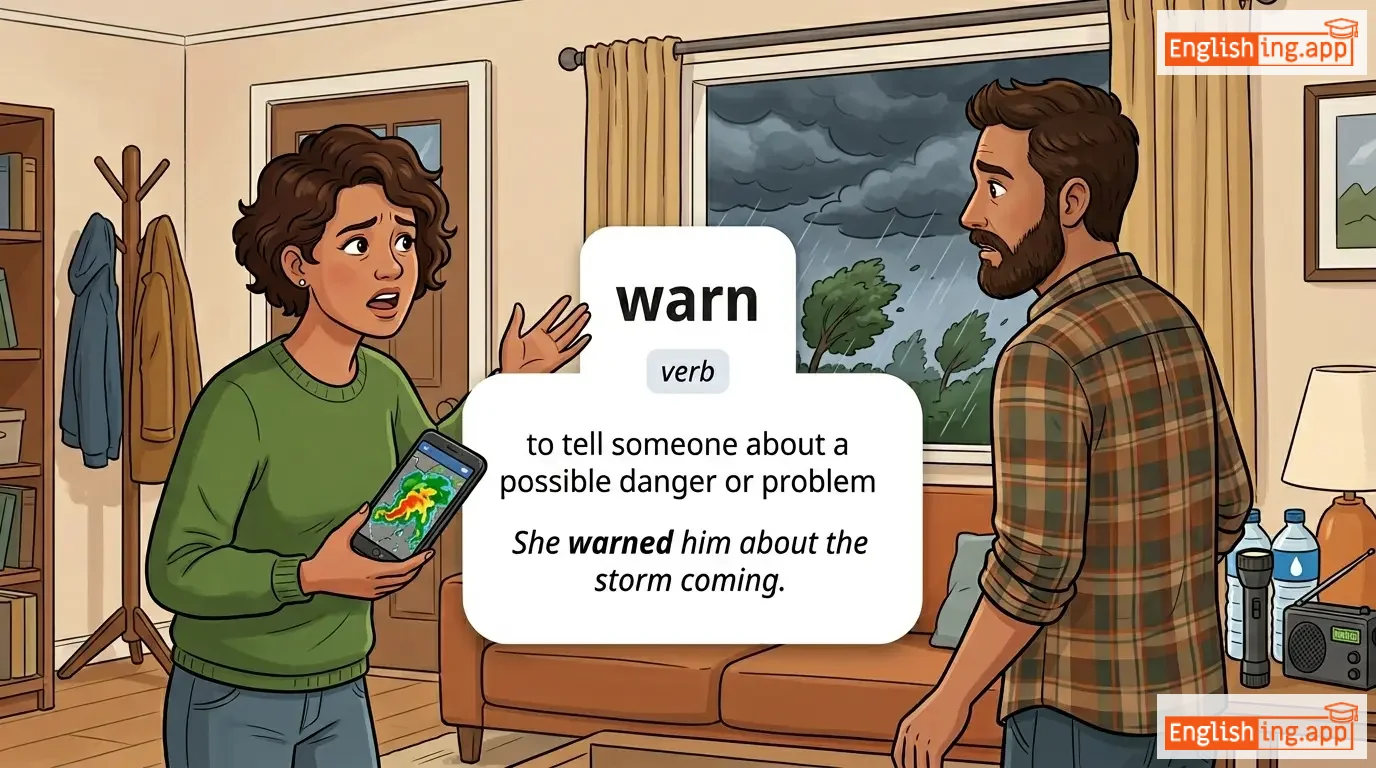
warn definition card — visual illustration of the meaning
verb
/wɔːrn/
警告 (jinggao)

to tell someone about a possible danger or problem

"She warned him about the storm coming."

"她警告他即将来临的暴风雨。" (Ta jinggao ta jijiang lailin de baofengyu.)