Словари

Словарь английского языка | Значения слов, определения и примеры

verb
/ˈwɒd.əl/
шаркать (sharkat)

to walk with short steps and a clumsy swaying motion, like a duck

"The duck waddled across the yard."

"Утка прошаркала через двор." (Utka prosharkala cherez dvor.)
verb
/weɪd/
идти по воде (idti po vode)

to walk through water or another substance that impedes movement

"The children waded in the shallow river."

"Дети шли по мелкой реке." (Deti shli po melkoy reke.)
noun/verb
/ˈwɒf.əl/
вафля (ед.), говорить неопределенно (vaflya (ed.), govorit' neopredelenno)

as noun: a crisp cake with a pattern of deep squares; as verb: to speak or write vaguely without making a clear decision

"He kept waffling instead of making a decision."

"Он продолжал болтать, вместо того чтобы принять решение." (On prodolzhal boltat', vmesto togo chtoby prinyat' reshenie.)
verb
/wɑːft/
плыть в воздухе (plyt v vozdukhe)

to move gently through the air, carried by a breeze

"The smell of fresh bread wafted through the kitchen."

"Запах свежего хлеба пронесся через кухню." (Zapakh svezhego khleba prones'sya cherez kukhnyu.)
verb
/wæɡ/
машет (mashet)

to move or cause to move rapidly from side to side

"The dog wagged its tail happily."

"Собака счастливо махала хвостом." (Sobaka schastlivo makhala khvostom.)
💰

Wage

noun/verb
/weɪdʒ/

payment for work or services, usually on a daily or weekly basis; also to engage in or carry on (a war, campaign, or struggle)

"The workers demanded a fair wage for their labor."

adjective
/ˈwæɡ.ɪʃ/
игривый или озорной (igrivyy ili ozornoy)

playfully humorous or mischievous

"His waggish remarks made everyone laugh."

"Его игривые замечания заставили всех смеяться." (Yego igrivye zamechaniya zastavili vsekh smeyatsya.)
noun
/ˈwæɡən/
повозка (povozka)

a vehicle with four wheels used for carrying loads, often pulled by horses or a motor vehicle used for transporting goods or people

"The farmer loaded hay onto the wagon."

"Фермер загрузил сено на повозку." (Fermyer zagruzil seno na povozku.)
noun
/weɪf/
бездомный ребенок (bezdomnyy rebenok)

a homeless, neglected, or abandoned person, often a child

"The young waif wandered the streets in search of food."

"Молодой бездомный ребенок бродил по улицам в поисках еды." (Molodoy bezdomnyy rebenok brodil po ulitsam v poiskakh yedy.)
noun
/weɪl/
стон; жалоба (wail)

a prolonged cry of pain, grief, or anger; to cry loudly

"The child's wail could be heard throughout the house."

"Крик ребенка можно было услышать по всему дому." (Krik rebenka mozhnо bylo uslyshat' po vsemy domu.)
🧍‍♂️

Waist (уэйст)

noun
/weɪst/
талия (taliya)

the part of the human body between the ribs and the hips

"He tied a belt around his waist."

"Он завязал пояс вокруг своей талии." (On zavyazal poyas vokrug svoey taliya.)
noun
/weɪst tʃeɪn/
поясная цепочка (poyasnaya tsepochka)

a decorative chain worn around the waist as jewelry or ornamentation

"The traditional waist chain complemented her ethnic outfit perfectly."

"Традиционная поясная цепочка идеально дополнила её этнический наряд." (Traditsionnaya poyasnaya tsepochka ideal'no dopolnila yey etnicheskiy naryad.)
noun
/ˈweɪs(t).koʊt/
жилет (zhilet)

a sleeveless garment worn over a shirt and under a jacket

"He wore a black waistcoat with his suit."
"Он носил черный жилет с костюмом." (On nosil chernyy zhilet s kostyumom.)
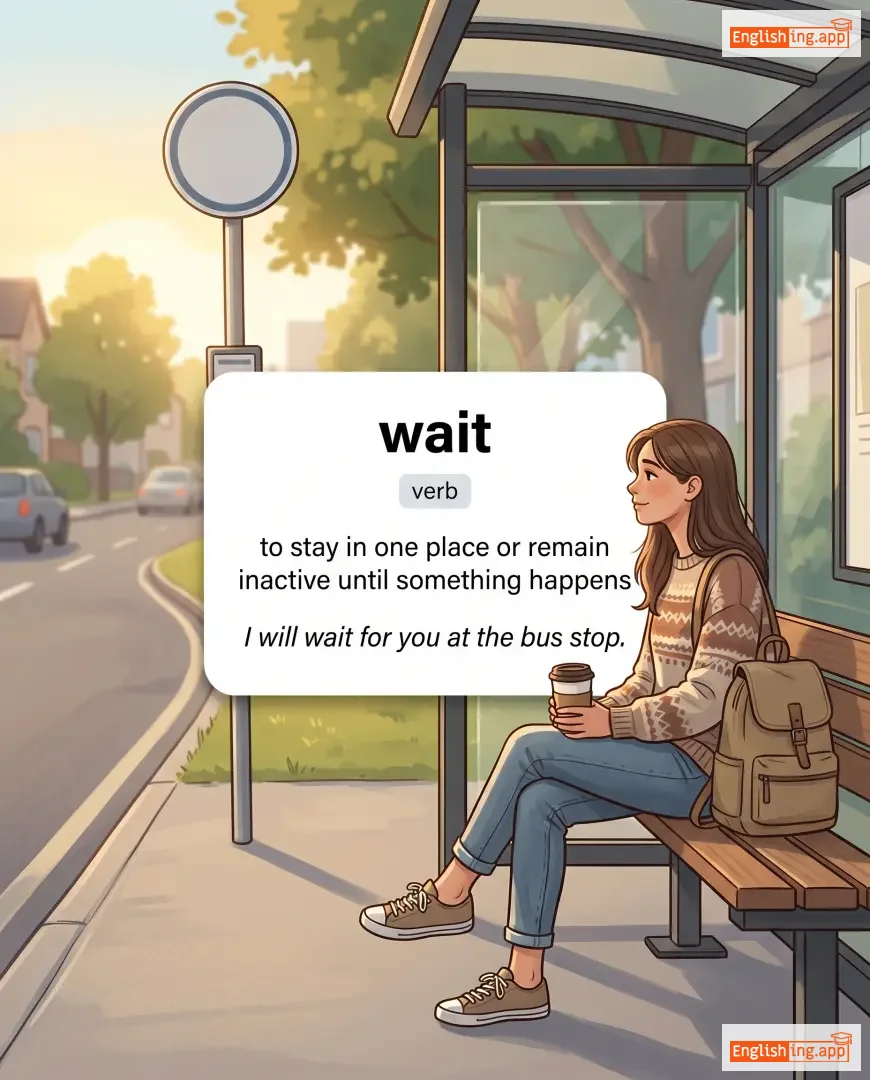
wait definition card — visual illustration of the meaning
verb
/weɪt/
ждать (zhdat')

to stay in one place or remain inactive until something happens

"I will wait for you at the bus stop."

"Я буду ждать тебя на автобусной остановке." (Ya budu zhdat' tebya na avtobusnoy ostanovke.)
noun
/ˈweɪtər/
официант (ofitsiant)

a person whose job is to serve food and drinks to customers in a restaurant or café

"The waiter brought the menu and took our order politely."

"Официант вежливо принёс меню и принял заказ." (ofitsiant vezhlivo prinyos menyu i prinyal zakaz)
noun
/ˈweɪtrəs/
официантка (ofitsiантka)

a woman who serves food and drinks to customers in a restaurant or café

"The waitress took our order with a friendly smile."

"Официантка приняла наш заказ с улыбкой." (Ofitsiантka prinyala nash zakaz s ulybkoi)
verb
/weɪv/
счастье (schastye)

to refrain from insisting on or enforcing something, especially a right or claim

"She decided to waive her right to a lawyer."
"Она не смогла скрыть своего счастья, когда получила награду." (Ona ne smogla skryt' svoego schast'ya, kogda poluchila nagradu.)
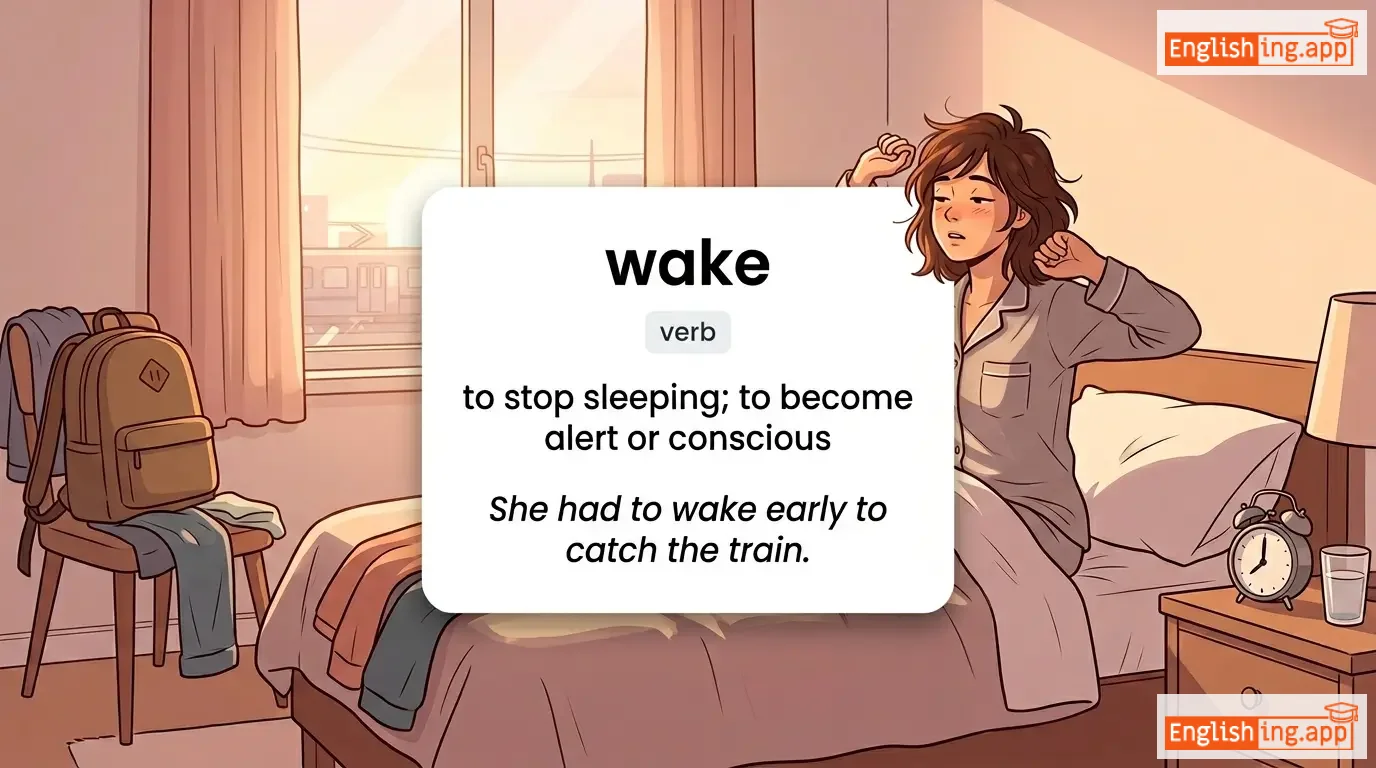
wake definition card — visual illustration of the meaning
verb
/weɪk/
счастье (schastye)

to stop sleeping; to become alert or conscious

"She had to wake early to catch the train."

"Она не могла скрыть свое счастье, когда получила награду." (Ona ne mogla skryt' svoe schast'ye, kogda poluchila nagradu.)
adjective
/ˈweɪ.kɪŋ/
бодрствующий; сознательный (bodrstvuyushchiy; soznatel'nyy)

awake and conscious; relating to the time when one is awake

"She spent her waking hours studying for the exam."
"Она провела свои бодрствующие часы, готовясь к экзамену." (Ona provela svoi bodrstvuyushchie chasy, gotovias' k ekzameny.)
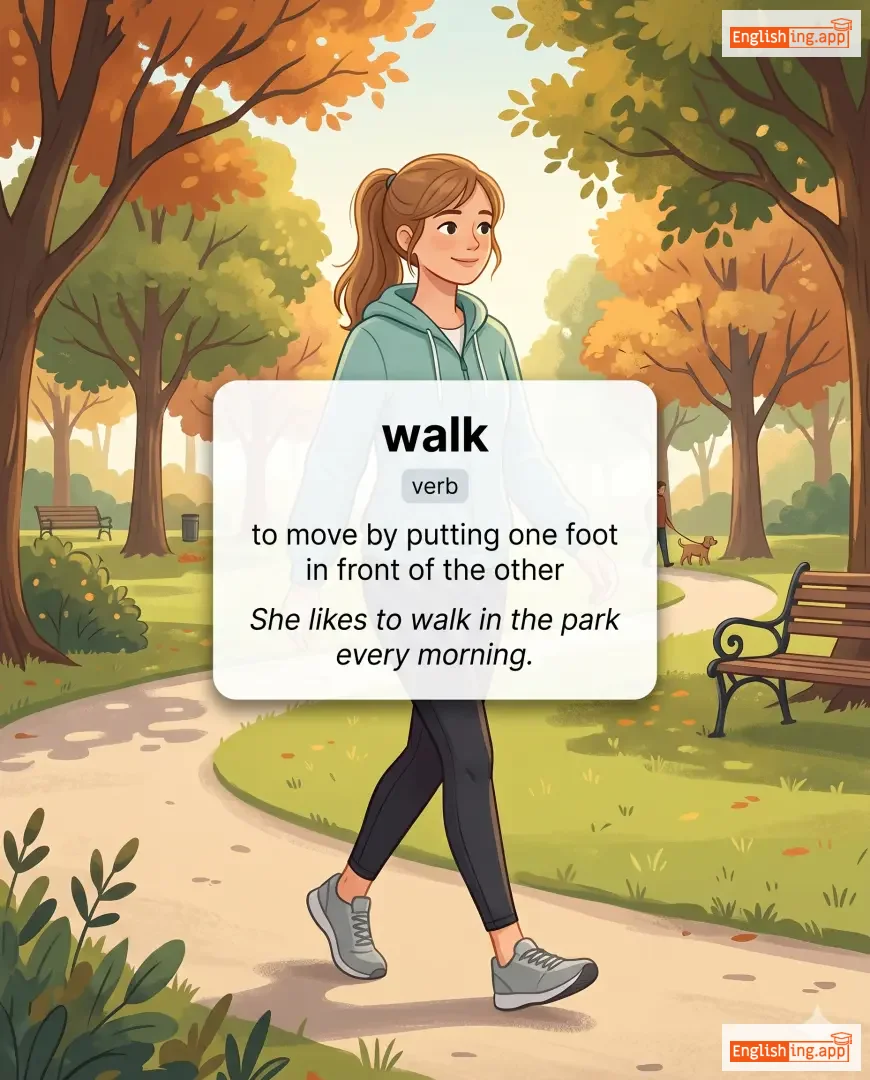
walk definition card — visual illustration of the meaning
verb
/wɔːk/
идти (idti)

to move by putting one foot in front of the other

"She likes to walk in the park every morning."

"Она любит гулять в парке каждое утро." (Ona lyubit gulyat' v parke kazhdoe utro.)
noun
/ˈwɔːkɪŋ/
ходьба (khod'ba)

the activity of moving on foot at a moderate pace

"Walking every morning is good for your health."

"Ходьба каждое утро полезна для вашего здоровья." (Khodyba kazhdoe utro polezna dlya vashego zdorov'ya.)
noun
/ˈwɔːkɪŋ fɪʃ/
рыба-пешка (ryba-peshka)

a fish that can move on land using its fins and breathe air for extended periods

"The walking-fish can travel across dry land to find new water sources."

"Рыба-пешка может путешествовать по суше, чтобы найти новые источники воды." (Ryba-peshka mozhet puteshestvovat' po sushe, chtoby nayti novye istochniki vody.)
noun
/wɔːl/
стена (stena)

a vertical structure that encloses or divides an area

"The wall in our living room is painted blue."

"Стена в нашей гостиной покрашена в синий цвет." (Stena v nashey gostinoy pokrashena v siniy tsvet.)
noun
/ˈwɒlɪt/
кошелек (koshelek)

a small folding case for carrying money, credit cards, and identification

"He pulled out his wallet to pay for the coffee."

"Он достал свой кошелек, чтобы заплатить за кофе." (On dostal svoy koshelek, chtoby zaplatit' za kofe.)
verb
/ˈwɒloʊ/
валяться, погружаться (valyat'sya, pogruzhat'sya)

to roll about or indulge oneself in something excessively

"The buffalo likes to wallow in the mud on hot days."

"Буйволу нравится валяться в грязи в жаркие дни." (Buyvolu nravitsya valyat'sya v gryazi v zharkie dni.)
noun
/ˈwɔːl.nʌt/
грецкий орех (gretskiy orekh)

an edible nut with a hard shell and a wrinkled appearance

"I love to eat walnuts with honey for breakfast."

"Я люблю есть грецкие орехи с медом на завтрак." (Ya lyublyu yest' gretskiye orekhi s medom na zavtrak.)
noun
/ˈwɑːmpəm/
жемчужные ожерелья (zhemchuzhnie ozherelya)

beads made by Native Americans from shells, used as money or decoration

"The tribe traded furs for wampum."

"Племя обменяло меха на жемчужные ожерелья." (Plemya obmenyalo mekha na zhemchuzhnie ozherelya.)
adjective
/wɒn/
бледный (bledny)

looking pale or sickly; lacking color or vitality

"After the long illness, his face looked wan and tired."
"После долгой болезни его лицо выглядело бледным и усталым." (Posle dolgoy bolezni ego litso vyglyadelo blednym i ustalym.)
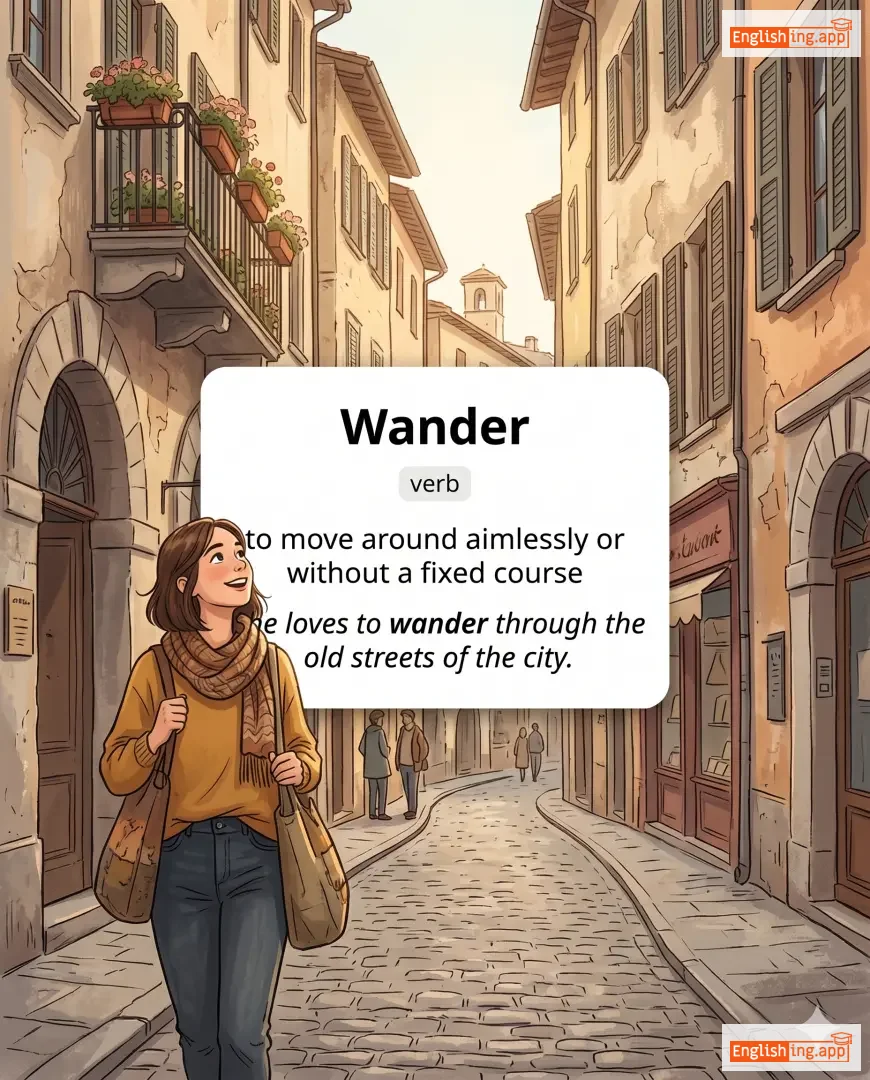
Wander definition card — visual illustration of the meaning
verb
/ˈwɒndər/
блуждать (bluzhdat')

to move around aimlessly or without a fixed course

"She loves to wander through the old streets of the city."

"Она любит бродить по старым улицам города." (Ona lyubit brodit' po starym ulitsam goroda.)
noun
/ˈwɒndərər/
блуждающий; человек, который путешествует без определенной цели (vanderer)

a person who travels aimlessly; someone who roams from place to place

"The wanderer explored different countries without a fixed destination."

"Бродяга исследовал разные страны, не имея постоянного места назначения." (Brodjaga issledoval raznye strany, ne imeya postoyannogo mesta naznacheniya.)
noun
/ˈwɒndərlʌst/
страсть к путешествиям (strast' k puteshestviyam)

A strong desire to travel and explore the world.

"Her wanderlust took her to every corner of the globe."

"Её страсть к путешествиям привела её в каждый уголок мира." (Eyo strast' k puteshestviyam privela yeyo v kazhdyi uholok mira.)
verb
/weɪn/
убывать (ubivat)

To decrease gradually in power, intensity, or size.

"The moon wanes after the full moon night."

"Луна убывает после ночи полнолуния." (Luna ubivaetsya posle nochi polloluniya.)
verb
/ˈwaŋɡl/
получить что-то хитростью (poluchit' chto-to khitrost'yu)

To achieve something by clever or sometimes dishonest persuasion or trickery.

"He wangled a free ticket to the concert."

"Он получил бесплатный билет на концерт хитростью." (On poluchil besplatnyy bilet na kontsert khitrost'yu.)
Want definition card — visual illustration of the meaning
verb
/wɒnt/
хотеть (khotet)

To desire to have or do something.

"I want a cup of coffee before the meeting."

"Я хочу чашку кофе до встречи." (Ya khochu chashku kofe do vstrechi.)
adjective
/ˈwɒntɪŋ/
недостаточный (nedostatochnyy)

Lacking or deficient in quality or quantity.

"His explanation was wanting in clarity."

"Его объяснение было недостаточно ясным." (ego obyasnenie bylo nedostatochno yasnym.)
adjective
/ˈwɒntən/
беспочвенная жестокость (bespochvyennaya zhestokost)

Deliberate and unprovoked; reckless or cruel.

"The soldiers were accused of wanton destruction."

"Солдаты были обвинены в ненужном разрушении." (Soldaty byli obvineny v nenuzhnom razrushenii.)
noun
/ˈwɒntənnəs/
бессмысленная жестокость (bessmyslennaya zhestokost)

The quality of being reckless, cruel, or deliberately malicious.

"His wantonness shocked everyone at the gathering."

"Его бессмысленная жестокость потрясла всех на собрании." (Ego bessmyslennaya zhestokost potryasla vsekh na sobranie.)
noun
/wɔːr/
война (voyna)

a state of conflict between different countries or groups

"The war caused great suffering to the people."

"Война принесла большие страдания людям." (Voyna prinesla bolshie stradaniya lyudyam.)
verb
/ˈwɔːbəl/
петь или свистеть с дрожащим голосом или с трелями (pet' ili svistet' s drozhashchim golosom ili s trelyami)

To sing or whistle with a quavering voice or with trills.

"The bird warbled a sweet tune in the morning."

"Птица спела сладкую мелодию утром." (Ptitsa spela sladkuyu melodiya utrom.)
noun
/wɔːrd/
палата (palata)

A separate room in a hospital for patients; also a division of a city or a person under guardianship.

"She was admitted to the children's ward."

"Ее приняли в детскую палату." (Eyo prinyali v detskuyu palatu.)
noun
/ˈwɔːdrəʊb/
шкаф (shkaf)

A large cupboard where clothes are stored; also the collection of clothes someone owns.

"Her wardrobe is full of colorful dresses."

"Ее шкаф полон разноцветных платьев." (Yeyo shkaf polon raznotsvetnykh plat'yev.)
noun
/ˈweə(r)haʊs/
склад (sklad)

a large building where goods are stored before being sold or distributed

"The company stores all its products in a big warehouse."

"Компания хранит всю свою продукцию на большом складе." (Kompaniya khranit vsyu svoyu produktsiyu na bol'shom sklade.)
noun
/ˈwɔːfeə/
война (voyna)

engagement in or the activities involved in war

"The country prepared for the possibility of total warfare."

"Страна подготовилась к возможности тотальной войны." (Strana podgotovilas' k vozmozhnosti total'noy voyny.)
adjective
/ˈwɔːrˌlaɪk/
воинственный (voinstvenny)

Having an aggressive or militant nature; inclined to fight or engage in war.

"The tribe was known for its warlike traditions."

"Племя было известно своими воинственными традициями." (Plemya bylo izvestno svoimi voinstvennymi traditsiyami.)
adjective
/wɔːrm/
тёплый (tyoplyi)

having a moderate degree of heat

"The warm sunlight made the room feel cozy."
"Теплый свет сделал комнату уютной." (Tyoplyi svet sdelal komnatu uyutnoy.)
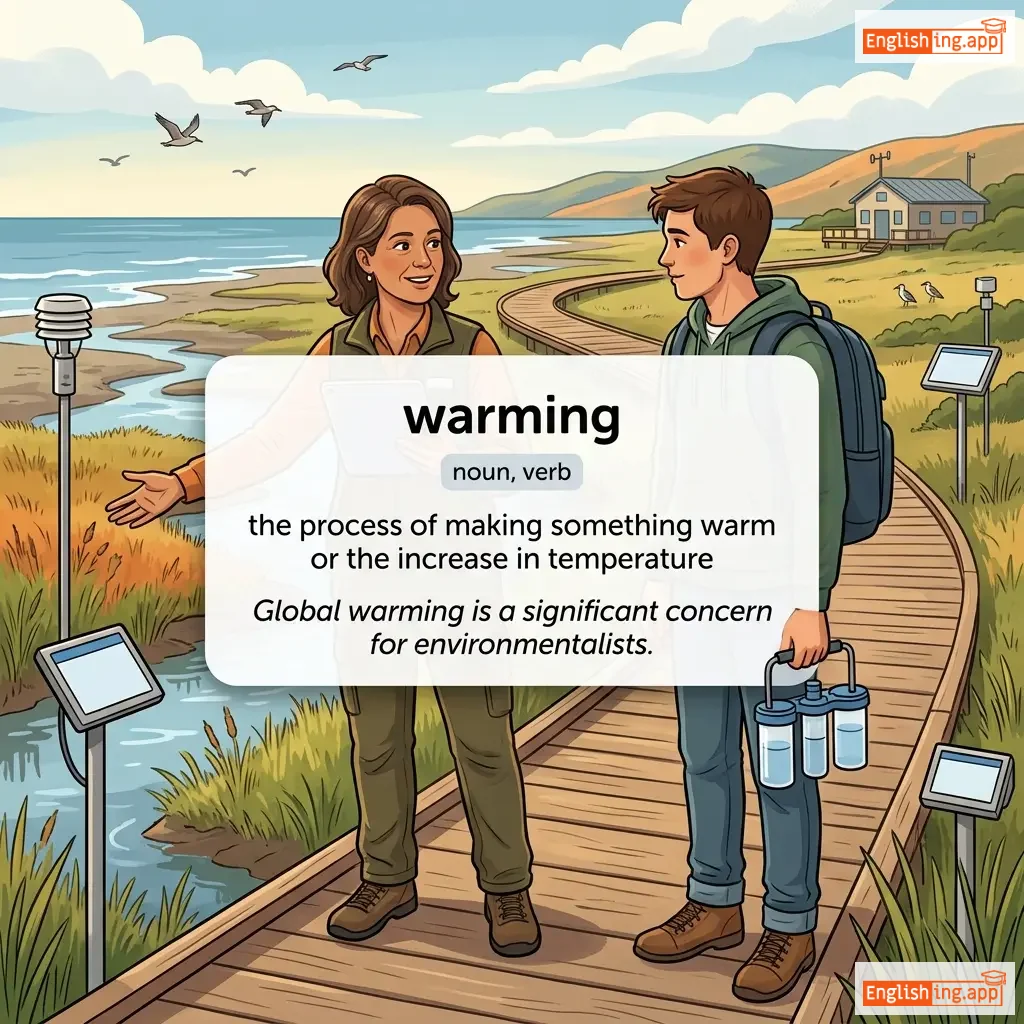
warming definition card — visual illustration of the meaning
noun, verb
/ˈwɔːmɪŋ/
повышение температуры (povyshenie temperatury)

the process of making something warm or the increase in temperature

"Global warming is a significant concern for environmentalists."

"Глобальное потепление — это серьезная проблема для экологов." (Globalnoe poteplenie — eto ser'yezhnaya problema dlya ekologov.)
adverb
/ˈwɔːm.li/
тепло; с любовью (teplo; s lyubov'yu)

in a warm manner; with warmth; cordially; affectionately

"She welcomed the guests warmly at the door."

"Она тепло встретила гостей у двери." (Ona teplo vstretala gostey u dveri.)
noun
/ˈwɔːrˌmʌŋɡər/
разжигатель войны (razhizhatel' voyny)

A person who advocates or promotes war or conflict.

"The leader was criticized as a warmonger by his opponents."

"Лидер был раскритикован своими оппонентами как разжигатель войны." (Lider byl raskritikovann svoimi opponentami kak razhizhatel' voyny.)
noun
/wɔːmθ/
тепло (teplo)

the quality or state of being warm in temperature or feeling

"She felt the warmth of the sun on her face."
"Она почувствовала тепло солнца на своем лице." (Ona pochuvstvovala teplo solntsa na svoem litse.)
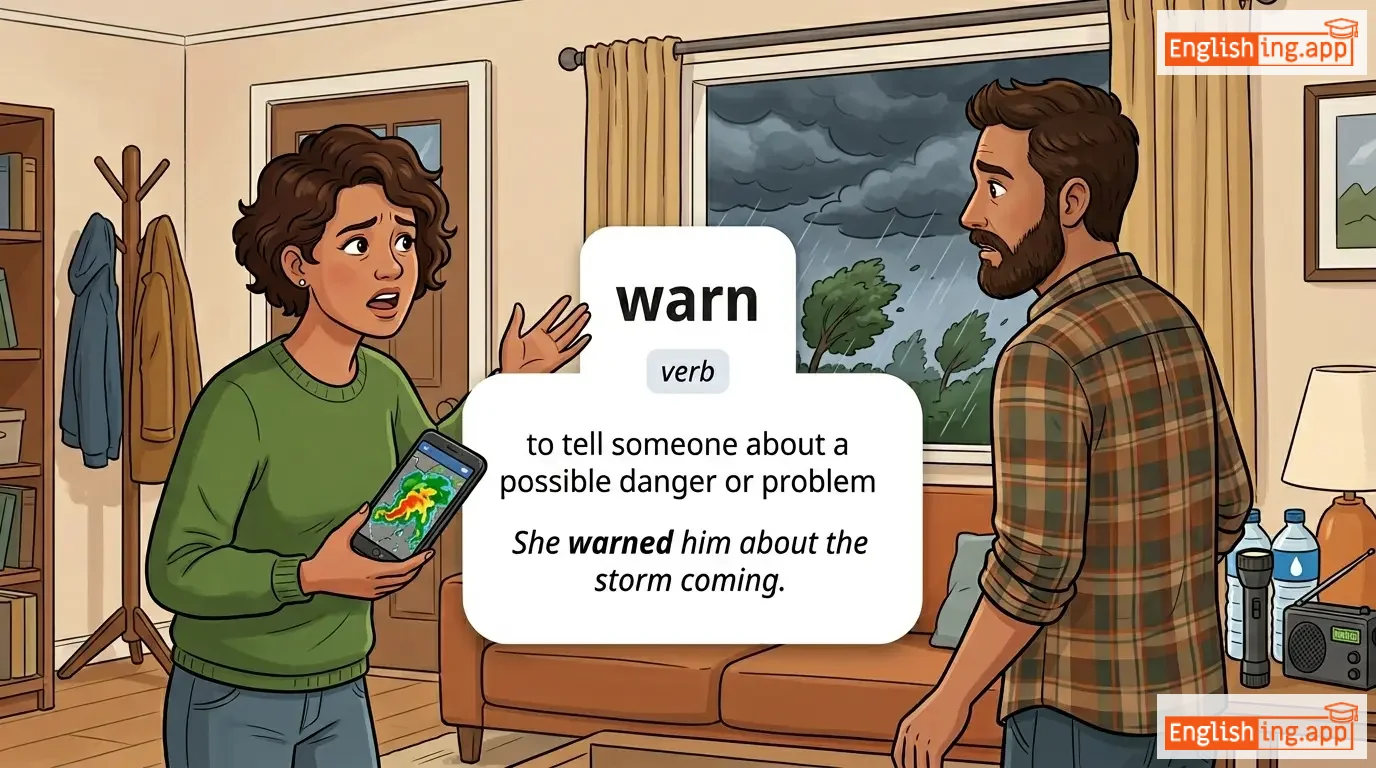
warn definition card — visual illustration of the meaning
verb
/wɔːrn/
предупредить (predupredit)

to tell someone about a possible danger or problem

"She warned him about the storm coming."

"Она предупредила его о приближающемся шторме." (Ona predupredila ego o priblizhayushchimsya shtorme.)