Словари

Словарь английского языка | Значения слов, определения и примеры
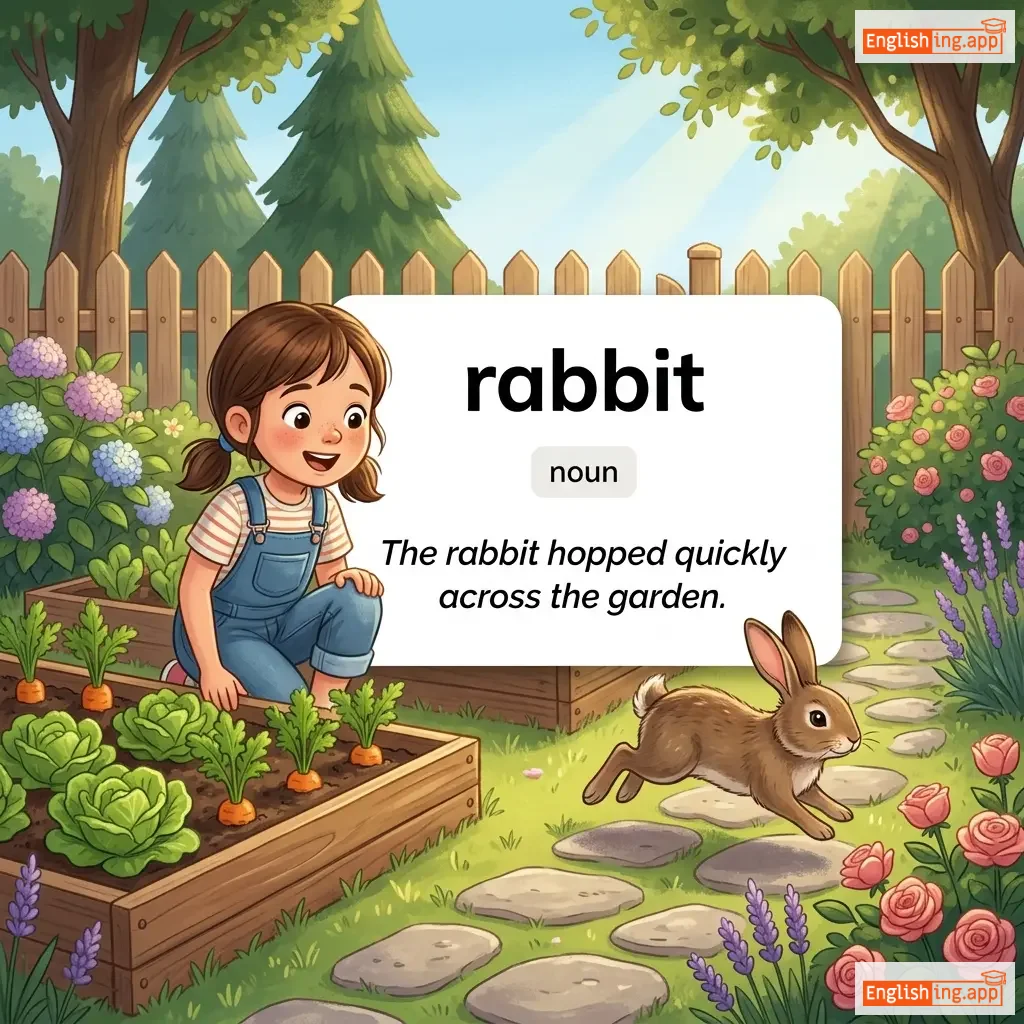
rabbit definition card — visual illustration of the meaning
noun
/ˈræbɪt/
кролик (krolik)

a small furry animal with long ears that lives in holes in the ground and moves by hopping

"The rabbit hopped quickly across the garden."

"Кролик быстро прыгнул через сад." (Krolik bystro prygnul cherez sad.)
noun
/ˈræb.əl/
беспорядочная толпа (besporyadochnaya tolpa)

A disorderly crowd or mob; the common people regarded as noisy or unruly.

"A rabble gathered in the streets to protest the decision."

"Беспорядочная толпа собралась на улицах, чтобы протестовать против решения." (Besporyadochnaya tolpa sobralas' na ulitsakh, chtoby protestovat' protiv resheniya.)
adjective
/ˈræb.ɪd/
безумный (bezumnyj)

Having extreme or fanatical support for something; relating to or suffering from rabies.

"He was a rabid fan of the football team."

"Он был безумным фанатом футбольной команды." (On byl bezumnym fanatom futbol'noy komandy.)
noun
/ˈreɪ.biːz/
бешенство (beshens-tvo)

A viral disease that causes inflammation of the brain in humans and other mammals, usually transmitted through animal bites.

"The dog was vaccinated against rabies."

"Собака была вакцинирована от бешенства." (Sobaka byla vaktsinirovana ot beshenstva.)
noun
/reɪs/
гонка (gonka)

a competition of speed, or a group of people with similar characteristics

"The race was very exciting, with many competitors."

"Гонка была очень захватывающей, с множеством участников." (Gonka byla ochen' zakhvatyvayushchey, s mnozhestvom uchastnikov.)
adjective
/ˈreɪʃəl/
расовый (rasovyy)

relating to a race of people

"Racial equality is an important issue in many societies."

"Расовое равенство - важная проблема во многих обществах." (Rassovoye ravenstvo - vazhnaya problema vo mnogikh obshchestvakh.)
noun
/ˈreɪsɪzəm/
расизм (rasizm)

the belief that some races are superior to others, leading to unfair treatment or prejudice

"The organization works to eliminate racism in all forms."

"Организация работает над устранением расизма во всех его формах." (Organizatsiya rabotaet nad ustraneniem rasizma vo vsekh ego formakh.)
adjective
/ˈreɪsɪst/
расист (rasist)

showing or feeling discrimination or prejudice against people of other races

"He was accused of making racist comments."

"Его обвинили в расистских комментариях." (Ego obvinili v rasistskikh kommentariyakh.)
noun
/ræk/
стойка (stoyka)

a frame or stand used to hold or store things

"She placed her wet clothes on the drying rack."

"Она положила свои мокрые вещи на сушилку." (Ona polozhila svoi mokrye veshchi na sushilku.)
noun
/ˈrækɪt/
ракетка / шум (raketka / shum)

A piece of equipment used to hit the ball in sports like tennis or badminton; also a loud noise or an illegal scheme.

"He bought a new tennis racket for the match."

"Он купил новую теннисную ракетку для матча." (On kupil novuyu tennisnuyu raketku dlya matcha.)
noun
/ˌræk.ɒnˈtɜːr/
умелый рассказчик (umelyj rasskazchik)

A person who tells anecdotes in a skillful and amusing way.

"The professor was a brilliant raconteur who kept his audience entertained."

"Профессор был блестящим рассказчиком, который развлекал свою аудиторию." (Professor byl blestyashchim rasskazchikom, kotoryj razvlekal svoyu auditoriyu.)
adjective
/ˈreɪ.si/
пикантный (pikantnyy)

Lively, entertaining, or slightly shocking (especially in a sexual way).

"The novel was full of racy dialogues."

"Роман был полон пикантных диалогов." (Roman byl polon pikantnykh dialogov.)
noun
/ˈreɪdɑːr/
радар (radar)

a system that uses radio waves to detect the position and speed of objects

"The plane was detected by the airport's radar system."

"Самолет был обнаружен радарной системой аэропорта." (Samolet byl obnaruzhen radarnoj sistemoju aeroporta.)
noun
/ˈreɪdiəns/
сияние (siyanie)

the quality of shining with bright light; a glowing or beaming quality

"Her face was filled with radiance after hearing the good news."

"Ее лицо было наполнено сиянием после того, как она услышала хорошие новости." (Eye litso bylo napolneno siyaniem posle togo, kak ona uslyshala khoroshie novosti.)
adjective
/ˈreɪdiənt/
сияющий / сияющая (siyayushchiy / siyayushchaya)

Shining brightly; expressing great happiness.

"She looked radiant in her wedding dress."

"Она выглядела сияющей в своем свадебном платье." (Ona vyhlyadela siyayushchey v svoem svadebnom plat'ye.)
verb
/ˈreɪdieɪt/
излучать (izluchat')

to emit energy or light; to spread out from a center

"The fireplace radiates warmth throughout the room."
"Камин излучает тепло по всей комнате." (Kamin izluchayet teplo po vsey komnate.)
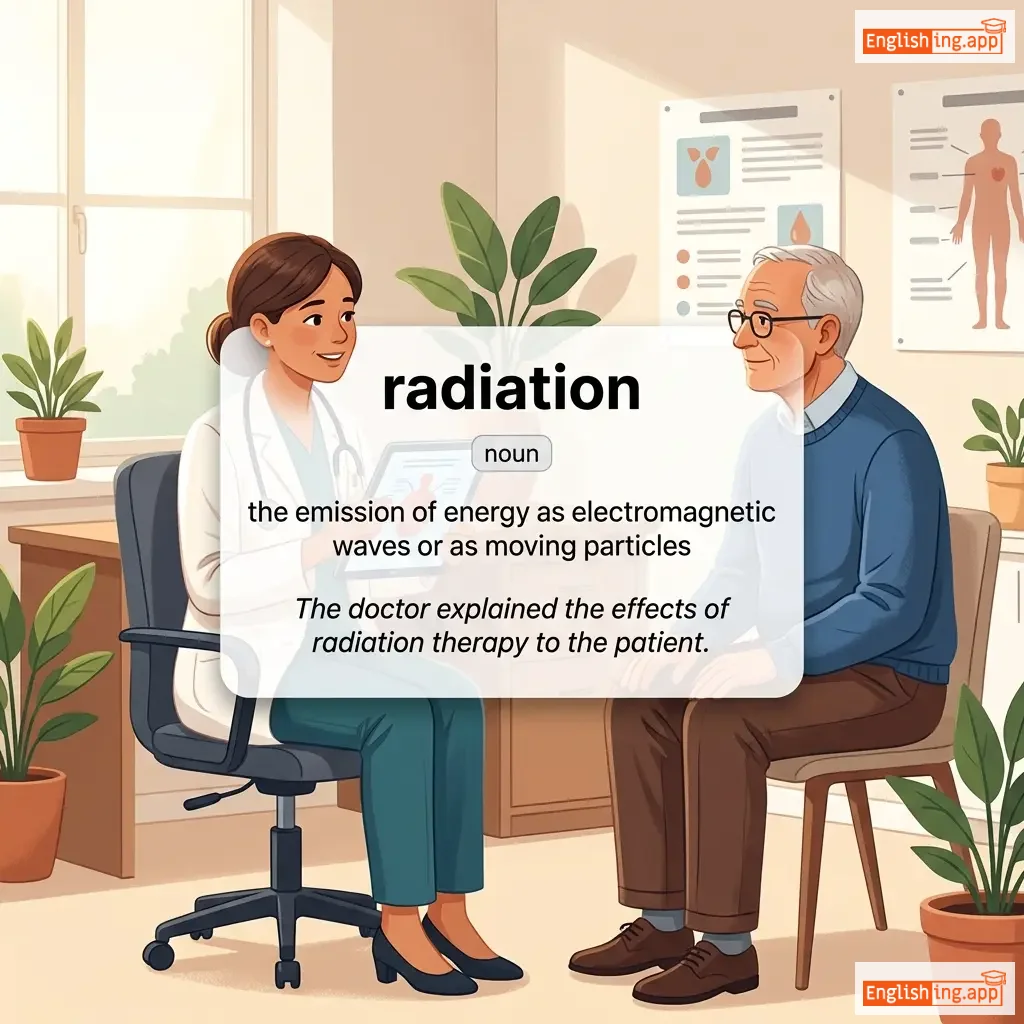
radiation definition card — visual illustration of the meaning
noun
/ˌreɪdiˈeɪʃən/
радиация (radiatsiya)

the emission of energy as electromagnetic waves or as moving particles

"The doctor explained the effects of radiation therapy to the patient."
"Доктор объяснил пациенту эффекты радиационной терапии." (Doktor obyasnil patsiyentu effekty radiatsionnoy terapii.)
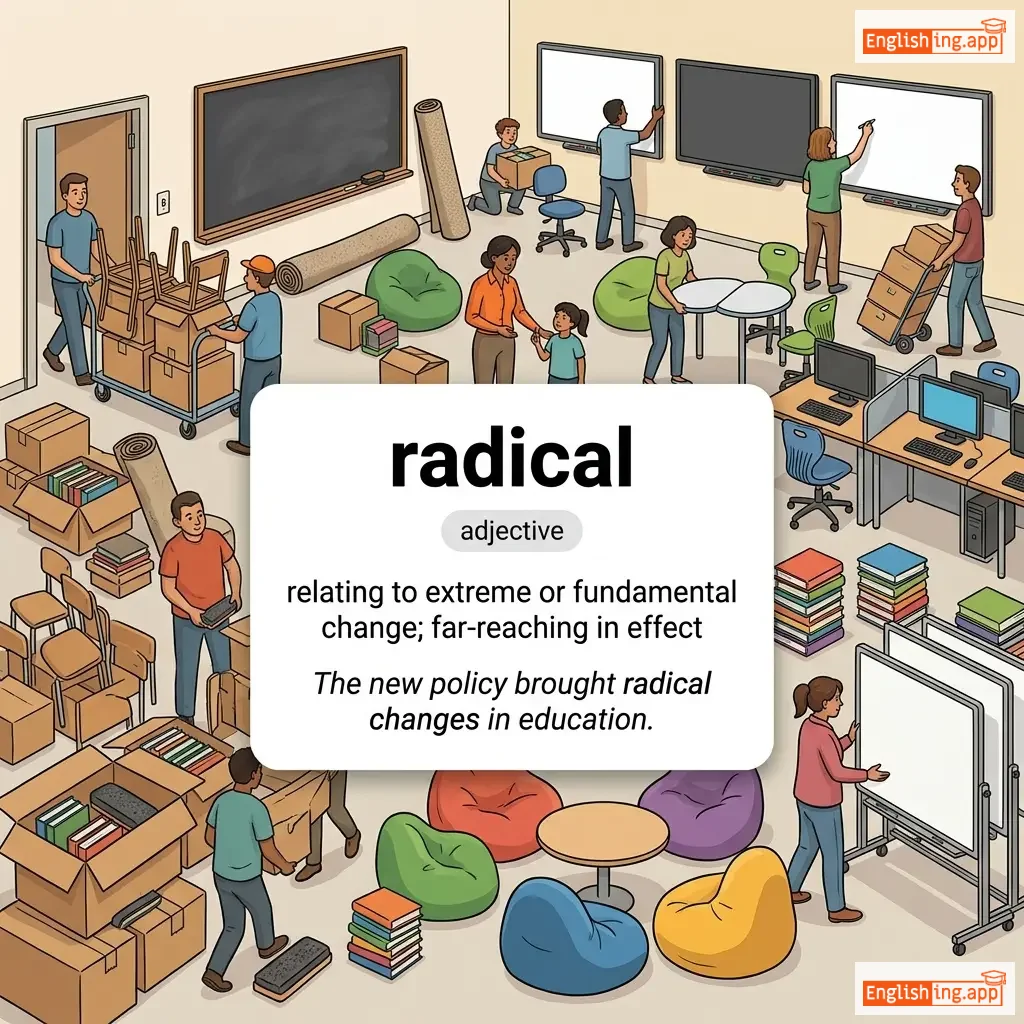
radical definition card — visual illustration of the meaning
adjective
/ˈrædɪkl/
радикальный (radikal)

relating to extreme or fundamental change; far-reaching in effect

"The new policy brought radical changes in education."
"Новая политика принесла радикальные изменения в образовании." (The new policy brought radical changes in education)
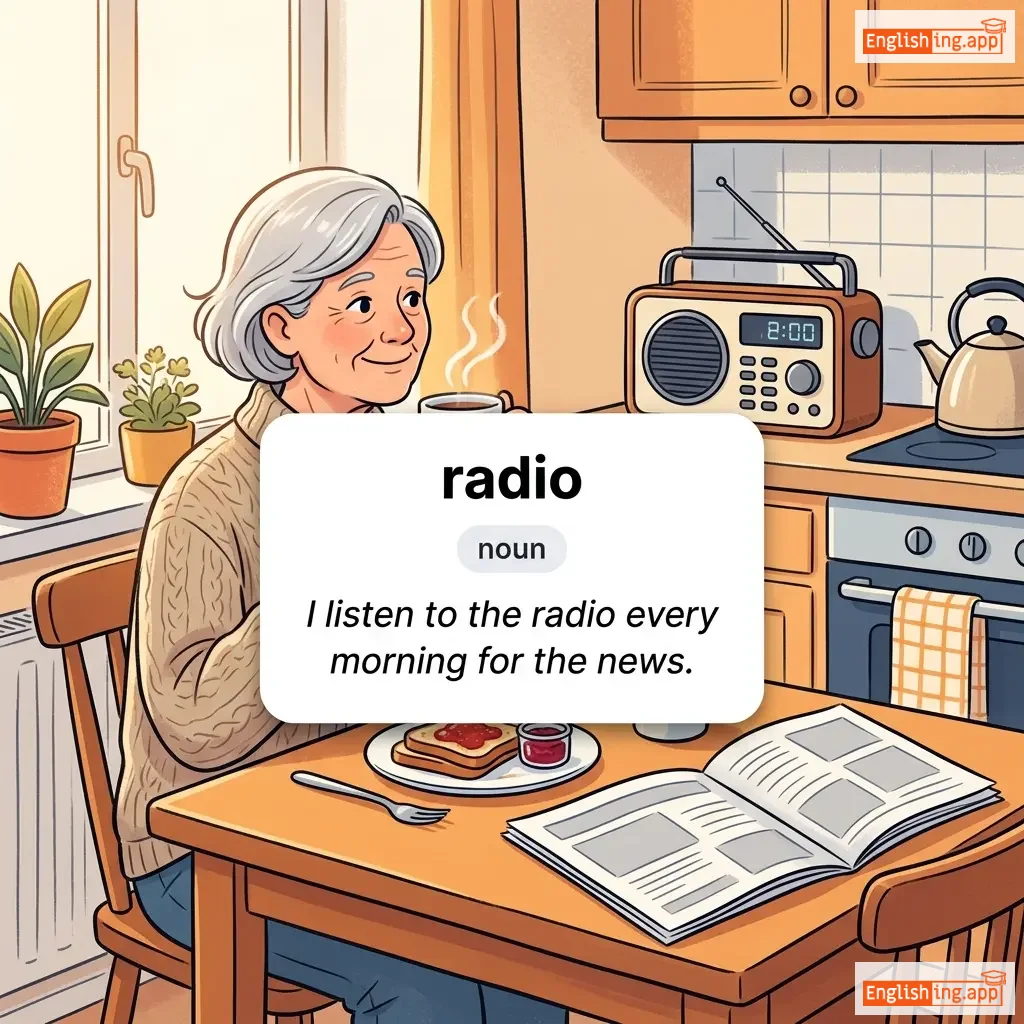
radio definition card — visual illustration of the meaning
noun
/ˈreɪdioʊ/
радио (radio)

a device for receiving or transmitting radio signals, or the use of such signals for communication

"I listen to the radio every morning for the news."
"Я слушаю радио каждое утро для новостей." (Ya slushayu radio kazhdoe utro dlya novostey.)
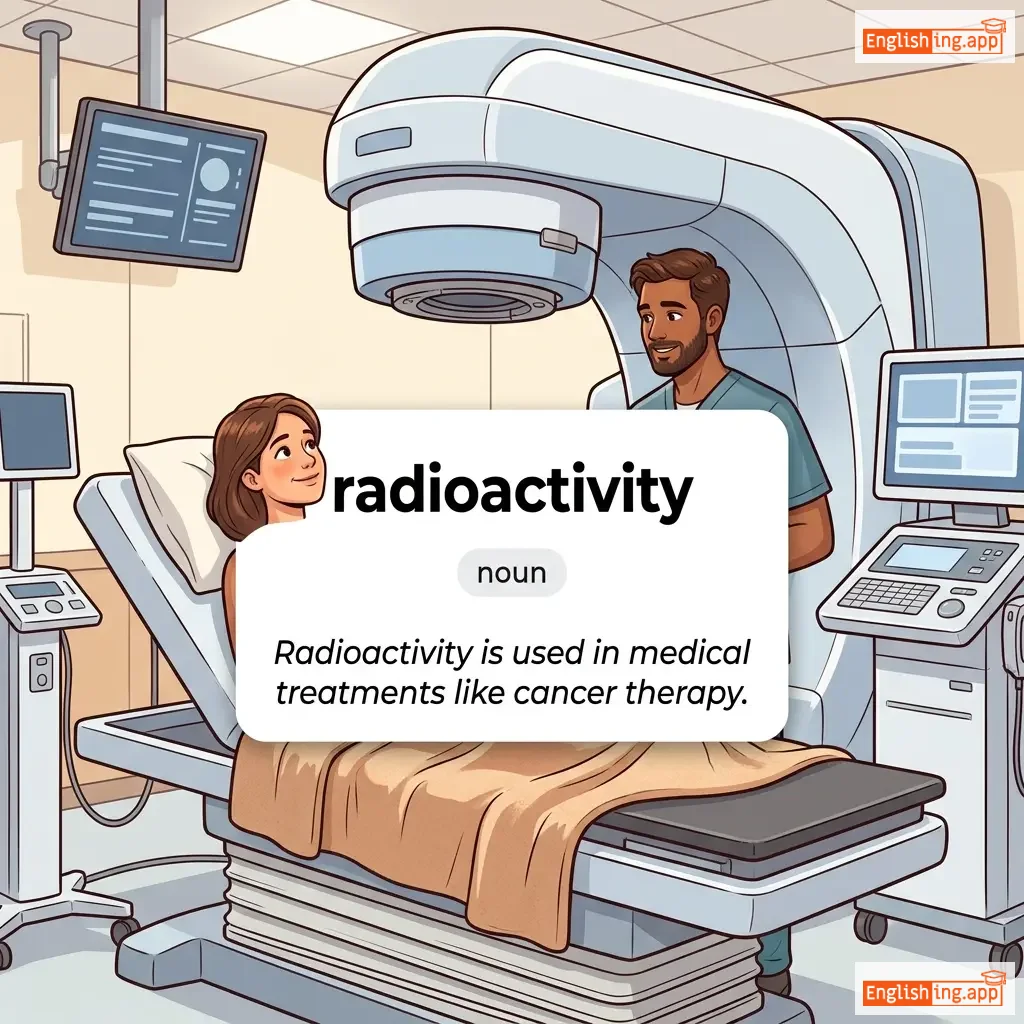
radioactivity definition card — visual illustration of the meaning
noun
ˌreɪ.di.oʊ.ækˈtɪv.ə.ti
радиоактивность (radioaktivnost)

The emission of ionizing radiation or particles caused by the spontaneous disintegration of atomic nuclei.

"Radioactivity is used in medical treatments like cancer therapy."

"Радиоактивность используется в медицинских процедурах, таких как лечение рака." (Radioaktivnost ispolzuetsya v meditsinskikh protsedurakh takikh kak lechenie raka.)
noun
/'ræd.ɪʃ/
редис (redis)

a small pungent edible root vegetable with white or red skin

"The farmer harvested fresh radishes from the garden."

"Фермер собрал свежие редиски из сада." (Fermer sobral svezhie rediski iz sada.)
noun
/ˈreɪdɪks/
основание (osnovanie)

the base or root of something; the number on which a system of numeration is built

"In mathematics, the decimal system has a radix of ten."

"В математике десятичная система имеет основание десяти." (V matematike desyatichnaya sistema imeet osnovanie desyati.)
adjective
/ˈræfɪʃ/
несколько необычный и слегка сомнительный, но привлекательный (neskol'ko neobychnyy i slegka somnitel'nyy, no privlekatel'nyy)

unconventional and slightly disreputable but attractive

"He had a raffish charm that made him popular in the city."

"У него был очаровательный рэфиш, который сделал его популярным в городе." (U nego byl ocharovatel'nyy refish, kotoryy sdelal ego populyarnym v gorode.)
noun/verb
/ˈræfəl/
продажа лотерейных билетов (prodazha lotereinykh biletov)

A means of raising money by selling numbered tickets, one or more of which are drawn at random for a prize; to sell something in such a lottery.

"The charity decided to raffle a bicycle to raise funds."

"Благотворительная организация решила разыграть велосипед для сбора средств." (Blagotvoritel'naya organizatsiya reshila razygrat' velosiped dlya sbora sredstv.)
noun/verb
/ræft/
плот (plot)

A flat structure made of logs or planks tied together, used as a boat or floating platform; to travel or transport on such a structure.

"They built a raft to cross the river."

"Они построили плот, чтобы пересечь реку." (Oni postroili plot, chtoby peresech' reku.)
noun
/ˈræftər/
кровельная балка (krovel'naya balka)

One of the sloping beams that supports a roof.

"The old barn’s rafters were exposed."

"Кровельные балки старого сарая были открыты." (Krovel'nye balki starogo saraya byli otkryty.)
🧽

Rag

noun/verb
/ræɡ/

A piece of old, torn cloth; to tease or scold someone in a playful way.

"She used an old rag to clean the table."

noun
/ˈræɡəmʌfɪn/
оборванный ребенок (oborvannyy rebenok)

A person, typically a child, in ragged, dirty clothes.

"The little ragamuffin begged for food on the street."

"Маленький оборванный ребенок просил еду на улице." (Malen'kiy oborvannyy rebenok prosil yedu na ulitse.)
noun
/reɪdʒ/
ярость (yarost)

intense anger or fury

"She shouted in a fit of rage after hearing the news."

"Она закричала в приступе ярости после того, как услышала новости." (Ona zakrichala v pristupe yarosti posle togo, kak uslyshala novosti.)
adjective
/ˈræɡɪd/
порванный (porvanniy)

torn, worn out, or in poor condition

"The homeless man wore a ragged coat."

"Бездомный человек носил порванное пальто." (Bezdomnyy chelovek nosil porvannoye pal'to.)
raid definition card — visual illustration of the meaning
verb
/reɪd/
налет (nalet)

To suddenly attack or enter a place, especially by force.

"The police raided the warehouse last night."

"Полиция провела рейд на склад прошлой ночью." (Politsiya provela reid na sklad proshloy noch'yu.)
verb
/reɪl/
протестовать (protestovat)

to complain or protest strongly about something

"He railed against the unfair decision."

"Он протестовал против несправедливого решения." (On protestoval protiv nespravedlivogo resheniya.)
noun
/ˈreɪləri/
дружеские шутки (druzheskie shutki)

good-humored teasing or joking

"Their friendship was full of light-hearted raillery."

"Их дружба была полна легких подшучиваний." (Ikh druzhba byla polna legkikh podshuchivaniy.)
noun
/ˈreɪlˌroʊd/
железная дорога (zheleznaya doroga)

a track or system of tracks made of steel rails along which trains run

"The railroad connects the city to several nearby towns."

"Железная дорога соединяет город с несколькими соседними городами." (Zheleznaya doroga soedinyaet gorod s neskolkimi sosednimi gorodami.)
noun
/ˈreɪl.weɪ/
железная дорога (zheleznaia doroga)

a track made of steel rails along which trains run; a system of tracks with trains, stations, and other facilities

"The railway connects major cities across the country."

"Железная дорога соединяет крупные города страны." (zheleznaia doroga soedinyaet krupnye goroda strany)
noun
/ˈreɪmənt/
одежда (odezhda)

clothing, especially fine or formal wear

"The king wore royal raiment during the ceremony."

"Король носил королевскую одежду во время церемонии." (Korol' nosil korolevskuyu odezhdu vo vremya tseremonii.)
🌧️

Rain

noun
/reɪn/

water droplets that fall from the sky as a result of condensation in the atmosphere

"The rain started pouring just as we reached the park."

noun
/ˈreɪn.boʊ/
радуга (raduga)

an arch of colors formed in the sky by sunlight shining through rain

"After the storm, a beautiful rainbow appeared in the sky."
"После шторма в небе появилась прекрасная радуга." (Posle shtorma v nebe poyavilas' prekrasnaya raduga.)
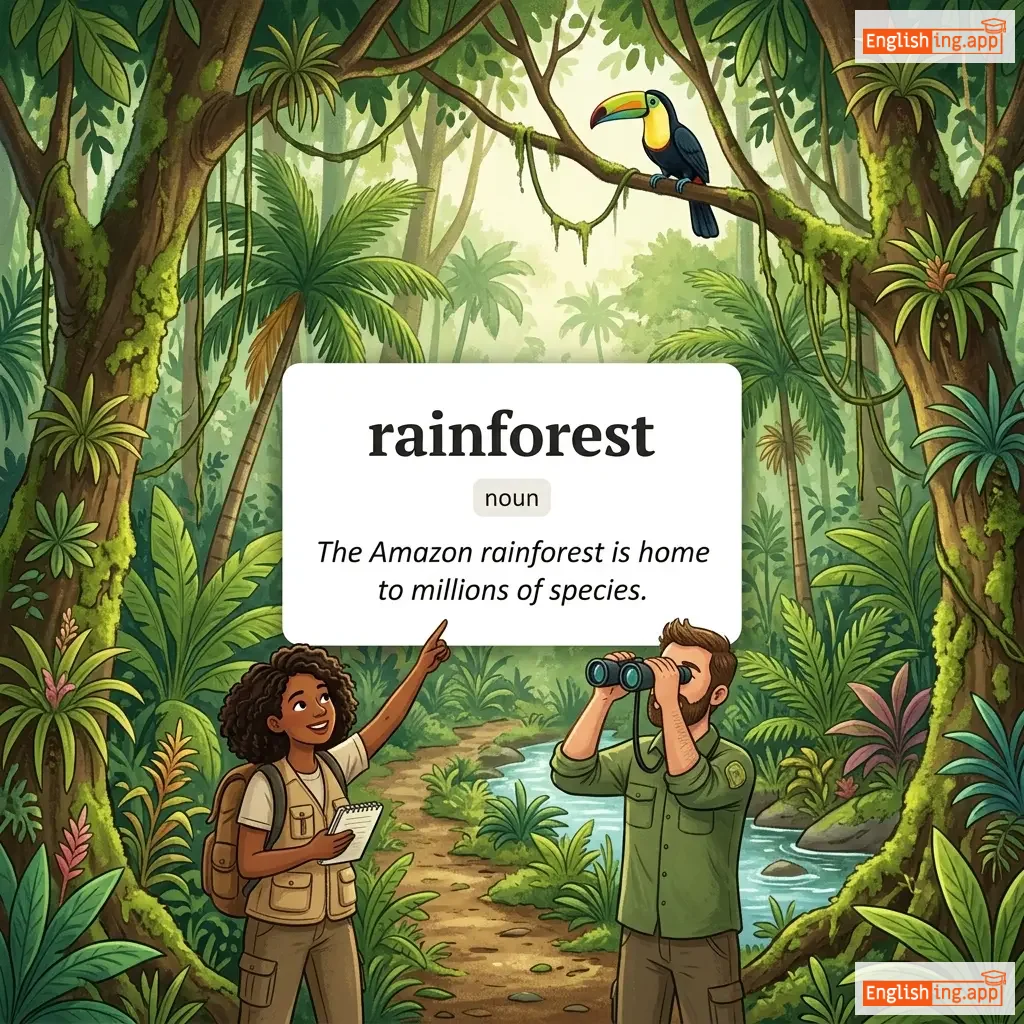
rainforest definition card — visual illustration of the meaning
noun
ˈreɪn.fɒr.ɪst
тропический лес (tropicheskiy les)

A luxuriant, dense forest rich in biodiversity, found typically in tropical areas with consistently heavy rainfall.

"The Amazon rainforest is home to millions of species."

"Амазонский тропический лес является домом для миллионов видов." (Amazonkiy tropicheskiy les yavlyaetsya domom dlya millionov vidov.)
adjective
/ˈreɪ.ni/
дождливый (dozhdlivyy)

characterized by rain; wet from rain; having much rain

"It was a rainy day, so we stayed indoors."

"Это был дождливый день, поэтому мы остались внутри." (Eto byl dozhdlivyy den', poetomu my ostalis' vnutri.)
verb
/reɪz/
поднять / увеличить (podnyat / uvelichit)

To lift or move something to a higher position; to increase; to bring up.

"She raised her hand to ask a question."

"Она подняла руку, чтобы задать вопрос." (Ona podnyala ruku, chtoby zadat vopros.)
noun
/ˈreɪ.zən/
изюм (izyum)

a dried grape, often eaten as a snack or used in cooking and baking

"She added raisins to the cake batter for extra sweetness."

"Она добавила изюм в тесто для торта для дополнительной сладости." (Ona dobavila izyum v testo dlya torta dlya dopolnitel'noy sladosti.)
noun
/ˈreɪ.zɪnz/
изюм (izjum)

dried grapes, often used in cooking and baking

"She added raisins to the oatmeal cookies for extra sweetness."

"Она добавила изюм в овсяные печенья для дополнительной сладости." (Ona dobavila izyum v ovsyanyye pechen'ya dlya dopolnitel'noy sladosti.)
verb
/reɪk/
сгребать листья граблями (sgrebat)

to collect or gather with a rake; to scrape or smooth a surface

"He raked the leaves into a pile."

"Он сгреб листья в кучу." (On sgreb listya v kuchu.)
adjective
/ˈreɪ.kɪʃ/
стильный, уверенный и слегка сомнительный в своем виде (stilyj, uverennyj i slezga somnitel'nyj v svoem vide)

having a stylish, confident, and slightly disreputable appearance

"He walked in with a rakish smile and tilted hat."

"Он вошел с улыбкой рэйкиш и наклоненной шляпой." (On voshel s ulybkoy reykish i naklonennoy shlyapoy.)
📣

rally

verb
/ˈræl.i/

to come together for a common purpose or to recover strength or spirit

"The team rallied after halftime and won the match."

verb
/ræm/
врезаться (vrezatsya)

to strike or push something with great force

"The truck rammed into the wall."

"Грузовик врезался в стену." (Gruzovik vrezalsya v stenu.)
verb
/ˈræm.bəl/

to talk or write at length in a confused or inconsequential way; to walk for pleasure without a fixed route.

"He rambled on about his childhood for hours."

adjective
/ræmˈbʌŋk.ʃəs/
непослушный (neposlushnyj)

boisterous, energetic, and difficult to control.

"The rambunctious children filled the house with noise."

"Шумные дети заполнили дом шумом." (Shumnye deti zapolnili dom shumom.)
noun
/ræmˈbuːtən/
рамбутан (rambutan)

a tropical fruit with red spiky skin and white translucent sweet flesh similar to litchi

"The rambutan looks scary with its hairy skin but tastes very sweet inside."

"Рамбутан выглядит страшно с его волосистой кожей, но внутри он очень сладкий." (Rambutan vyglyadit strashno s yego volosistoy kozhey, no vnutri on ochen' sladkiy.)