Словари

Словарь английского языка | Значения слов, определения и примеры

interjection
/hɑː/
Ха! (Выражение удивления или радости) (Ha! (Vyrashchenie udivleniya ili radosti))

used to express amusement, surprise, or triumph

"Ha! I knew you couldn’t resist joining us."
"Ха! Я знал, что ты не сможешь устоять и присоединишься к нам." (Ha! Ya znal, chto ty ne smozhesh' ustoyat' i prisoyedinysh'sya k nam.)
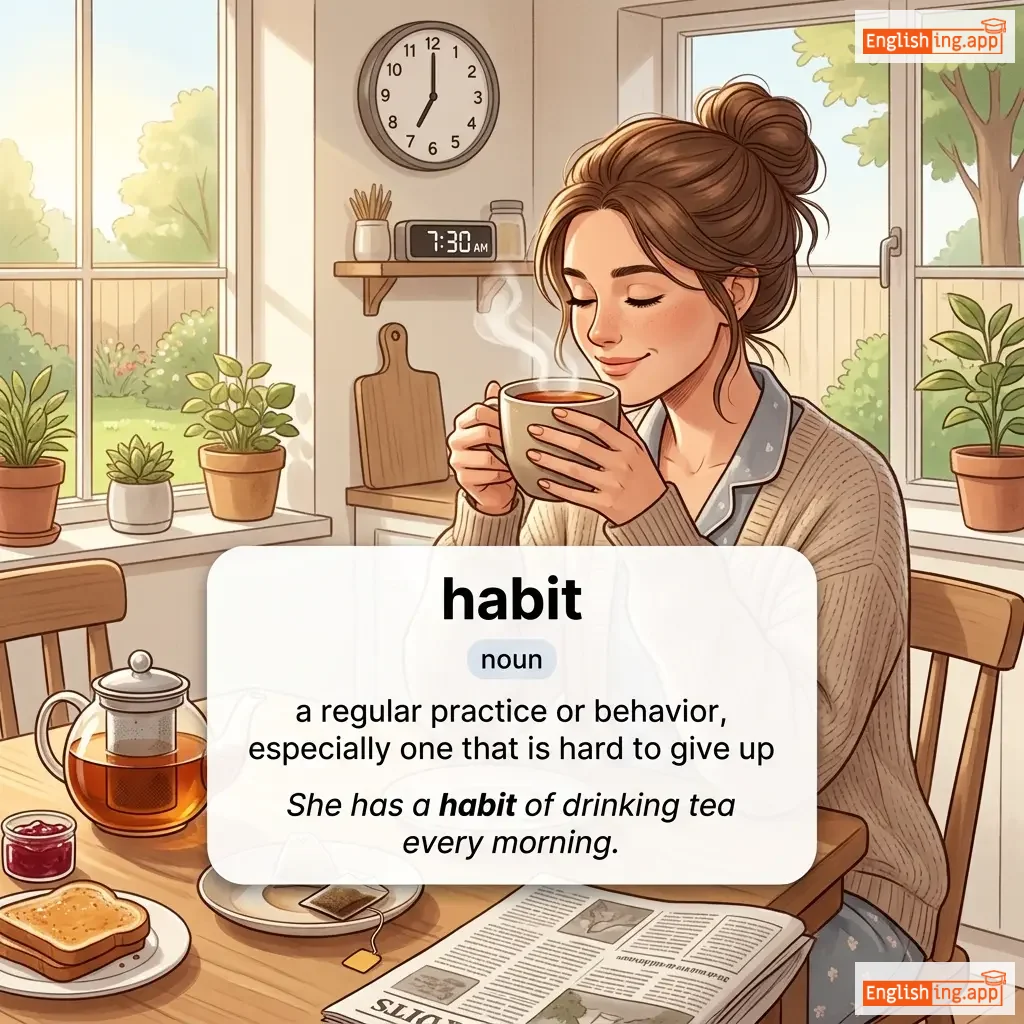
habit definition card — visual illustration of the meaning
noun
/ˈhæb.ɪt/
привычка (privychka)

a regular practice or behavior, especially one that is hard to give up

"She has a habit of drinking tea every morning."

"У неё есть привычка пить чай каждое утро." (U nee yest privychka pit' chai kazhdoe utro.)
habit formation definition card — visual illustration of the meaning
noun
ˈhæb.ɪt fɔːrˌmeɪ.ʃən
формирование привычки (formirovanie privychki)

The process of creating a habit through regular practice and repetition.

"Habit formation requires consistency and discipline."

"Формирование привычки требует последовательности и дисциплины." (Formirovaniye privychki trebuyet posledovatel'nosti i disciplini.)
adjective
/ˈhæbɪtəbl/
пригодный для жилья (prigodnyy dlya zhilya)

Suitable to live in; capable of sustaining life.

"Scientists are searching for habitable planets beyond our solar system."

"Учёные ищут пригодные для жилья планеты за пределами нашей солнечной системы." (Uchёnyye ishchut prigodnye dlya zhilya planety za predelami nashey solnechnoy sistemy.)
👨‍👩‍👧‍👦

habitant (хэбитэнт)

noun
/ˈhæbɪtənt/
житель (zhitel)

An inhabitant; a person or animal that lives in a particular place.

"The habitants of the village were friendly and welcoming."
"Жители деревни были дружелюбными и гостеприимными." (Zhiteli derevni byli druzhelyubnymi i gostepriimnymi.)
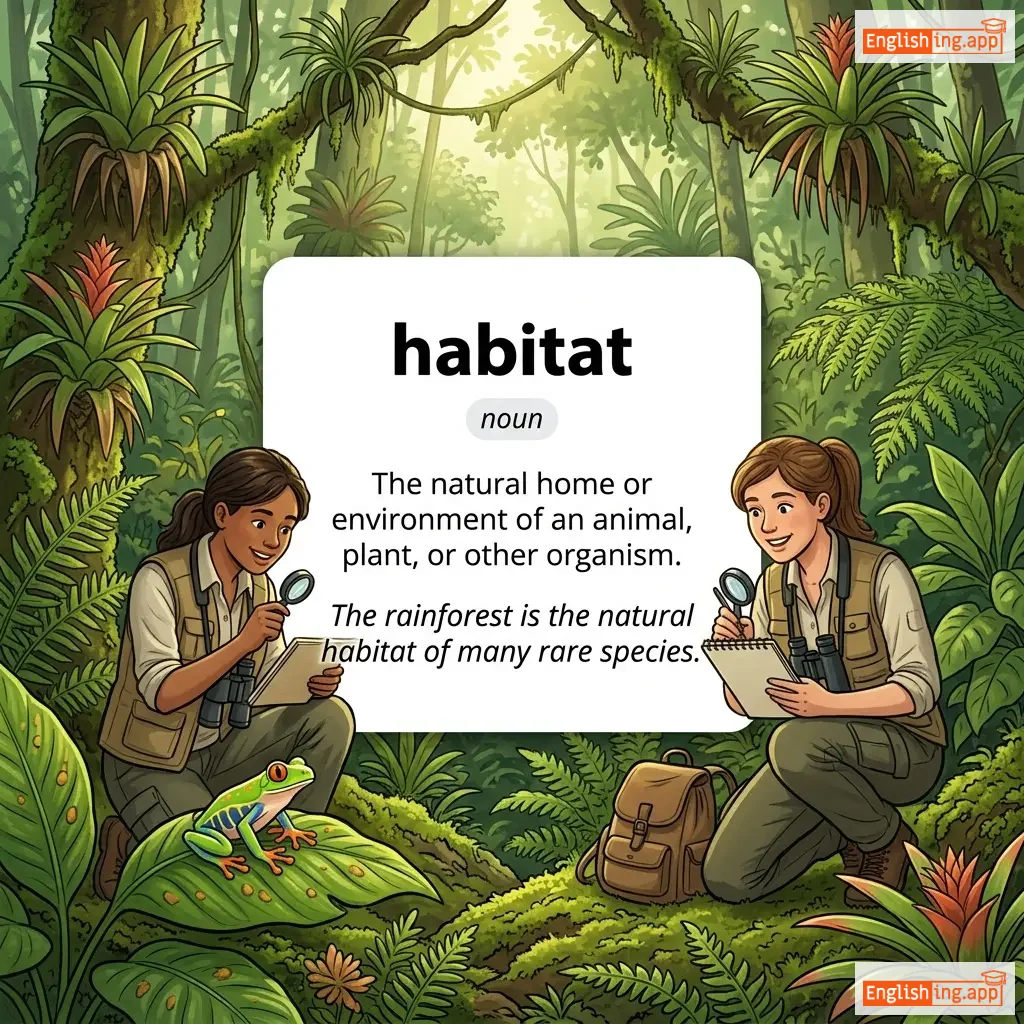
habitat definition card — visual illustration of the meaning
noun
/ˈhæbɪˌtæt/
местообитание (mestoobitanie)

The natural home or environment of an animal, plant, or other organism.

"The rainforest is the natural habitat of many rare species."
"Тропический лес — естественное местообитание многих редких видов." (Tropicheskiy les — yestestvennoe mestoobitanie mnogikh redkikh vidov.)
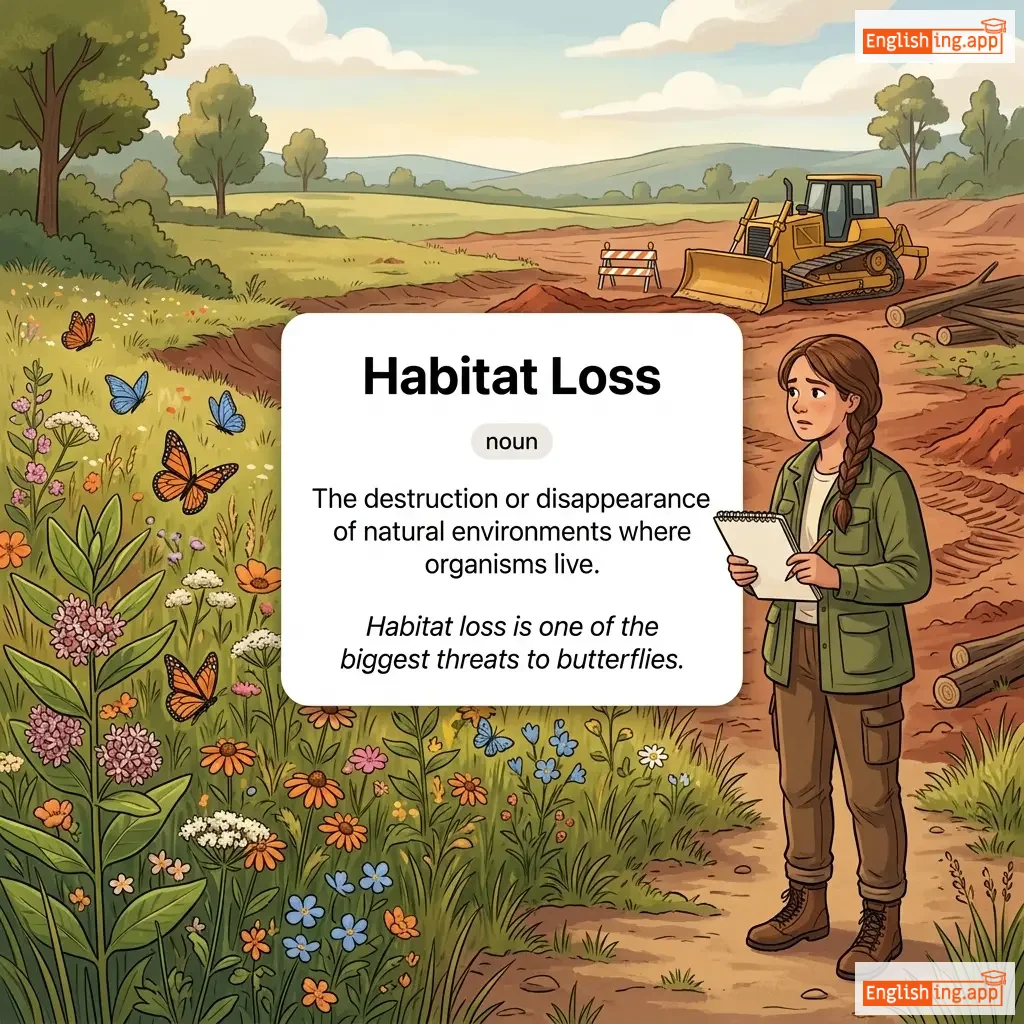
Habitat Loss definition card — visual illustration of the meaning
noun
ˈhæbɪtæt lɒs
утрата среды обитания (utrata sredy obitaniya)

The destruction or disappearance of natural environments where organisms live.

"Habitat loss is one of the biggest threats to butterflies."
"Утрата среды обитания является одной из самых больших угроз для бабочек." (Utrata sredy obitaniya yavyayetsya odnoy iz samykh bol'shikh ugroz dlya babochek.)
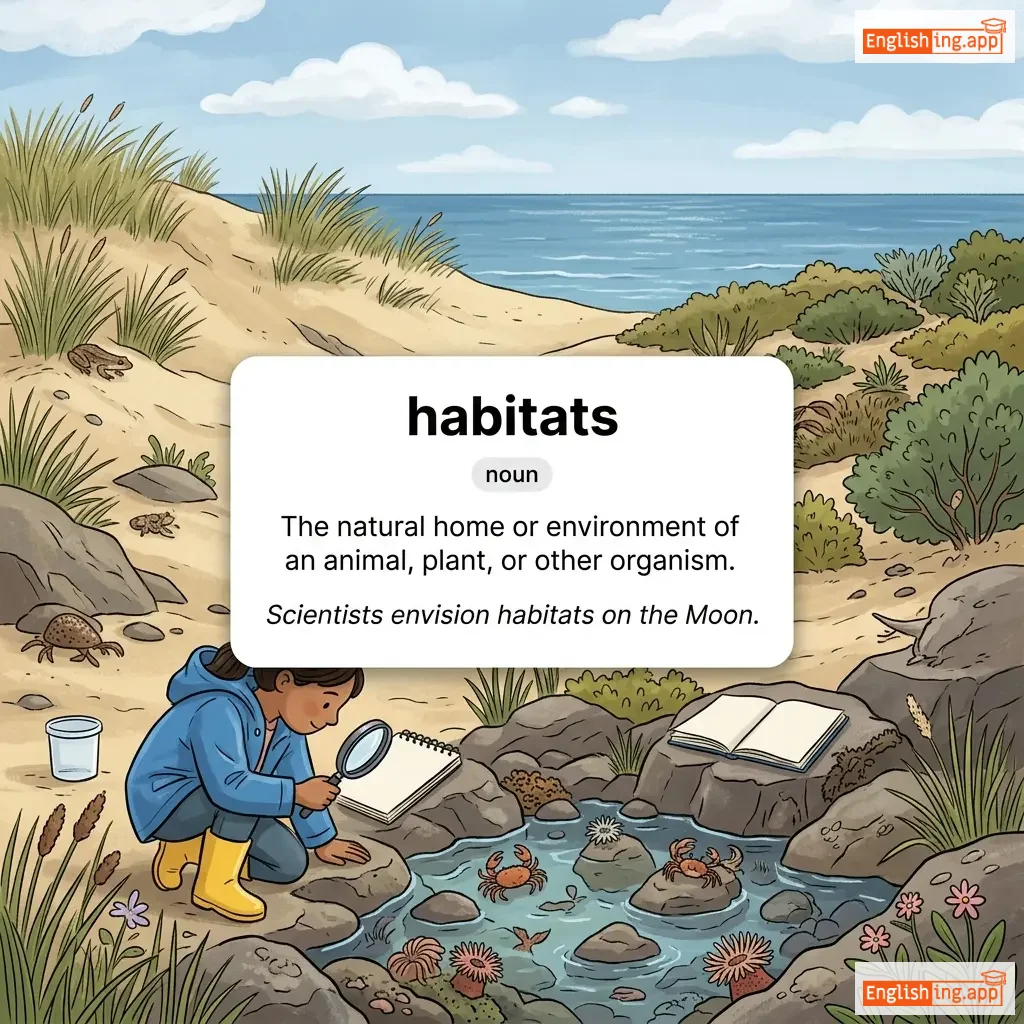
habitats definition card — visual illustration of the meaning
noun
ˈhæb.ɪ.tæts
среда обитания (sreda obitaniya)

The natural home or environment of an animal, plant, or other organism.

"Scientists envision habitats on the Moon."

"Учёные представляют себе хабитатс на Луне." (Uchënye predstavlyayut sebe habitats na Lune.)
adjective
/həˈbɪtʃuəl/
привычный (privychny)

Done or doing constantly or as a habit; customary.

"He was a habitual latecomer to class."
"Он был привычным опоздавшим на занятия." (On byl privychnym opazdvshim na zanyatiya.)
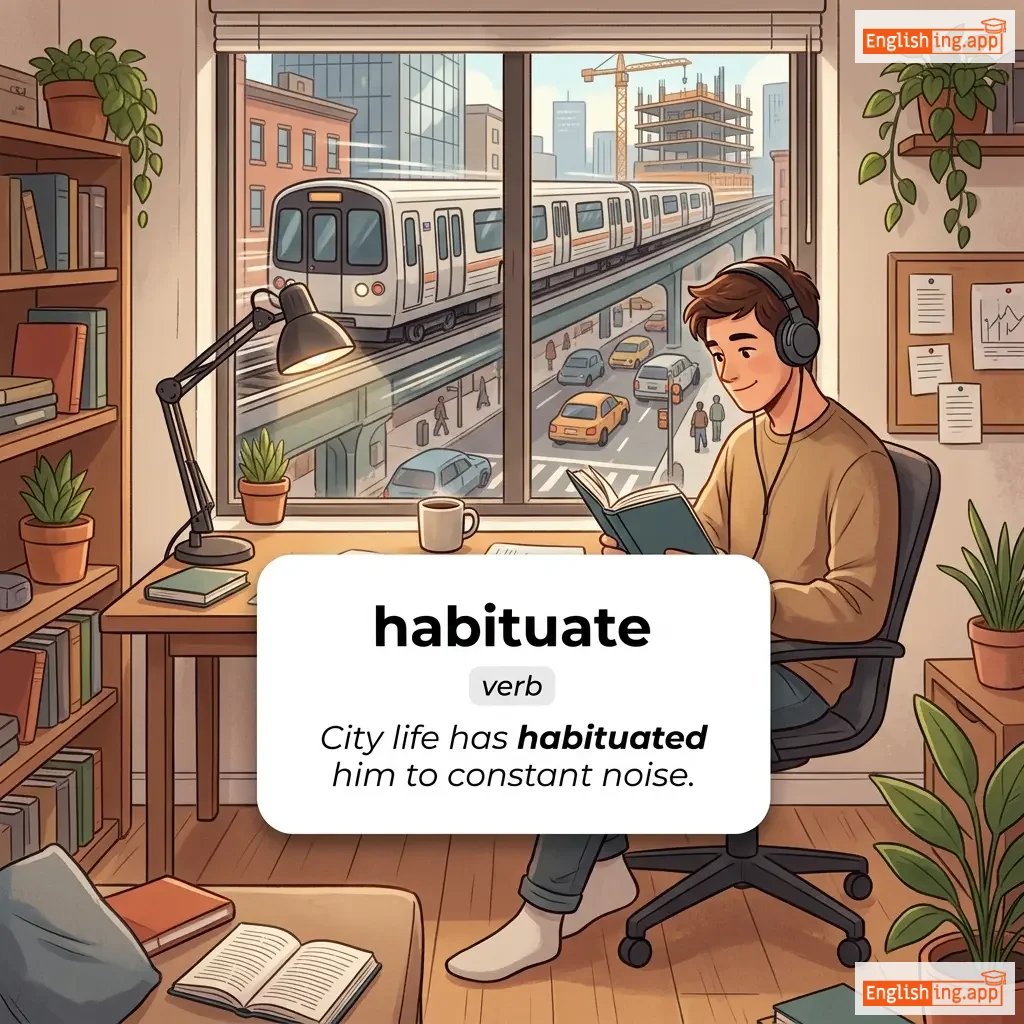
habituate definition card — visual illustration of the meaning
verb
/həˈbɪtʃueɪt/
привыкать (privykat)

to accustom someone or oneself to something through frequent exposure or experience

"City life has habituated him to constant noise."

"Городская жизнь приучила его к постоянному шуму." (Gorodskaya zhizn priuchila ego k postoyannomu shumu.)
noun
/ˈhæbɪtjuːd/
привычка, обычай (privychka, obychay)

a customary condition or mode of life; habitual practice

"He lived in a quiet habitude, avoiding the noise of the city."

"Он жил в тихой привычке, избегая шума города." (On zhil v tikhoy privychke, izbegaya shuma goroda.)
💻

hack

verb
/hæk/

to cut or chop roughly; to gain unauthorized access to a computer system

"The programmer managed to hack into the system."

noun
/ˈhækəlz/

the hairs on the back of an animal’s neck that rise when it is angry or alarmed; figuratively, feelings of anger or resentment

"His rude comment raised my hackles."

noun
/ˈhæknɪ/
арендованная лошадь, избитый (arendovannaya loshad, izbityi)

a horse kept for ordinary riding or hire; also used for something overused or trite

"The old hackney was still pulling the carriage."

"Старая арендованная лошадь всё ещё везла повозку." (Staraya arendovannaya loshad vsyo eshchyo vezla povozku.)
noun
/ˈhæk.ni ˈkær.ɪdʒ/
такси (taksi)

A taxi; a car licensed to carry passengers for hire

"I called a hackney carriage to get to the airport."

"Я вызвал такси, чтобы поехать в аэропорт." (Ya vyzval taksi, chtoby poyekhat' v aeroport.)
adjective
/ˈhæk.nid/
избитый (izbity)

Used too often and therefore lacking originality or freshness.

"The speech was filled with hackneyed phrases that failed to inspire the audience."

"Речь была полна избитых фраз, которые не смогли вдохновить аудиторию." (Rech' byla polna izbitykh fraz, kotorye ne smogli vdokhnovit' auditoriyu.)
🧙‍♀️

Hag (хэг)

noun
/hæɡ/
ведьма (ved'ma)

an ugly old woman, especially a vicious or malicious one; a witch

"In the fairy tale, the wicked hag lived alone in a cottage deep in the forest."

"В сказке злая ведьма жила одна в домике глубоко в лесу." (V skazke zlaya ved'ma zhila odna v domike gluboko v lesu.)
adjective
/ˈhæɡ.ərd/
истощённый (istoŝchennyj)

Looking exhausted, unwell, or worn out, especially from fatigue or suffering.

"After working all night, she looked pale and haggard."
"После работы всю ночь она выглядела бледной и измождённой." (Posle raboty vsyu noch' ona vyglyadela blednoy i izmozhdyonnoy.)
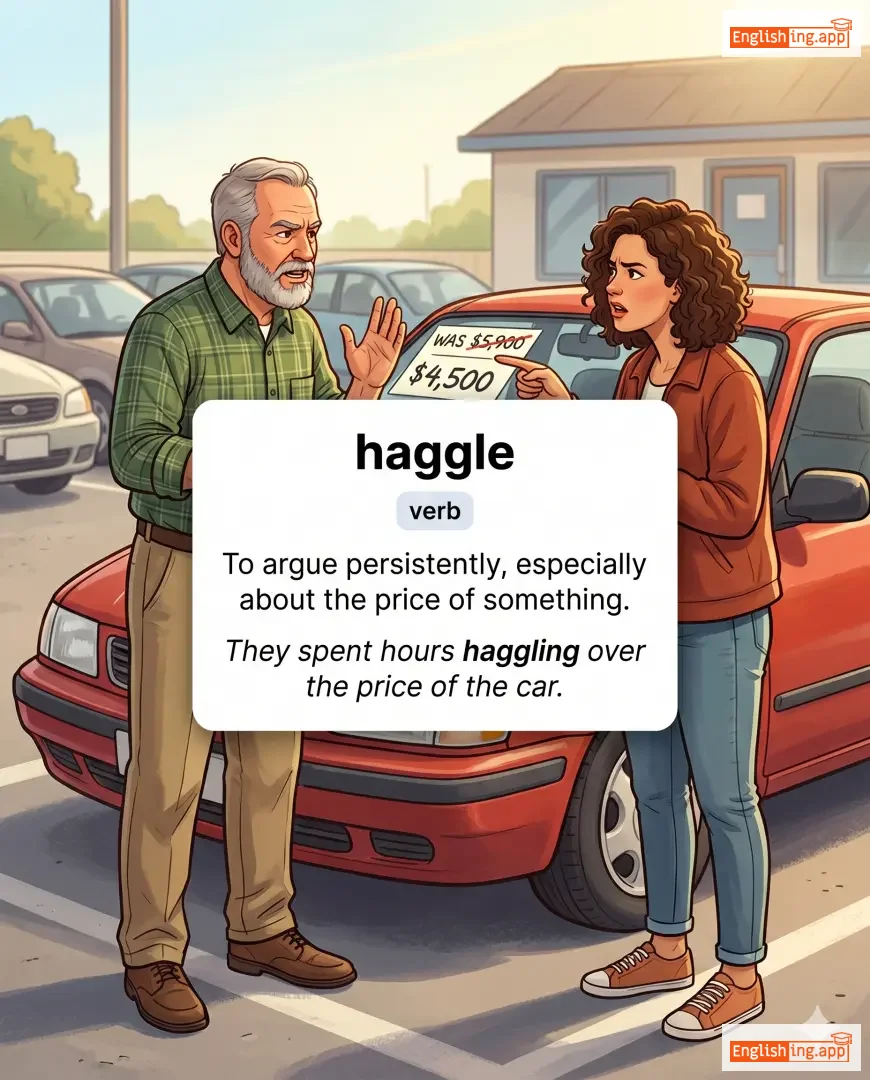
haggle definition card — visual illustration of the meaning
verb
/ˈhæɡ.l̩/
торговаться (torgovatsya)

To argue persistently, especially about the price of something.

"They spent hours haggling over the price of the car."

"Они провели часы, торгуясь о цене машины." (Oni proveli chasy, torguyas' o tsene mashiny.)
adjective
/ˌhæɡ.i.əˈɡræf.ɪk/
чрезмерно льстивый (chrezmerno l'stivyy)

Excessively flattering or idealized, often in a biography or portrayal of someone.

"The documentary was criticized for its hagiographic portrayal of the leader."

"Документальный фильм был подвергнут критике за чрезмерно льстивое изображение лидера." (Dokumental'nyy film byl podvergnut kritike za chrezmerno l'stivoye izobrazheniye lidera.)
verb
/heɪl/
звать / приветствовать (zvat' / privetstvovat')

To call out to attract attention or to praise enthusiastically.

"The athlete was hailed as a hero after the victory."

"Атлета приветствовали как героя после победы." (Atleta privetstvovali kak geroja posle pobedy.)
noun
/ˈheɪl.stɔːrm/
гроза с градом (groza s gradom)

a violent storm with hail falling from the sky

"The hailstorm damaged many cars in the parking lot."

"Градовый шторм повредил множество автомобилей на парковке." (Gradovyy shtorm povredil mnogochislennoe avto na parkovke.)
noun
/hɛər/
волосы (volosy)

the fine threads growing from the skin of humans and animals

"She has long, black hair."

"У нее длинные черные волосы." (U nee dlinnyye chernyye volosy.)
noun
/ˈher ˌpɪn/
заколка (zakolka)

a thin piece of metal or plastic used to hold hair in place

"She used several hair pins to secure her elegant updo."

"Она использовала несколько заколок, чтобы закрепить свою элегантную прическу." (Ona ispolzovala neskolko zakolok chtoby zakrepit svoyu elegantnuyu prichesku)
noun
/ˈheəkʌt/
стрижка (strizhka)

the act or style of cutting hair

"I got a haircut before the wedding."

"Я сделал стрижку перед свадьбой." (ya sdelal strizhku pered svadboy)
noun
/ˈheəˌkʌtər/
парикмахер (parikmakher)

a person whose job is to cut and style hair; barber or hairdresser

"The haircutter gave me a neat and stylish haircut."

"Парикмахер сделал мне хорошую стрижку." (parikmakher sdelal mne khoroshuyu strizhku)
noun
/ˈherˌdrɛsər/
парикмахер (parikmakher)

a person whose job is to cut, style, and treat hair

"The hairdresser gave me a stylish haircut before the wedding."
"Парикмахер сделал мне стильную стрижку перед свадьбой." (Parikmakher sdelal mne stilnuyu strizhku pered svadboy)
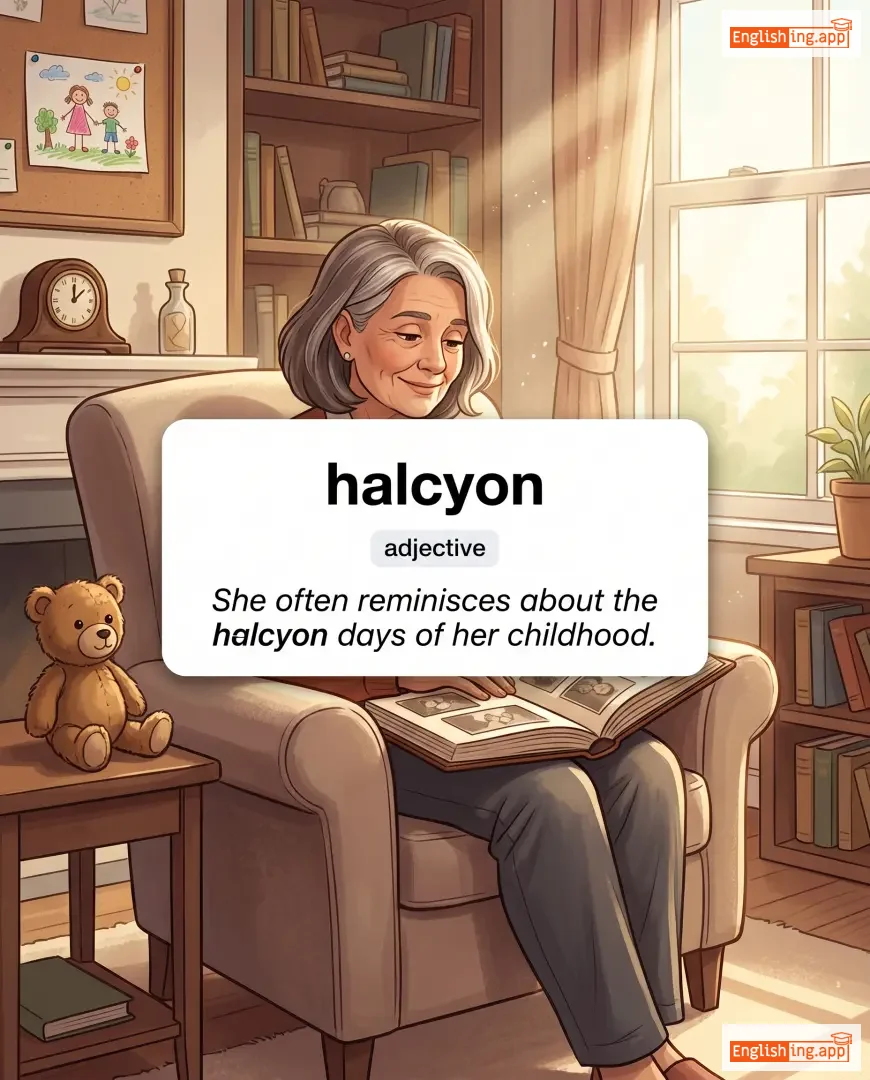
halcyon definition card — visual illustration of the meaning
adjective
/ˈhæl.si.ən/
безмятежный (bezmyatezhnyy)

calm, peaceful, and happy; denoting a period of time in the past that was idyllically happy and peaceful

"She often reminisces about the halcyon days of her childhood."

"Она часто вспоминает безмятежные дни своего детства." (Ona chasto vspominaet bezmyatezhnye dni svoego detstva.)
adjective
/heɪl/
здоровый (zdorovyi)

strong and healthy, especially of an elderly person

"Despite his age, the man remained hale and active."

"Несмотря на его возраст, этот мужчина остался здоровым и активным." (Nesmotrya na ego vozrast, etot muzhchina ostalsya zdorovym i aktivnym.)
noun, adjective
/hæf/
половина (polovina)

one of two equal parts of something

"He ate half of the cake."

"Он съел половину торта." (On syel polovinu torta.)
adjective
/ˌhæfˈbeɪkt/
недоделанный (nedodelannyy)

poorly thought out or badly planned

"The manager quickly rejected his half-baked proposal."

"Менеджер быстро отклонил его недоделанное предложение." (Menedzher bystro otklonil ego nedodelannoye predlozheniye.)
adjective
/ˌhæfˈhɑːr.tɪd/
половинчатый (polovinchatyy)

lacking enthusiasm or determination; unenthusiastic

"His halfhearted attempt to study did not bring good results."

"Его половинчатая попытка учиться не принесла хороших результатов." (Yego polovinchataya popytka uchitsya ne prinesla khoroshikh rezul'tatov.)
adverb
/ˌhæfˈweɪ/
на полпути (na polputi)

at or to a point equal in distance between two points

"We met halfway between the two towns."

"Мы встретились на полпути между двумя городами." (My vstretilis' na polputi mezhdu dvumya gorodami.)
noun
/hɔːl/
зал (zal)

a large room or building for public gatherings, events, or passage

"The graduation ceremony was held in the university hall."

"Церемония вручения дипломов состоялась в зале университета." (Tseremoniya vrucheniya diplomov sostoyalas' v zale universiteta.)
noun
/ˈhɔːl.mɑːrk/
характерная черта (kharakternaya cherta)

a typical characteristic or feature of someone or something

"Honesty is the hallmark of a good leader."

"Честность - это характерная черта хорошего лидера." (Chestnost' - eto kharakternaya cherta khoroshego lidera.)
verb
/ˈhæloʊ/
освящать (osvyashchat)

to honor as holy; to make sacred or greatly respected

"The ancient temple was hallowed by centuries of worship."
"Древний храм был освящен веками поклонения." (Drevniy khram byl osvyashchen vekami pokloneniya.)
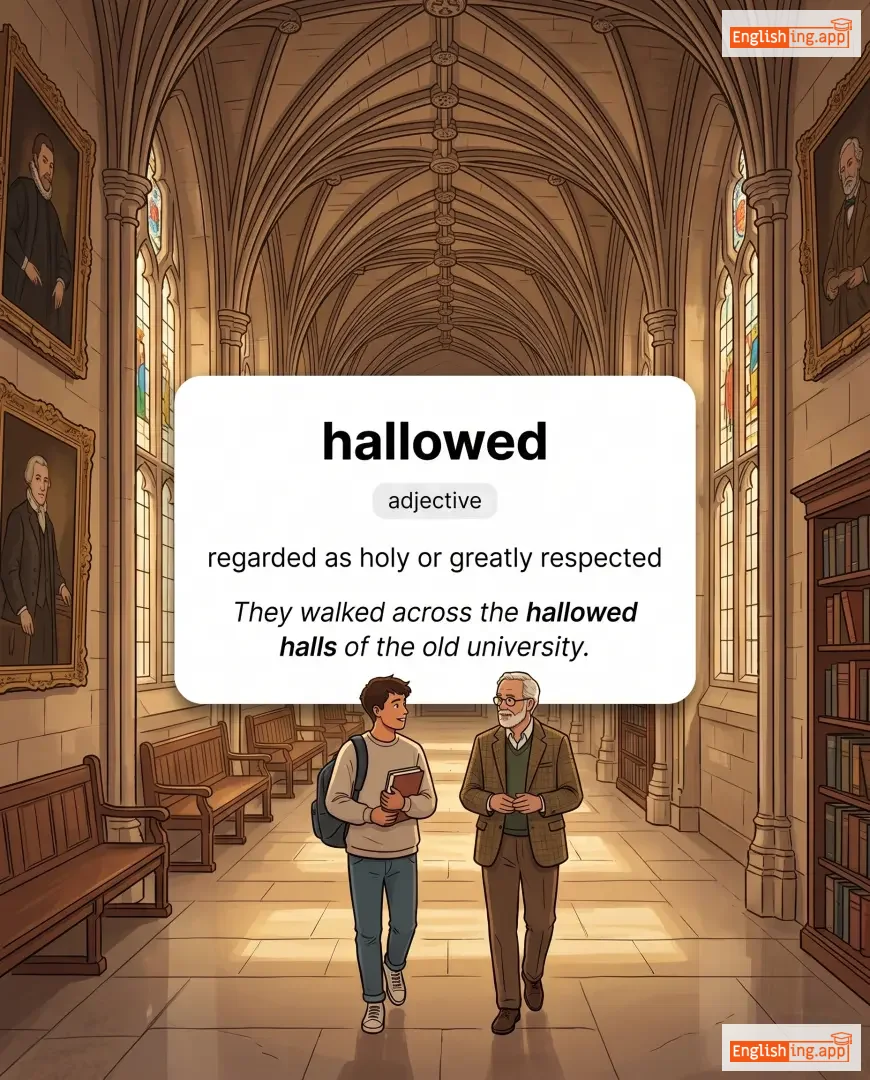
hallowed definition card — visual illustration of the meaning
adjective
/ˈhæloʊd/
священный (svyashchennyy)

regarded as holy or greatly respected

"They walked across the hallowed halls of the old university."

"Они прошли через священные залы старого университета." (Oni proshli cherez svyashchennye zaly starogo universiteta.)
verb
/həˈluːsɪneɪt/
галлюцинировать (gallyutsinirovat)

to see, hear, or sense things that are not actually present, often due to illness or drugs

"After taking the medicine, he began to hallucinate strange shapes."

"После приема лекарства он начал галлюцинировать странные формы." (Posle priema lekarstva on nachal gallyutsinirovat' strannye formy.)
noun
/həˌluːsɪˈneɪʃən/
галлюцинация (gallyutsinatsiya)

a false perception of objects or events, usually caused by mental illness or drugs

"After the medication, he began to experience vivid hallucinations."

"После приема лекарства он начал испытывать яркие галлюцинации." (Posle priema lekarstva on nachal ispytyvat' yarkie gallyutsinatsii.)
noun
/ˈhɔːlweɪ/
коридор (koridor)

a corridor in a building that connects rooms

"The kids left their shoes in the hallway."

"Дети оставили свои туфли в коридоре." (Deti ostavili svoi tufli v koridore.)
verb
/hɔːlt/
остановить (ostanovit)

to stop or bring to a stop

"The train suddenly halted at the station."

"Поезд внезапно остановился на станции." (Poyezd vnezapno ostanovilsya na stantsii.)
adjective
/ˈhɔːltɪŋ/
колеблющийся (koleblyushchijsya)

slow and hesitant, especially due to lack of confidence

"She gave a halting reply during the interview."

"Она дала запоздалый ответ на интервью." (Ona dala zapozdalyj otvet na interv'yu.)
adjective
/ˈhæm ˌhændɪd/
неуклюжий (neuklyuzhiy)

clumsy or inept in handling things or situations

"His ham-handed attempt to fix the computer made it worse."

"Его неуклюжая попытка починить компьютер только ухудшила ситуацию." (Yego neuklyuzhaya popytka pochinit' komp'yuter tol'ko ukhudshila situatsiyu.)
noun
/ˈhæm.lət/
маленькое поселение (malen'koye poseleniye)

a small rural settlement, smaller than a village; a small community

"The tiny hamlet nestled in the valley had only a dozen houses and one small church."

"Маленькое поселение, расположенное в долине, имело всего дюжину домов и одну маленькую церковь." (Malen'koye poseleniye, raspolozhennoye v doline, imelo vsego dyuzhinu domov i odnu malen'kuyu tserkov'.)
noun, verb
/ˈhæmər/

a tool with a heavy metal head used for breaking things or driving in nails; to hit something forcefully with a hammer or similar object.

"He used a hammer to fix the broken chair."
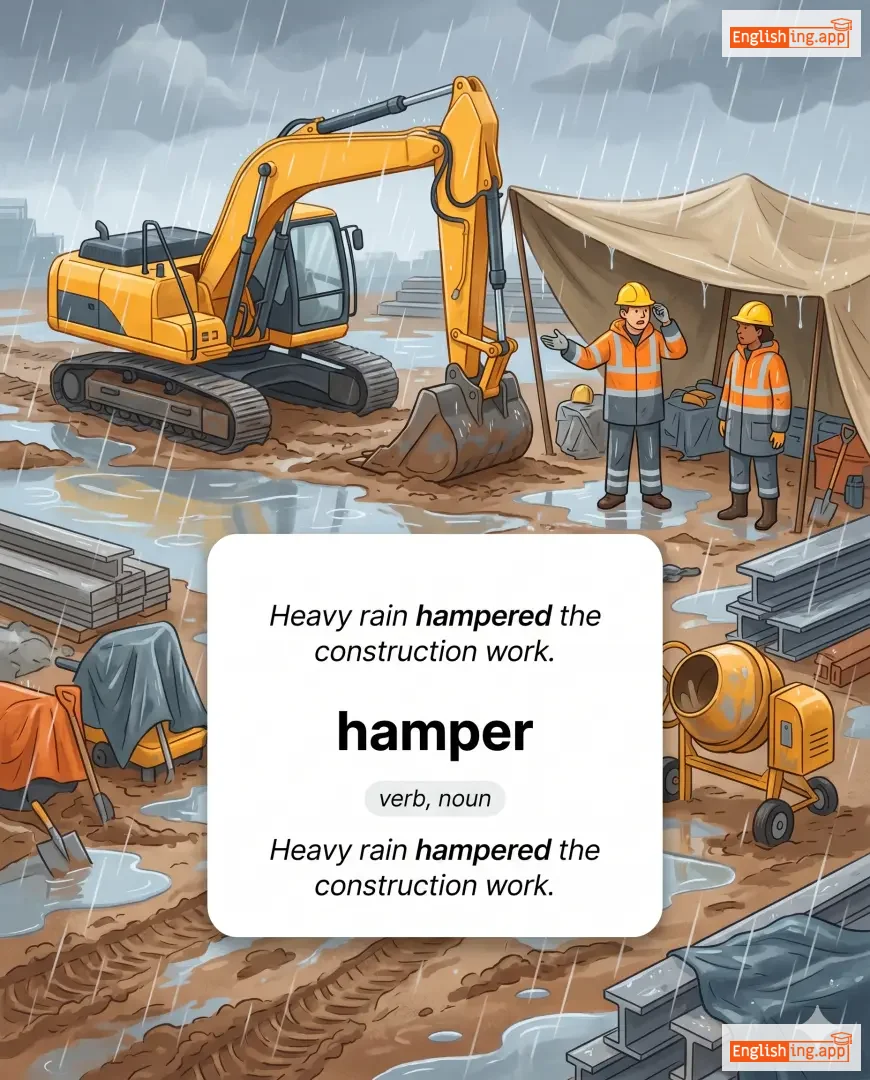
hamper definition card — visual illustration of the meaning
verb, noun
/ˈhæmpər/
препятствовать, корзина для белья (prepyatstvovat, korzina dlya belya)

to prevent or slow down the progress of something; also, a basket with a lid, typically for laundry.

"Heavy rain hampered the construction work."

"Сильный дождь затруднил строительные работы." (Sil'nyy dozhd' zatrudnil stroitel'nye raboty.)
noun, verb
/ˈhæmstrɪŋ/
сухожилие на задней части бедра; как глагол, ослабить или сильно ограничить эффективность кого-то или чего-то (sukhozhilie na zadney chasti bedra; kak glagol, oslabit' ili sil'no ogranichit' effektivnost' kogo-to ili chego-to)

a tendon at the back of the thigh; as a verb, to cripple or severely restrict the effectiveness of someone or something.

"Budget cuts hamstrung the organization’s plans."

"Сокращения бюджета ослабили планы организации." (Sokrashcheniya byudzheta oslabili plany organizatsii.)
verb (past tense, past participle), adjective
/ˈhæmstrʌŋ/
парализованный или ограниченный (paralizovannyy ili ogranichennyy)

crippled or severely restricted in movement or progress.

"The team was hamstrung by lack of resources."

"Команда была ограничена нехваткой ресурсов." (Komanda byla ogranichena nekhvatkoy resursov.)
noun, verb
/hænd/
рука (ruka)

the part of the body at the end of the arm used for holding things

"She raised her hand to ask a question."
"Она подняла руку, чтобы задать вопрос." (Ona podnyala ruku, chtoby zadat' vopros.)
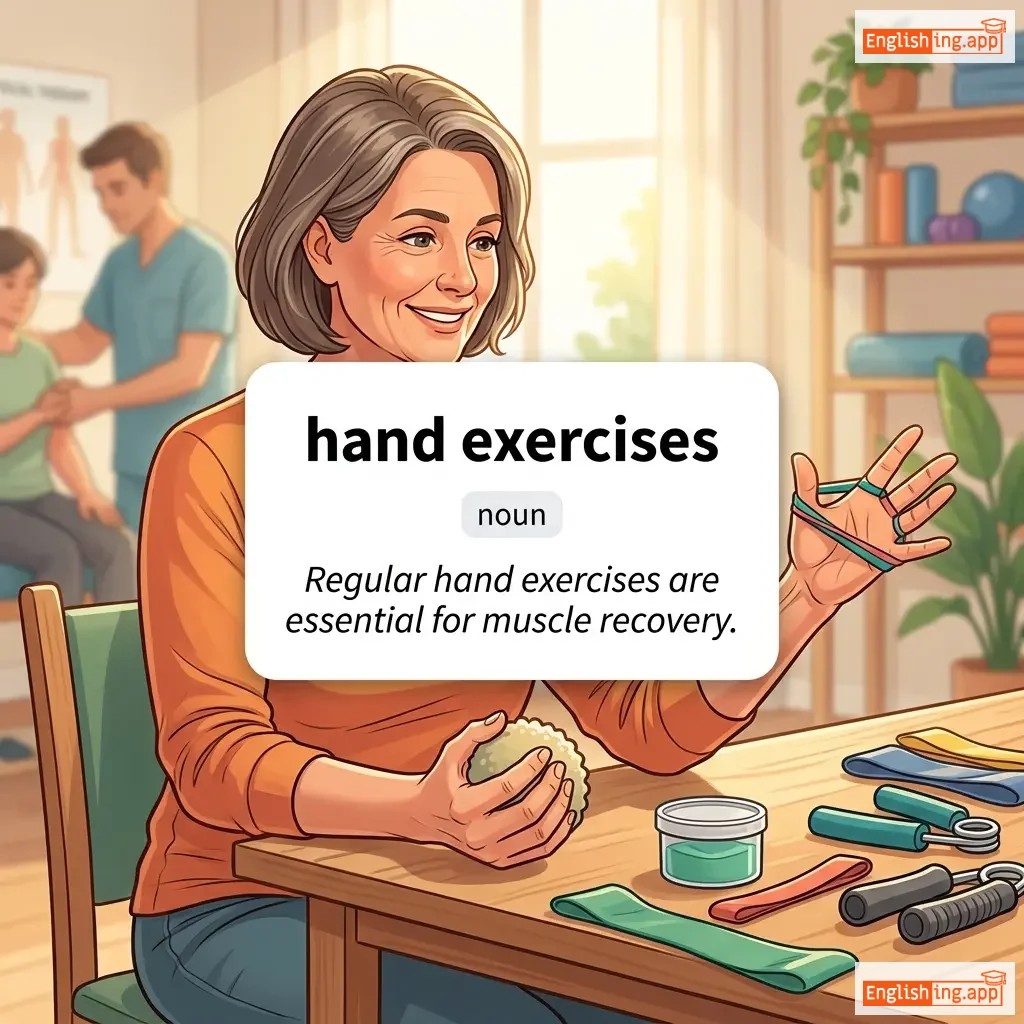
hand exercises definition card — visual illustration of the meaning
noun
হ্যান্ড এক্সারসাইজেস
упражнения для рук (uprazhneniya dlya ruk)

Physical activities designed to strengthen, stretch, and improve the flexibility of hand and finger muscles.

"Regular hand exercises are essential for muscle recovery."

"Регулярные упражнения для рук необходимы для восстановления мышц." (Regulyarnye uprazhneniya dlya ruk neobkhodimy dlya vosstanovleniya myshc.)