Vocabularios

Descubra, aprenda y domine el vocabulario en inglés

interjection
/hɑː/
¡Ja! (Expresión de sorpresa o diversión) (Ja! (Expresion de sorpresa o diversion))

used to express amusement, surprise, or triumph

"Ha! I knew you couldn’t resist joining us."

"¡Ja! Sabía que no podrías resistir unirte a nosotros." (¡Ja! Sabia que no podrias resistir unirte a nosotros.)
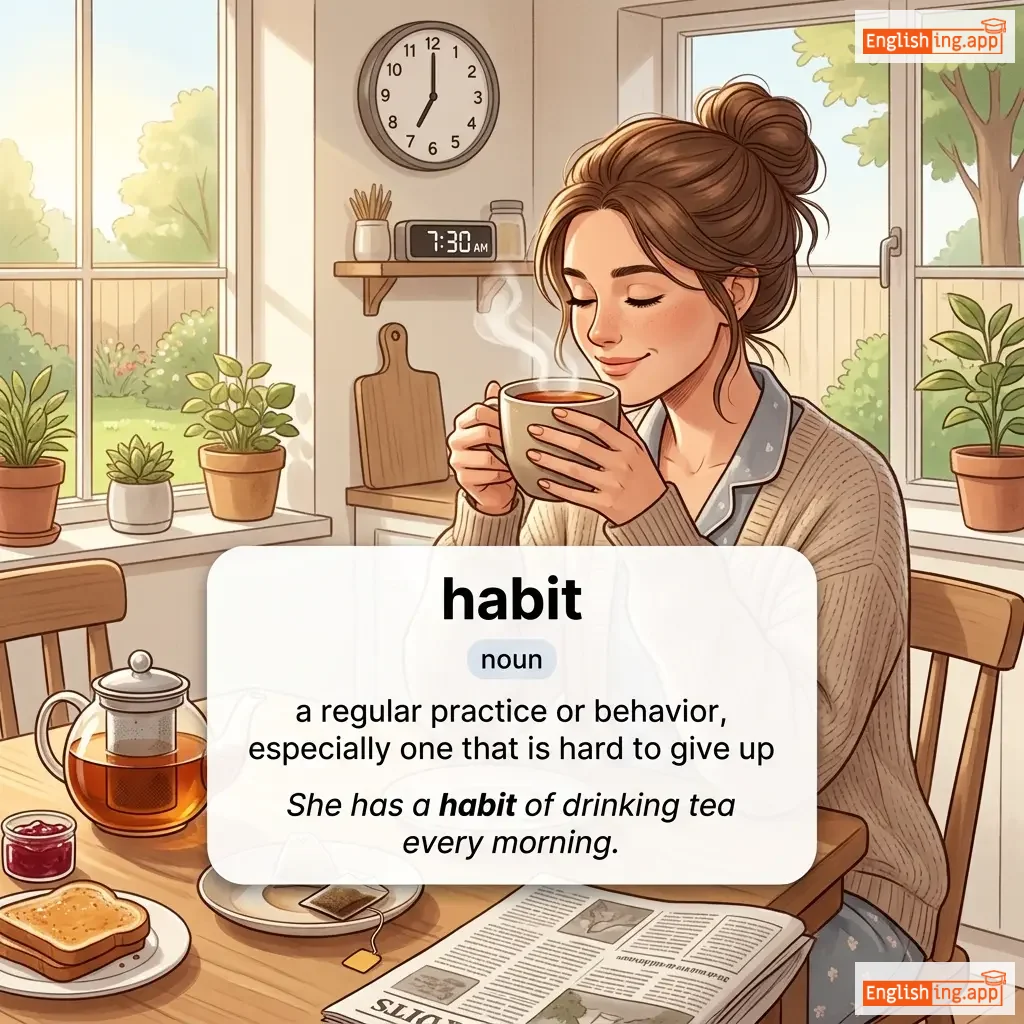
habit definition card — visual illustration of the meaning
noun
/ˈhæb.ɪt/
hábito (habito)

a regular practice or behavior, especially one that is hard to give up

"She has a habit of drinking tea every morning."

"Ella tiene el hábito de tomar té cada mañana." (Ella tiene el habito de tomar te cada manana.)
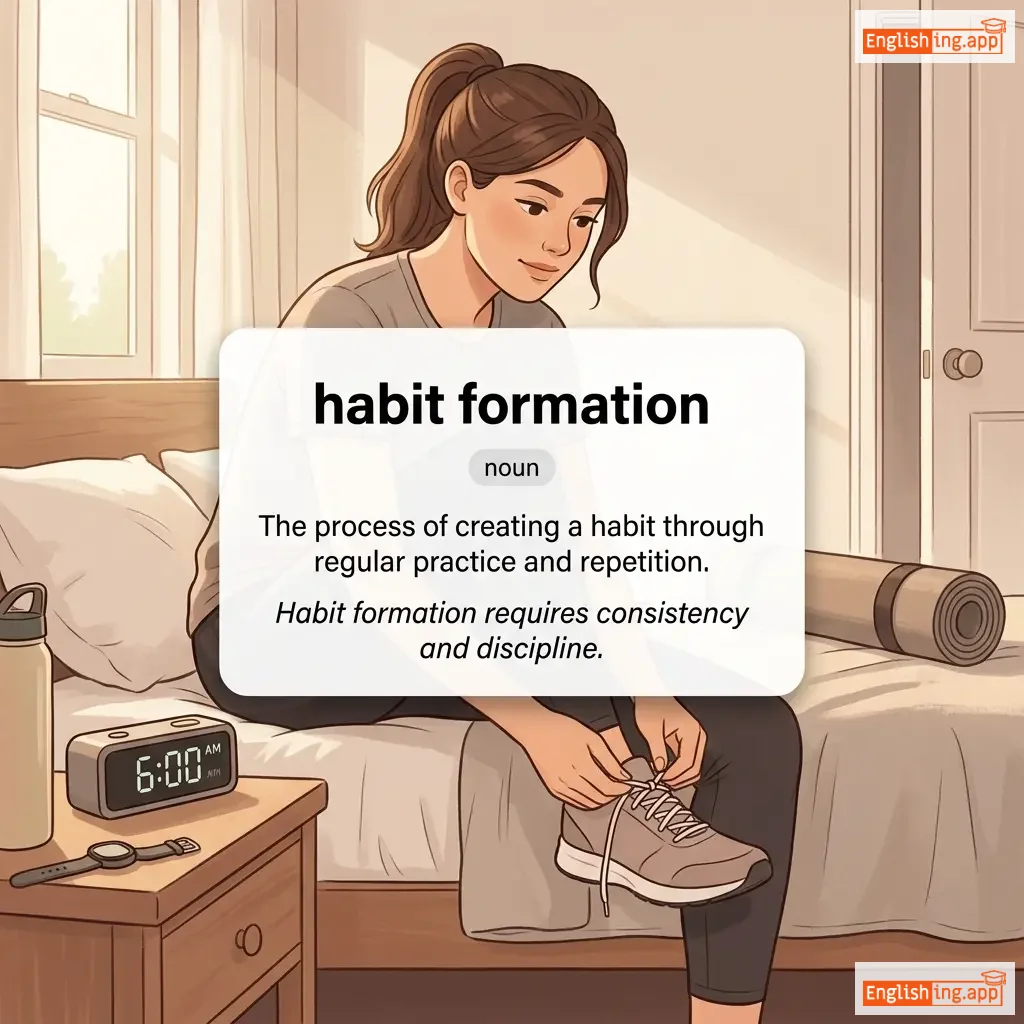
habit formation definition card — visual illustration of the meaning
noun
ˈhæb.ɪt fɔːrˌmeɪ.ʃən
formación de hábitos (formacion de habitos)

The process of creating a habit through regular practice and repetition.

"Habit formation requires consistency and discipline."

"La formación de hábitos requiere consistencia y disciplina." (La formacion de habitos requiere consistencia y disciplina.)
adjective
/ˈhæbɪtəbl/
habitable (habitable)

Suitable to live in; capable of sustaining life.

"Scientists are searching for habitable planets beyond our solar system."

"Los científicos están buscando planetas habitables más allá de nuestro sistema solar." (Los científicos están buscando planetas habitables más allá de nuestro sistema solar.)
👨‍👩‍👧‍👦

habitant (hábɪtɪnt)

noun
/ˈhæbɪtənt/
habitante (habitante)

An inhabitant; a person or animal that lives in a particular place.

"The habitants of the village were friendly and welcoming."

"Los habitantes del pueblo eran amables y acogedores." (Los habitantes del pueblo eran amables y acogedores.)
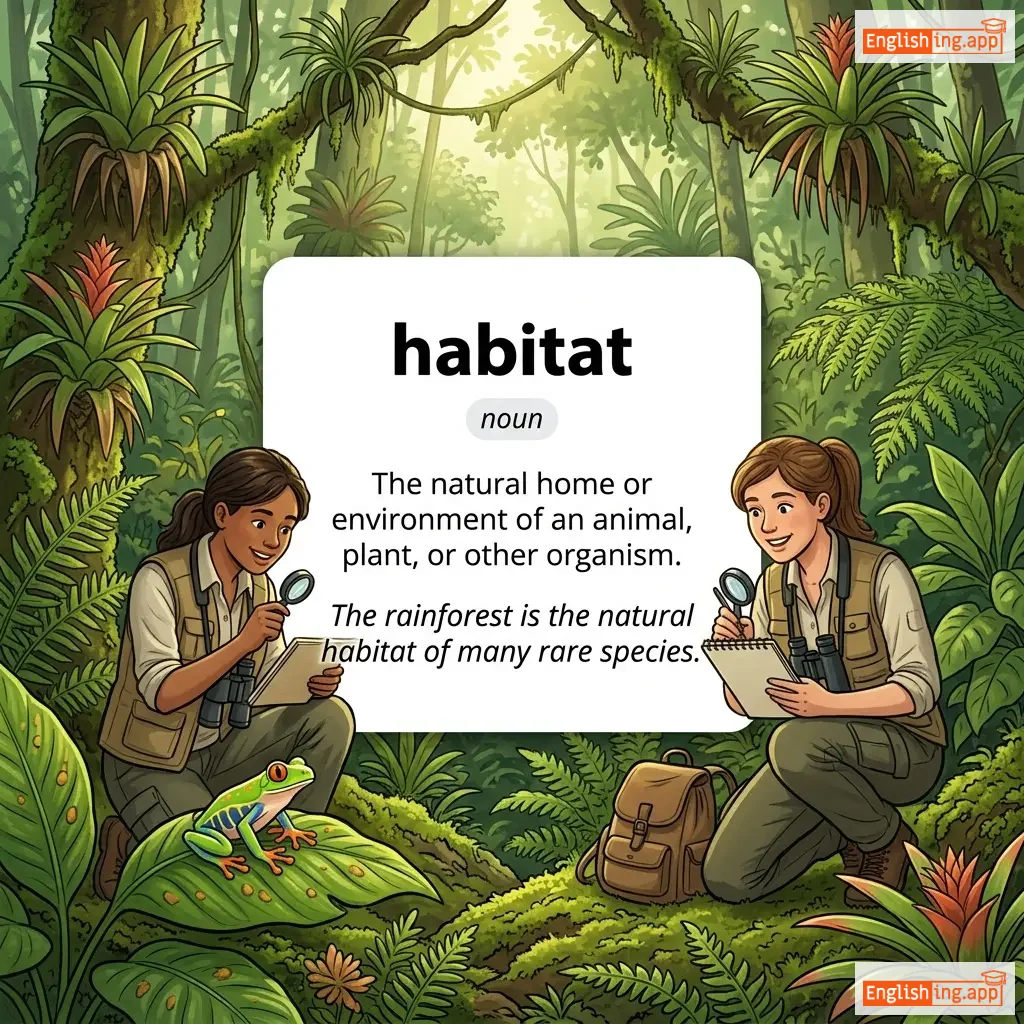
habitat definition card — visual illustration of the meaning
noun
/ˈhæbɪˌtæt/
hábitat (hábitat)

The natural home or environment of an animal, plant, or other organism.

"The rainforest is the natural habitat of many rare species."

"La selva tropical es el hábitat natural de muchas especies raras." (La selva tropical es el hábitat natural de muchas especies raras.)
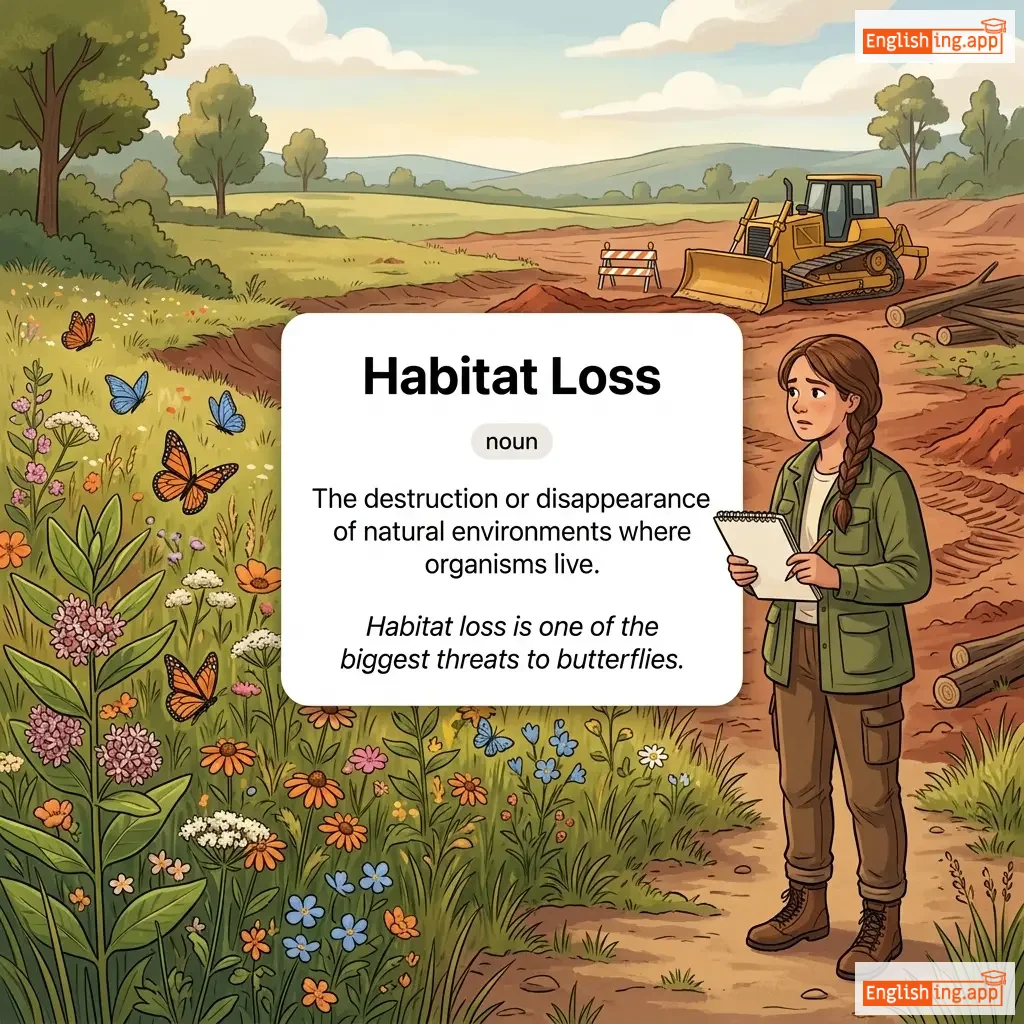
Habitat Loss definition card — visual illustration of the meaning
noun
ˈhæbɪtæt lɒs
pérdida de hábitat (perdida de habitat)

The destruction or disappearance of natural environments where organisms live.

"Habitat loss is one of the biggest threats to butterflies."

"La pérdida de hábitat es una de las mayores amenazas para las mariposas." (La perdida de habitat es una de las mayores amenazas para las mariposas.)
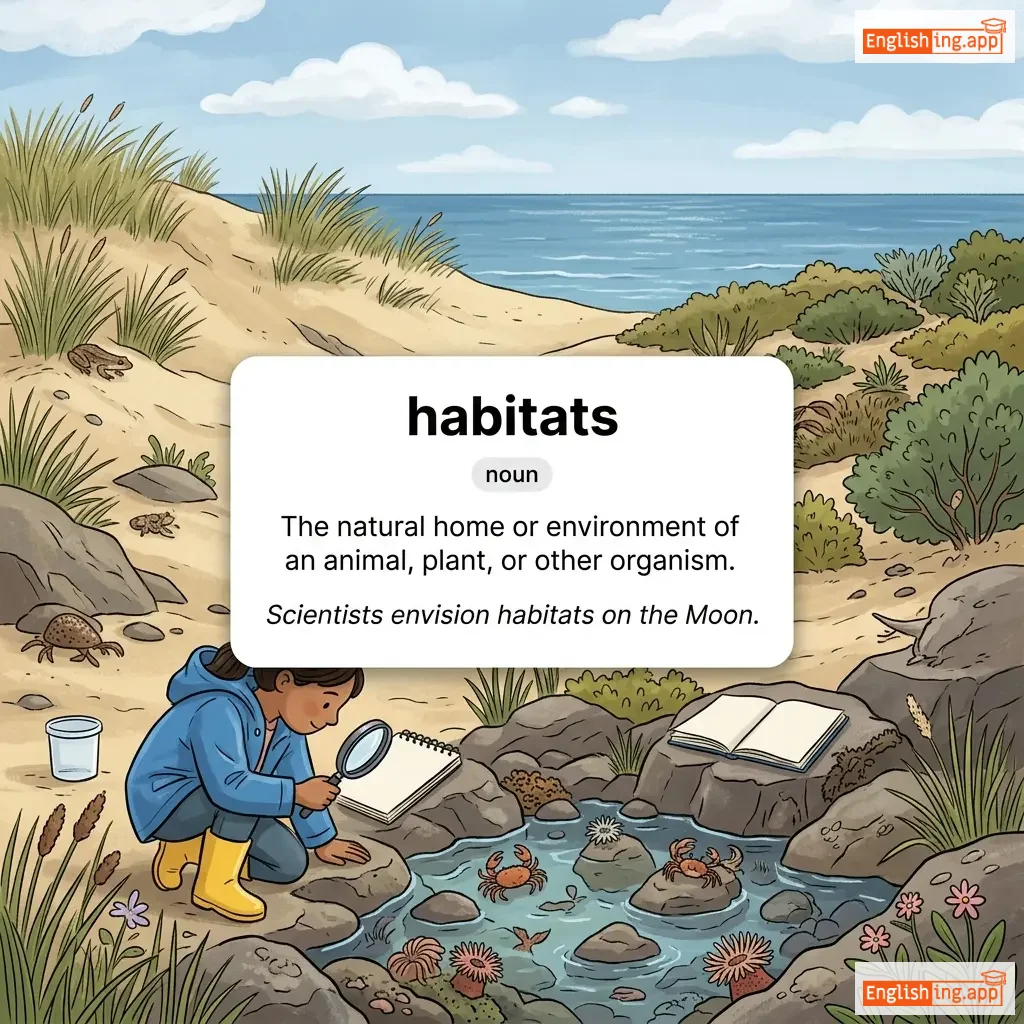
habitats definition card — visual illustration of the meaning
noun
ˈhæb.ɪ.tæts
hábitat (habitát)

The natural home or environment of an animal, plant, or other organism.

"Scientists envision habitats on the Moon."

"Los científicos imaginan hábitats en la luna." (Los científicos imaginan hábitats en la luna.)
adjective
/həˈbɪtʃuəl/
habitual (habitual)

Done or doing constantly or as a habit; customary.

"He was a habitual latecomer to class."

"Él era un habitual retrasado en clase." (Él era un habitual retrasado en clase.)
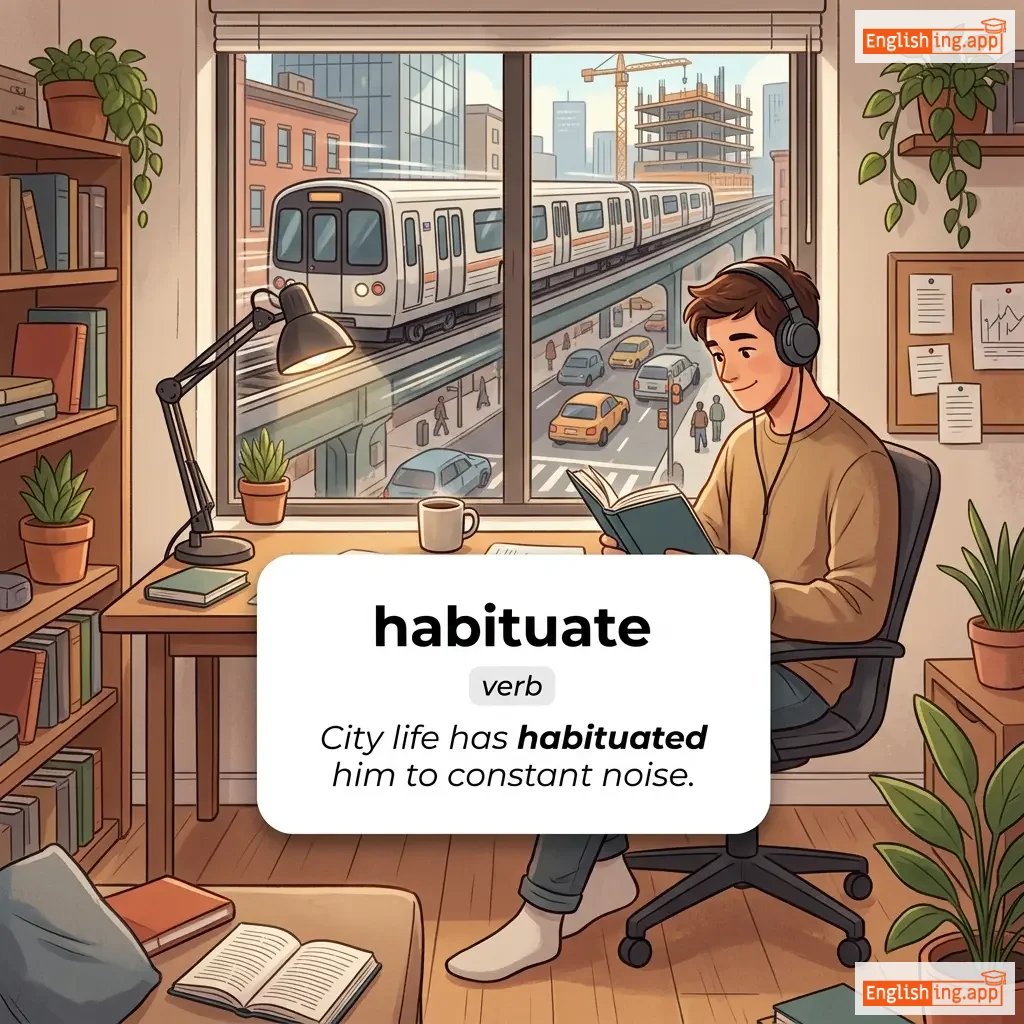
habituate definition card — visual illustration of the meaning
verb
/həˈbɪtʃueɪt/
acostumbrar (acostumbrar)

to accustom someone or oneself to something through frequent exposure or experience

"City life has habituated him to constant noise."

"La vida en la ciudad lo ha acostumbrado al ruido constante." (La vida en la ciudad lo ha acostumbrado al ruido constante.)
noun
/ˈhæbɪtjuːd/
hábito, costumbre (habito, costumbre)

a customary condition or mode of life; habitual practice

"He lived in a quiet habitude, avoiding the noise of the city."

"Vivía en un hábito tranquilo, evitando el ruido de la ciudad." (Vivia en un habito tranquilo, evitando el ruido de la ciudad.)
verb
/hæk/
cortar, acceder sin autorización a un sistema informático (cortar, acceder sin autorizacion a un sistema informatico)

to cut or chop roughly; to gain unauthorized access to a computer system

"The programmer managed to hack into the system."

"El programador logró hackear el sistema." (El programador logro hackear el sistema.)
noun
/ˈhækəlz/
el vello en la parte posterior del cuello de un animal que se erige cuando está enojado o alarmado; figurativamente, sentimientos de ira o resentimiento (el vello en la parte posterior del cuello de un animal que se erige cuando está enojado o alarmado; figurativamente, sentimientos de ira o resentimiento)

the hairs on the back of an animal’s neck that rise when it is angry or alarmed; figuratively, feelings of anger or resentment

"His rude comment raised my hackles."

"Su comentario grosero levantó mis hackles." (Su comentario grosero levantó mis hackles.)
noun
/ˈhæknɪ/
caballo de alquiler, trillado (caballo de alquiler, trillado)

a horse kept for ordinary riding or hire; also used for something overused or trite

"The old hackney was still pulling the carriage."

"El viejo caballo de alquiler seguía tirando del carruaje." (El viejo caballo de alquiler seguía tirando del carruaje.)
noun
/ˈhæk.ni ˈkær.ɪdʒ/
coche de alquiler (coche de alquiler)

A taxi; a car licensed to carry passengers for hire

"I called a hackney carriage to get to the airport."

"Llamé a un coche de alquiler para llegar al aeropuerto." (Llamé a un coche de alquiler para llegar al aeropuerto.)
adjective
/ˈhæk.nid/
cliché (clishe)

Used too often and therefore lacking originality or freshness.

"The speech was filled with hackneyed phrases that failed to inspire the audience."

"El discurso estaba lleno de frases cliché que no lograron inspirar al público." (El discurso estaba lleno de frases cliché que no lograron inspirar al público.)
🧙‍♀️

Hag (hág)

noun
/hæɡ/
bruja (bruja)

an ugly old woman, especially a vicious or malicious one; a witch

"In the fairy tale, the wicked hag lived alone in a cottage deep in the forest."

"En el cuento de hadas, la malvada bruja vivía sola en una cabaña en lo profundo del bosque." (En el cuento de hadas, la malvada bruja vivía sola en una cabaña en lo profundo del bosque.)
adjective
/ˈhæɡ.ərd/
agotado (agotado)

Looking exhausted, unwell, or worn out, especially from fatigue or suffering.

"After working all night, she looked pale and haggard."

"Después de trabajar toda la noche, ella parecía pálida y agotada." (Despues de trabajar toda la noche, ella parecia palida y agotada.)
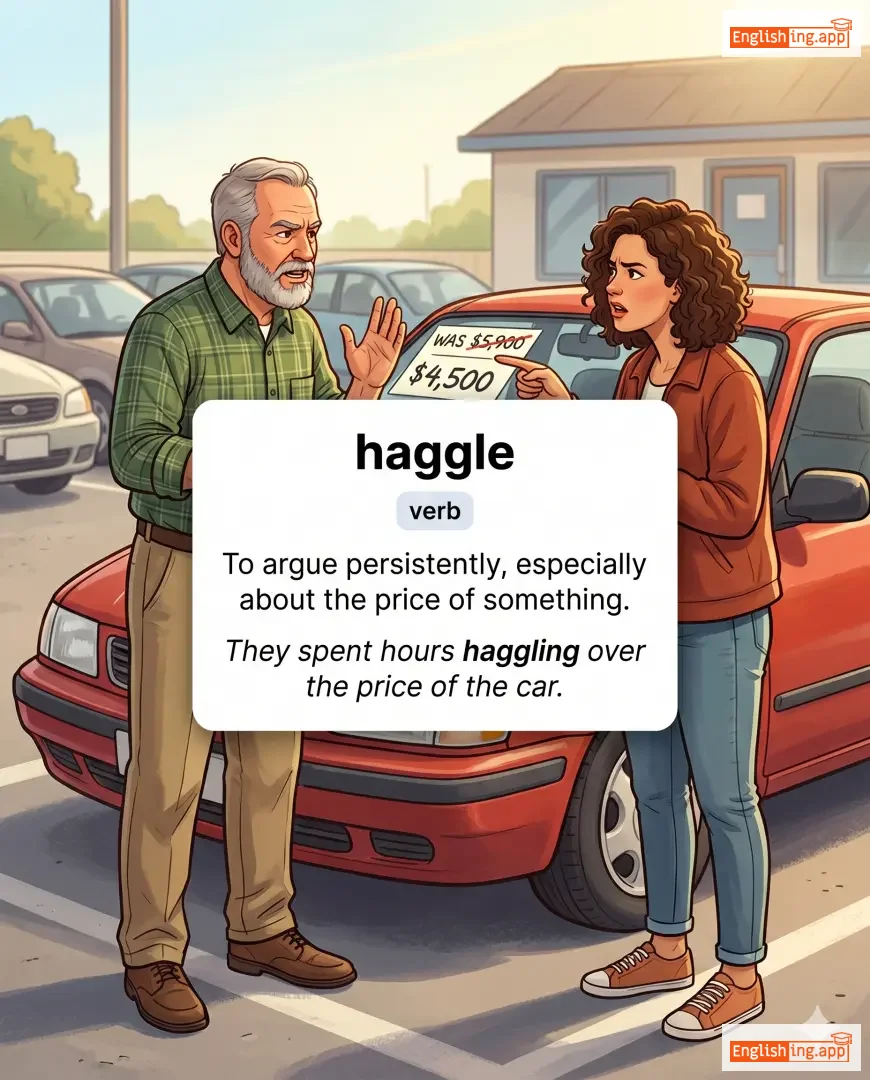
haggle definition card — visual illustration of the meaning
verb
/ˈhæɡ.l̩/
regatear (regatear)

To argue persistently, especially about the price of something.

"They spent hours haggling over the price of the car."

"Pasaron horas regateando sobre el precio del coche." (Pasaron horas regateando sobre el precio del coche.)
adjective
/ˌhæɡ.i.əˈɡræf.ɪk/
excesivamente elogioso (excesivamente elogioso)

Excessively flattering or idealized, often in a biography or portrayal of someone.

"The documentary was criticized for its hagiographic portrayal of the leader."

"El documental fue criticado por su representación excesivamente elogiosa del líder." (El documental fue criticado por su representación excesivamente elogiosa del líder.)
verb
/heɪl/
saludar / vitorear (saludar / vitorear)

To call out to attract attention or to praise enthusiastically.

"The athlete was hailed as a hero after the victory."

"El atleta fue aclamado como un héroe después de la victoria." (El atleta fue aclamado como un heroe despues de la victoria.)
noun
/ˈheɪl.stɔːrm/
tormenta de granizo (tormenta de granizo)

a violent storm with hail falling from the sky

"The hailstorm damaged many cars in the parking lot."

"La tormenta de granizo dañó muchos autos en el estacionamiento." (La tormenta de granizo dañó muchos autos en el estacionamiento.)
noun
/hɛər/
pelo (pelo)

the fine threads growing from the skin of humans and animals

"She has long, black hair."

"Ella tiene el pelo largo y negro." (Ella tiene el pelo largo y negro.)
noun
/ˈher ˌpɪn/
horquilla (or-kee-ya)

a thin piece of metal or plastic used to hold hair in place

"She used several hair pins to secure her elegant updo."

"Ella usó varias horquillas para sujetar su elegante peinado recogido." (ella uso varias horquillas para sujetar su elegante peinado recogido)
noun
/ˈheəkʌt/
corte de pelo (corte de pelo)

the act or style of cutting hair

"I got a haircut before the wedding."

"Me hice un corte de pelo antes de la boda." (me hice un corte de pelo antes de la boda)
noun
/ˈheəˌkʌtər/
peluquero (peluquero)

a person whose job is to cut and style hair; barber or hairdresser

"The haircutter gave me a neat and stylish haircut."

"El peluquero me hizo un buen corte de pelo." (el peluquero me hizo un buen corte de pelo)
noun
/ˈherˌdrɛsər/
peluquero; peluquera (peluquero; peluquera)

a person whose job is to cut, style, and treat hair

"The hairdresser gave me a stylish haircut before the wedding."

"El peluquero me hizo un corte de pelo elegante antes de la boda." (El peluquero me hizo un corte de pelo elegante antes de la boda)
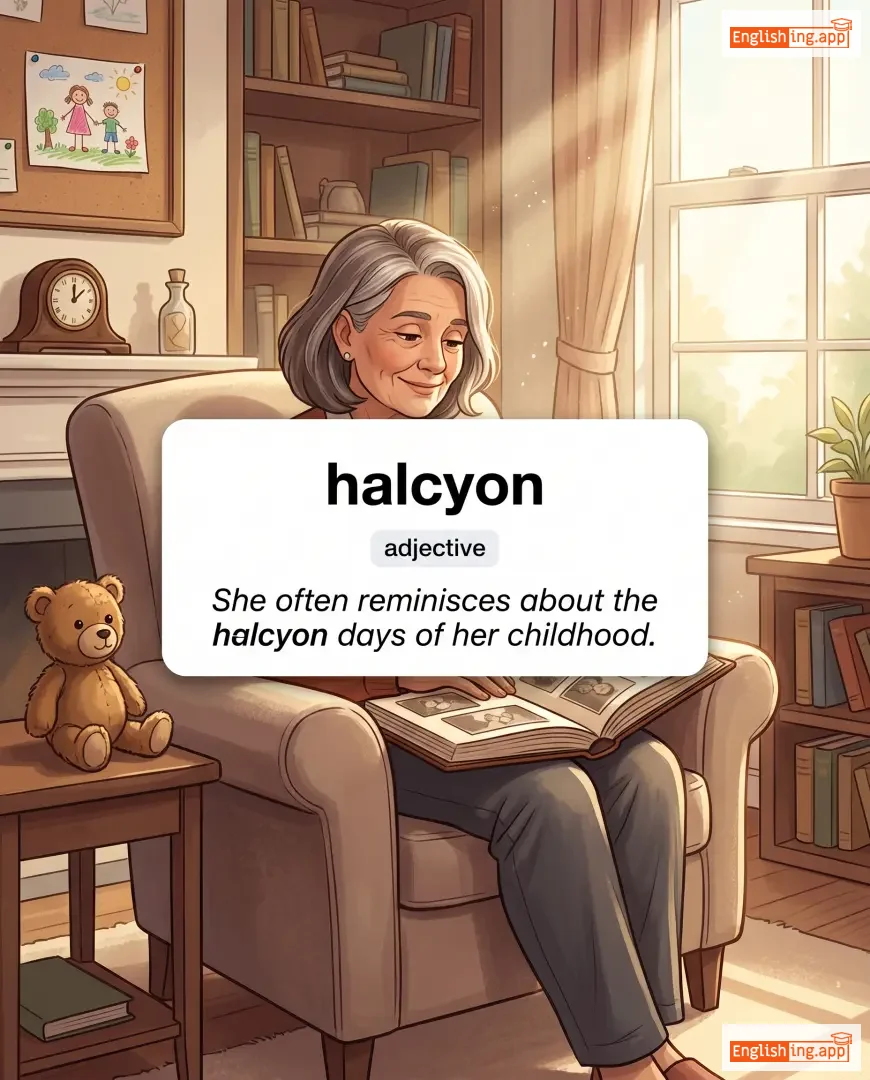
halcyon definition card — visual illustration of the meaning
adjective
/ˈhæl.si.ən/
sereno (sereno)

calm, peaceful, and happy; denoting a period of time in the past that was idyllically happy and peaceful

"She often reminisces about the halcyon days of her childhood."

"Ella a menudo recuerda los días serenos de su niñez." (Ella a menudo recuerda los días serenos de su niñez.)
adjective
/heɪl/
sano (sano)

strong and healthy, especially of an elderly person

"Despite his age, the man remained hale and active."

"A pesar de su edad, el hombre se mantuvo saludable y activo." (A pesar de su edad, el hombre se mantuvo saludable y activo.)
noun, adjective
/hæf/
mitad (mitad)

one of two equal parts of something

"He ate half of the cake."

"Él comió la mitad del pastel." (El comio la mitad del pastel.)
adjective
/ˌhæfˈbeɪkt/
a medias tintas (a medias tintas)

poorly thought out or badly planned

"The manager quickly rejected his half-baked proposal."

"El gerente rápidamente rechazó su propuesta a medias tintas." (El gerente rapidamente rechazo su propuesta a medias tintas.)
adjective
/ˌhæfˈhɑːr.tɪd/
desinteresado (desinteresado)

lacking enthusiasm or determination; unenthusiastic

"His halfhearted attempt to study did not bring good results."

"Su intento desinteresado de estudiar no dio buenos resultados." (Su intento desinteresado de estudiar no dio buenos resultados.)
adverb
/ˌhæfˈweɪ/
a mitad de camino (a mitad de camino)

at or to a point equal in distance between two points

"We met halfway between the two towns."

"Nos encontramos a mitad de camino entre las dos ciudades." (Nos encontramos a mitad de camino entre las dos ciudades.)
🏛️

Hall (jal)

noun
/hɔːl/
salón (salon)

a large room or building for public gatherings, events, or passage

"The graduation ceremony was held in the university hall."

"La ceremonia de graduación se celebró en el salón de la universidad." (La ceremonia de graduacion se celebro en el salon de la universidad.)
noun
/ˈhɔːl.mɑːrk/
marca distintiva (marca distintiva)

a typical characteristic or feature of someone or something

"Honesty is the hallmark of a good leader."

"La honestidad es la marca distintiva de un buen líder." (La honestidad es la marca distintiva de un buen lider.)
verb
/ˈhæloʊ/
santificar (santificar)

to honor as holy; to make sacred or greatly respected

"The ancient temple was hallowed by centuries of worship."

"El antiguo templo fue santificado por siglos de adoración." (El antiguo templo fue santificado por siglos de adoración.)
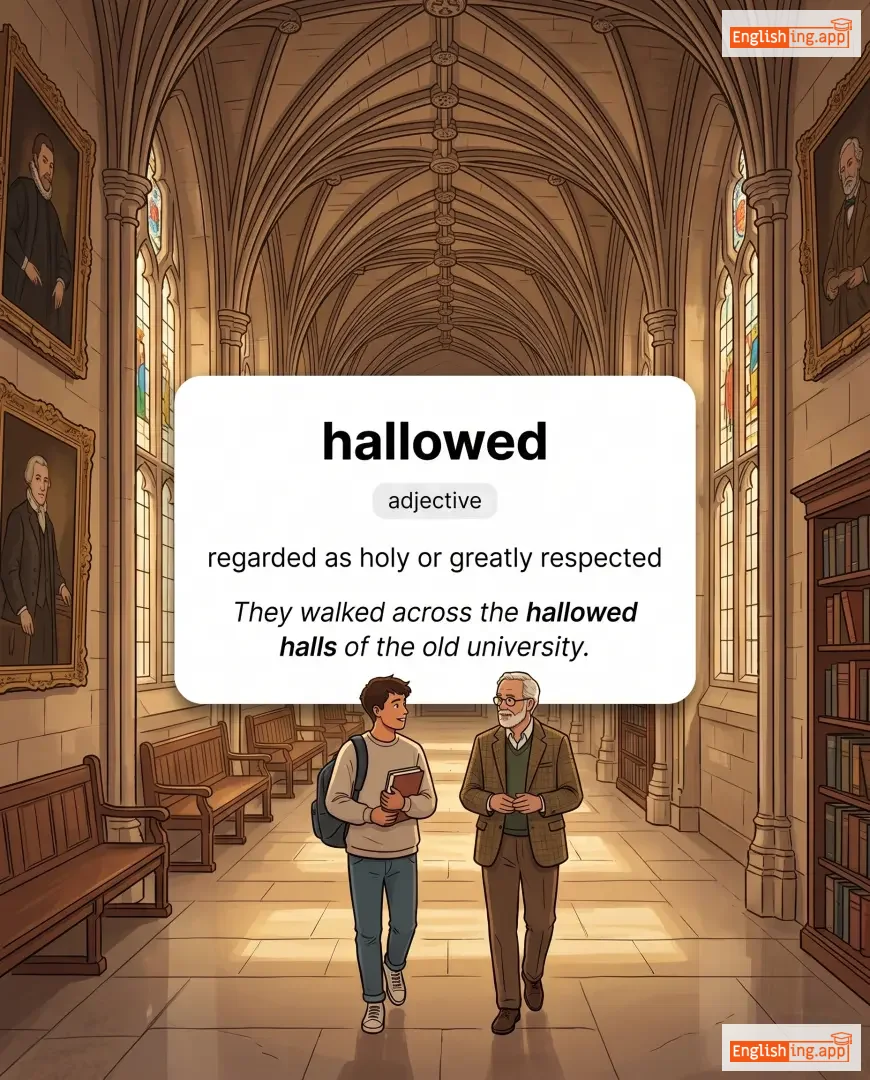
hallowed definition card — visual illustration of the meaning
adjective
/ˈhæloʊd/
sagrado (sagrado)

regarded as holy or greatly respected

"They walked across the hallowed halls of the old university."

"Cruzaron los sagrados pasillos de la vieja universidad." (Cruzaron los sagrados pasillos de la vieja universidad.)
verb
/həˈluːsɪneɪt/
alucinar (alucinar)

to see, hear, or sense things that are not actually present, often due to illness or drugs

"After taking the medicine, he began to hallucinate strange shapes."

"Después de tomar la medicina, comenzó a alucinar formas extrañas." (Despuès de tomar la medicina, comenzo a alucinar formas extrañas.)
noun
/həˌluːsɪˈneɪʃən/
alucinación (alucinacion)

a false perception of objects or events, usually caused by mental illness or drugs

"After the medication, he began to experience vivid hallucinations."

"Después de la medicación, comenzó a experimentar alucinaciones vívidas." (despues de la medicacion, comenzo a experimentar alucinaciones vividas.)
noun
/ˈhɔːlweɪ/
pasillo (pasillo)

a corridor in a building that connects rooms

"The kids left their shoes in the hallway."

"Los niños dejaron sus zapatos en el pasillo." (Los niños dejaron sus zapatos en el pasillo.)
verb
/hɔːlt/
detener (detener)

to stop or bring to a stop

"The train suddenly halted at the station."

"El tren se detuvo repentinamente en la estación." (El tren se detuvo repentinamente en la estación.)
adjective
/ˈhɔːltɪŋ/
vacilante (vacilante)

slow and hesitant, especially due to lack of confidence

"She gave a halting reply during the interview."

"Ella dio una respuesta vacilante durante la entrevista." (Ella dio una respuesta vacilante durante la entrevista.)
adjective
/ˈhæm ˌhændɪd/
torpe (torpe)

clumsy or inept in handling things or situations

"His ham-handed attempt to fix the computer made it worse."

"Su intento torpe de arreglar la computadora lo empeoró." (Su intento torpe de arreglar la computadora lo empeoró.)
noun
/ˈhæm.lət/
pequeña aldea (pequena aldea)

a small rural settlement, smaller than a village; a small community

"The tiny hamlet nestled in the valley had only a dozen houses and one small church."

"La pequeña aldea enclavada en el valle tenía solo una docena de casas y una pequeña iglesia." (La pequena aldea enclavada en el valle tenia solo una docena de casas y una pequena iglesia.)
noun, verb
/ˈhæmər/
martillo (martillo)

a tool with a heavy metal head used for breaking things or driving in nails; to hit something forcefully with a hammer or similar object.

"He used a hammer to fix the broken chair."

"Él usó un martillo para arreglar la silla rota." (Él usó un martillo para arreglar la silla rota.)
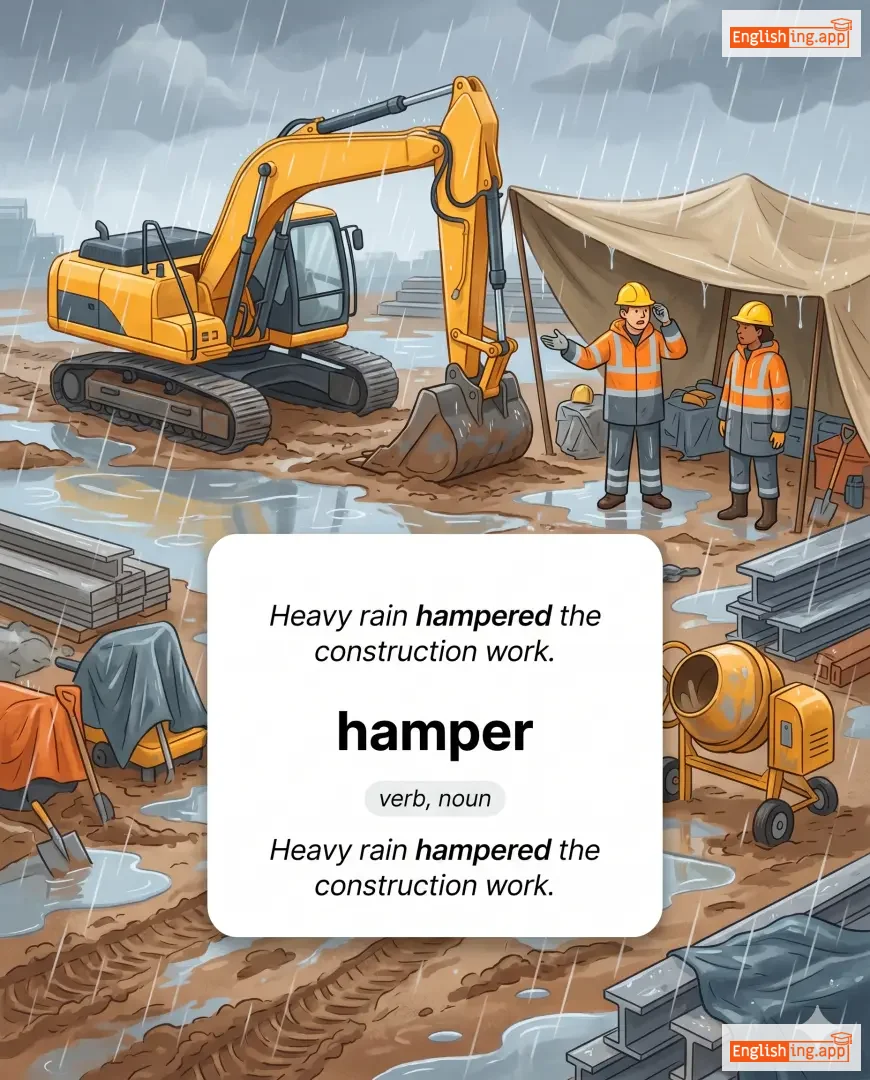
hamper definition card — visual illustration of the meaning
verb, noun
/ˈhæmpər/
obstruir, canasta para ropa (obstruir, canasta para ropa)

to prevent or slow down the progress of something; also, a basket with a lid, typically for laundry.

"Heavy rain hampered the construction work."

"La lluvia fuerte dificultó el trabajo de construcción." (La lluvia fuerte dificultó el trabajo de construcción.)
noun, verb
/ˈhæmstrɪŋ/
tendón en la parte posterior del muslo; como verbo, dificultar o restringir severamente la efectividad de alguien o algo (tendon en la parte posterior del muslo; como verbo, dificultar o restringir severamente la efectividad de alguien o algo)

a tendon at the back of the thigh; as a verb, to cripple or severely restrict the effectiveness of someone or something.

"Budget cuts hamstrung the organization’s plans."

"Los recortes presupuestarios han debilitado los planes de la organización." (Los recortes presupuestarios han debilitado los planes de la organización.)
verb (past tense, past participle), adjective
/ˈhæmstrʌŋ/
cojo o debilitado (koho o debilitao)

crippled or severely restricted in movement or progress.

"The team was hamstrung by lack of resources."

"El equipo fue limitado por la falta de recursos." (El equipo fue limitado por la falta de recursos.)
noun, verb
/hænd/
mano (mano)

the part of the body at the end of the arm used for holding things

"She raised her hand to ask a question."

"Ella levantó su mano para hacer una pregunta." (Ella levantó su mano para hacer una pregunta.)
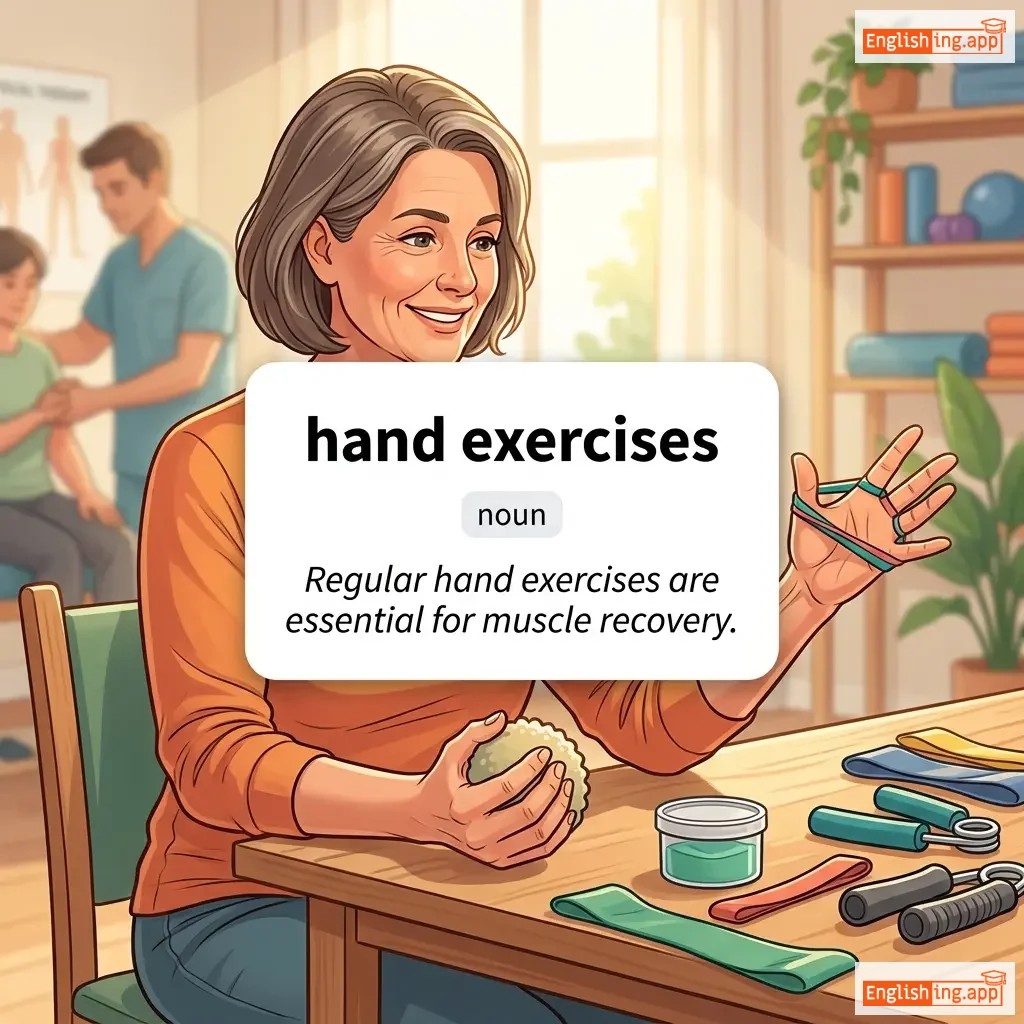
hand exercises definition card — visual illustration of the meaning
noun
হ্যান্ড এক্সারসাইজেস
ejercicios de mano (ejercicios de mano)

Physical activities designed to strengthen, stretch, and improve the flexibility of hand and finger muscles.

"Regular hand exercises are essential for muscle recovery."

"Los ejercicios regulares de mano son esenciales para la recuperación muscular." (Los ejercicios regulares de mano son esenciales para la recuperación muscular.)