Vocabularios

Descubra, aprenda y domine el vocabulario en inglés

adverb
/əˈbæk/
sorprendido (sorprendido)

by surprise; unexpectedly

"I was taken aback by his sudden announcement."

"Me sorprendió su anuncio repentino." (Me sorprendió su anuncio repentino.)
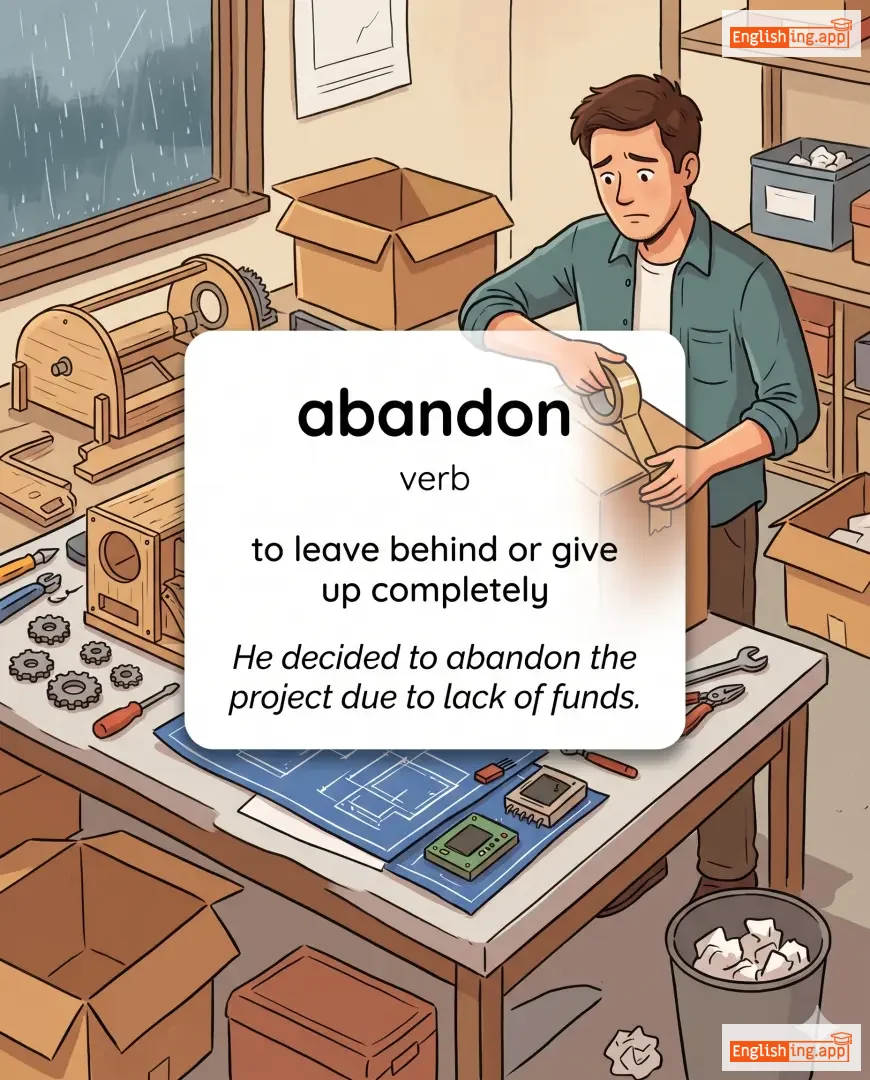
abandon definition card — visual illustration of the meaning
verb
/əˈbændən/
abandonar (abandonar)

to leave behind or give up completely

"He decided to abandon the project due to lack of funds."

"Él decidió abandonar el proyecto debido a la falta de fondos." (Él decidió abandonar el proyecto debido a la falta de fondos.)
noun
/əˈbændənmənt/
abandono (abandono)

the act of leaving someone or something behind completely; the state of being deserted

"The child suffered deep emotional pain because of abandonment."

"El niño sufrió un profundo dolor emocional por el abandono." (El nino sufrio un profundo dolor emocional por el abandono)
verb
/əˈbeɪs/
rebajar (rebajar)

to belittle or degrade someone

"He refused to abase himself before the king."

"Él se negó a rebajarse ante el rey." (Él se negó a rebajarse ante el rey.)
verb
/əˈbæʃ/
avergonzar (avergonzar)

to make someone feel embarrassed or ashamed

"Her sudden question seemed to abash him."

"Su repentina pregunta pareció avergonzarlo." (Su repentina pregunta pareció avergonzarlo.)
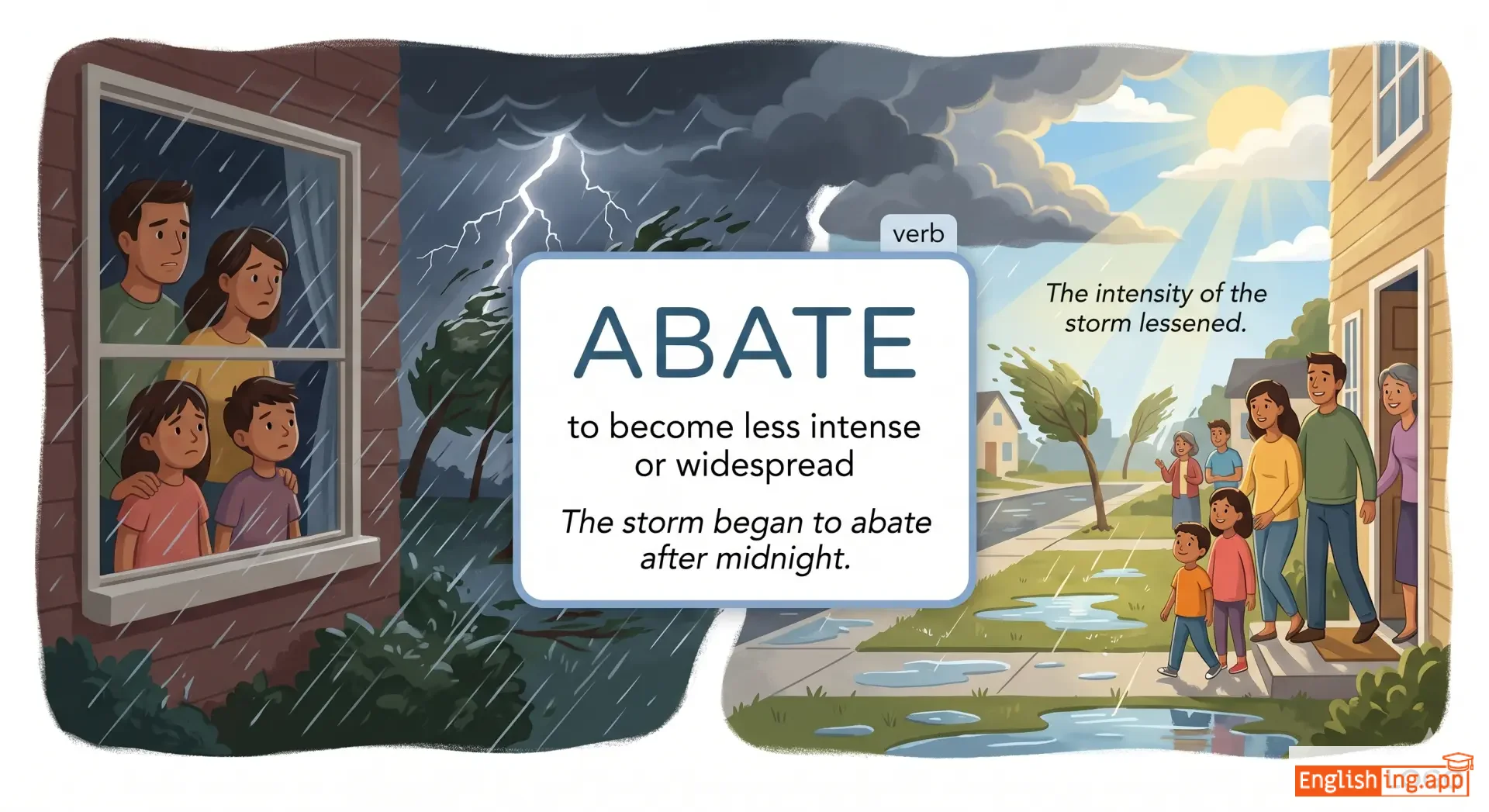
abate definition card — visual illustration of the meaning
verb
/əˈbeɪt/
disminuir (disminuir)

to become less intense or widespread

"The storm began to abate after midnight."

"La tormenta comenzó a disminuir después de la medianoche." (La tormenta comenzó a disminuir después de la medianoche.)
noun
/ˈæbɪs/
abadesa (mujer al cargo de un convento) (abadesa (mujer al cargo de un convento))

the woman in charge of a convent of nuns

"The abbess welcomed the visitors to the convent."

"La abadesa dio la bienvenida a los visitantes al convento." (La abadesa dio la bienvenida a los visitantes al convento.)
noun
/ˈæbi/
abadía (abadia)

A large church building or monastery where monks or nuns live, work, and worship.

"The old abbey on the hill attracts many tourists each year."

"La vieja abadía en la colina atrae a muchos turistas cada año." (La vieja abadia en la colina atrae a muchos turistas cada año.)
noun
/ˈæbət/
abad (abad)

The head of a monastery for monks.

"The abbot welcomed the visitors to the monastery."

"El abad dio la bienvenida a los visitantes al monasterio." (El abad dio la bienvenida a los visitantes al monasterio.)
verb
/əˈbriːvieɪt/
abreviar (abreviar)

To shorten a word, phrase, or text by leaving out letters or parts.

"We often abbreviate 'Doctor' to 'Dr'."

"A menudo abreviamos 'Doctor' a 'Dr'." (A menudo abreviamos 'Doctor' a 'Dr'.)
noun
/əˌbriːviˈeɪʃən/
abreviatura (abreviatura)

a shortened form of a word or phrase

"NASA is an abbreviation for National Aeronautics and Space Administration."

"NASA es una abreviatura de National Aeronautics and Space Administration." (NASA es una abreviatura de National Aeronautics and Space Administration.)
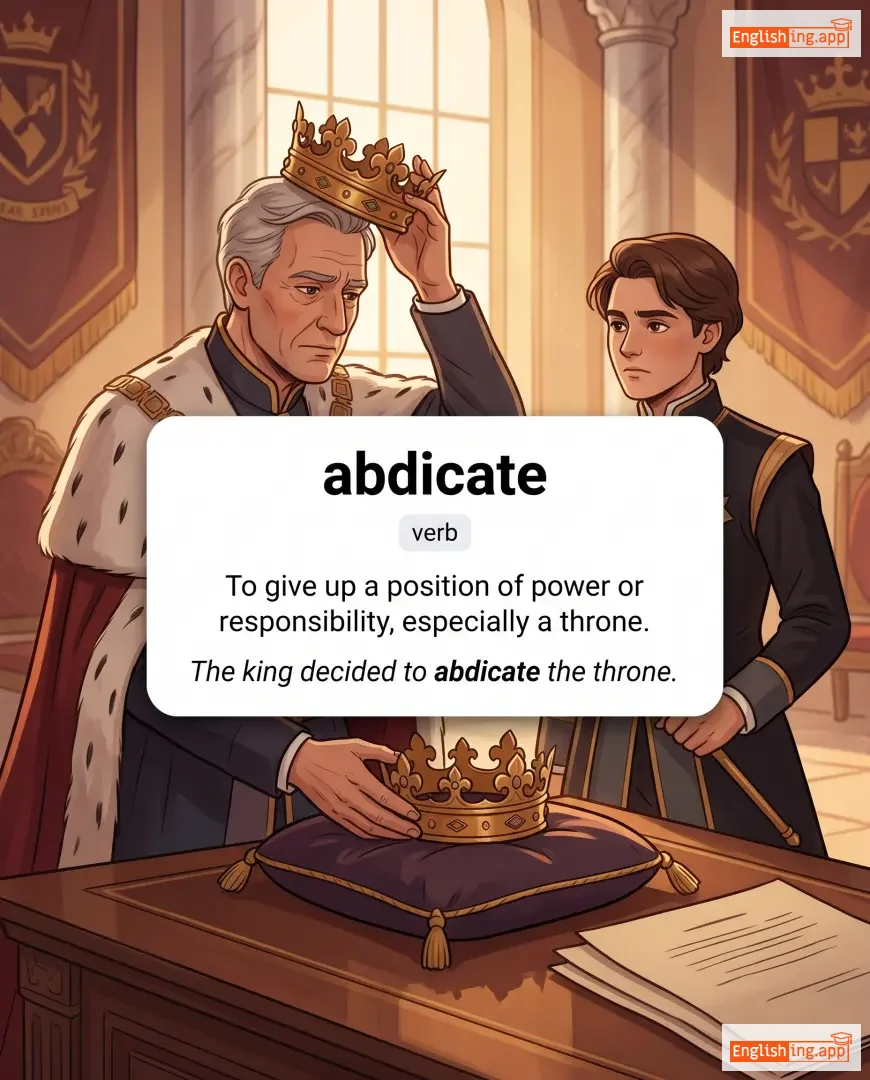
abdicate definition card — visual illustration of the meaning
verb
/ˈæbdɪkeɪt/
abdicar (abdicar)

To give up a position of power or responsibility, especially a throne.

"The king decided to abdicate the throne."

"El rey decidió abdicar del trono." (El rey decidió abdicar del trono.)
noun
/ˈæbdəmən/
abdomen (abdomen)

The part of the body below the chest and above the hips that contains the stomach and other organs.

"He complained of pain in his abdomen."

"Él se quejó de dolor en su abdomen." (Él se quejó de dolor en su abdomen.)
adjective
/æbˈdɑː.mə.nəl/
abdominal (abdominal)

relating to the abdomen (the part of the body between the chest and pelvis)

"He complained of severe abdominal pain."

"Se quejaba de un dolor abdominal severo." (Se quejaba de un dolor abdominal severo.)
verb
/əbˈdʌkt/
secuestrar (secuestrar)

to take someone away illegally by force or deception

"The criminal tried to abduct the child in broad daylight."

"El criminal intentó secuestrar al niño a plena luz del día." (El criminal intento secuestrar al nino a plena luz del dia)
noun
/æbˈdʌk.ʃən/
secuestro (secuestro)

the act of taking someone away illegally by force; kidnapping

"The police are investigating the abduction of the child."

"La policía está investigando el secuestro del niño." (La policía está investigando el secuestro del niño.)
noun
/əbˈdʌktər/
secuestrador (secuestrador)

a person who kidnaps or forcibly takes someone away

"The police arrested the abductor after a nationwide search."

"La policía arrestó al secuestrador después de una larga búsqueda." (La policia arresto al secuestrador despues de una larga busqueda)
adverb
/əˈbɛd/
en la cama (en la cama)

in bed

"She stayed abed all day due to illness."

"Se quedó en la cama todo el día debido a la enfermedad." (Se quedo en la cama todo el día debido a la enfermedad.)
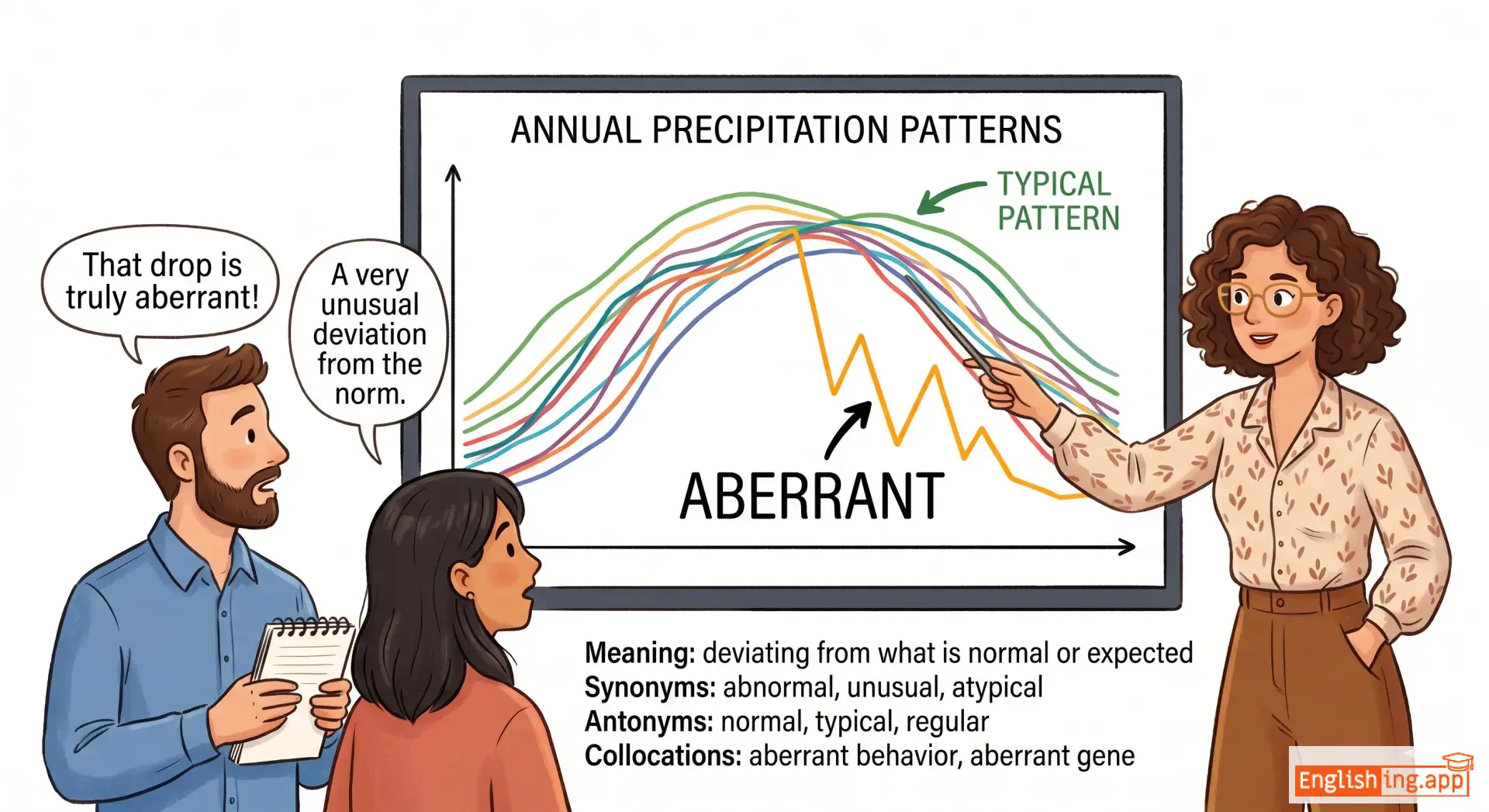
aberrant definition card — visual illustration of the meaning
adjective
/ˈæb.ə.rənt/
anómalo (anomalo)

deviating from what is normal or expected; abnormal

"His aberrant behavior shocked everyone at the meeting."

"Su comportamiento anómalo sorprendió a todos en la reunión." (Su comportamiento anómalo sorprendió a todos en la reunión.)
aberration definition card — visual illustration of the meaning
noun
/ˌæb.əˈreɪ.ʃən/
anomalía (anomalia)

a departure from what is normal, usual, or expected; an anomaly

"The sudden drop in temperature was an aberration for this season."

"La repentina caída de temperatura fue una anomalía para esta temporada." (La repentina caida de temperatura fue una anomalia para esta temporada.)
verb
/əˈbɛt/
fomentar un crimen (fomentar un crimen)

to encourage or assist someone to commit a crime or wrongdoing

"He was accused of abetting the criminals in their escape."

"Fue acusado de ayudar a los criminales en su escape." (Fue acusado de ayudar a los criminales en su escape.)
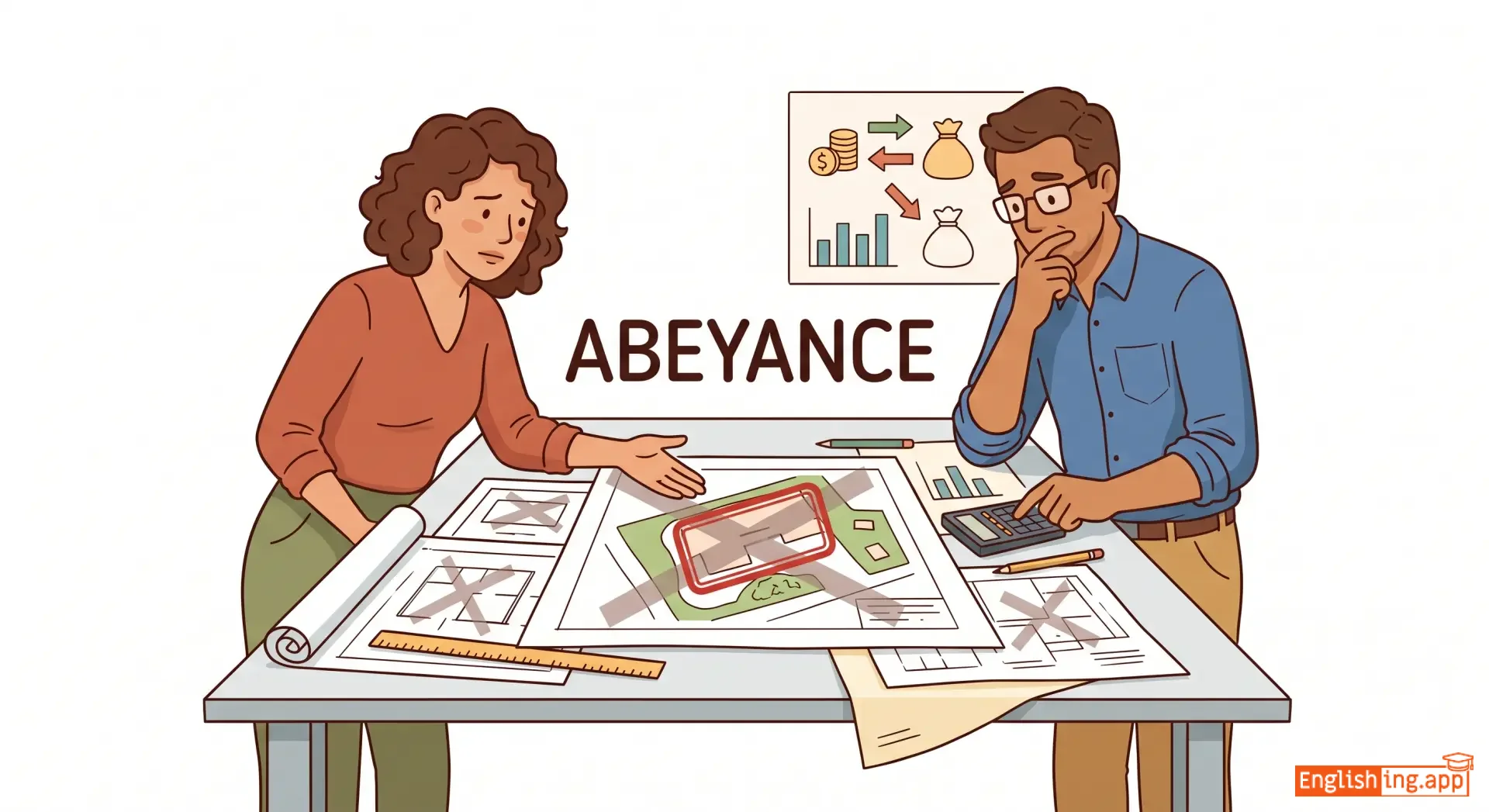
abeyance definition card — visual illustration of the meaning
noun
/əˈbeɪəns/
suspensión temporal (suspension temporal)

a state of temporary suspension or inactivity

"The project was held in abeyance until funds became available."

"El proyecto fue suspendido hasta que los fondos estuvieran disponibles." (El proyecto fue suspendido hasta que los fondos estuvieran disponibles.)
verb
/əbˈhɔːr/
aborrecer (aborrecer)

to regard with disgust and hatred

"She abhors cruelty to animals."

"Ella aborrece la crueldad hacia los animales." (Ella aborrece la crueldad hacia los animales.)
noun
/əbˈhɒrəns/
abominación (abominacion)

a feeling of strong disgust or hatred

"He expressed his abhorrence of racial discrimination."

"Expresó su abominación hacia la discriminación racial." (Expreso su abominacion hacia la discriminacion racial.)
adjective
/əbˈhɒrənt/
aborrecible (aborrecible)

causing or deserving strong dislike or hatred

"Such cruelty is abhorrent to civilized society."

"Tal crueldad es aborrecible para una sociedad civilizada." (Tal crueldad es aborrecible para una sociedad civilizada.)
noun
/əˈbaɪdəns/
cumplimiento (cumplimiento)

the act of following, accepting, or complying with something

"Her abidance by the rules impressed the committee."

"Su cumplimiento de las reglas impresionó al comité." (Su cumplimiento de las reglas impresionó al comité.)
verb
/əˈbaɪd/
cumplir (cumplir)

to accept, tolerate, or remain faithful to something

"Citizens must abide by the laws of their country."

"Los ciudadanos deben cumplir con las leyes de su país." (Los ciudadanos deben cumplir con las leyes de su país.)
adjective
/əˈbaɪdɪŋ/
perpetuo (perpetuo)

lasting for a long time; enduring

"She had an abiding love for her hometown."

"Ella tenía un amor perpetuo por su ciudad natal." (Ella tenía un amor perpetuo por su ciudad natal.)
noun
/əˈbɪləti/
habilidad (habilidad)

the power, skill, or capacity to do something

"Her ability to solve problems quickly impressed everyone."

"Su habilidad para resolver problemas rápidamente impresionó a todos." (Su habilidad para resolver problemas rápidamente impresionó a todos.)
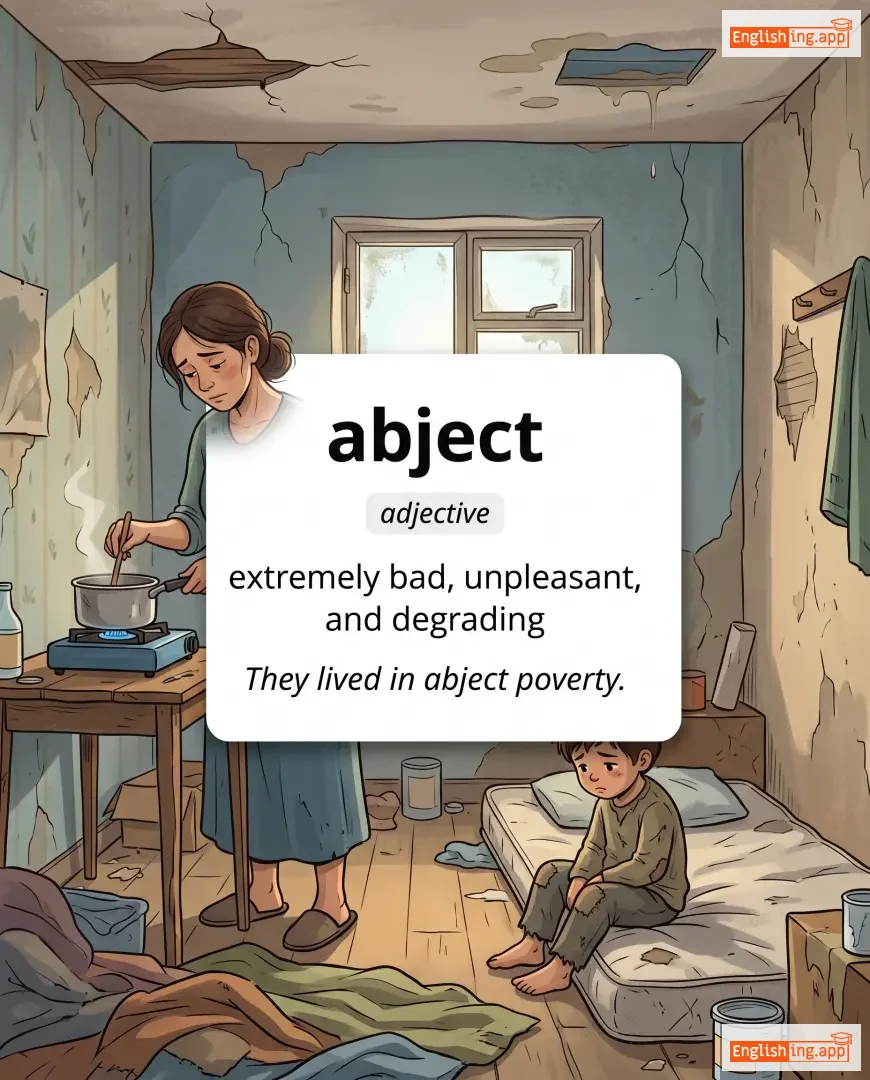
abject definition card — visual illustration of the meaning
adjective
/ˈæbdʒɛkt/
abyecto (abyecto)

extremely bad, unpleasant, and degrading

"They lived in abject poverty."

"Vivían en una pobreza abyecta." (Vivían en una pobreza abyecta.)
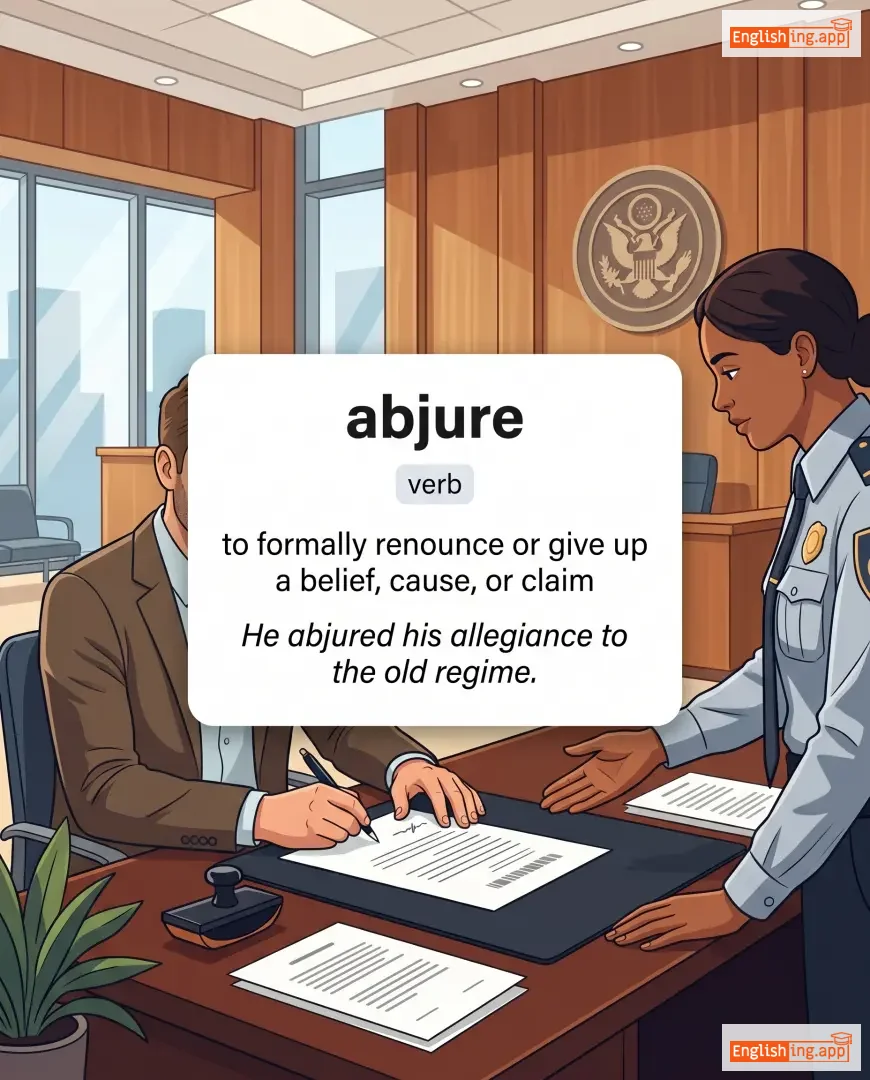
abjure definition card — visual illustration of the meaning
verb
/æbˈdʒʊər/
abjurar (ab-ju-rar)

to formally renounce or give up a belief, cause, or claim

"He abjured his allegiance to the old regime."

"Él renunció a su lealtad al viejo régimen." (El renunció a su lealtad al viejo régimen.)
adjective
/ˈeɪbl/
capaz (capaz)

having the power, skill, or means to do something

"She is able to speak three languages fluently."

"Ella es capaz de hablar tres idiomas con fluidez." (Ella es capaz de hablar tres idiomas con fluidez.)
adjective
/ˌeɪ.bəlˈbɒd.id/
físicamente apto (fisicamente apto)

physically strong and healthy, not disabled

"The company is looking for able-bodied workers for the construction site."

"La empresa está buscando trabajadores físicamente aptos para el sitio de construcción." (La empresa está buscando trabajadores físicamente aptos para el sitio de construcción.)
noun
/əˈbluːʃən/
ablución (ablucion)

the act of washing oneself, often for religious purposes

"He performed his morning ablution before the prayer."

"Él realizó su ablución matutina antes de la oración." (El realizo su ablucion matutina antes de la oracion.)
verb
/ˈæbnɪˌɡeɪt/
renunciar (renunciar)

to deny or renounce something, especially a right or desire

"She chose to abnegate her personal interests for the sake of the team."

"Ella eligió renunciar a sus intereses personales por el bien del equipo." (Ella eligió renunciar a sus intereses personales por el bien del equipo.)
noun
/ˌæbnɪˈɡeɪʃən/
abnegación (abnegacion)

the act of renouncing or rejecting something, especially self-denial

"The monk’s life was one of complete abnegation of worldly pleasures."

"La vida del monje era una de completa abnegación de los placeres mundanos." (La vida del monje era una de completa abnegacion de los placeres mundanos.)
adjective
/æbˈnɔːr.məl/
anormal (anormal)

deviating from what is normal or usual, typically in a way that is undesirable

"The doctor noticed an abnormal growth in the patient’s lung."

"El médico notó un crecimiento anormal en el pulmón del paciente." (El médico notó un crecimiento anormal en el pulmón del paciente.)
noun
/əˈboʊd/
morada (morada)

a place of residence; a home

"They invited us to their humble abode."

"Nos invitaron a su humilde morada." (Nos invitaron a su humilde morada.)
verb
/əˈbɑː.lɪʃ/
abolir (abolir)

to formally put an end to a system, practice, or institution

"The government decided to abolish the old tax system."

"El gobierno decidió abolir el viejo sistema fiscal." (El gobierno decidió abolir el viejo sistema fiscal.)
noun
/ˌæbəˈlɪʃən/
abolición (abolicion)

the act of formally ending or eliminating a system, practice, or institution

"The abolition of slavery was a major milestone in human rights history."

"La abolición de la esclavitud fue un hito importante en la historia de los derechos humanos." (la abolicion de la esclavitud fue un hito importante en la historia de los derechos humanos)
adjective
/əˈbɑː.mə.nə.bəl/
abominable (abominable)

causing moral revulsion; extremely unpleasant

"The prisoners were kept in abominable conditions."

"Los prisioneros fueron mantenidos en condiciones abominables." (Los prisioneros fueron mantenidos en condiciones abominables.)
verb
/əˈbɑː.mə.neɪt/
abominar (abominar)

to feel hatred or loathing for something

"She abominates cruelty to animals."

"Ella abomina la crueldad hacia los animales." (Ella abomina la crueldad hacia los animales.)
noun
/əˌbɑː.məˈneɪ.ʃən/
abominación (abominacion)

a thing that causes disgust or hatred

"Slavery was considered an abomination."

"La esclavitud fue considerada una abominación." (La esclavitud fue considerada una abominacion.)
adjective
/ˌæbəˈrɪdʒənəl/
aborigen (aborijen)

Relating to the original inhabitants of a region.

"The museum has a large collection of aboriginal art."

"El museo tiene una gran colección de arte aborigen." (El museo tiene una gran colección de arte aborigen.)
noun
/ˌæbəˈrɪdʒəniːz/
aborígenes (aborígenes)

The original inhabitants of a land, especially in Australia.

"The aborigines have preserved their traditions for thousands of years."

"Los aborígenes han preservado sus tradiciones durante miles de años." (Los aborígenes han preservado sus tradiciones durante miles de años.)
verb
/əˈbɔːrt/
abortar; cancelar (abortar; cancelar)

to stop a process or action before it is completed; to end a pregnancy deliberately

"The pilot decided to abort the mission due to bad weather."

"El piloto decidió abortar la misión por el mal tiempo." (El piloto decidio abortar la mision por el mal tiempo)
noun
/əˈbɔːrʃən/
aborto (aborto)

The deliberate termination of a human pregnancy, usually performed during the first 28 weeks.

"The debate about abortion continues to divide public opinion."

"El debate sobre el aborto sigue dividiendo la opinión pública." (El debate sobre el aborto sigue dividiendo la opinion publica.)
adjective
/əˈbɔːrtɪv/
fallido (fallido)

Failing to produce the intended result; unsuccessful.

"Their abortive attempt to climb the mountain ended in retreat."

"Su intento abortivo de escalar la montaña terminó en retirada." (Su intento abortivo de escalar la montaña terminó en retirada.)
verb
/əˈbaʊnd/
abundar (abundar)

To exist in large numbers or amounts.

"Opportunities abound in the field of technology."

"Las oportunidades abundan en el campo de la tecnología." (Las oportunidades abundan en el campo de la tecnología.)
preposition, adverb
/əˈbaʊt/
sobre (sobre)

concerning; on the subject of; approximately

"We talked about the new project yesterday."

"Hablamos sobre el nuevo proyecto ayer." (Hablamos sobre el nuevo proyecto ayer.)