词汇表

英语词汇词典 | 单词含义、定义和示例

adverb
/əˈbæk/
吃惊的 (chijing de)

by surprise; unexpectedly

"I was taken aback by his sudden announcement."
"我被他突然的宣布吓到了。" (Wǒ bèi tā túrán de xuānbù xià dào le.)
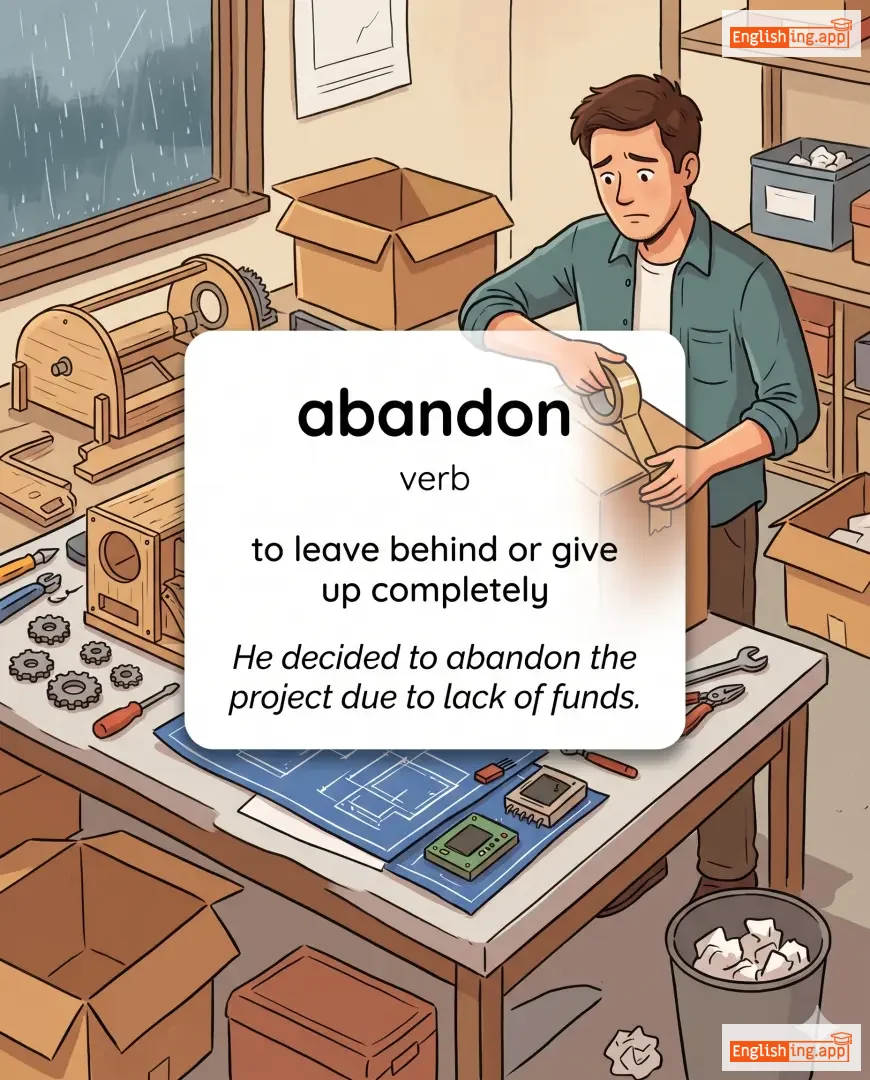
abandon definition card — visual illustration of the meaning
verb
/əˈbændən/
放弃 (fangqi)

to leave behind or give up completely

"He decided to abandon the project due to lack of funds."

"他决定由于缺乏资金而放弃这个项目。" (Ta jueding youyu quefa zijin er fangqi zhege xiangmu.)
noun
/əˈbændənmənt/
遗弃 (yiqi)

the act of leaving someone or something behind completely; the state of being deserted

"The child suffered deep emotional pain because of abandonment."

"由于被遗弃,这个孩子承受了深刻的情感痛苦。" (youyu bei yiqi, zhege haizi chengshoule shenke de qinggan tongku)
verb
/əˈbeɪs/
贬低 (biǎndī)

to belittle or degrade someone

"He refused to abase himself before the king."

"他拒绝在国王面前贬低自己。" (Tā jùjué zài guówáng miànqián biǎndī zìjǐ.)
verb
/əˈbæʃ/
使难堪 (shǐ nánkān)

to make someone feel embarrassed or ashamed

"Her sudden question seemed to abash him."
"她突然的问题似乎让他感到尴尬。" (Tā túrán de wèntí shìhū ràng tā gǎndào gāngà.)
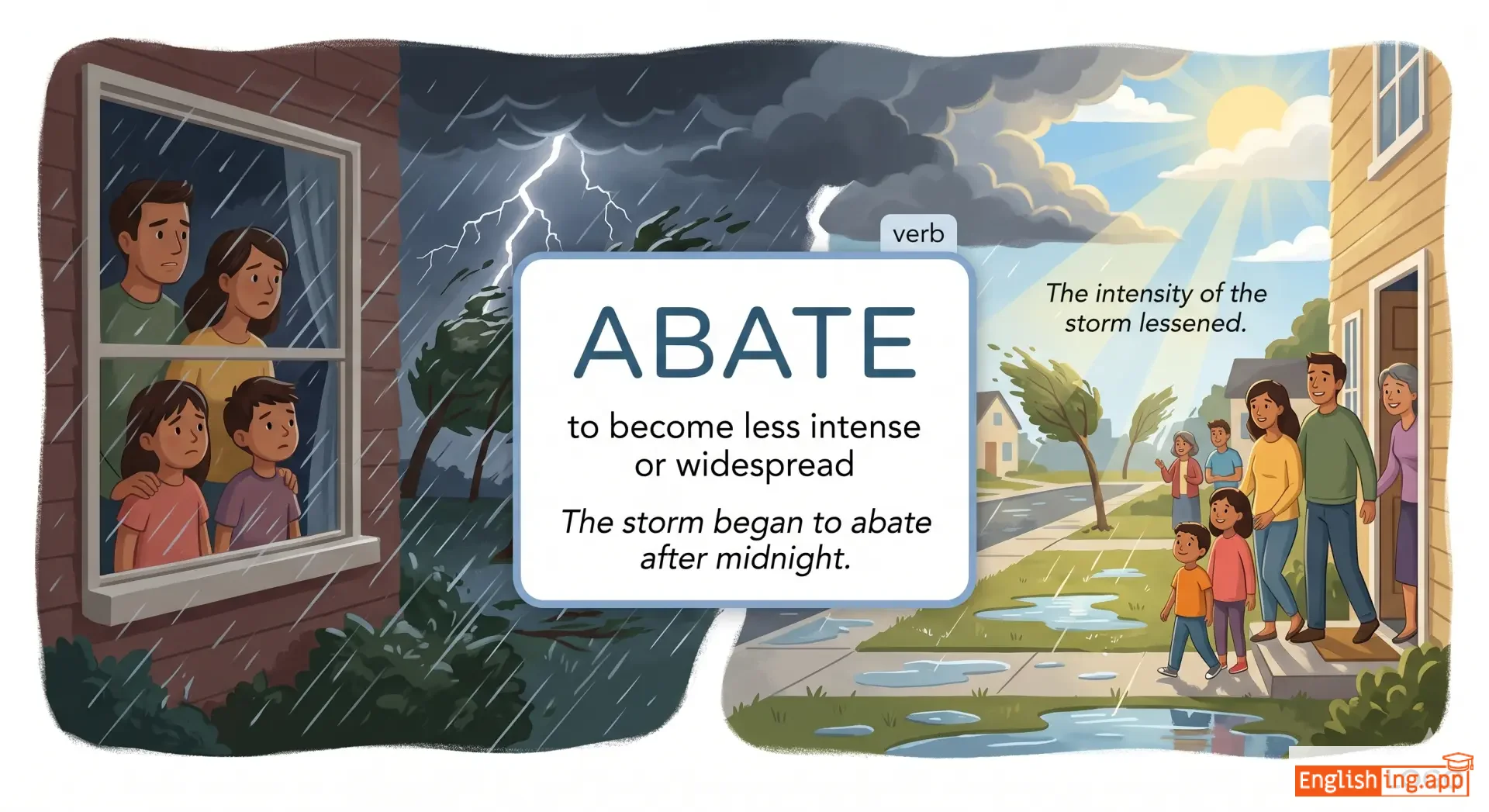
abate definition card — visual illustration of the meaning
verb
/əˈbeɪt/
减少 (jiǎnshǎo)

to become less intense or widespread

"The storm began to abate after midnight."

"暴风雨在午夜后开始减弱。" (Bàofēngyǔ zài wǔyè hòu kāishǐ jiǎnruò.)
noun
/ˈæbɪs/
女修道院院长 (nǚ xiūdào yuàn yuán zhǎng) (nǚ xiūdào yuàn yuán zhǎng)

the woman in charge of a convent of nuns

"The abbess welcomed the visitors to the convent."

"院长欢迎访客到修道院。" (Yuàn zhǎng huānyíng fǎngkè dào xiūdào yuàn.)
noun
/ˈæbi/
修道院 (xiūdàoyuàn)

A large church building or monastery where monks or nuns live, work, and worship.

"The old abbey on the hill attracts many tourists each year."

"山上的老修道院每年吸引着许多游客。" (Shān shàng de lǎo xiūdàoyuàn měi nián xīyǐn zhe xǔduō yóukè.)
noun
/ˈæbət/
院长 (yuàn zhǎng)

The head of a monastery for monks.

"The abbot welcomed the visitors to the monastery."

"院长欢迎游客来到修道院。" (Yuàn zhǎng huānyíng yóukè lái dào xiūdàoyuàn.)
verb
/əˈbriːvieɪt/
缩写 (suōxiě)

To shorten a word, phrase, or text by leaving out letters or parts.

"We often abbreviate 'Doctor' to 'Dr'."

"我们常常把 'Doctor' 缩写成 'Dr.'。" (Wǒmen chángcháng bǎ 'Doctor' suōxiě chéng 'Dr.')
noun
/əˌbriːviˈeɪʃən/
缩写 (suoxie)

a shortened form of a word or phrase

"NASA is an abbreviation for National Aeronautics and Space Administration."

"NASA 是 National Aeronautics and Space Administration 的缩写。" (NASA shi National Aeronautics and Space Administration de suoxie.)
abdicate definition card — visual illustration of the meaning
verb
/ˈæbdɪkeɪt/
放弃王位 (fàngqì wángwèi)

To give up a position of power or responsibility, especially a throne.

"The king decided to abdicate the throne."

"国王决定放弃王位。" (Guówáng juédìng fàngqì wángwèi.)
noun
/ˈæbdəmən/
腹部 (fubu)

The part of the body below the chest and above the hips that contains the stomach and other organs.

"He complained of pain in his abdomen."

"他抱怨腹部疼痛。" (Ta baoyuan fubu tengtong.)
adjective
/æbˈdɑː.mə.nəl/
腹部的 (fù bù de)

relating to the abdomen (the part of the body between the chest and pelvis)

"He complained of severe abdominal pain."

"他抱怨剧烈的腹部疼痛。" (Tā bào yuàn jù liè de fù bù téng tòng.)
verb
/əbˈdʌkt/
绑架 (bangjia)

to take someone away illegally by force or deception

"The criminal tried to abduct the child in broad daylight."

"罪犯试图在光天化日之下绑架那个孩子。" (Zuifan shitu zai guangtianhuari zhixia bangjia nage haizi)
noun
/æbˈdʌk.ʃən/
绑架 (bǎngjià)

the act of taking someone away illegally by force; kidnapping

"The police are investigating the abduction of the child."

"警方正在调查这起儿童绑架案。" (Jǐngfāng zhèngzài diàochá zhè qǐ értóng bǎngjià àn.)
noun
/əbˈdʌktər/
绑架者 (bangjiazhe)

a person who kidnaps or forcibly takes someone away

"The police arrested the abductor after a nationwide search."

"警方在长时间搜查后逮捕了绑架者。" (Jingfang zai chang shijian soucha hou daibu le bangjiazhe)
adverb
/əˈbɛd/
在床上 (zai chuang shang)

in bed

"She stayed abed all day due to illness."
"由于生病,她整天都待在床上。" (Youyu shengbing, ta zheng tian dou dai zai chuang shang.)
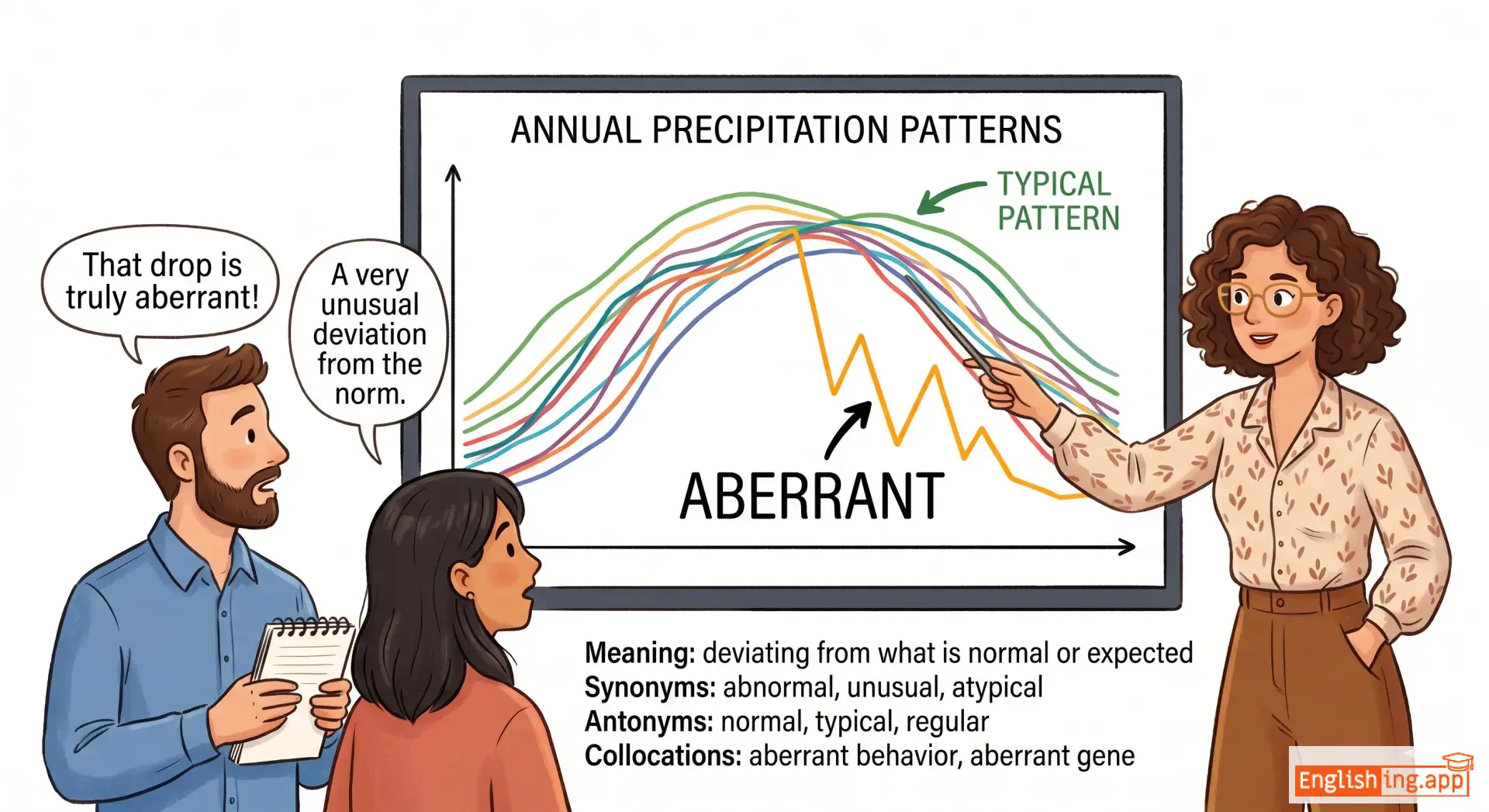
aberrant definition card — visual illustration of the meaning
adjective
/ˈæb.ə.rənt/
异常 (yichang)

deviating from what is normal or expected; abnormal

"His aberrant behavior shocked everyone at the meeting."

"他的异常行为让会议上的每个人都感到震惊。" (Tā de yìcháng xíngwéi ràng huìyì shàng de měi gèrén dōu gǎndào zhènjīng.)
aberration definition card — visual illustration of the meaning
noun
/ˌæb.əˈreɪ.ʃən/
异常 (yichang)

a departure from what is normal, usual, or expected; an anomaly

"The sudden drop in temperature was an aberration for this season."
"温度的突然下降是本季的异常现象。" (Wēndù de túrán xiàjiàng shì běn jì de yìcháng xiànxiàng.)
🕵️

abet

verb
/əˈbɛt/

to encourage or assist someone to commit a crime or wrongdoing

"He was accused of abetting the criminals in their escape."

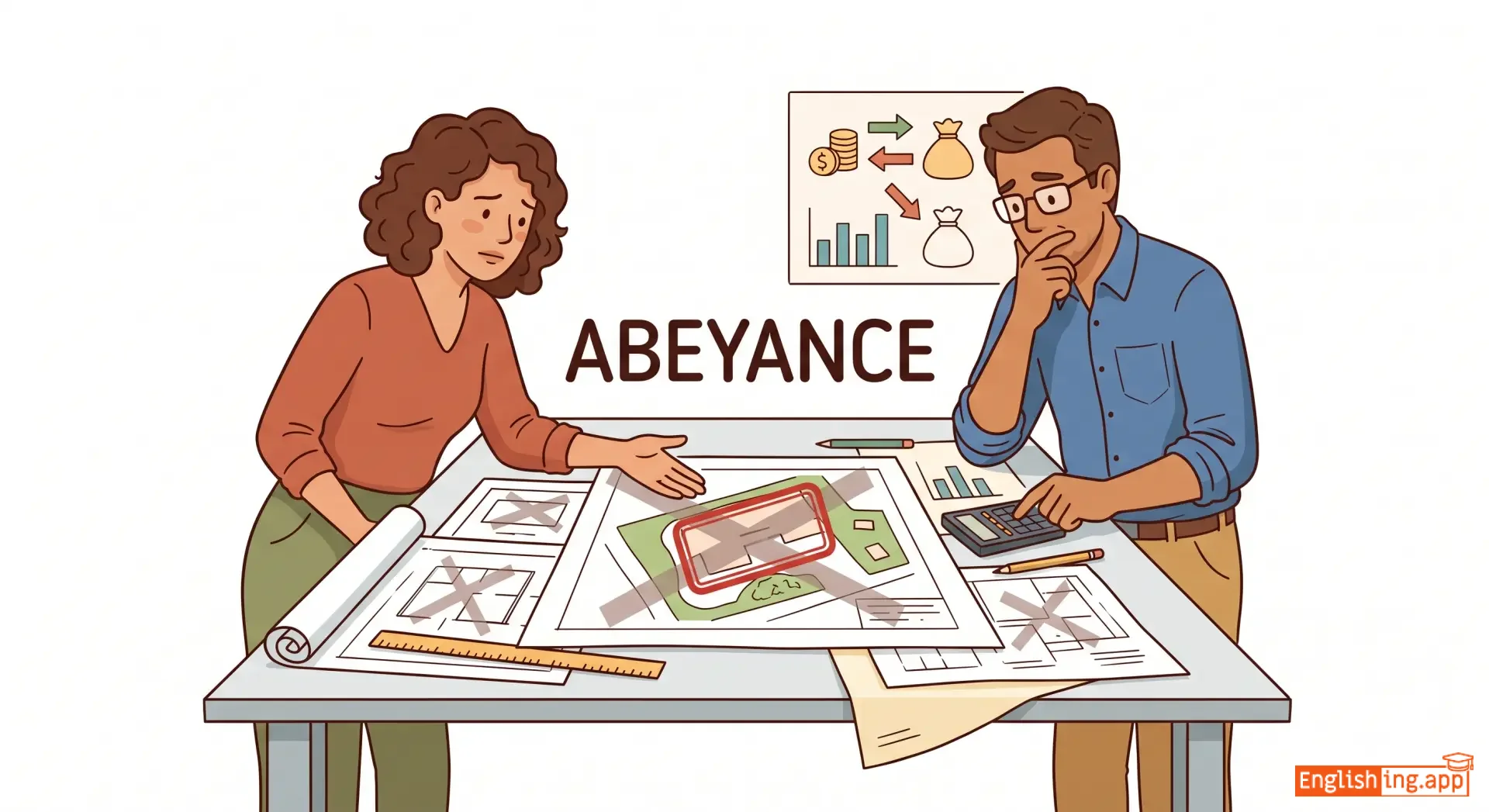
abeyance definition card — visual illustration of the meaning
noun
/əˈbeɪəns/
暂时中止 (zan shi zhong zhi)

a state of temporary suspension or inactivity

"The project was held in abeyance until funds became available."

"该项目已暂停,直到资金可用。" (Gai xiangmu yi zanting, zhidao zijin keyong.)
verb
/əbˈhɔːr/
厌恶 (yànwù)

to regard with disgust and hatred

"She abhors cruelty to animals."

"她厌恶对动物的残忍。" (Tā yànwù duì dòngwù de cánrěn.)
noun
/əbˈhɒrəns/
厌恶 (yanwu)

a feeling of strong disgust or hatred

"He expressed his abhorrence of racial discrimination."

"他表达了对种族歧视的厌恶。" (Ta biaoda le dui zhongzu qishi de yanwu.)
adjective
/əbˈhɒrənt/
令人厌恶的 (lìng rén yànwù de)

causing or deserving strong dislike or hatred

"Such cruelty is abhorrent to civilized society."

"这种残忍对于文明社会令人厌恶。" (Zhè zhǒng cánrěn duì yú wénmíng shèhuì lìng rén yànwù.)
noun
/əˈbaɪdəns/
遵守 (zunshou)

the act of following, accepting, or complying with something

"Her abidance by the rules impressed the committee."

"她遵守规则给委员会留下了深刻印象。" (Ta zunshou guize gei weiyuanhui liuxia le shenke yinxiang.)
verb
/əˈbaɪd/
遵守 (zunshou)

to accept, tolerate, or remain faithful to something

"Citizens must abide by the laws of their country."

"公民必须遵守国家的法律。" (Gongmin bixu zunshou guojia de falü.)
adjective
/əˈbaɪdɪŋ/
持久的 (chíjiǔ de)

lasting for a long time; enduring

"She had an abiding love for her hometown."

"她对故乡有着持久的爱。" (Tā duì gùxiāng yǒuzhe chíjiǔ de ài.)
noun
/əˈbɪləti/
能力 (nengli)

the power, skill, or capacity to do something

"Her ability to solve problems quickly impressed everyone."
"她快速解决问题的能力给所有人留下了深刻的印象。" (Ta kuaisu jiejue wenti de nengli gei suoyouren liuxia le shenke de yinxiang.)
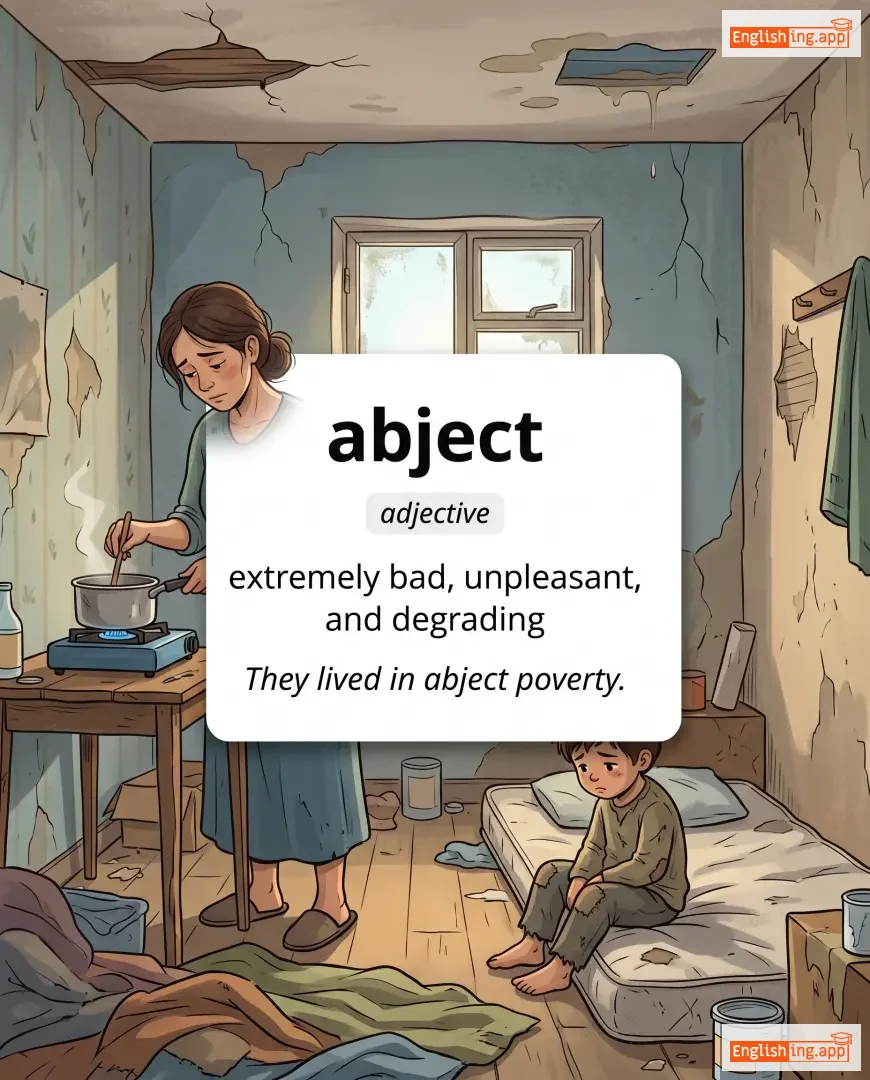
abject definition card — visual illustration of the meaning
adjective
/ˈæbdʒɛkt/
可鄙 (kě bǐ)

extremely bad, unpleasant, and degrading

"They lived in abject poverty."

"他们生活在可鄙的贫困中。" (tāmen shēnghuó zài kě bǐ de pínkùn zhōng.)
abjure definition card — visual illustration of the meaning
verb
/æbˈdʒʊər/
放弃 (fàngqì)

to formally renounce or give up a belief, cause, or claim

"He abjured his allegiance to the old regime."

"他放弃了对旧政权的忠诚。" (Tā fàngqì le duì jiù zhèngquán de zhōngchéng.)
adjective
/ˈeɪbl/
能够 (nénggòu)

having the power, skill, or means to do something

"She is able to speak three languages fluently."

"她能说三种流利的语言。" (Tā néng shuō sān zhǒng liúlì de yǔyán.)
adjective
/ˌeɪ.bəlˈbɒd.id/
身体健康 (shen ti jian kang)

physically strong and healthy, not disabled

"The company is looking for able-bodied workers for the construction site."

"公司正在为建筑工地寻找身体健康的工人。" (Gongsi zheng zai wei jian zhu gong di xun zhao shen ti jian kang de gong ren.)
noun
/əˈbluːʃən/
净身 (jìng shēn)

the act of washing oneself, often for religious purposes

"He performed his morning ablution before the prayer."

"他在祈祷之前进行了早晨的净身。" (Tā zài qídǎo zhīqián jìnxíngle zǎochén de jìng shēn.)
verb
/ˈæbnɪˌɡeɪt/
放弃 (fangqi)

to deny or renounce something, especially a right or desire

"She chose to abnegate her personal interests for the sake of the team."

"她选择为团队的利益放弃个人利益。" (Tā xuǎnzé wèi tuánduì de lìyì fàngqì gèrén lìyì.)
noun
/ˌæbnɪˈɡeɪʃən/
自我否定 (zìwǒ fǒudìng)

the act of renouncing or rejecting something, especially self-denial

"The monk’s life was one of complete abnegation of worldly pleasures."

"僧侣的生活是对世俗快乐的完全自我否定。" (Sēnglǚ de shēnghuó shì duì shìsú kuàilè de wánquán zìwǒ fǒudìng.)
adjective
/æbˈnɔːr.məl/
异常的 (yìcháng de)

deviating from what is normal or usual, typically in a way that is undesirable

"The doctor noticed an abnormal growth in the patient’s lung."

"医生注意到病人肺部出现了异常的生长。" (Yīshēng zhùyì dào bìngrén fèibù chūxiànle yìcháng de shēngzhǎng.)
noun
/əˈboʊd/
住所 (zhùsuǒ)

a place of residence; a home

"They invited us to their humble abode."

"他们邀请我们去他们简朴的住所。" (Tāmen yāoqǐng wǒmen qù tāmen jiǎnpǔ de zhùsuǒ.)
verb
/əˈbɑː.lɪʃ/
废除 (feichu)

to formally put an end to a system, practice, or institution

"The government decided to abolish the old tax system."

"政府决定废除旧的税制。" (Zhèngfǔ juédìng fèichú jiù de shuìzhì.)
noun
/ˌæbəˈlɪʃən/
废除 (feichu)

the act of formally ending or eliminating a system, practice, or institution

"The abolition of slavery was a major milestone in human rights history."

"废除奴隶制是人权历史上的一个重要里程碑。" (feichu nulizhi shi renquan lishishang de yi ge zhongyao lichengbei)
adjective
/əˈbɑː.mə.nə.bəl/
可憎的 (kě zēng de)

causing moral revulsion; extremely unpleasant

"The prisoners were kept in abominable conditions."

"囚犯们被关押在可憎的条件下。" (Qiúfànmen bèi guānyā zài kě zēng de tiáojiàn xià.)
verb
/əˈbɑː.mə.neɪt/
厌恶 (yànwù)

to feel hatred or loathing for something

"She abominates cruelty to animals."

"她厌恶对动物的残忍行为。" (Tā yànwù duì dòngwù de cánrěn xíngwéi.)
noun
/əˌbɑː.məˈneɪ.ʃən/
可憎的事物 (kězēng de shìwù)

a thing that causes disgust or hatred

"Slavery was considered an abomination."

"奴隶制被认为是一种可憎的事物。" (núlì zhì bèi rènwéi shì yī zhǒng kězēng de shìwù.)
adjective
/ˌæbəˈrɪdʒənəl/
土著 (tuzhu)

Relating to the original inhabitants of a region.

"The museum has a large collection of aboriginal art."

"博物馆里有大量的土著艺术收藏。" (Bowuguan li you daliao de tuzhu yishu shoucang.)
noun
/ˌæbəˈrɪdʒəniːz/
土著 (tǔzhù)

The original inhabitants of a land, especially in Australia.

"The aborigines have preserved their traditions for thousands of years."

"土著人已经保护了他们的传统数千年。" (Tǔzhù rén yǐjīng bǎohùle tāmen de chuántǒng shù qiān nián.)
verb
/əˈbɔːrt/
中止;流产 (zhongzhi; liuchan)

to stop a process or action before it is completed; to end a pregnancy deliberately

"The pilot decided to abort the mission due to bad weather."

"由于恶劣天气,飞行员决定中止任务。" (Youyu elie tianqi feixingyuan jueding zhongzhi renwu)
⚖️

abortion

noun
/əˈbɔːrʃən/

The deliberate termination of a human pregnancy, usually performed during the first 28 weeks.

"The debate about abortion continues to divide public opinion."

adjective
/əˈbɔːrtɪv/
失败的 (shibai de)

Failing to produce the intended result; unsuccessful.

"Their abortive attempt to climb the mountain ended in retreat."

"他们登山的失败尝试以撤退告终。" (Tāmen dēngshān de shībài chángshì yǐ chètuì gàozhōng.)
verb
/əˈbaʊnd/
充满 (chongman)

To exist in large numbers or amounts.

"Opportunities abound in the field of technology."

"在技术领域,机会比比皆是。" (Zai jishu lingyu, jihui bibi jieshi.)
preposition, adverb
/əˈbaʊt/
关于 (guanyu)

concerning; on the subject of; approximately

"We talked about the new project yesterday."

"我们昨天谈论了新项目。" (Wǒmen zuótiān tánlùnle xīn xiàngmù.)