词汇表

英语词汇词典 | 单词含义、定义和示例

noun
/kəˈbɑːdi/
废品收购者 (feipin shougouzhe)

a person who collects and sells scrap or recyclable materials, especially in South Asia

"The kabadi came every week to collect old newspapers and bottles."

"废品收购者来收集旧物品。" (feipin shougouzhe lai shouji jiu wupin)
noun
/kəˈdʌm.bə/
卡丹巴树 (kadamba)

A tropical tree with round, fragrant orange flowers, sacred in Hindu culture and associated with Lord Krishna

"The kadamba tree is mentioned frequently in ancient Indian poetry."

"卡丹巴树在古印度诗歌中经常被提及。" (ka dan ba shu zai gu yindu shi ge zhong jing chang bei ti ji)
noun
/kəˈlaɪdəˌskoʊp/
万花筒 (wànhuātǒng)

A toy or instrument with mirrors and colored pieces that create changing patterns when rotated; also used metaphorically for a constantly changing sequence of patterns or elements.

"The city lights turned into a kaleidoscope of colors as the festival began."

"当节日开始时,城市的灯光变成了色彩斑斓的万花筒。" (Dāng jiérì kāishǐ shí, chéngshì de dēngguāng biànchéngle sècǎi bānlán de wànhuātǒng.)
noun
/ˌkæŋɡəˈruː/
袋鼠 (daishu)

A large Australian marsupial with powerful hind legs and a long tail, known for hopping.

"We saw a kangaroo hopping across the road in Australia."

"我们在澳大利亚看到一只袋鼠跳过了马路。" (Wo men zai Aodaliya kan dao yi zhi daishu tiaoguo le malu.)
noun
/ˈkærət/
克拉 (ke la)

A unit for measuring the purity of gold, with 24 karats being pure gold.

"The ring was made of 18-karat gold."

"戒指是由18克拉黄金制成的。" (Jièzhǐ shì yóu 18 kè lā huángjīn zhìchéng de.)
noun
/kəˈrɒn.də/
卡龙达果 (kalongda)

a small dark purple berry-like fruit that is sour and used in pickles

"Karonda is often used to make pickles and preserves."

"卡龙达常用于制作腌菜和果酱。" (kalongda chang yong yu zhi zuo yan cai he guo jiang)
noun
/ˈkedʒ.ə.riː/
凯吉瑞 (kaijirui)

a European dish of cooked rice, fish, and hard-boiled eggs, originally from India

"The breakfast menu featured traditional kedgeree with smoked haddock and eggs."

"早餐菜单上有传统的凯吉瑞,配有烟熏鳕鱼和鸡蛋。" (Zǎocān càidān shàng yǒu chuántǒng de kǎijírùi, pèi yǒu yān xūn xuě yú hé jīdàn.)
adjective
/kiːn/
热衷的, 渴望的 (rèzhōng de, kěwàng de)

Having or showing eagerness or enthusiasm; sharp or highly developed (for senses).

"She is very keen to learn new skills."

"她非常渴望学习新技能。" (Tā fēicháng kěwàng xuéxí xīn jìnéng.)
Keep definition card — visual illustration of the meaning
verb
/kiːp/
保持 (bǎochí)

To hold, retain, or continue to do something.

"She promised to keep the secret."

"她答应保持秘密。" (Tā dāyìng bǎochí mìmì.)
noun
/ˈkiː.pər/
守卫者; 看护人; (shouwei zhe; kanhu ren)

a person whose job it is to guard or take care of something or someone; a goalkeeper

"The zoo keeper fed the animals every morning at eight o'clock."

"动物园管理员每天早上八点喂食动物。" (Dongwuyuan guanliyuan meitian zaoshang badi dian weishi dongwu.)
noun
/ˈkiːpˌseɪk/
纪念品 (jìniànpǐn)

An object kept as a reminder of a person, place, or event.

"She gave me a small locket as a keepsake of our friendship."

"她送给我一个小吊坠,作为我们友谊的纪念品。" (Tā sòng gěi wǒ yīgè xiǎo diàozhuì, zuòwéi wǒmen yǒuyì de jìniànpǐn.)
noun
/kɛn/
知识范围 (zhishi fanwei)

one's range of knowledge or understanding

"Quantum physics is beyond my ken."

"量子物理学超出了我的理解范围。" (Liangzi wulixue chaochu le wode lijie fanwei.)
noun
/ˈken.əl/
狗舍; 养犬或寄养犬的场所 (gǒu shè; yǎng quǎn huò jì yǎng quǎn de chǎng suǒ)

a small shelter for a dog; an establishment for the breeding or boarding of dogs

"The dog slept comfortably in his wooden kennel in the backyard."

"狗狗在后院的木狗舍里舒适地睡着了。" (Gǒu gǒu zài hòuyuàn de mù gǒu shè lǐ shūshì de shuì zháo le.)
noun
/ˈkɜːrtʃɪf/
头巾 (tóujīn)

a piece of cloth worn around the head or neck

"She wore a red kerchief on her head."

"她头上戴着一条红色的头巾。" (Tā tóu shàng dàizhe yītiáo hóngsè de tóujīn.)
noun
/ˈkɜːrnəl/
某物的核心; 坚果或种子的可食部分 (kè nèi ěr)

the central, most important part of something; the edible part of a nut or seed

"The kernel of the argument was about fairness."

"争论的核心是关于公平的。" (Zhēnglùn de héxīn shì guānyú gōngpíng de.)
noun
/ˈker.ə.siːn/
煤油 (meiyou)

a combustible hydrocarbon liquid widely used as a fuel in lamps and heating systems

"The old lamp burned kerosene to provide light during power outages."

"老式的灯燃烧煤油以在停电时提供光源。" (laoshi de deng ranshao meiyou yi zai tingdian shi tigong guangyuan.)
noun
/ˈketʃ.ʌp/
番茄酱 (fānqié jiàng)

a thick sauce made chiefly from tomatoes, vinegar, and spices

"She squeezed some ketchup on her french fries before eating them."
"她在吃薯条前挤了一些番茄酱。" (Tā zài chī shǔtiáo qián jǐle yīxiē fānqié jiàng.)
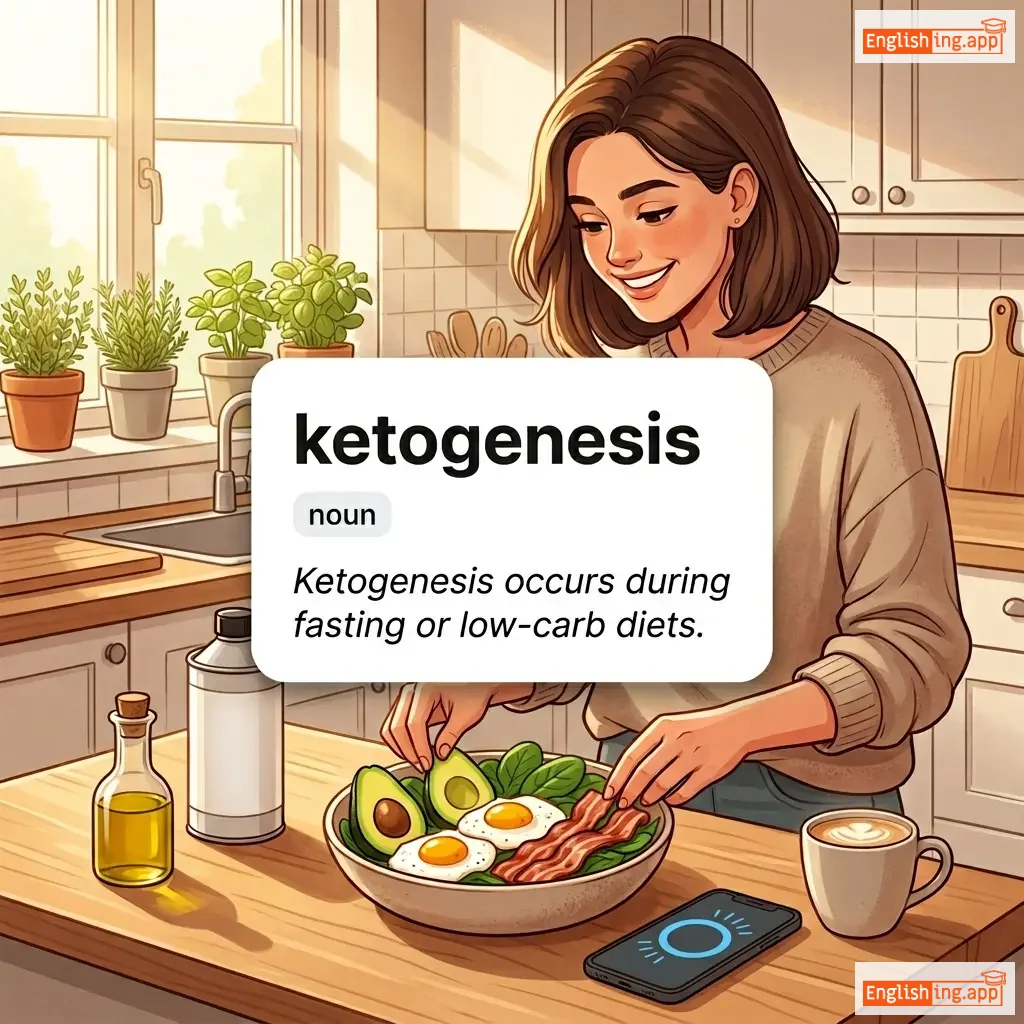
ketogenesis definition card — visual illustration of the meaning
noun
/ˌkiː.təʊˈdʒen.ɪ.sɪs/
酮体生成过程 (tóngtǐ shēngchéng guòchéng)

The metabolic process by which the liver produces ketones from fatty acids, providing an alternative energy source during low carbohydrate availability.

"Ketogenesis occurs during fasting or low-carb diets."

"酮生成发生在禁食或低碳水化合物饮食时。" (Tóngshēngchéng fāshēng zài jìnshí huò dī tànshuǐ huàhéwù yǐnshí shí.)
noun
/ˈket.əl/
水壶 (shuǐ hú)

a container with a lid, spout, and handle, used for boiling water

"The kettle is boiling on the stove."

"水壶正在炉子上沸腾。" (Shuǐ hú zhèngzài lúzi shàng fèiténg.)
noun
/kiː/
钥匙 (yaoshi)

A small piece of shaped metal used to open or close locks, or something crucial and essential.

"She lost the key to her apartment."

"她丢失了她公寓的钥匙。" (Ta diushi le ta gongyu de yaoshi.)
noun
/ˈkiːbɔːrd/
键盘 (jianpan)

a set of keys used to operate a computer, typewriter, or similar device for inputting text and commands

"She typed the report quickly on her keyboard."
"她在键盘上快速打完了报告。" (ta zai jianpan shang kuaisu da wan le baogao)
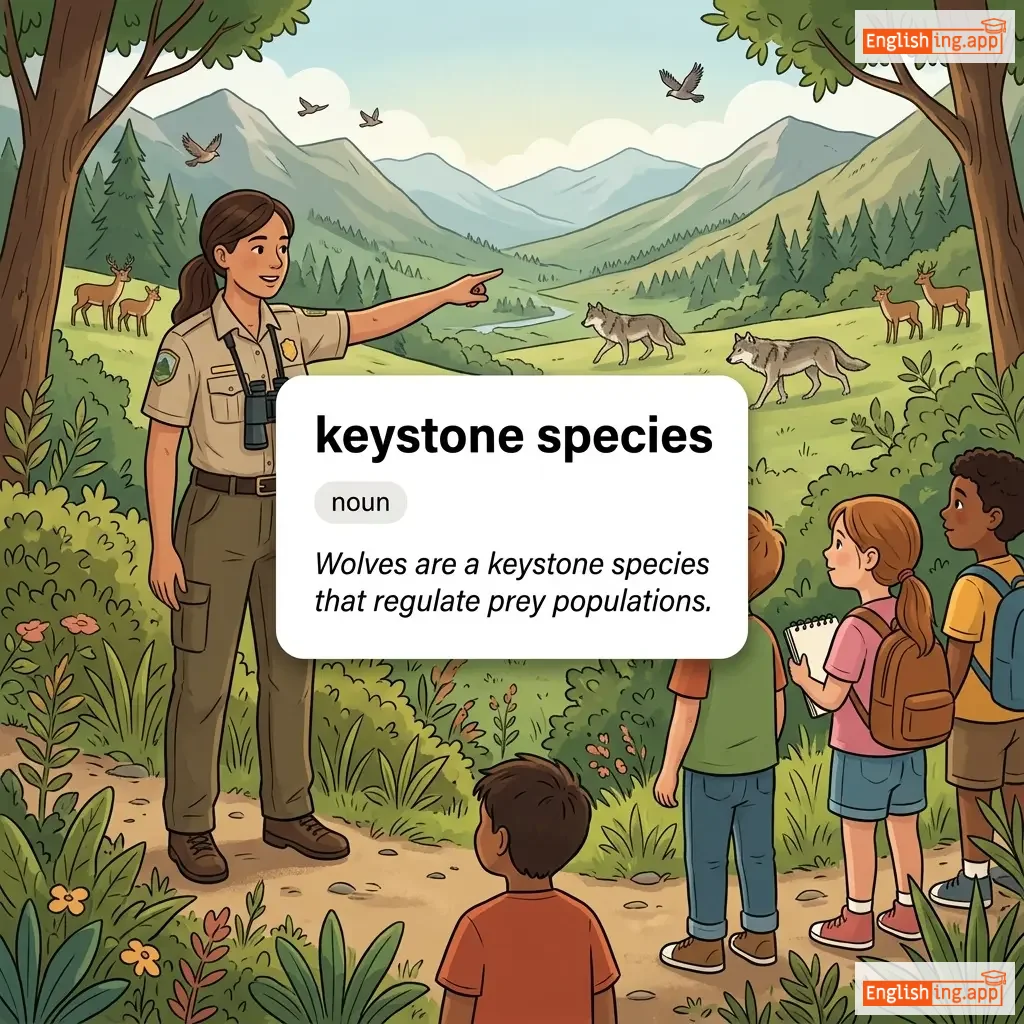
keystone species definition card — visual illustration of the meaning
noun
ˈkiː.stəʊn ˈspiː.ʃiːz
基石物种 (jī shí wù zhǒng)

A species on which other species in an ecosystem largely depend, such that if it were removed the ecosystem would change drastically.

"Wolves are a keystone species that regulate prey populations."
"狼是调节猎物种群的基石物种。" (Láng shì tiáojié lièwù zhǒngqún de jīshí wùzhǒng.)
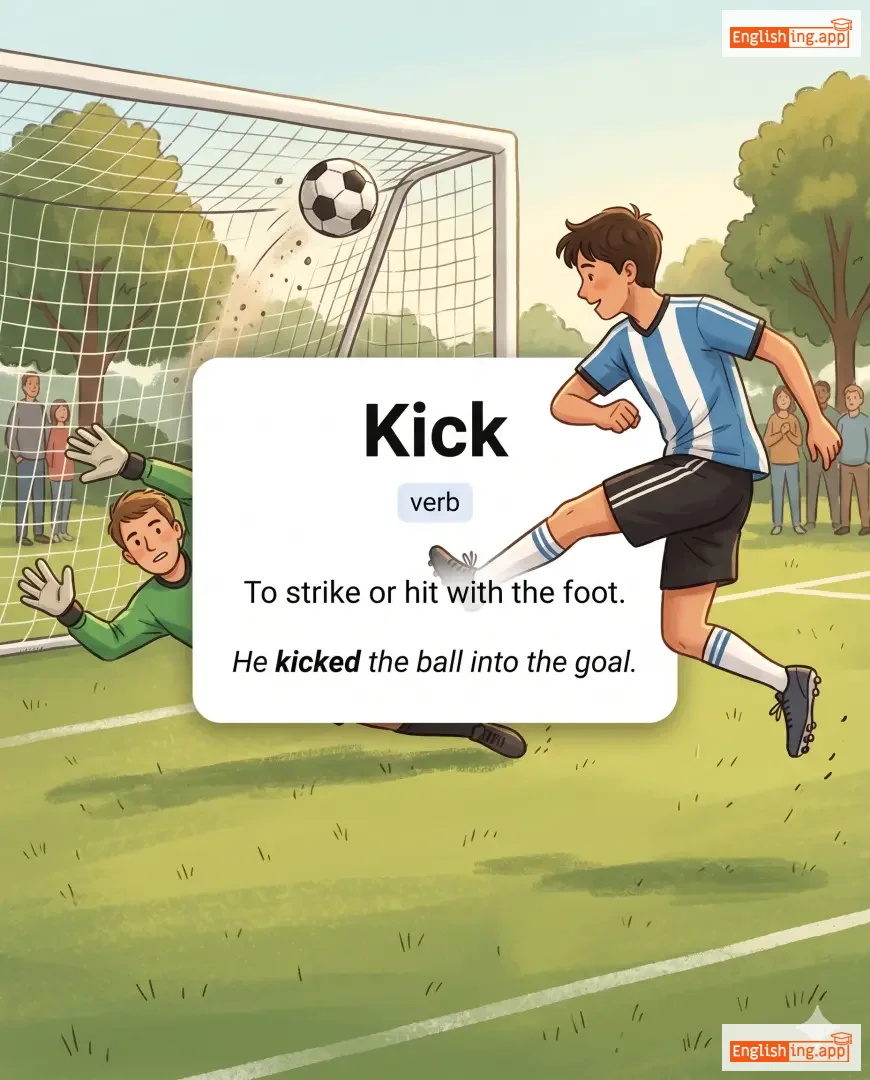
Kick definition card — visual illustration of the meaning
verb
/kɪk/
(ti)

To strike or hit with the foot.

"He kicked the ball into the goal."

"他把球踢进了球门。" (Ta ba qiu ti jinle qiumen.)
noun
/kɪd/
孩子 (haizi)

A child or young person.

"The kid was playing in the park."

"那个孩子在公园里玩。" (Na ge haizi zai gongyuan li wan.)
kidnap definition card — visual illustration of the meaning
verb
/ˈkɪdnæp/
绑架 (bǎngjià)

to take someone away illegally by force, often for ransom

"The criminals planned to kidnap the wealthy businessman."

"罪犯计划绑架富有的商人。" (Zuìfàn jìhuà bǎngjià fùyǒu de shāngrén.)
noun
/ˈkɪdni/
肾脏 (shen zang)

a pair of organs in the body that remove waste products from the blood and balance bodily fluids

"The kidney plays a crucial role in filtering waste from the bloodstream."
"肾脏在过滤血液中的废物方面发挥着关键作用。" (Shen zang zai guo lv xue ye zhong de fei wu fang mian fa hui zhe guan jian zuo yong.)
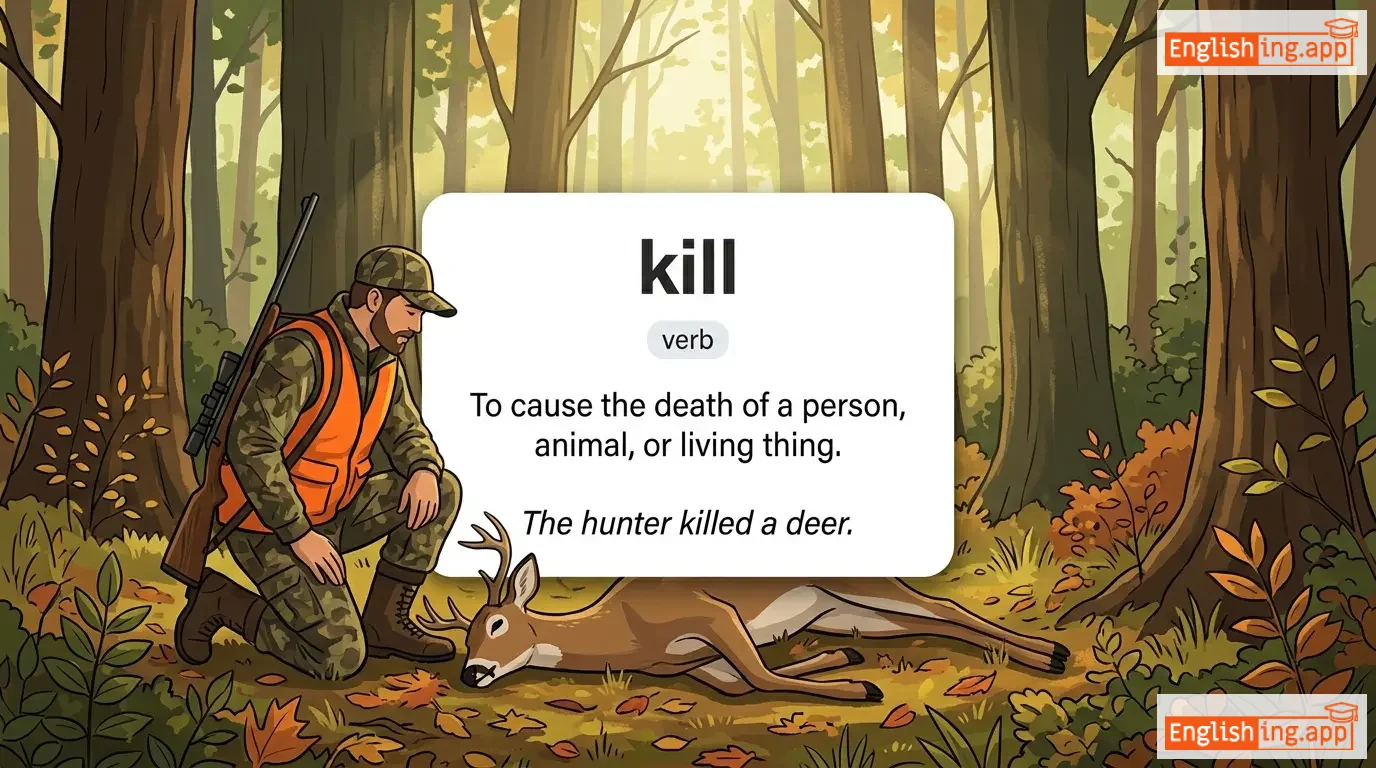
kill definition card — visual illustration of the meaning
verb
/kɪl/
(sha)

To cause the death of a person, animal, or living thing.

"The hunter killed a deer."

"猎人杀了一只鹿。" (Lie ren sha le yi zhi lu.)
noun
/ˈkɪlər/
杀手 (shāshǒu)

A person or thing that kills.

"The police caught the killer last night."

"警察昨晚抓住了杀手。" (Jǐngchá zuówǎn zhuā zhù le shāshǒu.)
noun
/ˈkɪlɪŋ/
谋杀 (móushā)

the act of causing death, especially deliberately

"The movie depicts the brutal killing of the villagers."

"电影描绘了村民的残忍谋杀。" (Diànyǐng miáohuìle cūnmín de cánrěn móushā.)
noun
/ˈkɪldʒɔɪ/
扫兴的人 (sǎo xìng de rén)

a person who spoils the fun or enjoyment of others

"Don’t be a killjoy at the party."

"别在派对上当扫兴的人。" (Bié zài pàiduì shàng dāng sǎo xìng de rén.)
noun
/kɪln/
窑炉 (yao lu)

a furnace or oven for burning, baking, or drying, especially one for firing pottery or bricks

"The potter placed the clay pots into the kiln for firing."

"陶工将泥土罐放入窑炉中烧制。" (Táo gōng jiāng nítǔ guàn fàng rù yáo lú zhōng shāo zhì.)
noun
/ˈkɪləɡræm/
千克 (qianke)

the base unit of mass in the metric system equal to 1,000 grams

"The bag of rice weighs five kilograms."

"这袋米重五千克。" (zhe dai mi zhong wu qianke)
noun
/ˈkɪləˌliːtər/
千升 (qian sheng)

a unit of capacity equal to 1,000 liters

"The tank can hold up to three kiloliters of water."

"水箱最多可容纳三千升水。" (Shuǐxiāng zuìduō kě róngnà sān qiān shēng shuǐ.)
noun
/kɪˈlɒmɪtər/ or /ˈkɪləˌmiːtər/
千米 (qian mi)

a unit of length equal to 1,000 meters

"The village is about five kilometers away from the town."

"这个村庄离城镇大约五千米远。" (Zhège cūnzhuāng lí chéngzhèn dàyuē wǔ qiān mǐ yuǎn.)
noun
/ˈkɪləˌwɒt/
千瓦 (qianwa)

a unit of power equal to 1,000 watts

"The generator produces ten kilowatts of electricity."

"发电机产生十千瓦的电力。" (Fādiànjī chǎnshēng shí qiānwǎ de diànlì.)
noun
/kɪˈməʊnoʊ/
和服 (héfú)

a traditional Japanese robe with wide sleeves, tied with a sash

"She wore a beautiful silk kimono at the ceremony."

"她在仪式上穿着一件美丽的丝绸和服。" (Tā zài yíshì shàng chuānzhuó yī jiàn měilì de sīchóu héfú.)
noun
家庭; 亲戚; (jiating; qinqi;)
adjective/noun
/kaɪnd/
种类 / 友善 (zhǒnglèi / yǒushàn)

A type or category; showing a gentle, considerate nature.

"She is very kind to her neighbors."

"她对邻居非常友善。" (Tā duì línjū fēicháng yǒushàn.)
adjective
/ˌkaɪnd ˈhɑːrtɪd/
善良的 (shanliang de)

Having a kind and generous nature; showing compassion and care for others.

"She is known as a kind-hearted teacher who always helps her students."

"她作为一位善良的老师而闻名,总是帮助她的学生。" (Tā zuòwéi yī wèi shànliáng de lǎoshī ér wénmíng, zǒng shì bāngzhù tā de xuéshēng.)
noun
/ˈkɪndərˌɡɑːrtn/
幼儿园 (you eryuan)

a school or class for young children, typically between the ages of four and six

"She enrolled her child in kindergarten to prepare for elementary school."
"她把孩子注册进了幼儿园,为小学做准备。" (Ta ba haizi zhuce jinle youeryuan, wei xiaoxue zuo zhunbei.)
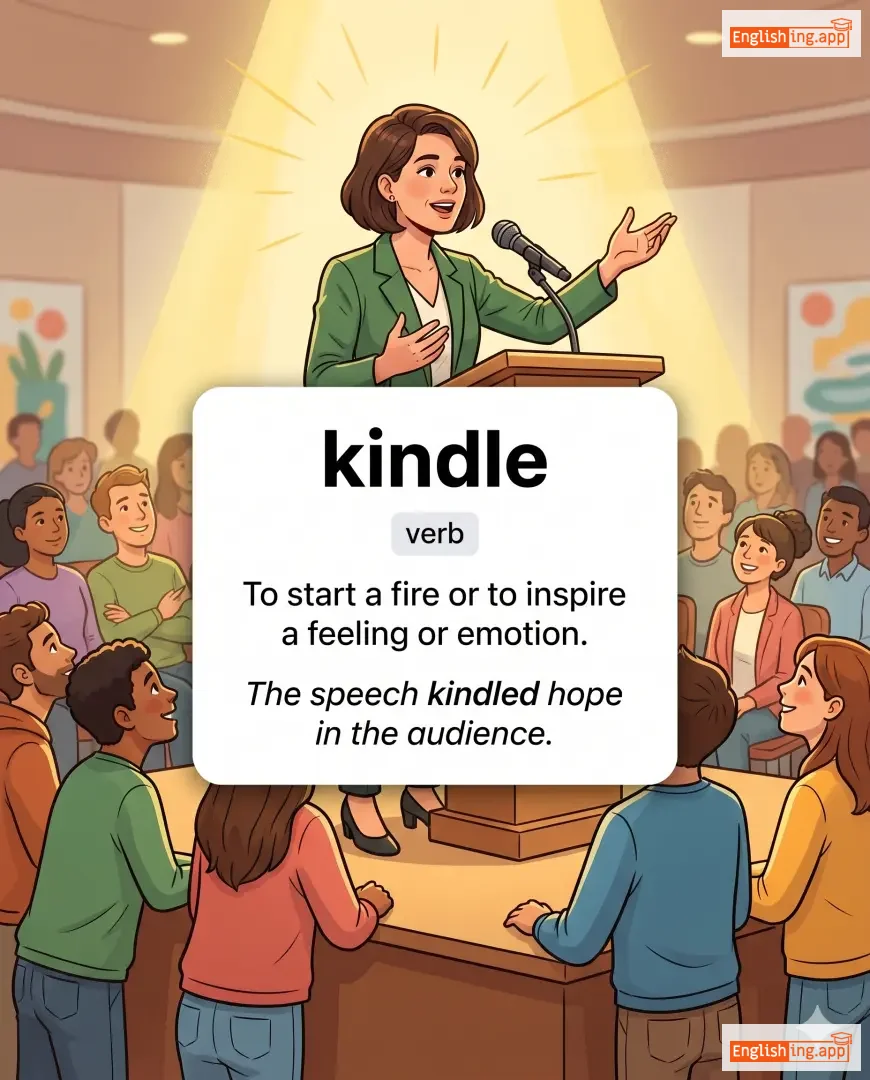
kindle definition card — visual illustration of the meaning
verb
/ˈkɪndl̩/
点燃 / 激发 (diǎn rán / jī fā)

To start a fire or to inspire a feeling or emotion.

"The speech kindled hope in the audience."

"演讲点燃了观众的希望。" (Yǎnjiǎng diǎn rán le guānzhòng de xīwàng.)
adverb; adjective
/ˈkaɪndli/
亲切地 (qinqie de)

in a kind or gentle manner; showing kindness or goodwill

"She kindly helped the old man cross the street."

"她亲切地帮助老人过马路。" (ta qinqie de bangzhu laoren guo malu)
noun
善良; 仁慈; 善意 (shànliáng; réncí; shànyì)
👨‍👩‍👧‍👦

kindred (happiness)

noun, adjective
/ˈkɪndrəd/
幸福 (xingfu)

A person's relatives or family; similar in nature or character.

"They discovered kindred spirits in each other."

"当她收到奖项时,她无法掩饰自己的幸福。" (Dāng tā shōu dào jiǎngxiàng shí, tā wúfǎ yǎnshì zìjǐ de xìngfú.)
adjective
/kɪˈnɛtɪk/
动能 (dong neng)

Relating to or resulting from motion.

"Kinetic energy increases as the object moves faster."

"随着物体移动得更快,动能增加。" (Suizhe wuti yidong de geng kuai, dongneng zengjia.)
noun
/kɪŋ/
国王 (guowang)

the male ruler of an independent state, especially one who inherits the position by right of birth

"The king ruled the country with wisdom and fairness."

"国王以智慧和公正治理国家。" (Guowang yi zhihui he gongzheng zhili guojia.)
noun
/ˈkɪŋ.fɪʃ.ər/
翠鸟 (cuìniǎo)

a small bird with bright blue and orange feathers that catches fish by diving into water

"The colorful kingfisher dove into the pond to catch a fish."

"五彩斑斓的翠鸟潜入池塘抓鱼。" (Wǔcǎi bānlán de cuìniǎo qián rù chítáng zhuā yú.)
noun
/ˈkɪŋdəm/
王国 (wángguó)

a country or territory ruled by a king or queen

"The kingdom was known for its rich culture and traditions."

"这个王国以其丰富的文化和传统而闻名。" (Zhège wángguó yǐ qí fēngfù de wénhuà hé chuántǒng ér wénmíng.)
noun
/ˈkɪŋɡlɪŋ/
小国王 (xiǎo guówáng)

A minor or petty king; a ruler of small importance.

"The kingling demanded respect from his people despite his small realm."

"那个小国王尽管有一个小王国,但他要求人民尊敬他。" (Nàgè xiǎo guówáng jǐnguǎn yǒu yīgè xiǎo wángguó, dàn tā yāoqiú rénmín zūnjìng tā.)
noun
/ˈkɪŋʃɪp/
王权 (wángquán)

The position, dignity, or authority of a king.

"The king’s advisors often reminded him of the responsibilities of kingship."

"国王的顾问们经常提醒他王权的责任。" (Guówáng de gùwèn men jīngcháng tíxǐng tā wángquán de zérèn.)