語彙集

英単語辞書 | 単語の意味、定義、例文

noun
/kəˈbɑːdi/
廃品回収業者 (haipin kaishuu gyousha)

a person who collects and sells scrap or recyclable materials, especially in South Asia

"The kabadi came every week to collect old newspapers and bottles."

"廃品回収業者は古い物を集めます。" (haipin kaishuu gyousha wa furui mono o atsumemasu)
noun
/kəˈdʌm.bə/
カダンバの木 (kadamba no ki)

A tropical tree with round, fragrant orange flowers, sacred in Hindu culture and associated with Lord Krishna

"The kadamba tree is mentioned frequently in ancient Indian poetry."

"カダンバの木は古代インドの詩で頻繁に言及される。" (Kadamba no ki wa kodai Indo no shi de hinpan ni genkyuu sareru.)
noun
/kəˈlaɪdəˌskoʊp/
万華鏡 (banka-kyou)

A toy or instrument with mirrors and colored pieces that create changing patterns when rotated; also used metaphorically for a constantly changing sequence of patterns or elements.

"The city lights turned into a kaleidoscope of colors as the festival began."

"祭りが始まると、街の明かりは色とりどりの万華鏡に変わった。" (Matsuri ga hajimaru to, machi no akari wa irotoridori no banka-kyou ni kawatta.)
noun
/ˌkæŋɡəˈruː/
カンガルー (kangarū)

A large Australian marsupial with powerful hind legs and a long tail, known for hopping.

"We saw a kangaroo hopping across the road in Australia."

"オーストラリアでカンガルーが道路を跳ねるのを見ました。" (Ōsutoraria de kangarū ga dōro o haneru no o mimashita.)
noun
/ˈkærət/
カラット (karatto)

A unit for measuring the purity of gold, with 24 karats being pure gold.

"The ring was made of 18-karat gold."

"その指輪は18カラットの金で作られていました。" (Sono yubiwa wa 18 karatto no kin de tsukurarete imashita.)
noun
/kəˈrɒn.də/
カロンダ (karonda)

a small dark purple berry-like fruit that is sour and used in pickles

"Karonda is often used to make pickles and preserves."

"カロンダは、ピクルスや保存食を作るのによく使われます。" (Karonda wa, pikurusu ya hozonshoku o tsukuru no ni yoku tsukaimasu)
noun
/ˈkedʒ.ə.riː/
ケジリー (kejirī)

a European dish of cooked rice, fish, and hard-boiled eggs, originally from India

"The breakfast menu featured traditional kedgeree with smoked haddock and eggs."

"朝食のメニューには、スモークハドックと卵が入った伝統的なケジリーがありました。" (Chōshoku no menyū ni wa, sumōku hadokku to tamago ga haitta dentō-teki na kejirī ga arimashita.)
adjective
/kiːn/
熱心な、積極的な (nesshin na, sekkyokuteki na)

Having or showing eagerness or enthusiasm; sharp or highly developed (for senses).

"She is very keen to learn new skills."
"彼女は新しいスキルを学ぶことに非常に熱心です。" (Kanojo wa atarashī sukiru o manabu koto ni hijō ni nesshin desu.)
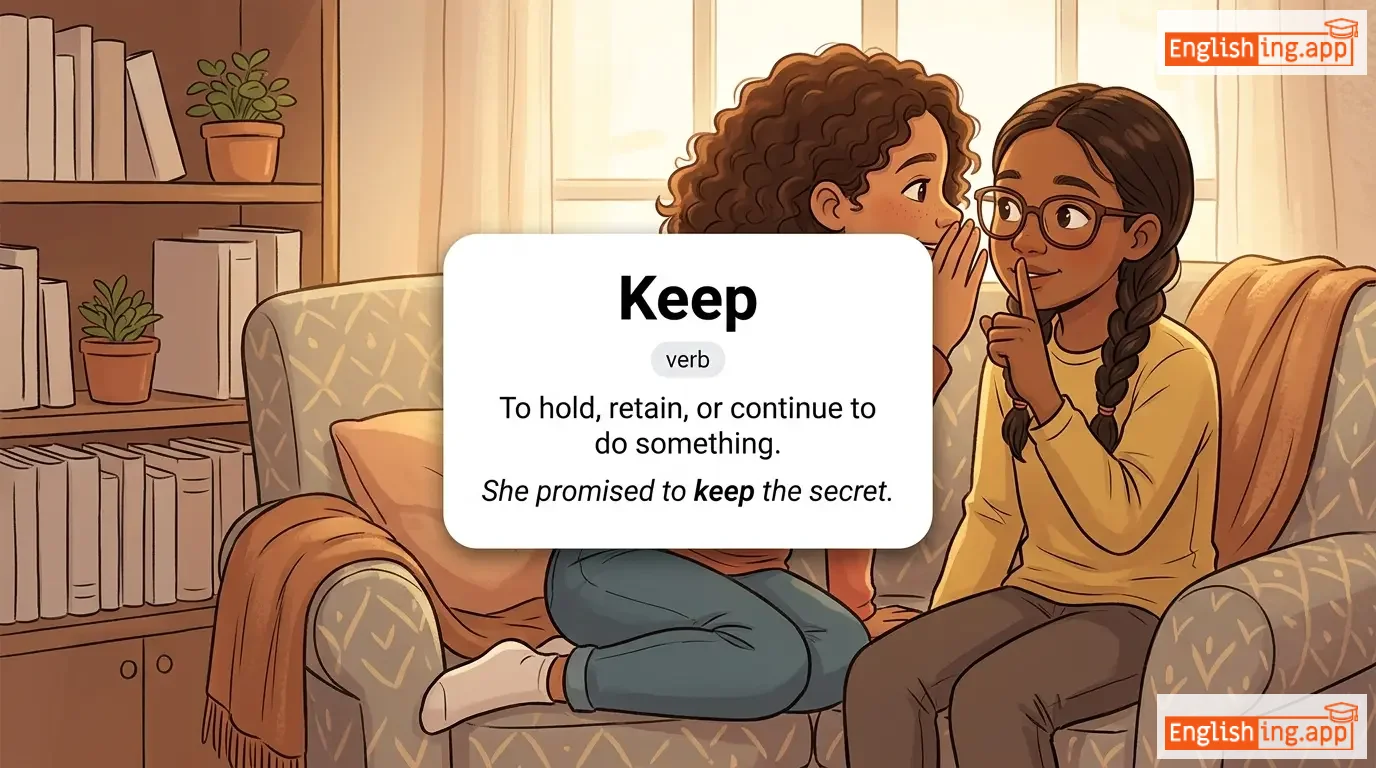
Keep definition card — visual illustration of the meaning
verb
/kiːp/
保つ (tamotsu)

To hold, retain, or continue to do something.

"She promised to keep the secret."

"彼女は秘密を守ると約束しました。" (Kanojo wa himitsu o mamoru to yakusoku shimashita.)
noun
/ˈkiː.pər/
守衛; 飼育係; (shuei; shiikugakari)

a person whose job it is to guard or take care of something or someone; a goalkeeper

"The zoo keeper fed the animals every morning at eight o'clock."

"動物園のキーパーは毎朝8時に動物たちに餌を与えていました。" (Doubutsuen no kiipaa wa mai asa 8 ji ni doubutsutachi ni esa o ataeteimashita.)
noun
/ˈkiːpˌseɪk/
記念品 (kinenhin)

An object kept as a reminder of a person, place, or event.

"She gave me a small locket as a keepsake of our friendship."

"彼女は私たちの友情の記念として小さなロケットをくれました。" (Kanojo wa watashitachi no yūjō no kinen toshite chiisana roketto o kuremashita.)
noun
/kɛn/
理解の範囲 (rikai no han'i)

one's range of knowledge or understanding

"Quantum physics is beyond my ken."

"量子物理学は私の理解を超えています。" (Ryoushi butsuri gaku wa watashi no rikai wo koeteimasu.)
noun
/ˈken.əl/
犬小屋; 犬の繁殖や預かりを行う施設 (inugoya; inu no hanshoku ya azukari o okonau shisetsu)

a small shelter for a dog; an establishment for the breeding or boarding of dogs

"The dog slept comfortably in his wooden kennel in the backyard."

"犬は裏庭の木製のケネルで快適に寝ていました。" (Inu wa uraniwa no mokusei no kenel de kaiteki ni nete imashita.)
noun
/ˈkɜːrtʃɪf/
バンダナ (bandana)

a piece of cloth worn around the head or neck

"She wore a red kerchief on her head."

"彼女は頭に赤いバンダナを巻いていました。" (Kanojo wa atama ni akai bandana o maiteimashita.)
noun
/ˈkɜːrnəl/
何かの中心; ナッツや種子の食べられる部分 (kāneru)

the central, most important part of something; the edible part of a nut or seed

"The kernel of the argument was about fairness."

"議論の核心は公平についてでした。" (Giron no kakushin wa kōhei ni tsuite deshita.)
noun
/ˈker.ə.siːn/
ケロシン (keroshin)

a combustible hydrocarbon liquid widely used as a fuel in lamps and heating systems

"The old lamp burned kerosene to provide light during power outages."

"古いランプは停電中に光を提供するためにケロシンを燃やしていました。" (Furui ranpu wa teiden-chuu ni hikari wo teikyou suru tame ni keroshin wo moyashite imashita.)
noun
/ˈketʃ.ʌp/
ケチャップソース (kechappu sōsu)

a thick sauce made chiefly from tomatoes, vinegar, and spices

"She squeezed some ketchup on her french fries before eating them."
"彼女はフレンチフライにケチャップをかけてから食べました。" (Kanojo wa furenchi furai ni kechappu o kakete kara tabemashita.)
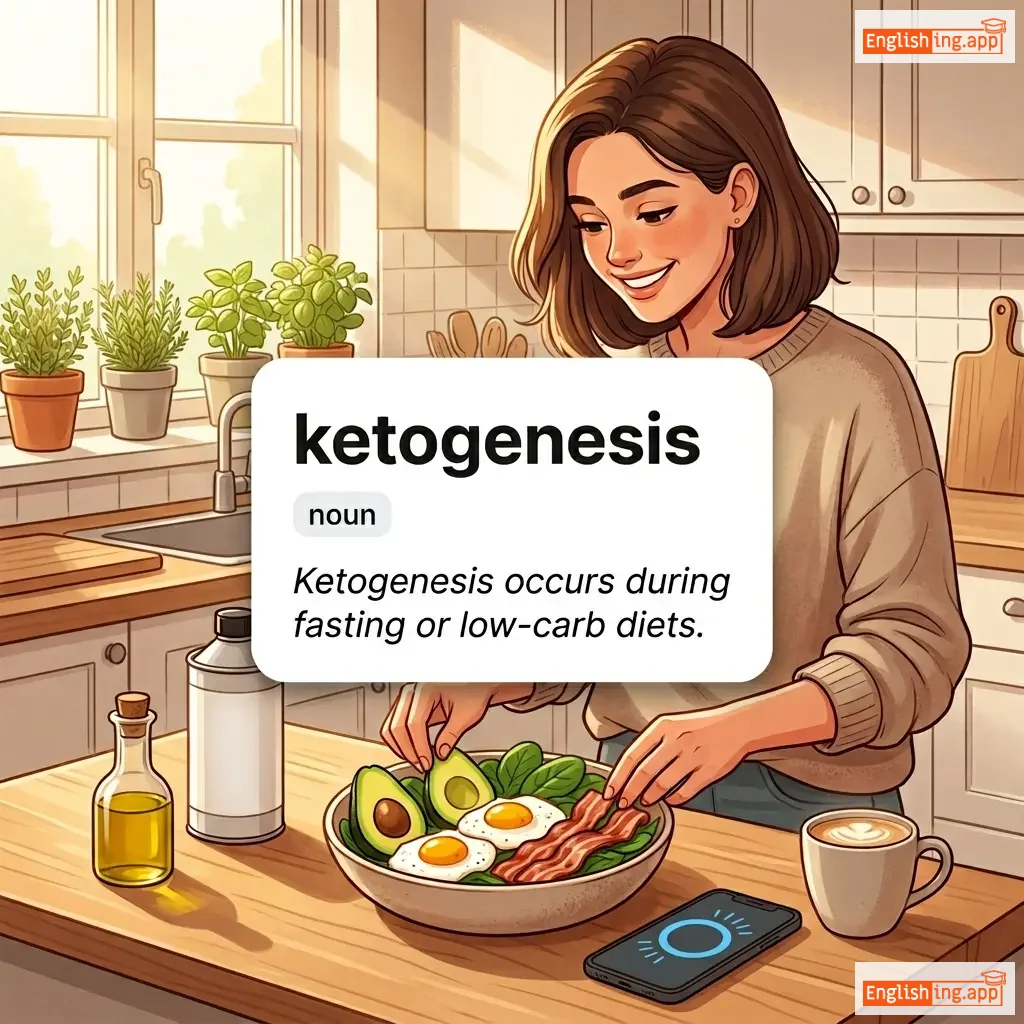
ketogenesis definition card — visual illustration of the meaning
noun
/ˌkiː.təʊˈdʒen.ɪ.sɪs/
ケトン生成過程 (keton seisei katei)

The metabolic process by which the liver produces ketones from fatty acids, providing an alternative energy source during low carbohydrate availability.

"Ketogenesis occurs during fasting or low-carb diets."

"ケトジェネシスは断食や低炭水化物ダイエット中に発生します。" (Ketogenesu wa danjiki ya tei tansui kabu daietto chū ni hassei shimasu.)
noun
/ˈket.əl/
ケトル (ketoru)

a container with a lid, spout, and handle, used for boiling water

"The kettle is boiling on the stove."

"ケトルはコンロで沸騰しています。" (Ketoru wa konro de futtō shiteimasu.)
noun
/kiː/
(ken)

A small piece of shaped metal used to open or close locks, or something crucial and essential.

"She lost the key to her apartment."

"彼女は自分のアパートの鍵をなくした。" (Kanojo wa jibun no apāto no kagi o nakushita.)
noun
/ˈkiːbɔːrd/
キーボード (kiiboodo)

a set of keys used to operate a computer, typewriter, or similar device for inputting text and commands

"She typed the report quickly on her keyboard."
"彼女はキーボードで素早くレポートを入力した。" (kanojo wa kiiboodo de subayaku repooto o nyuryoku shita)
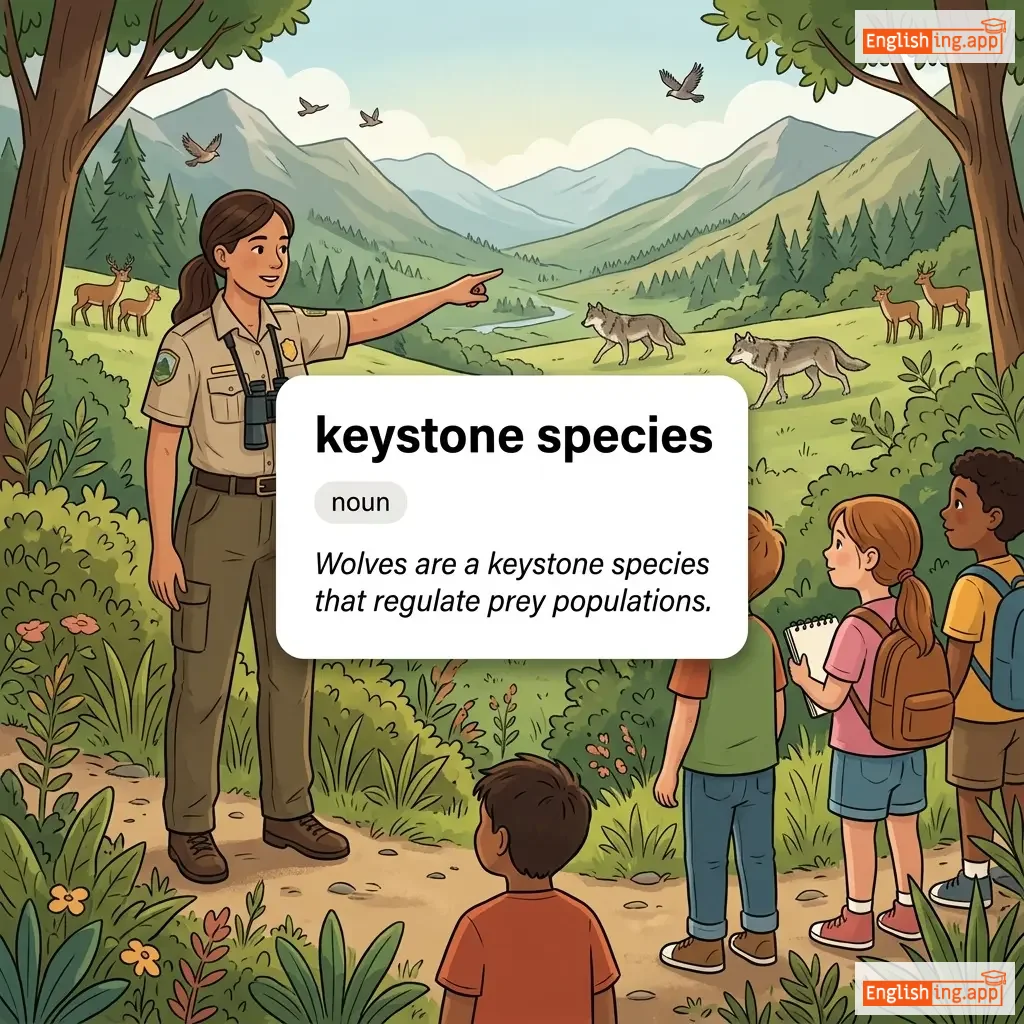
keystone species definition card — visual illustration of the meaning
noun
ˈkiː.stəʊn ˈspiː.ʃiːz
キーストーン種 (kiisutōn-shu)

A species on which other species in an ecosystem largely depend, such that if it were removed the ecosystem would change drastically.

"Wolves are a keystone species that regulate prey populations."
"オオカミは獲物の個体数を調整するキーストーン種です。" (Ōkami wa emono no kotaisū o chōsei suru kiisutōn-shu desu.)
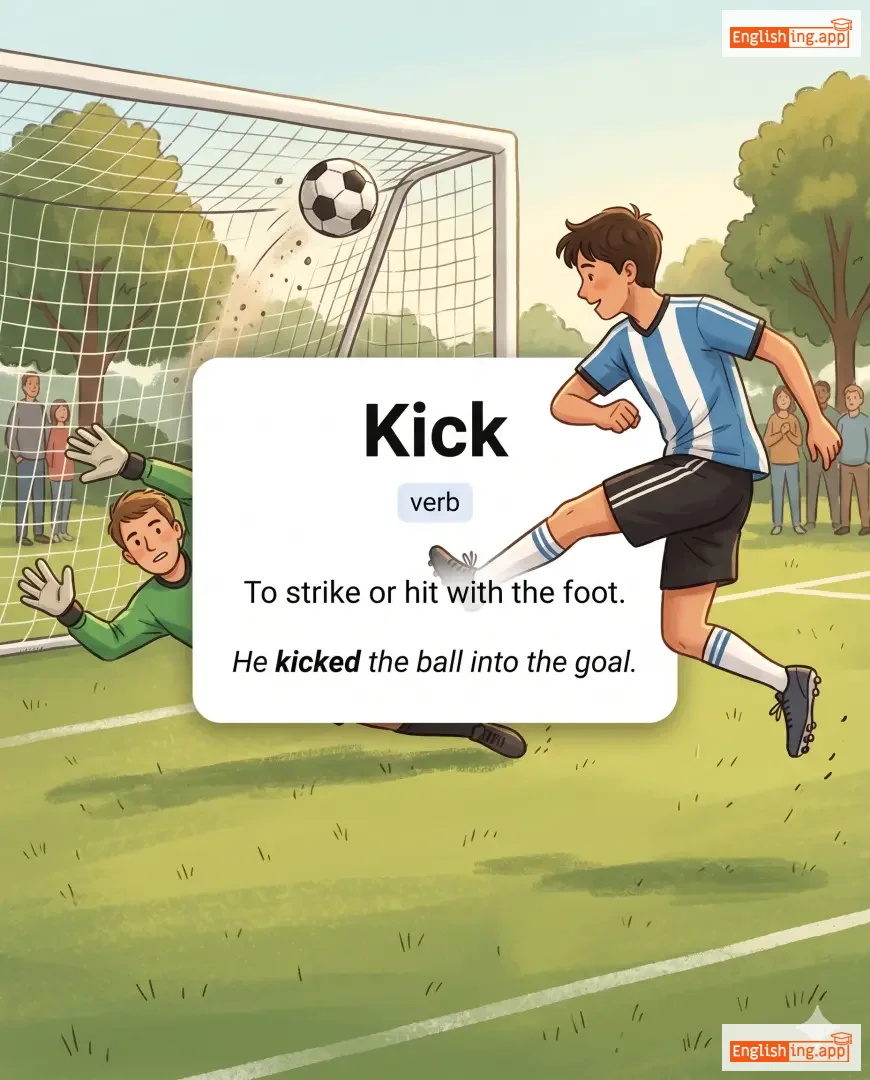
Kick definition card — visual illustration of the meaning
verb
/kɪk/
蹴る (keru)

To strike or hit with the foot.

"He kicked the ball into the goal."
"彼はボールをゴールにキックしました。" (Kare wa booru o gooru ni kikku shimashita.)
noun
/kɪd/
子供 (kodomo)

A child or young person.

"The kid was playing in the park."

"その子供は公園で遊んでいた。" (Sono kodomo wa kōen de asonde ita.)
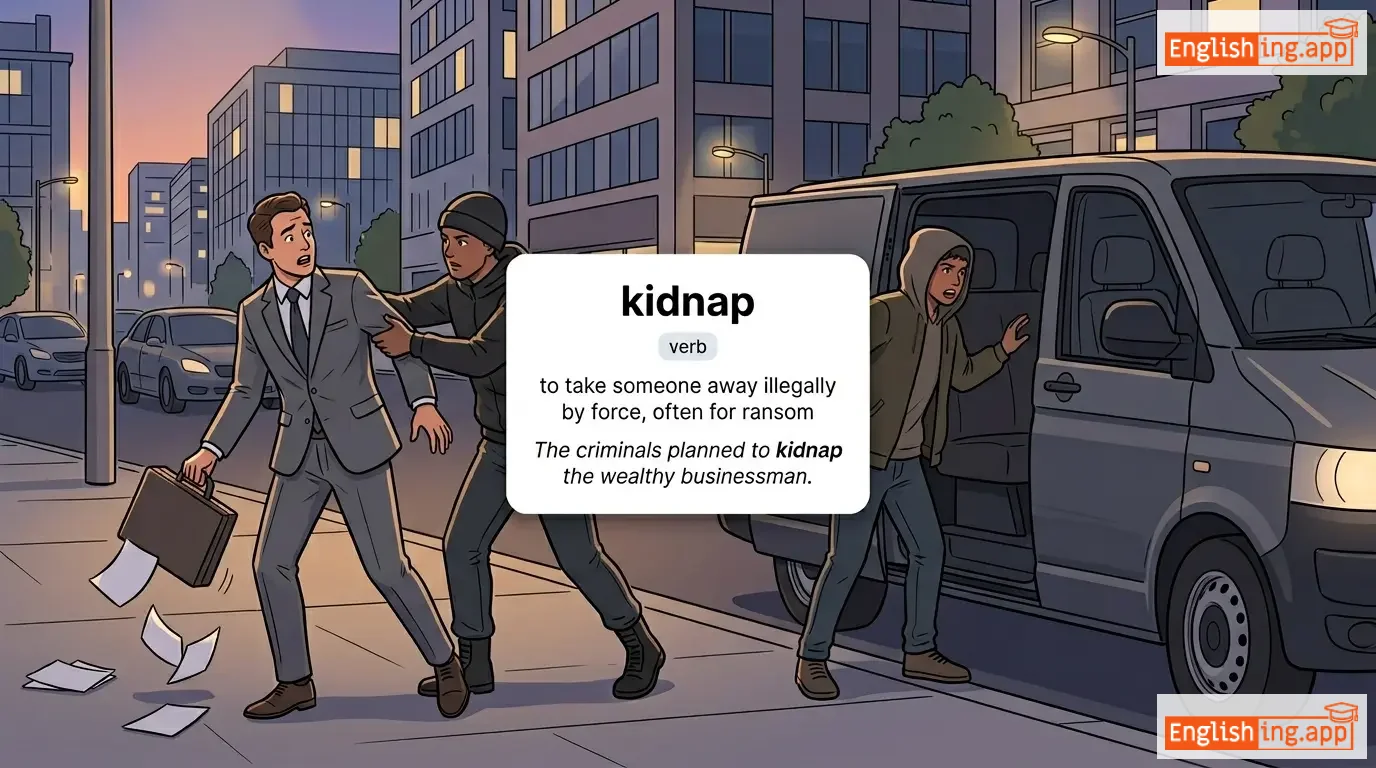
kidnap definition card — visual illustration of the meaning
verb
/ˈkɪdnæp/
誘拐 (yūkai)

to take someone away illegally by force, often for ransom

"The criminals planned to kidnap the wealthy businessman."

"犯罪者たちは裕福なビジネスマンを誘拐する計画を立てた。" (Hanzaisha-tachi wa yūfuku na bijinesuman o yūkai suru keikaku o tateta.)
noun
/ˈkɪdni/
腎臓 (jinzō)

a pair of organs in the body that remove waste products from the blood and balance bodily fluids

"The kidney plays a crucial role in filtering waste from the bloodstream."

"腎臓は血液中の廃棄物をろ過する重要な役割を果たします。" (Jinzō wa ketsueki chū no haikibutsu o roka suru jūyōna yakuwari o hatashimasu.)
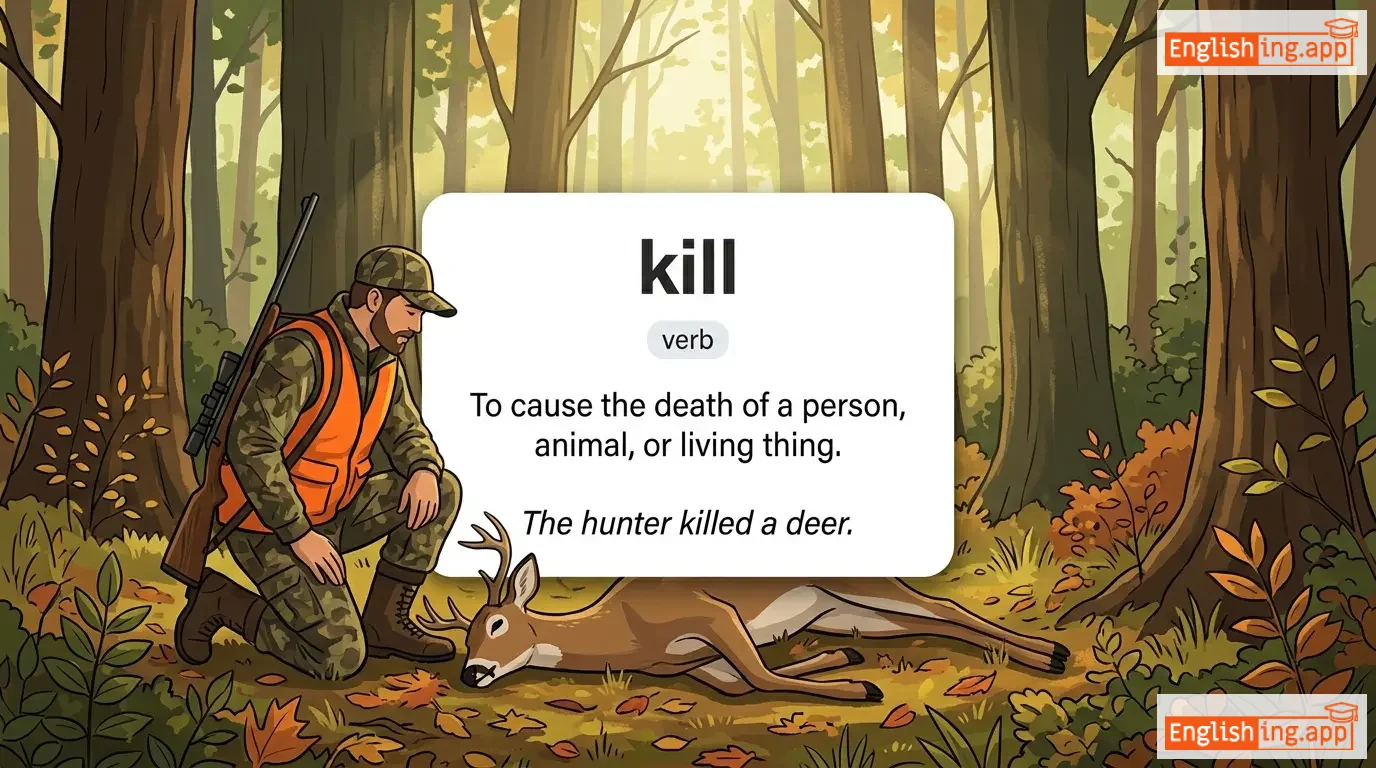
kill definition card — visual illustration of the meaning
verb
/kɪl/
殺す (korosu)

To cause the death of a person, animal, or living thing.

"The hunter killed a deer."

"ハンターは鹿を殺した。" (Hantaa wa shika o koroshita.)
noun
/ˈkɪlər/
殺人者 (satsujin-sha)

A person or thing that kills.

"The police caught the killer last night."

"警察は昨晩殺人者を捕まえた。" (Keisatsu wa sakuban satsujin-sha wo tsukamaeta.)
noun
/ˈkɪlɪŋ/
殺人 (satsujin)

the act of causing death, especially deliberately

"The movie depicts the brutal killing of the villagers."

"映画は村人たちの残忍な殺人を描いています。" (Eiga wa murabito-tachi no zanrin na satsujin o egaku shimasu.)
noun
/ˈkɪldʒɔɪ/
空気を壊す人 (kuuki o kowasu hito)

a person who spoils the fun or enjoyment of others

"Don’t be a killjoy at the party."

"パーティーで空気を壊す人にならないで。" (Pātī de kuuki o kowasu hito ni nara naide.)
noun
/kɪln/
(kama)

a furnace or oven for burning, baking, or drying, especially one for firing pottery or bricks

"The potter placed the clay pots into the kiln for firing."

"陶芸家は粘土の壺を窯で焼くために置きました。" (Tougei-ka wa nendo no tsubo o kama de yaku tame ni okimashita.)
noun
/ˈkɪləɡræm/
キログラム (kiroguramu)

the base unit of mass in the metric system equal to 1,000 grams

"The bag of rice weighs five kilograms."

"その米袋は五キログラムあります。" (sono komebukuro wa go kiroguramu arimasu)
noun
/ˈkɪləˌliːtər/
キロリットル (kirorittoru)

a unit of capacity equal to 1,000 liters

"The tank can hold up to three kiloliters of water."

"タンクは最大で3キロリットルの水を保持できます。" (Tanku wa saidai de 3 kirorittoru no mizu o hoji dekimasu.)
noun
/kɪˈlɒmɪtər/ or /ˈkɪləˌmiːtər/
キロメートル (kiromētoru)

a unit of length equal to 1,000 meters

"The village is about five kilometers away from the town."

"その村は町から約五キロメートル離れています。" (Sono mura wa machi kara yaku go kiromētoru hanareteimasu.)
noun
/ˈkɪləˌwɒt/
キロワット (kirowatto)

a unit of power equal to 1,000 watts

"The generator produces ten kilowatts of electricity."

"発電機は10キロワットの電力を生産します。" (Hatsudenki wa 10 kirowatto no denryoku o seisan shimasu.)
noun
/kɪˈməʊnoʊ/
着物 (kimono)

a traditional Japanese robe with wide sleeves, tied with a sash

"She wore a beautiful silk kimono at the ceremony."

"彼女は儀式で美しい絹の着物を着ていた。" (Kanojo wa gishiki de utsukushii kinu no kimono wo kite ita.)
noun
家族; 親戚; (kazoku; shinseki;)
adjective/noun
/kaɪnd/
種類 / 親切 (shurui / shinsetsu)

A type or category; showing a gentle, considerate nature.

"She is very kind to her neighbors."

"彼女は近所の人々にとても親切です。" (Kanojo wa kinjo no hitobito ni totemo shinsetsu desu.)
adjective
/ˌkaɪnd ˈhɑːrtɪd/
優しい (yasashii)

Having a kind and generous nature; showing compassion and care for others.

"She is known as a kind-hearted teacher who always helps her students."

"彼女は常に生徒を助ける優しい教師として知られています。" (Kanojo wa tsune ni seito wo tasukeru yasashii kyoushi to shite shirareteimasu.)
noun
/ˈkɪndərˌɡɑːrtn/
幼稚園 (youchien)

a school or class for young children, typically between the ages of four and six

"She enrolled her child in kindergarten to prepare for elementary school."
"彼女は子供を小学校に備えて幼稚園に入学させました。" (Kanojo wa kodomo o shougakkou ni sonaete youchien ni nyuugaku sasemashita.)
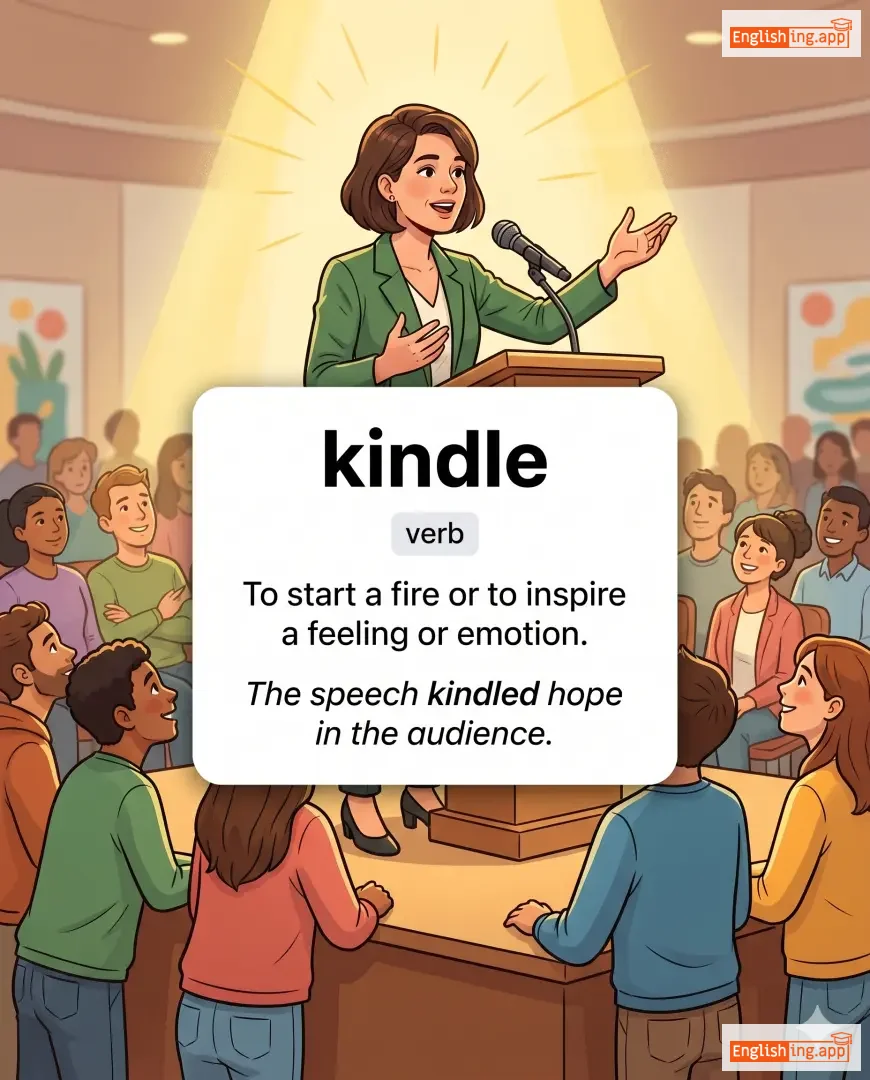
kindle definition card — visual illustration of the meaning
verb
/ˈkɪndl̩/
火をつける / インスパイアする (hi o tsukeru / insupaia suru)

To start a fire or to inspire a feeling or emotion.

"The speech kindled hope in the audience."

"スピーチは観客の中に希望を灯した。" (Supīchi wa kankyaku no naka ni kibō o tomoshita.)
adverb; adjective
/ˈkaɪndli/
親切に (shinsetsu ni)

in a kind or gentle manner; showing kindness or goodwill

"She kindly helped the old man cross the street."

"彼女は親切に老人が道を渡るのを手伝った。" (kanojo wa shinsetsu ni roujin ga michi o wataru no o tetsudatta)
noun
親切; 優しさ; 思いやり (shinsetsu; yasashisa; omoiyari)
👨‍👩‍👧‍👦

kindred (happiness)

noun, adjective
/ˈkɪndrəd/
幸せ (shiawase)

A person's relatives or family; similar in nature or character.

"They discovered kindred spirits in each other."

"彼女は賞を受け取ったとき、自分の幸せを隠すことができませんでした。" (Kanojo wa shō o uketotta toki, jibun no shiawase o kakusu koto ga dekimasen deshita.)
adjective
/kɪˈnɛtɪk/
運動エネルギー (undō enerugī)

Relating to or resulting from motion.

"Kinetic energy increases as the object moves faster."

"物体が速く動くとき、運動エネルギーは増加します。" (Butai ga hayaku ugoku toki, undō enerugī wa zōka shimasu.)
noun
/kɪŋ/
(ou)

the male ruler of an independent state, especially one who inherits the position by right of birth

"The king ruled the country with wisdom and fairness."

"王は知恵と公正で国を治めました。" (Ou wa chie to kousei de kuni o osamemashita.)
noun
/ˈkɪŋ.fɪʃ.ər/
カワセミ (kawasemi)

a small bird with bright blue and orange feathers that catches fish by diving into water

"The colorful kingfisher dove into the pond to catch a fish."

"色とりどりのカワセミが池に飛び込んで魚を捕まえました。" (Iro toridori no kawasemi ga ike ni tobikonde sakana o tsukamaemashita.)
noun
/ˈkɪŋdəm/
王国 (ōkoku)

a country or territory ruled by a king or queen

"The kingdom was known for its rich culture and traditions."

"その王国は豊かな文化と伝統で知られていた。" (Sono ōkoku wa yutakana bunka to dentō de shirarete ita.)
noun
/ˈkɪŋɡlɪŋ/
小さな王 (chiisana ou)

A minor or petty king; a ruler of small importance.

"The kingling demanded respect from his people despite his small realm."

"その小さな王は、小さな王国にもかかわらず、彼の人々に尊敬を要求しました。" (Sono chiisana ō wa, chiisana ōkoku ni mo kakawarazu, kare no hitobito ni sonkei o yōkyū shimashita.)
noun
/ˈkɪŋʃɪp/
王権 (ōken)

The position, dignity, or authority of a king.

"The king’s advisors often reminded him of the responsibilities of kingship."

"王の顧問たちはしばしば彼に王権の責任を思い出させました。" (Ō no komon-tachi wa shibashiba kare ni ōken no sekinin o omoidasasemashita.)