語彙集

英単語辞書 | 単語の意味、定義、例文

🏃‍♀️

pace (ペース)

noun
/peɪs/
ペース (pēsu)

the speed at which something happens or is done

"She walked at a slow pace."

"彼女はゆっくりとペースで歩いていました。" (Kanojo wa yukkuri to pēsu de aruite imashita.)
noun
/ˈpæk.ɪ.dɜːrm/
厚い皮膚を持つ大型哺乳動物 (atsui hifu wo motsu ōgata honyū dōbutsu)

a large mammal with thick skin, such as an elephant, rhinoceros, or hippopotamus

"The zoo had several pachyderms, including elephants and rhinos."
"動物園にはいくつかのパキダームがいて、象やサイが含まれていました。" (Dōbutsuen ni wa ikutsuka no pakidāmu ga ite, zō ya sai ga fukumarete imashita.)
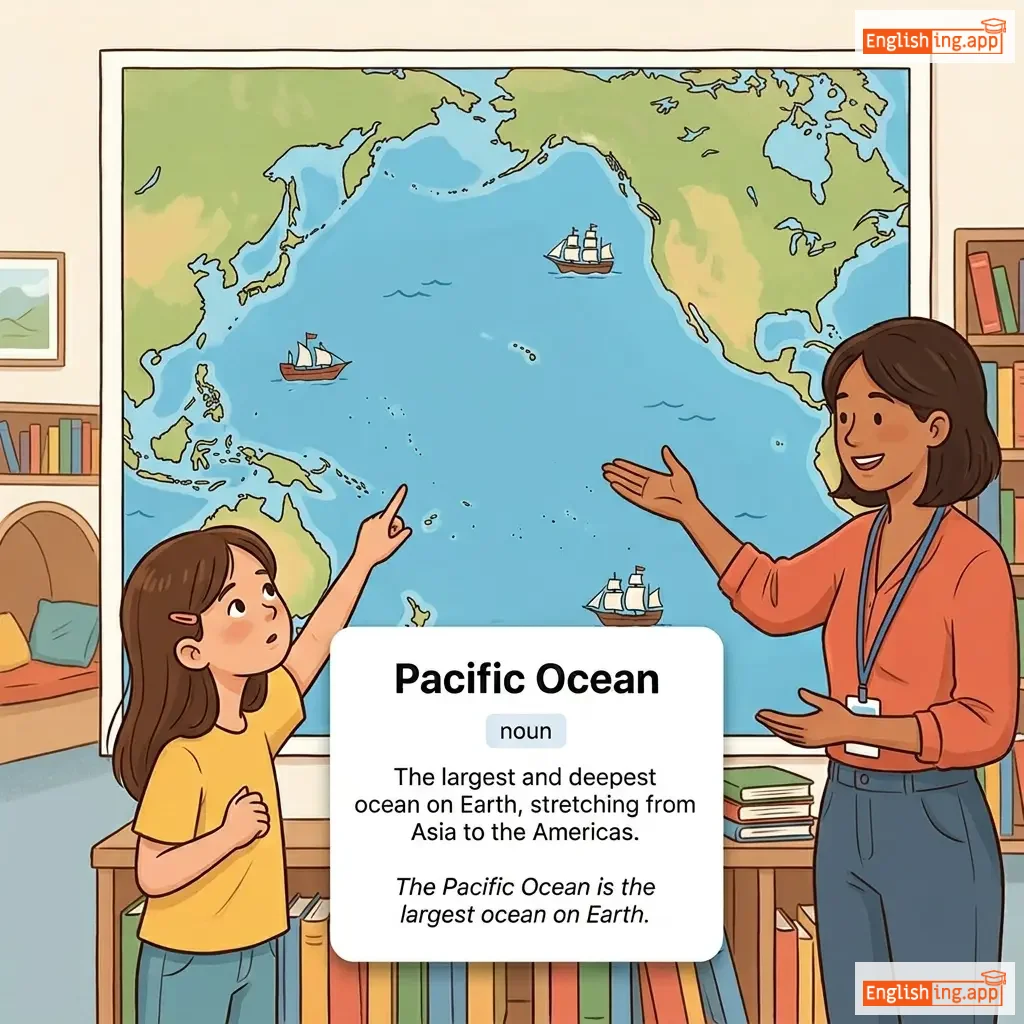
Pacific Ocean definition card — visual illustration of the meaning
noun
/pəˈsɪf.ɪk ˈoʊ.ʃən/
太平洋 (Taiheiyou)

The largest and deepest ocean on Earth, stretching from Asia to the Americas.

"The Pacific Ocean is the largest ocean on Earth."

"太平洋は地球上で最大の海洋です。" (Taiheiyou wa chikyuu jou de saidai no kaiyou desu.)
noun
/ˈpæs.ɪ.fɪst/
平和主義者 (heiwa shugi-sha)

a person who believes in peace and opposes war or violence

"She is a committed pacifist who campaigns against armed conflict."
"彼女は武力紛争に反対する活動を行っている熱心な平和主義者です。" (Kanojo wa buryoku funsou ni hantai suru katsudou o okonatteiru nesshinna heiwa shugi-sha desu.)
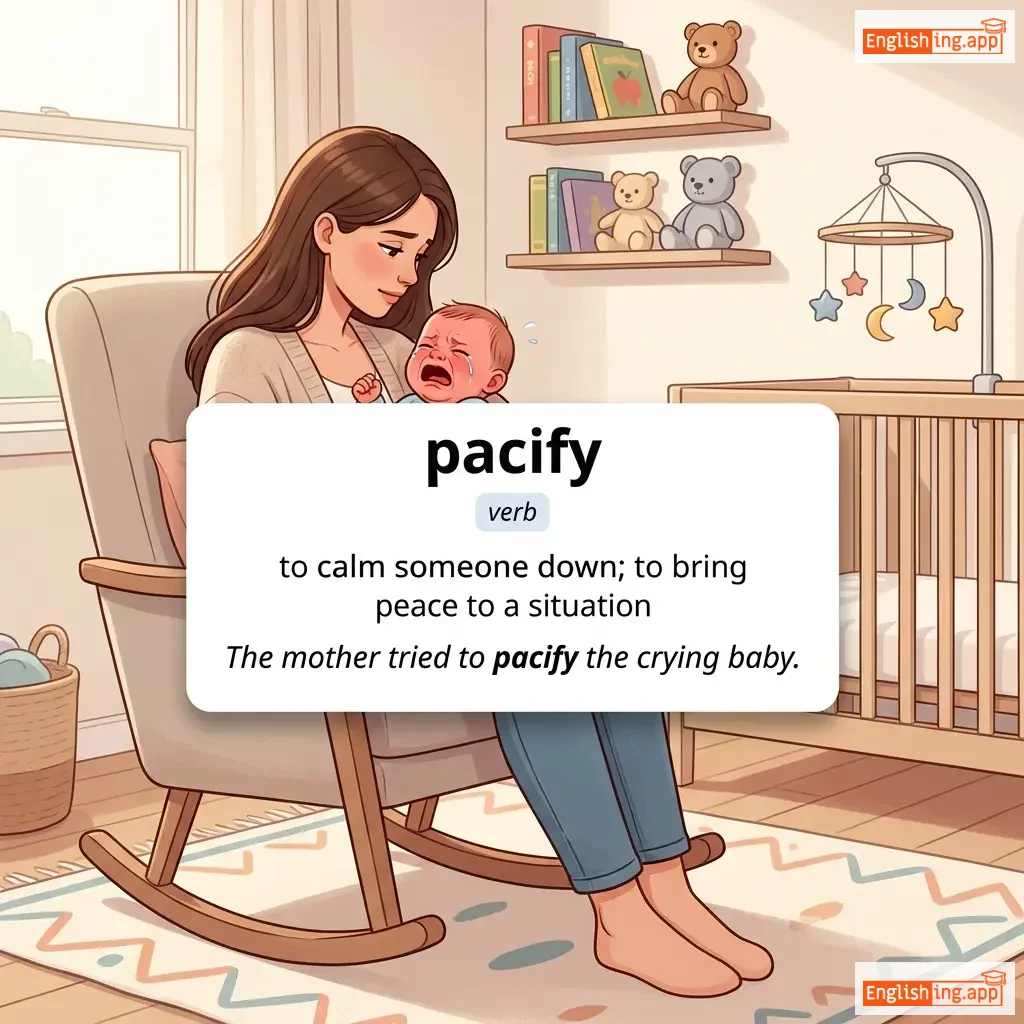
pacify definition card — visual illustration of the meaning
verb
/ˈpæs.ɪ.faɪ/
なだめる (nadameru)

to calm someone down; to bring peace to a situation

"The mother tried to pacify the crying baby."

"母親は泣いている赤ちゃんをなだめようとしました。" (Hahaoya wa naite iru akachan wo nadameyou to shimashita.)
🎒

pack

verb,noun
/pæk/

to put things into a container for storage or transport; a collection of items kept together

"She packed her clothes into a suitcase for the trip."

noun
/ˈpækɪdʒ/
パッケージ (pakkeeji)

a container or wrapping in which something is packed

"He received a package in the mail."

"彼は郵便でパッケージを受け取った。" (Kare wa yuubin de pakkeeji wo uketotta.)
noun
/ˈpæk.ɪt/
パケット (paketto)

a small package or container holding items or information

"He bought a packet of biscuits from the shop."

"彼は店でビスケットのパケットを買いました。" (Kare wa mise de bisuketto no paketto o kaimashita.)
noun
/pækt/
協定 (kyoutei)

a formal agreement or promise between parties

"The two countries signed a peace pact."

"二国は平和協定に署名しました。" (Nikoku wa heiwa kyōtei ni shomei shimashita.)
noun
/pæd/
パッド (paddo)

a small cushion or block of soft material; also a set of sheets of paper fastened together

"He wrote her phone number on a yellow pad."

"彼は黄色いパッドに彼女の電話番号を書いた。" (Kare wa kiiroi paddo ni kanojo no denwa bangō o kaita.)
noun
/ˈpæd.ɪŋ/
クッション / 詰め物 (kusshon / tsumemono)

soft material added for comfort, protection, or to fill space

"The chair had extra padding for comfort."

"椅子には快適さのために余分なパディングがありました。" (Isu ni wa kaitekisa no tame ni yobun na padding ga arimashita.)
noun
/ˈpæd.ək/
馬やその他の動物のための囲い場 (uma ya sonota no dōbutsu no tame no kakoi-ba)

a small enclosed field where horses or other animals are kept

"The horses were grazing in the paddock."

"馬たちはパドックで草を食べていた。" (Umatachi wa paddock de kusa o tabete ita.)
noun
/ˈpæd.i/
籾米 (momi)

rice grains that are still in their hulls; unhusked rice

"The farmer harvested paddy from the flooded fields."

"農夫は水に浸かった畑から籾米を収穫しました。" (noufu wa mizu ni tsukatta hatake kara momi wo shūkaku shimashita)
noun
/ˈpɑːdreɪ/
神父 (shinpu)

A title for a priest, especially in the Roman Catholic Church; also used informally for 'father'.

"The soldiers attended mass led by the padre."

"兵士たちは神父が主催したミサに参加しました。" (Heishitachi wa shinpu ga shusai shita misa ni sanka shimashita.)
noun
/ˈpiːən/
賛美歌 (sanbika)

A song or piece of writing expressing great praise or triumph.

"The article was a paean to the beauty of nature."

"その記事は自然の美しさへの賛美歌でした。" (Sono kiji wa shizen no utsukushisa e no sanbika deshita.)
noun
/ˈpeɪɡən/
異教徒 (ikyōto)

A person holding religious beliefs other than those of the main world religions.

"The village still kept some pagan traditions alive."

"その村は今でもいくつかの異教徒の伝統を守り続けていました。" (Sono mura wa imademo ikutsuka no ikyōto no dentō o mamoritsuzukete imashita.)
noun
/peɪdʒ/
ページ (peiji)

one side of a sheet of paper, or a single sheet of paper in a book or document

"Turn to the next page for more information."

"次のページに進んで、詳細情報を取得してください。" (Tsugi no pēji ni susunde, shōsai jōhō o shutoku shite kudasai.)
noun
/ˈpædʒənt/
美人コンテスト (bijin kontesuto)

A public entertainment consisting of a procession of people in elaborate costumes, or a beauty contest.

"She won first place in the beauty pageant."

"彼女は美人コンテストで一位を獲得しました" (kanojo wa bijin kontesuto de ichi-i o kaku toku shimashita)
noun
/peɪn/
痛み (itami)

physical suffering or discomfort caused by illness or injury

"She felt a sharp pain in her chest."

"彼女は胸に鋭い痛みを感じた。" (Kanojo wa mune ni surudoi itami o kanjita.)
adjective
/ˈpeɪn.fəl/
痛みを伴う (itami wo tomonau)

causing physical or emotional pain

"The injury was very painful, and he needed immediate care."
"その怪我は非常に痛みを伴い、すぐに治療が必要だった。" (Sono kega wa hijō ni itami wo tomonai, sugu ni chiryō ga hitsuyō datta.)
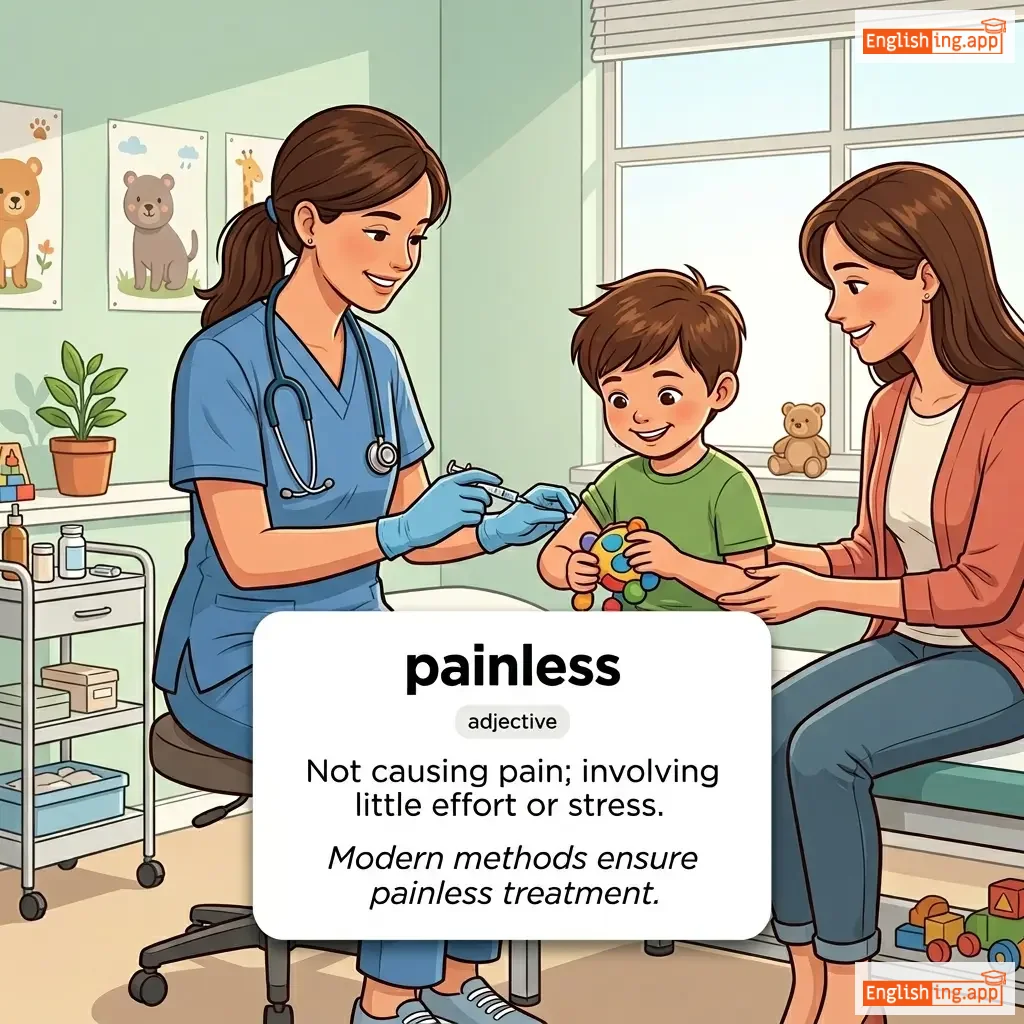
painless definition card — visual illustration of the meaning
adjective
ˈpeɪn.ləs
痛みなし (itami nashi)

Not causing pain; involving little effort or stress.

"Modern methods ensure painless treatment."

"現代の方法は痛みのない治療を保証します。" (Gendai no hōhō wa itami no nai chiryō o hoshō shimasu.)
adjective
/ˈpeɪnzˌteɪkɪŋ/
非常に注意深く (hijō ni chūi-bukaku)

Done with great care and thoroughness.

"The artist completed the project with painstaking detail."

"アーティストは非常に注意深くプロジェクトを完了しました。" (Ātisuto wa hijō ni chūi-bukaku purojekuto o kanryō shimashita.)
verb
/peɪnt/
絵を描く (e wo kaku)

to apply a colored substance to a surface

"She loves to paint landscapes in her free time."

"彼女は自由時間に風景画を描くのが好きです。" (Kanojo wa jiyū jikan ni fūkeiga o kaku no ga suki desu.)
noun
/ˈpeɪn.tər/
画家 (gaka)

a person who paints pictures, or paints walls, buildings, etc.

"The painter spent hours working on the portrait."

"画家は肖像画を描くのに何時間も費やしました。" (Gaka wa shōzōga o kaku no ni nanjikan mo tsuiyashimashita.)
noun
/ˈpeɪntɪŋ/
絵画 (kaiga)

a picture or design made using paint

"The painting on the wall was created by a famous artist."

"壁の絵画は有名なアーティストによって作られました。" (Kabe no kaiga wa yūmei na ātisuto ni yotte tsukuraremashita.)
noun
/per/
ペア (pea)

two things of the same kind that are used together

"She wore a matching pair of shoes."

"彼女はマッチングのペアの靴を履いていました。" (Kanojo wa matchingu no pea no kutsu o haite imashita.)
noun
/ˈpælɪs/
宮殿 (kyūden)

a large and impressive building that is the official home of a king, queen, or other ruler

"The royal family lives in a magnificent palace."

"王室は素晴らしい宮殿に住んでいます。" (Ōshitsu wa subarashī kyūden ni sundeimasu.)
noun
/ˌpæl.ənˈkiːn/
花嫁用の車 (hanayomeyō no kuruma)

a covered chair or bed carried on poles by bearers

"The bride was carried to the wedding ceremony in an ornate palanquin."

"花嫁は装飾されたパランキンで結婚式に運ばれました。" (Hanayome wa sōshoku sareta parankin de kekkonshiki ni hakobaremashita.)
adjective
/ˈpæl.ə.tə.bəl/
美味しい (oishii)

pleasant or acceptable to the taste, mind, or feelings

"The meal was simple but quite palatable."

"その食事はシンプルでしたが、かなり美味しかったです。" (Sono shokuji wa shimpuru deshita ga, kanari oishikatta desu.)
noun
/ˈpæl.ə.tə.bəl miːt/
美味しい肉 (oishii niku)

Meat that is pleasant to taste; appetizing meat dish

"The chef prepared palatable meat dishes for the dinner party."

"シェフはディナーパーティーのために美味しい肉料理を準備しました。" (Shefu wa dinā pātii no tame ni oishī niku ryōri o junbi shimashita.)
noun
/ˈpæl.ət/
口蓋 (kōgai)

the roof of the mouth; a person's appreciation of taste and flavor

"She has a refined palate for fine wines."

"彼女は上質なワインに対して洗練された味覚を持っています。" (Kanojo wa jōshitsu na wain ni taishite senren sareta mikaku o motteimasu.)
adjective
/pəˈleɪ.ʃəl/
宮殿のような (kyuuden no you na)

resembling a palace in being spacious and splendid

"They stayed in a palatial hotel during their vacation."

"彼らは休暇中に宮殿のようなホテルに宿泊しました。" (Karera wa kyūka-chū ni kyūden no yō na hoteru ni shukuhaku shimashita.)
noun
/pəˈlæv.ər/
無駄な議論 / 騒動 (mudana giron / soudou)

prolonged and idle discussion; fuss or unnecessary talk

"After much palaver, they finally agreed on the plan."

"長時間無駄な議論の後、彼らは最終的に計画に同意しました。" (Choujikan mudana giron no ato, karera wa saishuuteki ni keikaku ni doui shimashita.)
👩‍🦰

Pale (ペイル)

adjective
/peɪl/
青白い (aoshiroi)

having a light or dull color, especially when compared with something else

"She looked pale after the long illness."

"彼女は長い病気の後、青白く見えた。" (Kanojo wa nagai byouki no ato, aoshiroku mieta.)
noun
/ˌpeɪ.li.ɒnˈtɒl.ə.dʒi/
古生物学 (koseibutsugaku)

the branch of science concerned with fossil animals and plants

"She decided to study paleontology at university."

"彼女は大学で古生物学を学ぶことに決めました。" (Kanojo wa daigaku de koseibutsugaku o manabu koto ni kimemashita.)
adjective
/pælɛˈstɪnɪən/
パレスチナの (paresuchina no)

relating to Palestine or its people

"The Palestinian people have a rich cultural heritage."

"パレスチナの人々は豊かな文化遺産を持っています。" (Paresuchina no hitobito wa yutakana bunka isan o motteimasu.)
noun
/ˈpælət/
パレット (paretto)

a thin board or surface on which an artist sets and mixes colors; also a range of colors used in art or design

"The artist mixed vibrant shades on her palette before starting the painting."

"アーティストは絵を描き始める前にパレットで鮮やかな色合いを混ぜました。" (Ātisuto wa e o kaku hajimeru mae ni paretto de azayakana iroai o mazemashita.)
noun
/ˈpælɪmpsɛst/
パリンプセスト (parimpsesuto)

a manuscript or document that has been written over but still bears traces of earlier writing; something reused or altered but still retaining traces of its earlier form

"The ancient manuscript was a palimpsest, showing faint traces of previous texts beneath the new writing."

"その古代の写本はパリンプセストであり、新しい文字の下に以前のテキストの微弱な痕跡が見られた。" (Sono kodai no shahon wa parimpsesuto de ari, atarashī moji no shita ni izen no tekisuto no bijaku na konseki ga mirarareta.)
noun
/ˈpælɪˌnoʊd/
後悔の詩 (kōkai no shi)

a poem or statement in which the writer retracts something said in an earlier work

"The poet wrote a palinode to apologize for his earlier harsh words."

"詩人は以前の厳しい言葉を謝罪するために後悔の詩を書きました。" (Shijin wa izen no kibishī kotoba o shazai suru tame ni kōkai no shi o kakimashita.)
⚰️

Pall

verb, noun
/pɔːl/

to lose strength or interest; to become dull or tiresome; also a cloth spread over a coffin

"The excitement of the festival began to pall after several days."

noun
/ˈpælɪt/
プラットフォーム (purattofōmu)

a flat wooden platform used for moving or storing goods; also a makeshift bed

"The boxes were stacked on a wooden pallet for easy transport."

"箱は簡単に輸送できるように木製のパレットに積まれました。" (Hako wa kantan ni yusō dekiru yō ni mokusei no paretto ni tsumaremashita.)
verb
/ˈpælieɪt/
和らげる (yawarageru)

to make a disease, symptoms, or problem less severe without removing the cause

"The doctor prescribed medicine to palliate the patient's pain."

"医者は患者の痛みを和らげるために薬を処方しました。" (Isha wa kanja no itami wo yawarageru tame ni kusuri wo shohou shimashita.)
noun
/ˌpæliˈeɪʃən/
緩和 (kanwa)

relief of symptoms without curing the underlying disease or problem

"Palliation is often the focus of care for terminally ill patients."

"緩和ケアは終末期の患者の治療において重要な焦点となります。" (Kanwa kea wa shūmatsuki no kanja no chiryō ni oite jūyōna shōten to narimasu.)
adjective
/ˈpælɪd/
青白い (aoshiroi)

pale, typically because of poor health or lack of vitality

"The patient looked pallid after weeks of illness."

"患者は数週間の病気の後、顔色が悪く見えた。" (Kanja wa suushūkan no byōki no ato, kaoiro ga waruku mieta.)
noun
/pɑːm/
手のひら / ヤシの木 (te no hira / yashi no ki)

the inner surface of the hand; also a tropical tree with large leaves

"He placed the coin in the palm of her hand."

"彼はコインを彼女の手のひらに置いた。" (Kare wa koin o kanojo no te no hira ni oita.)
adjective
/ˈpɑːmi/
繁栄 / 栄光 (han'ei / eikou)

prosperous, flourishing, or relating to palm trees

"He often reminisced about the palmy days of his youth."

"彼は若い頃の繁栄した日々をよく思い出していました。" (Kare wa wakai koro no han'ei shita hibi o yoku omoidashtemashita.)
adjective
/ˈpælpəbl̩/
幸福 (koufuku)

easily perceived or felt; so intense as to seem almost tangible

"There was a palpable sense of excitement in the room."

"賞を受け取ったとき、彼女はその幸福感を隠せなかった。" (Shou wo uketotta toki, kanojo wa sono koufukukan wo kakusenakatta.)
verb
/ˈpælpɪˌteɪt/
速く脈打つ (hayaku myakuutsu)

to beat rapidly and strongly, often because of fear, excitement, or illness

"Her heart began to palpitate with fear."

"彼女は恐怖で心臓がパルピテイトし始めた。" (Kanojo wa kyōfu de shinzō ga parupiteitō shi hajimeta.)
noun
/ˌpæl.pɪˈteɪ.ʃən/
興奮や医学的状態による顕著な速く、強い、または不規則な心拍 (koufun ya igakuteki joutai ni yoru kencho na hayaku, tsuyoi, matawa fukisoku na shinpaku)

a noticeably rapid, strong, or irregular heartbeat due to agitation or medical condition

"She experienced palpitations before her job interview."

"彼女は面接前にパルピテーションを感じました。" (Kanojo wa mensetsu mae ni parupitēshon o kanjimashita.)
noun
/ˈpɔːlzi/
麻痺 (mabi)

a condition of partial or complete paralysis, often with involuntary tremors

"The patient suffered from Bell’s palsy."

"患者はベル麻痺に苦しんでいました。" (Kanja wa Beru mabi ni kurushindeimashita.)