語彙集

英単語辞書 | 単語の意味、定義、例文

⬇️

nadir

noun
/ˈneɪdɪər/

The lowest point of a situation or condition.

"The company reached its nadir during the financial crisis."

noun, verb
/neɪl/
(kugi)

a small metal spike driven into wood or other material, or to fasten or fix something with nails

"He nailed the wooden board to the wall."

"彼は木製の板を壁に釘付けしました。" (kare wa mokusei no ita o kabe ni kugi tsuke shimashita.)
adjective
/naɪˈiːv/
素直 (sunao)

Lacking experience, wisdom, or judgment; too trusting.

"She was naïve to believe every advertisement she saw."

"彼女は見たすべての広告を信じることに素直だった。" (Kanojo wa mita subete no kōkoku o shinjiru koto ni sunao datta.)
noun
/naɪˈiːvteɪ/

The quality of being naive; lack of experience, wisdom, or judgment.

"His naivete made him an easy target for manipulation."

noun
/naɪˈiːvɪti/
無邪気 (muzaki)

The quality of being innocent, simple, and lacking experience or sophistication.

"Her naivety made her trust people too easily."

"彼女の無邪気は、彼女が人々をあまりにも簡単に信頼させました。" (Kanojo no muzaki wa, kanojo ga hitobito o amari ni mo kantan ni shinrai sasemashita.)
adjective
/ˈneɪkɪd/
(hadaka)

not covered by clothing or without protection

"The child was running naked in the yard."
"その子は庭で裸で走っていた。" (Sono ko wa niwa de hadaka de hashitte ita.)
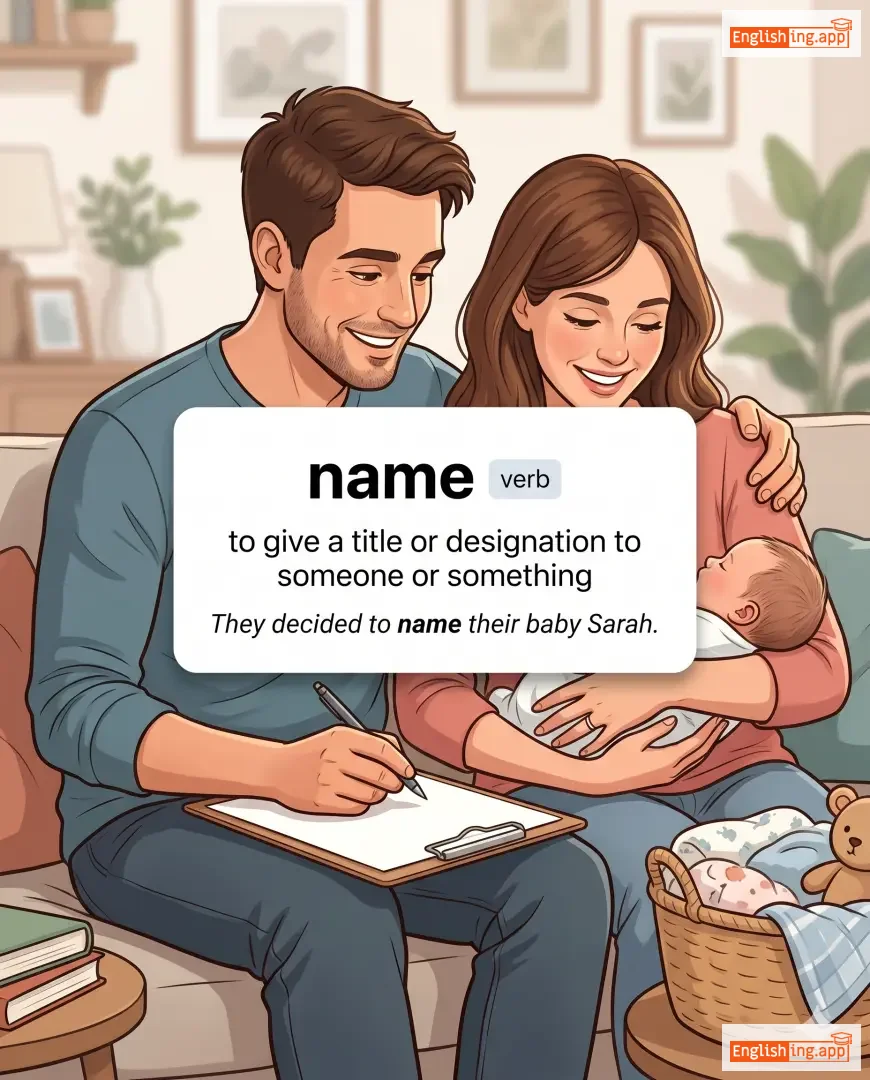
name definition card — visual illustration of the meaning
noun
/neɪm/
名前 (namae)

a word by which a person or thing is known or called

"His name is John."

"彼の名前はジョンです。" (Kare no namae wa John desu.)
adjective
/ˈneɪmləs/
無名 (mumei)

Without a name or not known by name.

"A nameless fear crept over him in the dark room."

"無名の恐怖が暗い部屋で彼を襲った。" (Mumei no kyōfu ga kurai heya de kare o osotta.)
adverb
/ˈneɪmli/
すなわち (sunawachi)

that is to say; to be specific

"The festival will be held in three cities, namely Dhaka, Chittagong, and Sylhet."
"その祭りは3つの都市で行われます。すなわち、ダッカ、チッタゴン、シレットです。" (Sono matsuri wa mittsu no toshi de okonawaremasu. Sunawachi, Dhaka, Chittagong, Shiretto desu.)
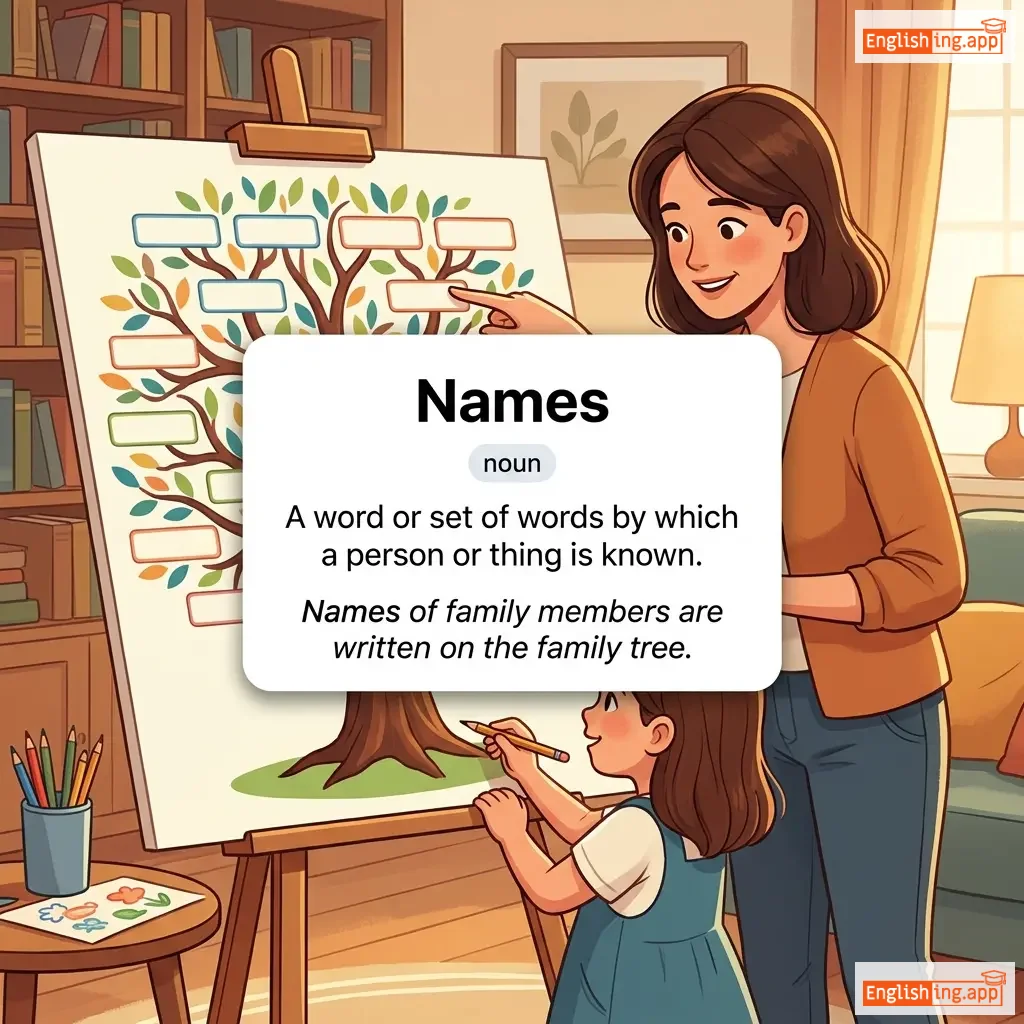
Names definition card — visual illustration of the meaning
noun
neɪmz
名前 (namae)

A word or set of words by which a person or thing is known.

"Names of family members are written on the family tree."

"家族の名前は家系図に書かれています。" (Kazoku no namae wa kakeizu ni kakareteimasu.)
nanotechnology definition card — visual illustration of the meaning
noun
ˌnæn.oʊ.tekˈnɒl.ə.dʒi
ナノテクノロジー (nanotekunorojī)

The branch of technology that deals with dimensions and tolerances of less than 100 nanometers.

"Nanotechnology is advancing medical treatments."

"ナノテクノロジーは医療治療の進歩を促進しています。" (Nanotekunorojī wa iryō chiryō no shinpo o sokushin shiteimasu.)
noun
/ˈnæp.kɪn/
ナプキン (napukin)

a piece of cloth or paper used for wiping the mouth and hands while eating

"She placed the napkin on her lap before starting dinner."

"彼女は夕食を始める前に、膝の上にナプキンを置きました。" (Kanojo wa yūshoku o hajimeru mae ni, hizano ue ni napukin o okimashita.)
noun
/ˈnæfθə/
ナフタ (nafuta)

A flammable oil containing hydrocarbons, obtained from petroleum or coal tar, used as fuel or solvent.

"The factory stored barrels of naphtha for industrial use."

"工場は工業用途のためにナフタの樽を保管していました。" (Koujou wa kougyou youto no tame ni nafuta no taru wo hokan shiteimashita.)
noun
/ˈnæpkɪn/
ナプキン (napukin)

a piece of cloth or paper used to wipe the mouth and hands while eating

"She placed a napkin on her lap before eating."

"彼女は食事の前に膝の上にナプキンを置きました。" (Kanojo wa shokuji no mae ni hiza no ue ni napukin wo okimashita.)
narcissism definition card — visual illustration of the meaning
noun
/ˈnɑːrsɪsɪzəm/
自己愛 (jikoi)

Excessive interest in or admiration of oneself.

"His constant selfies were a sign of his narcissism."

"彼の絶え間ない自撮りは、彼の自己愛の表れだった。" (kare no taemajanai jidorii wa, kare no jikoi no araware datta.)
noun
/ˈnɑːrsɪsɪst/
ナルシシスト (narushisuto)

A person who has an excessive interest in or admiration of themselves.

"Everyone avoided him because he was a narcissist."

"みんな彼を避けていた、なぜなら彼はナルシシストだったから。" (Minna kare o sakete ita, nazenara kare wa narushisuto datta kara.)
noun
/nɑːrˈsɪsəs/
ナルシスの花 (narushisu no hana)

A type of flowering plant with yellow or white blooms, often associated with self-love from Greek mythology.

"A narcissus bloomed in the garden during spring."

"春に、庭でナルシスの花が咲きました。" (Haru ni, niwa de narushisu no hana ga sakimashita.)
noun
/nɑːrˈkɒtɪk/
麻薬 (mayaku)

A drug that dulls the senses and relieves pain, often causing sleep and sometimes addiction.

"The police seized a large amount of narcotic substances."

"警察は大量の麻薬を押収した。" (Keisatsu wa tairyo no mayaku o oshū shita.)
verb
/ˈnæreɪt/
物語る (monogatari)

To tell a story or describe events, often in detail.

"She will narrate the events of her journey to the audience."

"彼女は観客に自分の旅の出来事を語るでしょう。" (Kanojo wa kankyaku ni jibun no tabi no dekigoto o kataru deshou.)
noun
/næˈreɪʃən/
ナレーション (nareeshon)

The act of telling a story or describing events in detail.

"The movie’s narration was done by a famous actor."

"映画のナレーションは有名な俳優によって行われました。" (Eiga no nareeshon wa yuumei na haiyuu ni yotte okonawaremashita.)
noun
/ˈnærətɪv/

A spoken or written account of connected events; a story.

"The novel’s narrative explores themes of identity and freedom."

narrative style definition card — visual illustration of the meaning
noun
ˈnærətɪv staɪl
物語のスタイル (monogatari no sutairu)

The way in which a story is told, including the point of view and the voice of the narrator.

"Dickens' narrative style is engaging and emotional."

"ディケンズの物語のスタイルは魅力的で感情的です。" (Dikenzu no monogatari no sutairu wa miryokuteki de kanjō-teki desu.)
noun
/ˈnæreɪtər/
語り手 (katarite)

A person who tells the story in a book, play, or film.

"The narrator guided the audience through the complex plot."

"語り手は複雑なプロットを通じて観客を導きました。" (Katarite wa fukuzatsu na purotto wo tsūjite kankyaku wo michibikimashita.)
adjective
/ˈnær.oʊ/
狭い (semai)

limited in width or extent; not wide

"The narrow street made it difficult for cars to pass."

"狭い通りは車が通るのを難しくしました。" (Semai toori wa kuruma ga tooru no wo muzukashiku shimashita.)
adjective
/ˌnæroʊˈmaɪndɪd/

Having a limited outlook or unwillingness to accept different opinions or ideas.

"She was too narrow-minded to consider other perspectives."

adverb
/ˈnæroʊli/
かろうじて; 辛うじて (karōjite; karōjite)

by a small margin; barely; in a limited way

"She narrowly escaped the accident."

"彼女は事故をかろうじて避けた。" (Kanojo wa jiko o karōjite saketa.)
adjective
/ˈneɪzl/
鼻音の (bion no)

Relating to the nose; a sound produced through the nose.

"He spoke with a nasal voice due to his cold."

"風邪で彼は鼻声で話した。" (Kaze de kare wa hanagoe de hanashita.)
nascent definition card — visual illustration of the meaning
adjective
/ˈneɪsnt/
萌芽 (hōga)

Just coming into existence and beginning to develop.

"The nascent technology has great potential."

"萌芽中の技術は大きな可能性を持っています。" (Hōgachū no gijutsu wa ōkina kanōsei o motteimasu.)
adjective
/ˈnæsti/
嫌な (iya na)

very unpleasant, unkind, or offensive

"He made a nasty comment about her dress."

"彼は彼女のドレスについて嫌なコメントをしました。" (Kare wa kanojo no doresu ni tsuite iya na komento o shimashita.)
adjective
/ˈneɪtl/
出生に関連する (shussei ni kanren suru)

Relating to birth or the place of birth.

"She returned to her natal village after many years."

"彼女は何年も経った後、故郷の村に帰りました。" (Kanojo wa nannen mo tatta ato, kokyou no mura ni kaerimashita.)
noun
/næˈteɪʃən/
水泳 (suiei)

The act or sport of swimming.

"She took lessons in natation to improve her swimming skills."

"彼女は泳ぎの技術を向上させるために水泳のレッスンを受けました。" (Kanojo wa oyogi no gijutsu o kōjōsaseru tame ni suiei no ressun o ukemashita.)
noun
/ˈneɪʃən/
国家 (kokka)

a large group of people united by common descent, history, culture, or language

"The nation celebrated its independence day with pride."

"その国は独立記念日を誇りを持って祝いました。" (Sono kuni wa dokuritsuki nembi o hokori o motte iwai mashita.)
adjective
/ˈnæʃənəl/
国民の (kokumin no)

relating to a nation, especially its culture, language, or government

"The national anthem was played at the ceremony."

"国歌は式典で演奏されました。" (Kokuga wa shikiten de ensō saremashita.)
noun
/ˈnæʃənəl ˈænθəm/
国歌 (kokka)

an official patriotic song of a country, performed at national events and ceremonies

"The national anthem was played before the international match."

"国際試合の前に国歌が演奏された。" (Kokusai shiai no mae ni kokka ga enso sareta)
noun
/ˌnæʃəˈnæləti/
国籍 (kokuseki)

The status of belonging to a particular nation, either by birth or naturalization.

"Her nationality is Canadian, though she was born in France."

"彼女の国籍はカナダのもので、フランスで生まれました。" (Kanojo no kokuseki wa Kanada no mono de, Furansu de umaremashita.)
nationalization definition card — visual illustration of the meaning
noun
/ˌnæʃ.ən.ə.laɪˈzeɪ.ʃən/
国有化 (kokuyuka)

The transfer of private property or business to government ownership.

"The nationalization of banks increased state control over finance."

"銀行の国有化は、金融への国家の管理を強化した。" (Ginkou no kokuyuka wa, kin'yu e no kokka no kanri o kyōka shita.)
adverb
/ˈnæʃənəli/
全国的に (zenkokuteki ni)

at the level of a whole nation; in a way that involves or affects an entire country

"The policy was implemented nationally to ensure equal benefits for all citizens."

"その政策は、すべての市民に平等な利益を確保するため、全国的に実施された。" (sono seisaku wa subete no shimin ni byodo na rieki o kakuho suru tame zenkokuteki ni jisshi sareta)
adjective, adverb
/ˈneɪʃənˌwaɪd/
全国規模 (zenkoku kibo)

existing or happening throughout an entire nation

"The campaign received nationwide support."

"キャンペーンは全国的な支持を得ました。" (Kyanpēn wa zenkokuteki na shiji o emashita.)
adjective
/ˈneɪtɪv/
ネイティブ (neitibu)

Belonging to a person by birth; originating in a particular place.

"He is a native speaker of Bengali."

"彼はベンガル語のネイティブスピーカーです。" (Kare wa bengaru-go no neitibu supīka desu.)
adjective
/ˈnæti/
おしゃれ (oshare)

Neat, stylish, and fashionable in appearance.

"He looked very natty in his new suit."

"彼は新しいスーツでとてもおしゃれに見えた。" (Kare wa atarashī sūtsu de totemo oshare ni mietta.)
adjective
/ˈnætʃərəl/
自然な (shizen na)

existing in or derived from nature; not made or caused by humankind

"She prefers to use natural ingredients in her cooking."

"彼女は料理に自然な食材を使うのが好きです。" (Kanojo wa ryouri ni shizen na shokuzai o tsukau no ga suki desu.)
noun
/ˈnætʃərəl dɪˈzæstər/
自然災害 (shizen saigai)

a catastrophic event caused by natural processes of the Earth that results in significant damage, destruction, or loss of life

"The coastal town was devastated by a natural disaster."
"その沿岸の町は自然災害で壊滅的な被害を受けた。" (sono engan no machi wa shizen saigai de kaimetsuteki na higai o uketa)
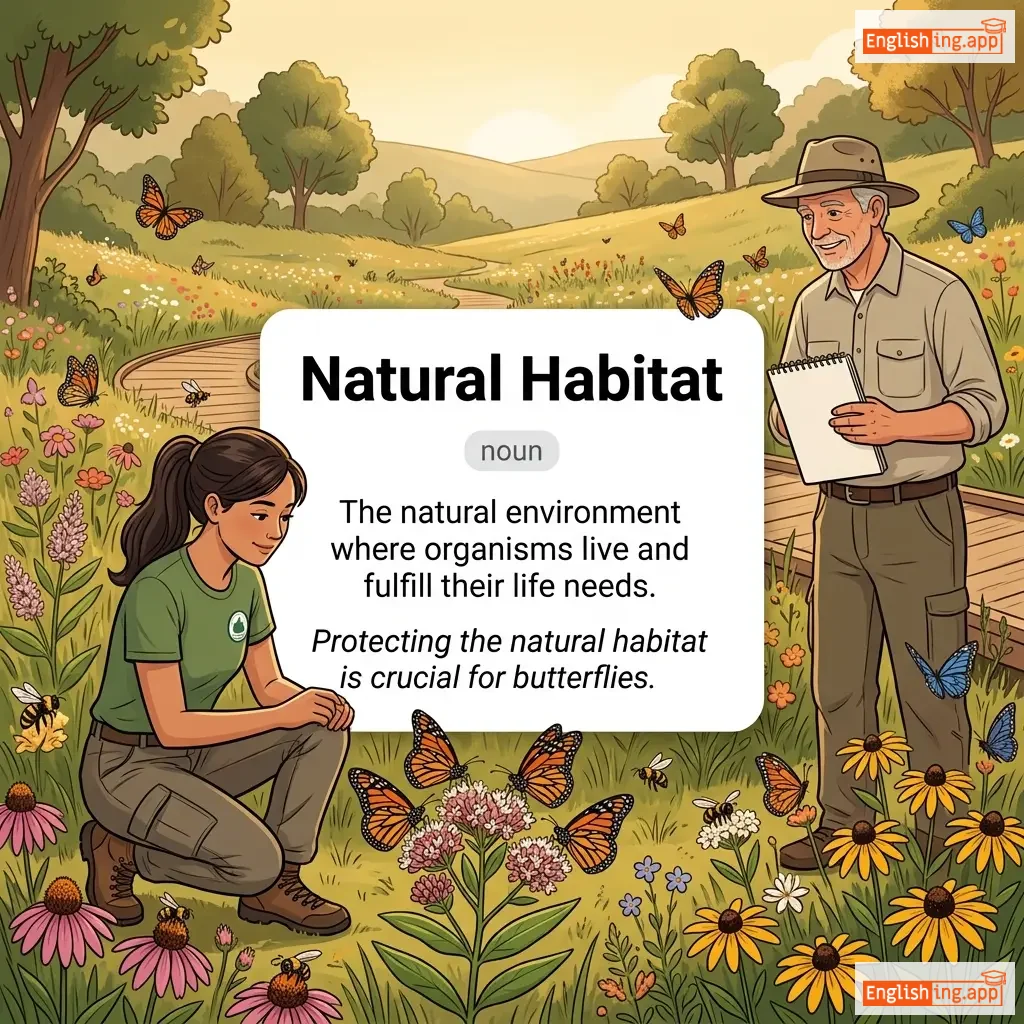
Natural Habitat definition card — visual illustration of the meaning
noun
ˈnætʃərəl ˈhæbɪtæt
自然の生息地 (shizen no seisokuchi)

The natural environment where organisms live and fulfill their life needs.

"Protecting the natural habitat is crucial for butterflies."

"蝶々のために自然の生息地を守ることが重要です。" (Choucho no tame ni shizen no seisokuchi o mamoru koto ga juuyou desu.)
adverb
/ˈnætʃrəli/
自然に (shizen ni)

In a way that is normal, expected, or without effort.

"He spoke so naturally that everyone felt comfortable."
"彼はとても自然に話したので、みんなが快適に感じました。" (Kare wa totemo shizen ni hanashita node, minna ga kaiteki ni kanjimashita.)
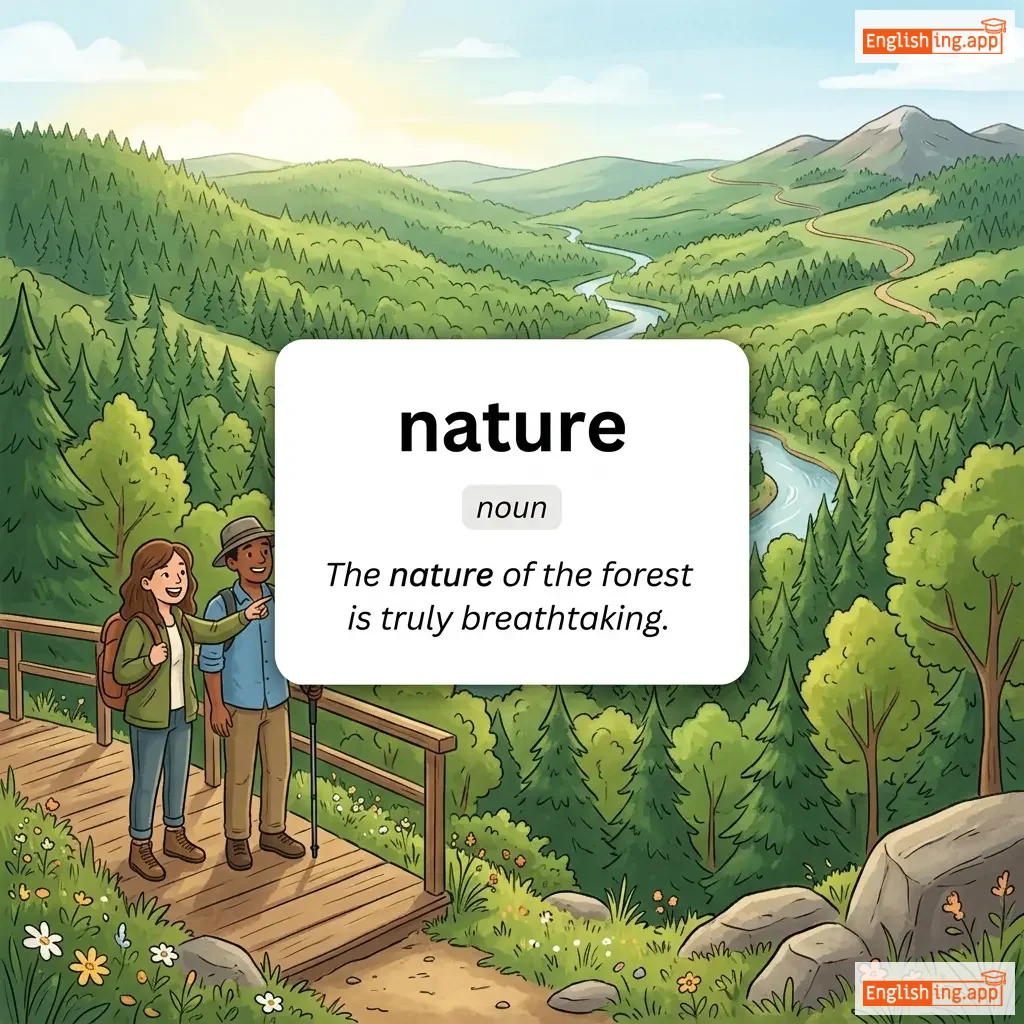
nature definition card — visual illustration of the meaning
noun
/ˈneɪtʃər/
自然 (shizen)

the physical world and everything in it, including plants, animals, and the landscape

"The nature of the forest is truly breathtaking."

"森の自然は本当に息を呑むほど素晴らしい。" (Mori no shizen wa hontō ni iki o nomu hodo subarashī.)
Nature Enthusiasts definition card — visual illustration of the meaning
noun
ˈneɪʧər ɪnˈθjuːziæsts
自然愛好家 (shizen aikouka)

People who have a passionate interest in and love for the natural world and outdoor activities.

"Nature enthusiasts often visit Sajek Valley for its scenic beauty."

"自然愛好家は、その美しい景色のためにサジェックバレーを訪れることがよくあります。" (Shizen aikouka wa, sono utsukushii keshiki no tame ni Sajek Barē o otozureru koto ga yoku arimasu.)
adjective
/ˈnɔːti/
いたずら (itazura)

Disobedient or mischievous, often in a playful or mildly bad way.

"The naughty child drew on the walls with crayons."

"いたずらな子供がクレヨンで壁に絵を描きました。" (Itazura na kodomo ga kureyon de kabe ni e o kakimashita.)
noun
/ˈnɔːziə/
吐き気 (hakike)

A feeling of sickness with an inclination to vomit.

"The strong smell of paint gave her a sudden nausea."

"強いペンキの匂いが彼女に突然吐き気を与えた。" (Tsuyoi penki no nioi ga kanojo ni totsuzen hakike o ataeta.)
verb
/ˈnɔːzieɪt/
吐き気を催す (hakike o moyasu)

To make someone feel sick, with an inclination to vomit.

"The spoiled food nauseated him quickly."

"腐った食べ物は彼をすぐに吐き気を催させました。" (Kusatta tabemono wa kare o sugu ni hakike o moyosase mashita.)
adjective
/ˈnɔːʃəs/
吐き気を感じる (hakike o kanjiru)

feeling like you are about to vomit; causing a feeling of sickness

"The smell of rotten food made her feel nauseous."

"腐った食べ物の匂いが彼女に吐き気を感じさせた。" (kusatta tabemono no nioi ga kanojo ni hakike o kanjiraseta.)