語彙集

英単語辞書 | 単語の意味、定義、例文

verb
/ˈwɒd.əl/
ヨチヨチ歩き (yochi yochi aruki)

to walk with short steps and a clumsy swaying motion, like a duck

"The duck waddled across the yard."

"カモは庭をヨチヨチ歩きで渡った。" (Kamo wa niwa o yochiyochi aruki de watatta.)
verb
/weɪd/
水を歩く (mizu o aruku)

to walk through water or another substance that impedes movement

"The children waded in the shallow river."

"子供たちは浅い川を歩いていました。" (Kodomotachi wa asai kawa o aruite imashita.)
noun/verb
/ˈwɒf.əl/
ワッフル (食品), あいまいに話す (waffuru (shokuhin), aimai ni hanasu)

as noun: a crisp cake with a pattern of deep squares; as verb: to speak or write vaguely without making a clear decision

"He kept waffling instead of making a decision."

"彼は決定を下す代わりに、ずっと迷っていました。" (Kare wa kettei o kudasu kawari ni, zutto mayotte imashita.)
verb
/wɑːft/
空中に漂う (kūchū ni tadayou)

to move gently through the air, carried by a breeze

"The smell of fresh bread wafted through the kitchen."

"新鮮なパンの香りがキッチンを漂ってきた。" (Shinsen na pan no kaori ga kitchin o tadayotte kita.)
verb
/wæɡ/
振る (furu)

to move or cause to move rapidly from side to side

"The dog wagged its tail happily."

"犬は嬉しそうに尾を振った。" (Inu wa ureshisou ni o wo futta.)
💰

Wage

noun/verb
/weɪdʒ/

payment for work or services, usually on a daily or weekly basis; also to engage in or carry on (a war, campaign, or struggle)

"The workers demanded a fair wage for their labor."

adjective
/ˈwæɡ.ɪʃ/
いたずら好きな、遊び心のある (itazura suki na, asobigokoro no aru)

playfully humorous or mischievous

"His waggish remarks made everyone laugh."

"彼のいたずらなコメントはみんなを笑わせた。" (Kare no itazura na komento wa minna o warawaseta.)
noun
/ˈwæɡən/
荷車 (nukimono)

a vehicle with four wheels used for carrying loads, often pulled by horses or a motor vehicle used for transporting goods or people

"The farmer loaded hay onto the wagon."

"農夫は干し草をワゴンに積んだ。" (Nōfu wa hoshi kusa o wagon ni tonda.)
noun
/weɪf/
ホームレスの子供 (hōmuresu no kodomo)

a homeless, neglected, or abandoned person, often a child

"The young waif wandered the streets in search of food."

"その若いホームレスの子供は食べ物を探して街をさまよっていた。" (Sono wakai hōmuresu no kodomo wa tabemono o sagashite machi o samayotte ita.)
noun
/weɪl/
泣き声; 叫び (wail)

a prolonged cry of pain, grief, or anger; to cry loudly

"The child's wail could be heard throughout the house."

"その子供の泣き声は家中に聞こえた。" (sono kodomo no nakigoe wa iejū ni kikoeta.)
noun
/weɪst/
ウエスト (uesuto)

the part of the human body between the ribs and the hips

"He tied a belt around his waist."

"彼はウエストにベルトを巻いた。" (Kare wa uesuto ni beruto o maita.)
noun
/weɪst tʃeɪn/
ウエストチェーン (uesuto chēn)

a decorative chain worn around the waist as jewelry or ornamentation

"The traditional waist chain complemented her ethnic outfit perfectly."

"伝統的なウエストチェーンは彼女の民族衣装を完璧に補完しました。" (Dentō-teki na uesuto chēn wa kanojo no minzoku isshō o kanpeki ni hokanshimashita.)
noun
/ˈweɪs(t).koʊt/
ベスト (besuto)

a sleeveless garment worn over a shirt and under a jacket

"He wore a black waistcoat with his suit."
"彼はスーツに黒いベストを着ていた。" (Kare wa suutsu ni kuroi besuto o kite ita.)
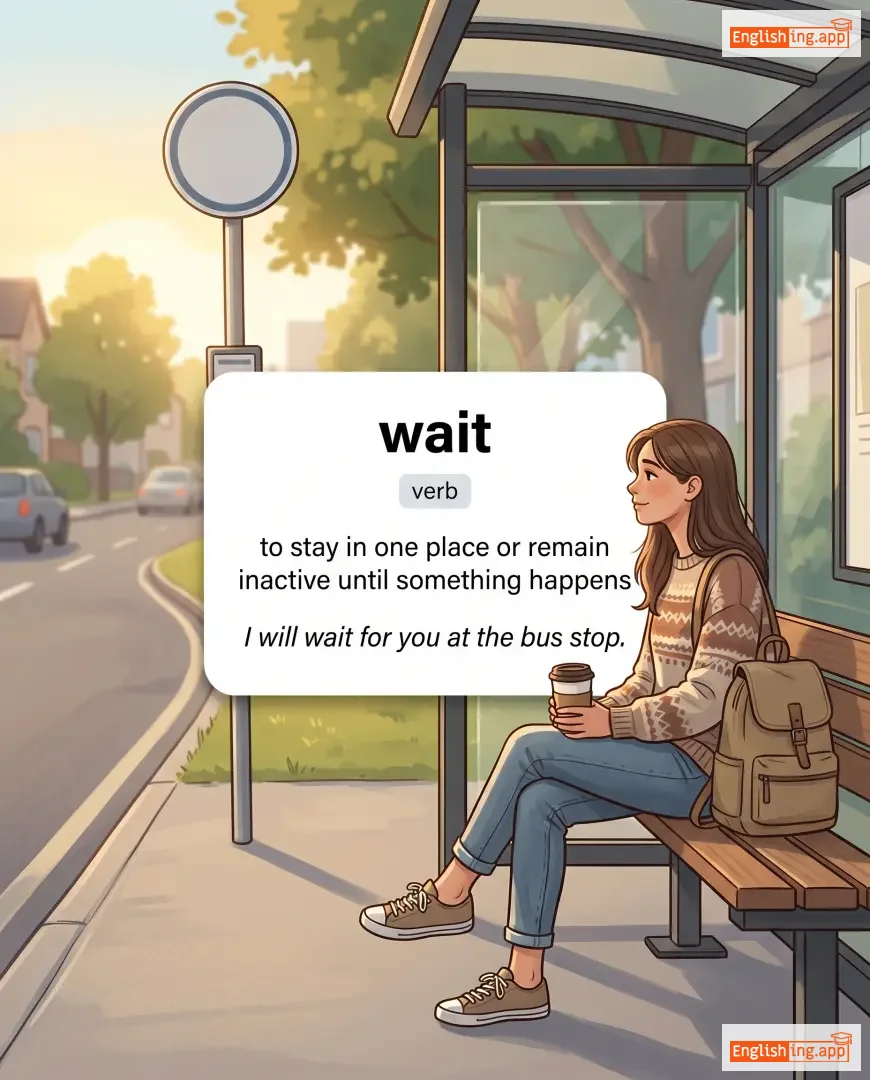
wait definition card — visual illustration of the meaning
verb
/weɪt/
待つ (matsu)

to stay in one place or remain inactive until something happens

"I will wait for you at the bus stop."

"私はバス停であなたを待ちます。" (Watashi wa basutei de anata o machimasu.)
noun
/ˈweɪtər/
給仕 (kyushi)

a person whose job is to serve food and drinks to customers in a restaurant or café

"The waiter brought the menu and took our order politely."

"給仕が丁寧にメニューを持ってきて注文を取った。" (kyushi ga teinei ni menyu o motte kite chuumon o totta)
noun
/ˈweɪtrəs/
ウェイトレス (weitoresu)

a woman who serves food and drinks to customers in a restaurant or café

"The waitress took our order with a friendly smile."

"ウェイトレスは笑顔で注文を取りました。" (Weitoresu wa egao de chumon o torimashita)
verb
/weɪv/
幸せ (shiawase)

to refrain from insisting on or enforcing something, especially a right or claim

"She decided to waive her right to a lawyer."
"彼女は賞を受け取ったとき、幸せを隠すことができませんでした。" (Kanojo wa shō o uketotta toki, shiawase o kakusu koto ga dekimasen deshita.)
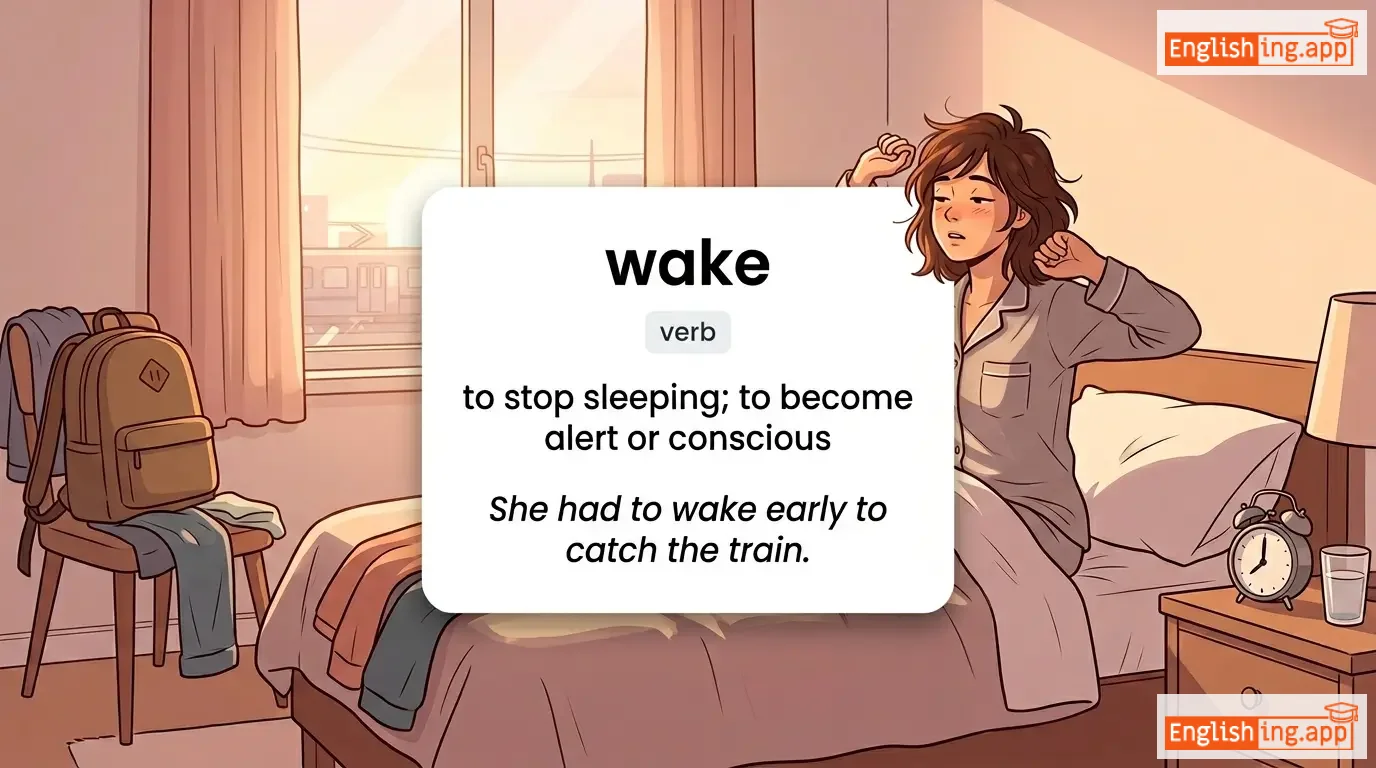
wake definition card — visual illustration of the meaning
verb
/weɪk/
幸せ (shiawase)

to stop sleeping; to become alert or conscious

"She had to wake early to catch the train."

"彼女は賞を受け取ったとき、幸せを隠せなかった。" (Kanojo wa shō o uketotta toki, shiawase o kakusenakatta.)
adjective
/ˈweɪ.kɪŋ/
目覚めている; 意識的な (mezamete iru; ishikiteki na)

awake and conscious; relating to the time when one is awake

"She spent her waking hours studying for the exam."
"彼女は試験のために目覚めている時間を勉強に費やしました。" (Kanojo wa shiken no tame ni mezamete iru jikan wo benkyou ni tsuiyashimashita.)
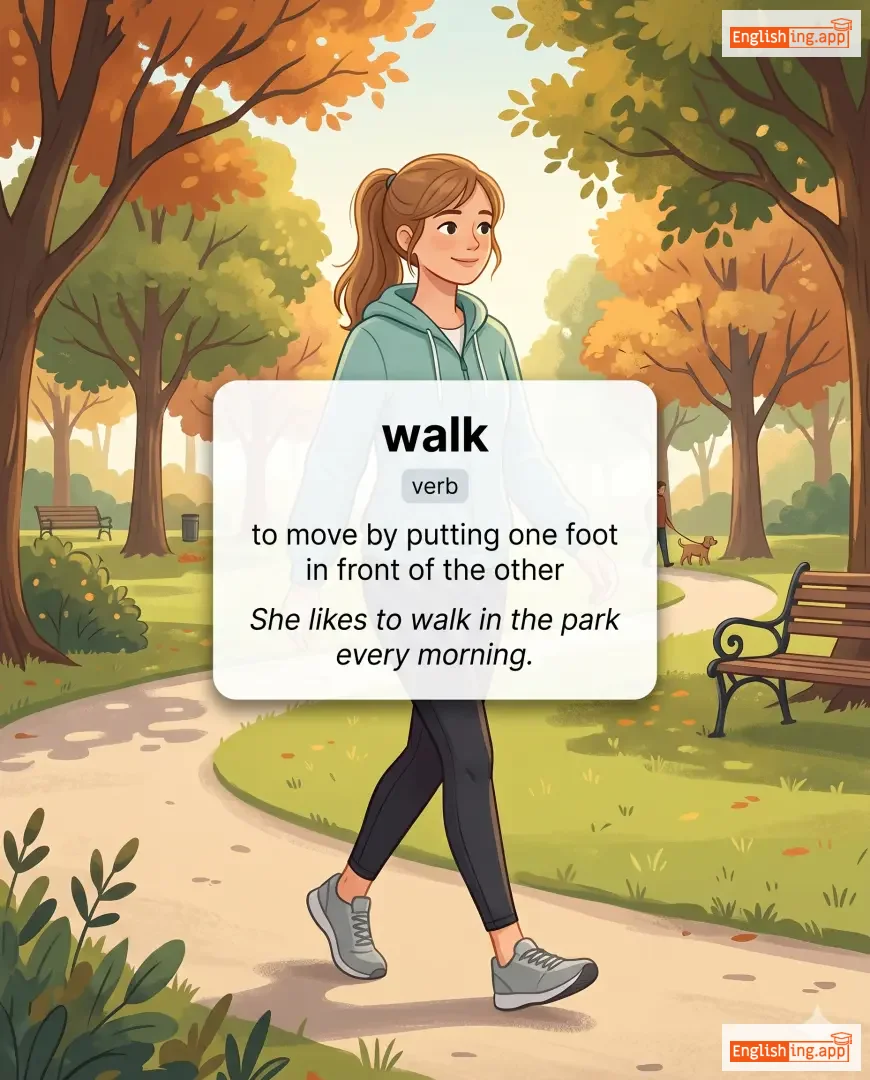
walk definition card — visual illustration of the meaning
verb
/wɔːk/
歩く (aruku)

to move by putting one foot in front of the other

"She likes to walk in the park every morning."

"彼女は毎朝公園を歩くのが好きです。" (Kanojo wa maiasa kōen o aruku no ga suki desu.)
noun
/ˈwɔːkɪŋ/
歩く (aruku)

the activity of moving on foot at a moderate pace

"Walking every morning is good for your health."

"毎朝歩くことは健康に良いです。" (Maiasa aruku koto wa kenkō ni yoi desu.)
noun
/ˈwɔːkɪŋ fɪʃ/
ウォーキングフィッシュ (wōkingu fisshu)

a fish that can move on land using its fins and breathe air for extended periods

"The walking-fish can travel across dry land to find new water sources."

"ウォーキングフィッシュは乾燥した土地を越えて新しい水源を見つけることができます。" (wōkingu fisshu wa kansō shita tochi o koete atarashī suigen o mitsukeru koto ga dekimasu.)
noun
/wɔːl/
(kabe)

a vertical structure that encloses or divides an area

"The wall in our living room is painted blue."

"リビングルームの壁は青く塗られています。" (Ribingu rūmu no kabe wa aoku nurarete imasu.)
noun
/ˈwɒlɪt/
財布 (saifu)

a small folding case for carrying money, credit cards, and identification

"He pulled out his wallet to pay for the coffee."

"彼はコーヒーを払うために財布を取り出しました。" (Kare wa koohii o harau tame ni saifu o toridashimashita.)
verb
/ˈwɒloʊ/
ゴロゴロする, ふける (gorogoro suru, fukeru)

to roll about or indulge oneself in something excessively

"The buffalo likes to wallow in the mud on hot days."

"バッファローは暑い日には泥の中でゴロゴロするのが好きです。" (Baffarō wa atsui hi ni wa doro no naka de gorogoro suru no ga suki desu.)
noun
/ˈwɔːl.nʌt/
クルミ (kurumi)

an edible nut with a hard shell and a wrinkled appearance

"I love to eat walnuts with honey for breakfast."

"私は朝食に蜂蜜と一緒にクルミを食べるのが好きです。" (Watashi wa chōshoku ni hachimitsu to issho ni kurumi o taberu no ga suki desu.)
noun
/ˈwɑːmpəm/
貝殻のネックレス (kaigara no nekkuresu)

beads made by Native Americans from shells, used as money or decoration

"The tribe traded furs for wampum."
"部族は毛皮と引き換えに貝殻のネックレスを取引した。" (Buzoku wa kegawa to hiki kae ni kaigara no nekkuresu o torihiki shita.)
adjective
/wɒn/
青白い (aoshiroi)

looking pale or sickly; lacking color or vitality

"After the long illness, his face looked wan and tired."

"長い病気の後、彼の顔は青白くて疲れて見えた。" (Nagai byouki no ato, kare no kao wa aoshirokute tsukarete mietā.)
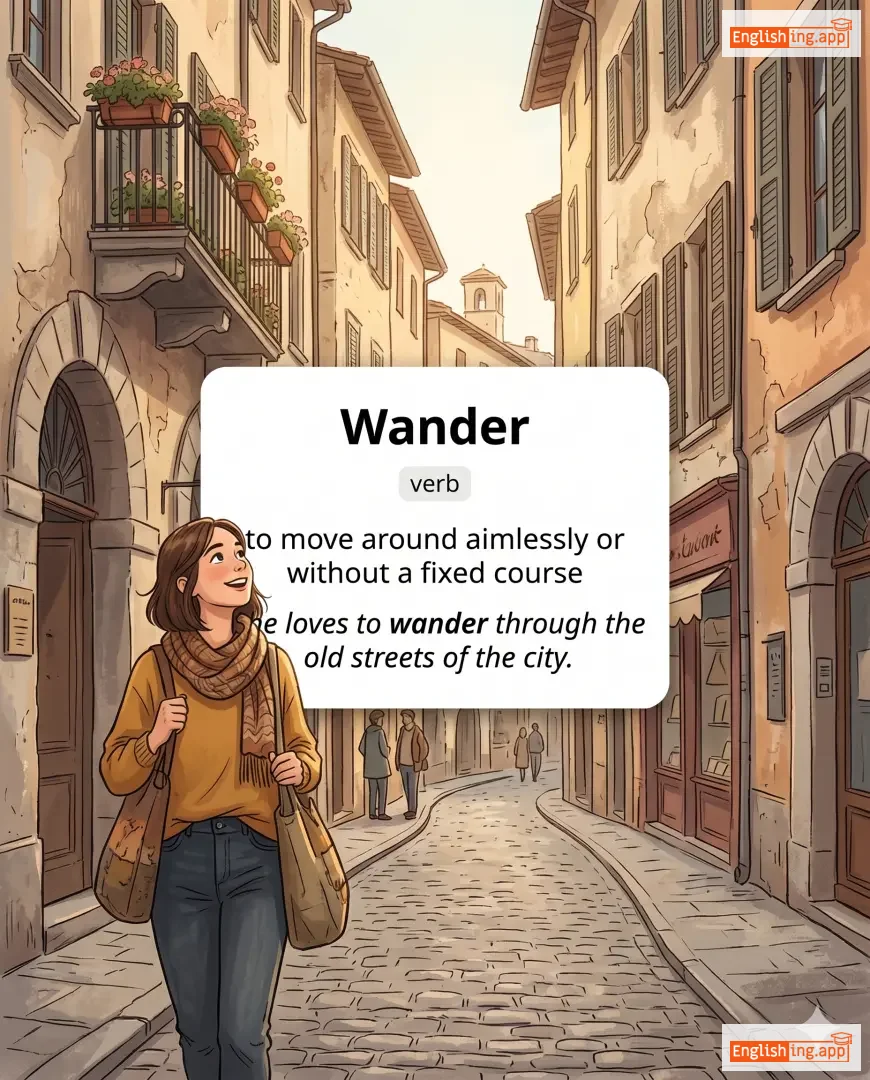
Wander definition card — visual illustration of the meaning
verb
/ˈwɒndər/
さまよう (samayou)

to move around aimlessly or without a fixed course

"She loves to wander through the old streets of the city."

"彼女は街の古い通りを歩くのが好きです。" (Kanojo wa machi no furui toori wo aruku no ga suki desu.)
noun
/ˈwɒndərər/
放浪者; 明確な目的地なしに旅をする人 (wandarā)

a person who travels aimlessly; someone who roams from place to place

"The wanderer explored different countries without a fixed destination."

"放浪者は固定された目的地なしで異なる国々を探検しました。" (Hōrō-sha wa kotei sareta mokutekichi nashi de kotonaru kuniguni o tanken shimashita.)
noun
/ˈwɒndərlʌst/
旅行への欲望 (ryokou e no yokubou)

A strong desire to travel and explore the world.

"Her wanderlust took her to every corner of the globe."

"彼女の旅行への欲望は、世界の隅々まで彼女を連れて行った。" (Kanojo no ryokou e no yokubou wa, sekai no sumizumi made kanojo o tsurete itta.)
verb
/weɪn/
減少する (genshousuru)

To decrease gradually in power, intensity, or size.

"The moon wanes after the full moon night."

"月は満月の夜の後に減少する。" (Tsuki wa mangetsu no yoru no ato ni genshousuru.)
verb
/ˈwaŋɡl/
巧妙に何かを達成する (kōmyō ni nanika o tassei suru)

To achieve something by clever or sometimes dishonest persuasion or trickery.

"He wangled a free ticket to the concert."
"彼はコンサートの無料チケットを巧妙に手に入れた。" (Kare wa konsāto no muryō chiketto o kōmyō ni te ni iretā.)
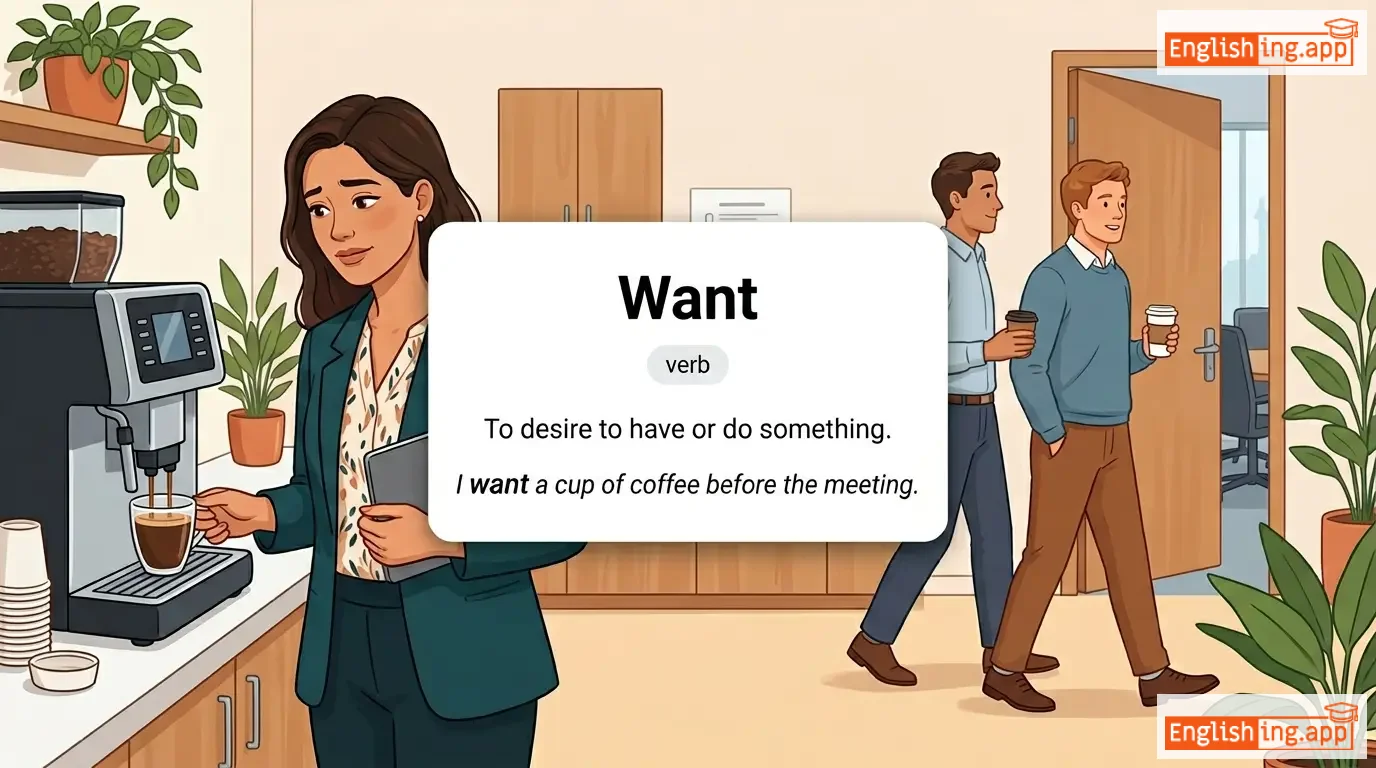
Want definition card — visual illustration of the meaning
verb
/wɒnt/
欲しい (hoshii)

To desire to have or do something.

"I want a cup of coffee before the meeting."

"私は会議の前にコーヒーを一杯欲しいです。" (Watashi wa kaigi no mae ni koohii wo ippai hoshii desu.)
adjective
/ˈwɒntɪŋ/
不足 (fusoku)

Lacking or deficient in quality or quantity.

"His explanation was wanting in clarity."

"彼の説明は明確さに欠けていた。" (kare no setsumei wa meikakusa ni kaketeita.)
adjective
/ˈwɒntən/
不必要な残虐行為 (fuhitsuyōna zangyaku kōi)

Deliberate and unprovoked; reckless or cruel.

"The soldiers were accused of wanton destruction."

"兵士たちは不必要な破壊で非難されました。" (Heishitachi wa fuhitsuyōna hakai de hinan saremashita.)
noun
/ˈwɒntənnəs/
無意味な残虐 (muimi na zankyaku)

The quality of being reckless, cruel, or deliberately malicious.

"His wantonness shocked everyone at the gathering."

"彼の無意味な残虐は集まりの全員を驚かせました。" (Kare no muimi na zankyaku wa atsumari no zen'in o odokasemashita.)
noun
/wɔːr/
戦争 (sensou)

a state of conflict between different countries or groups

"The war caused great suffering to the people."

"戦争は人々に大きな苦しみをもたらしました。" (Sensou wa hitobito ni ookina kurushimi wo motarashimashita.)
verb
/ˈwɔːbəl/
震える声で歌うまたはトリルで口笛を吹く (furueteru koe de utau mata wa toriru de kuchibue wo fuku)

To sing or whistle with a quavering voice or with trills.

"The bird warbled a sweet tune in the morning."

"その鳥は朝に甘いメロディを歌った。" (Sono tori wa asa ni amai merodi wo utatta.)
noun
/wɔːrd/
病棟 (byoutou)

A separate room in a hospital for patients; also a division of a city or a person under guardianship.

"She was admitted to the children's ward."

"彼女は子供病棟に入院しました。" (Kanojo wa kodomo byoutou ni nyu'in shimashita.)
noun
/ˈwɔːdrəʊb/
クローゼット (kurōzetto)

A large cupboard where clothes are stored; also the collection of clothes someone owns.

"Her wardrobe is full of colorful dresses."

"彼女のクローゼットはカラフルなドレスでいっぱいです。" (Kanojo no kurōzetto wa karafuru na doresu de ippai desu.)
noun
/ˈweə(r)haʊs/
倉庫 (sōko)

a large building where goods are stored before being sold or distributed

"The company stores all its products in a big warehouse."

"会社はすべての製品を大きな倉庫に保管しています。" (Kaisha wa subete no seihin o ōkina sōko ni hokan shiteimasu.)
noun
/ˈwɔːfeə/
戦争 (sensou)

engagement in or the activities involved in war

"The country prepared for the possibility of total warfare."

"その国は全面戦争の可能性に備えて準備を整えました。" (Sono kuni wa zenmen sensou no kanousei ni sonaete junbi o totonoemashita.)
adjective
/ˈwɔːrˌlaɪk/
戦闘的 (sentōteki)

Having an aggressive or militant nature; inclined to fight or engage in war.

"The tribe was known for its warlike traditions."

"その部族は戦闘的な伝統で知られていました。" (Sono buzoku wa sentōteki na dentō de shirarete imashita.)
adjective
/wɔːrm/
暖かい (atatakai)

having a moderate degree of heat

"The warm sunlight made the room feel cozy."
"暖かい日差しが部屋を快適にした。" (Atatakai hizashi ga heya o kaiteki ni shita.)
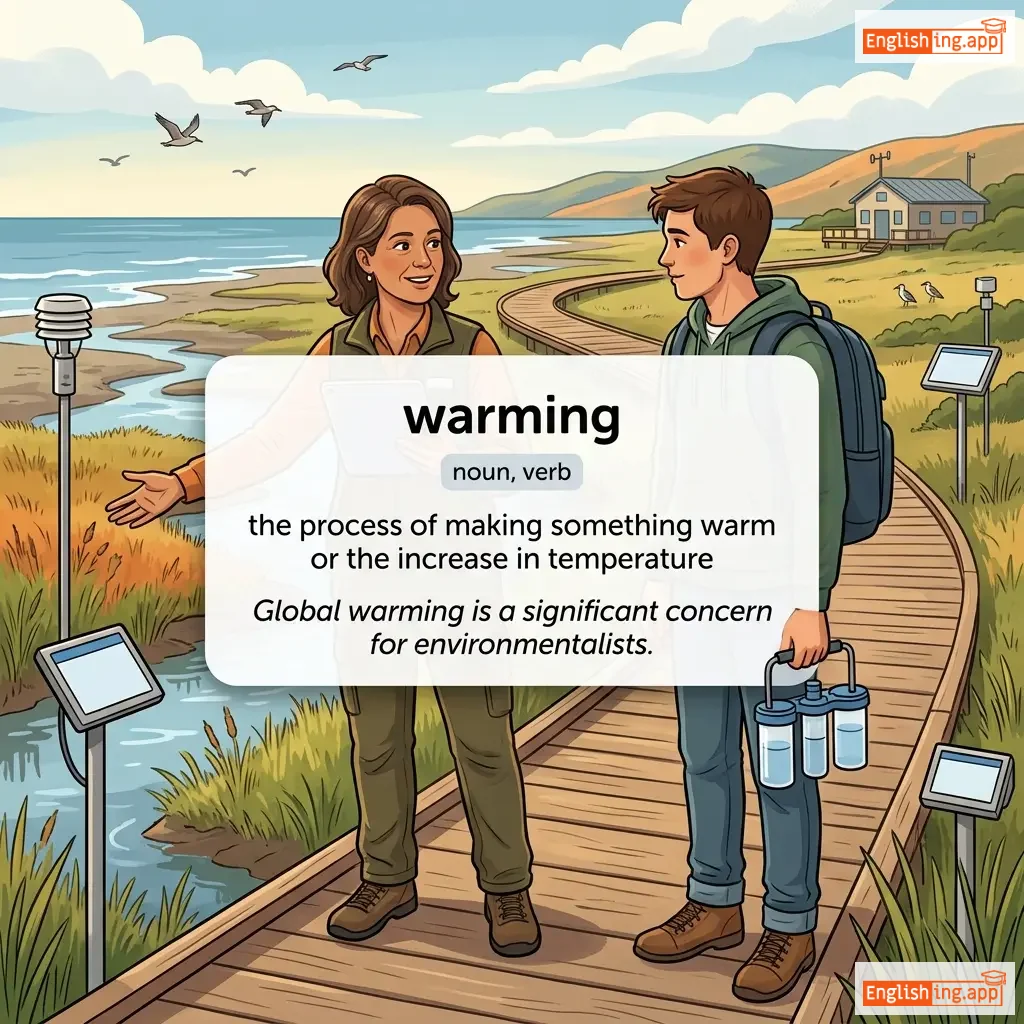
warming definition card — visual illustration of the meaning
noun, verb
/ˈwɔːmɪŋ/
温度上昇 (ondo joushou)

the process of making something warm or the increase in temperature

"Global warming is a significant concern for environmentalists."

"地球温暖化は環境活動家にとって重要な問題です。" (Chikyuu ondanka wa kankyou katsudouka ni totte juuyou na mondai desu.)
adverb
/ˈwɔːm.li/
温かく; 愛情を込めて (atatakaku; aijou wo komete)

in a warm manner; with warmth; cordially; affectionately

"She welcomed the guests warmly at the door."

"彼女はドアでゲストを温かく迎えました。" (Kanojo wa doa de gesuto wo atataku mukaemashita.)
noun
/ˈwɔːrˌmʌŋɡər/
戦争煽動者 (sensō sandōsha)

A person who advocates or promotes war or conflict.

"The leader was criticized as a warmonger by his opponents."

"そのリーダーは、対立者から戦争煽動者として批判された。" (Sono rīdā wa, tairitsusha kara sensō sandōsha to shite hihan sareta.)
noun
/wɔːmθ/
温かさ (atatakasa)

the quality or state of being warm in temperature or feeling

"She felt the warmth of the sun on her face."
"彼女は顔に太陽の温もりを感じた。" (Kanojo wa kao ni taiyō no nukumori o kanjita.)
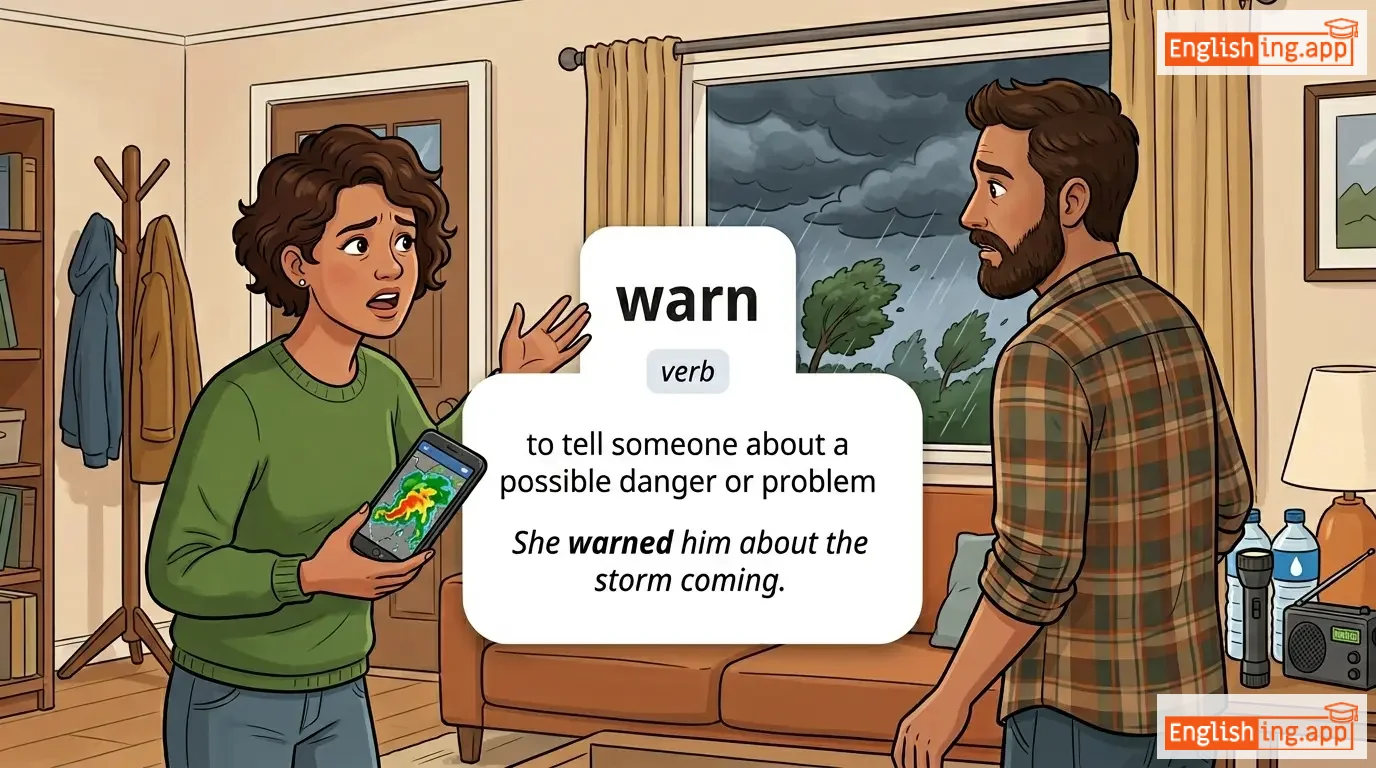
warn definition card — visual illustration of the meaning
verb
/wɔːrn/
警告する (keikoku suru)

to tell someone about a possible danger or problem

"She warned him about the storm coming."

"彼女は迫り来る嵐について彼に警告した。" (Kanojo wa semarikuru arashi ni tsuite kare ni keikoku shita.)