語彙集

英単語辞書 | 単語の意味、定義、例文

interjection
/hɑː/
ハ!(驚きや喜びを表現する言葉) (Ha! (Odoroki ya yorokobi wo hyougen suru kotoba))

used to express amusement, surprise, or triumph

"Ha! I knew you couldn’t resist joining us."
"ハ!君が僕たちに加わることを抵抗できないって知っていたよ。" (Ha! Kimi ga bokutachi ni kuwaeru koto wo teikou dekinai tte shitteta yo.)
habit definition card — visual illustration of the meaning
noun
/ˈhæb.ɪt/
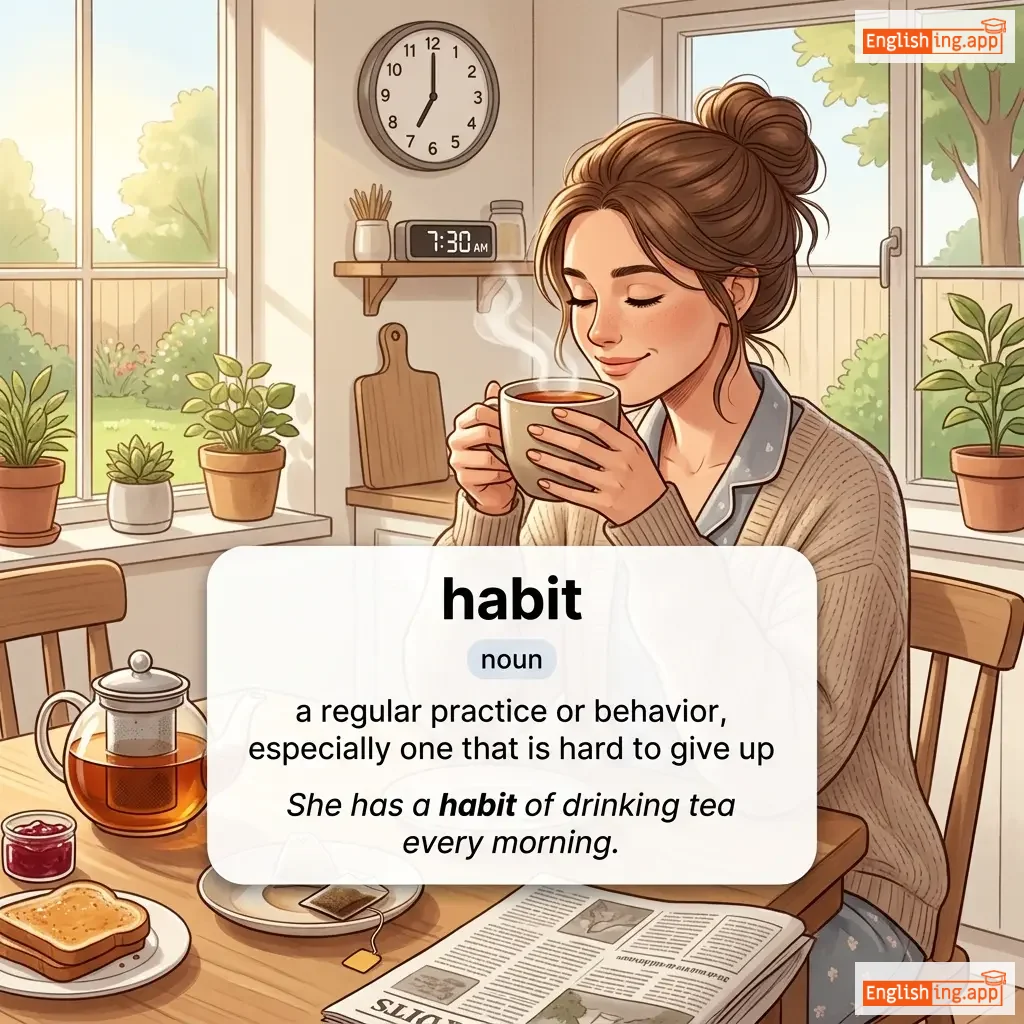
習慣 (shūkan)

a regular practice or behavior, especially one that is hard to give up

"She has a habit of drinking tea every morning."
"彼女は毎朝お茶を飲む習慣がある。" (Kanojo wa maiasa ocha o nomu shūkan ga aru.)
habit formation definition card — visual illustration of the meaning
noun
ˈhæb.ɪt fɔːrˌmeɪ.ʃən
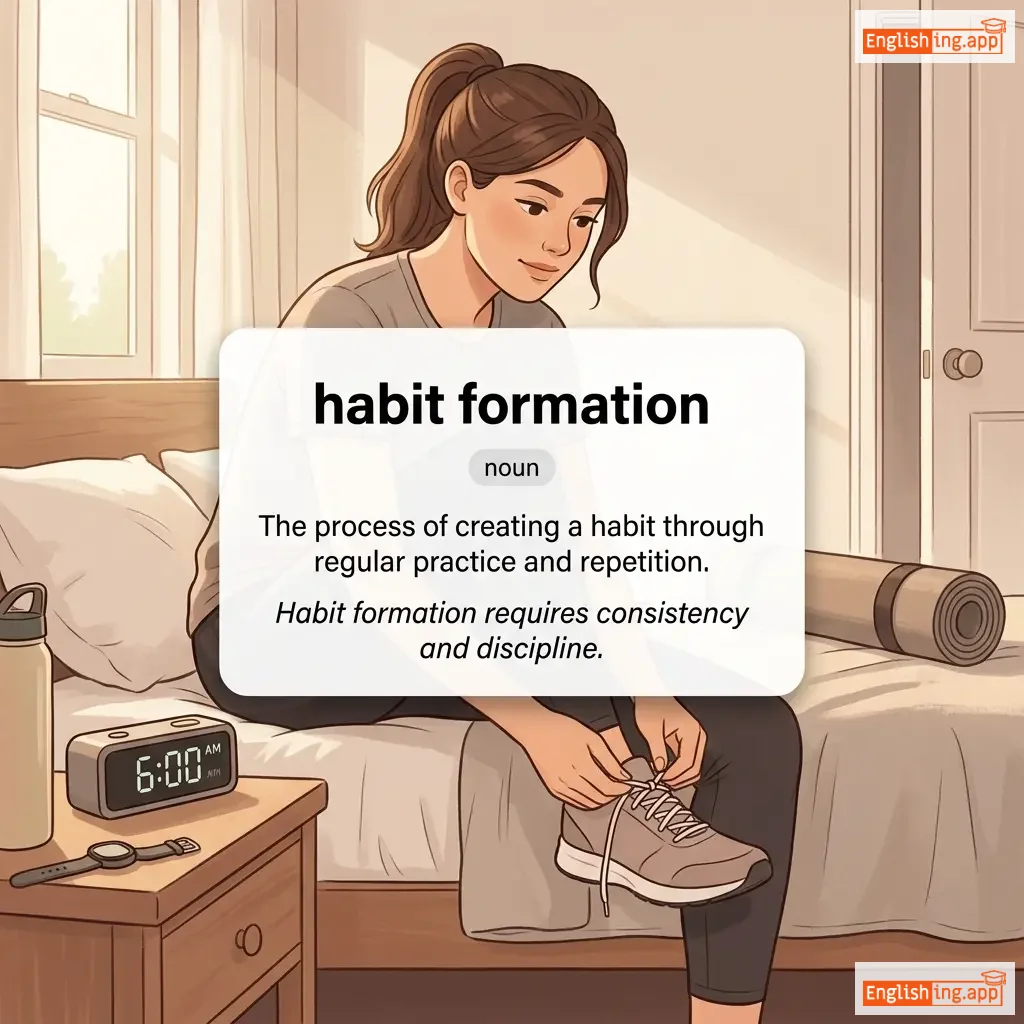
習慣形成 (shūkan keisei)

The process of creating a habit through regular practice and repetition.

"Habit formation requires consistency and discipline."

"習慣形成には一貫性と規律が必要です。" (Shūkan keisei ni wa ikkansē to kiritsu ga hitsuyō desu.)
adjective
/ˈhæbɪtəbl/
住める (sumeru)

Suitable to live in; capable of sustaining life.

"Scientists are searching for habitable planets beyond our solar system."

"科学者たちは私たちの太陽系を超えた住める惑星を探しています。" (Kagakusha-tachi wa watashitachi no taiyōkei o koeta sumeru wakusei o sagashiteimasu.)
👨‍👩‍👧‍👦

habitant (ハビタント)

noun
/ˈhæbɪtənt/
住民 (jūmin)

An inhabitant; a person or animal that lives in a particular place.

"The habitants of the village were friendly and welcoming."
"村の住民は親切で歓迎してくれました。" (Mura no jūmin wa shinsetsu de kangei shite kuremashita.)
habitat definition card — visual illustration of the meaning
noun
/ˈhæbɪˌtæt/
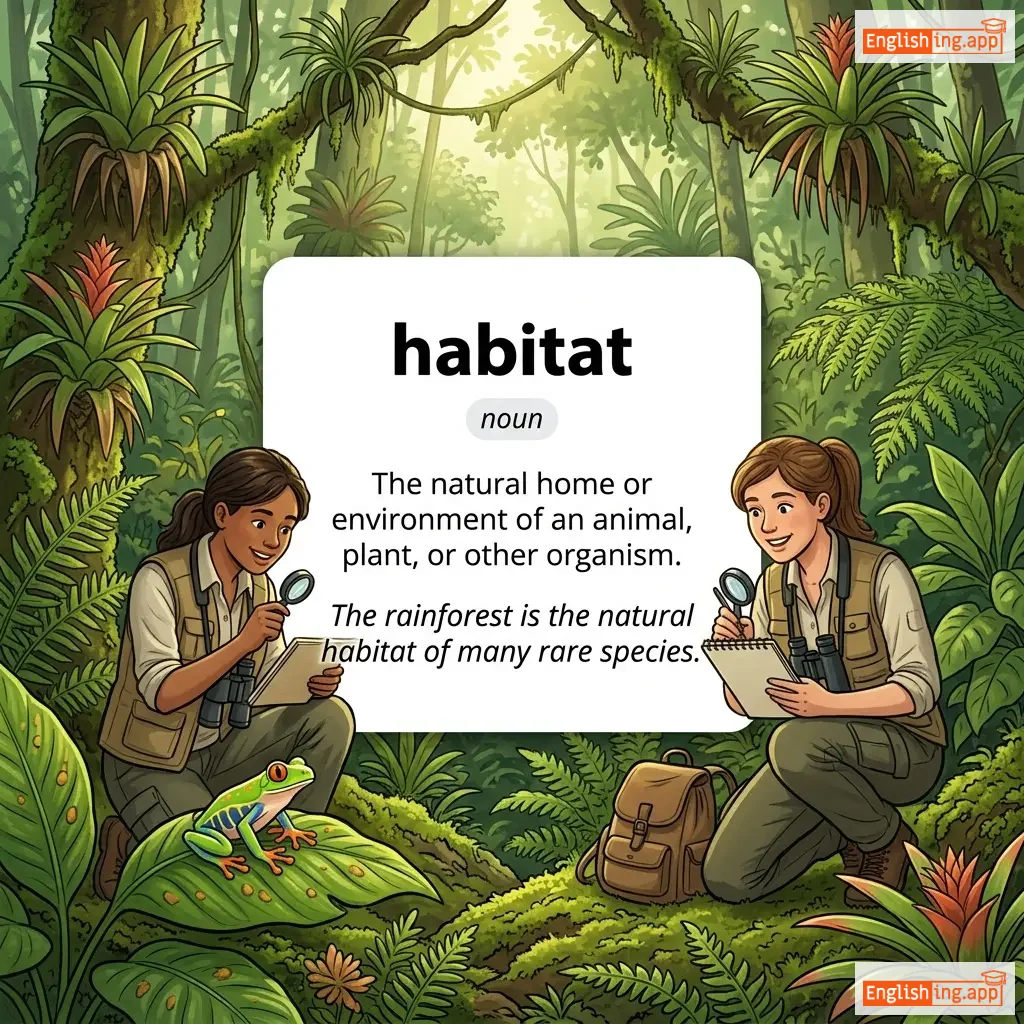
生息地 (seikokuchi)

The natural home or environment of an animal, plant, or other organism.

"The rainforest is the natural habitat of many rare species."
"熱帯雨林は多くの希少種の自然な生息地です。" (Nettai urin wa ōku no kishō-shu no shizen na seikokuchi desu.)
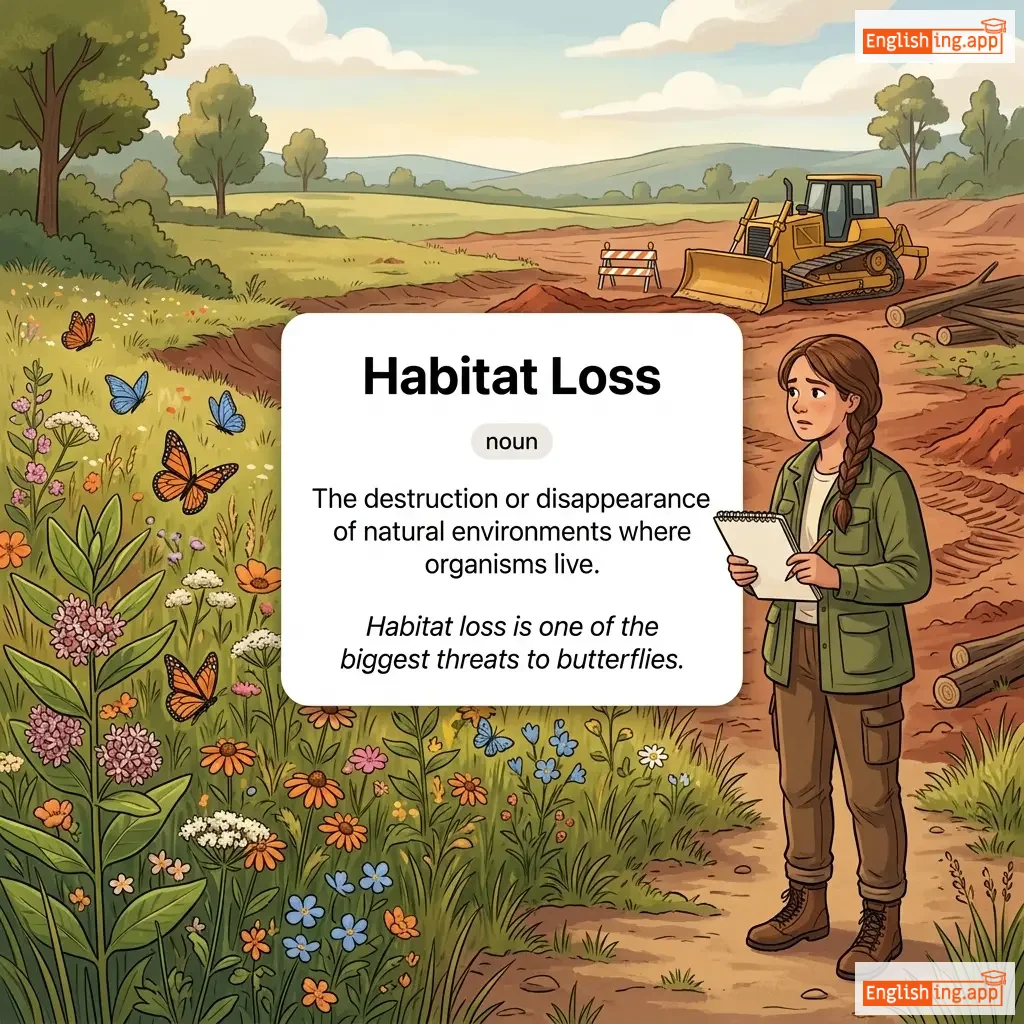
Habitat Loss definition card — visual illustration of the meaning
noun
ˈhæbɪtæt lɒs
生息地喪失 (seisokuchi sōshitsu)

The destruction or disappearance of natural environments where organisms live.

"Habitat loss is one of the biggest threats to butterflies."
"生息地の喪失は蝶々にとって最大の脅威の一つです。" (Seisokuchi no sōshitsu wa chōchō ni totte saidai no kyōi no hitotsu desu.)
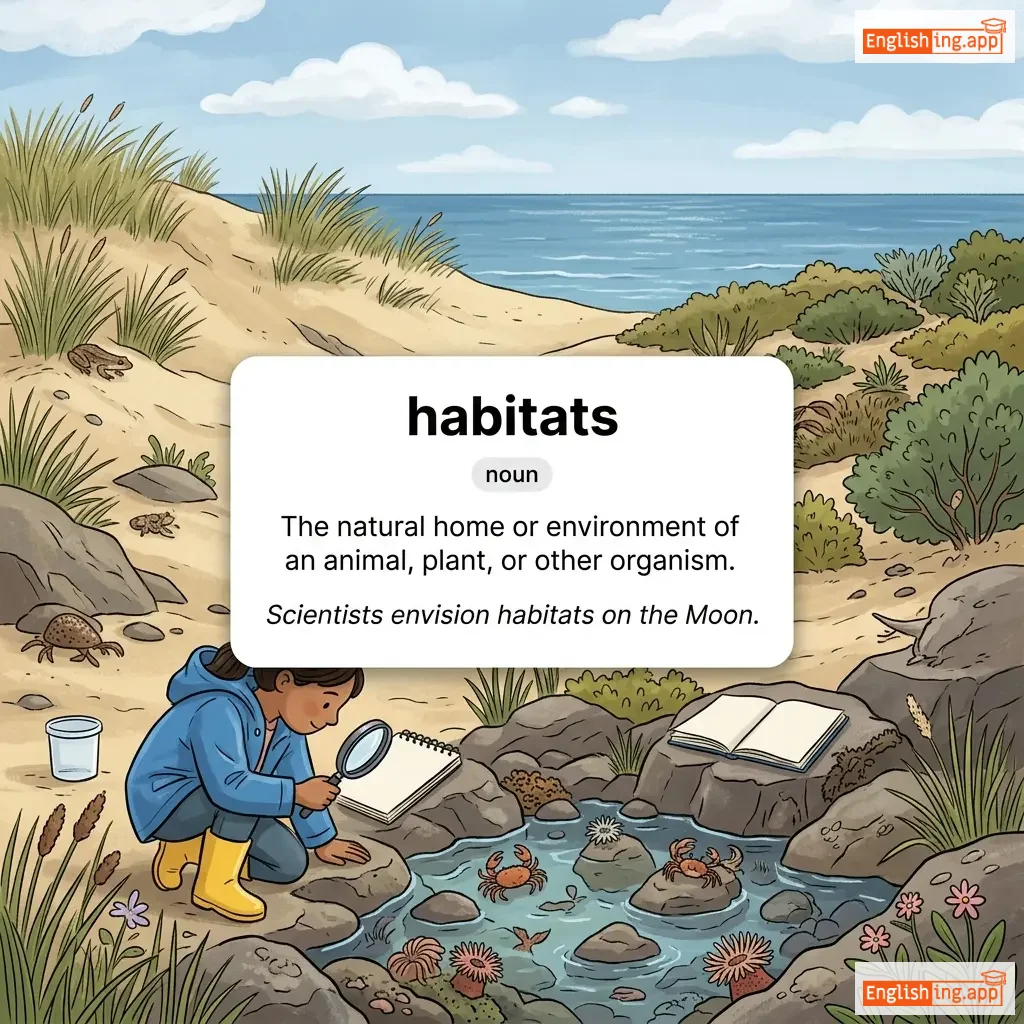
habitats definition card — visual illustration of the meaning
noun
ˈhæb.ɪ.tæts
生息地 (seisokuchi)

The natural home or environment of an animal, plant, or other organism.

"Scientists envision habitats on the Moon."

"科学者たちは月面にハビタッツを想像しています。" (Kagakusha-tachi wa getsumen ni habitats o sōzō shiteimasu.)
adjective
/həˈbɪtʃuəl/
習慣的な (shūkantēkina)

Done or doing constantly or as a habit; customary.

"He was a habitual latecomer to class."
"彼は授業に習慣的に遅刻していた。" (Kare wa jugyō ni shūkantēni chikoku shite ita.)
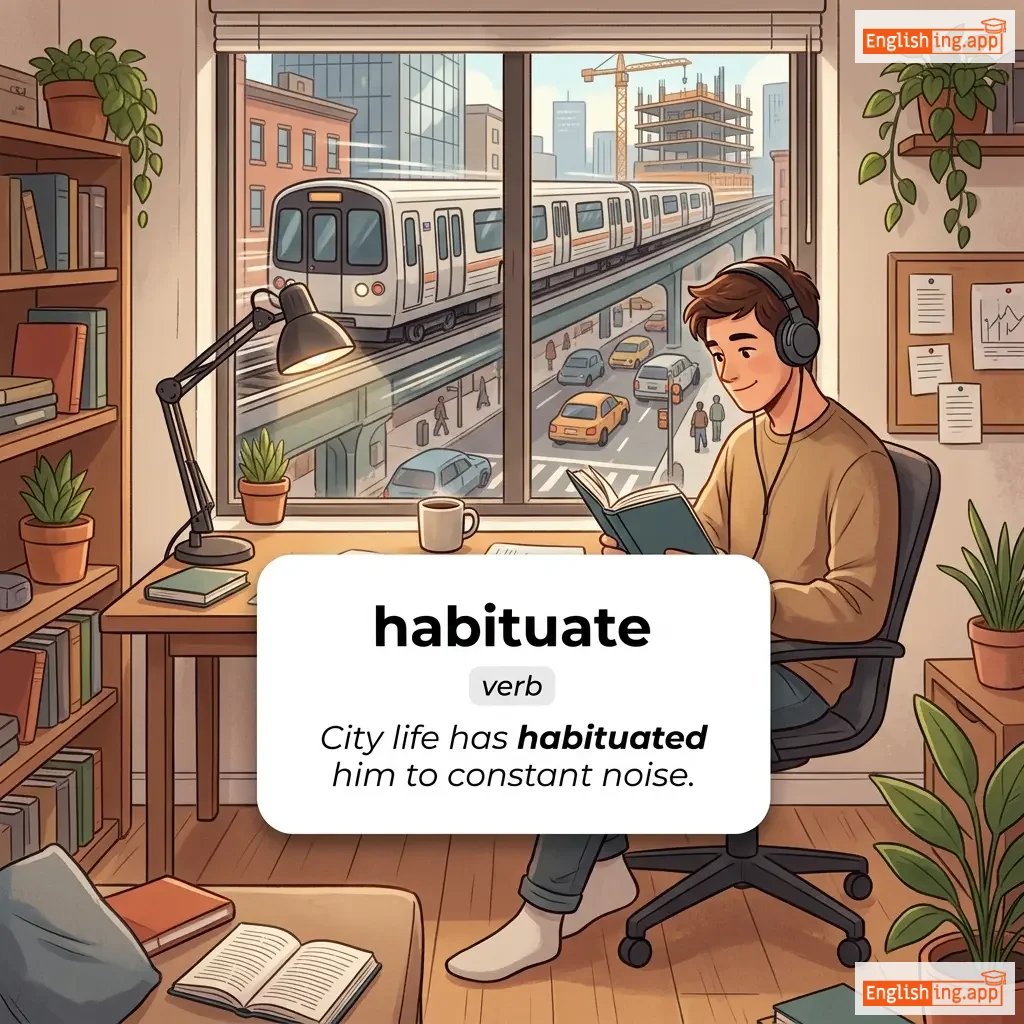
habituate definition card — visual illustration of the meaning
verb
/həˈbɪtʃueɪt/
慣れる (nareru)

to accustom someone or oneself to something through frequent exposure or experience

"City life has habituated him to constant noise."

"都市生活は彼を常に騒音に慣れさせた。" (Toshi seikatsu wa kare o jōnī sawon ni naresaseta.)
noun
/ˈhæbɪtjuːd/
習慣、慣習 (shūkan, kanshū)

a customary condition or mode of life; habitual practice

"He lived in a quiet habitude, avoiding the noise of the city."

"彼は静かな習慣の中で暮らしていた、都市の騒音を避けながら。" (Kare wa shizukana shūkan no naka de kurashite ita, toshi no sōon o sake-nagara.)
💻

hack

verb
/hæk/

to cut or chop roughly; to gain unauthorized access to a computer system

"The programmer managed to hack into the system."

noun
/ˈhækəlz/

the hairs on the back of an animal’s neck that rise when it is angry or alarmed; figuratively, feelings of anger or resentment

"His rude comment raised my hackles."

noun
/ˈhæknɪ/
貸し馬, 陳腐な (kashi uma, chinpuna)

a horse kept for ordinary riding or hire; also used for something overused or trite

"The old hackney was still pulling the carriage."

"その古い貸し馬は今でも馬車を引いていた。" (Sono furui kashi uma wa imademo basha wo hiiteita.)
noun
/ˈhæk.ni ˈkær.ɪdʒ/
ハックニーキャリッジ (hakkunī kyarijji)

A taxi; a car licensed to carry passengers for hire

"I called a hackney carriage to get to the airport."

"空港に行くためにハックニーキャリッジを呼びました。" (Kūkō ni iku tame ni hakkunī kyarijji o yobimashita.)
adjective
/ˈhæk.nid/
使い古された (tsukai furusareta)

Used too often and therefore lacking originality or freshness.

"The speech was filled with hackneyed phrases that failed to inspire the audience."

"そのスピーチは使い古されたフレーズでいっぱいで、聴衆を鼓舞することはなかった。" (Sono supīchi wa tsukai furusareta furēzu de ippai de, chōshū o kobu suru koto wa nakatta.)
🧙‍♀️

Hag (ハグ)

noun
/hæɡ/
魔女 (majo)

an ugly old woman, especially a vicious or malicious one; a witch

"In the fairy tale, the wicked hag lived alone in a cottage deep in the forest."

"おとぎ話では、邪悪な魔女が森の奥深くの小屋に一人で住んでいた。" (Otogibanashi de wa, jaaku na majo ga mori no oku fukaku no koya ni hitori de sunde ita.)
adjective
/ˈhæɡ.ərd/
疲れ切った (tsukare kitta)

Looking exhausted, unwell, or worn out, especially from fatigue or suffering.

"After working all night, she looked pale and haggard."
"一晩中働いた後、彼女は青白くて疲れきった様子だった。" (Hitobanjuu hataraita ato, kanojo wa aoshirakute tsukare kitta yousu datta.)
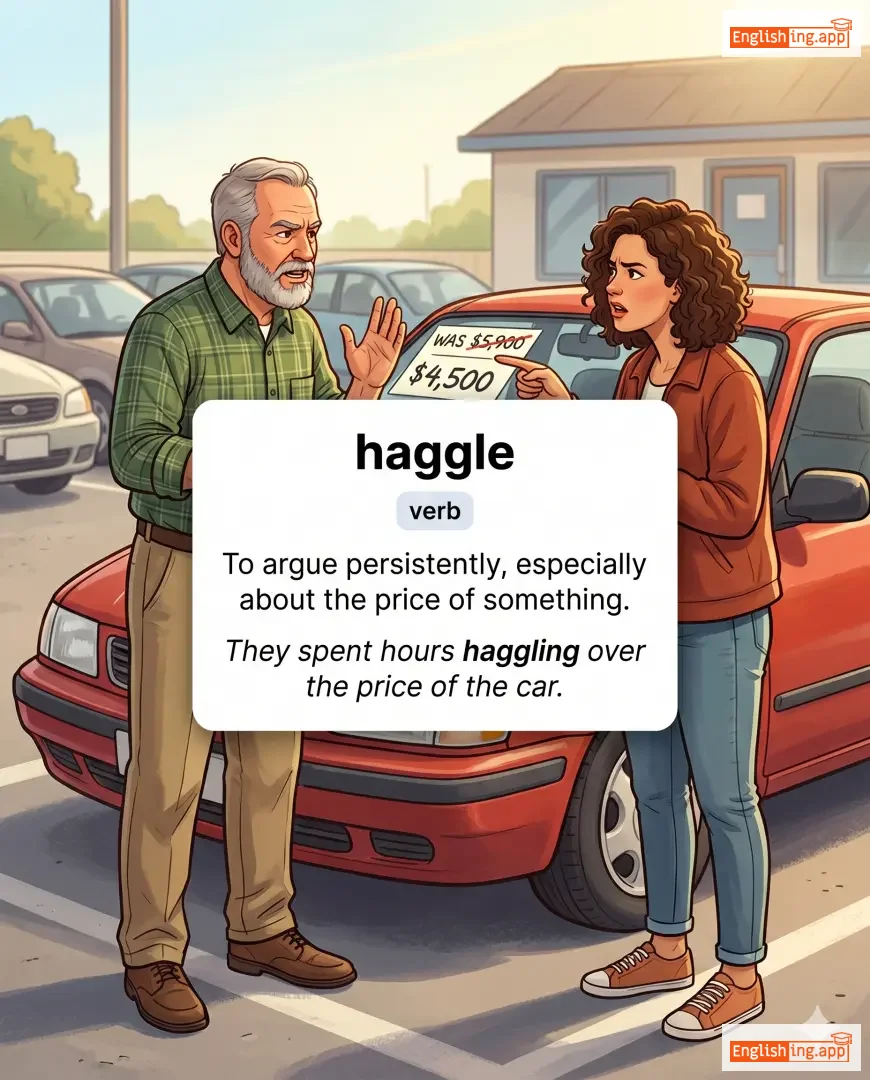
haggle definition card — visual illustration of the meaning
verb
/ˈhæɡ.l̩/
値段交渉する (nedan kōshō suru)

To argue persistently, especially about the price of something.

"They spent hours haggling over the price of the car."

"彼らは車の価格について何時間も値段交渉をしました。" (Karera wa kuruma no kakaku ni tsuite nan-jikan mo nedan kōshō o shimashita.)
adjective
/ˌhæɡ.i.əˈɡræf.ɪk/
過度に賛美的な (kadoni sanbitekina)

Excessively flattering or idealized, often in a biography or portrayal of someone.

"The documentary was criticized for its hagiographic portrayal of the leader."

"そのドキュメンタリーはリーダーの過度に賛美的な描写で批判されました。" (Sono dokyumentarī wa rīdā no kadoni sanbitekina byōsha de hihan saremashita.)
verb
/heɪl/
呼ぶ / 賞賛する (yobu / shōsan suru)

To call out to attract attention or to praise enthusiastically.

"The athlete was hailed as a hero after the victory."

"アスリートは勝利後にヒーローとして称賛されました。" (Asurīto wa shōri go ni hīrō to shite shōsan saremashita.)
noun
/ˈheɪl.stɔːrm/
ひょうの嵐 (hyō no arashi)

a violent storm with hail falling from the sky

"The hailstorm damaged many cars in the parking lot."

"ヘイルストームは駐車場の多くの車に損害を与えました。" (Heirusutōmu wa chūshajō no ōku no kuruma ni songai o ataemashita.)
noun
/hɛər/
(kami)

the fine threads growing from the skin of humans and animals

"She has long, black hair."

"彼女は長くて黒い髪を持っています。" (Kanojo wa nagakute kuroi kami o motteimasu.)
noun
/ˈher ˌpɪn/
ヘアピン (hea pin)

a thin piece of metal or plastic used to hold hair in place

"She used several hair pins to secure her elegant updo."

"彼女はエレガントなアップスタイルを固定するためにヘアピンをいくつも使った。" (Kanojo wa ereganto na appu sutairu o kotei suru tame ni hea pin o ikutsu mo tsukatta.)
noun
/ˈheəkʌt/
散髪 (sanpatsu)

the act or style of cutting hair

"I got a haircut before the wedding."

"私は結婚式の前に散髪しました。" (watashi wa kekkonshiki no mae ni sanpatsu shimashita)
noun
/ˈheəˌkʌtər/
理髪師 (rihatsushi)

a person whose job is to cut and style hair; barber or hairdresser

"The haircutter gave me a neat and stylish haircut."

"理髪師がきれいに髪を切ってくれた。" (rihatsushi ga kirei ni kami o kitte kureta)
noun
/ˈherˌdrɛsər/
美容師 (biyoshi)

a person whose job is to cut, style, and treat hair

"The hairdresser gave me a stylish haircut before the wedding."
"美容師は結婚式の前に私におしゃれな髪型をしてくれました。" (Biyoshi wa kekkonshiki no mae ni watashi ni oshare na kamigata o shite kuremashita)
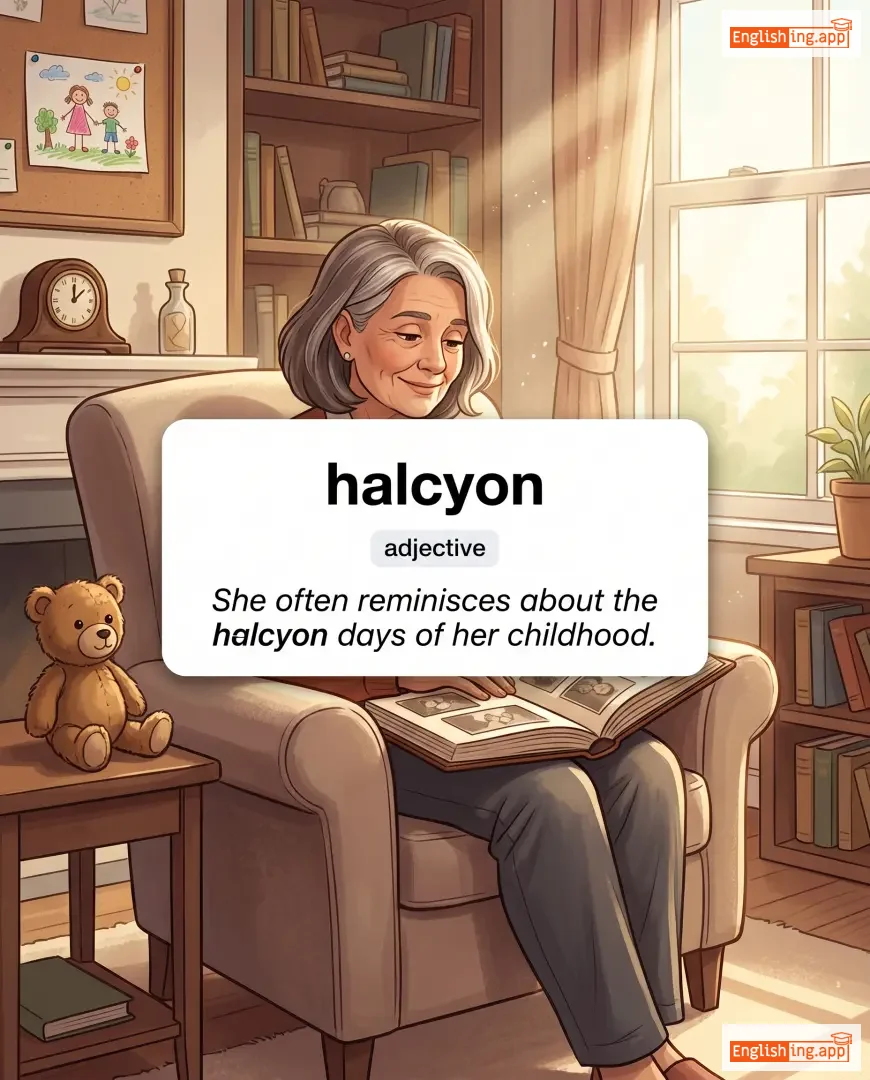
halcyon definition card — visual illustration of the meaning
adjective
/ˈhæl.si.ən/
静かな (shizukana)

calm, peaceful, and happy; denoting a period of time in the past that was idyllically happy and peaceful

"She often reminisces about the halcyon days of her childhood."

"彼女はよく子供時代の静かな日々を思い出します。" (Kanojo wa yoku kodomojidai no shizukana hibi o omoidashimasu.)
adjective
/heɪl/
健康 (kenkō)

strong and healthy, especially of an elderly person

"Despite his age, the man remained hale and active."

"年齢にもかかわらず、その男性は元気で活動的でした。" (Nenrei ni mo kakawarazu, sono dansei wa genki de katsudōteki deshita.)
noun, adjective
/hæf/
半分 (hanbun)

one of two equal parts of something

"He ate half of the cake."

"彼はケーキの半分を食べました。" (Kare wa keeki no hanbun o tabemashita.)
adjective
/ˌhæfˈbeɪkt/
中途半端 (chuto hanpa)

poorly thought out or badly planned

"The manager quickly rejected his half-baked proposal."

"マネージャーは彼の中途半端な提案をすぐに却下しました。" (Manejā wa kare no chūto hanpa na teian o sugu ni kyakka shimashita.)
adjective
/ˌhæfˈhɑːr.tɪd/
やる気がない (yaruki ga nai)

lacking enthusiasm or determination; unenthusiastic

"His halfhearted attempt to study did not bring good results."

"彼のやる気がない勉強の試みは良い結果を生まなかった。" (Kare no yaruki ga nai benkyou no kokoromi wa yoi kekka o umanakatta.)
adverb
/ˌhæfˈweɪ/
途中で (tochū de)

at or to a point equal in distance between two points

"We met halfway between the two towns."

"私たちは二つの町の間の途中で会いました。" (Watashitachi wa futatsu no machi no aida no tochū de aimashita.)
noun
/hɔːl/
ホール (hōru)

a large room or building for public gatherings, events, or passage

"The graduation ceremony was held in the university hall."

"卒業式は大学のホールで行われました。" (Sotsugyō-shiki wa daigaku no hōru de okonaware mashita.)
noun
/ˈhɔːl.mɑːrk/
象徴的な特徴 (shouchou-teki na tokuchou)

a typical characteristic or feature of someone or something

"Honesty is the hallmark of a good leader."

"誠実さは良いリーダーの象徴的な特徴です。" (Seijitsusa wa yoi riidaa no shouchou-teki na tokuchou desu.)
verb
/ˈhæloʊ/
聖別する (seibetsu suru)

to honor as holy; to make sacred or greatly respected

"The ancient temple was hallowed by centuries of worship."
"古代の寺院は何世紀にもわたる崇拝によって聖別されました。" (Kodai no jiin wa nanseiki ni mo wataru suuhai ni yotte seibetsu saremashita.)
hallowed definition card — visual illustration of the meaning
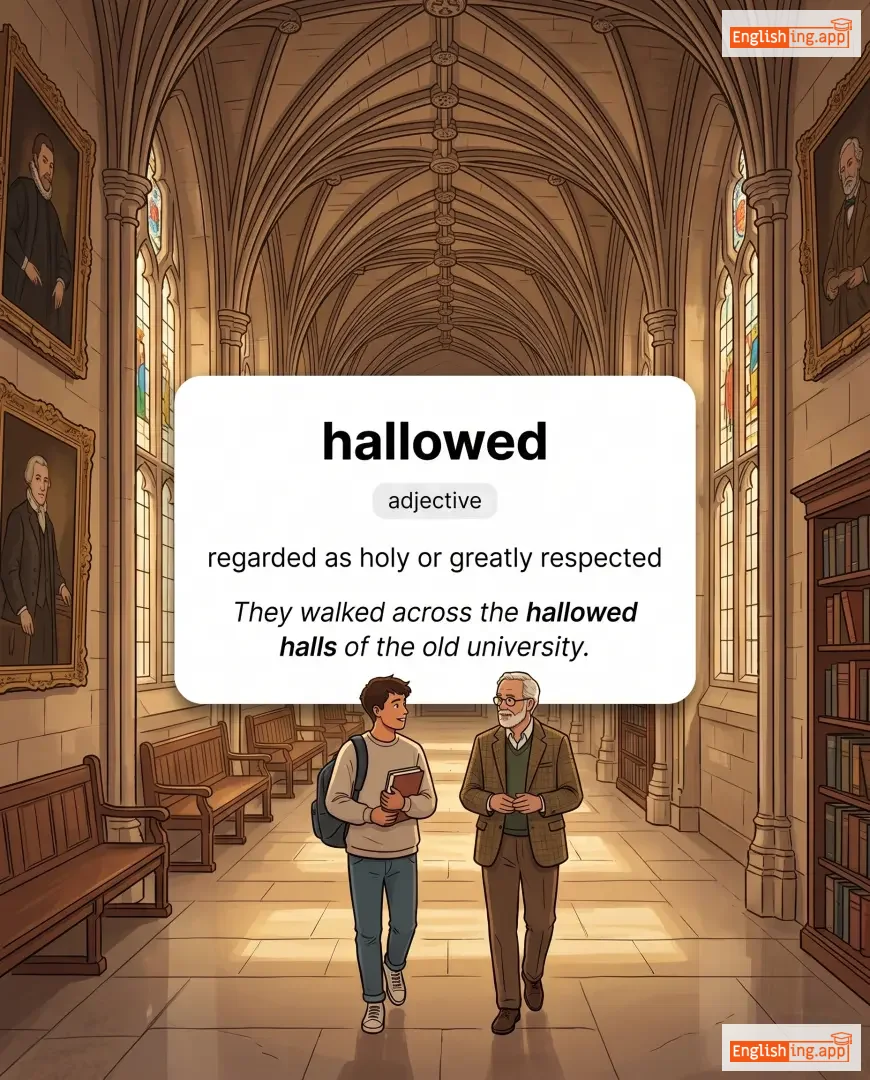
adjective
/ˈhæloʊd/
神聖 (shinsei)

regarded as holy or greatly respected

"They walked across the hallowed halls of the old university."

"彼らは古い大学の神聖な廊下を歩いた。" (Karera wa furui daigaku no shinsei na rouka o aruita.)
verb
/həˈluːsɪneɪt/
幻覚を見る (genkaku wo miru)

to see, hear, or sense things that are not actually present, often due to illness or drugs

"After taking the medicine, he began to hallucinate strange shapes."

"薬を飲んだ後、彼は奇妙な形をハルシネイトし始めた。" (Kusuri wo nonda ato, kare wa kimyō na katachi wo harushineito shi hajimeta.)
noun
/həˌluːsɪˈneɪʃən/
幻覚 (genkaku)

a false perception of objects or events, usually caused by mental illness or drugs

"After the medication, he began to experience vivid hallucinations."

"薬を飲んだ後、彼は生き生きとした幻覚を体験し始めた。" (Kusuri o nonda ato, kare wa ikikito shita genkaku o taiken shi hajimeta.)
noun
/ˈhɔːlweɪ/
廊下 (rōka)

a corridor in a building that connects rooms

"The kids left their shoes in the hallway."

"子供たちは靴を廊下に置いていった。" (Kodomotachi wa kutsu o rōka ni oite itta.)
verb
/hɔːlt/
停止する (teishi suru)

to stop or bring to a stop

"The train suddenly halted at the station."

"電車は駅で突然止まりました。" (Densha wa eki de totsuzen tomarimashita.)
adjective
/ˈhɔːltɪŋ/
ためらい (tamerai)

slow and hesitant, especially due to lack of confidence

"She gave a halting reply during the interview."

"彼女は面接中にためらいながら答えました。" (Kanojo wa mensetsu-chū ni tamerai nagara kotaemashita.)
adjective
/ˈhæm ˌhændɪd/
不器用 (bukiyou)

clumsy or inept in handling things or situations

"His ham-handed attempt to fix the computer made it worse."

"彼の手際の悪い試みでコンピュータがさらに悪化しました。" (Kare no tegiwa no warui kokoromi de konpyu-ta ga sara ni akka shimashita.)
noun
/ˈhæm.lət/
小さな村 (chiisana mura)

a small rural settlement, smaller than a village; a small community

"The tiny hamlet nestled in the valley had only a dozen houses and one small church."
"谷間にある小さな村には、家が12軒と小さな教会が1つだけあった。" (Tanimani aru chiisana mura ni wa, ie ga juuni ken to chiisana kyōkai ga hitotsu dake atta.)
noun, verb
/ˈhæmər/

a tool with a heavy metal head used for breaking things or driving in nails; to hit something forcefully with a hammer or similar object.

"He used a hammer to fix the broken chair."

hamper definition card — visual illustration of the meaning
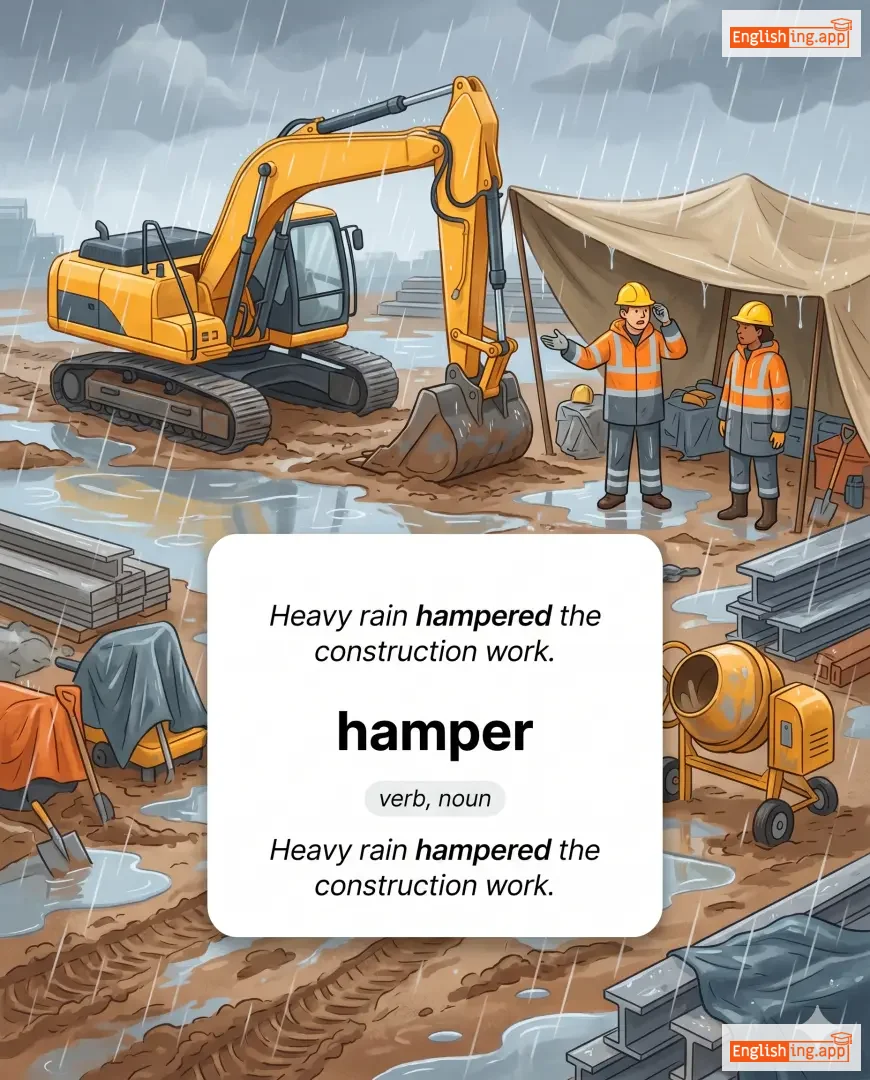
verb, noun
/ˈhæmpər/
妨げる、洗濯かご (samata-geru, sentaku kago)

to prevent or slow down the progress of something; also, a basket with a lid, typically for laundry.

"Heavy rain hampered the construction work."

"大雨が建設作業を妨げました。" (Ōame ga kensetsu sagyō o samatagemashita.)
noun, verb
/ˈhæmstrɪŋ/
太ももの後ろの腱; 動詞として、誰かまたは何かの効果を制限または著しく制限する (futomomo no ushiro no ken; dōshi toshite, dareka matawa nanika no kōka o seigen matawa ichijirushiku seigen suru)

a tendon at the back of the thigh; as a verb, to cripple or severely restrict the effectiveness of someone or something.

"Budget cuts hamstrung the organization’s plans."

"予算削減により、組織の計画が弱体化しました。" (Yosan sakugen ni yori, soshiki no keikaku ga jakutaika shimashita.)
verb (past tense, past participle), adjective
/ˈhæmstrʌŋ/
無力または制限された (muryoku mata wa seigen sareta)

crippled or severely restricted in movement or progress.

"The team was hamstrung by lack of resources."
"チームはリソース不足で制約を受けていた。" (Chīmu wa risōsu fusoku de seiyaku o ukete ita.)
🤚

Hand

noun, verb
/hænd/

the part of the body at the end of the arm used for holding things

"She raised her hand to ask a question."

hand exercises definition card — visual illustration of the meaning
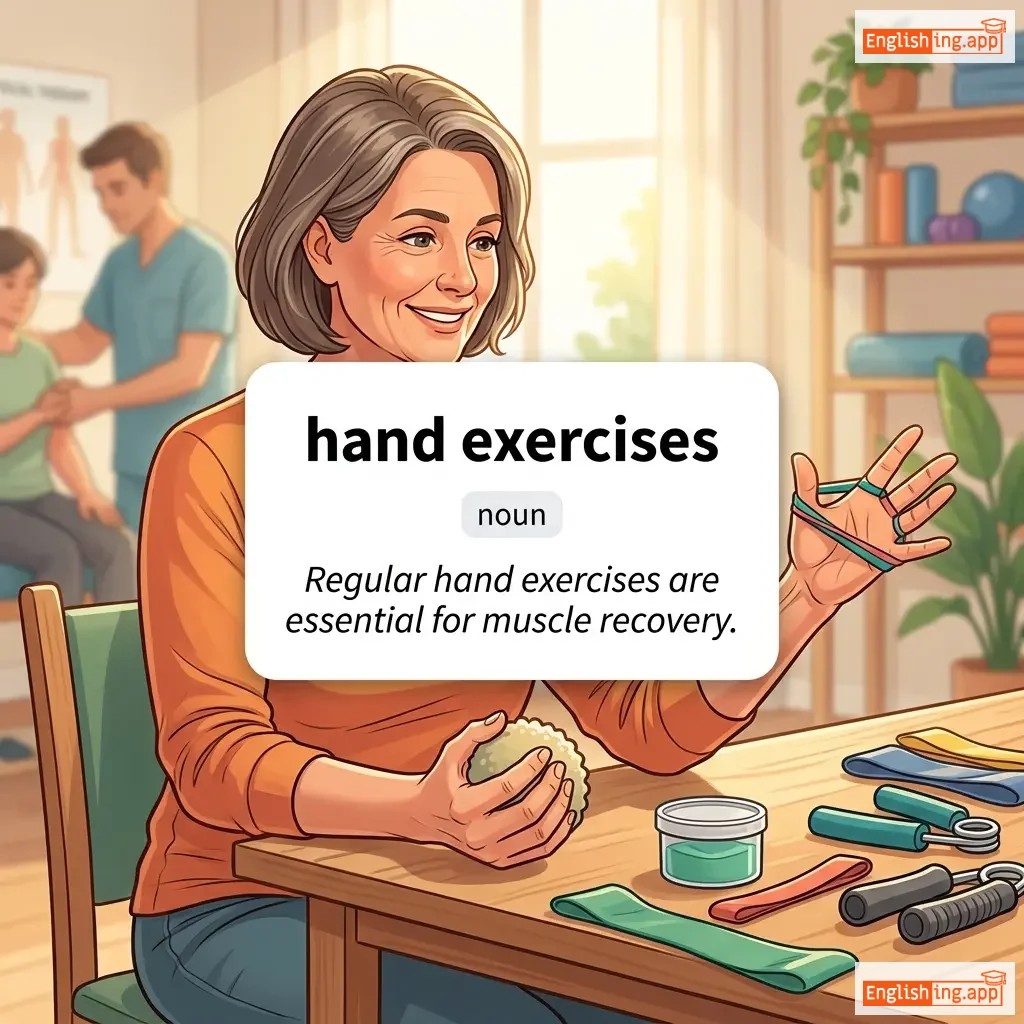
noun
হ্যান্ড এক্সারসাইজেস
手のエクササイズ (te no ekusasaizu)

Physical activities designed to strengthen, stretch, and improve the flexibility of hand and finger muscles.

"Regular hand exercises are essential for muscle recovery."

"定期的な手のエクササイズは筋肉の回復に不可欠です。" (Teikiteki na te no ekusasaizu wa kinniku no kaifuku ni fukaketsu desu.)