語彙集

英単語辞書 | 単語の意味、定義、例文

noun
/jɑːrd/
ヤード (yādo)

a unit of linear measure equal to three feet or 0.9144 meters

"The garden is 50 yards long."

"庭は50ヤードの長さです。" (Niwa wa 50 yādo no nagasa desu.)
noun
/jɑːrn/
(ito)

spun thread used for knitting, weaving, or sewing; a long or rambling story

"She bought colorful yarn for knitting a sweater."

"彼女はセーターを編むためにカラフルな糸を買いました。" (Kanojo wa seetaa wo amu tame ni karafuru na ito wo kaimashita.)
noun
/jɔːn/
あくび (akubi)

an involuntary opening of the mouth and inhalation of air due to tiredness or boredom

"She couldn't suppress a yawn during the boring lecture."

"退屈な講義の最中にあくびを抑えることができなかった。" (Taikutsu na kougi no saichuu ni akubi o osaeru koto ga dekinakatta.)
interjection
/jɛə/
はい (hai)

used to express agreement or affirmation

"Yeah, I’ll go to the store with you."

"はい、私はあなたと一緒に店に行きます。" (Hai, watashi wa anata to issho ni mise ni ikimasu.)
noun
/jɪə/
(nen)

a period of 365 or 366 days, divided into 12 months

"This year, we are planning a trip to the mountains."

"今年、私たちは山への旅行を計画しています。" (Kotoshi, watashitachi wa yama e no ryokou wo keikaku shiteimasu.)
noun
/ˈjɪərlɪŋ/
1歳の動物、特に馬 (1-sai no dōbutsu, tokuni uma)

an animal that is one year old, especially a horse

"The farmer sold the yearling at the livestock market."
"農夫はそのイヤーリングを家畜市場で売りました。" (Nōfu wa sono yearling o kachiku shijō de urimashita.)
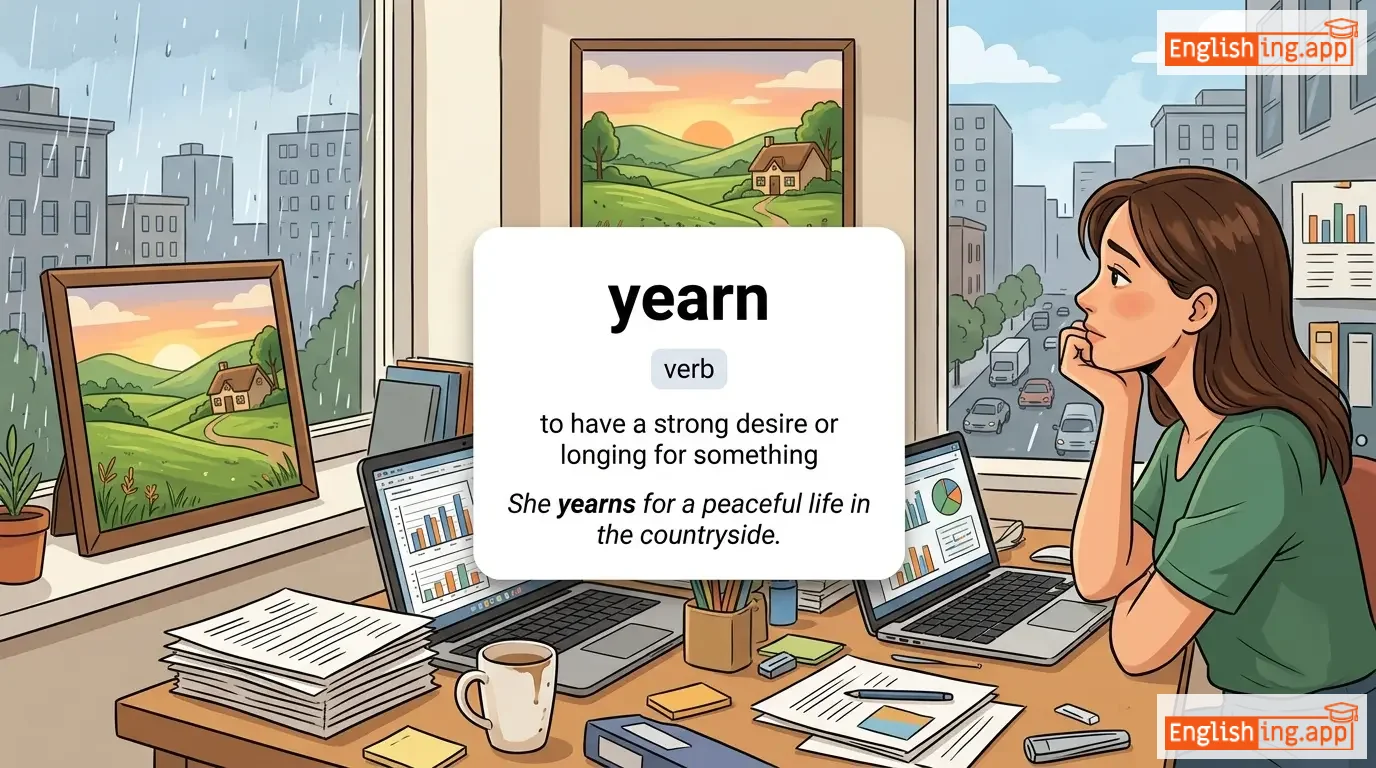
yearn definition card — visual illustration of the meaning
verb
/jɜːn/
切望する (せつぼうする)

to have a strong desire or longing for something

"She yearns for a peaceful life in the countryside."

"彼女は田舎で平和な生活を求めている。" (かのじょは いなかで へいわな せいかつを もとめている。)
noun
/jiːst/
イースト (īsuto)

microorganisms used in baking and brewing to cause fermentation

"Add yeast to the flour to make the bread rise."
"パンを膨らませるために小麦粉にイーストを加えます。" (Pan o fukuramaseru tame ni komugiko ni īsuto o kuwaemasu.)
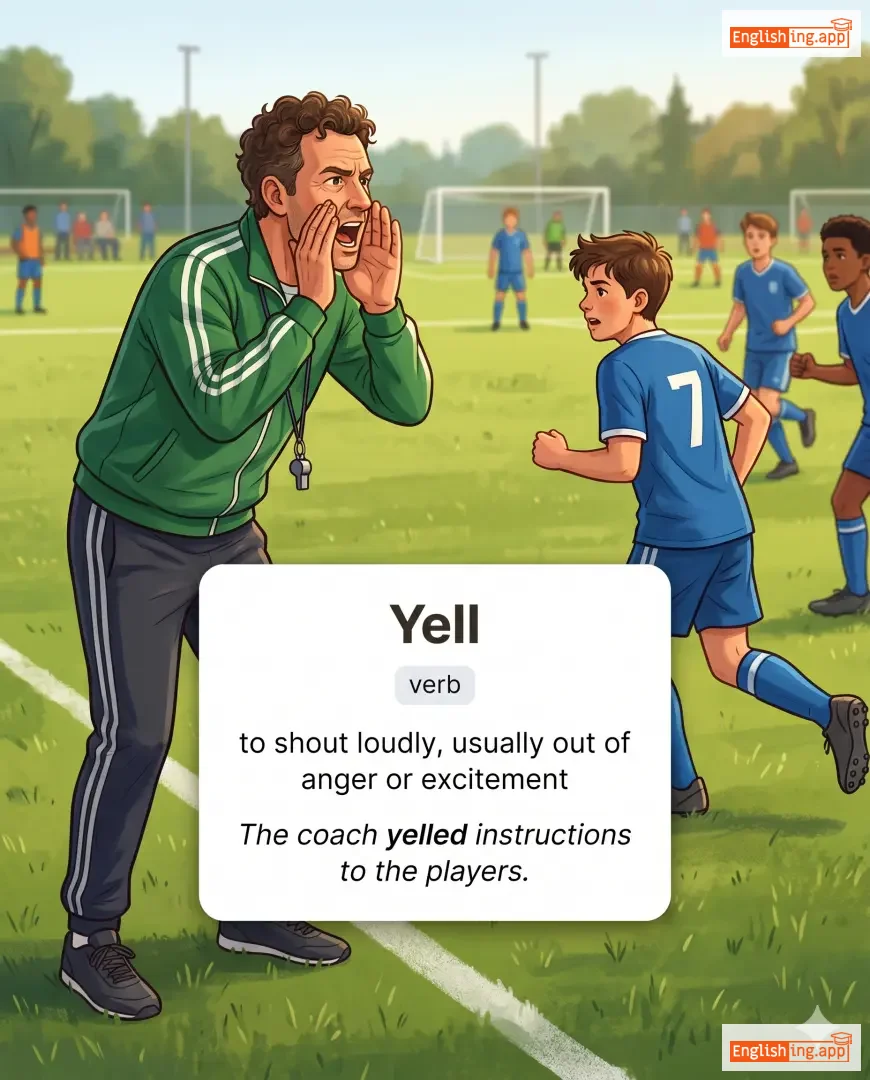
Yell definition card — visual illustration of the meaning
verb
/jɛl/
叫ぶ (sabu)

to shout loudly, usually out of anger or excitement

"The coach yelled instructions to the players."

"コーチは選手たちに指示を叫びました。" (Ko-chi wa senshu-tachi ni shiji o sakebimashita.)
adjective
/ˈjɛləʊ/
黄色 (kiiro)

a color like that of ripe lemons or the sun

"The yellow flowers brightened up the whole garden."

"黄色い花が庭全体を明るくしました。" (Kiiroi hana ga niwa zentai o akaruku shimashita.)
noun
/ˈjeloʊ oʊliˈændər/
黄色のオレアンダー (kiiro no oreandā)

a tropical flowering shrub with bright yellow flowers; also known as lucky nut

"The yellow oleander blooms throughout the year in warm climates."

"黄色のオレアンダーは暖かい気候で一年中花を咲かせます。" (kiiro no oreandā wa atatakai kikō de ichinenjū hana o sakasemasu.)
noun
/jɛn/
欲望 (yokubou)

A deep, strong desire or craving.

"She felt a strong yen to travel the world."

"彼女は世界を旅したいという強い欲望を感じた。" (kanojo wa sekai o tabi shitai to iu tsuyoi yokubou o kanjita.)
noun
/ˈjoʊmən/
農民 / 忠実な従業員 (nōmin / chūjitsu na jūgyōin)

A farmer who cultivates his own land; also used to describe someone performing loyal, useful service.

"He did yeoman service in completing the project on time."

"彼はプロジェクトを時間通りに完了させるために忠実にサービスを提供しました。" (Kare wa purojekuto o jikan dōri ni kanryō saseru tame ni chūjitsu ni sābisu o teikyō shimashita.)
adverb
/jɛs/
はい (hai)

used to express affirmation, agreement, or consent

"Yes, I will be there at 5 o'clock."

"はい、5時にそこに行きます。" (Hai, go ji ni soko ni ikimasu.)
noun
/ˈjɛstərdeɪ/
昨日 (kinou)

the day before today

"Yesterday, we went to the park."

"昨日、公園に行きました。" (Kinou, kouen ni ikimashita.)
adverb
/jɛt/
まだ (mada)

up until the present time, or a point in the past

"I haven’t finished my homework yet."
"私はまだ宿題を終えていません。" (Watashi wa mada shukudai o oeteimasen.)
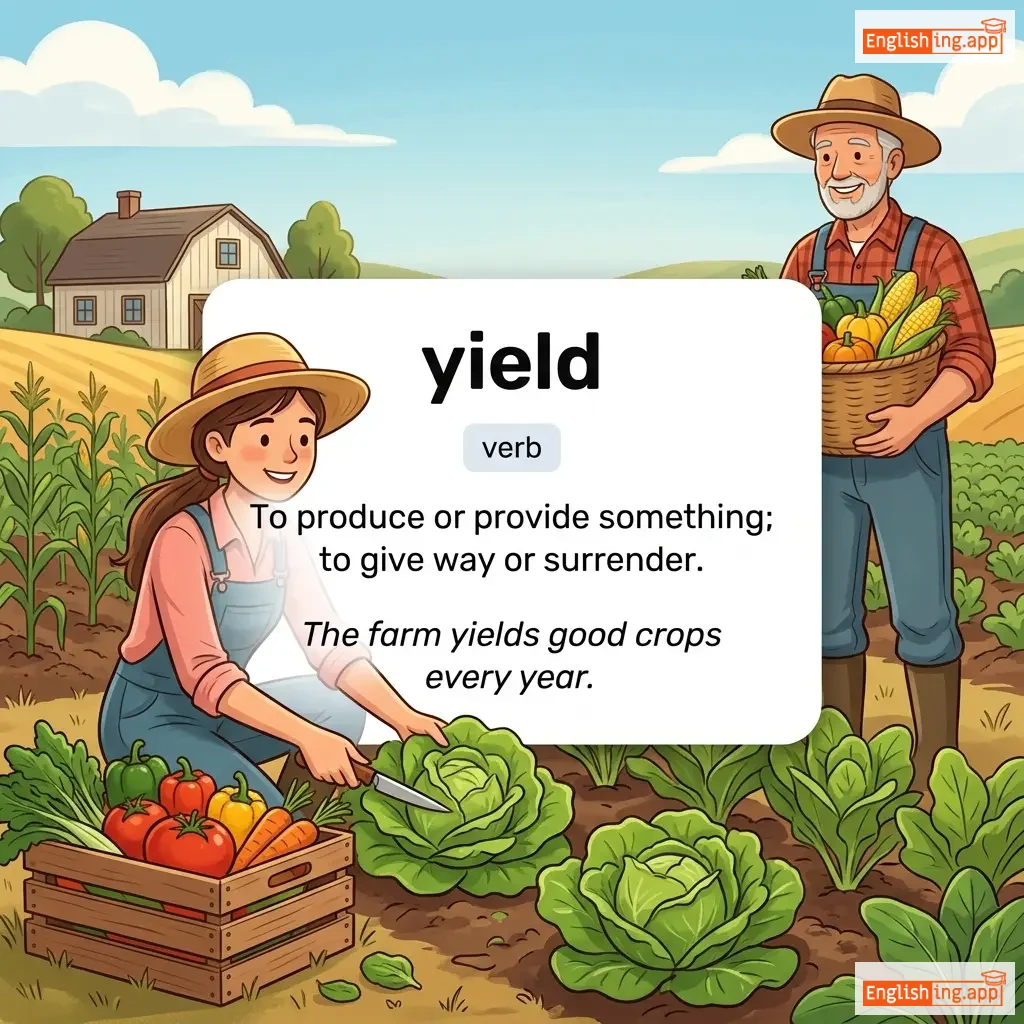
yield definition card — visual illustration of the meaning
verb
/jiːld/
生産する / 屈する (seisan suru / kusuru)

To produce or provide something; to give way or surrender.

"The farm yields good crops every year."
"農場は毎年良い作物を生産します。" (Nōjō wa mainen yoi sakumotsu o seisan shimasu.)
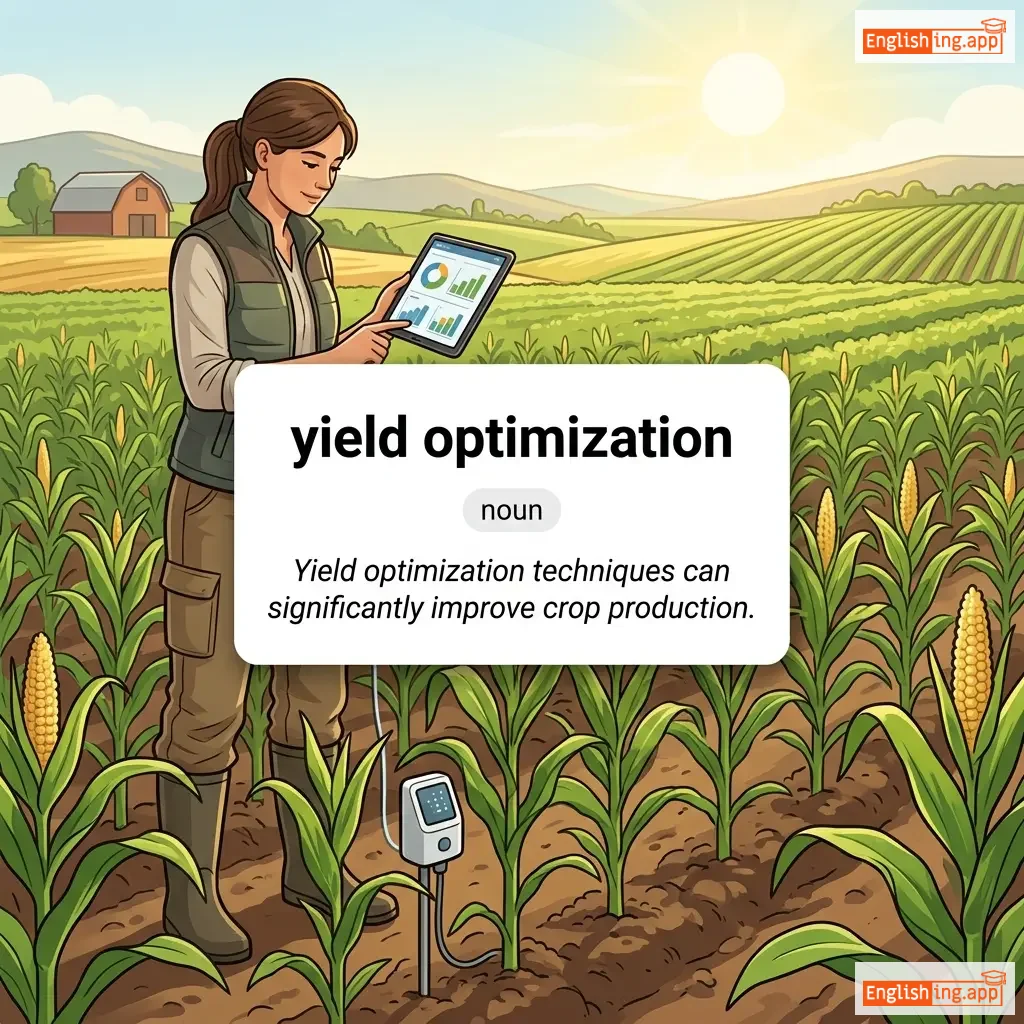
yield optimization definition card — visual illustration of the meaning
noun
/jiːld ˌɒptɪmaɪˈzeɪʃən/
収穫最適化 (shūkaku saiteki-ka)

The process of maximizing the productivity or efficiency of crop production through various agricultural techniques and practices.

"Yield optimization techniques can significantly improve crop production."
"収穫最適化技術は作物生産を大幅に改善できます。" (Shūkaku saiteki-ka gijutsu wa sakumotsu seisan o ōhaba ni kaizen dekimasu.)
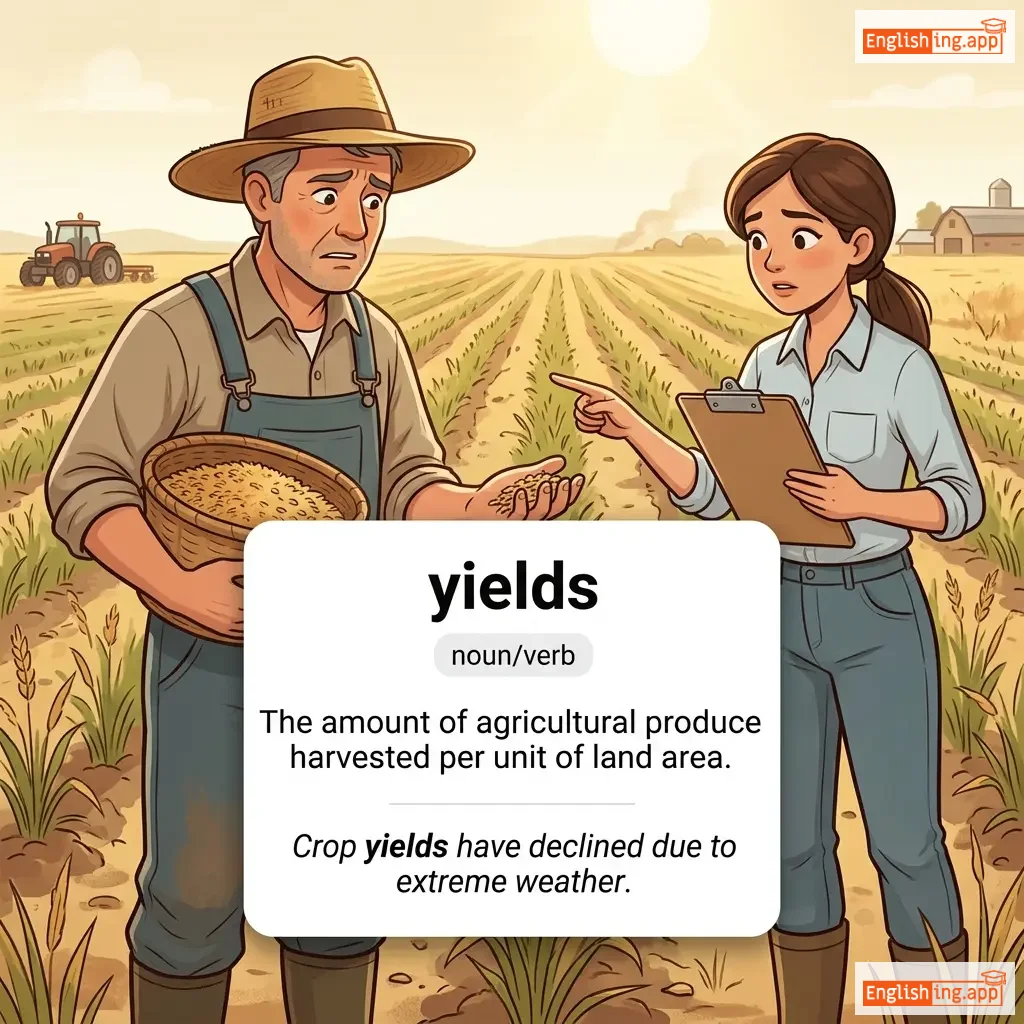
yields definition card — visual illustration of the meaning
noun/verb
jiːldz
収穫量 (shūkakuryō)

The amount of agricultural produce harvested per unit of land area.

"Crop yields have declined due to extreme weather."

"作物の収穫量は極端な天候により減少しました。" (Sakumotsu no shūkakuryō wa kyokutan na tenkō ni yori genshō shimashita.)
noun
/joʊk/
(kutsuwa)

A wooden crosspiece fastened over the necks of animals; symbolically, a burden or oppression.

"The oxen were bound together by a heavy yoke."

"牛は重い轡で繋がれていた。" (Ushi wa omoi kutsuwa de tsunagarete ita.)
noun
/ˈjoʊkəl/
田舎者 (inakamono)

An uneducated and unsophisticated person from the countryside; a bumpkin.

"The city folks laughed at the yokel's simple ways."

"都会の人々は田舎者の簡単な方法を笑った。" (Tōkai no hitobito wa inakamono no kantan na hōhō o waratta.)
noun
/joʊk/
卵黄 (tamago no ki)

the yellow part of an egg

"The chef separated the egg yolk from the white."

"シェフは卵の黄身を白身から分けました。" (Shefu wa tamago no kimi o shiro-mi kara wakemashita.)
noun
/jɔːr/
過去 (kako)

Time long past; bygone days.

"Legends of yore still inspire people today."

"過去の伝説は今でも人々に影響を与え続けています。" (Kako no densetsu wa ima demo hitobito ni eikyou o ataetsuzukemasu.)
pronoun
/juː/
あなた (anata)

used to refer to the person or people being spoken to

"You are doing a great job!"

"あなたは素晴らしい仕事をしています!" (Anata wa subarashii shigoto o shiteimasu!)
adjective
/jʌŋ/
若い (wakai)

having lived or existed for a short time

"The young boy loves to play football."

"若い男の子はサッカーをするのが好きです。" (Wakai otoko no ko wa sakkā o suru no ga suki desu.)
noun
/jʌŋ fɪʃ/
幼魚 (yougyo)

juvenile or small fish; fish that has not reached maturity

"Young fish need protection from predators."

"幼魚は捕食者から守られる必要があります。" (yougyo wa hoshokusha kara mamorareru hitsuyou ga arimasu)
noun
/ˈjʌŋstər/
若者 (wakamono)

a young person or child, especially a teenager or adolescent

"The park was full of youngsters playing football."

"公園はサッカーをしている若者たちでいっぱいでした。" (Kōen wa sakkā o shite iru wakamono-tachi de ippai deshita.)
pronoun
/jɔːr/
あなたの (anata no)

used to indicate possession or association

"Your book is on the table."

"あなたの本はテーブルの上にあります。" (Anata no hon wa tēburu no ue ni arimasu.)
pronoun
/jɔːrz/
あなたの (anata no)

belonging to or associated with the person or people that the speaker is addressing

"This pen is yours."

"このペンはあなたのです。" (Kono pen wa anata no desu.)
pronoun
/jɔːrˈsɛlf/
自分自身 (jibun jishin)

used to refer to the person being addressed, often for emphasis or reflection

"You should look after yourself."

"自分自身の世話をしなさい。" (Jibun jishin no sewa o shinasai.)
noun
/juːθ/
青春 (seishun)

the period of life when a person is young, often associated with energy and vitality

"The youth are the future of the country."

"青年は国の未来です。" (Seishun wa kuni no mirai desu.)
adjective
/ˈjuːθfəl/
若々しい; エネルギッシュで新鮮な (wakawakashii; enerugisshu de shinsen na)

having the qualities of youth; energetic and fresh

"Her youthful energy impressed everyone at work."

"彼女の若々しいエネルギーは職場の全員に感銘を与えました。" (kanojo no wakawakashii enerugī wa shokuba no zen'in ni kanmei o ataemashita.)