語彙集

英単語辞書 | 単語の意味、定義、例文

noun
/ˈveɪkənsi/
空席 (kūseki)

An unoccupied position or available space.

"There is a job vacancy at the bank."

"銀行に求人の空席があります。" (Ginkou ni kyūjin no kūseki ga arimasu.)
adjective
/ˈveɪkənt/
空いている (aiteiru)

empty, unoccupied, or not being used

"The apartment has been vacant for three months."
"そのアパートは三ヶ月間空いています。" (Sono apāto wa sankagetsukan aiteimasu.)
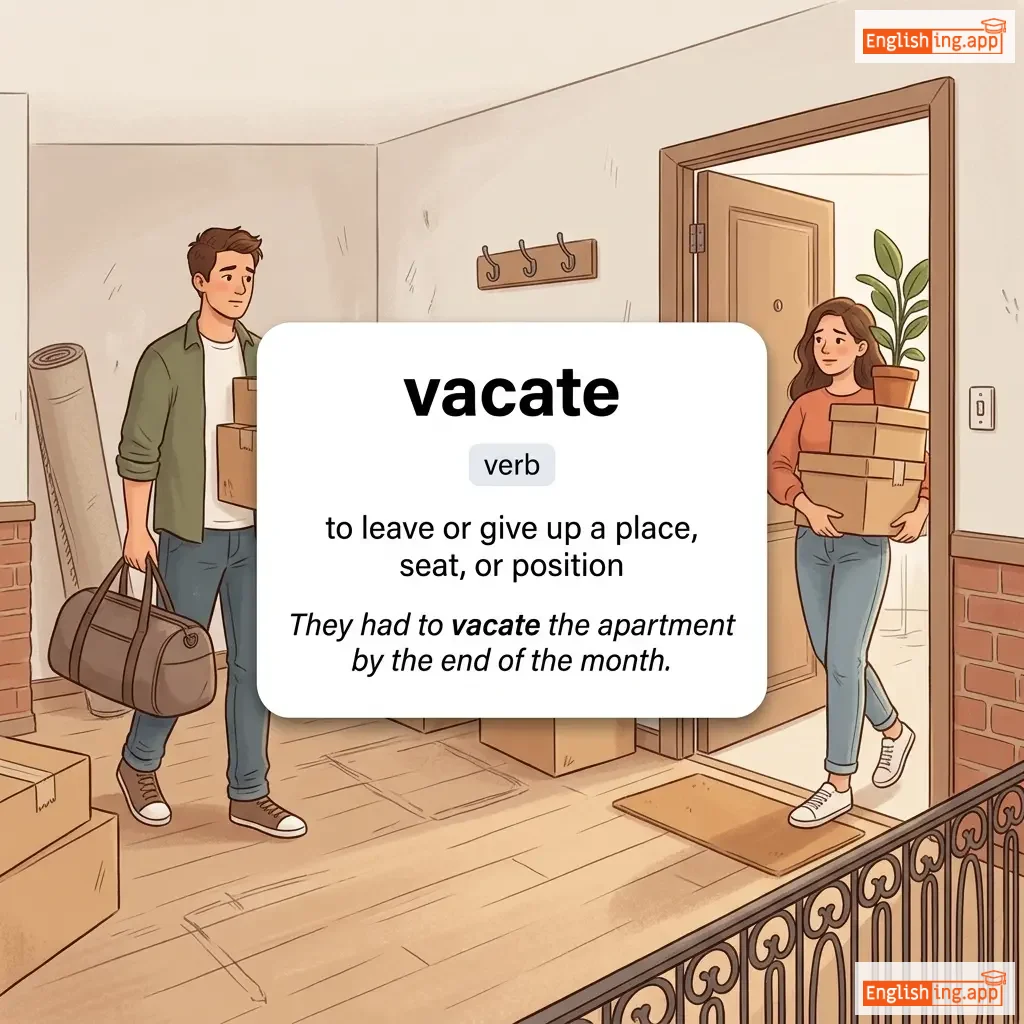
vacate definition card — visual illustration of the meaning
verb
/vəˈkeɪt/
退去する (taikyo suru)

to leave or give up a place, seat, or position

"They had to vacate the apartment by the end of the month."

"彼らは月末までにアパートを退去しなければなりませんでした。" (Karera wa getsumatsu made ni apāto o taikyo shinakereba narimasen deshita.)
noun
/vəˈkeɪʃən/
休暇 (kyūka)

an extended period of leisure and recreation, especially one spent away from home or traveling

"We went on vacation to the beach last summer."

"私たちは去年の夏にビーチへ休暇に行きました。" (Watashitachi wa kyonen no natsu ni bīchi e kyūka ni ikimashita.)
verb
/ˈvæksɪneɪt/
ワクチン接種 (wakuchin sesshu)

to give a vaccine to protect against a disease

"Children are usually vaccinated before starting school."

"子供たちは通常、学校に行く前にワクチン接種を受けます。" (Kodomotachi wa tsuujou, gakkou ni iku mae ni wakuchin sesshu wo ukemasu.)
noun
/ˌvæk.sɪˈneɪ.ʃən/
ワクチン接種 (wakuchin sesshu)

the process of giving a vaccine to a person or animal to protect them against a disease

"Children receive vaccination against measles at an early age."

"子供たちは幼い頃に麻疹の予防接種を受けます。" (Kodomo-tachi wa osanai koro ni hasen no yobō sesshu o ukemasu.)
noun
/ˈvæk.siːn/
ワクチン (wakuchin)

a substance used to stimulate the body's immune response against diseases

"Children are given the polio vaccine to prevent infection."

"子供たちは感染を予防するためにポリオワクチンを接種します。" (Kodomotachi wa kansen o yobō suru tame ni porio wakuchin o sesshu shimasu.)
noun
/ˈvæk.juːm ˈkliː.nər/
掃除機 (soujiki)

an electrical appliance that uses suction to remove dirt and dust from carpets and floors

"She used the vacuum cleaner to clean the living room carpet."
"彼女はリビングルームのカーペットを掃除機で掃除しました。" (Kanojo wa ribingu rūmu no kāpetto wo soujiki de sōji shimashita.)
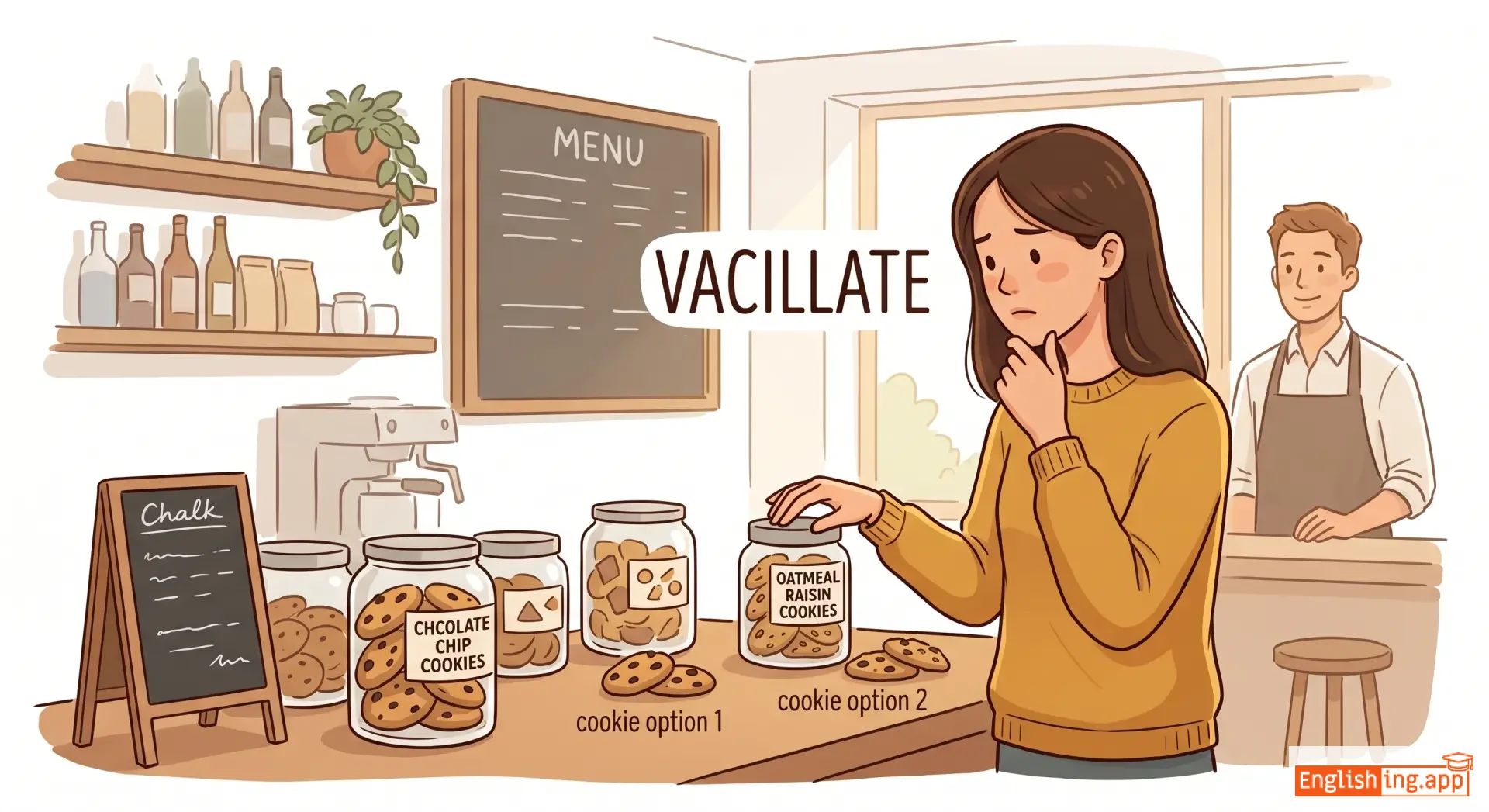
vacillate definition card — visual illustration of the meaning
verb
/ˈvæsɪleɪt/
幸せ (shiawase)

to waver between different opinions or actions; be indecisive

"He vacillated between studying law and becoming a writer."

"彼女は賞を受け取ったとき、自分の幸せを隠すことができませんでした。" (Kanojo wa shō o uketotta toki, jibun no shiawase o kakusu koto ga dekimasen deshita.)
noun
/ˌvæsɪˈleɪʃən/
揺れ動き (yuredoki)

The inability to decide between different opinions or actions; indecisiveness.

"His constant vacillation frustrated his colleagues during the meeting."
"彼の絶え間ない揺れ動きは会議中、同僚たちを苛立たせた。" (Kare no taemai yuredoki wa kaigichuu, doryou-tachi o iradataseta.)
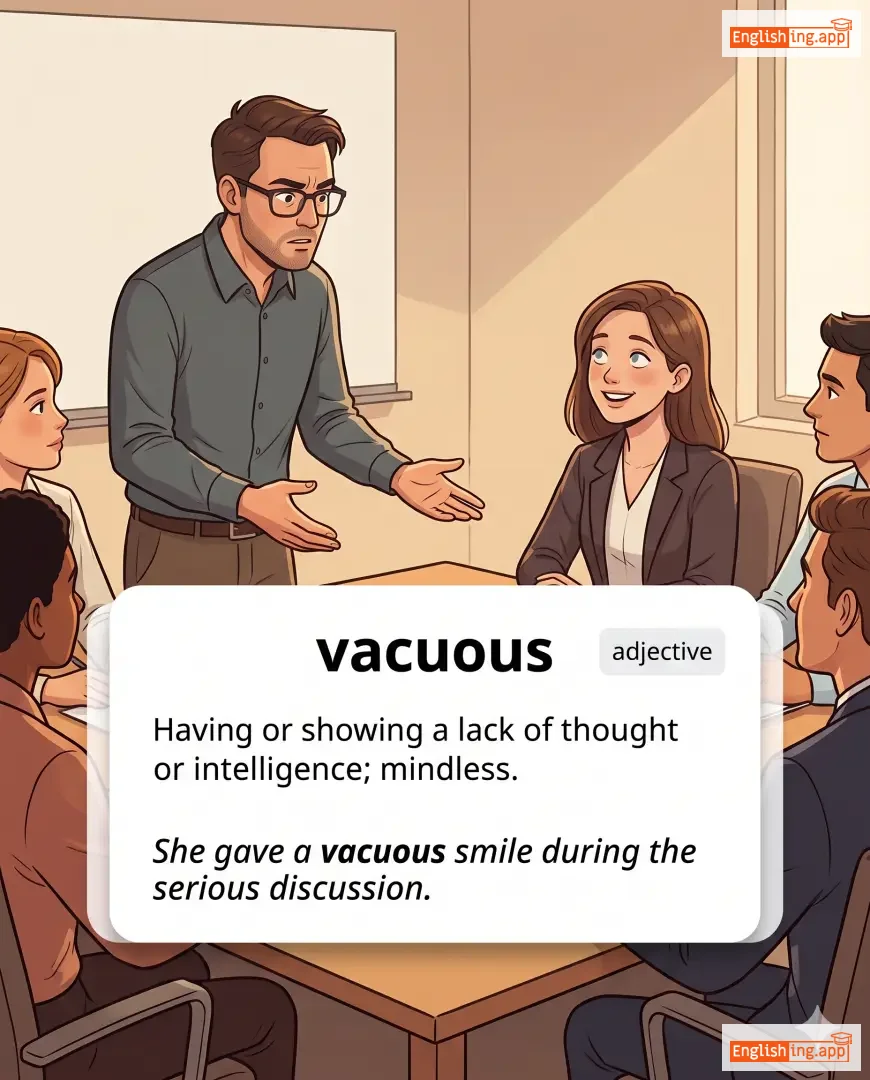
vacuous definition card — visual illustration of the meaning
adjective
/ˈvækjuəs/
空虚 (kūkyō)

Having or showing a lack of thought or intelligence; mindless.

"She gave a vacuous smile during the serious discussion."

"彼女は真剣な議論の中で空虚な笑顔を見せた。" (Kanojo wa shinken na giron no naka de kūkyō na egao o miseta.)
noun
/ˈvæk.juːm/
真空 (shinkū)

A space entirely devoid of matter; an absence of atmosphere or content.

"The scientist created a vacuum chamber for the experiment."

"科学者は実験のために真空室を作りました。" (kagakusha wa jikken no tame ni shinkū-shitsu o tsukurimashita.)
noun
/ˈvæɡəbɒnd/
浮浪者 (furōsha)

A person who wanders from place to place without a home or job.

"The old vagabond lived on the streets of the city."

"その古い浮浪者は街の通りに住んでいた。" (sono furui furōsha wa machi no tōri ni sunde ita.)
noun
/ˈveɪɡəri/
予測できない変化 (yosoku dekinai henka)

An unexpected and inexplicable change in a situation or someone's behavior.

"The vagaries of the weather made planning difficult."

"天気の不規則な変化で計画が難しくなった。" (tenki no fukisoku na henka de keikaku ga muzukashiku natta.)
noun
/ˈveɪɡrənt/
放浪者 (hōrōsha)

A person without a settled home or regular work who wanders from place to place.

"The police offered shelter to a vagrant sleeping on the street."

"警察は通りで寝ていた放浪者に避難所を提供しました。" (Keisatsu wa tōri de neteita hōrōsha ni hinanjo o teikyō shimashita.)
adjective
/veɪɡ/
曖昧 (aimai)

Not clearly expressed, known, described, or decided.

"Her explanation was so vague that nobody understood the plan."

"彼女の説明はあまりにも曖昧だったので、誰も計画を理解できませんでした。" (Kanojo no setsumei wa amarimono aimai datta node, daremo keikaku o rikai dekimasen deshita.)
adjective
/veɪn/
虚栄心の強い (kyoei shin no tsuyoi)

Having an excessively high opinion of one's appearance, abilities, or worth.

"He is too vain to admit his mistakes."

"彼は自分のミスを認めるにはあまりにも虚栄心が強い。" (Kare wa jibun no misu wo mitomeru ni wa amari ni mo kyoei shin ga tsuyoi.)
adjective
/veɪnˈɡlɔːriəs/
うぬぼれた (unoboreta)

Excessively proud of oneself or one’s achievements; boastful.

"The vainglorious leader boasted about his minor achievements."

"その自惚れたリーダーは自分の些細な成果を自慢していた。" (Sono unoboreta rīdā wa jibun no sasaina seika o jimanshite ita.)
noun
/ˈveɪnɡlɔːri/
虚栄心 (kyoueishin)

Excessive vanity or boastfulness about one's achievements.

"His speech was filled with vainglory and self-praise."

"彼のスピーチは虚栄心と自己賛美で満ちていた。" (Kare no supīchi wa kyoeishin to jikosanbi de michite ita.)
noun
/ˈvæləns/
装飾用バランス (sōshokuyō baransu)

A decorative drapery hung across the top of a window or bed.

"She chose a floral valance to match the curtains in her bedroom."

"彼女は寝室のカーテンに合うように花柄のバランスを選びました。" (Kanojo wa shinshitsu no kāten ni au yō ni hanagara no baransu o erabimashita.)
noun
/veɪl/
(tani)

A valley, often used in a poetic or literary sense.

"The village lay hidden in a quiet green vale."

"村は静かな緑の谷に隠れていました。" (Mura wa shizukana midori no tani ni kakurete imashita.)
noun
/ˌvælɪˈdɪkʃən/
別れの言葉 (wakare no kotoba)

The act of saying farewell; a formal goodbye.

"The professor gave a touching valediction at his retirement ceremony."

"教授は退職式で感動的な別れの言葉を述べました。" (Kyōju wa taishoku-shiki de kandō-teki na wakare no kotoba o nobemashita.)
noun
/ˌvælədɪkˈtɔːriən/
最優秀学生 (sai yūshū gakusei)

The student with the highest academic achievements in a graduating class, often chosen to give the farewell speech.

"She was honored as the valedictorian of her class."
"彼女はクラスの最優秀学生として表彰されました。" (Kanojo wa kurasu no sai yūshū gakusei to shite hyōshō saremashita.)
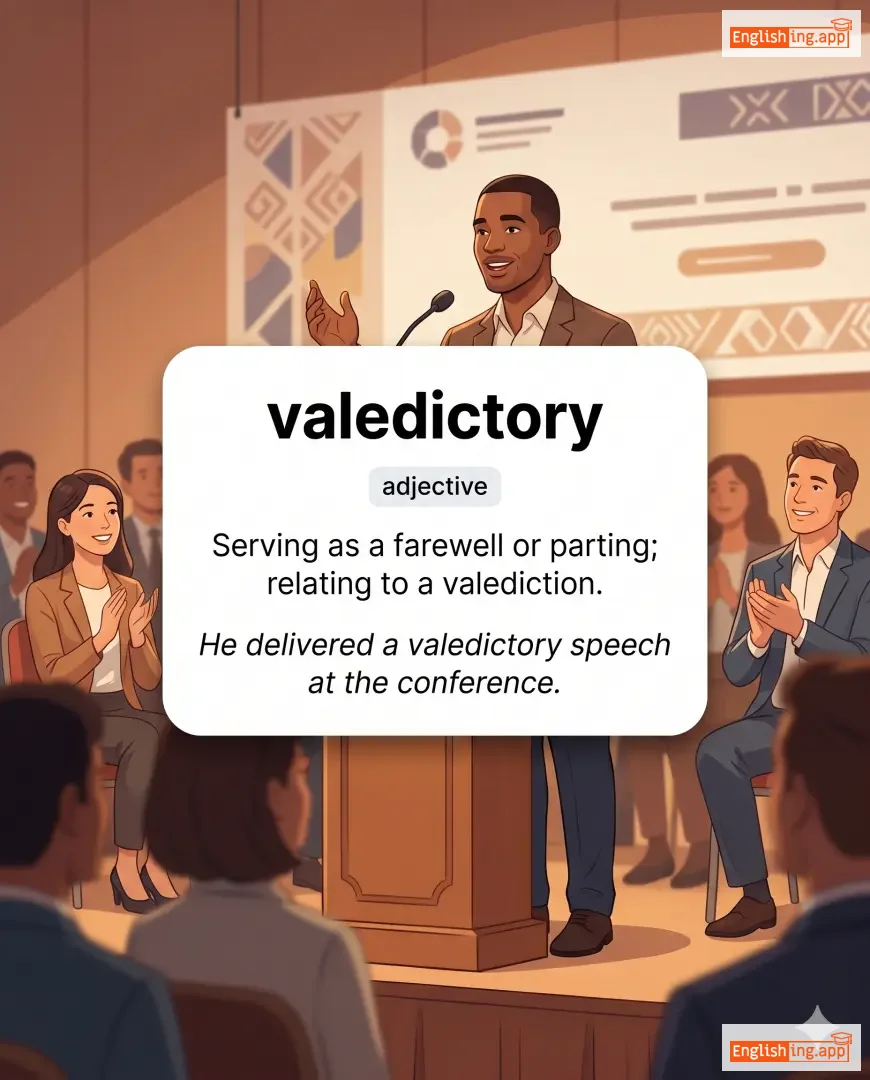
valedictory definition card — visual illustration of the meaning
adjective
/ˌvælɪˈdɪktəri/
送別の (soubetsu no)

Serving as a farewell or parting; relating to a valediction.

"He delivered a valedictory speech at the conference."

"彼は会議で送別のスピーチを行った。" (Kare wa kaigi de soubetsu no supīchi o okonatta.)
noun
/ˌvælɪˌtjuːdɪˈnɛəriən/
健康気にしすぎな人 (kenkou ki ni shisugi na hito)

A person who is unduly anxious about their health or constantly concerned with minor ailments.

"He was regarded as a valetudinarian, always worrying about his health."

"彼は健康気にしすぎな人として知られていた。" (Kare wa kenkou ki ni shisugi na hito toshite shirarete ita.)
adjective
/ˈvæliənt/
勇敢 (yūkan)

Showing courage, determination, and bravery.

"The firefighters made a valiant effort to save the building."

"消防士たちは建物を救うために勇敢な努力をしました。" (Shōbōshi-tachi wa tatemono o sukuu tame ni yūkan na doryoku o shimashita.)
adjective
/ˈvælɪd/

Having a sound basis in logic or fact; legally or officially acceptable.

"Her argument was valid and convincing."

verb
/ˈvælɪdeɪt/
検証する (kenshō suru)

To check or prove the accuracy, truth, or legality of something.

"The scientist worked hard to validate the experiment's results."

"科学者は実験結果を検証するために一生懸命働きました。" (Kagakusha wa jikken kekka o kenshō suru tame ni isshōkenmei hatarakimashita.)
noun
/vəˈlɪd.ə.ti/
有効性 (yūkō-sei)

the quality of being logically or factually sound; legal acceptability

"The lawyer questioned the validity of the contract."

"弁護士は契約の有効性に疑問を呈しました。" (Bengoshi wa keiyaku no yūkō-sei ni gimon o teishimashita.)
adverb
/ˈvælɪdli/
有効に (yuukou ni)

in a legally, logically, or officially acceptable manner

"The contract was validly signed by both parties."

"契約は両当事者によって有効に署名されました。" (keiyaku wa ryou toujisha ni yotte yuukou ni shomei saremashita)
noun
/ˈvæli/
(tani)

a low area of land between hills or mountains, typically with a river or stream flowing through it

"The valley was covered in lush green grass and flowers."

"谷は緑の草と花で覆われていました。" (Tani wa midori no kusa to hana de ōwarete imashita.)
noun
/ˈvælər/
勇気 (yūki)

Great courage in the face of danger, especially in battle.

"The soldier was honored for his valor during the war."

"その兵士は戦争中の勇気で賞賛されました。" (Sono heishi wa sensō-chū no yūki de shōsan saremashita.)
adjective
/ˈvælərəs/
勇敢な (yūkan na)

showing great courage and bravery

"The valorous soldier led his troop into battle without hesitation."

"勇敢な兵士はためらうことなく部隊を戦いに導いた。" (Yūkan na heishi wa tamerau koto naku butai o tatakai ni michibita.)
adjective
/ˈvæljuːəbl/
貴重な (kichou na)

worth a great deal of money or importance

"The diamond ring is very valuable."

"そのダイヤモンドの指輪は非常に貴重です。" (Sono daiyamondo no yubiwa wa hijō ni kichō desu.)
valuation definition card — visual illustration of the meaning
noun
/ˌvæl.juˈeɪ.ʃən/
評価 (hyouka)

the process of deciding how much money something is worth; an estimated value

"The property valuation came in higher than expected."

"不動産の評価は予想より高かった。" (Fudousan no hyouka wa yosou yori takakatta.)
noun
/ˈvæljuː/
価値 (kachi)

the importance, worth, or usefulness of something

"The value of education cannot be overstated."
"教育の価値は過大評価されることはありません。" (Kyōiku no kachi wa kadaihyouka sareru koto wa arimasen.)
value proposition definition card — visual illustration of the meaning
noun
/ˈvæl.juː ˌprɒ.pəˈzɪʃ.ən/
バリュー・プロポジション (baryū puropozishon)

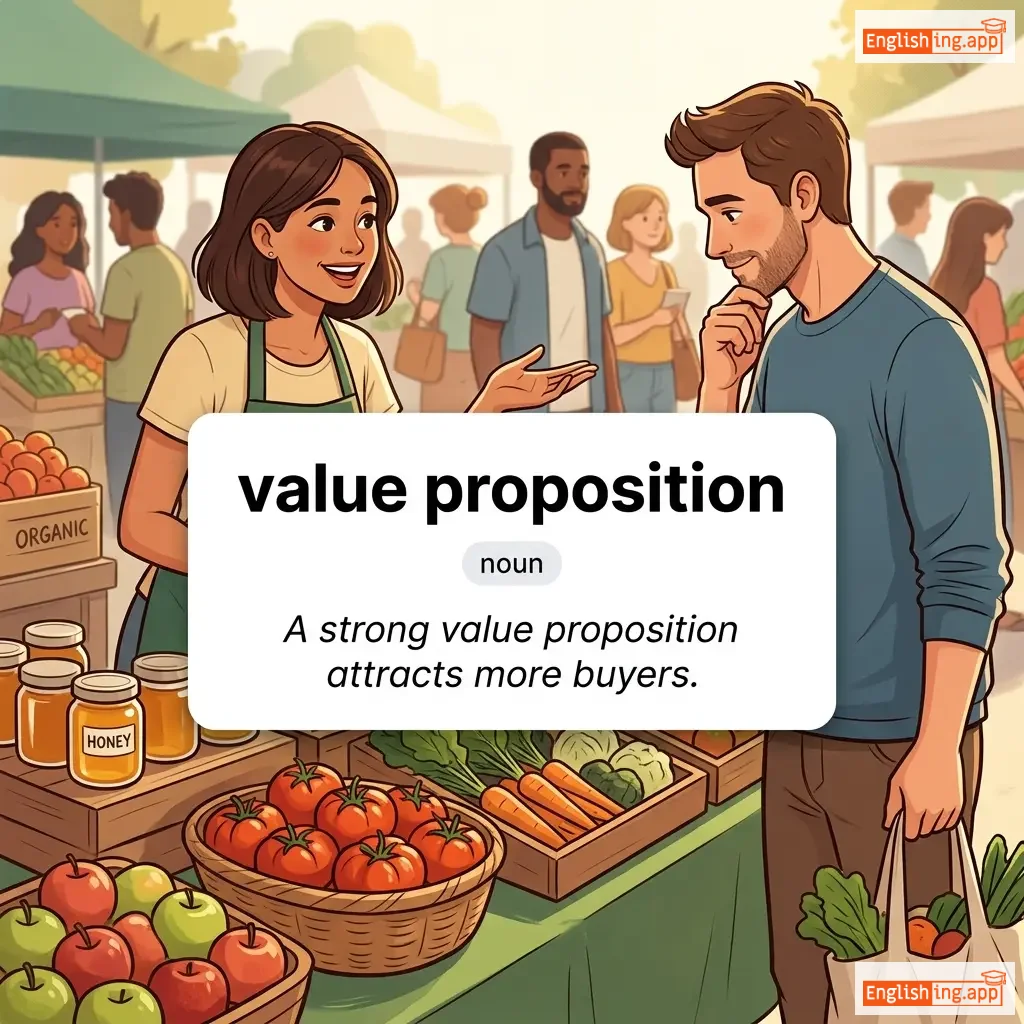
A business or marketing statement that summarizes why a consumer should buy a product or use a service.

"A strong value proposition attracts more buyers."
"強力なバリュー・プロポジションは、より多くの購入者を引き付けます。" (Kyōryokuna baryū puropozishon wa, yori ōku no kōnyū-sha o hikitsukemasu.)
value-based education definition card — visual illustration of the meaning
noun
ˈvæljuː beɪst ˌɛdjuːˈkeɪʃən
価値に基づく教育 (kachi ni motoduku kyoiku)

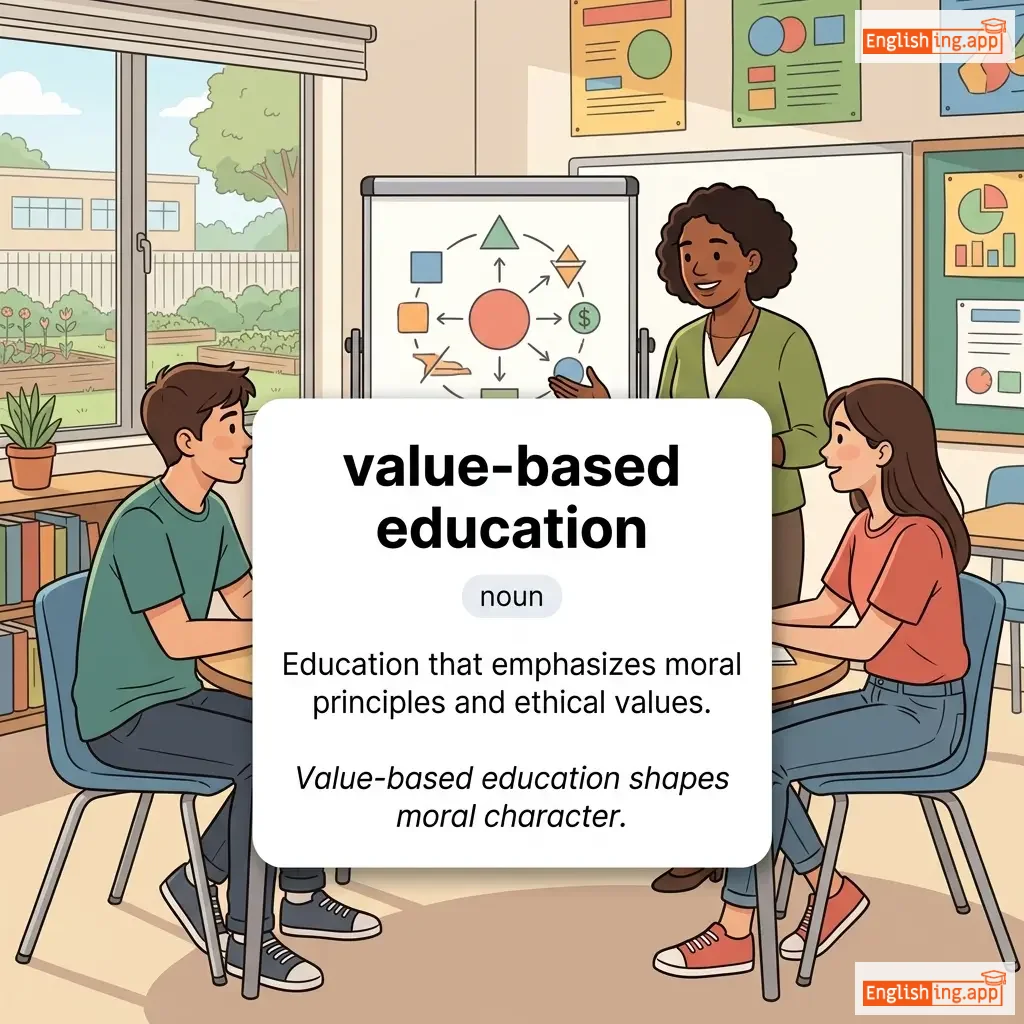
Education that emphasizes moral principles and ethical values.

"Value-based education shapes moral character."

"価値に基づく教育は道徳的な性格を形成します。" (Kachi ni motoduku kyōiku wa dōtoku-teki na seikaku o keisei shimasu.)
adjective
/ˈvæljuːləs/
無価値 (mukachi)

having no worth, importance, or usefulness

"The old broken phone was considered valueless."

"壊れた古い電話は無価値だと見なされました。" (Kowareta furui denwa wa mukachi da to minasaremashita.)
noun
/ˈvæmpaɪər/
幸福 (kōfuku)

a mythical creature that sucks blood from the living; metaphorically, a person who exploits others

"In folklore, a vampire rises at night to drink human blood."

"彼女は賞を受け取ったとき、自分の幸福を隠すことができませんでした。" (Kanojo wa shō o uketotta toki, jibun no kōfuku o kakusu koto ga dekimasen deshita.)
noun
/væn/
バン (ban)

a large vehicle used for transporting goods or people

"The delivery van stopped in front of our house."

"配送バンが私たちの家の前で止まりました。" (Haisou ban ga watashitachi no ie no mae de tomarimashita.)
noun
/ˈvænɡɑːrd/
先駆者 (senkusha)

the forefront of an action, movement, or military force

"The company is at the vanguard of technological innovation."
"その会社は技術革新の先駆者です。" (Sono kaisha wa gijutsu kakushin no senkusha desu.)
vanish definition card — visual illustration of the meaning
verb
/ˈvæn.ɪʃ/
消える (kieru)

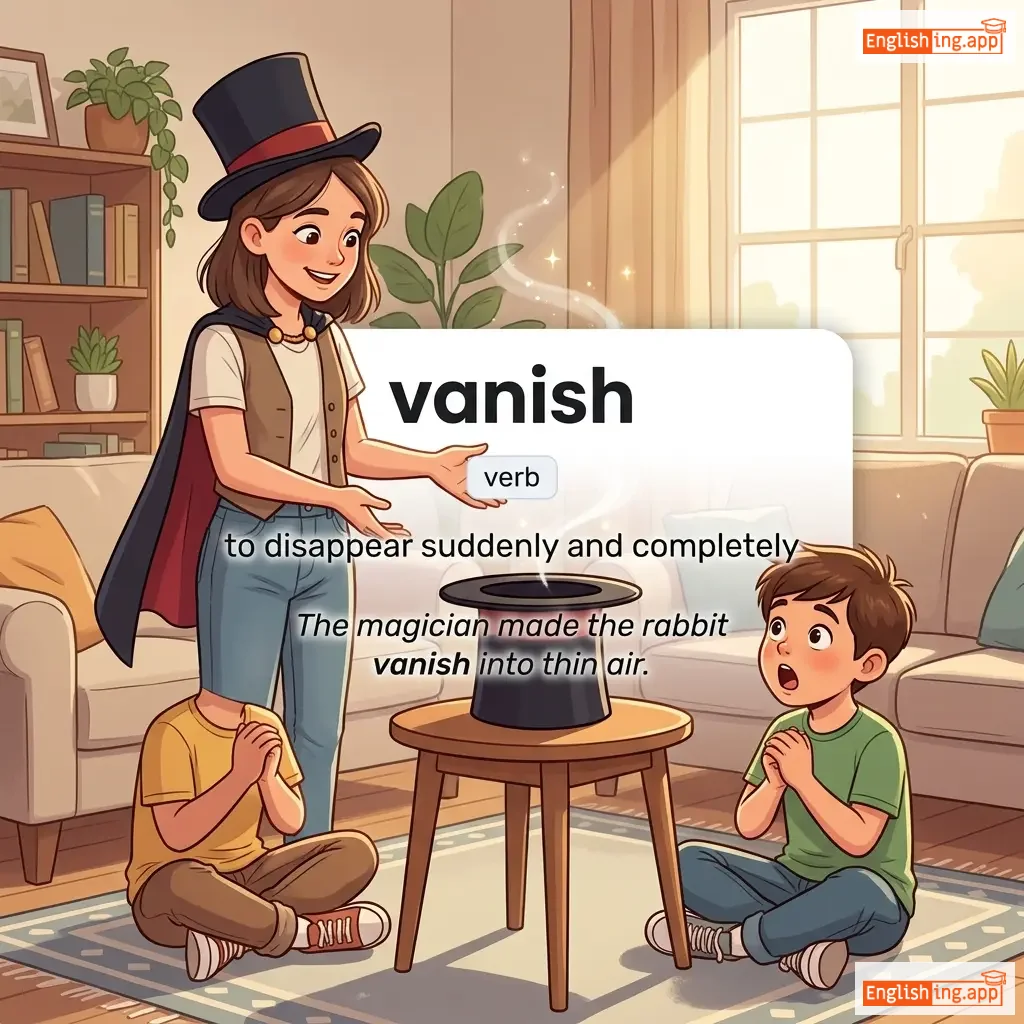
to disappear suddenly and completely

"The magician made the rabbit vanish into thin air."

"魔法使いはウサギを空中で消しました。" (Mahoutsukai wa usagi o kuuchuu de keshimashita.)
noun
/ˈvænɪti/
虚栄 (kyoei)

excessive pride in one's appearance, achievements, or possessions

"His vanity made him buy an expensive car just to impress others."

"彼の虚栄心は、他の人を印象付けるために高価な車を買わせた。" (Kare no kyoeishin wa, hoka no hito o inshōzukeru tame ni kōka na kuruma o kawaseta.)
verb
/ˈvæŋkwɪʃ/
打ち負かす (uchimakasu)

to defeat thoroughly, especially in battle or competition

"The army vanquished its enemies with superior strategy."

"軍隊は優れた戦略で敵を打ち負かしました。" (Guntai wa sugureta senryaku de teki o uchimakashimashita.)
noun
/ˈvæntɪdʒ/
有利な位置 (yūri na ichi)

a position or situation that gives an advantage or a good view

"From this vantage, we could see the entire valley."

"この位置から、私たちは谷全体を見ることができました。" (Kono ichi kara, watashitachi wa tani zentai o miru koto ga dekimashita.)
adjective
/ˈvæpɪd/
退屈な (taikutsuna)

lacking liveliness, flavor, or interest; dull and uninspired

"The lecture was so vapid that half the audience fell asleep."

"講義は退屈すぎて、観客の半分が寝てしまった。" (Kōgi wa taikutsu sugite, kankyaku no hanbun ga nete shimatta.)
verb
/ˈveɪpəraɪz/
蒸発させる (jōhatsu saseru)

to turn into vapor or gas

"The heat of the sun can vaporize water from the surface."

"太陽の熱は水を表面から蒸発させることができます。" (Taiyō no netsu wa mizu o hyōmen kara jōhatsu saseru koto ga dekimasu.)
noun
/ˈveɪpəraɪzər/
ベイポライザー (beiporaizā)

a device that turns a liquid into vapor, often for inhalation

"She used a vaporizer to ease her cough."

"彼女は咳を和らげるためにベイポライザーを使いました。" (Kanojo wa seki o yawarageru tame ni beiporaizā o tsukaimashita.)
adjective
/ˈveɪpərəs/
蒸気のような; 曖昧な (jōki no yō na; aimaina)

consisting of vapor; vague or insubstantial

"The morning air was filled with vaporous mist."

"朝の空気は蒸気のような霧で満たされていました。" (Asa no kūki wa jōki no yō na kiri de mitasarete imashita.)