词汇表

英语词汇词典 | 单词含义、定义和示例

noun
/ˈveɪkənsi/
空缺 (kongque)

An unoccupied position or available space.

"There is a job vacancy at the bank."

"银行有一个职位空缺。" (Yinhang you yige zhiwei kongque.)
adjective
/ˈveɪkənt/
空的 (kong de)

empty, unoccupied, or not being used

"The apartment has been vacant for three months."
"这间公寓已经空了三个月。" (Zhe jian gongyu yijing kong le san ge yue.)
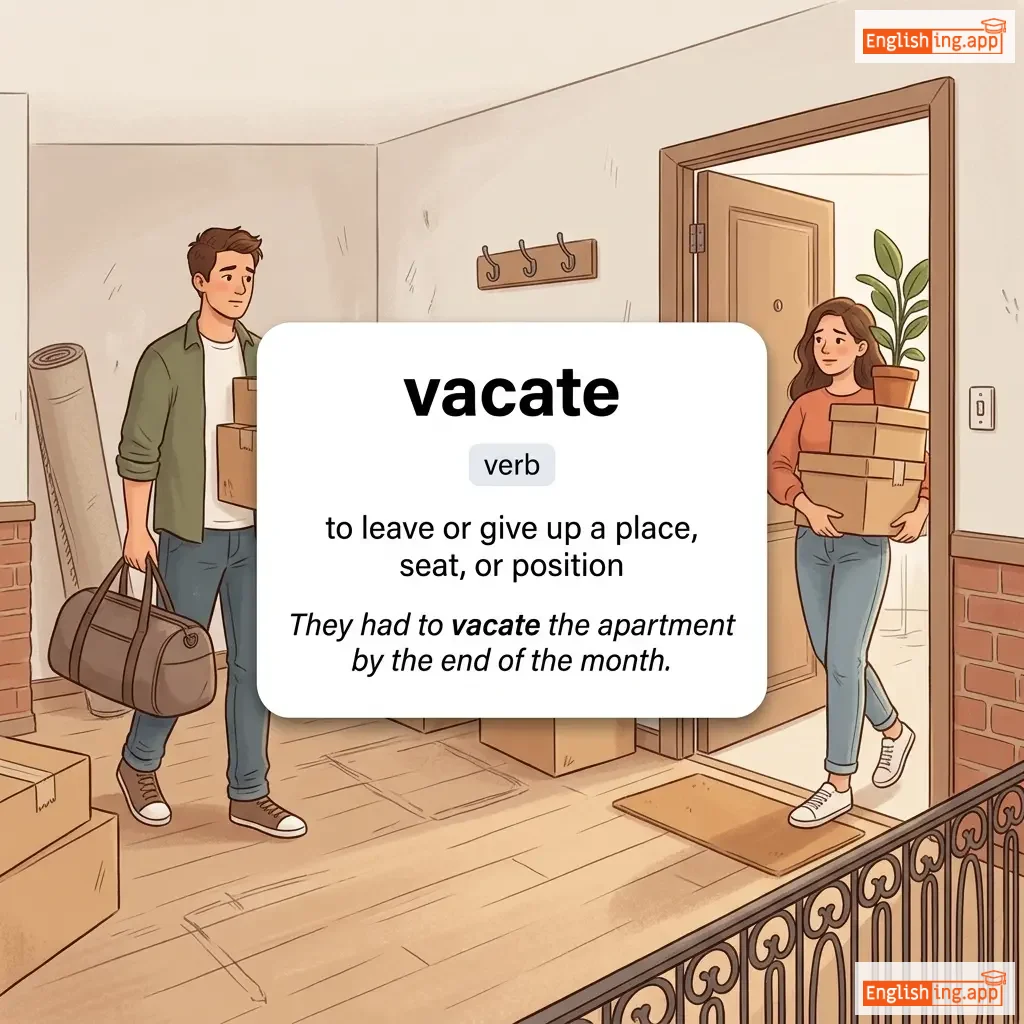
vacate definition card — visual illustration of the meaning
verb
/vəˈkeɪt/
腾出 (teng chu)

to leave or give up a place, seat, or position

"They had to vacate the apartment by the end of the month."

"他们必须在月底前腾出公寓。" (Tamen bixi zai yuedi qian teng chu gongyu.)
noun
/vəˈkeɪʃən/
假期 (jiàqī)

an extended period of leisure and recreation, especially one spent away from home or traveling

"We went on vacation to the beach last summer."

"我们去年夏天去了海滩度假。" (Wǒmen qùnián xiàtiān qùle hǎitān dùjià.)
verb
/ˈvæksɪneɪt/
接种 (jiēzhòng)

to give a vaccine to protect against a disease

"Children are usually vaccinated before starting school."

"孩子们通常在上学前会接种疫苗。" (Háizimen tōngcháng zài shàngxué qián huì jiēzhòng yìmiáo.)
noun
/ˌvæk.sɪˈneɪ.ʃən/
疫苗接种 (yimiao jiezong)

the process of giving a vaccine to a person or animal to protect them against a disease

"Children receive vaccination against measles at an early age."

"孩子们在年轻时接种麻疹疫苗。" (Haizimen zai niansheng shi jiezong mazheng yimiao.)
noun
/ˈvæk.siːn/
疫苗 (yimiao)

a substance used to stimulate the body's immune response against diseases

"Children are given the polio vaccine to prevent infection."

"孩子们接种脊髓灰质炎疫苗以预防感染。" (Háizimen jiēzhǒng jǐsuǐ huīzhìyán yìmiáo yǐ yùfáng gǎnrǎn.)
noun
/ˈvæk.juːm ˈkliː.nər/
吸尘器 (xī chén qì)

an electrical appliance that uses suction to remove dirt and dust from carpets and floors

"She used the vacuum cleaner to clean the living room carpet."
"她用吸尘器清洁客厅的地毯。" (Tā yòng xī chén qì qīngjié kètīng de dìtǎn.)
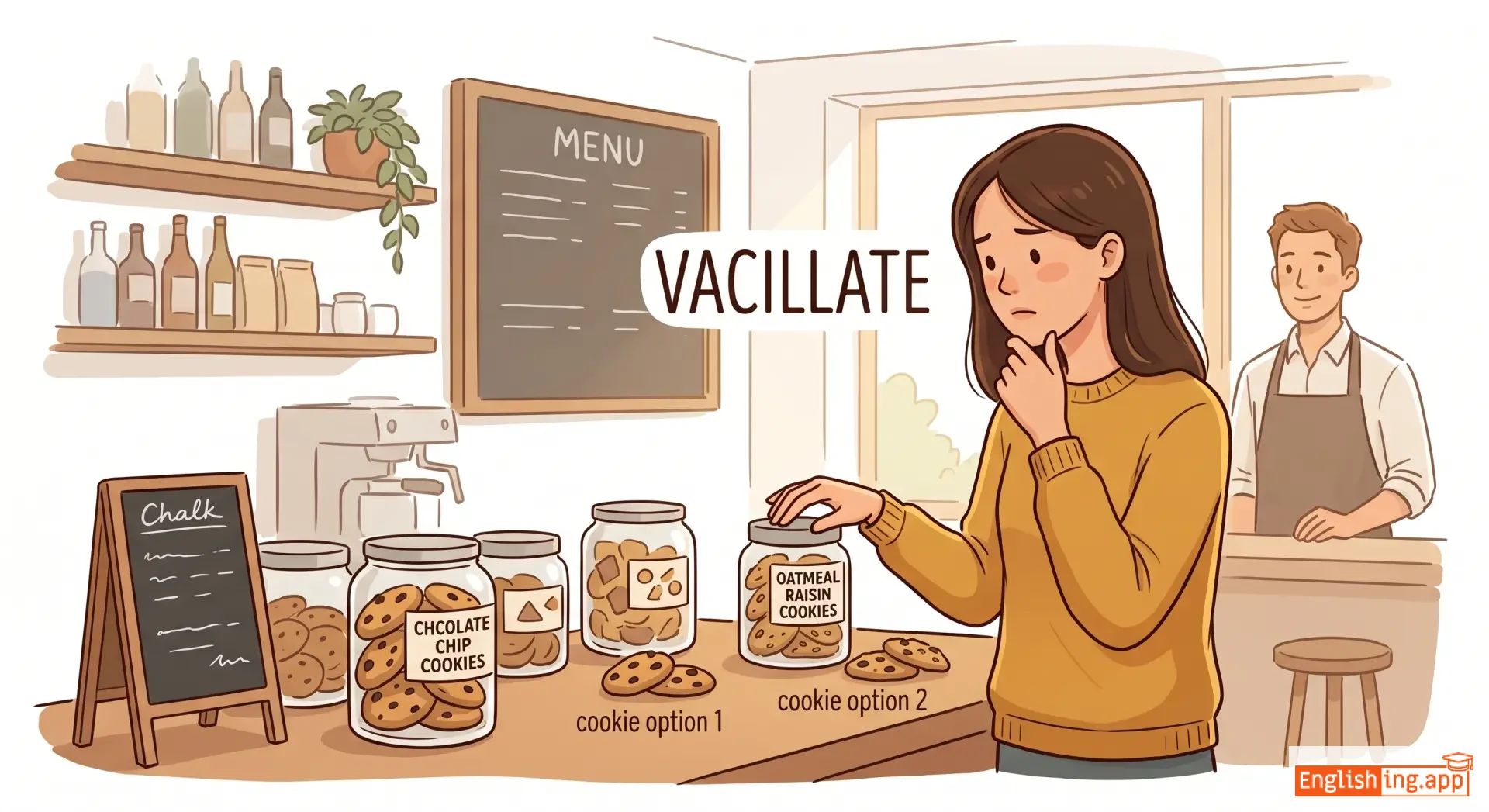
vacillate definition card — visual illustration of the meaning
verb
/ˈvæsɪleɪt/
幸福 (xìngfú)

to waver between different opinions or actions; be indecisive

"He vacillated between studying law and becoming a writer."

"她在获得奖项时无法掩饰自己的幸福。" (Tā zài huòdé jiǎngxiàng shí wúfǎ yǎnshì zìjǐ de xìngfú.)
noun
/ˌvæsɪˈleɪʃən/
摇摆不定 (yao bai bu ding)

The inability to decide between different opinions or actions; indecisiveness.

"His constant vacillation frustrated his colleagues during the meeting."
"他的持续犹豫让他的同事在会议期间感到沮丧。" (Ta de chixu youyu rang ta de tongshi zai huiyi qijian gandu ju shang.)
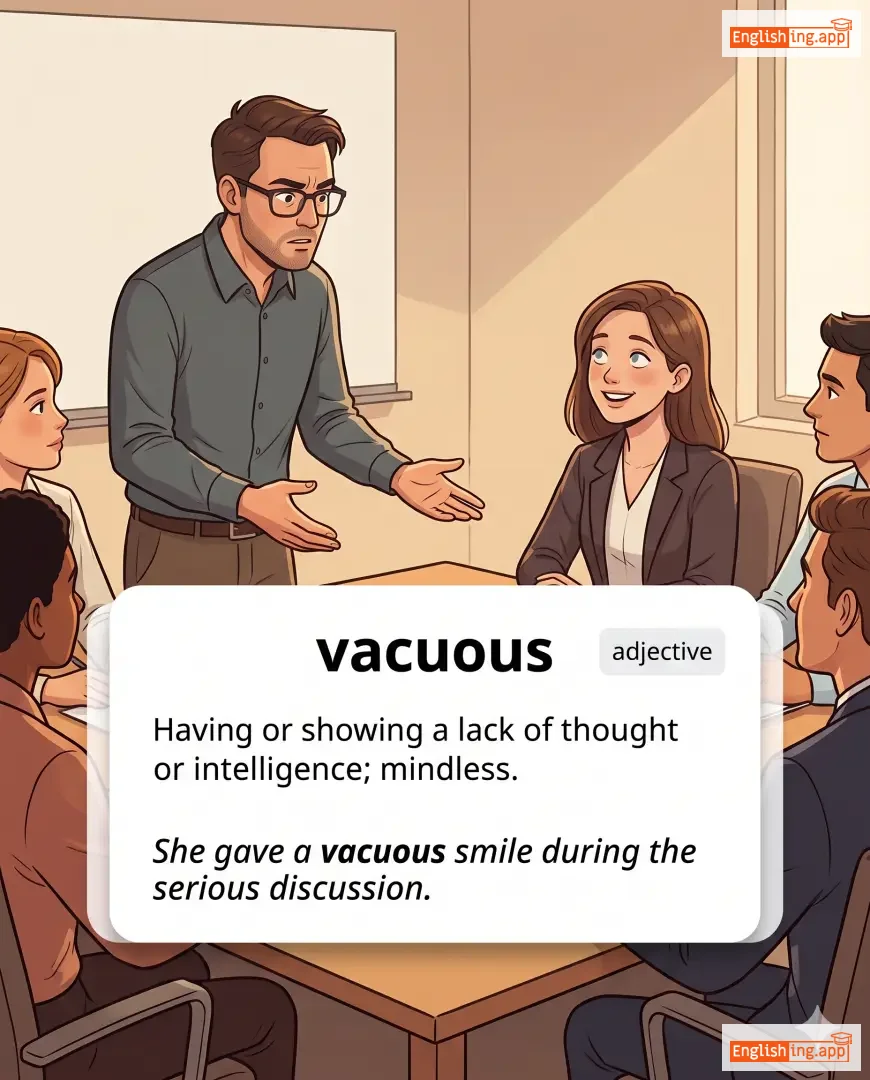
vacuous definition card — visual illustration of the meaning
adjective
/ˈvækjuəs/
空洞 (kongdong)

Having or showing a lack of thought or intelligence; mindless.

"She gave a vacuous smile during the serious discussion."

"她在严肃的讨论中露出了空洞的笑容。" (Tā zài yánsù de tǎolùn zhōng lùchūle kōngdòng de xiàoróng.)
noun
/ˈvæk.juːm/
真空 (zhenkong)

A space entirely devoid of matter; an absence of atmosphere or content.

"The scientist created a vacuum chamber for the experiment."

"科学家为实验创建了一个真空室。" (kexuejia wei shiyan chuangjian le yige zhenkong shi.)
noun
/ˈvæɡəbɒnd/
流浪汉 (liú làng hàn)

A person who wanders from place to place without a home or job.

"The old vagabond lived on the streets of the city."

"那位老流浪汉住在城市的街道上。" (nà wèi lǎo liú làng hàn zhù zài chéng shì de jiē dào shàng.)
noun
/ˈveɪɡəri/
意外变化 (yiwai bianhua)

An unexpected and inexplicable change in a situation or someone's behavior.

"The vagaries of the weather made planning difficult."

"天气的变化使得计划变得困难。" (tianqi de bianhua shide jihua biande kunnan.)
noun
/ˈveɪɡrənt/
流浪者 (liúlàng zhě)

A person without a settled home or regular work who wanders from place to place.

"The police offered shelter to a vagrant sleeping on the street."

"警察为一名在街头睡觉的流浪者提供了庇护所。" (Jǐngchá wèi yī míng zài jiētóu shuìjiào de liúlàng zhě tígōngle bìhù suǒ.)
adjective
/veɪɡ/
模糊 (móhū)

Not clearly expressed, known, described, or decided.

"Her explanation was so vague that nobody understood the plan."

"她的解释如此模糊,以至于没有人理解这个计划。" (Tā de jiěshì rúcǐ móhū, yǐ zhì yú méiyǒu rén lǐjiě zhège jìhuà.)
adjective
/veɪn/
虚荣的 (xūróng de)

Having an excessively high opinion of one's appearance, abilities, or worth.

"He is too vain to admit his mistakes."

"他太虚荣,无法承认自己的错误。" (Tā tài xūróng, wúfǎ chéngrèn zìjǐ de cuòwù.)
adjective
/veɪnˈɡlɔːriəs/
自负的 (zì fù de)

Excessively proud of oneself or one’s achievements; boastful.

"The vainglorious leader boasted about his minor achievements."

"那个自负的领导者炫耀着他的微不足道的成就。" (Nàgè zì fù de lǐng dǎo zhě xuàn yào zhe tā de wēi bù zú dào de chéng jiù.)
noun
/ˈveɪnɡlɔːri/
虚荣 (xūróng)

Excessive vanity or boastfulness about one's achievements.

"His speech was filled with vainglory and self-praise."

"他的演讲充满了虚荣和自我吹嘘。" (Tā de yǎnjiǎng chōngmǎnle xūróng hé zìwǒ chuīxū.)
noun
/ˈvæləns/
装饰帷幔 (zhuang shi wei man)

A decorative drapery hung across the top of a window or bed.

"She chose a floral valance to match the curtains in her bedroom."

"她选择了一款花卉装饰帷幔来搭配她卧室里的窗帘。" (Ta xuan ze le yi kuan hua hui zhuang shi wei man lai da pei ta wo shi li de chuang lian.)
noun
/veɪl/
山谷 (shangu)

A valley, often used in a poetic or literary sense.

"The village lay hidden in a quiet green vale."

"村庄隐藏在一个宁静的绿色山谷中。" (Cun zhuang yincang zai yi ge ningjing de lüse shangu zhong.)
noun
/ˌvælɪˈdɪkʃən/
告别辞 (gaobiecí)

The act of saying farewell; a formal goodbye.

"The professor gave a touching valediction at his retirement ceremony."

"教授在退休仪式上发表了感人的告别辞。" (Jiàoshòu zài tuìxiū yíshì shàng fābiǎo le gǎnrén de gàobiécí.)
noun
/ˌvælədɪkˈtɔːriən/
最佳学生 (zui jia xue sheng)

The student with the highest academic achievements in a graduating class, often chosen to give the farewell speech.

"She was honored as the valedictorian of her class."
"她被尊为班级的最佳学生。" (Ta bei zun wei banji de zui jia xue sheng.)
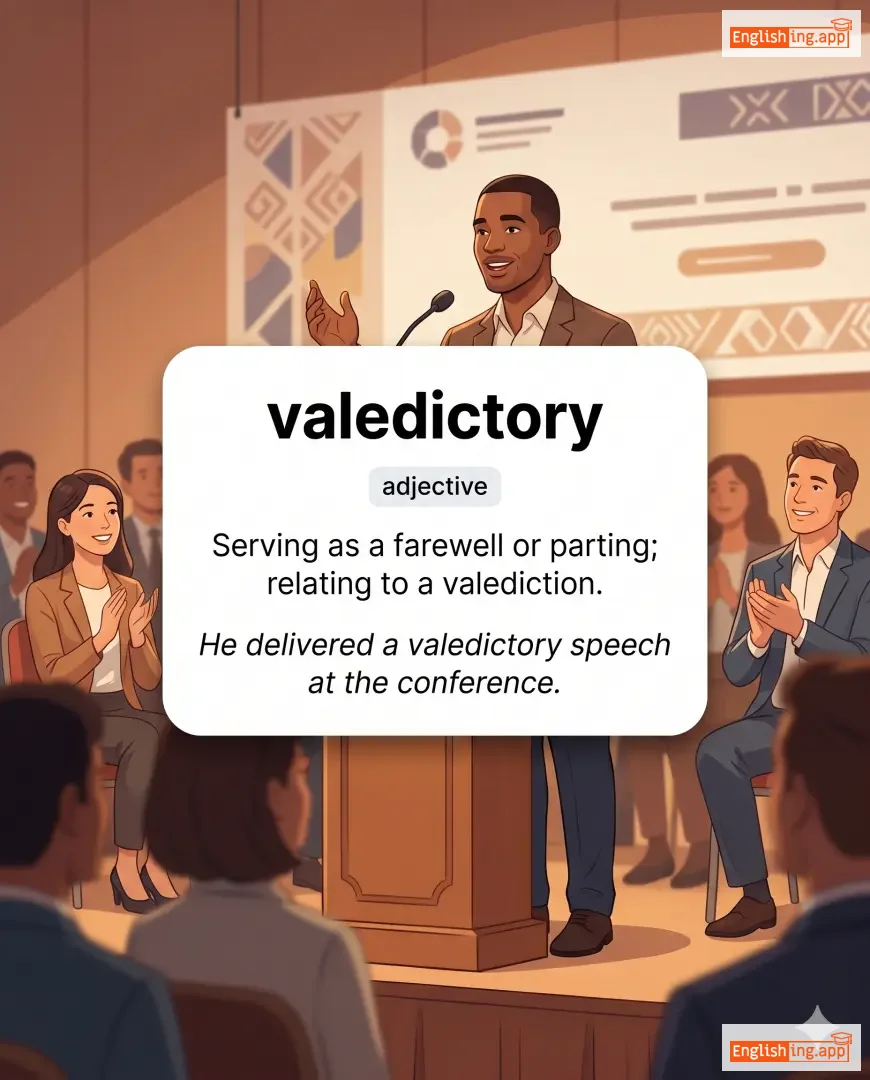
valedictory definition card — visual illustration of the meaning
adjective
/ˌvælɪˈdɪktəri/
告别的 (gàobié de)

Serving as a farewell or parting; relating to a valediction.

"He delivered a valedictory speech at the conference."

"他在会议上做了告别演讲。" (Tā zài huìyì shàng zuòle gàobié yǎnjiǎng.)
noun
/ˌvælɪˌtjuːdɪˈnɛəriən/
疑病症患者 (yí bìng zhèng huàn zhě)

A person who is unduly anxious about their health or constantly concerned with minor ailments.

"He was regarded as a valetudinarian, always worrying about his health."

"他被认为是一个疑病症患者,总是为自己的健康担忧。" (Tā bèi rènwéi shì yīgè yí bìng zhèng huàn zhě, zǒng shì wèi zìjǐ de jiànkāng dānxīn.)
adjective
/ˈvæliənt/
勇敢 (yǒnggǎn)

Showing courage, determination, and bravery.

"The firefighters made a valiant effort to save the building."

"消防员做出了勇敢的努力拯救这座建筑。" (Xiāofángyuán zuòchūle yǒnggǎn de nǔlì zhěngjiù zhè zuò jiànzhú.)
adjective
/ˈvælɪd/

Having a sound basis in logic or fact; legally or officially acceptable.

"Her argument was valid and convincing."

verb
/ˈvælɪdeɪt/
验证 (yan zheng)

To check or prove the accuracy, truth, or legality of something.

"The scientist worked hard to validate the experiment's results."

"科学家努力验证实验结果。" (Ke xue jia nu li yan zheng shi yan jie guo.)
noun
/vəˈlɪd.ə.ti/
有效性 (youxiao xing)

the quality of being logically or factually sound; legal acceptability

"The lawyer questioned the validity of the contract."

"律师质疑合同的有效性。" (Lvshi zhiyi hetong de youxiaoxing.)
adverb
/ˈvælɪdli/
合法地 (hefa di)

in a legally, logically, or officially acceptable manner

"The contract was validly signed by both parties."

"合同已由双方合法地签署。" (Hetong yi you shuangfang hefa di qianshu)
noun
/ˈvæli/
山谷 (shangu)

a low area of land between hills or mountains, typically with a river or stream flowing through it

"The valley was covered in lush green grass and flowers."

"山谷覆盖着绿色的草和花。" (Shāngǔ fùgài zhe lǜsè de cǎo hé huā.)
noun
/ˈvælər/
英勇 (yingyong)

Great courage in the face of danger, especially in battle.

"The soldier was honored for his valor during the war."

"士兵因在战争中表现出的英勇而受到表彰。" (Shì bīng yīn zài zhàn zhēng zhōng biǎo xiàn chū de yīng yǒng ér shòu dào biǎo zhāng.)
adjective
/ˈvælərəs/
勇敢的 (yǒnggǎn de)

showing great courage and bravery

"The valorous soldier led his troop into battle without hesitation."

"勇敢的士兵毫不犹豫地带领他的部队进入战斗。" (Yǒnggǎn de shìbīng háo bù yóuyù de dàilǐng tā de bùduì jìnrù zhàndòu.)
adjective
/ˈvæljuːəbl/
宝贵的 (bǎo guì de)

worth a great deal of money or importance

"The diamond ring is very valuable."

"这枚钻石戒指非常宝贵。" (Zhè méi zuàn shí jiè zhǐ fēi cháng bǎo guì.)
valuation definition card — visual illustration of the meaning
noun
/ˌvæl.juˈeɪ.ʃən/
估值 (guzhi)

the process of deciding how much money something is worth; an estimated value

"The property valuation came in higher than expected."

"房地产的估值高于预期。" (fangdichan de guzhi gaoyu yuqi.)
noun
/ˈvæljuː/
价值 (jiàzhí)

the importance, worth, or usefulness of something

"The value of education cannot be overstated."
"教育的价值不能被高估。" (Jiàoyù de jiàzhí bùnéng bèi gāogū.)
value proposition definition card — visual illustration of the meaning
noun
/ˈvæl.juː ˌprɒ.pəˈzɪʃ.ən/
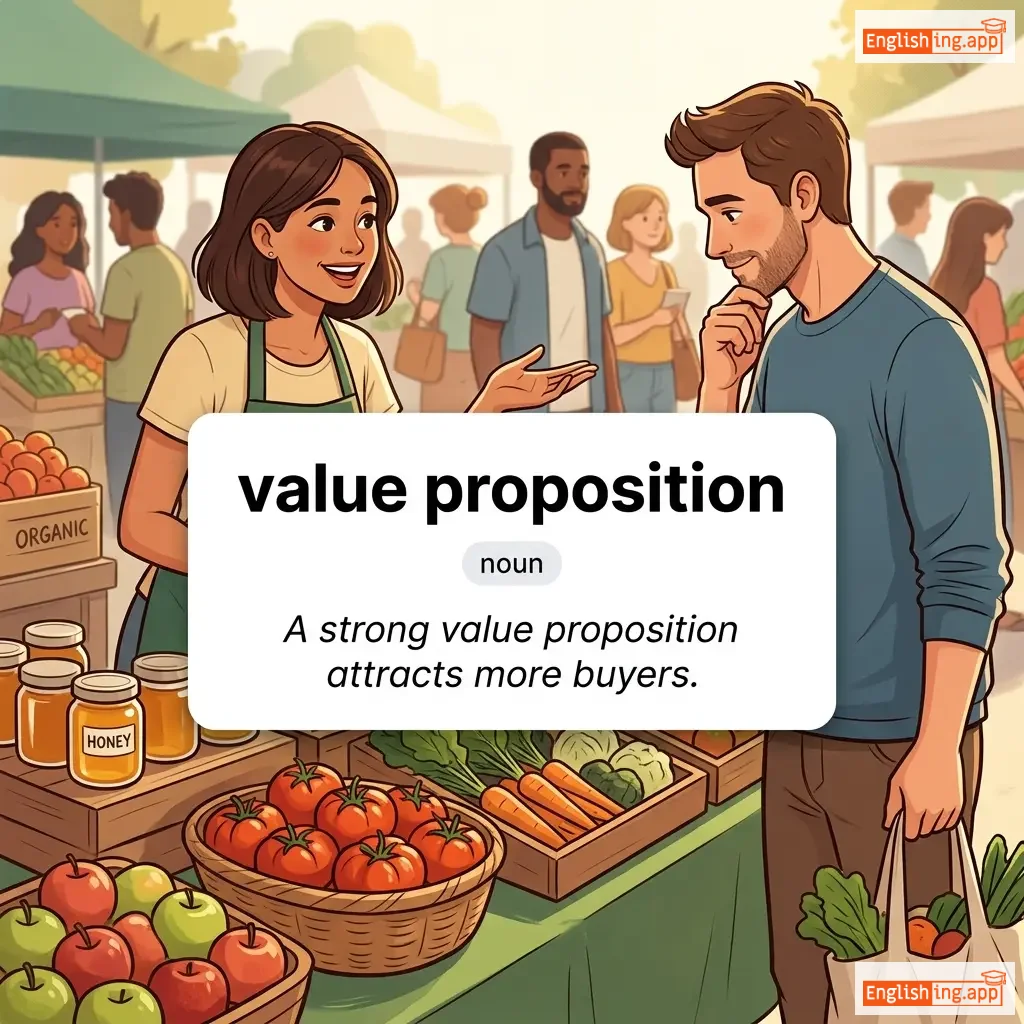
价值主张 (jiàzhí zhǔzhāng)

A business or marketing statement that summarizes why a consumer should buy a product or use a service.

"A strong value proposition attracts more buyers."
"强有力的价值主张吸引更多买家。" (Qiáng yǒulì de jiàzhí zhǔzhāng xīyǐn gèng duō mǎijiā.)
value-based education definition card — visual illustration of the meaning
noun
ˈvæljuː beɪst ˌɛdjuːˈkeɪʃən
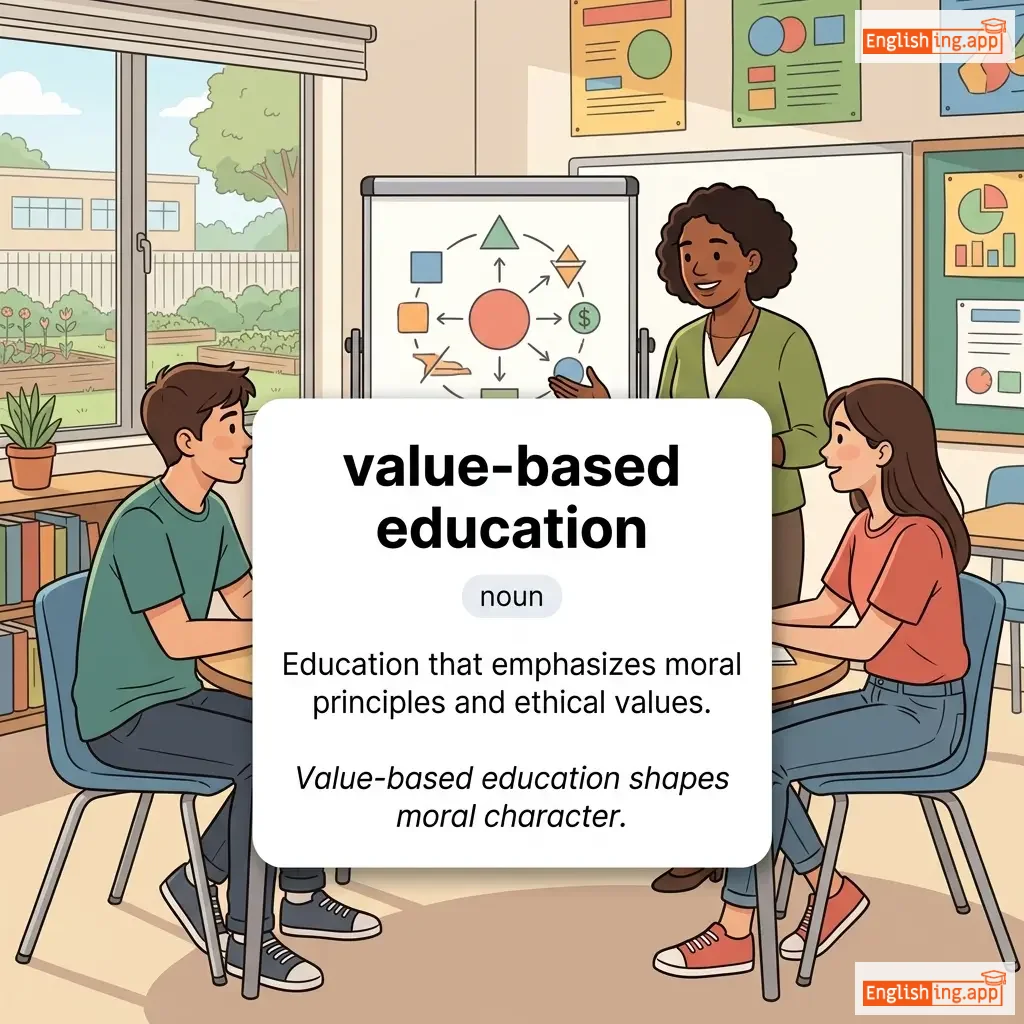
基于价值的教育 (ji yu jiazhi de jiaoyu)

Education that emphasizes moral principles and ethical values.

"Value-based education shapes moral character."

"基于价值的教育塑造了道德品格。" (Ji yu jiazhi de jiaoyu suzao le daode pingge.)
adjective
/ˈvæljuːləs/
毫无价值 (háo wú jià zhí)

having no worth, importance, or usefulness

"The old broken phone was considered valueless."

"那部旧坏掉的手机被认为是毫无价值的。" (Nà bù jiù huài diào de shǒujī bèi rènwéi shì háo wú jià zhí de.)
noun
/ˈvæmpaɪər/
幸福 (xìngfú)

a mythical creature that sucks blood from the living; metaphorically, a person who exploits others

"In folklore, a vampire rises at night to drink human blood."

"她在获得奖项时无法隐藏自己的幸福。" (Tā zài huòdé jiǎngxiàng shí wúfǎ yǐncáng zìjǐ de xìngfú.)
noun
/væn/
货车 (huoche)

a large vehicle used for transporting goods or people

"The delivery van stopped in front of our house."

"送货车停在我们家门前。" (Songhuo che ting zai women jia menqian.)
noun
/ˈvænɡɑːrd/
先锋 (xiānfēng)

the forefront of an action, movement, or military force

"The company is at the vanguard of technological innovation."
"该公司处于技术创新的先锋地位。" (Gāi gōngsī chùyú jìshù chuàngxīn de xiānfēng dìwèi.)
vanish definition card — visual illustration of the meaning
verb
/ˈvæn.ɪʃ/
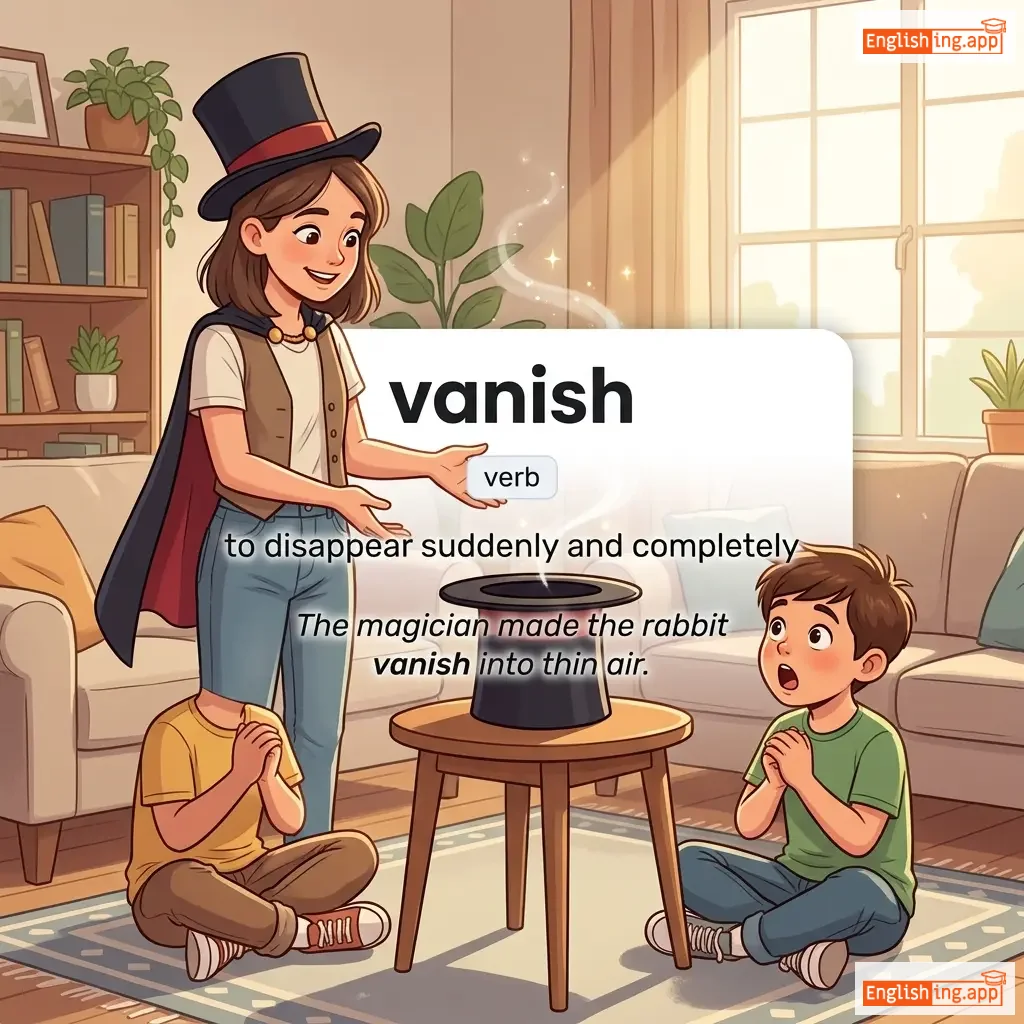
消失 (xiaoshi)

to disappear suddenly and completely

"The magician made the rabbit vanish into thin air."

"魔术师让兔子在空气中消失。" (Moshushi rang tuzi zai kongqi zhong xiaoshi.)
noun
/ˈvænɪti/
虚荣 (xūróng)

excessive pride in one's appearance, achievements, or possessions

"His vanity made him buy an expensive car just to impress others."

"他的虚荣让他购买了一辆昂贵的车,只是为了给别人留下深刻印象。" (Tā de xūróng ràng tā gòumǎi le yī liàng ángguì de chē, zhǐshì wèile gěi biérén liúxià shēnkè yìnxiàng.)
verb
/ˈvæŋkwɪʃ/
征服 (zhēngfú)

to defeat thoroughly, especially in battle or competition

"The army vanquished its enemies with superior strategy."

"军队以优越的战略打败了敌人。" (Jūnduì yǐ yōuyuè de zhànlüè dǎbài le dírén.)
noun
/ˈvæntɪdʒ/
有利位置 (youli weizhi)

a position or situation that gives an advantage or a good view

"From this vantage, we could see the entire valley."

"从这个位置,我们可以看到整个山谷。" (Cong zhe ge weizhi, women keyi kan dao zhengge shangu.)
adjective
/ˈvæpɪd/
乏味的 (fámèi de)

lacking liveliness, flavor, or interest; dull and uninspired

"The lecture was so vapid that half the audience fell asleep."

"讲座如此乏味,以至于一半的听众都睡着了。" (Jiǎngzuò rúcǐ fámèi, yǐ zhì yú yībàn de tīngzhòng dōu shuìzhe le.)
verb
/ˈveɪpəraɪz/
蒸发 (zhēngfā)

to turn into vapor or gas

"The heat of the sun can vaporize water from the surface."

"太阳的热量可以使水从表面蒸发。" (Tàiyáng de rèliàng kěyǐ shǐ shuǐ cóng biǎomiàn zhēngfā.)
noun
/ˈveɪpəraɪzər/
蒸发器 (zhēngfā qì)

a device that turns a liquid into vapor, often for inhalation

"She used a vaporizer to ease her cough."

"她使用了一个蒸发器来缓解她的咳嗽。" (Tā shǐyòngle yīgè zhēngfā qì lái huǎnjiě tā de késòu.)
adjective
/ˈveɪpərəs/
蒸汽的; 模糊的 (zhēngqì de; móhu de)

consisting of vapor; vague or insubstantial

"The morning air was filled with vaporous mist."

"早晨的空气充满了蒸汽般的雾气。" (Zǎochén de kōngqì chōngmǎnle zhēngqì bān de wùqì.)