词汇表

英语词汇词典 | 单词含义、定义和示例

noun
/oʊf/
笨拙或愚蠢的人 (bènzhuō huò yúchǔn de rén)

a clumsy, stupid, or awkward person

"He acted like an oaf at the dinner party, spilling drinks everywhere."

"他在晚宴上像个傻大个一样表现,满地洒饮料。" (Tā zài wǎnyàn shàng xiàng ge shǎ dà gè yīyàng biǎoxiàn, mǎn dì sǎ yǐnliào.)
noun
/oʊk/
橡树 (xiàng shù)

a large tree that produces acorns and has strong, hard wood

"The old oak tree provided shade for the entire yard."

"那棵老橡树为整个院子提供了阴凉。" (nà kē lǎo xiàng shù wèi zhěnggè yuànzi tígōngle yīnliáng.)
adjective
/ˈoʊ.kən/
由橡木制成 (you xiangmu zhi cheng)

made of or resembling oak wood

"The villagers gathered around the oaken table in the hall."

"村民们围着大厅里的橡木桌子聚集在一起。" (Cunmin men weizhe datang li de xiangmu zhuozi juzhi zai yiqi.)
noun
/ˈoʊ.kəm/
旧绳纤维 (jiu sheng xianwei)

loose fibers obtained by untwisting old ropes, used for caulking ships

"The shipbuilders used oakum to seal the gaps in the wooden planks."

"造船工人使用欧卡姆来密封木板之间的缝隙。" (Zaochuan gongren shiyong oukam lai mifeng muban zhijian de fengxi.)
noun
/ɔːr/
(jiang)

a long pole with a flat blade used to row a boat

"He dipped the oar into the water and pulled the boat forward."

"他将桨浸入水中并拉动船向前。" (Tā jiāng jiǎng jìn rù shuǐ zhōng bìng lādòng chuán xiàng qián.)
noun
/ˈɔːrzmən/
划船者 (huáchuán zhě)

a person who rows a boat, especially as a member of a racing crew

"The experienced oarsman rowed the boat across the river."

"经验丰富的划船者划船过了河。" (Jīngyàn fēngfù de huáchuán zhě huáchuán guòle hé)
noun
/oʊˈeɪ.sɪs/
绿洲 (lüzhou)

a fertile spot in a desert where water is found; a pleasant relief

"After hours in the desert, they finally reached an oasis."

"在沙漠中待了几个小时后,他们终于到达了一个绿洲。" (zài shāmò zhōng dàile jǐ gè xiǎoshí hòu, tāmen zhōngyú dàodále yīgè lüzhou.)
noun
/oʊθ/
誓言 (shìyán)

a solemn promise, often invoking a divine witness

"She took an oath to tell the truth in court."

"她在法庭上宣誓说出真相。" (Tā zài fǎtíng shàng xuānshì shuōchū zhēnxiàng.)
noun
/ˈoʊtˌmiːl/
燕麦粥 (yanmai zhou)

A type of porridge made from ground oats, often eaten for breakfast.

"She eats a bowl of oatmeal every morning for breakfast."
"她每天早晨吃一碗燕麦粥当早餐。" (Ta mei tian zao chen chi yi wan yan mai zhou dang zao can.)
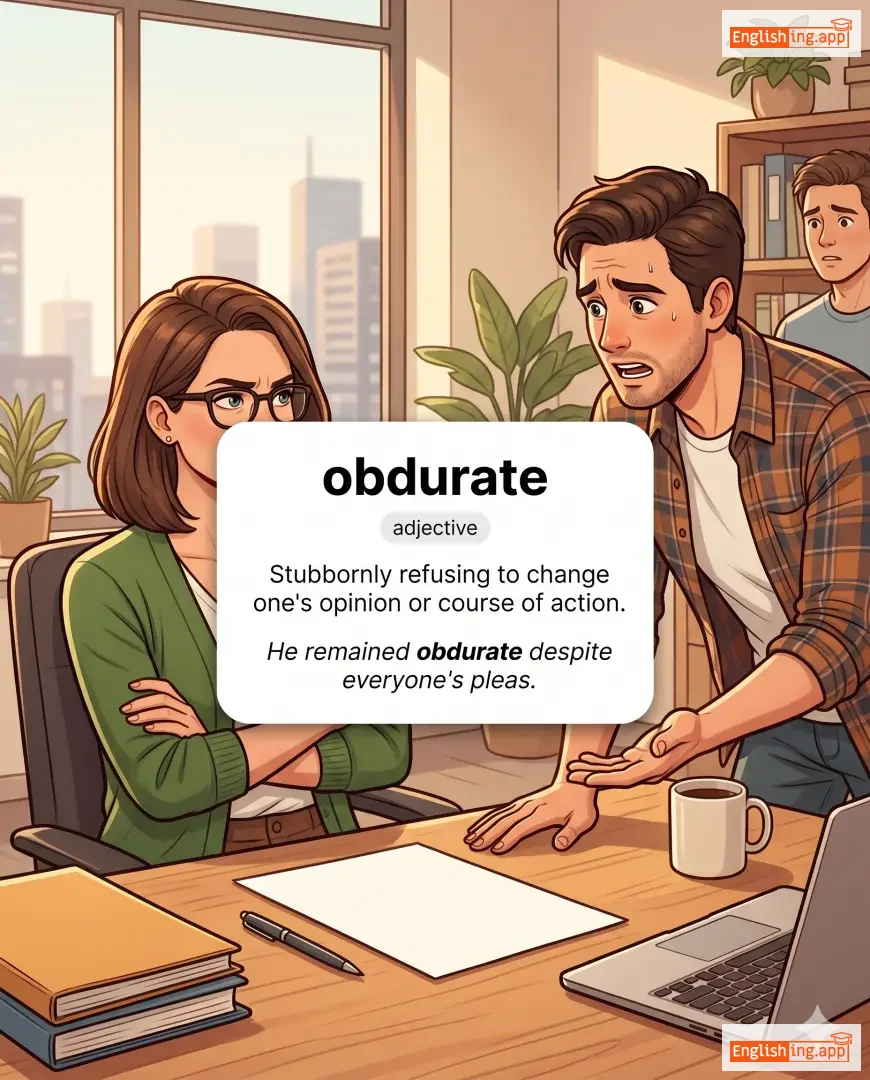
obdurate definition card — visual illustration of the meaning
adjective
/ˈɑːbdjʊrət/
固执 (guzhi)

Stubbornly refusing to change one's opinion or course of action.

"He remained obdurate despite everyone's pleas."

"尽管大家的恳求,他依然固执。" (Jinguang dajia de kenqiu, ta yiran guzhi.)
noun
/oʊˈbiː.di.əns/
服从 (fúcóng)

compliance with an order, request, or law; submission to authority

"Children should show obedience to their parents."

"孩子们应该对父母表现出服从。" (Háizimen yīnggāi duì fùmǔ biǎoxiàn chū fúcóng.)
adjective
/oʊˈbiːdiənt/
听话的 (tīng huà de)

Willing to comply with rules or authority.

"The obedient child quickly followed her mother's instructions."

"听话的孩子迅速跟随母亲的指示。" (Tīng huà de háizi xùnsù gēnsuí mǔqīn de zhǐshì.)
noun
/oʊˈbeɪsəns/
敬礼 (jingli)

A gesture of respect such as a bow or curtsy.

"They bowed in obeisance to the king."

"他们向国王行了敬礼。" (Tāmen xiàng guówáng xíngle jìnglǐ.)
noun
/ˈɑːbəlɪsk/
方尖碑 (fangjianbei)

A tall, four-sided, narrow tapering monument with a pyramid-shaped top.

"The ancient Egyptians built obelisks to honor their gods."

"古埃及人建造了方尖碑来纪念他们的神。" (Gu aiji ren jianzao le fangjianbei lai jinian tamen de shen.)
adjective
/oʊˈbiːs/
肥胖 (feipan)

Extremely overweight; having an excessive amount of body fat.

"The doctor advised the obese patient to adopt a healthier lifestyle."

"医生建议肥胖的病人采取更健康的生活方式。" (Yisheng jianyi feipang de bingren caiqu geng jiankang de shenghuo fangshi.)
obesity definition card — visual illustration of the meaning
noun
/oʊˈbiːsəti/
肥胖 (feipang)

The condition of being very overweight, especially to a degree that it is harmful to health.

"Obesity is a growing health problem in many countries."
"肥胖是许多国家日益严重的健康问题。" (Feipang shi xuduo guojia riyi yanzhong de jiankang wenti.)
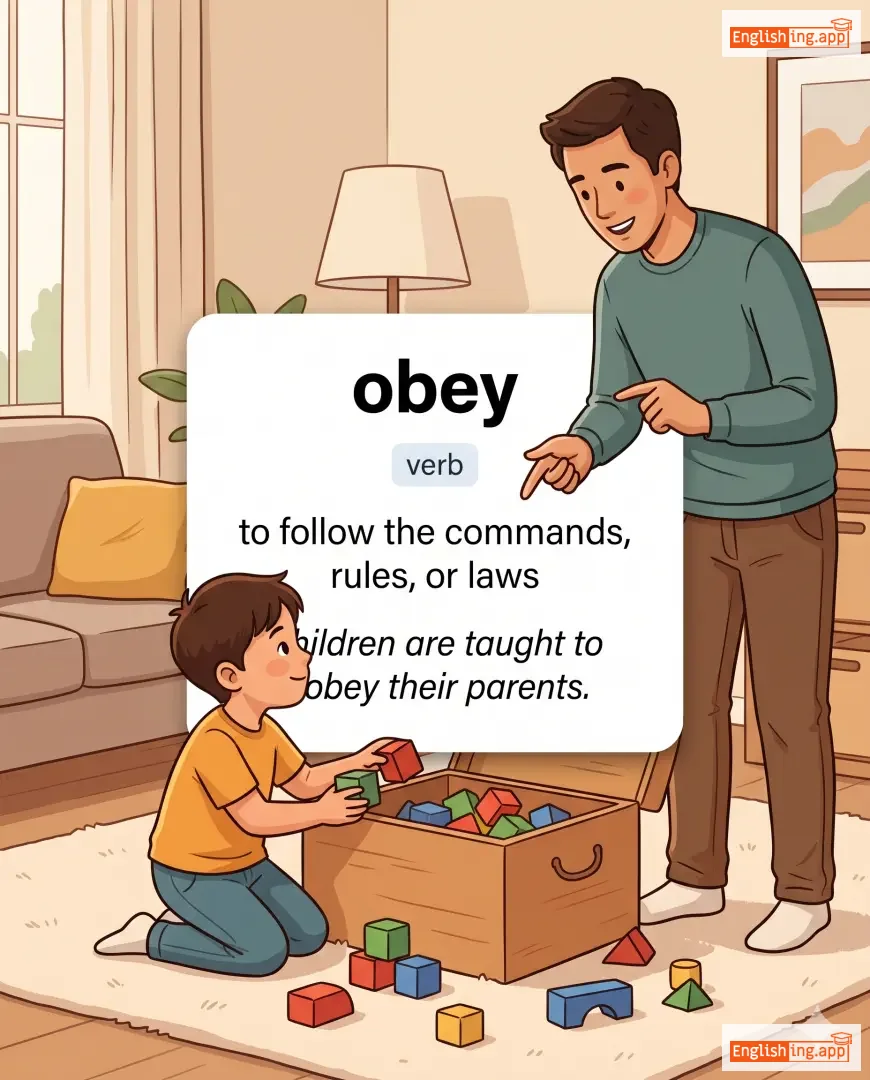
obey definition card — visual illustration of the meaning
verb
/oʊˈbeɪ/
服从 (fúcóng)

to follow the commands, rules, or laws

"Children are taught to obey their parents."

"孩子们被教导服从父母。" (Háizimen bèi jiàodǎo fúcóng fùmǔ.)
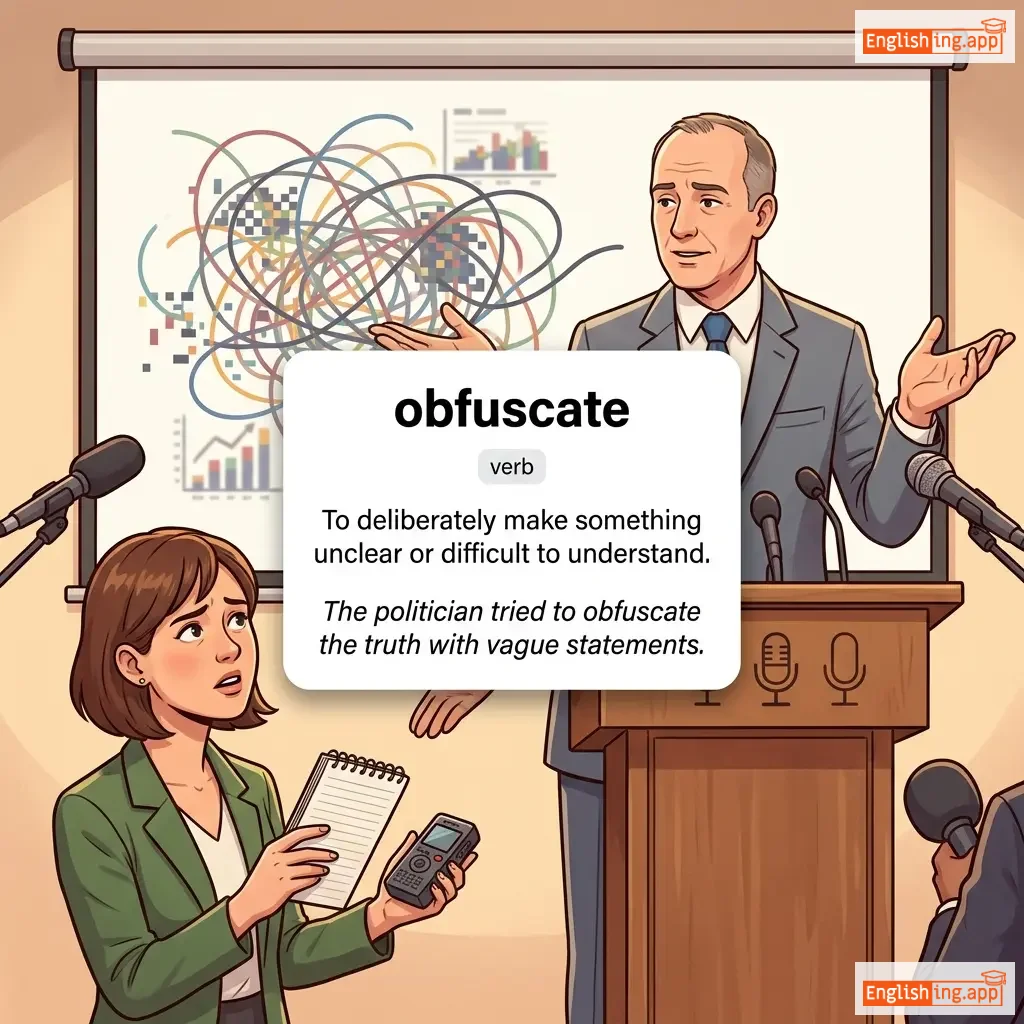
obfuscate definition card — visual illustration of the meaning
verb
/ˈɒbfʌskeɪt/
使模糊 (shǐ móhu)

To deliberately make something unclear or difficult to understand.

"The politician tried to obfuscate the truth with vague statements."

"这位政治家试图通过模糊的声明来掩盖真相。" (Zhè wèi zhèngzhìjiā shìtú tōngguò móhu de shēngmíng lái yǎngài zhēnxiàng.)
obfuscation definition card — visual illustration of the meaning
noun
/ˌɒb.fʌsˈkeɪ.ʃən/
故意使信息或代码难以理解 (gùyì shǐ xìnxī huò dàimǎ nán yǐ lǐjiě)

Deliberately making information or code unclear to make it difficult to understand

"Code obfuscation is used to protect software from hackers."

"代码混淆被用来保护软件免受黑客攻击。" (Dàimǎ hùnxiáo bèi yòng lái bǎohù ruǎnjiàn miǎn shòu hēikè gōngjí.)
noun
/əˈbɪtʃueri/
讣告 (fugao)

A notice of a person's death, often published in a newspaper with a brief biography.

"The newspaper published an obituary for the famous writer."

"报纸为著名作家发布了讣告。" (Baozhi wei zhuming zuojia fabule le fugao.)
noun
/ˈɒbdʒɪkt/
物体 (wùtǐ)

a thing that can be seen and touched

"The table is an object in the room."

"桌子是房间里的一个物体。" (Zhuōzi shì fángjiān lǐ de yī gè wùtǐ.)
noun
/əbˈdʒɛkʃən/
异议 (yiyi)

an expression or feeling of disapproval or opposition

"The lawyer raised an objection during the trial."

"律师在审判中提出了异议。" (Lüshi zai shenpan zhong tichu le yiyi.)
adjective
/əbˈdʒek.ʃən.ə.bəl/
令人反感的 (lìng rén fǎn gǎn de)

arousing distaste or opposition; unpleasant or offensive

"His objectionable behavior made everyone uncomfortable."

"他的令人反感的行为让每个人都感到不舒服。" (Tā de lìng rén fǎn gǎn de xíngwéi ràng měi gèrén dōu gǎndào bù shūfu.)
objective definition card — visual illustration of the meaning
noun, adjective
/əbˈdʒɛktɪv/
目标 / 客观的 (mùbiāo / kèguān de)

As a noun: a goal or aim. As an adjective: not influenced by personal feelings; unbiased.

"Her main objective is to finish the project on time."

"她的主要目标是按时完成这个项目。" (Tā de zhǔyào mùbiāo shì àn shí wánchéng zhège xiàngmù.)
noun
/əbˈdʒɛktər/
反对者 (fǎnduì zhě)

a person who expresses opposition or disapproval to something

"The objector raised his concerns during the town meeting."

"反对者在市议会会议中表达了他的关切。" (Fǎnduì zhě zài shì yìhuì huìyì zhōng biǎodále tā de guānqiè.)
verb
/ˈɑːbdʒərˌɡeɪt/
严厉批评 (yanli pīpíng)

to scold or rebuke severely

"The teacher objurgated the student for being dishonest."

"老师因为学生不诚实而严厉批评了他。" (Laoshi yinwei xuesheng bu chengshi er yanli piping le ta.)
noun
/ˌɑːbdʒərˈɡeɪʃən/
严厉的斥责 (yanli de chize)

a harsh scolding or strong rebuke

"His misconduct earned him a severe objurgation from the manager."

"他的不当行为让他受到了经理的严厉斥责。" (Tā de bùdàng xíngwéi ràng tā shòu dào le jīnglǐ de yánlì chìzé.)
noun
/oʊˈbleɪʃən/
献祭 (xianji)

a religious offering, especially of bread or wine to God

"The priest placed the oblation on the altar during the ceremony."

"祭司在仪式中将献祭放在祭坛上。" (Jisi zai yishi zhong jiang xianji fang zai jitan shang.)
verb
/ˈɑːblɪˌɡeɪt/
强迫 (qiǎngpò)

to bind legally or morally; to compel someone to do something

"The contract obligates the company to provide timely service."

"合同使公司有义务提供及时服务。" (Hétóng shǐ gōngsī yǒu yìwù tígōng jíshí fúwù.)
noun
/ˌɒblɪˈɡeɪʃən/
义务 (yìwù)

a duty or commitment

"You have an obligation to follow the rules."
"你有义务遵守规则。" (Nǐ yǒu yìwù zūnshǒu guīzé.)
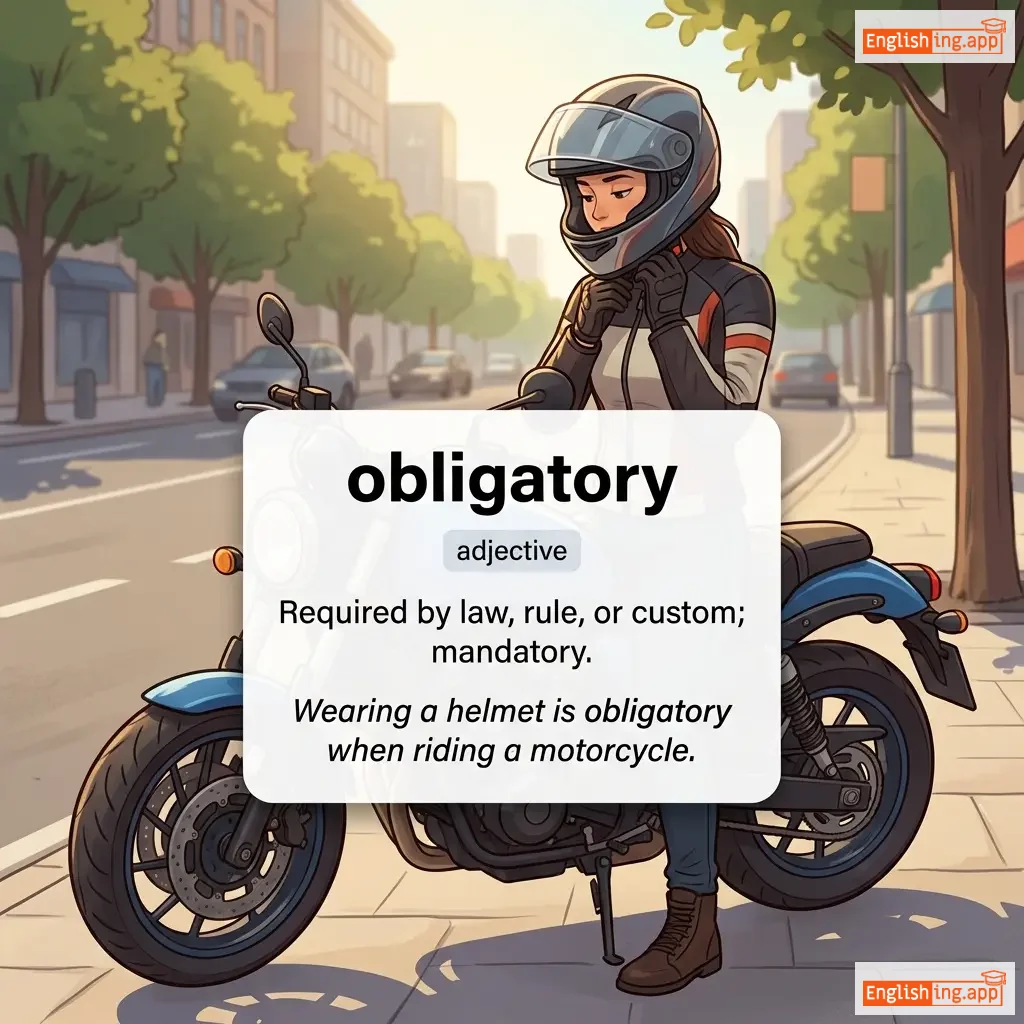
obligatory definition card — visual illustration of the meaning
adjective
/əˈblɪɡətɔːri/

Required by law, rule, or custom; mandatory.

"Wearing a helmet is obligatory when riding a motorcycle."

oblige definition card — visual illustration of the meaning
verb
/əˈblaɪdʒ/
帮助 (bangzhu)

to do something as a favor or kindness for someone

"She obliged by helping him with the task."

"她通过帮他完成任务来表示了她的帮助。" (Ta tongguo bang ta wancheng renwu lai biaoshi le ta de bangzhu.)
adjective
/əˈblaɪdʒɪŋ/
乐于助人 (leyu zhuren)

Willing to help or do favors; accommodating.

"The staff at the hotel were very obliging and friendly."

"酒店的工作人员非常乐于助人且友好。" (Jiudian de gongzuo renyuan feichang leyu zhuren qie youhao.)
adjective
/əˈbliːk/ or /oʊˈbliːk/
间接的 (jianjie de)

Not explicit or direct in addressing a point; slanting or indirect.

"She made an oblique reference to his past mistakes."

"她对他的过去错误做了间接的暗示。" (Ta dui tade guoqu cuowu zuo le jianjie de anshi.)
noun
/əˈblɪkwɪti/
歪曲 (waiku)

Deviation from moral or usual conduct; indirectness or lack of straightforwardness.

"The politician was criticized for the obliquity of his answers."
"那位政治家因其回答的歪曲性而受到批评。" (Na wei zhengzhijia yin qi huida de waikuxing er shoudao piping.)
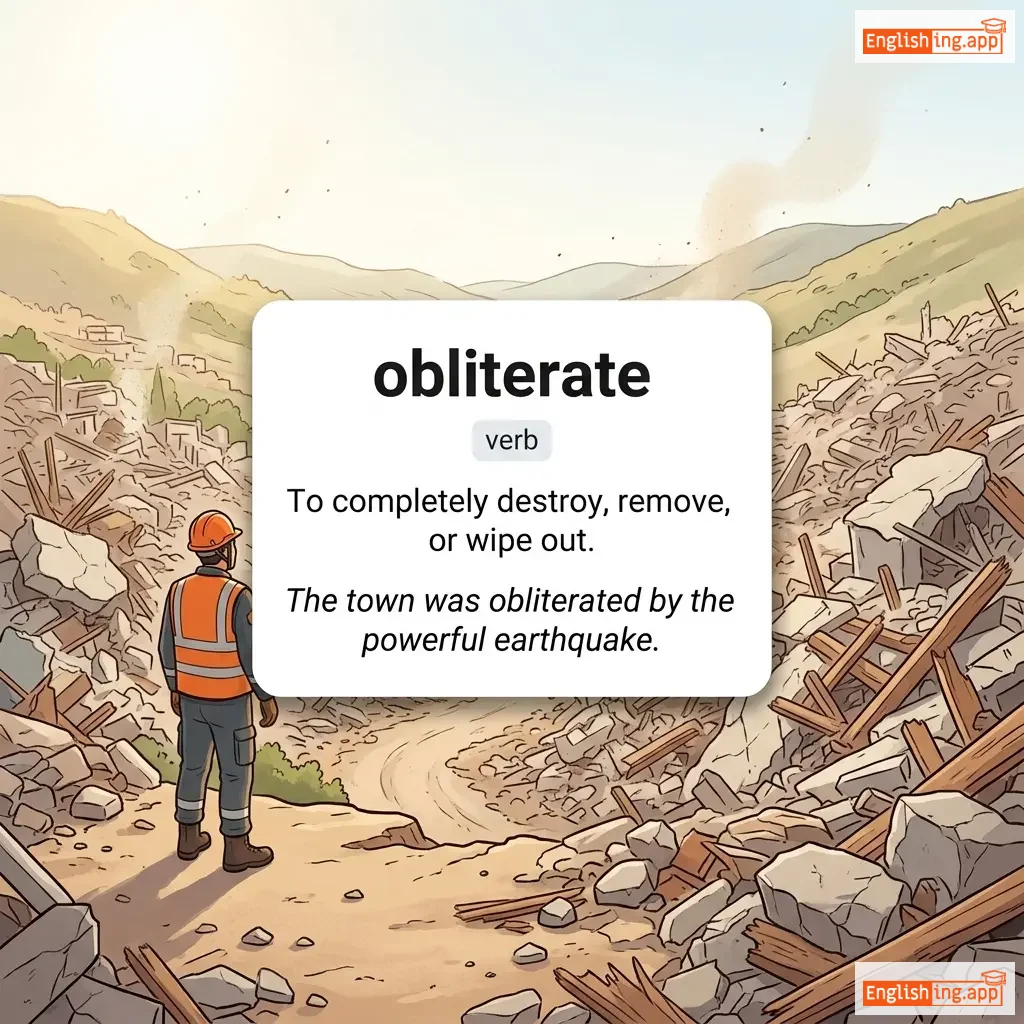
obliterate definition card — visual illustration of the meaning
verb
/əˈblɪtəreɪt/
完全摧毁 (wánquán cuīhuǐ)

To completely destroy, remove, or wipe out.

"The town was obliterated by the powerful earthquake."
"这个城市被强烈的地震彻底摧毁了。" (zhège chéngshì bèi qiángliè de dìzhèn chèdǐ cuīhuǐ le.)
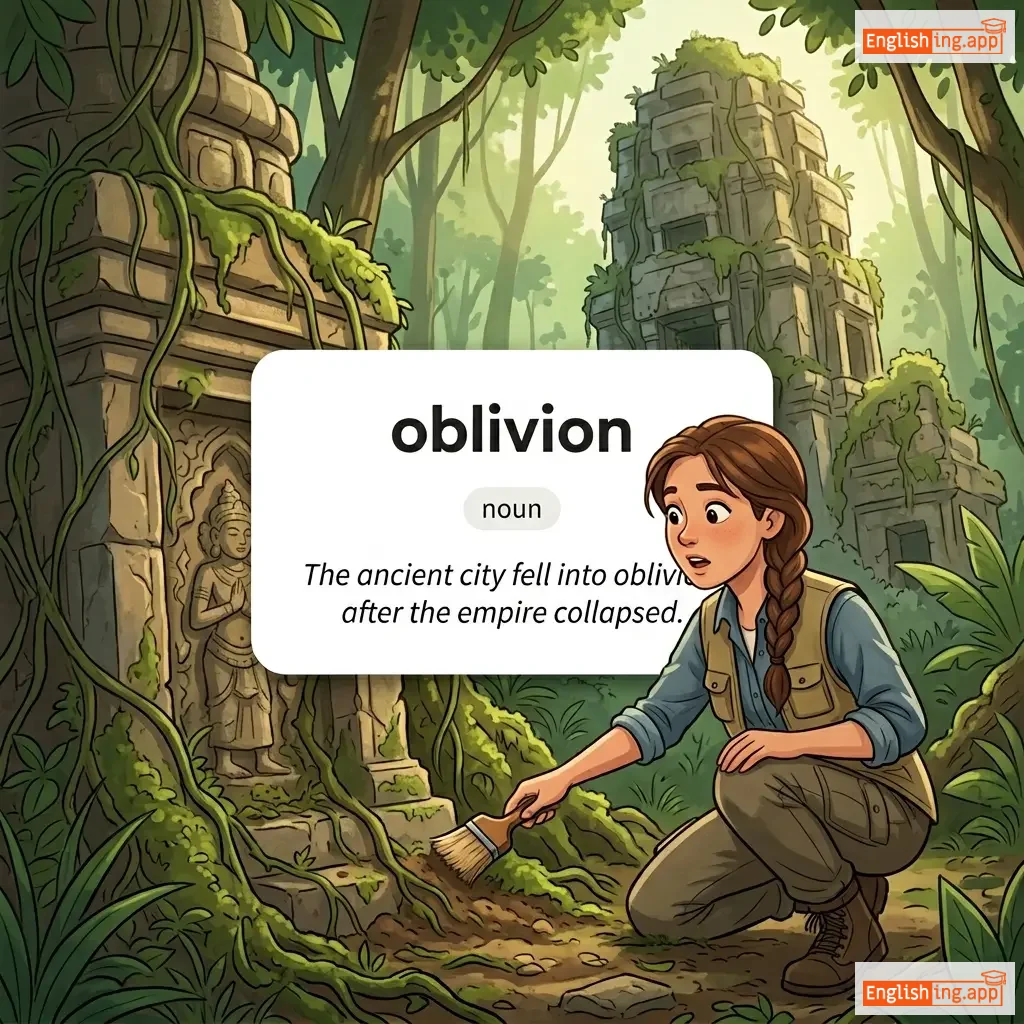
oblivion definition card — visual illustration of the meaning
noun
/əˈblɪviən/
遗忘 (yíwàng)

The state of being completely forgotten or unknown; the state of being unconscious or unaware.

"The ancient city fell into oblivion after the empire collapsed."

"古老的城市在帝国崩溃后陷入了遗忘。" (Gǔlǎo de chéngshì zài dìguó bēngkuì hòu xiànrù le yíwàng.)
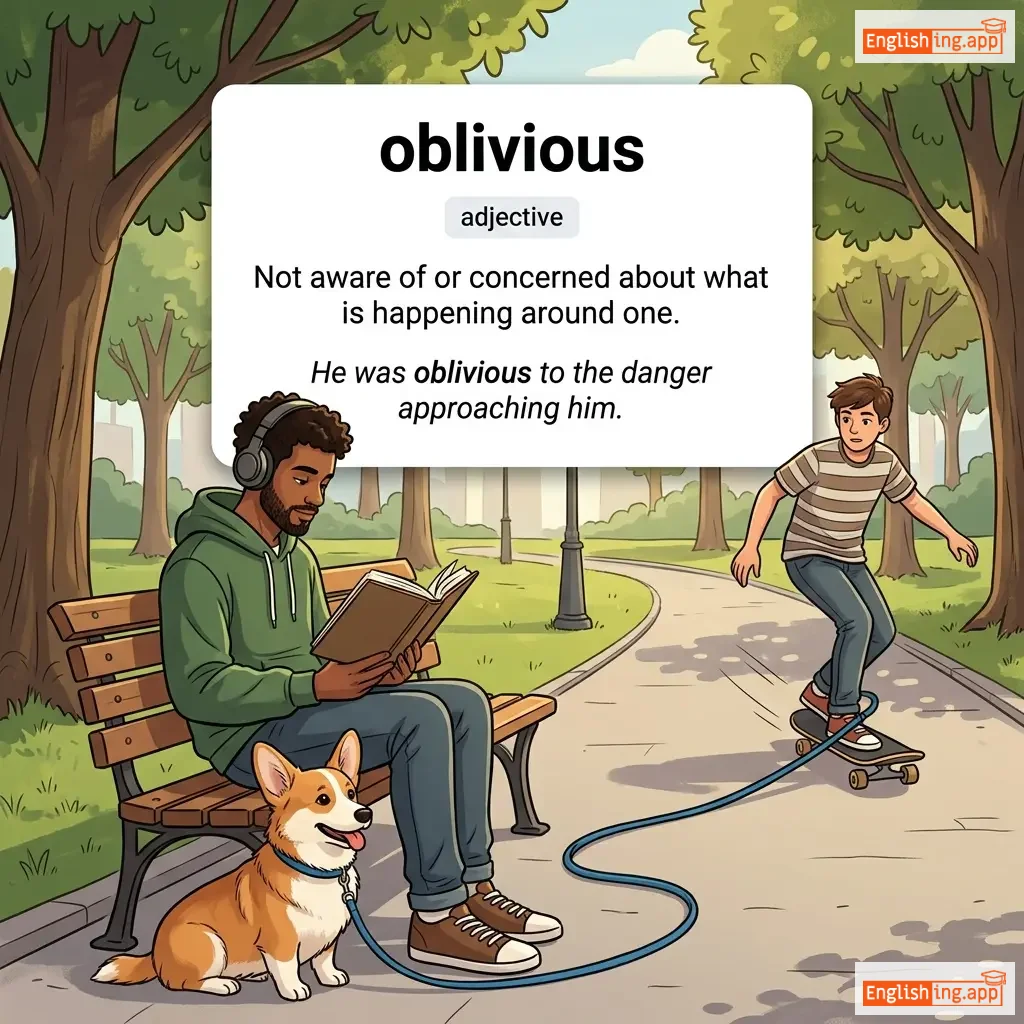
oblivious definition card — visual illustration of the meaning
adjective
/əˈblɪviəs/

Not aware of or concerned about what is happening around one.

"He was oblivious to the danger approaching him."

noun
/ˈɒbləkwɪ/
诽谤 (feibang)

Strong public criticism or verbal abuse; disgrace or shame from public condemnation.

"The politician faced obloquy after the scandal was exposed."

"政治家在丑闻曝光后面临诽谤。" (zhèngzhìjiā zài chǒuwén pùguāng hòu miànlín fèibàng.)
adjective
/əbˈnɒkʃəs/
令人讨厌 (lìng rén tǎo yàn)

Extremely unpleasant, offensive, or annoying.

"The obnoxious behavior of the guest ruined the party."

"客人的令人讨厌的行为破坏了派对。" (Kè rén de lìng rén tǎo yàn de xíng wéi pò huài le pài duì.)
adjective, verb
/əbˈskjʊr/
模糊 (móhú)

Not clearly expressed or understood; to make something difficult to see or understand.

"The meaning of the poem was obscure to most readers."

"诗的意义对大多数读者来说是模糊的。" (Shī de yìyì duì dàduōshù dúzhě lái shuō shì móhú de.)
noun
/ˈɒbsɪkwiːz/
葬礼仪式 (zangli yishi)

Funeral rites or ceremonies.

"The obsequies for the late leader drew thousands of mourners."

"已故领导人的葬礼吸引了成千上万的哀悼者。" (Yigu lingdaoren de zangli xinyi le chengqian shangwan de aidaozhe.)
obsequious definition card — visual illustration of the meaning
adjective
/əbˈsiːkwɪəs/
奉承 (fèngchēng)

Excessively obedient or attentive in a servile way.

"The waiter gave an obsequious bow to every customer."
"服务员对每个顾客鞠了一躬。" (Fúwùyuán duì měi gè gùkè jū le yī gōng.)
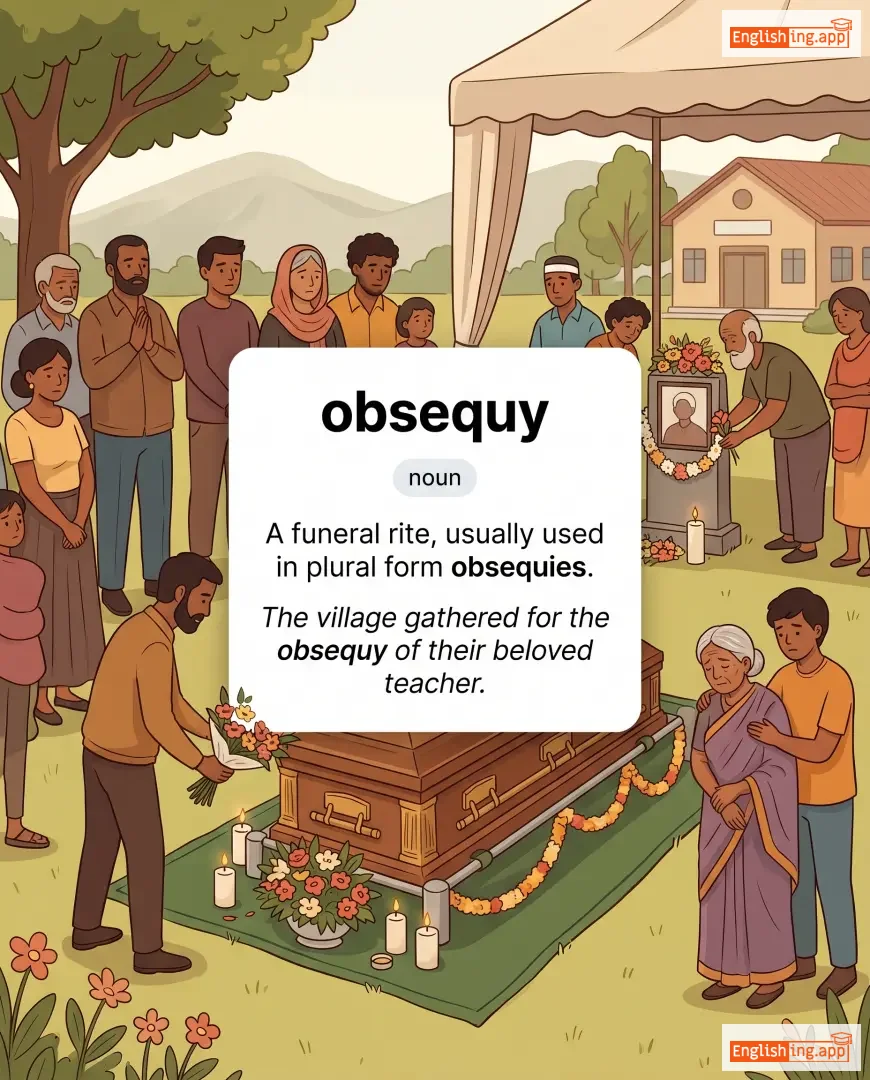
obsequy definition card — visual illustration of the meaning
noun
/ˈɒbsɪkwi/
葬礼仪式 (zànglǐ yíshì)

A funeral rite, usually used in plural form obsequies.

"The village gathered for the obsequy of their beloved teacher."

"村庄聚集在一起,参加他们心爱的老师的葬礼。" (Cūnzhuāng jùjí zài yīqǐ, cānjiā tāmen xīn'ài de lǎoshī de zànglǐ.)
noun
/əbˈzɜːvəns/
遵守 (zunshou)

The practice of following a custom, rule, or religious law.

"The festival is held in observance of a centuries-old tradition."

"该节庆是为了遵守一项百年传统而举行的。" (Gai jieqing shi weile zunshou yi xiang bainian chuantong er juxing de.)
adjective
/əbˈzɜːvənt/
专心的 (zhuān xīn de)

Quick to notice details or attentive to rules and customs.

"She is very observant and rarely misses any detail."

"她非常专心,几乎不漏掉任何细节。" (Tā fēi cháng zhuān xīn, jī hū bù lòu diào rèn hé xì jié.)
noun
/ˌɒbzəˈveɪʃən/
观察 (guānchá)

the action or process of observing something carefully in order to gain information

"The scientist made an observation during the experiment."

"科学家在实验中做了一个观察。" (Kēxuéjiā zài shíyàn zhōng zuòle yīgè guānchá.)
observations definition card — visual illustration of the meaning
noun
/ˌɒb.zəˈveɪ.ʃənz/
观察 (guānchá)

The action or process of observing something carefully.

"Observations of distant galaxies provide new insights."

"对遥远星系的观察提供了新的见解。" (Duì yáoyuǎn xīngxì de guānchá tígōng le xīn de jiànjiě.)
noun
/əbˈzɜːrvətɔːri/
天文台 (tianwen tai)

A building equipped for observing astronomical or meteorological events.

"The observatory is open to the public on weekends."

"天文台在周末对公众开放。" (Tianwen tai zai zhoumo dui gongzhong kaifang.)
verb
/əbˈzɜːv/
观察 (guānchá)

to watch carefully and attentively

"The teacher asked the students to observe the experiment."

"老师要求学生观察实验。" (Lǎoshī yāoqiú xuéshēng guānchá shíyàn.)