Словари

Словарь английского языка | Значения слов, определения и примеры

noun
/oʊf/
неуклюжий или глупый человек (neuklyuzhiy ili glupyy chelovek)

a clumsy, stupid, or awkward person

"He acted like an oaf at the dinner party, spilling drinks everywhere."

"Он вел себя как неуклюжий на ужине, проливая напитки повсюду." (On vel sebya kak neuklyuzhiy na uzhine, prolivaya napitki povsyudu.)
noun
/oʊk/
дуб (dub)

a large tree that produces acorns and has strong, hard wood

"The old oak tree provided shade for the entire yard."

"Старый дуб давал тень для всего двора." (Staryy dub daval ten' dlya vsego dvorа.)
adjective
/ˈoʊ.kən/
сделанный из дуба (sdelannyj iz duba)

made of or resembling oak wood

"The villagers gathered around the oaken table in the hall."

"Жители деревни собрались вокруг дубового стола в холле." (Zhiteli derevni sobralis' vokrug dubovogo stola v kholle.)
noun
/ˈoʊ.kəm/
волокна старых веревок (volokna starykh verëvok)

loose fibers obtained by untwisting old ropes, used for caulking ships

"The shipbuilders used oakum to seal the gaps in the wooden planks."

"Строители кораблей использовали окам, чтобы запечатать щели в деревянных досках." (Stroiteli korabley ispol'zovali okam, chtoby zapechatat' shcheli v derevyannykh doskakh.)
noun
/ɔːr/
весло (veslo)

a long pole with a flat blade used to row a boat

"He dipped the oar into the water and pulled the boat forward."

"Он опустил весло в воду и потянул лодку вперед." (On opustil veslo v vodu i potyanul lodku vpered.)
noun
/ˈɔːrzmən/
гребец (grebets)

a person who rows a boat, especially as a member of a racing crew

"The experienced oarsman rowed the boat across the river."

"Опытный гребец греб лодку через реку." (Opytniy grebets grebet lodku cherez reku)
noun
/oʊˈeɪ.sɪs/
оазис (oazis)

a fertile spot in a desert where water is found; a pleasant relief

"After hours in the desert, they finally reached an oasis."

"После нескольких часов в пустыне они наконец-то достигли оазиса." (Posle nekotorykh chasov v pustyne oni nakonechto dostigli oazisa.)
noun
/oʊθ/
клятва (klyatva)

a solemn promise, often invoking a divine witness

"She took an oath to tell the truth in court."

"Она принесла клятву говорить правду в суде." (Ona prinesla klyatvu govorit' pravdu v sude.)
noun
/ˈoʊtˌmiːl/
овсяная каша (ovsyanaya kasha)

A type of porridge made from ground oats, often eaten for breakfast.

"She eats a bowl of oatmeal every morning for breakfast."
"Она ест тарелку овсяной каши каждое утро на завтрак." (Ona yest tarelku ovsyanoy kashi kazhdoe utro na zavtrak.)
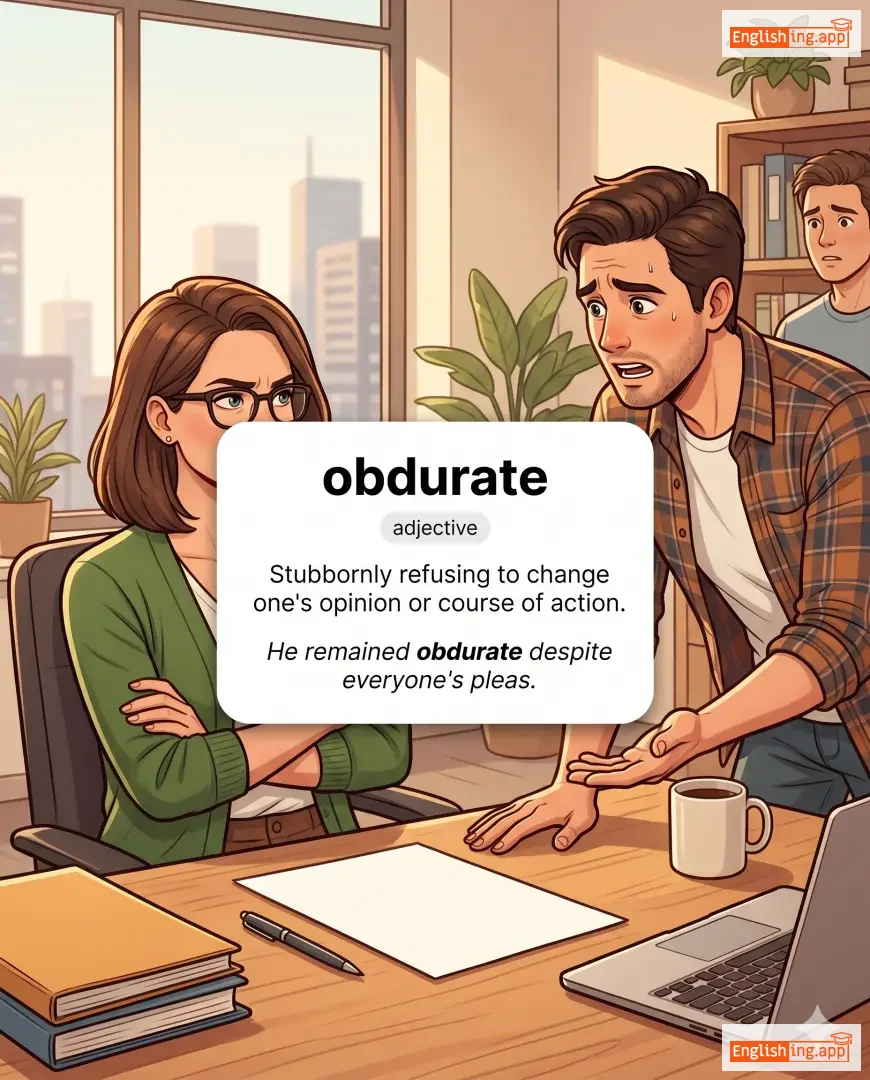
obdurate definition card — visual illustration of the meaning
adjective
/ˈɑːbdjʊrət/
упертый (upierty)

Stubbornly refusing to change one's opinion or course of action.

"He remained obdurate despite everyone's pleas."

"Он остался упертым, несмотря на просьбы всех." (On ostalsya upertym, nesmotrya na prosh'by vsekh.)
noun
/oʊˈbiː.di.əns/
послушание (poslushanie)

compliance with an order, request, or law; submission to authority

"Children should show obedience to their parents."

"Дети должны показывать послушание своим родителям." (Deti dolzhny pokazyvat' poslushanie svoim roditelyam.)
adjective
/oʊˈbiːdiənt/
послушный (poslushnyy)

Willing to comply with rules or authority.

"The obedient child quickly followed her mother's instructions."

"Послушный ребенок быстро последовал указаниям своей матери." (Poslushnyy rebenok bystro posledoval ukazaniyam svoey materi.)
noun
/oʊˈbeɪsəns/
поклон (poklon)

A gesture of respect such as a bow or curtsy.

"They bowed in obeisance to the king."

"Они поклонились в знак почтения королю." (Oni poklonilis' v znak pochtitel'nosti korolyu.)
noun
/ˈɑːbəlɪsk/
обелиск (obelisk)

A tall, four-sided, narrow tapering monument with a pyramid-shaped top.

"The ancient Egyptians built obelisks to honor their gods."

"Древние египтяне строили обелиски, чтобы почтить своих богов." (Drevnie egiptyane stroili obeliskiy, chtoby pochtit' svoikh bogov.)
adjective
/oʊˈbiːs/
тучный (tuchny)

Extremely overweight; having an excessive amount of body fat.

"The doctor advised the obese patient to adopt a healthier lifestyle."

"Доктор посоветовал толстому пациенту вести более здоровый образ жизни." (Doktor posovetoval tolstomu patsiyentu vesti boleye zdorovyy obraz zhizni.)
obesity definition card — visual illustration of the meaning
noun
/oʊˈbiːsəti/
ожирение (ozhireniye)

The condition of being very overweight, especially to a degree that it is harmful to health.

"Obesity is a growing health problem in many countries."
"Ожирение — это растущая проблема со здоровьем во многих странах." (Ozhirenie — eto rastushchaya problema so zdorov'yem vo mnogikh stranakh.)
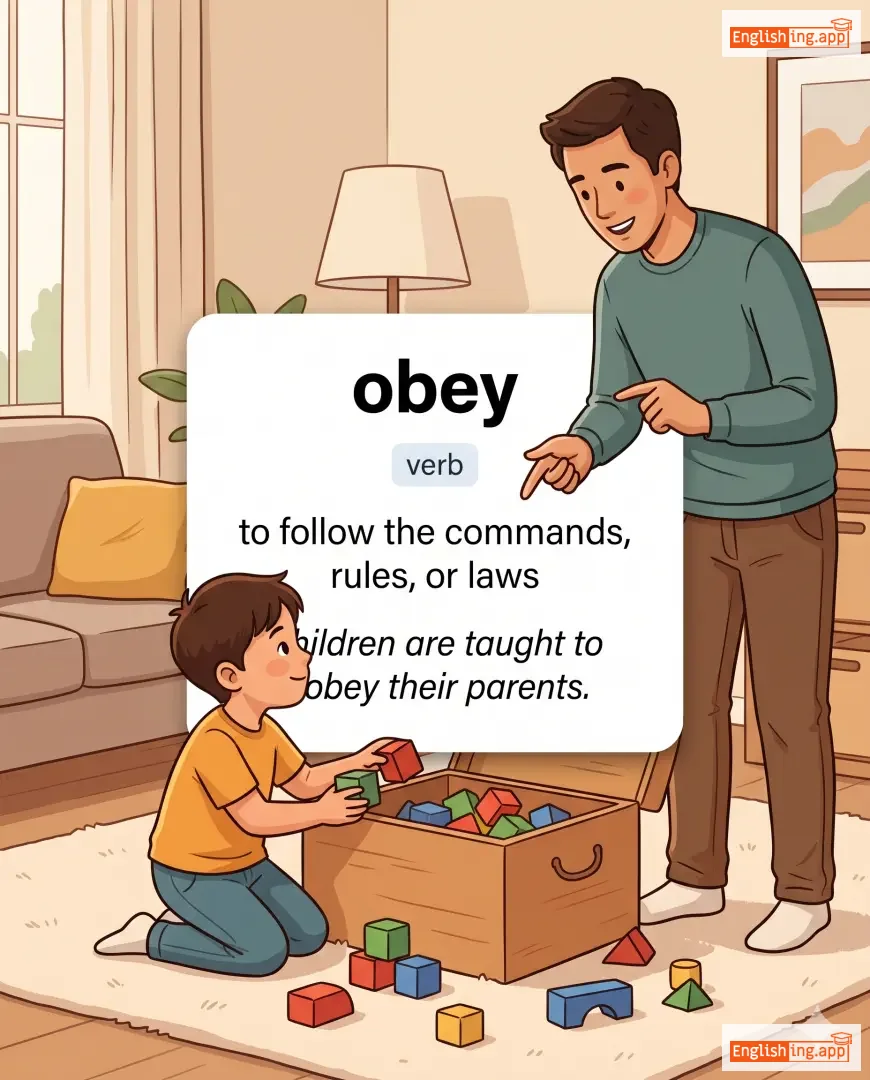
obey definition card — visual illustration of the meaning
verb
/oʊˈbeɪ/
повиноваться (povinovatsya)

to follow the commands, rules, or laws

"Children are taught to obey their parents."
"Детей учат повиноваться своим родителям." (Detey uchat' povinovatsya svoim roditelyam.)
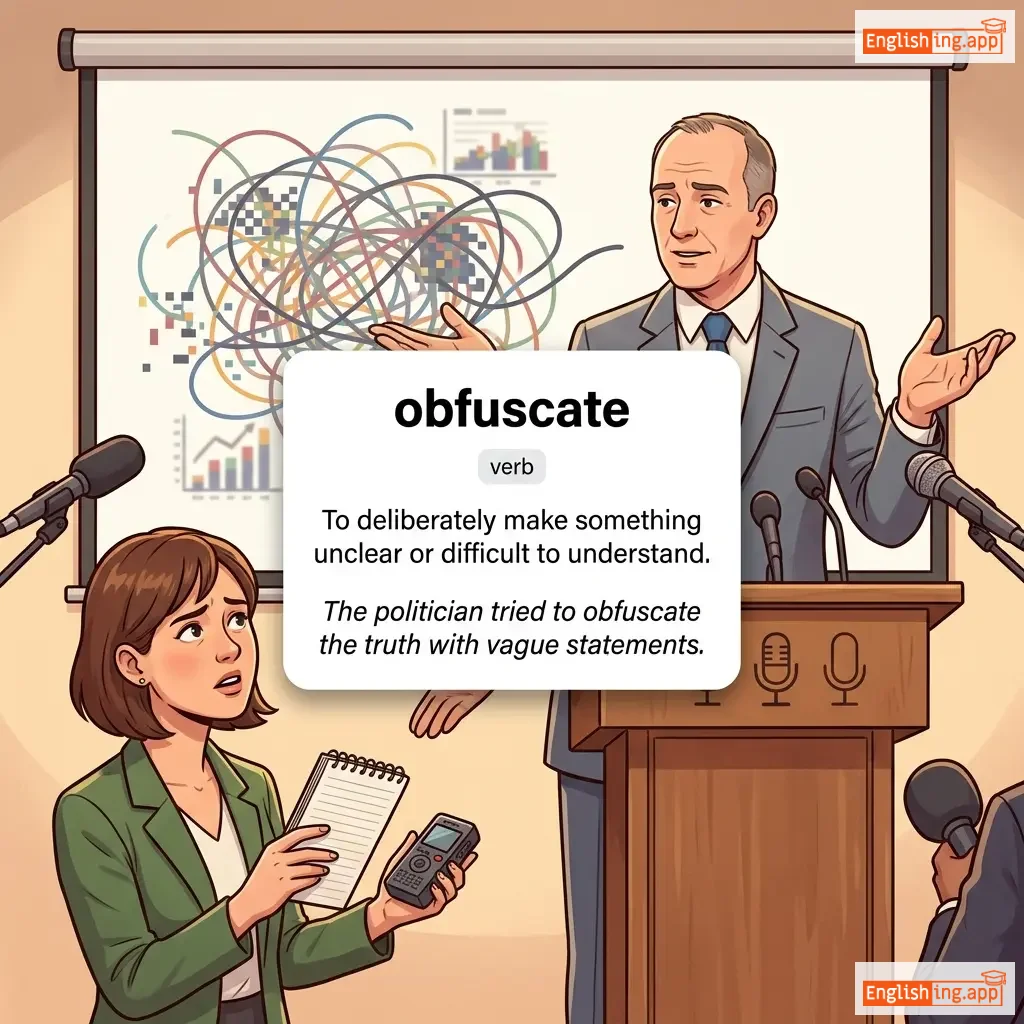
obfuscate definition card — visual illustration of the meaning
verb
/ˈɒbfʌskeɪt/
запутать (zaputat)

To deliberately make something unclear or difficult to understand.

"The politician tried to obfuscate the truth with vague statements."
"Политик пытался запутать правду с помощью неопределенных заявлений." (Politik pytalsya zaputat pravdu s pomoshch'yu neopredelennykh zayavleniy.)
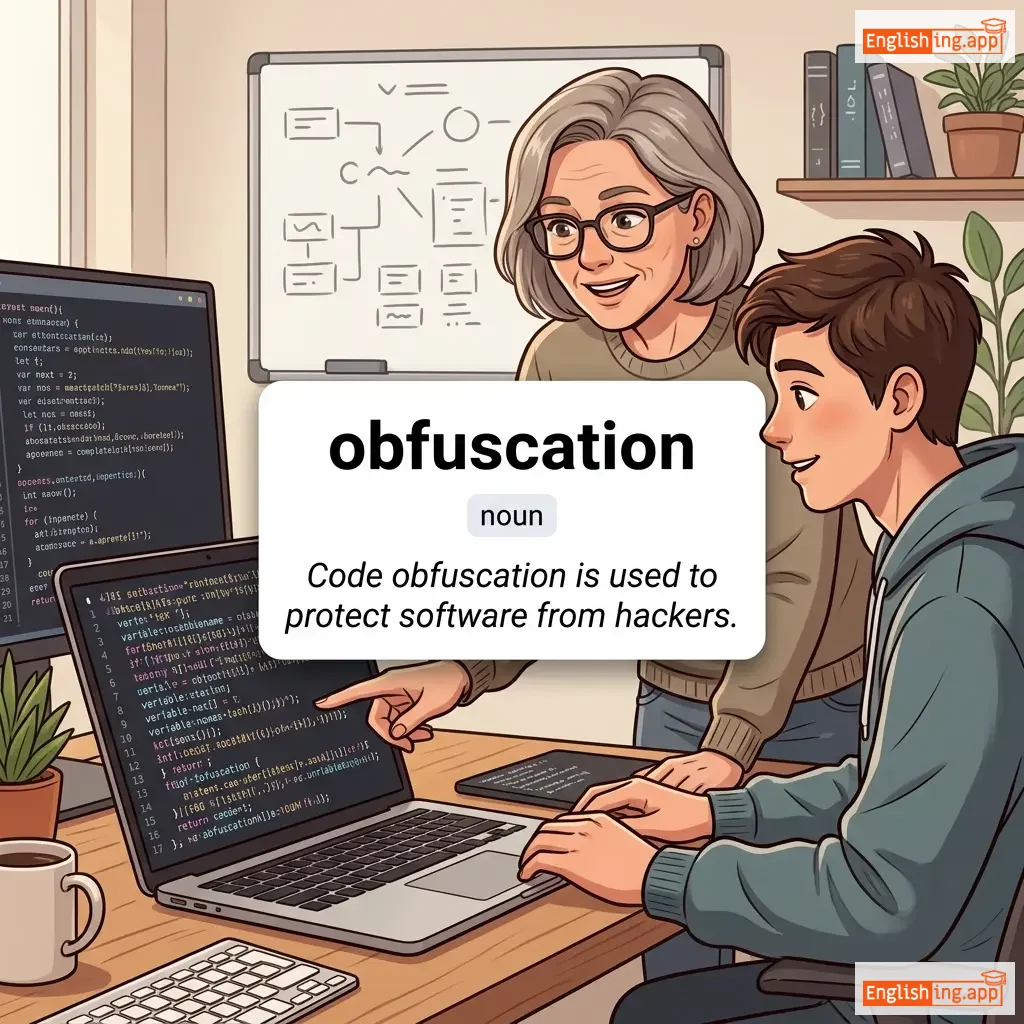
obfuscation definition card — visual illustration of the meaning
noun
/ˌɒb.fʌsˈkeɪ.ʃən/
намеренное создание путаницы или сложности в чем-либо (namerennoe sozdanie putanitsy ili slozhnosti v chem-libo)

Deliberately making information or code unclear to make it difficult to understand

"Code obfuscation is used to protect software from hackers."

"Обфускация кода используется для защиты программного обеспечения от хакеров." (Obfuskatsiya koda ispol'zuyetsya dlya zashchity programmnogo obespecheniya ot khakerov.)
noun
/əˈbɪtʃueri/
некролог (nekrolog)

A notice of a person's death, often published in a newspaper with a brief biography.

"The newspaper published an obituary for the famous writer."

"Газета опубликовала некролог для знаменитого писателя." (Gazeta opublikovala nekrolog dlya znamenitogo pisatelya.)
noun
/ˈɒbdʒɪkt/
объект (ob'ekt)

a thing that can be seen and touched

"The table is an object in the room."

"Стол — это объект в комнате." (Stol — eto ob'ekt v komnate.)
noun
/əbˈdʒɛkʃən/
возражение (vozrazhenie)

an expression or feeling of disapproval or opposition

"The lawyer raised an objection during the trial."

"Адвокат поднял возражение во время судебного разбирательства." (Advokat podnyal vozrazhenie vo vremya sudebnogo razbiraetel'stva.)
adjective
/əbˈdʒek.ʃən.ə.bəl/
неприемлемый (nepriemlemyi)

arousing distaste or opposition; unpleasant or offensive

"His objectionable behavior made everyone uncomfortable."
"Его неприемлемое поведение заставило всех чувствовать себя неловко." (Yego nepriemlemoe povedenie zastavilo vsekh chuvstvovat' sebya nelovko.)
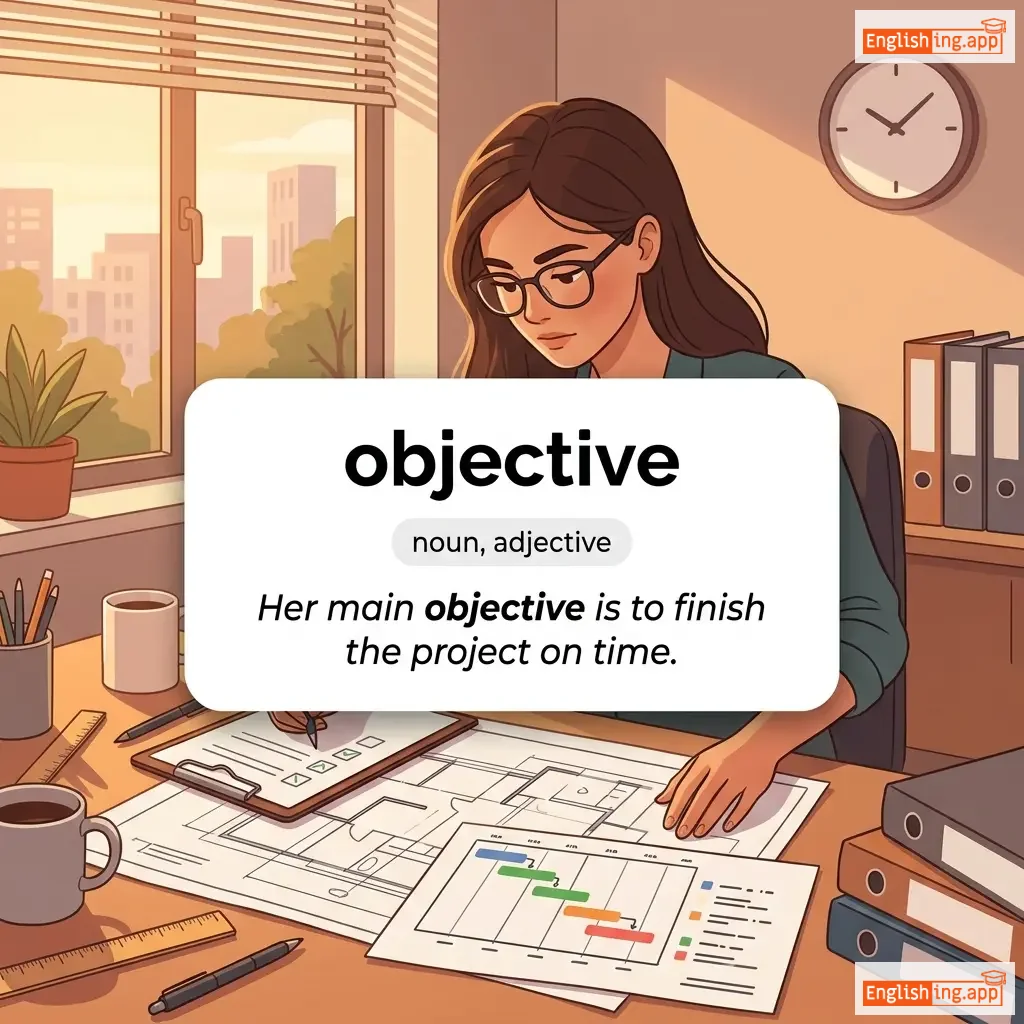
objective definition card — visual illustration of the meaning
noun, adjective
/əbˈdʒɛktɪv/
цель / объективный (tsjel / ob'jektivnyj)

As a noun: a goal or aim. As an adjective: not influenced by personal feelings; unbiased.

"Her main objective is to finish the project on time."

"Её главная цель — закончить проект вовремя." (Yejo glavnya tsjel' — zakonchit' proyekt vovremya.)
noun
/əbˈdʒɛktər/
опротестующий (oprotestuyushchiy)

a person who expresses opposition or disapproval to something

"The objector raised his concerns during the town meeting."

"Опротестующий выразил свои опасения во время собрания городского совета." (Oprotestuyushchiy vyrazil svoi opaseniya vo vremya sobrania gorodskogo soveta.)
verb
/ˈɑːbdʒərˌɡeɪt/
жестоко отчитывать (zhestoko otchityvat')

to scold or rebuke severely

"The teacher objurgated the student for being dishonest."

"Учитель сильно отчитал ученика за нечестность." (Uchitel' sil'no otchital uchenika za nechesotnost'.)
noun
/ˌɑːbdʒərˈɡeɪʃən/
строгий выговор (strogij vigovor)

a harsh scolding or strong rebuke

"His misconduct earned him a severe objurgation from the manager."

"Его проступок вызвал строгий выговор от менеджера." (Ego prostupok vyzval strogij vigovor ot menedzhera.)
noun
/oʊˈbleɪʃən/
жертвоприношение (zhertvoprinoshenie)

a religious offering, especially of bread or wine to God

"The priest placed the oblation on the altar during the ceremony."

"Священник положил жертвоприношение на алтарь во время церемонии." (Svyashchennik polozhil zhertvoprinoshenie na altar vo vremya tseremonii.)
verb
/ˈɑːblɪˌɡeɪt/
обязывать (obyazyvat)

to bind legally or morally; to compel someone to do something

"The contract obligates the company to provide timely service."

"Контракт обязывает компанию предоставлять своевременное обслуживание." (Kontrakt obyayet kompaniyu predostavlyat' svoevremennoe obsluzhivanie.)
noun
/ˌɒblɪˈɡeɪʃən/
обязанность (obyazannost)

a duty or commitment

"You have an obligation to follow the rules."
"У вас есть обязательство следовать правилам." (U vas yest' obyazatel'stvo sleduyte pravilam.)
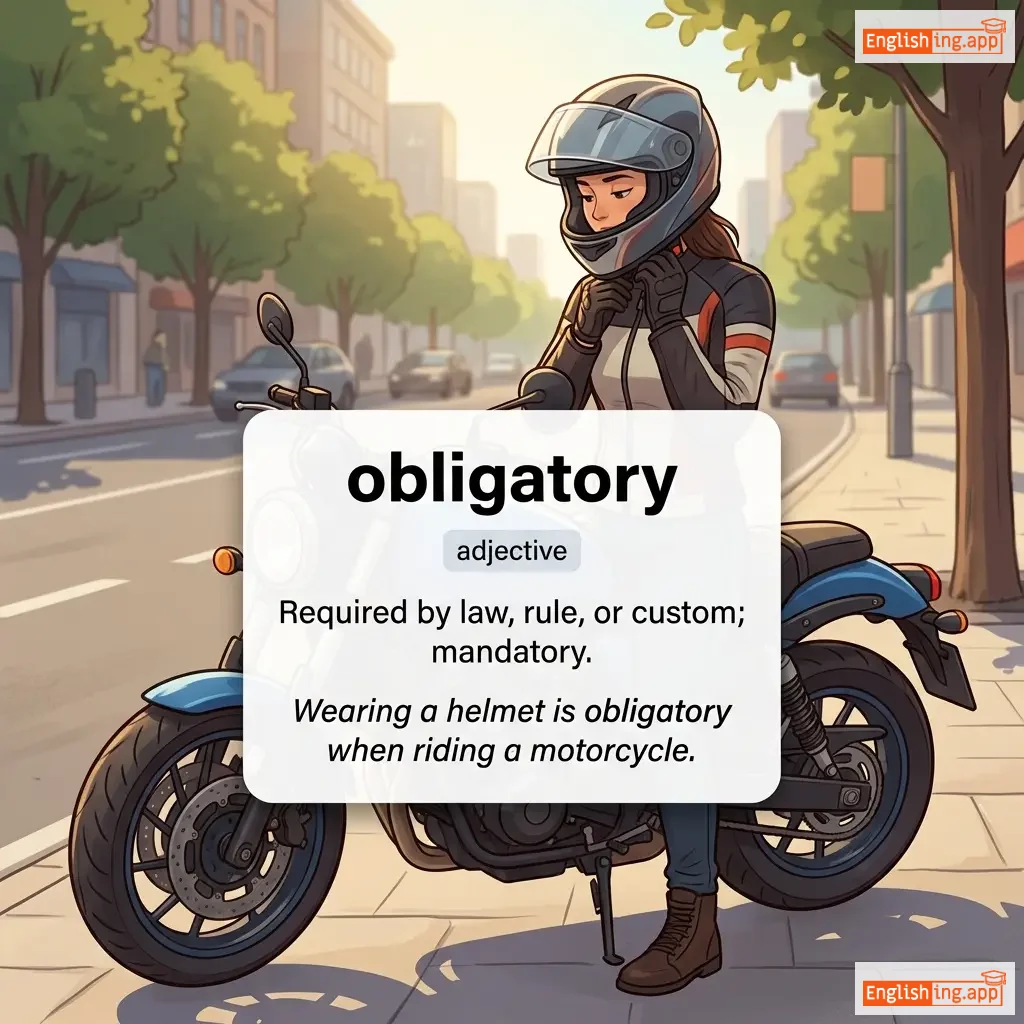
obligatory definition card — visual illustration of the meaning
adjective
/əˈblɪɡətɔːri/

Required by law, rule, or custom; mandatory.

"Wearing a helmet is obligatory when riding a motorcycle."
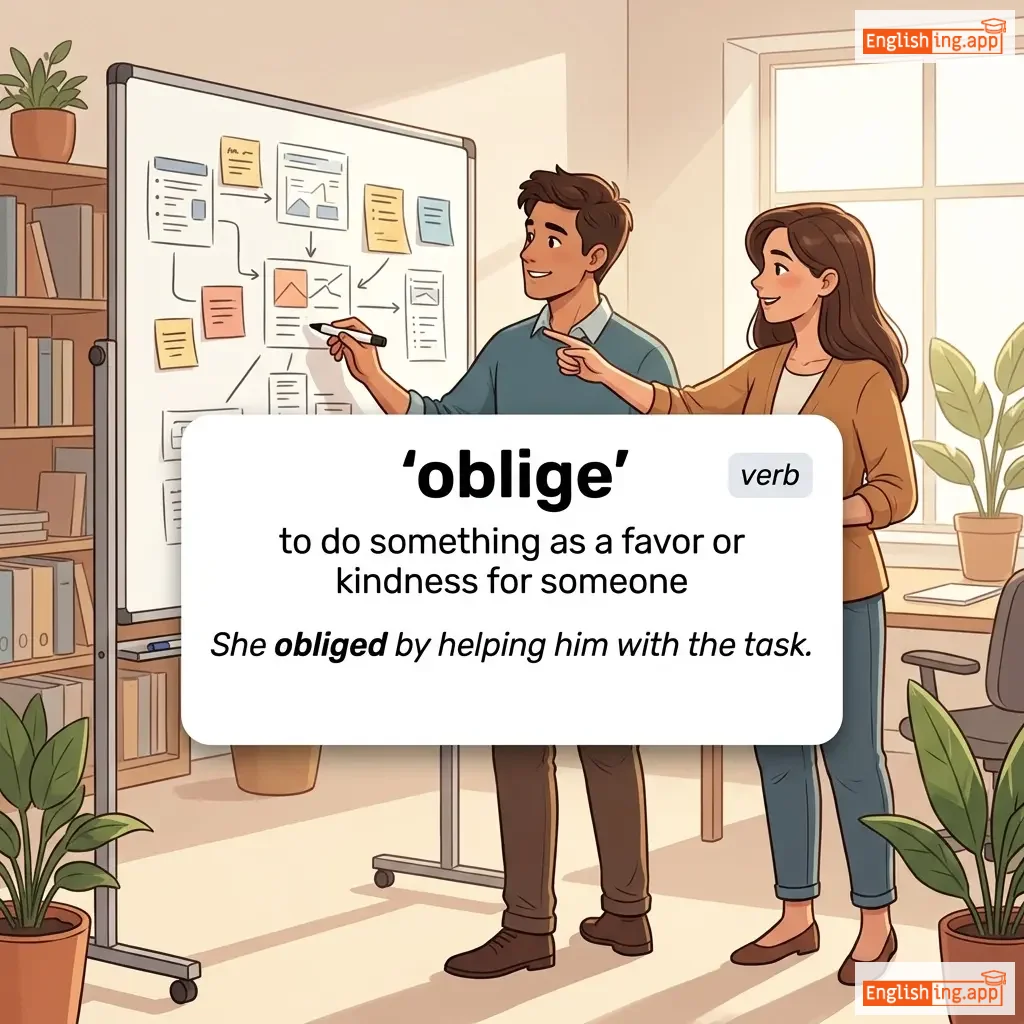
oblige definition card — visual illustration of the meaning
verb
/əˈblaɪdʒ/
обязать (obyazat)

to do something as a favor or kindness for someone

"She obliged by helping him with the task."

"Она сделала это, помогая ему с задачей." (Ona sdelala eto, pomogaya emu s zadachey.)
adjective
/əˈblaɪdʒɪŋ/
готовый помочь (gotovyy pomoch)

Willing to help or do favors; accommodating.

"The staff at the hotel were very obliging and friendly."

"Персонал в отеле был очень готов помочь и дружелюбен." (Personall v otele byl ochen' gotov pomoch i druzhelyuben.)
adjective
/əˈbliːk/ or /oʊˈbliːk/
косвенный (kosvenny)

Not explicit or direct in addressing a point; slanting or indirect.

"She made an oblique reference to his past mistakes."

"Она сделала косвенное замечание о его прошлых ошибках." (Ona sdelala kosvennoe zamechanie o yego proshlykh oshibkakh.)
noun
/əˈblɪkwɪti/
кривизна (krivizna)

Deviation from moral or usual conduct; indirectness or lack of straightforwardness.

"The politician was criticized for the obliquity of his answers."
"Политика был критикован за кривизну его ответов." (Politika byl kritikovann za kriviznu ego otvetov.)
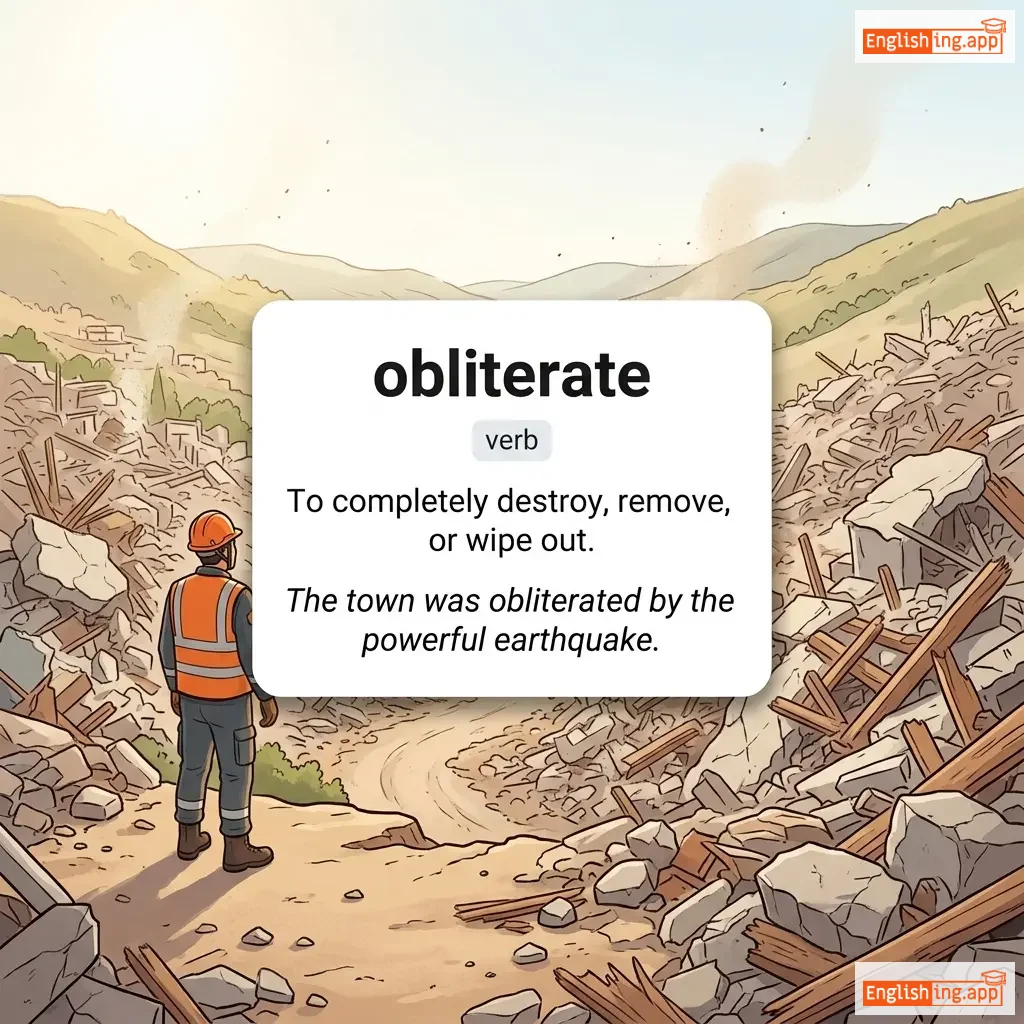
obliterate definition card — visual illustration of the meaning
verb
/əˈblɪtəreɪt/
полностью уничтожить (polnostyu unichtozhit)

To completely destroy, remove, or wipe out.

"The town was obliterated by the powerful earthquake."
"Город был полностью уничтожен мощным землетрясением." (Gorod byl polnostyu unichtozhen moshchnym zemletryaseniem.)
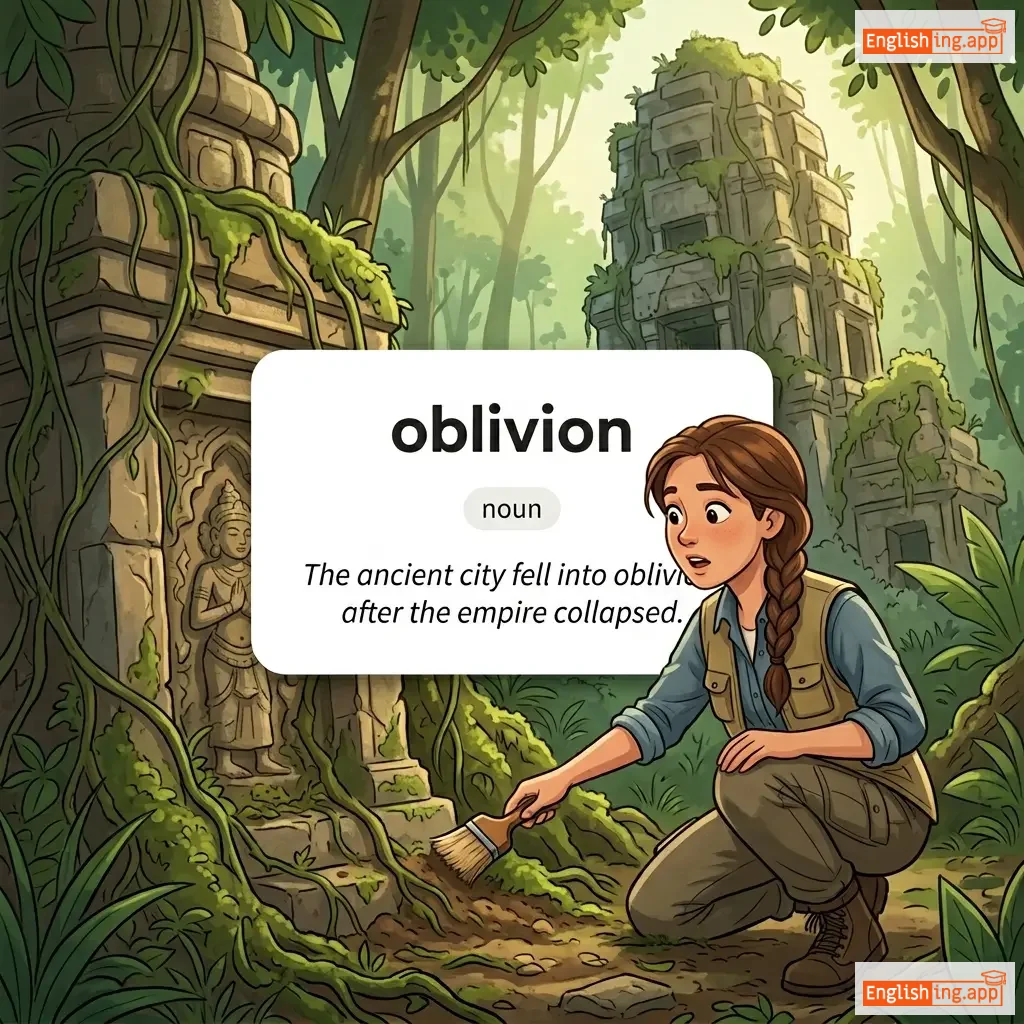
oblivion definition card — visual illustration of the meaning
noun
/əˈblɪviən/
забвение (zabvenie)

The state of being completely forgotten or unknown; the state of being unconscious or unaware.

"The ancient city fell into oblivion after the empire collapsed."
"Древний город исчез в забвении после разрушения империи." (Drevniy gorod ischez v zabvenii posle razrusheniya imperii.)
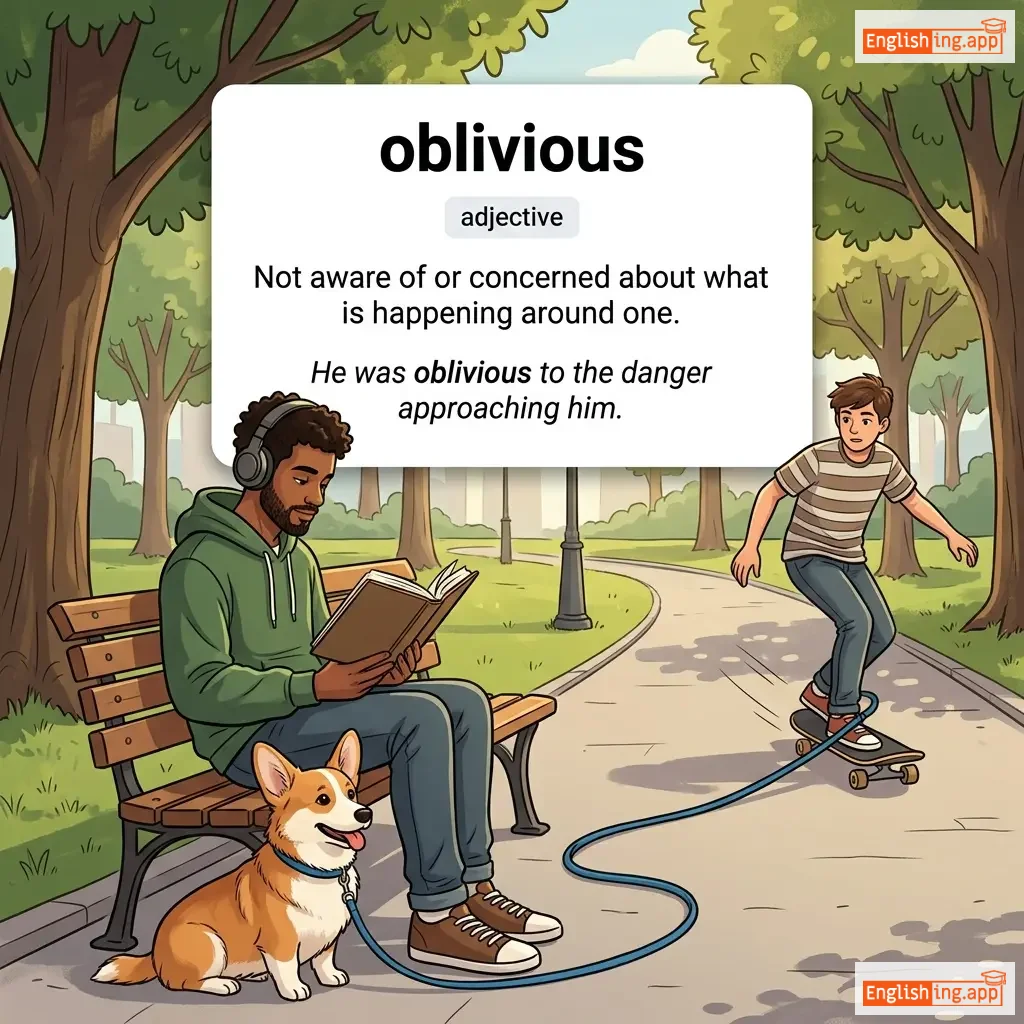
oblivious definition card — visual illustration of the meaning
adjective
/əˈblɪviəs/

Not aware of or concerned about what is happening around one.

"He was oblivious to the danger approaching him."

noun
/ˈɒbləkwɪ/
клевета (kleweta)

Strong public criticism or verbal abuse; disgrace or shame from public condemnation.

"The politician faced obloquy after the scandal was exposed."

"Политик столкнулся с клеветой после того, как был раскрыт скандал." (Politik stolknulsya s klevetoy posle togo, kak byl raskryt skandal.)
adjective
/əbˈnɒkʃəs/
невыносимый (nevyinosimyj)

Extremely unpleasant, offensive, or annoying.

"The obnoxious behavior of the guest ruined the party."

"Невыносимое поведение гостя испортило вечеринку." (Nevynosimoe povedenie gostya isportilo vecherinku.)
adjective, verb
/əbˈskjʊr/
неясный (neyasnyy)

Not clearly expressed or understood; to make something difficult to see or understand.

"The meaning of the poem was obscure to most readers."

"Значение поэмы было непонятно большинству читателей." (Znachenie poemy bylo neponyatno bol'shinstvu chitateley.)
noun
/ˈɒbsɪkwiːz/
погребальные обряды (pogrebal'nye obryady)

Funeral rites or ceremonies.

"The obsequies for the late leader drew thousands of mourners."

"Погребальные обряды для покойного лидера привлекли тысячи скорбящих." (Pogrebal'nye obryady dlya pokoynogo lidera privlekli tysyachi skorbyashchikh.)
obsequious definition card — visual illustration of the meaning
adjective
/əbˈsiːkwɪəs/
угодливый (ugodlivyj)

Excessively obedient or attentive in a servile way.

"The waiter gave an obsequious bow to every customer."
"Официант сделал угодливый поклон каждому клиенту." (Oficiant sdelal ugodlivyj poklon kazhdomu klientu.)
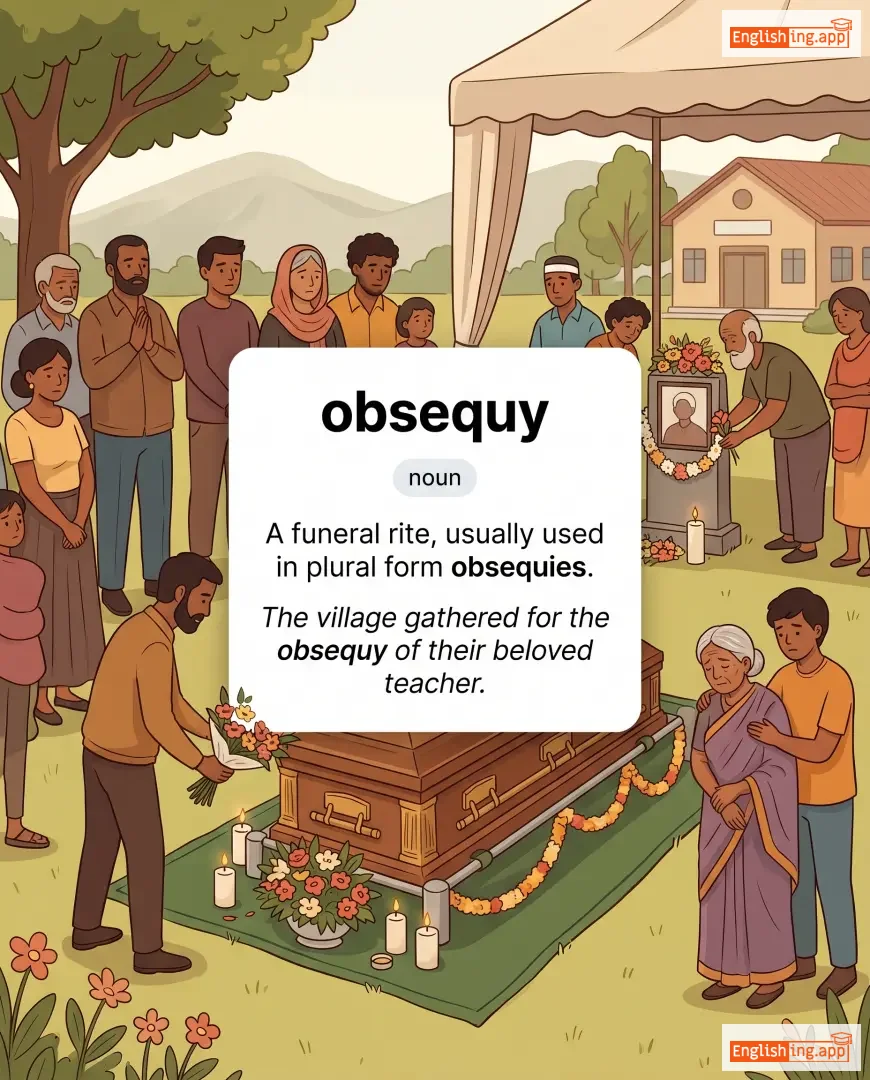
obsequy definition card — visual illustration of the meaning
noun
/ˈɒbsɪkwi/
похороны (pokhorony)

A funeral rite, usually used in plural form obsequies.

"The village gathered for the obsequy of their beloved teacher."

"Деревня собралась для похорон их любимого учителя." (Derevnya sobralas' dlya pokhoron ikh lyubimogo uchitelya.)
noun
/əbˈzɜːvəns/
соблюдение (soblyudenie)

The practice of following a custom, rule, or religious law.

"The festival is held in observance of a centuries-old tradition."

"Фестиваль проводится в соблюдении вековой традиции." (Festival proyavlyayetsya v soblyudenii vekovoy traditsii.)
adjective
/əbˈzɜːvənt/
внимательный (vnimatel'nyj)

Quick to notice details or attentive to rules and customs.

"She is very observant and rarely misses any detail."

"Она очень внимательная и редко пропускает детали." (Ona ochen' vnimatelnaya i redko propuskayet detali.)
noun
/ˌɒbzəˈveɪʃən/
наблюдение (nablyudenie)

the action or process of observing something carefully in order to gain information

"The scientist made an observation during the experiment."
"Ученый сделал наблюдение во время эксперимента." (Uchenyy sdelal nablyudeniye vo vremya eksperimenta.)
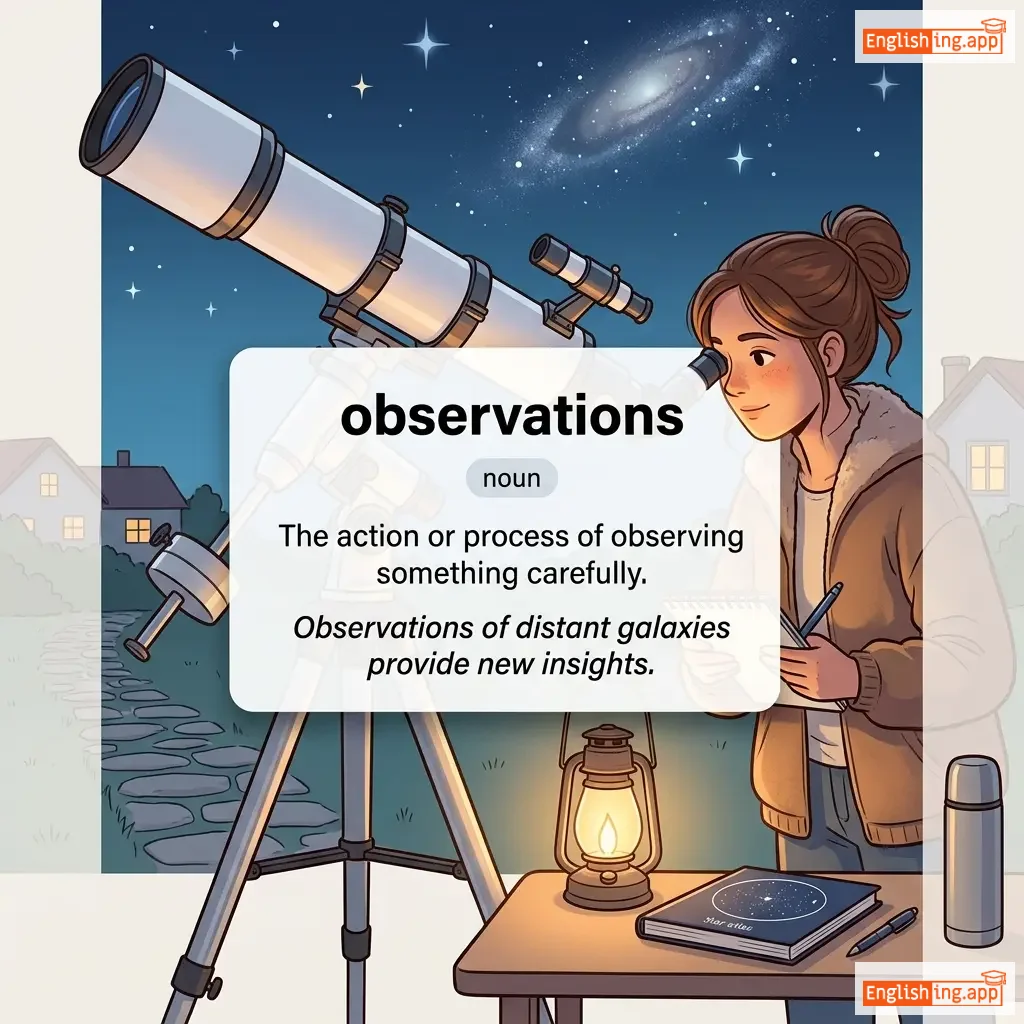
observations definition card — visual illustration of the meaning
noun
/ˌɒb.zəˈveɪ.ʃənz/
наблюдение (nablyudenie)

The action or process of observing something carefully.

"Observations of distant galaxies provide new insights."

"Наблюдения за удалёнными галактиками дают новые идеи." (Nablyudeniya za udalennymi galaktikami dayut novye idei.)
noun
/əbˈzɜːrvətɔːri/
обсерватория (observatoriya)

A building equipped for observing astronomical or meteorological events.

"The observatory is open to the public on weekends."

"Обсерватория открыта для посетителей по выходным." (Observersiya otkryta dlya posetiteley po vykhodnym.)
verb
/əbˈzɜːv/
наблюдать (nablyudat)

to watch carefully and attentively

"The teacher asked the students to observe the experiment."

"Учитель попросил студентов наблюдать за экспериментом." (Uchitel' poprosil studentov nablyudat' za eksperimentom.)