Словари

Словарь английского языка | Значения слов, определения и примеры

noun
/səˈbætɪkəl/
период отпуска для учебы или путешествий (period otpuska dlya ucheby ili puteshestviy)

A period of paid leave granted to a teacher or worker for study or travel, traditionally every seventh year.

"She took a sabbatical to research her new book."

"Она взяла саббатикал, чтобы исследовать свою новую книгу." (Ona vzyala sabbatical, chtoby issledovat' svoyu novuyu knigu.)
verb
/ˈsæbətɑːʒ/
разрушительная деятельность (razrushitel'naya deyatel'nost')

To deliberately destroy, damage, or obstruct something, especially for political or military advantage.

"The rebels tried to sabotage the railway lines."

"Повстанцы пытались саботировать железнодорожные пути." (Povstantsy pytalis' sabotirovat' zheleznodorozhnyye puti.)
noun
/ˌsæbəˈtɜːr/
саботёр (sabotyor)

A person who engages in sabotage.

"The saboteur was arrested before he could plant the bomb."

"Саботёр был арестован до того, как он успел установить бомбу." (Sabotyor byl arestovan do togo, kak on uspel ustanovit' bombu.)
adjective
/ˈsækərɪn/
счастье (schastye)

Excessively sweet or sentimental.

"His saccharine smile seemed insincere."

"Она не могла скрыть своего счастья, когда получила награду." (Ona ne mogla skryt' svoego schast'ya, kogda poluchila nagradu.)
adjective
/ˌsæsərˈdoʊtl/
священнический (svyashchennicheskiy)

Relating to priests or the priesthood.

"The ritual had a distinctly sacerdotal character."

"Ритуал имел явно священнический характер." (Ritual imel yavno svyashchennicheskiy kharakter.)
noun
/sæk/
мешок (meshok)

a large bag made of strong material for holding things

"He carried a sack of rice on his shoulder."

"Он нес мешок риса на своем плече." (On nes meshok risa na svoem pleche.)
adjective
/ˈseɪkrɪd/
священный (svyashchennyy)

connected with God or a religion and considered holy or deserving respect

"The temple is a sacred place for the community."

"Храм - это святое место для общины." (Khram - eto svyatoe mesto dlya obshchiny.)
sacrifice definition card — visual illustration of the meaning
🕯️

sacrifice

noun, verb
/ˈsækrɪfaɪs/

To give up something valuable for the sake of others or a higher purpose.

"Parents often sacrifice their own comfort for their children."

adjective
/ˌsækrɪˈfɪʃəl/
жертвенный (zhertvennyy)

Relating to or involving sacrifice.

"The lamb was used as a sacrificial offering in the ritual."

"Ягненок был использован как жертвенная жертва в ритуале." (Yahnenok byl ispol'zovan kak zhertvennaya zhertva v rituale.)
noun
/ˈsækrɪlɪdʒ/
осквернение (oskvernenie)

Violation or misuse of what is regarded as sacred.

"Stealing from the temple was considered an act of sacrilege."

"Кража из храма считалась актом осквернения." (Krazha iz khrama schitalas aktom oskverneniya.)
adjective
/ˌsækrəˈlɪdʒəs/
сакралигийный (sacriligijnyj)

Showing disrespect or irreverence toward something sacred.

"The painting was criticized as being sacrilegious."

"Картина была раскритикована как сакралигийная." (Kartina byla raskritikovana kak sakralignaya.)
noun
/ˈsækrɪsti/
сакристия (sakristiya)

a room in a church where sacred vessels and vestments are kept

"The priest entered the sacristy before the mass began."

"Священник вошел в сакристию перед началом мессы." (Svyashchennik voshel v sakristiyu pered nachalom messy.)
adjective
/ˈsæk.rəˌsæŋkt/
неприкосновенный (neprikosnovennyy)

Regarded as too important or valuable to be interfered with; sacred.

"Freedom of speech is considered sacrosanct in democratic societies."

"Свобода слова считается неприкосновенной в демократических обществах." (Svoboda slova schitayetsya neprikosnovennoy v demokraticheskikh obshchestvakh.)
adjective
/sæd/
грустный (grustnyy)

feeling or showing sorrow; unhappy

"She felt sad after hearing the bad news."

"Она почувствовала грусть после того, как услышала плохие новости." (Ona pochuvstvovala grust' posle togo, kak uslyshala plokhie novosti.)
noun/verb
/ˈsæd.əl/
седло для лошади; нагрузить кого-то ответственностью (sedlo dlya loshadi; nagruzit' kogo-to otvetstvennost'yu)

A seat fastened on the back of a horse for riding; to burden someone with a responsibility.

"He saddled the horse before going for a ride."

"Он оседлал лошадь перед тем, как поехать на прогулку." (On osedlal loshad' pered tem, kak poekhat' na progulku.)
adjective
/səˈdɪs.tɪk/
садистский (sadistskiy)

Deriving pleasure from inflicting pain or suffering on others.

"The villain had a sadistic smile while hurting his enemies."

"Злодей улыбался садистской улыбкой, когда причинял боль своим врагам." (Zlodey ulybalsya sadistskoy ulybkoy, kogda prichinyal bol' svoim vragam.)
adverb
/ˈsædli/
грустно (grustno)

in a sorrowful or unhappy manner

"She sadly waved goodbye as the train departed."

"Она грустно помахала рукой, когда поезд отправлялся." (Ona grustno pomahala rukoy, kogda poezd otpravlyalsya.)
noun
/ˈsæd.nəs/
грусть, печаль, боль (grust', pechal', bol')

feeling of sorrow, unhappiness, or grief

"Her sadness was evident after hearing the bad news."

"Её грусть была очевидна после того, как она услышала плохие новости." (Eyo grust' byla ochevidna posle togo, kak ona uslyshala plokhie novosti.)
adjective
/seɪf/
безопасный (bezopasnyy)

free from harm or danger

"Make sure your belongings are safe during the trip."

"Убедитесь, что ваши вещи в безопасности во время поездки." (Ubedites', chto vashi veshchi v bezopasnosti vo vremya poyezdki.)
noun/verb
/ˈseɪf.ɡɑːrd/
защищать (zashchishchat')

To protect from harm or damage; a measure taken to ensure safety.

"Laws exist to safeguard the rights of children."

"Законы существуют для защиты прав детей." (Zakony sushchestvuyut dlya zashchity pravy detey.)
adverb
/ˈseɪfli/
безопасно (bezopasno)

in a way that is not dangerous or likely to cause harm

"The children crossed the road safely."

"Дети пересекли дорогу безопасно." (Deti peresehli dorogu bezopasno.)
noun
/ˈseɪfti/
безопасность (seyfti)

the condition of being protected from harm or danger

"The safety of passengers is our top priority."

"Безопасность пассажиров является нашим главным приоритетом." (Bezopasnost passazhirov yavlyaetsya nashim glavnym prioritetom)
noun
/ˈsæf.rən/
шафран (shafran)

A spice derived from the flower of Crocus sativus, used for flavoring and coloring food.

"She added saffron to the rice for flavor and color."

"Она добавила шафран в рис для вкуса и цвета." (Ona dobavila shafran v ris dlya vkusa i tsveta.)
noun
/ˈsɑːɡə/
долгая история (dolgaya istoriya)

A long story of heroic achievement, or a long, complex series of events.

"The company's rise and fall became a corporate saga."

"Подъем и падение компании стало корпоративной сагой." (Podyom i padeniye kompanii stalo korporativnoy sagoy.)
sagacious definition card — visual illustration of the meaning
adjective
/səˈɡeɪʃəs/
мудрый (mudryj)

Having or showing keen mental discernment and good judgment; wise.

"The sagacious leader guided the team through difficult times."

"Мудрый лидер направил команду через трудные времена." (Mudryj lider napravyl komanduy cherez trudnye vremena.)
sagacity definition card — visual illustration of the meaning
noun
/səˈɡæs.ə.t̬i/
глубокое знание (glubokoe znanie)

The quality of being sagacious; having or showing keen mental discernment and good judgment.

"His sagacity made him a great leader."

"Его сагасити сделало его великим лидером." (Ego sagasiti sdelalo ego velikim liderom.)
Sage definition card — visual illustration of the meaning
noun
/seɪdʒ/
мудрец (mudrets)

A profoundly wise person, or wise through reflection and experience.

"The old sage was respected for his wisdom."

"Старый мудрец пользовался уважением за свою мудрость." (Staryj mudrets pol'zovalsya uvazheniyem za svoiu mudrost'.)
noun
/ˈseɪ.ɡoʊ/
саго (sago)

starchy foodstuff obtained from the pith of various tropical palm stems

"She prepared sago pudding for dessert."

"Она приготовила пудинг из саги на десерт." (Ona prigotovila puding iz sagi na desert.)
verb
/seɪl/
плавать с парусами (plavat' s parusami)

to travel on water in a boat or ship using sails or by wind power

"They sailed across the Atlantic Ocean last summer."

"Они переплыли Атлантический океан прошлым летом." (Oni pereplyli Atlanticheskiy okean proshlym letom.)
noun, verb
/ˈseɪ.lɪŋ/
парусный спорт (parusny sport)

The act of traveling in a boat or ship using sails; the sport or activity of navigating a boat with sails.

"We went sailing on the lake during the summer."

"Мы летом ходили на озере под парусами." (My letom khodili na ozere pod parusami)
noun
/ˈseɪ.lər/
моряк (moryak)

a person who works on a ship or boat; a member of a navy

"The experienced sailor navigated the ship through the storm."

"Опытный моряк провел корабль через бурю." (Opytniy moryak provel korabl' cherez buryu.)
noun
/seɪnt/
святой (svyatoi)

a person recognized for their holiness or virtue, often canonized in the Christian faith

"The saint was revered by the community for his acts of kindness."

"Святого почитала община за его добрые дела." (Svyatogo pochitala obshchina za yego dobrye dela.)
noun
/seɪk/
ради (radi)

for the purpose or reason of something

"He did it for the sake of his family."

"Он сделал это ради своей семьи." (On sdelal eto radi svoey sem'i.)
salacious definition card — visual illustration of the meaning
adjective
/səˈleɪʃəs/
похотливый (pokhotlivyy)

Having or conveying undue or inappropriate sexual interest.

"The tabloid published a salacious story about the celebrity."

"Таблоид опубликовал похабную историю о знаменитости." (Tabloid opublikoval pokhabnuyu istoriyu o znamenitosti.)
noun
/ˈsæləd/
салат (salat)

a dish consisting of various ingredients, typically including vegetables, which are usually mixed with a dressing

"She made a fresh salad with lettuce, tomatoes, and cucumbers."

"Она приготовила свежий салат с латук, помидорами и огурцами." (Ona prigotovila svezhiy salat s latuk, pomidorami i ogurtsami.)
noun
/ˈsæləri/
зарплата (zarplata)

a fixed regular payment, typically paid monthly or annually, made by an employer to an employee

"He receives a monthly salary for his work as a teacher."

"Он получает ежемесячную зарплату за свою работу учителем." (On poluchayet ezhemesyachnuyu zarplatu za svoyu rabotu uchitelem.)
noun
/seɪl/
распродажа (rasprodazha)

the exchange of a commodity for money; the action of selling something

"The store is having a sale on winter clothing."

"Магазин проводит распродажу зимней одежды." (Magazin provodit rasprodazhu zimney odezhdy.)
📊

sales

noun
/seɪlz/

activities related to selling products or services

"The company saw a significant increase in sales during the holiday season."

noun
/ˈseɪ.li.əns/
выразительность (vyrazitel'nost')

The quality of being particularly noticeable or important; prominence.

"The salience of the issue was highlighted in the debate."

"Выразительность проблемы была выделена в дебатах." (Vyrazitel'nost' problemy byla vıdelena v debatakh.)
salient definition card — visual illustration of the meaning
adjective
/ˈseɪ.li.ənt/
основная характеристика (osnovnaya kharakteristika)

Most noticeable or important; standing out prominently.

"The most salient feature of the report was its emphasis on sustainability."

"Самая заметная особенность отчета была его акцент на устойчивости." (Samaya zametnaya osobennost' otcheta byla ego aktsent na ustoychivosti.)
adjective
/ˈseɪ.liːn/
солёный (solyoniy)

Containing or resembling salt; salty.

"Doctors often use saline solution to clean wounds."
"Врачи часто используют физиологический раствор для очистки ран." (Vrachi chasto ispol'zuyut fiziologicheskiy rastvor dlya ochistki ran.)
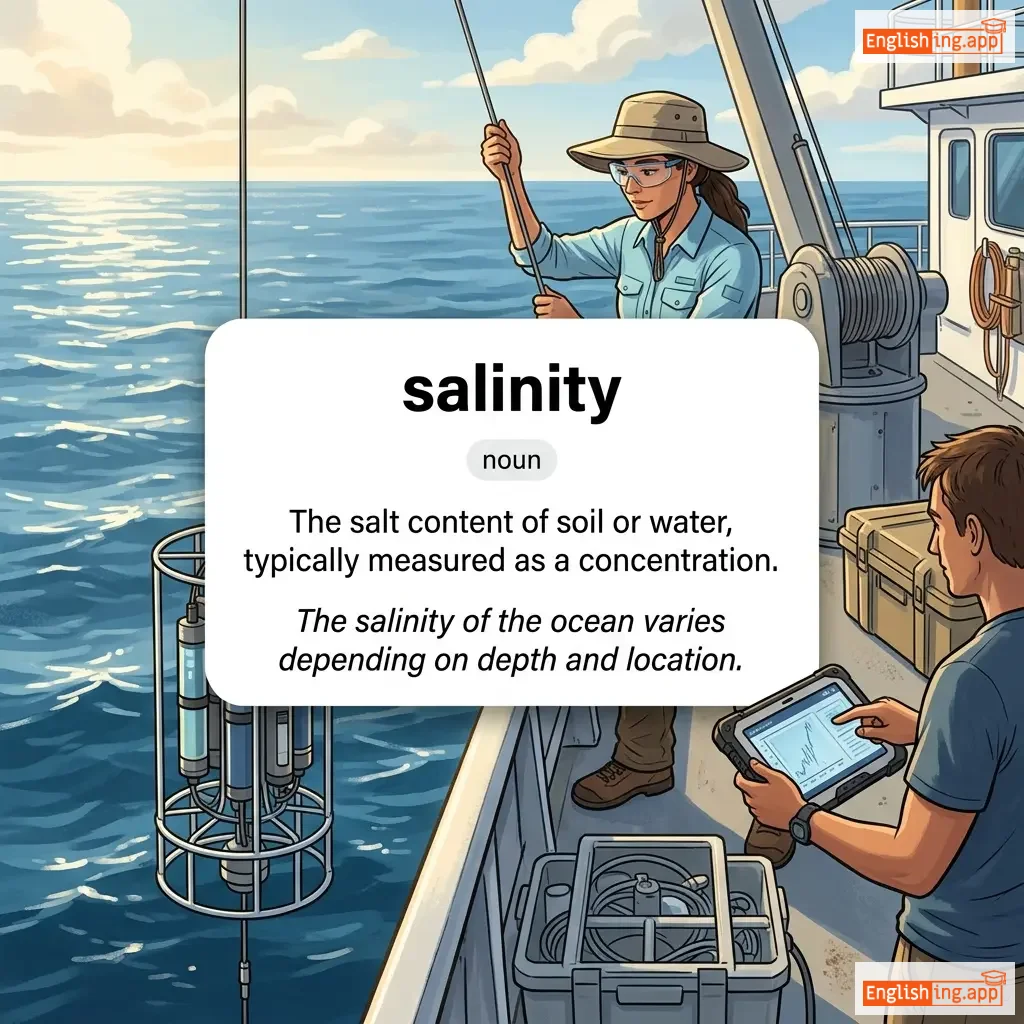
salinity definition card — visual illustration of the meaning
noun
/səˈlɪn.ə.t̬i/
соленость, концентрация соли (solenost, kontsentratsiya soli)

The salt content of soil or water, typically measured as a concentration.

"The salinity of the ocean varies depending on depth and location."
"Соленость океана варьируется в зависимости от глубины и местоположения." (Solenost' okeana varyiruetsya v zavisimosti ot glubiny i mestopolozheniya.)
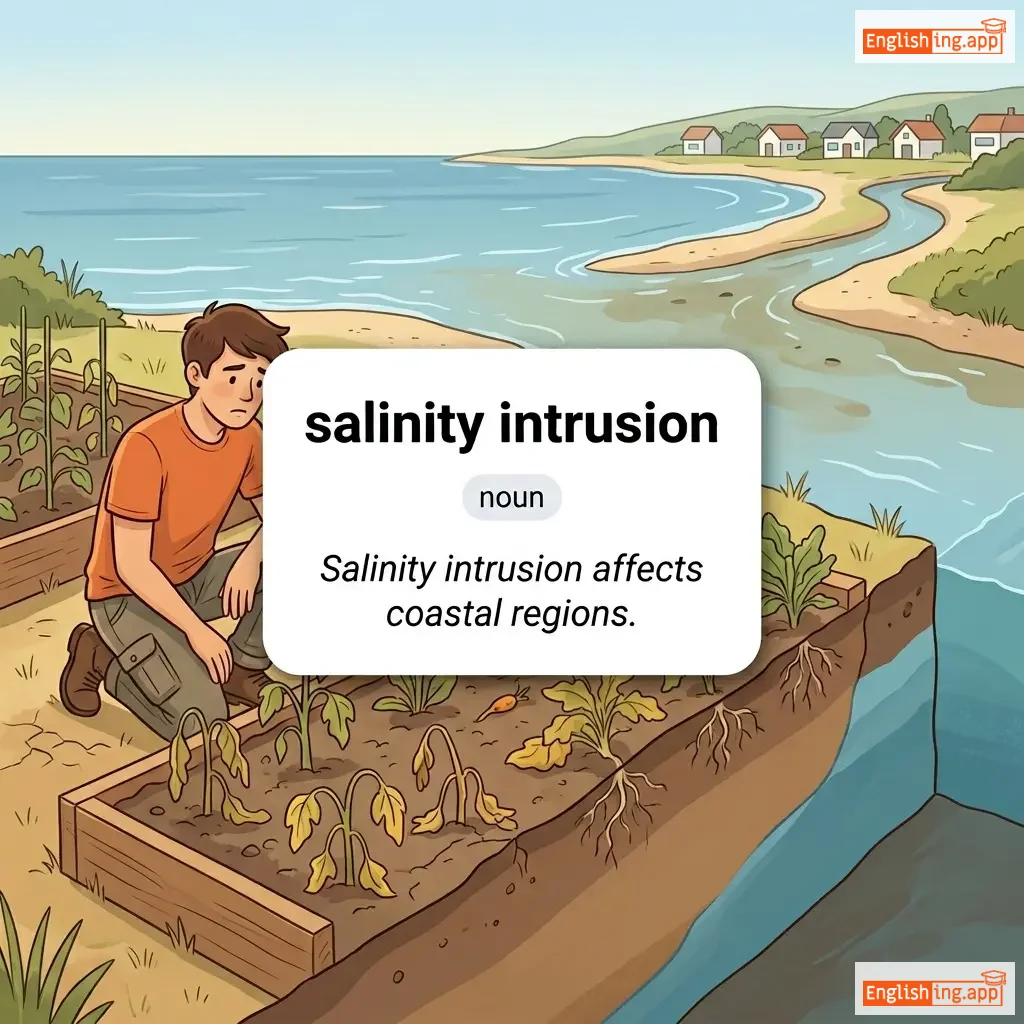
salinity intrusion definition card — visual illustration of the meaning
noun
səˈlɪnɪti ɪnˈtruːʒən
проникновение соли (proniknovenie soli)

The movement of salt water into freshwater areas, typically affecting coastal regions.

"Salinity intrusion affects coastal regions."
"Проникновение соли влияет на прибрежные регионы." (Proniknovenie soli vliyayet na pribrezhnye regiony.)
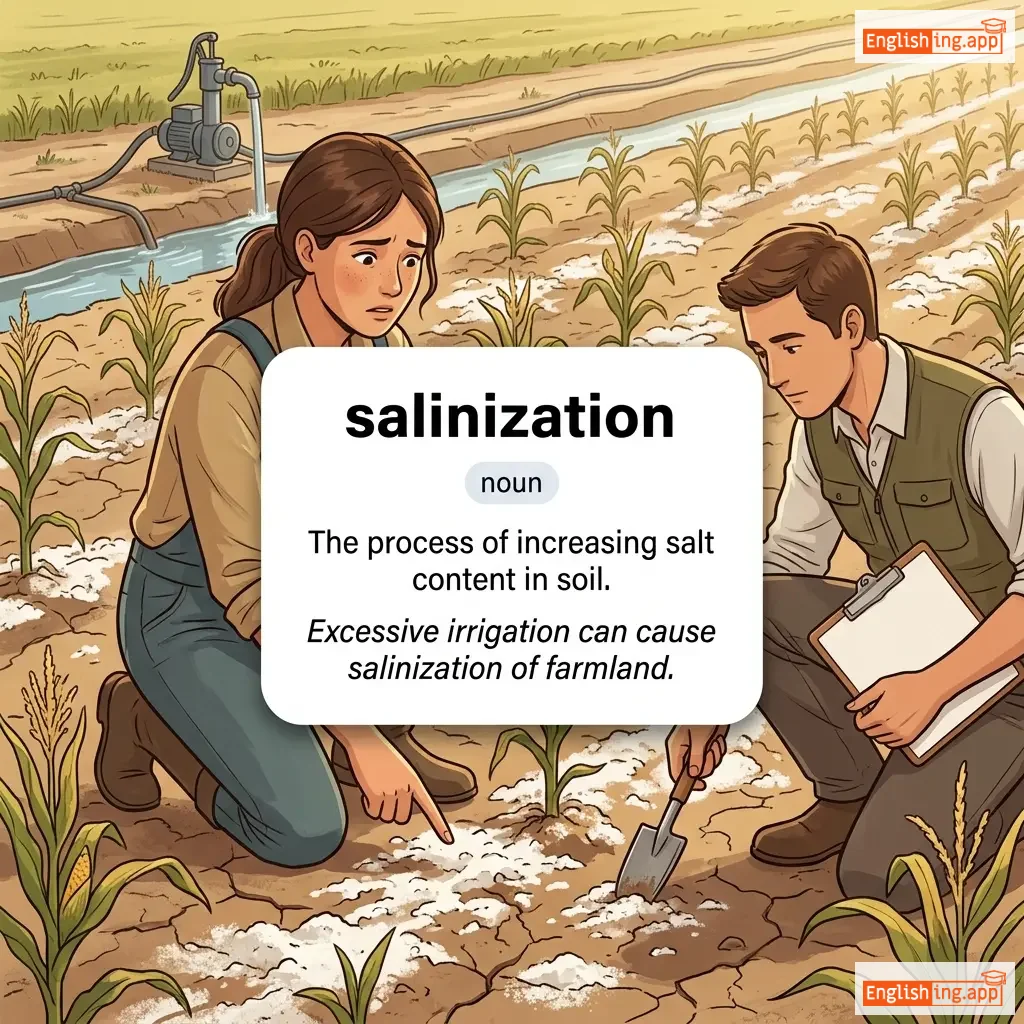
salinization definition card — visual illustration of the meaning
noun
/ˌsæl.ɪ.naɪˈzeɪ.ʃən/
увеличение солености (uvelichenie solenosti)

The process of increasing salt content in soil.

"Excessive irrigation can cause salinization of farmland."

"Чрезмерный полив может привести к увеличению солености сельскохозяйственных земель." (Chrezmernyy poliv mozhet privesti k uvelicheniyu solenosti selskokhozyaystvennykh zemel.)
noun
/səˈlaɪ.və/
слюна (saliva)

the watery liquid secreted into the mouth by glands

"The dentist asked her to rinse the saliva from her mouth."

"Стоматолог попросил её прополоскать слюну во рту." (Stomatolog poprosil eyo propoloskat slyunu vo rtu)
adjective
/ˈsæ.loʊ/
желтоватый (zheltovaty)

Of an unhealthy yellow or pale brown color, often referring to skin.

"His sallow complexion made him look tired and sickly."

"Его желтоватое лицо заставляло его выглядеть уставшим и больным." (Yego zheltovatoe litso zastavlyalo ego viglyadet' ustavshim i bol'nym.)
noun
/ˈsæm.ən/
лосось (losos)

A large fish with pink flesh, often eaten as food.

"They served grilled salmon for dinner."

"Они подали жареного лосося на ужин." (Oni podali zharenogo lososya na uzhin.)
noun
/ˈsæl.mən fɪʃ / ˈroʊ.huː/
рыба Роху (ryba Rokhu)

a freshwater fish popular in South Asian cuisine; also refers to salmon which is a different species

"Rohu fish is commonly prepared with spices in Bengali households."

"Рыба Роху обычно готовится с пряностями в бенгальских домах." (Ryba Rokhu obychno gotovitsya s pryanostyami v bengalskikh domakh.)
noun
/sɔːlt/
соль (sol)

a white crystalline substance used for seasoning and preserving food

"She added a pinch of salt to the soup for extra flavor."

"Она добавила щепотку соли в суп, чтобы придать ему больше вкуса." (Ona dabalila shchepotku soli v sup, chtoby pridat' emu bol'she vkusa.)
noun
/ˈsɔːl.tɪd fɪʃ/
солёная рыба (solyonaya ryba)

fish preserved with salt; dried and salted fish for storage

"Salted fish is a traditional way to preserve seafood."

"Солёная рыба — это традиционный способ сохранения морепродуктов." (solyonaya ryba eto traditsionnyy sposob sokhraneniya moreproduktov)