ভোকাবুলারিসমূহ

ইংরেজি শব্দের বাংলা অর্থ | English to Bangla Word Meaning Dictionary

noun
/səˈbætɪkəl/
অধ্যয়ন বা ভ্রমণের জন্য ছুটি (oddhoyon ba bhromoner jonno chhuti)

A period of paid leave granted to a teacher or worker for study or travel, traditionally every seventh year.

"She took a sabbatical to research her new book."

"সে তার নতুন বই গবেষণার জন্য একটি সাব্বাটিক্যাল নিয়েছিল।" (Se tar notun boi gojobeshonar jonno ekti sabbatical niyechilo.)
verb
/ˈsæbətɑːʒ/
ধ্বংসাত্মক কার্যকলাপ (dhongshatmak karyokolap)

To deliberately destroy, damage, or obstruct something, especially for political or military advantage.

"The rebels tried to sabotage the railway lines."

"বিদ্রোহীরা রেলপথ ধ্বংস করার চেষ্টা করেছিল।" (Bidrohi ra relpoth dhongsho korar cheshta korechilo.)
noun
/ˌsæbəˈtɜːr/
ধ্বংসকারী (dhongshokari)

A person who engages in sabotage.

"The saboteur was arrested before he could plant the bomb."

"বোমা বসানোর আগে ধ্বংসকারীকে গ্রেপ্তার করা হয়েছিল।" (Boma bosanor age dhongshokarike greptar kora hoyechilo.)
adjective
/ˈsækərɪn/
অতিরিক্ত মিষ্টি (otirikto mishti)

Excessively sweet or sentimental.

"His saccharine smile seemed insincere."

"তার অতিরিক্ত মিষ্টি হাসি অপ্রামাণিক মনে হচ্ছিল।" (Tar otirikto mishti hasi opramanik mone hochhilo.)
adjective
/ˌsæsərˈdoʊtl/
যাজকসংক্রান্ত (jajoksongkranto)

Relating to priests or the priesthood.

"The ritual had a distinctly sacerdotal character."

"আচারটির একটি স্পষ্ট যাজকসংক্রান্ত চরিত্র ছিল।" (achartir ekti sposto jajoksongkranto choritro chilo.)
noun
/sæk/
বস্তা (bosta)

a large bag made of strong material for holding things

"He carried a sack of rice on his shoulder."

"সে কাঁধে এক বস্তা চাল বহন করছিল।" (Se kandhe ek bosta chal bohon korchhilo.)
adjective
/ˈseɪkrɪd/
পবিত্র (pobitro)

connected with God or a religion and considered holy or deserving respect

"The temple is a sacred place for the community."

"মন্দিরটি সম্প্রদায়ের জন্য একটি পবিত্র স্থান।" (Mondirti somprodayer jonno ekti pobitro sthan.)
sacrifice definition card — visual illustration of the meaning
noun, verb
/ˈsækrɪfaɪs/
ত্যাগ (tyag)

To give up something valuable for the sake of others or a higher purpose.

"Parents often sacrifice their own comfort for their children."

"অভিভাবকরা প্রায়ই তাদের সন্তানের জন্য নিজের আরাম ত্যাগ করেন।" (obhivabokra prayoi tader shontaner jonno nijer aram tyag koren.)
adjective
/ˌsækrɪˈfɪʃəl/
আহুতি-সংক্রান্ত (ahuti-songkranto)

Relating to or involving sacrifice.

"The lamb was used as a sacrificial offering in the ritual."

"ভেড়াটি আচার অনুষ্ঠানে একটি আহুতিসংক্রান্ত উপহার হিসেবে ব্যবহৃত হয়েছিল।" (bherati achar onusthane ekti ahutisongkranto upohar hisebe byabohrito hoyechilo.)
noun
/ˈsækrɪlɪdʒ/
অপবিত্রকরণ (opobitrokoron)

Violation or misuse of what is regarded as sacred.

"Stealing from the temple was considered an act of sacrilege."

"মন্দির থেকে চুরি করা অপবিত্রকরণের কাজ হিসেবে বিবেচিত হয়েছিল।" (mondir theke churi kora opobitrokoroner kaj hisebe bibechito hoyechilo.)
adjective
/ˌsækrəˈlɪdʒəs/
অপবিত্রতাপূর্ণ (opobitrotapurno)

Showing disrespect or irreverence toward something sacred.

"The painting was criticized as being sacrilegious."

"চিত্রকর্মটিকে অপবিত্রতাপূর্ণ হিসেবে সমালোচনা করা হয়েছিল।" (chitrokormotike opobitrotapurno hisebe somalochona kora hoyechilo.)
noun
/ˈsækrɪsti/
গির্জার কক্ষ (girjar kokkh)

a room in a church where sacred vessels and vestments are kept

"The priest entered the sacristy before the mass began."

"পুরোহিত মিস শুরু হওয়ার আগে স্যাক্রিস্টিতে প্রবেশ করলেন।" (Purohit mis shuru howar age sakristite probesh korlen.)
adjective
/ˈsæk.rəˌsæŋkt/
অলঙ্ঘনীয় (olanghoniyo)

Regarded as too important or valuable to be interfered with; sacred.

"Freedom of speech is considered sacrosanct in democratic societies."

"গণতান্ত্রিক সমাজে বাকস্বাধীনতাকে অলঙ্ঘনীয় হিসেবে বিবেচনা করা হয়।" (Gonotantrok somaje bakswadhinotake olanghoniyo hisebe bichar kora hoy.)
adjective
/sæd/
দুঃখিত (dukhito)

feeling or showing sorrow; unhappy

"She felt sad after hearing the bad news."

"খারাপ খবরটি শোনার পর সে দুঃখিত অনুভব করল।" (Kharap khoborti shonar por se dukhito onubhob korlo.)
noun/verb
/ˈsæd.əl/
ঘোড়ার আসন, বোঝা চাপানো (ghorar ason, boja chapano)

A seat fastened on the back of a horse for riding; to burden someone with a responsibility.

"He saddled the horse before going for a ride."

"সে ঘোড়াটিকে চড়ার আগে স্যাডল দিয়েছিল।" (Se ghoratike charar age saddle diyechhilo.)
adjective
/səˈdɪs.tɪk/
নিষ্ঠুর (nisthur)

Deriving pleasure from inflicting pain or suffering on others.

"The villain had a sadistic smile while hurting his enemies."

"খলনায়কের নিষ্ঠুর হাসি ছিল যখন সে শত্রুদের আঘাত করছিল।" (Kholnayoker nisthur hasi chhilo jokhon se shatruder aghat korchhilo.)
adverb
/ˈsædli/
দুঃখের সঙ্গে (dukkher songe)

in a sorrowful or unhappy manner

"She sadly waved goodbye as the train departed."

"সে দুঃখের সঙ্গে বিদায় জানাল যখন ট্রেন চলা শুরু করল।" (Se dukkher songe biday janalo jokhon tren chola shuru korlo.)
noun
/ˈsæd.nəs/
বিষণ্ণতা; দুঃখ; শোক; (bishonnota)

feeling of sorrow, unhappiness, or grief

"Her sadness was evident after hearing the bad news."

"খারাপ খবর শোনার পর তার দুঃখ স্পষ্ট ছিল।" (kharap khobor shonar por tar dukkho sposhto chilo)
adjective
/seɪf/
নিরাপদ (nirāpod)

free from harm or danger

"Make sure your belongings are safe during the trip."

"যাত্রা চলাকালে আপনার জিনিসপত্র সুরক্ষিত কিনা তা নিশ্চিত করুন।" (Jātrā cholākālē āpnār jīnispôtr surôkṣit kinā tā niśchit korun.)
noun/verb
/ˈseɪf.ɡɑːrd/
রক্ষা করা (rokha kora)

To protect from harm or damage; a measure taken to ensure safety.

"Laws exist to safeguard the rights of children."

"শিশুদের অধিকার রক্ষার জন্য আইন বিদ্যমান।" (Shishuder odhikar rokhar jonno ain bidyoman.)
adverb
/ˈseɪfli/
নিরাপদে (nirapode)

in a way that is not dangerous or likely to cause harm

"The children crossed the road safely."

"শিশুরা নিরাপদে রাস্তা পার হয়েছে।" (Shishura nirapode rastay par hoyeche.)
noun
/ˈseɪfti/
নিরাপত্তা (nirāpotṭā)

the condition of being protected from harm or danger

"The safety of passengers is our top priority."

"যাত্রীদের নিরাপত্তা আমাদের শীর্ষ অগ্রাধিকার।" (Jātrīder nirāpotṭā āmāder śīrṣhô agrādhikār.)
noun
/ˈsæf.rən/
জাফরান (jafran)

A spice derived from the flower of Crocus sativus, used for flavoring and coloring food.

"She added saffron to the rice for flavor and color."

"সে ভাতের মধ্যে স্বাদ ও রঙের জন্য জাফরান দিয়েছিল।" (Se bhater moddhe swad o ronger jonno jafran diyechhilo.)
noun
/ˈsɑːɡə/
দীর্ঘ কাহিনী (dirgho kahini)

A long story of heroic achievement, or a long, complex series of events.

"The company's rise and fall became a corporate saga."

"কোম্পানির উত্থান ও পতন একটি কর্পোরেট সাগা হয়ে উঠেছিল।" (Companyr utthan o poton ekti corporate saga hoye uthchhilo.)
sagacious definition card — visual illustration of the meaning
adjective
/səˈɡeɪʃəs/
জ্ঞানী (gyani)

Having or showing keen mental discernment and good judgment; wise.

"The sagacious leader guided the team through difficult times."

"জ্ঞানী নেতা কঠিন সময়ে দলকে পরিচালনা করেছিলেন।" (Gyani neta kothin somoye dolke porichalona korechhilen.)
sagacity definition card — visual illustration of the meaning
noun
/səˈɡæs.ə.t̬i/
গভীর জ্ঞান (gohir gyaan)

The quality of being sagacious; having or showing keen mental discernment and good judgment.

"His sagacity made him a great leader."

"তার প্রজ্ঞা তাকে মহান নেতা বানিয়েছিল।" (Tar progya take mohan neta baniyechhilo.)
Sage definition card — visual illustration of the meaning
noun
/seɪdʒ/
মুনি, জ্ঞানী (muni, gyani)

A profoundly wise person, or wise through reflection and experience.

"The old sage was respected for his wisdom."

"বৃদ্ধ মুনি তার প্রজ্ঞার জন্য সম্মানিত ছিলেন।" (Briddho muni tar proggar jonno sommanito chhilen.)
noun
/ˈseɪ.ɡoʊ/
সাবুদ (shabud)

starchy foodstuff obtained from the pith of various tropical palm stems

"She prepared sago pudding for dessert."

"সে ডেজার্টের জন্য সাবুদানার পুডিং তৈরি করেছিল।" (she dejartor jonno shabudanar puding toiri korechhilo.)
verb
/seɪl/
পাল তোলা বা জাহাজ চালানো (pal tola ba jahaj chalano)

to travel on water in a boat or ship using sails or by wind power

"They sailed across the Atlantic Ocean last summer."

"তারা গত গ্রীষ্মে আটলান্টিক মহাসাগর অতিক্রম করেছিল।" (tara goto grishme atlantik mohasagor otikrom korechilo.)
noun, verb
/ˈseɪ.lɪŋ/
নৌচলাচল (noucholachol)

The act of traveling in a boat or ship using sails; the sport or activity of navigating a boat with sails.

"We went sailing on the lake during the summer."

"আমরা গ্রীষ্মকালে হ্রদের উপর নৌচলাচল করতে গিয়েছিলাম।" (amra grishmakale hrader upar noucholachol korte giyechhilam)
noun
/ˈseɪ.lər/
নাবিক (nabik)

a person who works on a ship or boat; a member of a navy

"The experienced sailor navigated the ship through the storm."

"অভিজ্ঞ নাবিক ঝড়ের মধ্য দিয়ে জাহাজ চালিয়েছিল।" (obhigyo nabik jhoṛer moddho diye jahaj chaliyechilo)
noun
/seɪnt/
পবিত্র ব্যক্তি (pobitro bekti)

a person recognized for their holiness or virtue, often canonized in the Christian faith

"The saint was revered by the community for his acts of kindness."

"সেই পবিত্র ব্যক্তি তার দয়া ও সহানুভূতির জন্য সমাজ দ্বারা শ্রদ্ধেয় ছিল।" (Sei pobitro bekti tar doya o sohanubhutir jonno shomaj dora shroddheyo chhilo.)
noun
/seɪk/
লাভ (lābh)

for the purpose or reason of something

"He did it for the sake of his family."

"সে তার পরিবারের জন্য এটি করেছিল।" (Se tār poribārer jônno ēṭi karēchhilo.)
salacious definition card — visual illustration of the meaning
adjective
/səˈleɪʃəs/
কামুক (kamuk)

Having or conveying undue or inappropriate sexual interest.

"The tabloid published a salacious story about the celebrity."

"ট্যাবলয়েডটি সেলিব্রিটিকে নিয়ে কামুক গল্প প্রকাশ করেছিল।" (Tabloidti celebrityke niye kamuk golpo prokash korechhilo.)
noun
/ˈsæləd/
সালাদ (salad)

a dish consisting of various ingredients, typically including vegetables, which are usually mixed with a dressing

"She made a fresh salad with lettuce, tomatoes, and cucumbers."

"সে শাক, টমেটো এবং শসা দিয়ে একটি তাজা সালাদ তৈরি করেছে।" (Se shak, tomato ebong shosa diye ekti taja salad toiri koreche.)
noun
/ˈsæləri/
বেতন (beton)

a fixed regular payment, typically paid monthly or annually, made by an employer to an employee

"He receives a monthly salary for his work as a teacher."

"সে তার শিক্ষক হিসেবে কাজ করার জন্য মাসিক স্যালারি পায়।" (Se tar shikkhok hishabe kaj korar jonyo masik salary pay.)
noun
/seɪl/
বিক্রি (bikri)

the exchange of a commodity for money; the action of selling something

"The store is having a sale on winter clothing."

"দোকানটি শীতকালীন পোশাকের উপর একটি সেল দিচ্ছে।" (Dokanti sheetkalin poshaker upor ekti sale dichhe.)
noun
/seɪlz/
বিক্রি (bikri)

activities related to selling products or services

"The company saw a significant increase in sales during the holiday season."

"ছুটির মৌসুমে কোম্পানির সেলসে উল্লেখযোগ্য বৃদ্ধি দেখানো হয়েছে।" (Chutir moushume companyr sales e ullekhjoggo briddhi dekhano hoyeche.)
noun
/ˈseɪ.li.əns/
প্রধান্য (prodhanno)

The quality of being particularly noticeable or important; prominence.

"The salience of the issue was highlighted in the debate."

"বিতর্কে বিষয়টির প্রধান্য তুলে ধরা হয়েছিল।" (Bitorke bishoytir prodhanno tule dhora hoyechhilo.)
salient definition card — visual illustration of the meaning
adjective
/ˈseɪ.li.ənt/
প্রধান বৈশিষ্ট্য (pradhan boishishto)

Most noticeable or important; standing out prominently.

"The most salient feature of the report was its emphasis on sustainability."

"রিপোর্টটির সবচেয়ে গুরুত্বপূর্ণ বৈশিষ্ট্য ছিল স্থায়িত্বের উপর জোর দেওয়া।" (Reporttir sobcheye guruttopurno boishishto chilo sthayittwer upor jor deowa.)
adjective
/ˈseɪ.liːn/
লবণাক্ত (lobonakto)

Containing or resembling salt; salty.

"Doctors often use saline solution to clean wounds."

"ডাক্তাররা প্রায়ই ক্ষত পরিষ্কার করতে স্যালাইন সলিউশন ব্যবহার করেন।" (Daktar ra prayoi khoto porishkar korte saline solution byabohar koren.)
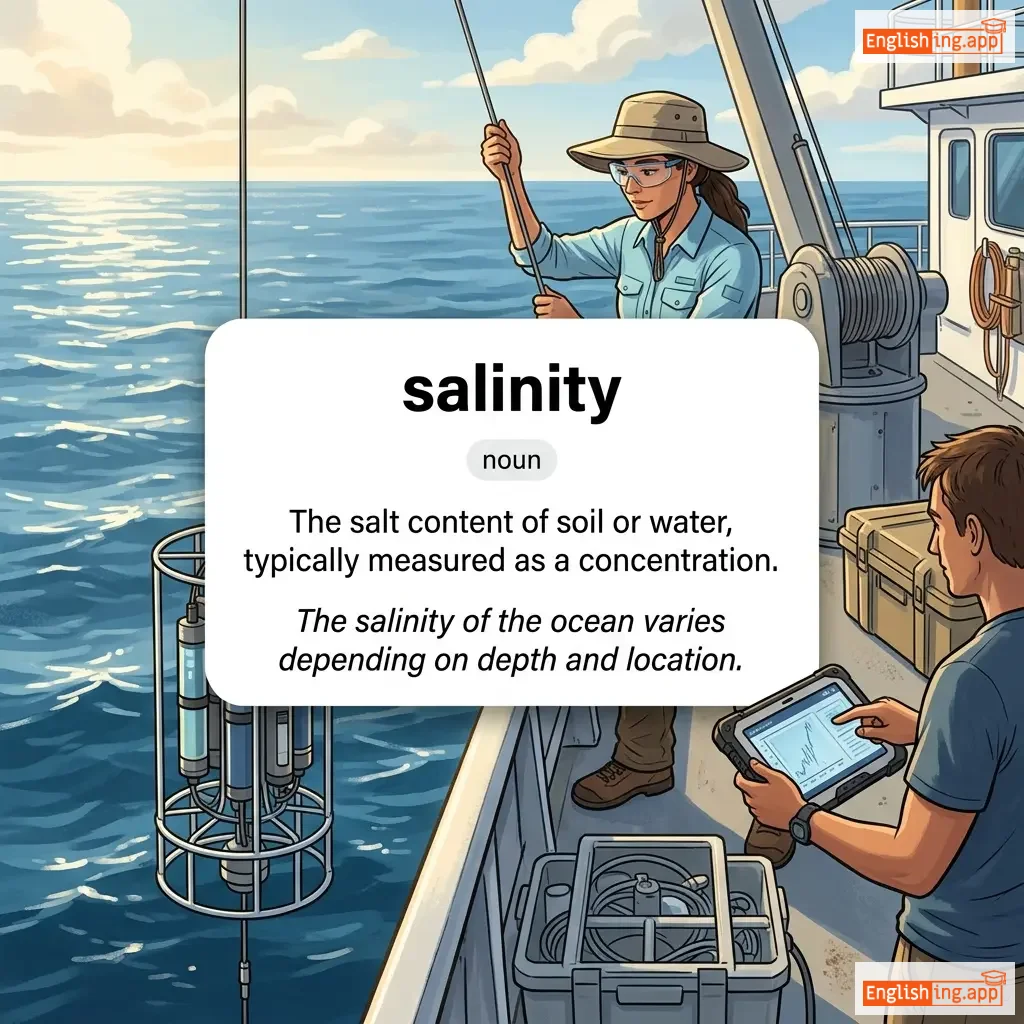
salinity definition card — visual illustration of the meaning
noun
/səˈlɪn.ə.t̬i/
লবণাক্ততা, লবণের ঘনত্ব (lobonakto, loboner ghontho)

The salt content of soil or water, typically measured as a concentration.

"The salinity of the ocean varies depending on depth and location."

"মহাসাগরের লবণাক্ততা গভীরতা ও অবস্থানের উপর নির্ভর করে পরিবর্তিত হয়।" (Mohashagorer lobonakto gobhirota o obosthaner upor nirbhor kore poribortito hoy.)
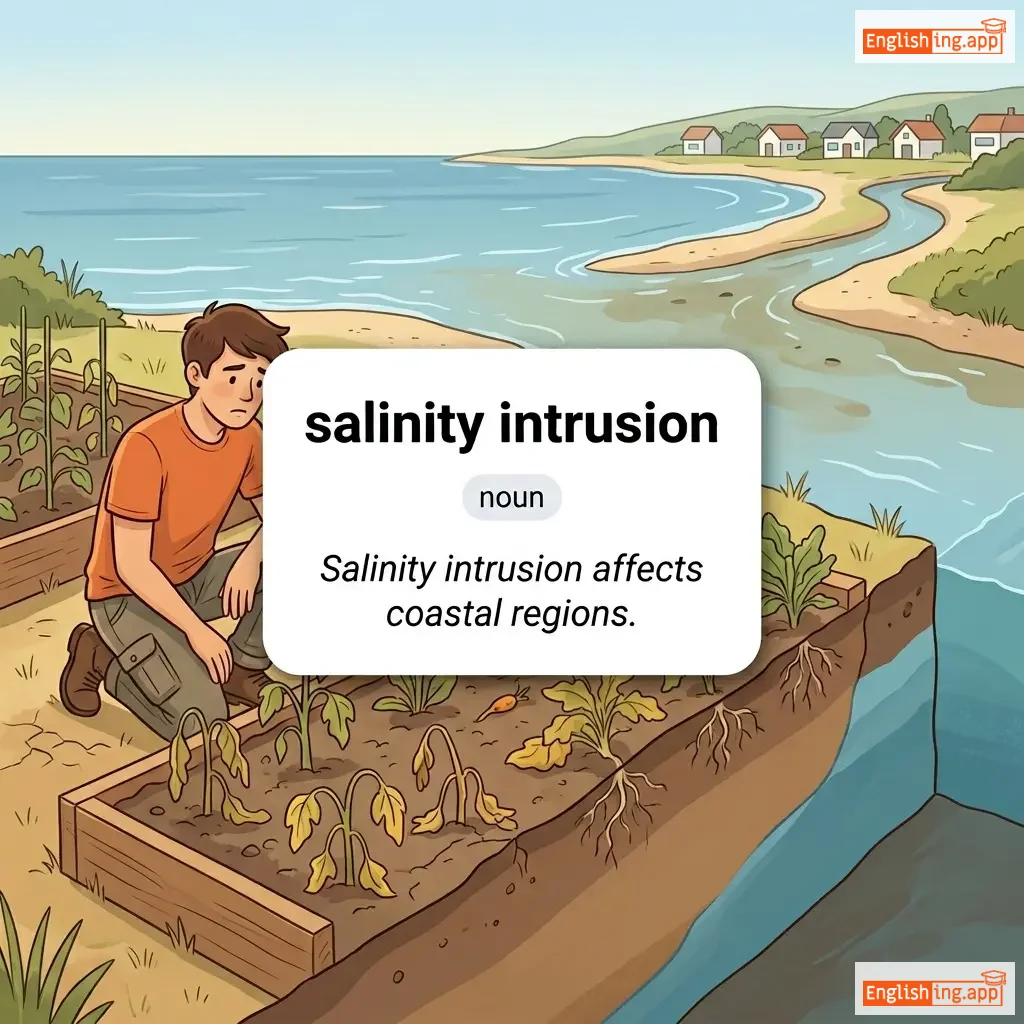
salinity intrusion definition card — visual illustration of the meaning
noun
səˈlɪnɪti ɪnˈtruːʒən
লবণাক্ততা অনুপ্রবেশ (lonakto onuprobesh)

The movement of salt water into freshwater areas, typically affecting coastal regions.

"Salinity intrusion affects coastal regions."

"লবণাক্ততা অনুপ্রবেশ উপকূলীয় অঞ্চলে প্রভাব ফেলে।" (Lonakto onuprobesh upokuliyo onchole probhab phele.)
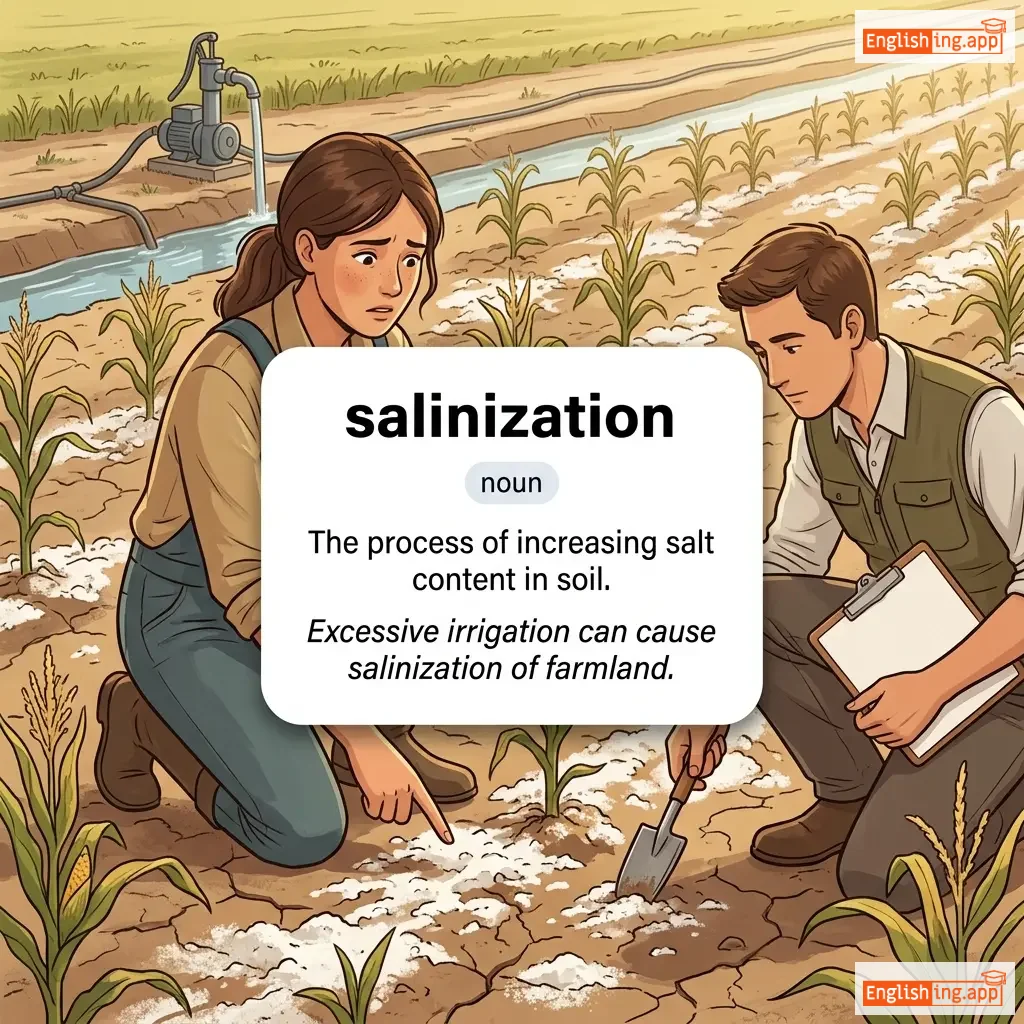
salinization definition card — visual illustration of the meaning
noun
/ˌsæl.ɪ.naɪˈzeɪ.ʃən/
লবণাক্ততা বৃদ্ধি (lobonakkota briddhi)

The process of increasing salt content in soil.

"Excessive irrigation can cause salinization of farmland."

"অতিরিক্ত সেচের ফলে কৃষি জমিতে লবণাক্ততা বৃদ্ধি পেতে পারে।" (Otirikto shecher fole krishi jomite lobonakkota briddhi pete pare.)
noun
/səˈlaɪ.və/
থুতু; লালা; (thutu)

the watery liquid secreted into the mouth by glands

"The dentist asked her to rinse the saliva from her mouth."

"ডেন্টিস্ট তাকে মুখ থেকে থুতু ধুয়ে ফেলতে বলেছিল।" (dentist take mukh theke thutu dhuye felte bolechhilo.)
adjective
/ˈsæ.loʊ/
ফ্যাকাশে (fakasha)

Of an unhealthy yellow or pale brown color, often referring to skin.

"His sallow complexion made him look tired and sickly."

"তার ফ্যাকাশে রঙ তাকে ক্লান্ত এবং অসুস্থ দেখাচ্ছিল।" (Tar fakasha rong take klanto ebong osustho dekhachhilo.)
noun
/ˈsæm.ən/
স্যামন মাছ (salmon machh)

A large fish with pink flesh, often eaten as food.

"They served grilled salmon for dinner."

"তারা রাতের খাবারে গ্রিল করা স্যামন পরিবেশন করেছিল।" (Tara rater khabare grill kora salmon poribeshon korechhilo.)
noun
/ˈsæl.mən fɪʃ / ˈroʊ.huː/
রুই মাছ (rui mach)

a freshwater fish popular in South Asian cuisine; also refers to salmon which is a different species

"Rohu fish is commonly prepared with spices in Bengali households."

"রুই মাছ সাধারণত বাঙালি পরিবারে মশলা দিয়ে রান্না করা হয়।" (Rui mach sadharonoto Bangali poribare moshla diye ranna kora hoy.)
noun
/sɔːlt/
লবণ (lobon)

a white crystalline substance used for seasoning and preserving food

"She added a pinch of salt to the soup for extra flavor."

"সে স্যুপে অতিরিক্ত স্বাদের জন্য এক চিমটি লবণ যোগ করেছিল।" (Se syupe otirikto shwader jonyo ek chimti lobon jog korechilo.)
noun
/ˈsɔːl.tɪd fɪʃ/
নোনা মাছ (nona mach)

fish preserved with salt; dried and salted fish for storage

"Salted fish is a traditional way to preserve seafood."

"নোনা মাছ সামুদ্রিক খাবার সংরক্ষণের একটি ঐতিহ্যগত উপায়।" (nona mach samudrik khabar shongrokkhoner ekti oitihoggoto upay)