ভোকাবুলারিসমূহ

ইংরেজি শব্দের বাংলা অর্থ | English to Bangla Word Meaning Dictionary

adjective
/juːˈbɪkwɪtəs/
সর্বব্যাপী (shorbobyaapi)

Present, appearing, or found everywhere.

"Smartphones have become ubiquitous in modern society."

"আধুনিক সমাজে স্মার্টফোন সর্বব্যাপী হয়ে উঠেছে।" (Adhunik shomaje smartphone shorbobyaapi hoye utheche.)
adjective
/juːˈbɪkwɪtəs/
সর্বত্রগামী (shorbottrogami)

Existing or being everywhere at the same time.

"Social media has become ubiquitous among young people."

"তরুণদের মধ্যে সামাজিক মাধ্যম সর্বত্রগামী হয়ে উঠেছে।" (Torunder modhe shamajik madhyam shorbottrogami hoye utheche.)
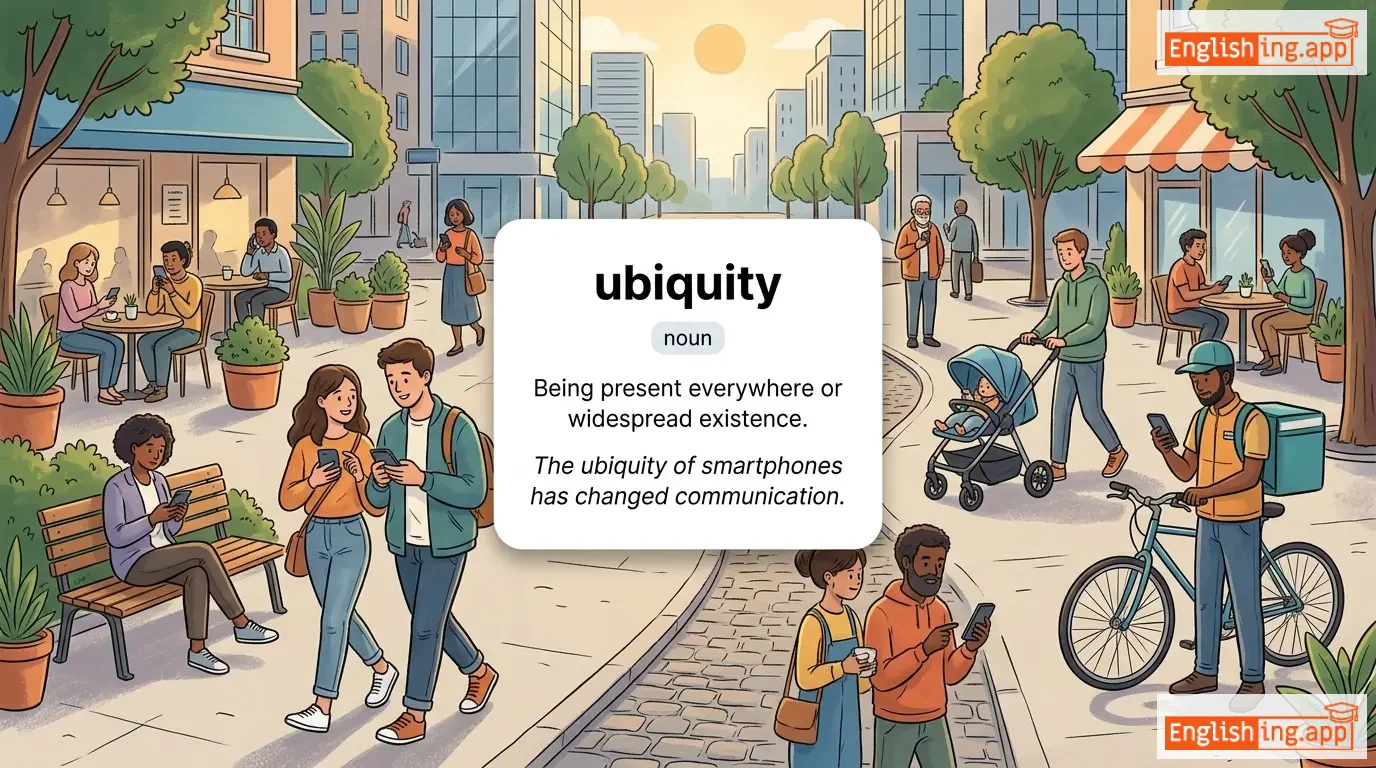
ubiquity definition card — visual illustration of the meaning
noun
/juːˈbɪk.wɪ.ti/
সর্বব্যাপী উপস্থিতি (sorbbobyapi uposthiti)

Being present everywhere or widespread existence.

"The ubiquity of smartphones has changed communication."

"স্মার্টফোনের সর্বব্যাপী উপস্থিতি যোগাযোগ ব্যবস্থাকে পরিবর্তন করেছে।" (Smartphoner sorbbobyapi uposthiti jogajog byabosthake poriborton koreche.)
adjective
/ˈʌɡli/
কুৎসিত (kutsito)

unpleasant or repulsive in appearance

"The house had an ugly view of the street."

"বাড়ির রাস্তায় এক অশুভ দৃশ্য ছিল।" (Bari-r rastay ek ashubho drishyo chhilo.)
interjection
/ʌ/
আহ, উহ (দ্বিধা বা চিন্তার সময় ব্যবহৃত) (ah, uh (dhidha ba chintar somoy byabohrito))

a sound people make when they hesitate or are unsure what to say next.

"Uh, I’m not sure if that’s the right answer."

"উহ, আমি নিশ্চিত নই এটা সঠিক উত্তর কিনা।" (Uh, ami nischit noi eta shothik uttar kina.)
noun
/juːˈkeɪs/
ফরমান (forman)

An authoritative decree or order, especially one issued by a sovereign or government.

"The czar issued a ukase restricting the freedom of the press."

"জার একটি ফরমান জারি করেছিলেন যা সংবাদপত্রের স্বাধীনতা সীমিত করেছিল।" (Jar ekti forman jari korechilen ja shongbadpotrer shadhinota shimit korechilo.)
noun
/ˈʌlsər/
ঘা (gha)

a sore on the skin or a mucous membrane that does not heal easily

"The doctor prescribed medicine to treat the stomach ulcer."

"ডাক্তার পেটের আলসার চিকিৎসার জন্য ওষুধ লিখে দিয়েছিলেন।" (Daktar peter alsar chikitsar jonno oshudh likhe diyechhilen.)
adjective
/ʌlˈtɪəriər/
গোপন উদ্দেশ্য (gopon uddeshyo)

hidden or secret, often with a selfish motive

"He invited her with an ulterior motive."

"সে তাকে গোপন উদ্দেশ্যে আমন্ত্রণ জানিয়েছিল।" (Se take gopon uddeshye amontron janiechhilo.)
adjective
/ˈʌltɪmət/
চূড়ান্ত (churanto)

being the best, final, or most extreme

"Success is the ultimate goal of hard work."

"সফলতা কঠোর পরিশ্রমের চূড়ান্ত লক্ষ্য।" (Sofolota kothor porishromer churanto lokkho.)
adverb
/ˈʌltəmətli/
অবশেষে (obosheshe)

in the end, after everything else

"Ultimately, we decided to go ahead with the project."

"অবশেষে, আমরা প্রকল্পটি চালিয়ে যাওয়ার সিদ্ধান্ত নিয়েছি।" (Obosheshe, amra prokolpoti chaliye jaoar siddhanto niyechi.)
noun
/ˌʌltɪˈmeɪtəm/
চূড়ান্ত সতর্কবার্তা (churanto sotorkobarta)

a final demand or statement of terms

"The workers gave the company an ultimatum to raise their wages."

"শ্রমিকরা কোম্পানিকে তাদের মজুরি বাড়ানোর জন্য চূড়ান্ত সতর্কবার্তা দিয়েছিল।" (Shromikra kompanike tader mojuri baranor jonno churanto sotorkobarta diyechhilo.)
adjective
/ˌʌltrəˈmɒnteɪn/
পোপ সমর্থনকারী (pop somorthonkari)

beyond the mountains, especially referring to support for the Pope over local church authority

"The debate highlighted the ultramontane position in church politics."

"বিতর্কে চার্চ রাজনীতিতে আল্ট্রামন্টেন অবস্থানটি তুলে ধরা হয়েছিল।" (Bitorke church rajnitite ultramontane obosthanti tule dhora hoyechhilo.)
adjective
/ˌʌltrəˈmʌndeɪn/
অতিলৌকিক (atiloukik)

Relating to things beyond the physical world; supernatural or transcendental.

"Philosophers often discuss ultramundane realities beyond human perception."

"দার্শনিকরা প্রায়ই মানুষের উপলব্ধির বাইরে অতিলৌকিক বাস্তবতা নিয়ে আলোচনা করেন।" (Darshonikra prayoi manusher upolobdher baire atiloukik bastobota niye alochona koren.)
noun
/ˈʌm.brə/
ছায়াকার; ছায়াপ্রভা; (chayakar)

the fully shaded inner region of a shadow cast by an opaque object; the dark center of a sunspot

"During the eclipse, we stood in the moon's umbra."

"গ্রহণের সময়, আমরা চাঁদের ছায়ায় দাঁড়িয়েছিলাম।" (grohoner somoy, amra chander chayay dariyechilam)
noun
/ˈʌmbrɪdʒ/
অসন্তোষ, ক্ষোভ (osontosho, khov)

A feeling of resentment or offense.

"She took umbrage at his rude remark."

"তার রূঢ় মন্তব্যে সে অসন্তুষ্ট হয়েছিল।" (Tar rudh mottombe se osontushto hoyechilo.)
noun
/ʌmˈbrɛlə/
ছাতা (chhata)

A device used for protection against rain or sun, typically consisting of a collapsible canopy mounted on a central rod.

"She opened her umbrella as it started to rain."

"সে বৃষ্টি শুরু হওয়ায় তার ছাতা খুলল।" (Se brishti shuru howay tar chhata khullo.)
noun
/ʌnəˈbɪləti/
অক্ষমতা (okhomota)

the state of being unable to do something; incapacity

"His unability to solve the problem caused delays in the project."

"সমস্যা সমাধান করতে তার অক্ষমতা প্রকল্পে দেরি সৃষ্টি করেছিল।" (samosya somadhan korte tar okhomota prokolpe deri srishti korechhilo)
adjective
/ʌˈneɪbl/
অক্ষম (okkham)

not able to do something

"She was unable to attend the meeting."

"সে মিটিংয়ে অংশগ্রহণ করতে অক্ষম ছিল।" (Se meeting-e angshogrohon korte okkham chhilo.)
adjective
/ˌʌnəkˈsɛptəbl/
অগ্রহণযোগ্য (agrohonjoggo)

not satisfactory or allowable

"The behavior displayed by the employee was completely unacceptable."

"কর্মচারীর প্রদর্শিত আচরণ সম্পূর্ণ অগ্রহণযোগ্য ছিল।" (Kormochari-er prodorshito achoron sompurno agrohonjoggo chhilo.)
adjective
/ˌʌnəˈkaʊntəbl/
অজানা, ব্যাখ্যাতীত (ojana, byakhyatit)

Not able to be explained or justified.

"She felt an unaccountable fear as she entered the dark room."

"অন্ধকার ঘরে প্রবেশ করার সময় সে এক অজানা ভয়ের অনুভূতি পেল।" (Andhokar ghore probesh korar somoy se ek ojana bhoyer onubhuti pel.)
adjective
/ˌʌnəkˈnɒlɪdʒd/
অস্বীকৃত (oswikrito)

Not recognized, admitted, or accepted; ignored or unnoticed

"Her contributions to the project went unacknowledged."

"তার প্রকল্পে অবদান স্বীকৃত হয়নি।" (tar prokolpe obodan swikrito hoyni)
adjective
/ˌʌnəˈdɔːrnd/
সরল, অলংকারহীন (sorol, olongkarhin)

Plain and simple; not decorated.

"The room was unadorned, with only a table and a chair."

"ঘরটি ছিল অলংকারহীন, শুধু একটি টেবিল এবং একটি চেয়ার ছিল।" (Ghoti chilo olongkarhin, shudhu ekti table ebong ekti cheyar chilo.)
adjective
/ˌʌn.əˈdʌl.tə.reɪ.tɪd/
বিশুদ্ধ; অমিশ্রিত; (bishhuddho)

not mixed or diluted with any different or extra elements; pure

"She felt unadulterated joy when she heard the news."

"খবর শুনে তিনি বিশুদ্ধ আনন্দ অনুভব করলেন।" (khobor shune tini bishhuddho anondo onubhob korlen)
adjective
/ˌʌnəˈfɛktɪd/
অপ্রভাবিত, স্বাভাবিক (oprobhobito, swabhavik)

Not influenced or touched by something; genuine and natural.

"He remained unaffected by the criticism and kept working hard."

"সমালোচনার পরও সে অপ্রভাবিত রইল এবং কঠোর পরিশ্রম চালিয়ে গেল।" (Somalochnar poro se oprobhobito roilo ebong kothor porishrom chaliye gelo.)
adjective
/ʌnəˈfreɪd/
ভয়হীন (bhoyhin)

Not feeling fear; brave or courageous

"She walked into the dark room, unafraid of what might be inside."

"সে অন্ধকার কক্ষে প্রবেশ করল, ভয়ের কোনো কিছু নেই।" (Se andhokar kokkhe probesh korlo, bhoyer kono kichu nei.)
adjective
/ʌnˈælɔɪd/
বিশুদ্ধ (bishuddho)

Pure, complete, and not mixed with anything else.

"She felt unalloyed joy at the news of her success."

"তার সাফল্যের খবরে সে বিশুদ্ধ আনন্দ অনুভব করেছিল।" (Tar safolyer khobore se bishuddho anondo onubhob korechilo.)
noun
/ˌjuːnəˈnɪməti/
সর্বসম্মতি (sorbo somomoti)

Complete agreement by everyone in a group.

"The proposal was accepted with complete unanimity."

"প্রস্তাবটি সর্বসম্মতভাবে গৃহীত হয়েছিল।" (Prostabti sorbo sommotovabe grohito hoyechilo.)
adjective
/juːˈnænɪməs/
সর্বসম্মত (sorbo sommot)

Fully in agreement; with everyone sharing the same opinion.

"The jury reached a unanimous verdict."

"জুরি সর্বসম্মত রায়ে পৌঁছেছিল।" (Juri sorbo sommoto raye pouchhechilo.)
unanimously definition card — visual illustration of the meaning
adverb
/juːˈnænɪməsli/
সর্বসম্মতিক্রমে; (shorboshommotikrome)

with the agreement of all people involved; without opposition

"The committee unanimously agreed to the proposal."

"কমিটি সর্বসম্মতিক্রমে প্রস্তাবটি অনুমোদন করেছে।" (komiti shorboshommotikrome prostabti onumodon korechhe)
adjective
/ʌnəˈpiːzd/
সন্তুষ্ট নয় (santoshto noy)

Not satisfied or calmed; still feeling discontent or anger

"Despite the apology, she remained unappeased."

"ক্ষমা চাওয়া সত্ত্বেও, সে সন্তুষ্ট নয় রয়ে গেল।" (khoma chaoya sotteo, se santoshto noy roye gelo)
verb
/ʌnˈɑːrm/
অস্ত্রশস্ত্র মুক্ত করা (astra-shastra mukto kora)

to remove weapons from someone or to deprive of means of attack or defense

"The soldiers were ordered to unarm the prisoners."

"সেনাদেরকে নির্দেশ দেওয়া হয়েছিল বন্দীদের অস্ত্রশস্ত্র মুক্ত করার জন্য।" (senaderke nirdesh deoa hoyechilo bandider astra-shastra mukto korar jonno)
adjective
/ʌnˈɑːrmd/
অসশস্ত্র (asoshostro)

Not equipped with or carrying weapons

"The police found the suspect unarmed during the search."

"পুলিশ অনুসন্ধানের সময় সন্দেহভাজনকে অসশস্ত্র পেয়েছে।" (Polish onushondhaner somoy sondhebhajonke asoshostro peyechhe.)
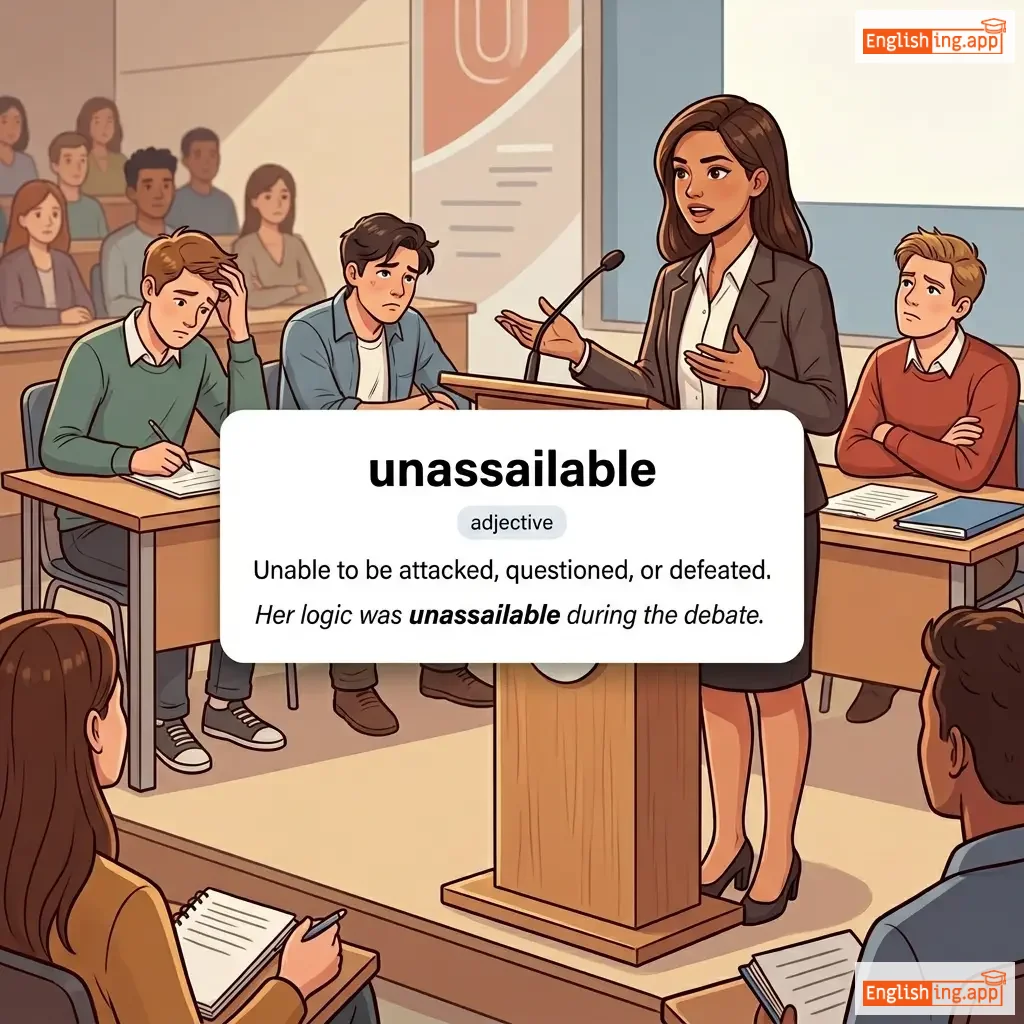
unassailable definition card — visual illustration of the meaning
adjective
/ˌʌnəˈseɪləbl/
অজেয় (ojeyo)

Unable to be attacked, questioned, or defeated.

"Her logic was unassailable during the debate."

"বিতর্কে তার যুক্তি ছিল অজেয়।" (Bitorke tar jukti chilo ojeyo.)
adjective
/ˌʌnəˈsweɪdʒd/
অশান্ত (oshanto)

Not made less intense or relieved; unrelieved.

"His grief remained unassuaged despite the passage of time."

"সময়ের অতিক্রমেও তার দুঃখ অশান্ত রয়ে গিয়েছিল।" (Somoyer otikromeo tar dukkho oshanto roye giechilo.)
adjective
/ˌʌnəˈsjuːmɪŋ/
নম্র (nomro)

Not pretentious or arrogant; modest.

"Despite his success, he remained unassuming and humble."

"তার সাফল্য সত্ত্বেও তিনি বিনয়ী ও নম্র ছিলেন।" (tar safollo sottweo tini binoyi o nomro chilen.)
adjective
/ˌʌnəˈʃʊəd/
অনিশ্চিত (onishchit)

Lacking confidence or certainty.

"She gave an unassured answer during the interview."

"তিনি সাক্ষাৎকারে একটি অনিশ্চিত উত্তর দিয়েছিলেন।" (tini sakhhatkare ekti onishchit uttor diyechilen.)
adjective
/ˌʌnəˈteɪnəbl/
অপ্রাপ্য (aprapyo)

impossible to achieve, reach, or accomplish

"For many, becoming a professional athlete remains an unattainable dream."

"অনেকের জন্য, পেশাদার ক্রীড়াবিদ হওয়া একটি অপ্রাপ্য স্বপ্ন।" (onekder jonyo, peshadar krirabid howa ekti aprapyo swapno.)
noun
/ˌʌnəˌveɪləˈbɪləti/
অপ্রাপ্যতা (aprapyota)

The state of being not available or not accessible.

"The unavailability of the manager caused a delay in the project."

"ম্যানেজারের অনুপস্থিতি প্রকল্পে বিলম্ব সৃষ্টি করেছিল।" (menejarer onuposthiti prokolpe bilomb srishti korechhilo)
adjective
/ˌʌnəˈveɪləbəl/
উপলব্ধ নয় (upolobdho noy)

Not able to be obtained, reached, or used; not present or accessible.

"The manager was unavailable to take calls during the meeting."

"সভায় ম্যানেজার ফোন ধরতে পারছিলেন না।" (Sobhaye meneger phone dhorte parchilen na.)
adjective
/ˌʌnəˈvɔɪdəbl/
অপরিহার্য (oporiharjo)

Impossible to avoid or prevent.

"Delays were unavoidable due to heavy rain."

"ভারী বৃষ্টির কারণে বিলম্ব অপরিহার্য ছিল।" (bari brishtir karone bilomb oporiharjo chhilo.)
adjective
/ˌʌnəˈweər/
অজান্তে; অচেতনভাবে; জানে না এমন; (ojante)

not knowing or realizing; having no knowledge of something

"She was completely unaware of the danger."

"সে বিপদ সম্পর্কে সম্পূর্ণভাবে অজ্ঞাত ছিল।" (she bipod shomporke shompurnobhabe ojgyato chhilo.)
adjective
/ʌnˈbæləns/
ভারসাম্যহীন; অসমঞ্জস; (bharshammoheen)

not balanced; lacking stability or equilibrium; mentally unstable

"The unbalanced table kept wobbling."

"ভারসাম্যহীন টেবিলটি দুলতে থাকল।" (bharshammoheen tebilti dulte thaklo.)
adjective
/ʌnˈbeərəbl/
অসহনীয় (osohoniya)

Too difficult or unpleasant to endure.

"The heat was unbearable in the afternoon."

"বিকেলে গরম অসহনীয় ছিল।" (bikele gorom oshohoniya chhilo.)
adjective
/ʌnˈbiːtən/
অপরাজিত; অদম্য; (oporajito)

not defeated; having never lost; undefeated

"The team remains unbeaten this season."

"দলটি এই মৌসুমে অপরাজিত রয়েছে।" (dolti ei mousume oporajito royeche.)
adjective
/ˌʌnbɪˈkʌmɪŋ/
অনুপযুক্ত (onupojukto)

Not proper or appropriate for a person; unsuitable.

"His rude behavior was unbecoming of a leader."

"তার অভদ্র আচরণ একজন নেতার জন্য অনুপযুক্ত ছিল।" (tar obhodro acharon ekjon netar jonno onupojukto chhilo.)
noun
/ˌʌnbɪˈliːf/
অবিশ্বাস (obishash)

A lack of belief, especially in religious faith.

"His heart was full of doubt and unbelief."

"তার হৃদয় সন্দেহ এবং অবিশ্বাসে পূর্ণ ছিল।" (tar hridoy shondheh ebong obishashe purno chilo.)
adjective
/ˌʌnbɪˈliːvəbəl/
অবিশ্বাস্য; অত্যন্ত বিস্ময়কর; (obishshasho)

impossible to believe; extremely surprising or remarkable

"The magician's performance was absolutely unbelievable."

"জাদুকরের পারফরমেন্স একদম অবিশ্বাস্য ছিল।" (jadukor-er performance ekdom obishshasho chhilo.)
adjective
/ˌʌnbɪˈliːvɪŋ/
অবিশ্বাসী (abishwasi)

Not willing or able to believe; skeptical or doubtful

"She gave him an unbelieving look when he claimed to have met a celebrity."

"সে তাকে একটি অবিশ্বাসী চেহারা দেখাল যখন সে বলল যে সে একটি সেলিব্রিটির সাথে দেখা করেছে।" (Se take ekti abishwasi chehara dekhale jokhon se boll je se ekti celebrityr sathe dekha koreche.)
adjective
/ʌnˈbaɪəst/
নিরপেক্ষ (niropekkho)

Not showing prejudice; impartial and fair.

"The report gave an unbiased view of the situation."

"রিপোর্টটি পরিস্থিতির একটি নিরপেক্ষ দৃষ্টিভঙ্গি দিয়েছে।" (reportti poristhitir ekti niropekkho drishtivongi diyeche.)
adjective
/ʌnˈblʌʃɪŋ/
নির্লজ্জ; বেহায়া; (nirlozzo)

showing no shame or embarrassment; boldly shameless

"He told the unblushing lie without any hesitation."

"সে কোনো দ্বিধা ছাড়াই নির্লজ্জ মিথ্যা বলল।" (she kono dwidha chharai nirlozzo mithya bollo.)