वोकैबुलरीज

इंग्लिश वोकैबुलरी डिस्कवर, लर्न और मास्टर करें

adjective
/juːˈbɪkwɪtəs/
सर्वव्यापी (sarvavyaapi)

Present, appearing, or found everywhere.

"Smartphones have become ubiquitous in modern society."

"स्मार्टफोन आधुनिक समाज में सर्वव्यापी हो गए हैं।" (Smartphone aadhunik samaaj mein sarvavyaapi ho gaye hain.)
adjective
/juːˈbɪkwɪtəs/
सर्वव्यापी (sarvavyapi)

Existing or being everywhere at the same time.

"Social media has become ubiquitous among young people."

"सोशल मीडिया युवा लोगों के बीच सर्वव्यापी हो गया है।" (Social media yuva logon ke beech sarvavyapi ho gaya hai.)
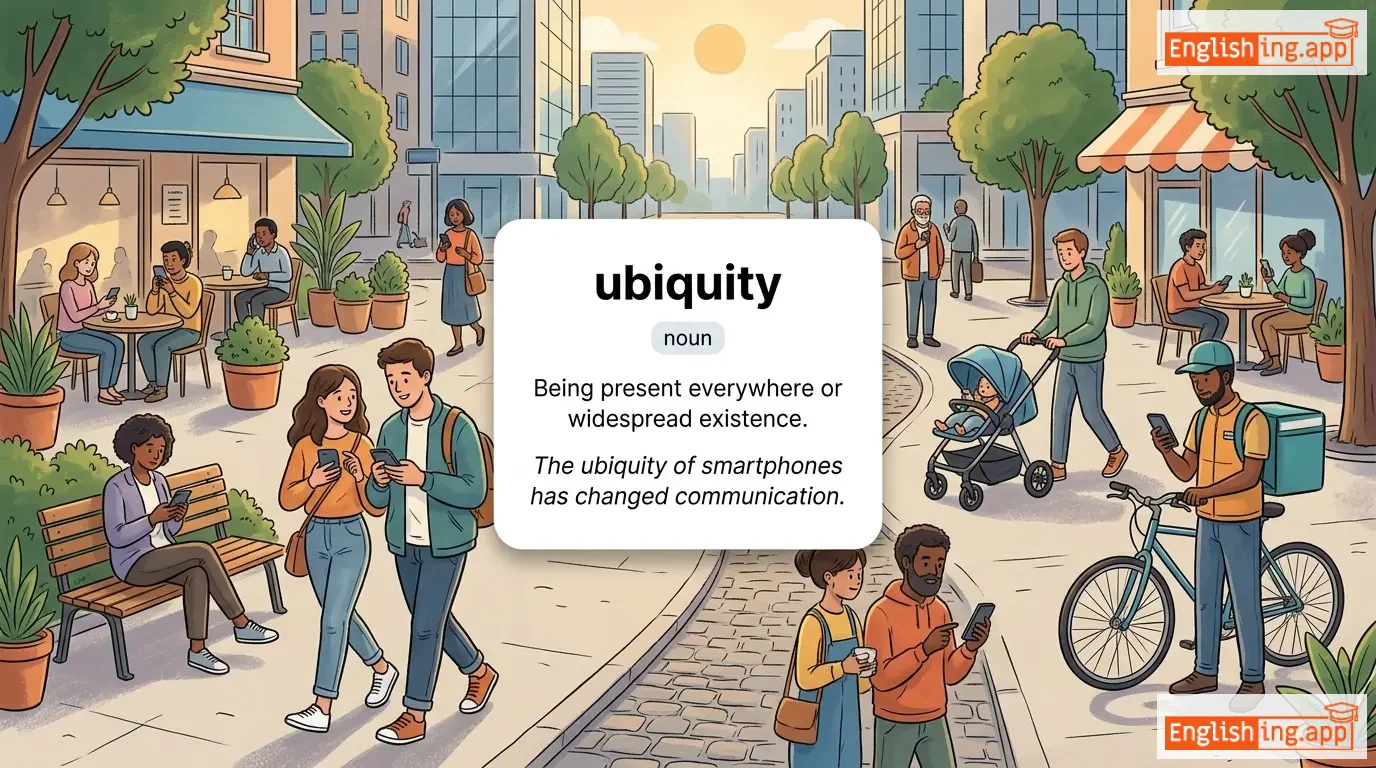
ubiquity definition card — visual illustration of the meaning
noun
/juːˈbɪk.wɪ.ti/
व्यापकता (vyapaktaa)

Being present everywhere or widespread existence.

"The ubiquity of smartphones has changed communication."

"स्मार्टफोन की व्यापकता ने संचार को बदल दिया है।" (Smartphone ki vyapaktaa ne sanchar ko badal diya hai.)
adjective
/ˈʌɡli/
भद्दा (bhadda)

unpleasant or repulsive in appearance

"The house had an ugly view of the street."

"घर की सड़क का दृश्य बदसूरत था।" (Ghar ki sadak ka drishya badsurat tha.)
interjection
/ʌ/
उह (uh)

a sound people make when they hesitate or are unsure what to say next.

"Uh, I’m not sure if that’s the right answer."

"उह, मुझे नहीं पता अगर यह सही उत्तर है।" (Uh, mujhe nahin pata agar yeh sahi uttar hai.)
noun
/juːˈkeɪs/
निर्देश (nirdesh)

An authoritative decree or order, especially one issued by a sovereign or government.

"The czar issued a ukase restricting the freedom of the press."

"जार ने प्रेस की स्वतंत्रता को सीमित करने वाला एक निर्देश जारी किया।" (Zar ne press ki svatantrata ko seemit karne wala ek nirdesh jari kiya.)
noun
/ˈʌlsər/
अल्सर (alsar)

a sore on the skin or a mucous membrane that does not heal easily

"The doctor prescribed medicine to treat the stomach ulcer."

"डॉक्टर ने पेट के अल्सर का उपचार करने के लिए दवा लिखी." (doktar ne pet ke alsar ka upchar karne ke liye dawa likhi.)
adjective
/ʌlˈtɪəriər/
गुप्त उद्देश्य (gupt uddeshya)

hidden or secret, often with a selfish motive

"He invited her with an ulterior motive."

"उसने एक गुप्त उद्देश्य के साथ उसे आमंत्रित किया।" (Usne ek gupt uddeshya ke saath use amantrit kiya.)
adjective
/ˈʌltɪmət/
अंतिम (antim)

being the best, final, or most extreme

"Success is the ultimate goal of hard work."

"सफलता कठिन परिश्रम का अंतिम लक्ष्य है।" (Safalta kathin parishram ka antim lakshya hai.)
adverb
/ˈʌltəmətli/
अंततः (antatah)

in the end, after everything else

"Ultimately, we decided to go ahead with the project."

"अंततः, हमने परियोजना के साथ आगे बढ़ने का निर्णय लिया।" (Antatah, humne pariyojna ke saath aage badhne ka nirnay liya.)
noun
/ˌʌltɪˈmeɪtəm/
अंतिम प्रस्ताव (antim prastaav)

a final demand or statement of terms

"The workers gave the company an ultimatum to raise their wages."

"कर्मचारियों ने कंपनी को उनके वेतन बढ़ाने के लिए एक अंतिम प्रस्ताव दिया।" (Karmachariyon ne company ko unke vetan badhane ke liye ek antim prastaav diya.)
adjective
/ˌʌltrəˈmɒnteɪn/
पोप समर्थक (pop samarthak)

beyond the mountains, especially referring to support for the Pope over local church authority

"The debate highlighted the ultramontane position in church politics."

"बहस में चर्च राजनीति में अल्ट्रामोंटेन स्थिति को उजागर किया गया।" (Bahas mein church rajneeti mein ultramontane sthiti ko ujagar kiya gaya.)
adjective
/ˌʌltrəˈmʌndeɪn/
अतिलौकिक (atiloukik)

Relating to things beyond the physical world; supernatural or transcendental.

"Philosophers often discuss ultramundane realities beyond human perception."

"दार्शनिक अक्सर मानव धारणा से परे अल्ट्रामंडेन वास्तविकताओं पर चर्चा करते हैं।" (Darshanik aksar manav dharana se pare ultramundane vastaviktaon par charcha karte hain.)
noun
/ˈʌm.brə/
छाया का पूर्ण अंधेरा, कोई ओपेक वस्तु द्वारा डाली गई छाया का आंतरिक भाग (chhaya ka poorn andhera, koi opek vastu dwara daali gayi chhaya ka antarik bhaag)

the fully shaded inner region of a shadow cast by an opaque object; the dark center of a sunspot

"During the eclipse, we stood in the moon's umbra."

"ग्रहण के दौरान, हम चाँद के अंब्राः में खड़े थे।" (grahan ke dauran, hum chaand ke ambraa mein khade the)
noun
/ˈʌmbrɪdʒ/
नाराज़गी, अपमान (narazgi, apman)

A feeling of resentment or offense.

"She took umbrage at his rude remark."

"वह उसकी रude टिप्पणी पर नाराज हो गई।" (Woh uski rude tipanni par naraz ho gayi.)
noun
/ʌmˈbrɛlə/
छाता (chhata)

A device used for protection against rain or sun, typically consisting of a collapsible canopy mounted on a central rod.

"She opened her umbrella as it started to rain."

"बारिश होने पर उसने अपना छाता खोला।" (Barish hone par usne apna chhata khola.)
noun
/ʌnəˈbɪləti/
असक्षमता (askshamata)

the state of being unable to do something; incapacity

"His unability to solve the problem caused delays in the project."

"समस्या हल करने में उसकी असक्षमता ने परियोजना में देरी कर दी।" (samasya hal karne me uski askshamata ne pariyojana me deri kar di)
adjective
/ʌˈneɪbl/
असमर्थ (asamarth)

not able to do something

"She was unable to attend the meeting."

"वह बैठक में भाग लेने में असमर्थ थी।" (Vah baithak mein bhag lene mein asamarth thi.)
adjective
/ˌʌnəkˈsɛptəbl/
अस्वीकृत (asweekrit)

not satisfactory or allowable

"The behavior displayed by the employee was completely unacceptable."

"कर्मचारी द्वारा प्रदर्शित व्यवहार पूरी तरह से अस्वीकृत था।" (Karmachari dwara pradarshit vyavhaar puri tarah se asweekrit tha.)
adjective
/ˌʌnəˈkaʊntəbl/
असमझ, अव्याख्यायित (asamajh, avyakhyait)

Not able to be explained or justified.

"She felt an unaccountable fear as she entered the dark room."

"वह अंधेरे कमरे में प्रवेश करते समय एक असमझ डर महसूस कर रही थी।" (Woh andhere kamre mein pravesh karte samay ek asamajh dar mahsus kar rahi thi.)
adjective
/ˌʌnəkˈnɒlɪdʒd/
अस्वीकृत (asweekrit)

Not recognized, admitted, or accepted; ignored or unnoticed

"Her contributions to the project went unacknowledged."

"उसकी परियोजना में योगदान को मान्यता नहीं मिली।" (uski pariyojana mein yogdan ko maanyata nahi mili)
adjective
/ˌʌnəˈdɔːrnd/
साधारण, अलंकरण रहित (sadharan, alankaran rahit)

Plain and simple; not decorated.

"The room was unadorned, with only a table and a chair."

"कमरा साधारण था, केवल एक टेबल और एक कुर्सी थी।" (Kamra sadharan tha, keval ek table aur ek kursi thi.)
adjective
/ˌʌn.əˈdʌl.tə.reɪ.tɪd/
अशुद्ध (ashuddh)

not mixed or diluted with any different or extra elements; pure

"She felt unadulterated joy when she heard the news."

"उसे जब खबर मिली तो उसने शुद्ध खुशी महसूस की।" (use jab khabar mili to usne shuddh khushi mehsoos ki)
adjective
/ˌʌnəˈfɛktɪd/
अप्रभावित, स्वाभाविक (aprabhaavit, swaabhavik)

Not influenced or touched by something; genuine and natural.

"He remained unaffected by the criticism and kept working hard."

"वह आलोचना से अप्रभावित रहा और कठिन मेहनत करता रहा।" (Vah aalocna se aprabhaavit raha aur kathin mehnat karta raha.)
adjective
/ʌnəˈfreɪd/
निर्भीक (nirbhik)

Not feeling fear; brave or courageous

"She walked into the dark room, unafraid of what might be inside."

"वह अंधेरे कमरे में गई, डर से अनभिग नहीं।" (Vah andhere kamre mein gayi, dar se anbhig nahi.)
adjective
/ʌnˈælɔɪd/
निर्मल (nirmal)

Pure, complete, and not mixed with anything else.

"She felt unalloyed joy at the news of her success."

"वह अपनी सफलता की खबर पर पूरी खुशी महसूस कर रही थी।" (Vah apni safalta ki khabar par poori khushi mehsoos kar rahi thi.)
noun
/ˌjuːnəˈnɪməti/
सर्वसम्मति (sarvsammati)

Complete agreement by everyone in a group.

"The proposal was accepted with complete unanimity."

"प्रस्ताव को पूरी सर्वसम्मति से स्वीकृत किया गया था।" (Prastav ko puri sarvsammati se svikrit kiya gaya tha.)
adjective
/juːˈnænɪməs/
सर्वसम्मत (sarvsammat)

Fully in agreement; with everyone sharing the same opinion.

"The jury reached a unanimous verdict."

"जूरी ने सर्वसम्मत फैसला सुनाया।" (Juri ne sarvsammat faisla sunaya.)
unanimously definition card — visual illustration of the meaning
adverb
/juːˈnænɪməsli/
सर्वसम्मति से (sarvsammati se)

with the agreement of all people involved; without opposition

"The committee unanimously agreed to the proposal."

"समिति ने सर्वसम्मति से प्रस्ताव को मंजूरी दी।" (Samiti ne sarvsammati se prastav ko manzoori di.)
adjective
/ʌnəˈpiːzd/
असंतुष्ट (asantusht)

Not satisfied or calmed; still feeling discontent or anger

"Despite the apology, she remained unappeased."

"माफी के बावजूद, वह असंतुष्ट रही।" (maafi ke bavjood, vah asantusht rahi)
verb
/ʌnˈɑːrm/
अशस्त्र करना (ashastr karna)

to remove weapons from someone or to deprive of means of attack or defense

"The soldiers were ordered to unarm the prisoners."

"सैनिकों को कैदियों को अशस्त्र करने का आदेश दिया गया।" (sainikon ko kaidiyon ko ashastr karne ka aadesh diya gaya)
adjective
/ʌnˈɑːrmd/
असशस्त्र (asashastr)

Not equipped with or carrying weapons

"The police found the suspect unarmed during the search."

"पुलिस ने तलाशी के दौरान संदिग्ध को असशस्त्र पाया।" (Police ne talashi ke dauran sandigdh ko asashastr paaya.)
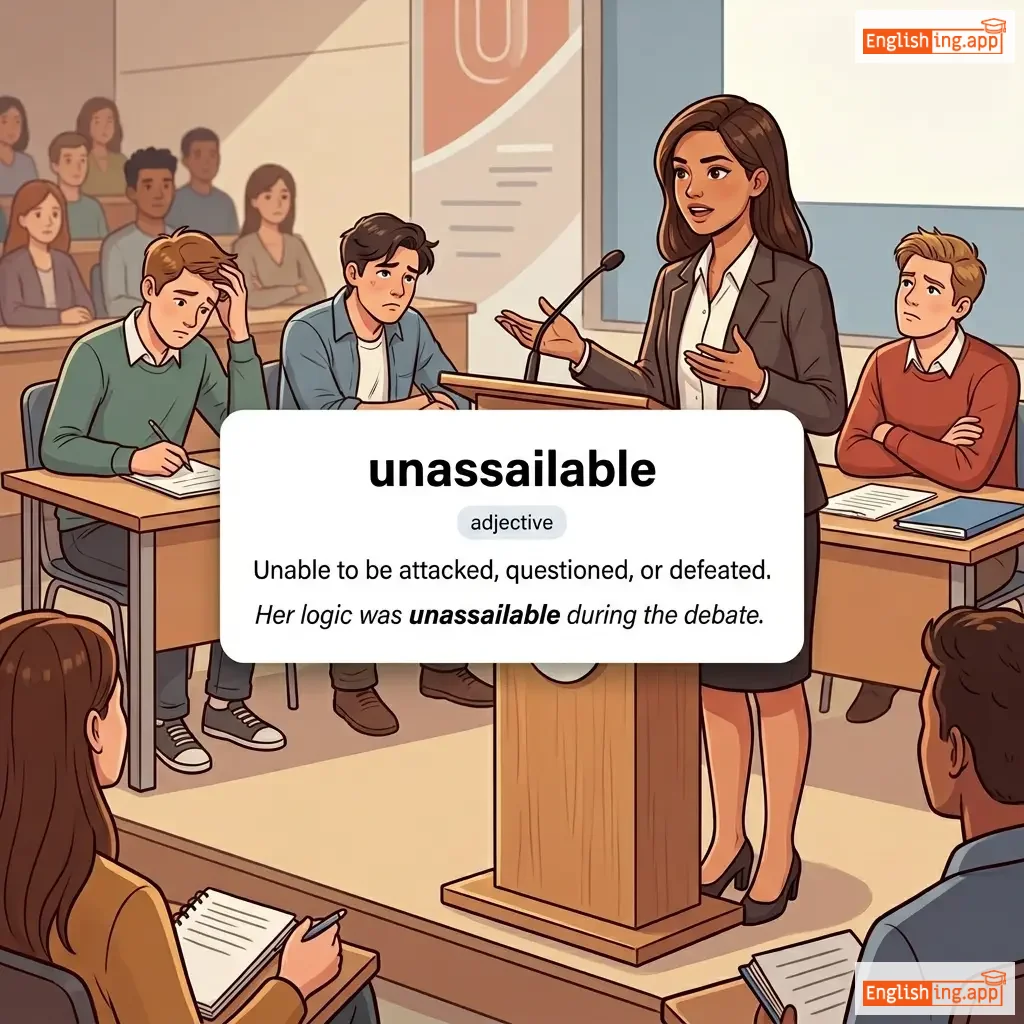
unassailable definition card — visual illustration of the meaning
adjective
/ˌʌnəˈseɪləbl/
अडिग (adig)

Unable to be attacked, questioned, or defeated.

"Her logic was unassailable during the debate."

"उसकी तर्कशक्ति बहस के दौरान अनअसेलेबल थी।" (Uski tarkshakti behas ke dauran anaselebl thi.)
adjective
/ˌʌnəˈsweɪdʒd/
अशांत (ashant)

Not made less intense or relieved; unrelieved.

"His grief remained unassuaged despite the passage of time."

"समय के बावजूद उसका दुख अशांत रहा।" (Samay ke baavjood uska dukh ashant raha.)
adjective
/ˌʌnəˈsjuːmɪŋ/
नम्र (namra)

Not pretentious or arrogant; modest.

"Despite his success, he remained unassuming and humble."

"उसकी सफलता के बावजूद, वह नम्र और विनम्र रहे।" (Uski safalta ke bawjood, vah namra aur vinamra rahe.)
adjective
/ˌʌnəˈʃʊəd/
अविश्वासपूर्ण (avishwaspoorn)

Lacking confidence or certainty.

"She gave an unassured answer during the interview."

"उसने साक्षात्कार में एक अविश्वासपूर्ण उत्तर दिया।" (Usne sakshatkar mein ek avishwaspoorn uttar diya.)
adjective
/ˌʌnəˈteɪnəbl/
अप्राप्य (aprapya)

impossible to achieve, reach, or accomplish

"For many, becoming a professional athlete remains an unattainable dream."

"कई लोगों के लिए, पेशेवर एथलीट बनना एक अप्राप्य सपना है।" (kai logon ke liye, peshevar athlete banna ek aprapya sapna hai.)
noun
/ˌʌnəˌveɪləˈbɪləti/
अनुपलब्धता (anuplabdhata)

The state of being not available or not accessible.

"The unavailability of the manager caused a delay in the project."

"प्रबंधक की अनुपलब्धता के कारण परियोजना में देरी हुई।" (prabandhak ki anuplabdhata ke karan pariyojna me deri hui)
adjective
/ˌʌnəˈveɪləbəl/
उपलब्ध नहीं (uplabdh nahin)

Not able to be obtained, reached, or used; not present or accessible.

"The manager was unavailable to take calls during the meeting."

"मैनेजर मीटिंग के दौरान कॉल्स लेने के लिए उपलब्ध नहीं थे।" (Manager meeting ke dauran calls lene ke liye uplabdh nahin the.)
adjective
/ˌʌnəˈvɔɪdəbl/
अपरिहार्य (apariharya)

Impossible to avoid or prevent.

"Delays were unavoidable due to heavy rain."

"भारी बारिश के कारण देरी अपरिहार्य थी।" (bhari barish ke karan deri apariharya thi.)
adjective
/ˌʌnəˈweər/
अविचार; अनजान; न जानने वाला (avichar; anjan; na jaanne waala)

not knowing or realizing; having no knowledge of something

"She was completely unaware of the danger."

"वह खतरे से पूरी तरह अनजान थी।" (vah khatre se puri tarah anjaan thi.)
adjective
/ʌnˈbæləns/
असंतुलित; अस्थिर; (asntulit; asthir)

not balanced; lacking stability or equilibrium; mentally unstable

"The unbalanced table kept wobbling."

"असंतुलित टेबल हिलती रही।" (asntulit tebil hilti rahi.)
adjective
/ʌnˈbeərəbl/
असहनीय (asahniya)

Too difficult or unpleasant to endure.

"The heat was unbearable in the afternoon."

"दोपहर में गर्मी असहनीय थी।" (dopahar mein garmi asahniya thi.)
adjective
/ʌnˈbiːtən/
अपराजित; न हारा हुआ; (aparajit; na hara hua;)

not defeated; having never lost; undefeated

"The team remains unbeaten this season."

"टीम इस सीज़न में अपराजित बनी हुई है।" (Teem is season mein aparajit bani hui hai.)
adjective
/ˌʌnbɪˈkʌmɪŋ/
अयोग्य (ayogya)

Not proper or appropriate for a person; unsuitable.

"His rude behavior was unbecoming of a leader."

"उसका अशिष्ट व्यवहार एक नेता के लिए अयोग्य था।" (uska ashisht vyavhaar ek neta ke liye ayogya tha.)
noun
/ˌʌnbɪˈliːf/
अविश्वास (avishwas)

A lack of belief, especially in religious faith.

"His heart was full of doubt and unbelief."

"उसका दिल संदेह और अविश्वास से भरा हुआ था।" (uska dil sandeh aur avishwas se bhara hua tha.)
adjective
/ˌʌnbɪˈliːvəbəl/
अविश्वसनीय (avishvasniya)

impossible to believe; extremely surprising or remarkable

"The magician's performance was absolutely unbelievable."

"जादूगर का प्रदर्शन बिल्कुल अविश्वसनीय था।" (jadugar ka pradarshan bilkul avishvasniya tha.)
adjective
/ˌʌnbɪˈliːvɪŋ/
अविश्वासी (avishwasi)

Not willing or able to believe; skeptical or doubtful

"She gave him an unbelieving look when he claimed to have met a celebrity."

"उसने उसे एक अविश्वासी नजर दी जब उसने दावा किया कि उसने किसी सेलिब्रिटी से मुलाकात की।" (Usne use ek avishwasi nazar di jab usne daava kiya ki usne kisi celebrity se mulaqat ki.)
adjective
/ʌnˈbaɪəst/
निरपक्ष (nirapaks)

Not showing prejudice; impartial and fair.

"The report gave an unbiased view of the situation."

"रिपोर्ट ने स्थिति का एक निरपक्ष दृष्टिकोण दिया।" (report ne sthiti ka ek nirapaks drishtikon diya.)
adjective
/ʌnˈblʌʃɪŋ/
निर्लज्ज; बेशर्म (nirlajj; besharm)

showing no shame or embarrassment; boldly shameless

"He told the unblushing lie without any hesitation."

"उसने बिना किसी झिझक के निर्लज्ज झूठ बोला।" (Usne bina kisi jhijhak ke nirlojj jhooth bola.)