वोकैबुलरीज

इंग्लिश वोकैबुलरी डिस्कवर, लर्न और मास्टर करें

noun
/læb/
प्रयोगशाला (prayogshala)

a place equipped for scientific experiments, research, or teaching

"The students conducted an experiment in the chemistry lab."

"छात्रों ने रसायन प्रयोगशाला में एक प्रयोग किया।" (Chhatron ne rasayan prayogshala mein ek prayog kiya.)
noun/verb
/ˈleɪ.bəl/
ख़ुशी (khushi)

a small piece of paper, fabric, or material attached to an object giving information about it; to attach such a tag or to describe someone or something in a particular way

"She labeled the boxes to make moving easier."

"वह पुरस्कार प्राप्त करते समय अपनी खुशी नहीं छिपा सकी।" (Woh puraskar prapt karte samay apni khushi nahi chhupa saki.)
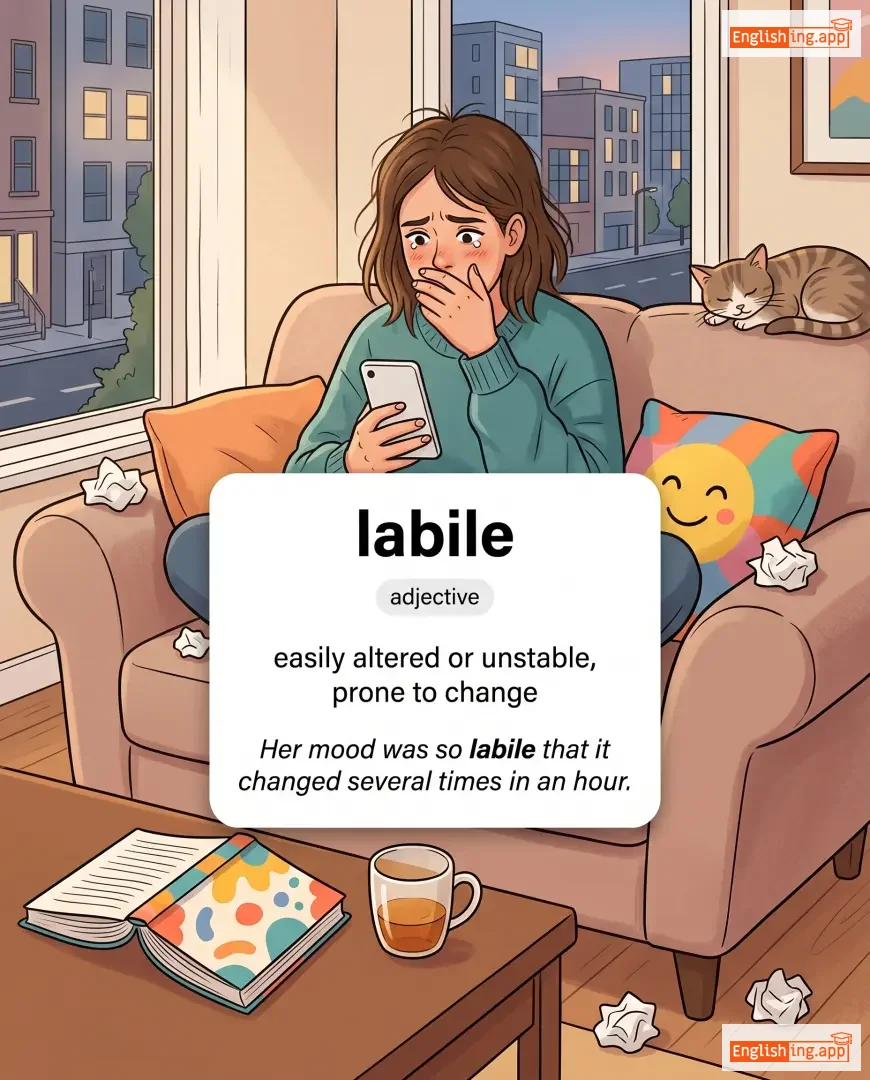
labile definition card — visual illustration of the meaning
adjective
/ˈleɪ.baɪl/ or /ˈlæb.aɪl/
अस्थिर (asthir)

easily altered or unstable; prone to change

"Her mood was so labile that it changed several times in an hour."

"उसका मूड इतना अस्थिर था कि एक घंटे में कई बार बदल गया।" (Uska mood itna asthir tha ki ek ghante mein kai baar badal gaya.)
noun/verb
/ˈleɪ.bər/
श्रम (shram)

work, especially hard physical work; to work hard

"The workers labored in the hot sun all day."

"मजदूरों ने पूरे दिन गर्मी में काम किया।" (Majdooron ne poore din garmi mein kaam kiya.)
laboratories definition card — visual illustration of the meaning
noun
ˈlæbrətɔːriz
प्रयोगशाला (prayogshala)

A room or building equipped for scientific experiments, research, or teaching, or for the manufacture of drugs or chemicals.

"Advanced laboratories enabled groundbreaking discoveries."

"एडवांस्ड प्रयोगशाला ने ग्राउंडब्रेकिंग डिस्कवरीज़ को सक्षम किया।" (Advaansd prayogshala ne ground-breaking discoveries ko saksham kiya.)
noun
/ˈlæbrətɔːri/
प्रयोगशाला (prayogshala)

A room or building equipped for scientific experiments, research, or teaching.

"The students conducted the experiment in the chemistry laboratory."

"छात्रों ने रसायन विज्ञान प्रयोगशाला में प्रयोग किया।" (Chhatron ne rasayan vigyan prayogshala mein prayog kiya.)
noun
/ləˈbɔːr.ə.tɔːr.i/
प्रयोगशाला (prayogshala)

a room or building equipped for scientific experiments, research, or teaching

"The scientists conducted their experiments in the well-equipped laboratory."

"वैज्ञानिकों ने अच्छे से सुसज्जित प्रयोगशाला में अपने प्रयोग किए।" (vaigyanikom ne achhe se susajjit prayogshala mein apne prayog kiye.)
adjective/verb
/ˈleɪ.bərd/
कष्टपूर्ण (kashtapurn)

done with great effort and difficulty; or past tense of labor

"He gave a labored explanation that confused the audience."

"उसने एक कष्टपूर्ण व्याख्या दी जो श्रोताओं को भ्रमित कर गई।" (Usne ek kashtapurn vyakhya di jo shrotahon ko bhramit kar gayi.)
noun
/ˈleɪbərər/
मज़दूर (mazdoor)

a person who does physical work, especially work that requires strength rather than skill

"The laborer worked long hours at the construction site."

"मज़दूर ने निर्माण स्थल पर लंबे समय तक काम किया।" (mazdoor ne nirman sthal par lambe samay tak kaam kiya)
adjective
/ləˈbɔːr.i.əs/
कष्टकारी (kashtkari)

requiring considerable effort and time; difficult and hard-working

"Writing the long report was a laborious task."

"लंबी रिपोर्ट लिखना एक कष्टकारी कार्य था।" (Lambi report likhna ek kashtkari kaary tha.)
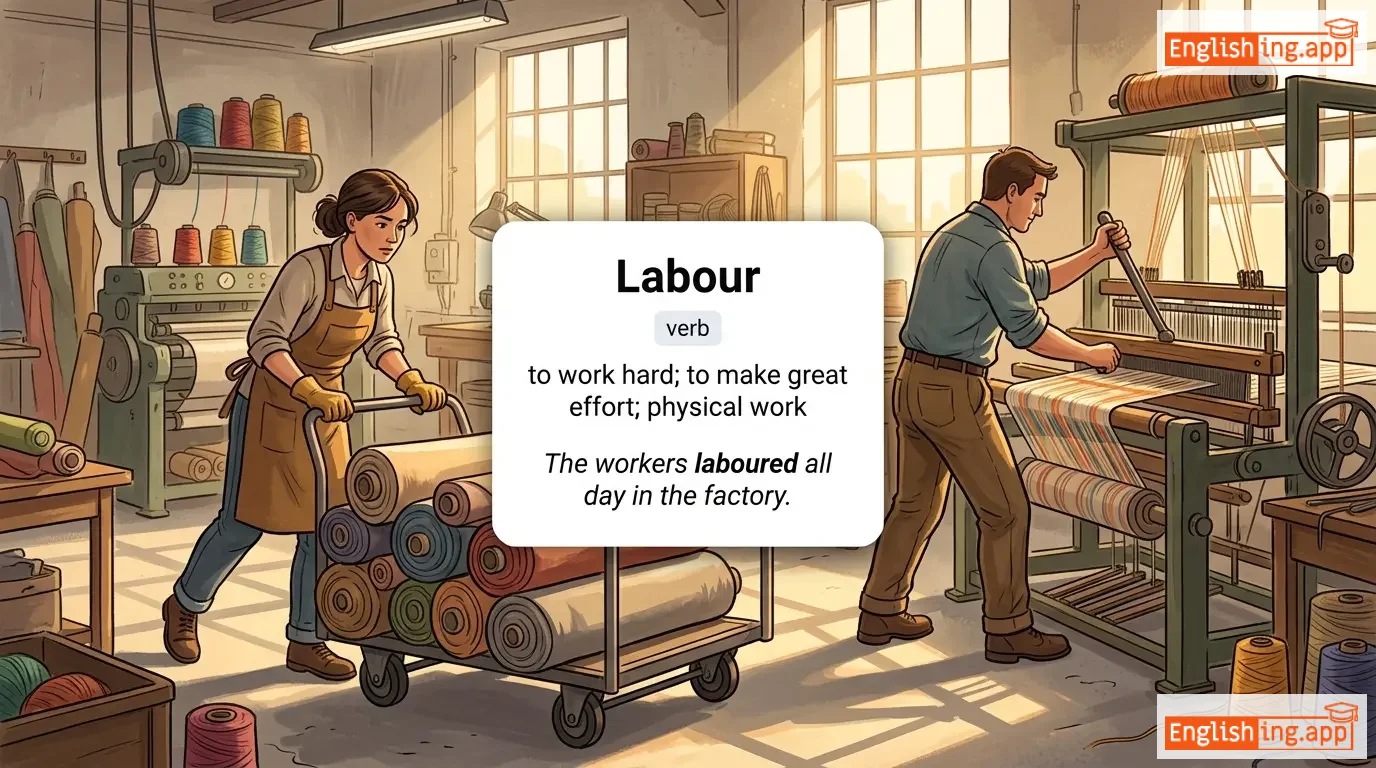
Labour definition card — visual illustration of the meaning
noun
/ˈleɪ.bər/
शारीरिक और मानसिक श्रम (sharirik aur mansik shram)

work involving physical or mental effort; workers as a group

"The construction required months of hard labour to complete."

"निर्माण कार्य को पूरा करने के लिए कई महीने का कठिन श्रम आवश्यक था।" (nirmaan kaarya ko poora karne ke liye kai mahine ka kathin shram avashyak tha.)
noun
/ˈleɪ.bər.ər/
मजदूर (mazdoor)

a person who does unskilled physical work for wages

"The labourer worked hard all day at the construction site."

"मजदूर ने पूरे दिन निर्माण स्थल पर कड़ी मेहनत की।" (mazdoor ne poore din nirmaan sthal par kathin mehnat ki)
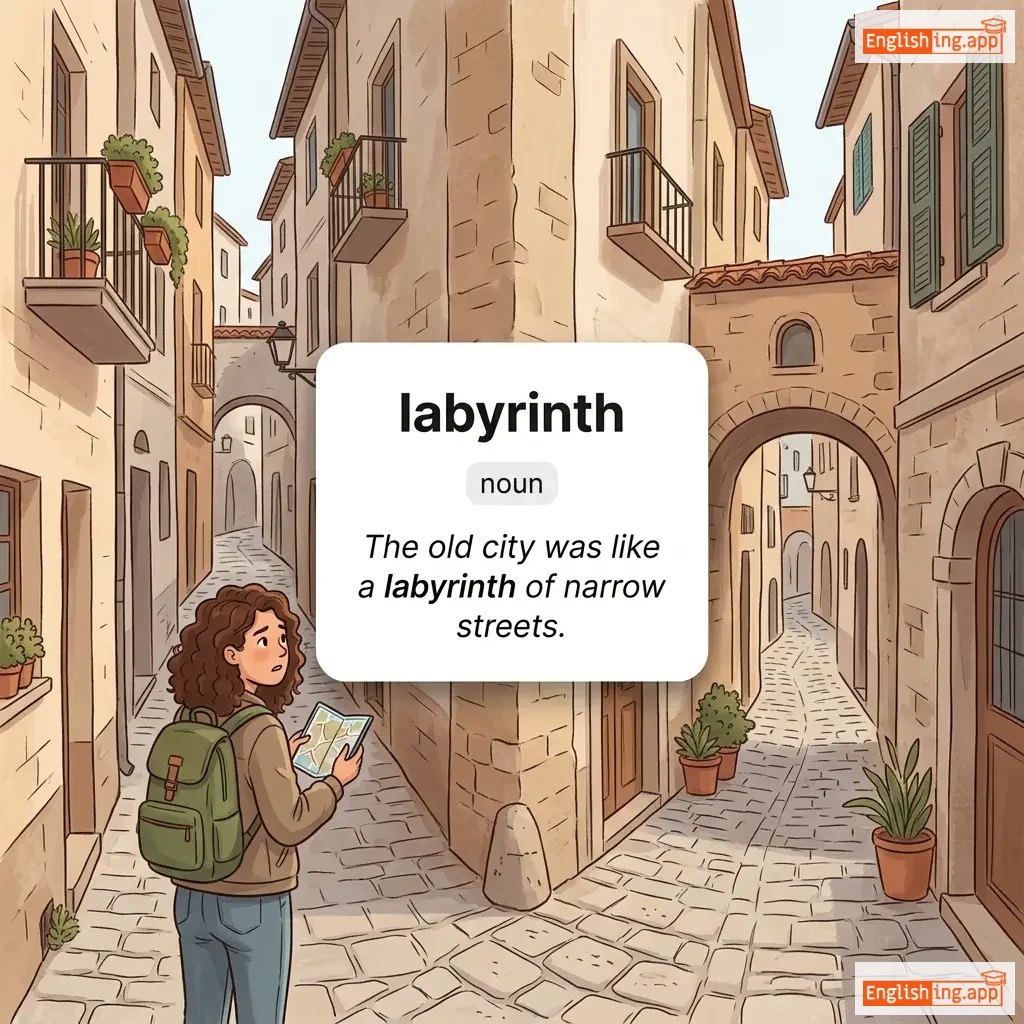
labyrinth definition card — visual illustration of the meaning
noun
/ˈlæb.ə.rɪnθ/
भूलभुलैया (bhoolbhulaiyaa)

a complex, confusing network of paths or passages; something very intricate or confusing

"The old city was like a labyrinth of narrow streets."

"पुरानी शहर जैसी संकरे रास्तों की भूलभुलैया थी।" (Purani shahar jaisi sankare raaston ki bhoolbhulaiyaa thi.)
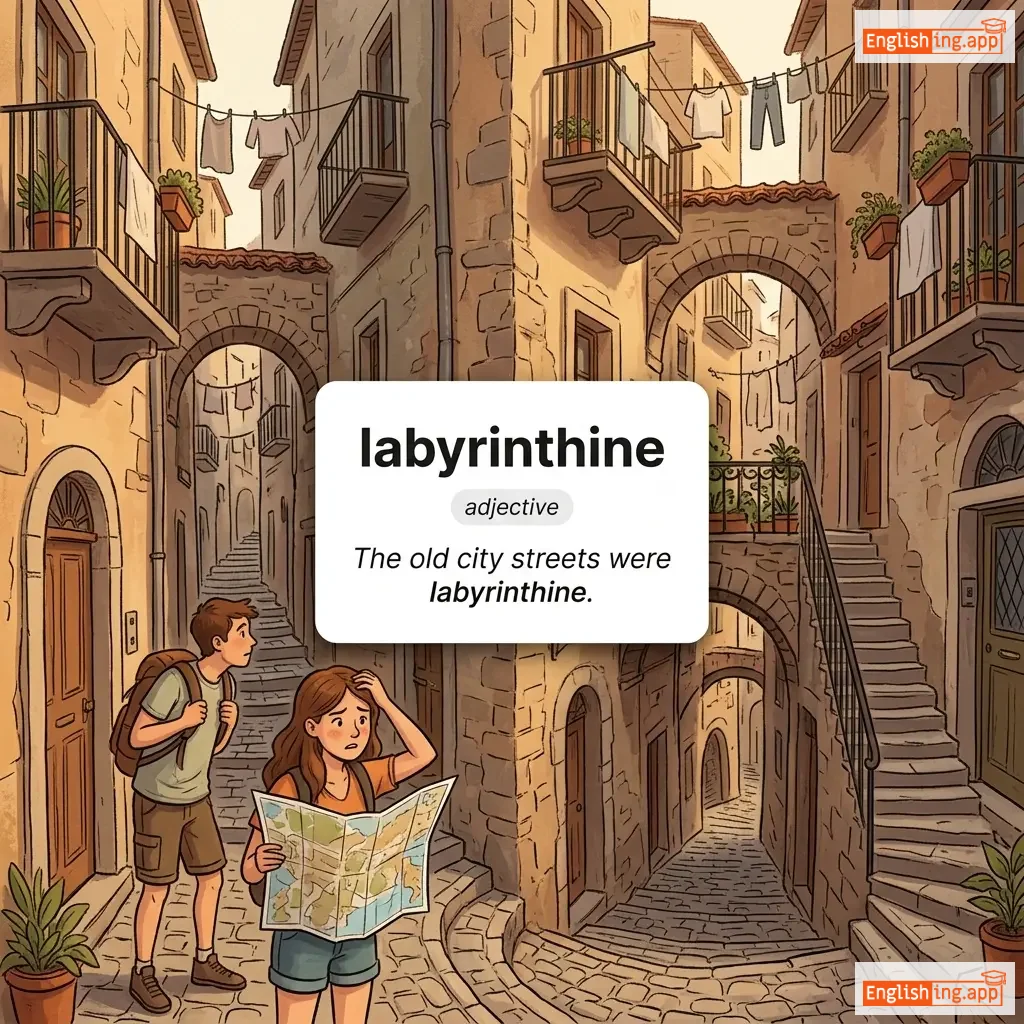
labyrinthine definition card — visual illustration of the meaning
adjective
ˌlæb.əˈrɪn.θaɪn
जटिल (jatil)

Like a labyrinth; complicated and confusing; having many interconnected paths or passages.

"The old city streets were labyrinthine."

"पुरानी शहर की गलियाँ भूलभुलैया जैसी थीं।" (Purani shahar ki galiyan bhoolbhulaiya jaisi thin.)
noun/verb
/leɪs/
फीता, लेस कपड़ा (fita, les kapda)

a delicate fabric made of threads; or to fasten or tie with a lace

"She laced up her shoes before leaving."

"वह अपने जूते पहनने से पहले लेस लगा रही थी।" (vah apne jute pehene se pehle les laga rahi thi.)
verb
/ˈlæs.ə.reɪt/
गहरे कट से घायल करना (gahare kat se ghaayal karna)

to tear or cut deeply in the skin or flesh

"The broken glass lacerated his hand."

"टूटे हुए कांच ने उसके हाथ को घायल कर दिया।" (Toote huye kaanch ne uske haath ko ghaayal kar diya.)
noun
/ˌlæs.əˈreɪ.ʃən/
कटाव (katav)

a deep cut or tear in skin or flesh

"He needed stitches for a laceration on his leg."

"उसे अपनी टांग पर कटाव के लिए टांके चाहिए थे।" (Use apni taang par katav ke liye taakhe chahiye the.)
adjective
/ˈlæk.rɪ.moʊs/
आंसू से भरा हुआ, शोकपूर्ण (aansoo se bhara hua, shokpoorn)

tearful or given to weeping; sad and mournful

"The movie's lachrymose ending left the audience in tears."

"फ़िल्म के शोकपूर्ण अंत ने दर्शकों को आँसुओं में डूबो दिया।" (Film ke shokpoorn ant ne darshako ko aansuon mein dooba diya.)
noun/verb
/læk/
कमी (kami)

The state of being without or not having enough of something.

"He failed the exam due to a lack of preparation."

"वह तैयारी की कमी के कारण परीक्षा में असफल हो गया।" (Wah taiyari ki kami ke karan pariksha mein asafal ho gaya.)
adjective
/ˌlækəˈdeɪzɪkəl/
उदासीन या आलसी (udaaseen ya aalsi)

lacking enthusiasm, energy, or determination; careless or lazy

"His lackadaisical attitude toward work annoyed his boss."

"उसका आलसी रवैया काम के प्रति उसके बॉस को परेशान करता था।" (Uska aalsi ravaiya kaam ke prati uske boss ko pareshan karta tha.)
noun
/ˈlæki/
चाकर (chakar)

a person who is overly willing to serve or obey someone else

"He treated his assistant like a mere lackey."

"उसने अपने सहायक के साथ एक मामूली चाकर की तरह व्यवहार किया।" (usne apne sahayak ke saath ek maamooli chakar ki tarah vyavhaar kiya.)
adjective
/ˈlækɪŋ/
कमी (kami)

not having enough of something; missing

"His report was lacking in detail."

"उसकी रिपोर्ट में विस्तार की कमी थी।" (Uski report mein vistar ki kami thi.)
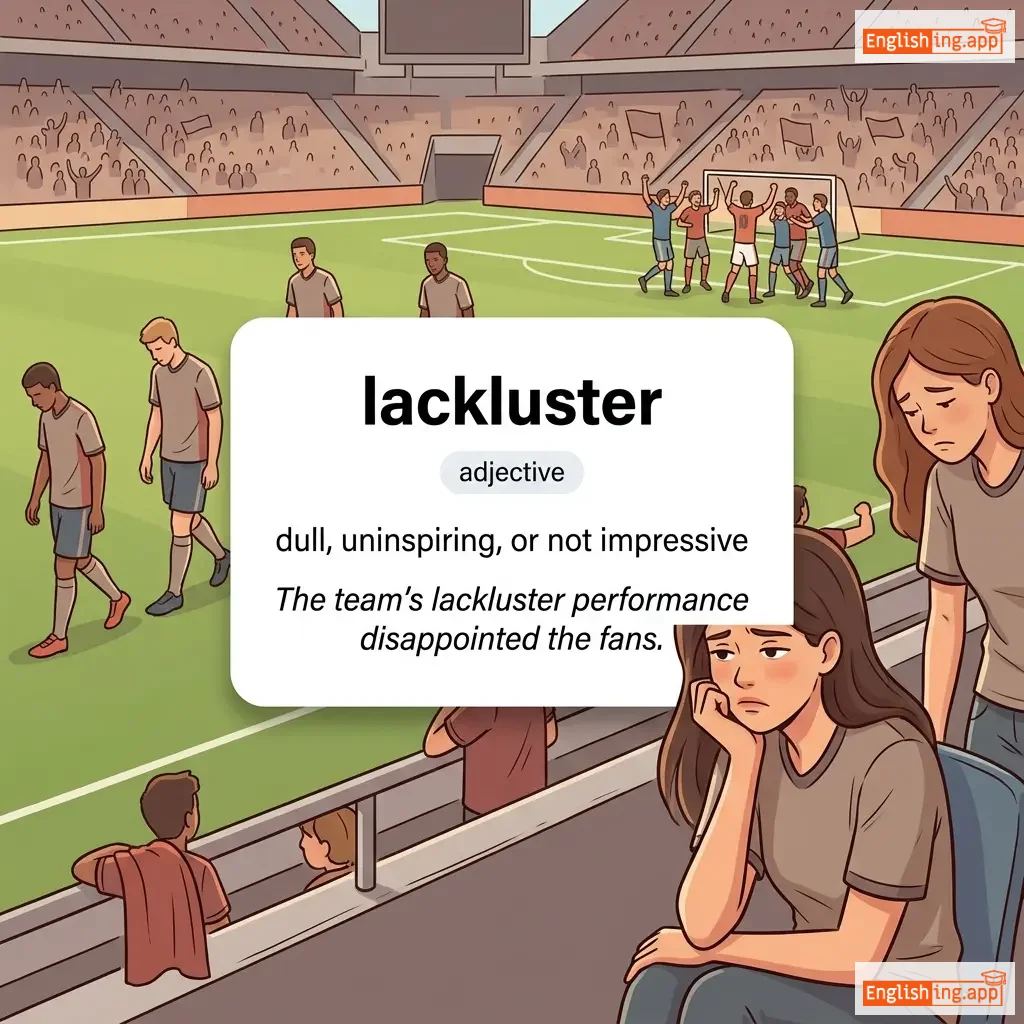
lackluster definition card — visual illustration of the meaning
adjective
/ˈlækˌlʌstər/
निरुत्साही या सामान्य (nirutsahi ya samanya)

dull, uninspiring, or not impressive

"The team's lackluster performance disappointed the fans."

"टीम का निरुत्साही प्रदर्शन प्रशंसकों को निराश कर गया।" (Team ka nirutsahi pradarshan prashansako ko nirash kar gaya.)
laconic definition card — visual illustration of the meaning
adjective
/ləˈkɒnɪk/
संक्षिप्त (sankshipt)

using very few words; concise to the point of seeming rude or mysterious

"His laconic reply ended the conversation quickly."

"उसका संक्षिप्त जवाब बातचीत को जल्दी समाप्त कर दिया।" (uska sankshipt jawab baatcheet ko jaldi samaapt kar diya.)
noun
/lækˈteɪʃən/
दूध उत्पादन (doodh utpadan)

the secretion of milk by the mammary glands of female mammals

"The doctor explained that lactation is a natural process after childbirth."

"डॉक्टर ने समझाया कि प्रसव के बाद दूध उत्पादन एक स्वाभाविक प्रक्रिया है।" (doktor ne samjhaya ki prasav ke baad doodh utpadan ek swabhavik prakriya hai.)
adjective
/ˈlæk.ti.əl/
दूध से संबंधित या दूध जैसा (doodh se sambandhit ya doodh jaisa)

Relating to or resembling milk; conveying chyle or milky fluid.

"The lacteal vessels in the small intestine absorb dietary fats."

"छोटे आंत में लैक्टियल वाहिकाएं आहार वसा अवशोषित करती हैं।" (chhote aant mein lacteal vahiikayein aahaar vasa avashoshit karti hain.)
adjective
/ˈlæk.tɪk/
दूध या लैक्टिक एसिड से संबंधित (dudh ya lactic acid se sambandhit)

Relating to milk or lactic acid.

"Intense exercise can lead to a buildup of lactic acid in the muscles."

"गहन व्यायाम से मांसपेशियों में लैक्टिक एसिड का जमाव हो सकता है।" (Gahan vyayam se maanspeshiyon mein lactic acid ka jamav ho sakta hai.)
noun
/læd/
लड़का (ladka)

a boy or young man; a male youth

"The young lad helped his father in the shop."

"उस युवा लड़के ने अपने पिता की दुकान में मदद की।" (us yuva ladke ne apne pita ki dukaan mein madad ki)
noun
/ˈlædər/
सीढ़ी (seedhi)

a structure with steps used for climbing up or down

"He used a ladder to reach the roof."

"उसने छत तक पहुँचने के लिए एक सीढ़ी का उपयोग किया।" (Usne chhat tak pahuchne ke liye ek seedhi ka upyog kiya.)
noun
/ˈlæd.i/
छोटा लड़का (chhota ladka)

A young boy or lad.

"The old man gave the young laddie a kind smile."

"वृद्ध आदमी ने छोटे लड़के को एक दयालु मुस्कान दी।" (Vriddh aadmi ne chhote ladke ko ek dayalu muskaan dee.)
noun, verb
/ˈleɪ.dl̩/
खुशी (khushi)

A large spoon for serving soup or liquids; to serve with such a spoon.

"She used a ladle to serve the hot soup into bowls."

"जब उसने पुरस्कार प्राप्त किया तो वह अपनी खुशी छिपा नहीं सकी।" (Jab usne puraskar prapt kiya to wah apni khushi chhupa nahi sakee.)
noun
/ˈleɪdi/
खुशी (khushi)

A polite or formal way of referring to a woman.

"The lady at the counter was very helpful."

"जब उसे पुरस्कार मिला, तो वह अपनी खुशी नहीं छुपा पाई।" (Jab use puraskar mila, to woh apni khushi nahin chhupa paayi.)
verb, noun
/læɡ/
धीमा होना या विलंब करना (dheema hona ya vilamb karna)

To fall behind in movement, progress, or development; a delay or period of falling behind.

"The old computer tends to lag when running new software."

"पुराना कंप्यूटर नया सॉफ़्टवेयर चलाते समय लैग करता है।" (Purana computer naya software chalate samay lag karta hai.)
noun
/ˈlæɡərd/
आलसी व्यक्ति (aalsi vyakti)

A person or thing that is slow or falls behind others.

"The company has been a laggard in adopting new technology."

"कंपनी नई तकनीक अपनाने में पिछड़ी हुई है।" (Company nayi takneek apnane mein pichhadi hui hai.)
noun
/ˈlænjæp/
अतिरिक्त उपहार (atirikt upohar)

A small gift or bonus given by a seller to a customer.

"The shopkeeper offered a piece of candy as a lagniappe."

"दुकानदार ने एक टॉफी एक अतिरिक्त उपहार के रूप में दी।" (Dukandar ne ek toffee ek atirikt upohar ke roop mein dee.)
noun
/ləˈɡuːn/
झील (jheel)

A shallow body of water separated from the sea by sandbars or reefs.

"We swam in the calm waters of the lagoon."

"हमने लैगून के शांत पानी में तैराकी की।" (Hamne lagoon ke shaant paani mein tairaki ki.)
laissez-faire definition card — visual illustration of the meaning
noun
/ˌlɛ.seɪˈfɛər/
न्यूनतम हस्तक्षेप नीति (nyoonatam hastakshep neeti)

A free-market policy of minimal government intervention in economic affairs, characterized by non-interventionism and capitalism.

"The country adopted a laissez-faire approach to economic policies."

"देश ने आर्थिक नीतियों में लेसे-फेयर दृष्टिकोण अपनाया।" (Desh ne arthik neetiyon mein lese-fair drishtikon apnaya.)
noun
/ˈleɪ.ɪ.ti/
धार्मिक सामान्य सदस्य (dharmik samanya sadasya)

Ordinary members of a religious community who are not clergy.

"The church welcomed the laity to participate in the event."

"गिरजाघर ने सामान्य सदस्यों को कार्यक्रम में भाग लेने के लिए स्वागत किया।" (Girjaghar ne samanya sadasyon ko karyakram mein bhag lene ke liye swagat kiya.)
noun
/leɪk/
झील (jheel)

A large area of water surrounded by land.

"They enjoyed boating on the lake during summer."

"वे गर्मी के दौरान झील पर नाव चलाने का आनंद ले रहे थे।" (ve garmi ke dauran jheel par naav chalane ka anand le rahe the.)
noun
/læm/
मेमना (memna)

a young sheep; meat from a young sheep

"The little lamb followed its mother everywhere."

"छोटा मेमना अपनी माँ के पीछे हर जगह गया।" (chhota memna apni maan ke peeche har jagah gaya)
verb
/læmˈbæst/
कड़ी आलोचना करना (kadi alochana karna)

To criticize harshly or to beat severely.

"The coach lambasted the team for their poor performance."

"कोच ने टीम की खराब प्रदर्शन के लिए उनकी कड़ी आलोचना की।" (Coach ne team ki kharab performance ke liye unki kadi alochana ki.)
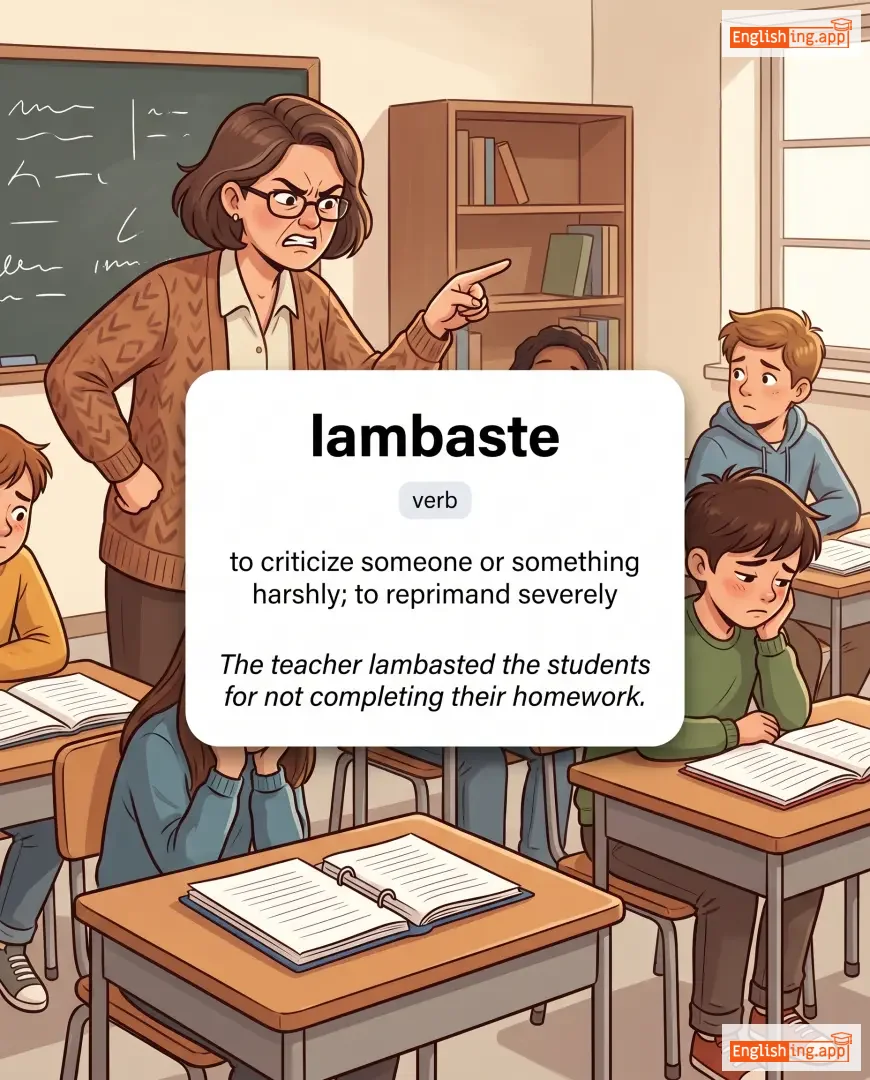
lambaste definition card — visual illustration of the meaning
verb
/læmˈbeɪst/
कड़ी आलोचना करना (kadi alochna karna)

to criticize someone or something harshly; to reprimand severely

"The teacher lambasted the students for not completing their homework."

"टीचर ने छात्रों को उनके होमवर्क न करने के लिए कड़ी आलोचना की।" (Teacher ne chatron ko unke homework na karne ke liye kadi alochna ki.)
adjective
/ˈlæmbənt/
मृदु प्रकाशमान (mridu prakaashmaan)

glowing or flickering softly; having a gentle radiance

"The lambent light of the candle filled the room with warmth."

"मोमबत्ती की मृदु प्रकाशमान रोशनी ने कमरे को गर्मी से भर दिया।" (Mombatti ki mridu prakaashmaan roshni ne kamre ko garmi se bhar diya.)
adjective
/leɪm/
लंगड़ा; बहरा; (langda; bahra)

unable to walk normally because of an injury or illness affecting the leg or foot; weak and unconvincing

"The injured horse was lame and couldn't walk properly."

"हादसे में घायल घोड़ा लंगड़ा था और ठीक से चल नहीं पा रहा था।" (Haadse mein ghaayal ghoda langda tha aur theek se chal nahi paa raha tha.)
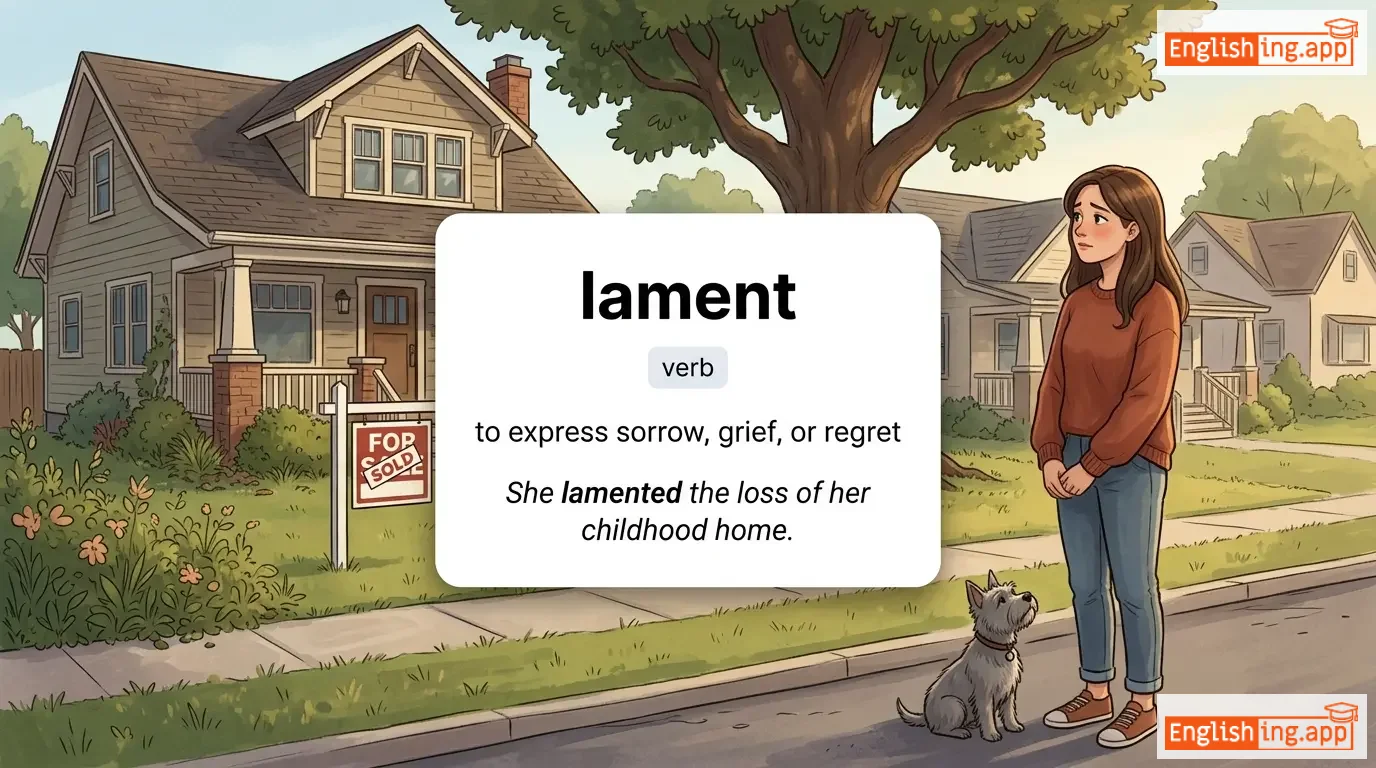
lament definition card — visual illustration of the meaning
verb
/ləˈmɛnt/
ग़मज़दा होना (gamhzada hona)

to express sorrow, grief, or regret

"She lamented the loss of her childhood home."

"वह अपने बचपन के घर की हानि पर शोक व्यक्त कर रही थी।" (Wah apne bachpan ke ghar ki hani par shok vyakt kar rahi thi.)
adjective
/ˈlæm.ən.tə.bəl/
दुर्भाग्यपूर्ण (durbhagyapurn)

deserving to be criticized or regretted; unfortunate

"The team’s lamentable performance disappointed their fans."

"टीम का दुर्भाग्यपूर्ण प्रदर्शन उनके प्रशंसकों को निराश कर गया।" (Team ka durbhagyapurn pradarshan unke prashansako ko nirash kar gaya.)
verb
/ˈlæmɪˌneɪt/
प्लास्टिक से ढकना (plastic se dhakna)

to cover or enclose something with a protective layer, usually plastic

"She laminated her important documents to protect them from damage."

"उसने अपने महत्वपूर्ण दस्तावेजों को नुकसान से बचाने के लिए प्लास्टिक से ढका।" (Usne apne mahatvapurn dastavejon ko nuksan se bachane ke liye plastic se dhaka.)
noun
/læmp/
सुख (sukh)

a device that produces light, often using electricity

"She turned on the lamp beside the bed."

"जब उसने पुरस्कार प्राप्त किया, तो वह अपनी खुशी छुपा नहीं पाई।" (Jab usne puraskaar prapt kiya, to vah apni khushi chhupa nahi paayi.)
verb
/læmˈpuːn/
हंसी उड़ाना (hansi udaana)

to publicly criticize or ridicule someone or something with humor, irony, or sarcasm

"The cartoonist lampooned the politician for his contradictory statements."

"कार्टूनिस्ट ने राजनेता को उनके विरोधाभासी बयानों के लिए लैम्पून किया।" (Cartoonist ne rajneeta ko unke virodhaabhaasi bayaanon ke liye lampoon kiya.)
noun
/læns/
भाला (bala)

a long weapon with a pointed tip used by knights or soldiers on horseback

"The knight lowered his lance before charging at the opponent."

"अधिकारिणी ने अपने प्रतिद्वंद्वी पर वार करने से पहले अपना भाला नीचे कर लिया।" (adhikaareeni ne apne pratidvandvi par vaar karne se pehle apna bala neeche kar liya.)