वोकैबुलरीज

इंग्लिश वोकैबुलरी डिस्कवर, लर्न और मास्टर करें

verb
/ˈwɒd.əl/
टकटकी के साथ चलना (takataki ke sath chalna)

to walk with short steps and a clumsy swaying motion, like a duck

"The duck waddled across the yard."

"बत्तख यार्ड के पार टकटकी के साथ चल रही थी।" (Battakh yard ke paar takataki ke saath chal rahi thi.)
verb
/weɪd/
पानी में चलना (pani mein chalna)

to walk through water or another substance that impedes movement

"The children waded in the shallow river."

"बच्चे उथले नदी में चल रहे थे।" (Bacche uthale nadi mein chal rahe the.)
noun/verb
/ˈwɒf.əl/
वाफल (खाना), अस्पष्ट रूप से बोलना (waffle (khana), aspasht roop se bolna)

as noun: a crisp cake with a pattern of deep squares; as verb: to speak or write vaguely without making a clear decision

"He kept waffling instead of making a decision."

"वह निर्णय लेने के बजाय वाफल कर रहा था।" (Vah nirnay lene ke bajaye waffle kar raha tha.)
verb
/wɑːft/
हवा में उड़ना (hawa mein udna)

to move gently through the air, carried by a breeze

"The smell of fresh bread wafted through the kitchen."

"ताजे ब्रेड की महक रसोई से उड़कर आई।" (Taje bread ki mehak rasoi se udkar aayi.)
verb
/wæɡ/
हिलाना (hilana)

to move or cause to move rapidly from side to side

"The dog wagged its tail happily."

"कुत्ता खुश होकर अपनी पूंछ हिला रहा था।" (Kutta khush hokar apni poonch hilā rahā thā.)
noun/verb
/weɪdʒ/
वेतन (wage)

payment for work or services, usually on a daily or weekly basis; also to engage in or carry on (a war, campaign, or struggle)

"The workers demanded a fair wage for their labor."

"कर्मचारियों ने अपने श्रम के लिए उचित वेतन की मांग की।" (karmachariyon ne apne shram ke liye uchit vetan ki maang ki)
adjective
/ˈwæɡ.ɪʃ/
चंचल या शरारती (chanchal ya shararati)

playfully humorous or mischievous

"His waggish remarks made everyone laugh."

"उसकी चंचल टिप्पणी ने सभी को हंसी में डाल दिया।" (uski chanchal tippani ne sabhi ko hansi mein dal diya.)
noun
/ˈwæɡən/
वागन (wagon)

a vehicle with four wheels used for carrying loads, often pulled by horses or a motor vehicle used for transporting goods or people

"The farmer loaded hay onto the wagon."

"किसान ने घास को वागन में लादा।" (Kisaan ne ghaas ko wagon mein laada.)
noun
/weɪf/
भिखारी बच्चा (bhikhari bachcha)

a homeless, neglected, or abandoned person, often a child

"The young waif wandered the streets in search of food."

"युवक भिखारी बच्चा खाने की तलाश में सड़कों पर भटक रहा था।" (yuvak bhikhari bachcha khane ki talash mein sadkon par bhatak raha tha.)
noun
/weɪl/
चिल्लाना; शोक करना (wail)

a prolonged cry of pain, grief, or anger; to cry loudly

"The child's wail could be heard throughout the house."

"बच्चे की चीख पूरे घर में सुनी जा सकती थी।" (bachche ki cheekh poore ghar mein suni ja sakti thi.)
noun
/weɪst/
कमर (kamar)

the part of the human body between the ribs and the hips

"He tied a belt around his waist."

"उसने अपनी कमर के चारों ओर एक बेल्ट बांधी।" (Usne apni kamar ke charon or ek belt bandhi.)
noun
/weɪst tʃeɪn/
कटी बंधन (kati bandhan)

a decorative chain worn around the waist as jewelry or ornamentation

"The traditional waist chain complemented her ethnic outfit perfectly."

"परंपरागत कटी बंधन ने उसके पारंपरिक परिधान को पूरी तरह से पूरा किया।" (parampraagat kati bandhan ne uske paramparik paridhan ko poori tarah se poora kiya.)
noun
/ˈweɪs(t).koʊt/
वेस्टकोट (westkot)

a sleeveless garment worn over a shirt and under a jacket

"He wore a black waistcoat with his suit."

"उसने अपनी सूट के साथ एक काला वेस्कोट पहना था।" (usne apni suit ke saath ek kaala westkot pehna tha.)
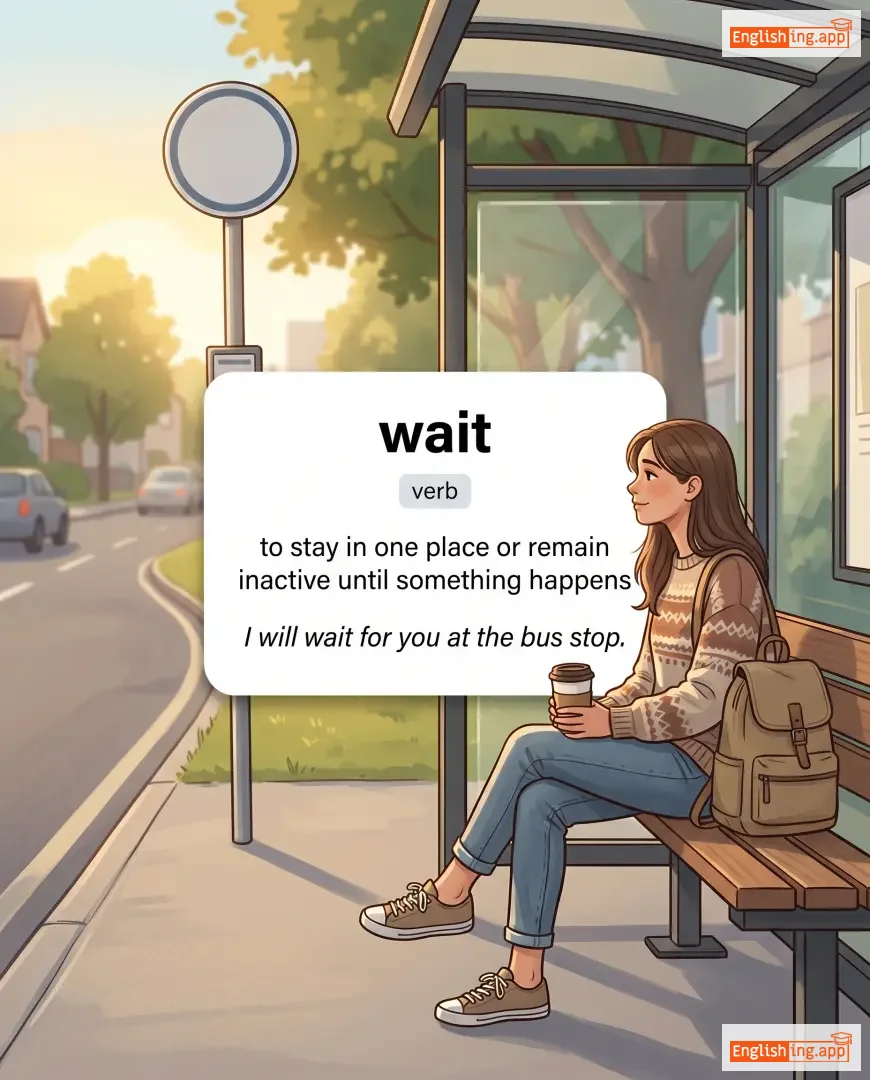
wait definition card — visual illustration of the meaning
verb
/weɪt/
इंतजार करना (intezar karna)

to stay in one place or remain inactive until something happens

"I will wait for you at the bus stop."

"मैं बस स्टॉप पर तुम्हारा इंतजार करूंगा।" (Main bas stop par tumhara intezar karunga.)
noun
/ˈweɪtər/
वेटर (vetar)

a person whose job is to serve food and drinks to customers in a restaurant or café

"The waiter brought the menu and took our order politely."

"वेटर विनम्रता से मेनू लाया और ऑर्डर लिया।" (vetar vinamrata se menu laya aur order liya)
noun
/ˈweɪtrəs/
वेट्रेस (waitress)

a woman who serves food and drinks to customers in a restaurant or café

"The waitress took our order with a friendly smile."

"वेट्रेस ने मुस्कान के साथ हमारा ऑर्डर लिया।" (waitress ne muskan ke saath hamara order liya)
verb
/weɪv/
सुख (sukh)

to refrain from insisting on or enforcing something, especially a right or claim

"She decided to waive her right to a lawyer."

"जब उसने पुरस्कार प्राप्त किया, तो वह अपनी खुशी नहीं छिपा सकी।" (jab usne puraskaar praapt kiya, to vah apni khushi nahin chhupa sakee.)
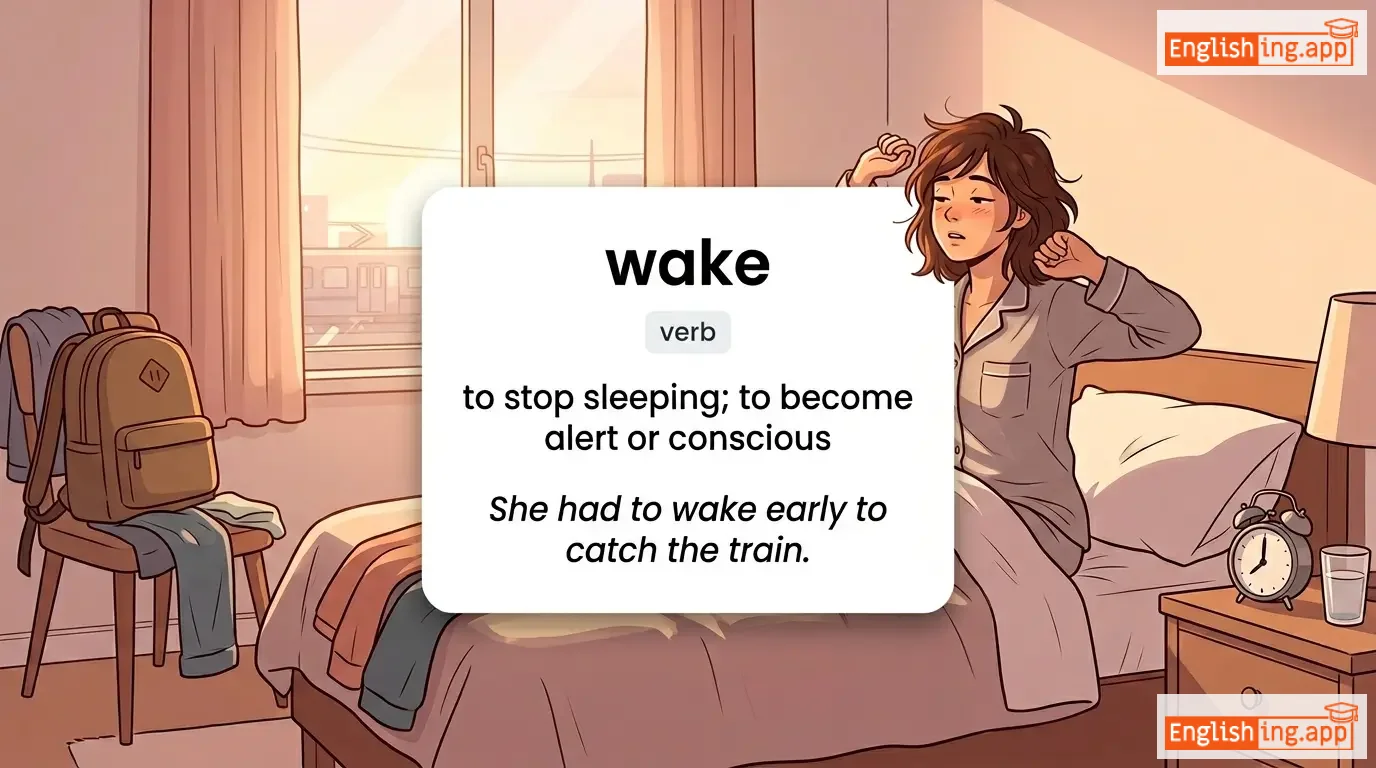
wake definition card — visual illustration of the meaning
verb
/weɪk/
खुशी (khushi)

to stop sleeping; to become alert or conscious

"She had to wake early to catch the train."

"जब उसने पुरस्कार प्राप्त किया, तो वह अपनी खुशी को छिपा नहीं सकी।" (Jab usne puraskaar praapt kiya, to woh apni khushi ko chhupa nahi sakee.)
adjective
/ˈweɪ.kɪŋ/
जाग्रत; सचेत (jagrat; sachet)

awake and conscious; relating to the time when one is awake

"She spent her waking hours studying for the exam."

"उसने अपनी जागृत घड़ियाँ परीक्षा के लिए अध्ययन करते हुए बिताईं।" (usne apni jagrit ghadiyan pariksha ke liye adhyayan karte hue bitaayi.)
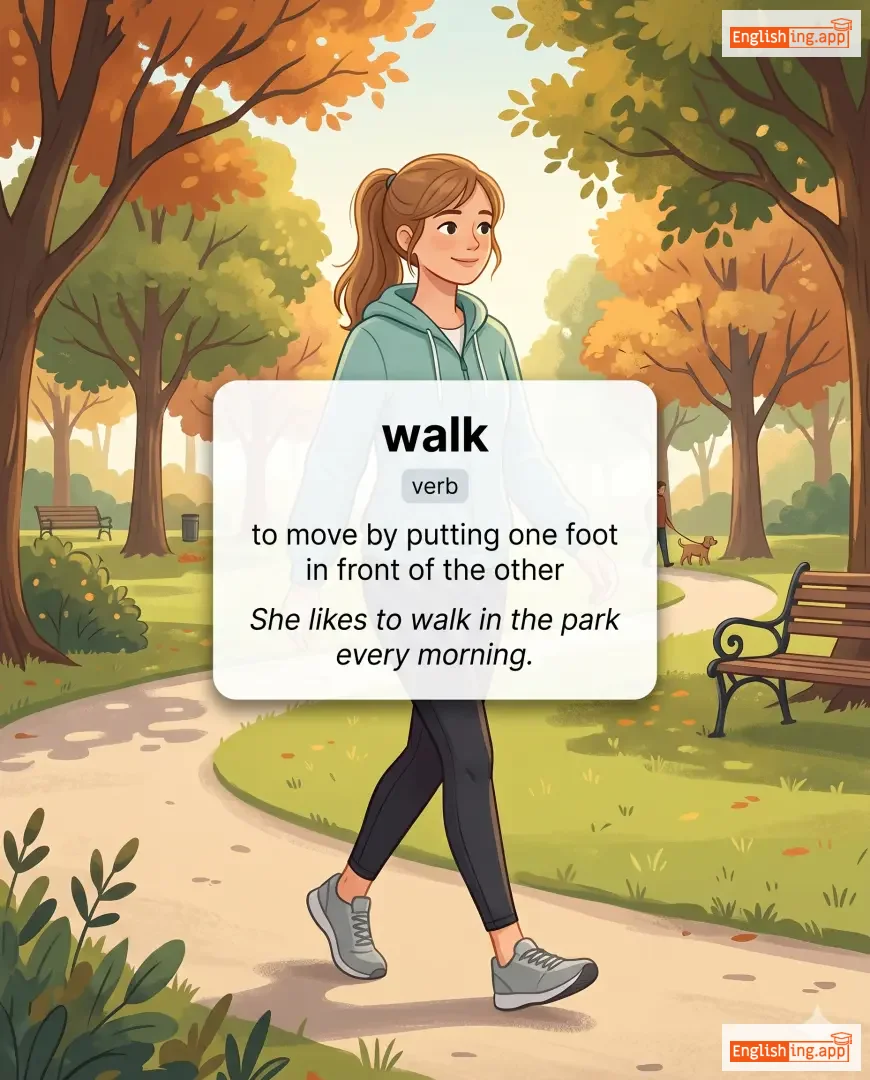
walk definition card — visual illustration of the meaning
verb
/wɔːk/
चलना (chalna)

to move by putting one foot in front of the other

"She likes to walk in the park every morning."

"वह हर सुबह पार्क में चलना पसंद करती है।" (Wah har subah park mein chalna pasand karti hai.)
noun
/ˈwɔːkɪŋ/
चलना (chalna)

the activity of moving on foot at a moderate pace

"Walking every morning is good for your health."

"हर सुबह चलना आपके स्वास्थ्य के लिए अच्छा है।" (Har subah chalna aapke swasthya ke liye accha hai.)
noun
/ˈwɔːkɪŋ fɪʃ/
वॉकिंग फिश (woking fish)

a fish that can move on land using its fins and breathe air for extended periods

"The walking-fish can travel across dry land to find new water sources."

"वॉकिंग फिश नए पानी के स्रोत खोजने के लिए सूखी ज़मीन पर यात्रा कर सकती है।" (woking fish naye paani ke srot khojne ke liye sukhi zameen par yatra kar sakti hai)
noun
/wɔːl/
दीवार (deewaar)

a vertical structure that encloses or divides an area

"The wall in our living room is painted blue."

"हमारे लिविंग रूम की दीवार नीले रंग से रंगी हुई है।" (Hamare living room ki deewaar neele rang se rangi hui hai.)
noun
/ˈwɒlɪt/
पर्स (pers)

a small folding case for carrying money, credit cards, and identification

"He pulled out his wallet to pay for the coffee."

"उसने कॉफ़ी के लिए पैसे देने के लिए अपना पर्स निकाला।" (usne coffee ke liye paise dene ke liye apna pers nikaala.)
verb
/ˈwɒloʊ/
घूमना, सॉरी महसूस करना (ghoomna, sorry mehsoos karna)

to roll about or indulge oneself in something excessively

"The buffalo likes to wallow in the mud on hot days."

"भैंस को गर्मी में कीचड़ में घूमना पसंद है।" (Bhains ko garmi mein keechar mein ghoomna pasand hai.)
noun
/ˈwɔːl.nʌt/
अखरोट (akhroot)

an edible nut with a hard shell and a wrinkled appearance

"I love to eat walnuts with honey for breakfast."

"मैं नाश्ते में शहद के साथ अखरोट खाना पसंद करता हूँ।" (main nashtay mein shahad ke saath akhroot khana pasand karta hoon)
noun
/ˈwɑːmpəm/
शंख की माला (shankh ki mala)

beads made by Native Americans from shells, used as money or decoration

"The tribe traded furs for wampum."

"कबीले ने फरों के बदले वाम्पम का व्यापार किया।" (Kabile ne faron ke badle wampam ka vyapar kiya.)
adjective
/wɒn/
पीला (peela)

looking pale or sickly; lacking color or vitality

"After the long illness, his face looked wan and tired."

"लंबी बीमारी के बाद, उसका चेहरा पीला और थका हुआ लग रहा था।" (Lambi bimari ke baad, uska chehra peela aur thaka hua lag raha tha.)
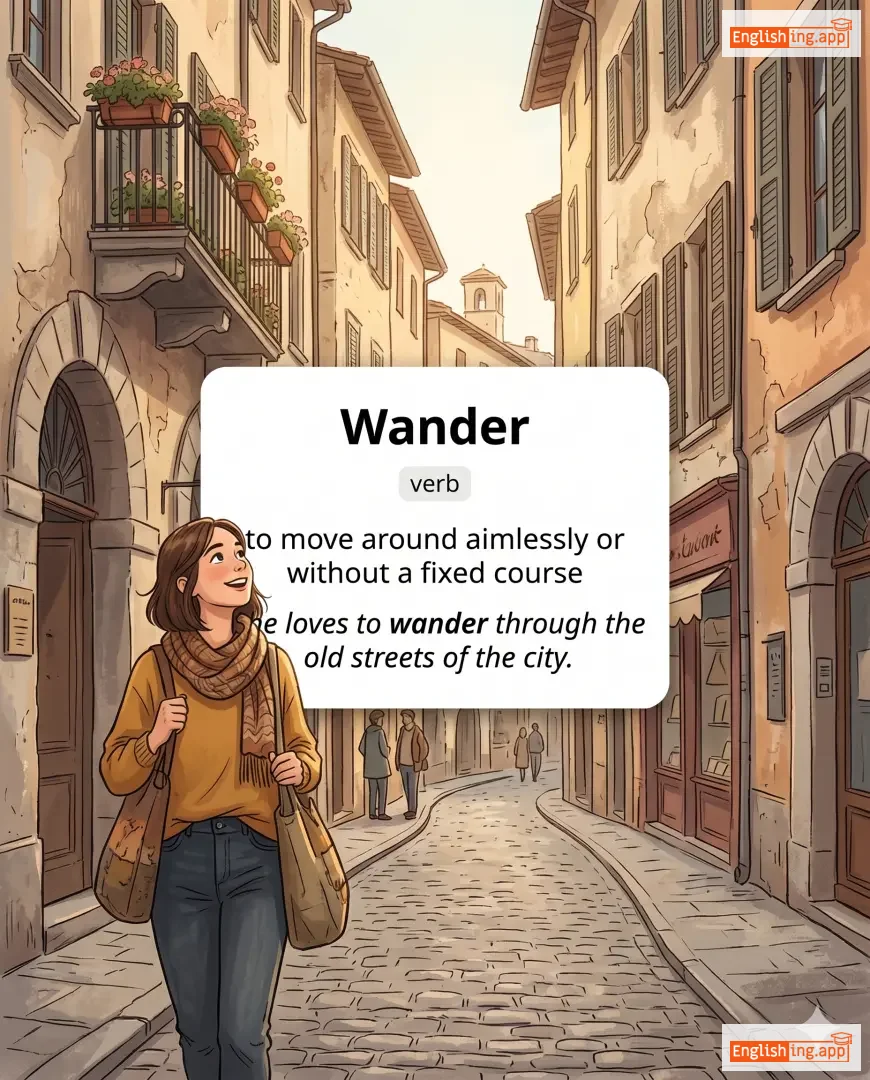
Wander definition card — visual illustration of the meaning
verb
/ˈwɒndər/
घूमना (ghoomna)

to move around aimlessly or without a fixed course

"She loves to wander through the old streets of the city."

"वह शहर की पुरानी सड़कों पर घूमना पसंद करती है।" (Woh shehar ki purani sadkon par ghoomna pasand karti hai.)
noun
/ˈwɒndərər/
यात्री; जो बिना किसी निश्चित गंतव्य के यात्रा करता है (wanderer)

a person who travels aimlessly; someone who roams from place to place

"The wanderer explored different countries without a fixed destination."

"यात्री ने बिना किसी निश्चित गंतव्य के विभिन्न देशों का अन्वेषण किया।" (yatri ne bina kisi nirdisht gantavya ke bibhinna deshon ka anvexhan kiya.)
noun
/ˈwɒndərlʌst/
यात्रा प्रेम (yatra prem)

A strong desire to travel and explore the world.

"Her wanderlust took her to every corner of the globe."

"उसका यात्रा प्रेम उसे दुनिया के हर कोने में ले गया।" (uska yatra prem use duniya ke har kone mein le gaya.)
verb
/weɪn/
कम होना (kam hona)

To decrease gradually in power, intensity, or size.

"The moon wanes after the full moon night."

"पूर्णिमा की रात के बाद चाँद कम हो जाता है।" (poornima ki raat ke baad chand kam ho jata hai.)
verb
/ˈwaŋɡl/
चालाकी से कुछ हासिल करना (chalaki se kuch hasil karna)

To achieve something by clever or sometimes dishonest persuasion or trickery.

"He wangled a free ticket to the concert."

"उसने चतुराई से एक मुफ्त कंसर्ट टिकट प्राप्त किया।" (usne chaturai se ek muft concert ticket prapt kiya.)
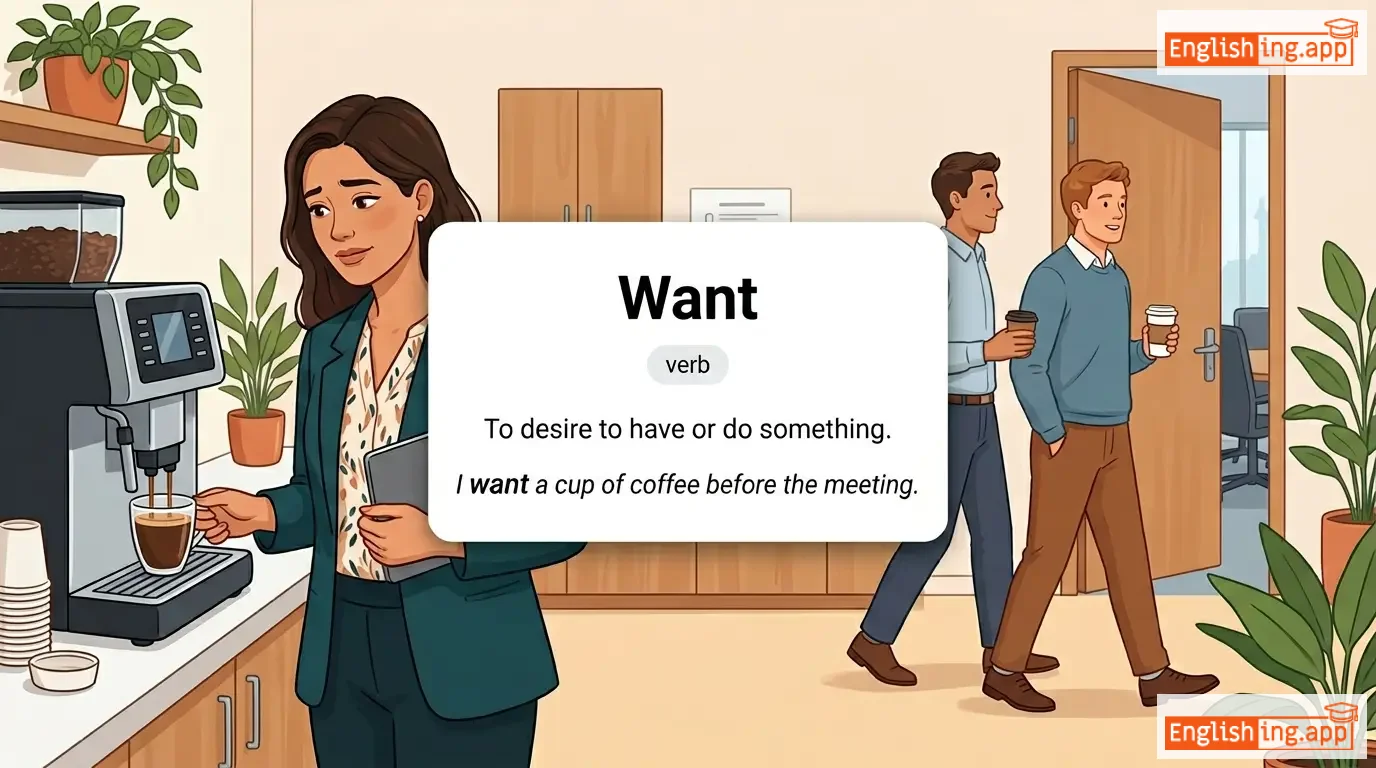
Want definition card — visual illustration of the meaning
verb
/wɒnt/
चाहना (chahna)

To desire to have or do something.

"I want a cup of coffee before the meeting."

"मैं मीटिंग से पहले एक कप कॉफी चाहता हूँ।" (main meeting se pehle ek kap coffee chahta hoon.)
adjective
/ˈwɒntɪŋ/
अपूर्ण (apurn)

Lacking or deficient in quality or quantity.

"His explanation was wanting in clarity."

"उसकी व्याख्या स्पष्टता में कमी थी।" (uski vyakhya spashthata mein kami thi.)
adjective
/ˈwɒntən/
अनावश्यक क्रूरता (anavashyak krurta)

Deliberate and unprovoked; reckless or cruel.

"The soldiers were accused of wanton destruction."

"सैनिकों पर अनावश्यक विनाश का आरोप लगाया गया था।" (Sainikon par anavashyak vinash ka aarop lagaya gaya tha.)
noun
/ˈwɒntənnəs/
निरपराध क्रूरता (nirapraadh kroorata)

The quality of being reckless, cruel, or deliberately malicious.

"His wantonness shocked everyone at the gathering."

"उसकी निरपराध क्रूरता ने सभी को चौंका दिया।" (Uski nirapraadh kroorata ne sabhi ko chonka diya.)
noun
/wɔːr/
युद्ध (yudh)

a state of conflict between different countries or groups

"The war caused great suffering to the people."

"युद्ध ने लोगों को बड़ी कठिनाई में डाल दिया।" (Yudh ne logon ko badi kathinai mein dal diya.)
verb
/ˈwɔːbəl/
मधुर आवाज़ में गाना या सीटी बजाना (madhur awaz mein gana ya seeti bajana)

To sing or whistle with a quavering voice or with trills.

"The bird warbled a sweet tune in the morning."

"पक्षी ने सुबह एक मधुर धुन गाई।" (Pakshi ne subah ek madhur dhun gai.)
noun
/wɔːrd/
वॉर्ड (ward)

A separate room in a hospital for patients; also a division of a city or a person under guardianship.

"She was admitted to the children's ward."

"उसे बच्चों के वॉर्ड में भर्ती किया गया था।" (Use bachon ke ward mein bharti kiya gaya tha.)
noun
/ˈwɔːdrəʊb/
आलमारी (almari)

A large cupboard where clothes are stored; also the collection of clothes someone owns.

"Her wardrobe is full of colorful dresses."

"उसका आलमारी रंग-बिरंगे कपड़ों से भरा हुआ है।" (Uska almari rang-birange kapdon se bhara hua hai.)
noun
/ˈweə(r)haʊs/
गोदाम (godam)

a large building where goods are stored before being sold or distributed

"The company stores all its products in a big warehouse."

"कंपनी अपने सभी उत्पादों को एक बड़े गोदाम में संग्रहीत करती है।" (Company apne sabhi utpadon ko ek bade godam mein sangrahit karti hai.)
noun
/ˈwɔːfeə/
युद्ध (yuddh)

engagement in or the activities involved in war

"The country prepared for the possibility of total warfare."

"देश ने पूर्ण युद्ध की संभावना के लिए तैयारी की।" (Desh ne poorn yuddh ki sambhavana ke liye taiyari ki.)
adjective
/ˈwɔːrˌlaɪk/
युद्धप्रिय (yuddhpriya)

Having an aggressive or militant nature; inclined to fight or engage in war.

"The tribe was known for its warlike traditions."

"जनजाति अपनी युद्धप्रिय परंपराओं के लिए जानी जाती थी।" (Janjati apni yuddhpriya paramparao ke liye jani jati thi.)
adjective
/wɔːrm/
गर्म (garm)

having a moderate degree of heat

"The warm sunlight made the room feel cozy."

"गर्म धूप ने कमरे को आरामदायक बना दिया।" (Garm dhoop ne kamre ko aaramdayak bana diya.)
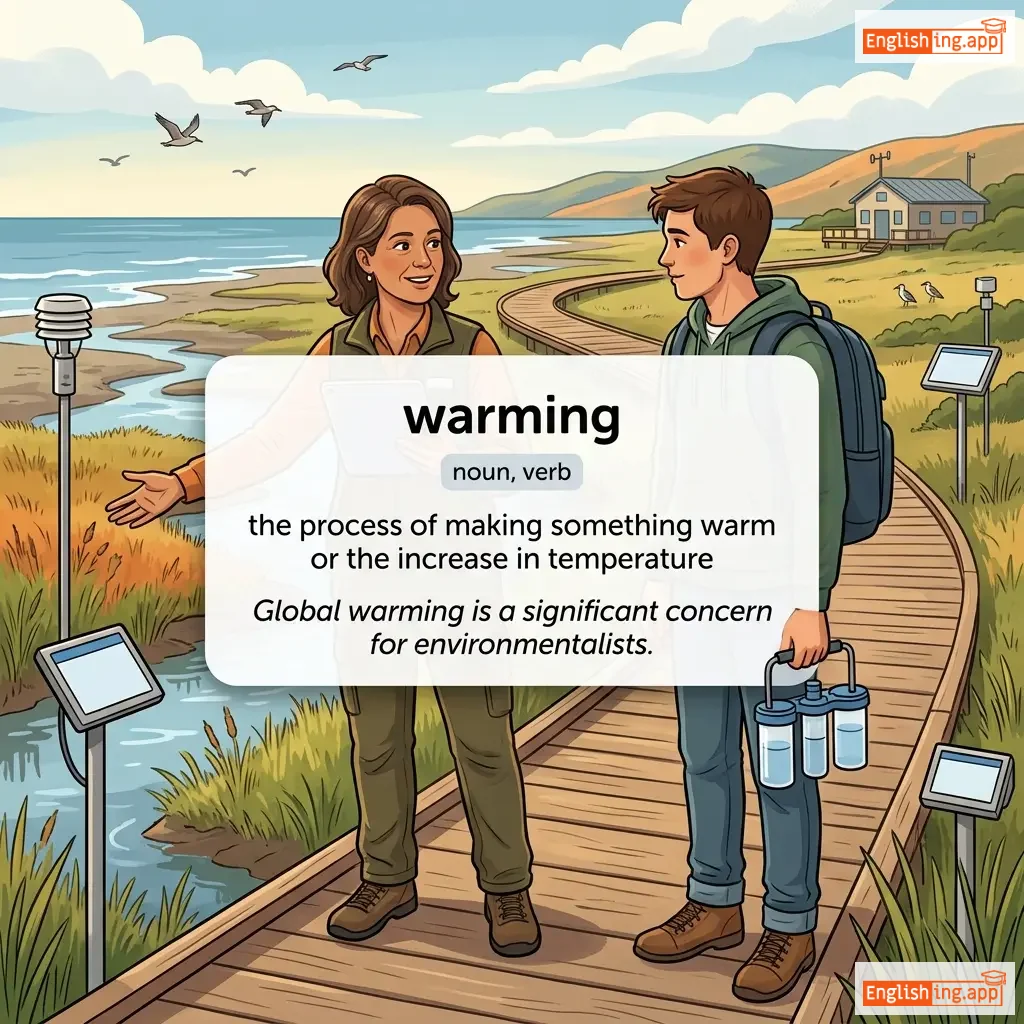
warming definition card — visual illustration of the meaning
noun, verb
/ˈwɔːmɪŋ/
तापमान वृद्धि (taapmaan vruddhi)

the process of making something warm or the increase in temperature

"Global warming is a significant concern for environmentalists."

"ग्लोबल वॉर्मिंग पर्यावरणविदों के लिए एक महत्वपूर्ण चिंता है।" (Global warming paryavaranvidon ke liye ek mahatvapurn chinta hai.)
adverb
/ˈwɔːm.li/
गर्म तरीके से; स्नेहपूर्वक; दिल से; (garm tareeke se; snehpoorvak; dil se;)

in a warm manner; with warmth; cordially; affectionately

"She welcomed the guests warmly at the door."

"उसने दरवाजे पर मेहमानों का गर्मजोशी से स्वागत किया।" (Usne darwaje par mehmanon ka garmjoshi se swagat kiya.)
noun
/ˈwɔːrˌmʌŋɡər/
युद्ध प्रचारक (yudh pracharak)

A person who advocates or promotes war or conflict.

"The leader was criticized as a warmonger by his opponents."

"नेता को उनके विरोधियों ने युद्ध प्रचारक के रूप में आलोचना की थी।" (Neta ko unke virodhiyon ne yudh pracharak ke roop mein alochna ki thi.)
noun
/wɔːmθ/
गर्माहट (garmāhat)

the quality or state of being warm in temperature or feeling

"She felt the warmth of the sun on her face."

"उसे सूरज की गर्मी अपने चेहरे पर महसूस हुई।" (Use sooraj ki garmī apne chehre par mehsoos hui.)
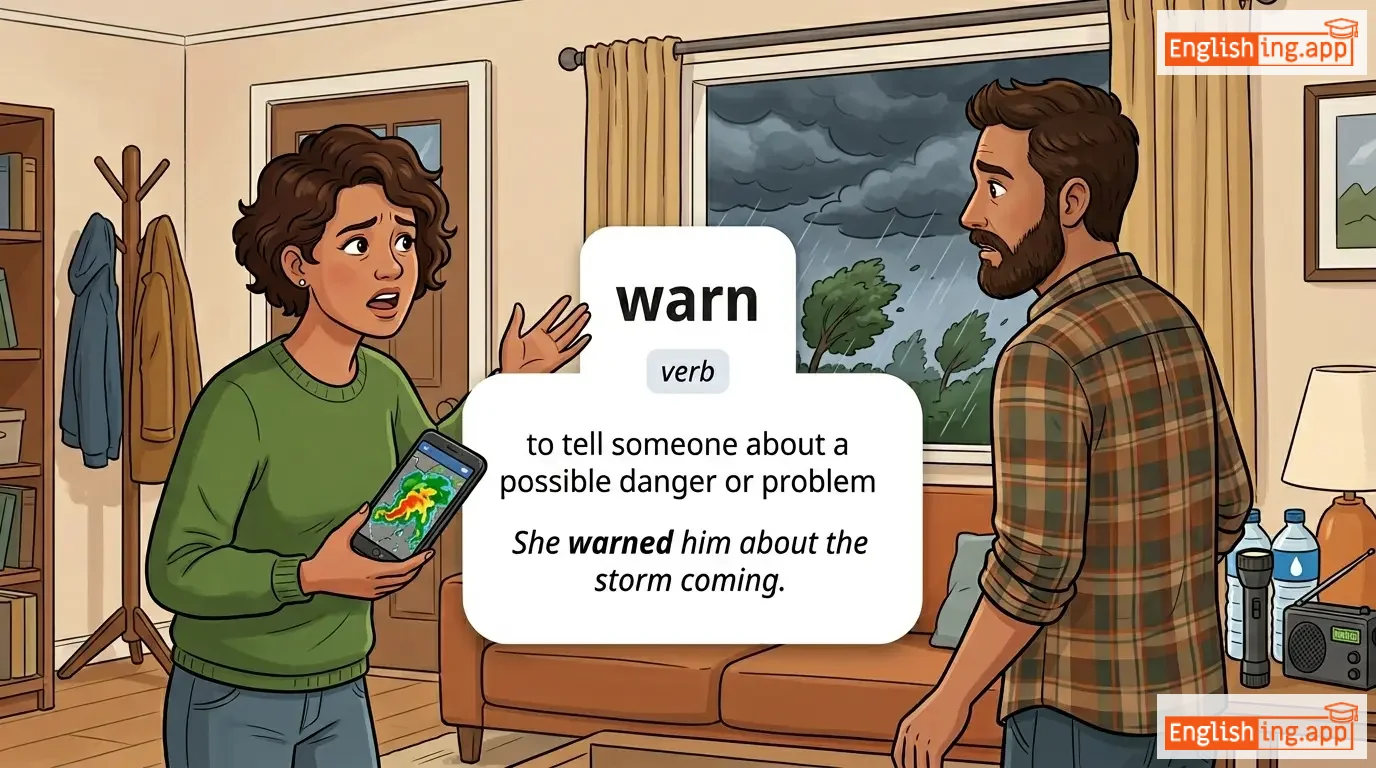
warn definition card — visual illustration of the meaning
verb
/wɔːrn/
चेतावनी देना (chetavani dena)

to tell someone about a possible danger or problem

"She warned him about the storm coming."

"उसने उसे आ रही तूफान के बारे में चेतावनी दी।" (Usne use aa rahi toofan ke baare mein chetavani di.)