वोकैबुलरीज

इंग्लिश वोकैबुलरी डिस्कवर, लर्न और मास्टर करें

verb
/dʒæb/
धक्का मारना (dhakka marna)

To poke or thrust quickly, often with a finger or something pointed.

"He jabbed his finger at the map to show the location."

"उसने स्थान दिखाने के लिए अपने अंगूठे से नक्शे पर धक्का मारा।" (Usne sthaan dikhane ke liye apne anguthe se nakshe par dhakka maara.)
verb
/ˈdʒæbər/
बकबक करना (bakbak karna)

To talk quickly and excitedly but with little sense.

"The children jabbered happily after the show."

"शो के बाद बच्चे खुशी खुशी बकबक कर रहे थे।" (Sho ke baad bachche khushi khushi bakbak kar rahe the.)
noun
/ˈdʒæk.dɔː/
जैक-डॉ (jack-daw)

a small gray and black bird of the crow family, known for its intelligence

"The jackdaw collected shiny objects for its nest."

"जैक-डॉ ने अपने घोंसले के लिए चमकदार वस्तुएं इकट्ठी कीं।" (jack-daw ne apne ghon-sle ke liye chamak-daar vastu-en ikatthi kiin.)
noun
/ˈdʒækɪt/
जैकेट (jacket)

A short coat, typically extending to the hips.

"She wore a leather jacket in the winter."

"उसने सर्दी में एक चमड़े की जैकेट पहनी थी।" (Usne sardi mein ek chamde ki jacket pehni thi.)
noun
/ˈdʒækˌfruːt/
कटहल (kathal)

a large tropical fruit with a spiky exterior and sweet flesh inside

"The jackfruit is the largest tree fruit in the world."

"कटहल दुनिया का सबसे बड़ा पेड़ फल है।" (kathal duniya ka sabse bada ped phal hai)
adjective
/ˈdʒeɪ.dɪd/
थका हुआ, उदासीन (thaka hua, udaaseen)

Tired, bored, or lacking enthusiasm, typically after having had too much of something.

"After years of traveling, she felt jaded by the constant movement."

"सालों की यात्रा के बाद, वह लगातार चलने से थकी हुई महसूस कर रही थी।" (Saalon ki yatra ke baad, vah lagatar chalne se thaki hui mehsoos kar rahi thi.)
noun
/ˈdʒæɡ.ər.i/
गुड़ (gud)

unrefined sugar made from sugarcane or palm sap; a traditional sweetener

"My grandmother uses jaggery instead of white sugar in her recipes."

"मेरी दादी अपनी रेसिपी में सफेद चीनी की जगह गुड़ का इस्तेमाल करती हैं।" (meri dadi apni recipe mein safed cheeni ki jagah gud ka istemaal karti hain)
noun, verb
/dʒeɪl/
जेल (jel)

A place for the confinement of people accused or convicted of a crime; to imprison.

"The thief was sent to jail for stealing."

"चोर को चोरी करने के लिए जेल भेजा गया था।" (Chor ko chori karne ke liye jail bheja gaya tha.)
noun
/dʒæm/
जाम (jaam)

a sweet spread made from fruit boiled with sugar

"She spread strawberry jam on her toast for breakfast."

"उसने नाश्ते में अपने टोस्ट पर स्ट्रॉबेरी जाम फैलाया।" (usne nashtay mein apne toast par strawberry jam phailaya)
noun
/dʒæm/
दरवाजे का चौखटा (darwaje ka chaukhata)

The side post or surface of a doorway, window, or fireplace.

"The carpenter carefully measured the width of the door jamb."

"कारपेंटर ने दरवाजे के चौखटे की चौड़ाई को ध्यान से मापा।" (Carpenter ne darwaje ke chaukhate ki choudai ko dhyan se maapa.)
noun
/ˌdʒæm.bəˈriː/
जश्न; समारोहमाला; (jashn, samarohemala)

a large celebration or party; a gathering with entertainment; a festive event

"The scout jamboree brought together thousands of young people from around the world."

"स्काउट जैम्बोरी ने दुनिया भर से हजारों युवा लोगों को एकत्रित किया।" (Scout jamboree ne duniya bhar se hazaron yuva logon ko ekatrit kiya.)
noun
/ˈdʒæn.ɪ.tər/
सफाईकर्मी, भवन देखभालक (safaikarmi, bhavan dekhbhalak)

a person employed to clean and maintain a building; a caretaker

"The school janitor worked late every evening to ensure the classrooms were spotless."

"स्कूल के जैनीटर ने हर शाम देर तक काम किया ताकि क्लासरूम साफ-सुथरे रहें।" (skul ke janitor ne har shaam der tak kaam kiya taaki classroom saaf-suthre rahein.)
noun
/ˈdʒænjuˌɛri/
जनवरी (janavari)

the first month of the year in the Gregorian calendar

"January is often the coldest month of the year."

"जनवरी आमतौर पर साल का सबसे ठंडा महीना होता है।" (janavari aamtaur par saal ka sabse thanda mahina hota hai)
adjective
/ˌdʒæpəˈniːz/
जापानी (japani)

relating to Japan, its people, or their language

"She loves Japanese culture and traditions."

"वह जापानी संस्कृति और परंपराओं को पसंद करती है।" (Vah japani sanskriti aur paramparaon ko pasand karti hai.)
noun
/dʒeɪp/
मज़ाक, हंसी (mazaak, hansi)

A practical joke or humorous remark.

"He enjoyed a harmless jape with his friends."

"उसने अपने दोस्तों के साथ एक निर्दोष जापे का आनंद लिया।" (Usne apne doston ke saath ek nirdosh jape ka anand liya.)
noun
/dʒɑːr/
जार (jar)

a round glass or clay container with a wide mouth used for storing food or liquids

"She kept the cookies in a glass jar."

"वह बिस्कुटों को एक कांच के जार में रखती थी।" (Woh biskuto ko ek kaanch ke jar mein rakhti thi.)
noun
/ˈdʒɑːr.ɡən/
विशेषज्ञ भाषा (visheshagya bhasha)

Specialized or technical language used by a particular group or profession.

"The lawyer’s explanation was full of legal jargon."

"वकील का व्याख्यान कानूनी विशेषज्ञ भाषा से भरा था।" (Vakil ka vyakhyan kanuni visheshagya bhasha se bhara tha.)
adjective
/ˈdʒɑː.rɪŋ/
झंझटपूर्ण, अप्रत्याशित टक्कर (jhanjhatpurn, apratyashit takkar)

Striking or shocking in a way that creates a strong contrast or clash.

"The sudden loud noise was jarring to everyone in the room."

"कमरे में हर किसी के लिए अचानक तेज आवाज़ असहजकारी थी।" (Kamre mein har kisi ke liye achanak tez awaaz asahajkari thi.)
noun
/ˈdʒɔːn.dɪs/
जॉन्डिस (jondis)

A medical condition in which the skin and eyes become yellow due to liver problems.

"The doctor diagnosed the baby with jaundice."

"डॉक्टर ने बच्चे को जॉन्डिस का निदान किया।" (Doktar ne bachche ko jondis ka nidan kiya.)
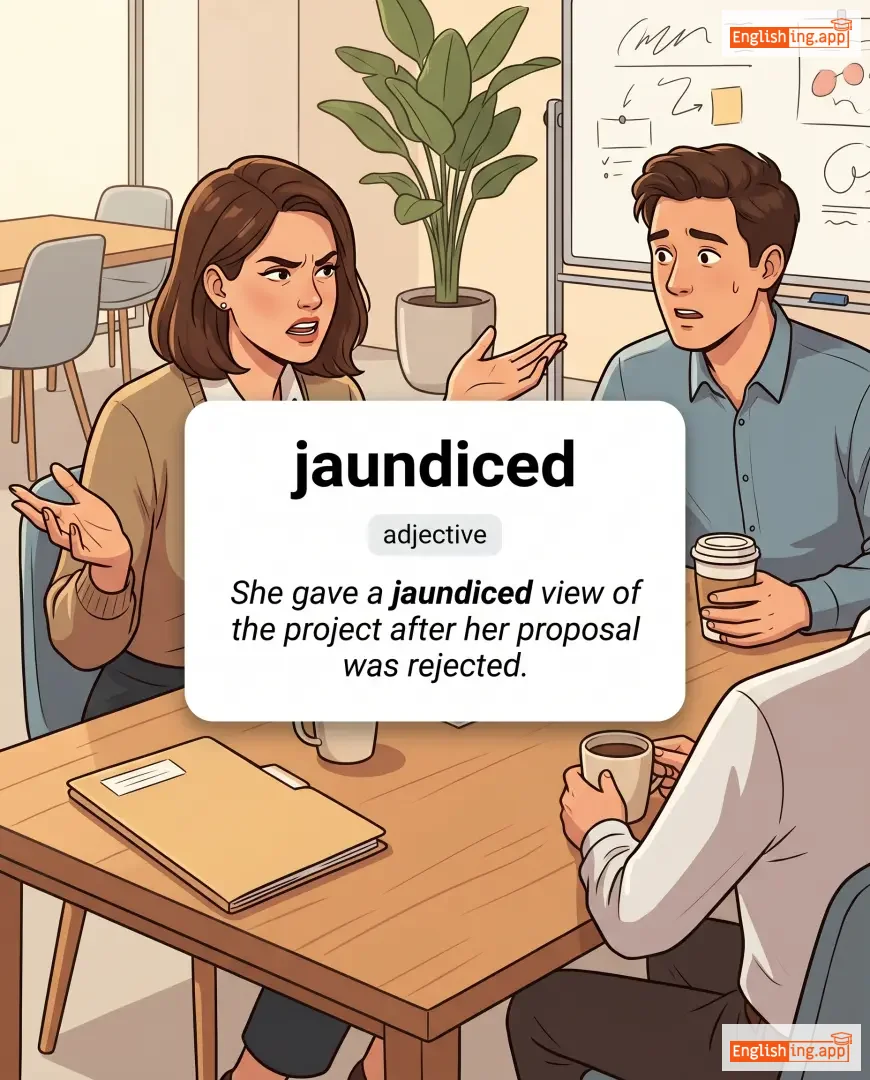
jaundiced definition card — visual illustration of the meaning
adjective
/ˈdʒɔːndɪst/
पक्षपाती / हिंगसापूर्ण / जॉन्डिस से प्रभावित (pakshapathi / hingsapurn / jondis se prabhavit)

Affected by or displaying prejudice, envy, or bitterness; also refers to having a yellowish discoloration of the skin due to jaundice.

"She gave a jaundiced view of the project after her proposal was rejected."

"उसने अपनी प्रस्ताव को अस्वीकृत होने के बाद परियोजना को पक्षपाती दृष्टिकोण से देखा।" (usne apni prastaav ko asweekrit hone ke baad pariyojna ko pakshapathi drishtikon se dekha.)
noun
/dʒɔːnt/
संक्षिप्त यात्रा (sankshipt yatra)

A short journey or excursion, usually taken for pleasure.

"They went on a weekend jaunt to the countryside."

"वे सप्ताहांत में देशी इलाके की संक्षिप्त यात्रा पर गए थे।" (ve saptahant mein desi ilake ki sankshipt yatra par gaye the.)
adjective
/ˈdʒɔːnti/
आनंदित (aanandit)

Having a lively, cheerful, and self-confident manner or appearance.

"He walked into the room with a jaunty step."

"वह एक आनंदित कदम के साथ कमरे में प्रवेश किया।" (vah ek aanandit kadam ke saath kamre mein pravesh kiya.)
noun
/dʒɔː/
जबड़ा (jabda)

the lower movable bone of the face that holds the teeth; the mouth area used for chewing and talking

"The dentist examined my jaw for any signs of pain."

"दंत चिकित्सक ने मेरे जबड़े की जाँच की कि कहीं दर्द के कोई संकेत हैं।" (Dant chikitsak ne mere jabde ki janch ki ki kahin dard ke koi sanket hain.)
noun
/dʒæz/
खुशी (khushi)

a style of music characterized by improvisation, syncopation, and strong rhythm, originating in African American communities

"She loves listening to live jazz on weekends."

"वह पुरस्कार मिलने पर अपनी खुशी छुपा नहीं पाई।" (Wah puraskaar milne par apni khushi chhupa nahi paayi.)
adjective
/ˈdʒɛləs/
ईर्ष्यालु (irshyalu)

Feeling or showing envy of someone or their achievements and advantages.

"She was jealous of her friend's success."

"वह अपनी दोस्त की सफलता से ईर्ष्यालु थी।" (Wah apni dost ki safalta se irshyalu thi.)
noun
/ˈdʒel.ə.si/
ईर्ष्या; प्रतिस्पर्धी के प्रति द्वेष (irshya; pratispardhi ke prati dwesh)

a feeling of envy of someone or their achievements; resentment against a rival

"His jealousy over his colleague's promotion led to tension in the workplace."

"उसके सहकर्मी के प्रमोशन के प्रति उसकी ईर्ष्या ने कार्यस्थल में तनाव पैदा किया।" (uske sahkarmi ke promotion ke prati uski irshya ne karyasthal mein tanav paida kiya.)
noun
/dʒiːnz/
खुशी (khushi)

pants made of denim fabric, often blue, worn as casual clothing

"He bought a new pair of blue jeans yesterday."

"वह पुरस्कार प्राप्त करने के बाद अपनी खुशी छुपा नहीं पाई।" (Vah puraskar prapt karne ke baad apni khushi chhupa nahi paayi.)
noun
/dʒiːp/
जीप (jeep)

a sturdy motor vehicle designed for rough terrain; a small military or civilian off-road vehicle

"The jeep climbed the rocky hill without difficulty."

"जीप बिना किसी कठिनाई के पथरीली पहाड़ी पर चढ़ गई।" (jeep bina kisi kathinai ke pathrili pahadi par chadh gai)
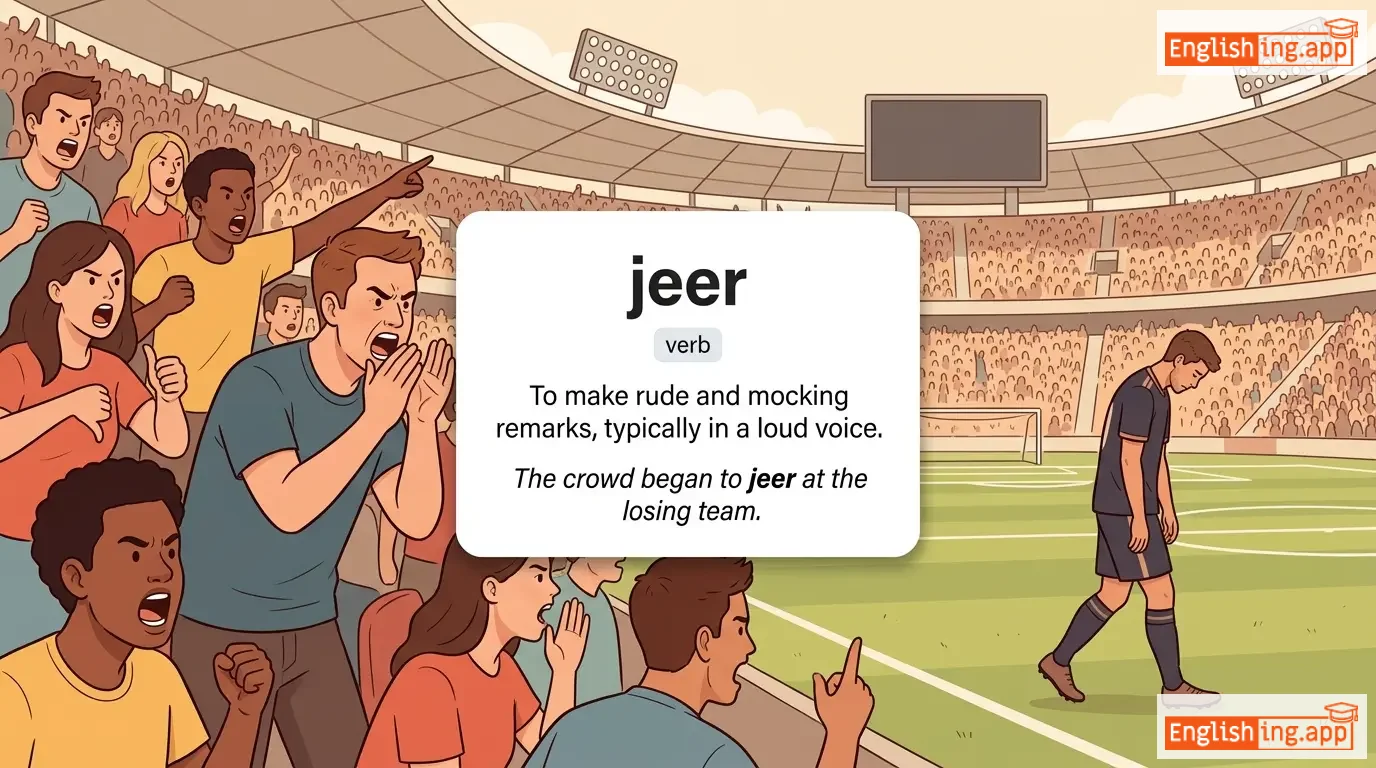
jeer definition card — visual illustration of the meaning
verb
/dʒɪər/
व्यंग्य करना (vyangya karna)

To make rude and mocking remarks, typically in a loud voice.

"The crowd began to jeer at the losing team."

"भीड़ हारते हुए टीम पर व्यंग्य करने लगी।" (Bheer haarte hue team par vyangya karne lagi.)
adjective
/dʒɪˈdʒuːn/
सरल / अति साधारण / नीरस (soral / ati saadharan / neeras)

Naive, simplistic, and superficial; also dull or uninteresting.

"The professor dismissed the essay as jejune and lacking depth."

"प्रोफेसर ने निबंध को सरल और गहरे बिना समझे खारिज कर दिया।" (professor ne nibandh ko saral aur gahare bina samjhe kharij kar diya.)
noun
/ˈdʒel.i/
जेली (jeli)

a sweet soft food made from fruit juice and sugar; a semi-solid substance with a jelly-like consistency

"She spread grape jelly on her toast for breakfast."

"उसने नाश्ते के लिए अपने टोस्ट पर अंगूर की जेली लगाई।" (usne naste ke liye apne toast par angoor ki jeli lagai)
noun
/ˈdʒel.i fɪʃ/
जेलिफ़िश (jeliphish)

a soft-bodied marine animal with a gelatinous umbrella-shaped body and trailing tentacles

"The jellyfish floated gracefully through the water with its translucent body."

"जेलिफ़िश अपने पारदर्शी शरीर के साथ पानी में सुंदरता से तैर रही थी।" (jeliphish apne pardarshi sharir ke sath pani mein sundarta se tair rahi thi)
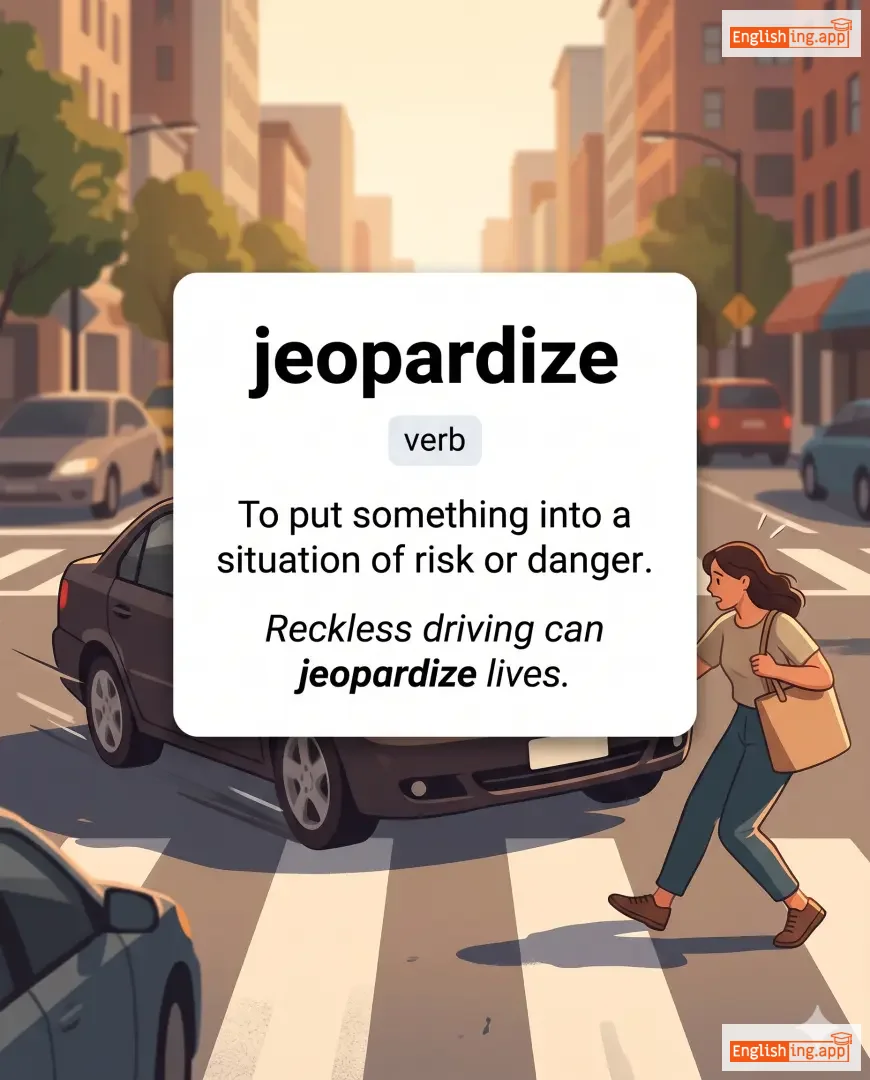
jeopardize definition card — visual illustration of the meaning
verb
/ˈdʒɛpərdaɪz/
खतरे में डालना (khatre mein daalna)

To put something into a situation of risk or danger.

"Reckless driving can jeopardize lives."

"लापरवाह ड्राइविंग से जिंदगियाँ खतरे में पड़ सकती हैं।" (laparwahi driving se zindagiyan khatre mein pad sakti hain.)
noun
/ˈdʒɛpərdi/
खतरा (khatra)

Danger of loss, harm, or failure.

"His careless driving put everyone in jeopardy."

"उसकी लापरवाह ड्राइविंग ने सभी को खतरे में डाल दिया।" (Uski laparwah driving ne sabhi ko khatre mein daal diya.)
noun
/ˈdʒɛrəˌmaɪæd/
विलाप (vilap)

A long, mournful complaint or lamentation; a list of woes.

"The politician's speech turned into a jeremiad against corruption."

"राजनेता का भाषण भ्रष्टाचार के खिलाफ एक विलाप में बदल गया।" (raajneta ka bhashan bhrashtachar ke khilaf ek vilap mein badal gaya.)
noun
/dʒɜːrk/
झटका; धक्का; मूर्ख व्यक्ति (jhatka, dhakka, moorkh vyakti)

a quick, sharp, sudden movement; an abrupt pull or twist; a foolish person

"The sudden jerk of the train caused passengers to lose their balance momentarily."

"ट्रेन के अचानक झटके ने यात्रियों को अस्थायी रूप से संतुलन खोने का कारण बना दिया।" (train ke achanak jhatke ne yatriyon ko asthayi roop se santulan khone ka karan bana diya.)
noun
/ˈdʒæz.mɪn/
चमेली (chameli)

a climbing shrub with fragrant white or yellow flowers

"The jasmine flowers filled the garden with their sweet fragrance."

"चमेली के फूलों ने बगीचे को अपनी मीठी खुशबू से भर दिया।" (chameli ke phoolon ne bageeche ko apni meethi khushboo se bhar diya)
noun, verb
/dʒɛst/
मजाक (majaak)

A joke or witty remark; to speak humorously.

"He spoke in jest, but his words offended her."

"वह मजाक में बोल रहा था, लेकिन उसके शब्दों ने उसे ठेस पहुँचाई।" (vah majaak mein bol raha tha, lekin uske shabdon ne use thess pahunchayi.)
noun
/ˈdʒes.tər/
जोकर; मजाकिया व्यक्ति (jokar, mazaakia vyakti)

a professional joker or fool at a medieval court; someone who jokes a lot

"The court jester entertained the king with witty remarks and amusing tricks."

"दरबार का जोकर राजा को चतुर टिप्पणियों और मजेदार ट्रिक्स से मनोरंजन करता था।" (darbār kā jokar rājā ko chatur tippaniyon aur mazedār tricks se manoranjan kartā thā.)
adjective
/ˈdʒes.tɪŋ/
मज़ाकिया (mazaakiya)

joking or teasing in a playful manner

"He was only jesting when he said he would quit his job."

"वह केवल मजाक कर रहा था जब उसने कहा कि वह अपनी नौकरी छोड़ देगा।" (vah keval mazaak kar raha tha jab usne kaha ki vah apni naukri chhod dega.)
noun, verb
/dʒɛt/
खुशी (khushi)

A fast aircraft powered by jet engines; to travel by jet plane.

"They jetted off to Paris for the weekend."

"वह पुरस्कार प्राप्त करने पर अपनी खुशी छुपा नहीं पाई।" (vah puraskar prapt karne par apni khushi chhupa nahi pai.)
noun
/ˈdʒɛtsəm/
अवांछित सामग्री या वस्त्र जो एक जहाज से फेंकी जाती है और किनारे पर आ जाती है (avanchit samagri ya vastra jo ek jahaj se fenki jati hai aur kinare par aa jati hai)

Unwanted material or goods thrown overboard from a ship and washed ashore.

"The beach was littered with jetsam after the storm."

"तूफान के बाद समुद्र तट पर जेट्सम बिखरा हुआ था।" (toofan ke baad samudra tat par jetsam bikhra hua tha.)
/ˈdʒɛtɪsən/
निकालना (nikaalna)

to throw or drop something from a ship, aircraft, or vehicle to lighten the load; to abandon something no longer wanted

"The crew had to jettison cargo to save the sinking ship."

"क्रू को डूबते जहाज को बचाने के लिए कार्गो निकालना पड़ा।" (kru ko doobte jahaj ko bachane ke liye cargo nikaalna pada.)
noun
/ˈdʒet.i/
जेटी (jeti)

a landing stage or small pier at which boats can dock or be moored

"The fishing boats were tied up at the wooden jetty near the harbor."

"मछली पकड़ने वाली नौकाएँ बंदरगाह के पास लकड़ी की जेटी पर बंधी हुई थीं।" (machhli pakadane vaali naukaen bandargah ke paas lakdi ki jeti par bandhi hui theen.)
noun
/dʒuː/
यहूदी (yahudi)

a person whose religion is Judaism or who is of Jewish descent

"He is a Jew by heritage and follows Jewish customs."

"वह विरासत में यहूदी है और यहूदी रीतियों का पालन करता है।" (Vah virasat mein yahudi hai aur yahudi reetiyon ka palan karta hai.)
noun
/ˈdʒuː.əl/
गहना (gahana)

a precious stone or a piece of jewelry containing precious stones

"The ancient treasure chest contained many rare jewels."

"प्राचीन खजाने के बक्से में कई दुर्लभ गहने थे।" (Prachin khazane ke bakse mein kai durlabh gahne the.)
noun
/ˈdʒuːələr/
जौहरी (jauhri)

a person who makes, repairs, or sells jewelry

"The jeweller crafted a beautiful gold ring."

"जौहरी ने एक सुंदर सोने की अंगूठी बनाई।" (jauhri ne ek sundar sone ki anguthi banai)
noun
/ˈdʒuːəlri/
आभूषण (abhushan)

ornamental items worn for personal adornment, such as rings, necklaces, or bracelets, often made of precious metals or stones

"She wore beautiful jewellery to the wedding."

"उसने शादी में सुंदर आभूषण पहने थे।" (usne shadi mein sundar abhushan pahne the)
noun
/ˈdʒuːəlri/
गहनों (gahno)

personal ornaments such as necklaces, rings, or bracelets that are typically made from precious metals and stones

"She wore gold jewelry at the wedding."

"वह शादी में सोने के गहने पहने हुए थी।" (Vah shaadi mein sone ke gahne pehene hue thi.)
adjective
/ˈdʒuːɪʃ/
खुशी (khushi)

relating to Jews or Judaism

"They celebrate Jewish festivals every year."

"वह पुरस्कार प्राप्त करते समय अपनी खुशी नहीं छिपा पाई।" (Vah puraskar prapt karte samay apni khushi nahin chhupa pai.)