वोकैबुलरीज

इंग्लिश वोकैबुलरी डिस्कवर, लर्न और मास्टर करें

🏃‍♀️

pace (पेस)

noun
/peɪs/
गति (gati)

the speed at which something happens or is done

"She walked at a slow pace."

"वह धीमे गति में चल रही थी।" (Vah dheere gati mein chal rahi thi.)
noun
/ˈpæk.ɪ.dɜːrm/
मोटे चमड़े वाला बड़ा स्तनधारी जानवर (motay chamde wala bada stanadhari janwar)

a large mammal with thick skin, such as an elephant, rhinoceros, or hippopotamus

"The zoo had several pachyderms, including elephants and rhinos."

"चिड़ियाघर में कई मोटे चमड़े वाले जानवर थे, जैसे हाथी और गैंडा।" (Chidiya ghar mein kai mote chamde wale janwar the, jaise haathi aur gainda.)
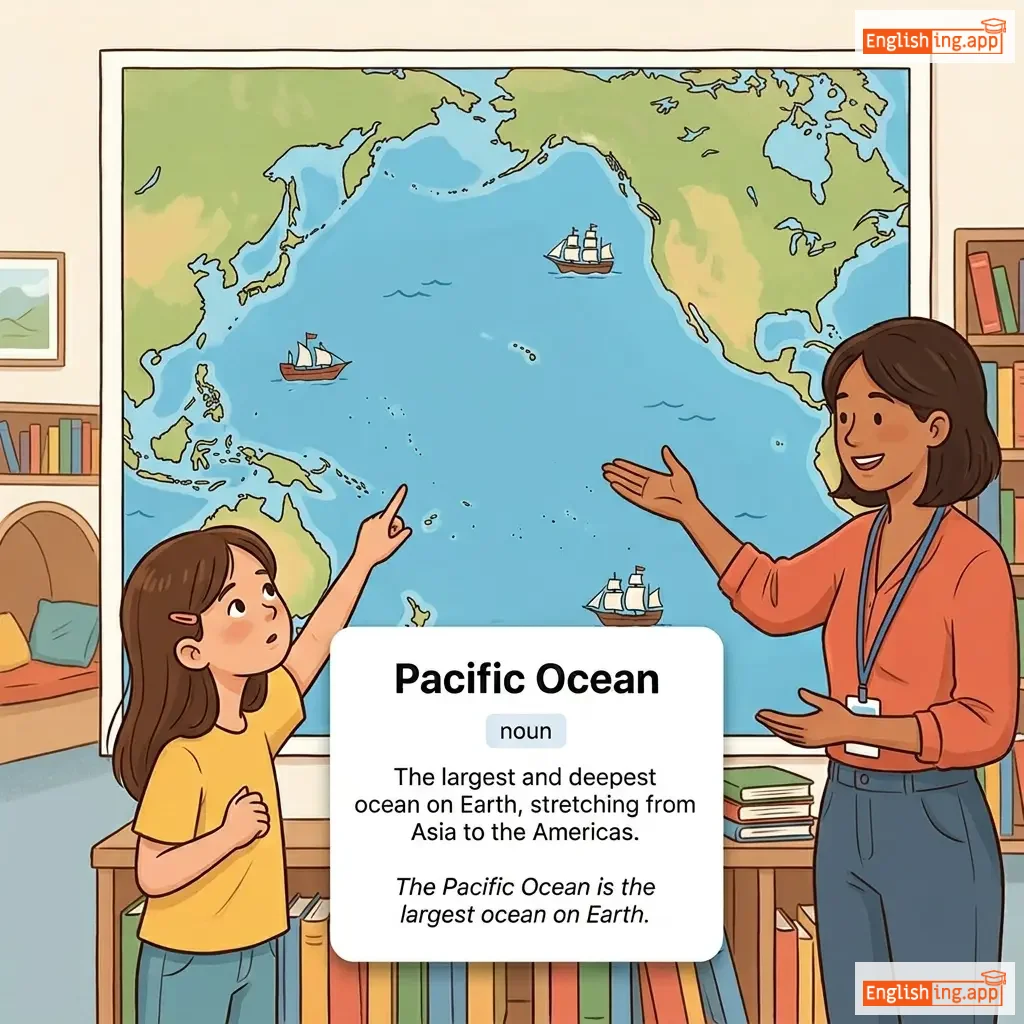
Pacific Ocean definition card — visual illustration of the meaning
noun
/pəˈsɪf.ɪk ˈoʊ.ʃən/
प्रशांत महासागर (prashant mahaasagar)

The largest and deepest ocean on Earth, stretching from Asia to the Americas.

"The Pacific Ocean is the largest ocean on Earth."

"पैसिफिक ओशन पृथ्वी का सबसे बड़ा महासागर है।" (Pacific Ocean prithvi ka sabse bada mahaasagar hai.)
noun
/ˈpæs.ɪ.fɪst/
शांतिवादी (shantivadi)

a person who believes in peace and opposes war or violence

"She is a committed pacifist who campaigns against armed conflict."

"वह एक प्रतिबद्ध शांतिवादी है जो सशस्त्र संघर्ष के खिलाफ अभियान चलाता है।" (Wah ek pratibaddh shantivadi hai jo sashastr sangharsh ke khilaf abhiyan chalata hai.)
pacify definition card — visual illustration of the meaning
verb
/ˈpæs.ɪ.faɪ/
शांत करना (shant karna)

to calm someone down; to bring peace to a situation

"The mother tried to pacify the crying baby."

"माँ ने रोते हुए बच्चे को शांत करने की कोशिश की।" (Maan ne rote huye bachche ko shant karne ki koshish ki.)
verb,noun
/pæk/
पैक करना (paik karna)

to put things into a container for storage or transport; a collection of items kept together

"She packed her clothes into a suitcase for the trip."

"वह यात्रा के लिए अपने कपड़े एक सूटकेस में पैक कर रही थी।" (Wah yatra ke liye apne kapde ek suitcase mein paik kar rahi thi.)
noun
/ˈpækɪdʒ/
पैकेज (paikej)

a container or wrapping in which something is packed

"He received a package in the mail."

"उसे मेल में एक पैकेज मिला।" (Use mail mein ek paikej mila.)
noun
/ˈpæk.ɪt/
पैकेट (packet)

a small package or container holding items or information

"He bought a packet of biscuits from the shop."

"उसने दुकान से बिस्कुट का एक पैकेट खरीदा।" (Usne dukaan se biskut ka ek packet kharida.)
noun
/pækt/
संधि (sandhi)

a formal agreement or promise between parties

"The two countries signed a peace pact."

"दो देशों ने एक शांति संधि पर हस्ताक्षर किए।" (Do deshon ne ek shanti sandhi par hastakshar kiye.)
noun
/pæd/
पैड (pad)

a small cushion or block of soft material; also a set of sheets of paper fastened together

"He wrote her phone number on a yellow pad."

"उसने उसका फोन नंबर एक पीले पैड पर लिखा।" (Usne uska phone number ek peele pad par likha.)
noun
/ˈpæd.ɪŋ/
पैडिंग / नरम भराव (padding / naram bharaav)

soft material added for comfort, protection, or to fill space

"The chair had extra padding for comfort."

"कुर्सी में आराम के लिए अतिरिक्त पैडिंग थी।" (Kursi mein aaram ke liye atirikt padding thi.)
noun
/ˈpæd.ək/
घोड़े या अन्य जानवरों के लिए बंद क्षेत्र (ghode ya anya janwaron ke liye band kshetra)

a small enclosed field where horses or other animals are kept

"The horses were grazing in the paddock."

"घोड़े पैडोक में घास खा रहे थे।" (ghode paddock mein ghash kha rahe the.)
noun
/ˈpæd.i/
धान (dhan)

rice grains that are still in their hulls; unhusked rice

"The farmer harvested paddy from the flooded fields."

"किसान ने बाढ़ से भरे खेतों से धान काटा।" (kisaan ne baadh se bhare kheton se dhan kaata)
noun
/ˈpɑːdreɪ/
पादरी (padri)

A title for a priest, especially in the Roman Catholic Church; also used informally for 'father'.

"The soldiers attended mass led by the padre."

"सैनिकों ने पादरी द्वारा नेतृत्व किए गए मास में भाग लिया।" (sainiko ne padri dwara netritva kiye gaye mass mein bhag liya.)
noun
/ˈpiːən/
प्रशंसा गीत (prashansa geet)

A song or piece of writing expressing great praise or triumph.

"The article was a paean to the beauty of nature."

"लेख प्रकृति की सुंदरता की प्रशंसा गीत था।" (lekh prakriti ki sundarta ki prashansa geet tha)
noun
/ˈpeɪɡən/
पगन (pagan)

A person holding religious beliefs other than those of the main world religions.

"The village still kept some pagan traditions alive."

"गांव ने अभी भी कुछ पगन परंपराओं को जीवित रखा था।" (gaon ne abhi bhi kuch pagan paramparayon ko jivit rakha tha.)
noun
/peɪdʒ/
पृष्ठ (prishth)

one side of a sheet of paper, or a single sheet of paper in a book or document

"Turn to the next page for more information."

"अधिक जानकारी के लिए अगले पेज पर जाएं।" (Adhik jaankari ke liye agle pej par jaayein.)
noun
/ˈpædʒənt/
सौंदर्य प्रतियोगिता (soundarya pratyogita)

A public entertainment consisting of a procession of people in elaborate costumes, or a beauty contest.

"She won first place in the beauty pageant."

"उसने सौंदर्य प्रतियोगिता में पहला स्थान जीता" (usne soundarya pratyogita mein pehla sthan jeeta)
noun
/peɪn/
दर्द (dard)

physical suffering or discomfort caused by illness or injury

"She felt a sharp pain in her chest."

"उसने अपनी छाती में तेज दर्द महसूस किया।" (Usne apni chhati mein tez dard mehsoos kiya.)
adjective
/ˈpeɪn.fəl/
दर्दनाक (dardnaak)

causing physical or emotional pain

"The injury was very painful, and he needed immediate care."

"चोट बहुत दर्दनाक थी, और उसे तुरंत इलाज की आवश्यकता थी।" (Chot bahut dardnaak thi, aur use turant ilaaj ki avashyakta thi.)
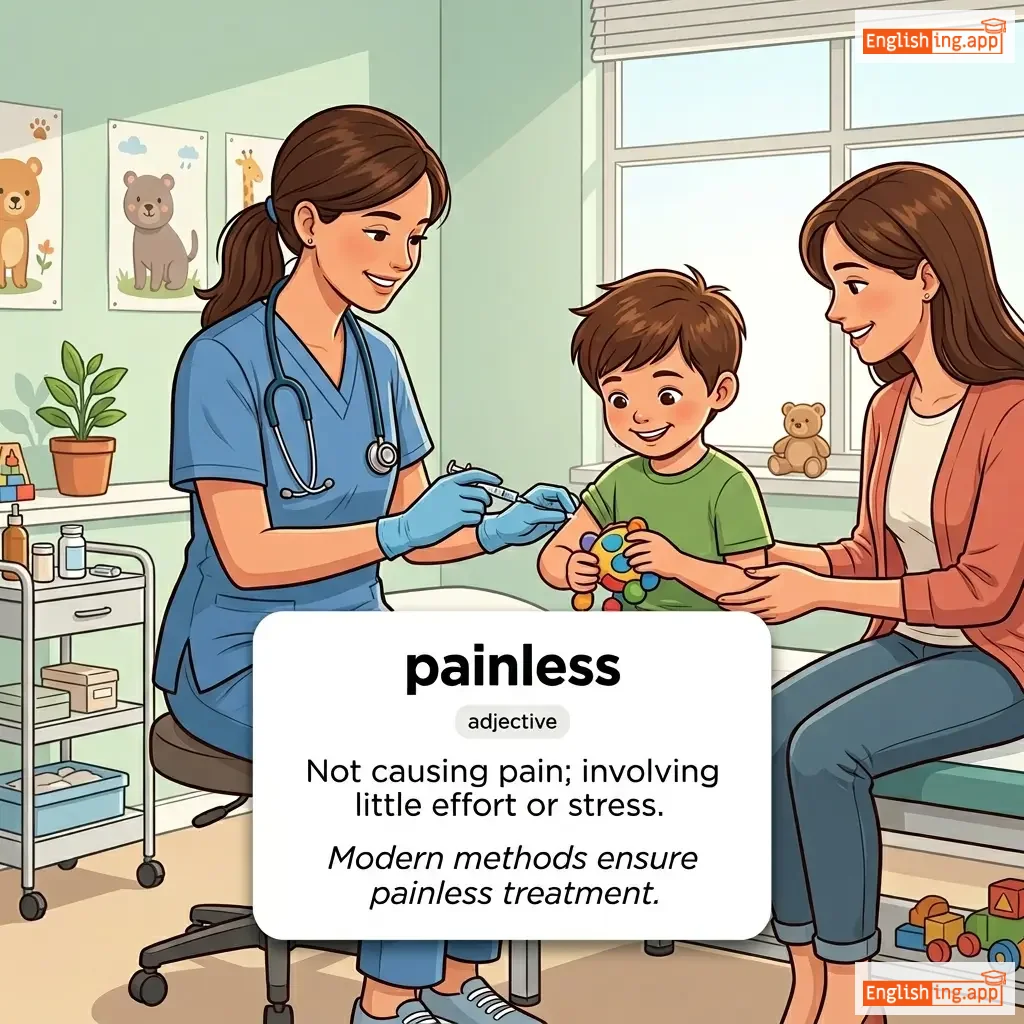
painless definition card — visual illustration of the meaning
adjective
ˈpeɪn.ləs
दर्द रहित (dard rahit)

Not causing pain; involving little effort or stress.

"Modern methods ensure painless treatment."

"आधुनिक तरीकों से दर्द रहित इलाज सुनिश्चित होता है।" (Aadhunik tareekon se dard rahit ilaaj nishchit hota hai.)
adjective
/ˈpeɪnzˌteɪkɪŋ/
अत्यधिक प्रयास (atyadhik prayaas)

Done with great care and thoroughness.

"The artist completed the project with painstaking detail."

"कला के व्यक्ति ने परियोजना को अत्यधिक प्रयास के साथ पूरा किया।" (kala ke vyakti ne pariyojana ko atyadhik prayaas ke saath poora kiya.)
verb
/peɪnt/
चित्रित करना (chitrit karna)

to apply a colored substance to a surface

"She loves to paint landscapes in her free time."

"वह अपने फ्री टाइम में लैंडस्केप पेंट करना पसंद करती है।" (Vah apne free time mein landscape paint karna pasand karti hai.)
noun
/ˈpeɪn.tər/
चित्रकार (chitrakar)

a person who paints pictures, or paints walls, buildings, etc.

"The painter spent hours working on the portrait."

"चित्रकार ने पोर्ट्रेट पर काम करने में घंटों बिता दिए।" (Chitrakar ne portrait par kaam karne mein ghanton bita diye.)
noun
/ˈpeɪntɪŋ/
चित्रकला (chitrakala)

a picture or design made using paint

"The painting on the wall was created by a famous artist."

"दीवार पर पेंटिंग एक प्रसिद्ध कलाकार द्वारा बनाई गई थी।" (Deewar par painting ek prasiddh kalakar dwara banayi gayi thi.)
noun
/per/
जोड़ा (joda)

two things of the same kind that are used together

"She wore a matching pair of shoes."

"उसने मैचिंग जोड़ा जूते पहने।" (Usne matching joda jute pehne.)
noun
/ˈpælɪs/
महल (mahal)

a large and impressive building that is the official home of a king, queen, or other ruler

"The royal family lives in a magnificent palace."

"रॉयल परिवार एक शानदार महल में रहता है।" (Royal parivar ek shandar mahal mein rehta hai.)
noun
/ˌpæl.ənˈkiːn/
पालकी (paalki)

a covered chair or bed carried on poles by bearers

"The bride was carried to the wedding ceremony in an ornate palanquin."

"दुल्हन को शादी के समारोह में एक भव्य पलांकिन में ले जाया गया।" (dulhan ko shaadi ke samaroah mein ek bhavya paalakin mein le jaya gaya.)
adjective
/ˈpæl.ə.tə.bəl/
स्वादिष्ट (swadisht)

pleasant or acceptable to the taste, mind, or feelings

"The meal was simple but quite palatable."

"खाना साधारण था लेकिन बहुत स्वादिष्ट था।" (Khana sadharan tha lekin bahut swadisht tha.)
noun
/ˈpæl.ə.tə.bəl miːt/
स्वादिष्ट मांस (swadisht maans)

Meat that is pleasant to taste; appetizing meat dish

"The chef prepared palatable meat dishes for the dinner party."

"शेफ ने डिनर पार्टी के लिए स्वादिष्ट मांस व्यंजन तैयार किए।" (shef ne dinner party ke liye swadisht maans vyajan tayar kiye.)
noun
/ˈpæl.ət/
स्वाद ग्रहन क्षमता / तालु (swad grahan kshamata / taalu)

the roof of the mouth; a person's appreciation of taste and flavor

"She has a refined palate for fine wines."

"उसकी शानदार मदिरा के लिए एक परिष्कृत तालु है।" (Uski shandaar madira ke liye ek parishkrit taalu hai.)
adjective
/pəˈleɪ.ʃəl/
महल जैसा (mahal jaisa)

resembling a palace in being spacious and splendid

"They stayed in a palatial hotel during their vacation."

"वे अपनी छुट्टियों के दौरान एक महल जैसे होटल में रुके थे।" (Ve apni chhuttiyon ke dauran ek mahal jaisa hotel mein ruke the.)
noun
/pəˈlæv.ər/
बेमतलब चर्चा / हंगामा (bematlab charcha / hangama)

prolonged and idle discussion; fuss or unnecessary talk

"After much palaver, they finally agreed on the plan."

"काफी बेमतलब चर्चा के बाद, वे आखिरकार योजना पर सहमत हो गए।" (Kaafi bematlab charcha ke baad, ve aakhirkaar yojna par sahmat ho gaye.)
👩‍🦰

Pale (पेल)

adjective
/peɪl/
फीका (fika)

having a light or dull color, especially when compared with something else

"She looked pale after the long illness."

"लंबी बीमारी के बाद वह फीकी दिख रही थी।" (Lambi bimari ke baad vah fiki dikh rahi thi.)
noun
/ˌpeɪ.li.ɒnˈtɒl.ə.dʒi/
पैलियोन्टोलॉजी (paleontology)

the branch of science concerned with fossil animals and plants

"She decided to study paleontology at university."

"उसने विश्वविद्यालय में पैलियोन्टोलॉजी अध्ययन करने का निर्णय लिया।" (Usne vishwavidyalay mein paleontology adhyayan karne ka nirnay liya.)
adjective
/pælɛˈstɪnɪən/
पैलेस्टिनियन (palestinian)

relating to Palestine or its people

"The Palestinian people have a rich cultural heritage."

"फिलिस्तीनी लोगों का एक समृद्ध सांस्कृतिक धरोहर है।" (filisteeni logon ka ek samriddh sanskritik dharohar hai.)
noun
/ˈpælət/
पैलेट (pailet)

a thin board or surface on which an artist sets and mixes colors; also a range of colors used in art or design

"The artist mixed vibrant shades on her palette before starting the painting."

"कलाकार ने पेंटिंग शुरू करने से पहले अपनी पैलेट पर जीवंत रंगों को मिलाया।" (Kalakar ne painting shuru karne se pehle apni pailet par jeevant rangon ko milaya.)
noun
/ˈpælɪmpsɛst/
पुनःलिखित पाण्डुलिपि (punahlikhit pandulipi)

a manuscript or document that has been written over but still bears traces of earlier writing; something reused or altered but still retaining traces of its earlier form

"The ancient manuscript was a palimpsest, showing faint traces of previous texts beneath the new writing."

"प्राचीन पाण्डुलिपि एक पॅलिम्प्सेस्ट थी, जिसमें नई लेखनी के नीचे पुराने लेखन के हल्के निशान थे।" (Prachin pandulipi ek palimpsest thi, jismein nayi lekhani ke neeche purane lekhan ke halke nishan the.)
noun
/ˈpælɪˌnoʊd/
क्षमा प्रार्थनापत्र (kshama prarthanapatra)

a poem or statement in which the writer retracts something said in an earlier work

"The poet wrote a palinode to apologize for his earlier harsh words."

"कवि ने अपनी पहले की कठोर शब्दों के लिए क्षमा प्रार्थनापत्र लिखा।" (Kavi ne apni pehle ki kathor shabdon ke liye kshama prarthanapatra likha.)
verb, noun
/pɔːl/
उबाऊ, कफिन पर चढ़ने वाला कपड़ा (ubau, kafin par chadhne wala kapda)

to lose strength or interest; to become dull or tiresome; also a cloth spread over a coffin

"The excitement of the festival began to pall after several days."

"त्योहार की उत्तेजना कुछ दिनों बाद मद्धम हो गई।" (tyohar ki uttejana kuch dinon baad maddham ho gayi.)
noun
/ˈpælɪt/
प्लेटफॉर्म (platform)

a flat wooden platform used for moving or storing goods; also a makeshift bed

"The boxes were stacked on a wooden pallet for easy transport."

"बॉक्सों को आसानी से परिवहन के लिए लकड़ी के पैलेट पर ढेर किया गया था।" (Boxon ko aasani se parivahan ke liye lakdi ke pallet par dher kiya gaya tha.)
verb
/ˈpælieɪt/
उपशामित करना (upshamit karna)

to make a disease, symptoms, or problem less severe without removing the cause

"The doctor prescribed medicine to palliate the patient's pain."

"डॉक्टर ने रोगी के दर्द को कम करने के लिए दवाइयाँ दीं।" (Doktor ne rogi ke dard ko kam karne ke liye davaiyan din.)
noun
/ˌpæliˈeɪʃən/
शांति (shanti)

relief of symptoms without curing the underlying disease or problem

"Palliation is often the focus of care for terminally ill patients."

"पॅलियेशन अक्सर टर्मिनल रूप से बीमार मरीजों की देखभाल का मुख्य फोकस होता है।" (Palliation aksar terminal roop se beemar marijon ki dekhbhaal ka mukhya focus hota hai.)
adjective
/ˈpælɪd/
पीला (peela)

pale, typically because of poor health or lack of vitality

"The patient looked pallid after weeks of illness."

"मरीज कई हफ्तों तक बीमारी के बाद पीला दिख रहा था।" (Mareez kai hafton tak bimari ke baad peela dikh raha tha.)
noun
/pɑːm/
हाथ की हथेली / पाम वृक्ष (haath ki hatheli / paam vriksh)

the inner surface of the hand; also a tropical tree with large leaves

"He placed the coin in the palm of her hand."

"उसने सिक्का अपनी हथेली में रखा।" (Usne sikka apni hatheli mein rakha.)
adjective
/ˈpɑːmi/
समृद्ध / गौरवमय (samriddh / gauravmay)

prosperous, flourishing, or relating to palm trees

"He often reminisced about the palmy days of his youth."

"वह अक्सर अपनी जवानी के समृद्ध दिनों को याद करता था।" (Woh aksar apni jawani ke samriddh dino ko yaad karta tha.)
adjective
/ˈpælpəbl̩/
सुख (sukh)

easily perceived or felt; so intense as to seem almost tangible

"There was a palpable sense of excitement in the room."

"जब उसे पुरस्कार मिला, तो वह अपनी खुशी को छिपा नहीं सकी।" (Jab use puraskaar mila, to vah apni khushi ko chhupa nahi sake.)
verb
/ˈpælpɪˌteɪt/
दिल की धड़कन तेज होना (dil ki dhadkan tez hona)

to beat rapidly and strongly, often because of fear, excitement, or illness

"Her heart began to palpitate with fear."

"उसका दिल डर से पलपिटेट करने लगा।" (Uska dil dar se palpitate karne laga.)
noun
/ˌpæl.pɪˈteɪ.ʃən/
धड़कन का तेज़, मजबूत, या अनियमित होना जो उत्तेजना या चिकित्सा स्थिति के कारण होता है (dhadkan ka tez, majboot, ya aniyamit hona jo uttejana ya chikitsa sthiti ke kaaran hota hai)

a noticeably rapid, strong, or irregular heartbeat due to agitation or medical condition

"She experienced palpitations before her job interview."

"उसने अपनी नौकरी के इंटरव्यू से पहले धड़कन की तेज़ी का अनुभव किया।" (usne apni naukri ke interview se pehle dhadkan ki tezi ka anubhav kiya.)
noun
/ˈpɔːlzi/
पक्षाघात (pakshaghat)

a condition of partial or complete paralysis, often with involuntary tremors

"The patient suffered from Bell’s palsy."

"मरीज बेल्स पक्षाघात से पीड़ित था।" (Mareez Bells pakshaghat se peedit tha.)