Vocabularios

Descubra, aprenda y domine el vocabulario en inglés

🏃‍♀️

pace (peis)

noun
/peɪs/
ritmo (ritmo)

the speed at which something happens or is done

"She walked at a slow pace."

"Ella caminaba a un ritmo lento." (Ella caminaba a un ritmo lento.)
noun
/ˈpæk.ɪ.dɜːrm/
mamífero grande con piel gruesa (mamifero grande con piel gruesa)

a large mammal with thick skin, such as an elephant, rhinoceros, or hippopotamus

"The zoo had several pachyderms, including elephants and rhinos."

"El zoológico tenía varios pachidermos, incluidos elefantes y rinocerontes." (El zoologico tenia varios pachidermos, incluidos elefantes y rinocerontes.)
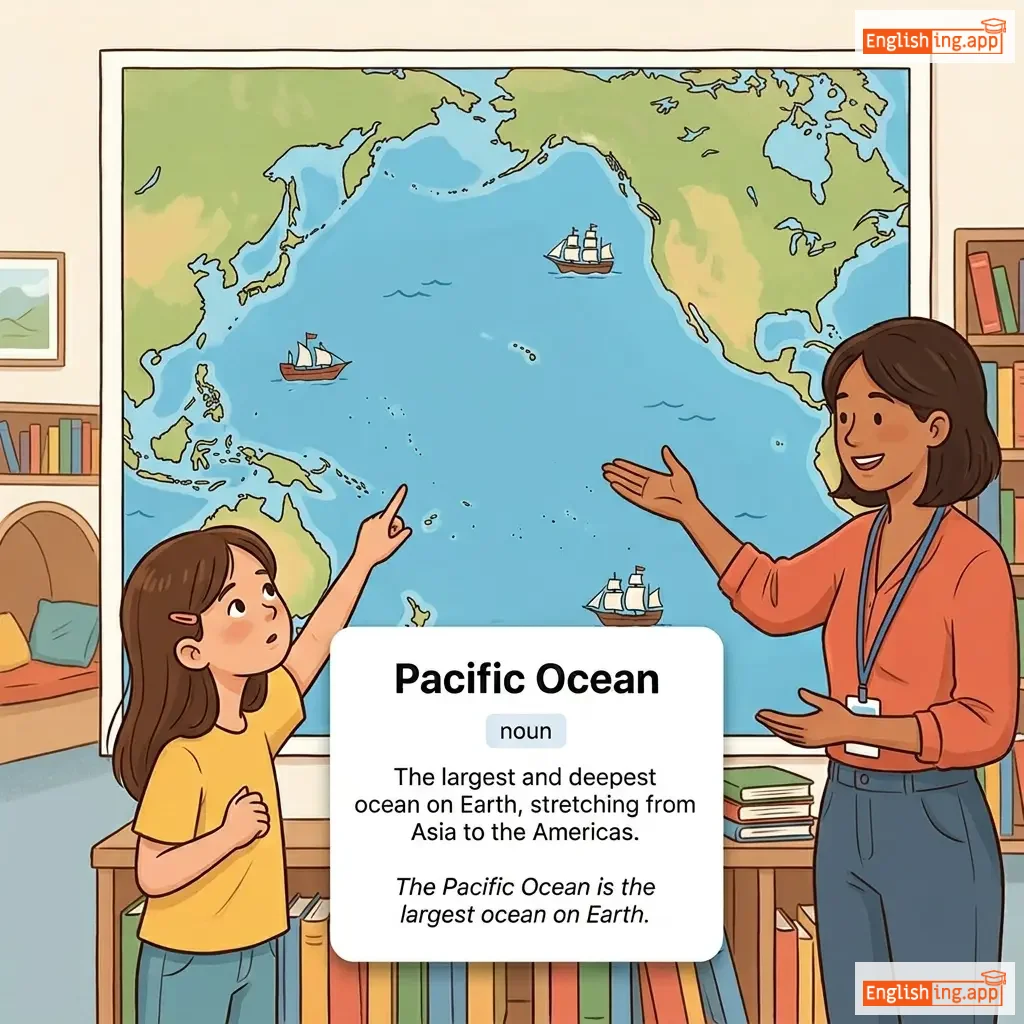
Pacific Ocean definition card — visual illustration of the meaning
noun
/pəˈsɪf.ɪk ˈoʊ.ʃən/
Océano Pacífico (Oceano Pacifico)

The largest and deepest ocean on Earth, stretching from Asia to the Americas.

"The Pacific Ocean is the largest ocean on Earth."

"El Océano Pacífico es el océano más grande de la Tierra." (El Oceano Pacifico es el oceano mas grande de la Tierra.)
noun
/ˈpæs.ɪ.fɪst/
pacifista (pacifista)

a person who believes in peace and opposes war or violence

"She is a committed pacifist who campaigns against armed conflict."

"Ella es una pacifista comprometida que hace campaña contra los conflictos armados." (Ella es una pacifista comprometida que hace campaña contra los conflictos armados.)
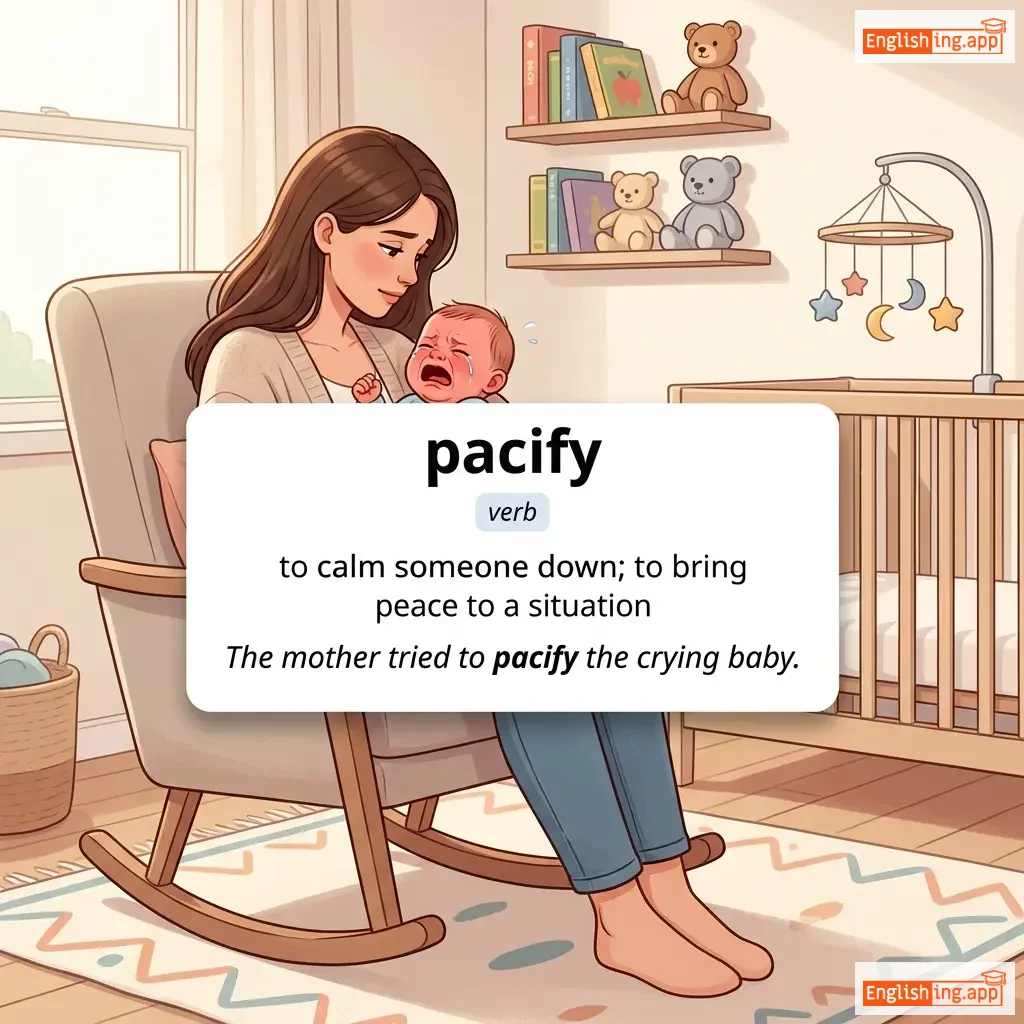
pacify definition card — visual illustration of the meaning
verb
/ˈpæs.ɪ.faɪ/
calmar (calmar)

to calm someone down; to bring peace to a situation

"The mother tried to pacify the crying baby."

"La madre trató de calmar al bebé que lloraba." (La madre trató de calmar al bebé que lloraba.)
verb,noun
/pæk/
empaquetar (empaquetar)

to put things into a container for storage or transport; a collection of items kept together

"She packed her clothes into a suitcase for the trip."

"Ella empacó su ropa en una maleta para el viaje." (Ella empacó su ropa en una maleta para el viaje.)
noun
/ˈpækɪdʒ/
paquete (paquete)

a container or wrapping in which something is packed

"He received a package in the mail."

"Recibió un paquete por correo." (Recibió un paquete por correo.)
noun
/ˈpæk.ɪt/
paquete (paquete)

a small package or container holding items or information

"He bought a packet of biscuits from the shop."

"Compró un paquete de galletas en la tienda." (Compro un paquete de galletas en la tienda.)
noun
/pækt/
pacto (pacto)

a formal agreement or promise between parties

"The two countries signed a peace pact."

"Los dos países firmaron un pacto de paz." (Los dos países firmaron un pacto de paz.)
noun
/pæd/
bloc (bloc)

a small cushion or block of soft material; also a set of sheets of paper fastened together

"He wrote her phone number on a yellow pad."

"Él escribió su número de teléfono en una hoja amarilla." (El escribió su número de teléfono en una hoja amarilla.)
noun
/ˈpæd.ɪŋ/
relleno / acolchonado (relleno / acolchonado)

soft material added for comfort, protection, or to fill space

"The chair had extra padding for comfort."

"La silla tenía almohadillas extra para comodidad." (La silla tenia almohadillas extra para comodidad.)
noun
/ˈpæd.ək/
campo cerrado para caballos u otros animales (campo cerrado para caballos u otros animales)

a small enclosed field where horses or other animals are kept

"The horses were grazing in the paddock."

"Los caballos estaban pastando en el paddock." (Los caballos estaban pastando en el paddock.)
noun
/ˈpæd.i/
arroz sin cáscara (arroz sin cascara)

rice grains that are still in their hulls; unhusked rice

"The farmer harvested paddy from the flooded fields."

"El agricultor cosechó arroz sin cáscara de los campos inundados." (El agricultor cosecho arroz sin cascara de los campos inundados)
noun
/ˈpɑːdreɪ/
padre (padre)

A title for a priest, especially in the Roman Catholic Church; also used informally for 'father'.

"The soldiers attended mass led by the padre."

"Los soldados asistieron a la misa presidida por el padre." (Los soldados asistieron a la misa presidida por el padre.)
noun
/ˈpiːən/
cántico de alabanza (cantico de alabanza)

A song or piece of writing expressing great praise or triumph.

"The article was a paean to the beauty of nature."

"El artículo fue un cántico de alabanza a la belleza de la naturaleza." (El articulo fue un cantico de alabanza a la belleza de la naturaleza.)
noun
/ˈpeɪɡən/
pagano (pagano)

A person holding religious beliefs other than those of the main world religions.

"The village still kept some pagan traditions alive."

"El pueblo aún mantenía vivas algunas tradiciones paganas." (El pueblo aun mantenía vivas algunas tradiciones paganas.)
noun
/peɪdʒ/
página (pagina)

one side of a sheet of paper, or a single sheet of paper in a book or document

"Turn to the next page for more information."

"Vaya a la siguiente página para más información." (Vaya a la siguiente pagina para mas informacion.)
noun
/ˈpædʒənt/
certamen de belleza (certamen de belleza)

A public entertainment consisting of a procession of people in elaborate costumes, or a beauty contest.

"She won first place in the beauty pageant."

"Ella ganó el primer lugar en el certamen de belleza" (ella ganó el primer lugar en el certamen de belleza)
noun
/peɪn/
dolor (dolor)

physical suffering or discomfort caused by illness or injury

"She felt a sharp pain in her chest."

"Ella sintió un dolor agudo en el pecho." (Ella sintio un dolor agudo en el pecho.)
adjective
/ˈpeɪn.fəl/
doloroso (doloroso)

causing physical or emotional pain

"The injury was very painful, and he needed immediate care."

"La lesión fue muy dolorosa y necesitaba atención inmediata." (La lesion fue muy dolorosa y necesitaba atencion inmediata.)
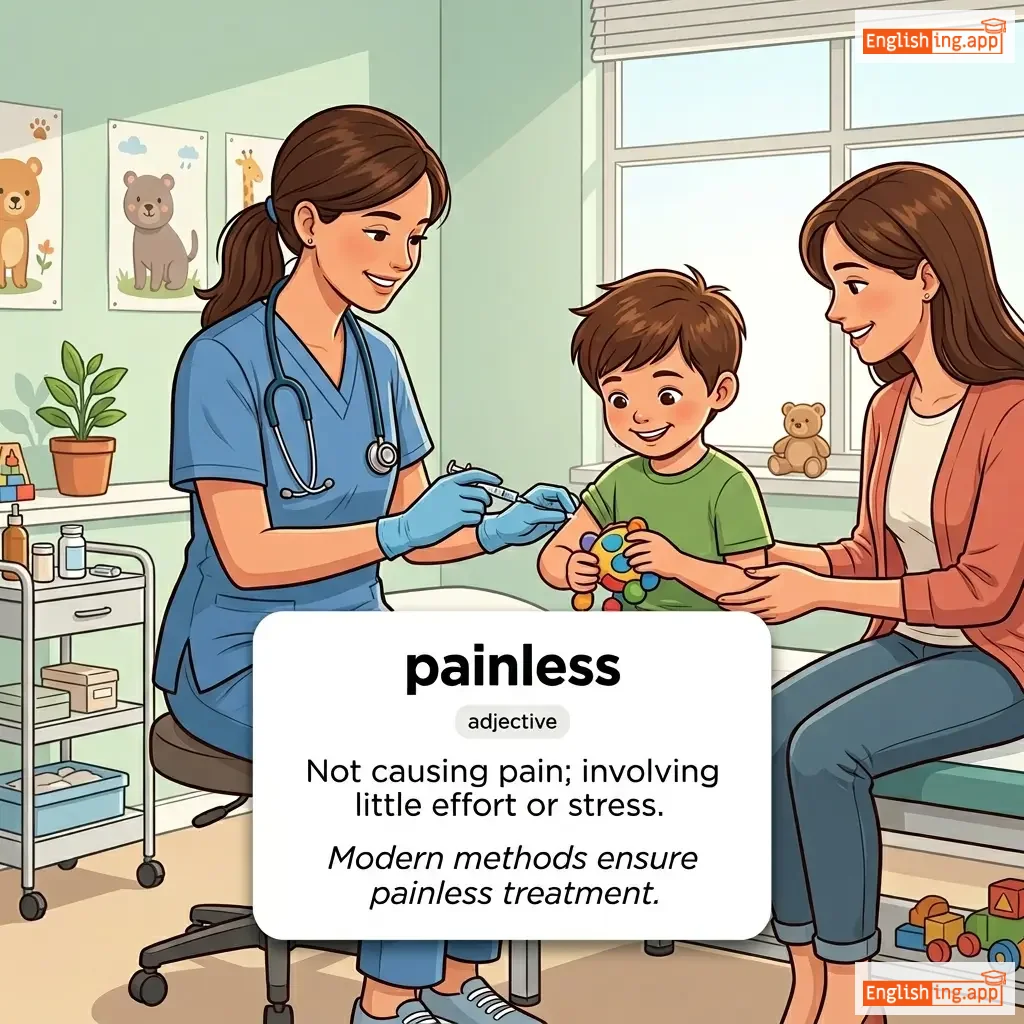
painless definition card — visual illustration of the meaning
adjective
ˈpeɪn.ləs
sin dolor (sin dolor)

Not causing pain; involving little effort or stress.

"Modern methods ensure painless treatment."

"Los métodos modernos aseguran un tratamiento sin dolor." (Los metodos modernos aseguran un tratamiento sin dolor.)
adjective
/ˈpeɪnzˌteɪkɪŋ/
con mucho cuidado (con mucho cuidado)

Done with great care and thoroughness.

"The artist completed the project with painstaking detail."

"El artista completó el proyecto con mucho cuidado." (El artista completó el proyecto con mucho cuidado.)
verb
/peɪnt/
pintar (pintar)

to apply a colored substance to a surface

"She loves to paint landscapes in her free time."

"A ella le gusta pintar paisajes en su tiempo libre." (A ella le gusta pintar paisajes en su tiempo libre.)
noun
/ˈpeɪn.tər/
pintor (pintor)

a person who paints pictures, or paints walls, buildings, etc.

"The painter spent hours working on the portrait."

"El pintor pasó horas trabajando en el retrato." (El pintor paso horas trabajando en el retrato.)
noun
/ˈpeɪntɪŋ/
pintura (pintura)

a picture or design made using paint

"The painting on the wall was created by a famous artist."

"La pintura en la pared fue creada por un artista famoso." (La pintura en la pared fue creada por un artista famoso.)
👟👟

pair (per)

noun
/per/
par (par)

two things of the same kind that are used together

"She wore a matching pair of shoes."

"Ella usó un par de zapatos a juego." (Ella usó un par de zapatos a juego.)
noun
/ˈpælɪs/
palacio (palacio)

a large and impressive building that is the official home of a king, queen, or other ruler

"The royal family lives in a magnificent palace."

"La familia real vive en un palacio magnífico." (La familia real vive en un palacio magnifico.)
noun
/ˌpæl.ənˈkiːn/
palanquín (palanquin)

a covered chair or bed carried on poles by bearers

"The bride was carried to the wedding ceremony in an ornate palanquin."

"La novia fue llevada a la ceremonia de boda en un palanquín ornamentado." (La novia fue llevada a la ceremonia de boda en un palanquín ornamentado.)
adjective
/ˈpæl.ə.tə.bəl/
agradable (agradable)

pleasant or acceptable to the taste, mind, or feelings

"The meal was simple but quite palatable."

"La comida era sencilla pero bastante agradable." (La comida era sencilla pero bastante agradable.)
noun
/ˈpæl.ə.tə.bəl miːt/
carne sabrosa (carne sabrosa)

Meat that is pleasant to taste; appetizing meat dish

"The chef prepared palatable meat dishes for the dinner party."

"El chef preparó platos de carne sabrosos para la fiesta de cena." (El chef preparó platos de carne sabrosos para la fiesta de cena.)
noun
/ˈpæl.ət/
paladar (paladar)

the roof of the mouth; a person's appreciation of taste and flavor

"She has a refined palate for fine wines."

"Ella tiene un paladar refinado para los buenos vinos." (Ella tiene un paladar refinado para los buenos vinos.)
adjective
/pəˈleɪ.ʃəl/
palaciego (palaciego)

resembling a palace in being spacious and splendid

"They stayed in a palatial hotel during their vacation."

"Se alojaron en un hotel palaciego durante sus vacaciones." (Se alojaron en un hotel palaciego durante sus vacaciones.)
noun
/pəˈlæv.ər/
charla innecesaria / alboroto (charla innecesaria / alboroto)

prolonged and idle discussion; fuss or unnecessary talk

"After much palaver, they finally agreed on the plan."

"Después de mucha charla innecesaria, finalmente acordaron el plan." (Despues de mucha charla innecesaria, finalmente acordaron el plan.)
👩‍🦰

Pale (peil)

adjective
/peɪl/
pálido (palido)

having a light or dull color, especially when compared with something else

"She looked pale after the long illness."

"Ella se veía pálida después de la larga enfermedad." (Ella se veia palida despues de la larga enfermedad.)
noun
/ˌpeɪ.li.ɒnˈtɒl.ə.dʒi/
paleontología (paleontologia)

the branch of science concerned with fossil animals and plants

"She decided to study paleontology at university."

"Decidió estudiar paleontología en la universidad." (Decidio estudiar paleontologia en la universidad.)
adjective
/pælɛˈstɪnɪən/
palestino (palestino)

relating to Palestine or its people

"The Palestinian people have a rich cultural heritage."

"El pueblo palestino tiene una rica herencia cultural." (El pueblo palestino tiene una rica herencia cultural.)
noun
/ˈpælət/
paleta (paleta)

a thin board or surface on which an artist sets and mixes colors; also a range of colors used in art or design

"The artist mixed vibrant shades on her palette before starting the painting."

"La artista mezcló tonos vibrantes en su paleta antes de comenzar la pintura." (La artista mezcló tonos vibrantes en su paleta antes de comenzar la pintura.)
noun
/ˈpælɪmpsɛst/
palimpsesto (palimpsesto)

a manuscript or document that has been written over but still bears traces of earlier writing; something reused or altered but still retaining traces of its earlier form

"The ancient manuscript was a palimpsest, showing faint traces of previous texts beneath the new writing."

"El antiguo manuscrito era un palimpsesto, mostrando débiles huellas de textos anteriores bajo la nueva escritura." (El antiguo manuscrito era un palimpsesto, mostrando débiles huellas de textos anteriores bajo la nueva escritura.)
noun
/ˈpælɪˌnoʊd/
palinodia (palinodia)

a poem or statement in which the writer retracts something said in an earlier work

"The poet wrote a palinode to apologize for his earlier harsh words."

"El poeta escribió una palinodia para disculparse por sus palabras severas anteriores." (El poeta escribio una palinodia para disculparse por sus palabras severas anteriores.)
verb, noun
/pɔːl/
decadencia, paño sobre un ataúd (decadencia, paño sobre un ataúd)

to lose strength or interest; to become dull or tiresome; also a cloth spread over a coffin

"The excitement of the festival began to pall after several days."

"La emoción del festival comenzó a decaer después de varios días." (La emocion del festival comenzo a decaer despues de varios dias.)
noun
/ˈpælɪt/
plataforma (plataforma)

a flat wooden platform used for moving or storing goods; also a makeshift bed

"The boxes were stacked on a wooden pallet for easy transport."

"Las cajas fueron apiladas en una plataforma de madera para un fácil transporte." (Las cajas fueron apiladas en una plataforma de madera para un fácil transporte.)
verb
/ˈpælieɪt/
aliviar (aliviar)

to make a disease, symptoms, or problem less severe without removing the cause

"The doctor prescribed medicine to palliate the patient's pain."

"El doctor recetó medicina para aliviar el dolor del paciente." (El doctor recetó medicina para aliviar el dolor del paciente.)
noun
/ˌpæliˈeɪʃən/
alivio (alivio)

relief of symptoms without curing the underlying disease or problem

"Palliation is often the focus of care for terminally ill patients."

"El alivio suele ser el enfoque principal del cuidado para los pacientes terminales." (El alivio suele ser el enfoque principal del cuidado para los pacientes terminales.)
adjective
/ˈpælɪd/
pálido (palido)

pale, typically because of poor health or lack of vitality

"The patient looked pallid after weeks of illness."

"La paciente se veía pálida después de semanas de enfermedad." (La paciente se veía pálida después de semanas de enfermedad.)
noun
/pɑːm/
palma de la mano / palma (palma de la mano / palma)

the inner surface of the hand; also a tropical tree with large leaves

"He placed the coin in the palm of her hand."

"Puso la moneda en la palma de su mano." (Puso la moneda en la palma de su mano.)
adjective
/ˈpɑːmi/
próspero / glorioso (prospero / glorioso)

prosperous, flourishing, or relating to palm trees

"He often reminisced about the palmy days of his youth."

"A menudo recordaba los días prósperos de su juventud." (A menudo recordaba los días prósperos de su juventud.)
adjective
/ˈpælpəbl̩/
felicidad (felicidad)

easily perceived or felt; so intense as to seem almost tangible

"There was a palpable sense of excitement in the room."

"No pudo ocultar su felicidad cuando recibió el premio." (No pudo ocultar su felicidad cuando recibio el premio.)
verb
/ˈpælpɪˌteɪt/
latir rápidamente (latir rapidamente)

to beat rapidly and strongly, often because of fear, excitement, or illness

"Her heart began to palpitate with fear."

"Su corazón comenzó a palpitar de miedo." (Su corazon comenzo a palpitar de miedo.)
noun
/ˌpæl.pɪˈteɪ.ʃən/
latido rápido, fuerte o irregular debido a agitación o una condición médica (latido rapido, fuerte o irregular debido a agitación o una condición médica)

a noticeably rapid, strong, or irregular heartbeat due to agitation or medical condition

"She experienced palpitations before her job interview."

"Ella experimentó palpitaciones antes de su entrevista de trabajo." (Ella experimento palpitaciones antes de su entrevista de trabajo.)
noun
/ˈpɔːlzi/
parálisis (paralisis)

a condition of partial or complete paralysis, often with involuntary tremors

"The patient suffered from Bell’s palsy."

"El paciente sufría de parálisis de Bell." (El paciente sufría de parálisis de Bell.)