Vocabularios

Descubra, aprenda y domine el vocabulario en inglés

noun
/oʊf/
persona torpe o tonta (persona torpe o tonta)

a clumsy, stupid, or awkward person

"He acted like an oaf at the dinner party, spilling drinks everywhere."

"Actuó como un tonto en la fiesta, derramando bebidas por todas partes." (Actuó como un tonto en la fiesta, derramando bebidas por todas partes.)
noun
/oʊk/
roble (roble)

a large tree that produces acorns and has strong, hard wood

"The old oak tree provided shade for the entire yard."

"El viejo roble dio sombra a todo el jardín." (El viejo roble dio sombra a todo el jardín.)
adjective
/ˈoʊ.kən/
hecho de roble (hecho de roble)

made of or resembling oak wood

"The villagers gathered around the oaken table in the hall."

"Los aldeanos se reunieron alrededor de la mesa de roble en el salón." (Los aldeanos se reunieron alrededor de la mesa de roble en el salón.)
noun
/ˈoʊ.kəm/
fibra de cuerda vieja (fibra de cuerda vieja)

loose fibers obtained by untwisting old ropes, used for caulking ships

"The shipbuilders used oakum to seal the gaps in the wooden planks."

"Los constructores de barcos usaron oakum para sellar las grietas en las tablas de madera." (Los constructores de barcos usaron oakum para sellar las grietas en las tablas de madera.)
noun
/ɔːr/
remo (remo)

a long pole with a flat blade used to row a boat

"He dipped the oar into the water and pulled the boat forward."

"Sumergió el remo en el agua y empujó el bote hacia adelante." (Sumergió el remo en el agua y empujó el bote hacia adelante.)
noun
/ˈɔːrzmən/
remero (remero)

a person who rows a boat, especially as a member of a racing crew

"The experienced oarsman rowed the boat across the river."

"El experimentado remero remó el bote a través del río." (El experimentado remero remo el bote a traves del rio)
noun
/oʊˈeɪ.sɪs/
oasis (oasis)

a fertile spot in a desert where water is found; a pleasant relief

"After hours in the desert, they finally reached an oasis."

"Después de horas en el desierto, finalmente llegaron a un oasis." (Despues de horas en el desierto, finalmente llegaron a un oasis.)
noun
/oʊθ/
juramento (juramento)

a solemn promise, often invoking a divine witness

"She took an oath to tell the truth in court."

"Ella hizo un juramento de decir la verdad en el tribunal." (Ella hizo un juramento de decir la verdad en el tribunal.)
noun
/ˈoʊtˌmiːl/
avena cocida (avena cocida)

A type of porridge made from ground oats, often eaten for breakfast.

"She eats a bowl of oatmeal every morning for breakfast."

"Ella come un tazón de avena cocida todas las mañanas para el desayuno." (Ella come un tazon de avena cocida todas las mananas para el desayuno.)
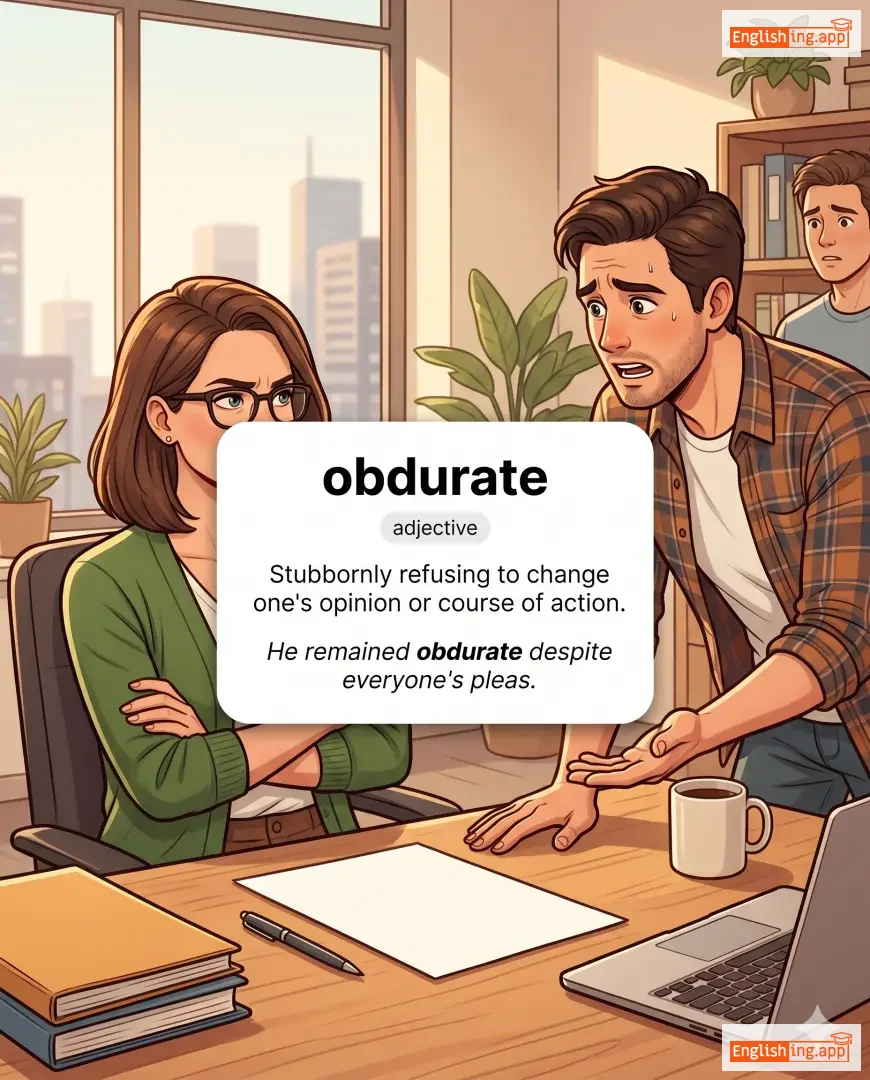
obdurate definition card — visual illustration of the meaning
adjective
/ˈɑːbdjʊrət/
obstinado (obstinados)

Stubbornly refusing to change one's opinion or course of action.

"He remained obdurate despite everyone's pleas."

"Él permaneció obstinado a pesar de las súplicas de todos." (El permanecio obstinado a pesar de las suplicas de todos.)
noun
/oʊˈbiː.di.əns/
obediencia (obediencia)

compliance with an order, request, or law; submission to authority

"Children should show obedience to their parents."

"Los niños deben mostrar obediencia a sus padres." (Los niños deben mostrar obediencia a sus padres.)
adjective
/oʊˈbiːdiənt/
obediente (obediente)

Willing to comply with rules or authority.

"The obedient child quickly followed her mother's instructions."

"El niño obediente siguió rápidamente las instrucciones de su madre." (El niño obediente siguió rápidamente las instrucciones de su madre.)
noun
/oʊˈbeɪsəns/
reverencia (reverencia)

A gesture of respect such as a bow or curtsy.

"They bowed in obeisance to the king."

"Ellos se inclinaron en reverencia al rey." (Ellos se inclinaron en reverencia al rey.)
noun
/ˈɑːbəlɪsk/
obelisco (obelisko)

A tall, four-sided, narrow tapering monument with a pyramid-shaped top.

"The ancient Egyptians built obelisks to honor their gods."

"Los antiguos egipcios construyeron obeliscos para honrar a sus dioses." (Los antiguos egipcios construyeron obeliscos para honrar a sus dioses.)
adjective
/oʊˈbiːs/
obeso (obeso)

Extremely overweight; having an excessive amount of body fat.

"The doctor advised the obese patient to adopt a healthier lifestyle."

"El doctor le recomendó al paciente obeso adoptar un estilo de vida más saludable." (El doctor le recomendó al paciente obeso adoptar un estilo de vida más saludable.)
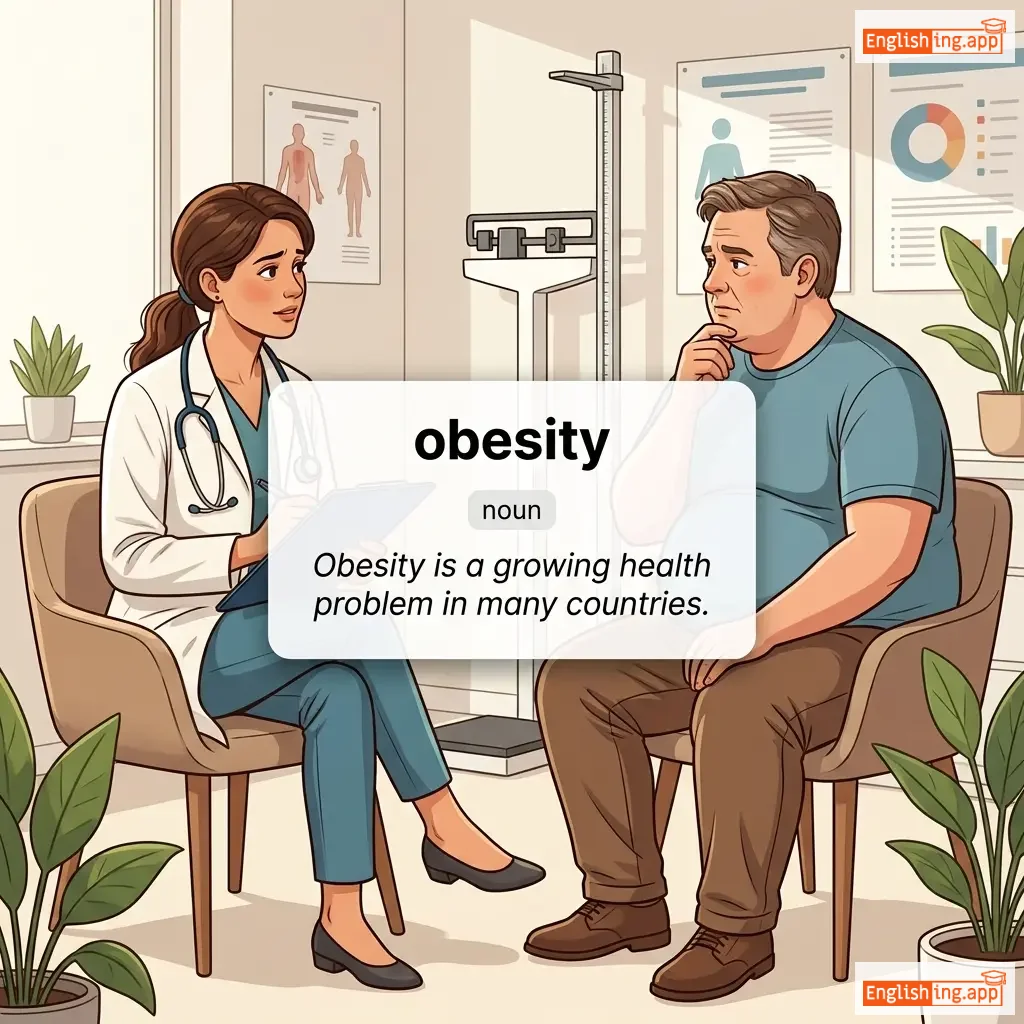
obesity definition card — visual illustration of the meaning
noun
/oʊˈbiːsəti/
obesidad (obesidad)

The condition of being very overweight, especially to a degree that it is harmful to health.

"Obesity is a growing health problem in many countries."

"La obesidad es un problema de salud creciente en muchos países." (La obesidad es un problema de salud creciente en muchos paises.)
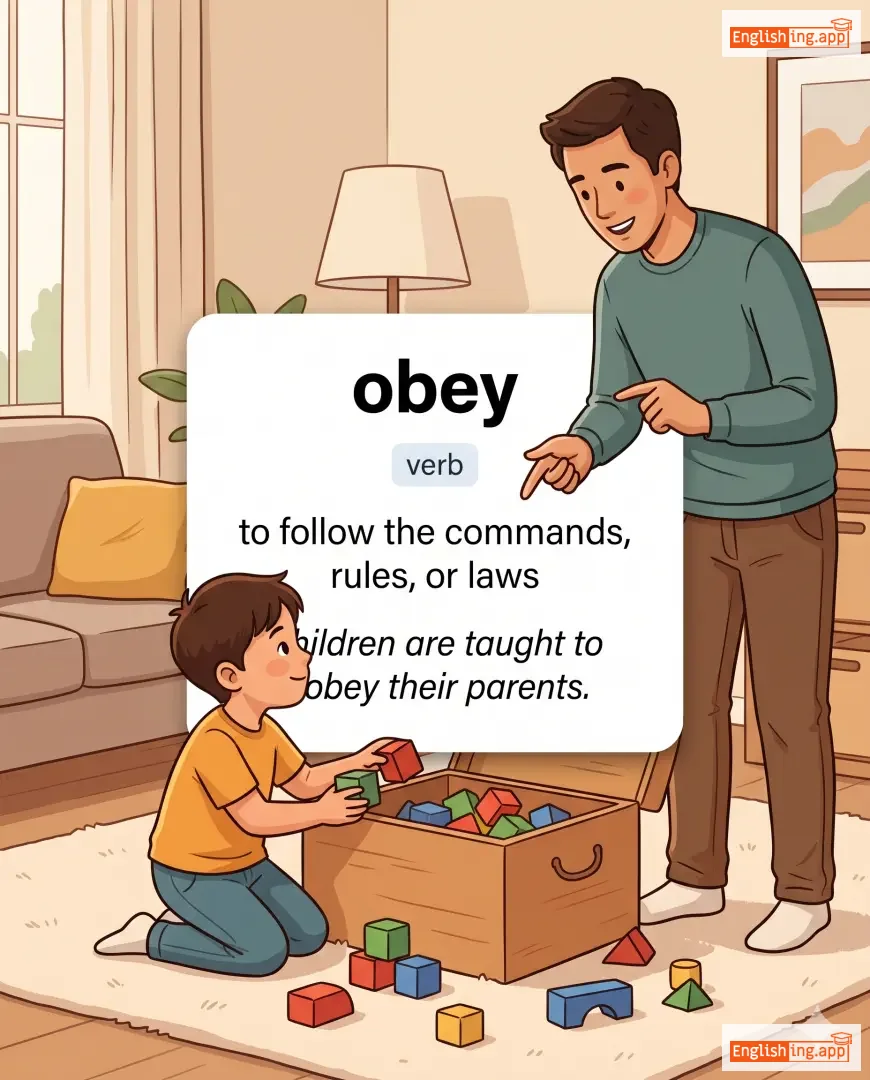
obey definition card — visual illustration of the meaning
verb
/oʊˈbeɪ/
obedecer (obedecer)

to follow the commands, rules, or laws

"Children are taught to obey their parents."

"Se enseña a los niños a obedecer a sus padres." (Se ensena a los niños a obedecer a sus padres.)
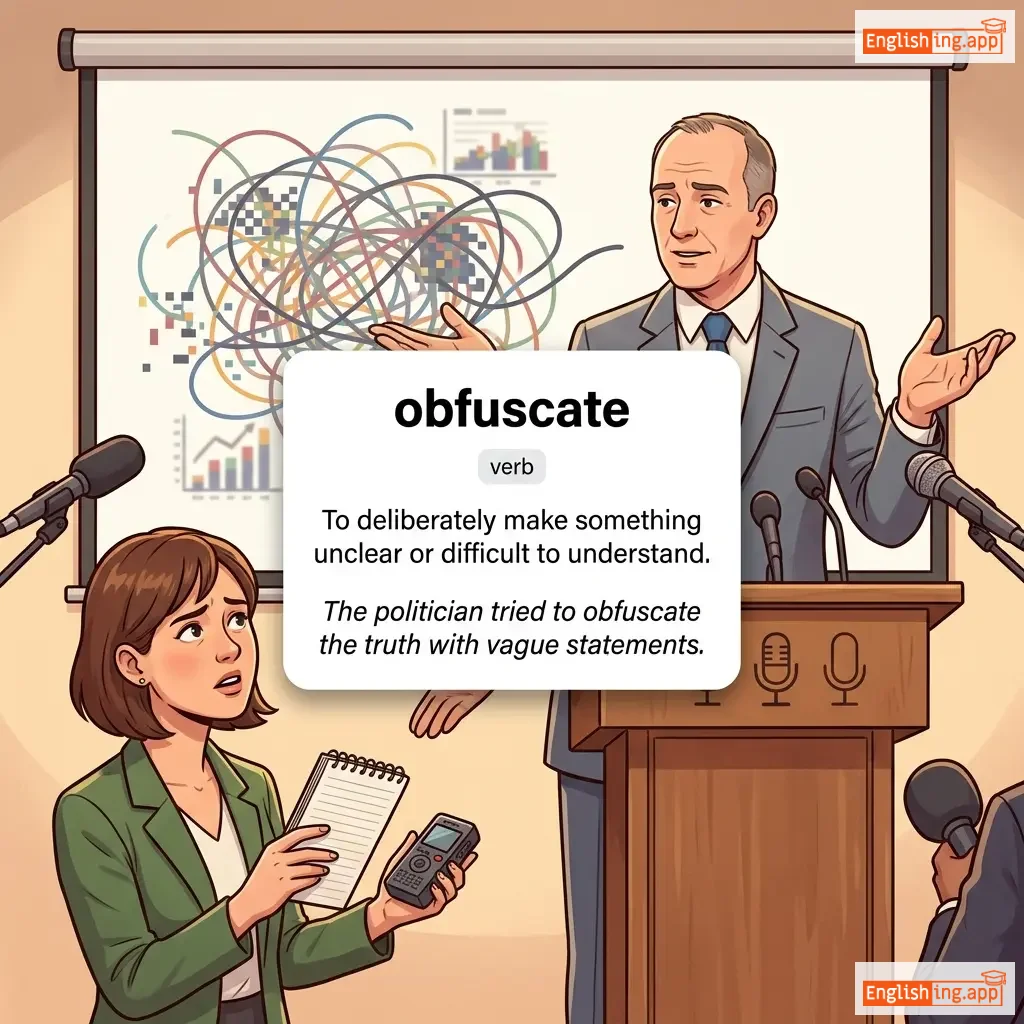
obfuscate definition card — visual illustration of the meaning
verb
/ˈɒbfʌskeɪt/
ofuscar (ofuskar)

To deliberately make something unclear or difficult to understand.

"The politician tried to obfuscate the truth with vague statements."

"El político trató de ofuscar la verdad con declaraciones vagas." (El politico trato de ofuscar la verdad con declaraciones vagas.)
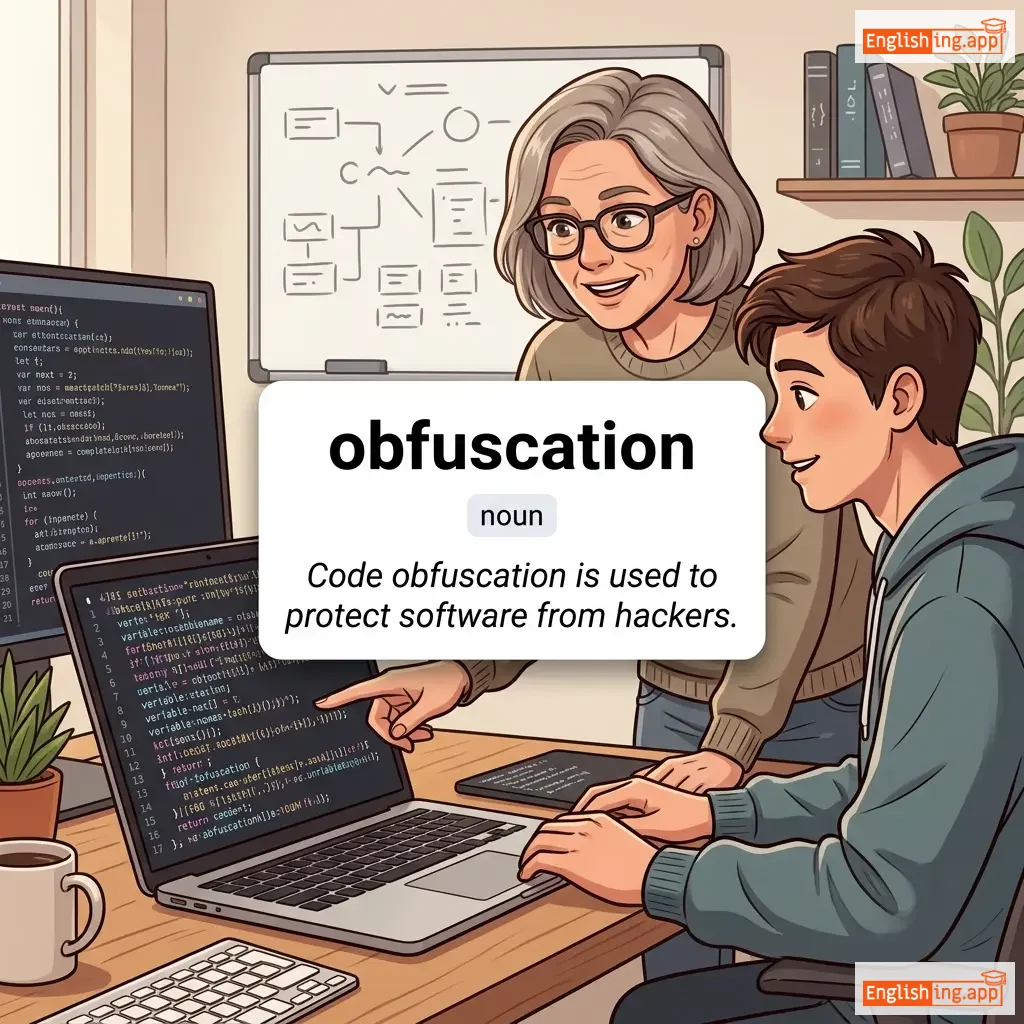
obfuscation definition card — visual illustration of the meaning
noun
/ˌɒb.fʌsˈkeɪ.ʃən/
hacer algo intencionadamente confuso o difícil de entender (hacer algo intencionadamente confuso o dificil de entender)

Deliberately making information or code unclear to make it difficult to understand

"Code obfuscation is used to protect software from hackers."

"La ofuscación de código se utiliza para proteger el software de los hackers." (La ofuscacion de codigo se utiliza para proteger el software de los hackers.)
noun
/əˈbɪtʃueri/
obituario (obituario)

A notice of a person's death, often published in a newspaper with a brief biography.

"The newspaper published an obituary for the famous writer."

"El periódico publicó un obituario para el famoso escritor." (El periódico publicó un obituario para el famoso escritor.)
noun
/ˈɒbdʒɪkt/
objeto (objeto)

a thing that can be seen and touched

"The table is an object in the room."

"La mesa es un objeto en la habitación." (La mesa es un objeto en la habitación.)
noun
/əbˈdʒɛkʃən/
objeción (objecion)

an expression or feeling of disapproval or opposition

"The lawyer raised an objection during the trial."

"El abogado presentó una objeción durante el juicio." (El abogado presento una objecion durante el juicio.)
adjective
/əbˈdʒek.ʃən.ə.bəl/
objecionable (objecionable)

arousing distaste or opposition; unpleasant or offensive

"His objectionable behavior made everyone uncomfortable."

"Su comportamiento objetable hizo que todos se sintieran incómodos." (Su comportamiento objetable hizo que todos se sintieran incómodos.)
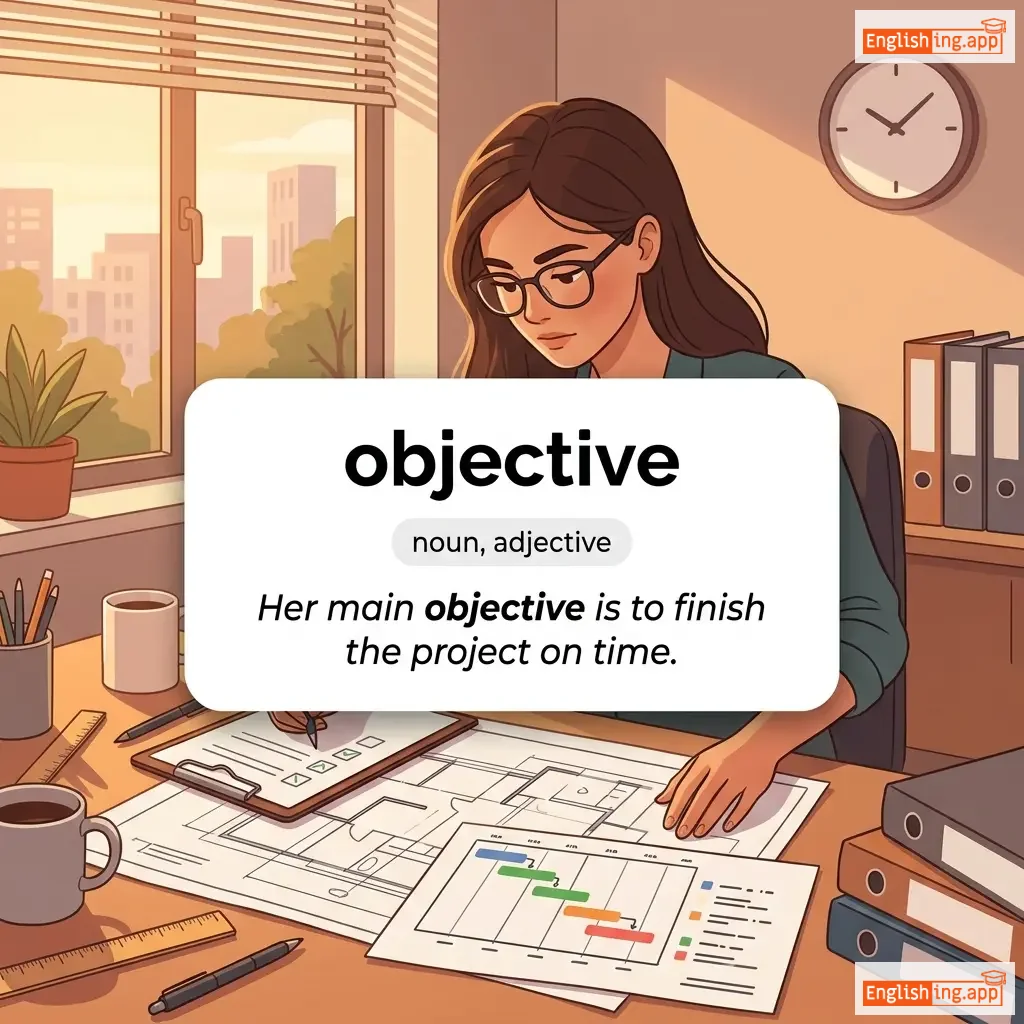
objective definition card — visual illustration of the meaning
noun, adjective
/əbˈdʒɛktɪv/
objetivo (objetivo)

As a noun: a goal or aim. As an adjective: not influenced by personal feelings; unbiased.

"Her main objective is to finish the project on time."

"Su principal objetivo es terminar el proyecto a tiempo." (Su principal objetivo es terminar el proyecto a tiempo.)
noun
/əbˈdʒɛktər/
opositor (opositor)

a person who expresses opposition or disapproval to something

"The objector raised his concerns during the town meeting."

"El opositor expresó sus preocupaciones durante la reunión del consejo." (El opositor expreso sus preocupaciones durante la reunion del consejo.)
verb
/ˈɑːbdʒərˌɡeɪt/
reprender severamente (reprender severamente)

to scold or rebuke severely

"The teacher objurgated the student for being dishonest."

"El maestro reprendió severamente al estudiante por ser deshonesto." (El maestro reprendió severamente al estudiante por ser deshonesto.)
noun
/ˌɑːbdʒərˈɡeɪʃən/
reprensión severa (repre-nsion severa)

a harsh scolding or strong rebuke

"His misconduct earned him a severe objurgation from the manager."

"Su mala conducta le valió una severa reprensión por parte del gerente." (Su mala conducta le valió una severa reprensión por parte del gerente.)
noun
/oʊˈbleɪʃən/
oblación (oblasion)

a religious offering, especially of bread or wine to God

"The priest placed the oblation on the altar during the ceremony."

"El sacerdote colocó la oblación en el altar durante la ceremonia." (El sacerdote coloco la oblasion en el altar durante la ceremonia.)
verb
/ˈɑːblɪˌɡeɪt/
obligar (obligar)

to bind legally or morally; to compel someone to do something

"The contract obligates the company to provide timely service."

"El contrato obliga a la empresa a proporcionar un servicio puntual." (El contrato obliga a la empresa a proporcionar un servicio puntual.)
noun
/ˌɒblɪˈɡeɪʃən/
obligación (obligacion)

a duty or commitment

"You have an obligation to follow the rules."

"Tienes la obligación de seguir las reglas." (Tienes la obligacion de seguir las reglas.)
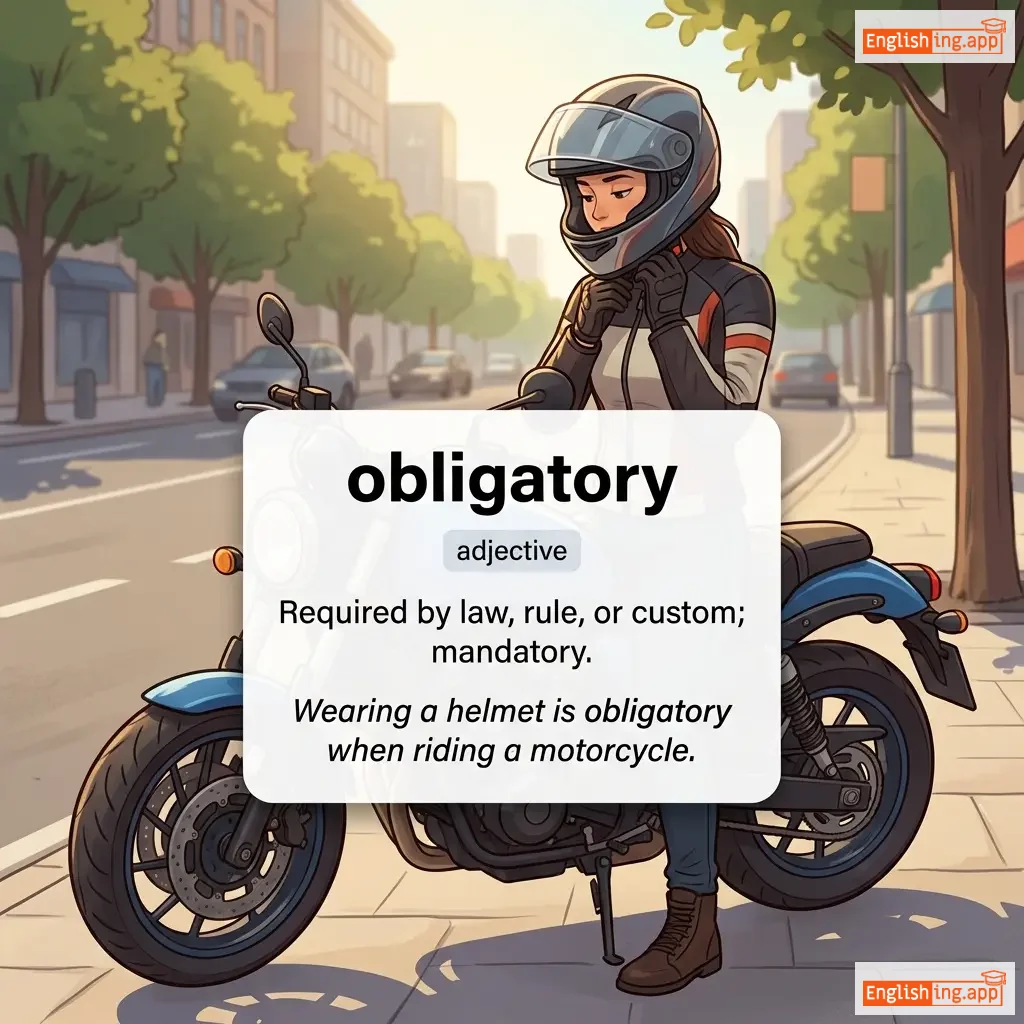
obligatory definition card — visual illustration of the meaning
adjective
/əˈblɪɡətɔːri/
obligatorio (obligatorio)

Required by law, rule, or custom; mandatory.

"Wearing a helmet is obligatory when riding a motorcycle."

"Es obligatorio llevar casco cuando se conduce una motocicleta." (Es obligatorio llevar casco cuando se conduce una motocicleta.)
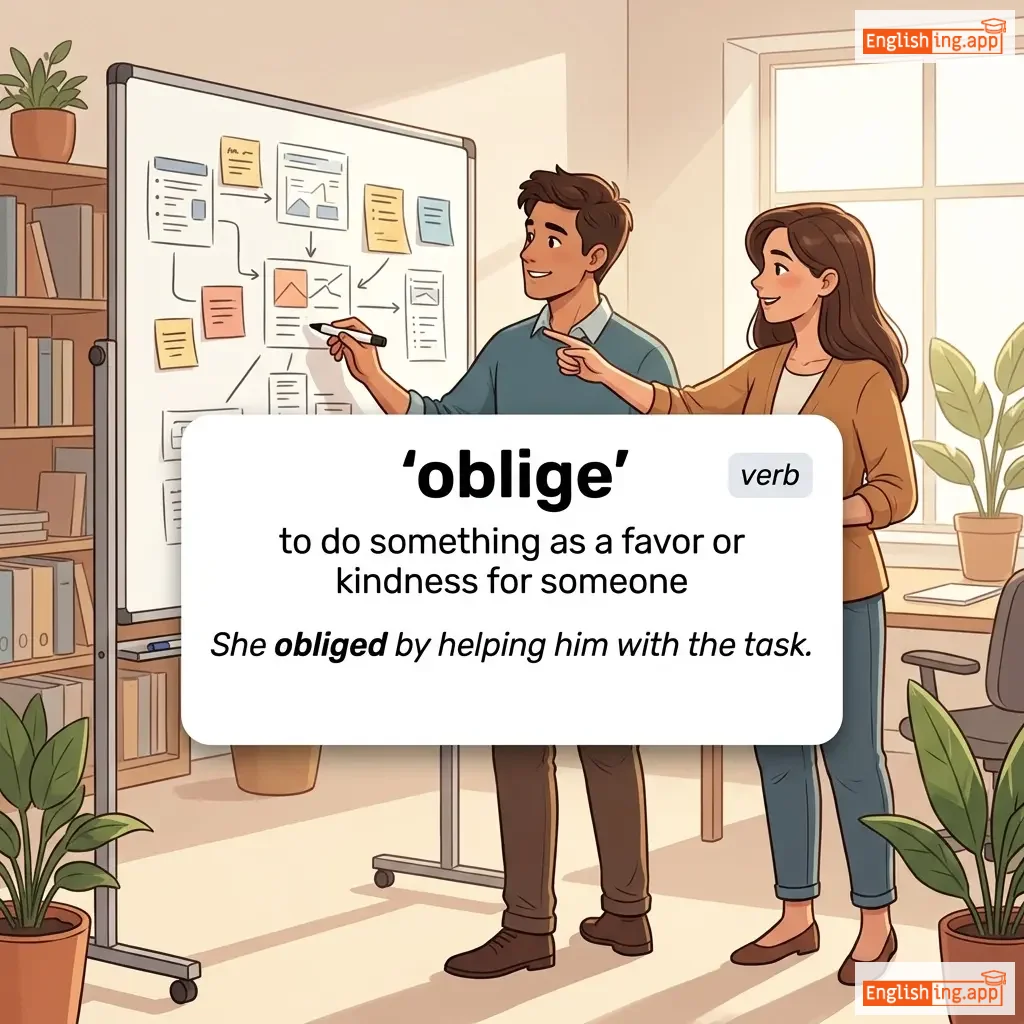
oblige definition card — visual illustration of the meaning
verb
/əˈblaɪdʒ/
obligar (obligar)

to do something as a favor or kindness for someone

"She obliged by helping him with the task."

"Ella lo hizo por ayudarle con la tarea." (Ella lo hizo por ayudarle con la tarea.)
adjective
/əˈblaɪdʒɪŋ/
servicial (servicial)

Willing to help or do favors; accommodating.

"The staff at the hotel were very obliging and friendly."

"El personal del hotel era muy servicial y amable." (El personal del hotel era muy servicial y amable.)
adjective
/əˈbliːk/ or /oʊˈbliːk/
oblicuo (obliko)

Not explicit or direct in addressing a point; slanting or indirect.

"She made an oblique reference to his past mistakes."

"Ella hizo una referencia oblicua a sus errores pasados." (Ella hizo una referencia oblicua a sus errores pasados.)
noun
/əˈblɪkwɪti/
oblicuidad (obliquidad)

Deviation from moral or usual conduct; indirectness or lack of straightforwardness.

"The politician was criticized for the obliquity of his answers."

"El político fue criticado por la oblicuidad de sus respuestas." (El politico fue criticado por la oblicuidad de sus respuestas.)
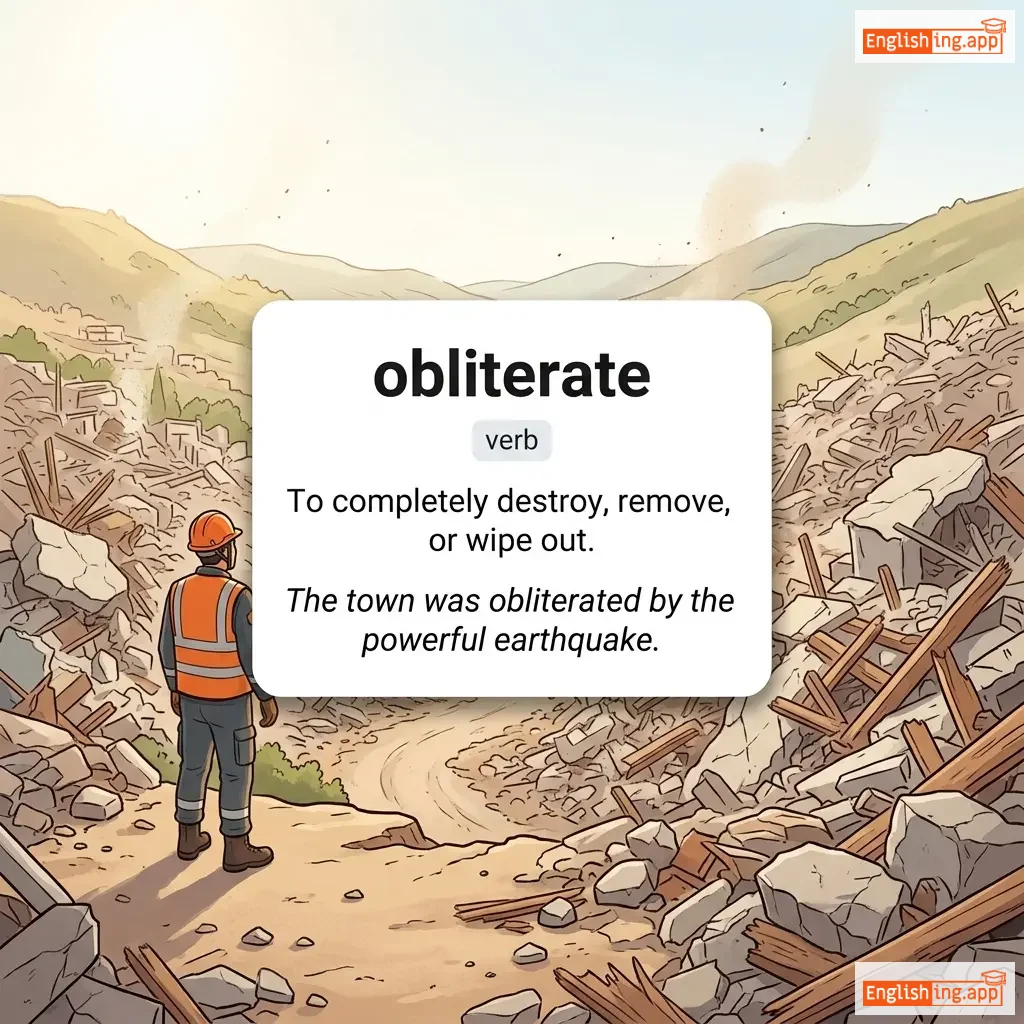
obliterate definition card — visual illustration of the meaning
verb
/əˈblɪtəreɪt/
destruir completamente (destruir completamente)

To completely destroy, remove, or wipe out.

"The town was obliterated by the powerful earthquake."

"La ciudad fue destruida por el poderoso terremoto." (La ciudad fue destruida por el poderoso terremoto.)
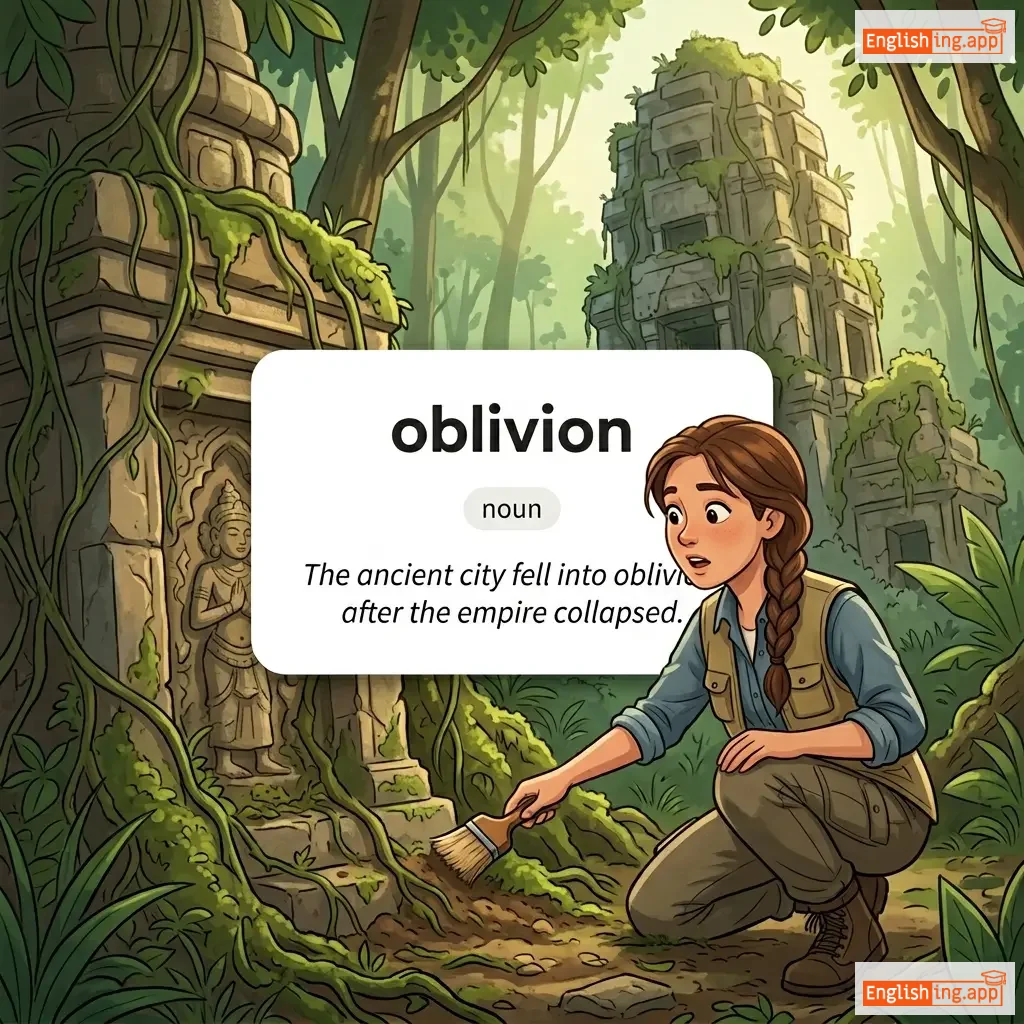
oblivion definition card — visual illustration of the meaning
noun
/əˈblɪviən/
olvido (olvido)

The state of being completely forgotten or unknown; the state of being unconscious or unaware.

"The ancient city fell into oblivion after the empire collapsed."

"La ciudad antigua cayó en el olvido después de que el imperio colapsara." (La ciudad antigua cayó en el olvido después de que el imperio colapsara.)
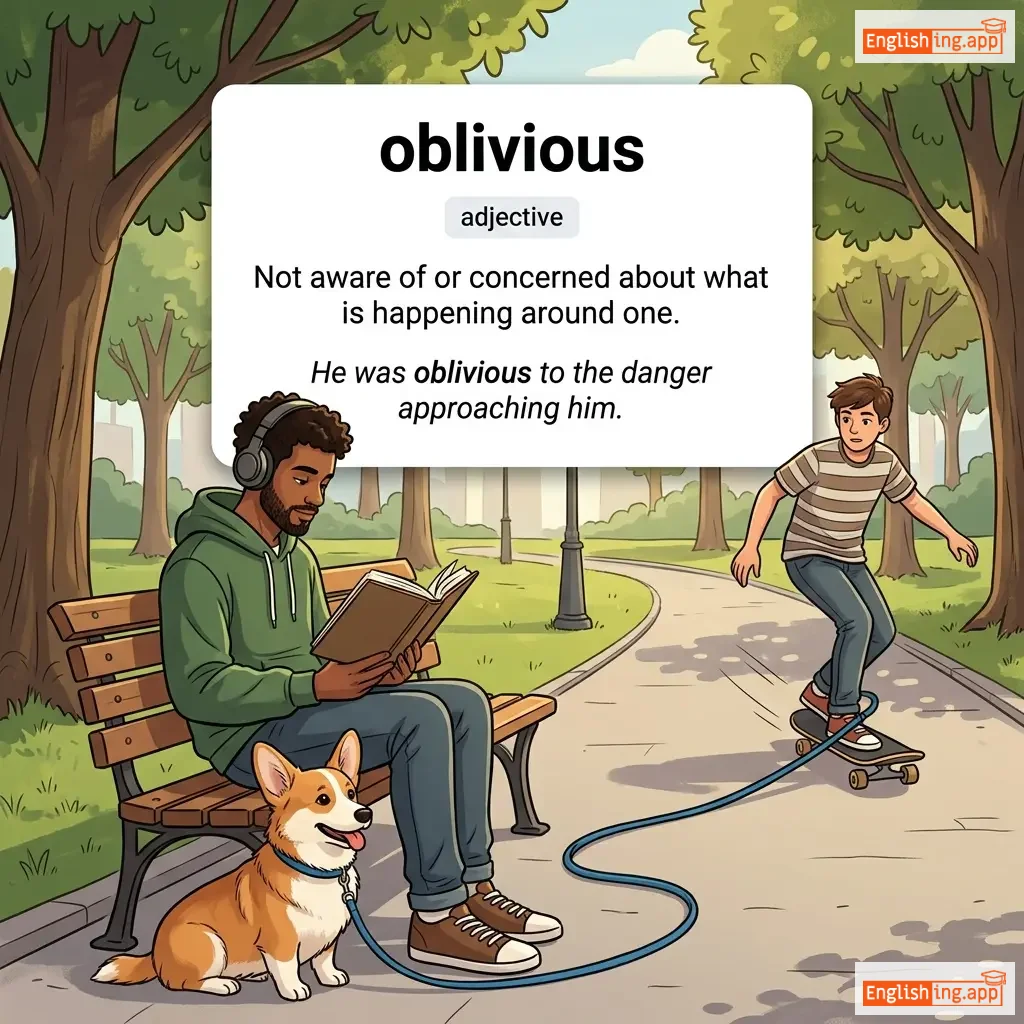
oblivious definition card — visual illustration of the meaning
adjective
/əˈblɪviəs/
ajeno (oblivious)

Not aware of or concerned about what is happening around one.

"He was oblivious to the danger approaching him."

"Él no se daba cuenta del peligro que se acercaba." (El no se daba cuenta del peligro que se acercaba)
noun
/ˈɒbləkwɪ/
calumnia (calumnia)

Strong public criticism or verbal abuse; disgrace or shame from public condemnation.

"The politician faced obloquy after the scandal was exposed."

"El político enfrentó calumnia después de que se expuso el escándalo." (El politico enfrento calumnia despues de que se expuso el escandalo.)
adjective
/əbˈnɒkʃəs/
desagradable (desagradable)

Extremely unpleasant, offensive, or annoying.

"The obnoxious behavior of the guest ruined the party."

"El comportamiento desagradable del invitado arruinó la fiesta." (El comportamiento desagradable del invitado arruinó la fiesta.)
adjective, verb
/əbˈskjʊr/
oscuro (oscuro)

Not clearly expressed or understood; to make something difficult to see or understand.

"The meaning of the poem was obscure to most readers."

"El significado del poema era oscuro para la mayoría de los lectores." (El significado del poema era oscuro para la mayoría de los lectores.)
noun
/ˈɒbsɪkwiːz/
ritos fúnebres (ritos funebres)

Funeral rites or ceremonies.

"The obsequies for the late leader drew thousands of mourners."

"Los ritos fúnebres para el líder fallecido atrajeron a miles de dolientes." (Los ritos funebres para el lider fallecido atrajeron a miles de dolientes.)
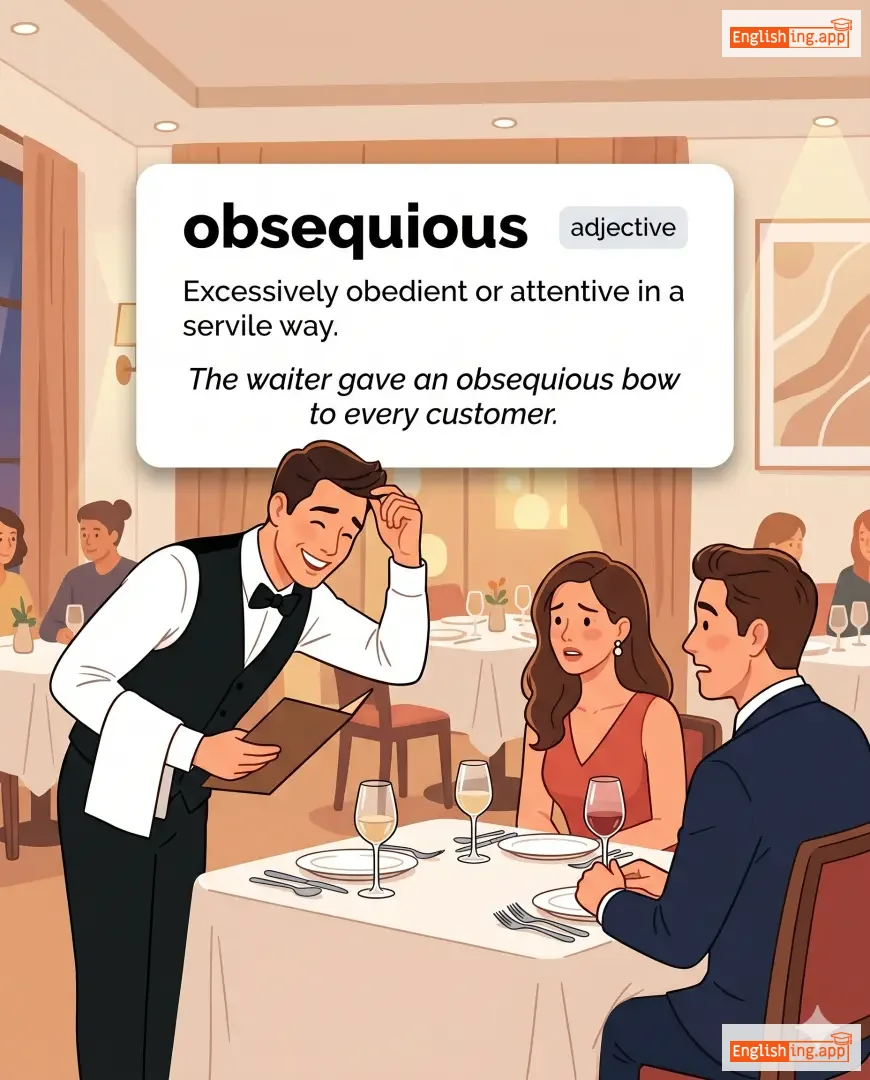
obsequious definition card — visual illustration of the meaning
adjective
/əbˈsiːkwɪəs/
servil (servil)

Excessively obedient or attentive in a servile way.

"The waiter gave an obsequious bow to every customer."

"El camarero hizo una reverencia servil a cada cliente." (El camarero hizo una reverencia servil a cada cliente.)
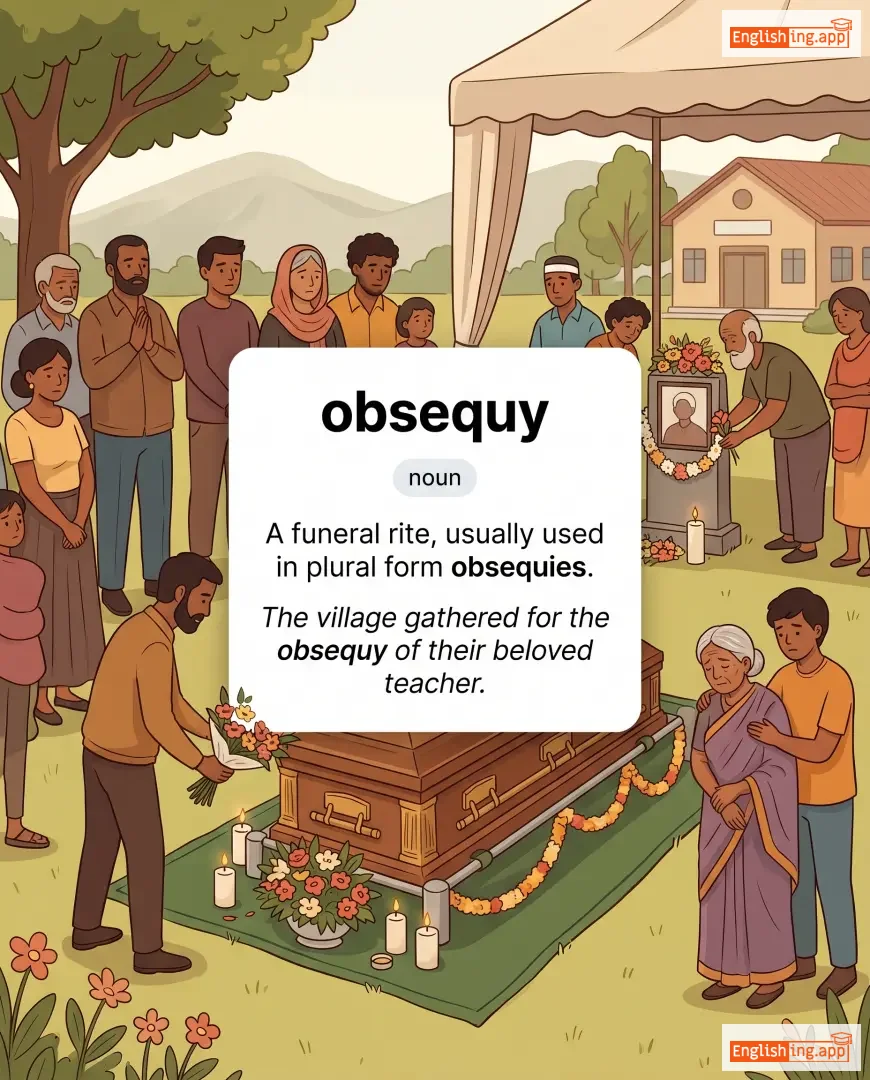
obsequy definition card — visual illustration of the meaning
noun
/ˈɒbsɪkwi/
obsequio (obsequio)

A funeral rite, usually used in plural form obsequies.

"The village gathered for the obsequy of their beloved teacher."

"El pueblo se reunió para el obsequio de su querido maestro." (El pueblo se reunió para el obsequio de su querido maestro.)
noun
/əbˈzɜːvəns/
observancia (observancia)

The practice of following a custom, rule, or religious law.

"The festival is held in observance of a centuries-old tradition."

"El festival se celebra en observancia de una tradición centenaria." (El festival se celebra en observancia de una tradicion centenaria.)
adjective
/əbˈzɜːvənt/
observador (observador)

Quick to notice details or attentive to rules and customs.

"She is very observant and rarely misses any detail."

"Ella es muy observadora y rara vez pierde algún detalle." (Ella es muy observadora y rara vez pierde algun detalle.)
noun
/ˌɒbzəˈveɪʃən/
observación (observacion)

the action or process of observing something carefully in order to gain information

"The scientist made an observation during the experiment."

"El científico hizo una observación durante el experimento." (El cientifico hizo una observacion durante el experimento.)
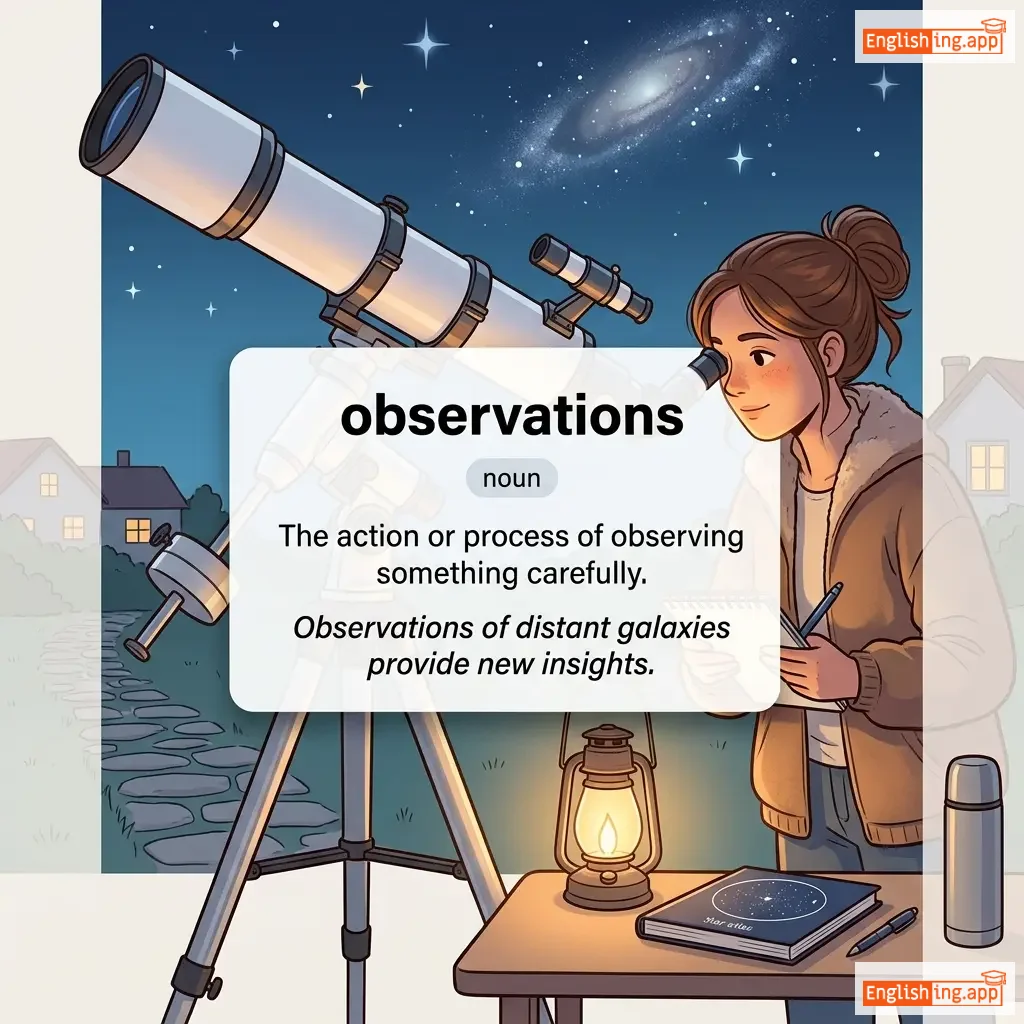
observations definition card — visual illustration of the meaning
noun
/ˌɒb.zəˈveɪ.ʃənz/
observación (observacion)

The action or process of observing something carefully.

"Observations of distant galaxies provide new insights."

"Las observaciones de galaxias distantes proporcionan nuevas ideas." (Las observaciones de galaxias distantes proporcionan nuevas ideas.)
noun
/əbˈzɜːrvətɔːri/
observatorio (observatorio)

A building equipped for observing astronomical or meteorological events.

"The observatory is open to the public on weekends."

"El observatorio está abierto al público los fines de semana." (El observatorio esta abierto al publico los fines de semana.)
verb
/əbˈzɜːv/
observar (observar)

to watch carefully and attentively

"The teacher asked the students to observe the experiment."

"El profesor pidió a los estudiantes que observaran el experimento." (El profesor pidio a los estudiantes que observaran el experimento.)