词汇表

英语词汇词典 | 单词含义、定义和示例

🏃‍♀️

pace (pèi sī)

noun
/peɪs/
步伐 (bù fá)

the speed at which something happens or is done

"She walked at a slow pace."

"她走得很慢。" (Tā zǒu dé hěn màn.)
noun
/ˈpæk.ɪ.dɜːrm/
具有厚皮的大型哺乳动物 (jùyǒu hòu pí de dàxíng bǔrǔ dòngwù)

a large mammal with thick skin, such as an elephant, rhinoceros, or hippopotamus

"The zoo had several pachyderms, including elephants and rhinos."
"动物园里有几只厚皮兽,包括大象和犀牛。" (dòngwùyuán lǐ yǒu jǐ zhī hòu pí shòu, bāokuò dàxiàng hé xīniú.)
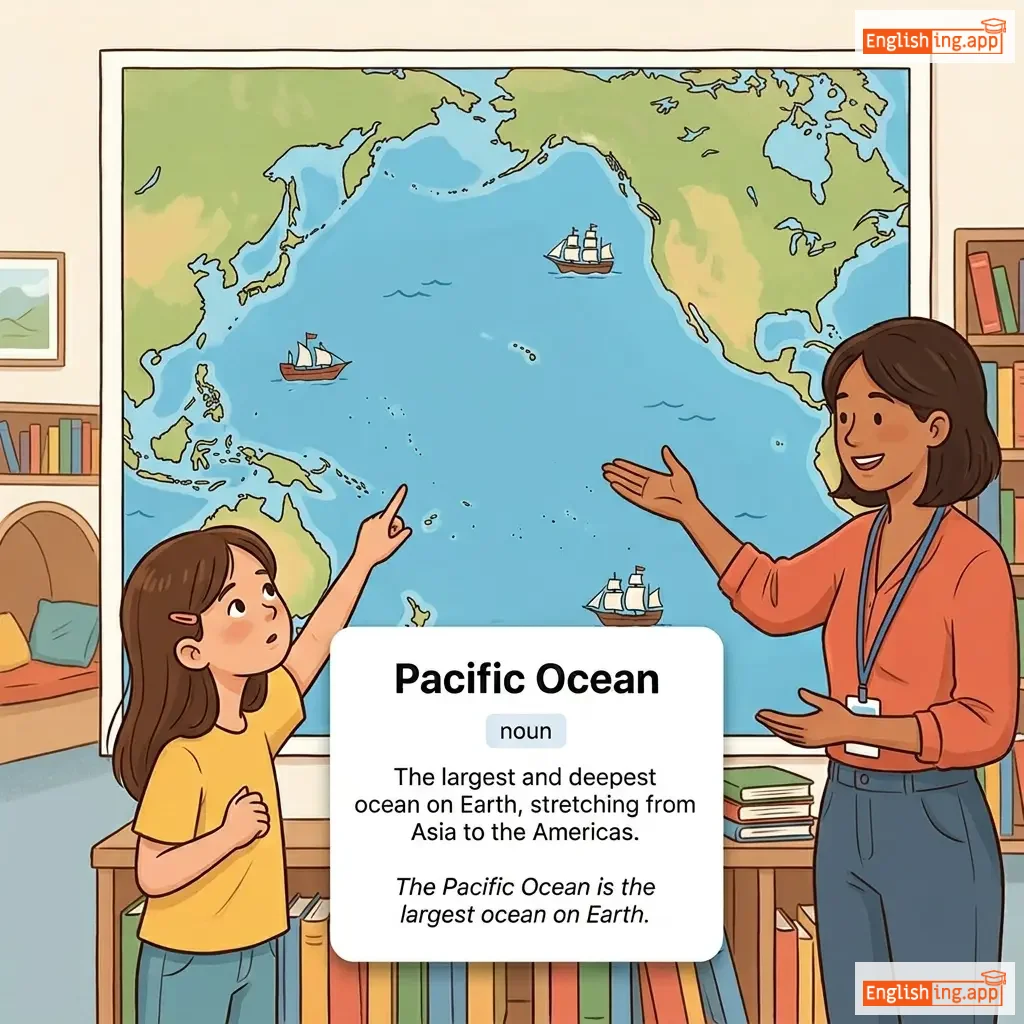
Pacific Ocean definition card — visual illustration of the meaning
noun
/pəˈsɪf.ɪk ˈoʊ.ʃən/
太平洋 (Taipingyang)

The largest and deepest ocean on Earth, stretching from Asia to the Americas.

"The Pacific Ocean is the largest ocean on Earth."

"太平洋是地球上最大的海洋。" (Taipingyang shi diqiu shang zuida de haiyang.)
noun
/ˈpæs.ɪ.fɪst/
和平主义者 (hépíng zhǔyì zhě)

a person who believes in peace and opposes war or violence

"She is a committed pacifist who campaigns against armed conflict."
"她是一个坚定的和平主义者,致力于反对武装冲突。" (Tā shì yīgè jiāndìng de hépíng zhǔyì zhě, zhìlì yú fǎnduì wǔzhuāng chōngtú.)
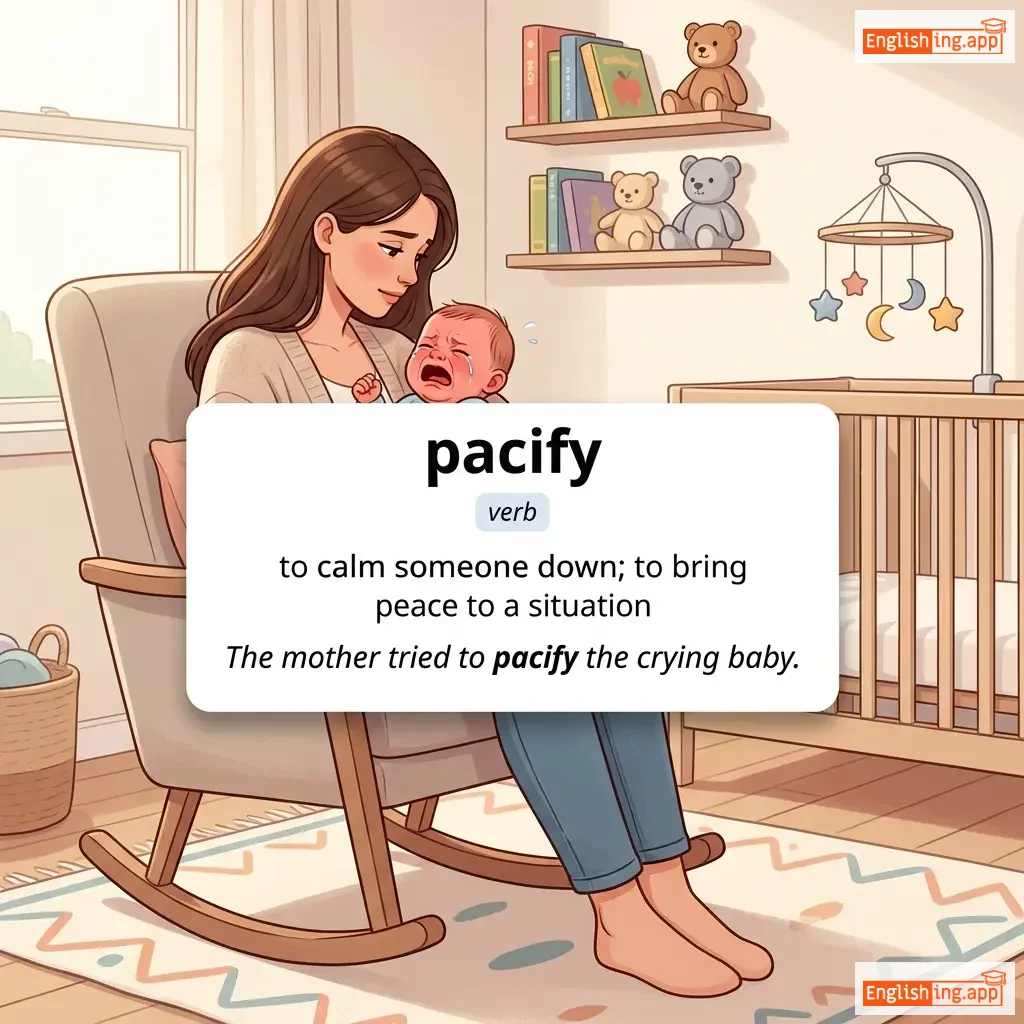
pacify definition card — visual illustration of the meaning
verb
/ˈpæs.ɪ.faɪ/
安抚 (ānfǔ)

to calm someone down; to bring peace to a situation

"The mother tried to pacify the crying baby."

"母亲试图安抚哭泣的婴儿。" (Mǔqīn shìtú ānfǔ kūqì de yīng'ér.)
🎒

pack

verb,noun
/pæk/

to put things into a container for storage or transport; a collection of items kept together

"She packed her clothes into a suitcase for the trip."

noun
/ˈpækɪdʒ/
包裹 (baoguo)

a container or wrapping in which something is packed

"He received a package in the mail."

"他收到了一份包裹。" (Ta shoudao le yi fen baoguo.)
noun
/ˈpæk.ɪt/
包裹 (baoguo)

a small package or container holding items or information

"He bought a packet of biscuits from the shop."

"他从商店买了一个饼干包裹。" (Ta cong shangdian mai le yi ge binggan baoguo.)
noun
/pækt/
协议 (xieyi)

a formal agreement or promise between parties

"The two countries signed a peace pact."

"两国签署了和平协议。" (Liang guo qianshu le heping xieyi.)
noun
/pæd/
便签本 (biàn qiānběn)

a small cushion or block of soft material; also a set of sheets of paper fastened together

"He wrote her phone number on a yellow pad."

"他把她的电话号码写在一个黄色的便签本上。" (Tā bǎ tā de diànhuà hàomǎ xiě zài yīgè huángsè de biàn qiānběn shàng.)
noun
/ˈpæd.ɪŋ/
填充物 / 垫层 (tianchong wu / dian ceng)

soft material added for comfort, protection, or to fill space

"The chair had extra padding for comfort."

"椅子上有额外的衬垫以增加舒适感。" (Yizi shang you ewai de chendian yi zengjia shuxiguan.)
noun
/ˈpæd.ək/
马或其他动物的围场 (mǎ huò qítā dòngwù de wéichǎng)

a small enclosed field where horses or other animals are kept

"The horses were grazing in the paddock."

"马群在围场里吃草。" (Mǎqún zài wéichǎng lǐ chī cǎo.)
noun
/ˈpæd.i/
稻谷 (daogu)

rice grains that are still in their hulls; unhusked rice

"The farmer harvested paddy from the flooded fields."

"农民从被淹没的田地里收割了稻谷。" (nongmin cong bei yanmo de tiandi li shouge le daogu)
noun
/ˈpɑːdreɪ/
神父 (shenfu)

A title for a priest, especially in the Roman Catholic Church; also used informally for 'father'.

"The soldiers attended mass led by the padre."

"士兵们参加了由神父主持的弥撒。" (Shibing men canjia le you shenfu zhuchi de misa.)
noun
/ˈpiːən/
颂歌 (song ge)

A song or piece of writing expressing great praise or triumph.

"The article was a paean to the beauty of nature."

"这篇文章是对大自然美丽的颂歌。" (Zhe pian wen zhang shi dui da zi ran mei li de song ge.)
noun
/ˈpeɪɡən/
异教徒 (yìjiàotú)

A person holding religious beliefs other than those of the main world religions.

"The village still kept some pagan traditions alive."

"这个村庄仍然保持着一些异教传统。" (Zhège cūnzhuāng réngrán bǎochí zhe yīxiē yìjiào chuántǒng.)
noun
/peɪdʒ/
页面 (ye mian)

one side of a sheet of paper, or a single sheet of paper in a book or document

"Turn to the next page for more information."

"转到下一页以获取更多信息。" (Zhuan dao xia yi ye yi huò qu geng duo xinxi.)
noun
/ˈpædʒənt/
选美比赛 (xuǎnměi bǐsài)

A public entertainment consisting of a procession of people in elaborate costumes, or a beauty contest.

"She won first place in the beauty pageant."

"她在选美比赛中赢得了第一名" (tā zài xuǎnměi bǐsài zhōng yíngdéle dì yī míng)
noun
/peɪn/
痛苦 (tongku)

physical suffering or discomfort caused by illness or injury

"She felt a sharp pain in her chest."

"她感到胸口有一阵锐利的痛苦。" (Ta gandao xiongkou you yizhen ruili de tongku.)
adjective
/ˈpeɪn.fəl/
疼痛的 (téngtòng de)

causing physical or emotional pain

"The injury was very painful, and he needed immediate care."
"受伤非常疼痛,他需要立刻接受治疗。" (Shòushāng fēicháng téngtòng, tā xūyào lìkè jiēshòu zhìliáo.)
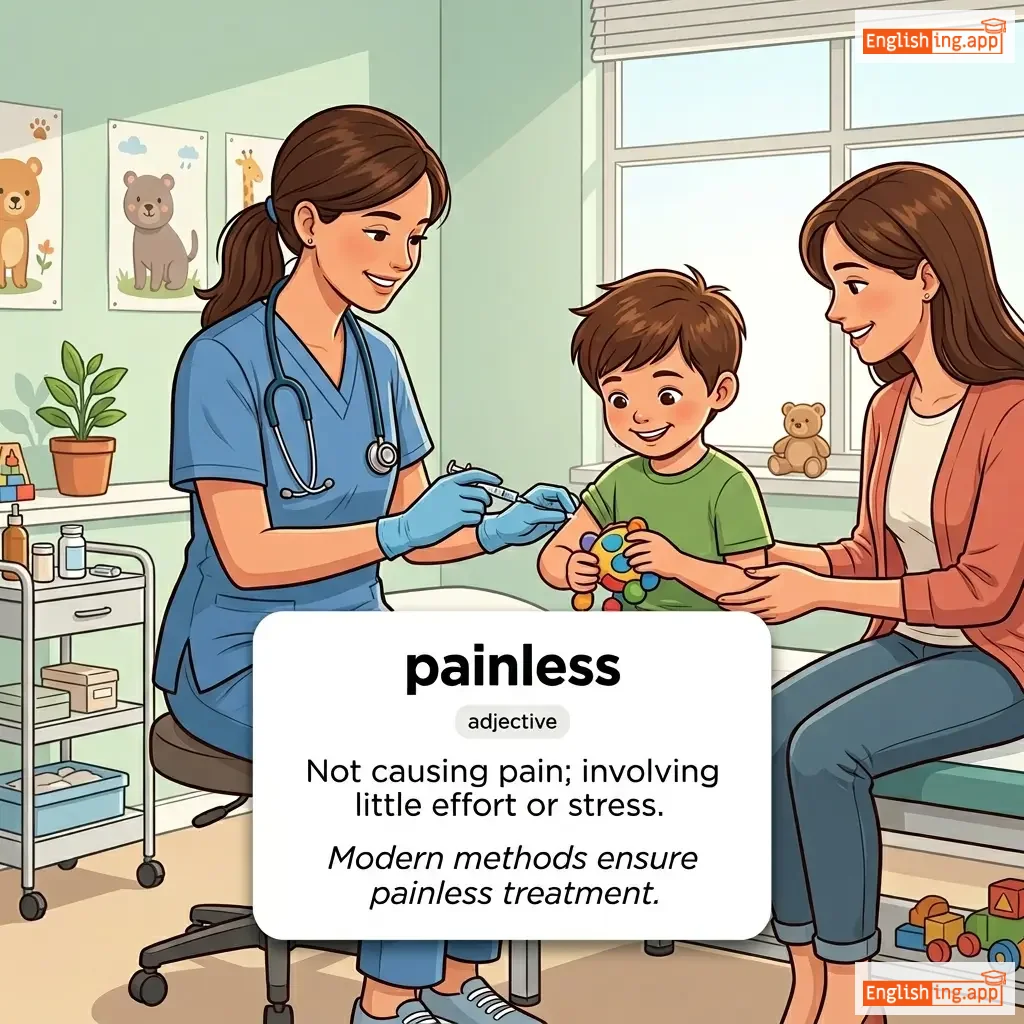
painless definition card — visual illustration of the meaning
adjective
ˈpeɪn.ləs
无痛 (wútòng)

Not causing pain; involving little effort or stress.

"Modern methods ensure painless treatment."

"现代方法确保无痛治疗。" (Xiàndài fāngfǎ quèbǎo wútòng zhìliáo.)
adjective
/ˈpeɪnzˌteɪkɪŋ/
非常小心 (fēicháng xiǎoxīn)

Done with great care and thoroughness.

"The artist completed the project with painstaking detail."

"艺术家以极其细致的方式完成了这个项目。" (Yìshùjiā yǐ jíqí xìzhì de fāngshì wánchéngle zhège xiàngmù.)
verb
/peɪnt/
画画 (huàhuà)

to apply a colored substance to a surface

"She loves to paint landscapes in her free time."

"她喜欢在空闲时间画风景画。" (Tā xǐhuān zài kòngxián shíjiān huà fēngjǐng huà.)
noun
/ˈpeɪn.tər/
画家 (huàjiā)

a person who paints pictures, or paints walls, buildings, etc.

"The painter spent hours working on the portrait."

"画家花了几个小时在肖像上工作。" (Huàjiā huāle jǐ gè xiǎoshí zài xiàoxiàng shàng gōngzuò.)
noun
/ˈpeɪntɪŋ/
(hua)

a picture or design made using paint

"The painting on the wall was created by a famous artist."

"墙上的画是由一位著名艺术家创作的。" (Qiang shang de hua shi you yi wei zhuming yishujia chuangzuo de.)
noun
/per/
一对 (yī duì)

two things of the same kind that are used together

"She wore a matching pair of shoes."

"她穿了一双匹配的鞋子。" (Tā chuānle yī shuāng pǐpèi de xiézi.)
noun
/ˈpælɪs/
宫殿 (gongdian)

a large and impressive building that is the official home of a king, queen, or other ruler

"The royal family lives in a magnificent palace."

"皇室家庭住在一个宏伟的宫殿里。" (Huangshi jiating zhuzai yige hongwei de gongdian li.)
noun
/ˌpæl.ənˈkiːn/
花轿 (huā jiào)

a covered chair or bed carried on poles by bearers

"The bride was carried to the wedding ceremony in an ornate palanquin."

"新娘在装饰华丽的轿子中被抬到婚礼现场。" (Xīnniáng zài zhuāngshì huálì de jiàozǐ zhōng bèi tái dào hūnlǐ xiànchǎng.)
adjective
/ˈpæl.ə.tə.bəl/
可口的 (kěkǒu de)

pleasant or acceptable to the taste, mind, or feelings

"The meal was simple but quite palatable."

"这顿饭很简单,但相当可口。" (Zhè dùn fàn hěn jiǎndān, dàn xiāngdāng kěkǒu.)
noun
/ˈpæl.ə.tə.bəl miːt/
美味的肉类 (měiwèi de ròulèi)

Meat that is pleasant to taste; appetizing meat dish

"The chef prepared palatable meat dishes for the dinner party."

"厨师为晚宴准备了美味的肉类菜肴。" (Chúshī wèi wǎnyàn zhǔnbèile měiwèi de ròulèi cài yáo.)
noun
/ˈpæl.ət/
上颚 (shàng è)

the roof of the mouth; a person's appreciation of taste and flavor

"She has a refined palate for fine wines."

"她对美酒有着精致的品味。" (Tā duì měi jiǔ yǒu zhe jīng zhì de pǐn wèi.)
adjective
/pəˈleɪ.ʃəl/
宫殿般 (gongdian ban)

resembling a palace in being spacious and splendid

"They stayed in a palatial hotel during their vacation."

"他们在度假时住在一间宫殿般的酒店里。" (Tāmen zài dùjià shí zhù zài yī jiàn gōngdiàn bān de jiǔdiàn lǐ.)
noun
/pəˈlæv.ər/
无意义的讨论 / 喧嚣 (wú yìyì de tǎolùn / xuānxiāo)

prolonged and idle discussion; fuss or unnecessary talk

"After much palaver, they finally agreed on the plan."

"经过长时间的无意义讨论后,他们最终同意了计划。" (Jīngguò cháng shíjiān de wú yìyì tǎolùn hòu, tāmen zuìzhōng tóngyìle jìhuà.)
👩‍🦰

Pale (pèi ěr)

adjective
/peɪl/
苍白 (cangbai)

having a light or dull color, especially when compared with something else

"She looked pale after the long illness."

"她在长时间生病后看起来苍白。" (Tā zài cháng shíjiān shēngbìng hòu kàn qǐlái cāngbái.)
noun
/ˌpeɪ.li.ɒnˈtɒl.ə.dʒi/
古生物学 (gǔshēngwùxué)

the branch of science concerned with fossil animals and plants

"She decided to study paleontology at university."

"她决定在大学学习古生物学。" (Tā juédìng zài dàxué xuéxí gǔshēngwùxué.)
adjective
/pælɛˈstɪnɪən/
巴勒斯坦的 (bālèsītǎn de)

relating to Palestine or its people

"The Palestinian people have a rich cultural heritage."

"巴勒斯坦人民拥有丰富的文化遗产。" (Bālèsītǎn rénmín yǒngyǒu fēngfù de wénhuà yíchǎn.)
noun
/ˈpælət/
调色板 (tiáosèbǎn)

a thin board or surface on which an artist sets and mixes colors; also a range of colors used in art or design

"The artist mixed vibrant shades on her palette before starting the painting."

"艺术家在开始画画之前,在她的调色板上混合了鲜艳的色调。" (Yìshùjiā zài kāishǐ huàhuà zhīqián, zài tā de tiáosèbǎn shàng hùnhé le xiānyàn de sèdiào.)
noun
/ˈpælɪmpsɛst/
重写本 (chongxie ben)

a manuscript or document that has been written over but still bears traces of earlier writing; something reused or altered but still retaining traces of its earlier form

"The ancient manuscript was a palimpsest, showing faint traces of previous texts beneath the new writing."

"这本古老的手稿是一个重写本,下面隐藏着以前文本的微弱痕迹。" (Zhè běn gǔlǎo de shǒugǎo shì yīgè zhòngxiě běn, xiàmiàn yǐncáng zhe yǐqián wénběn de wēiruò hénjī.)
noun
/ˈpælɪˌnoʊd/
悔诗 (huǐshī)

a poem or statement in which the writer retracts something said in an earlier work

"The poet wrote a palinode to apologize for his earlier harsh words."

"诗人写了一首悔诗,为自己之前的尖锐言辞道歉。" (Shīrén xiěle yī shǒu huǐshī, wèi zìjǐ zhīqián de jiānruì yáncí dàoqiàn.)
⚰️

Pall

verb, noun
/pɔːl/

to lose strength or interest; to become dull or tiresome; also a cloth spread over a coffin

"The excitement of the festival began to pall after several days."

noun
/ˈpælɪt/
平台 (pingtai)

a flat wooden platform used for moving or storing goods; also a makeshift bed

"The boxes were stacked on a wooden pallet for easy transport."

"箱子被堆放在木托盘上以便于运输。" (Xiāngzi bèi duīfàng zài mù tuōpán shàng yǐ biànyú yùnshū.)
verb
/ˈpælieɪt/
缓解 (huǎn jiě)

to make a disease, symptoms, or problem less severe without removing the cause

"The doctor prescribed medicine to palliate the patient's pain."

"医生开药来缓解病人的疼痛。" (Yīshēng kāi yào lái huǎn jiě bìngrén de téngtòng.)
noun
/ˌpæliˈeɪʃən/
缓解 (huǎnxiè)

relief of symptoms without curing the underlying disease or problem

"Palliation is often the focus of care for terminally ill patients."

"缓解通常是末期患者护理的主要重点。" (huǎnxiè tōngcháng shì mòqī huànzhě hùlǐ de zhǔyào zhòngdiǎn)
adjective
/ˈpælɪd/
苍白 (cāngbái)

pale, typically because of poor health or lack of vitality

"The patient looked pallid after weeks of illness."

"病人在生病几周后看起来很苍白。" (Bìngrén zài shēngbìng jǐ zhōu hòu kàn qǐlái hěn cāngbái.)
noun
/pɑːm/
手掌 / 棕榈树 (shǒuzhǎng / zōnglǘshù)

the inner surface of the hand; also a tropical tree with large leaves

"He placed the coin in the palm of her hand."

"他把硬币放在她的手掌里。" (Tā bǎ yìngbì fàng zài tā de shǒuzhǎng lǐ.)
adjective
/ˈpɑːmi/
繁荣 / 荣耀 (fánróng / róngyào)

prosperous, flourishing, or relating to palm trees

"He often reminisced about the palmy days of his youth."

"他经常回忆起年轻时的繁荣日子。" (Tā jīngcháng huíyì qǐ niánqīng shí de fánróng rìzi.)
adjective
/ˈpælpəbl̩/
幸福 (xingfu)

easily perceived or felt; so intense as to seem almost tangible

"There was a palpable sense of excitement in the room."

"当她收到奖项时,她无法隐藏自己的幸福感。" (Dang ta shoudao jiangxiang shi, ta wufa yinchang ziji de xingfugan.)
verb
/ˈpælpɪˌteɪt/
快速跳动 (kuài sù tiào dòng)

to beat rapidly and strongly, often because of fear, excitement, or illness

"Her heart began to palpitate with fear."

"她的心脏因恐惧开始剧烈跳动。" (Tā de xīn zàng yīn kǒng jù kāi shǐ jù liè tiào dòng.)
noun
/ˌpæl.pɪˈteɪ.ʃən/
由于激动或医学状况引起的明显快速、强烈或不规则的心跳 (yóu yú jīdòng huò yīxué zhuàngkuàng yǐnqǐ de míngxiǎn kuàisù, qiángliè huò bù guīzé de xīntiào)

a noticeably rapid, strong, or irregular heartbeat due to agitation or medical condition

"She experienced palpitations before her job interview."

"她在面试前感受到了心悸。" (Tā zài miànshì qián gǎnshòu dàole xīnjì.)
noun
/ˈpɔːlzi/
麻痹 (mábì)

a condition of partial or complete paralysis, often with involuntary tremors

"The patient suffered from Bell’s palsy."

"病人患有贝尔麻痹。" (Bìngrén huàn yǒu bèi'ěr mábì.)