
词汇表

英语词汇词典 | 单词含义、定义和示例

e-commerce definition card — visual illustration of the meaning
noun
ˈiːˌkɒm.ɜːrs
电子商务 (dianzi shangwu)

The process of buying and selling goods or services through the internet.

"E-commerce has revolutionized the way people shop."

"电子商务彻底改变了人们购物的方式。" (Dianzi shangwu chedi gaibianle renmen gouwu de fangshi.)
noun, verb
/ˈiː.meɪl/
电子邮件 (dianzi youjian)

messages distributed by electronic means from one computer user to another

"I sent an e-mail to my professor yesterday."

"我昨天给我的教授发了一封电子邮件。" (wo zuotian gei wode jiaoshou fa le yi feng dianzi youjian.)
abbreviation
/iː ˈdʒiː/
例如 (li ru)

For example (from Latin 'exempli gratia').

"You should eat more fruits, e.g., apples and bananas."

"你应该多吃水果,例如苹果和香蕉。" (Ni ying gai duo chi shui guo, li ru ping guo he xiang jiao.)
determiner/pronoun
/iːtʃ/
每个 (meige)

every one of two or more people or things considered separately

"Each student received a certificate."

"每个学生都收到了证书。" (Meige xuesheng dou shou dao le zhengshu.)
adjective
/ˈiːɡər/
渴望的 / 急切的 (kěwàng de / jíqiè de)

very excited and interested; keen to do something

"The children were eager to open their gifts."

"孩子们迫不及待地想打开他们的礼物。" (Háizimen pò bù jí dài de xiǎng dǎkāi tāmen de lǐwù.)
adverb
/ˈiːɡərli/
急切地; 怀着强烈的愿望 (jíqiè de; huáizhe qiángliè de yuànwàng)

with keen interest or enthusiasm; with great desire

"The children eagerly waited for the holiday to begin."

"孩子们急切地等待假期的开始。" (háizimen jíqiè de děngdài jiàqī de kāishǐ)
noun
/ˈiː.ɡəl/
(ying)

large bird of prey with powerful wings and sharp talons

"The eagle soared high above the mountains."

"鹰飞得很高,飞过了山脉。" (Ying fei de hen gao, fei guo le shanmai)
noun
/ˈiːɡlət/
小鹰 (xiǎo yīng)

A young eagle.

"The eaglet waited in the nest for its mother to return."

"小鹰在巢中等待母亲回来。" (Xiǎo yīng zài cháo zhōng děngdài mǔqīn huílái.)
noun
/ɪə(r)/
耳朵 (erduo)

the organ of hearing and balance in humans and other animals

"She whispered something in his ear."

"她在他耳边低声说了些什么。" (Ta zai ta erbian disheng shuo le xie shenme.)
noun
/ˈɪər.ɪŋ/
耳环 (ěr huán)

a piece of jewelry worn on the earlobe or ear

"Her diamond earrings caught everyone's attention."

"她的钻石耳环吸引了所有人的注意。" (Tā de zuànshí ěrhuán xīyǐnle suǒyǒu rén de zhùyì.)
adjective/adverb
/ˈɜːrli/
(zao)

before the usual or expected time

"She arrived early to the meeting."

"她早早到达了会议。" (Ta zaobao daole huiyi.)
verb
/ˈɪə.mɑːrk/
指定 (zhǐdìng)

To designate funds, resources, or time for a particular purpose.

"The government has earmarked funds for education."

"政府已为教育指定资金。" (Zhèngfǔ yǐ wèi jiàoyù zhǐdìng zījīn.)
earn definition card — visual illustration of the meaning
verb
/ɜːrn/
赚取 (zhuan qu)

To receive money or reward in return for work or service.

"She worked hard to earn enough money for college."

"她努力工作赚取足够的钱上大学。" (Ta nuli gongzuo zhuan qu zu gou de qian shang daxue.)
noun
/ˈɜːrnər/
收入者 (shouruzhe)

A person who earns money through work or business

"She is the primary earner in her family."

"她是家庭中的主要收入者。" (Ta shi jiating zhong de zhuyao shouruzhe.)
adjective
/ˈɜːrnɪst/
真诚和严肃 (zhēnchéng hé yánsù)

showing sincere and intense conviction

"She spoke in an earnest voice about the importance of honesty."

"她用真诚的声音谈论诚实的重要性。" (Tā yòng zhēnchéng de shēngyīn tánlùn chéngshí de zhòngyào xìng.)
noun
/ˈɜːnɪŋz/
收入 (shouru)

money obtained in return for labor or services

"Her monthly earnings are enough to support her family."

"她的月收入足以养活她的家人。" (Tā de yuè shōurù zúyǐ yǎnghuo tā de jiārén.)
noun
/ˈɪrˌplʌɡ/
耳塞 (ěrsāi)

a device inserted into the ear to block out noise or water

"He wore earplugs to sleep during the noisy night."

"他在嘈杂的夜晚睡觉时戴了耳塞。" (Tā zài cáozá de yèwǎn shuìjiào shí dàile ěrsāi.)
noun
/ˈɪrˌʃɑːt/
听力范围 (tingli fanwei)

the range or distance within which a sound can be heard

"The children whispered secrets out of earshot of their parents."

"孩子们在父母的听力范围之外低声说着秘密。" (Haizimen zai fumu de tingli fanwei zhīwài dīshēng shuōzhe mìmì.)
adjective
/ˈɪrˌsplɪtɪŋ/
震耳欲聋 (zhen'er yu long)

extremely loud or piercing sound

"The earsplitting noise of the fire alarm startled everyone."

"火灾警报的震耳欲聋的声音让每个人都吓了一跳。" (Huozai jingbao de zhen'er yu long de shengyin rang meige ren dou xiale yitiao.)
noun
/ɜːrθ/
地球 (diqiu)

the planet we live on; soil or ground

"The astronauts looked back at the Earth from space."

"宇航员从太空回望地球。" (Yǔhángyuán cóng tàikōng huí wàng dìqiú.)
noun
/ˈɜːθ.wɜːm/
蚯蚓 (qiū yǐn)

a segmented worm that lives in soil and helps decompose organic matter

"The gardener was happy to find many earthworms in the soil."

"园丁很高兴在土壤中发现了许多蚯蚓。" (yuándīng hěn gāoxìng zài tǔrǎng zhōng fāxiàn le xǔduō qiū yǐn)
adjective
/ˈɜːr.θən/
由土或粘土制成; 与陶瓷有关 (yóu tǔ huò niántǔ zhìchéng; yǔ táocí yǒuguān)

made of earth or clay; relating to pottery or ceramic materials

"The kitchen had beautiful earthen pots for storage."

"厨房里有美丽的陶土罐用来存储。" (chúfáng lǐ yǒu měilì de táotǔ guàn yòng lái cúnchǔ.)
noun
/ˈɜːr.θən pɒt/
陶土锅 (taotu guo)

a container made of baked clay or earth, used for cooking or storing

"The earthen pot keeps water naturally cool in summer."

"陶土锅能在夏天自然保持水的凉爽。" (Taotu guo néng zài xiàtiān zìrán bǎochí shuǐ de liángshuǎng.)
noun
/ˈɜːrθənˌwɛr/
陶器 (taoqi)

pottery made of clay and hardened by heat

"The shop displayed beautiful earthenware pots and bowls."

"商店展示了美丽的陶器罐和碗。" (Shangdian zhanshi le meili de taoqi guan he wan.)
adjective
/ˈɜːrθli/
尘世 (chénshì)

relating to the physical world as opposed to the spiritual or heavenly; worldly

"He was more concerned with earthly pleasures than spiritual matters."

"他更关心尘世的享乐,而不是精神层面的事情。" (Tā gèng guānxīn chénshì de xiǎnglè, ér bùshì jīngshén céngmiàn de shìqíng.)
earthquake definition card — visual illustration of the meaning
noun
/ˈɜːrθ.kweɪk/
地震 (dizhen)

a sudden shaking of the ground caused by movements within the Earth's crust or volcanic action

"A strong earthquake hit the city last night."

"昨晚一场强烈的地震袭击了这座城市。" (zuó wǎn yī chǎng qiángliè de dìzhèn xíjí le zhè zuò chéngshì.)
adjective
/ˈɜːrθi/
泥土味的 / 简单 (nítǔ wèi de / jiǎndān)

resembling or suggestive of earth or soil; simple, natural, and sometimes coarse

"The dish had a rich, earthy flavor from the mushrooms."

"这道菜有着来自蘑菇的丰富泥土味。" (Zhè dào cài yǒu zhe láizì mógū de fēngfù nítǔ wèi.)
noun/verb
/iːz/
轻松 (qīngsōng)

absence of difficulty or effort; to make something less serious or severe

"Meditation helps ease stress."

"冥想有助于减轻压力。" (Míngxiǎng yǒu zhù yú jiǎnqīng yālì.)
noun
/ˈiːzl̩/
画架 (huà jià)

a frame for supporting an artist's canvas while painting or drawing

"The artist placed the canvas on the easel before starting to paint."

"艺术家在开始绘画之前,将画布放在画架上。" (Yìshùjiā zài kāishǐ huìhuà zhīqián, jiāng huàbù fàng zài huàjià shàng.)
adverb
/ˈiːzəli/
轻松 (qīngsōng)

without difficulty or effort

"He solved the problem easily."

"他轻松地解决了这个问题。" (Tā qīngsōng de jiějuéle zhège wèntí.)
noun
/iːst/
(dong)

The direction from which the sun rises; one of the four cardinal points.

"The sun rises in the east."

"太阳从东方升起。" (Taiyang cong dongfang shengqi.)
adjective
/ˈiːstərn/
东方的 (dōngfāng de)

Relating to, situated in, or characteristic of the east.

"They traveled to the eastern part of the country."

"他们去了国家的东部。" (Tāmen qùle guójiā de dōngbù.)
adverb
/ˈiːstwədz/
向东 (xiang dong)

towards the east; in an eastern direction

"The river flows eastwards into the ocean."

"河流向东流入海洋。" (Héliú xiàng dōng liú rù hǎiyáng.)
adjective
/ˈiːzi/
简单 (jiǎn dān)

not difficult; requiring little effort

"The exam was surprisingly easy."

"考试出乎意料的简单。" (kǎo shì chū hū yì liào de jiǎn dān.)
noun
/ˈiː.zi tʃeər/
安乐椅 (anle yi)

a comfortable chair with arms and a back that reclines

"He relaxed in his favorite easy-chair after work."

"他下班后在他最喜欢的安乐椅上放松。" (ta xia ban hou zai ta zui xi huan de an le yi shang fang song)
eat definition card — visual illustration of the meaning
🍽️

eat (yit)

verb
/iːt/
(chi)

To put food into the mouth, chew, and swallow it.

"They eat breakfast together every morning."

"他们每天早上一起吃早餐。" (Tāmen měitiān zǎoshang yīqǐ chī zǎocān.)
adjective
/ˈiːtəbl̩/
可食用 (kě shí yòng)

suitable or safe for eating

"The berries are not only eatable but also quite tasty."

"这些浆果不仅可食用,而且味道相当好。" (Zhèxiē jiāngguǒ bù jǐn kě shí yòng, érqiě wèidào xiāngdāng hǎo.)
verb
/ˈiːtɪŋ/
(chi)

the act of consuming food

"They were eating dinner when the phone rang."
"他们在吃晚餐时,电话响了。" (Tāmen zài chī wǎncān shí, diànhuà xiǎngle.)
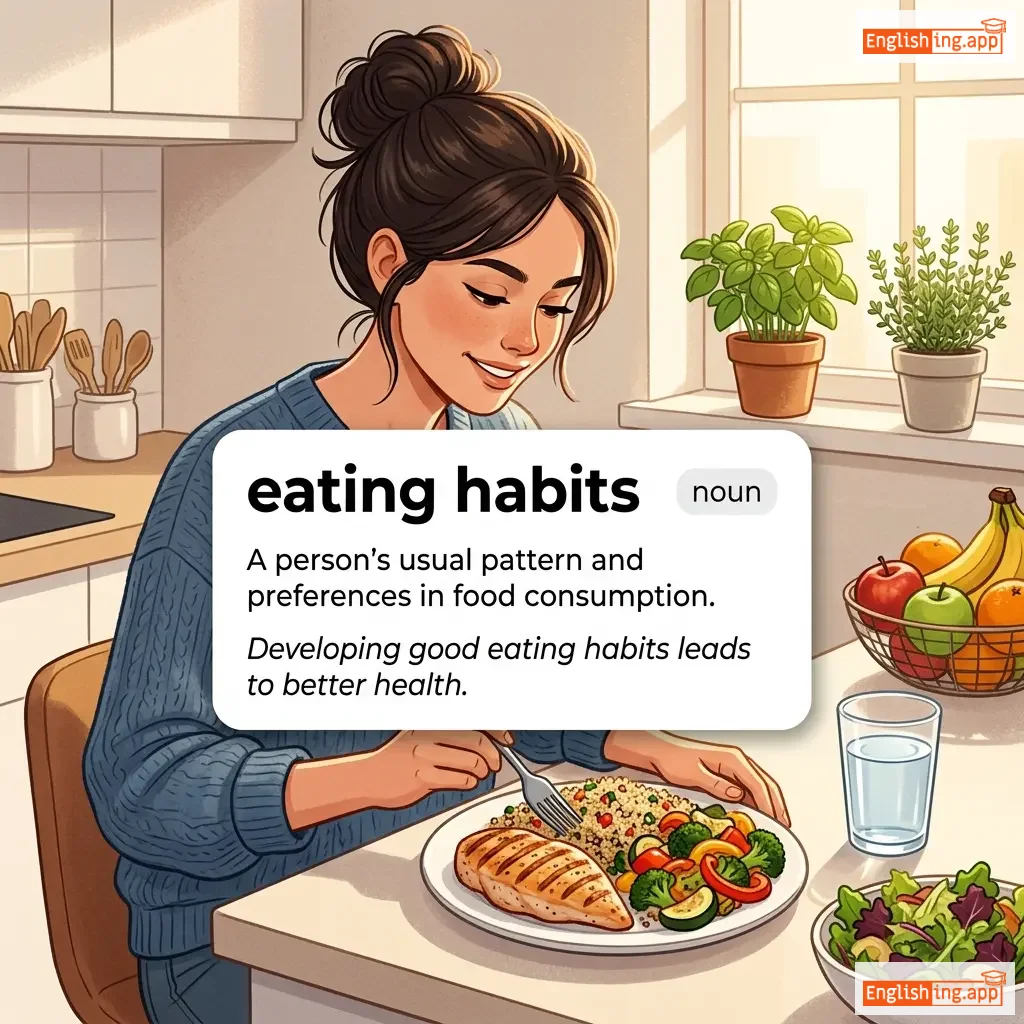
eating habits definition card — visual illustration of the meaning
noun
/ˈiː.tɪŋ ˈhæb.ɪts/
饮食习惯 (yinshi xiguan)

A person's usual pattern and preferences in food consumption.

"Developing good eating habits leads to better health."

"养成良好的饮食习惯有助于改善健康。" (Yangcheng lianghao de yinshi xiguan you zhu yu gaishan jiankang.)
verb
/ˈiːvzdrɒp/
偷听 (tōu tīng)

to secretly listen to a conversation

"She stood near the door to eavesdrop on their conversation."

"她站在门口偷听他们的谈话。" (Tā zhàn zài ménkǒu tōu tīng tāmen de tánhuà.)
verb
/ɛb/
减弱 (jian ruo)

to recede, decline, or lessen gradually, often referring to the tide or emotions

"Her confidence began to ebb after the repeated failures."

"在多次失败后,她的自信心开始减弱。" (Zai duo ci shi bai hou, ta de zi xin xin kai shi jian ruo.)
noun
/ˈeb.taɪd/
退潮 (tuìcháo)

the movement of the tide out to sea; a time when the sea level is falling

"During ebb-tide, we could walk further out on the beach."

"在退潮期间,我们可以在海滩上走得更远。" (Zài tuìcháo qījiān, wǒmen kěyǐ zài hǎitān shàng zǒu dé gèng yuǎn.)
noun
/ɪˈbʊliəns/
热情 (reqing)

the quality of being cheerful, enthusiastic, and full of energy

"The teacher's ebullience inspired her students."

"老师的热情激励了她的学生。" (Laoshi de reqing jili le ta de xuesheng.)
ebullient definition card — visual illustration of the meaning
adjective
/ɪˈbʊliənt/
兴高采烈 (xing gao cai lie)

cheerful and full of energy

"She was ebullient after receiving the good news."

"收到好消息后,她兴高采烈。" (Shoudao hao xiaoxi hou, ta xing gao cai lie.)
adjective
/ɪkˈsɛntrɪk/
古怪的 (guǒguài de)

unconventional and slightly strange in behavior or appearance

"The artist was known for his eccentric style."

"艺术家以其古怪的风格而闻名。" (Yìshùjiā yǐ qí gǔguài de fēnggé ér wénmíng.)
noun
/ˌɛksɛnˈtrɪsəti/
怪癖 (guài pì)

the quality of being unconventional or slightly strange

"His eccentricity made him both admired and misunderstood."

"他的怪癖使他既受到钦佩也被误解。" (Tā de guài pì shǐ tā jì shòu dào qīnpèi yě bèi wùjiě.)
noun
/ɪˌkliːziˈæstɪk/
神职人员 (shén zhí rén yuán)

A member of the clergy or church official.

"The council was attended by several high-ranking ecclesiastics."

"理事会由几位高级神职人员参加。" (Lǐshìhuì yóu jǐ wèi gāojí shénzhí rényuán cānjiā.)
echelon definition card — visual illustration of the meaning
noun
/ˈɛʃəlɒn/
级别 (jibie)

A level or rank in an organization, profession, or society.

"She quickly rose to the upper echelon of the company."

"她迅速晋升到公司的最高层。" (Ta xun su jin sheng dao gongsi de zui gao ceng.)
noun, verb
/ˈɛkəʊ/
幸福 (xìngfú)

a sound that is reflected off a surface and heard again; to repeat or reflect a sound or idea.

"Her laughter echoed through the empty hall."

"她收到奖项时,无法掩饰自己的幸福。" (tā shōudào jiǎngxiàng shí, wúfǎ yǎnshì zìjǐ de xìngfú.)
echoed definition card — visual illustration of the meaning
verb
ˈɛkəʊd
回响 (huíxiǎng)

To repeat or resound; to be reminiscent of something.

"The words of gratitude echoed in his heart."

"感恩的言辞在他心中回响。" (Gǎn'ēn de yáncí zài tā xīnzhōng huíxiǎng.)