词汇表

英语词汇词典 | 单词含义、定义和示例

interjection
/hɑː/
哈! (表示惊讶或喜悦的表达) (Ha! (Biao shi jing ya huo xi yue de biao da))

used to express amusement, surprise, or triumph

"Ha! I knew you couldn’t resist joining us."

"哈!我知道你无法抵挡加入我们的诱惑。" (Ha! Wo zhidao ni wufa dikang jiaru women de youhuo.)
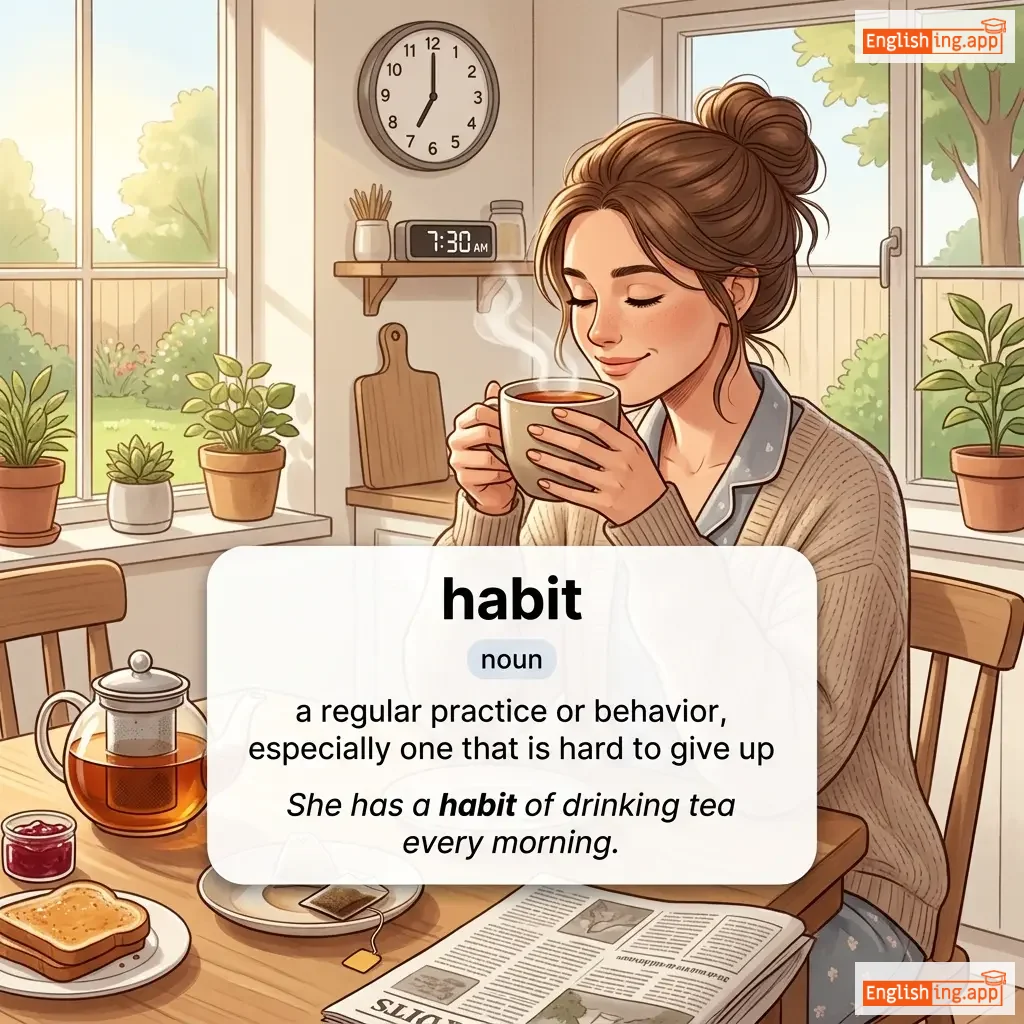
habit definition card — visual illustration of the meaning
noun
/ˈhæb.ɪt/
习惯 (xíguàn)

a regular practice or behavior, especially one that is hard to give up

"She has a habit of drinking tea every morning."
"她每天早上都有喝茶的习惯。" (Tā měitiān zǎoshàng dōu yǒu hē chá de xíguàn.)
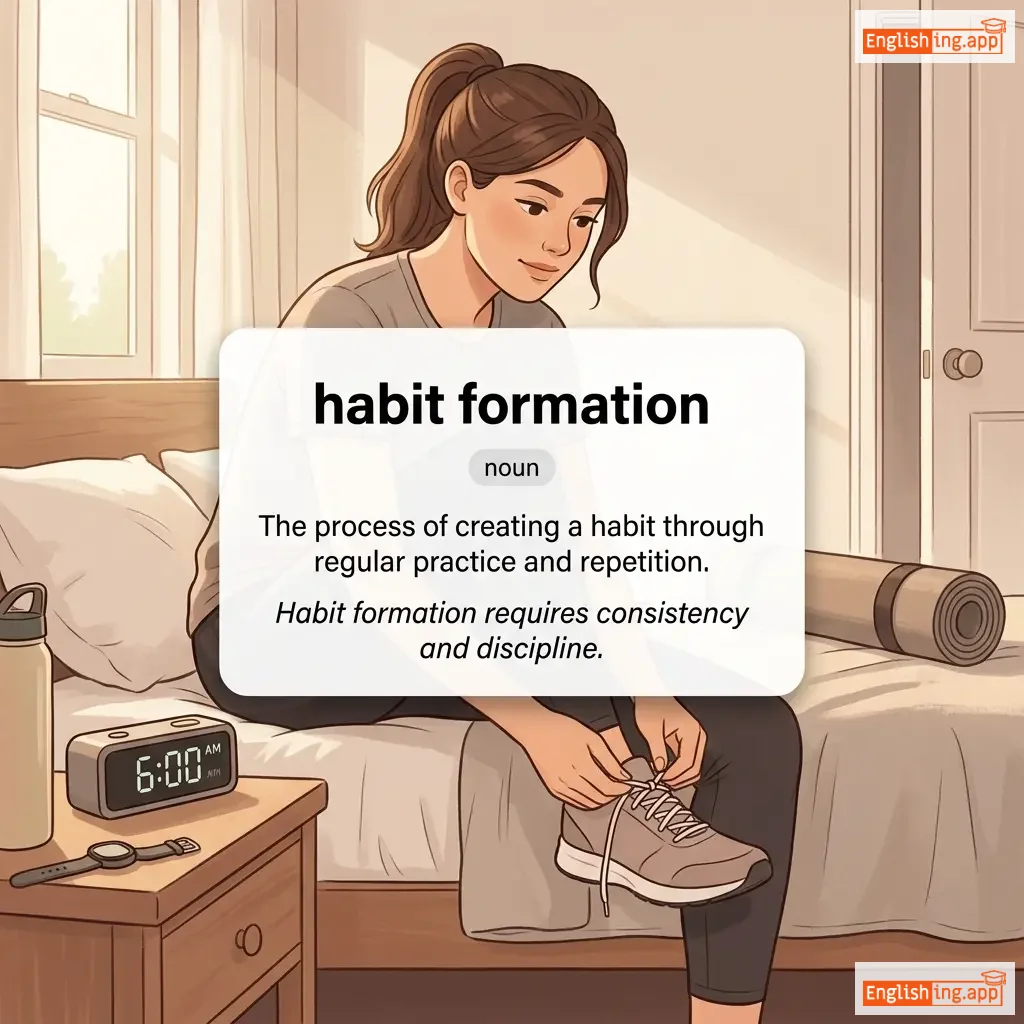
habit formation definition card — visual illustration of the meaning
noun
ˈhæb.ɪt fɔːrˌmeɪ.ʃən
习惯形成 (xíguàn xíngchéng)

The process of creating a habit through regular practice and repetition.

"Habit formation requires consistency and discipline."

"习惯的形成需要一致性和纪律。" (Xíguàn de xíngchéng xūyào yīzhìxìng hé jìlǜ.)
adjective
/ˈhæbɪtəbl/
适宜居住的 (shìyí jūzhù de)

Suitable to live in; capable of sustaining life.

"Scientists are searching for habitable planets beyond our solar system."

"科学家们正在寻找太阳系以外适宜居住的行星。" (Kēxuéjiāmen zhèngzài xúnzhǎo tàiyángxì yǐwài shìyí jūzhù de xíngxīng.)
👨‍👩‍👧‍👦

habitant (hàbìtènt)

noun
/ˈhæbɪtənt/
居民 (jūmín)

An inhabitant; a person or animal that lives in a particular place.

"The habitants of the village were friendly and welcoming."
"村庄的居民友好而热情。" (Cūnzhuāng de jūmín yǒuhǎo ér rèqíng.)
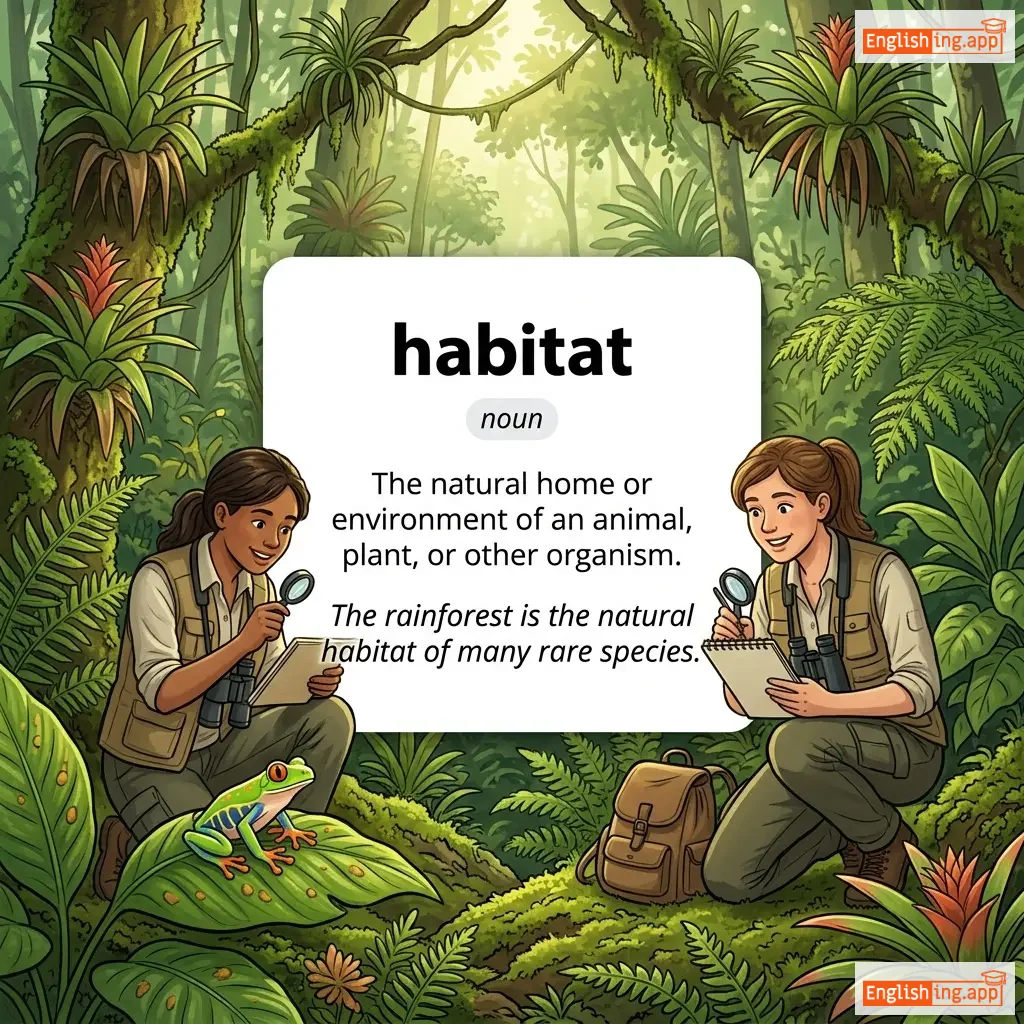
habitat definition card — visual illustration of the meaning
noun
/ˈhæbɪˌtæt/
栖息地 (qixi di)

The natural home or environment of an animal, plant, or other organism.

"The rainforest is the natural habitat of many rare species."
"热带雨林是许多稀有物种的自然栖息地。" (Redai yulin shi xu duo xiyou wuzhong de ziran qixi di.)
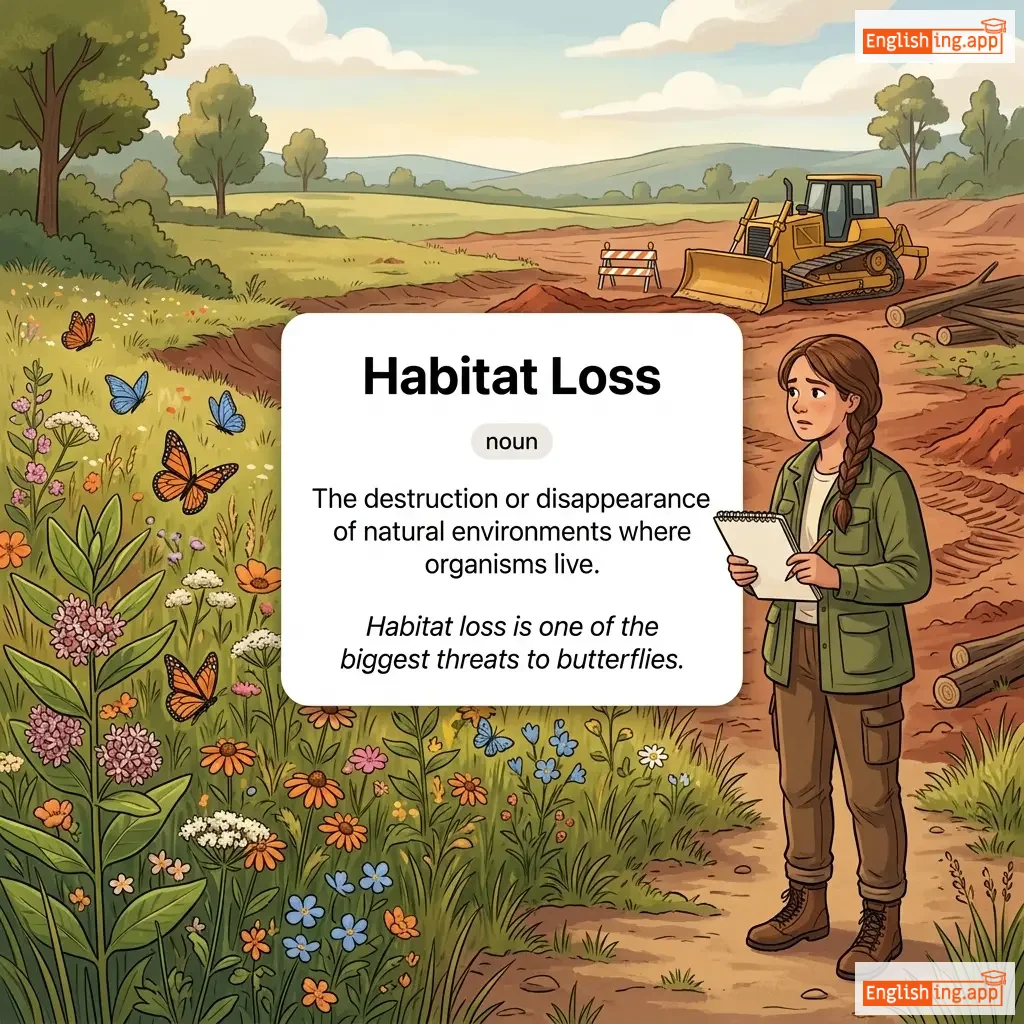
Habitat Loss definition card — visual illustration of the meaning
noun
ˈhæbɪtæt lɒs
栖息地丧失 (qīxīdì sàngshī)

The destruction or disappearance of natural environments where organisms live.

"Habitat loss is one of the biggest threats to butterflies."
"栖息地丧失是蝴蝶面临的最大威胁之一。" (Qīxīdì sàngshī shì húdié miànlín de zuìdà wēixié zhī yī.)
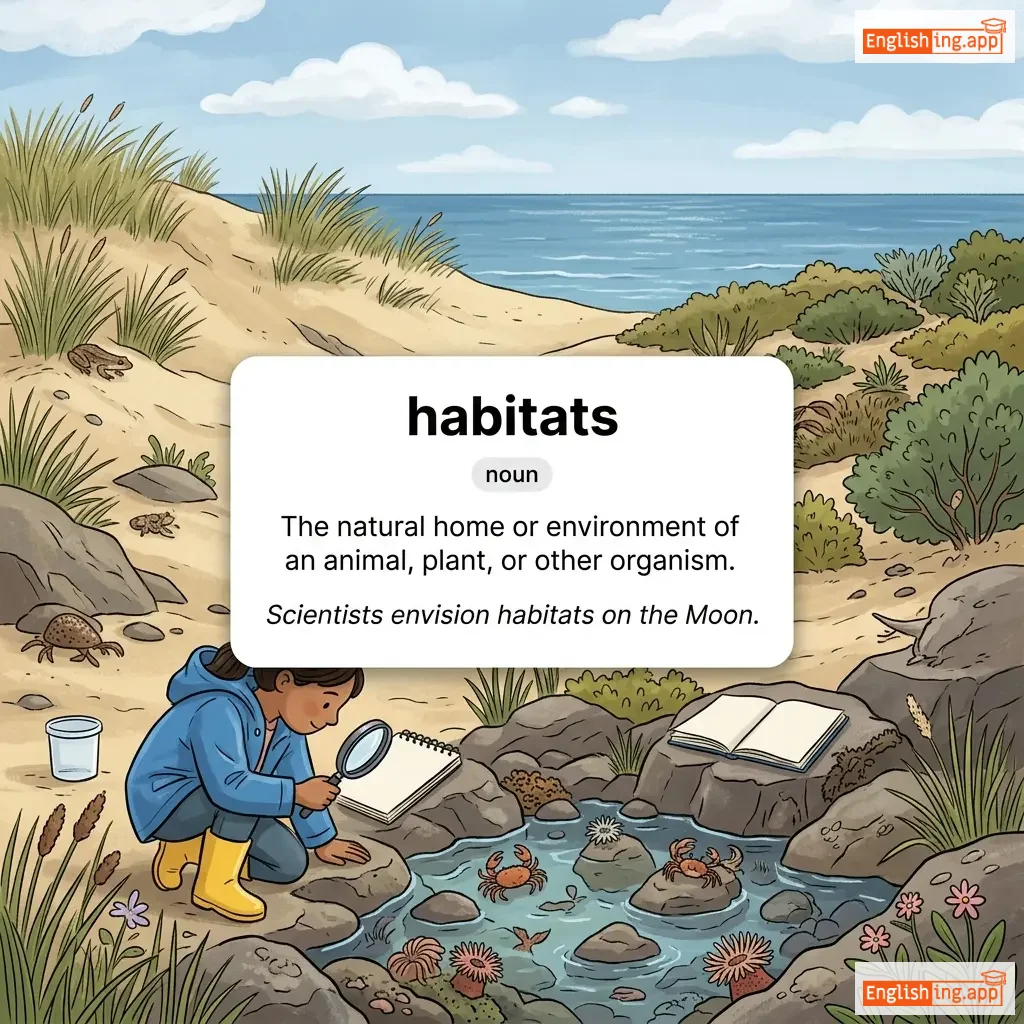
habitats definition card — visual illustration of the meaning
noun
ˈhæb.ɪ.tæts
栖息地 (qixi di)

The natural home or environment of an animal, plant, or other organism.

"Scientists envision habitats on the Moon."

"科学家设想月球上的栖息地。" (Kexuejia shexiang yueqiu shang de qixi di.)
adjective
/həˈbɪtʃuəl/
习惯性的 (xíguànxìng de)

Done or doing constantly or as a habit; customary.

"He was a habitual latecomer to class."
"他是一个上课习惯性迟到的人。" (Tā shì yīgè shàngkè xíguànxìng chídào de rén.)
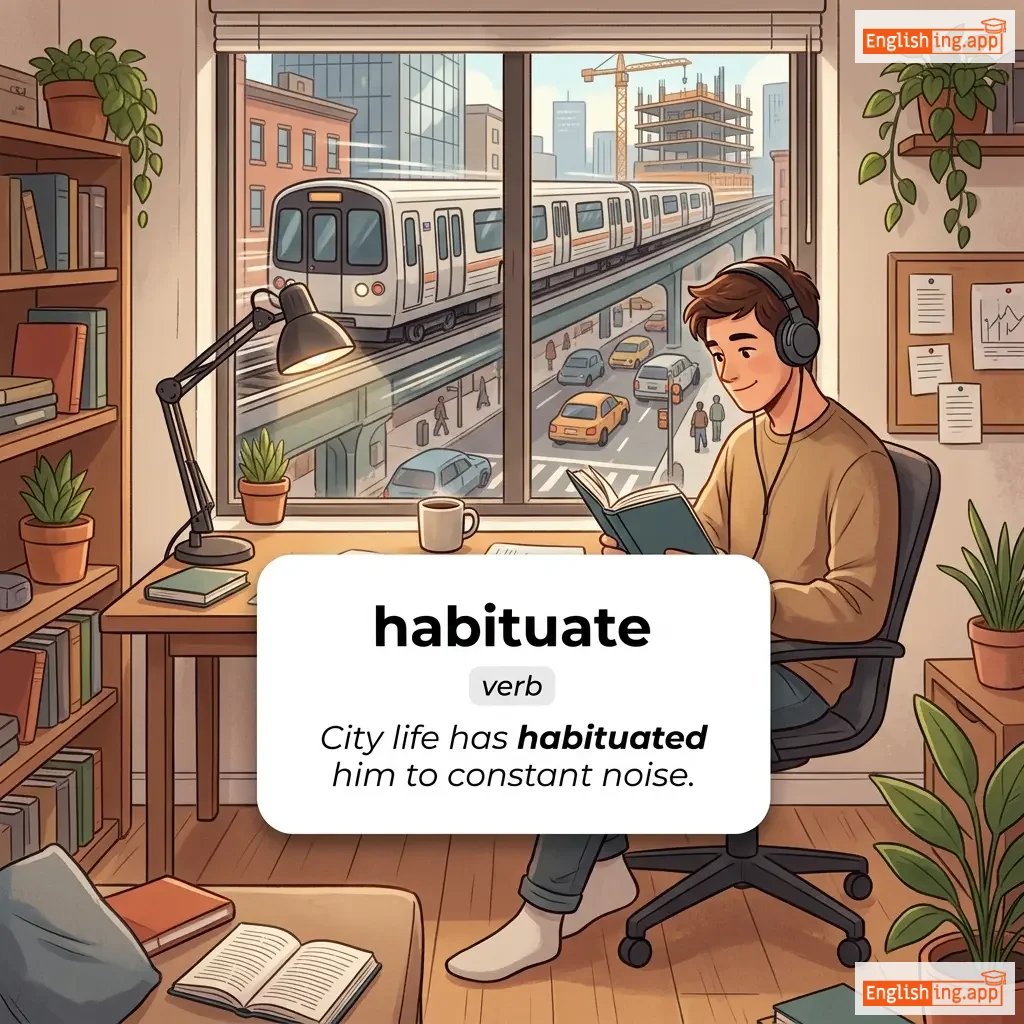
habituate definition card — visual illustration of the meaning
verb
/həˈbɪtʃueɪt/
使习惯 (shi xiguan)

to accustom someone or oneself to something through frequent exposure or experience

"City life has habituated him to constant noise."

"城市生活使他习惯了持续的噪音。" (Chengshi shenghuo shi ta xiguanle chixu de zaoyin.)
noun
/ˈhæbɪtjuːd/
习惯,风俗 (xíguàn, fēngsú)

a customary condition or mode of life; habitual practice

"He lived in a quiet habitude, avoiding the noise of the city."

"他生活在一种安静的习惯中,避开城市的喧嚣。" (Tā shēnghuó zài yī zhǒng ānjìng de xíguàn zhōng, bìkāi chéngshì de xuānxiāo.)
💻

hack

verb
/hæk/

to cut or chop roughly; to gain unauthorized access to a computer system

"The programmer managed to hack into the system."

noun
/ˈhækəlz/

the hairs on the back of an animal’s neck that rise when it is angry or alarmed; figuratively, feelings of anger or resentment

"His rude comment raised my hackles."

noun
/ˈhæknɪ/
出租马, 陈腐 (chuzu ma, chenfu)

a horse kept for ordinary riding or hire; also used for something overused or trite

"The old hackney was still pulling the carriage."

"那匹旧出租马仍然拉着马车。" (Na pi jiu chuzu ma rengran la zhe mache.)
noun
/ˈhæk.ni ˈkær.ɪdʒ/
出租车 (chūzūchē)

A taxi; a car licensed to carry passengers for hire

"I called a hackney carriage to get to the airport."

"我叫了一辆出租车去机场。" (Wǒ jiào le yī liàng chūzūchē qù jīchǎng.)
adjective
/ˈhæk.nid/
陈词滥调 (chén cí làn diào)

Used too often and therefore lacking originality or freshness.

"The speech was filled with hackneyed phrases that failed to inspire the audience."

"演讲中充满了陈词滥调,未能激励听众。" (Yǎnjiǎng zhōng chōngmǎnle chéncí làndiào, wèi néng jīlì tīngzhòng.)
🧙‍♀️

Hag (hāgé)

noun
/hæɡ/
巫婆 (wūpó)

an ugly old woman, especially a vicious or malicious one; a witch

"In the fairy tale, the wicked hag lived alone in a cottage deep in the forest."

"在这个童话故事中,邪恶的巫婆独自生活在森林深处的小屋里。" (Zài zhège tónghuà gùshì zhōng, xié'è de wūpó dúzì shēnghuó zài sēnlín shēnchù de xiǎowū lǐ.)
adjective
/ˈhæɡ.ərd/
疲惫不堪 (pí bèi bù kān)

Looking exhausted, unwell, or worn out, especially from fatigue or suffering.

"After working all night, she looked pale and haggard."
"整晚工作后,她看起来又苍白又疲惫。" (Zhěng wǎn gōngzuò hòu, tā kàn qǐlái yòu cāngbái yòu píbèi.)
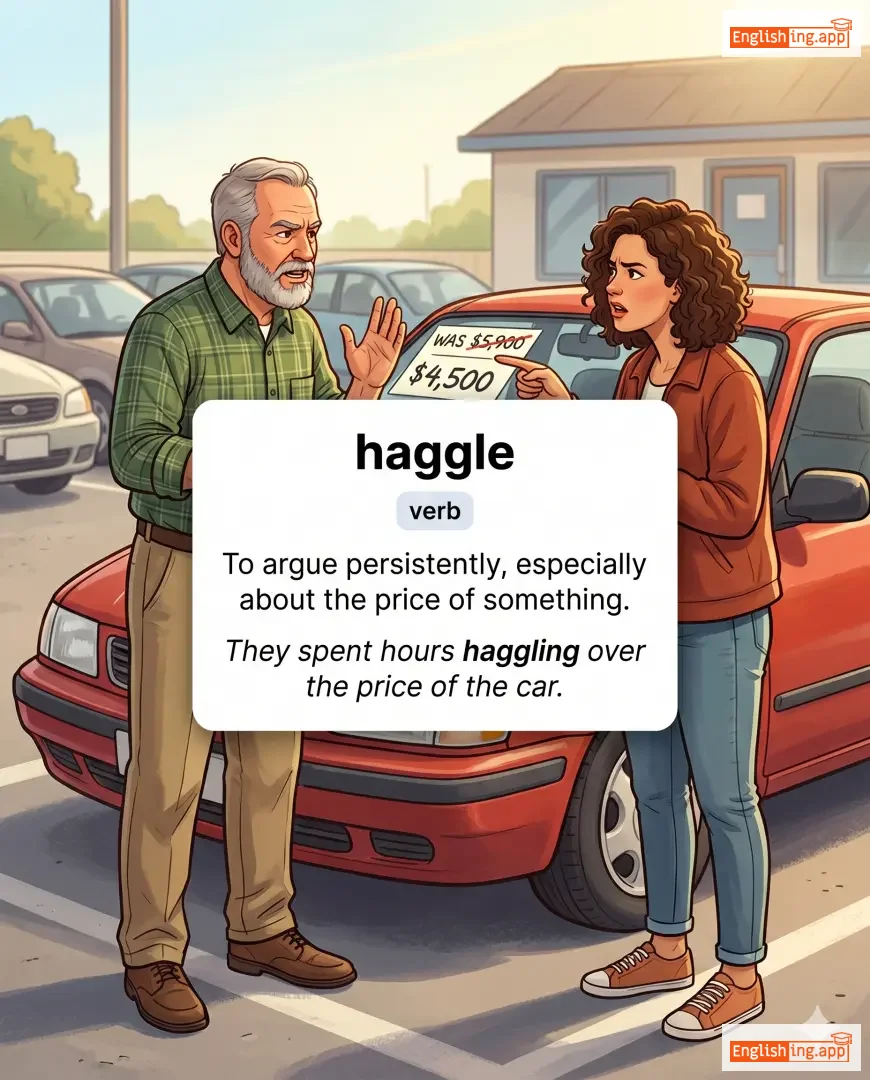
haggle definition card — visual illustration of the meaning
verb
/ˈhæɡ.l̩/
讨价还价 (tǎo jià huán jià)

To argue persistently, especially about the price of something.

"They spent hours haggling over the price of the car."

"他们花了几个小时在车价上讨价还价。" (Tāmen huāle jǐ gè xiǎoshí zài chē jià shàng tǎo jià huán jià.)
adjective
/ˌhæɡ.i.əˈɡræf.ɪk/
过度恭维的 (guòdù gōngwéi de)

Excessively flattering or idealized, often in a biography or portrayal of someone.

"The documentary was criticized for its hagiographic portrayal of the leader."

"这部纪录片因其对领导者的过度恭维描写而受到批评。" (Zhè bù jìlùpiàn yīn qí duì lǐngdǎo zhě de guòdù gōngwéi miáoxiě ér shòudào pīpíng.)
verb
/heɪl/
呼叫 / 赞美 (hujiao / zanmei)

To call out to attract attention or to praise enthusiastically.

"The athlete was hailed as a hero after the victory."

"运动员在获胜后被誉为英雄。" (Yundongyuan zai huosheng hou bei yuwei wei yingxiong.)
noun
/ˈheɪl.stɔːrm/
冰雹风暴 (bīngbáo fēngbào)

a violent storm with hail falling from the sky

"The hailstorm damaged many cars in the parking lot."

"冰雹风暴损坏了停车场中的许多汽车。" (Bīngbáo fēngbào sǔnhuài le tíngchē chǎng zhōng de xǔduō qìchē.)
noun
/hɛər/
头发 (tóufa)

the fine threads growing from the skin of humans and animals

"She has long, black hair."

"她有一头长黑发。" (Tā yǒu yī tóu zhǎng hēi fà.)
noun
/ˈher ˌpɪn/
发簪 (fazhan)

a thin piece of metal or plastic used to hold hair in place

"She used several hair pins to secure her elegant updo."

"她用几根发簪固定住她的优雅盘发。" (tayongjigenfazangudingzhutadeyouyapanfa)
noun
/ˈheəkʌt/
理发 (lifa)

the act or style of cutting hair

"I got a haircut before the wedding."

"我在婚礼前理了发。" (wo zai hunli qian li le fa)
noun
/ˈheəˌkʌtər/
理发师 (lifashi)

a person whose job is to cut and style hair; barber or hairdresser

"The haircutter gave me a neat and stylish haircut."

"理发师给我剪了一个好发型。" (lifashi gei wo jian le yige hao faxing)
noun
/ˈherˌdrɛsər/
理发师 (lifashi)

a person whose job is to cut, style, and treat hair

"The hairdresser gave me a stylish haircut before the wedding."
"理发师在婚礼前给我做了一个时尚的发型。" (Lifashi zai hunli qian gei wo zuole yi ge shishang de faxing)
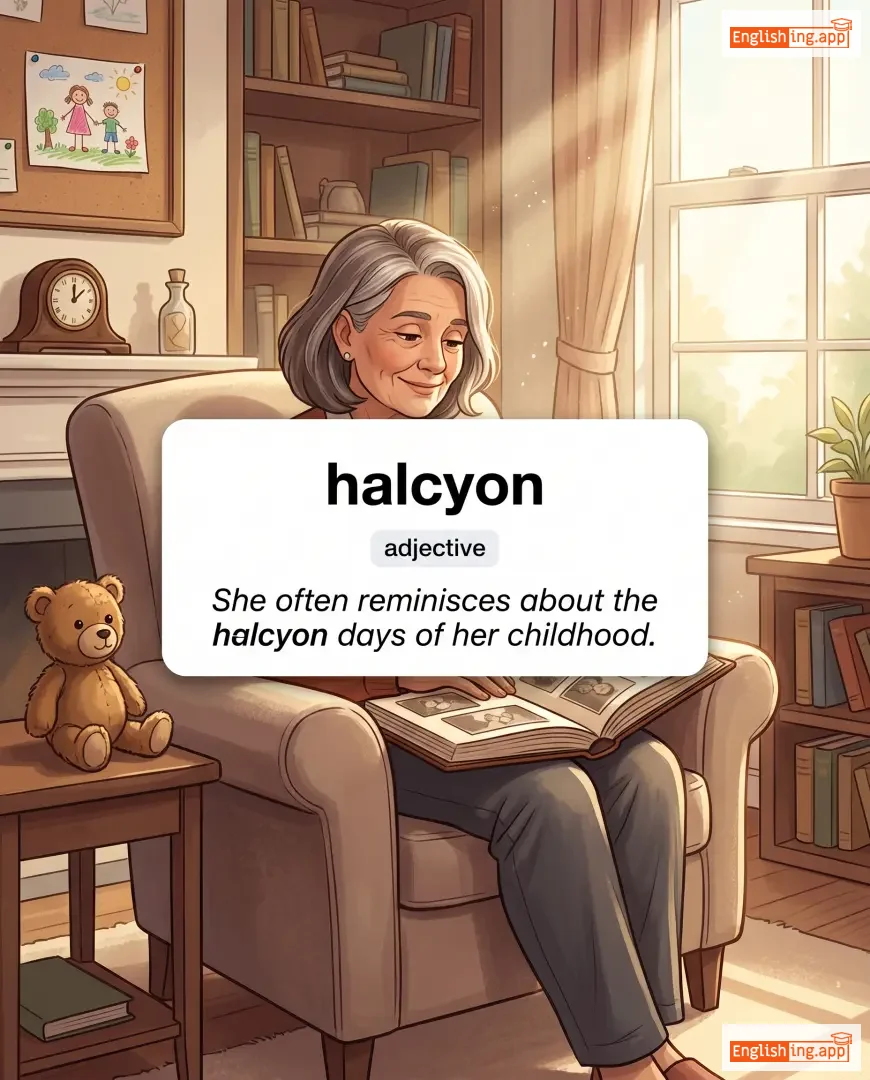
halcyon definition card — visual illustration of the meaning
adjective
/ˈhæl.si.ən/
宁静的 (níngjìng de)

calm, peaceful, and happy; denoting a period of time in the past that was idyllically happy and peaceful

"She often reminisces about the halcyon days of her childhood."

"她经常回忆起她童年时宁静的日子。" (Tā jīngcháng huíyì qǐ tā tóngnián shí níngjìng de rìzi.)
adjective
/heɪl/
健康 (jiànkāng)

strong and healthy, especially of an elderly person

"Despite his age, the man remained hale and active."

"尽管他的年龄,他依然保持健康和活跃。" (Jǐnguǎn tā de niánlíng, tā yīrán bǎochí jiànkāng hé huóyuè.)
noun, adjective
/hæf/
一半 (yiban)

one of two equal parts of something

"He ate half of the cake."

"他吃了蛋糕的一半。" (ta chi le dangao de yi ban.)
adjective
/ˌhæfˈbeɪkt/
半生不熟 (ban sheng bu shu)

poorly thought out or badly planned

"The manager quickly rejected his half-baked proposal."

"经理迅速拒绝了他半生不熟的提案。" (Jingli xunsu jujue le ta ban sheng bu shu de ti'an.)
adjective
/ˌhæfˈhɑːr.tɪd/
半心半意 (banxinbanyi)

lacking enthusiasm or determination; unenthusiastic

"His halfhearted attempt to study did not bring good results."

"他半心半意的学习尝试没有带来好结果。" (Ta banxinbanyi de xuexi changshi meiyou dalai hao jieguo.)
adverb
/ˌhæfˈweɪ/
半路上 (ban lu shang)

at or to a point equal in distance between two points

"We met halfway between the two towns."

"我们在两个城市之间的半路上相遇。" (Wo men zai liang ge cheng shi zhi jian de ban lu shang xiang yu.)
noun
/hɔːl/
大厅 (da ting)

a large room or building for public gatherings, events, or passage

"The graduation ceremony was held in the university hall."

"毕业典礼在大学的大厅举行。" (Bi ye dian li zai da xue de da ting ju xing.)
noun
/ˈhɔːl.mɑːrk/
标志性特征 (biaozhixing tezheng)

a typical characteristic or feature of someone or something

"Honesty is the hallmark of a good leader."

"诚实是一个好领导者的标志性特征。" (Chengshi shi yige hao lingdaozhe de biaozhixing tezheng.)
verb
/ˈhæloʊ/
神圣化 (shenshenghua)

to honor as holy; to make sacred or greatly respected

"The ancient temple was hallowed by centuries of worship."
"古老的寺庙因几百年的崇拜而被神圣化。" (Gulao de simiao yin jiban nian de chongbai er bei shenshenghua.)
hallowed definition card — visual illustration of the meaning
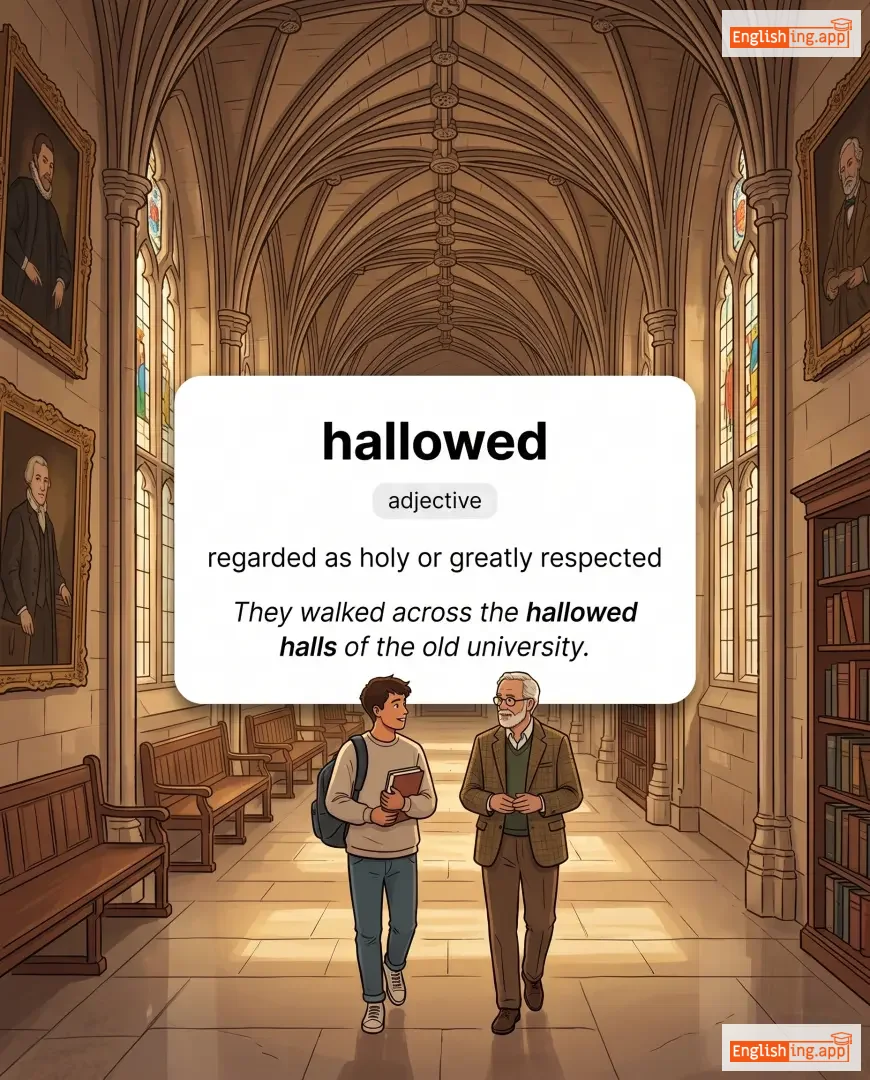
adjective
/ˈhæloʊd/
神圣 (shensheng)

regarded as holy or greatly respected

"They walked across the hallowed halls of the old university."

"他们走过了老大学的神圣大厅。" (Tāmen zǒuguòle lǎo dàxué de shénshèng dàtīng.)
verb
/həˈluːsɪneɪt/
幻觉 (huàn jué)

to see, hear, or sense things that are not actually present, often due to illness or drugs

"After taking the medicine, he began to hallucinate strange shapes."

"服用药物后,他开始看到奇怪的形状。" (Fúyòng yàowù hòu, tā kāishǐ kàn dào qíguài de xíngzhuàng.)
noun
/həˌluːsɪˈneɪʃən/
幻觉 (huànjué)

a false perception of objects or events, usually caused by mental illness or drugs

"After the medication, he began to experience vivid hallucinations."

"服药后,他开始经历生动的幻觉。" (Fúyào hòu, tā kāishǐ jīnglì shēngdòng de huànjué.)
noun
/ˈhɔːlweɪ/
走廊 (zǒuláng)

a corridor in a building that connects rooms

"The kids left their shoes in the hallway."

"孩子们把鞋子留在了走廊里。" (Háizimen bǎ xiézi liú zài le zǒuláng lǐ.)
verb
/hɔːlt/
停止 (tingzhi)

to stop or bring to a stop

"The train suddenly halted at the station."

"火车突然在车站停了下来。" (Huoche tudan zai chezhang tingle xiala.)
adjective
/ˈhɔːltɪŋ/
犹豫不决 (yóuyù bù jué)

slow and hesitant, especially due to lack of confidence

"She gave a halting reply during the interview."

"她在面试中给出了迟疑的回答。" (Tā zài miànshì zhōng gěichūle chíyí de huídá.)
adjective
/ˈhæm ˌhændɪd/
笨拙 (bènzhuō)

clumsy or inept in handling things or situations

"His ham-handed attempt to fix the computer made it worse."

"他笨拙的修理电脑的尝试反而使情况更糟。" (Tā bènzhuō de xiūlǐ diànnǎo de chángshì fǎn'ér shǐ qíngkuàng gèng zāo.)
noun
/ˈhæm.lət/
小村庄 (xiao cunzhuang)

a small rural settlement, smaller than a village; a small community

"The tiny hamlet nestled in the valley had only a dozen houses and one small church."
"位于山谷中的小村庄只有十几座房子和一座小教堂。" (Wei yu shangu zhong de xiao cunzhuang zhiyou shiji zuo fangzi he yi zuo xiao jiaotang.)
noun, verb
/ˈhæmər/

a tool with a heavy metal head used for breaking things or driving in nails; to hit something forcefully with a hammer or similar object.

"He used a hammer to fix the broken chair."

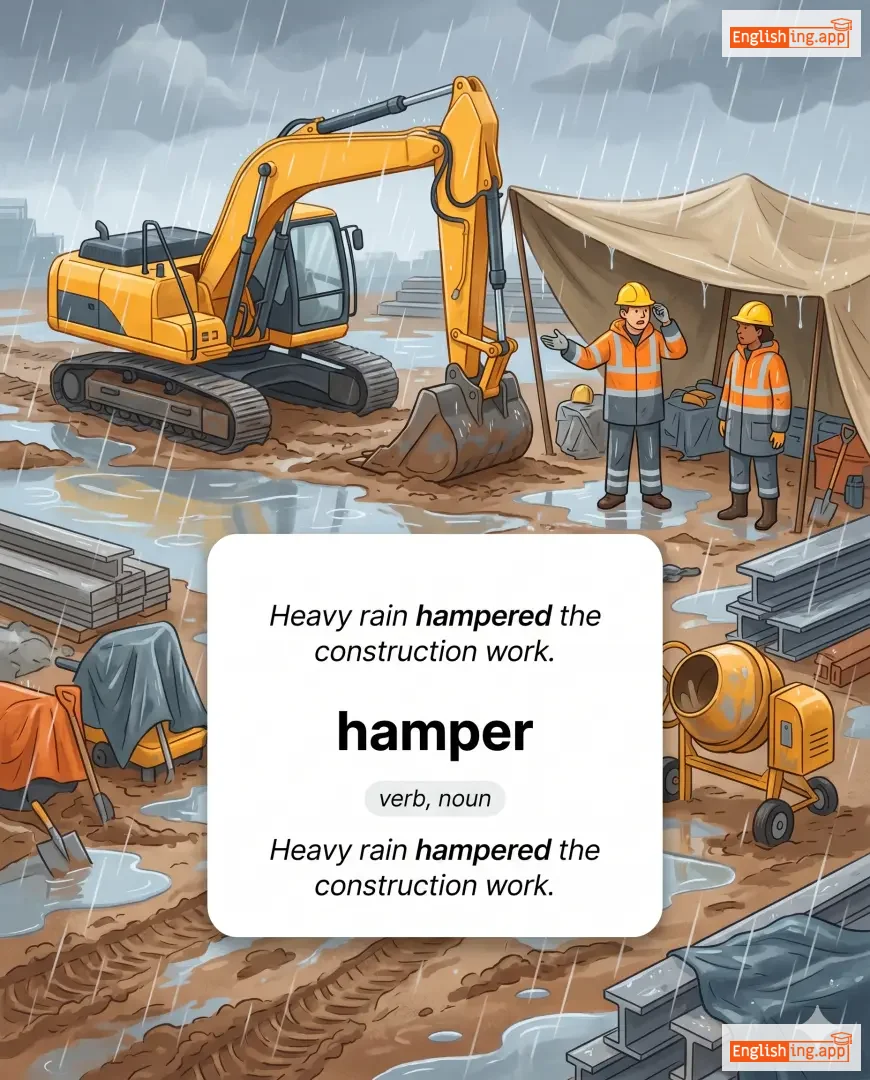
hamper definition card — visual illustration of the meaning
verb, noun
/ˈhæmpər/
阻碍, 洗衣篮 (zǔ'ài, xǐyī lán)

to prevent or slow down the progress of something; also, a basket with a lid, typically for laundry.

"Heavy rain hampered the construction work."

"暴雨阻碍了建筑工作。" (Bàoyǔ zǔ'ài le jiànzhú gōngzuò.)
noun, verb
/ˈhæmstrɪŋ/
大腿后部的肌腱; 作为动词,限制或严重削弱某人或某物的效能 (dàtuǐ hòubù de jījiàn; zuòwéi dòngcí, xiànzhì huò yánzhòng xuēruò mǒurén huò mǒuwù de xiàonéng)

a tendon at the back of the thigh; as a verb, to cripple or severely restrict the effectiveness of someone or something.

"Budget cuts hamstrung the organization’s plans."

"预算削减削弱了该组织的计划。" (yùsuàn xuējiǎn xuēruòle gāi zǔzhī de jìhuà.)
verb (past tense, past participle), adjective
/ˈhæmstrʌŋ/
瘫痪或受限 (tānhuàn huò shòuxiàn)

crippled or severely restricted in movement or progress.

"The team was hamstrung by lack of resources."
"由于资源匮乏,团队陷入困境。" (Yóuyú zīyuán kuìfá, tuánduì xiànrù kùnjìng.)
🤚

Hand

noun, verb
/hænd/

the part of the body at the end of the arm used for holding things

"She raised her hand to ask a question."

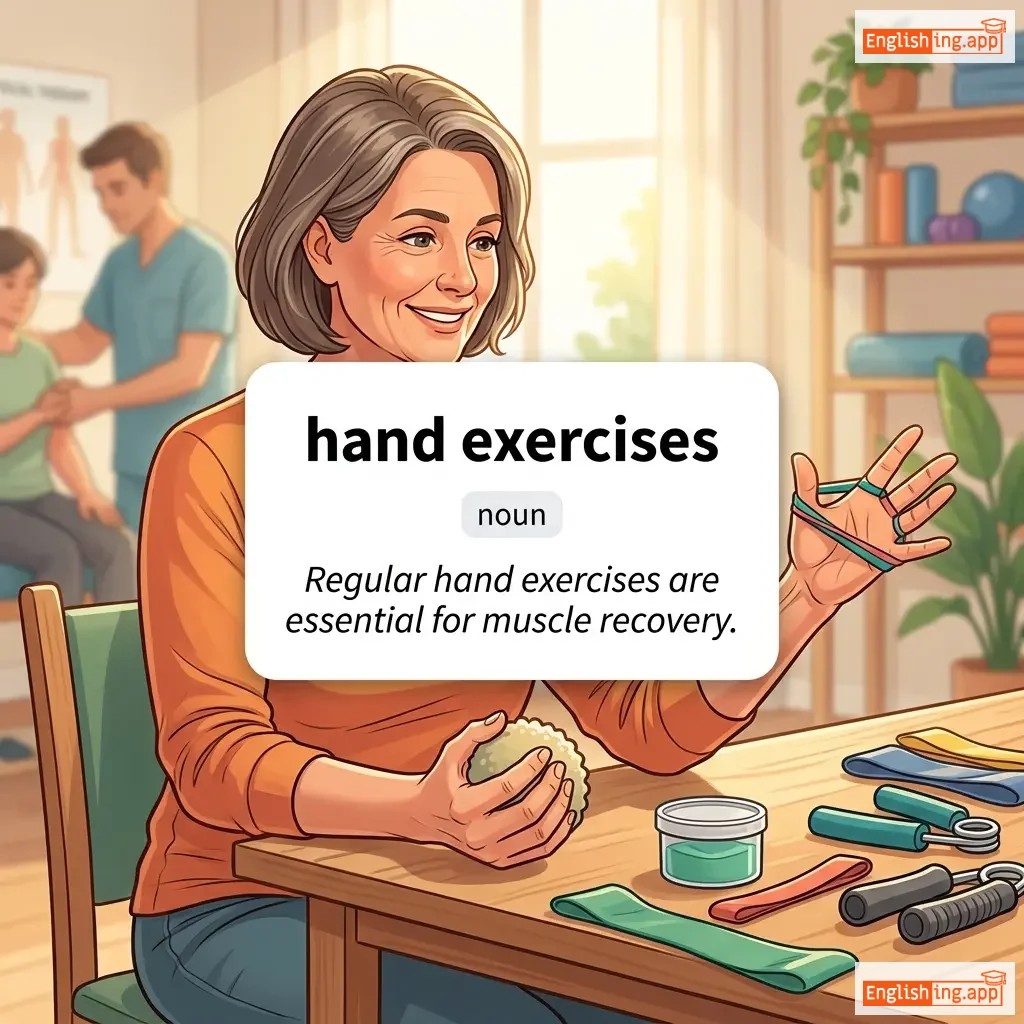
hand exercises definition card — visual illustration of the meaning
noun
হ্যান্ড এক্সারসাইজেস
手部运动 (shǒubù yùndòng)

Physical activities designed to strengthen, stretch, and improve the flexibility of hand and finger muscles.

"Regular hand exercises are essential for muscle recovery."

"定期的手部运动对于肌肉恢复至关重要。" (Dìngqī de shǒubù yùndòng duìyú jīròu huīfù zhìguān zhòngyào.)