词汇表

英语词汇词典 | 单词含义、定义和示例

noun
/ˈfeɪbəl/
寓言 (yùyán)

a short story, typically featuring animals as characters, that conveys a moral lesson

"Aesop’s fables are famous for teaching valuable lessons through simple stories."

"伊索的寓言通过简单的故事传授宝贵的教训。" (Yīsuǒ de yùyán tōngguò jiǎnduǎn de gùshì chuándá bǎoguì de jiàoxùn.)
noun
/ˈfæbrɪk/
布料 (bùliào)

Cloth or material produced by weaving or knitting fibers.

"The tailor used silk fabric to make the dress."

"裁缝用丝绸布料做了这件衣服。" (Cáifeng yòng sīchóu bùliào zuòle zhè jiàn yīfú.)
verb
/ˈfæbrɪkeɪt/
编造 (bianzao)

to invent or concoct something, often with the intent to deceive; or to construct or manufacture

"The witness fabricated his testimony to protect himself."
"证人为了保护自己而编造了他的证词。" (zhengren weile baohu ziji er bianzao le tade zhengci.)
fabrication definition card — visual illustration of the meaning
noun
/ˌfæb.rɪˈkeɪ.ʃən/
伪造; 谎言; 捏造 (weizao; huangyan; niezao)

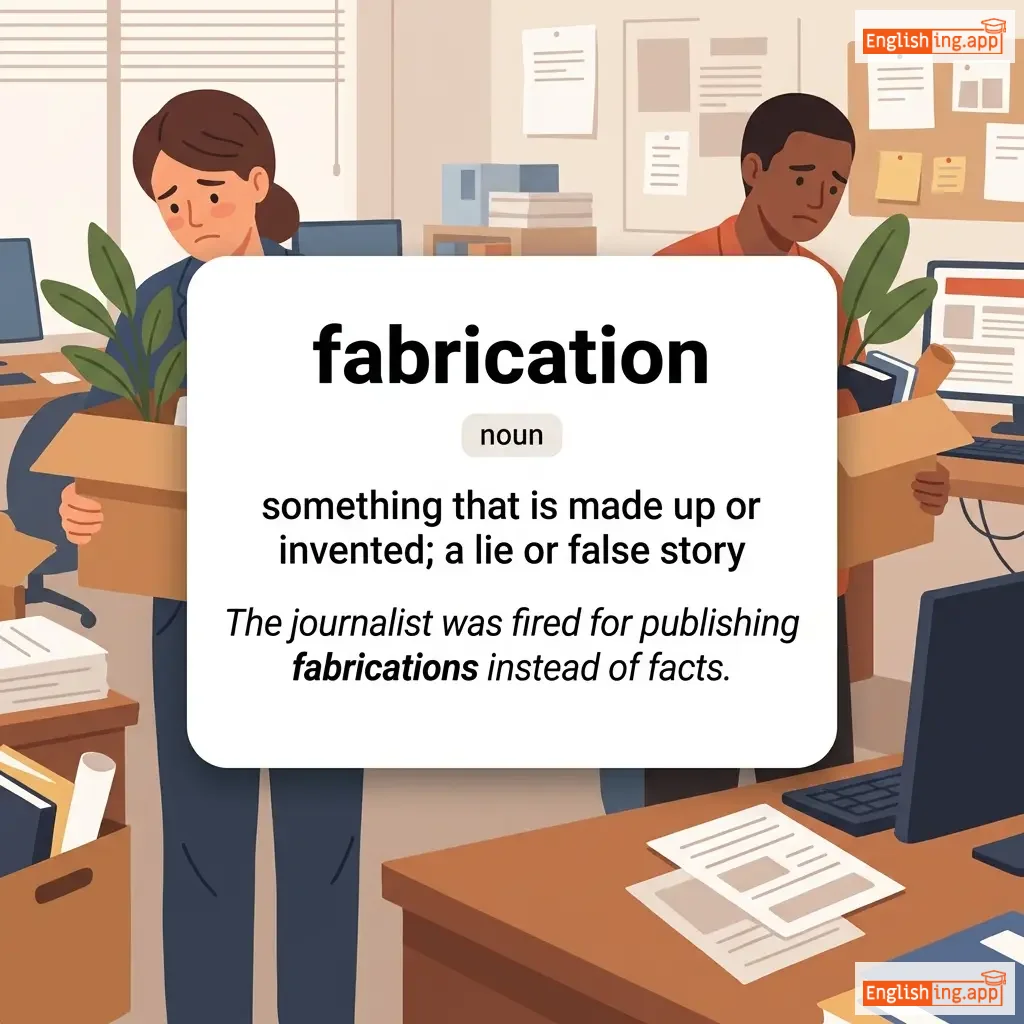
something that is made up or invented; a lie or false story

"The journalist was fired for publishing fabrications instead of facts."

"记者因发布伪造的内容而被解雇,而不是事实。" (Jizhe yin fabu weizao de neirong er bei jiegu, er bushi shishi.)
adjective
/ˈfæbjələs/
极好的 (jí hǎo de)

Extremely good or wonderful; almost unbelievable

"She looked fabulous in her new dress."

"她穿着新裙子看起来极好。" (Tā chuānzhuó xīn qúnzi kàn qǐlái jí hǎo.)
noun
/fəˈsɑːd/
外立面 (wài lì miàn)

The front of a building; a false or superficial appearance

"The building's glass facade reflected the sunset."

"建筑物的玻璃外立面反射了日落。" (Jiànzhú wù de bōlí wài lì miàn fǎnshè le rìluò.)
face definition card — visual illustration of the meaning
🙂

face

noun/verb
/feɪs/

The front part of a person's head; to confront or deal with a situation

"She had to face many challenges in her career."

face-to-face battle definition card — visual illustration of the meaning
noun
ˈfeɪs tə ˈfeɪs ˈbætl
面对面的战斗 (miànduì miàn de zhàndòu)

A direct confrontation or fight between opposing forces.

"The warriors fought a face-to-face battle with the enemies."

"战士们与敌人进行了面对面的战斗。" (Zhànshìmen yǔ dírén jìnxíngle miànduì miàn de zhàndòu.)
facet definition card — visual illustration of the meaning
noun
/ˈfæsɪt/
方面 (fāngmiàn)

A particular aspect or feature of something

"Honesty is an important facet of his character."

"诚实是他性格中的一个重要方面。" (Chéngshí shì tā xìnggé zhōng de yīgè zhòngyào fāngmiàn.)
facetious definition card — visual illustration of the meaning
adjective
/fəˈsiːʃəs/
讽刺的 (fengci de)

Treating serious issues with deliberately inappropriate humor

"He was being facetious when he said he wanted to live on the moon."

"他说他想住在月球上时,他是在开玩笑。" (Tā shuō tā xiǎng zhù zài yuèqiú shàng shí, tā shì zài kāi wánxiào.)
💆‍♀️

facial (fei-xi-er)

adjective, noun
/ˈfeɪʃəl/
面部护理 (mianbu huli)

Relating to the face; a beauty treatment for the face

"She booked a facial at the spa."

"她在水疗中心预订了一个面部护理。" (Ta zai shuǐliáo zhōngxīn yùdìng le yīgè miànbù hùlǐ.)
adjective
/ˈfæsɪl/
简单,表面,轻松 (jiǎndān, biǎomiàn, qīngsōng)

easily achieved or effortless; superficial or simplistic

"He gave a facile explanation that ignored the complexities of the problem."

"他给出了一个简单的解释,忽视了问题的复杂性。" (Tā gěi chūle yīgè jiǎndān de jiěshì, hūshìle wèntí de fùzáxìng.)
facilitate definition card — visual illustration of the meaning
verb
/fəˈsɪlɪteɪt/
促进,使变得更容易 (cùjìn, shǐ biàn dé gèng róngyì)

to make an action or process easier or smoother

"The new software will facilitate communication between departments."

"新软件将促进部门之间的沟通。" (Xīn ruǎnjiàn jiāng cùjìn bùmén zhī jiān de gōutōng.)
facilitation definition card — visual illustration of the meaning
noun
fəˌsɪl.ɪˈteɪ.ʃən
便利 (bianli)

Making any work or process easy and effective.

"Payment gateways ensure the facilitation of online transactions."
"支付网关确保在线交易的便利。" (Zhifu wangguan quebao zaixian jiaoyi de bianli.)
facilities definition card — visual illustration of the meaning
noun
fəˈsɪl.ɪ.tiz
设施 (shèshī)

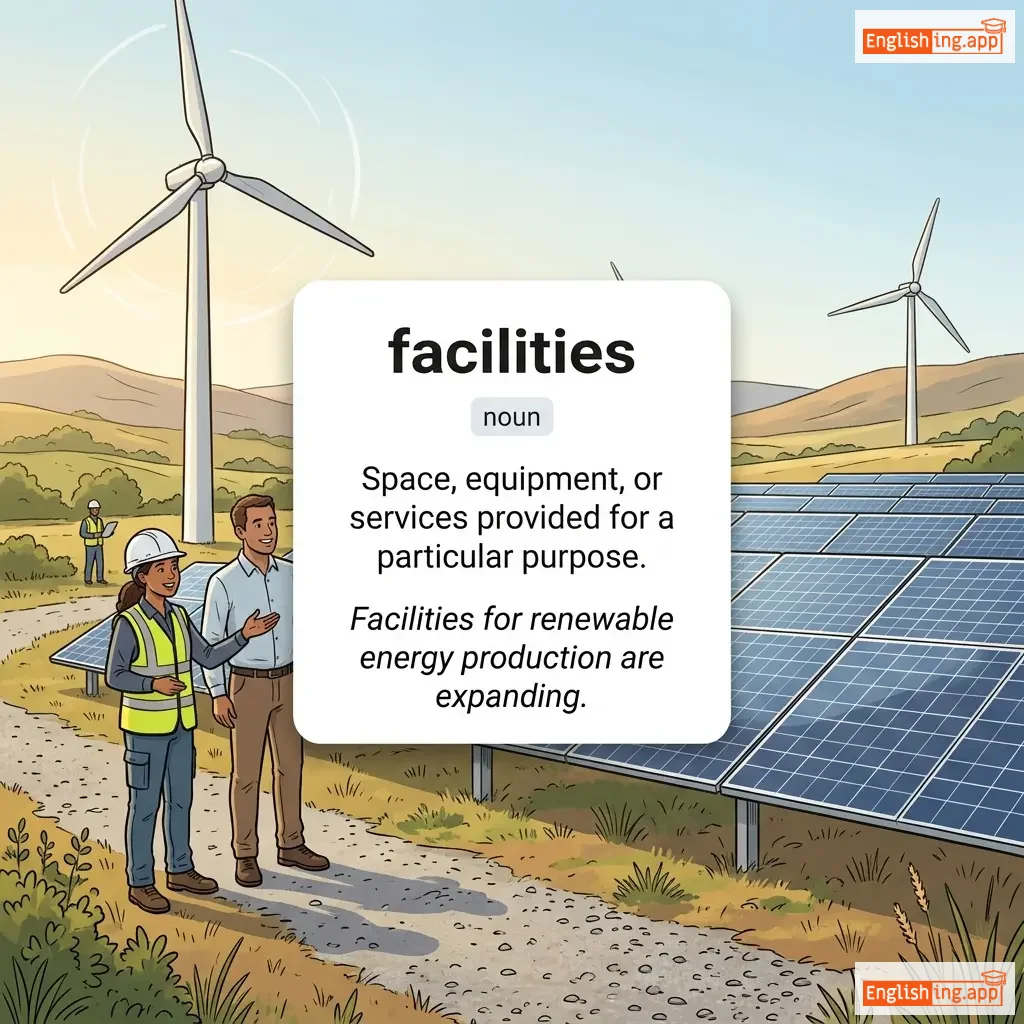
Space, equipment, or services provided for a particular purpose.

"Facilities for renewable energy production are expanding."

"可再生能源生产设施正在扩展。" (Kě zàishēng néngyuán shēngchǎn shèshī zhèngzài kuòzhǎn.)
facility definition card — visual illustration of the meaning
noun
/fəˈsɪləti/
为特定目的提供的场所、服务或设备 (wei te ding mu di ti gong de chang suo, fu wu huo she bei)

a place, service, or equipment provided for a particular purpose; ease in doing something

"The hotel offers excellent recreational facilities."

"酒店提供出色的休闲设施。" (Jiudian tigong chuse de xiuxian sheshi.)
noun
/fækˈsɪmɪli/
传真副本 (chuánzhēn fùběn)

an exact copy or reproduction of a document

"He sent a facsimile of the contract to the client."

"他把合同的传真副本发送给了客户。" (Tā bǎ hé tóng de chuánzhēn fùběn fāsòng gěi le kèhù.)
noun
/fækt/
事实 (shìshí)

A thing that is known or proved to be true

"It is a fact that the Earth orbits the Sun."

"地球绕太阳转,这是一个事实。" (Dìqiú rào tàiyáng zhuǎn, zhè shì yīgè shìshí.)
noun
/ˈfækʃən/
派别 (paibie)

a small organized group within a larger group, often in disagreement or conflict

"The political party split into several factions over the leadership issue."

"由于领导问题,政党分裂成了多个派别。" (Youyu lingdao wenti, zhengdang fenlie chengle duoge paibie.)
adjective
/ˈfækʃəs/
分裂的 (fenlie de)

causing disagreement or division within a group; inclined to form factions

"The debate became factious, splitting the committee into rival camps."

"辩论变得分裂,委员会被分成了对立的阵营。" (Bianlun biande fenlie, weiyuanhui bei fenchengle duili de zhenying.)
adjective
/fækˈtɪʃəs/
人为的,不真实的 (rénwéi de, bù zhēnshí de)

artificial or fabricated; not natural or genuine

"The excitement in his story seemed factitious and forced."

"他的故事中的兴奋感看起来是人为的且强迫的。" (Tā de gùshì zhōng de xīngfèn gǎn kàn qǐlái shì rénwéi de qiě qiǎngpò de.)
noun
/ˈfæktər/
因素 (yīnsù)

A circumstance, fact, or influence that contributes to a result.

"Weather is an important factor in crop production."

"天气是作物生产中的一个重要因素。" (Tiānqì shì zuòwù shēngchǎn zhōng de yīgè zhòngyào yīnsù.)
noun
/ˈfæktəri/
工厂 (gōngchǎng)

A building or group of buildings where goods are manufactured.

"He works in a shoe factory."

"他在一家鞋厂工作。" (Tā zài yī jiā xié chǎng gōngzuò.)
factotum definition card — visual illustration of the meaning
noun
/fækˈtoʊtəm/
全能工人 (quánnéng gōngrén)

an employee who does many different types of work; a general servant

"He worked as a factotum, handling both clerical and maintenance duties."

"他作为一个全能工人工作,处理行政和维护任务。" (Tā zuòwéi yīgè quánnéng gōngrén gōngzuò, chǔlǐ xíngzhèng hé wéihù rènwù.)
adjective
/ˈfæktʃuəl/
基于事实的; 真实的 (jīyú shìshí de; zhēnshí de)

based on facts; accurate; true

"The report contains only factual information."

"报告仅包含事实性的信息。" (bàogào jǐn bāokuò shìshíxìng de xìnxī.)
noun
/ˈfækəlti/
能力, 系 (nengli, xi)

an inherent mental or physical ability; a division of a university

"She has a remarkable faculty for languages."

"她有惊人的语言能力。" (Ta you jingren de yuyan nengli.)
noun
/fæd/
短暂流行的时尚,趋势 (duǎnzàn liúxíng de shíshàng, qūshì)

a temporary fashion or trend; a short-lived craze

"The new diet became a popular fad among teenagers."

"新的饮食成了青少年中的短暂流行趋势。" (Xīn de yǐnshí chéngle qīngshàonián zhōng de duǎnzàn liúxíng qūshì.)
adjective
/ˈfædɪʃ/
短暂的时尚 (duǎnzàn de shíshàng)

Following a temporary trend or fashion

"Wearing neon clothes was a faddish style in the 1980s."

"穿着霓虹服装在1980年代是一种时尚。" (Chuan zhuo nihong fuzhuang zai 1980 niandai shi yizhong shishang.)
verb
/feɪd/
褪色 (tuì sè)

To gradually lose brightness, color, or strength.

"The colors of the old photo have started to fade."

"老照片的颜色开始褪色。" (Lǎo zhàopiàn de yánsè kāishǐ tuìsè.)
verb
/feɪl/
失败 (shībài)

To be unsuccessful in achieving a goal or expectation.

"He failed the driving test."

"他在驾驶考试中失败了。" (Tā zài jiàshǐ kǎoshì zhōng shībài le.)
adjective
/ˈfeɪl.seɪf/
故障保护 (gùzhàng bǎohù)

designed to prevent failure or accidents; guaranteed to work correctly

"The engineers installed a fail-safe mechanism in the nuclear plant."

"工程师在核电厂安装了故障保护机制。" (gōngchéngshī zài hé diànchǎng ānzhuāngle gùzhàng bǎohù jīzhì.)
adjective
/feɪld/
失败 (shibai)

not successful in achieving a desired result

"The project failed to meet the expectations."

"项目未能达到预期。" (Xiangmu wei neng dadao yuqi.)
noun
/ˈfeɪ.lɪŋ/
失败; 缺点; 弱点 (shībài, quēdiǎn, ruòdiǎn)

a weakness, especially in a person's character; a fault

"His only failing is that he talks too much during meetings."

"他唯一的失败是他在会议中说得太多。" (Tā wéiyī de shībài shì tā zài huìyì zhōng shuō dé tài duō.)
noun
/ˈfeɪljər/
失败 (shībài)

The lack of success in doing or achieving something.

"The project was considered a failure due to poor planning."

"由于糟糕的规划,该项目被认为是失败。" (yóuyú zāogāo de guīhuà, gāi xiàngmù bèi rènwéi shì shībài.)
adjective/adverb
/feɪn/
心甘情愿地, 乐意地 (xīn gān qíng yuàn de, lè yì de)

gladly, willingly, or with pleasure

"I would fain help you if I had the time."

"如果我有时间,我会很乐意帮你。" (Rúguǒ wǒ yǒu shíjiān, wǒ huì hěn lèyì bāng nǐ.)
verb
/feɪnt/
昏厥 (hunjue)

to lose consciousness for a short time because of a temporary lack of oxygen to the brain

"He felt dizzy and fainted in the heat."

"他感到头晕,并因高温而昏倒。" (Ta gandao touyun, bing yin gaowen er hundao.)
adjective/noun
/fɛr/
公平 / 集市 (gongping / jishi)

Treating people equally without favoritism; or an event where goods are displayed and sold

"The judge made a fair decision."

"法官做出了公正的决定。" (Fǎguān zuò chūle gōngzhèng de juédìng.)
noun
/ˈfɛərˌɡraʊndz/
集市场地 (jishi changdi)

A designated area where fairs, exhibitions, and amusement events are held

"The town set up rides and stalls at the fairgrounds for the annual festival."

"小镇在集市场地设置了游乐设施和摊位,为年度节日做准备。" (Xiaozhen zai jishi changdi shezhi le youle sheshi he tanwei, wei niandu jieri zuo zhunbei.)
adverb
/ˈfɛərli/
公平地 (gōngpíng de)

To a reasonable degree; in a just and honest way.

"The teacher treated all students fairly."

"老师以公正的方式对待所有学生。" (Lǎoshī yǐ gōngzhèng de fāngshì duìdài suǒyǒu xuéshēng.)
noun
/ˈfɛə(r)nɪs/
公平 (gongping)

the quality of being free from bias, favoritism, or injustice

"She always strives for fairness in her decisions."

"她总是努力在决策中保持公平。" (Ta zong shi nuli zai juece zhong baochi gongping.)
noun
/ˈfer.i.teɪl/
童话故事 (tonghua gushi)

a children's story about magical and imaginary beings and lands

"Children love listening to fairy-tales before bedtime."

"孩子们喜欢在睡觉前听童话故事。" (Haizimen xihuan zai shuijiao qian ting tonghua gushi.)
noun
/feɪθ/
信仰 (xìnyǎng)

Strong belief or trust in someone or something, often without proof.

"She has great faith in her team’s abilities."

"她对她团队的能力充满信心。" (Tā duì tā tuánduì de nénglì chōngmǎn xìnxīn.)
adjective
/ˈfeɪθ.fəl/
忠诚的; 忠实的; 可靠的 (zhongcheng de; zhongshi de; kekaode)

loyal and committed; reliable; true to one's beliefs

"She remained faithful to her principles throughout her career."

"她在整个职业生涯中始终忠诚于自己的原则。" (ta zai zhengge zhiye shengya zhong shizhong zhongcheng yu ziji de yuanze.)
adverb
/ˈfeɪθ.fəl.i/
忠诚地 (zhōngchéng de)

in a loyal and steadfast manner; with dedication

"She faithfully attended every meeting despite her busy schedule."
"她忠实地参加了每一次会议,尽管她的日程非常紧张。" (Tā zhōngchéng de cānjiāle měi yī cì huìyì, jǐnguǎn tā de rìchéng fēicháng jǐnzhāng.)
adjective/verb/noun
/feɪk/
伪造 (weizao)

not genuine; counterfeit; to imitate something dishonestly

"He tried to fake his signature on the document."

"他试图伪造文件上的签名。" (Ta shitu weizao wenjian shang de qianming.)
fall definition card — visual illustration of the meaning
verb, noun
/fɔːl/
掉落 (diaoluo)

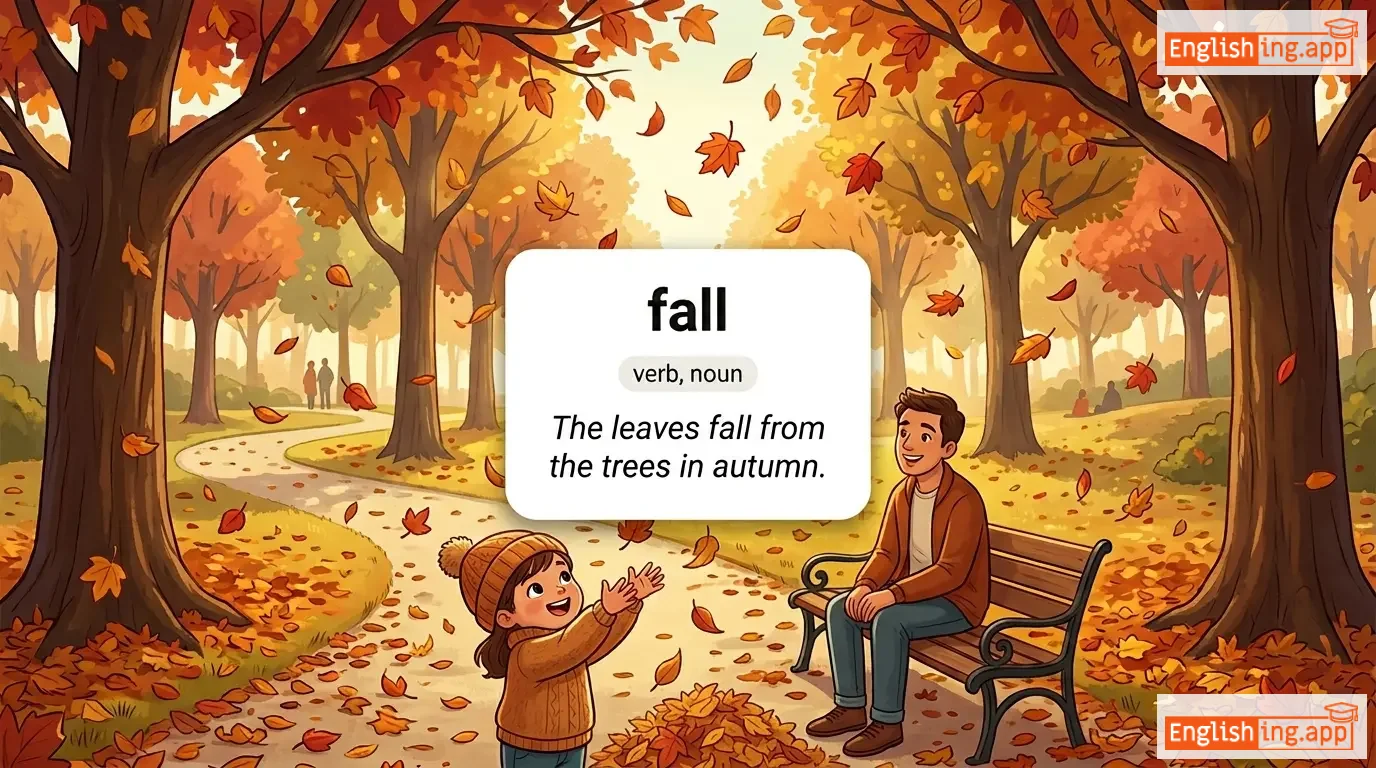
to move downward, typically rapidly and freely without control; the act of dropping from a higher to a lower place

"The leaves fall from the trees in autumn."
"秋天树叶从树上掉下来。" (Qiutian shuye cong shushang diao xiala.)
fallacious definition card — visual illustration of the meaning
adjective
/fəˈleɪ.ʃəs/
虚假 (xūjiǎ)

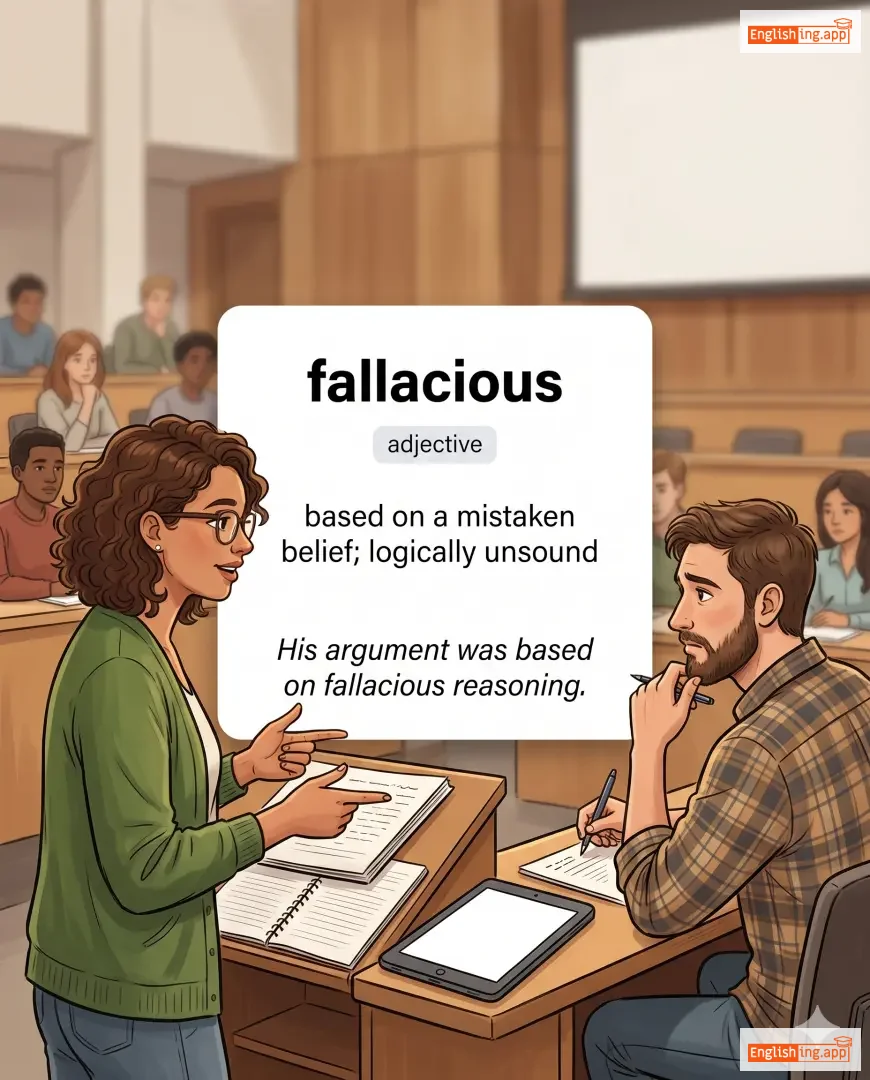
based on a mistaken belief; logically unsound

"His argument was based on fallacious reasoning."

"他的论点建立在虚假的推理上。" (Tā de lùndiǎn jiànlì zài xūjiǎ de tuīlǐ shàng.)
fallacy definition card — visual illustration of the meaning
noun
/ˈfæl.ə.si/
谬误 (miùwù)

a mistaken belief, especially one based on unsound arguments

"It is a common fallacy that money can buy happiness."

"认为钱能买到幸福是一种常见的谬误。" (Rènwéi qián néng mǎi dào xìngfú shì yī zhǒng chángjiàn de miùwù.)
adjective
/ˈfæləbl/
容易犯错 (róng yì fàn cuò)

capable of making mistakes or being wrong

"Even experts are fallible and can make errors."
"即使是专家也会犯错。" (Jíshǐ shì zhuānjiā yě huì fàn cuò.)
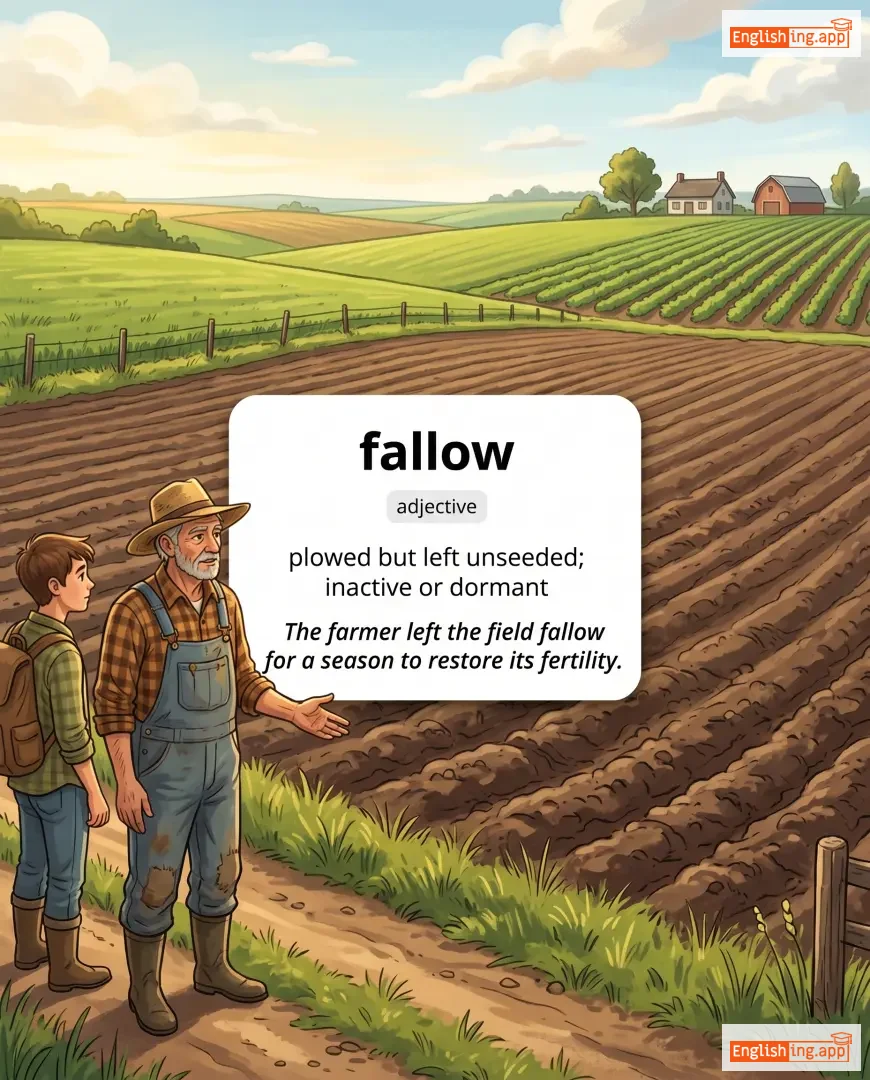
fallow definition card — visual illustration of the meaning
adjective
/ˈfæloʊ/
休耕, 不活跃 (xiū gēng, bù huó yuè)

plowed but left unseeded; inactive or dormant

"The farmer left the field fallow for a season to restore its fertility."

"农民让田地休耕一个季节,以恢复其肥力。" (Nóngmín ràng tiándì xiū gēng yīgè jìjié, yǐ huīfù qí féilì.)