語彙集

英単語辞書 | 単語の意味、定義、例文

noun
/ˈfeɪbəl/
寓話 (yūwa)

a short story, typically featuring animals as characters, that conveys a moral lesson

"Aesop’s fables are famous for teaching valuable lessons through simple stories."

"イソップの寓話は、簡単な物語を通して貴重な教訓を教えることで有名です。" (Isoppu no yūwa wa, kantan na monogatari o tōshite kichō na kyōkun o oshieru koto de yūmei desu.)
noun
/ˈfæbrɪk/
布地 (nuno)

Cloth or material produced by weaving or knitting fibers.

"The tailor used silk fabric to make the dress."

"仕立て屋はドレスを作るために絹の布地を使いました。" (Shitateya wa doresu o tsukuru tame ni kinu no nuno o tsukaimashita.)
verb
/ˈfæbrɪkeɪt/
作り上げる (tsukuriageru)

to invent or concoct something, often with the intent to deceive; or to construct or manufacture

"The witness fabricated his testimony to protect himself."
"証人は自分を守るために証言をでっち上げました。" (Shounin wa jibun wo mamoru tame ni shougen wo detchiagemashita.)
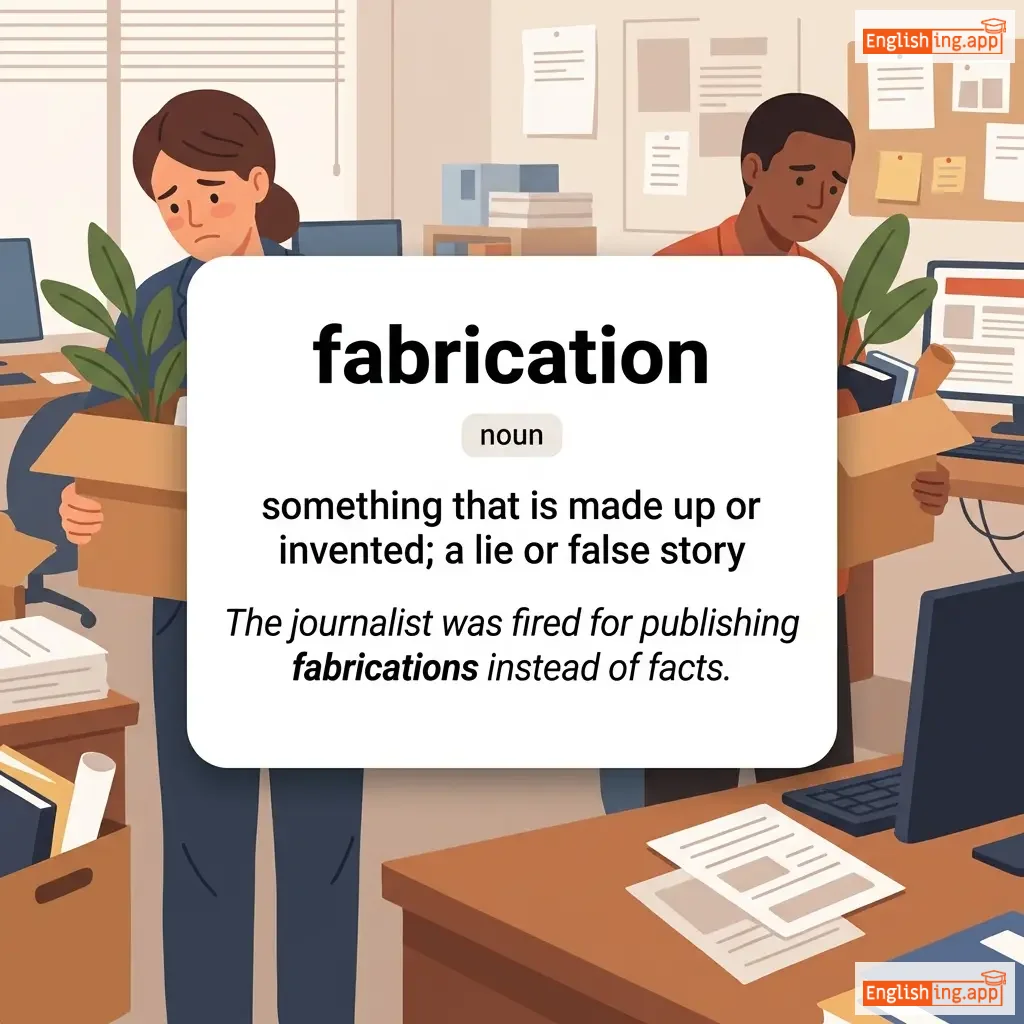
fabrication definition card — visual illustration of the meaning
noun
/ˌfæb.rɪˈkeɪ.ʃən/
捏造; 嘘; 虚構 (netsuzo; uso; kyoko)

something that is made up or invented; a lie or false story

"The journalist was fired for publishing fabrications instead of facts."

"記者は事実の代わりに捏造を公表したため解雇されました。" (Kisha wa jijitsu no kawari ni netsuzo o kohyo shita tame kaiko saremashita.)
adjective
/ˈfæbjələs/
素晴らしい (subarashii)

Extremely good or wonderful; almost unbelievable

"She looked fabulous in her new dress."

"彼女は新しいドレスで素晴らしく見えた。" (Kanojo wa atarashī doresu de subarashiku mieta.)
noun
/fəˈsɑːd/
ファサード (fasādo)

The front of a building; a false or superficial appearance

"The building's glass facade reflected the sunset."
"建物のガラスのファサードは日没を反映していた。" (Tatemono no garasu no fasādo wa nichibotsu o han'ei shite ita.)
face definition card — visual illustration of the meaning
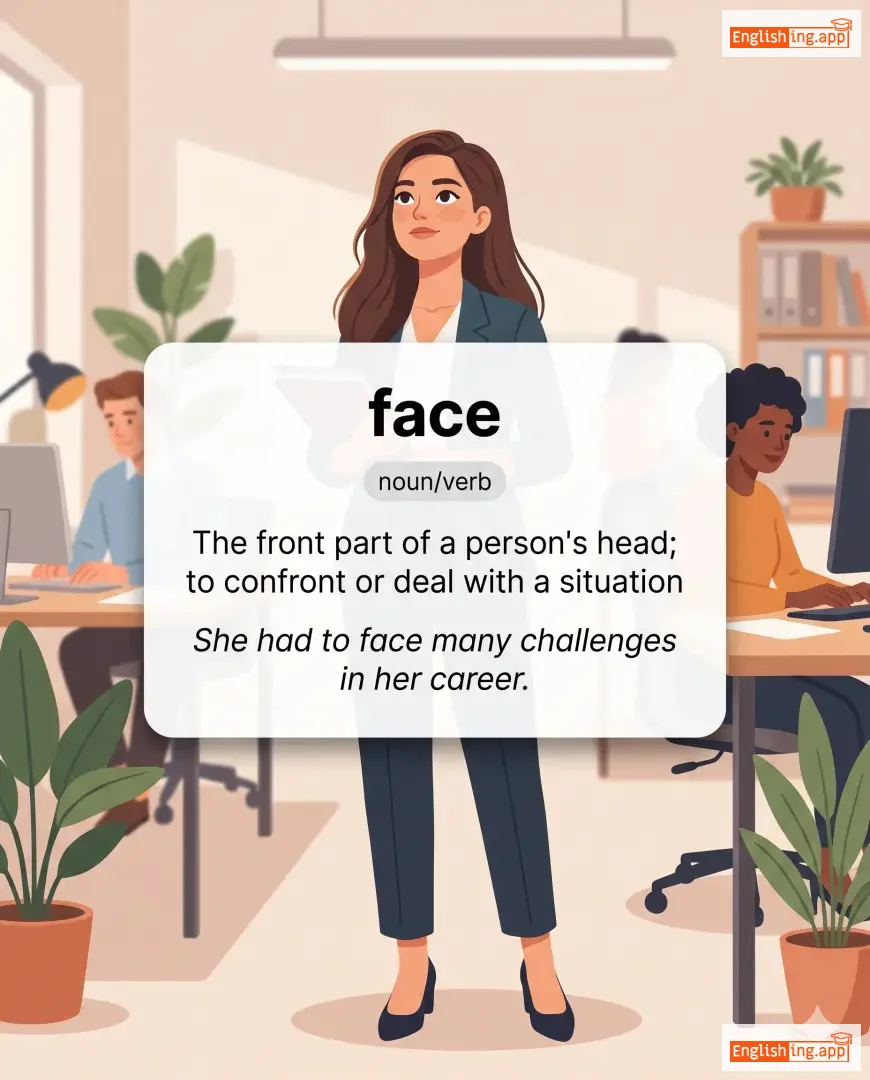
🙂

face

noun/verb
/feɪs/

The front part of a person's head; to confront or deal with a situation

"She had to face many challenges in her career."

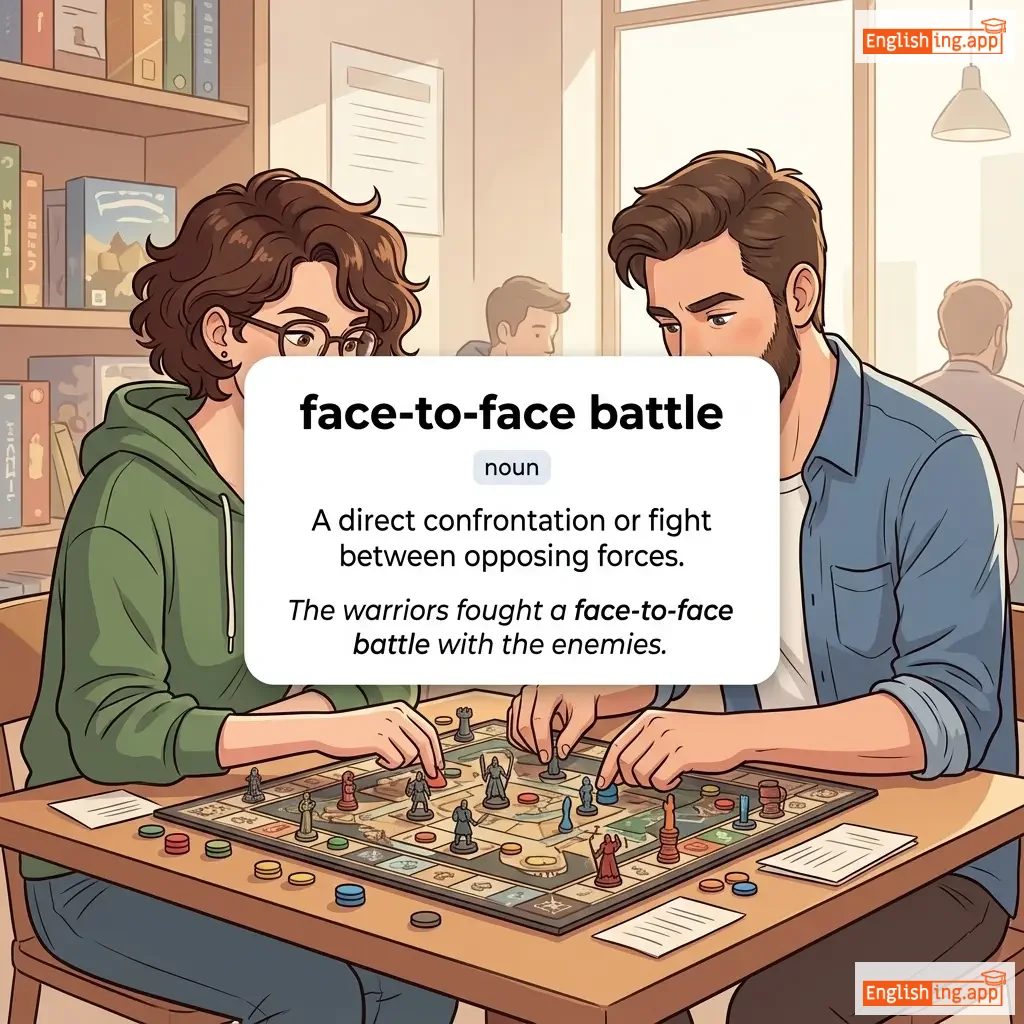
face-to-face battle definition card — visual illustration of the meaning
noun
ˈfeɪs tə ˈfeɪs ˈbætl
面と面の戦い (men to men no tatakai)

A direct confrontation or fight between opposing forces.

"The warriors fought a face-to-face battle with the enemies."
"戦士たちは敵と面と面で戦った。" (Senshi-tachi wa teki to men to men de tatakatta.)
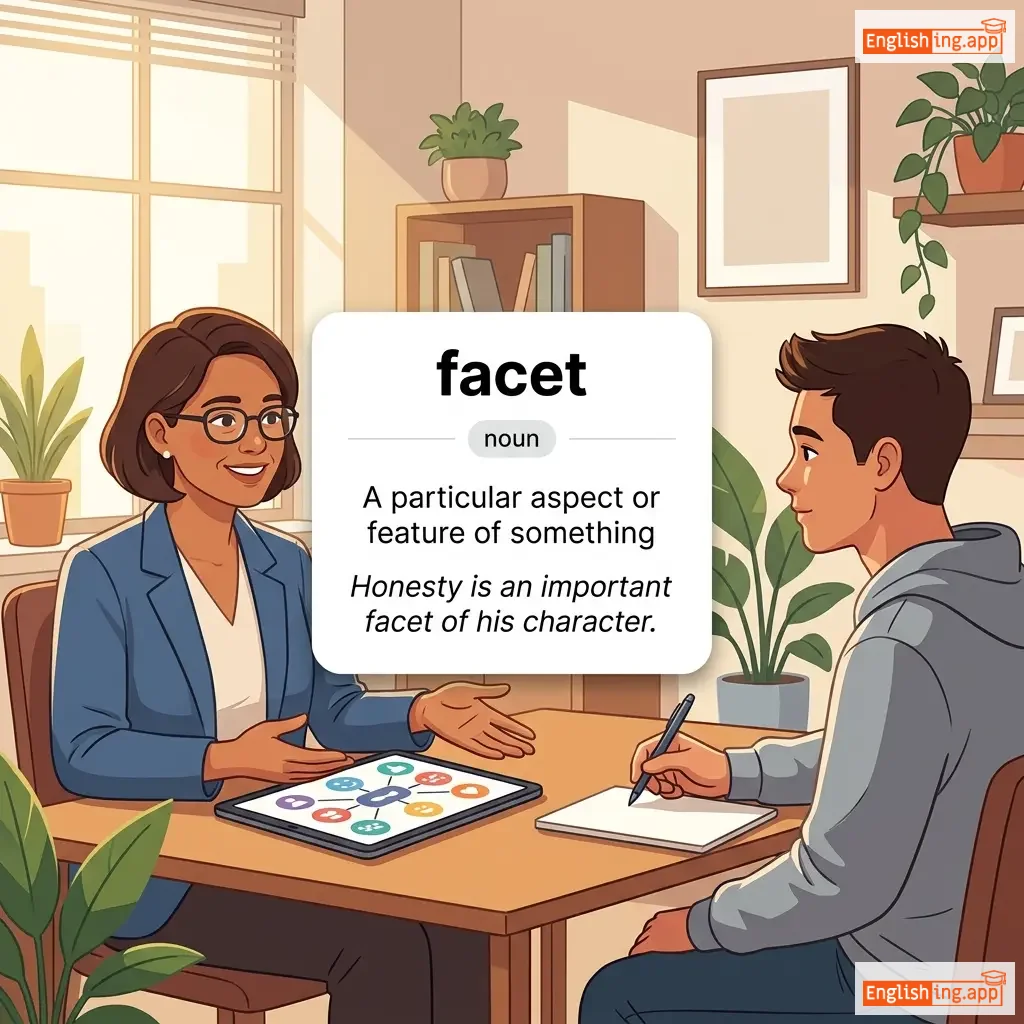
facet definition card — visual illustration of the meaning
noun
/ˈfæsɪt/
側面 (sokumen)

A particular aspect or feature of something

"Honesty is an important facet of his character."
"正直さは彼の性格の重要な側面です。" (Shōjikisā wa kare no seikaku no jūyōna sokumen desu.)
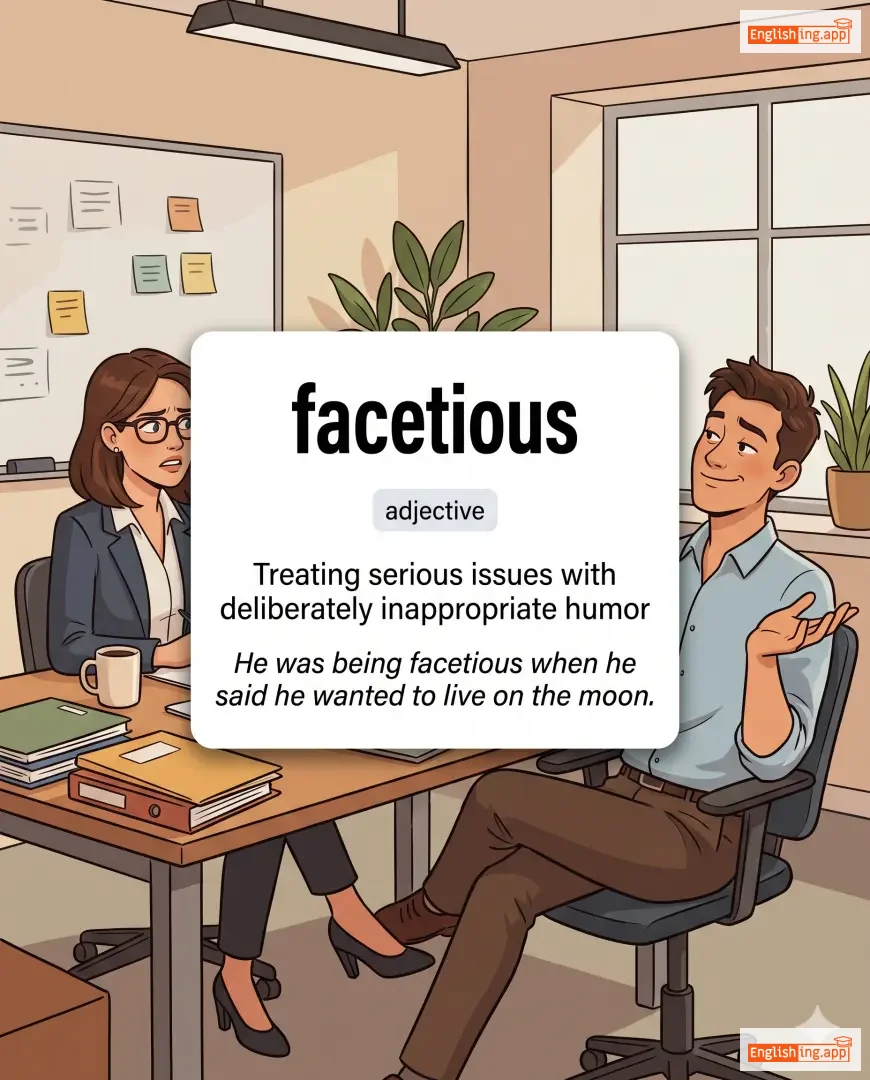
facetious definition card — visual illustration of the meaning
adjective
/fəˈsiːʃəs/
皮肉な (hiniku na)

Treating serious issues with deliberately inappropriate humor

"He was being facetious when he said he wanted to live on the moon."

"彼は月に住みたいと言ったとき、皮肉を言っていた。" (Kare wa tsuki ni sumitai to itta toki, hiniku o itte ita.)
adjective, noun
/ˈfeɪʃəl/
フェイシャル (feisharu)

Relating to the face; a beauty treatment for the face

"She booked a facial at the spa."

"彼女はスパでフェイシャルを予約しました。" (Kanojo wa supa de feisharu o yoyaku shimashita.)
adjective
/ˈfæsɪl/
簡単、表面的、単純 (kantan, hyōmen-teki, tanjun)

easily achieved or effortless; superficial or simplistic

"He gave a facile explanation that ignored the complexities of the problem."

"彼は問題の複雑さを無視して、簡単な説明をしました。" (Kare wa mondai no fukuzatsusa o mushi shite, kantan na setsumei o shimashita.)
facilitate definition card — visual illustration of the meaning
verb
/fəˈsɪlɪteɪt/
促進する、容易にする (sokushin suru, yōi ni suru)

to make an action or process easier or smoother

"The new software will facilitate communication between departments."

"新しいソフトウェアは部門間のコミュニケーションを促進します。" (Atarashī sofutowea wa bumonkan no komyunikēshon o sokushin shimasu.)
facilitation definition card — visual illustration of the meaning
noun
fəˌsɪl.ɪˈteɪ.ʃən
円滑化 (enkatsuka)

Making any work or process easy and effective.

"Payment gateways ensure the facilitation of online transactions."
"支払いゲートウェイはオンライン取引の円滑化を確保します。" (Shiharai gētowei wa onrain torihiki no enkatsuka o kakuho shimasu.)
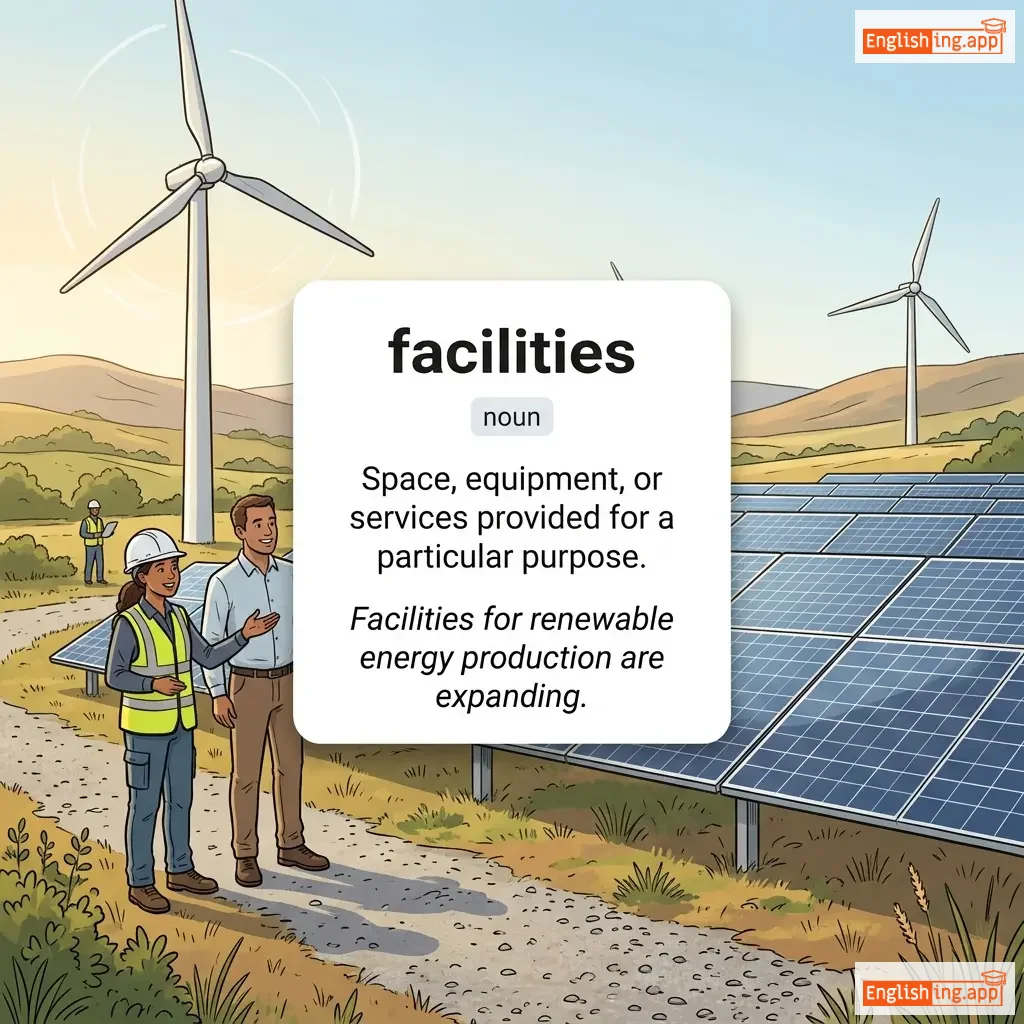
facilities definition card — visual illustration of the meaning
noun
fəˈsɪl.ɪ.tiz
施設 (shisetsu)

Space, equipment, or services provided for a particular purpose.

"Facilities for renewable energy production are expanding."
"再生可能エネルギーの生産施設が拡大しています。" (Saisei kanō enerugī no seisan shisetsu ga kakudai shiteimasu.)
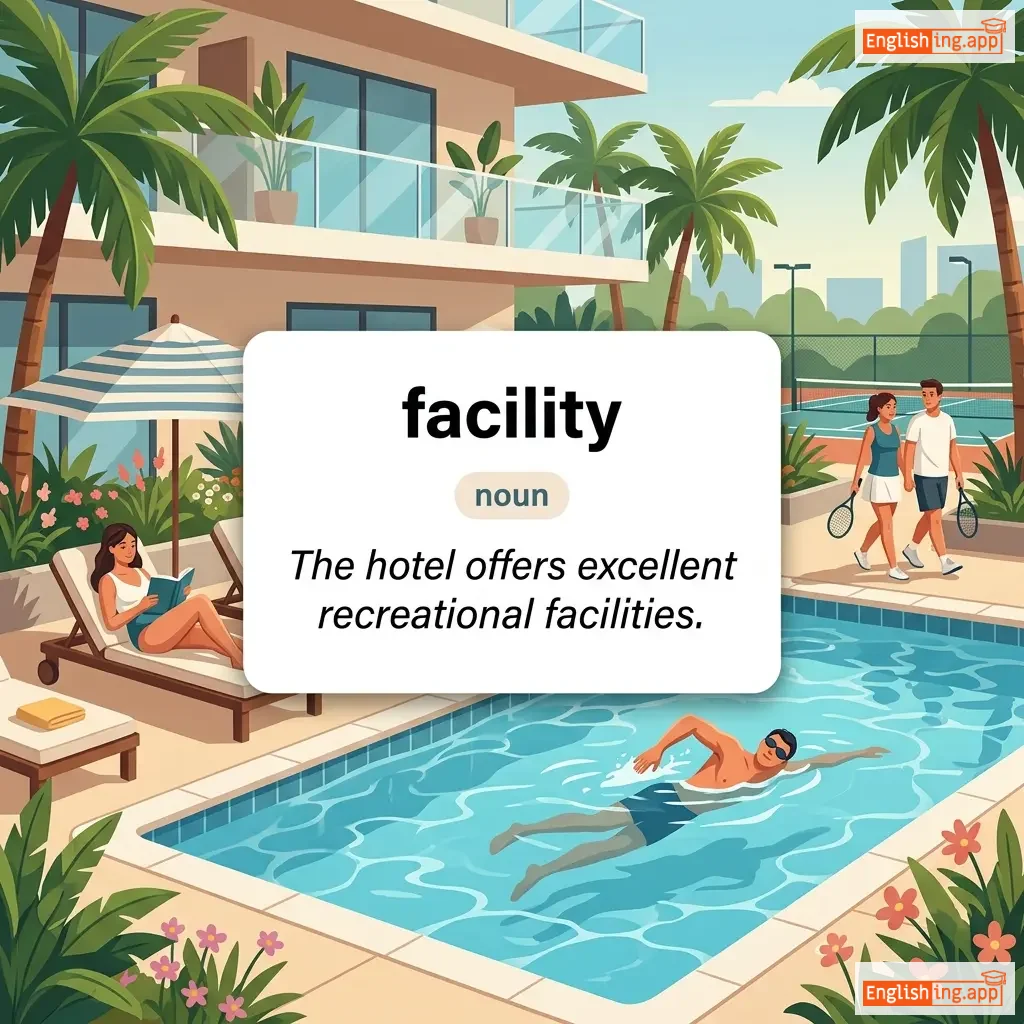
facility definition card — visual illustration of the meaning
noun
/fəˈsɪləti/
特定の目的のために提供される場所、サービス、または設備 (tokutei no mokuteki no tame ni teikyō sareru basho, sābisu, mata wa setsubi)

a place, service, or equipment provided for a particular purpose; ease in doing something

"The hotel offers excellent recreational facilities."

"そのホテルは優れたレクリエーション施設を提供しています。" (Sono hoteru wa sugureta rekuriēshon shisetsu o teikyō shiteimasu.)
noun
/fækˈsɪmɪli/
コピー (kopī)

an exact copy or reproduction of a document

"He sent a facsimile of the contract to the client."

"彼は契約書のコピーをクライアントに送った。" (Kare wa keiyakusho no kopī o kuraianto ni okutta.)
noun
/fækt/
事実 (jijitsu)

A thing that is known or proved to be true

"It is a fact that the Earth orbits the Sun."

"地球が太陽の周りを回っているのは事実です。" (Chikyū ga taiyō no mawari o mawatte iru no wa jijitsu desu.)
noun
/ˈfækʃən/
派閥 (habatsu)

a small organized group within a larger group, often in disagreement or conflict

"The political party split into several factions over the leadership issue."

"政治党は指導問題を巡っていくつかの派閥に分裂しました。" (Seiji tou wa shidou mondai wo megutte ikutsuka no habatsu ni bunretsu shimashita.)
adjective
/ˈfækʃəs/
分裂的な (bunretsu teki na)

causing disagreement or division within a group; inclined to form factions

"The debate became factious, splitting the committee into rival camps."

"議論は分裂的になり、委員会は対立する陣営に分かれました。" (Giron wa bunretsuteki ni nari, iinkai wa tairitsu suru jin'ei ni wakaremashita.)
adjective
/fækˈtɪʃəs/
人工的な、真実ではない (jinkō-teki na, shinjitsu de wa nai)

artificial or fabricated; not natural or genuine

"The excitement in his story seemed factitious and forced."

"彼の話の興奮は人工的で強制的に見えました。" (Kare no hanashi no kōfun wa jinkō-teki de kyōsei-teki ni miemashita.)
noun
/ˈfæktər/
要因 (yōin)

A circumstance, fact, or influence that contributes to a result.

"Weather is an important factor in crop production."

"天候は作物生産において重要な要因です。" (Ten kō wa sakumotsu seisan ni oite jūyōna yōin desu.)
noun
/ˈfæktəri/
工場 (kōjō)

A building or group of buildings where goods are manufactured.

"He works in a shoe factory."

"彼は靴工場で働いています。" (Kare wa kutsu kōjō de hataraiteimasu.)
factotum definition card — visual illustration of the meaning
noun
/fækˈtoʊtəm/
オールラウンダー (ōrāundā)

an employee who does many different types of work; a general servant

"He worked as a factotum, handling both clerical and maintenance duties."

"彼はファクトトムとして働き、事務的な仕事とメンテナンス作業の両方を担当していました。" (Kare wa faktotomu toshite hataraki, jimuteki na shigoto to mentenansu sagyō no ryōhō o tantō shite imashita.)
adjective
/ˈfæktʃuəl/
事実に基づいた; 真実の (jijitsu ni motozuita; shinjitsu no)

based on facts; accurate; true

"The report contains only factual information."

"レポートには事実に基づく情報のみが含まれています。" (repōto ni wa jijitsu ni motozuita jōhō nomi ga fukumareteimasu.)
noun
/ˈfækəlti/
能力、学部 (nōryoku, gakubu)

an inherent mental or physical ability; a division of a university

"She has a remarkable faculty for languages."

"彼女は言語に対して驚異的な能力を持っています。" (Kanojo wa gengo ni taishite kyōiteki na nōryoku o motteimasu.)
noun
/fæd/
一時的な流行、トレンド (ichijiteki na ryūkō, torendo)

a temporary fashion or trend; a short-lived craze

"The new diet became a popular fad among teenagers."

"新しいダイエットはティーンエイジャーの間で人気の一時的なトレンドとなった。" (Atarashī daietto wa tīneijā no aida de ninki no ichijiteki na torendo to natta.)
adjective
/ˈfædɪʃ/
一時的な流行 (ichiji teki na ryūkō)

Following a temporary trend or fashion

"Wearing neon clothes was a faddish style in the 1980s."

"ネオンの服を着ることは1980年代の流行だった。" (Neon no fuku wo kiru koto wa 1980 nendai no ryūkō datta.)
verb
/feɪd/
色あせる (iro aseru)

To gradually lose brightness, color, or strength.

"The colors of the old photo have started to fade."

"古い写真の色が薄れてきた。" (Furui shashin no iro ga usurete kita.)
verb
/feɪl/
失敗する (shippai suru)

To be unsuccessful in achieving a goal or expectation.

"He failed the driving test."

"彼は運転試験に失敗した。" (Kare wa unten shiken ni shippai shita.)
adjective
/ˈfeɪl.seɪf/
故障防止 (koshou boushi)

designed to prevent failure or accidents; guaranteed to work correctly

"The engineers installed a fail-safe mechanism in the nuclear plant."

"エンジニアは原子力発電所に故障防止メカニズムを設置しました。" (Enjinia wa genshiryoku hatsudensho ni koshou boushi mekanizumu wo setchi shimashita.)
adjective
/feɪld/
失敗した (shippai shita)

not successful in achieving a desired result

"The project failed to meet the expectations."

"プロジェクトは期待に応えることができませんでした。" (Purojekuto wa kitai ni kotaeru koto ga dekimasen deshita.)
noun
/ˈfeɪ.lɪŋ/
失敗; 欠点; 弱点 (shippai, kentō, jakuten)

a weakness, especially in a person's character; a fault

"His only failing is that he talks too much during meetings."

"彼の唯一の失敗は、会議中に話しすぎることです。" (Kare no yuiitsu no shippai wa, kaigi-chū ni hanashisugiru koto desu.)
noun
/ˈfeɪljər/
失敗 (shippai)

The lack of success in doing or achieving something.

"The project was considered a failure due to poor planning."

"プロジェクトは不十分な計画のため失敗と見なされました。" (Purojekuto wa fujūbun na keikaku no tame shippai to minasaremashita.)
adjective/adverb
/feɪn/
喜んで、喜んで (yorokonde, yorokonde)

gladly, willingly, or with pleasure

"I would fain help you if I had the time."

"もし時間があれば、喜んであなたを助けます。" (Moshi jikan ga areba, yorokonde anata o tasukemasu.)
verb
/feɪnt/
気絶する (kizetsu suru)

to lose consciousness for a short time because of a temporary lack of oxygen to the brain

"He felt dizzy and fainted in the heat."

"彼はめまいを感じ、暑さで気を失った。" (Kare wa memai o kanji, atsusa de ki o ushinatta.)
adjective/noun
/fɛr/
公平 / フェア (kouhei / fea)

Treating people equally without favoritism; or an event where goods are displayed and sold

"The judge made a fair decision."

"裁判官は公平な判断を下しました。" (Saibankan wa kouhei na handan o kudashimashita.)
noun
/ˈfɛərˌɡraʊndz/
見本市会場 (mihonichi kaijo)

A designated area where fairs, exhibitions, and amusement events are held

"The town set up rides and stalls at the fairgrounds for the annual festival."

"町は年次祭のために見本市会場に乗り物と屋台を設置した。" (Machi wa nenji matsuri no tame ni mihonichi kaijo ni norimono to yatai o secchi shita.)
adverb
/ˈfɛərli/
公正に (kōsei ni)

To a reasonable degree; in a just and honest way.

"The teacher treated all students fairly."

"教師はすべての学生を公正に扱った。" (Kyōshi wa subete no gakusei o kōsei ni atsukatta.)
noun
/ˈfɛə(r)nɪs/
公平 (kouhei)

the quality of being free from bias, favoritism, or injustice

"She always strives for fairness in her decisions."

"彼女は常に自分の決定に公平さを求めています。" (Kanojo wa tsune ni jibun no kettei ni kouhei-sa o motometeimasu.)
noun
/ˈfer.i.teɪl/
おとぎ話 (otogibanashi)

a children's story about magical and imaginary beings and lands

"Children love listening to fairy-tales before bedtime."

"子供たちは寝る前におとぎ話を聞くのが大好きです。" (Kodomotachi wa neru mae ni otogibanashi o kiku no ga daisuki desu.)
noun
/feɪθ/
信念 (shinnen)

Strong belief or trust in someone or something, often without proof.

"She has great faith in her team’s abilities."

"彼女はチームの能力に大きな信頼を置いています。" (Kanojo wa chīmu no nōryoku ni ōkina shinrai o oiteimasu.)
adjective
/ˈfeɪθ.fəl/
忠実な; 誠実な; 信念に忠実 (chūjitsuna; seijitsuna; shinnen ni chūjitsu)

loyal and committed; reliable; true to one's beliefs

"She remained faithful to her principles throughout her career."

"彼女はキャリアを通じて自分の信念に忠実でした。" (kanojo wa kyaria o tōjite jibun no shinnen ni chūjitsu deshita.)
adverb
/ˈfeɪθ.fəl.i/
忠実に (chūjitsu ni)

in a loyal and steadfast manner; with dedication

"She faithfully attended every meeting despite her busy schedule."

"彼女は忙しいスケジュールにもかかわらず、毎回忠実に会議に出席しました。" (Kanojo wa isogashī sukejūru ni mo kakawarazu, maikai chūjitsu ni kaigi ni shusseki shimashita.)
adjective/verb/noun
/feɪk/
偽物 (nisemono)

not genuine; counterfeit; to imitate something dishonestly

"He tried to fake his signature on the document."
"彼は書類にサインを偽造しようとしました。" (Kare wa shorui ni sain o gizo shiyou to shimashita.)
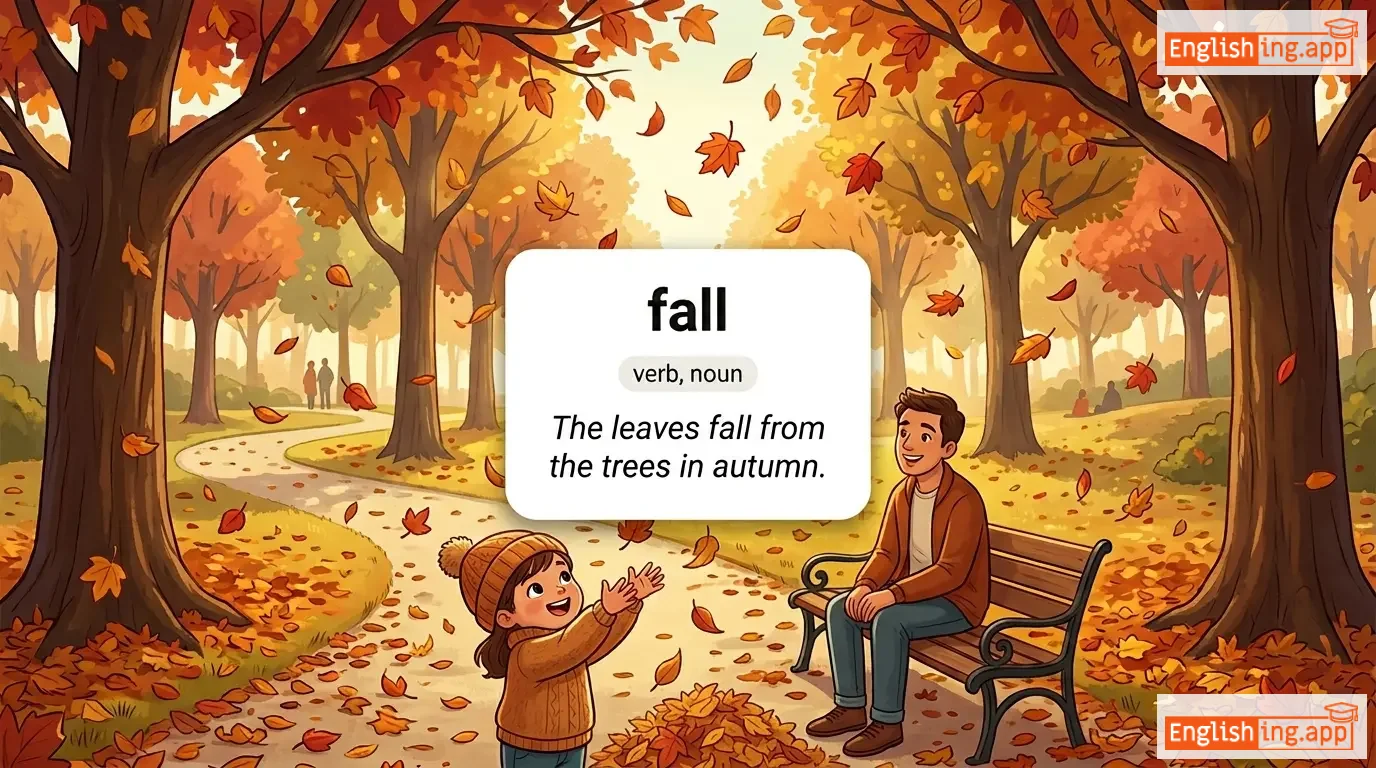
fall definition card — visual illustration of the meaning
verb, noun
/fɔːl/
落ちる (ochiru)

to move downward, typically rapidly and freely without control; the act of dropping from a higher to a lower place

"The leaves fall from the trees in autumn."
"秋には葉が木から落ちる。" (Aki ni wa ha ga ki kara ochiru.)
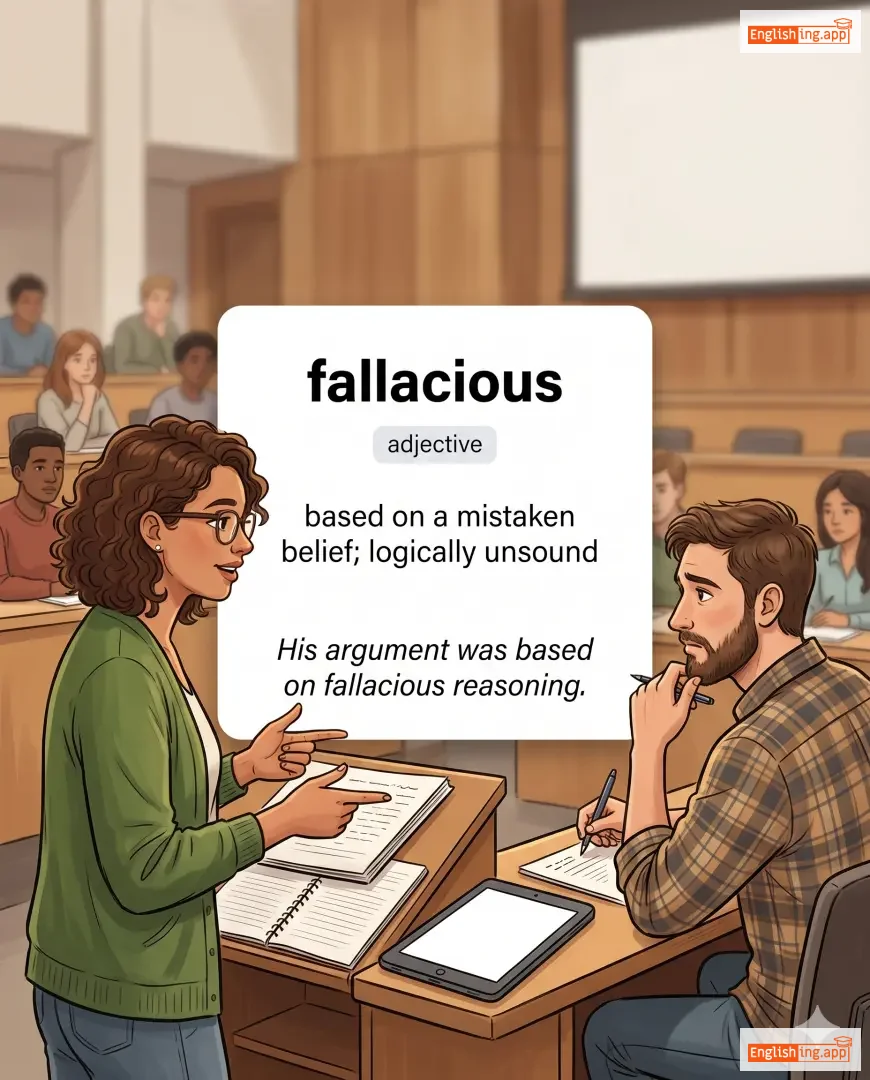
fallacious definition card — visual illustration of the meaning
adjective
/fəˈleɪ.ʃəs/
誤解を招く (gokai wo maneku)

based on a mistaken belief; logically unsound

"His argument was based on fallacious reasoning."
"彼の議論は誤解を招く推論に基づいていた。" (Kare no giron wa gokai wo maneku suiron ni motozuite ita.)
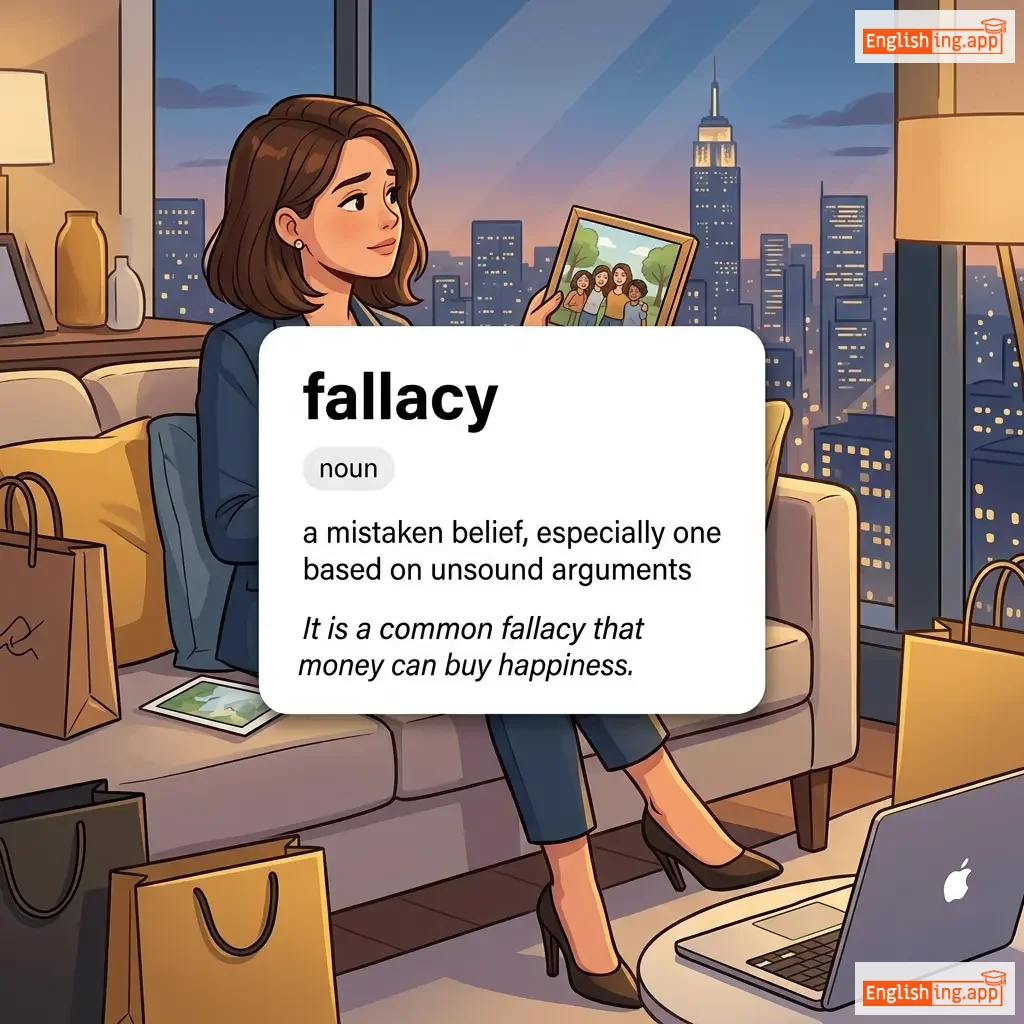
fallacy definition card — visual illustration of the meaning
noun
/ˈfæl.ə.si/
誤謬 (gomyu)

a mistaken belief, especially one based on unsound arguments

"It is a common fallacy that money can buy happiness."

"お金が幸せを買えるというのは一般的な誤謬です。" (Okane ga shiawase o kaeru to iu no wa ippan-teki na gomyu desu.)
adjective
/ˈfæləbl/
誤りを犯しやすい (ayamari wo okashi yasui)

capable of making mistakes or being wrong

"Even experts are fallible and can make errors."
"専門家でさえ、誤りを犯し、エラーをすることがあります。" (Senmonka de sae, ayamari wo okashi, erā wo suru koto ga arimasu.)
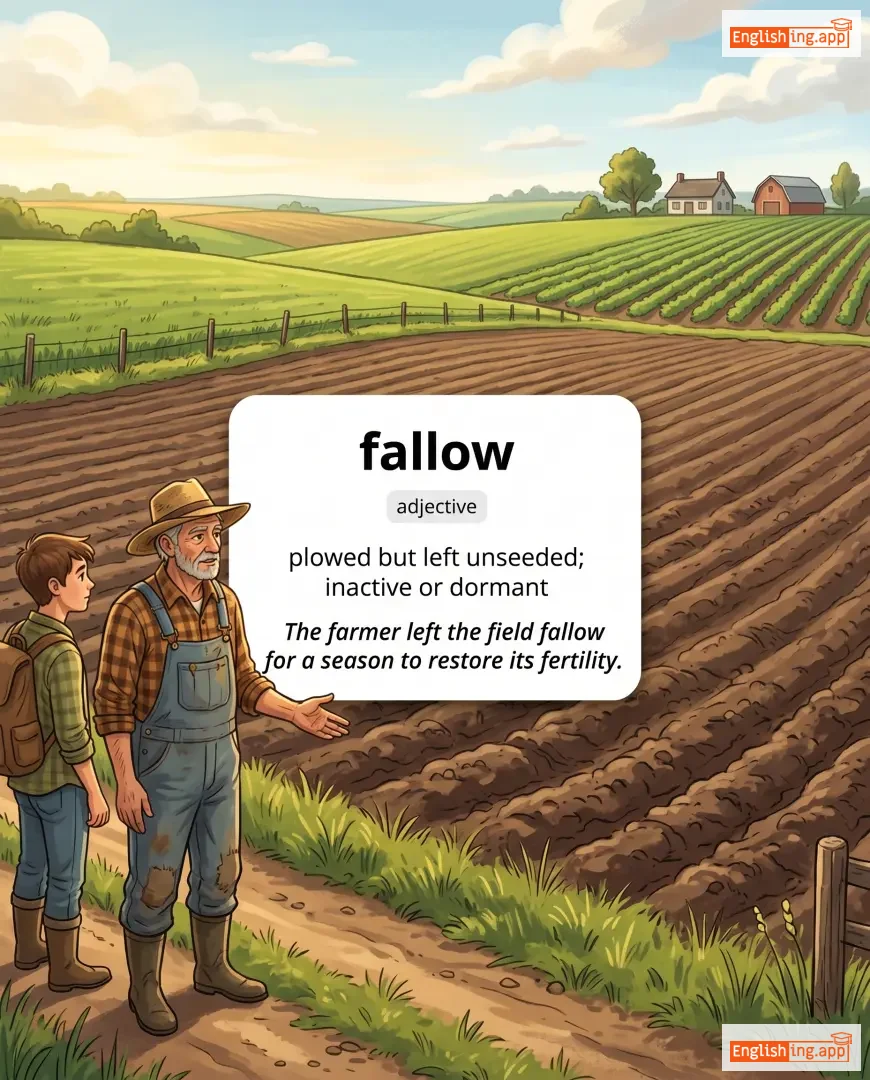
fallow definition card — visual illustration of the meaning
adjective
/ˈfæloʊ/
休耕, 非活発 (kyūkō, hi kappatsu)

plowed but left unseeded; inactive or dormant

"The farmer left the field fallow for a season to restore its fertility."

"農夫は畑を1シーズン休耕させて、その肥沃さを回復させました。" (Nōfu wa hatake o 1 shīzun kyūkō sasete, sono hiyokusa o kaifuku sasemashita.)