語彙集

英単語辞書 | 単語の意味、定義、例文

adjective
/juːˈbɪkwɪtəs/
遍在 (henzai)

Present, appearing, or found everywhere.

"Smartphones have become ubiquitous in modern society."

"スマートフォンは現代社会で遍在しています。" (Sumātofon wa gendai shakai de henzai shiteimasu.)
adjective
/juːˈbɪkwɪtəs/
普遍的 (fuhenteki)

Existing or being everywhere at the same time.

"Social media has become ubiquitous among young people."
"ソーシャルメディアは若者の間で普及しています。" (Sōsharumedia wa wakamono no aida de fukyū shiteimasu.)
ubiquity definition card — visual illustration of the meaning
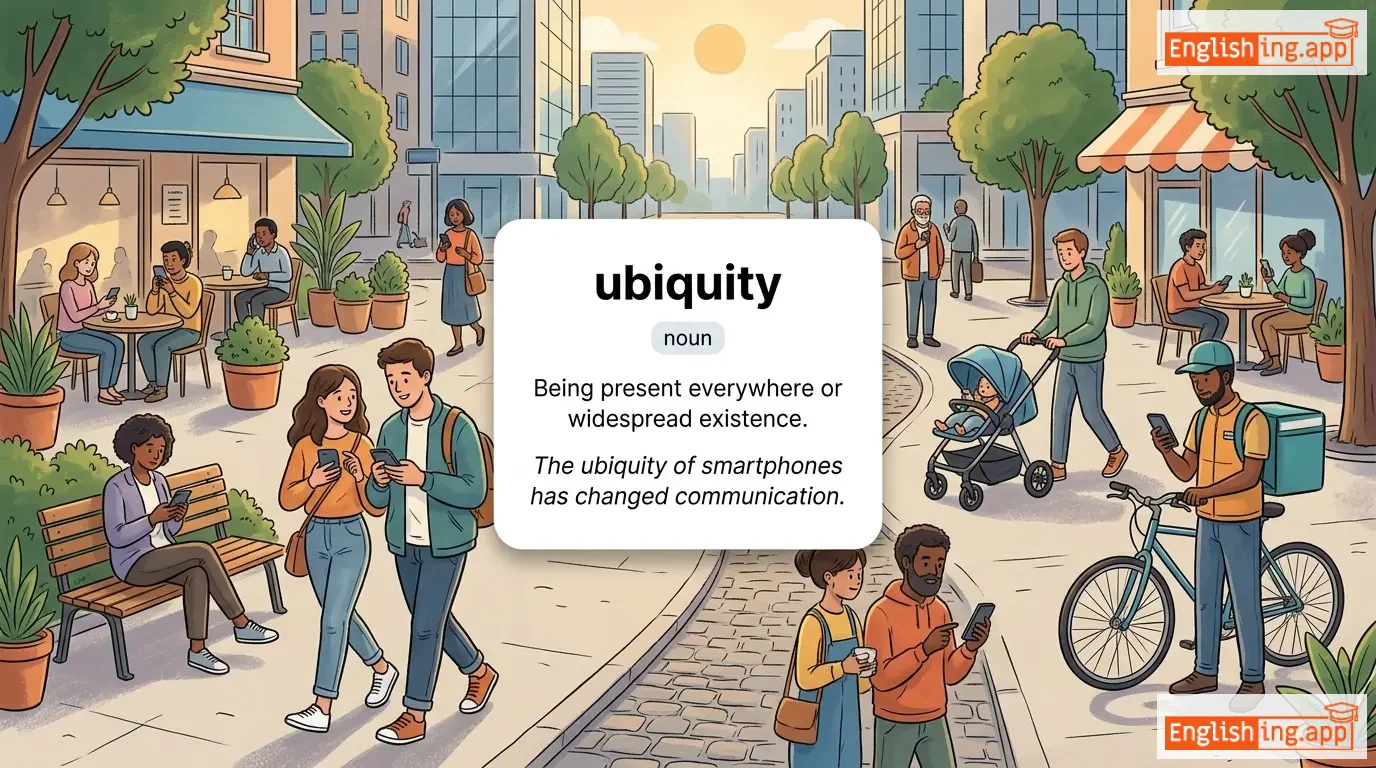
noun
/juːˈbɪk.wɪ.ti/
遍在 (henzai)

Being present everywhere or widespread existence.

"The ubiquity of smartphones has changed communication."

"スマートフォンの遍在はコミュニケーションを変えました。" (Sumātofon no henzai wa komyunikēshon o kaemashita.)
adjective
/ˈʌɡli/
醜い (minikui)

unpleasant or repulsive in appearance

"The house had an ugly view of the street."

"その家は通りに醜い景色を持っていた。" (Sono ie wa tōri ni minikui keshiki o motte ita.)
interjection
/ʌ/
ああ (aa)

a sound people make when they hesitate or are unsure what to say next.

"Uh, I’m not sure if that’s the right answer."

"ああ、それが正しい答えかどうかはわからない。" (Aa, sore ga tadashii kotae ka dō ka wa wakaranai.)
noun
/juːˈkeɪs/
命令 (meirei)

An authoritative decree or order, especially one issued by a sovereign or government.

"The czar issued a ukase restricting the freedom of the press."

"ツァーは報道の自由を制限する命令を出しました。" (Tsuā wa hōdō no jiyū o seigen suru meirei o dashimashita.)
🤕

ulcer

noun
/ˈʌlsər/

a sore on the skin or a mucous membrane that does not heal easily

"The doctor prescribed medicine to treat the stomach ulcer."

adjective
/ʌlˈtɪəriər/
隠された動機 (kakusareta dōki)

hidden or secret, often with a selfish motive

"He invited her with an ulterior motive."

"彼は隠された動機で彼女を招待した。" (Kare wa kakusareta dōki de kanojo o shōtai shita.)
adjective
/ˈʌltɪmət/
究極 (kyuukyoku)

being the best, final, or most extreme

"Success is the ultimate goal of hard work."

"成功は努力の究極的な目標です。" (Seikou wa doryoku no kyuukyokuteki na mokuhyou desu.)
adverb
/ˈʌltəmətli/
最終的に (saishūteki ni)

in the end, after everything else

"Ultimately, we decided to go ahead with the project."

"最終的に、私たちはプロジェクトを進めることに決めました。" (Saishūteki ni, watashitachi wa purojekuto o susumeru koto ni kimemashita.)
noun
/ˌʌltɪˈmeɪtəm/
最終通告 (saishuu tsuukoku)

a final demand or statement of terms

"The workers gave the company an ultimatum to raise their wages."

"労働者は会社に賃金を引き上げるよう最終通告を出しました。" (Roudousha wa kaisha ni chingin o hikiageru you saishuu tsuukoku o dashimashita.)
adjective
/ˌʌltrəˈmɒnteɪn/
教皇支持者 (kyoukou shishisha)

beyond the mountains, especially referring to support for the Pope over local church authority

"The debate highlighted the ultramontane position in church politics."

"その討論は教会政治におけるウルトラモンタンの立場を浮き彫りにした。" (Sono touron wa kyoukai seiji ni okeru urutoramontan no tachiba wo ukibori ni shita.)
adjective
/ˌʌltrəˈmʌndeɪn/
超越的 (chouetsuteki)

Relating to things beyond the physical world; supernatural or transcendental.

"Philosophers often discuss ultramundane realities beyond human perception."

"哲学者たちはしばしば人間の知覚を超えたウルトラムンデインな現実について議論します。" (Tetsugakusha-tachi wa shibashiba ningen no chikaku o koeta urutoramundein na genjitsu ni tsuite giron shimasu.)
noun
/ˈʌm.brə/
完全な影、太陽黒点の暗い中心 (kanzen na kage, taiyō kokuten no kurai chūshin)

the fully shaded inner region of a shadow cast by an opaque object; the dark center of a sunspot

"During the eclipse, we stood in the moon's umbra."

"日食の際、私たちは月のアンブラの中に立っていました。" (nisshoku no sai, watashitachi wa tsuki no anburā no naka ni tatteimashita)
noun
/ˈʌmbrɪdʒ/
怒り, 不満 (ikari, fuman)

A feeling of resentment or offense.

"She took umbrage at his rude remark."

"彼女は彼の無礼な発言に怒りを感じた。" (Kanojo wa kare no burei na hatsugen ni ikari wo kanjita.)
noun
/ʌmˈbrɛlə/
(kasa)

A device used for protection against rain or sun, typically consisting of a collapsible canopy mounted on a central rod.

"She opened her umbrella as it started to rain."

"雨が降り始めたので、彼女は傘を開いた。" (Ame ga furi hajimeta node, kanojo wa kasa o hiraita.)
noun
/ʌnəˈbɪləti/
無能力 (munouryoku)

the state of being unable to do something; incapacity

"His unability to solve the problem caused delays in the project."

"彼の問題を解決する無能力はプロジェクトの遅延を引き起こした。" (Kare no mondai wo kaiketsu suru munouryoku wa purojekuto no chien wo hikiokoshita)
🙅‍♀️

Unable (ʌˈneɪbl)

adjective
/ʌˈneɪbl/
できない (dekinai)

not able to do something

"She was unable to attend the meeting."

"彼女は会議に出席できませんでした。" (Kanojo wa kaigi ni shusseki dekimasen deshita.)
adjective
/ˌʌnəkˈsɛptəbl/
受け入れられない (ukeirerarenai)

not satisfactory or allowable

"The behavior displayed by the employee was completely unacceptable."

"従業員の示した行動は完全に受け入れられないものでした。" (Jūgyōin no shimeshita kōdō wa kanzen ni ukeirerarenai mono deshita.)
adjective
/ˌʌnəˈkaʊntəbl/
説明できない (setsumei dekinai)

Not able to be explained or justified.

"She felt an unaccountable fear as she entered the dark room."

"彼女は暗い部屋に入ると説明できない恐怖を感じた。" (Kanojo wa kurai heya ni hairu to setsumei dekinai kyōfu o kanjita.)
adjective
/ˌʌnəkˈnɒlɪdʒd/
認められない (mitomerarenai)

Not recognized, admitted, or accepted; ignored or unnoticed

"Her contributions to the project went unacknowledged."

"彼女のプロジェクトへの貢献は認められなかった。" (Kanojo no purojekuto e no kouken wa mitomerarenakatta.)
adjective
/ˌʌnəˈdɔːrnd/
シンプルな、飾りのない (shimpuruna, kazari nonai)

Plain and simple; not decorated.

"The room was unadorned, with only a table and a chair."

"部屋はシンプルで、テーブルと椅子だけがありました。" (Heya wa shimpuru de, teeburu to isu dake ga arimashita.)
adjective
/ˌʌn.əˈdʌl.tə.reɪ.tɪd/
純粋 (junsui)

not mixed or diluted with any different or extra elements; pure

"She felt unadulterated joy when she heard the news."

"彼女はそのニュースを聞いたとき、純粋な喜びを感じました。" (Kanojo wa sono nyūsu o kiita toki, junsui na yorokobi o kanjimashita.)
adjective
/ˌʌnəˈfɛktɪd/
無影響な, 自然な (mu eikyō na, shizen na)

Not influenced or touched by something; genuine and natural.

"He remained unaffected by the criticism and kept working hard."

"彼は批判に動じることなく、懸命に働き続けました。" (Kare wa hihan ni dōjiru koto naku, kenmei ni hataraki tsudzukemashita.)
adjective
/ʌnəˈfreɪd/
恐れない (osorenai)

Not feeling fear; brave or courageous

"She walked into the dark room, unafraid of what might be inside."

"彼女は暗い部屋に入り、恐れないで何があるかを見た。" (Kanojo wa kurai heya ni hairi, osorenai de nani ga aru ka o mita.)
adjective
/ʌnˈælɔɪd/
純粋 (junsui)

Pure, complete, and not mixed with anything else.

"She felt unalloyed joy at the news of her success."

"彼女は成功のニュースを聞いて純粋な喜びを感じた。" (Kanojo wa seikou no nyuusu wo kiite junsui na yorokobi wo kanjita.)
noun
/ˌjuːnəˈnɪməti/
全会一致 (zenkai itchi)

Complete agreement by everyone in a group.

"The proposal was accepted with complete unanimity."

"提案は全会一致で承認されました。" (Teian wa zenkai itchi de shōnin saremashita.)
adjective
/juːˈnænɪməs/
全会一致 (zenkai icchi)

Fully in agreement; with everyone sharing the same opinion.

"The jury reached a unanimous verdict."
"陪審員は全会一致の評決を下しました。" (Hīshin'in wa zenkai icchi no hyōketsu o kudashimashita.)
unanimously definition card — visual illustration of the meaning
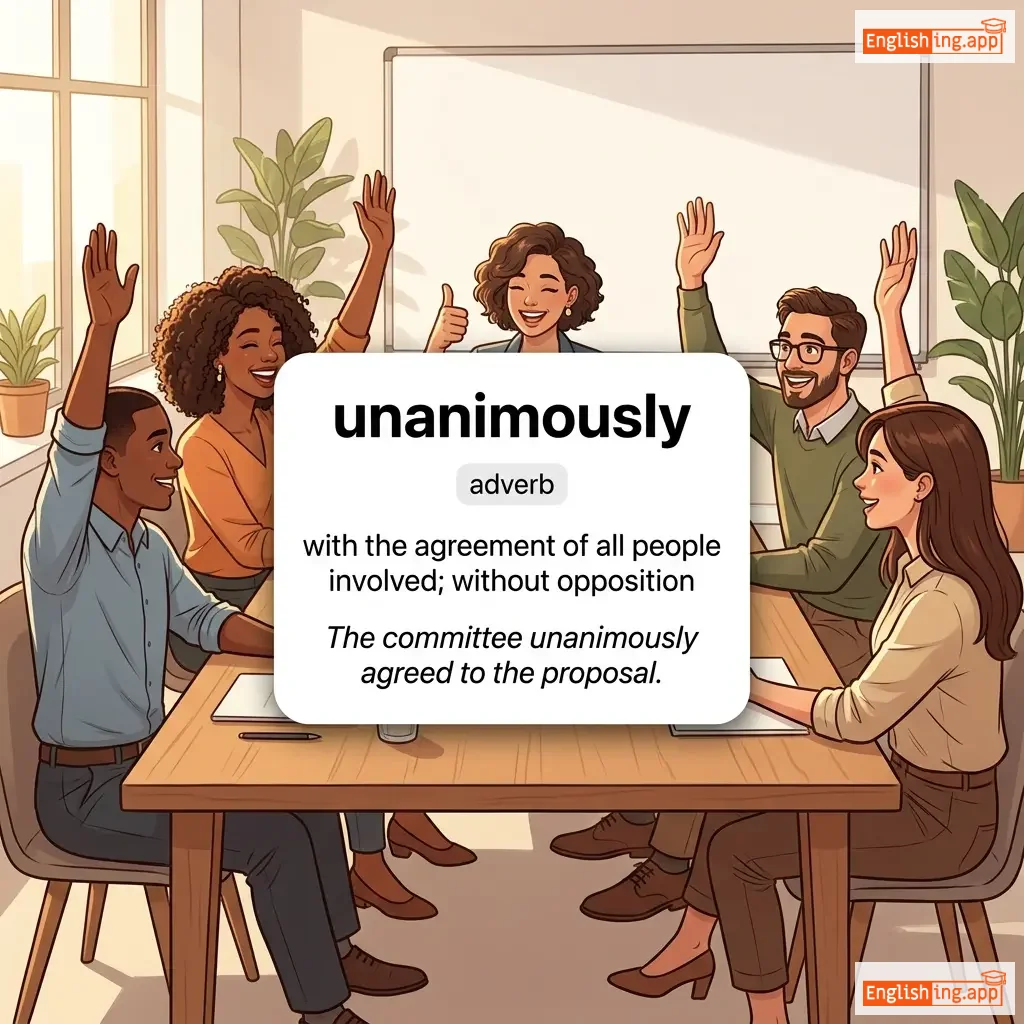
adverb
/juːˈnænɪməsli/
全会一致で (zenkai icchi de)

with the agreement of all people involved; without opposition

"The committee unanimously agreed to the proposal."

"委員会は全会一致で提案を承認した。" (Iinkai wa zenkai icchi de teian o shōnin shita.)
adjective
/ʌnəˈpiːzd/
満足していない (manzoku shite inai)

Not satisfied or calmed; still feeling discontent or anger

"Despite the apology, she remained unappeased."

"謝罪にもかかわらず、彼女は満足していなかった。" (Shazai ni mo kakawarazu, kanojo wa manzoku shite inakatta)
verb
/ʌnˈɑːrm/
武装解除する (busou kaijo suru)

to remove weapons from someone or to deprive of means of attack or defense

"The soldiers were ordered to unarm the prisoners."

"兵士たちは囚人の武装を解除するよう命じられた。" (Heishitachi wa shuujin no busou o kaijo suru you meijirareta)
adjective
/ʌnˈɑːrmd/
非武装 (hibuso)

Not equipped with or carrying weapons

"The police found the suspect unarmed during the search."
"警察は捜索中に容疑者が武装していないことを発見した。" (Keisatsu wa sousaku-chuu ni yougisha ga busou shiteinai koto wo hakken shita.)
unassailable definition card — visual illustration of the meaning
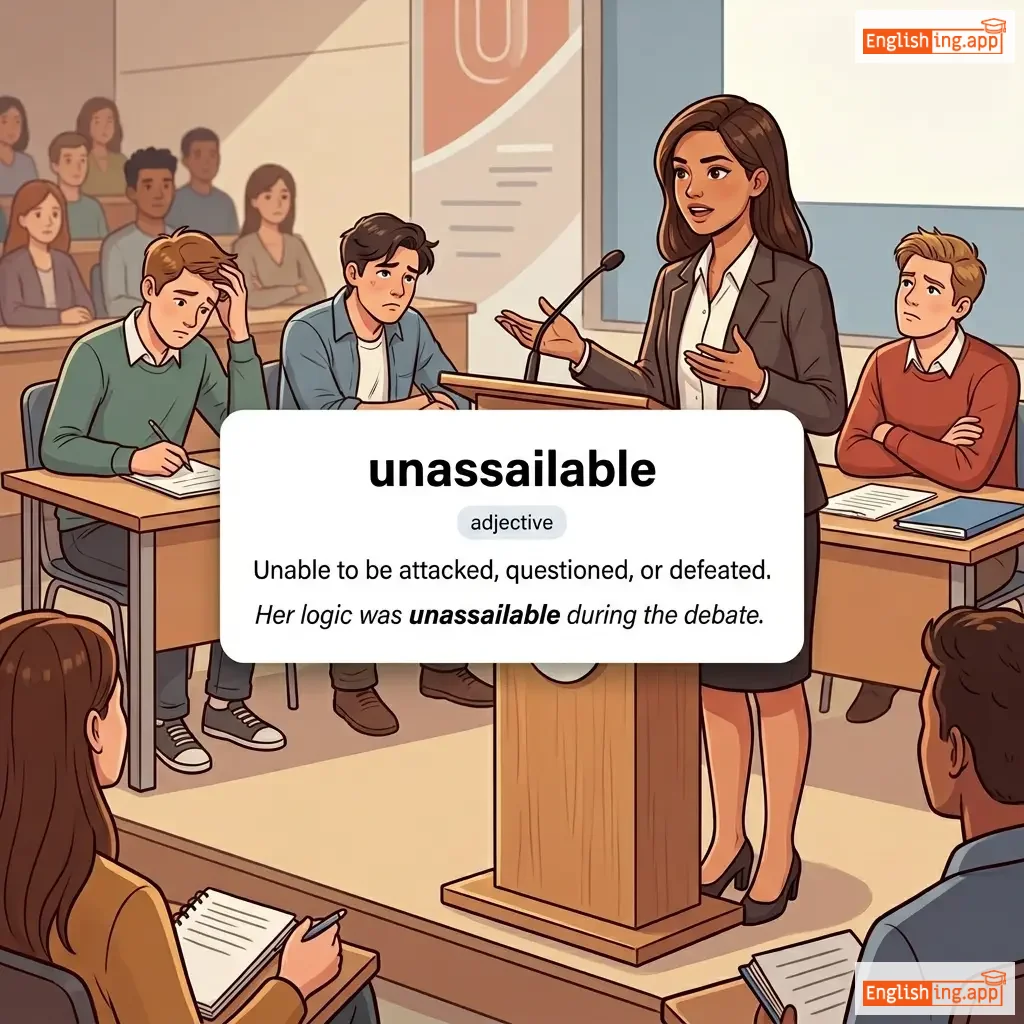
adjective
/ˌʌnəˈseɪləbl/
反論できない (hanron dekinai)

Unable to be attacked, questioned, or defeated.

"Her logic was unassailable during the debate."

"彼女の論理は討論中に反論できないものでした。" (Kanojo no ronri wa tōron-chū ni hanron dekinai mono deshita.)
adjective
/ˌʌnəˈsweɪdʒd/
解消されていない (kaishou sareteinai)

Not made less intense or relieved; unrelieved.

"His grief remained unassuaged despite the passage of time."

"彼の悲しみは時間が経っても解消されていなかった。" (Kare no kanashimi wa jikan ga tattemo kaishou sareteinakatta.)
adjective
/ˌʌnəˈsjuːmɪŋ/
控えめな (hikaeme na)

Not pretentious or arrogant; modest.

"Despite his success, he remained unassuming and humble."

"成功にもかかわらず、彼は控えめで謙虚なままでした。" (Seikou ni mo kakawarazu, kare wa hikaeme de kenkyo na mamadeshita.)
adjective
/ˌʌnəˈʃʊəd/
自信のない (jishin no nai)

Lacking confidence or certainty.

"She gave an unassured answer during the interview."

"彼女は面接で自信のない答えをしました。" (Kanojo wa mensetsu de jishin no nai kotae o shimashita.)
adjective
/ˌʌnəˈteɪnəbl/
達成不可能な (tassei fukanou na)

impossible to achieve, reach, or accomplish

"For many, becoming a professional athlete remains an unattainable dream."

"多くの人にとって、プロのアスリートになることは依然として達成不可能な夢です。" (Ooku no hito ni totte, puro no asuriito ni naru koto wa izen toshite tassei fukanou na yume desu.)
noun
/ˌʌnəˌveɪləˈbɪləti/
利用不可 (riyou fuka)

The state of being not available or not accessible.

"The unavailability of the manager caused a delay in the project."

"マネージャーの不在がプロジェクトの遅延を引き起こした。" (Mane-ja- no fuzai ga purojekuto no chien o hikiokoshita)
adjective
/ˌʌnəˈveɪləbəl/
利用できない (riyō dekinai)

Not able to be obtained, reached, or used; not present or accessible.

"The manager was unavailable to take calls during the meeting."

"マネージャーは会議中に電話に出られませんでした。" (Manejā wa kaigichuu ni denwa ni deraremasen deshita.)
adjective
/ˌʌnəˈvɔɪdəbl/
避けられない (sakerarenai)

Impossible to avoid or prevent.

"Delays were unavoidable due to heavy rain."

"大雨のため、遅れは避けられないものでした。" (ōame no tame, okure wa sakerarenai mono deshita.)
adjective
/ˌʌnəˈweər/
無自覚; 知らない; 気づかない (muzikaku; shiranai; kidzukanai)

not knowing or realizing; having no knowledge of something

"She was completely unaware of the danger."

"彼女はその危険に完全に気づいていなかった。" (Kanojo wa sono kiken ni kanzen ni kidzuite inakatta.)
adjective
/ʌnˈbæləns/
不均衡な; 不安定な (fukin-kō na; fuantei na)

not balanced; lacking stability or equilibrium; mentally unstable

"The unbalanced table kept wobbling."

"不均衡なテーブルは揺れ続けていた。" (Fukin-kō na tēburu wa yure tsudzukete ita.)
adjective
/ʌnˈbeərəbl/
耐え難い (taeganai)

Too difficult or unpleasant to endure.

"The heat was unbearable in the afternoon."

"午後の暑さは耐え難かった。" (Gogo no atsusa wa taeganakatta.)
adjective
/ʌnˈbiːtən/
負けなし; 敗北なし (makenashi; haiboku nashi)

not defeated; having never lost; undefeated

"The team remains unbeaten this season."

"そのチームは今シーズン無敗です。" (Sono chīmu wa kon shīzun muhai desu.)
adjective
/ˌʌnbɪˈkʌmɪŋ/
不適切 (futekisetsu)

Not proper or appropriate for a person; unsuitable.

"His rude behavior was unbecoming of a leader."

"彼の無礼な態度はリーダーとして不適切だった。" (Kare no burei na taido wa riidaa toshite futekisetsu datta.)
noun
/ˌʌnbɪˈliːf/
不信 (fushin)

A lack of belief, especially in religious faith.

"His heart was full of doubt and unbelief."

"彼の心は疑いと不信で満たされていました。" (Kare no kokoro wa utagai to fushin de mitasarete imashita.)
adjective
/ˌʌnbɪˈliːvəbəl/
信じられない (shinjirarenai)

impossible to believe; extremely surprising or remarkable

"The magician's performance was absolutely unbelievable."

"魔法使いのパフォーマンスは絶対に信じられなかった。" (Mahoutsukai no pafōmansu wa zettai ni shinjirarenakatta.)
adjective
/ˌʌnbɪˈliːvɪŋ/
信じない (shinjinaide)

Not willing or able to believe; skeptical or doubtful

"She gave him an unbelieving look when he claimed to have met a celebrity."

"彼が有名人に会ったと主張したとき、彼女は彼に信じない目を向けた。" (Kare ga yuumeijin ni atta to shucho shita toki, kanojo wa kare ni shinjinaide me wo muketa.)
adjective
/ʌnˈbaɪəst/
偏見のない (henken no nai)

Not showing prejudice; impartial and fair.

"The report gave an unbiased view of the situation."

"レポートは状況の偏りのない見解を示しました。" (Repōto wa jōkyō no henken no nai kenka o shimeshimashita.)
adjective
/ʌnˈblʌʃɪŋ/
恥知らずな; 図々しい (haji shirazu na; zu zu shii)

showing no shame or embarrassment; boldly shameless

"He told the unblushing lie without any hesitation."

"彼はためらうことなく無恥な嘘をついた。" (Kare wa tamerau koto naku muchina uso o tsuita.)