語彙集

英単語辞書 | 単語の意味、定義、例文

noun
/ˈɡæd.flaɪ/
厄介な人 (akkaina hito)

A person who annoys or criticizes others to stimulate change or provoke action.

"The journalist was a gadfly, constantly questioning the government's policies."

"そのジャーナリストは厄介な人で、政府の政策を常に疑問視していた。" (Sono jānarisuto wa akkaina hito de, seifu no seisaku o tsuneni gimon-shi shite ita.)
noun
/ˈɡædʒ.ɪt/
装置 (souchi)

A small mechanical or electronic device with a particular function, often novel or useful.

"He loves buying the latest kitchen gadgets."

"彼は最新のキッチンガジェットを買うのが好きです。" (Kare wa saishin no kitchin gadget o kau no ga suki desu.)
noun
/ɡæf/
間違い (machigai)

A social blunder or mistake; also a hook or device used in fishing or theater.

"He made a major gaff during the meeting by forgetting the client's name."

"会議中に彼は顧客の名前を忘れて大きな間違いを犯した。" (Kaigi chuu ni kare wa kokyaku no namae wo wasurete ookina machigai wo okashita.)
noun
/ɡæf/
失敗 (shippai)

An unintentional act or remark causing embarrassment; a blunder.

"The politician's gaffe quickly spread on social media."

"政治家の失敗はすぐにソーシャルメディアで広まりました。" (Seijika no shippai wa sugu ni soosharu media de hiromarimashita.)
noun
/ˈɡeɪəti/
楽しさ (tanoshisa)

The state of being cheerful, lively, or full of fun.

"The festival was full of music, laughter, and gaiety."

"祭りは音楽、笑い、そして楽しさでいっぱいでした。" (Matsuri wa ongaku, warai, soshite tanoshisa de ippai deshita.)
adverb
/ˈɡeɪli/
陽気に (yōki ni)

In a cheerful or lively way.

"Children ran gaily through the garden."

"子供たちは陽気に庭を駆け回った。" (Kodomotachi wa yōki ni niwa o kakemawatta.)
gain definition card — visual illustration of the meaning
verb
/ɡeɪn/
得る (eru)

to obtain or achieve something, often an advantage or benefit

"She gained valuable experience from her internship."
"彼女はインターンシップから貴重な経験を得た。" (Kanojo wa intānshippu kara kichōna keiken o eta.)
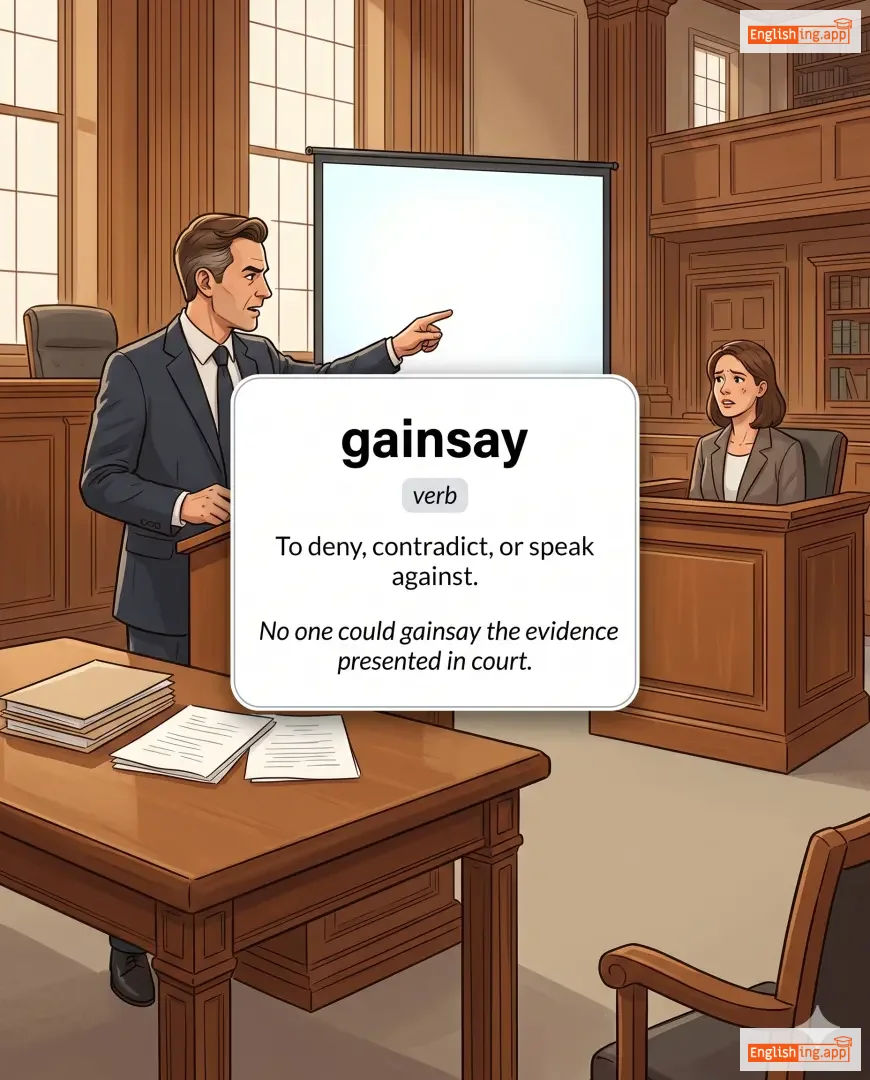
gainsay definition card — visual illustration of the meaning
verb
/ˌɡeɪnˈseɪ/
反論する (hanron suru)

To deny, contradict, or speak against.

"No one could gainsay the evidence presented in court."

"裁判所で提出された証拠を誰も反論できなかった。" (Saibansho de teishutsu sareta shōko o dare mo hanron dekinakatta.)
noun
/ɡeɪt/
歩き方 (arukikata)

A person's manner of walking.

"His slow gait showed that he was tired."
"彼の遅い歩き方は、彼が疲れていることを示していた。" (Kare no osoi arukikata wa, kare ga tsukarete iru koto o shimeshite ita.)
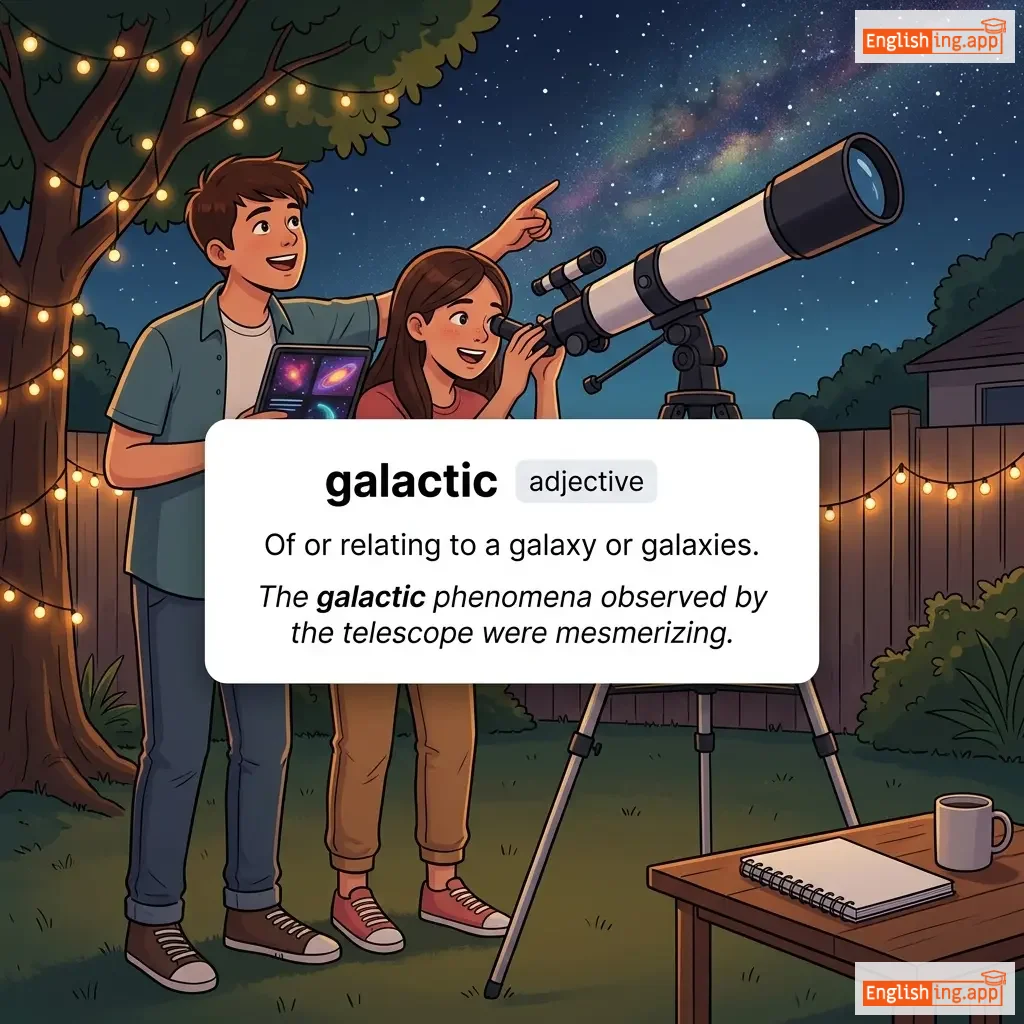
galactic definition card — visual illustration of the meaning
adjective
ɡəˈlæktɪk
銀河に関連する (ginga ni kanren suru)

Of or relating to a galaxy or galaxies.

"The galactic phenomena observed by the telescope were mesmerizing."
"望遠鏡で観測された銀河系の現象は魅力的でした。" (Bōenkyō de kansoku sareta ginga kei no genshō wa miryokuteki deshita.)
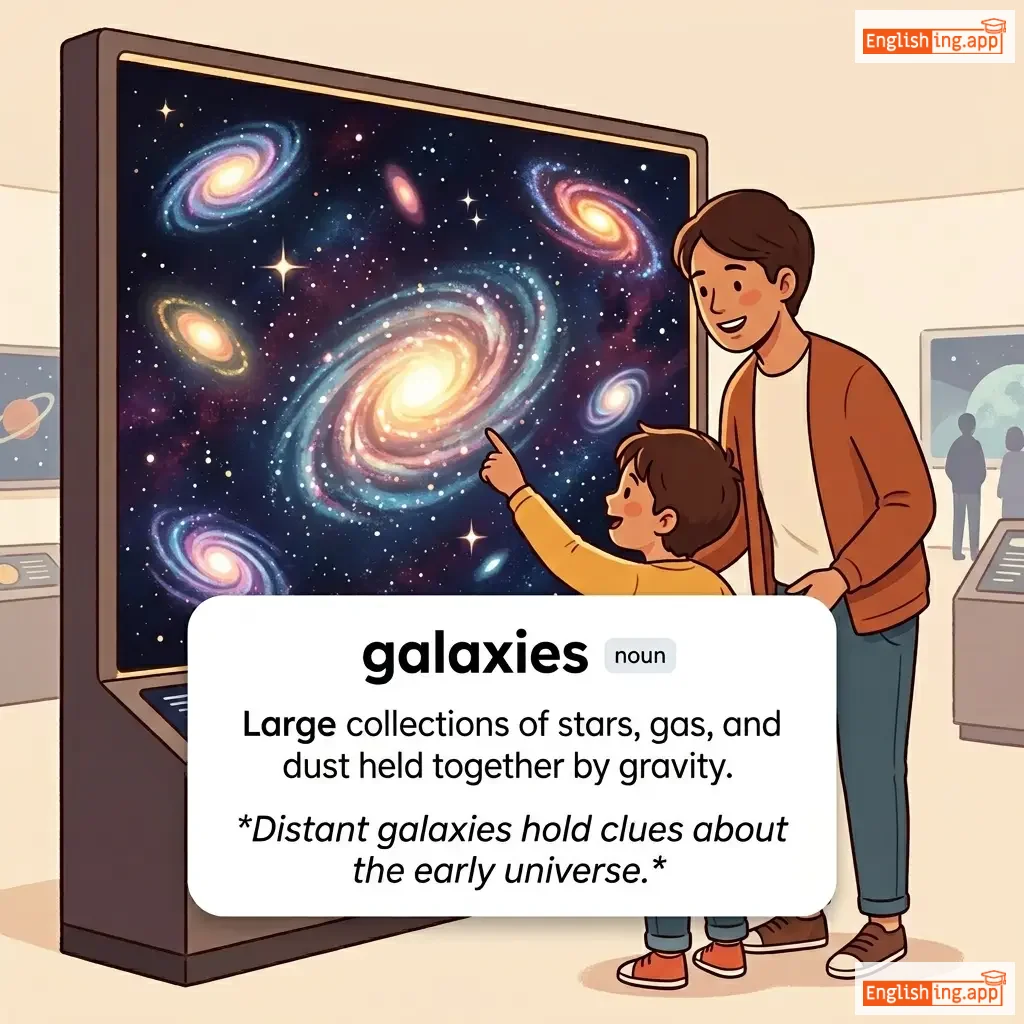
galaxies definition card — visual illustration of the meaning
noun
/ˈɡæl.ək.siːz/
銀河 (ginga)

Large collections of stars, gas, and dust held together by gravity.

"Distant galaxies hold clues about the early universe."

"遠くの銀河は初期の宇宙についての手がかりを持っています。" (Tōku no ginga wa shoki no uchū ni tsuite no tegakari o motteimasu.)
noun
/ˈɡæləksi/
銀河 (ginga)

A massive system of stars, gas, dust, and dark matter bound together by gravity.

"The Milky Way is the galaxy that contains our solar system."

"天の川は私たちの太陽系を含む銀河です。" (Amanogawa wa watashitachi no taiyōkei o fukumu ginga desu.)
💨

Gale

noun
/ɡeɪl/

A very strong wind.

"The ship struggled to stay afloat during the gale."

noun, verb
/ɡɔːl/
厚かましさ、迷惑をかける (atsukamashisa, meiwaku wo kakeru)

Annoyance, boldness, or to irritate.

"She had the gall to question his decision."

"彼女は彼の決定に疑問を呈するギャルを持っていました。" (Kanojo wa kare no kettei ni gimon wo tei suru gyaru wo motteimashita.)
adjective
/ˈɡæl.ənt/
勇敢な, 英雄的な (yūkan na, eiyū-teki na)

Brave, heroic, or chivalrous.

"The gallant firefighter saved the child from the burning building."

"その勇敢な消防士は燃えている建物から子供を助けました。" (Sono yūkan na shōbōshi wa moeteiru tatemono kara kodomo o tasukemashita.)
noun
/ˈɡæliən/
ガレオン船 (gareon sen)

A large sailing ship used mainly by Europeans from the 16th to 18th centuries.

"The Spanish galleon carried treasures across the Atlantic."

"スペインのガレオン船は大西洋を越えて財宝を運んだ。" (Supein no gareon-sen wa Taiseiyō o koete zaihō o hakonda.)
noun
/ˈɡæləri/
ギャラリー (gyararī)

A room or building for the display or sale of works of art.

"The gallery showcased modern paintings by local artists."

"ギャラリーは地元のアーティストによる現代絵画を展示しました。" (Gyararī wa jimoto no ātisuto ni yoru gendai kaiga o tenji shimashita.)
noun
/ˈɡæli/
船の厨房 (fune no chūbō)

A low, flat ship used in ancient times, often with sails and oars; also, a kitchen on a ship or aircraft.

"The galley was filled with the smell of freshly cooked food."

"船の厨房は新鮮に調理された食べ物の匂いで満ちていた。" (Fune no chūbō wa shinsen ni chōri sareta tabemono no nioi de michite ita.)
noun
/ˈɡælən/
ガロン (garon)

a unit of measurement for liquid capacity, equal to 4 quarts or approximately 3.8 liters

"He bought a gallon of milk."

"彼は1ガロンの牛乳を買いました。" (Kare wa 1 garon no gyūnyū o kaimashita.)
noun
/ˈɡæloʊz/
絞首台 (kōshudai)

A structure used for hanging criminals who have been sentenced to death.

"The criminal was led to the gallows at dawn."

"犯人は夜明けに絞首台に連れて行かれた。" (Hannin wa yoake ni kōshudai ni tsurete ikareta.)
adjective/adverb
/ɡəˈlɔːr/
豊富な (hōfu na)

In large amounts; abundant or plentiful.

"There were books galore in the old library."

"古い図書館には豊富な本がありました。" (Furui toshokan ni wa hōfu na hon ga arimashita.)
adjective
/ɡælˈvænɪk/
ギャルバニック / 強烈 (gyarubanikku / kyōretsu)

Relating to electricity produced by chemical action; sudden and dramatic.

"The news had a galvanic effect on the audience."

"ニュースは観客にギャルバニックな影響を与えた。" (Nyūsu wa kankyaku ni gyarubanikku na eikyō o ataeta.)
noun
/ˈɡælvəˌnɪzəm/
ガルバニズム (garubanizumu)

Electricity produced by chemical action, especially in a battery; the therapeutic use of electricity in medicine.

"Galvanism played a key role in early experiments with electricity."

"ガルバニズムは初期の電気実験で重要な役割を果たしました。" (Garubanizumu wa shoki no denki jikken de jūyōna yakuwari o hatashimashita.)
verb
/ˈɡælvənaɪz/

to shock or excite someone into taking action; to coat iron or steel with a protective layer of zinc

"The speech galvanized the crowd into action."

noun
/ˈɡæmbɪt/
ギャンビット (gyanbitto)

a calculated move or remark intended to gain an advantage, especially in chess or conversation

"His opening gambit in the debate caught everyone by surprise."
"彼の討論でのギャンビットは、みんなを驚かせました。" (Kare no tōron de no gyanbitto wa, minna o odorokasemashita.)
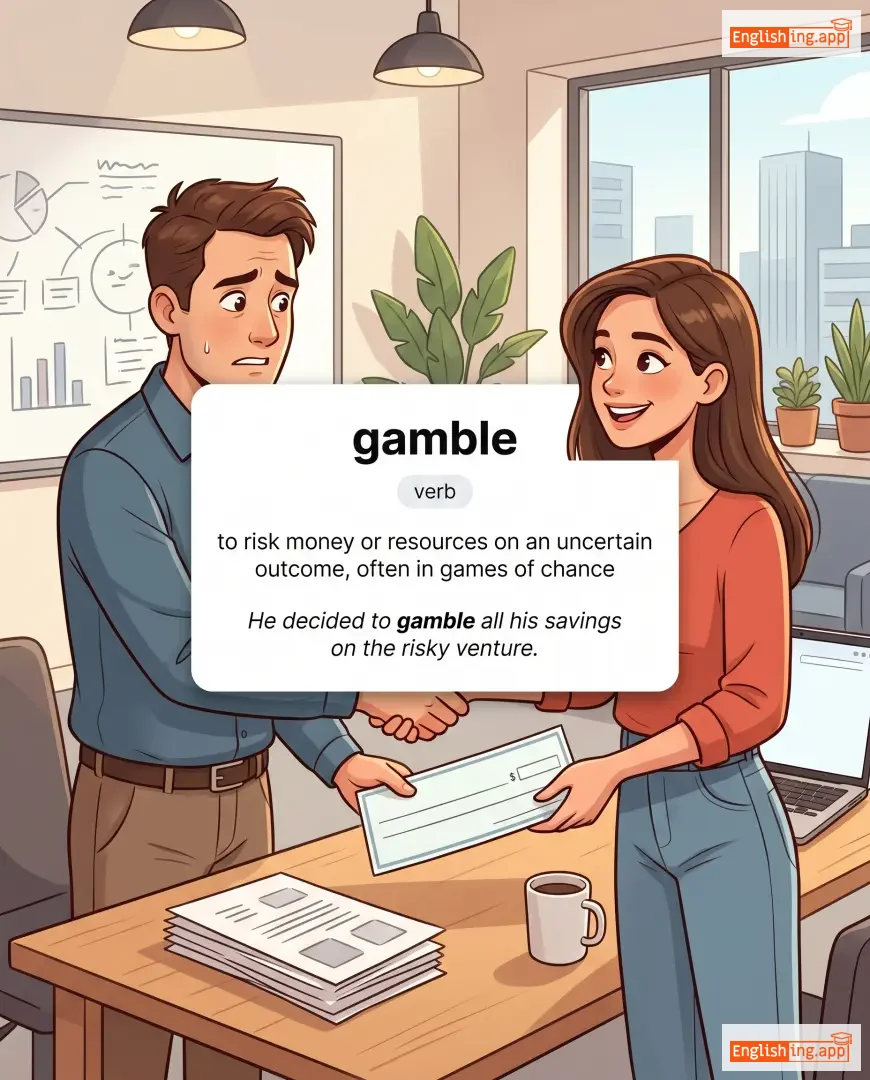
gamble definition card — visual illustration of the meaning
verb
/ˈɡæmbəl/
賭ける (kakeru)

to risk money or resources on an uncertain outcome, often in games of chance

"He decided to gamble all his savings on the risky venture."

"彼はすべての貯金をリスクのある事業に賭けることを決めました。" (Kare wa subete no chokin wo risuku no aru jigyō ni kakeru koto wo kimemashita.)
noun
/ˈɡæm.blər/
ギャンブラー (gyanburā)

a person who gambles regularly, typically someone who cannot resist the urge to gamble

"The experienced gambler knew when to fold his cards and when to bet big."

"経験豊富なギャンブラーは、カードを折る時と大きな賭けをする時を知っていました。" (keiken hōfu na gyanburā wa, kādo o oru toki to ōkina kake o suru toki o shitte imashita)
noun
/ˈɡæmblɪŋ/
ギャンブル (gyanburu)

the activity of betting money or valuables on an outcome, often involving risk

"He got addicted to gambling at the casino."
"彼はカジノでギャンブルに依存するようになった。" (Kare wa kajino de gyanburu ni izon suru you ni natta.)
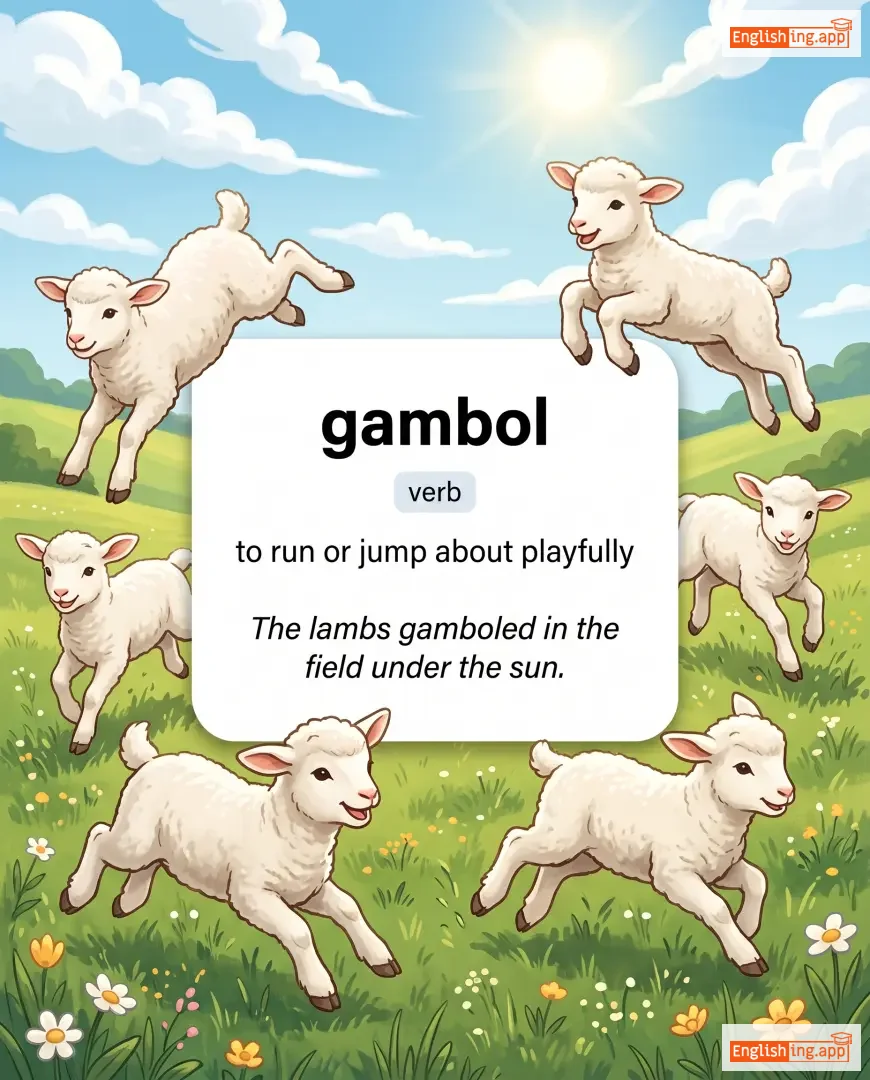
gambol definition card — visual illustration of the meaning
verb
/ˈɡæmbəl/
楽しく跳ねる (tanoshiku haneru)

to run or jump about playfully

"The lambs gamboled in the field under the sun."

"羊たちは太陽の下で野原を元気に跳ね回っていました。" (Hitsujitachi wa taiyo no shita de nohara o genki ni hanemawatte imashita.)
noun
/ɡeɪm/
ゲーム (gēmu)

An activity or sport played for amusement, competition, or skill.

"They played a football game in the afternoon."

"彼らは午後にサッカーの試合をしました。" (Karera wa gogo ni sakkā no shiai o shimashita.)
adverb
/ˈɡeɪmli/
勇敢に (yūkan ni)

in a brave, spirited, or determined manner

"She gamely accepted the challenge despite the difficulties."
"彼女は困難にもかかわらず、勇敢に挑戦を受け入れた。" (Kanojo wa konnan ni mo kakawarazu, yūkan ni chōsen o ukeireta.)
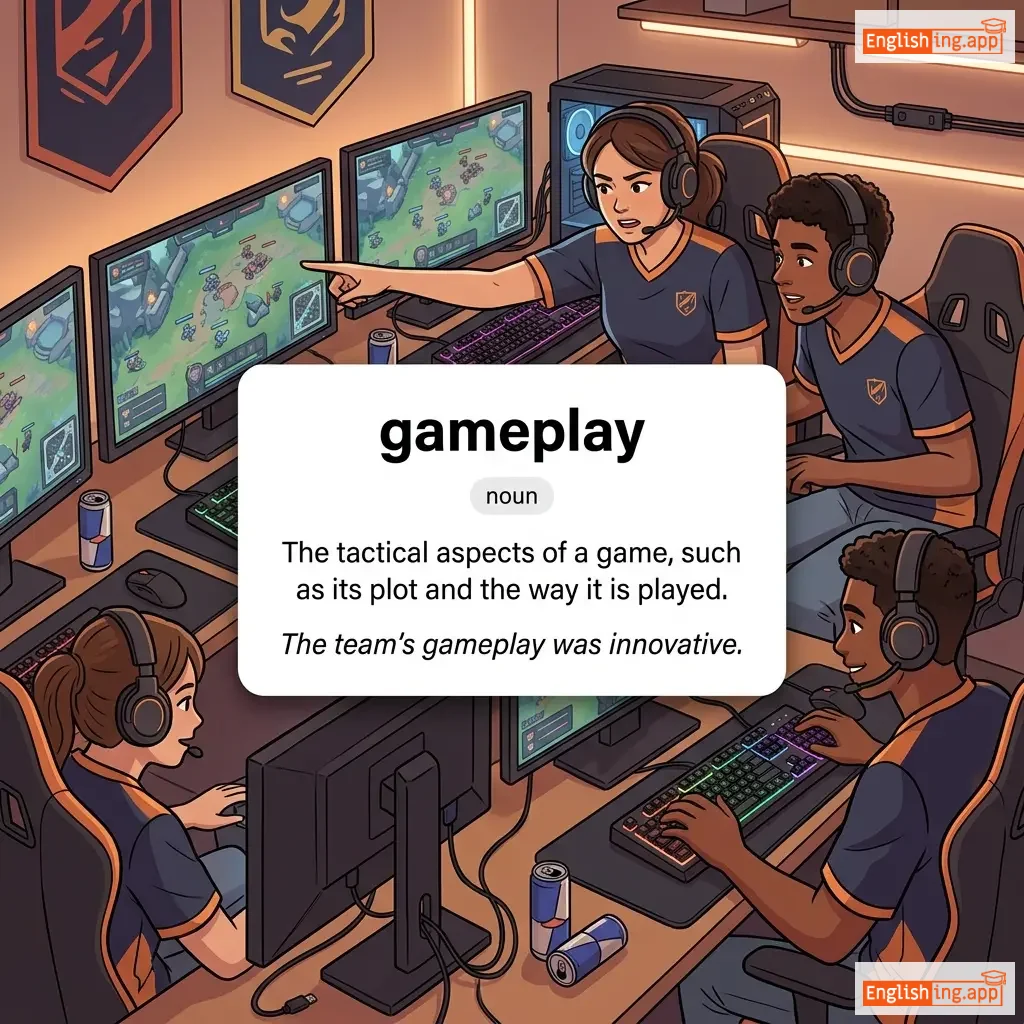
gameplay definition card — visual illustration of the meaning
noun
ˈɡeɪm.pleɪ
ゲームプレイ (gēmupurei)

The tactical aspects of a game, such as its plot and the way it is played.

"The team's gameplay was innovative."

"チームのゲームプレイは革新的でした。" (Chīmu no gēmupurei wa kakushinteki deshita.)
noun
/ˈɡeɪm.stər/
プレイヤー (pureiyā)

A person who plays games, especially one who plays them skillfully or professionally.

"The old tavern was filled with gamesters competing in cards and dice."

"古い酒場はカードとサイコロで競い合うプレイヤーで賑わっていました。" (Furui sakaba wa kādo to saikoro de kisoi au pureiyā de nigiwatte imashita.)
gaming definition card — visual illustration of the meaning
noun
/ˈɡeɪmɪŋ/

the action or practice of playing games, especially video games

"Gaming has become a popular pastime among teenagers."

noun
/ˈɡæm.ət/
完全な範囲 (kanzenna han'i)

The complete range or scope of something.

"Her emotions ran the gamut from joy to sorrow in just a few minutes."

"彼女の感情は、数分で喜びから悲しみへと広がった。" (Kanojo no kanjō wa, su-fun de yorokobi kara kanashimi e to hirogatta.)
noun
/ˈɡændər/
オスガン (osu gan)

male goose

"The gander protected his family from the approaching dog."

"そのオスガンは、近づいてくる犬から家族を守りました。" (Sono osu gan wa, chikadzuite kuru inu kara kazoku wo mamorimashita.)
noun
/ɡæŋ/
ギャング (gyangu)

An organized group of people, often involved in crime or violence.

"The gang was arrested by the police last night."

"そのギャングは昨晩警察に逮捕されました。" (Sono gyangu wa sakuban keisatsu ni taiho saremashita.)
noun
/ɡænˈdʒɛtɪk liːf fɪʃ/
ガンジスリーフフィッシュ (Ganjisu riifu fisshu)

a small freshwater fish species found in the Ganges river system, known for its leaf-like appearance

"The Gangetic Leaf Fish is commonly found in the rivers of Bangladesh."

"ガンジスリーフフィッシュはバングラデシュの川によく見られます。" (Ganjisu riifu fisshu wa Banguradeshu no kawa ni yoku mirararemasu)
adjective
/ˈɡæŋ.ɡli/
高くて不器用 (takakute bukiyou)

Tall, thin, and awkward in movement or appearance.

"The gangly teenager stumbled while trying to dance."

"不器用なティーンエイジャーはダンスしようとしたときにつまずきました。" (Bukiyou na tīneijā wa dansu shiyou to shita toki ni tsumazukimashita.)
noun
/ˈɡæŋ.ɡriːn/
壊疽 (kaiso)

The death of body tissue due to lack of blood supply or infection.

"If untreated, the wound may lead to gangrene."

"治療しなければ、傷は壊疽に至る可能性があります。" (Chiryō shinakereba, kizu wa kaiso ni itaru kanōsei ga arimasu.)
🛳️

gangway

noun
/ˈɡæŋ.weɪ/

A narrow passage or walkway; also an exclamation used to clear the way.

"The sailors lowered the gangway for passengers to board."

noun
/ɡæp/
ギャップ / 隙間 (gyappu / sukima)

An empty space or break between two objects or parts; a difference or disparity.

"There is a huge gap between the rich and the poor."
"裕福な人々と貧しい人々の間には大きなギャップがあります。" (Yūfukuna hitobito to mazushī hitobito no aida ni wa ōkina gyappu ga arimasu.)
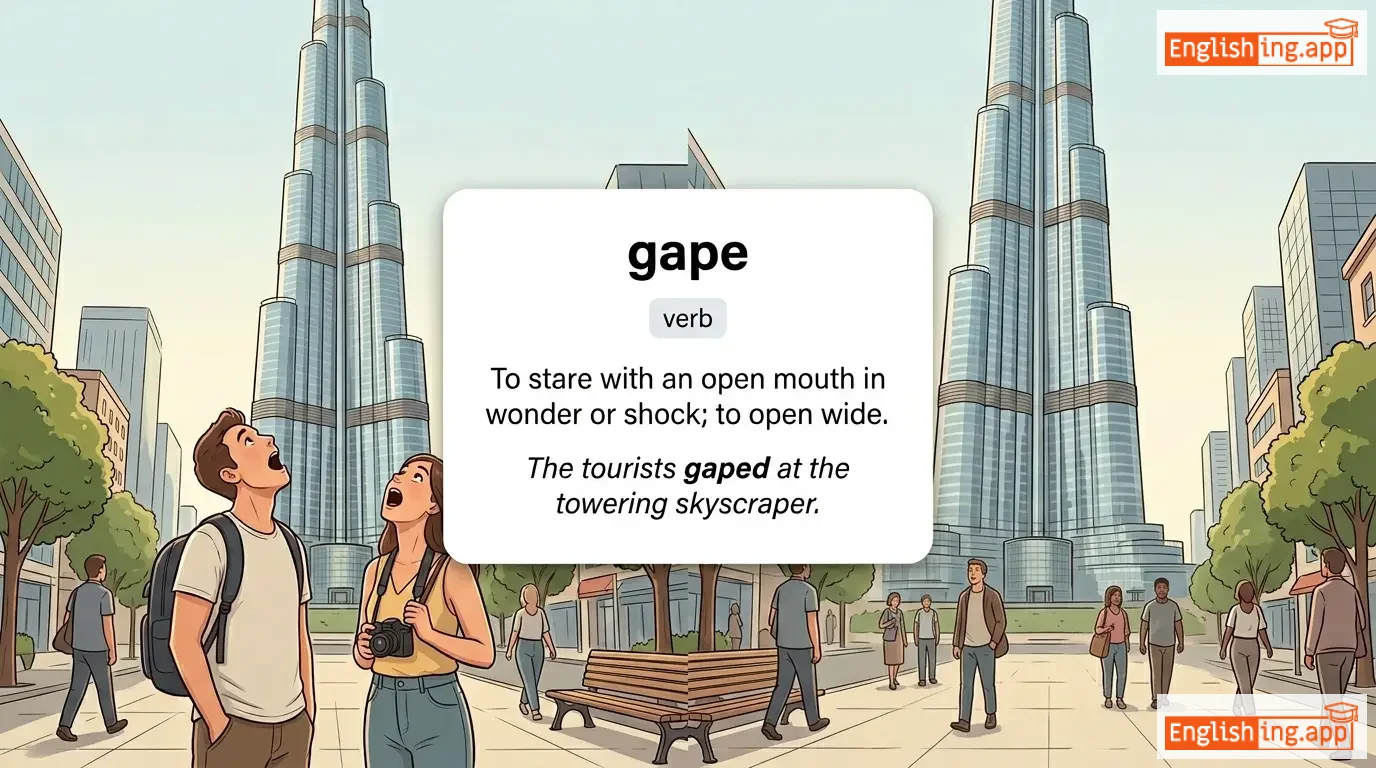
gape definition card — visual illustration of the meaning
verb
/ɡeɪp/
口をあんぐり開ける (kuchi wo anguri akeru)

To stare with an open mouth in wonder or shock; to open wide.

"The tourists gaped at the towering skyscraper."

"観光客は高層ビルに口をあんぐり開けて見入っていました。" (Kankoukyaku wa kousou biru ni kuchi wo anguri akete miittemashita.)
noun
/ɡəˈrɑːʒ/ or /ɡəˈrɑːdʒ/
ガレージ (gareeji)

A building or space for housing cars or vehicles.

"He parked his car in the garage."

"彼はガレージに車を駐車しました。" (Kare wa gareeji ni kuruma o chūsha shimashita.)
noun
/ˈɡɑːrbɪdʒ/
ゴミ (gomi)

waste material; things that are no longer useful or wanted

"Please take out the garbage before it starts to smell."

"臭くなる前にゴミを外に出してください。" (Kusakunaru mae ni gomi o soto ni dashite kudasai.)
verb
/ˈɡɑːrbəl/
混乱させる (konran saseru)

To reproduce a message in a confused, distorted, or unclear way.

"The poor phone connection garbled his words."

"電話の接続不良で彼の言葉が聞き取れなかった。" (denwa no setsuzoku furyou de kare no kotoba ga kikitorenakatta.)
adjective
/ˈɡɑːrbəld/
乱れた (midareta)

Describes speech or text that is distorted or unclear.

"The radio broadcast was full of garbled messages."

"ラジオ放送にはガーブルドメッセージが満載でした。" (Rajio hōsō ni wa gāburudo messēji ga mansei deshita.)
noun
/ˈɡɑːrdn/
(niwa)

A piece of ground where flowers, vegetables, or plants are grown.

"She grows roses in her garden."

"彼女は自分の庭でバラを育てています。" (Kanojo wa jibun no niwa de bara o sodateteimasu.)
noun
/ˈɡɑːr.dən.ər/
庭師 (niwashi)

a person who tends and cultivates a garden

"The gardener planted beautiful flowers in the backyard."

"庭師は裏庭に美しい花を植えました。" (Niwashi wa uraniwa ni utsukushī hana o uemashita.)
noun
/ɡɑːrˈdiː.ni.ə/
クチナシ (kuchinashi)

a white or yellow fragrant flower with waxy petals

"The gardenia bush produced beautiful white flowers with a lovely scent."

"ガーデニアの茂みは美しい白い花を咲かせ、素敵な香りを放ちました。" (gardenia no shigemi wa utsukushii shiroi hana o sakase suteki na kaori o hanachimashita)