語彙集

英単語辞書 | 単語の意味、定義、例文

noun
/kwæk/
詐欺師医師 (sagishi ishi)

a fraudulent or ignorant pretender to medical skill; a charlatan

"Beware of the quack who promises miracle cures online."

"オンラインで奇跡的な治療法を約束する詐欺師医師には気をつけてください。" (onrain de kiseki-teki na chiryouhou wo yakusoku suru sagishi ishi ni wa ki wo tsukete kudasai)
adjective
/ˈkwɒdreɪt/
正方形 (seihoukei)

square or nearly square; having four sides or being suited or corresponding to something

"The tiles had a neat quadrate shape that made the floor look orderly."

"タイルは整然とした正方形の形状をしており、床を整然と見せていました。" (Tairu wa seizen to shita seihoukei no keijou o shite ori, yuka o seizen to misete imashita.)
noun
/ˈkwɒdrʊpɛd/

an animal that walks on four feet

"Most mammals are quadruped creatures adapted for running and stability."

verb
/kwɒˈdruːpəl/
四倍にする (shibai ni suru)

to increase or make something four times as much or as many

"Within a year, the startup quadrupled its user base through aggressive partnerships."

"1年以内に、スタートアップは積極的なパートナーシップを通じてユーザーベースを4倍にしました。" (1-nen inai ni, sutaatappu wa sekkyokuteki na paatonaashippu o tōjite yūzā bēsu o 4-bai ni shimashita.)
verb
/kwɒf/
一気に飲む (ikki ni nomu)

to drink something heartily or in large gulps, especially an alcoholic drink

"He quaffed a mug of ale after the long day."

"彼は長い一日の後、ビールを一気に飲んだ。" (Kare wa nagai ichinichi no ato, bīru o ikki ni nonda.)
noun
/ˈkwæɡˌmaɪər/
沼地、困難な状況 (numachi, konnan na joukyou)

a soft, wet area of land that gives way underfoot; a complex or dangerous situation

"The hikers were trapped in a political quagmire."

"ハイカーたちは政治的な沼地に閉じ込められた。" (Haikaa-tachi wa seijiteki na numachi ni tojikomerareta.)
verb, noun
/kweɪl/
恐怖を感じる; 小さくて短い尾の鳥 (kyōfu o kanjiru; chiisakute mijikai o no tori)

verb: to feel or show fear; noun: a small, short-tailed bird

"She quailed at the sight of the approaching storm."

"彼女は迫り来る嵐の光景に恐怖を感じた。" (Kanojo wa semari kuru arashi no kōkei ni kyōfu o kanjita.)
adjective
/kweɪnt/
古風で魅力的な (kofu de miryokuteki na)

attractively unusual or old-fashioned

"They stayed in a quaint little cottage by the sea."

"彼らは海の近くの趣のある小さな小屋に泊まりました。" (Karera wa umi no chikaku no omomuki no aru chiisana koya ni tomarimashita.)
verb
/kweɪk/
震える (furueru)

to shake or tremble, often due to fear or a natural event like an earthquake

"The ground began to quake during the earthquake."

"地震の間、地面が震え始めた。" (Jishin no aida, jimen ga furu e hajimeta.)
noun
/ˌkwɒlɪfɪˈkeɪʃən/
資格 (shikaku)

a condition or skill that makes someone suitable for a job or activity; the process of qualifying

"She listed her qualifications on the job application."

"彼女は求人申込書に自分の資格を記載しました。" (Kanojo wa kyūjin mōshikomi-sho ni jibun no shikaku o kisai shimashita.)
Qualified definition card — visual illustration of the meaning
adjective
/ˈkwɒlɪfaɪd/
資格のある (shikaku no aru)

officially recognized as being trained or knowledgeable for a particular job or activity

"She is a qualified doctor with years of experience."

"彼女は経験豊富な資格を持つ医者です。" (Kanojo wa keiken houfu na shikaku wo motsu isha desu.)
qualify definition card — visual illustration of the meaning
verb
/ˈkwɒlɪfaɪ/
資格を得る (shikaku wo eru)

to meet the requirements or conditions for something

"He worked hard to qualify for the final round."

"彼はファイナルラウンドに出場するために一生懸命働いた。" (Kare wa fainaru raundo ni shutsujou suru tame ni isshoukenmei hataraita.)
adjective
/ˈkwɑː.lɪ.teɪ.tɪv/
質的 (shitsuteki)

Relating to the quality or nature of something rather than its quantity.

"The study focused on the qualitative aspects of customer feedback."
"この研究は顧客のフィードバックの質的側面に焦点を当てていました。" (Kono kenkyuu wa kokyaku no fiidobakku no shitsuteki sokumen ni shouten wo atemashita.)
quality definition card — visual illustration of the meaning
noun
/ˈkwɒləti/
品質 (hinshitsu)

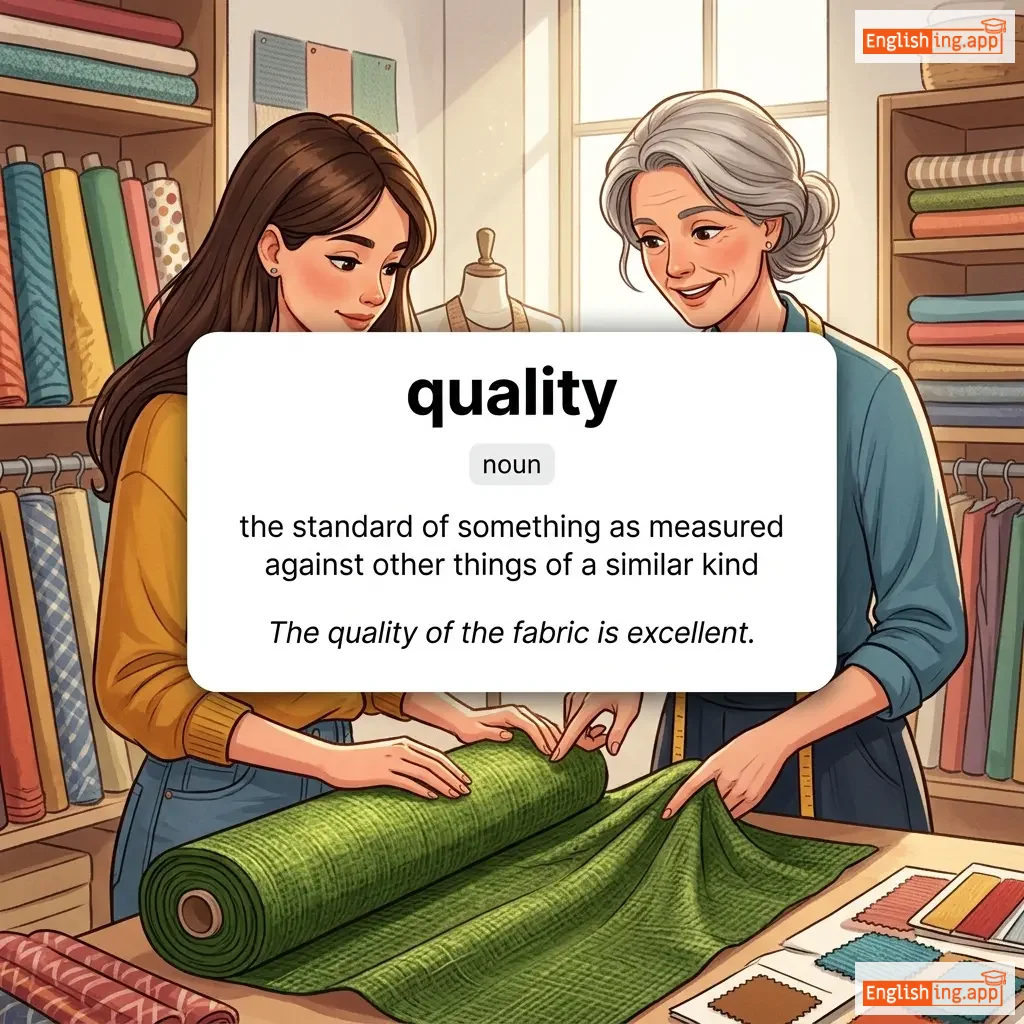
the standard of something as measured against other things of a similar kind

"The quality of the fabric is excellent."
"生地の質は素晴らしいです。" (Kiji no shitsu wa subarashī desu.)
quality sleep definition card — visual illustration of the meaning
noun
ˈkwɒlɪti sliːp
質の高い睡眠 (shitsu no takai suimin)

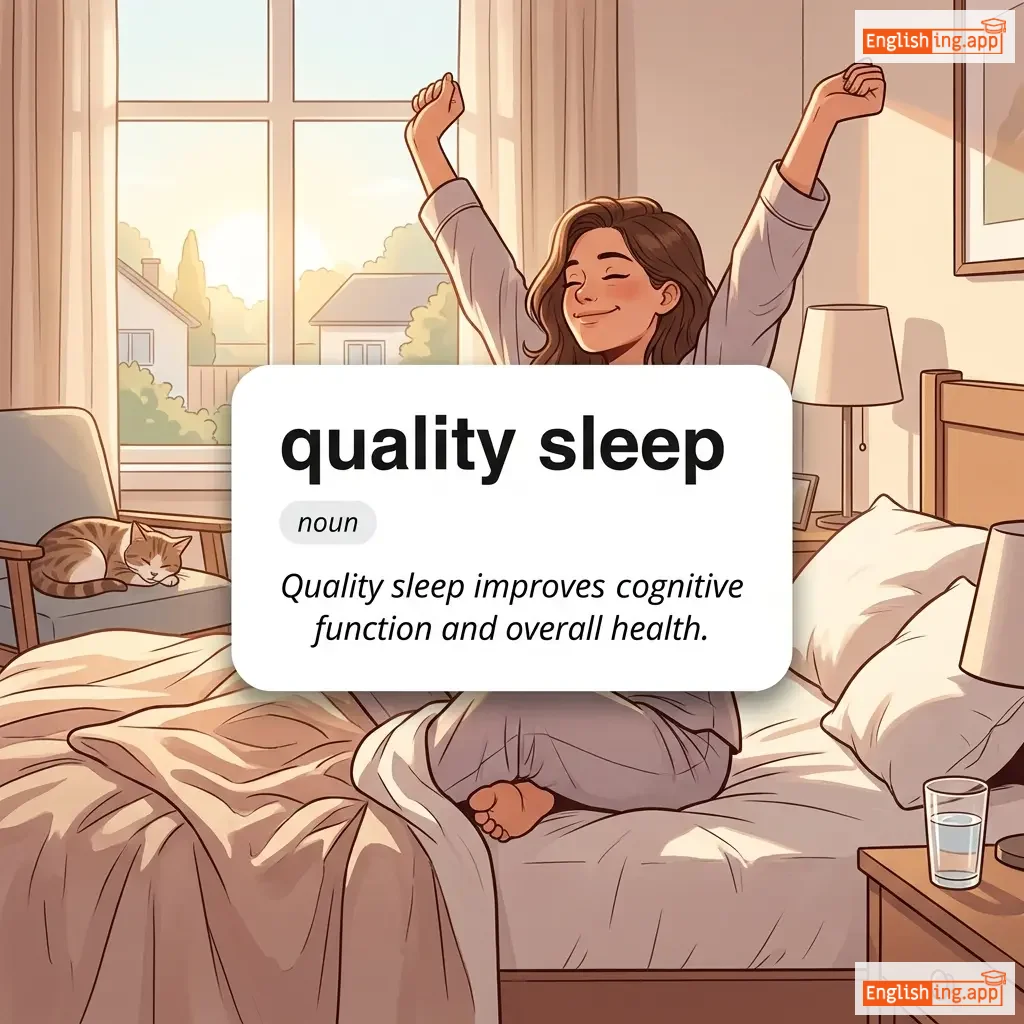
Deep and healthy sleep that is adequate and restorative, ensuring physical and mental well-being

"Quality sleep improves cognitive function and overall health."

"質の高い睡眠は認知機能と全体的な健康を向上させます。" (Shitsu no takai suimin wa ninchi kinō to zentaiteki na kenkō o kōjō sasemasu.)
quality time definition card — visual illustration of the meaning
noun
/ˈkwɒl.ɪ.ti taɪm/
質の高い時間 (shitsu no takai jikan)

Time spent giving someone your full attention in order to strengthen your relationship with them.

"Spending quality time with family enhances relationships."

"家族と質の高い時間を過ごすことで、関係が強化されます。" (Kazoku to shitsu no takai jikan o sugosu koto de, kankei ga kyōka saremasu.)
noun
/kwɑːm/
疑念 (ginen)

a feeling of doubt, worry, or fear about something

"She had no qualm about speaking her mind."

"彼女は自分の考えを言うことに疑念を持っていなかった。" (Kanojo wa jibun no kangae o iu koto ni ginen o motte inakatta.)
noun (plural)
/kwɑːmz/
疑念 (ginen)

feelings of doubt, worry, or uneasiness

"He had serious qualms about accepting the offer."

"彼はそのオファーを受け入れることに深刻な疑念を抱いていた。" (Kare wa sono ofā o ukeireru koto ni shinkoku na ginen o daite ita.)
noun
/ˈkwɒndəri/

a state of uncertainty or confusion about what to do

"He was in a quandary about whether to accept the job offer."

quantifiable definition card — visual illustration of the meaning
adjective
ˈkwɒn.tɪ.faɪ.ə.bəl
定量化可能 (kuontifaiaburu)

Able to be expressed or measured as a quantity.

"Sales performance should be quantifiable to measure progress."

"売上成績は進捗を測るために定量化可能であるべきだ。" (uriage seiseki wa shinchoku wo hakaru tame ni teiryouka kanou de aru beki da)
adjective
/ˈkwɑːn.tə.teɪ.tɪv/
定量的 (teiryōteki)

Relating to the measurement or amount of something.

"The report included quantitative data on population growth."

"レポートには人口増加に関する定量的データが含まれていました。" (Repōto ni wa jinkō zōka ni kansuru teiryōteki dēta ga fukumarete imashita.)
noun
/ˈkwɒn.tə.ti/
(ryō)

An amount or number of something.

"The shop ordered a large quantity of rice."

"店は大量の米を注文しました。" (Mise wa tairyo no kome o chūmon shimashita.)
noun/verb
/ˈkwɒr.ən.tiːn/
隔離 (kakuri)

A period of isolation to prevent the spread of disease.

"The travelers were placed in quarantine for two weeks."
"旅行者は2週間の隔離にされました。" (Ryokousha wa 2 shuukan no kakuri ni saremashita.)
quark definition card — visual illustration of the meaning
noun
kwɔːrk
クォーク (kwōku)

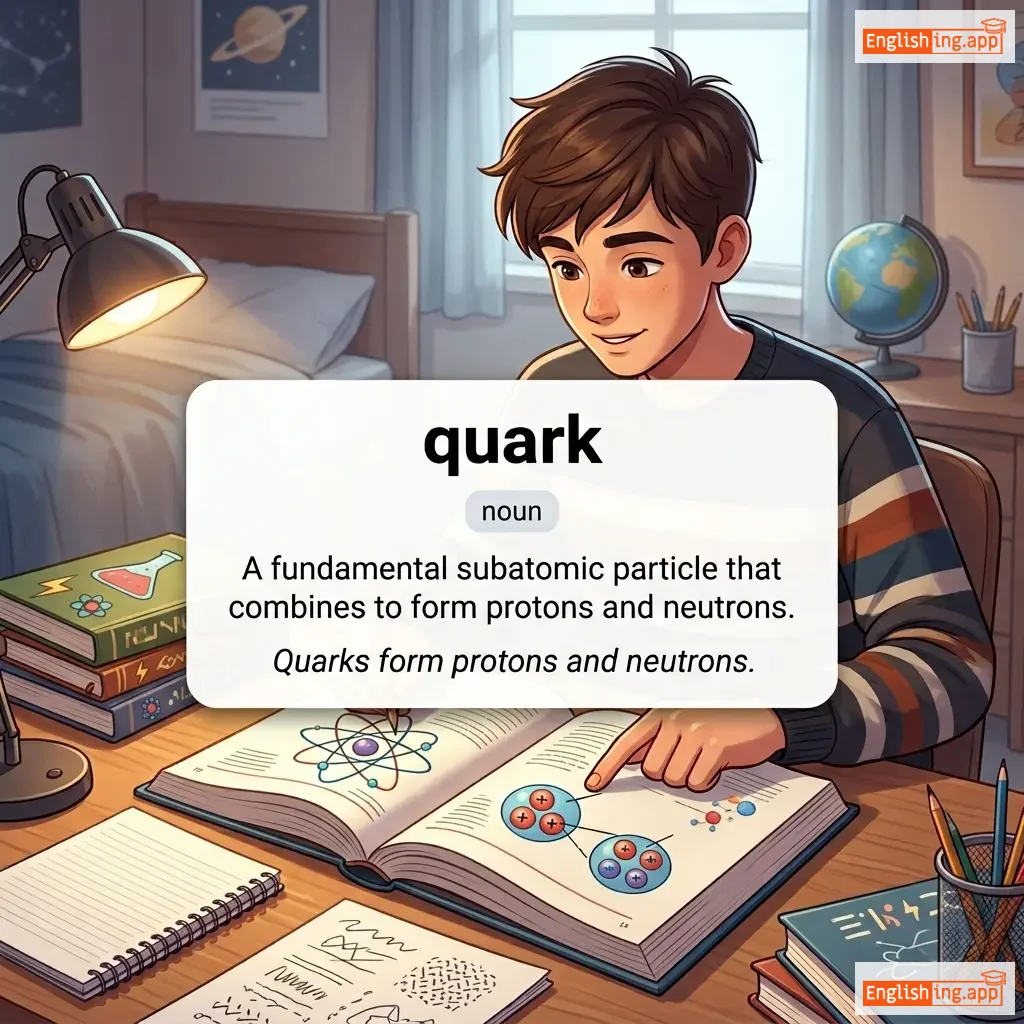
A fundamental subatomic particle that combines to form protons and neutrons.

"Quarks form protons and neutrons."
"クォークは陽子と中性子を形成します。" (Kwōku wa yōshi to chūseishi o keisei shimasu.)
Quarrel definition card — visual illustration of the meaning
noun
/ˈkwɒr.əl/
口論; 争い (kōron; arasoi)

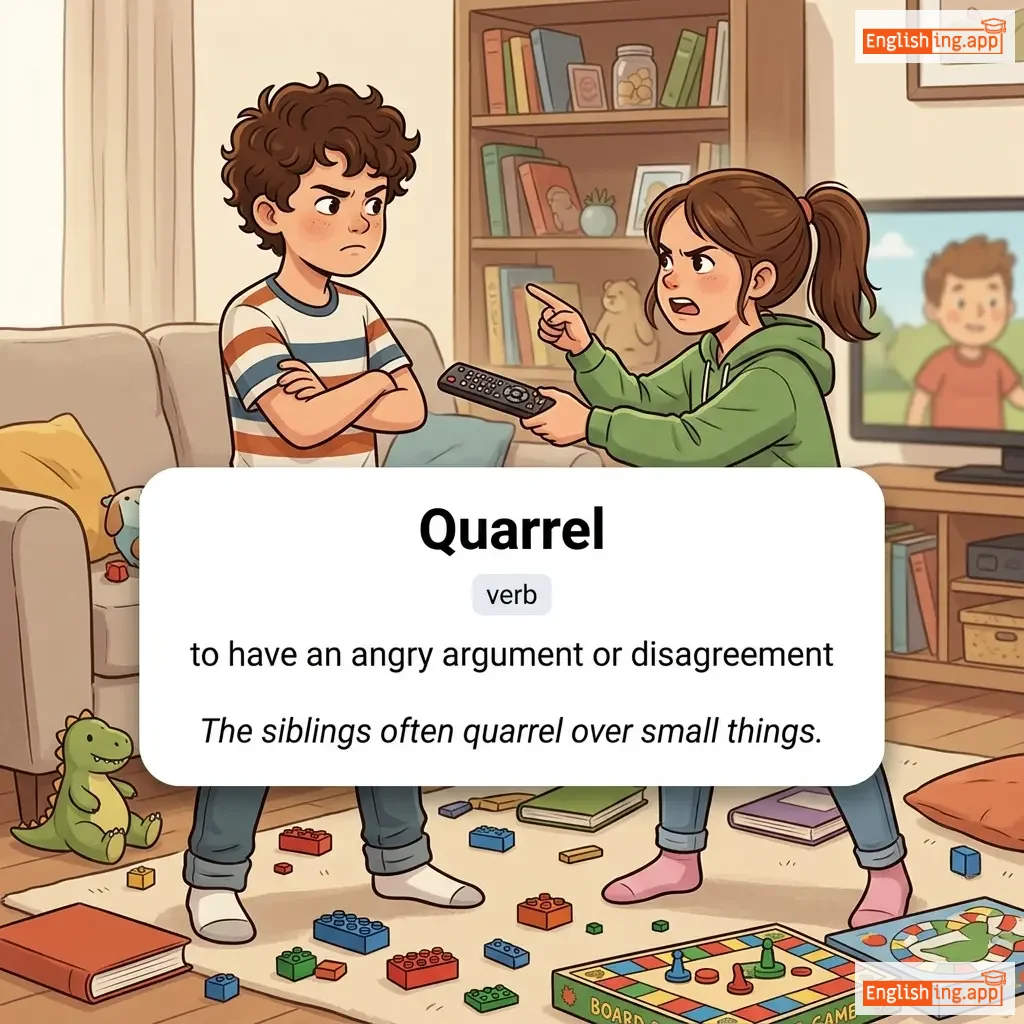
an angry argument or disagreement between people

"They had a quarrel about money and stopped talking to each other."

"彼らはお金のことで口論し、互いに話すのをやめました。" (Karera wa okane no koto de kōron shi, tagai ni hanasu no o yamemashita.)
adjective
/ˈkwɒr.əl.səm/
口論好き (kōron-zuki)

Inclined to argue or fight.

"He became quarrelsome after losing the game."

"彼はゲームに負けた後、口論好きになった。" (Kare wa gēmu ni maketa ato, kōron-zuki ni natta.)
noun/verb
/ˈkwɒr.i/
採石場 / 獲物 (saisekiba / emono)

A place where stone or minerals are extracted; also means prey when hunted.

"The workers quarried limestone from the hill."

"作業員は丘から石灰岩を採掘しました。" (Sagyouin wa oka kara sekkaigan o saikutsu shimashita.)
noun/verb
/ˈkwɔː.tər/
四分の一 (shibu no ichi)

One-fourth part of something; also used for housing or accommodating.

"She paid a quarter of the total bill."

"彼女は総額の四分の一を支払った。" (Kanojo wa sōgaku no shibu no ichi o shiharatta.)
noun
/ˈkwɔːtərˌbæk/
クォーターバック (kuōtābakku)

the player who directs a team’s offense in American football

"The quarterback threw a perfect pass."

"クォーターバックは完璧なパスを投げました。" (Kuōtābakku wa kanpeki na pasu o nagemashita.)
adjective, adverb, noun
/ˈkwɔːrtərli/
四半期 (shihanki)

Happening every three months; occurring four times a year.

"The company publishes a quarterly report on its earnings."

"その会社は四半期ごとの報告書を発行しています。" (Sono kaisha wa shihanki goto no houkokusho wo hakkou shiteimasu.)
noun
/ˈkwɔː.tərz/
宿舎; 兵舎; 軍の住宅 (shukusha; heisha; gun no jūtaku)

living accommodation; lodgings; military housing

"The soldiers returned to their quarters after the training exercise."

"兵士たちは訓練後、自分の宿舎に戻りました。" (Heishi-tachi wa kunren go, jibun no shukusha ni modorimashita.)
noun
/kwɔːrˈtɛt/
カルテット (karutetto)

A group of four people playing music or singing together.

"The string quartet performed beautifully at the concert."

"弦楽四重奏団はコンサートで素晴らしい演奏をしました。" (Gen-gaku shijū-sōdan wa konsāto de subarashī ensō o shimashita.)
noun
/ˈkwɔːrtoʊ/
四つ折り本 (yottsu ori hon)

A book size resulting from folding each printed sheet into four leaves (eight pages).

"The library has rare Shakespeare quartos."

"図書館にはシェイクスピアの珍しいクアート本があります。" (Toshokan ni wa Sheikusupia no mezurashī kuāto hon ga arimasu.)
verb
/kwɑːʃ/
取り消す (torikesu)

To reject or void something legally or to put an end to something forcefully.

"The court quashed the decision due to lack of evidence."

"裁判所は証拠不十分のため、その決定を取り消しました。" (Saibansho wa shōko fujūbun no tame, sono kettei o torikeshimashita.)
verb, noun
/ˈkweɪvər/
震える (furueru)

To shake or tremble in speaking, typically through nervousness or emotion.

"Her voice quavered as she spoke before the crowd."

"彼女の声は群衆の前で話すとき震えていました。" (Kanojo no koe wa gunshuu no mae de hanasu toki furuete imashita.)
noun
/kiː/
桟橋 (sanbashi)

A platform lying alongside or projecting into water for loading and unloading ships.

"The cargo was unloaded at the quay."

"貨物は桟橋で荷降ろしされました。" (Kamon wa sanbashi de ni oroshi saremashita.)
adjective
/ˈkwiːzi/
気分が悪い (kibun ga warui)

Feeling sick to one's stomach; nauseated.

"She felt queasy after the long boat ride."

"彼女は長いボートの旅の後、気分が悪くなった。" (Kanojo wa nagai booto no tabi no ato, kibun ga waruku natta.)
noun
/kwiːn/
女王 (joō)

a female ruler of a country or the wife of a king

"The queen addressed her people with grace."

"女王は優雅に人々に話しかけた。" (Joō wa yūga ni hitobito ni hanashikaketa.)
noun
/kwiːn kreɪp ˈmɜːrtəl/
クイーンクレープマートル (kui-n kure-pu ma-to-ru)

A flowering tree with colorful, crepe-like flowers, scientifically known as Lagerstroemia

"The Queen crape myrtle bloomed beautifully in the garden with its purple flowers."

"クイーンクレープマートルは庭で紫色の花とともに美しく咲きました。" (Kui-n kure-pu ma-to-ru wa niwa de murasakiiro no hana to tomo ni utsukushiku sakimashita.)
adjective
/kwɪər/
奇妙 (kimyou)

Strange, odd, or unusual.

"He had a queer feeling that something was wrong."

"彼は何かが違うと感じて奇妙な気分だった。" (Kare wa nanika ga chigau to kanjite kimyou na kibun datta.)
verb
/kwɛl/
鎮圧する (chin'atsu suru)

To suppress or put an end to something, usually by force.

"The police were called to quell the violent protest."
"警察は暴力的な抗議を鎮圧するために呼ばれました。" (Keisatsu wa bōryokuteki na kōgi o chin'atsu suru tame ni yoba remashita.)
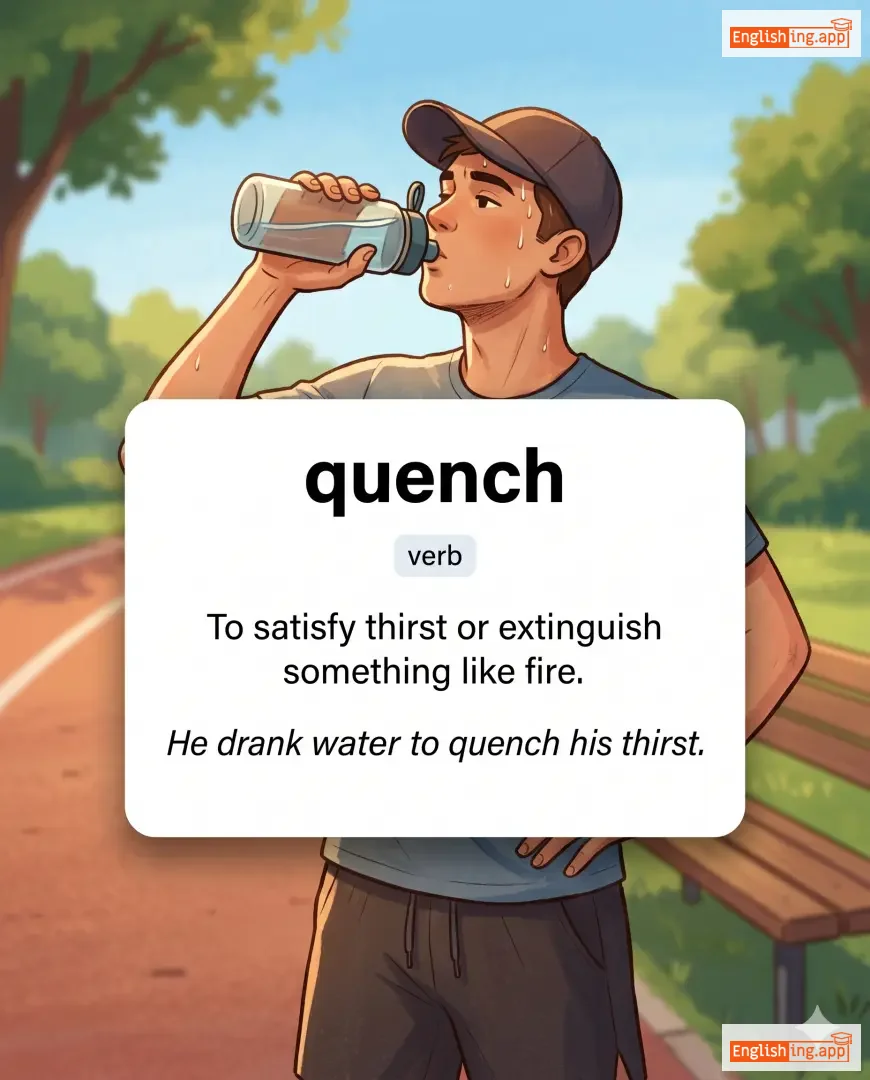
quench definition card — visual illustration of the meaning
verb
/kwɛntʃ/
渇きを癒す (kawaki wo iyasu)

To satisfy thirst or extinguish something like fire.

"He drank water to quench his thirst."

"彼は喉の渇きを癒すために水を飲んだ。" (Kare wa nodo no kawaki wo iyasu tame ni mizu wo nonda.)
verb
/ˈkwentʃɪŋ/
渇きを癒す / 火を消す (kawaki o iyasu / hi o kesu)

The act of satisfying thirst or extinguishing something like fire.

"Drinking cold water was quenching her thirst."

"冷たい水を飲むことが彼女の渇きを癒していました。" (Tsumetai mizu o nomu koto ga kanojo no kawaki o iyashiteimashita.)
adjective
/ˈkwɛrʊləs/
不平を言う (fuhē wo iu)

Complaining in a whining or irritable manner.

"The querulous customer kept finding fault with every detail."

"その不平を言う顧客は、すべての細部に不満を見つけ続けました。" (Sono fuhē wo iu kokyaku wa, subete no saibū ni fuman wo mitsukemashita.)
Query definition card — visual illustration of the meaning
noun/verb
/ˈkwɪəri/
質問 (shitsumon)

A question, especially one addressed to an official or organization; to ask a question or express doubt.

"She raised a query about the accuracy of the report."
"彼女はレポートの正確性について質問を提起しました。" (Kanojo wa repōto no seikakusa ni tsuite shitsumon wo teiki shimashita.)
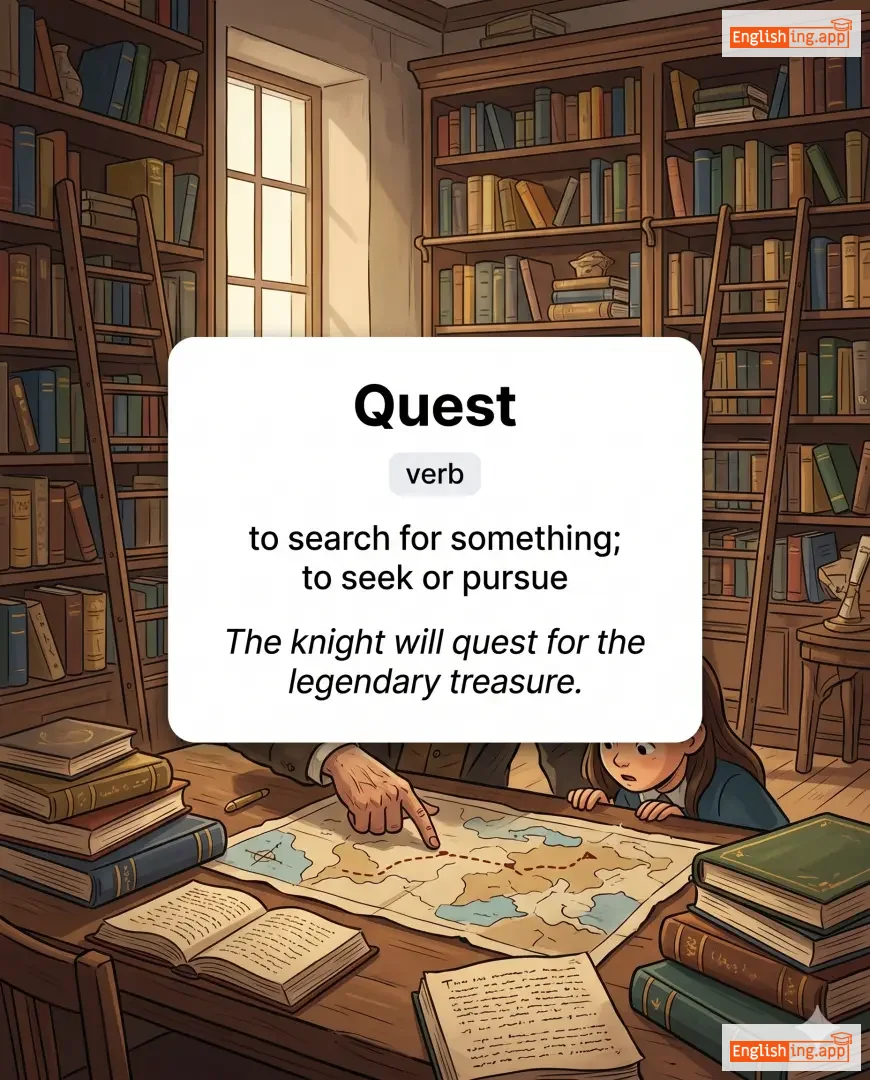
Quest definition card — visual illustration of the meaning
noun
/kwest/
探求, 探索 (tankyu, tansaku)

a long search for something that is difficult to find

"They went on a quest to find the lost treasure."
"彼らは失われた宝物を探しに行った。" (Karera wa ushinawareta hōmotsu o sagashi ni itta.)
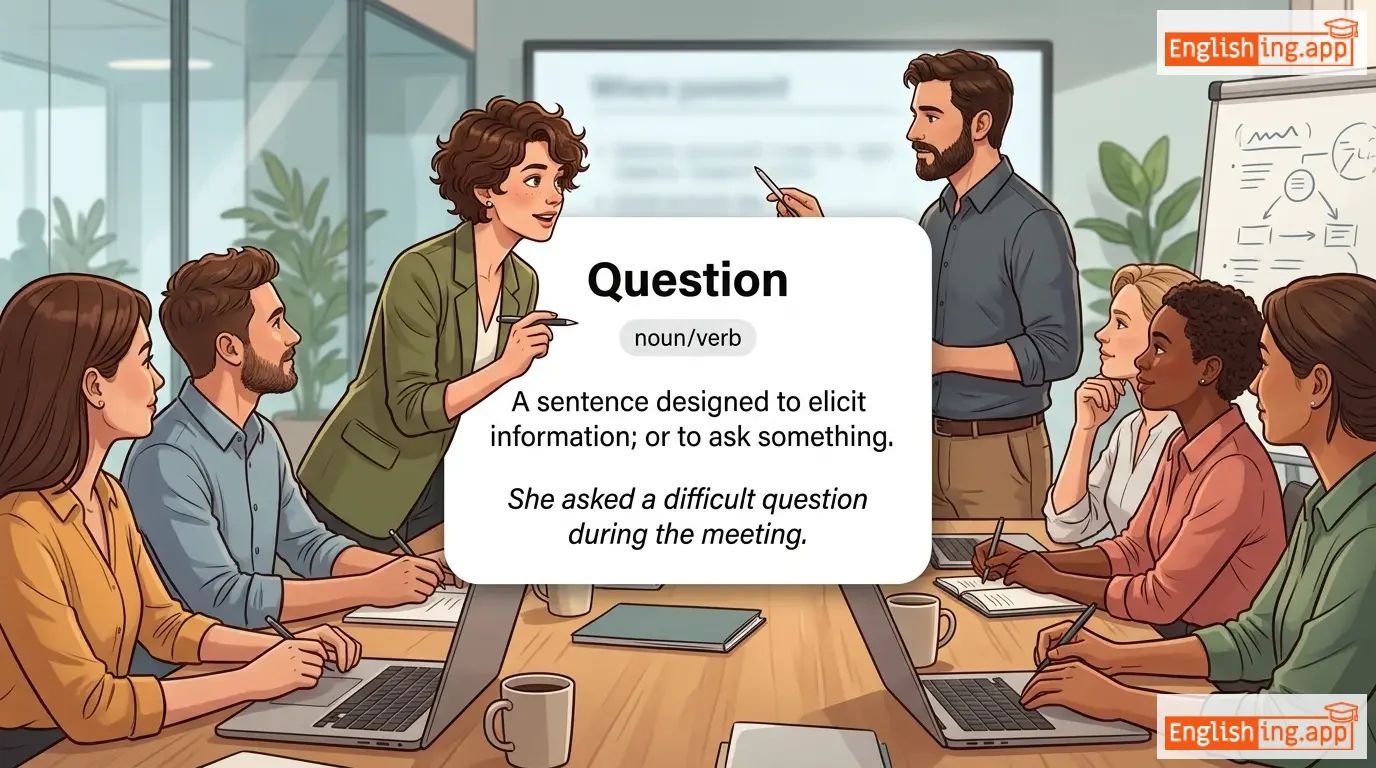
Question definition card — visual illustration of the meaning
noun/verb
/ˈkwes.tʃən/
質問 (shitsumon)

A sentence designed to elicit information; or to ask something.

"She asked a difficult question during the meeting."

"彼女は会議中に難しい質問をしました。" (Kanojo wa kaigi chuu ni muzukashii shitsumon wo shimashita.)
adjective
/ˈkwestʃənəbl/
疑わしい (utagawashii)

doubtful; dubious; suspicious; open to doubt or suspicion

"His questionable business practices led to an investigation."

"彼の疑わしいビジネス慣行は調査を引き起こしました。" (Kare no utagawashii bijinesu kan'nō wa chōsa o hikiokoshimashita.)
noun
/ˌkwes.tʃəˈneər/
アンケート (ankēto)

a set of written questions used to collect information or opinions

"Participants filled out a detailed questionnaire about their habits."

"参加者は自分の習慣についての詳細なアンケートに記入しました。" (Sanka-sha wa jibun no shūkan ni tsuite no shōsai na ankēto ni kinyū shimashita.)
🧍‍♂️🧍‍♀️

Queue (キュー)

noun/verb
/kjuː/
(retsu)

A line or sequence of people or vehicles awaiting their turn; to wait in line.

"People queued outside the theater for tickets."

"人々はチケットを求めて劇場の外で行列を作った。" (Hitobito wa chiketto o motomete gekijou no soto de gyoretsu o tsukutta.)