語彙集

英単語辞書 | 単語の意味、定義、例文

noun
/kæb/
タクシー (takushī)

a taxi or car for hire with a driver

"We took a cab to the airport."

"空港までタクシーで行きました。" (Kūkō made takushī de ikimashita.)
🕵️‍♂️

Cabal (カバル)

noun
/kəˈbæl/
陰謀団 (inboudan)

A secret group or faction engaged in plotting or intrigue.

"A small cabal was working behind the scenes to influence the election."

"選挙に影響を与えるために、舞台裏で小さな陰謀団が働いていた。" (Senkyō ni eikyō o ataeru tame ni, butaiura de chīsana inbōdan ga hataraite ita.)
noun
/ˈkæbəˌlɪzəm/
カバリズム (kabarizumu)

The doctrines, practices, or secretive dealings of a cabal.

"The historian wrote extensively about cabalism in the royal court."

"歴史家は王室の宮廷でカバリズムについて広範囲に書きました。" (Rekishi-ka wa ōshitsu no kyūtei de kabarizumu ni tsuite kōhan-i ni kakimashita.)
noun
/ˈkæb.ɪdʒ/
キャベツ (kyabetsu)

a round vegetable with thick green or purple leaves that can be eaten cooked or raw

"I need to buy some cabbage to make coleslaw for dinner."

"ディナーのためにコールスローを作るためにキャベツを買う必要があります。" (Dinaa no tame ni koorusuroo o tsukuru tame ni kyabetsu o kau hitsuyou ga arimasu.)
noun
/ˈkæbɪn/
キャビン (kyabin)

a small shelter or house, often made of wood in a remote area

"They spent the weekend in a cozy cabin in the mountains."

"彼らは山中の快適なキャビンで週末を過ごしました。" (Karera wa sanchuu no kaiteki na kyabin de shuumatsu o sugoshimashita.)
noun
/ˈkæbənɪt/
内閣 / キャビネット (naikaku / kyabinetto)

A group of senior government ministers; or a cupboard with shelves or drawers.

"The prime minister reshuffled the cabinet last month."

"首相は先月、内閣を再編成しました。" (Shushō wa sengetsu, naikaku o saihen-sei shimashita.)
cable definition card — visual illustration of the meaning
📡

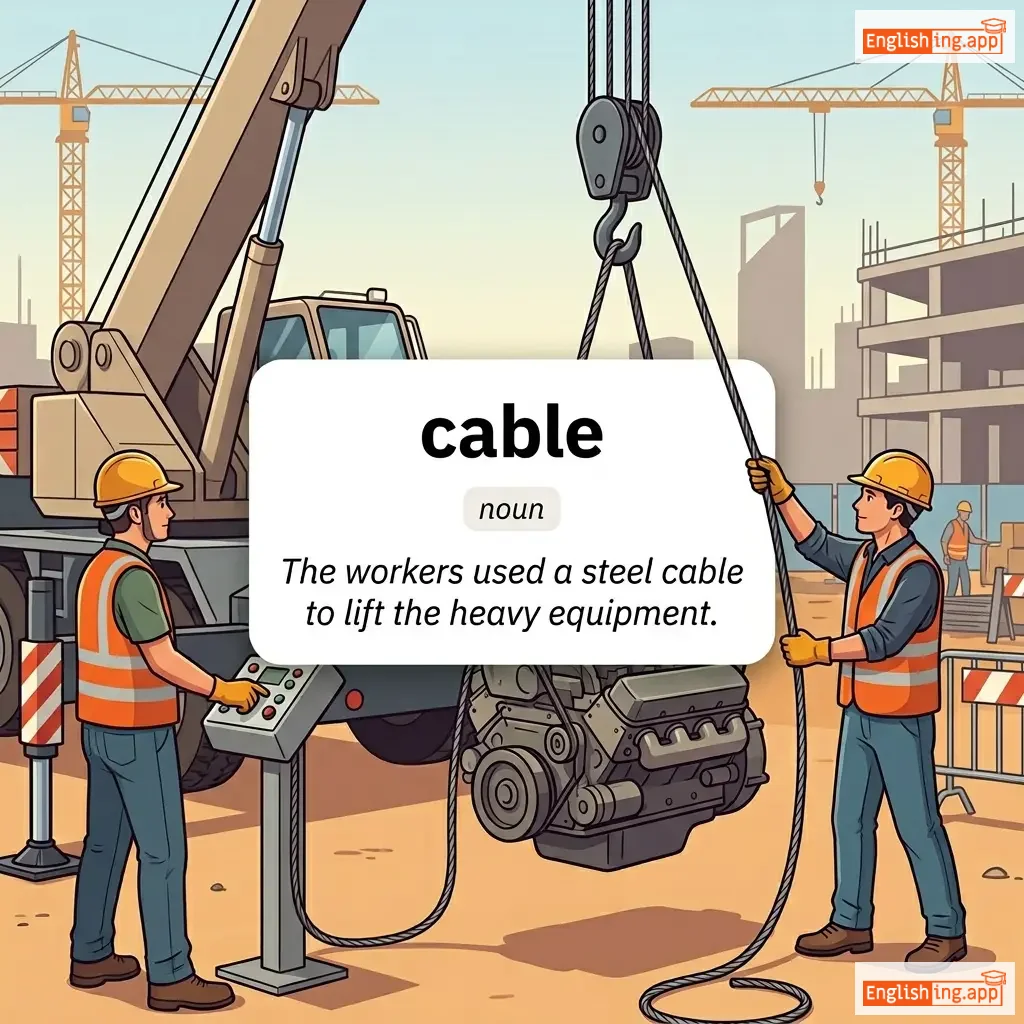
cable

noun
/ˈkeɪ.bəl/

a thick, strong rope made of metal wires or fibers; a system of wires used for transmitting signals or electricity

"The workers used a steel cable to lift the heavy equipment."

noun
/kæʃ/
キャッシュ (kyasshu)

A hidden storage of items or a high-speed memory in computing.

"The hikers found a cache of supplies hidden under the rocks."
"ハイカーたちは岩の下に隠された物資のキャッシュを見つけました。" (Haika-tachi wa iwa no shita ni kakusareta busshi no kyasshu o mitsukemashita.)
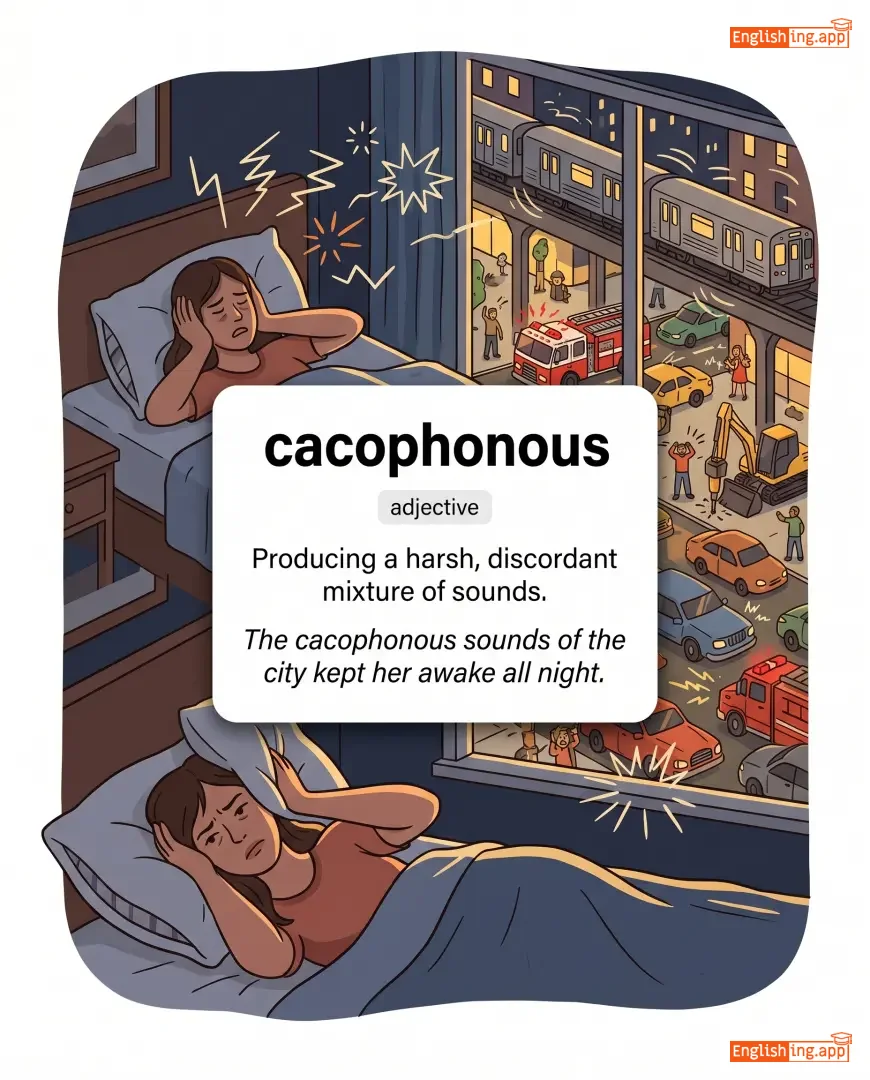
cacophonous definition card — visual illustration of the meaning
adjective
/kəˈkɒfənəs/
不協和音 (fukyōwaon)

Producing a harsh, discordant mixture of sounds.

"The cacophonous sounds of the city kept her awake all night."

"街の不協和音で彼女は一晩中目が覚めていた。" (Machi no fukyōwaon de kanojo wa hitobanjuu me ga sameteita.)
noun
/kəˈkɒfəni/
耳障りな音 (mimi zawari na oto)

A harsh, discordant mixture of sounds.

"The cacophony of horns made it impossible to concentrate."

"クラクションの耳障りな音は集中を不可能にした。" (Kurakushon no mimi zawari na oto wa shūchū o fukanō ni shita.)
noun
/kæd/
悪党; 粗野な (akutō, soya na)

a man who behaves dishonorably, especially toward women

"Everyone at the party avoided him because he was known to be a cad."

"パーティーの皆は彼を避けました、なぜなら彼が悪党として知られていたからです。" (Pātī no mina wa kare o sakemashita, nazenara kare ga akutō toshite shirarete ita kara desu.)
noun
/kəˈdævər/
死体 (shitai)

A dead human body, especially one used for medical study.

"Medical students dissected the cadaver to learn about human anatomy."

"医学生は死体を解剖して人間の解剖学を学びました。" (Igakusei wa shitai o kaibō shite ningen no kaibōgaku o manabimashita.)
adjective
/kəˈdævərəs/
死体のような (shitai no yōna)

Resembling a corpse; very pale, thin, or bony.

"His cadaverous appearance shocked everyone at the party."

"彼の死体のような外見はパーティーで皆を驚かせました。" (Kare no shitai no yōna gaiken wa pāti de mina o odorokasemashita.)
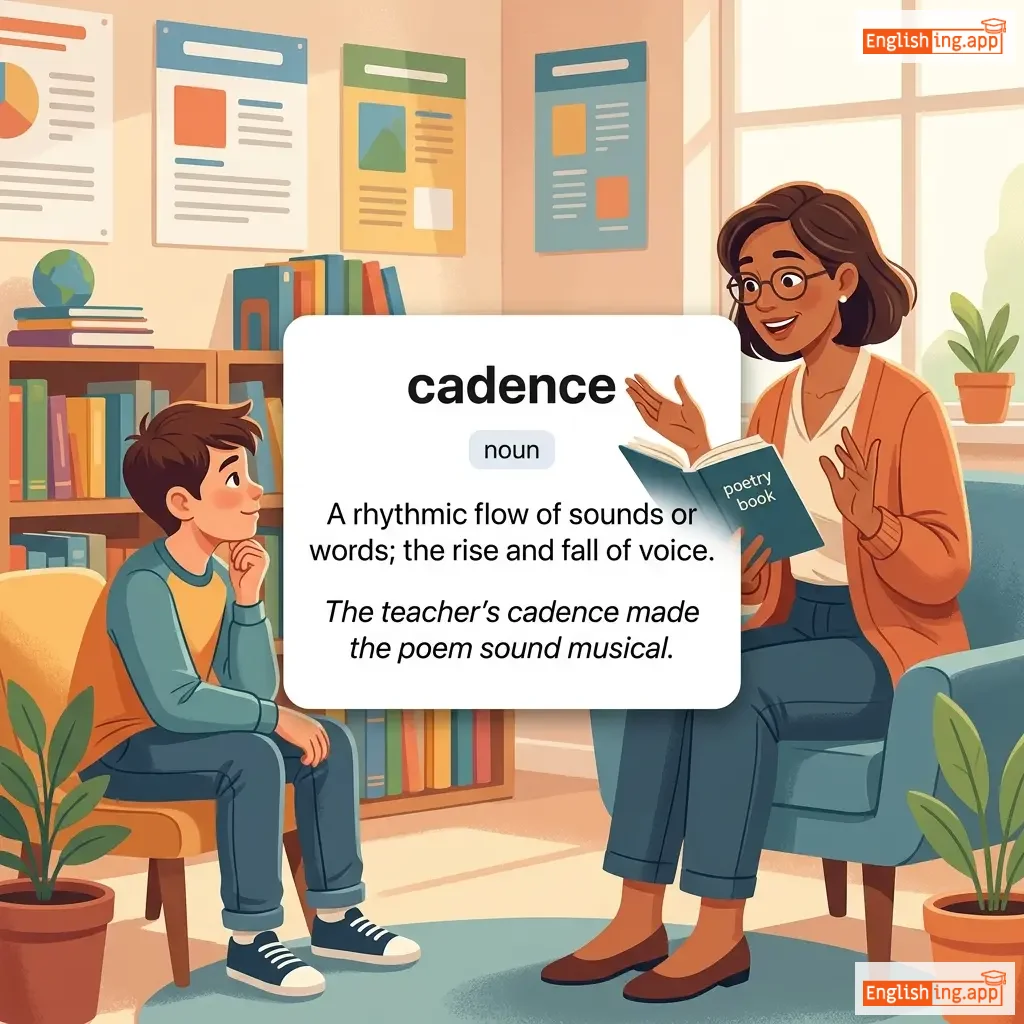
cadence definition card — visual illustration of the meaning
noun
/ˈkeɪdəns/

A rhythmic flow of sounds or words; the rise and fall of voice.

"The teacher's cadence made the poem sound musical."

noun
/kəˈdɛnzə/
精緻なソロパッセージ (seichina soro passeji)

An elaborate solo passage in a piece of music, usually near the end.

"The pianist performed a brilliant cadenza before the final movement."

"ピアニストは最後の楽章の前に素晴らしいカデンツァを演奏しました。" (Pianisuto wa saigo no gakushō no mae ni subarashī kadenza o ensō shimashita.)
noun
/kəˈdɛt/
士官候補生 (shikan kouhosei)

A young trainee in the armed forces, police, or other organization.

"The cadet marched proudly in the parade."
"士官候補生はパレードで誇らしげに行進した。" (Shikan kouhosei wa parēdo de hokorashige ni kōshin shita.)
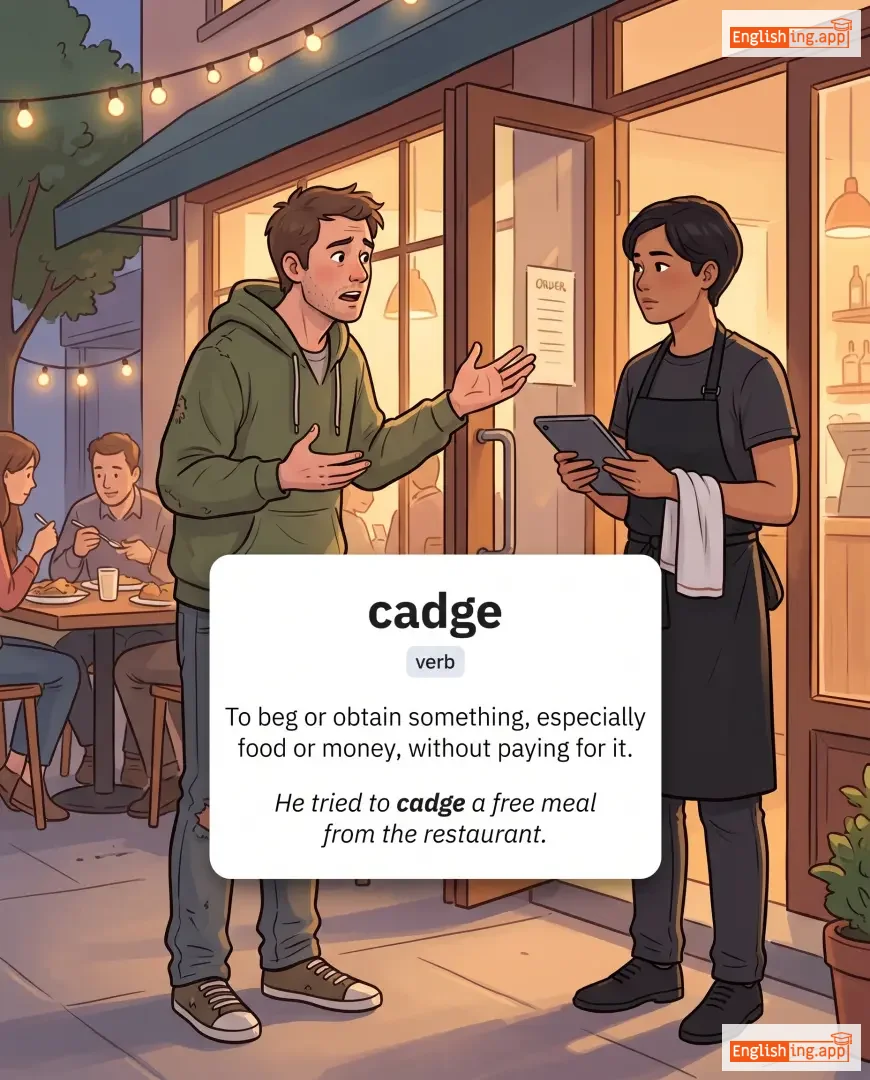
cadge definition card — visual illustration of the meaning
verb
/kædʒ/
物乞い (kaji)

To beg or obtain something, especially food or money, without paying for it.

"He tried to cadge a free meal from the restaurant."
"彼はレストランから無料の食事を求めようとした。" (Kare wa resutoran kara muryō no shokuji o motomeyō to shita.)
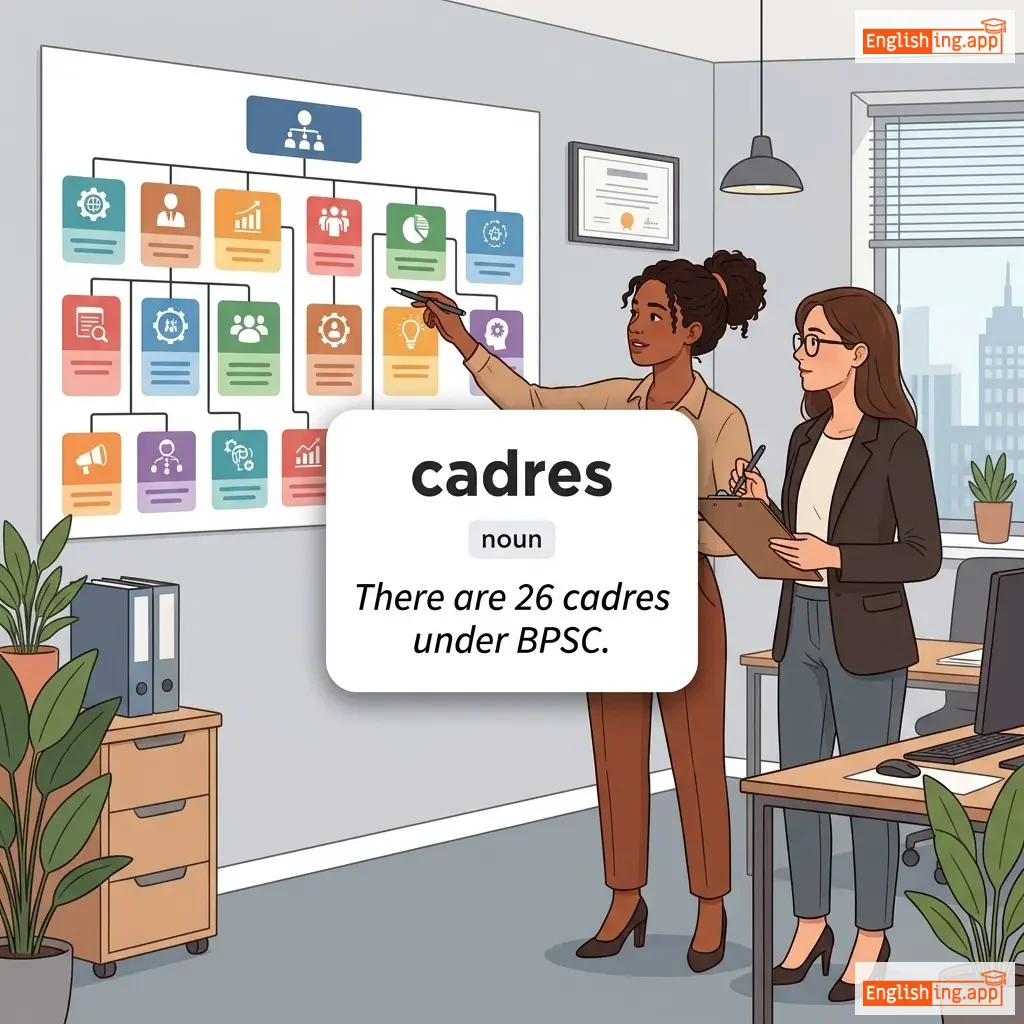
cadres definition card — visual illustration of the meaning
noun
ˈkɑː.dərz
カド (kado)

A small group of people specially trained for a particular purpose or profession; a group of activists in a communist or other political organization.

"There are 26 cadres under BPSC."

"BPSCの下に26人のカドがいます。" (BPSC no shita ni 26nin no kado ga imasu.)
noun
/keɪdʒ/
(oru)

a structure of bars or wires in which birds or animals are kept

"The bird sang happily inside its cage."

"鳥はその檻の中で楽しそうに歌っていた。" (Tori wa sono oru no naka de tanoshisou ni utatte ita.)
noun
/ˈkeɪ.tɪf/
卑怯者 (keitif)

A contemptible or cowardly person.

"The knight despised the caitiff who betrayed his comrades."

"騎士は仲間を裏切った卑怯者を軽蔑していた。" (Kishi wa nakama o uragitta hikyou-sha o keibetsu shite ita.)
verb
/kəˈdʒoʊl/
おだてる (odateru)

To persuade someone to do something by flattery or gentle urging.

"She managed to cajole her friend into joining the trip."

"彼女は友達を旅行に参加させることに成功した。" (Kanojo wa tomodachi o ryokō ni sanka saseru koto ni seikō shita.)
noun
/kəˈdʒoʊləri/
お世辞 (oseji)

Flattering or coaxing talk intended to persuade someone.

"Through cajolery, he convinced his boss to grant him a raise."

"お世辞を使って、彼は上司を説得して昇給を勝ち取った。" (Oseji o tsukatte, kare wa joushi o settoku shite shoukyuu o kachishitta.)
noun
/keɪk/
ケーキ (keeki)

a sweet baked food made from flour, sugar, and other ingredients

"She baked a chocolate cake for her friend's birthday."

"彼女は友達の誕生日のためにチョコレートケーキを焼きました。" (Kanojo wa tomodachi no tanjōbi no tame ni chokorēto kēki o yakimashita.)
noun
/kəˈlæmɪti/
災難 (sainan)

An event causing great damage, distress, or disaster.

"The earthquake was a calamity that left thousands homeless."
"地震は数千人を家なしにした災難だった。" (Jishin wa sūsen'nin o ie nashi ni shita sainan datta.)
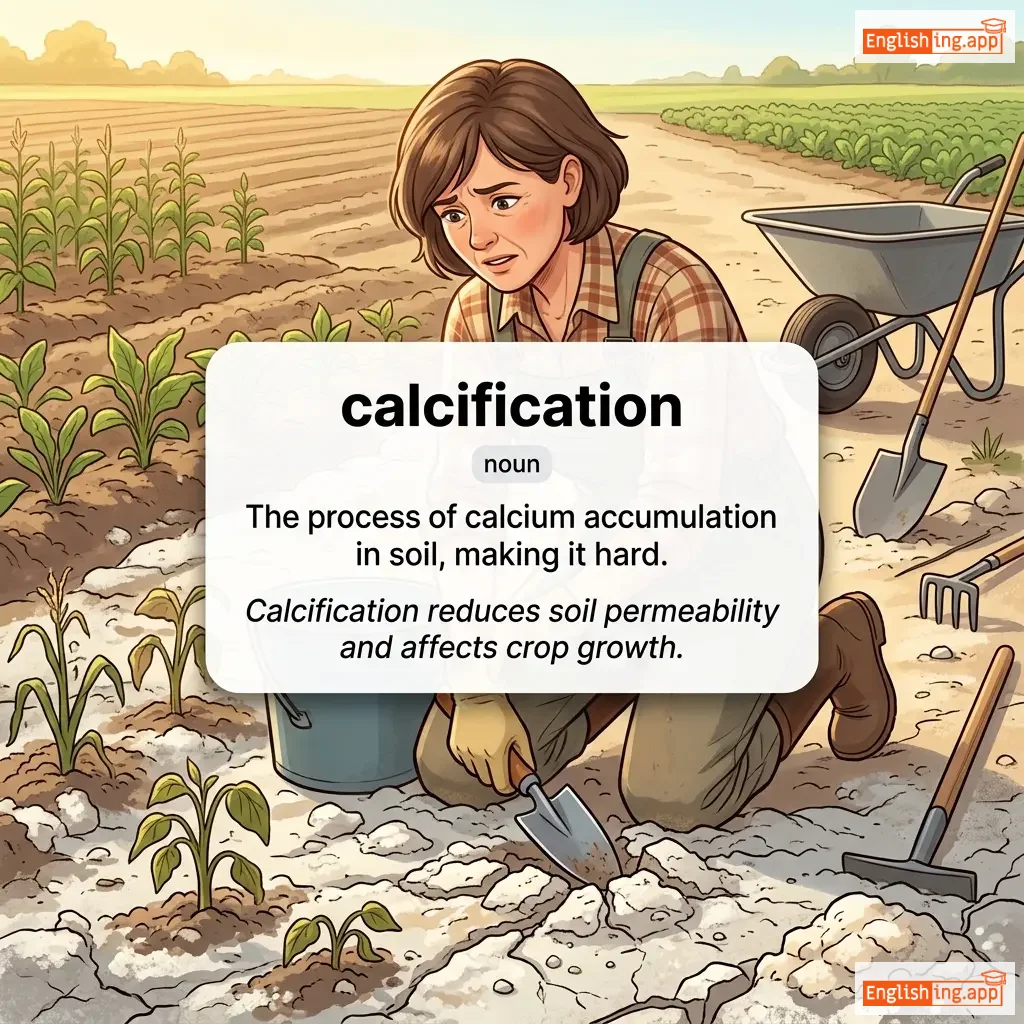
calcification definition card — visual illustration of the meaning
noun
/ˌkæl.sɪ.fɪˈkeɪ.ʃən/
カルシフィケーション (karushifikēshon)

The process of calcium accumulation in soil, making it hard.

"Calcification reduces soil permeability and affects crop growth."

"カルシフィケーションは土壌の透過性を減らし、作物の成長に影響を与えます。" (Karushifikēshon wa dojo no tōkasei o herashi, sakumotsu no seichō ni eikyō o atae masu.)
verb
/ˈkælsɪfaɪ/
カルシウム塩の沈着によって硬化する (karushiumu en no chinchaku ni yotte kōka suru)

To harden by deposition of calcium salts; to become rigid or inflexible.

"Over time, the tissue began to calcify and lose flexibility."

"時間が経つにつれて、組織はカルシファイして柔軟性を失いました。" (Jikan ga tatsu ni tsurete, soshiki wa karushifai shite jūnansē o ushinai mashita.)
adjective
/ˈkælkjʊləbl/
計算可能 (keisan kanou)

Capable of being calculated, estimated, or measured.

"The risk involved in the project is calculable."
"プロジェクトに関わるリスクは計算可能です。" (Purojekuto ni kakawaru risuku wa keisan kanou desu.)
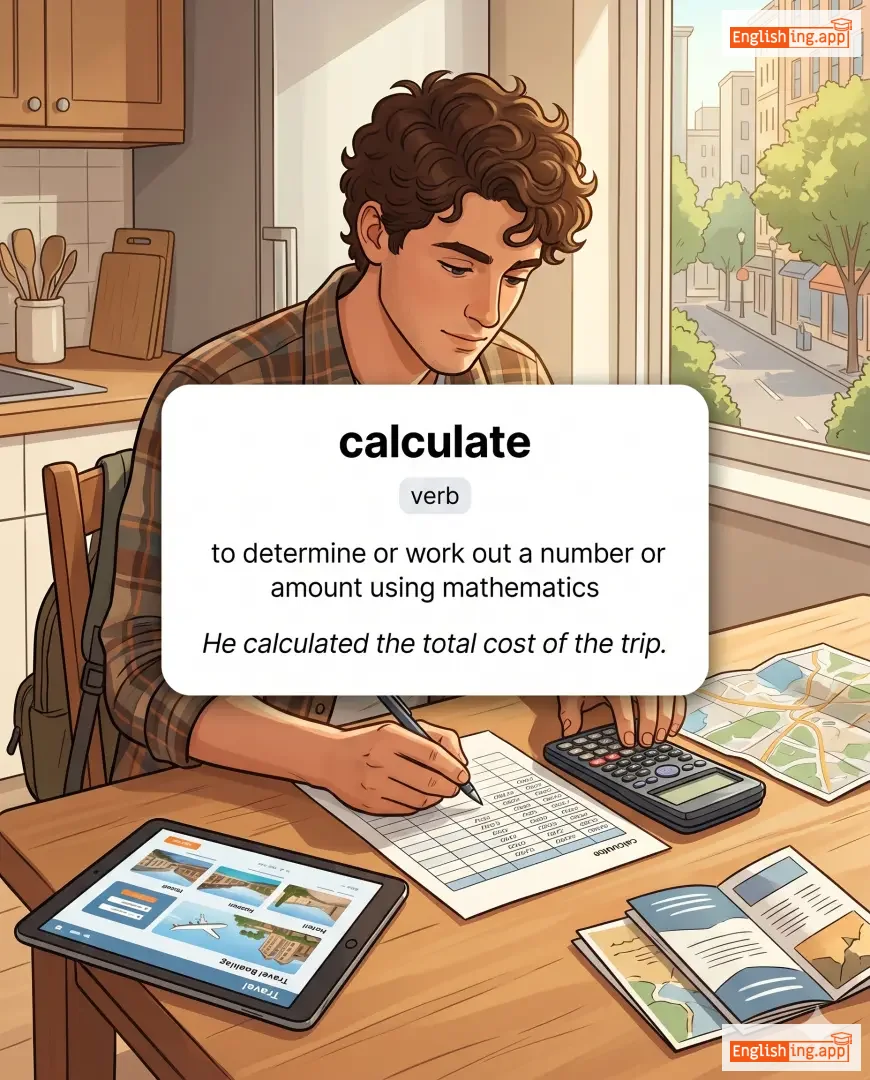
calculate definition card — visual illustration of the meaning
verb
/ˈkæl.kjʊ.leɪt/
計算する (keisan suru)

to determine or work out a number or amount using mathematics

"He calculated the total cost of the trip."

"彼は旅行の総費用を計算した。" (Kare wa ryokou no souhiyou o keisan shita.)
adjective
/ˈkælkjuleɪtɪd/
計算された (keisan sareta)

Done with full awareness of the consequences; deliberate or carefully planned.

"Her calculated move gave her an advantage over her competitors."

"彼女の計算された動きは競争相手に対して優位に立たせた。" (Kanojo no keisan sareta ugoki wa kyousou aite ni taishite yuuini tataseta.)
adjective
/ˈkælkjʊleɪtɪŋ/
計算高い (keisan takai)

acting in a scheming and ruthlessly determined way

"He had a cold and calculating approach to business."

"彼はビジネスに冷徹で計算高いアプローチを持っていた。" (Kare wa bijinesu ni reitetsu de keisan takai apurōchi o motte ita.)
noun
/ˌkælkjʊˈleɪʃən/
計算 (keisan)

the process of using numbers to find an amount or result

"His calculation of the total cost was accurate."

"彼の総コストの計算は正確でした。" (Kare no sou kosuto no keisan wa seikaku deshita.)
noun
/ˈkælkjʊleɪtər/
電卓 (dentaku)

an electronic or mechanical device used to perform mathematical calculations

"She used a calculator to solve the complex equation."

"彼女は複雑な方程式を解くために電卓を使った。" (kanojo wa fukuzatsu na houteishiki o toku tame ni dentaku o tsukatta)
noun
/ˈkælkjʊləs/
微積分 (bisekibun)

A branch of mathematics concerned with rates of change and accumulation; also a hard mineral deposit in the body such as on teeth.

"Calculus is essential for advanced studies in physics and engineering."

"微積分は物理学と工学の高度な研究に不可欠です。" (Bisekibun wa butsuri-gaku to kougaku no koudo na kenkyuu ni fukaketsu desu.)
noun
/ˈkɔːldrən/
大きな金属製の鍋 (ōkina kinzoku-sei no nabe)

A large metal pot used for boiling liquids or cooking over an open fire.

"The witch stirred her potion in a bubbling caldron."

"魔女は泡立つ鍋の中で魔法薬をかき混ぜていた。" (Majo wa awadatsu nabe no naka de mahōyaku o kakimazete ita.)
noun
/ˈkælɪndər/
カレンダー (karendā)

a system for organizing days, months, and years; a chart showing days of the year

"She marked her birthday on the calendar."

"彼女はカレンダーに誕生日をマークしました。" (Kanojo wa karendā ni tanjōbi o māku shimashita.)
noun
/kæf/
子牛 (kougyu)

a young cow or bull; young of various large mammals

"The calf stayed close to its mother."

"子牛は母親の近くにいました。" (Kougyu wa hahaoya no chikaku ni imashita.)
noun
/ˈkælɪbər/
カリバー (karibā)

The quality of someone's ability or character; the internal diameter of a gun barrel.

"The university attracts students of high caliber."
"その大学は高いカリバーの学生を引き付けます。" (Sono daigaku wa takai karibā no gakusei o hikitsukemasu.)
verb
/ˈkælɪˌbreɪt/

To adjust or mark something so it can be used accurately; to standardize.

"The technician calibrated the machine before starting the experiment."

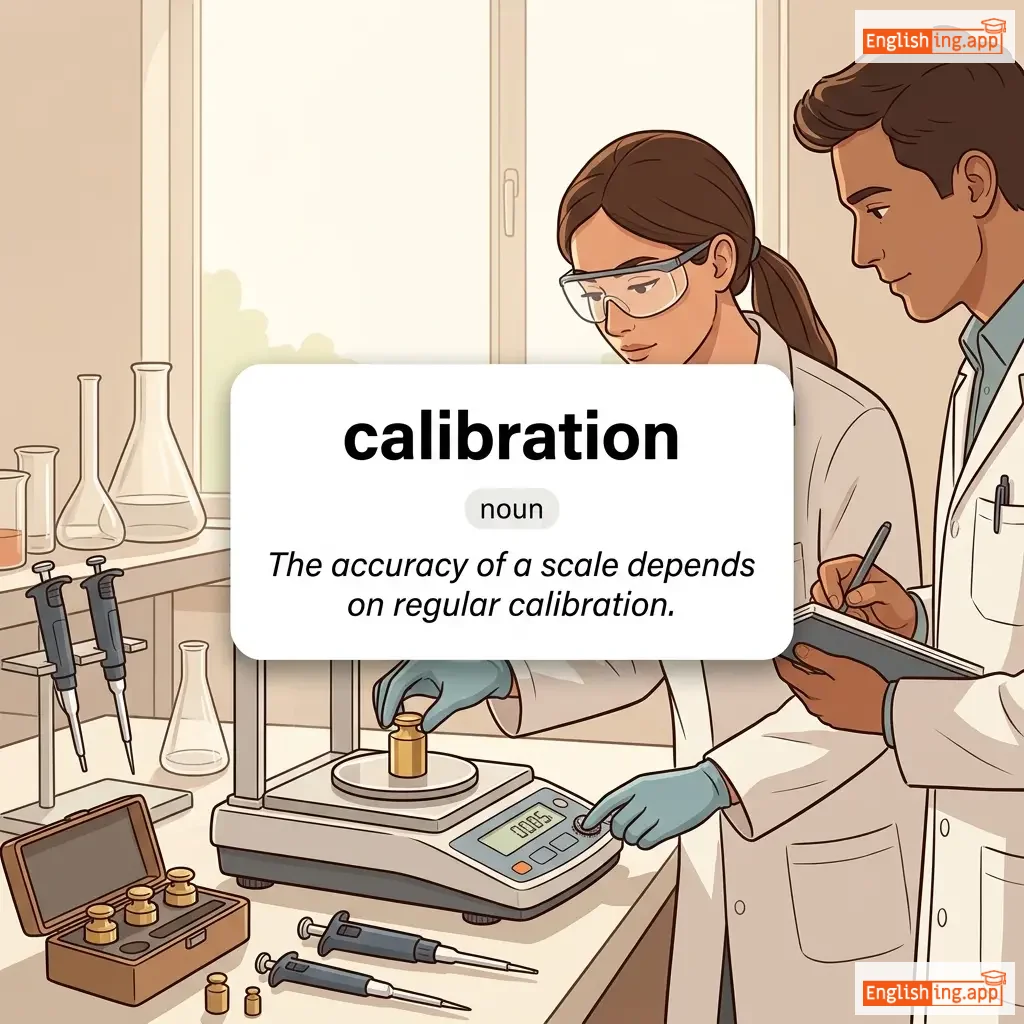
calibration definition card — visual illustration of the meaning
noun
ˌkæl.ɪˈbreɪ.ʃən
キャリブレーション (kyariburēshon)

The action or process of adjusting or determining the accuracy of measuring instruments.

"The accuracy of a scale depends on regular calibration."

"スケールの精度は定期的なキャリブレーションに依存します。" (Sukēru no seido wa teikiteki na kyariburēshon ni izon shimasu.)
noun
/ˌkælɪsˈθɛnɪks/
自重トレーニング (jichou toreeningu)

exercises that use body weight for strength and flexibility

"She practices calisthenics every morning in the park."

"彼女は毎朝公園でカリステニクスを練習しています。" (Kanojo wa maiasa kouen de karisutenikusu o renshuu shiteimasu.)
verb
/kɔːk/
ボートのひび割れを塞ぐ (bōto no hibiwake o fusagu)

To make a boat or ship watertight by filling seams or cracks.

"The workers calked the seams of the old boat to prevent leaks."
"作業員たちは古いボートの継ぎ目をコーキングして漏れを防いだ。" (Sagyouintachi wa furui bōto no tsugime o kōkingu shite more o fusaida.)
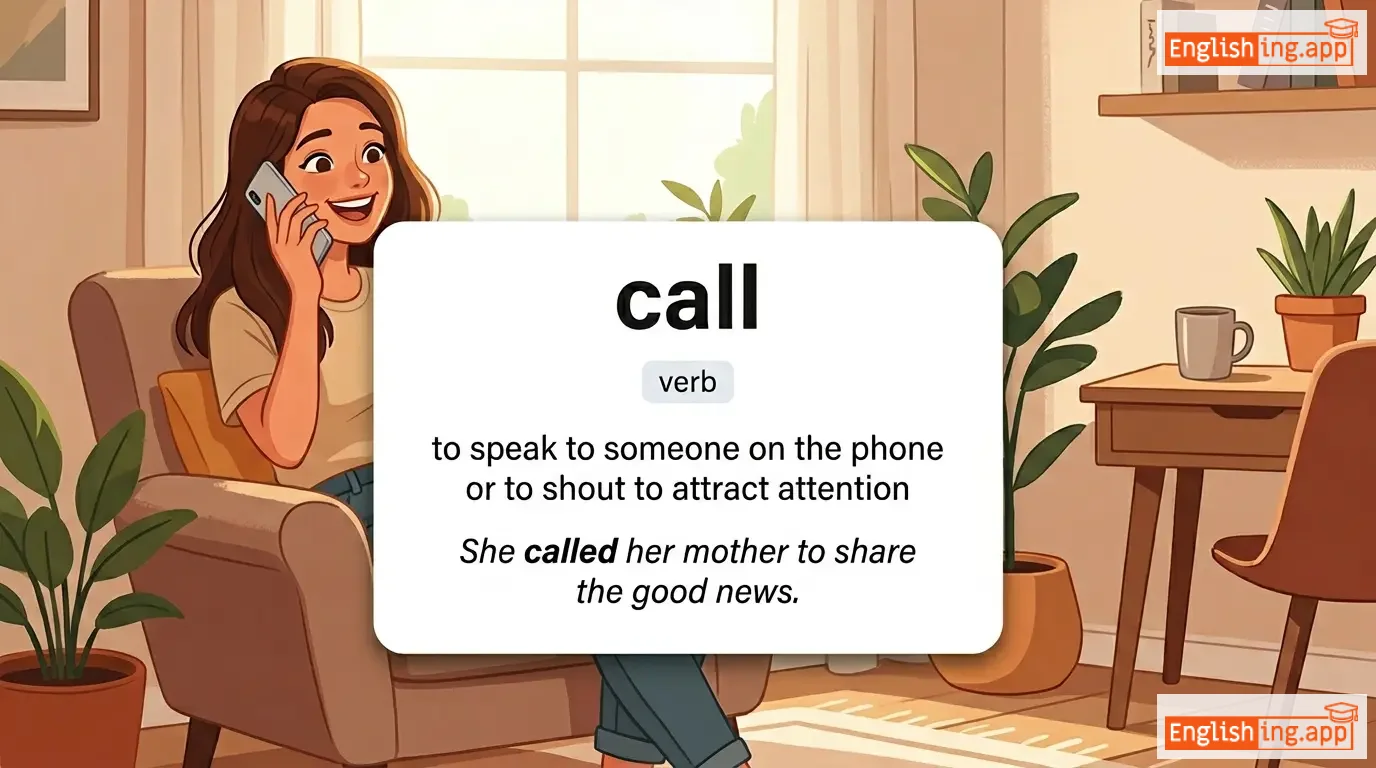
call definition card — visual illustration of the meaning
verb
/kɔːl/
電話をかける (denwa o kakeru)

to speak to someone on the phone or to shout to attract attention

"She called her mother to share the good news."

"彼女は良い知らせを共有するために母親に電話をかけた。" (Kanojo wa yoi shirase o kyōyū suru tame ni hahaoya ni denwa o kaketa.)
noun
/kəˈlɪɡrəfi/
美しく装飾的な手書きの芸術 (utsukushiku sōshokuteki na tegaki no geijutsu)

The art of beautiful and decorative handwriting.

"She took a course to improve her calligraphy skills."

"彼女はカリグラフィーの技術を向上させるためにコースを受講しました。" (Kanojo wa karigurafī no gijutsu o kōjōsaseru tame ni kōsu o jukō shimashita.)
noun
/kəˈlɒsəti/
硬い皮膚 (katai hifu)

A thickened or hardened area of skin; insensitivity or hardness of character.

"Years of manual labor left callosity on his hands."

"何年もの肉体労働が彼の手に硬い皮膚を残した。" (Nannen mo no nikutai roudou ga kare no te ni katai hifu wo nokoshita.)
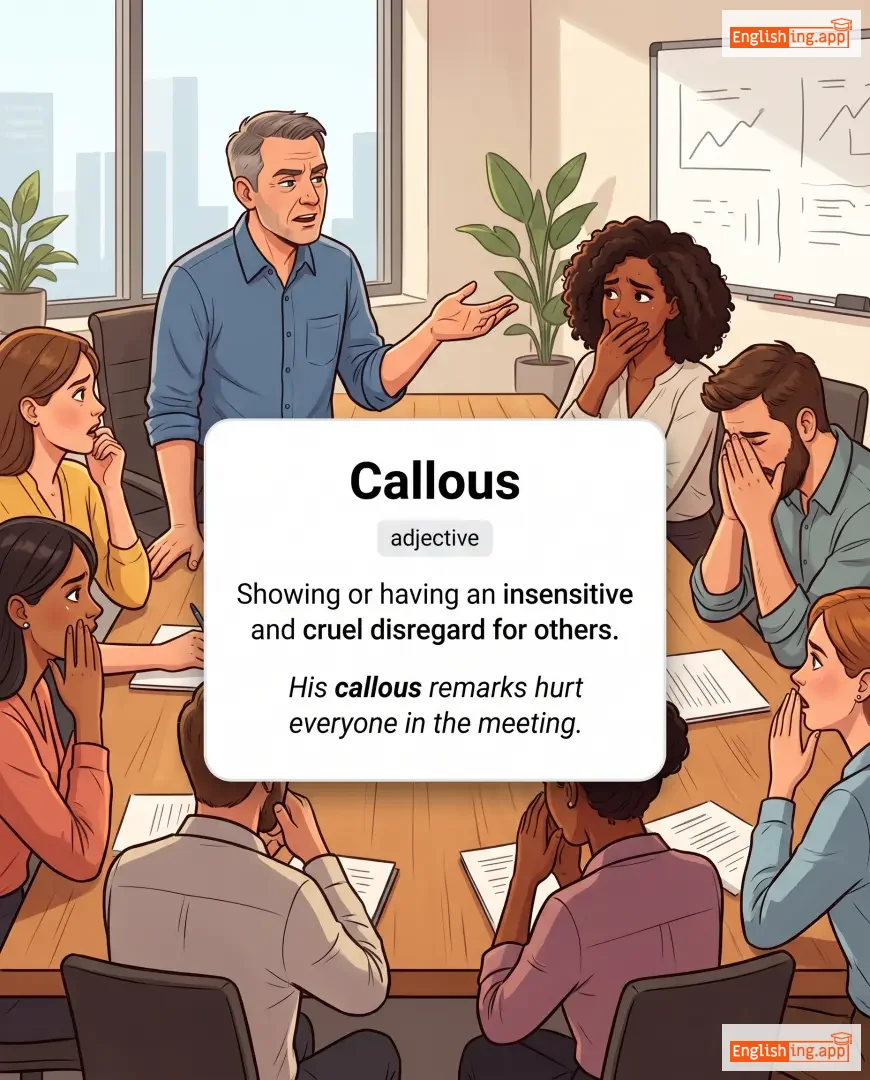
Callous definition card — visual illustration of the meaning
adjective
/ˈkæləs/

Showing or having an insensitive and cruel disregard for others.

"His callous remarks hurt everyone in the meeting."

adjective
/ˈkæloʊ/
未熟 (mijuku)

Inexperienced and immature.

"The callow intern made several mistakes on his first day."

"未熟なインターンは最初の日にいくつかの間違いをしました。" (Mijuku na intān wa saisho no hi ni ikutsuka no machigai o shimashita.)
noun
/ˈkæləs/
皮膚の硬化部分 (hifu no kōka bubun)

A thickened and hardened part of the skin or soft tissue, especially in an area subjected to friction.

"A callus formed on his palm from using tools every day."
"毎日道具を使うことで、彼の手のひらにカラスができました。" (Mainichi dōgu o tsukau koto de, kare no te no hira ni karasu ga dekimashita.)
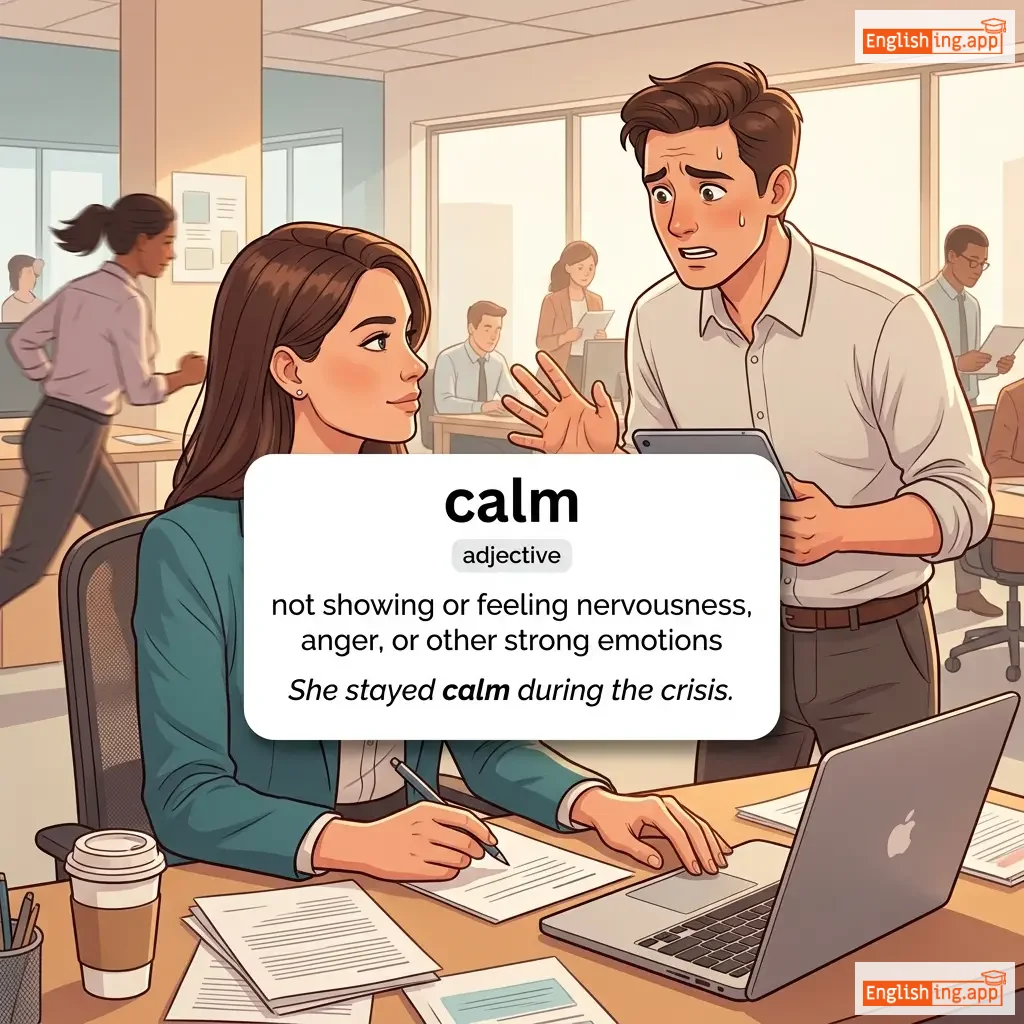
calm definition card — visual illustration of the meaning
adjective
/kɑːm/
落ち着いた (ochitsuita)

not showing or feeling nervousness, anger, or other strong emotions

"She stayed calm during the crisis."

"彼女は危機の間、落ち着いていた。" (Kanojo wa kiki no aida, ochitsuite ita.)
adverb
/ˈkɑːm.li/
落ち着いて (ochitsuite)

in a peaceful way without showing strong emotions; quietly and without excitement

"She spoke calmly despite being angry."

"彼女は怒っているにもかかわらず落ち着いて話しました。" (Kanojo wa okotte iru ni mo kakawarazu ochitsuite hanashimashita.)
noun
/ˈkæləri/
カロリー (karorī)

A unit of energy, often used to measure the energy content of food and drink.

"She checks the calorie count before eating any packaged food."

"彼女はパッケージ食品を食べる前にカロリー数をチェックします。" (Kanojo wa pakkēji shokuhin o taberu mae ni karorī-sū o chekku shimasu.)