語彙集

英単語辞書 | 単語の意味、定義、例文

e-commerce definition card — visual illustration of the meaning
noun
ˈiːˌkɒm.ɜːrs
電子商取引 (denshi shōtoriki)

The process of buying and selling goods or services through the internet.

"E-commerce has revolutionized the way people shop."

"電子商取引は人々の買い物方法を革命的に変えました。" (Denshi shōtoriki wa hitobito no kaimono hōhō o kakumeiteki ni kaemashita.)
noun, verb
/ˈiː.meɪl/
電子メール (denshi mēru)

messages distributed by electronic means from one computer user to another

"I sent an e-mail to my professor yesterday."

"私は昨日、教授に電子メールを送りました。" (Watashi wa kinou, kyoushu ni denshi mēru wo okurimashita.)
abbreviation
/iː ˈdʒiː/
例えば (tatoeba)

For example (from Latin 'exempli gratia').

"You should eat more fruits, e.g., apples and bananas."

"もっと果物を食べるべきです。例えば、リンゴやバナナです。" (Motto kudamono wo taberu beki desu. Tatoeba, ringo ya banana desu.)
determiner/pronoun
/iːtʃ/
各自 (kakujitsu)

every one of two or more people or things considered separately

"Each student received a certificate."

"各学生は証明書を受け取りました。" (Kaku gakusei wa shoumeisho wo uketorimashita.)
adjective
/ˈiːɡər/
熱心な / 待ち遠しい (nesshin na / machidōshii)

very excited and interested; keen to do something

"The children were eager to open their gifts."

"子供たちはプレゼントを開けるのを待ちきれませんでした。" (Kodomotachi wa purezento o akeru no o machikiremasen deshita.)
adverb
/ˈiːɡərli/
熱心に; 強い欲望を持って (nesshin ni; tsuyoi yokubou wo motte)

with keen interest or enthusiasm; with great desire

"The children eagerly waited for the holiday to begin."

"子供たちは休暇が始まるのを熱心に待っていました。" (kodomotachi wa kyuuka ga hajimaru no wo nesshin ni matteimashita)
noun
/ˈiː.ɡəl/
ワシ (washi)

large bird of prey with powerful wings and sharp talons

"The eagle soared high above the mountains."

"ワシは山々の上を高く飛んだ。" (washi wa yamayama no ue o takaku tonda)
noun
/ˈiːɡlət/
イーグルのひな (īguru no hina)

A young eagle.

"The eaglet waited in the nest for its mother to return."

"イーグレットは巣の中で母親が戻るのを待っていた。" (Īguretto wa su no naka de hahaoya ga modoru no o matte ita.)
noun
/ɪə(r)/
(mimi)

the organ of hearing and balance in humans and other animals

"She whispered something in his ear."

"彼女は彼の耳に何かをささやいた。" (Kanojo wa kare no mimi ni nanika o sasayaita.)
noun
/ˈɪər.ɪŋ/
イヤリング (iyaringu)

a piece of jewelry worn on the earlobe or ear

"Her diamond earrings caught everyone's attention."

"彼女のダイヤモンドのイヤリングは、みんなの注目を集めました。" (Kanojo no daiyamondo no iyaringu wa, minna no chūmoku o atsumemashita.)
adjective/adverb
/ˈɜːrli/
早い (hayai)

before the usual or expected time

"She arrived early to the meeting."

"彼女は会議に早く到着しました。" (Kanojo wa kaigi ni hayaku tōchaku shimashita.)
verb
/ˈɪə.mɑːrk/
指定する (shitei suru)

To designate funds, resources, or time for a particular purpose.

"The government has earmarked funds for education."

"政府は教育のための資金を指定しました。" (Seifu wa kyouiku no tame no shikin o shitei shimashita.)
earn definition card — visual illustration of the meaning
verb
/ɜːrn/
稼ぐ (kasegu)

To receive money or reward in return for work or service.

"She worked hard to earn enough money for college."

"彼女は大学のために十分なお金を稼ぐために一生懸命働いた。" (Kanojo wa daigaku no tame ni jūbun na okane o kasegu tame ni isshōkenmei hataraita.)
noun
/ˈɜːrnər/
稼ぐ人 (kasegu hito)

A person who earns money through work or business

"She is the primary earner in her family."

"彼女は家族の主要な稼ぐ人です。" (Kanojo wa kazoku no shuyou na kasegu hito desu.)
adjective
/ˈɜːrnɪst/
真剣で誠実 (shinken de seijitsu)

showing sincere and intense conviction

"She spoke in an earnest voice about the importance of honesty."

"彼女は正直さの重要性について真剣に話しました。" (Kanojo wa shoujikisa no juuyousei ni tsuite shinken ni hanashimashita.)
noun
/ˈɜːnɪŋz/
収入 (shunyu)

money obtained in return for labor or services

"Her monthly earnings are enough to support her family."

"彼女の月収は家族を養うのに十分です。" (Kanojo no gesshū wa kazoku o yashinau no ni jūbun desu.)
noun
/ˈɪrˌplʌɡ/
イヤープラグ (iyāpuragu)

a device inserted into the ear to block out noise or water

"He wore earplugs to sleep during the noisy night."

"彼は騒がしい夜に寝るためにイヤープラグを着けました。" (Kare wa sawagashī yoru ni neru tame ni iyāpuragu o tsukemashita.)
noun
/ˈɪrˌʃɑːt/
耳の届く範囲 (mimi no todoku han'i)

the range or distance within which a sound can be heard

"The children whispered secrets out of earshot of their parents."

"子供たちは親の耳の届く範囲外で秘密をささやいた。" (Kodomotachi wa oya no mimi no todoku han'i gai de himitsu wo sasayaita.)
adjective
/ˈɪrˌsplɪtɪŋ/
耳をつんざくような (mimi o tsunzaku you na)

extremely loud or piercing sound

"The earsplitting noise of the fire alarm startled everyone."

"火災警報の耳をつんざくような音がみんなを驚かせた。" (Kasai keihou no mimi o tsunzaku you na oto ga minna o odorokaseta.)
noun
/ɜːrθ/
地球 (chikyū)

the planet we live on; soil or ground

"The astronauts looked back at the Earth from space."

"宇宙飛行士は宇宙から地球を見ました。" (Uchūhikōshi wa uchū kara chikyū o mimashita.)
noun
/ˈɜːθ.wɜːm/
ミミズ (mimizu)

a segmented worm that lives in soil and helps decompose organic matter

"The gardener was happy to find many earthworms in the soil."

"庭師は土壌でたくさんのミミズを見つけて喜んでいました。" (niwashi wa dojō de takusan no mimizu o mitsukete yorokonde imashita)
adjective
/ˈɜːr.θən/
土や粘土で作られた; 陶芸に関連する (tsuchi ya nendo de tsukurareta; tōgei ni kanren suru)

made of earth or clay; relating to pottery or ceramic materials

"The kitchen had beautiful earthen pots for storage."

"キッチンには収納用の美しい土の鉢がありました。" (kicchin ni wa shūnō-yō no utsukushī tsuchi no hachi ga arimashita.)
noun
/ˈɜːr.θən pɒt/
土鍋 (donabe)

a container made of baked clay or earth, used for cooking or storing

"The earthen pot keeps water naturally cool in summer."

"土鍋は夏に水を自然に冷たく保ちます。" (Donabe wa natsu ni mizu o shizen ni tsumetaku tamochimasu.)
noun
/ˈɜːrθənˌwɛr/
陶器 (touki)

pottery made of clay and hardened by heat

"The shop displayed beautiful earthenware pots and bowls."

"店は美しい陶器の壺と鉢を展示していました。" (Mise wa utsukushii touki no tsubo to hachi o tenji shite imashita.)
adjective
/ˈɜːrθli/
現世の (gense no)

relating to the physical world as opposed to the spiritual or heavenly; worldly

"He was more concerned with earthly pleasures than spiritual matters."

"彼は精神的な事柄よりも現世の快楽に興味がありました。" (Kare wa seishinteki na koto kara yori mo gense no kairaku ni kyōmi ga arimashita.)
earthquake definition card — visual illustration of the meaning
noun
/ˈɜːrθ.kweɪk/
地震 (jishin)

a sudden shaking of the ground caused by movements within the Earth's crust or volcanic action

"A strong earthquake hit the city last night."

"昨夜、大きな地震がその街を揺さぶった。" (Sakuya, ōkina jishin ga sono machi o yusabutta.)
adjective
/ˈɜːrθi/
土のような / シンプル (tsuchi no yō na / shimpuru)

resembling or suggestive of earth or soil; simple, natural, and sometimes coarse

"The dish had a rich, earthy flavor from the mushrooms."

"その料理はきのこからの豊かな土のような味がしました。" (Sono ryōri wa kinoko kara no yutaka na tsuchi no yō na aji ga shimashita.)
noun/verb
/iːz/
容易さ (yōsai)

absence of difficulty or effort; to make something less serious or severe

"Meditation helps ease stress."

"瞑想はストレスを和らげるのに役立ちます。" (Meisō wa sutoresu o yawarageru no ni yakudachimasu.)
noun
/ˈiːzl̩/
イーゼル (īzeru)

a frame for supporting an artist's canvas while painting or drawing

"The artist placed the canvas on the easel before starting to paint."

"アーティストは絵を描き始める前にキャンバスをイーゼルに置きました。" (Ātisuto wa e o kakehajimeru mae ni kyanbasu o īzeru ni okimashita.)
adverb
/ˈiːzəli/
簡単に (kantan ni)

without difficulty or effort

"He solved the problem easily."

"彼は簡単に問題を解決しました。" (Kare wa kantan ni mondai o kaiketsu shimashita.)
noun
/iːst/
(higashi)

The direction from which the sun rises; one of the four cardinal points.

"The sun rises in the east."

"太陽は東から昇ります。" (Taiyou wa higashi kara noborimasu.)
adjective
/ˈiːstərn/
東部の (tōbu no)

Relating to, situated in, or characteristic of the east.

"They traveled to the eastern part of the country."

"彼らは国の東部を旅しました。" (Karera wa kuni no tōbu o tabimashita.)
adverb
/ˈiːstwədz/
東へ (higashi e)

towards the east; in an eastern direction

"The river flows eastwards into the ocean."

"川は東へ流れて海へ向かう。" (Kawa wa higashi e nagarete umi e mukau.)
adjective
/ˈiːzi/
簡単 (kantan)

not difficult; requiring little effort

"The exam was surprisingly easy."

"試験は驚くほど簡単でした。" (Shiken wa odoroku hodo kantan deshita.)
noun
/ˈiː.zi tʃeər/
リクライニングチェア (rikurainingu chea)

a comfortable chair with arms and a back that reclines

"He relaxed in his favorite easy-chair after work."

"彼は仕事の後、お気に入りのイージーチェアでくつろいだ。" (kare wa shigoto no ato okiniiri no iiji chea de kutsuroida)
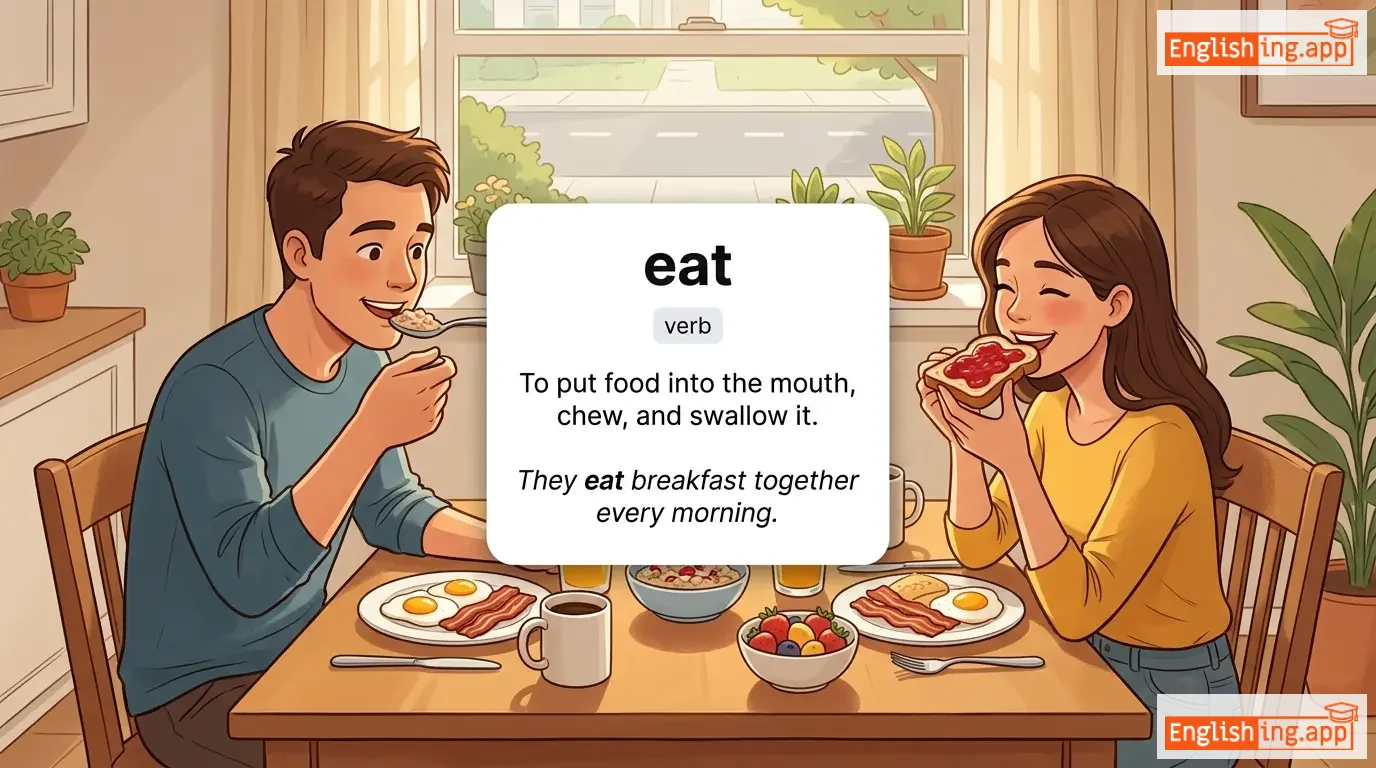
eat definition card — visual illustration of the meaning
🍽️

eat (ito)

verb
/iːt/
食べる (taberu)

To put food into the mouth, chew, and swallow it.

"They eat breakfast together every morning."

"彼らは毎朝一緒に朝食を食べます。" (Karera wa mai asa issho ni chōshoku o tabemasu.)
adjective
/ˈiːtəbl̩/
食べられる (taberareru)

suitable or safe for eating

"The berries are not only eatable but also quite tasty."

"そのベリーは食べられるだけでなく、かなりおいしいです。" (Sono berī wa taberareru dake de naku, kanari oishī desu.)
verb
/ˈiːtɪŋ/
食べる (taberu)

the act of consuming food

"They were eating dinner when the phone rang."
"彼らは夕食を食べているとき、電話が鳴った。" (Karera wa yuushoku o tabete iru toki, denwa ga natta.)
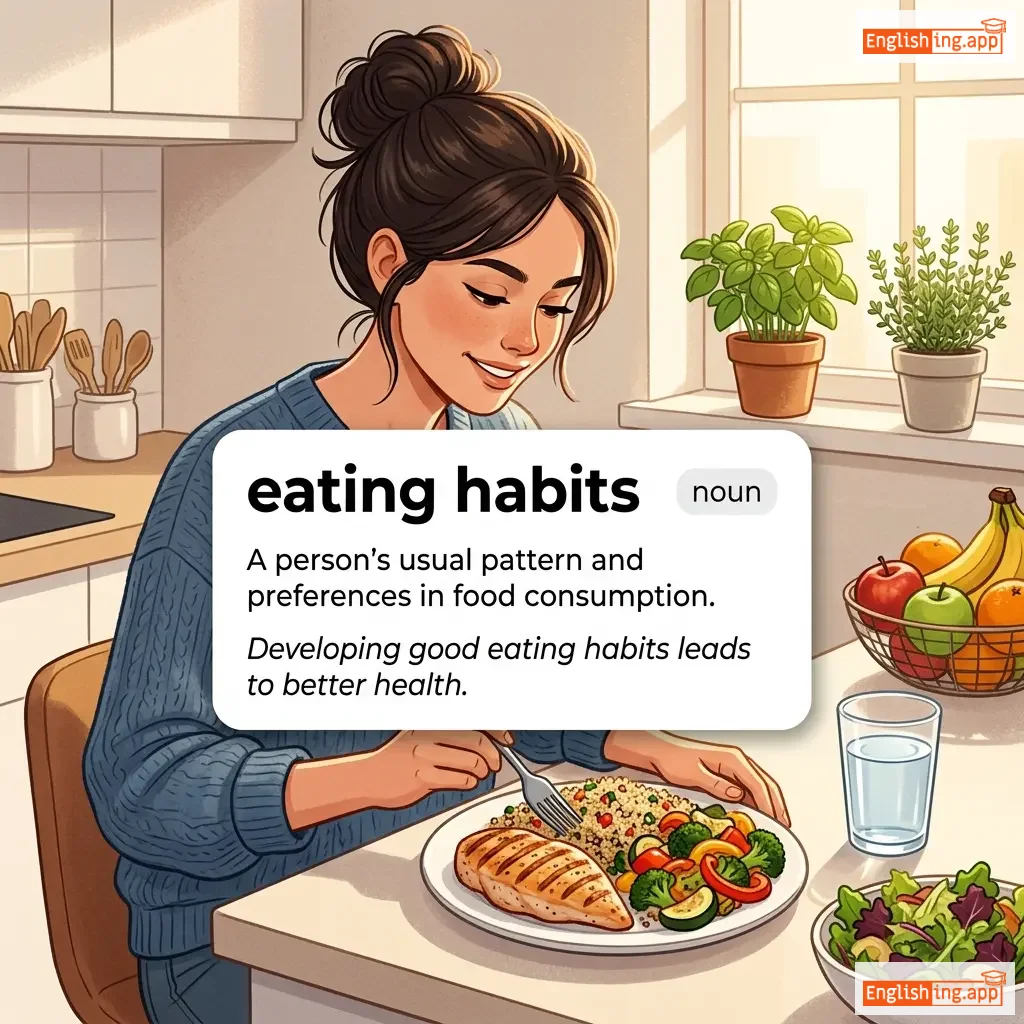
eating habits definition card — visual illustration of the meaning
noun
/ˈiː.tɪŋ ˈhæb.ɪts/
食習慣 (shokushukan)

A person's usual pattern and preferences in food consumption.

"Developing good eating habits leads to better health."

"良い食習慣を身につけることは、健康に良い影響を与える。" (Yoi shokushukan o mi ni tsukeru koto wa, kenkō ni yoi eikyō o ataeru.)
verb
/ˈiːvzdrɒp/
盗み聞き (nusumigiki)

to secretly listen to a conversation

"She stood near the door to eavesdrop on their conversation."

"彼女はその会話をこっそり聞くためにドアの近くに立っていました。" (Kanojo wa sono kaiwa o kossori kiku tame ni doa no chikaku ni tatte imashita.)
verb
/ɛb/
衰える (otoroeru)

to recede, decline, or lessen gradually, often referring to the tide or emotions

"Her confidence began to ebb after the repeated failures."

"繰り返しの失敗の後、彼女の自信は衰え始めた。" (Kurikaeshi no shippai no ato, kanojo no jishin wa otoroe hajimeta.)
noun
/ˈeb.taɪd/
干潮 (kan-chou)

the movement of the tide out to sea; a time when the sea level is falling

"During ebb-tide, we could walk further out on the beach."

"干潮時には、ビーチでさらに遠くに歩けました。" (Kanchou-ji ni wa, bīchi de sara ni tōku ni arukemashita.)
noun
/ɪˈbʊliəns/
熱狂 (nekkyou)

the quality of being cheerful, enthusiastic, and full of energy

"The teacher's ebullience inspired her students."
"教師の熱狂が生徒たちをインスパイアしました。" (Kyoushi no nekkyou ga seitotachi wo insupaishimashita.)
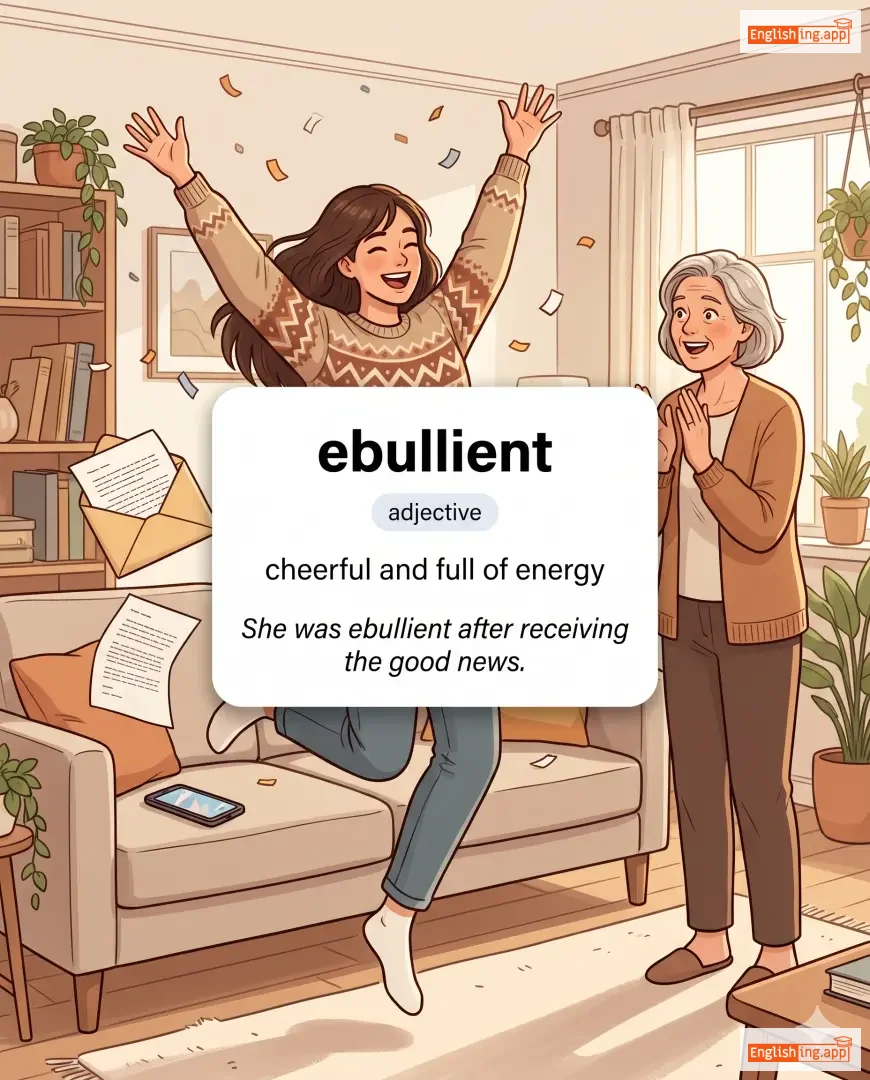
ebullient definition card — visual illustration of the meaning
adjective
/ɪˈbʊliənt/
陽気な (youkina)

cheerful and full of energy

"She was ebullient after receiving the good news."

"良いニュースを受け取った後、彼女は陽気でした。" (Yoi nyu-su o uketotta ato, kanojo wa youki deshita.)
adjective
/ɪkˈsɛntrɪk/
奇抜な (kibatsuna)

unconventional and slightly strange in behavior or appearance

"The artist was known for his eccentric style."

"そのアーティストは奇抜なスタイルで知られていた。" (Sono ātisuto wa kibatsuna sutairu de shirarete ita.)
noun
/ˌɛksɛnˈtrɪsəti/
奇抜さ (kibatsusa)

the quality of being unconventional or slightly strange

"His eccentricity made him both admired and misunderstood."

"彼の奇抜さは、彼を賞賛されると同時に誤解される原因となった。" (Kare no kibatsusa wa, kare wo shousan sareru to douji ni gokai sareru gen'in to natta.)
noun
/ɪˌkliːziˈæstɪk/
教会の (kyōkai no)

A member of the clergy or church official.

"The council was attended by several high-ranking ecclesiastics."
"その会議には数人の高位の教会役員が出席しました。" (Sono kaigi ni wa sūnin no kōi no kyōkai yakuin ga shusseki shimashita.)
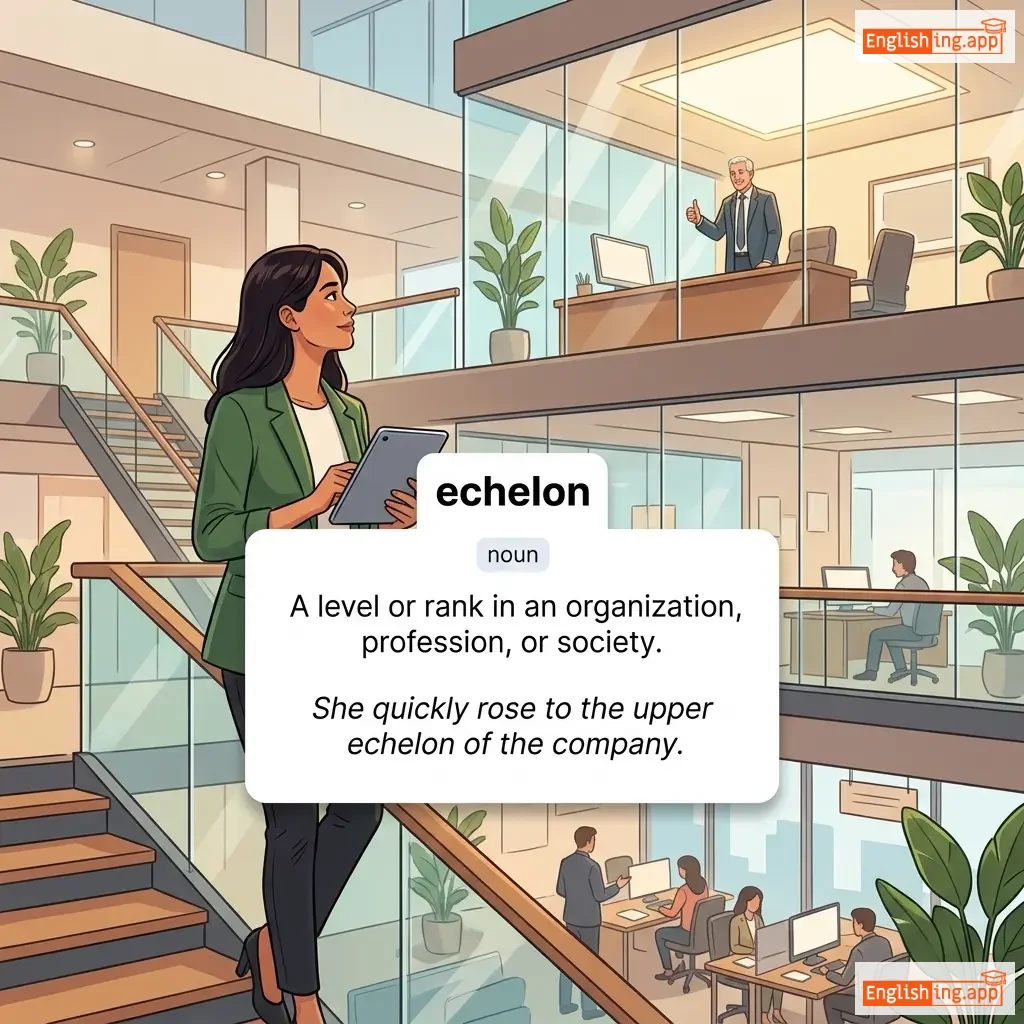
echelon definition card — visual illustration of the meaning
noun
/ˈɛʃəlɒn/
階層 (kaisou)

A level or rank in an organization, profession, or society.

"She quickly rose to the upper echelon of the company."

"彼女はすぐに会社の上層部に昇進した。" (Kanojo wa sugu ni kaisha no jousoubu ni shoushin shita.)
noun, verb
/ˈɛkəʊ/
幸福 (kōfuku)

a sound that is reflected off a surface and heard again; to repeat or reflect a sound or idea.

"Her laughter echoed through the empty hall."

"賞を受け取ったとき、彼女は自分の幸福を隠せなかった。" (shō o uketotta toki, kanojo wa jibun no kōfuku o kakusenakatta.)
echoed definition card — visual illustration of the meaning
verb
ˈɛkəʊd
反響する (hankyō suru)

To repeat or resound; to be reminiscent of something.

"The words of gratitude echoed in his heart."

"感謝の言葉が彼の心に反響した。" (Kansha no kotoba ga kare no kokoro ni hankyō shita.)